Why Apartment Inspiration Shapes Your Decor
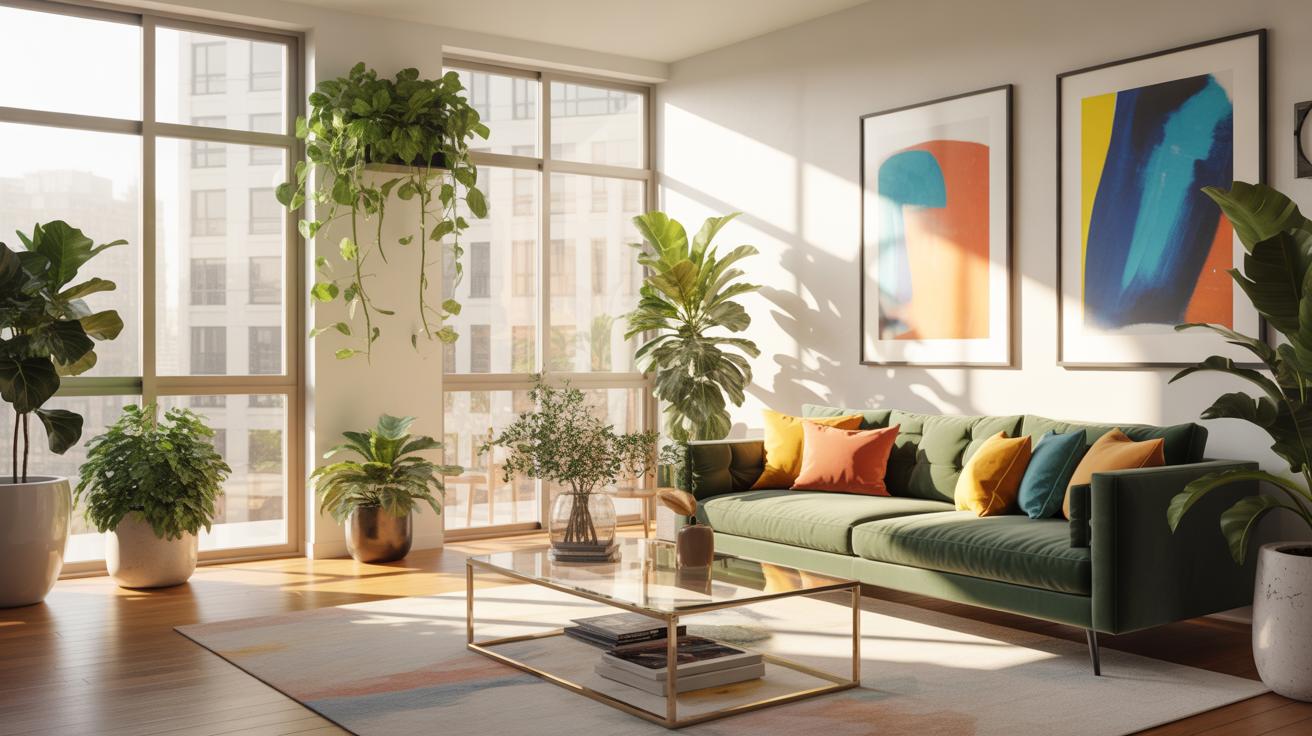
Apartment inspiration is key to creating a home that reflects your style and meets your needs. Whether you live in a small city flat or a large apartment, the way you design it influences how you feel every day. This article focuses on apartment inspiration for dream apartment decor and living room design. It will guide you through choosing styles and furniture, improving functionality, and making your apartment a cozy place to live.
You will learn practical tips for setting up your living room and whole apartment to match your taste and lifestyle. The ideas shared here are based on proven methods that improve living spaces, so you can make informed choices. Ready to turn your apartment dreams into reality? Let’s start with creative ideas tailored for apartments of all sizes and layouts.
How To Select Your Apartment Theme
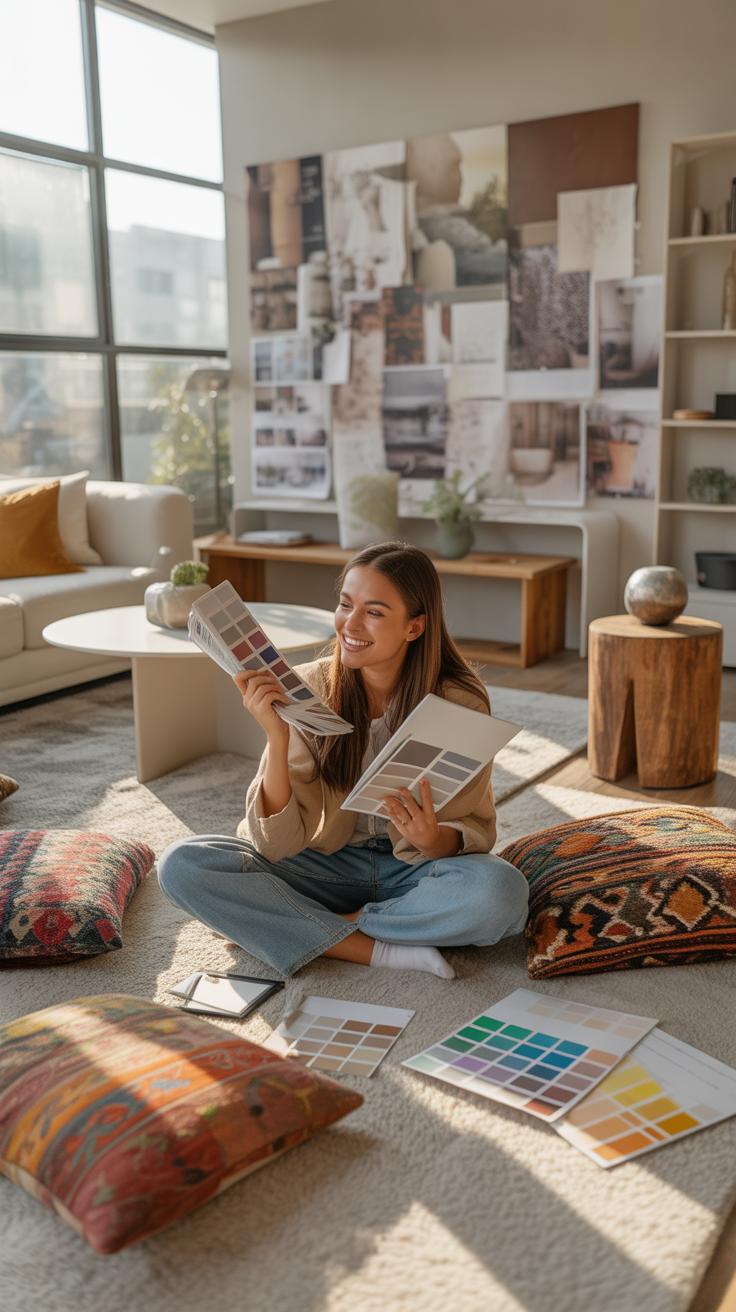
Picking a decor theme for your apartment can be a bit puzzling at first. You start thinking about what fits the space, but then your own tastes pull you in different directions. Size really matters—it’s not just about squeezing furniture into rooms but about how open or cozy you want your space to feel. Natural light changes everything too; a sun-drenched room might welcome brighter colors or softer hues, while a dimmer space might beg for warm tones or reflective surfaces to bounce the light around. Your color preferences are a personal playground—you might imagine bold shades now but feel drawn to calmer ones later. Style, well, that’s often a mix of what you enjoy, what’s practical, and sometimes what just feels right after living in a space for a while. Maybe you want to experiment with something unconventional, or maybe you lean towards classic, timeless looks. It’s okay to feel unsure and tweak as you live with your choices.
Factors To Consider When Choosing Style
Space limits your options more than you might think. Smaller apartments don’t always mean compromising on style, but they do push you to prioritize multifunctional pieces and clever storage. Lighting plays a role beyond the obvious; the way shadows fall and where light pools can guide where you place furniture or art. Also consider your lifestyle—do you entertain often, work from home, or need a quiet retreat? Those realities shape what style works best. Sometimes, a style looks great in pictures but feels uncomfortable when lived in. It’s part of finding a balance that suits both your space and your daily needs.
Examples Of Popular Apartment Themes
Minimalist decor often appeals with its clean lines and uncluttered spaces. It might fit those who appreciate calm and simplicity or have limited storage options. On the other hand, boho styles can bring warmth and personality—patterns, textures, and a mix of cultures—but they might feel overwhelming in tiny apartments. Modern styles focus on sleek, functional pieces, sometimes sacrificing warmth for style, yet they often work well in well-lit, open spaces. Each theme carries its own lifestyle implications and fits different personalities and routines. You might even mix these ideas, borrowing what resonates from each to create your unique environment. Which combinations might surprise you?
Steps To Furnish Your Living Room
When furnishing your living room, it helps to break down the process into manageable steps. First, consider the size and shape of your space. Measure carefully—this might seem obvious, but it’s easy to overlook. Knowing your dimensions helps prevent buying pieces that won’t fit or overcrowd the room.
Next, establish the primary function of your living room. Is it mainly for relaxing, entertaining, or perhaps working occasionally? This decision guides what furniture you prioritize. For example, a comfy sofa and armchair combo might be essential if lounging is key.
Once you know the purpose and size, sketch a layout. Arrange furniture in ways that maximize openness and ease of movement. Sometimes, placing sofas against walls feels natural, but floating pieces can create a cozy conversation area. Don’t hesitate to move things around a few times.
Finally, pick furniture with both comfort and practicality in mind. This means testing how a sofa feels as much as how it looks. Will you spend hours on it? Make sure it supports you well. Choose pieces that offer storage or multi-use options when possible. Such choices can save precious square footage.
Making Space Work For You
Space-saving furniture is a lifesaver in many apartments. Multi-use pieces like ottomans with storage or fold-out coffee tables can serve different needs without clutter. Think about vertical space too—shelves and tall cabinets free floor area.
Smart layouts also do wonders. Try to avoid blocking natural pathways. Corner units often reclaim unused spots, and modular seating can be reconfigured according to your mood or guest numbers. Don’t underestimate the power of a slim console table behind a sofa for added surface area without eating up space.
Choosing Furniture For Comfort And Style
When selecting furniture, strike a balance between what’s comfortable and what matches your style. For sofas, consider materials and cushioning that suit your lifestyle. If you like a more formal look, a sleek mid-century modern piece may appeal but might trade some softness.

Chairs are another area to customize. Armchairs with padded arms invite relaxation, whereas armless chairs can save space and keep the room feeling open. Tables vary widely, so pay attention to height and legroom. A round table can make traffic flow easier in tight spots but might take more surface space.
In the end, comfort can’t be compromised entirely, nor should style be ignored. Sometimes, choices aren’t absolute—you might pick a chair that isn’t plush but has an intriguing design that sparks joy. That’s okay; your living room is your personal space, after all.
Checklist For Apartment Decor Essentials
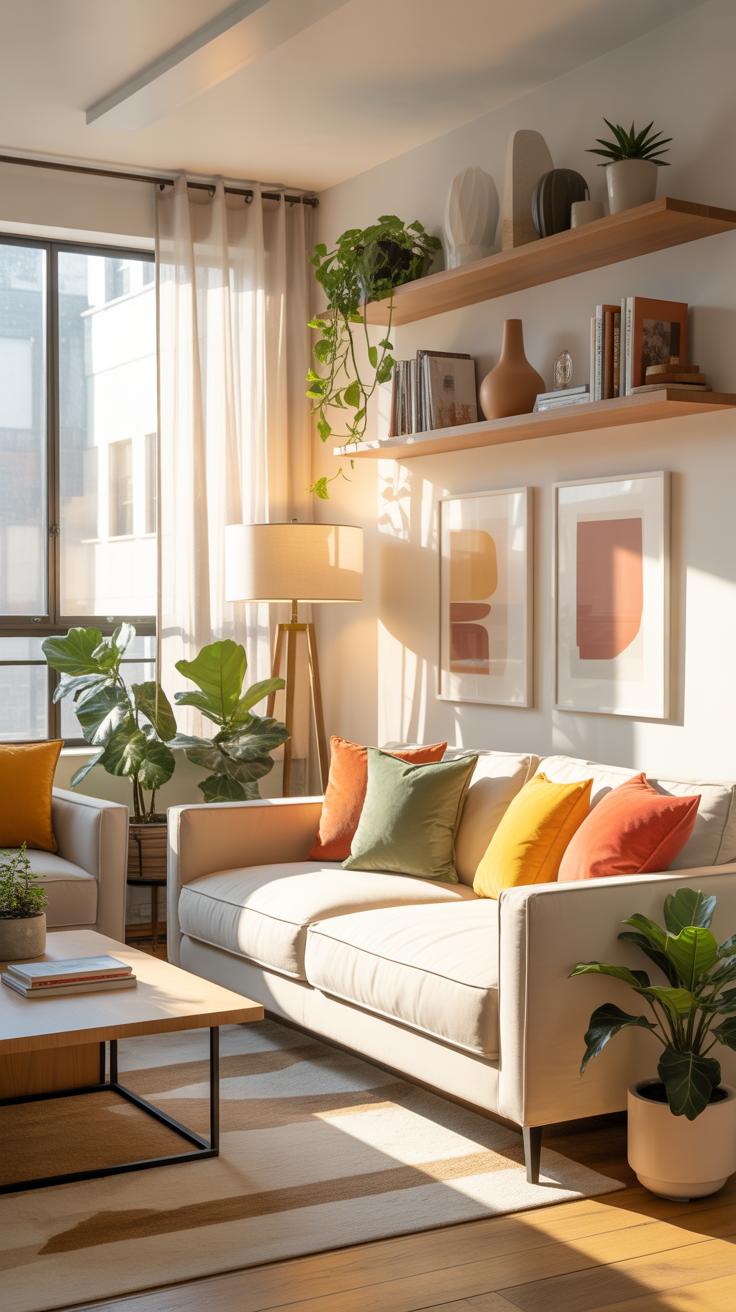
Creating a cozy and stylish apartment starts with the essentials, but what exactly belongs on your decor checklist? Think about key pieces that shape the space without overwhelming it. Wall art is a must-have; it personalizes your rooms, offering a glimpse into your taste or travels. Choosing pieces that speak to you can make your living space feel uniquely yours. Rugs provide more than warmth—they define living zones and soften echoes, especially in open-plan apartments. Lighting often gets overlooked but it’s crucial. A mix of overhead, task, and mood lighting can transform your place, making it adaptable for different times of day and activities. Finally, good storage helps in ways you might not expect; it keeps your apartment neat and preserves your sanity. Without adequate storage, even the best decor can look chaotic.
Must Have Decor Items For Style
When it comes to adding style and personality, some pieces stand out. Think about accent pillows and throws that add color and texture effortlessly, making your sofa or chair inviting. Mirrors don’t just serve a functional role—they reflect light and expand your space visually. Plants bring life—and, I guess, a touch of unpredictability too. No two plants behave the same in an apartment setting, which can be both charming and a little frustrating. A statement lamp or sculptural vase can anchor a room with subtle flair. It’s surprising how just one or two of these items can shift a blank space into something interesting.
Storage Solutions To Reduce Clutter
Clutter is the enemy of calm, so storage solutions should be both practical and discreet. Look for multi-purpose furniture like ottomans with hidden compartments or beds with built-in drawers. Vertical shelving units use height rather than floor space, great if your footprint is limited. Clear storage boxes stack neatly and help you identify contents at a glance, cutting down on “where did I put that?” moments. Hooks and wall-mounted racks can keep things off surfaces but still close at hand. Honestly, no one likes tripping over clutter, and well-planned storage stops that before it starts. How do you find the balance between stylish and sensible when choosing these pieces? It’s a question worth pondering as you plan your setup.
How To Use Lighting In Apartments
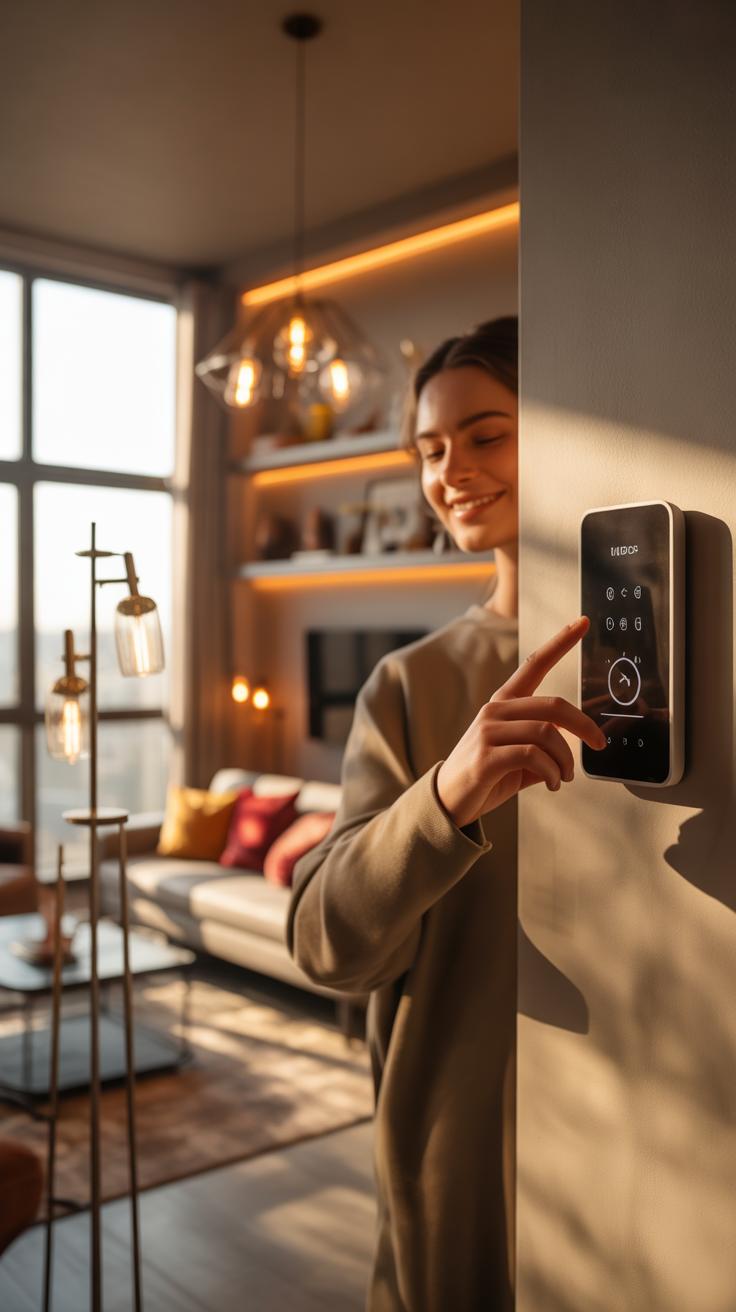
Lighting in apartments isn’t just about seeing clearly—it shapes how you feel and how space feels around you. Your choice between natural light, overhead lights, or lamps can really change the mood. Warm light tends to create a cozy, calming vibe, whereas brighter, cooler lights can help you feel alert. It’s interesting how light can trick your brain into perceiving space differently too. A dimly lit room might feel cramped or even a bit gloomy, whereas bright, well-distributed light can open up a small apartment, making it appear larger and airier.
Considering your lighting options carefully is key. You have basic fixtures like ceiling lights, but there are lamps, sconces, LEDs, and even smart bulbs that adjust based on your mood or time of day. Think about layering your lighting rather than just relying on one source; it’s a simple way to add depth to your space.
Types Of Lighting For Different Spaces
When styling your apartment’s lighting, it helps to know the three main types:
- Ambient lighting provides overall illumination. It’s like the foundation—usually ceiling fixtures or wall-mounted lights.
- Task lighting focuses light where you do specific activities, like reading or cooking. Desk lamps, under-cabinet kitchen lights, and floor lamps are examples.
- Accent lighting highlights features or décor, adding layers and visual interest. Think about wall sconces or spotlights for artwork.
Using these lighting types thoughtfully in each room can improve function and mood. Your living room might need a warm, soft ambient glow, plus directional lamps near seating for reading.
Tips For Brightening Small Rooms
Small rooms can feel almost claustrophobic without the right lighting tricks. A few ideas I’ve found helpful include:
- Use mirrors to reflect light and bounce it around—this actually doubles the effect of your light sources.
- Choose light bulbs with a higher lumen output but avoid overly harsh blue tones, which can feel cold and uninviting.
- Place lamps or sconces near corners to reduce shadows, making the room feel more open.
- Opt for sheer or light-colored curtains that let natural light slip through rather than heavy drapes.
Sometimes less is more—overcrowding a small space with too many lighting fixtures can feel cluttered. Instead, layering a few well-placed lights could open up your room and make it more welcoming. Ever noticed how a dim corner suddenly seems expansive once illuminated?
Comparing Small Vs Large Apartment Designs
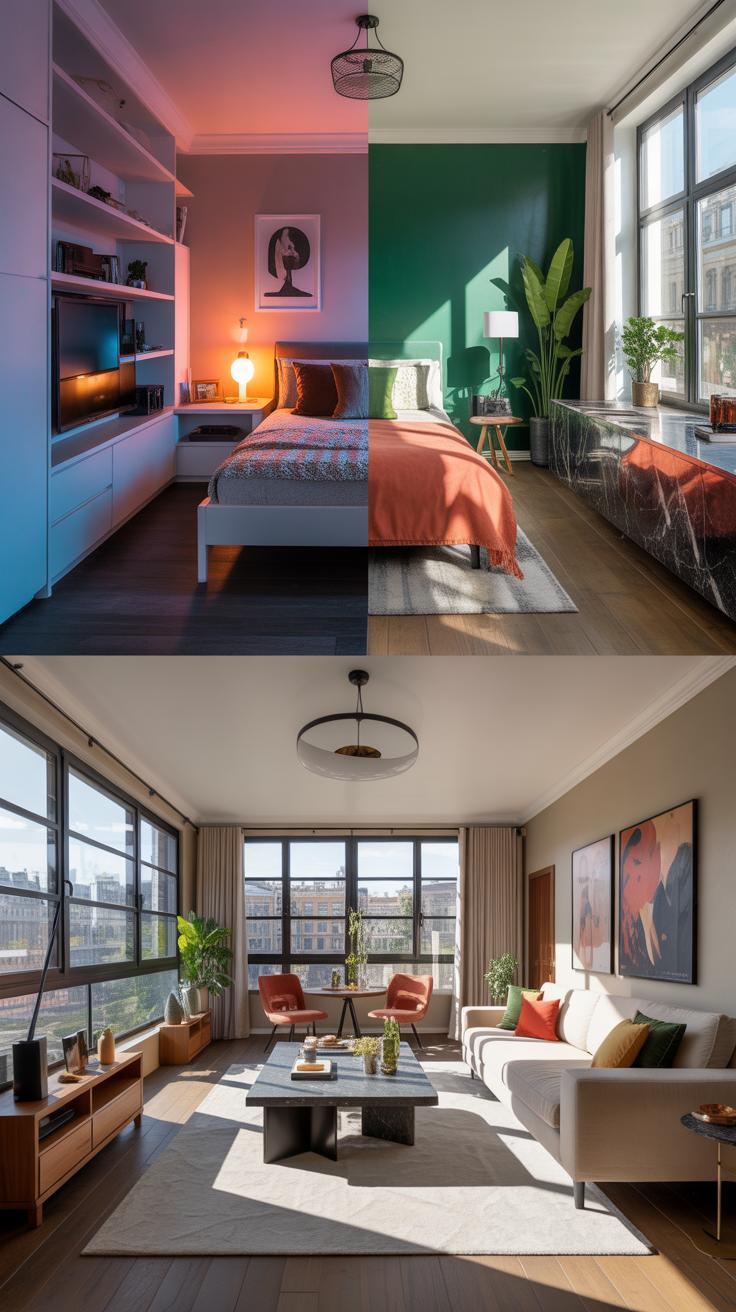
When thinking about apartment design, space is the key factor—small and large apartments demand different approaches. In small apartments, every inch counts. You want furniture that multitasks: beds with storage underneath, collapsible dining tables, or sofas that turn into sleepers. The goal is to keep the space feeling open while still being functional. Light colors and mirrors can help make a smaller space seem larger, but clutter is a real danger. You’ve got to pick decor wisely, choosing statement pieces that won’t overwhelm the room.
Large apartments offer freedom, but that throws its own challenges your way. Vast, empty areas can feel cold or impersonal if you’re not careful. Here, it’s about dividing space naturally—think rugs to define areas, grouping furniture into cozy zones, or adding textiles that invite warmth. Oversized furniture works well but should maintain balance so the room doesn’t seem cavernous. It’s interesting—sometimes too much space creates its own sense of isolation.
Design Tips For Small Apartments
For small spaces, consider the following:
- Use vertical storage to free up floor area, like tall shelves or hanging organizers.
- Choose furniture that serves multiple purposes, such as ottomans with hidden storage.
- Keep color palettes light to enhance brightness and space perception.
- Use slim, minimalist furniture to avoid bulkiness.
- Incorporate fold-away elements like desks or tables to create flexibility.

One time, I tried a wall-mounted fold-down desk in my tiny bedroom. Not only did it save space, it actually made the room feel less cramped when not in use. Sometimes, the simplest tricks matter most.
Making Large Apartments Feel Cozy
Large apartments can sometimes feel like hollow shells. To combat this, try:
- Creating intimate areas with clusters of furniture, like a reading nook or conversation corner.
- Layering textiles—rugs, throws, cushions—to add texture and softness.
- Using warmer hues or deeper tones in decor to bring warmth, while balancing them with neutral backgrounds.
- Adding personal touches like books, artwork, or plants to avoid sterility.
- Ensuring lighting isn’t just overhead—table lamps and floor lamps can soften the atmosphere.
It’s curious, isn’t it? More space doesn’t always mean more comfort. Sometimes you have to work a bit harder to make a large apartment inviting—and that challenge can spark creativity in unexpected ways.
How To Personalize Your Apartment Decor
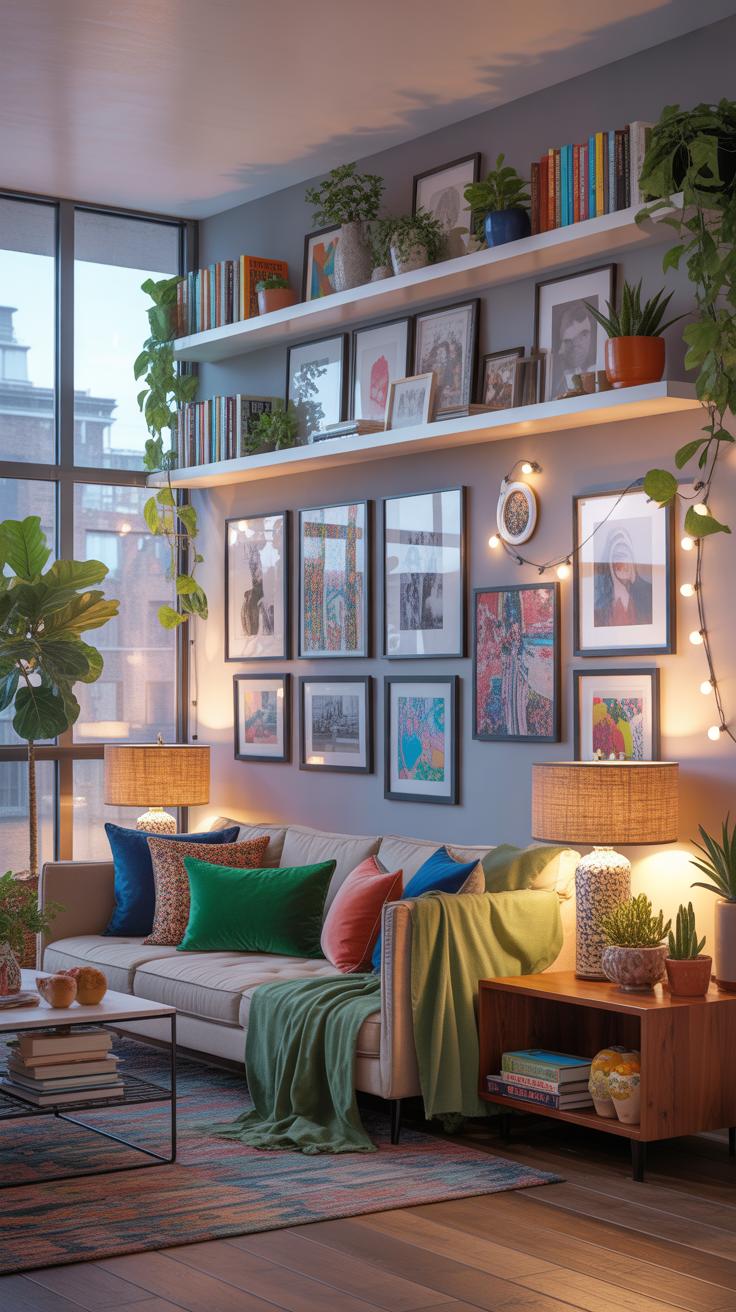
When it comes to personalizing your apartment, art and photos are a good place to start—and, no, I don’t mean just slapping family pictures on the fridge. Think about creating a gallery wall with a mix of framed photos, prints, and art that resonates with you. It’s a way of telling your story without saying a word. Try varying frame sizes or colors to break the uniformity; rigid patterns often feel too formal.
Consider your walls as a kind of scrapbook. What makes you smile when you look at it? Maybe it’s an abstract painting that reminds you of your favorite city, or snapshots from trips with friends. You can even get creative by mixing in some prints from local artists or postcards that hold special memories. The key is to make the space feel like it’s yours alone, not a showroom.
Using Art And Photos
Don’t just lean pictures against the wall or hide them in drawers. Display them thoughtfully where you spend the most time—behind the couch, above your bed, or even in unexpected spaces like the hallway. Mounting a few photos on a ledge allows you to swap pieces in and out depending on your mood, which keeps things fresh and less permanent.
One approach is to frame a large photo or piece of art as a focal point and then surround it with smaller complements. Or, if you prefer minimalism, one bold artwork might do the trick. The scale matters; too many small pieces clustered can feel cluttered rather than charming.
Adding Unique Accessories
Accessories like plants, cushions, and handmade items bring layers of texture to your apartment. Plants are surprisingly transformative—they add life and color, and caring for them can become a small, calming routine. But, be realistic about your window light and watering habits. Cacti and succulents fit those who tend to forget watering, while ferns require more consistent care.
Cushions with varying patterns and fabrics offer a quick mood shift without breaking the bank. Handmade or vintage accessories add personality that mass-produced items often lack. I once picked up a small ceramic bowl on a trip that ended up as a catch-all for keys and jewelry—it felt like a piece of my journey lived with me.
Above all, keep asking yourself: does this item make me feel more at home? It’s okay if your collection grows in unexpected ways as you learn more about what truly feels right for your space.
Cost Breakdown For Apartment Decorating
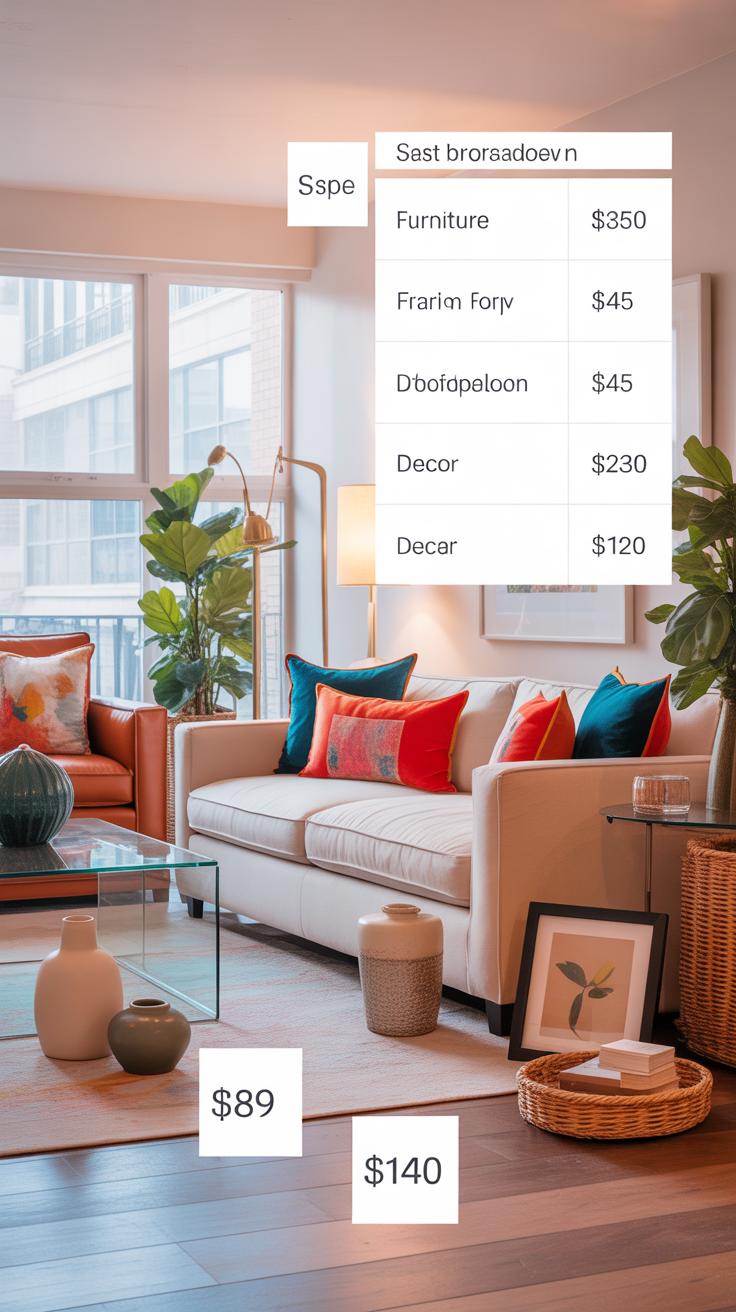
When you decorate your apartment, it’s easy to get carried away and lose track of costs. But having a clear budget helps keep things manageable and less stressful. Think of your budget in three main parts: furniture, decor, and lighting. Each needs attention, but with different spending priorities.
Estimating Furniture Expenses
Furniture is usually the biggest expense. Essential pieces like a sofa, bed, and dining table can vary widely in price. For example, a decent sofa might cost anywhere from $300 to $1,000 or more. This depends on the store, materials, and size. Places like IKEA offer affordable and stylish options, often under $500 for a good-quality sofa or bed frame. But sometimes hunting for deals through second-hand shops or online marketplaces can get you better prices or unique finds. If you’re patient, you might snag designer items for less.
Budgeting For Decor And Lighting
Decor is where you add personality without breaking the bank. Plan to spend about 20-30% of your total budget here. Items like rugs, cushions, artwork, and plants can all brighten a space. Lighting, though often overlooked, is key. A good floor lamp or pendant light can cost $50 to $200, but these investments affect the room’s entire vibe. Consider layering your lighting with a mix of overhead, task, and accent lights to create depth. Batching your decor purchases during sales seasons also helps stretch your budget.
Mistakes To Avoid In Apartment Design
Ignoring Practical Needs
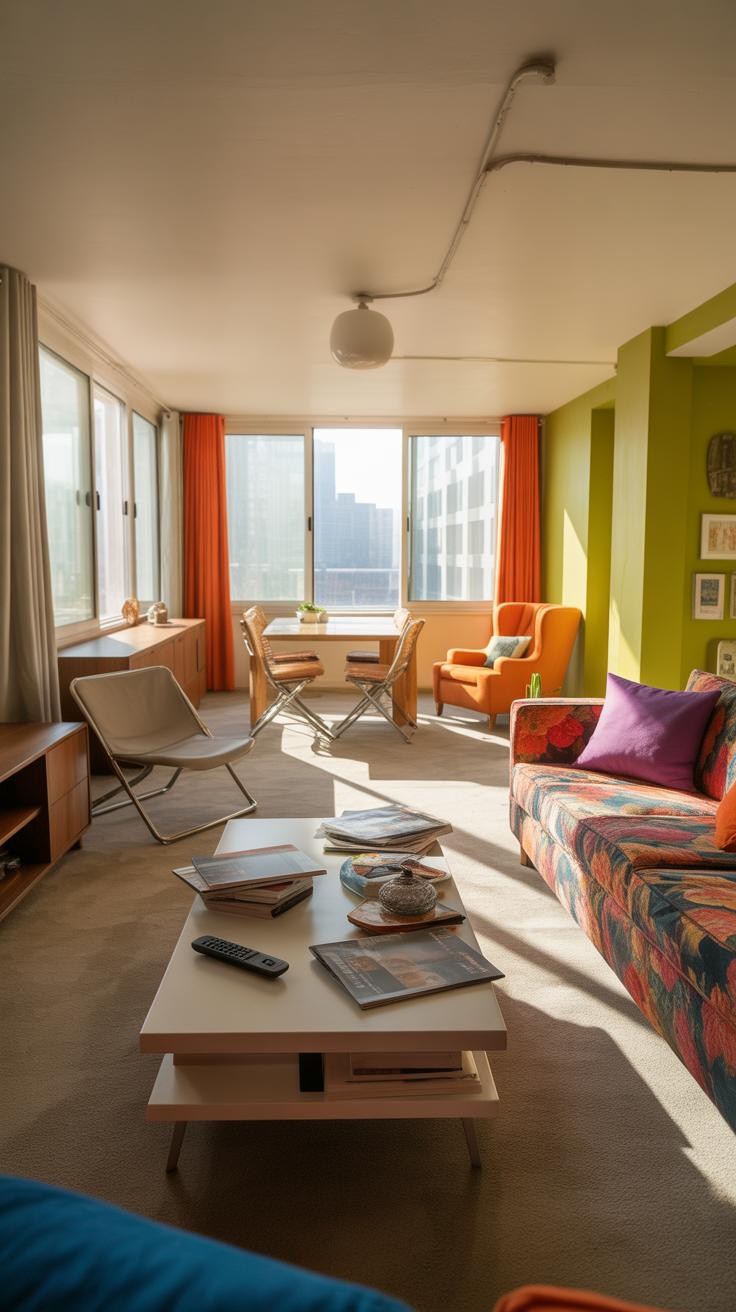
It’s tempting to focus on how your apartment looks, but ignoring practical needs can really backfire. Storage and comfort aren’t just afterthoughts—they’re the foundation. When you don’t plan enough storage, clutter naturally piles up, making the space feel chaotic. It’s like trying to live in a showroom without thinking about the mess of day-to-day life. And comfort? It’s easy to forget that your furniture should invite relaxation, not just admiration. A stylish couch that’s hard as a rock won’t get much use, right? Prioritize functional pieces that suit your routine. Simple additions like under-bed storage or multi-use furniture can make a world of difference. Trust me, your apartment should work for you, not the other way around.
Overcrowding The Space
Filling every inch of your apartment with furniture or decor might seem like a way to create a cozy vibe, but it often does the opposite. Overcrowding makes rooms feel cramped and overwhelming. Movement gets restricted, and you may end up stressing over bumping into things. The trick is to be selective—choose smaller, well-placed pieces that allow for breathing room. It’s hard to resist adding that cute side table or extra chair, but ask yourself if you really need it. Clearing visual clutter also helps the space feel larger and more inviting. Sometimes, less is honestly more. I’ve found that leaving some empty space invites calm and keeps your apartment feeling fresh, not suffocating.
Conclusions
Good apartment design starts with clear inspiration and practical steps. By choosing styles and furniture that suit your space and needs, you can create a setting that feels both beautiful and functional. Remember, a well-planned living room becomes the heart of your home, offering comfort and style.

Use the ideas shared in this article to guide your apartment decoration and living room setup. Take your time to explore what works best for you. Simple changes can lead to a big difference in how your apartment feels. With thoughtful planning, your dream apartment decor and living room design can become your everyday reality.