What Shapes Apartment Living Room Design
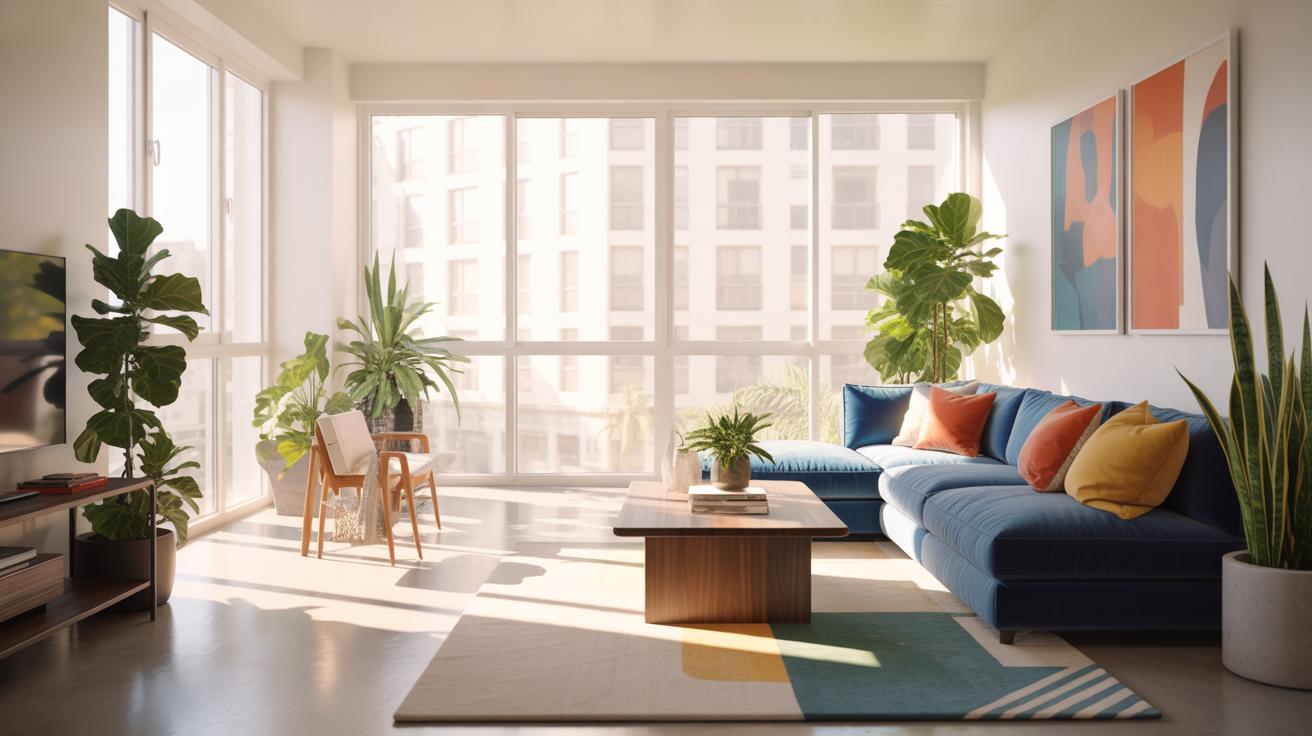
Apartment living room design focuses on creating a comfortable and stylish space suited for smaller areas. It combines function and aesthetics to accommodate everyday living and social activities. This article presents creative ideas and practical advice for designing apartment living rooms that look great and feel inviting.
We offer living room design inspiration that covers room layout, furniture choices, lighting solutions, and decoration tips. Whether you aim to maximize space or establish a cozy atmosphere, the following sections guide you through important design steps and examples to improve your apartment living space.
Apartment Living Room Essentials
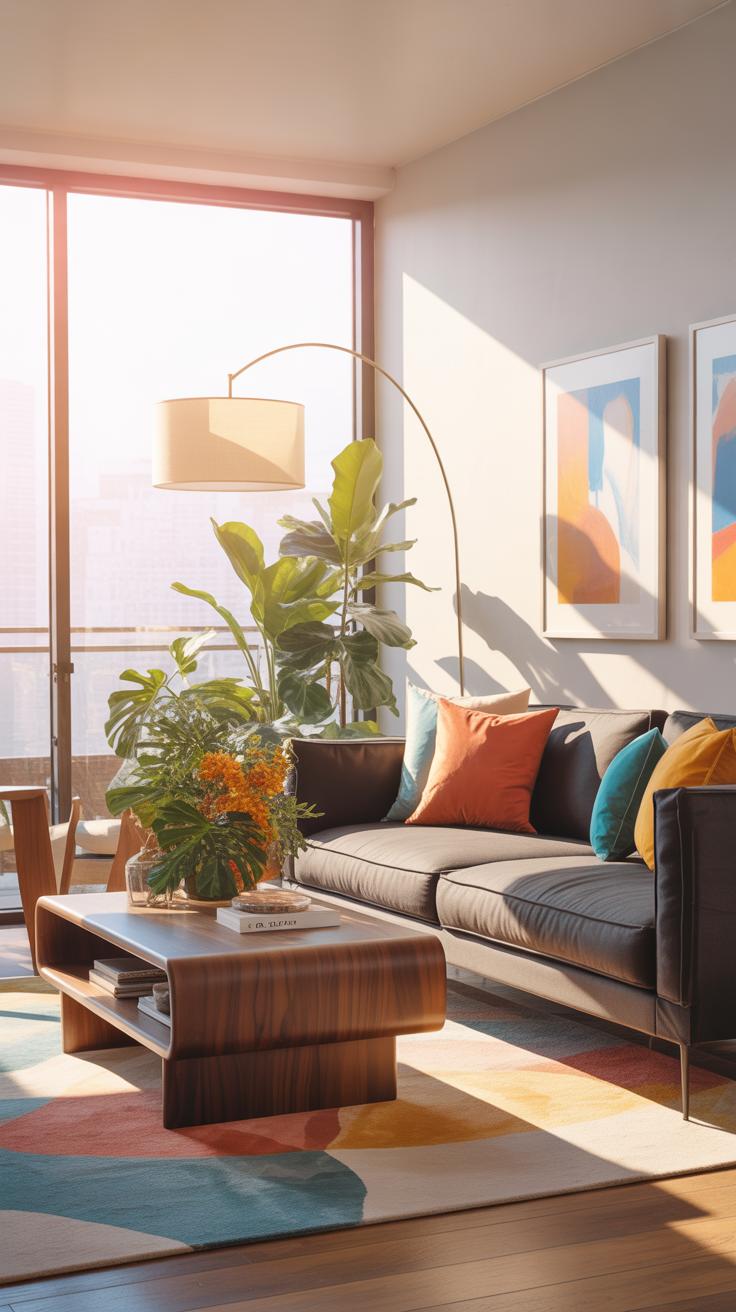
When thinking about designing an apartment living room, space planning is probably the key. Unlike larger homes, apartments often have limited square footage, so every inch counts. You want to make sure the furniture you choose doesn’t just fill the room, but fits it comfortably. It’s a bit like solving a puzzle — placing pieces where they belong, making flow natural rather than forced. Primary furniture pieces, like a sofa and a coffee table, serve as anchors. Yet, you’ll want to maintain a balance where the room feels both functional and stylish, not crowding it but offering comfort and usability.
It’s easy to get caught up in style and forget that your living room should serve your day-to-day activities, whether that’s relaxing, entertaining, or even occasional work. A space that looks great but isn’t practical can quickly become frustrating.
Key Design Elements For Apartments
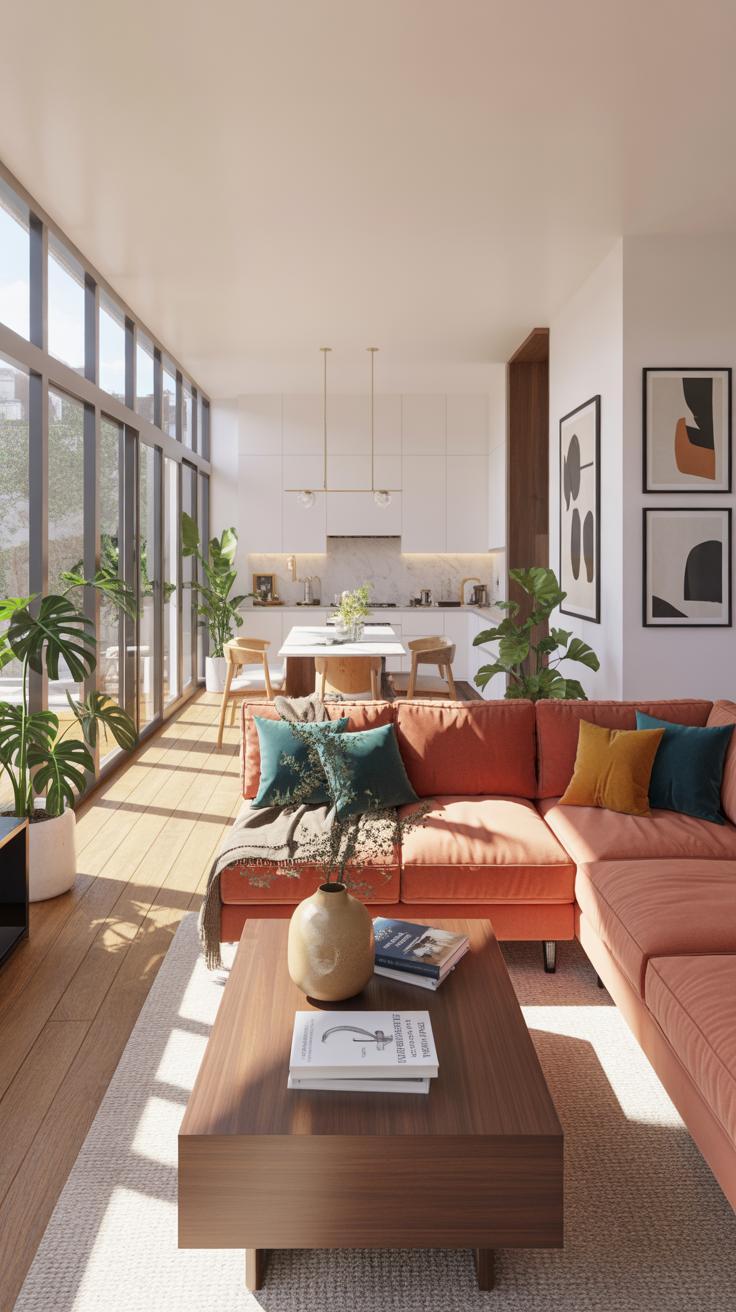
The choice of color schemes can make a surprising difference. Light, neutral palettes tend to open up the space, while darker shades might make rooms feel cozier — though sometimes a bold choice works if balanced well. Layout is another major consideration — simple, open plans often suit apartments best to avoid clutter. Multi-functional furniture, like ottomans with storage or fold-out beds, can help you get more out of limited space. These pieces offer versatility and help keep the room organized without sacrificing style.
You might wonder if small apartments force uniformity, but they don’t have to. Thoughtful use of textures, subtle patterns, or unexpected pops of color can bring character without overwhelming.
Choosing Functional Furniture
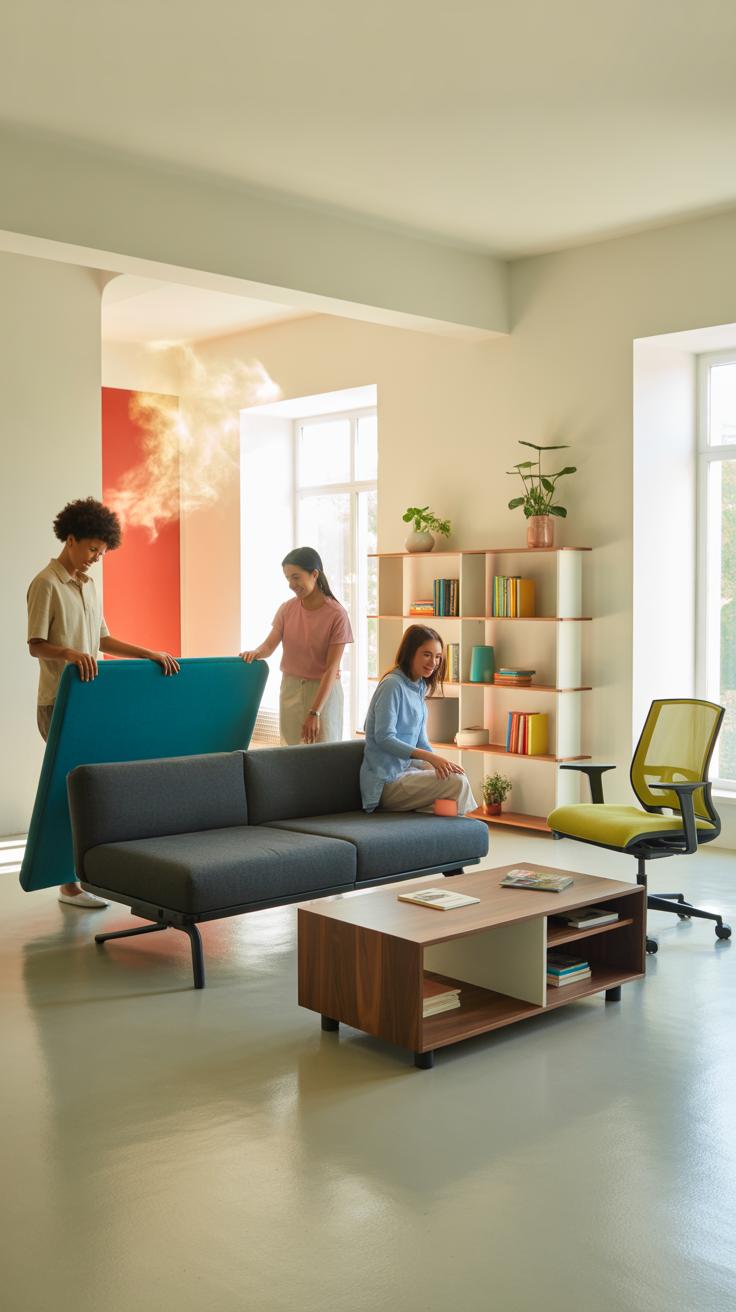
Furniture selection is tricky in apartments because size matters a lot more than you might expect. Bulky or oversized items can throw off the scale and dwarf the room. It’s better to choose pieces that adapt — perhaps a sectional that can be rearranged or nesting tables that tuck away neatly. Storage options built into furniture, like shelves in coffee tables or bed frames with drawers, help reduce clutter. You might even find yourself appreciating collapsible or stackable furniture for guests or occasional use.
In the end, the furniture must work with your lifestyle, but it also should fit the room physically — tight fits aren’t comfortable and can cause frustration over time. So, measuring well and considering options beyond what you already know might feel a bit overwhelming but pays off in the long run.
How To Maximize Small Living Rooms

Using Mirrors To Add Depth
Mirrors can be a surprising trick to make a small living room appear bigger. When you place a mirror opposite a window, for instance, it reflects natural light, bouncing it around the space and making the room feel airier. Positioning them near light sources or across from key features can add depth. It’s interesting how even a modest mirror can create an illusion of more space, though it takes a bit of experimenting to find the sweet spot—sometimes you think a spot will work but then it doesn’t quite do the trick.
Light Colors And Open Layouts
Light colors, like soft whites, pale blues, or gentle grays, help keep the atmosphere open. They make walls recede visually, which tricks the eye into thinking the room is larger than it is. But here’s the thing—if everything is light-colored without any contrast, it may feel bland or cold. So mixing in subtle accent tones or textures can make a space inviting while still feeling spacious.

Minimalist layouts matter, too. Crowding a room with too much furniture or large bulky items makes it feel cramped. Instead, choose pieces that have a small footprint but offer functionality, and make sure there’s clear flow for movement. The open layout approach isn’t just about space—it helps reduce visual noise, letting your living room breathe a little, which I find quite refreshing when working with compact spaces.
Living Room Lighting Choices
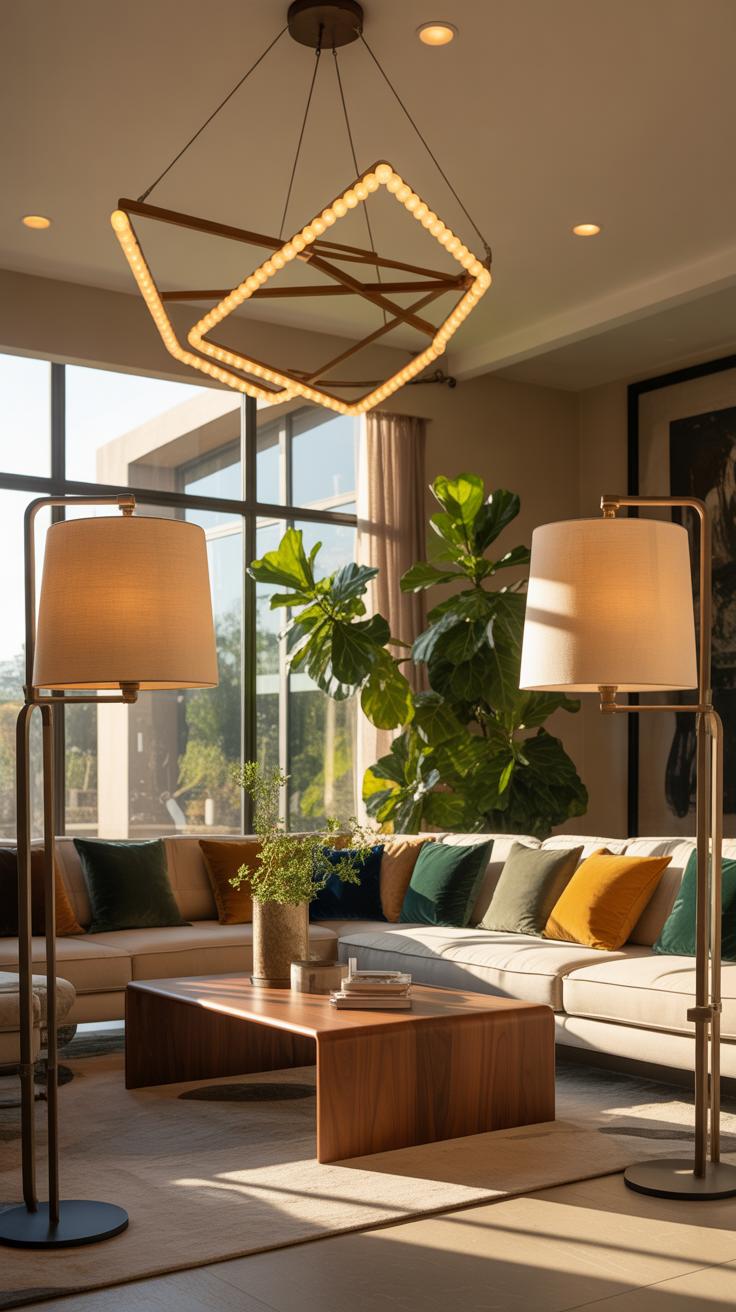
Lighting in apartment living rooms isn’t just about putting in a ceiling fixture and calling it a day. It’s more complex, but in a good way. Apartment spaces come in all shapes and sizes with different natural light, so the wrong lighting can make things feel smaller or less inviting.
Think about using lighting in layers—you can mix ambient, task, and accent lights to build a flexible, comfortable atmosphere. Ambient lighting provides general illumination, setting the base level of light in your living room. But you don’t want your space feeling too bright or flat, so consider task lighting next. It’s meant for specific activities like reading or working, such as a floor lamp beside your favorite chair or a table lamp on a side table. Task lights are more focused and usually brighter where you need them most.
Then, there’s accent lighting, which is a bit more playful. Accent lights spotlight particular features in your room—maybe artwork, plants, or shelves. Accent lamps, hanging lights, or spotlights can add warmth and personality. I once found that adding a couple of small table lamps changed the entire mood from clinical to cozy, without much effort.
In apartments, where wiring options might be limited, consider portable lamps and lights on dimmers for more control. Layering these types lets you adjust the vibe easily. You might start with ambient lighting for general use, then add task lighting when you need focus, and finally accent light for relaxing evenings or when guests come over. It’s about creating zones with light that match your lifestyle needs and make the space feel like home.
Decor Tips For Apartment Living Rooms
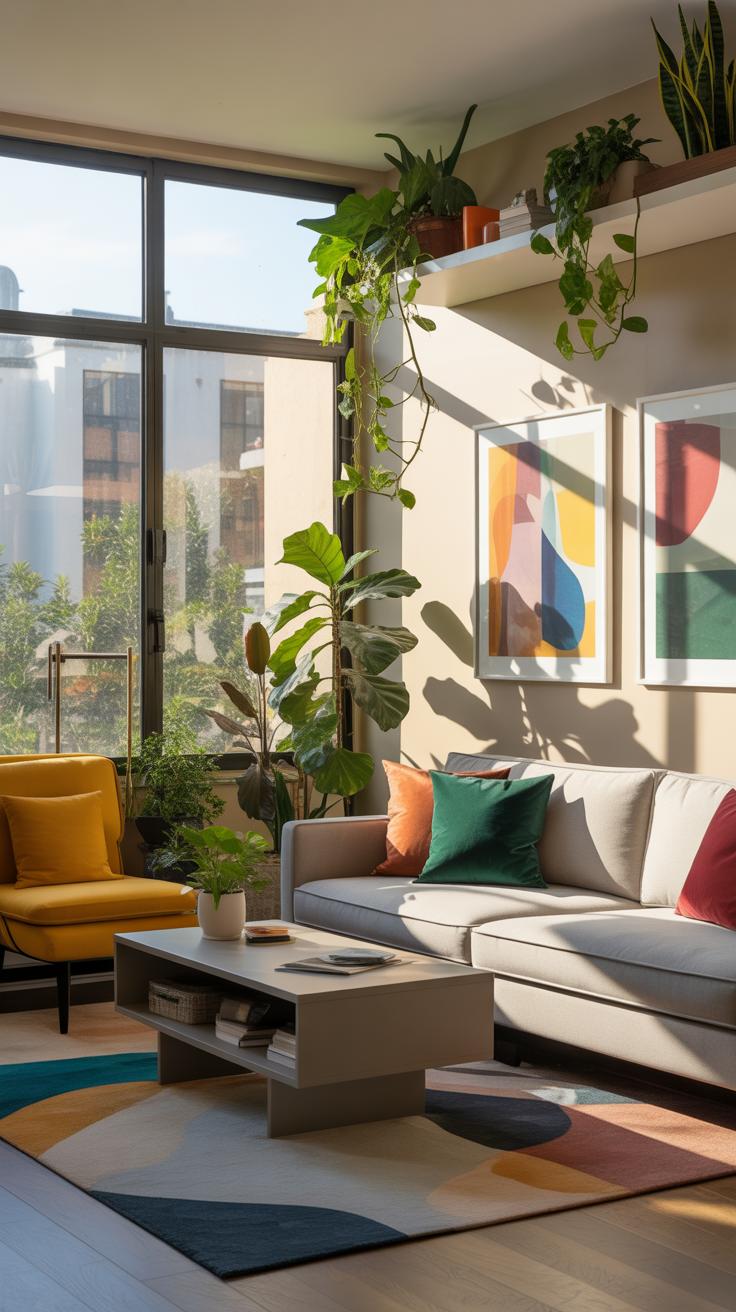
When decorating your apartment living room, the challenge is to add personality without overwhelming the limited space. Consider cushions first—they bring comfort and color, but keep the number small and balanced. Too many pillows can clutter your sofa and make it less inviting. Similarly, rugs should anchor the room; choose a size that fits your seating area without blocking pathways or shrinking the floor visually.
Artwork acts as a focal point but doesn’t have to be oversized or numerous. A single well-chosen piece can unify the décor, so focus on quality over quantity. Placement matters—avoid crowding walls with too much art, as it can make the space feel busy.
Plants bring life and freshness. Think carefully about the type and size based on your lighting. A few medium pots or a hanging plant can enhance air quality and soften sharp edges without taking up valuable floor space. If overcrowding creeps in, the calming effect evaporates, so less is really more.
Selecting Art And Rugs
Choosing art and rugs in small living rooms requires a delicate touch. Go for rugs with simple patterns or subtle textures to avoid overwhelming your space. They should complement but not compete with your furnishings. Neutral tones often work well, but a splash of color can enliven a muted palette.
Art should reflect your style while harmonizing with your decor. Opt for pieces that mirror the room’s color scheme or introduce a single accent hue to tie everything together. One large statement piece often works better than several smaller ones which can fragment the visual flow. This approach can make your living room feel more spacious and cohesive.
Incorporating Plants To Improve Air
Plants not only improve air quality but also add a calming, natural vibe. Think about where light falls in your apartment. Place plants in spots where they’ll thrive and won’t be in the way, such as window sills, corners of the room, or mounted shelves. Avoid crowding surfaces; grouping two or three plants selectively can create a green impact without mess.
Consider types like snake plants or pothos that are known for air-purifying properties and are fairly low-maintenance. Also, rotating plants occasionally gives them fresh air and light, which helps them thrive. Ultimately, plants should enhance, not compete for attention, making your apartment feel both fresh and orderly.
Furniture Arrangement Techniques
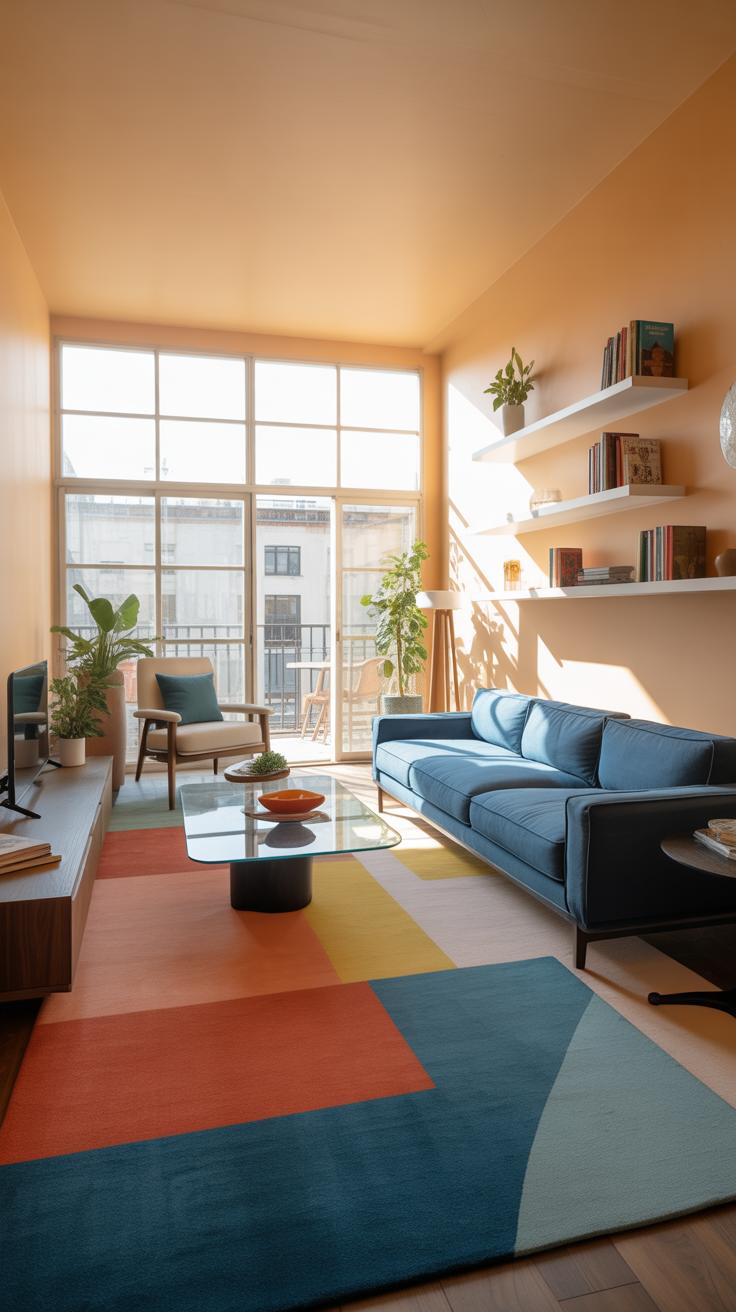
When it comes to arranging furniture in an apartment living room, flow is everything. You want to avoid a cramped feeling but still make the most of the space you have. One trick I found useful is to start by identifying the focal point, often a window, a TV, or even a piece of art. Placing your largest piece of furniture in relation to that spot helps anchor the room.

Then think about how you move around daily. Leave pathways clear—at least about two feet is comfortable. If your space is tighter, smaller gaps can work, but test it out by walking the route a few times.
Using multifunctional furniture like ottomans that double as storage or coffee tables with shelves can save you some precious square footage. Don’t overlook vertical space, too: wall-mounted shelves or slim bookcases add storage without crowding your floor area.
Creating Conversation Areas
Conversation areas are the cozy corners where people naturally gather. To promote interaction, try to arrange seating to face each other—not just the TV. A couple of chairs angled toward a sofa, or a sectional positioned around a central table, makes chatting easier without shouting across the room.
Sometimes, I hesitate to push furniture too close together, fearing a tight squeeze. But a little closeness actually creates intimacy. Just keep enough space so guests don’t feel stuck. Also, think about adding a floor lamp or a small side table nearby to encourage relaxation and ease.
Avoiding Clutter And Dead Zones
Dead zones—those odd, empty corners or narrow spaces—can make a room feel disjointed. I’ve noticed people often push furniture against walls, hoping to open up the center, but sometimes this creates these neglected gaps.
To avoid dead zones, consider pulling furniture slightly away from walls or repositioning pieces to fill unused corners. A small reading nook or a plant display can turn a neglected space into an asset.
Clutter can sneak in quickly, especially when too much furniture crowds the room or surfaces get piled with stuff. Less is usually more here. Be selective: keep only what you use and love. Shelving or baskets help keep things orderly, and remind you to clear out regularly.
Comparing Styles For Living Rooms
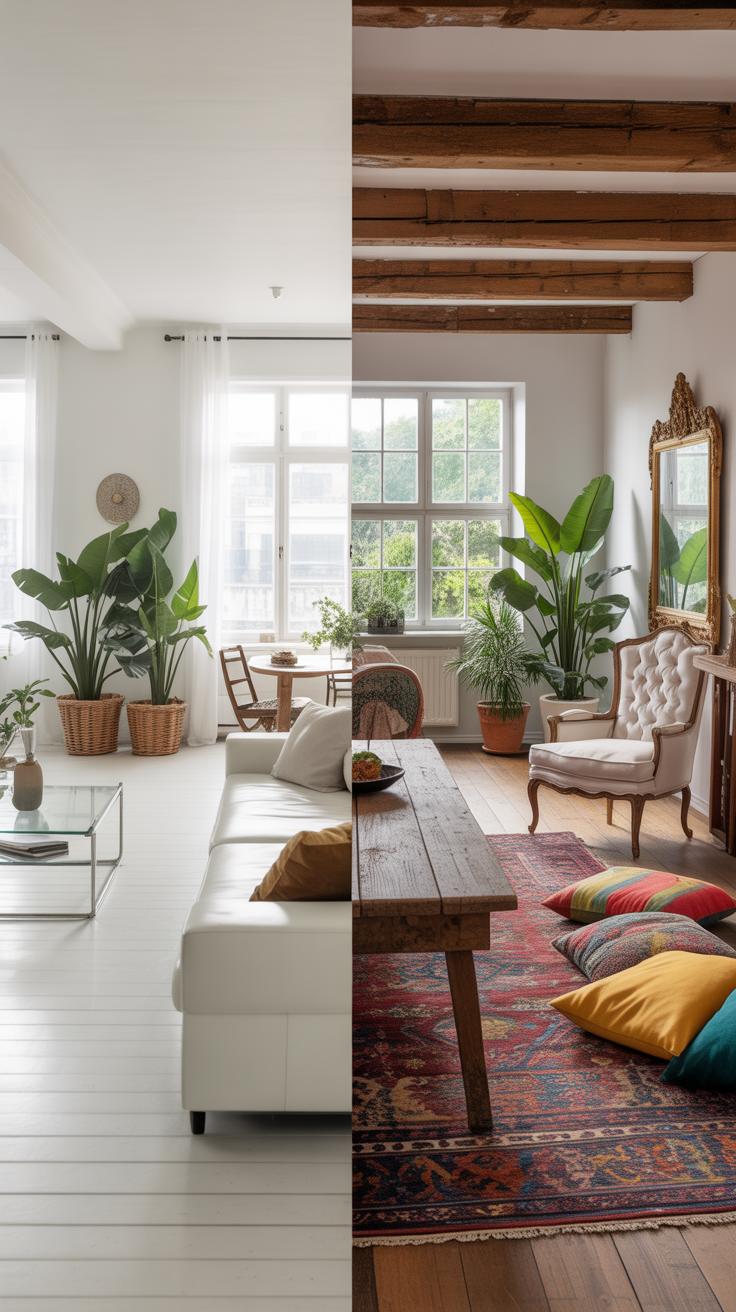
When you step into an apartment, the style of the living room often sets the tone. It’s interesting to consider how modern and minimalist styles, while sometimes confused, actually have quite distinct moods. Modern design tends to embrace boldness. It’s about clean lines but also incorporates striking elements—think geometric forms or bursts of color that draw your eye. It can feel more dramatic, even lively for a small space.
Minimalism, by contrast, pares down the visual noise. It focuses on simplicity and space — not a lot of furniture, mostly neutral palettes, and a quiet sense of order. It might sound dull to some, but for a cramped apartment, its restraint often feels more calming than modern’s energetic vibe. It’s like choosing silence over chatter. But therein lies a question: does a minimalist room risk feeling too bare or cold?
Then there’s Scandinavian design, which feels like a bit of a blend with its warmth and functional elegance. Its key features are natural light, soft textures, and a “less is more” approach but with cozy, inviting touches. Wood accents and textiles make small areas feel less clinical and more lived-in. Many find this style suits apartments well because it balances simplicity with comfort. It’s practical, yet you still want to linger there.
- Modern Style: Bold lines, lively accents, striking designs
- Minimalist Style: Quiet, pared-back, neutral, spacious feeling
- Scandinavian Style: Light, cozy, natural elements, functional
Deciding among these styles might come down to how you want your space to feel. Would you choose silence and simplicity, or lively energy that still respects your apartment’s limitations? Or maybe a warm mix of both? There’s no perfect answer, but understanding these differences can help you shape your living room into a space that feels right for you.
Checklist For Designing Your Living Room
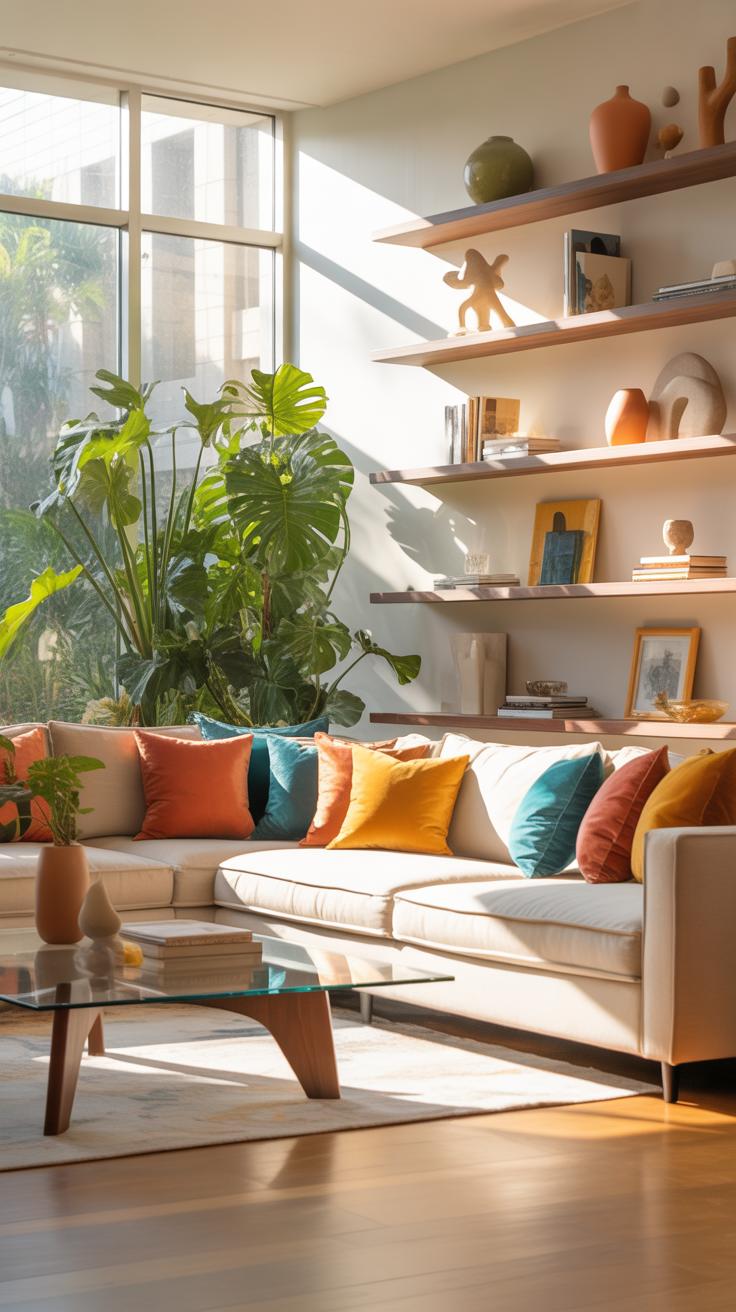
Designing your apartment living room can feel overwhelming, but breaking it down into manageable steps helps a lot. First, start by measuring every inch of your space. This sounds simple, yet many overlook it, leading to poor furniture choices later. Don’t just eyeball dimensions; precise measurements are key.
Then, think about the function: will your living room be mostly for lounging, entertaining, or maybe working? Knowing this guides your furniture picks and layout decisions.
Choosing a theme or style comes next. You don’t have to commit to one strictly—mixing styles can make your space feel personal and interesting. Just be mindful of balancing color and texture so nothing clashes too hard.
When curating essentials for your apartment living room, focus on multipurpose and size-appropriate items:
- A compact sofa or loveseat that fits your space without crowding.
- Small coffee table or ottoman that can double as extra seating or storage.
- Smart storage solutions like floating shelves or slim cabinets.
- Functional lighting that offers both ambient and task options.
- A few decor elements such as rugs and cushions to add warmth and personality without clutter.
It’s tempting to add lots of decorative items quickly, but in an apartment, less is often more. Each piece should serve a purpose or bring you joy. What are you really using your living room for? This mental checklist often steers design choices more than aesthetics alone.
By following this checklist, you not only organize your design process but create a living room that feels practical and inviting. Give yourself room to experiment, and remember that your living room can evolve as your lifestyle changes.
Living Room Design Inspiration Examples
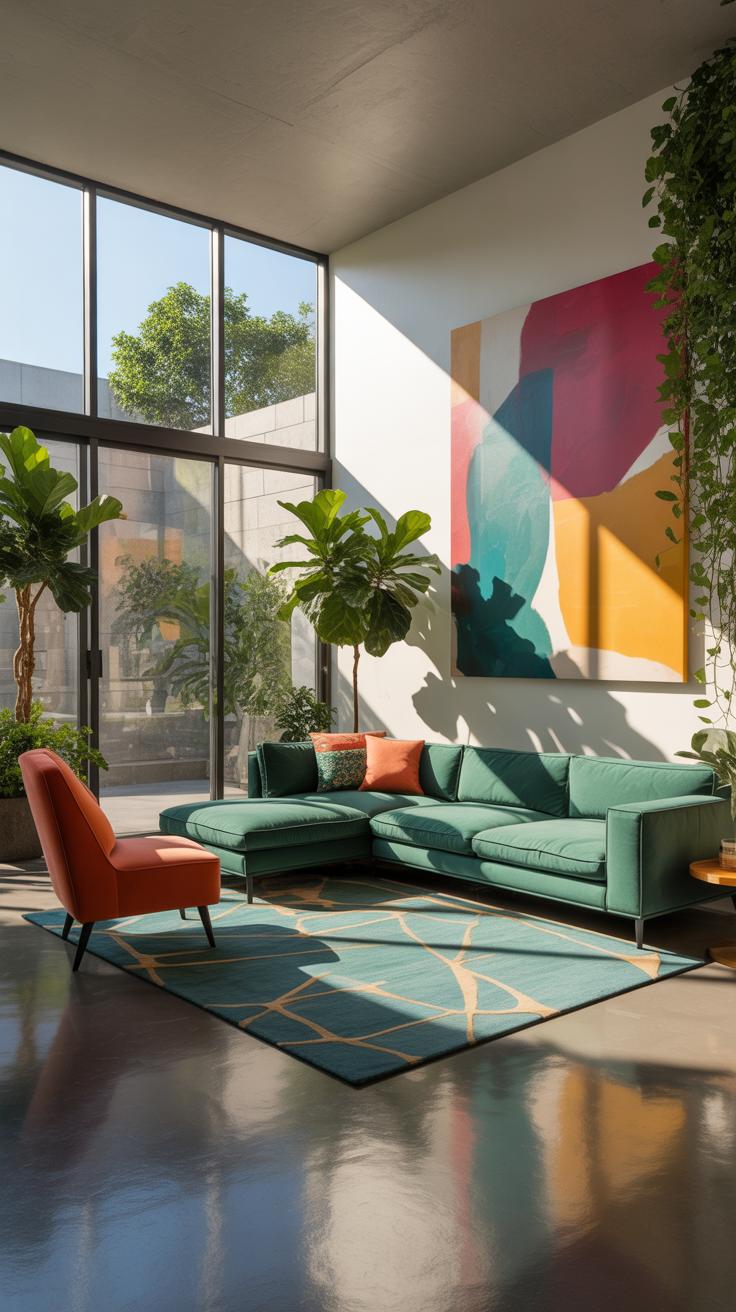
Apartment living rooms often require a bit of creativity since space can be limited. A well-designed apartment living room balances comfort with efficient use of the area. For instance, some apartments showcase foldable furniture that tucks away neatly, revealing more floor space when needed. Imagine a cozy corner with a compact loveseat paired with a sleek, multifunctional coffee table that stores books or remotes—it’s not just furniture but a way to keep clutter in check.
Small space functional layouts frequently revolve around defining zones without walls. A reading nook by the window, separated visually by a small rug or a slim shelf, can transform a simple room into a multifunctional space. In fact, placing the sofa against a wall, rather than floating it in the middle, often frees enough room to add a small desk or dining table. This isn’t always obvious at first; sometimes you need to experiment with arrangements to see what works.
As for decor, many apartment living rooms thrive with minimalist themes that reduce visual noise. But some people prefer a touch of Scandinavian warmth—natural wood accents, simple lines, and soft textiles. Others lean toward urban industrial styles with metal fixtures and exposed brick, even in small spaces. Finding a style that suits your personality is crucial but don’t hesitate to mix elements. The right blend can bring a surprising sense of spaciousness and character.
Common Apartment Living Room Mistakes
Overcrowding With Furniture
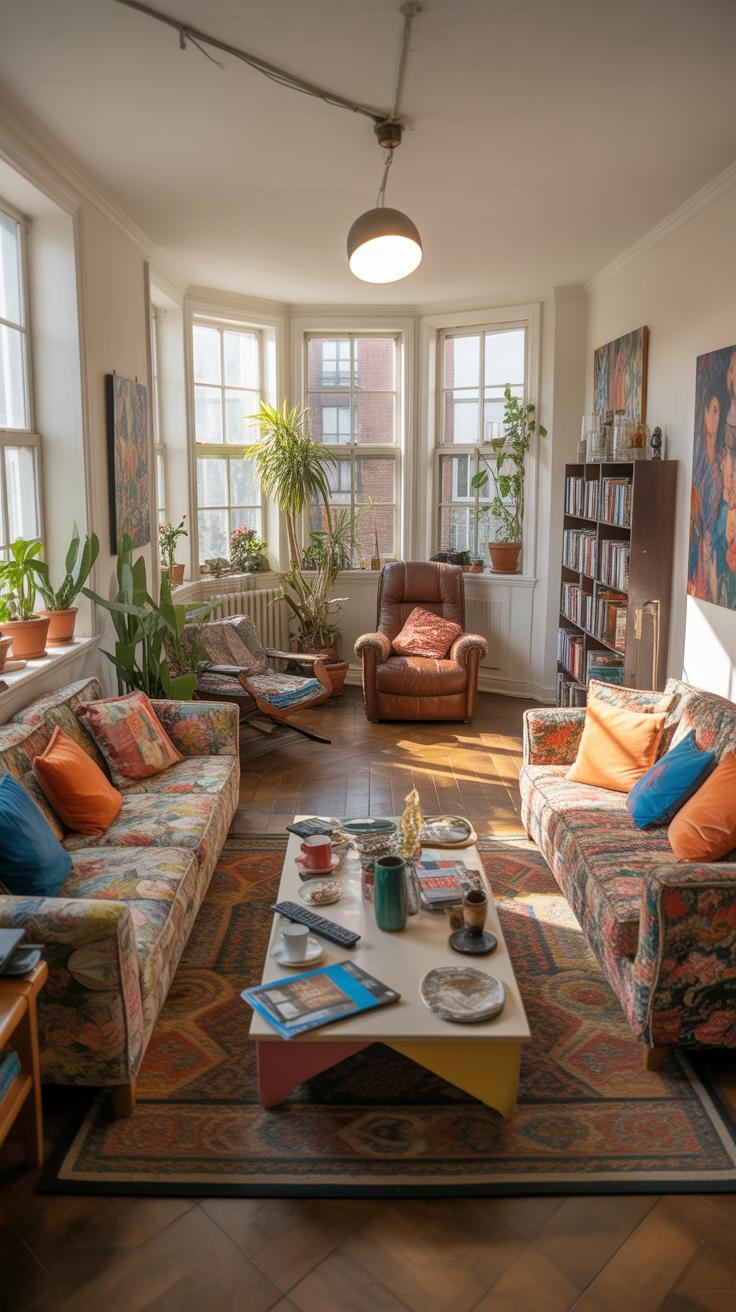
It’s tempting to fill your apartment living room with all the furniture you think you’ll need. But too much furniture can make a space feel cramped and smaller than it really is. Think about your last visit to a friend’s apartment where you couldn’t find a spot to sit comfortably—you might have felt boxed in. That’s a common problem in apartment design because space is limited.
Instead of crowding your living room with bulky sofas and multiple chairs, consider choosing multifunctional pieces. A sofa bed or ottoman that doubles as storage can save significant floor space. Also, try to leave clear pathways where you can move around freely. It’s surprising how freeing even a little open space can feel.
Ignoring Light And Ventilation
Light and airflow often get overlooked but they dramatically affect how comfortable and inviting your living room feels. Dark, stuffy rooms can feel oppressive, making it harder to relax. I remember once staying in an apartment where the living room had only one small window covered with heavy curtains—it felt like a cave.
Good lighting doesn’t always mean bright overhead lights. Mix natural light with soft lamps to create a cozy atmosphere. Also, keep windows unobstructed to allow fresh air to circulate. Sometimes just opening a window or using a fan can make a notable difference. Poor ventilation not only affects comfort but can dim the mood and spoil the look of your space.
Conclusions
Apartment living room design calls for thoughtful planning to blend style and practicality in limited space. Selecting the right furniture and layout can boost comfort and efficiency, making the most of your living area. Lighting and decoration add personality and enhance the room’s mood.
Applying these design tips can transform your apartment living room into a pleasant, organized, and attractive space for relaxing and entertaining. With creativity and attention to detail, you can develop a living room that suits your lifestyle and feels like home.