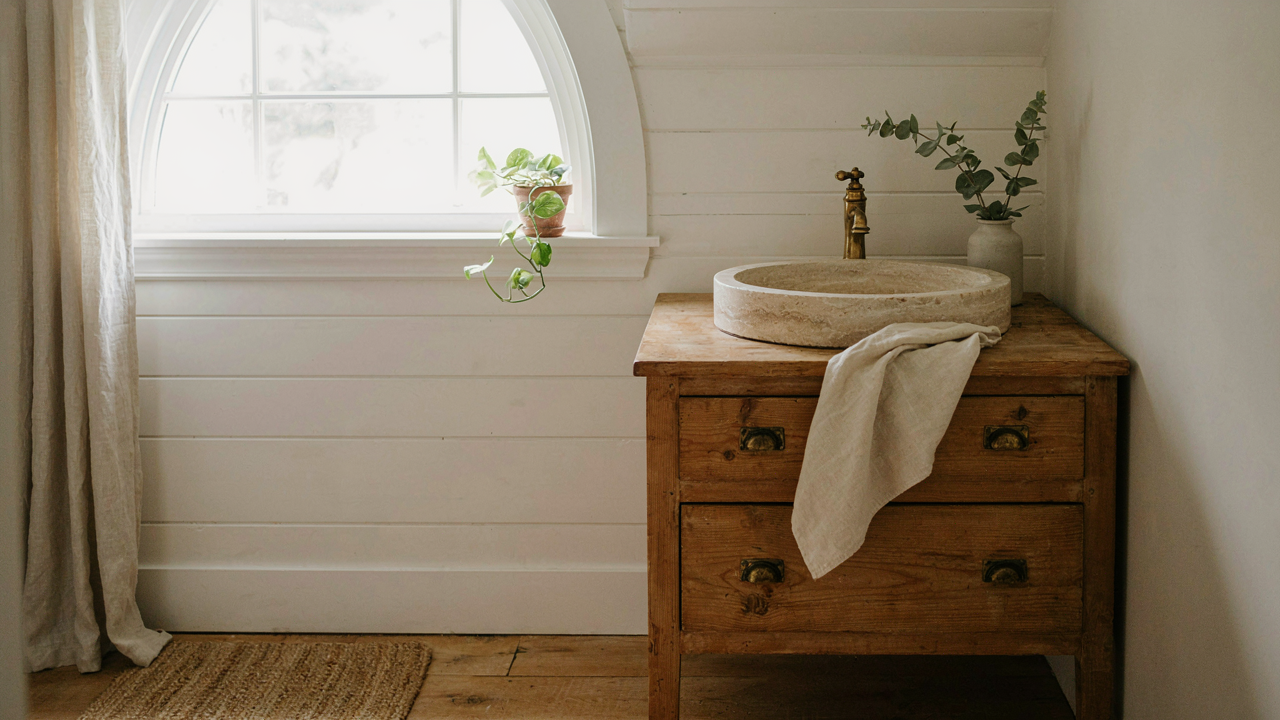
Beyond Shiplap: The Philosophy Of Authentic Worn Wood
The Surface Trap
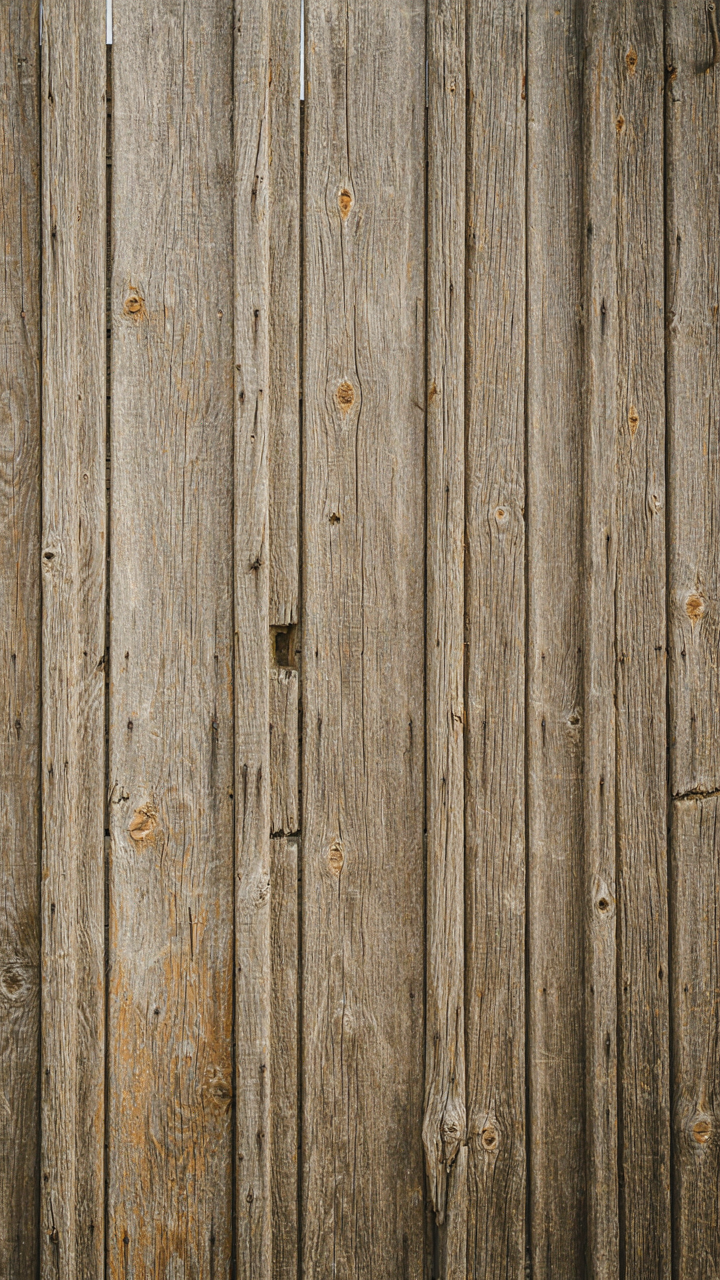
You want shiplap because it signals “rustic” without requiring actual rusticity. That’s the mechanism at work. But surfaces alone don’t create farmhouse bathrooms—they create themed hotel rooms. Shiplap is decorative veneer. Real worn wood tells a story through actual degradation: soft spots where water pooled, grain raised by time, color variation from uneven fading. Mass-produced shiplap erases all of this. It’s the visual equivalent of typing “rustic” into a search engine and calling it done.
The problem isn’t shiplap itself. The problem is treating it as a substitute for material truth. Farmhouse design originated from necessity, not aesthetics. Farmers used what they had. Old barn wood aged because it was exposed to weather and use for decades, not because someone sealed it and called it vintage. When you install factory-finished shiplap, you’re creating the aesthetic without the substance. The bathroom reads as costume, not home. The mechanism is simple: your eye detects the disconnect between what a material claims and what it actually shows.
Imperfection As Evidence
In materials science, entropy is the measure of disorder in a system. A piece of reclaimed barn wood displays high entropy by design. Authentic worn wood in a farmhouse bathroom becomes the visual proof that time and function shaped it, not a contractor’s saw. This doesn’t mean random damage. It means intentional selection of materials that already carry marks: deep nail holes, slight warping, color gradation from exposure, soft spots, gouges. These aren’t flaws to hide. They’re the material’s resume.
Here’s the execution: source actual reclaimed wood or age new wood through real processes. Use wood that’s been salvaged from deconstructed barns, old sheds, or buildings over 50 years old. If budget forces new wood, select species like hickory or pine that show age faster than hardwoods, then expose it to weather cycles or light staining with iron oxide to accelerate discoloration. Install it without trying to seal the character out. When a guest sees a bathroom wall with legitimate texture and variation, the bathroom stops being décor and becomes evidence of something real.
The Material Manifesto: Choosing Wood That Tells A Story
Reclaimed Versus The Faker’s Game
You want reclaimed wood because it signals you didn’t take shortcuts, but that’s the wrong reason to care. The actual mechanism: reclaimed wood has survived environmental stress—temperature swings, moisture cycles, UV exposure—that manufactured distress cannot replicate in a factory. Real aged wood is structurally different. The grain tightens. The cell structure hardens. Fake distressing is cosmetic vandalism applied to new lumber that will behave like new lumber for decades.

Reclaimed wood costs three to five times more than new wood with artificial aging, which means the market has two tiers: people who understand the difference and people who don’t. Reclaimed sources include old barns, industrial buildings, and salvage operations that pull authentic stock. The wood carries a verifiable timeline. Manufactured distress comes from wire brushing, hand planing, or chemical treatments meant to look old. It fails the durability test because it hasn’t earned the structural integrity that time provides.
Durability As The Design Choice
This is where the consensus gets it backwards. Most people think durability means picking the hardest wood species, but that’s not how bathrooms work. Durability in a bathroom operates like load-bearing architecture: the primary stress isn’t impact, it’s moisture infiltration. Hardness is irrelevant if water moves through the grain and causes rot from inside out.
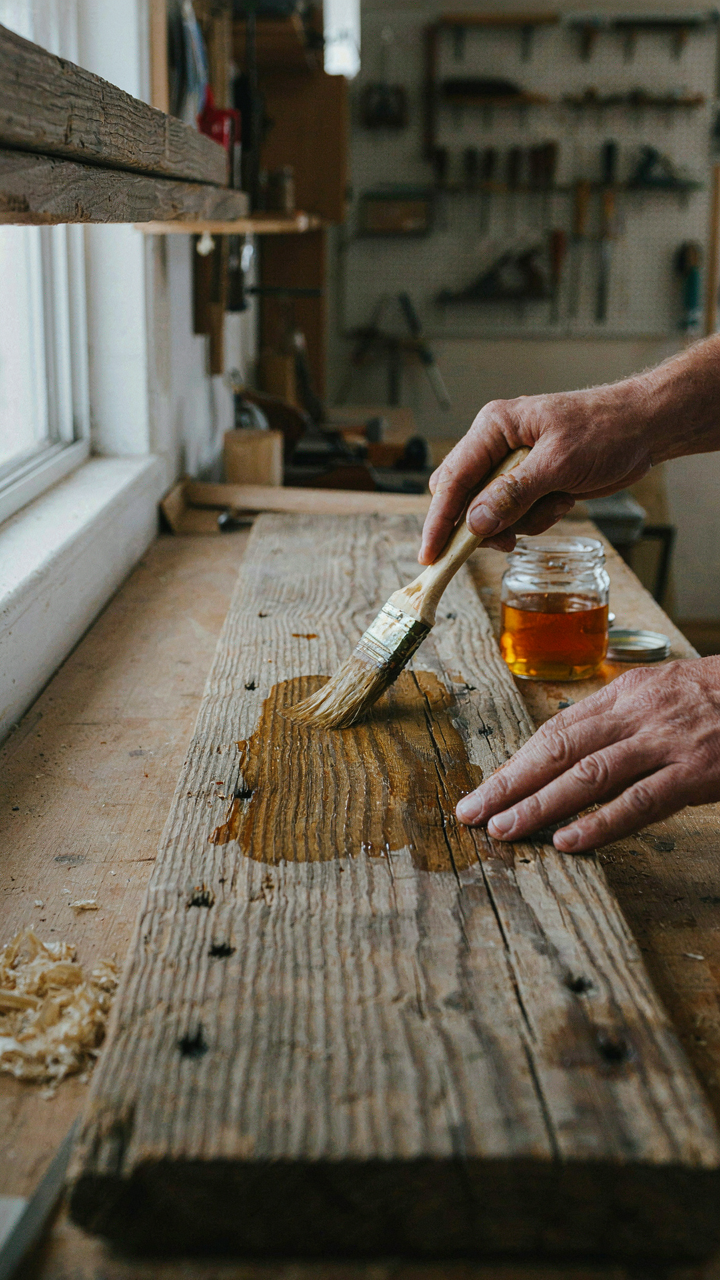
The real durability play is grain orientation and finish strategy. Vertical grain wood resists moisture better than flat grain because the grain structure channels water down and out rather than allowing it to soak sideways into the cellular structure. You then seal that grain with a proper finish—either oil-based polyurethane or conversion varnish—applied in multiple coats with adequate drying time between coats. This finish becomes the actual barrier. Skip this step and your reclaimed wood will fail faster than cheap pine. Seal the grain first, then commit to maintenance recoating every two to three years in high-moisture zones like shower surrounds.
The “Utility First” Protocol For Farmhouse Master Bath Design
Work Triangle Placement Beats Aesthetics
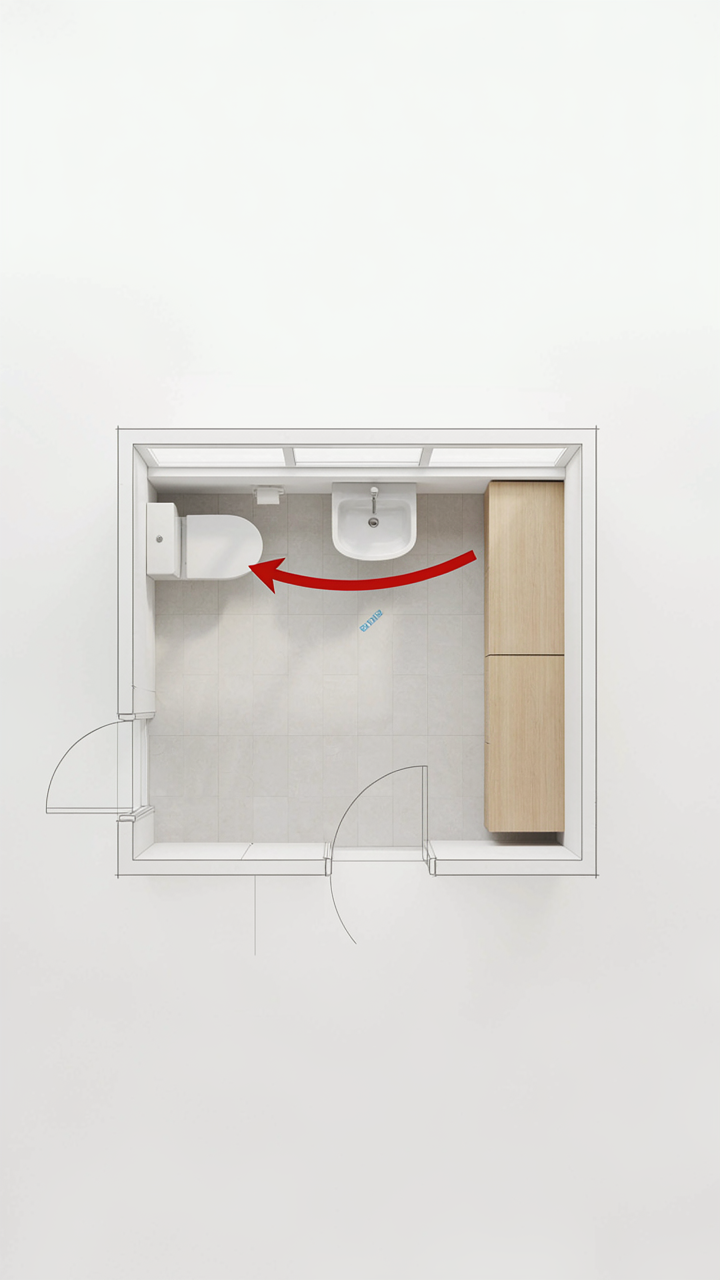
You want the bathroom to look intentional, but what you really fear is wasting money on a layout that creates friction every morning. The mechanism is borrowed from kitchen design: efficiency theory says your three anchor points (toilet, sink, vanity storage) should form a tight triangle to minimize wasted movement. Farmhouse bathrooms fail when owners prioritize visual balance over proximity. A pedestal sink looks period-correct but forces you ten feet from the towel bar. That’s not charm. That’s poor planning.

The work triangle doesn’t mean cramped. It means your daily path from toilet to sink to mirror happens in logical sequence without backtracking. On a standard 5×8 farmhouse bath, this means positioning the vanity within arm’s reach of the toilet area and keeping the shower or tub perpendicular to the sink line. Worn wood and reclaimed elements follow after the bones are functional. The layout drives the aesthetic, not the reverse.
Barn Doors Hide Clutter Without Taking Space
Most farmhouse bathroom storage advice pushes open shelving and floating wood, which photograph well and function nowhere. Your actual problem is that a rustic bathroom accumulates the same toiletries and medications as any other room, but the farmhouse aesthetic rejects closed cabinetry as “too modern.” The answer isn’t more visible storage. It’s intelligent concealment using period-appropriate hardware.
Sliding barn doors scaled for bathroom use (24 to 36 inches wide) mount over a recessed cavity or shallow wall cabinet to hide daily essentials while maintaining visual continuity with farmhouse design language. Position these doors at waist height for medicine, linens, and cleaning supplies. Keep the space below open or use a low wooden bench for additional seating. This protocol consolidates clutter into one architectural feature rather than scattering storage across multiple walls, which fragments the space and multiplies the visual noise.
Rustic Bathroom Shower: Designing For Resilience, Not Just Looks
The Wood Problem You’re Actually Facing
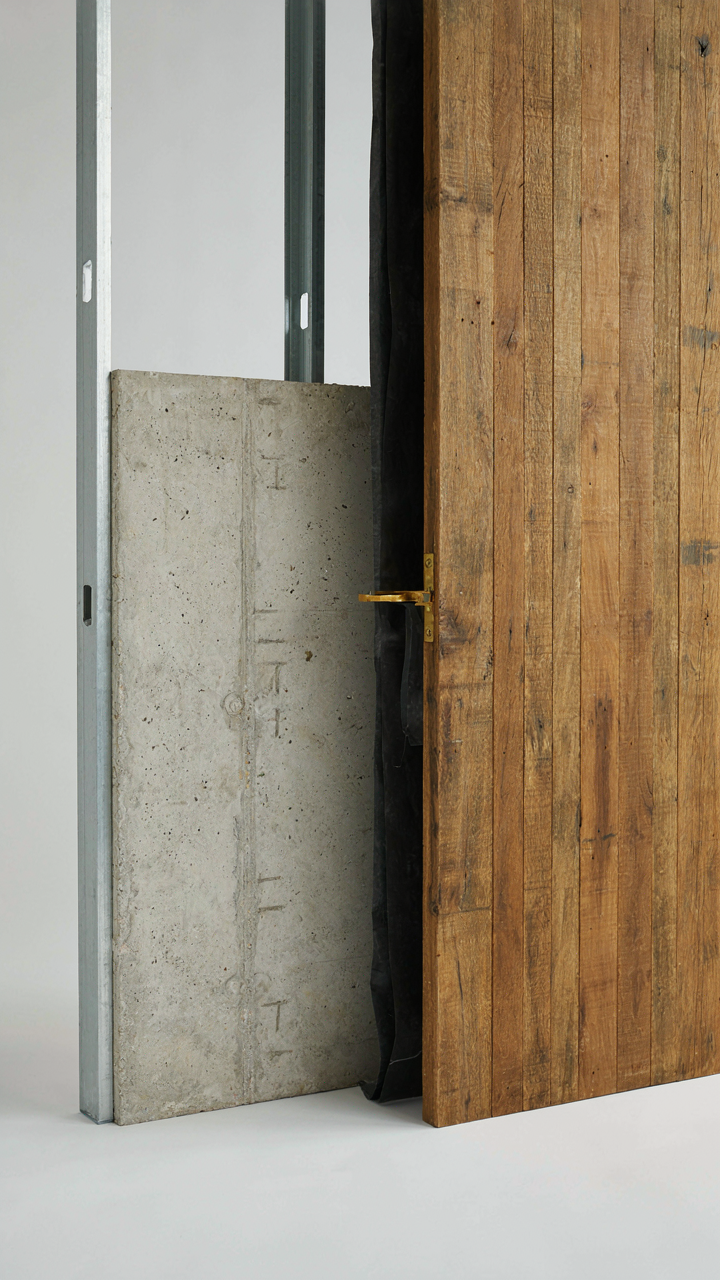
You want the aesthetic without admitting you’re terrified of rot. Here’s the mechanism: wood absorbs water, swells, then shrinks as it dries—this cycle fractures the grain and creates pathways for decay. Farmhouse bathrooms use exposed wood specifically because the style demands visibility, which means your shower surround becomes a moisture collection point. The common advice to “just seal it” misses the real issue. Sealing only delays the problem. You need to stop water from reaching the wood in the first place, not pray a coat stops it.
Think like a building envelope—borrow the term from architecture. Your shower is a pressure boundary. Water doesn’t respect surfaces; it exploits every gap, every joint, every microscopic crack in whatever seal you applied last year. The wood in a rustic farmhouse bathroom shower needs a defense system with layers: a base moisture barrier behind the wood, intentional ventilation channels that allow trapped water to escape, and sloped or angled surfaces that shed water downward rather than pooling it. Wood that stays truly dry doesn’t rot. Your job is designing the shower so moisture never reaches it, not choosing wood that “resists” moisture better.
The Materials That Actually Survive
Reclaimed barn wood looks authentic but holds water like a sponge—it’s porous by design and age. Use it as accent trim only, kept at least 18 inches from the shower spray zone. For the areas that face direct moisture, this is where most designers get lazy and pick the wrong material in the name of “rustic.” You need surfaces that don’t trap water, then you layer authentic wood elements around them strategically.
- Cement Board With Tile: Provides the moisture barrier showers require. Install it as your base layer, then add rustic wood trim around the frame and upper wall areas where spray doesn’t reach directly.
- Treated Dimensional Lumber: Modern pressure-treated wood resists decay far better than reclaimed wood. Use 2x4s or 2x6s as structural framing and visible supports, kept above splash zone or sealed with marine-grade polyurethane quarterly.
- Shiplap (Sealed): Creates the farmhouse look people expect. Exterior-grade shiplap sealed with water-resistant stain lets you keep the rustic vibe while rejecting moisture. This requires resealing every 18 to 24 months in bathrooms with heavy shower use.
- Stone or Slate: Pairs naturally with rustic style. Use it for shower surround walls instead of drywall, then frame with authentic wood trim that sits outside the spray envelope to avoid water contact.
- Reclaimed Wood Facing Only: Apply thin reclaimed wood as a finished surface over cement board, securing it mechanically rather than with adhesive so water doesn’t trap behind it and accelerate deterioration.
The real strategy is material honesty: accept that the shower surround itself must be non-porous, then satisfy the aesthetic demand for wood by framing and detailing around it. This is how farmhouse bathrooms last. You’re not choosing between durability and style. You’re layering materials so each does its job, then making the arrangement look intentional rather than compromised.
Stone House Decoration: Weaving Natural Elements Beyond Wood
The Texture Hierarchy That Actually Works
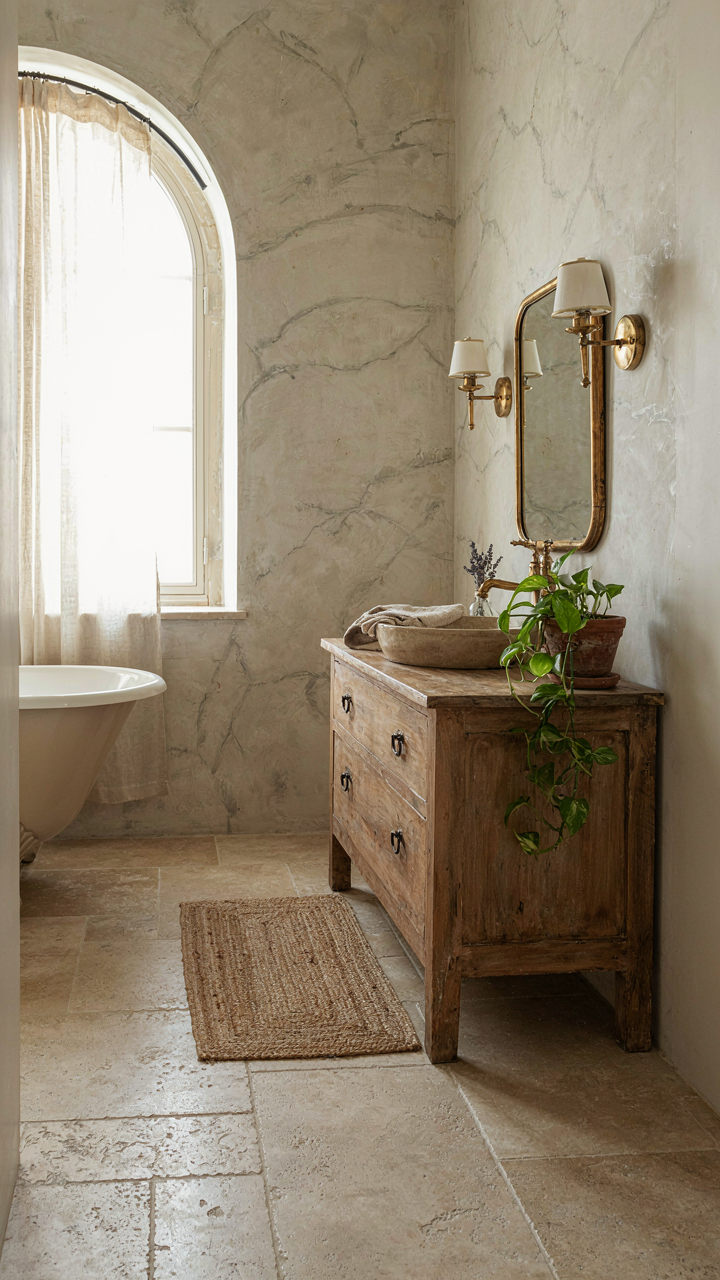
You want this space to feel expensive without trying. The real mechanism is contrast. In architecture, we call this the figure-ground principle: one material reads as the focal point only when surrounded by visually quieter materials. Wood alone creates monotony. Stone, ceramic, and metal interrupt that sameness and make each material feel intentional instead of accidental.

Layering textures in a rustic farmhouse bathroom requires discipline. Pair rough stone with smooth ceramic tile. Add weathered wood against polished metal fixtures. The eye needs friction to register quality. When everything matches in finish and tone, nothing stands out. Your brain categorizes it as “theme” instead of “craft.” Introduce a honed limestone floor against tumbled marble walls, then step back. Now the space has vocabulary.
Raw Stone As The Visual Anchor
Most design advice says scatter natural elements around. Wrong. Stone works best as a concentrated statement, not distributed texture. Use it as your shower surround or a single accent wall behind the vanity. Stone demands visual weight. Deploy it strategically or it reads as indecision.
Tumbled limestone, slate, and granite each age differently. Limestone gets softer and more porous with moisture exposure, creating authentic patina over years. Slate splits into thin layers naturally, offering texture without extra labor. Granite stays stable but needs consistent sealing in a bathroom environment. Pick stone based on how it will change, not how it looks new. The degradation is the point. When water stains develop on limestone or slate darkens in the shower surround, that’s not failure. That’s the material doing its job and proving its authenticity to anyone who sees it.
The “European Farmhouse” Method: Curated Simplicity
Remove Everything That Doesn’t Earn Its Space
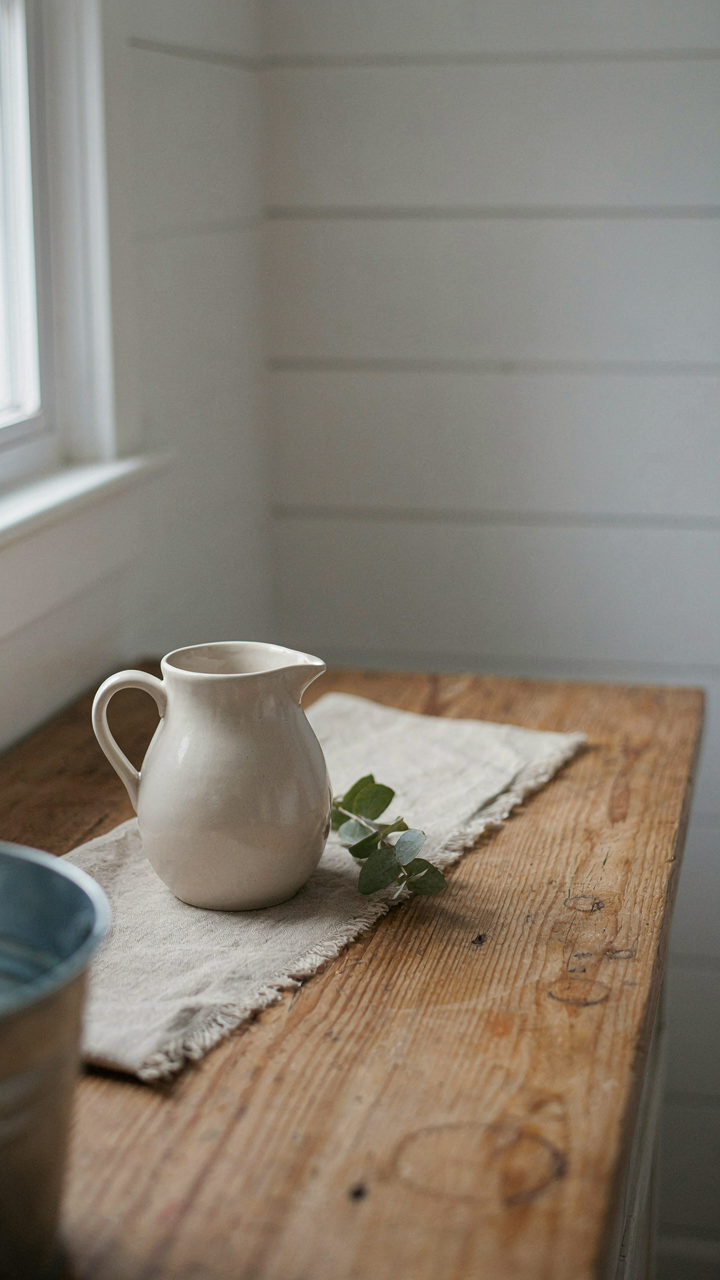
You want permission to keep things sparse without feeling like you’re living in deprivation. Here’s the mechanism: European farmhouse design borrowed from scarcity economics—when resources were limited, families kept only what served function or held meaning. Apply this to your bathroom. Every item must justify its presence through use or visual weight. Remove the decorative bottles, the stacked towels you never touch, the miscellaneous containers collecting dust.

The real work isn’t deciding what stays. It’s stopping the reflex to fill empty space. Most bathrooms fail because owners panic when they see countertop real estate and immediately populate it. Farmhouse bathrooms demand restraint. A single ceramic pitcher, a folded linen runner, one wooden tray—these breathe. They create the visual calm you’re actually after, not the clutter you mistake for coziness.
Invest In Solid Pieces That Last Decades
Common advice says “buy less, buy better,” which is vague and unhelpful. The real principle is material hierarchy. Reclaimed wood vanities, cast iron fixtures, and stone sinks resist trends and age visibly in ways that add character rather than announce decay. These pieces cost more upfront because they’re built to outlast fashion cycles and actually improve with patina.
A single well-made wooden mirror frame beats five cheap ones replaced every three years. Worn wood shows authenticity; worn plastic shows neglect. Source pieces from salvage yards, antique dealers, or craftspeople who work with reclaimed materials. When each element has genuine substance, the room reads as intentional, not just underfurnished. Your bathroom becomes a place of actual utility with surfaces that develop history instead of falling apart.
Rustic Style Bathroom Ideas: The Narrative Of Wear And Patina
Why Aged Objects Hit Different
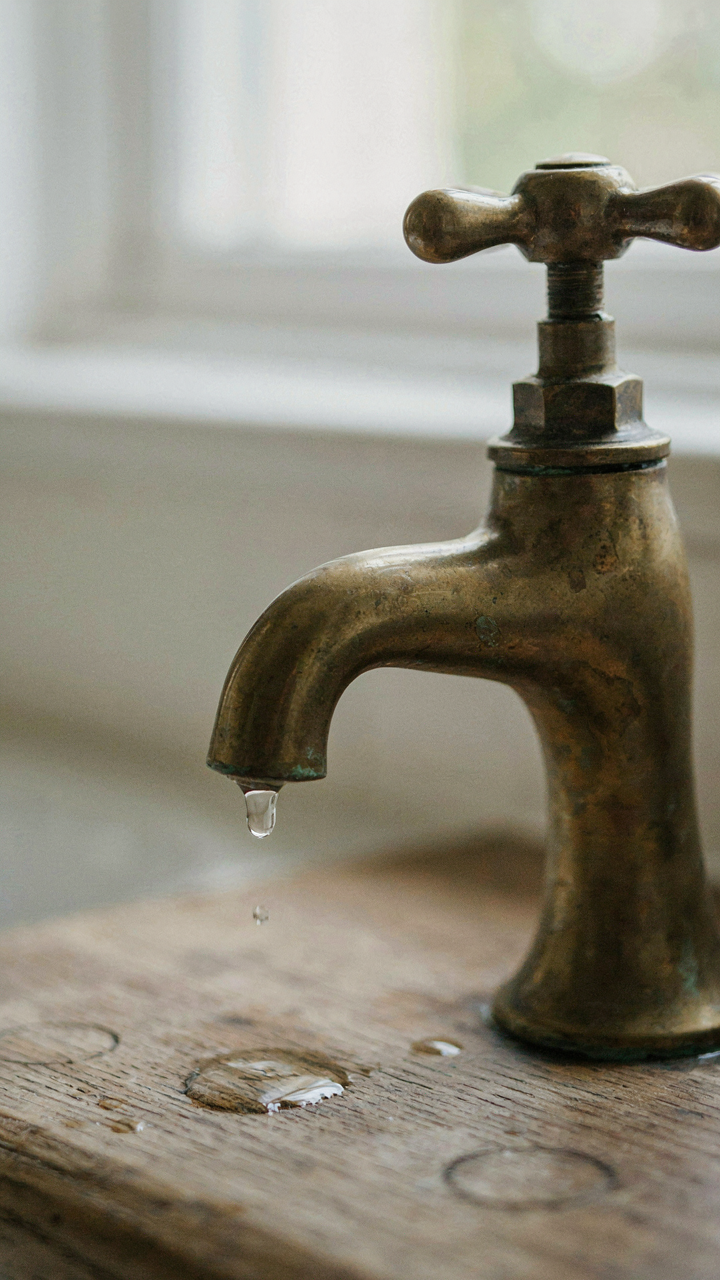
You want permission to stop chasing perfection. That’s the real reason worn wood matters to you. Here’s the mechanism: psychology calls this “authenticity bias.” Your brain reads imperfection as proof that something has survived time and use, which signals reliability. A bathroom with patina feels earned rather than purchased. The scratches and discoloration aren’t flaws you tolerate. They’re evidence of function. This distinction matters because it reframes what you’re actually building: not a staged showroom, but a space that proves itself through visible history.
Farmhouse design borrowed this principle from utilitarian buildings that never aimed for beauty. A reclaimed barn beam wasn’t chosen for aesthetics. It was functional wood that aged in place. When you bring that wood into a bathroom, you’re importing the credibility it already carries. The worn surface doesn’t need defense or apology. It performs the opposite function: it makes everything around it feel more genuine because the room itself admits to time passing.
Materials That Earn Their Character
Most advice tells you to “embrace imperfections.” That’s incomplete. What you’re actually doing is selecting materials that age in ways you can predict and control. Reclaimed wood doesn’t develop patina randomly. It follows wood’s actual behavior: softer grain erodes faster, creating natural valleys and texture. New wood stained to look old fails because the wear pattern doesn’t match how wood actually degrades under specific conditions like humidity and use.
The protocol is direct: choose materials based on how they fail. Authentic shiplap darkens where hands touch it. Vintage vanities show water rings where bottles sat. Mirrors develop spots where moisture reached the backing. You’re not faking wear. You’re selecting pieces and placements where wear naturally occurs, then letting time do the finish work. Install reclaimed wood in areas that will see moisture and hands. Position vintage metal where it’ll oxidize. The bathroom’s function becomes the material’s timeline.
Rustic Walk In Shower Ideas: Engineering Durability Into Design
The Physics Of Water Movement
You want a rustic farmhouse bathroom that doesn’t rot out in five years, but you’re hoping aesthetics alone will handle it. They won’t. Gravity and physics don’t negotiate with design taste. Water flows downhill always, and if your shower floor doesn’t force it toward a drain fast enough, it pools, seeps into wood framing, and kills the structure from the inside out. The slope threshold matters: most building codes require a minimum 2% grade on shower floors, meaning a quarter-inch drop per linear foot. Rustic materials like reclaimed wood and stone demand steeper slopes, closer to 3-4%, because their irregular surfaces create micro-valleys that trap water.

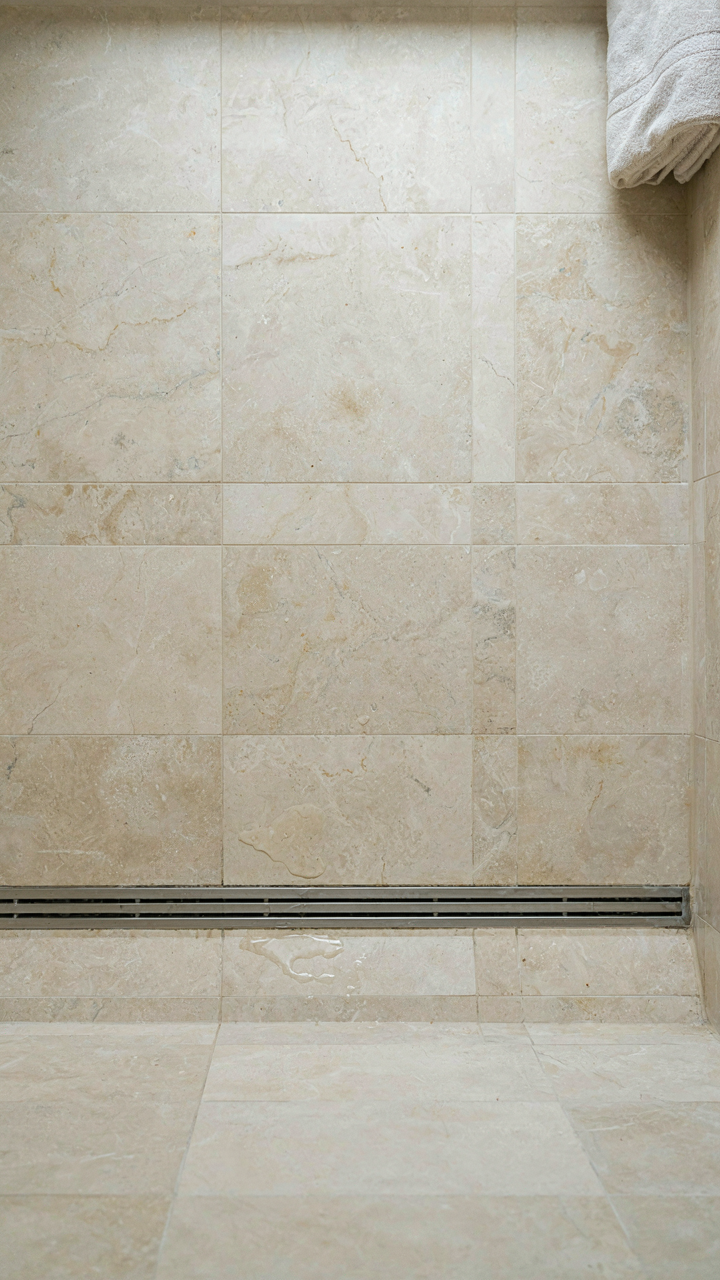
Install a linear drain along the lowest point of your shower floor rather than a central drain. This single decision reduces standing water by up to 70% compared to traditional center drains with edge slopes. Position the drain parallel to the shower entry, not perpendicular to it. Pair this with a sloped mortar bed underneath your tile or stone that directs all water toward that drain line. This isn’t optional if you’re using wood elements or maintaining authentic farmhouse texture. The mechanism works because water takes the path of least resistance, and you’re engineering that path to exist.
Air Movement For Structural Survival
Ventilation isn’t about comfort in a rustic farmhouse bathroom. It’s about preventing the wood you’ve spent money restoring from becoming a petri dish for decay and rot. Moisture lingers in dead air, and wood in constant humidity will fail whether it’s sealed or not. The exhaust fan you install needs to run for at least 20 minutes after every shower, pulling humid air directly outside through a duct that vents above your roofline. Most builders skip this or undersized it. An 80 CFM fan is minimum for a standard bathroom; rustic showers with exposed wood need 100-110 CFM minimum because the wood itself acts as a moisture reservoir.
Install your exhaust duct on a separate line from any other bathroom ventilation. Shared ducts create backflow where humid air from one area enters another, defeating the purpose. The duct itself must slope slightly downward toward the exterior vent to prevent condensation from forming inside the pipe and dripping back into your bathroom. Seal all gaps where the duct penetrates walls or ceiling framing with fire-rated caulk. Water finds every crack, so your ventilation system only works if air moves continuously and moisture never accumulates in the duct itself.
Farm Style Bathrooms: The Ecosystem Of Cohesive Design
Every Element Must Earn Its Place
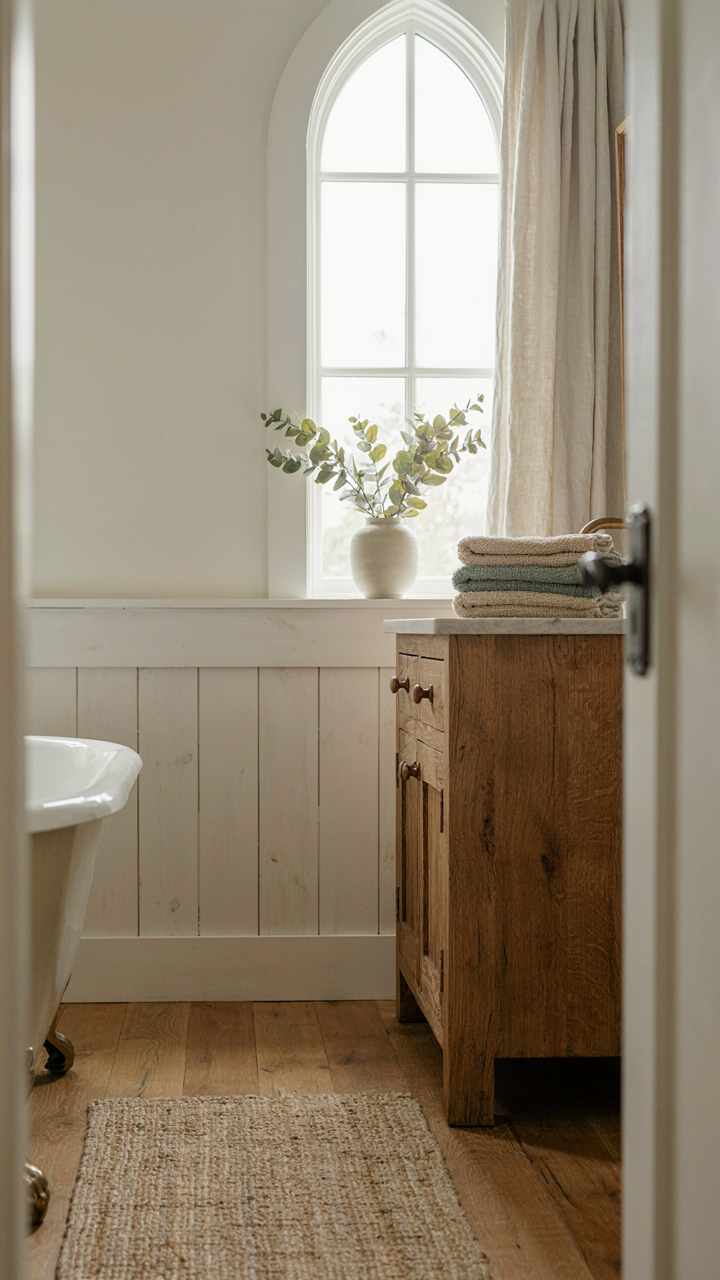
You want your bathroom to feel intentional, not like you assembled it from Pinterest boards. That’s the real pressure here. Borrow from biology: a farmhouse bathroom functions like an ecosystem where each material, finish, and fixture relates to every other one. Remove one element and the visual logic breaks. Wood tones anchor metal hardware. Worn surfaces justify rough textures. Matte finishes balance raw materials. The mechanism is relationship, not decoration. When you pick a reclaimed beam as your focal point, you’ve locked in your palette. Every subsequent choice either reinforces that origin story or conflicts with it. Most people skip this step and end up with a bathroom that looks assembled rather than designed.

The wood species you choose as your primary material determines the metallurgy, the stone, even the paint colors that follow. If your vanity is hand-hewn walnut with deep grain, polished chrome hardware reads cheap. Aged bronze or blackened steel demands that choice. The weathered wood establishes a time period visually, and everything else must belong to that era’s material vocabulary. This is why generic farmhouse bathrooms fail. They mix materials with no anchoring logic, hoping rusticity excuses the disconnection. It doesn’t. Your job is to identify one dominant material or finish and let it dictate the rest.
Visual Restraint Beats Visual Interest
The common advice is wrong here. People tell you to mix textures and styles for visual interest. What actually works is removing everything that doesn’t reinforce your core material story. Every decorative item competes for attention. In a small bathroom, that competition destroys cohesion. A rustic farmhouse bathroom succeeds through subtraction, not addition. One well-worn mirror frame. One metal fixture. One reclaimed wood shelf. Spacing matters more than quantity.
Invasive species in design are items that carry their own visual weight without connecting to your material ecosystem. A chrome towel bar in a matte black hardware scheme. A decorative basket that’s too uniform or too new. A wall sconce with industrial geometry in a room built on organic forms. These pull the eye toward themselves rather than supporting the whole. The restraint creates mental ease. Your eye settles. The space feels larger. This is why hotel bathrooms with one striking wood element and minimal decor feel luxurious while packed bathrooms feel noisy.
Rustic Bathroom Designs: Investment, Not Expense
Quality Materials Build Equity Over Time
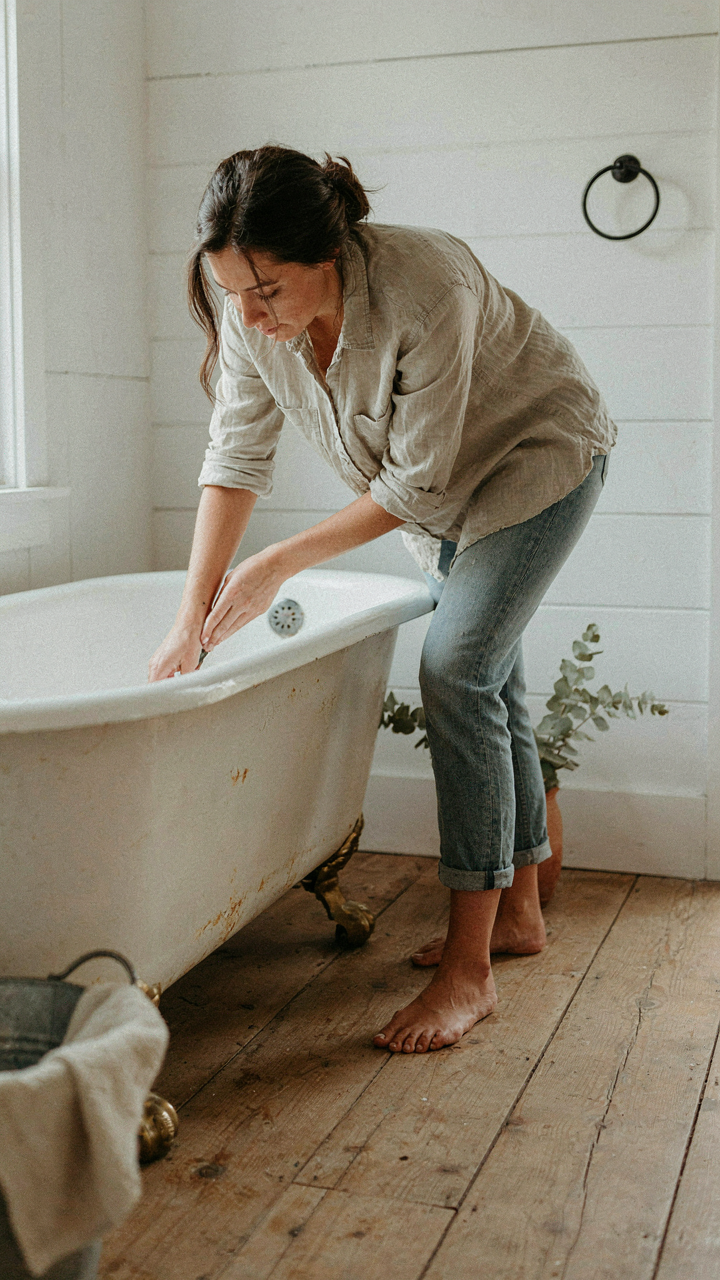
You want to feel like you got a deal. That’s the real pull here. But the mechanism is economic: rustic farmhouse bathrooms made from solid materials appreciate in utility while cheap finishes depreciate the moment water touches them. Reclaimed wood, cast iron fixtures, and natural stone don’t just look better as they age—they literally become more valuable because they stop needing replacement cycles.
The math works backward from most bathroom remodels. Standard vanities fail in seven to ten years. Solid wood with proper sealing lasts thirty to forty years, sometimes longer. A single quality piece of reclaimed barn wood or a vintage cast iron tub becomes a fixed asset. You’re not paying for aesthetics that fade. You’re paying for materials that outlast trends and poor construction.
Preservation Requires Strategic Maintenance
The common advice says “just seal it and forget it.” That’s incomplete and it costs you. Maintenance in rustic design works like compound interest—small, consistent actions prevent expensive failures. Reclaimed wood needs resealing every three to five years depending on bathroom humidity levels. Cast iron fixtures need regular protective coating. Natural stone requires pH-neutral cleaners to prevent etching.
The specific protocol matters more than effort. Monthly: wipe down wood surfaces and check for standing water. Quarterly: inspect grout lines and sealant around tubs. Annually: reseal exposed wood and check fixture finishes for corrosion. Skipping this cycle compounds. One ignored water leak behind a reclaimed wood vanity costs five times more to repair than preventive sealing.
Your Pursuit Of ‘charm’ Is Really A Search For Permanence In A Transient World. Build Accordingly

You don’t want a rustic farmhouse bathroom because it looks good in photos. You want it because worn wood and imperfect surfaces tell a story that lasts. Everything else in your life gets replaced. This doesn’t. Pick one piece today, a reclaimed vanity or vintage mirror, and commit to it. Stop treating your bathroom like a trend cycle. Build something that your grandkids actually want to inherit.