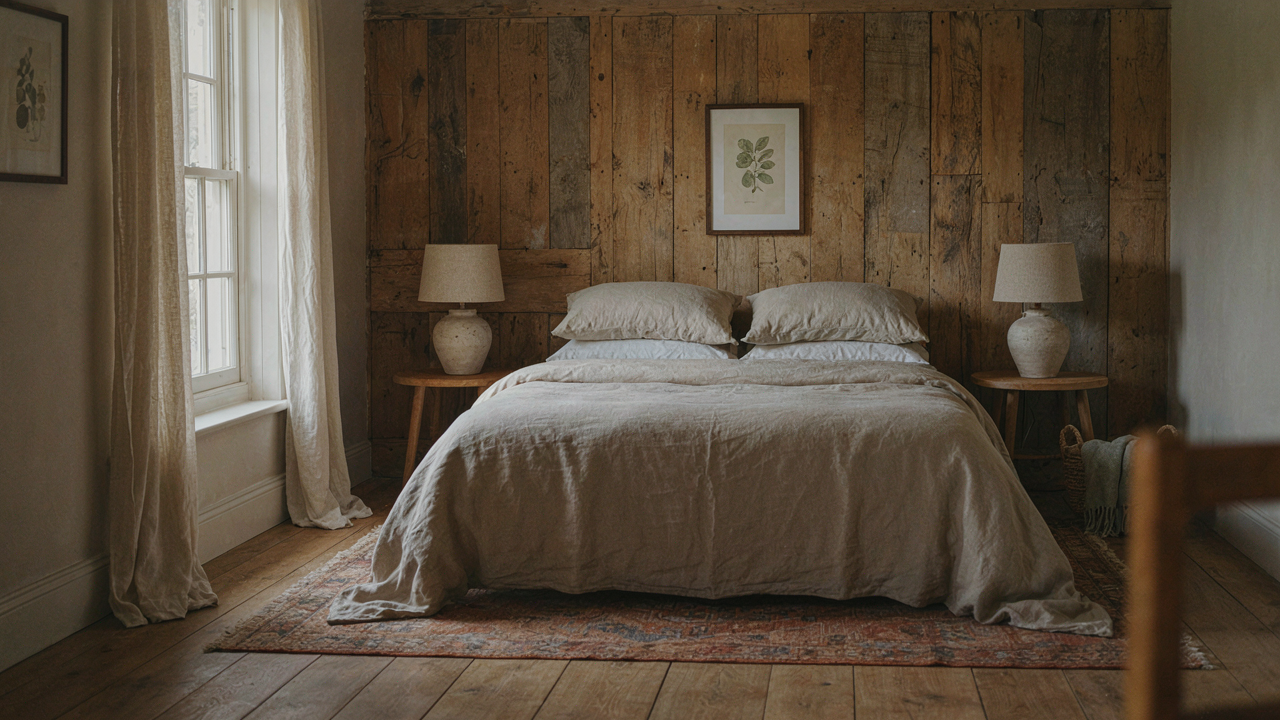
Beyond Pinterest Boards: Decoding True Rustic Appeal
The Authenticity Problem
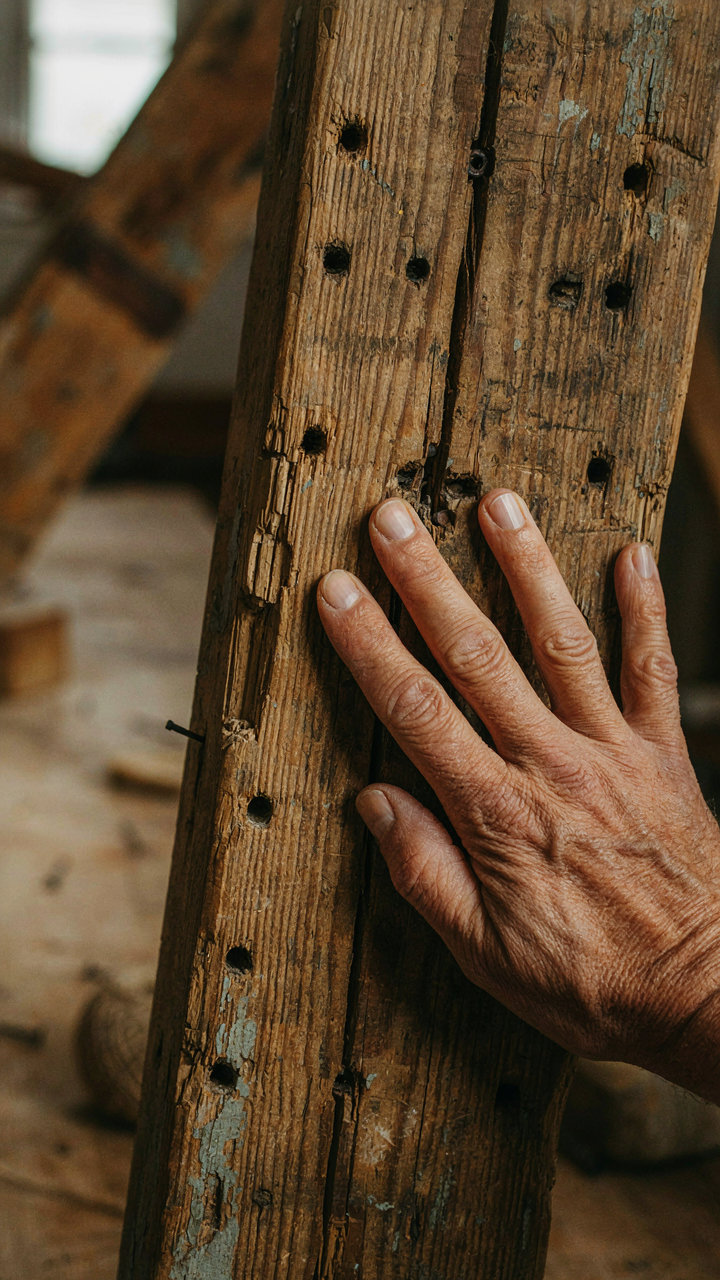
You want rustic farmhouse style because you think it signals taste and stability—but most people fake it with furniture that looks aged in a factory. The mechanism is simple: authentic rustic materials carry patina from actual use, not cosmetic treatment. Real reclaimed wood shows nail holes, wood-grain variation, and color shifts that happened over decades. Factory-distressed pieces replicate the surface but miss the depth. Authenticity compounds because genuine materials interact with your room’s light and humidity differently than new wood stained to look old.
The difference matters tactically because your eye reads fabricated distressing as decoration, not history. Reclaimed wood absorbs light unevenly due to its grain and wear patterns. New wood, even when stained dark, reflects light uniformly. Your brain catches the inconsistency without naming it. Real reclaimed wood costs more upfront but doesn’t broadcast its fakeness every time someone walks past your nightstand in afternoon light.
Avoiding The Manufactured Distress Trap
Most design advice tells you to source reclaimed wood or buy distressed pieces, then stops. That’s incomplete. The real enemy isn’t where the wood comes from—it’s the uniformity of the distressing pattern. Authentic wear is random. It clusters around high-contact areas: drawer fronts show more marks than surfaces nobody touches. Factory distressing applies the same hand-planed texture and color wash across an entire piece. Nature doesn’t work like an assembly line.
Examine reclaimed wood directly or request detailed photos before purchase. Look for inconsistent color variation, concentrated wear on edges and corners, and genuine nail holes that pierced the wood years ago, not decorative nail-head trim. Skip pieces where the distressing looks applied, symmetric, or predictable. The wood should tell a story of specific wear in specific places, not announce that someone intentionally tried to make it look old.
The Reclaimed Wood Manifesto: Sourcing With Integrity
Where Your Wood Actually Comes From
You want reclaimed wood because it signals you didn’t take the easy route. That matters to you more than you admit. But here’s the mechanism: sourcing integrity works like supply chain economics. Every link between the forest and your bedroom either adds authenticity or dilutes it. You can’t retrofit credibility into wood that came from a marketing department.

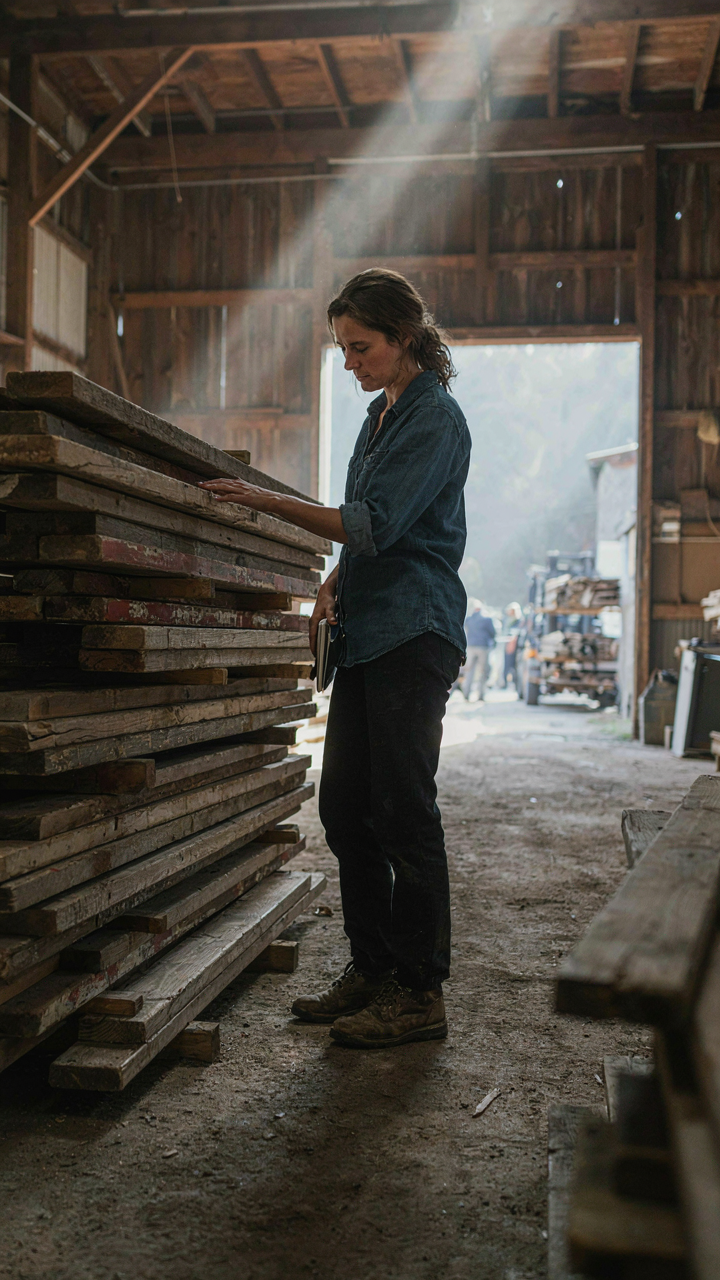
Real reclaimed wood has documentation. It comes from deconstructed barns, old mills, salvage operations, or architectural reclamation yards that track provenance. The seller knows which building the wood left, roughly when, and what it endured. This traceability is non-negotiable if you’re buying reclaimed instead of new. Sketchy suppliers won’t answer these questions because they can’t.
- Architectural salvage yards: Buy directly from operations that deconstruct old buildings systematically. They photograph source buildings and maintain records of origin dates and structural history.
- Local barn deconstruction companies: Partner with businesses that salvage wood from agricultural structures scheduled for demolition, often providing documentation of the property and era.
- Estate sales and auctions: Source from liquidation events where wood beams or flooring come from named properties, creating transparent chain of custody.
- Forestry reclamation specialists: Work with outfits that recover wood from river bottoms, old growth repositories, or salvage operations tied to specific geographic regions.
- Direct farmer and property owner relationships: Build networks with landowners deconstructing old structures themselves, cutting out middlemen and gaining firsthand sourcing knowledge.
Most people buy reclaimed wood without asking one sourcing question. They assume age equals integrity. It doesn’t. Demand receipts, photos of the original structure, and specifics about how the wood was extracted and stored. If a supplier won’t provide this, the wood isn’t reclaimed—it’s just old.
The Imitation Problem Nobody Names
Every reclaimed wood market gets flooded with fakes. Suppliers mill new wood, run it through distressing machines, then age it chemically. It looks right. It doesn’t feel right, and testing catches the deception immediately. The wood doesn’t have the density, the nail holes, the inconsistent grain patterns, or the structural marks that time actually produces.
Genuine reclaimed wood shows non-uniform wear patterns only time creates. Check for hand-forged nail holes that don’t line up perfectly. Look at the grain structure under magnification—reclaimed wood has irregular color shifts from decades of light exposure and temperature swings. Run your hand across it. Authentic aged wood has a density that resists your fingers. Machine-distressed wood feels uniform and manufactured. When you run your thumb across a nail hole in genuine reclaimed wood, you feel the actual oxidation and metal fatigue. That’s your verification protocol.
Rustic Wooden Bedroom: Integrating Found Objects
Where To Hunt For Authentic Pieces
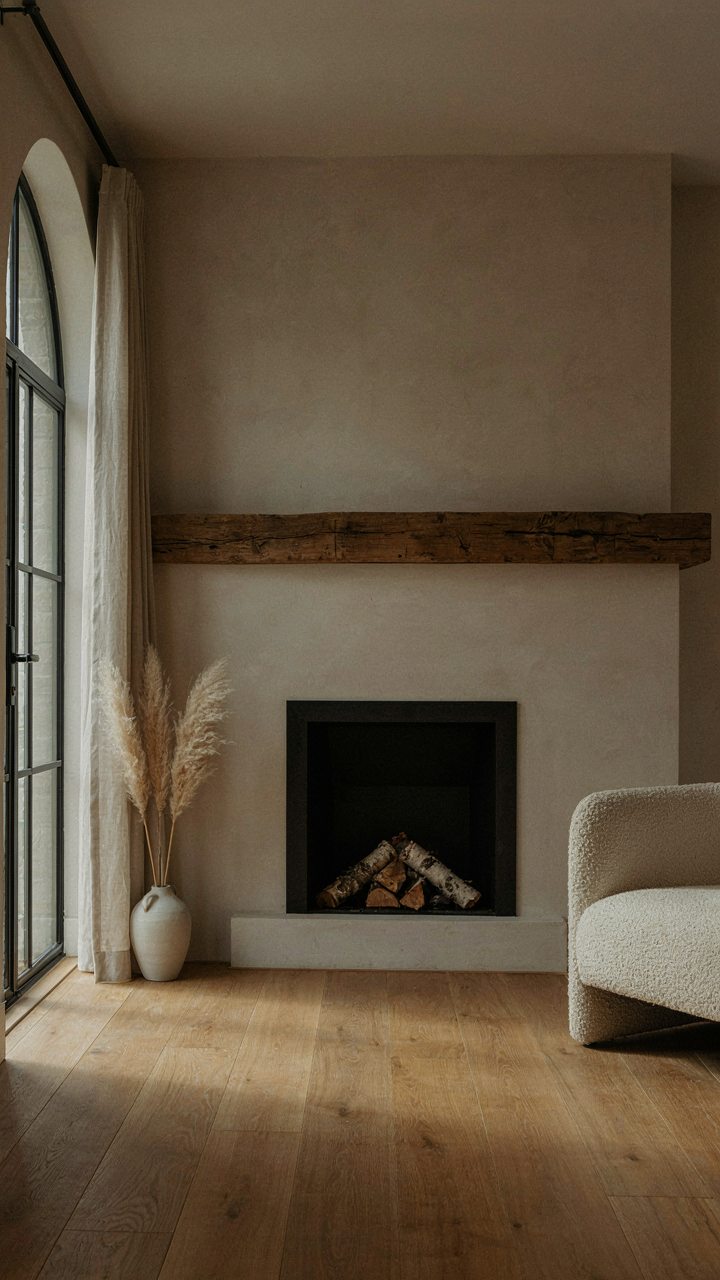
You want found objects in your bedroom because they signal you didn’t just buy a curated aesthetic from a catalog. The mechanism is scarcity. Real scarcity builds perceived value faster than any designer label. Salvage yards, estate sales, and demolition sites hold actual reclaimed wood and vintage hardware because they come from buildings built between 1880 and 1950. These pieces carry structural integrity and patina that new wood cannot replicate. The grain patterns, nail holes, and weathering are documentation of use.

Finding character-rich pieces requires systematic hunting rather than random browsing. Hit demolition sites before they’re cleared, visit three salvage yards monthly, and build relationships with contractors who encounter old barns and homes. Estate sales in rural areas yield better results than urban auctions because rural properties retain original materials longer. The goal is sourcing wood beams, doors, hardware, and architectural elements that show legitimate age, not items manufactured to look old.
Mixing Eras Without Visual Chaos
Most farmhouse bedrooms fail because they treat old and new as equal design partners. They’re not. Economics applies here: the old materials should anchor the space, and new elements should serve function. Your reclaimed wood bed frame or barn door headboard is the primary visual weight. Everything else—mattress, lighting, textiles—should be contemporary in execution but neutral in presentation. This isn’t about balance. It’s about hierarchy.
New pieces work when they recede. A modern metal nightstand in matte black doesn’t compete with a 120-year-old wooden beam. A simple linen duvet doesn’t fight a reclaimed wood floor. The rule: let old materials dominate visual real estate, deploy new materials for durability and comfort. Your bedroom should read as one coherent space, not a timeline of decisions stacked on top of each other. Start with the reclaimed elements, then select everything else by asking if it competes for attention or supports the structure.
Luxury Farmhouse Bedroom: The Art Of Understated Comfort
Raw Materials Over Refinement
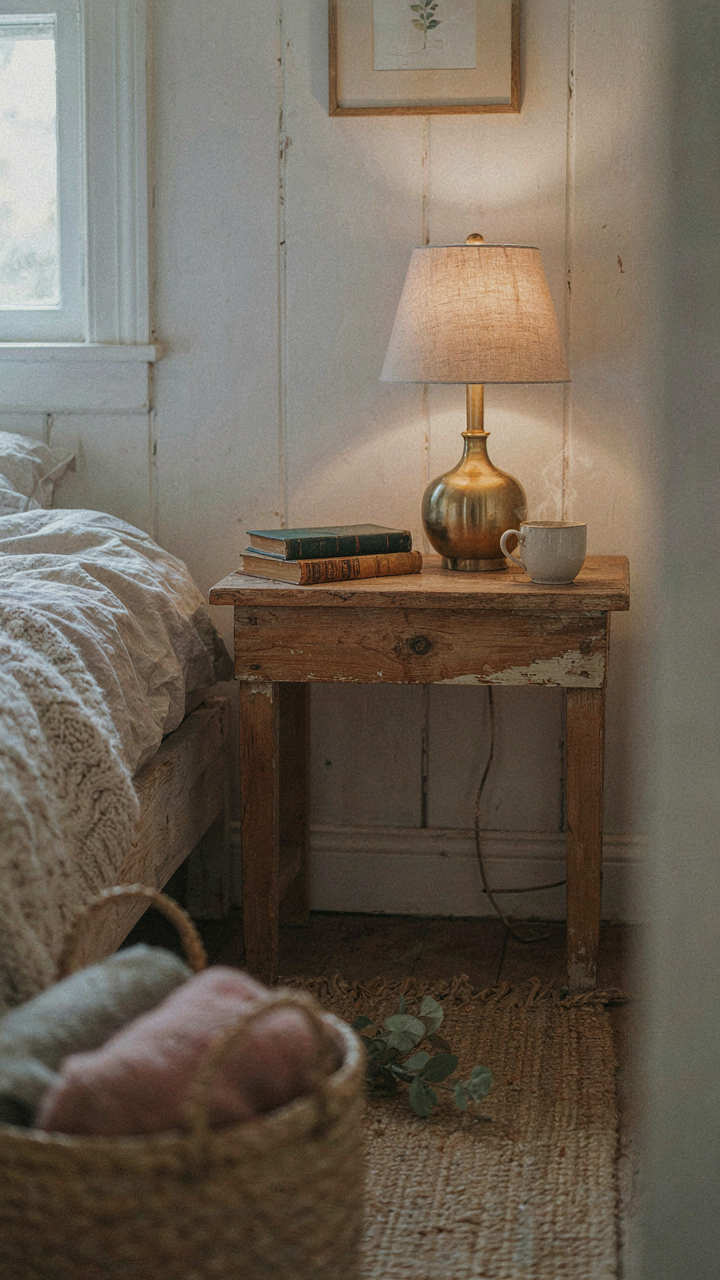
You want people to see you as someone with taste without trying. That’s the real reason texture matters in a farmhouse bedroom. The mechanism is simple: materials communicate authenticity faster than any decoration can. Reclaimed wood, linen, and stone don’t need explanation. They work because they’ve already been broken in by time.
Farmhouse design borrowed the economics principle of scarcity value. When a material is limited, it signals investment and discernment. Reclaimed barn wood, authentic shiplap, and salvaged beams aren’t mass-produced. Their imperfections and wear patterns prove they survived actual use. This tangibility beats generic “rustic” furnishings every time. Touch the wood. Run your hand across old joinery. That tactile feedback is what makes a room feel real instead of staged.
Layered Light, Not Brightness
Most people kill farmhouse bedrooms with overhead fixtures that blast everything equally. That’s wrong. Light should create zones and depth, not uniform exposure. A rustic farmhouse bedroom needs multiple light sources at different heights and intensities. Recessed ceiling fixtures destroy the ceiling’s character. Sconces flanking the headboard work. Bedside lamps with linen shades diffuse warm light without harshness. Industrial pendants over a wooden console table add focal interest without trying.
The real play is warm color temperature combined with dimmer capability. Three thousand Kelvins or lower. Dimmers on all circuits. This lets you dial down intensity in the evening, which triggers melatonin production naturally. Install switches at bed height for actual usability. Nobody gets out of bed at 2 AM to walk across the room and flip a distant switch.
Modern Farmhouse Bedroom Master Suite Cottage Style: The “Ecosystem” Approach
How Design Elements Depend On Each Other
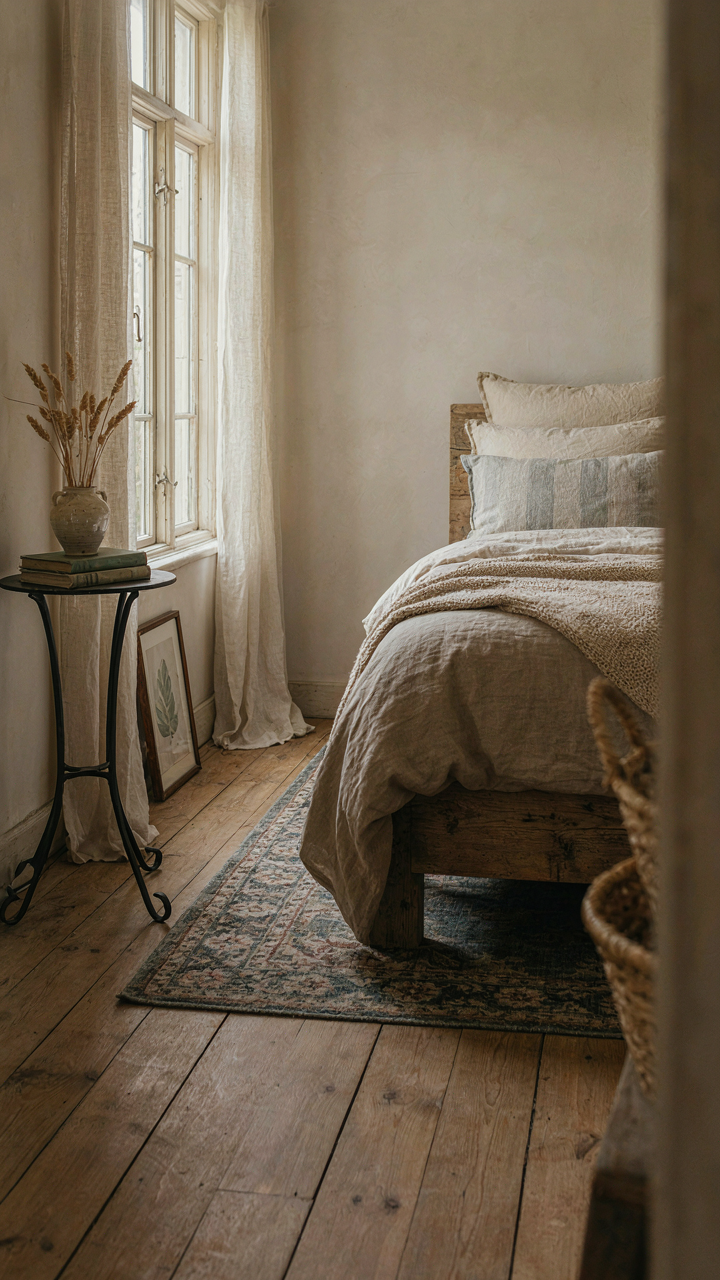
You want your bedroom to look intentional so people assume you have taste. The real mechanism is this: in biology, ecosystem collapse happens when you remove one species without understanding its role in the food chain. Your bedroom works the same way. Every material, color, and texture either supports or undermines the others. Reclaimed wood doesn’t just sit there looking old. It sets a baseline for what else belongs. A sleek metal nightstand breaks the system. A wrought iron frame restores it. You’re not decorating. You’re building a chain of dependencies where each piece makes the next piece work harder.

The difference between a farmhouse bedroom that reads as “intentional” versus “confused” is whether every element traces back to the same logic. Reclaimed wood establishes material honesty as the rule. Linens, hardware, flooring, and lighting must follow that same code. Linen works. Polyester doesn’t. Iron and brass work. Chrome doesn’t. This isn’t about preference. It’s about whether your room signals one coherent story or broadcasts conflicting messages. When one element fails the logic test, the whole system loses credibility. Build your room as a chain, not a collection.
When Everything Must Function As One System
Most bedroom advice treats furniture placement and décor as separate problems. That’s wrong. In systems thinking, you can’t optimize one part without breaking another. Your bedroom’s function isn’t just sleep. It’s also dressing, reading, and resting without stimulation. Reclaimed wood interiors naturally support this because the material itself slows your nervous system down. Rough texture, uneven color, visible grain patterns all register as “low threat.” Your brain relaxes. But if you add a TV wall, track lighting, or a glass desk, you’ve introduced stimulation nodes that contradict the system’s core function.
Every surface and corner needs a job that serves the ecosystem, not just fills space. A reclaimed wood nightstand isn’t decoration. It’s a landing zone for your phone that keeps it separate from the sleep surface. A wooden bench at the foot of the bed isn’t filler. It’s a dressing station that prevents clothes from piling on furniture. A rough-hewn shelf serves books or a lamp, not both randomly. When you assign each piece one clear function that connects to the larger calm of the space, nothing fights. Everything compounds.
Farmhouse Interior Bedroom: The Intentional Imperfection Protocol
Embracing Natural Wear And Patina
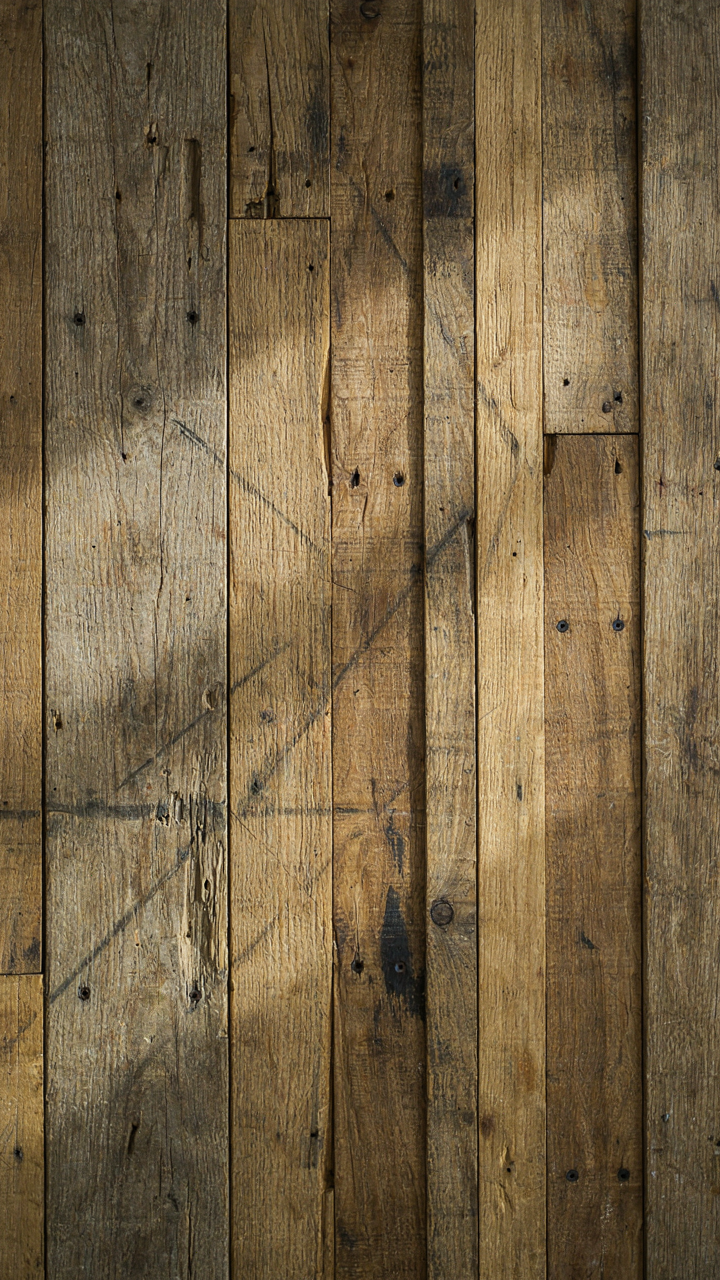
You want permission to stop fighting decay. Here’s the mechanism: reclaimed wood signals authenticity because it survived actual use, not factory production. Patina isn’t damage you tolerate—it’s proof of function. A beam with nail holes and surface checking tells a story a smooth board cannot. This matters because your nervous system reads the difference between “aged to look old” and “old from being used.”

Farmhouse design borrowed from rural vernacular where nothing was discarded. Farmers didn’t refinish surfaces constantly. They lived with the material outcomes of time. Reclaimed wood carries this lineage. Deep scratches, color variation, and weathered grain create visual texture that new wood cannot replicate without appearing staged. The specificity of wear patterns on authentic reclaimed pieces makes them unreproducible at scale, which is exactly why they register as real.
Avoiding Sterile Showroom Aesthetics
Most farmhouse bedroom advice is wrong here. It tells you to curate and coordinate when the real move is to stop over-editing. A showroom aesthetic emerges when every surface matches, every finish is uniform, and nothing contradicts the color palette. That kills the category entirely. You end up with expensive hotel bedding that happens to be wood-textured.
The mechanism is contrast and variance. A reclaimed wood headboard should sit against walls that aren’t all the same tone. Mix finishes deliberately—matte and raw wood, painted beams alongside natural timbers, smooth surfaces next to rough ones. Your bedroom should look like people actually sleep and move through it, not like a photographer arranged it this morning. Stop positioning items perfectly. Let the bed frame casting an actual shadow be enough.
Modern Farmhouse Bedroom Ideas: Curating Authenticity
The Story Your Bedroom Tells About You
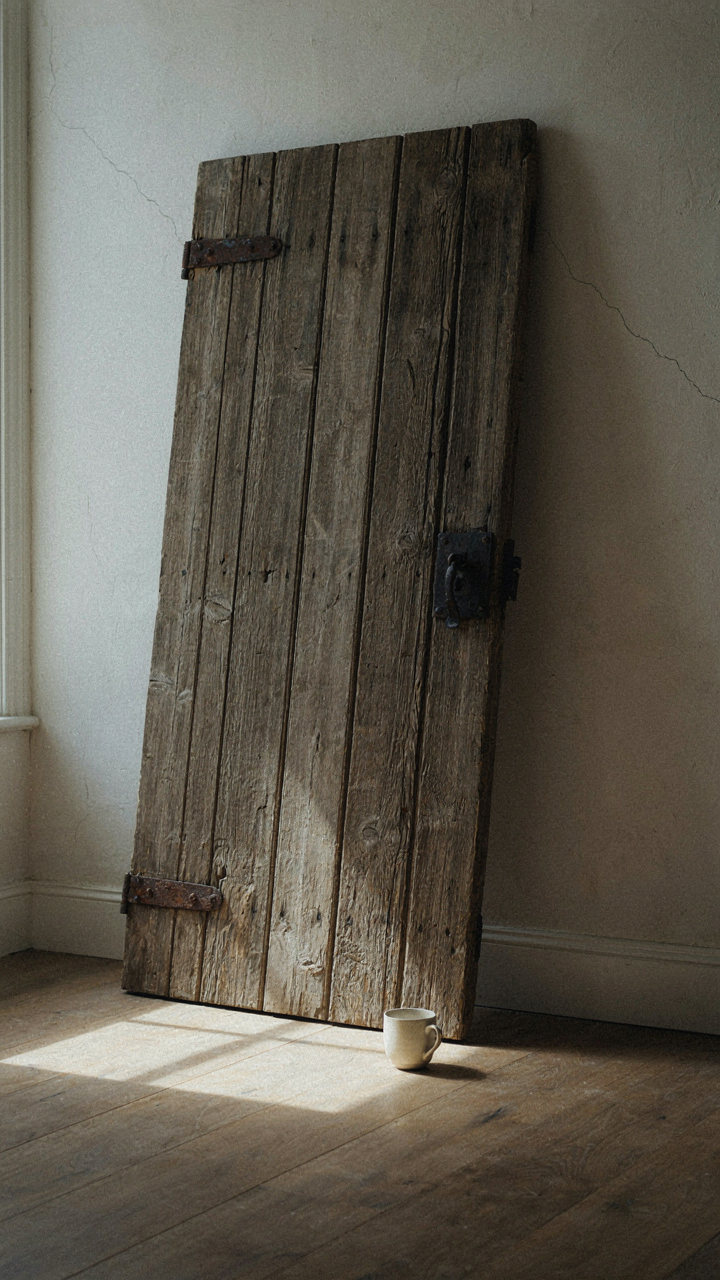
You want people to think you have taste without trying too hard. The mechanism is simple: reclaimed wood and vintage finds work because they carry history that mass-produced furniture cannot fake. When you source intentionally—a barn door from an actual barn, a headboard from salvaged flooring—the room becomes evidence of decision-making, not shopping habits. This matters more than style consistency.
Your personal narrative in decor means selecting pieces that connect to how you actually live, not how magazines say farmhouse should look. A worn quilt your grandmother made beats a distressed throw from a home goods chain every time. The difference is authenticity versus performance. Real farmhouse bedrooms contain things people kept because they worked, not things people bought because they fit a theme.
The Mass Produced Farmhouse Trap
Most people get this backwards. They assume farmhouse means buying new furniture that looks old, then arranging it to signal “rustic” to visitors. This is actually the opposite of how farmhouse design originated. Farmhouse emerged from constraint and necessity, not aesthetic choice. People used what they had, repurposed what broke, and kept what lasted. Modern farmhouse kitsch inverts this by manufacturing scarcity and artificial wear.
The tell is consistency of distressing, uniform color palettes, and zero functional wear patterns. Real reclaimed wood shows different aging across its surface because it actually aged. Faux farmhouse prioritizes Instagram coherence over material honesty. To avoid this trap, buy from architectural salvage yards and estate sales where pieces have genuine histories. One authentic barn wood beam matters more than five perfectly curated “vintage style” nightstands from a furniture chain.
Farmhouse Master Bedrooms Decor: Investing In Lasting Value
Buy Once, Not Twice
You want permission to spend more money without feeling guilty about it. Here’s the mechanism: cheap furniture forces replacement cycles that cost more over time than buying durable pieces upfront. A reclaimed wood bed frame lasts decades. A particle board frame lasts three years before sagging and creaking. The math is simple but people avoid it because admitting the initial cost stings. Economics calls this “total cost of ownership” and it applies directly to your bedroom. Calculate the per-year cost of a solid wood headboard versus replacing a veneered one twice.

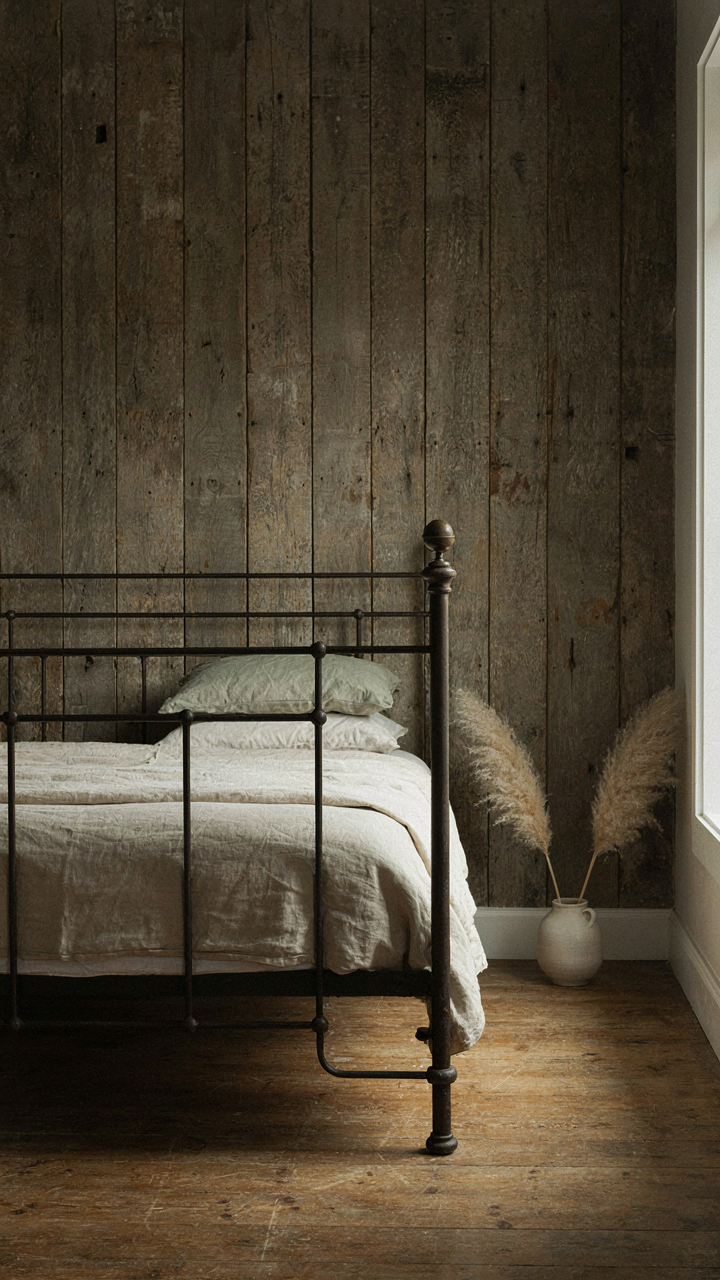
Real farmhouse bedrooms contain pieces that accumulate value through use rather than deteriorate. A hand-forged iron bed frame from the 1920s costs more than a modern reproduction, but it outlasts three modern versions. Quality means the joinery holds under weight, the wood doesn’t warp with humidity changes, and the finish resists scratches. Invest in a solid wood platform bed, a metal frame with proper hardware, or reclaimed barn wood built into the structure. You’re not buying decor. You’re buying something that functions correctly for twenty years.
Reclaimed Wood Outlasts Trends
What reads as farmhouse today won’t read as dated because the material itself was never trendy. Reclaimed barn wood has existed for 150 years in the same form. It won’t suddenly look wrong in five years because it doesn’t rely on color palettes or styling flourishes to work. The aesthetic lives in the material’s grain, age marks, and structural honesty, not in how it coordinates with current design magazines.
A rustic farmhouse bedroom built with reclaimed wood survives trend cycles because the bones don’t change. Your grandparents recognized hand-planed beams as beautiful. Your grandchildren will too. This isn’t nostalgia. It’s the difference between buying something because it performs a function versus buying something because it matches a mood board. Real wood beds, reclaimed wood headboards, and solid wood dressers made from old-growth timber remain functionally and aesthetically valid for generations. The action is clear: prioritize reclaimed or solid wood pieces over veneered alternatives and focus on joinery quality over finish complexity.
Your Comfort Isn’t Found In A Catalog; It’s Built, Piece By Reclaimed Piece
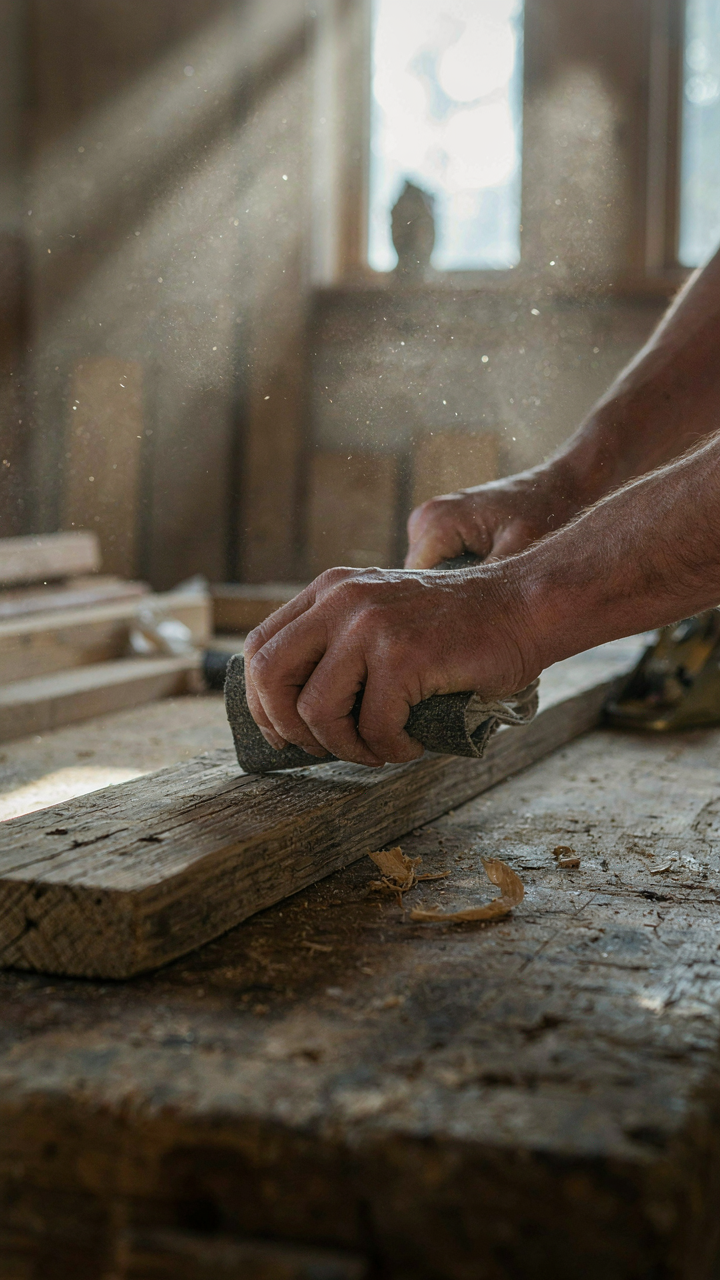
Most people buy a bedroom. You’re going to build one. The difference isn’t aesthetic—it’s psychological. Reclaimed wood forces you to make intentional choices instead of scrolling through options until your brain goes numb. Stop waiting for the perfect room to exist. Go find one piece of reclaimed wood today, something with actual history, and build around it. The bedroom that matters most is the one you refuse to settle for.