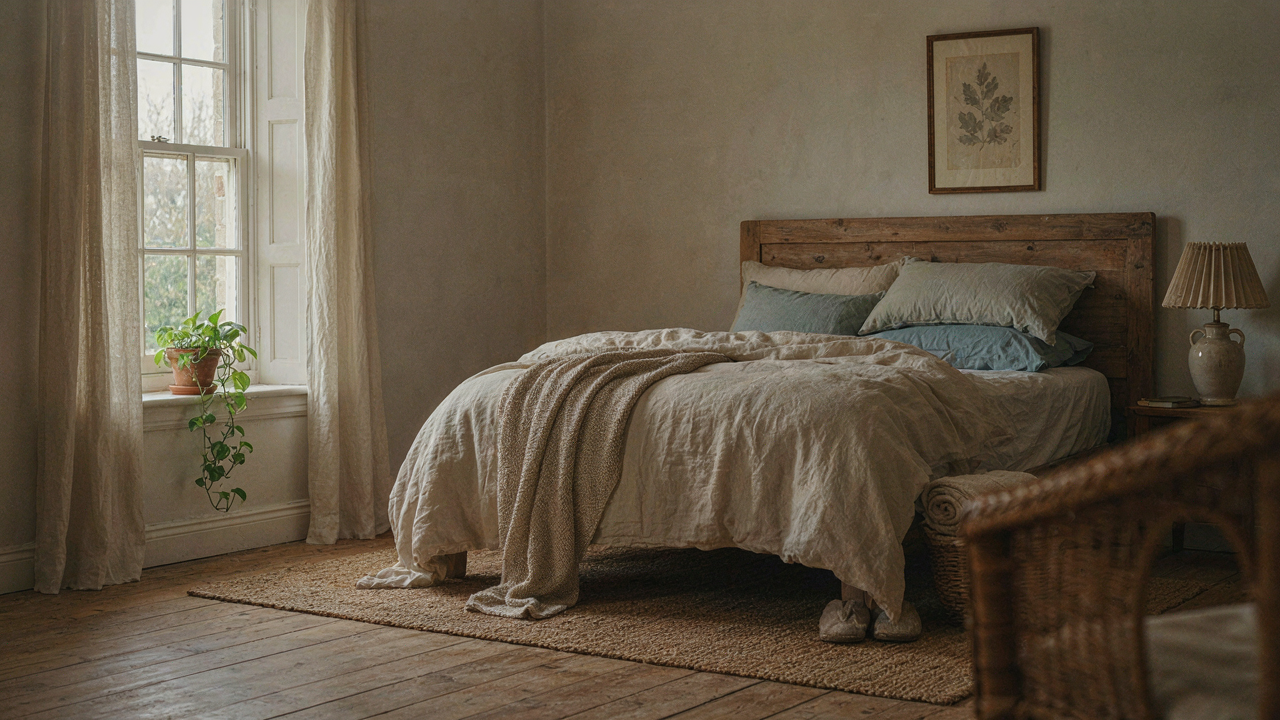
The “Less But Better” Small Farmhouse Bedroom Protocol
Strip Down To What Actually Functions
You want a small farmhouse bedroom to feel spacious without looking empty, and that tension is exactly why you’re avoiding the real work: actual removal. The mechanism here is constraint. In systems design, constraint forces optimization. A 10×12 bedroom doesn’t need seven pieces of furniture. It needs a bed, a surface for clothes, a place to sit or dress, and nothing else. Every item beyond that compounds visual noise and psychological friction.
Most people keep objects to feel prepared for hypothetical futures. That lamp for reading you never do. The chair for meditation you haven’t sat in. The side table holding phone chargers and receipts. These aren’t functional. They’re friction masquerading as utility. In a small farmhouse bedroom, the rule is brutal: if an item doesn’t serve your actual daily behavior, it leaves. This isn’t minimalism theater. It’s math.
Furniture That Pulls Double Duty
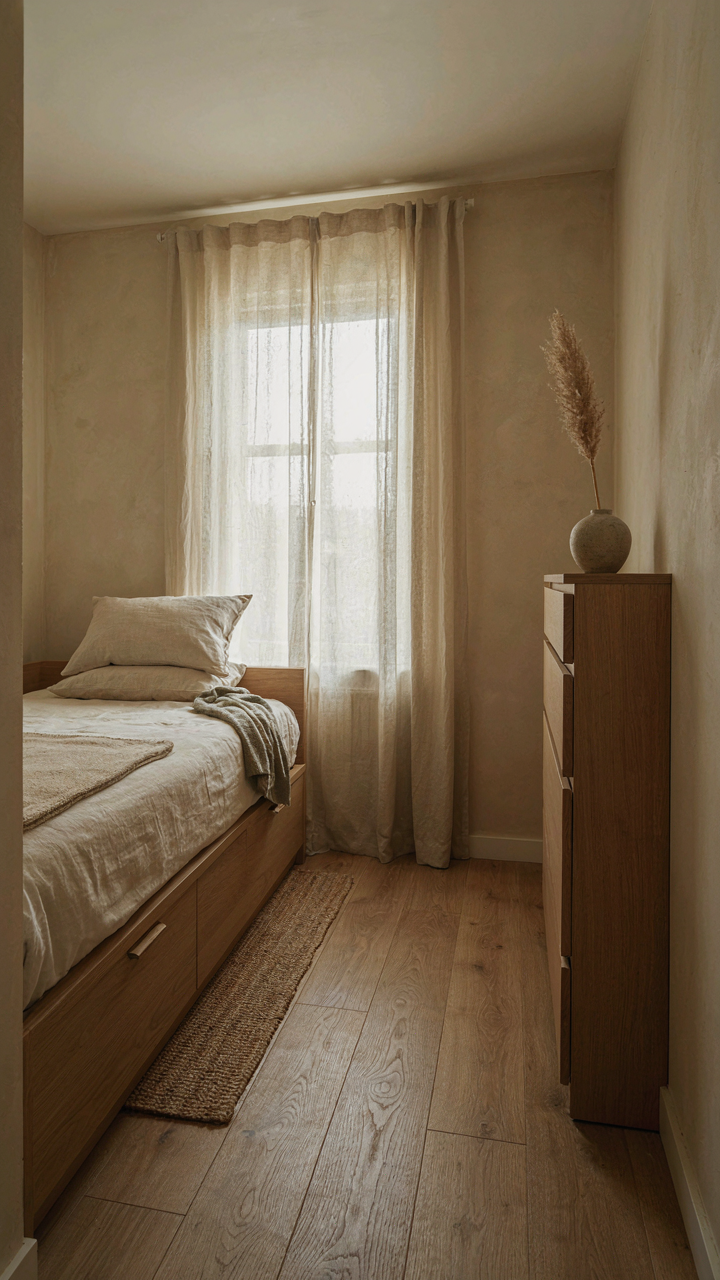
A bed frame with built-in drawers stores off-season clothing without requiring a separate dresser. A low wooden bench at the foot of the bed serves as seating, a display surface for folded textiles, or a landing zone for morning clothes. A shelf mounted above the bed combines storage and visual interest without floor footprint. Farmhouse bedrooms historically used multi-functional pieces because rural households didn’t have space for singular-purpose items. Victorian farm bedrooms featured beds with undercarriage storage, trunks that served as both seating and storage, and walls lined with open shelving.
The mistake most people make is buying pieces designed for large rooms then forcing them into small spaces. A full-size dresser consumes 20 percent of floor area in a 10×12 room. Replace it with wall-mounted shelving or a narrow, tall dresser. A single nightstand with drawers eliminates the need for a separate storage table. Every furniture decision compresses multiple functions into one object. Start with the bed and work outward. Add only what serves two purposes.
Beyond Beige: Strategic Color Palettes For Small Country Bedroom Ideas
Light Hues That Expand Space Without Feeling Empty
You want color that makes the room feel bigger because you’re tired of feeling cramped, and that’s legitimate. The mechanism is simple: light colors reflect light, which extends your visual boundary. This is physics, and it works regardless of your taste. Cream, soft white, pale gray, and warm ivory aren’t boring defaults—they’re load-bearing walls for every design choice you add later.

The trick most people miss is that “light” doesn’t mean “cold.” Farmhouse bedrooms need warmth baked into the base. Off-whites with yellow or gray undertones read warmer than pure white, which can feel institutional in a small space. Natural materials—wood beams, linen, wool—sit better against these softer neutrals because they share similar warmth signatures. Pick your base color by holding samples against your actual wood trim and flooring in different light conditions. What looks right at noon matters less than what it reads like at dusk when you’re actually using the room.
Accent Walls That Create Depth, Not Clutter
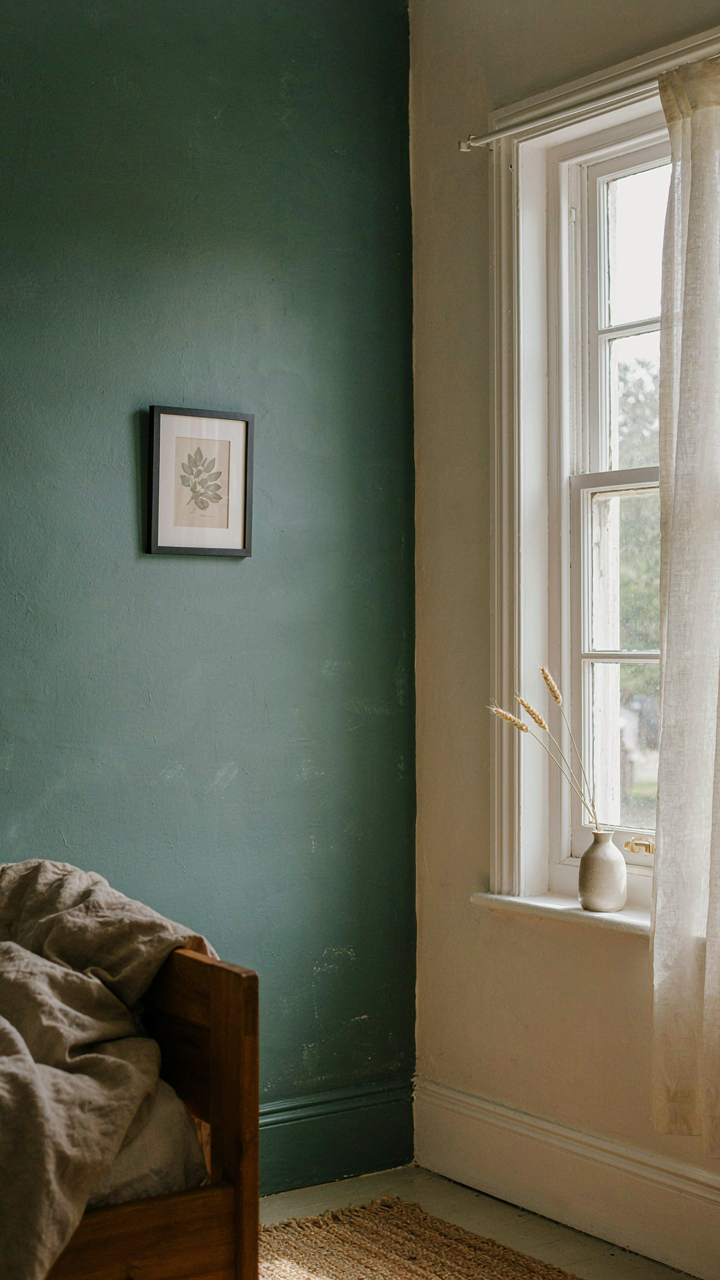
The standard advice says paint one wall a darker shade to add depth. That’s half the mechanism. Depth perception doesn’t actually require dark colors—it requires contrast and direction. A strategic accent wall works because your eye travels to it first, making the room feel longer. In a small farmhouse bedroom, this means the wall you see when entering or waking up, not the one behind the bed where it gets lost.
Real depth comes from placing the accent where it pulls your eye forward. Deep sage, muted charcoal, or warm taupe on the wall opposite your bed creates perceived distance. The other three walls stay light. This isn’t decoration—it’s spatial manipulation. Pair this with lighter bedding and it compounds the effect. The moment you paint all four walls in variations, you’ve created a closed-in feeling, which defeats the purpose. One accent wall only, and only if your small bedroom is actually square or rectangular enough to handle it without feeling trapped.
The Perceptual Layering Principle: Small Farmhouse Bedroom Illusions
How Mirrors Expand Without Adding Space
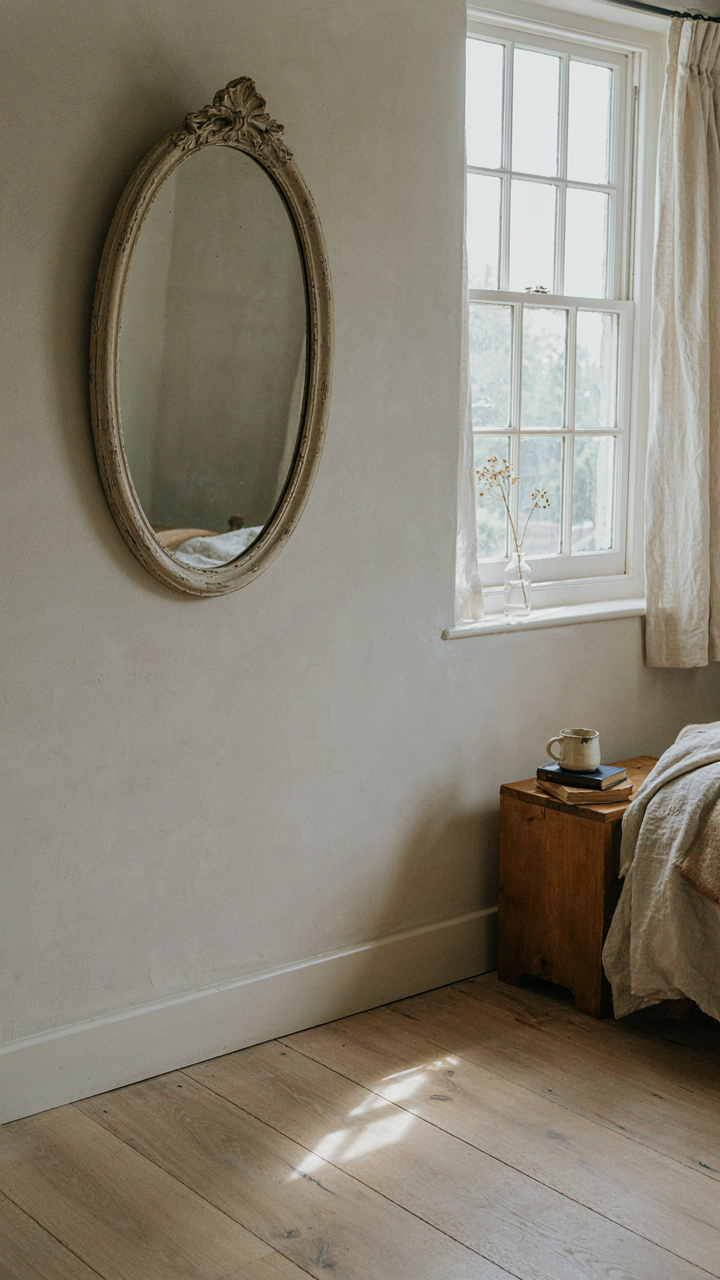
You want a small room to feel bigger without renovation costs. Mirrors work because they bounce light and create duplicate visual depth, not because they’re decorative. This is optical physics: a mirror positioned opposite a window or light source doesn’t just reflect the room back at you, it doubles the perceived distance your eye travels before hitting a wall.

Farmhouse bedrooms benefit from placement strategy over quantity. A single mirror on the wall perpendicular to your longest sightline creates the strongest illusion. Antique or distressed mirrors fit the aesthetic while delivering the same optical function as polished glass. Position one at eye level when standing, and angle it to catch natural light during the day. This changes the room’s perceived square footage without touching the dimensions.
Layered Light Creates Depth Faster Than Size
Depth isn’t about brightness, it’s about contrast and shadow. Most small room advice ignores this: people add one overhead fixture and call it solved. That fails because uniform light flattens space. The mechanism comes from how human eyes parse distance through shadow gradation.
Build light in layers. Use a primary source (ceiling fixture or pendant), a secondary source (bedside lamp or wall sconce), and a tertiary source (task lighting near a chair or corner). Each layer casts different shadows at different intensities, forcing your eye to work through depth planes instead of scanning a flat surface. Warm-toned bulbs (2700K) feel farmhouse-appropriate while their dimmer quality creates the shadow separation that makes small rooms feel intentional rather than cramped. Install a dimmer switch on your primary source and keep secondary lights accessible, not fixed.
Textural Dominance: Cozy Farmhouse Bedroom Ideas Beyond Sight
Tactile Layers Build Actual Comfort
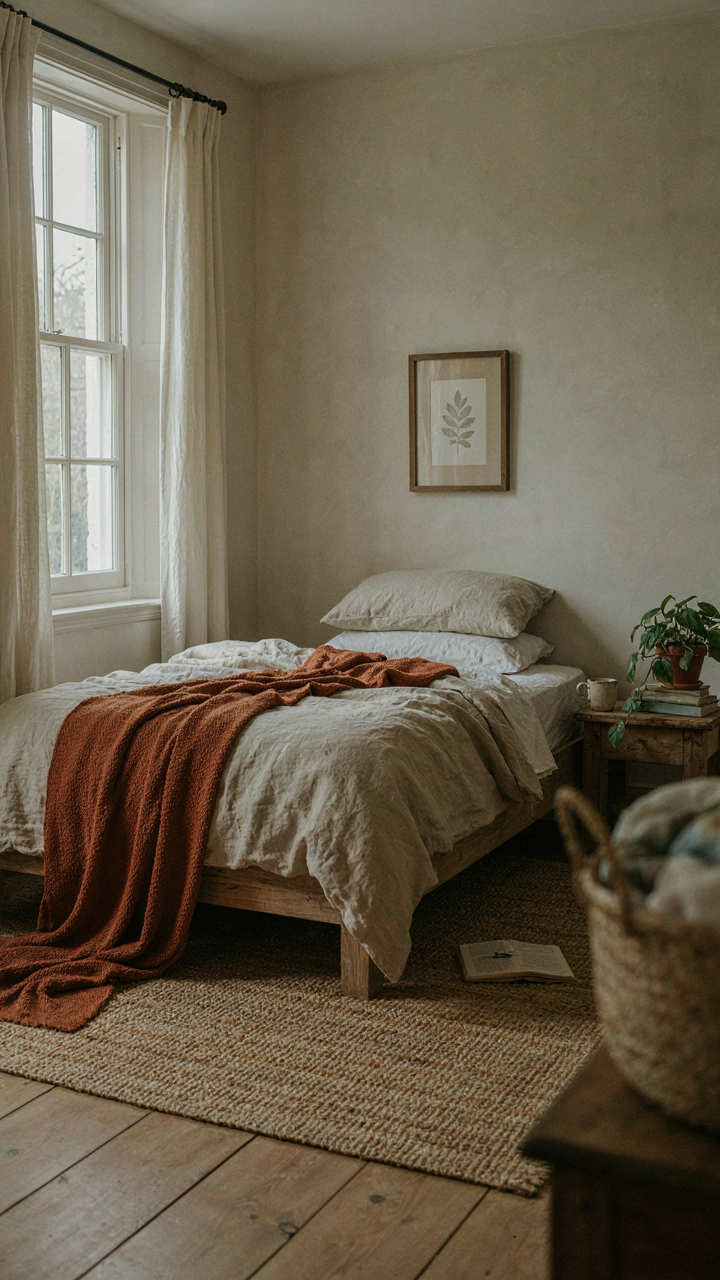
You want texture because it signals safety to your nervous system, not because it looks good in a photo. Your body reads fabric density, weight, and surface variation as signals of shelter and care. Farmhouse style leans into this through layered textiles that compound the effect: linen sheets over cotton blankets over a wool throw. Each layer has different thermal properties and surface friction. Linen breathes but wrinkles. Cotton holds warmth evenly. Wool traps air without weight. The mechanism isn’t visual—it’s haptic feedback that trains your parasympathetic response the moment you touch the bed.

The common advice stops at “add cozy blankets.” That’s incomplete. The real leverage comes from material contrast. A rough linen duvet cover against smooth cotton sheets creates texture variance your skin registers as distinct. Farmhouse bedrooms historically used whatever textiles survived farm labor: heavy canvas, burlap, linen, and wool. These materials weren’t chosen for aesthetics—they were chosen because they lasted and performed. Your small bedroom benefits from this accident of history. Layer fabrics with different weaves: a chunky knit throw over a smooth linen sheet. Your hand knows the difference. Your sleep improves because your tactile environment matches the calming signal farmhouse implies.
How Rugs Reshape Small Space Physics
Acoustic engineers use dampening materials to absorb sound energy, and a rug functions as the dampening layer in a small bedroom’s sensory environment. Hard floors bounce noise and create the sensation of exposure. A rug under the bed or anchoring the room absorbs sound, reduces echo, and makes the space feel contained. This matters more in small rooms because sound bounces off walls faster and more intensely. A farmhouse bedroom rug—typically wool or natural fiber in neutral tones—performs acoustic work while defining the sleeping zone as separate from entry space.
Rug placement is not decoration. It’s zoning architecture. In a small farmhouse bedroom, a rug under or beside the bed signals to your brain that this area is distinct, purposeful, and enclosed. The texture underfoot changes your movement patterns—you step differently on soft surfaces than hard ones. This behavioral shift reinforces the room’s function as a rest space, not a through-passage. Place the rug so it extends at least two feet on both sides of the bed, or anchor one corner at the bed’s foot and let it define the primary rest zone. This single placement choice reduces sensory chaos and trains your body to recognize the boundary.
The Biomimicry Of Layers: Rustic Farmhouse Bedroom Master Suite
How Animals Trap Heat Through Fabric
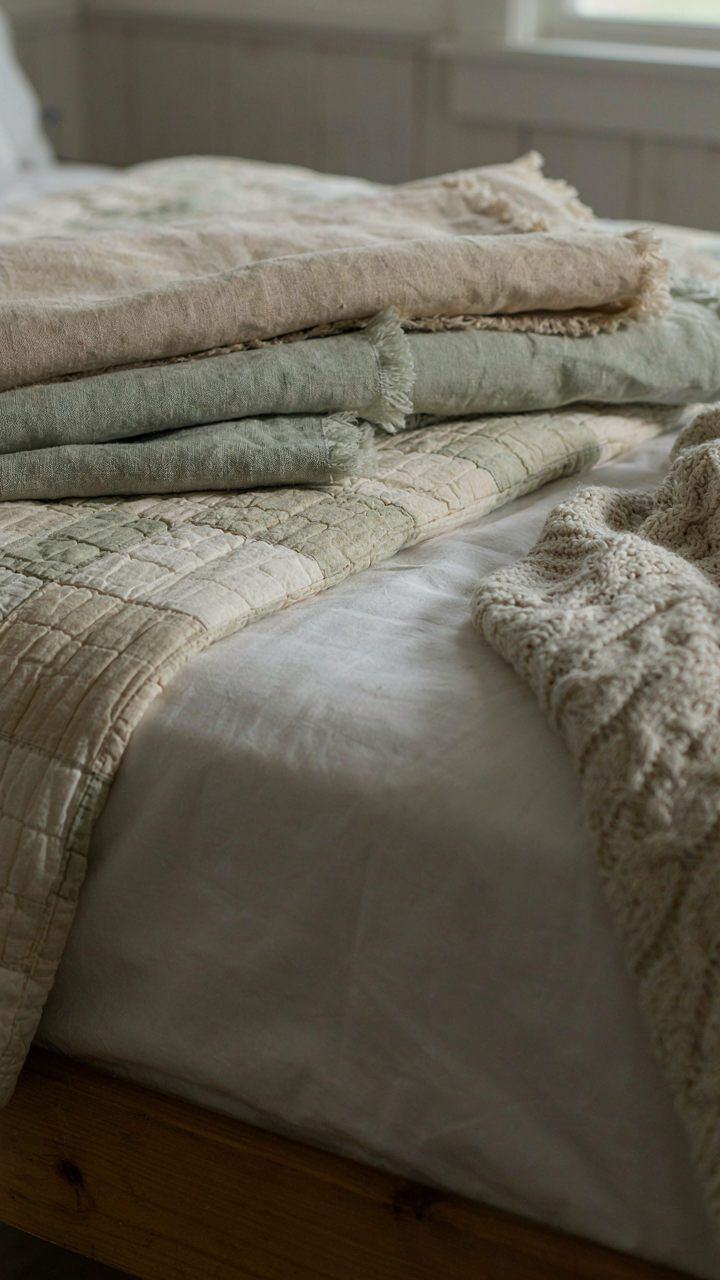
You want layers because they make you feel safe, not because Pinterest told you comfort exists in abundance. Biology calls this principle insulation: trapping dead air space between materials stops heat transfer. A farmhouse bedroom uses the same mechanism. Cotton batting in quilts, linen sheets, wool blankets—each layer creates air pockets. The gaps matter more than the thread count. Stack them strategically and you’re not decorating; you’re engineering thermal performance.

Farmhouse bedding stacks work because they mimic what mammals do in cold climates. Add a cotton base sheet, then linen blankets, then a quilted coverlet, then a throw. Each layer adds dead air. The order matters: breathable fabrics first, denser materials last. Your body radiates heat; the layers redirect it back. This isn’t aesthetic choice. It’s applied physics. A small farmhouse bedroom has limited heating, so the bed itself becomes the climate control system.
The Primitive Shelter Signal
A canopy over a bed isn’t decoration—it’s the blueprint your nervous system recognizes from millennia of sleeping in enclosed spaces. Neurobiology confirms humans sleep better when they feel contained. A four-poster frame with fabric draping signals protection to your reptilian brain. Farmhouse bedrooms exploit this by installing canopies, even minimal ones. Low ceilings or fabric stretched across posts compress the overhead space. Your body interprets this as a den, not a bedroom.
Deploy this tactically: install a simple rod across two posts at the headboard, drape neutral linen or cotton canvas, and stop. The fabric doesn’t need to cover all sides. The signal of enclosure triggers the safety response. In a small farmhouse bedroom, this compact canopy takes minimal square footage but reshapes how your nervous system perceives the space. Better sleep happens when your body stops searching for threats and relaxes into the primitive shelter your bedroom has become.
Verticality And Volume: Modern Farmhouse Small Bedroom Ideas
Tall Headboards Command The Room
You want a small bedroom to feel bigger without admitting you’re intimidated by the space. The mechanism is simple: your eye follows a vertical line before it measures horizontal square footage. A tall headboard forces visual attention upward, compressing the perceived ceiling height while making the footprint feel less cramped.

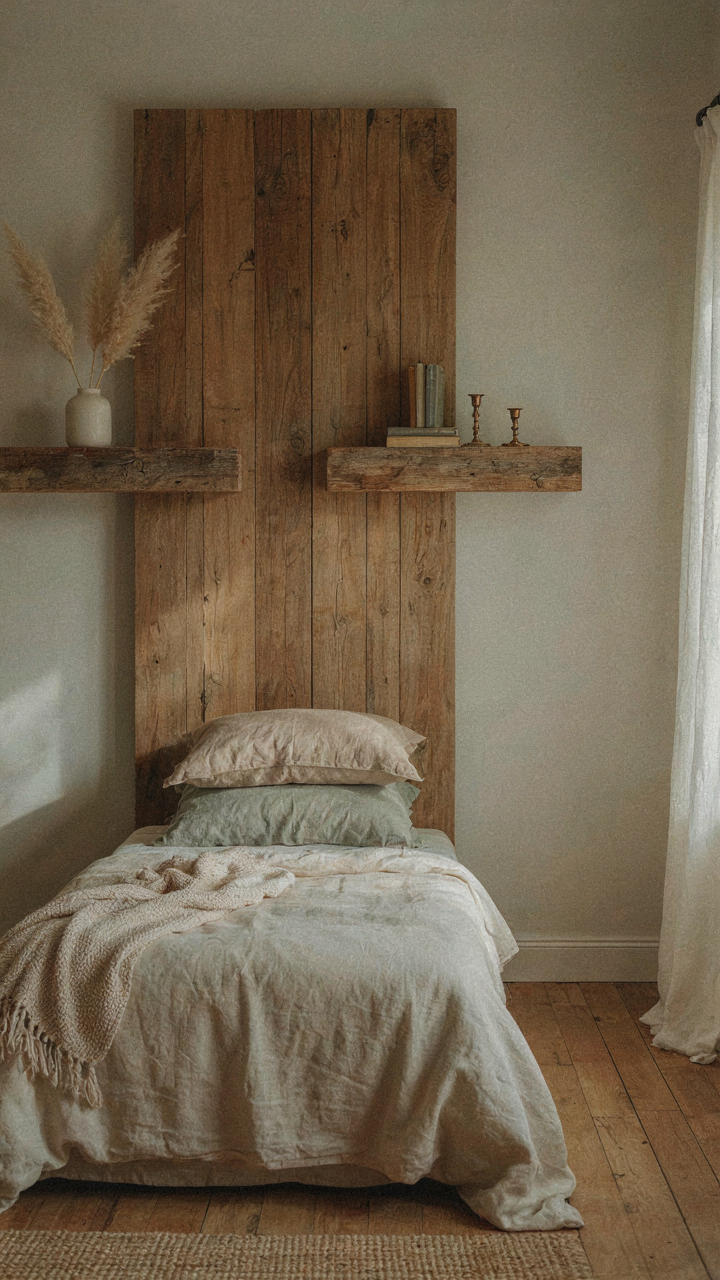
Farmhouse style traditionally uses wood headboards that extend five to six feet high, sometimes reaching near the ceiling. This isn’t decoration. It’s a spatial anchor. When a headboard occupies the wall vertically, it establishes the room’s visual baseline at height rather than at the tight perimeter. The bed stops being furniture in a small room and becomes the room’s central axis.
Floating Shelves Steal Usable Wall Real Estate
Stop thinking of wall space as decoration area. Physics calls it “volume utilization”—deploying vertical planes to store mass without consuming footprint. Floating shelves do exactly this in a small farmhouse bedroom. They eliminate the floor space a traditional dresser would claim while keeping everyday items accessible.
Install shelves at eye level and above across one wall. Farmhouse style pairs this with reclaimed wood and simple brackets. The visual continuity matters less than the practical math: a thirty-six-inch floating shelf holds what a nightstand plus dresser once did, using only wall surface. Start by measuring your wall width, then calculate the load capacity you need before ordering. Mount shelves using studs or appropriate anchors for your wall type, spacing them eighteen inches apart vertically for both aesthetics and function.
The Guest Room Fallacy: Farmhouse Guest Room Function Over Form
What Guests Actually Need
You want your guest room to signal taste and hospitality, but what you’re really afraid of is looking cheap or unprepared. The mechanism that separates good guest rooms from forgettable ones isn’t aesthetic—it’s the removal of friction. Guests don’t remember your color palette. They remember whether they could find a charger, adjust the temperature, or use the bathroom without guessing.
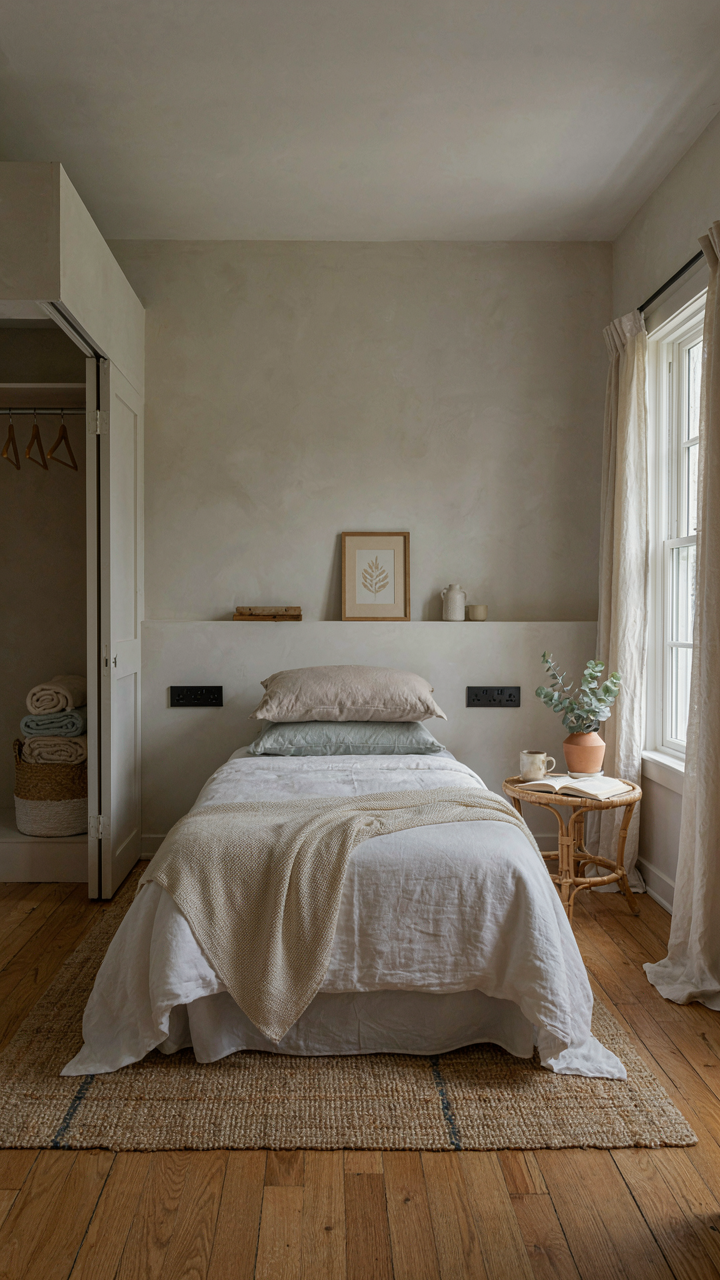
- Bedside outlets on both sides: Mount USB-A and USB-C outlets at nightstand height. Guests arrive with dead phones and devices. One outlet forces an awkward negotiation between two people sharing a room.
- Blackout layer under sheer curtains: Install cellular shades or blackout liners. Farmhouse bedrooms often use thin cotton curtains for aesthetics. They don’t block 6am light. Your guests wake tired.
- Extra blankets in the closet, not folded on the bed: A basket or shelf stores blankets guests can grab if cold. Layering beats guessing what temperature you prefer. Show options, don’t assume.
- A small table or desk surface: Guests need a place to set their phone, keys, wallet. Nightstands alone create clutter and stress. A small side table or writing desk handles this cleanly.
- Adequate lighting that isn’t overhead only: Add a reading lamp and a dimmer switch. Overhead lights are hostile. Guests need control over their light environment the moment they enter the room.

The friction audit is the real work. Walk through your guest room as a stranger who arrives at 9pm after six hours of driving. What do they struggle with? That struggle is what kills repeat visits, not your choice of throw pillow.
Maintenance First, Design Second
Most advice reverses the priority here. Common guidance tells you to design first, then figure out cleaning. Wrong. Farmhouse style uses natural fibers—linen, cotton, jute, wool—that absorb dust and require frequent washing. In a small room with limited airflow, high-maintenance materials become a burden, not a feature.
Choose washable slipcovers over upholstered headboards. Use machine-washable area rugs on hard flooring instead of fitted carpet. Install a metal bed frame instead of an upholstered one. These aren’t design compromises. They’re design decisions that let the room function across seasons and guest visits without becoming a cleaning project that eats your weekend. Simplicity compounds over time.
Curated Imperfection: Authentic Farmhouse Bedroom Ideas
Objects That Carry Weight
You want permission to spend money on old things without feeling wasteful. The mechanism is simple: objects with history compress time and narrative into physical form, which your brain reads as legitimacy. A vintage ladder-back chair from 1920 isn’t decoration—it’s evidence that the room has a reason to exist beyond Instagram.

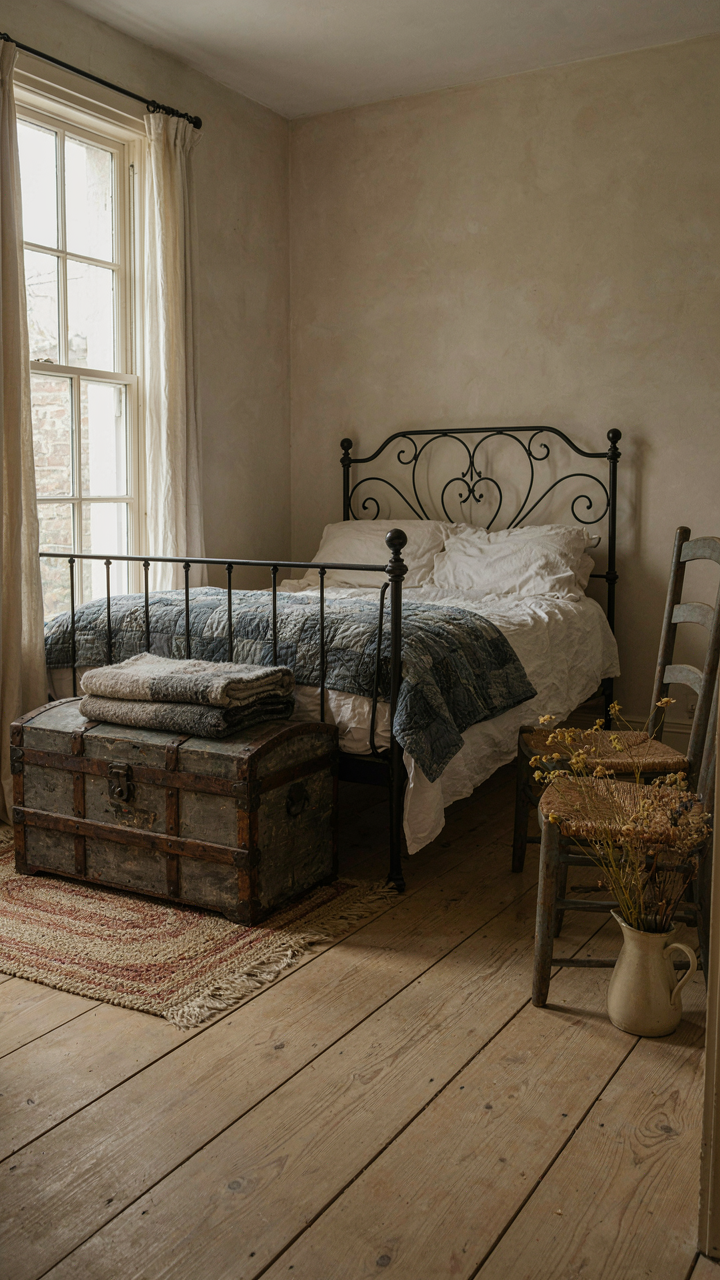
Farmhouse bedrooms work because they layer found objects into a visual argument. A cast iron bed frame, a weathered trunk at the foot, a mason jar on the nightstand. These items don’t need explanation because they came from somewhere real. Source pieces from estate sales, auctions, and local antique shops where the seller can tell you what something was actually used for. That story becomes part of why it belongs in your room.
The Patina Problem
Most advice tells you to buy new furniture and beat it with chains. That’s wrong. Manufactured distress reads as costume, not history. Real patina happens through use and time, not through a production technique applied at the factory.
If you buy vintage, you’re getting actual wear patterns that show where hands gripped, where light faded, where moisture settled. A genuine wooden dresser from the 1970s has surfaces that dull and darken unevenly. Paint flakes where friction occurs, not where a designer decided it should look “rustic.” When you source real aged pieces, you eliminate the cognitive dissonance your eye detects between the fake distressing and the clean construction underneath. The room feels honest because nothing in it is performing authenticity.
Your Small Bedroom Isn’t A Problem To Solve, It’s A Boundary To Master
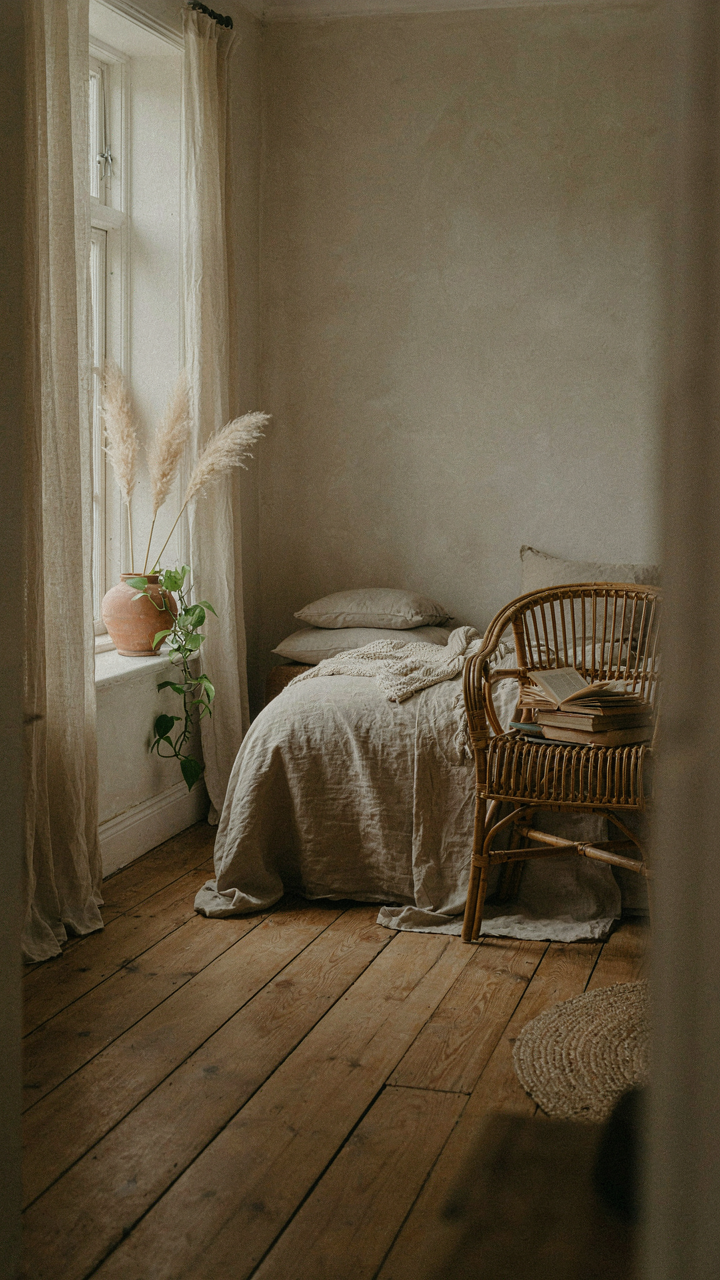
Most people treat small bedrooms like failures. They don’t. They force decisions. A small farmhouse bedroom demands you choose texture over clutter, intention over impulse. You stop collecting and start curating. Stop today. Pick one piece in your room right now that doesn’t serve you and remove it. That single act rewires how you see constraint. Limitation breeds focus, and focus builds peace.