
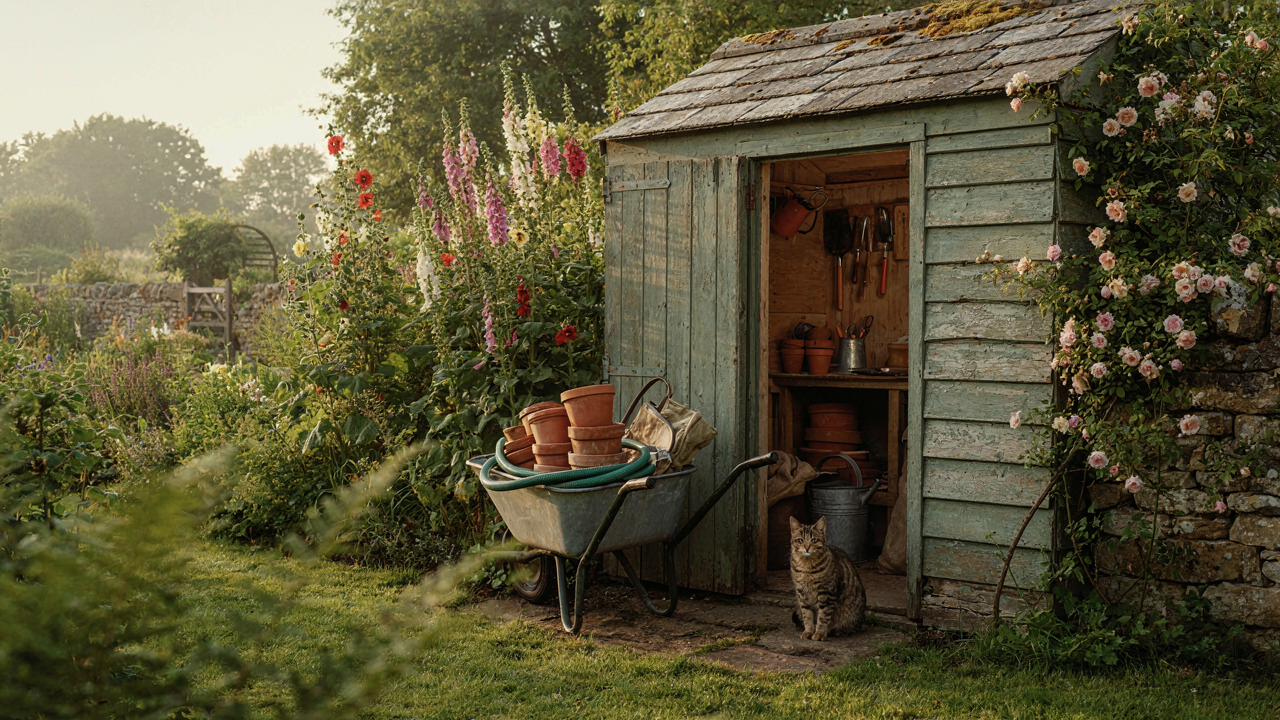
The Function First Potting Shed: Why Aesthetics Are Overrated
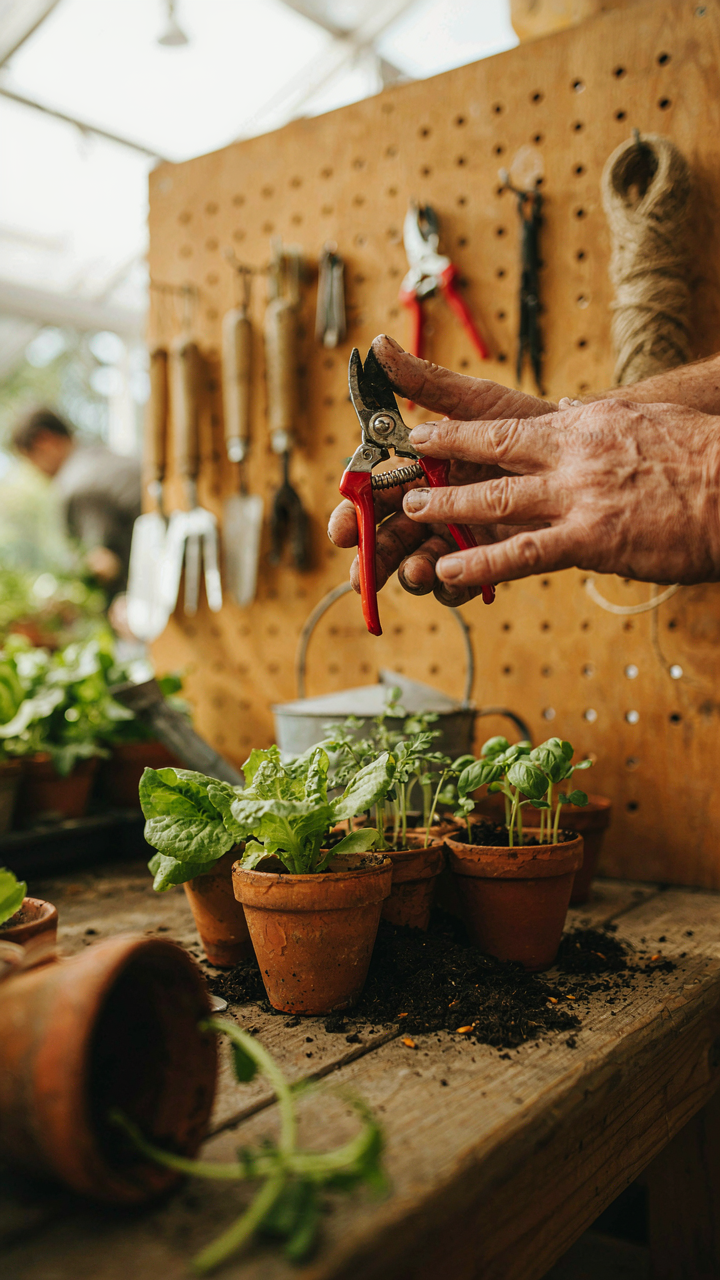
Work Zones Over Instagram Moments
You want your potting shed to look good because you think other people care. They don’t. What actually matters is whether your hands and body move through the space without friction. Ergonomics borrows from industrial design the principle of “flow state”—minimizing wasted motion between task clusters. In a potting shed, this means your soil, tools, and plants arrange themselves around your actual workflow, not around what photographs well.
Most potting shed advice inverts the priority. It leads with aesthetics: rustic shelving, vintage signs, charming wooden benches. Then it tries to squeeze function into the remaining gaps. This is backwards. You spend hours in that shed. A poorly positioned work surface costs you time and creates strain in your shoulders and lower back. Poor lighting forces you to lean closer to seedlings, straining your neck. No organization system wastes fifteen minutes daily hunting for pruners. None of this matters if the shed looks like a Pinterest board.
Bench Height And Tool Reach Matter More Than Styling
Your potting bench is not furniture. It is a machine you operate with your body. The standard height is 30 to 36 inches from ground to work surface—this keeps your elbows close to your torso and your wrists neutral when standing and working for extended periods. If you build or source your bench at 24 inches or 42 inches because those dimensions fit your aesthetic vision, you have purchased daily pain.
The same logic applies to tool placement. Everything you use more than twice per week should sit within arm’s reach from your primary work position. Hooks, pegboards, and wall-mounted racks aren’t decor—they’re storage that eliminates the step of bending down or reaching high. Frequency of use determines location, not what creates visual balance. Install your potting bench against the wall with the most natural light. Orient your seating so you face the door. These choices are not glamorous. They prevent eye strain, reduce time wasted on setup, and let you work longer without fatigue.
Minimalist Potting Shed Interior: Decluttering For True Productivity
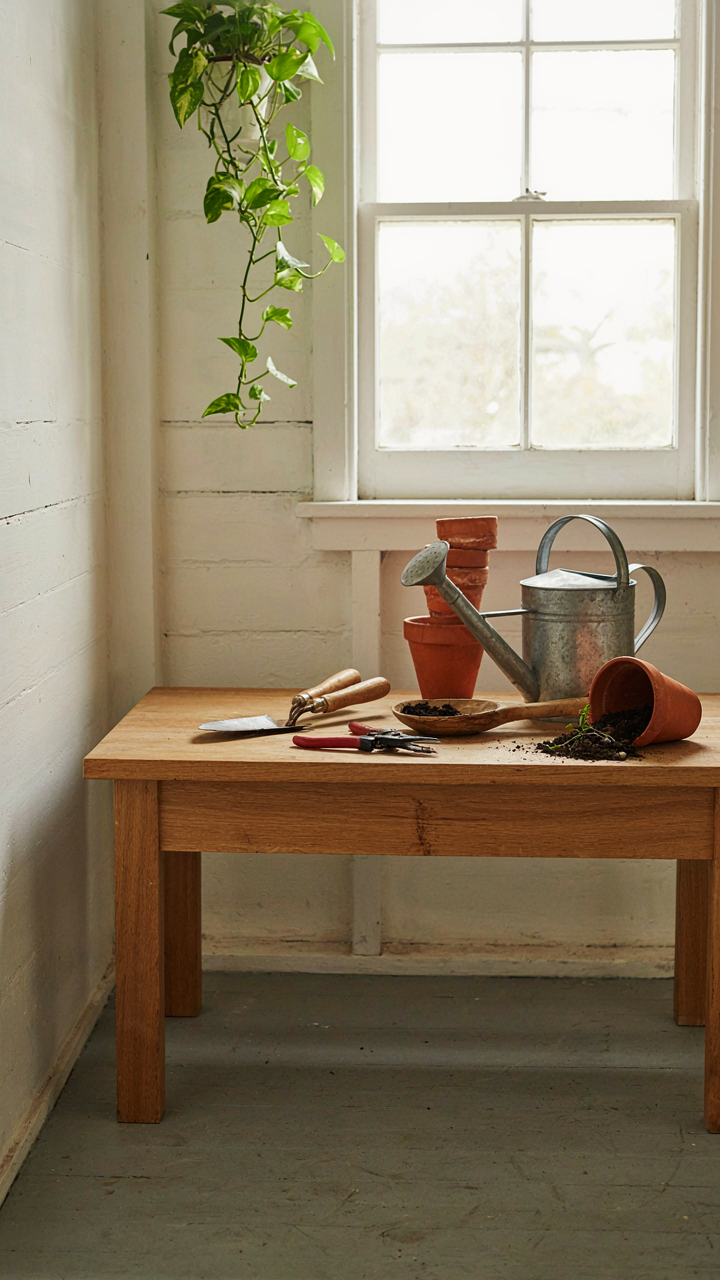
The Only Tools That Earn Their Space
You want a potting shed that feels intentional instead of cluttered because clutter signals you’ve lost control, and losing control means wasting time every time you work. The mechanism is simple: every tool you own below a certain usage threshold becomes friction. It occupies physical space, mental real estate, and creates decision fatigue the moment you walk through the door. Most gardeners keep tools they used once three years ago.

Real productivity in a potting shed comes from constraint, not abundance. Identify the five to seven tools you actually reach for on a standard potting day: a trowel, dibber, pruners, soil scoop, watering can, plant labels, and a potting knife. Everything else is dead weight. The trick isn’t buying fewer tools—it’s being ruthless about what leaves the shed. Tools that don’t serve your primary task (propagation, repotting, seedling hardening) get donated or sold. Your shed becomes faster to work in because you eliminate the scanning phase. You know exactly where everything is because there’s less to search through.
Vertical Storage Maximizes Your Working Surface
Wall space in a potting shed operates like leverage in physics: the same effort applied vertically generates exponentially more usable area than horizontal shelving alone. When you stack horizontally, you’re fighting gravity and losing depth at your work table. Wall-mounted pegboard, wooden slats, or simple hooks redirect that energy upward. The real win isn’t aesthetic—it’s that your potting bench stays clear, and a clear bench is where work actually happens.
Attach pegboard to the wall behind your potting bench at eye level. Mount your most-used tools within arm’s reach: pruners, labels, twine, and soil amendments go here. Reserve lower wall space for larger items like stakes or cloches. Upper walls hold lightweight baskets for empty pots or finished seedlings ready to harden off. This layering creates a workflow: reach right for daily tools, reach up for storage, reach down for bulk materials. Your bench stays uncluttered, and you move faster because every tool has one assigned location.
The “Resilience Protocol” For Garden Sheds: Borrowing From Ecology
How Niches Prevent Tool Chaos
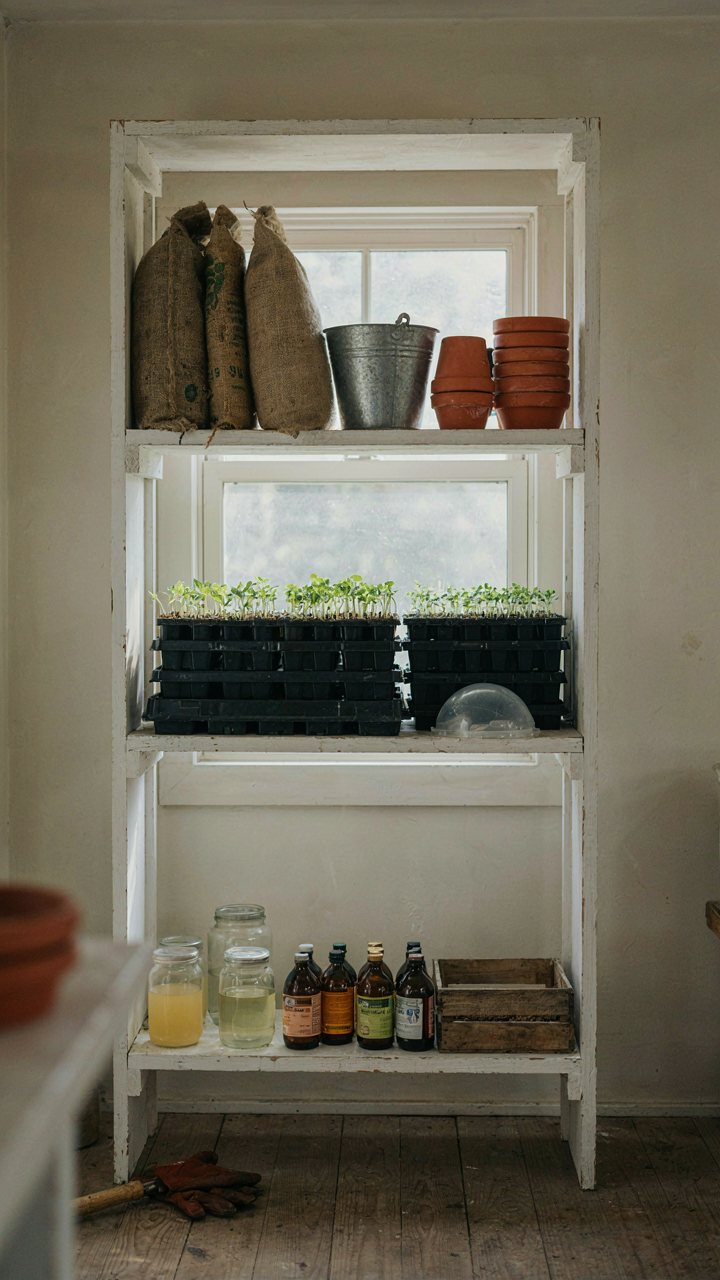
You want your potting shed to feel organized so you look competent when someone visits. Here’s what actually matters: ecology teaches niche partitioning—the principle that organisms survive by occupying distinct resource zones rather than competing for the same space. Apply this directly. Each tool category owns a specific zone. Propagation supplies live in one area. Soil amendments live in another. Fertilizers, pots, and hand tools each claim their own boundary. This isn’t decoration. It’s prevention of friction.

Most people treat shed organization as aesthetics. Wrong. The mechanism is decision fatigue elimination. When you enter the space, your hand moves to the right location without your brain engaging. You save 40 seconds per task. Across a growing season, that’s hours reclaimed. The niche system works because it removes the question entirely. The question is what kills efficiency. Establish physical zones now so your future self moves on instinct, not search.
Building Backup Systems Into Your Supply Chain
Redundancy planning sounds defensive. It’s actually offensive strategy. You don’t add backup supplies because you’re anxious about running out. You add them because a single point of failure stops your entire potting operation mid-season. One broken propagation tray, one misplaced pruning tool, one empty bag of your primary potting mix means delay. Identify the three items you use daily without exception. Stock a second copy of each in a separate, labeled location.
The protocol is mechanical: list your irreplaceables, source duplicates before you need them, store one set in a secondary location at least ten feet from the primary zone. This isn’t paranoia. Commercial greenhouses operate on this exact principle. You’re borrowing their risk management, scaled down. The moment you run out of something critical mid-propagation cycle, you understand why redundancy exists. Prevent that moment before it arrives.
Beyond Instagram: Real Potting Sheds That Actually Work
When Function Beats Aesthetics
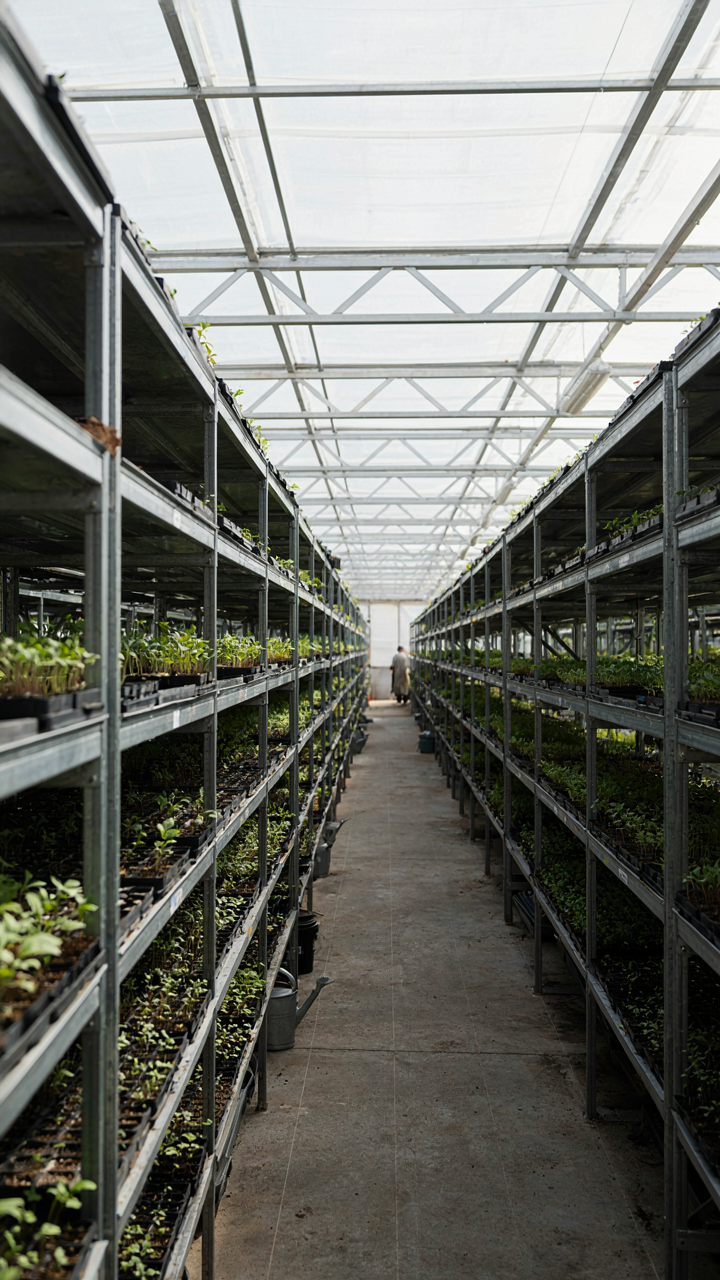
You want to see the pretty version because you think it means your shed will work better. It won’t. The mechanism is simple: decoration taxes your space and your budget while solving zero growing problems. A wooden potting bench with Instagram-worthy weathered patina takes up the same square footage as a steel workbench, but the steel one holds twice the tools and costs half as much. The gardeners who produce the most seedlings run stripped-down operations. Bare walls, concrete floors, metal shelving, no sentiment.

Consider the market garden model from commercial horticulture: maximum output per square foot drives every design choice. A working potting shed applies this same logic. One grower in Devon runs a 120-square-foot shed with three benches, no decoration, that moves 400 seedlings weekly. Another has 150 square feet filled with reclaimed barn wood, vintage signs, and mood lighting, and moves 120 seedlings weekly. The difference isn’t skill. It’s that the second operation wasted 30 square feet on visual comfort instead of workflow. Measure your actual bench depth, your arm reach, your tool storage needs first. Aesthetics come after function is locked in.
The Real Cost Of Over Decoration
Everyone warns about money spent on decor, but they miss the actual damage: lost efficiency and false confidence. You buy a beautiful rustic potting bench because it “inspires” you, then discover it’s six inches too narrow for flats. You install decorative shelving that looks great but makes tools hard to grab. You paint the shed interior white because it’s cheerful, then spend extra on grow lights to compensate for glare and heat reflection problems. The financial hit isn’t just the initial purchase. It’s the compounding loss in speed and the cognitive load of working around obstacles you built yourself.
The hidden cost compounds over seasons. A poorly designed space makes you slower, and slower means fewer plants per year. Fewer plants means fewer sales or harvests. That aesthetic potting bench that cost 40 pounds more than a functional one? After two growing seasons of 5 percent slower work, you’ve lost 200 pounds in potential output. Fix your layout first, then add one shelf or one tool hook at a time based on what you actually use. This is the protocol: function first, measure the gap, fill the gap, and stop.
Garden Workshop Ideas: Convert Your Potting Shed To A Powerhouse
Work Surfaces That Actually Adapt
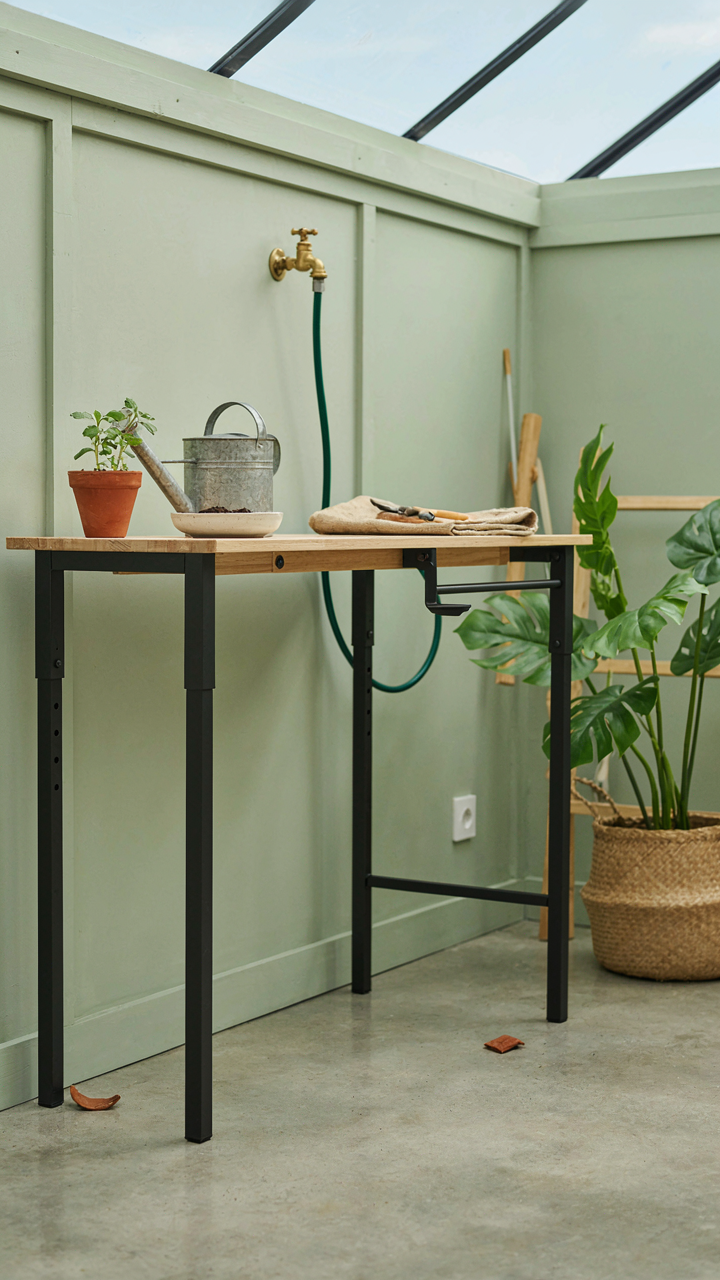
You want to feel productive without buying a second building. The real constraint isn’t space—it’s surface rigidity. Benches designed for one task strangle everything else. Think in terms of systems thinking from industrial design: you need modularity, not multiplication. A potting shed that works demands surfaces that flip purposes without requiring manual reconstruction.

The standard advice is to build one long bench and call it done. That’s lazy. Tiered benches with adjustable heights handle propagation, potting, seed sorting, and tool assembly without reorganization. Reclaimed wood or composite tops resist rot better than pine, and they tolerate wet conditions for years. Attach surfaces to the wall on hinges where floor space matters. The mechanism is simple: one vertical surface becomes two horizontal ones when you need them.
Power And Water: Non Negotiable Infrastructure
Most potting sheds treat electricity and water as afterthoughts, which is why they fail. You need both permanently installed before you stock a single tool. An exterior-grade outlet rated for wet environments and a frost-proof outdoor faucet are the difference between a shed you visit and one you actually use.
- GFCI protected circuits: Ground-fault circuit interrupter outlets detect moisture and kill power instantly. Install at least two circuits on separate breakers to avoid tripping when multiple tools run.
- Frost-proof hose bibs: Standard outdoor faucets freeze and burst. Frost-proof models drain automatically when you shut them off, protecting lines in cold climates year-round.
- Grounded extension reels: Heavy-duty, weatherproof cord storage prevents tangles and damage. Mount on the wall to keep water and soil away from coiled wire.
- Low-pressure spray station: A simple soaker hose or misting nozzle on a reel beats carrying buckets. Attach near your potting surface for watering seedlings without mess.
- Dedicated workbench outlet: Position one outlet directly above your main bench at waist height for heat mats, grow lights, and charging battery tools without extension cords.
Run water lines and electrical conduit before finishing walls. Retrofit work costs triple and looks worse. The protocol is simple: consult local codes, hire a licensed contractor for permanent installations, then test everything before winter arrives.
Unconventional Potting Shed Interior Ideas: Hacking Found Materials
Salvaged Items For Robust Storage Solutions
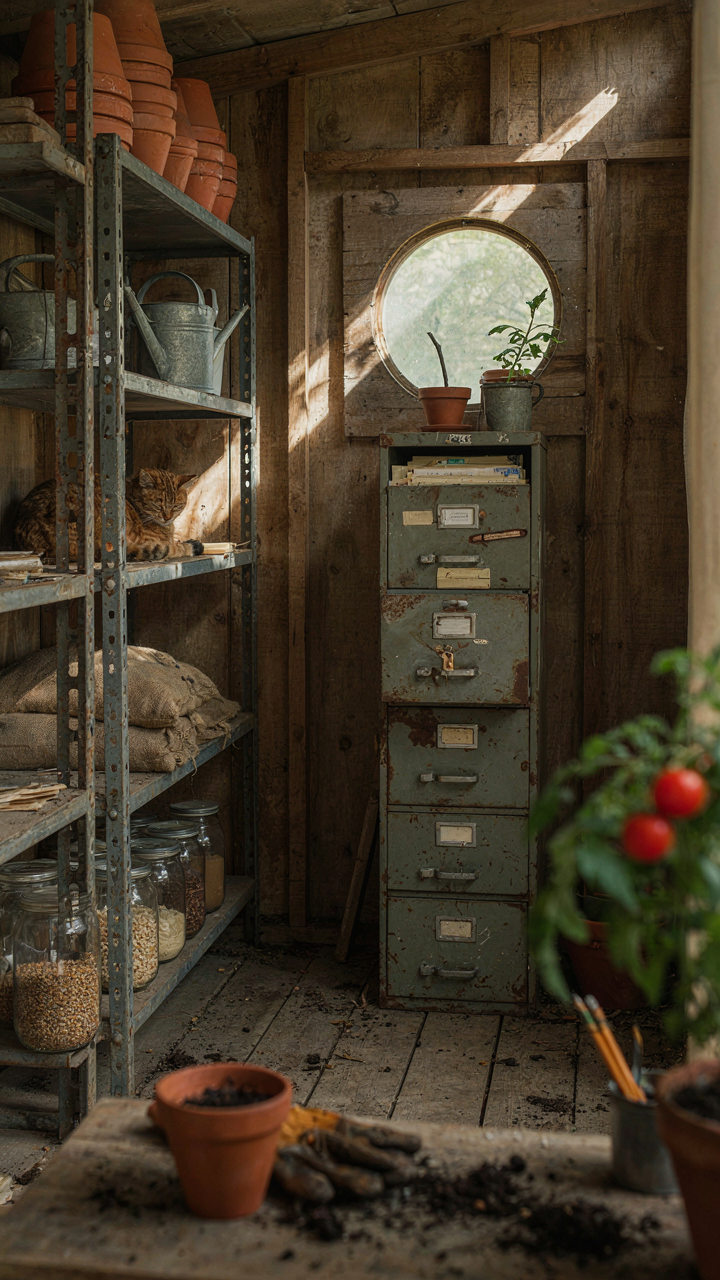
You want this to look intentional, not like you couldn’t afford new shelving. Here’s the mechanism: salvage materials work because they’re already stress-tested. A reclaimed barn beam has carried load for decades. Reclaimed brick has survived freeze-thaw cycles. You’re not guessing their durability—it’s proven. The real advantage isn’t aesthetic. It’s that secondhand materials have already failed the weak ones out of the supply chain.

Old industrial shelving racks, factory carts on wheels, and cast iron brackets handle moisture and weight without requiring maintenance assumptions you’d make with new materials. Salvage yards stock items built for actual work, not home décor budgets. Stack reclaimed wood on salvaged metal supports and you inherit engineering that outlasts most modern combinations. The cost difference funds better plants, not prettier containers.
Creative Repurposing For Unique Tool Organization
Most advice says to mount pegboards and call it done. That’s incomplete. Real tool organization follows constraint-based design from industrial operations: you organize by frequency and function, not by what looks symmetrical. A potting shed isn’t a showroom. Tools you use daily should travel zero steps. Tools you use monthly can be stored higher or deeper.
Repurpose old filing cabinets for seed packets, drawer dividers for small hand tools, and ladder shelving from salvage for vertical plant staging. Hang old kitchen utensil racks for pruning shears. Use vintage metal lockers for seasonal storage. The constraint forces you to match storage type to actual use patterns rather than forcing everything into generic solutions. This eliminates the friction that makes people stop organizing systems halfway through the season.
The Brutalist Approach To Potting Sheds: Raw Utility Wins
Structure Without Apology
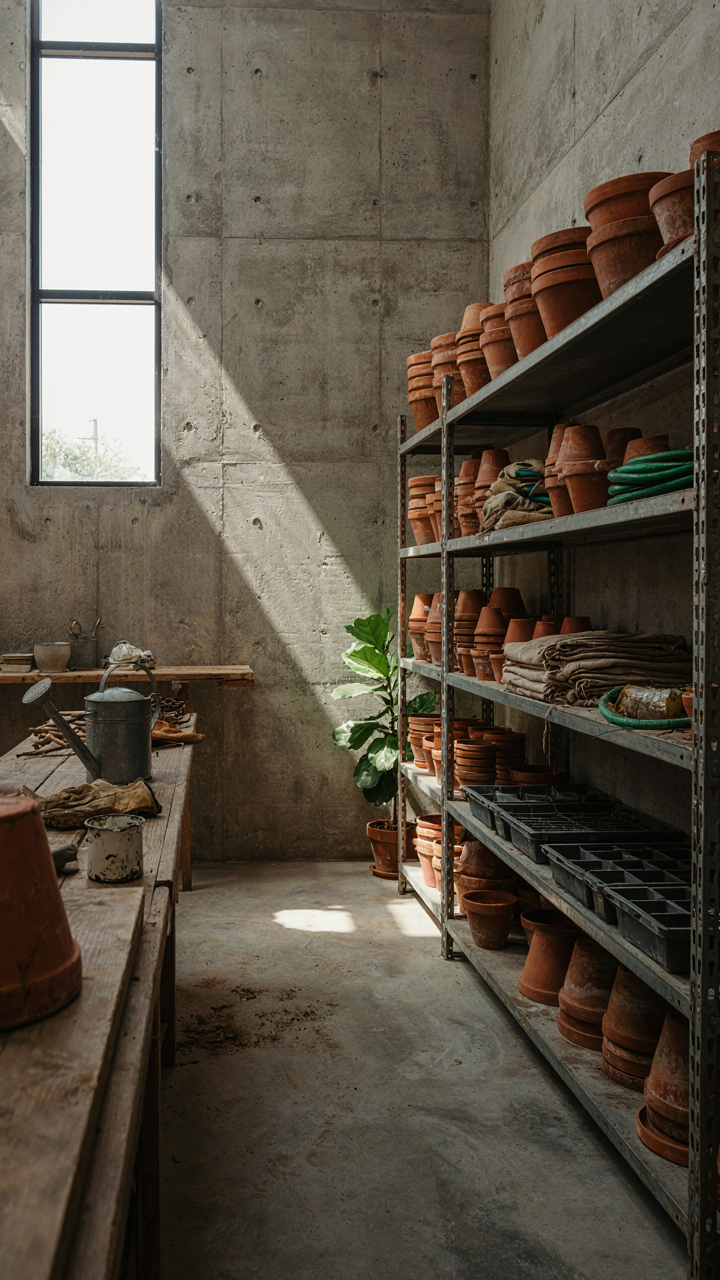
You want the aesthetic of “not trying” because you’re tired of the performance. Here’s what actually happens: the moment you expose structure, you stop paying for finishes that hide problems. Exposed framing, visible joinery, bare brick or stone walls—these force you to build correctly the first time. There’s no drywall to cover shortcuts. Industrial design borrowed from factory architecture proves that constraint breeds clarity. Your shed becomes honest about what it does.

The brutalist potting shed strips away the shed’s need to look like anything but shelter for work. Concrete floors stay unpolished. Timber beams run exposed overhead. Steel brackets show their fasteners. You’re not hiding the work—you’re displaying the logic. This eliminates the maintenance trap of painted surfaces, stained trim, and decorative detailing that requires constant upkeep. Raw utility is lower friction than rustic theater.
Materials That Survive The Work
The common advice says “weathered wood is charming.” It’s not. Weathered wood rots. Real durability means accepting materials that age without degrading, not materials that look like they’re aging. Galvanized steel, untreated hardwood, sealed concrete, and lime mortar all perform. They change visually over time without becoming liabilities. Your shed materials do work, not pretend.
Galvanized metal fixtures, hardware, and shelving withstand moisture and salt spray without rust-through. Hardwoods like oak and chestnut resist rot longer than softwoods and tolerate repeated moisture cycles. Concrete floors eliminate the wood rot problem entirely and handle spilled water without warping or staining. The mechanism is simple: choose materials whose failure mode is visual patina, not structural collapse. This is how brutalist potting sheds actually last.
Small Potting Shed Ideas: Maximizing Space Without Sacrificing Function
The Constraint That Forces Better Design
You want a potting shed that doesn’t eat your entire garden footprint, and that fear of wasted space is actually your advantage. The mechanism is constraint itself. In architecture, constraint forces elegance. A ten-by-ten shed with no walls forces you to choose what matters. A sprawling thirty-foot structure lets you hoard tools you’ll never touch. Small footprints eliminate decision paralysis because you can’t afford dead zones.

The real move is treating square footage like your budget. Every inch has to earn its place. A four-by-eight shed works better than a six-by-ten if you commit to vertical storage and single-purpose zones. Most people try to shrink a full-size shed design and end up with a cramped version of nothing. Instead, design for the work you actually do, then fit the building around that, not the reverse.
Vertical Stacking Over Horizontal Sprawl
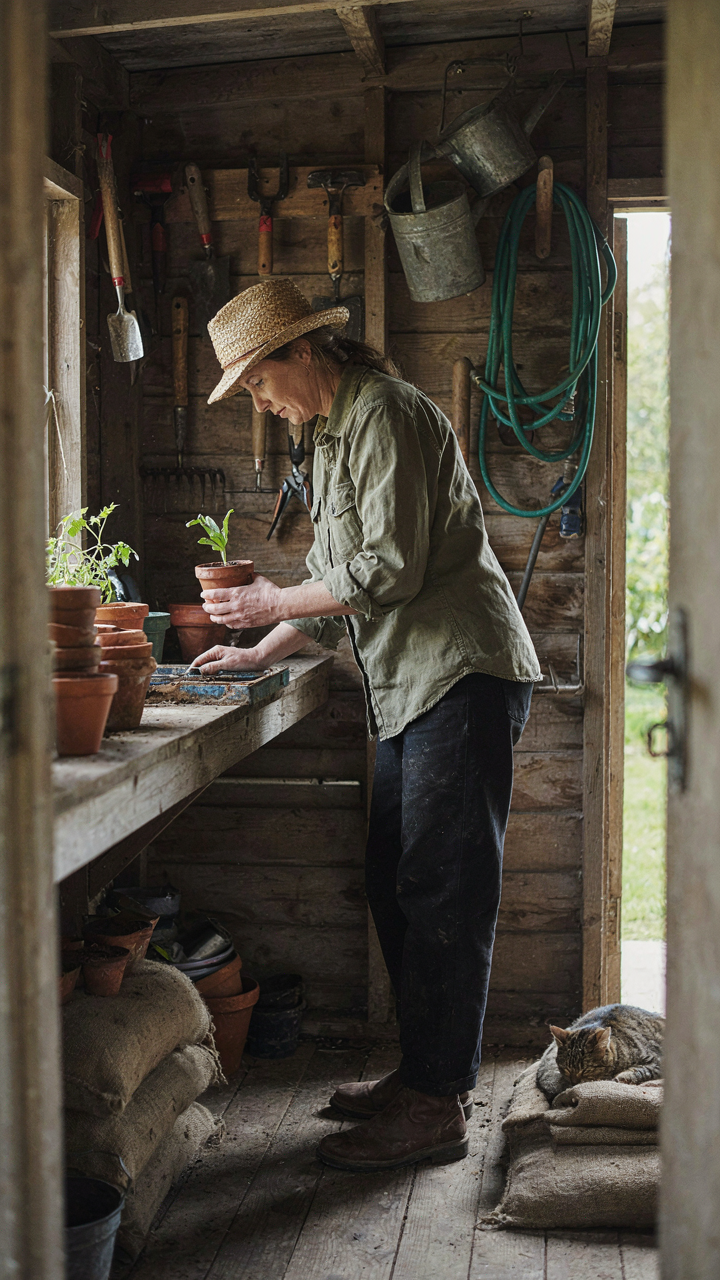
Wall space becomes currency in small sheds, which means you stop thinking horizontally and go up. Mount potting benches at waist height with storage underneath. Hang tools on pegboard. Stack shelves to the roof line. The mistake everyone makes is treating walls as decoration. They’re real estate. Pegboard alone saves thirty percent of your functional floor space compared to leaning tools against corners.
Wire shelving units take up minimal depth while holding more than solid shelves. Install them at varied heights so air circulates, preventing mold on stored soil and pots. Magnetic strips hold metal tools. Hooks for string, twine, and pruners clip into wall joists. One small shed with aggressive vertical organization outperforms a larger one with sloppy horizontal layouts. Your working area stays clear.
Hinged And Fold Down Work Surfaces
Fold-down benches weren’t invented by tiny-house people. Carpenters and mechanics used them for decades because they multiply usable space. A hinged potting table can hang against the wall, drop down when you’re working, fold up when you need floor room for moving trays or bags. Hydraulic pistons make this simple, not some complex engineering project.
The real constraint you face is transition time. It takes ten seconds to fold and five seconds to unfold. That’s acceptable friction because you’re only shifting between modes a few times per day. Pair the fold-down bench with storage underneath for soil, pots, and amendments. The shed becomes a working surface that converts to a storage vault. Material cost stays low if you use basic hinges and pressure-treated plywood, then finish it simple.

The Only Real Barrier To A Functional Shed Is Your Attachment To Aesthetics Over Utility
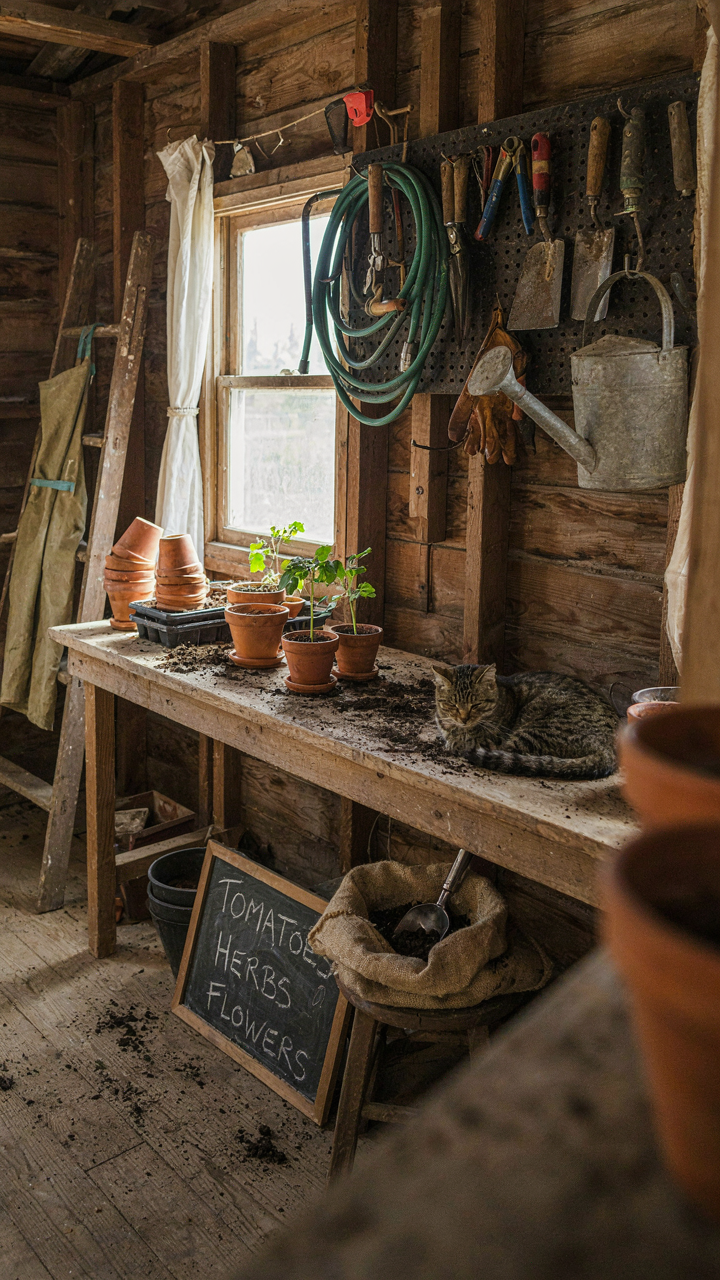
You’ll sabotage your potting shed the moment you prioritize how it looks over how it works. That weathered wood aesthetic won’t matter when you can’t find your tools. Build the infrastructure first. Organize for function. Then let the charm follow naturally from actual use. Stop waiting for the perfect design and start planting today. A messy, productive shed beats a beautiful empty one every single time.



