

Beyond The Instagram Filter: What Your She Shed With Porch REALLY Is

The Escape Narrative Is A Lie You Tell Yourself
You want permission to spend money on something just for you without feeling selfish, so you’ve adopted the language of “escape.” The real mechanism at work here borrows from economics: you’re not buying a structure, you’re buying optionality. A she shed with porch gives you control over when you’re available and to whom. That’s the actual draw. The escape story lets you justify the spend without admitting you want boundaries.
The porch amplifies this. It’s a threshold space, a signal to others that entering requires invitation. You’re not escaping to hide—you’re establishing property rights over your own attention. This is why the porch matters more than people admit. It transforms the shed from a storage afterthought into a deliberate pause point between your life and everyone else’s claim on it. That distinction changes the entire architecture of how you use the space.
The Real Price Of Aspirational Porch Living
The advice everyone gives you is wrong. They’ll tell you to “design for relaxation” or “create your sanctuary.” What they don’t tell you is that the porch becomes a performance stage the moment someone else can see into it. Aspirational porch living costs you the one thing you actually wanted: genuine solitude without the burden of looking the part.
Build the porch with function first, not aesthetics. Choose materials that age without demanding maintenance. A weathered porch signals honest use, not neglect. Install it where foot traffic passes regularly so the space becomes normal to your household, not a shrine you feel obligated to retreat into. When your family sees you sitting there reading coffee-stained pages in old clothes, the porch stops being an aspiration and starts being a room you actually use.
The Function First She Shed With Porch: Building For Productivity

Define Output Before You Build
You want a she shed with porch because it sounds like freedom, but what you’re really after is permission to stop pretending you’re productive in your main house. The mechanism is simple: environment shapes output. Your brain doesn’t care how the space looks. It cares what you’re supposed to do there.

Before laying a single board, decide what work happens in that structure. Writing. Design. Client calls. Focused admin. Not “relaxation” or “creative space”—those are vague enough to guarantee you’ll scroll instead. The porch extension matters here because it handles the transition. Morning sun hits it first. You sit there with coffee and one task written down. That’s your trigger. The she shed becomes the execution room.
Blank Space Beats Bells And Whistles
Distraction elimination beats motivation hacking every time. Most people load their she shed with porch with aesthetics—rugs, art, plants, ambient lighting—then wonder why they still check their phone every four minutes. The problem is that visual stimulation keeps your nervous system in exploration mode instead of focus mode.
Your she shed with porch needs three things: a work surface at the right height, a chair that doesn’t hurt after ninety minutes, and a door that closes. The porch becomes a buffer zone. It stops you from rushing back inside to handle a notification. You sit there. You decide to stay or leave. That friction is the feature. Remove everything that isn’t essential to the task. Empty walls work better than decorated ones.
Shed With Porch Material Selection: Engineered For Longevity, Not Whimsy
Durability Over Trend Cycles
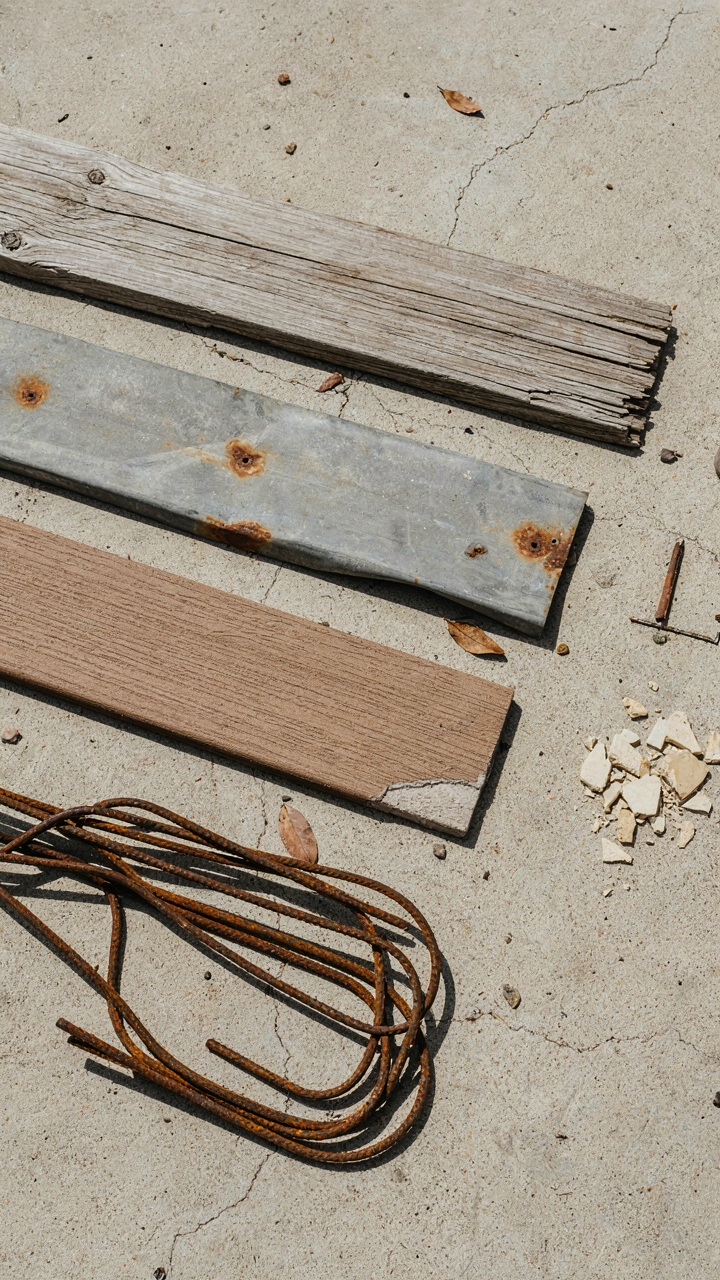
You want this thing to look good in photos before it falls apart. That’s the real calculation happening here. The mechanism is simple: materials degrade at different rates based on exposure, and a she shed with porch sits in a harsh environment. It faces UV radiation, temperature swings, moisture infiltration, and thermal cycling. Cedar might photograph well for two seasons before checking and splintering. Composite materials and pressure-treated lumber don’t have this problem. The choice isn’t aesthetic. It’s about whether you’re building for Instagram or building something that functions in year five.

The porch component amplifies material stress because it extends your structure’s perimeter into direct weather exposure. Railings, decking, and fascia take the most punishment. Wood species matter here. Pressure-treated lumber resists rot. Cedar and redwood have natural oils that help but still require maintenance. Composite decking eliminates the rot variable entirely, though it costs more upfront. Metal roofing on the porch section sheds water cleanly and lasts 40 years minimum. Asphalt shingles fail faster and channel water toward connections where decay starts. Material selection compounds over time.
Investment Architecture And Replacement Cycles
The economic principle here is replacement cost, not purchase price. A she shed with porch built with cheap materials enters a maintenance debt you pay for years. You replace rotted boards, patch leaks, repaint, and restain every three to four years. A properly materialed structure reaches decade-plus intervals between significant repair. The math flips when you account for labor. Replacing a composite porch deck costs more initially than pressure-treated lumber, but you do it once instead of twice. Real cost per year of use tells the actual story, not the invoice you see today.
Material tiers exist for reason. Premium materials like composite decking, standing seam metal roofing, and high-grade pressure-treated lumber sit at a higher price point because they extend service life past ten years with minimal intervention. Mid-tier materials require regular maintenance to reach eight years. Budget materials fail at four to five years in porch conditions. When you calculate total cost of ownership, the premium tier often costs less per year of service. Make the material decision once, not every three years. Choose materials that reduce your decision-making burden permanently.
The “Porch Protocol” For She Shed Exterior Ideas With Porch

Design Your Porch For Single Purpose Work
You want the porch to feel like an extension of your life, not another room you abandon. The military calls this “zone control”—assigning specific operational areas so nothing competes for attention. Your porch isn’t a display shelf. It’s a staging ground for one primary activity: reading, crafting, morning coffee, or focused work. Everything else gets friction by design.

When you lock in a single purpose, the porch layout solves itself. A reading porch needs seating positioned away from foot traffic and a side table for drinks. A crafting porch needs work surface height, natural light angle, and storage within arm’s reach. A morning coffee porch needs nothing but a chair facing the direction you want to look. Stop treating it as a catch-all. Commit to the function, and the design follows.
Strip Everything That Doesn’t Serve The Mission
The common advice says “add personal touches” and “make it inviting.” That’s how porches become storage graveyards for broken planters and seasonal junk nobody uses. Every object on your porch should answer one question: does this enable my stated purpose or does it create friction? If it doesn’t enable, it blocks.
Start by removing everything that isn’t in use right now. Not “might be useful.” Not “looks nice.” In use. Then add back only what you actually reach for during your porch time. A throw blanket stays because you use it. Decorative lanterns go because you don’t. This elimination phase takes one afternoon and solves 80 percent of clutter problems before they start.
Shed Porch Ideas: Climate Control Is Not Optional

Insulation And Ventilation Are Your Foundation
You want a she shed with a porch because you’re afraid it’ll become unusable half the year. That fear is justified. The mechanism is simple: temperature and humidity create the barrier between “I use this space” and “I paid for a storage unit.” Insulation stops heat transfer. Ventilation removes moisture. Neither works alone. Both are non-negotiable.

Start with the walls and roof. Fiberglass batts, mineral wool, or spray foam all work. The goal is an R-value between R-15 and R-21 depending on your climate zone. Your porch needs the same treatment as the main shed. Vents at the soffit and ridge allow air to move through the attic space, preventing moisture from trapping in the insulation. Without this airflow, dampness rots framing in years, not decades.
Passive Design Turns Physics Into Comfort
Thermodynamics tells us that temperature differentials drive energy flow across barriers. Your shed with porch operates the same way: orientation, overhang depth, and material selection determine whether you’re fighting nature or working with it. Passive design doesn’t eliminate the need for active control but it reduces how much energy you burn to stay comfortable.
Position your porch opening away from prevailing winter winds and toward summer shade. An overhang of 18 to 24 inches blocks high summer sun while allowing low winter sun to penetrate. Thermal mass like concrete floors or dark-painted walls absorbs heat during the day and releases it at night, flattening temperature swings. This isn’t optional comfort. This is the difference between sitting outside in March and abandoning the space entirely.
Powering Your She Shed: Practical Electrification, Not Fairy Lights
Know What You Actually Need To Run
You want to avoid looking foolish when an electrician quotes you 8k for a job you thought cost 2k. The mechanism here is simple: power demand scales with simultaneous tool use, not with wish lists. A she shed with porch operates like a distributed load problem in electrical engineering. You don’t need capacity for everything running at once. You need capacity for what actually runs together on a typical afternoon.

Start by listing every device and tool you’ll actually use. Not someday. Not in theory. Right now. A laptop, a mini fridge, string lights, a space heater, a circular saw. Document the wattage of each. Most devices have a label. Calculate the sum of items you’d run simultaneously. That number, not the total of everything, determines your circuit capacity and service line requirements.
Safe Wiring That Won’t Burn You Out
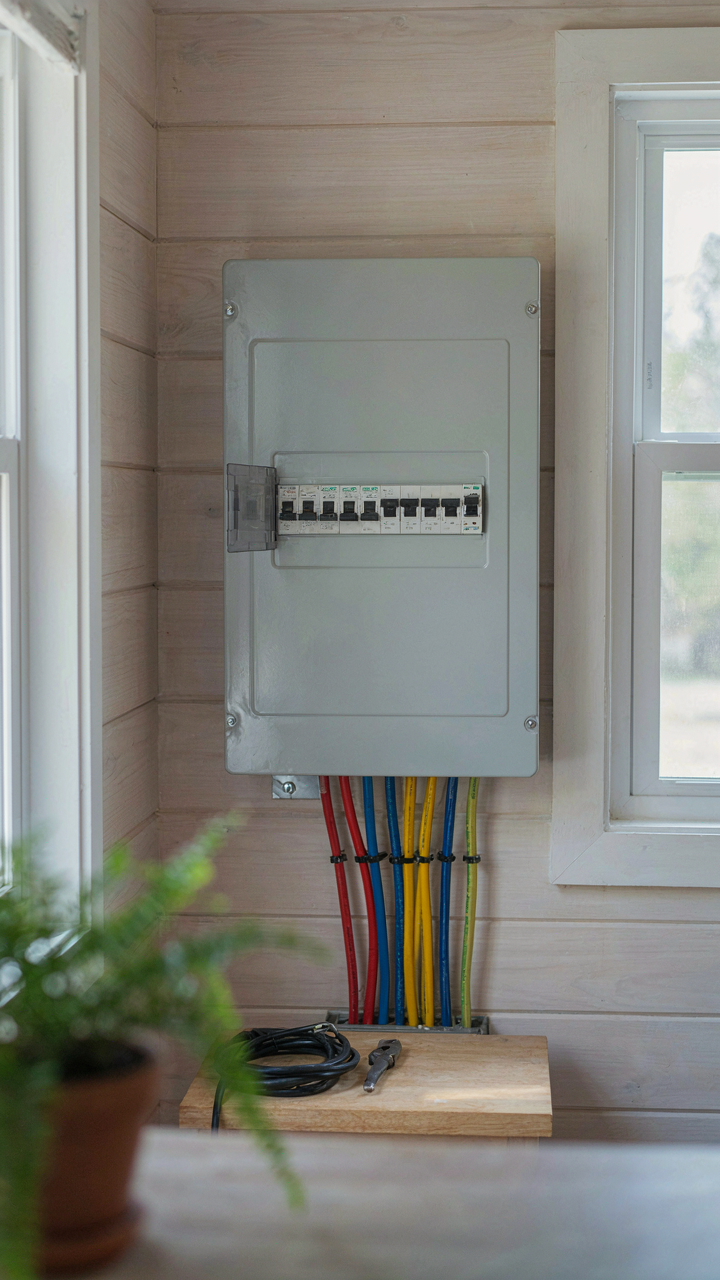
Most DIY electrical work on a she shed with porch fails for one reason: people run undersized wire to save money. Undersized wire generates heat. Heat causes fires. This isn’t speculation. Code exists because structures burned down. Hire a licensed electrician for anything beyond a single outlet on an existing circuit.
- Dedicated circuits for high draw: Tools like circular saws or space heaters need their own 20 or 15 amp circuit, never shared with lights or general outlets.
- Proper wire gauge by distance: Wire thickness must match both amperage and distance from panel. A 100 foot run needs heavier gauge than a 20 foot run at the same amp rating.
- GFCI protection for damp areas: Porches and outdoor-adjacent spaces require ground fault circuit interrupters to prevent shock if water is present.
- Weatherproof junction boxes and covers: Outdoor connections need sealed enclosures rated for exterior exposure, not interior boxes adapted for outside.
- Proper grounding to code: Your she shed must tie to the main panel ground, not improvised ground rods or water lines.
A licensed electrician charges for labor, not guesswork. They pull permits, inspectors verify code compliance, and your insurance actually covers you if something fails. Running power to a she shed with porch without permits creates liability. Have the work inspected before drywall or siding covers it.
Sheds Ideas Backyard Integration: Blending With Purpose, Not Blending In

Where Your Shed Actually Lives
You want placement that looks intentional because you’re worried neighbors will think you’re hiding something. The real mechanism is load path. In structural engineering, load path means how weight and stress move through a system efficiently. Your she shed with porch needs placement that channels water away, maximizes usable afternoon sun, and positions the porch entrance where you naturally move through your yard. Wrong placement forces you to route around it or worse, ignore it entirely.

Set the structure on higher ground if your yard slopes. This prevents water pooling against the foundation and eliminates drainage problems before they start. East or southeast orientation puts morning and early afternoon light on the porch without afternoon heat blast. If privacy matters, place it where existing trees or fence lines already block sightlines. The goal is functional positioning that requires zero maintenance workarounds later.
Planting That Earns Its Square Footage
Most landscaping advice treats plants as decoration that happens to surround structures. That’s backwards. Your plants should solve actual problems: shade management, wind breaks, privacy screens, or runoff control. The she shed with porch needs plantings that serve the space’s function, not the other way around.
Shrubs on the north and west sides reduce heat load and wind exposure during peak afternoon hours. Deciduous trees on the south side provide summer shade but allow winter sun through. Ground cover around the foundation prevents erosion and keeps mud off the porch during wet months. Every plant choice answers one specific question: what does this structure need to work better? If it doesn’t, it’s visual noise taking up maintenance time.
The Minimalist She Shed With Porch: Declutter Your Domain, Declutter Your Mind

Stop Collecting What You Don’t Use
You want minimalism to signal you have your life together. Here’s what actually happens: most people confuse empty space with discipline when the real mechanism is decision friction. Every item in your she shed with porch demands a micro-choice every time you enter. Remove that friction and you reclaim cognitive energy for actual work. The porch amplifies this problem because it becomes a buffer zone where things accumulate before reaching the shed interior.

Start with one pass. Pull everything out. Touch each piece and ask: did I use this in the last six months? Not “might I use it.” Used it. If the answer is no, it leaves. Furniture, decorations, tools, books, seasonal items—all subject to the same rule. Your she shed with porch loses utility when it becomes storage for your indecision.
The System That Sticks
Maintenance isn’t about willpower. It’s about protocol. The Pareto principle applies here: 80% of your shed’s value comes from 20% of what you keep. Identify that 20 percent first. Everything else gets a designated zone with hard boundaries. Your porch becomes a staging area only, not permanent real estate. Items sit there exactly one week before they go or return inside.
Create a simple audit rhythm. Every two weeks, walk the shed and porch perimeter. Anything out of place or unused gets evaluated immediately. Don’t wait for a “spring cleaning” moment. Consistency beats intensity. One shelf, one corner, one tool at a time. The moment you establish this habit, you stop re-accumulating junk.
Your She Shed Isn’t A Sanctuary; It’s Another Arena Where Your Habits Play Out

Most people build a she shed with porch thinking the space fixes them. It doesn’t. A beautiful retreat becomes another place to scroll, procrastinate, and waste daylight if you don’t design your behavior first. Before you buy a single piece of furniture, decide what you’ll actually do there. Then remove everything that competes with that one thing. Your she shed won’t save you. Your choices will.




