The Philosophy Of Open Air Living In Bali Homes
Embracing Nature
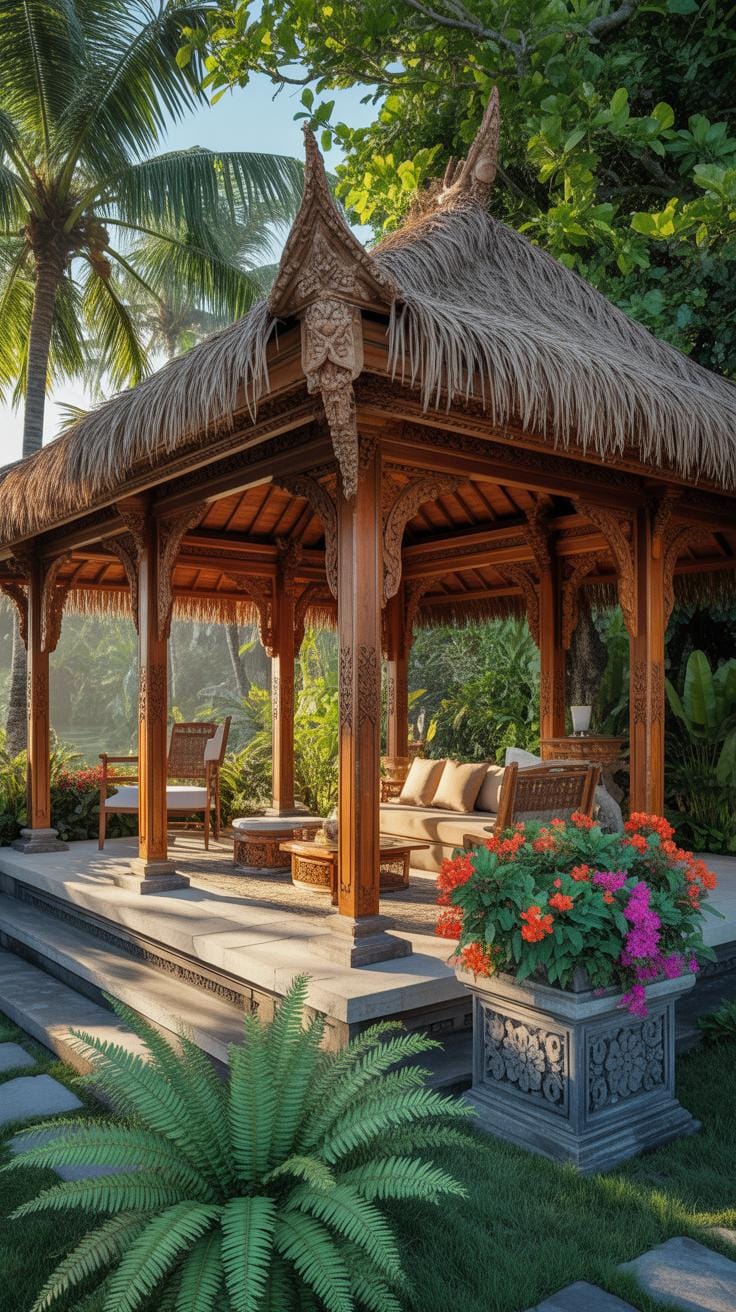
Bali houses prioritize airflow and natural cooling over mechanical systems. This design logic stems from the Tri Hita Karana philosophy, which emphasizes harmony between humans and the environment. Designers use steep thatch or tile roofs to shed heavy rain while trapping heat high above the occupants. Every Bali Home utilizes these structural height advantages to maintain a cool internal climate without needing expensive air conditioning units.
Building a Bali Tree House or a permanent residence requires understanding local materials like bamboo and volcanic stone. These materials breathe and regulate humidity effectively in tropical heat. Most Eco Villas In Bali avoid solid exterior walls to allow constant cross-ventilation. This strategy reduces mold growth and lowers energy costs. Owners choose these methods to create a functional Living In Bali experience that respects the local ecosystem.
Indoor Outdoor Flow
Modern Bali Homes remove the physical barriers common in Western architecture. High-end Bali Houses often feature large open pavilions called bales that serve as primary living areas. These structures lack fixed walls to ensure a continuous visual connection with the garden. A Beach House In Bali uses this layout to capture sea breezes. This placement moves air through the entire House In Bali, keeping the central areas dry and comfortable.
A critical element of this transition is the Balinese Bathroom Design, which often lacks a roof over the shower or tub. This choice turns a standard utility room into a private garden space. Strategic wall placement ensures privacy while allowing sunlight and air to sterilize surfaces naturally. This method prevents the dampness found in enclosed rooms. It creates a seamless flow that characterizes the most successful examples of a Bali Home today.
Finding Serenity In A Beach House In Bali
Ocean Energy
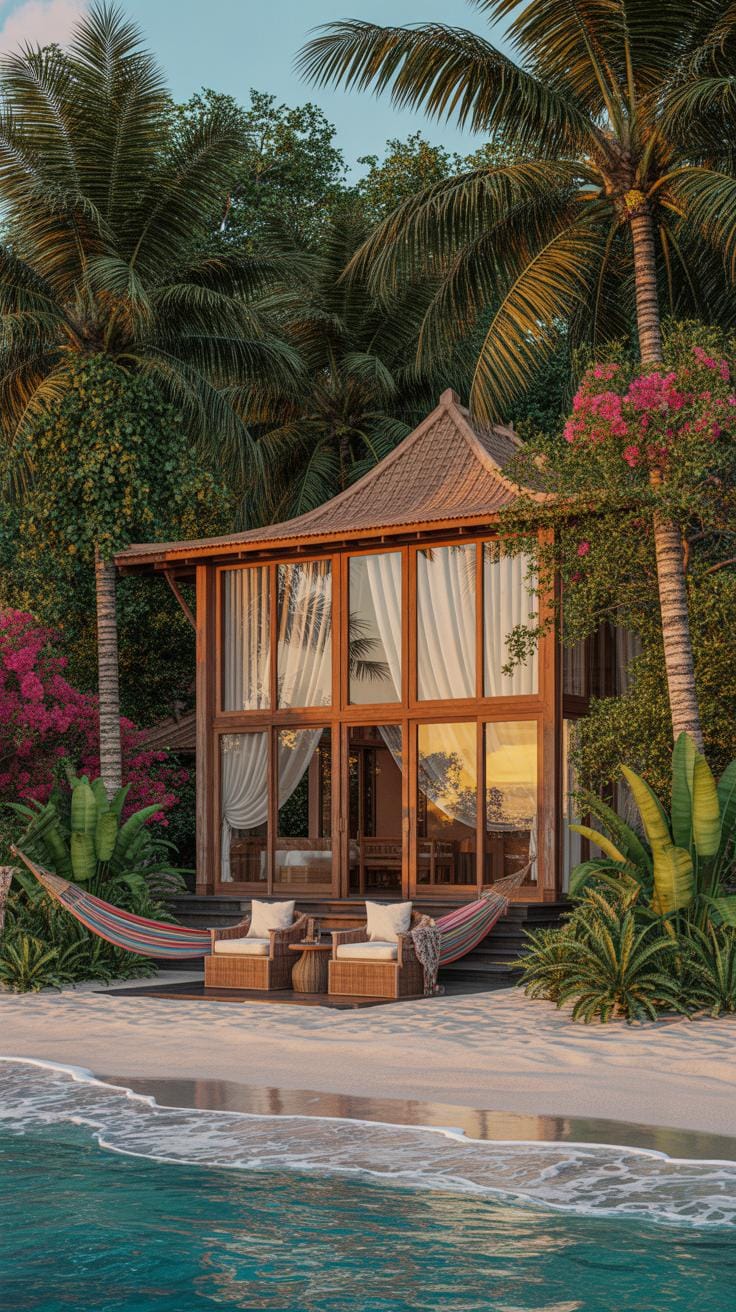
A Beach House In Bali survives through passive cooling. Builders align the structure with the prevailing southern trade winds. This strategy moves hot air out without using electricity. Large openings and high ceilings create a chimney effect. Most Bali Houses use open floor plans to let air flow freely. Proper siting prevents stagnant pockets of heat. This makes Living In Bali comfortable during the humid season.
Cross ventilation requires strategic window placement on opposite walls. Architects design Eco Villas In Bali with louvers to control air speed. You can adjust these vents to maintain a steady flow. This method keeps a Bali Home cool even without modern air conditioning. It also prevents mold growth in the tropical climate. Effective airflow is the primary secret to a long lasting and functional House In Bali.
Coastal Materials
Coastal Bali Homes use limestone for its thermal mass and durability. This rock stays cool under the intense sun. Local masons carve it into wall panels and flooring for a Bali Tree House or villa. It resists salt spray better than most imported materials. Using local stone reduces transportation costs and matches the natural terrain. It provides a solid foundation for any high quality Bali Houses.
Builders select reclaimed teak and driftwood for structural accents and decking. These woods contain natural oils that repel moisture and insects. This is critical for Balinese Bathroom Design where humidity is constant. You must treat these surfaces with organic finishes to maintain their integrity. Driftwood offers a unique texture that withstands the harsh beach environment. Choosing the right materials ensures your investment lasts for decades in these conditions.
Elevating Your Perspective In A Bali Tree House
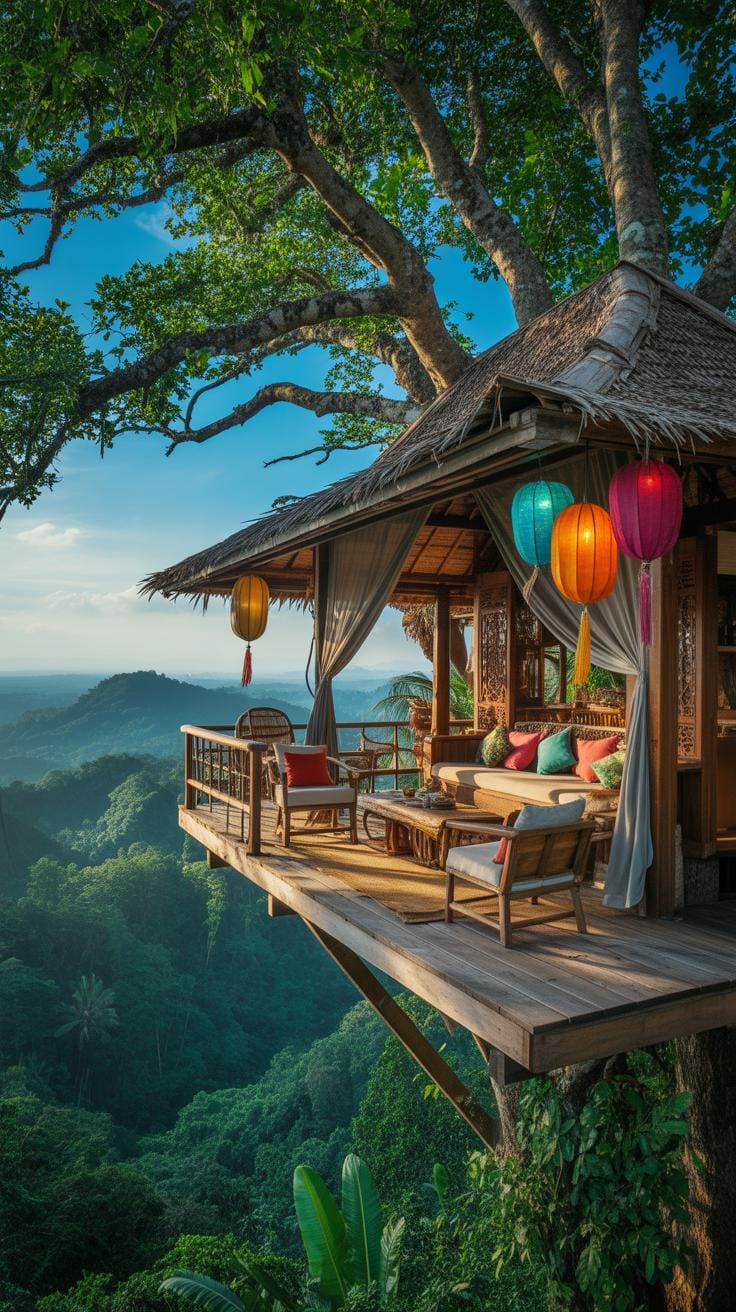
Vertical Living
Living above the ground level alters your mental state by providing a clear line of sight. This elevation reduces feelings of confinement common in standard Bali Homes. High placement removes you from street noise and ground level humidity. It creates a private sanctuary that separates your personal life from the public eye. Strategic height ensures your Bali Tree House feels secure and detached from daily stressors.
Elevated structures exploit natural air currents to cool the interior without mechanical help. This height allows for constant airflow which prevents mold growth in a tropical House In Bali. Superior ventilation improves sleep quality and lowers carbon footprints. Modern Eco Villas In Bali use these vertical heights to maximize views of the landscape. Higher vantage points simplify observation and help you feel more connected to the surrounding environment.
Natural Insulation Tips
Building at height requires specific material choices to manage heat and wind exposure. Traditional Bali Houses use organic fibers and dense woods to regulate indoor temperatures naturally. These materials prevent solar heat gain during peak sun hours. Selecting the right components ensures your Beach House In Bali stays cool without using expensive air conditioning systems. Logic dictates using light materials that do not store heat energy.
- Alang-Alang Thatching: This river grass provides superior thermal insulation for Balinese roofs. It breathes well and allows hot air to escape through the top of the structure. This material keeps the interior significantly cooler than modern tin or tile options used in many Bali Houses.
- Bamboo Poles: Giant petung bamboo acts as a structural frame with high tensile strength. Its hollow core provides a natural air pocket that resists heat transfer. Builders use it across Living In Bali projects because it supports heavy loads while remaining incredibly flexible during seismic activity.
- Teak Wood Flooring: Reclaimed teak offers high density and natural oils that resist rot and pests. It stays cool underfoot even in direct sunlight. This wood is a staple in high-end Bali Homes because it lasts for decades with very little maintenance required in humid climates.
- Stone Pedestals: Elevating wooden posts on carved stone bases prevents moisture from wicking up into the frame. This technique stops wood rot and protects the foundation from ground termites. It is a critical engineering step for any long-lasting Bali Tree House built in jungle areas.
- Woven Bamboo Panels: Known locally as bedeg, these wall panels allow for constant micro-ventilation through the weave. They provide privacy without blocking the breeze. This material is essential for maintaining airflow in a Balinese Bathroom Design where moisture control is the primary structural concern.
Smart insulation prevents the greenhouse effect inside your living space. Using local stones and grasses keeps costs low and efficiency high. These techniques are standard in the best Eco Villas In Bali today. They reflect centuries of architectural evolution adapted for the tropical heat. Focus on breathability to ensure your home remains a functional refuge. Combined with a proper Balinese Bathroom Design, these materials create a balanced and sustainable thermal environment.
Sustainable Serenity In Eco Villas In Bali
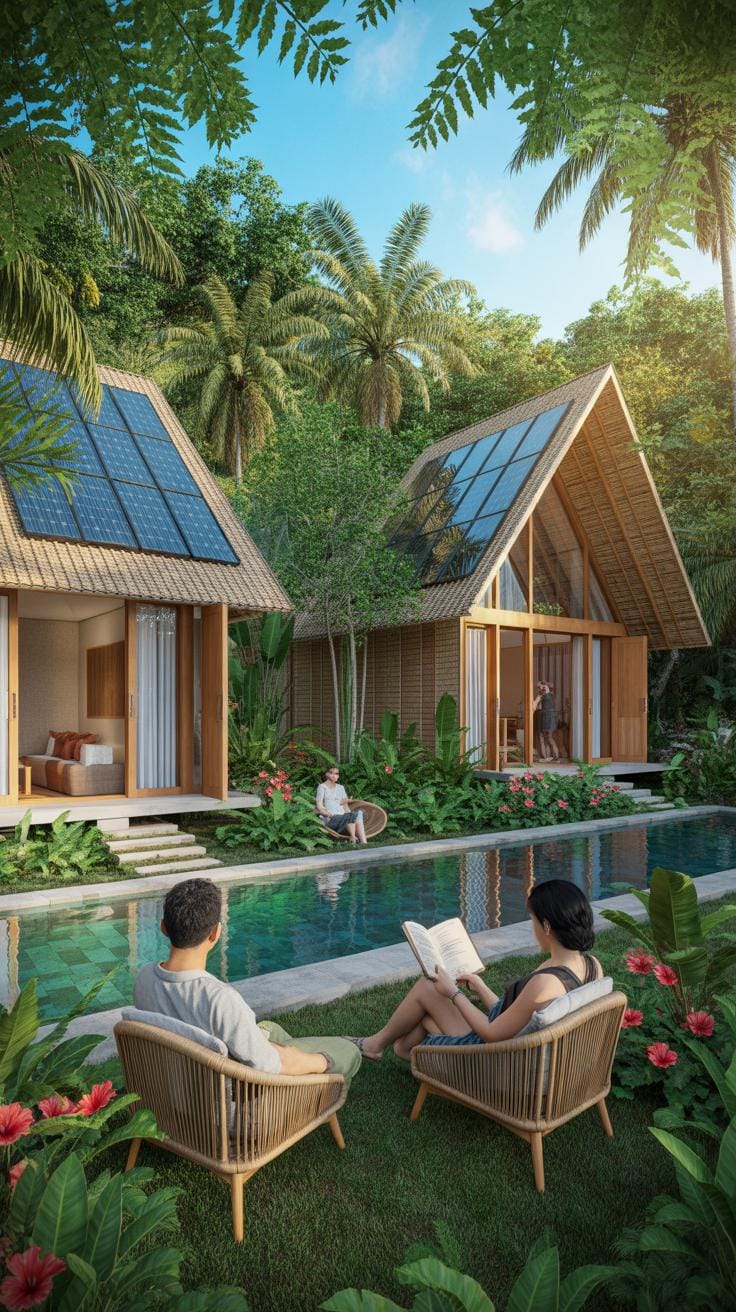
Bamboo Construction
Strategic builders use Petung bamboo for structural integrity in a Bali Home. This material has the compressive strength of concrete and the tensile strength of steel. It grows rapidly and sequesters carbon during its life cycle. Treatment with borax prevents insect infestation and rot. Modern joinery techniques allow these Eco Villas in Bali to reach heights of four stories without using heavy industrial machinery.
Engineers favor bamboo for a Bali Tree House because it flexes during seismic activity. This flexibility reduces the risk of structural failure during earthquakes common in the region. Architects design Bali Homes with wide overhanging roofs to protect the organic material from tropical rain and sun degradation. Correct placement of Bali Houses on the land ensures natural airflow. This eliminates the need for mechanical cooling systems in several Bali Homes.
Renewable Energy
Solar panels provide the primary power for a Beach House In Bali to reduce grid reliance. Batteries store excess energy for nighttime use to maintain a constant supply. Proper installation requires an unobstructed view of the sky and regular cleaning to remove salt spray. This setup lowers monthly costs and stabilizes electricity during local outages. It is a standard feature for those Living In Bali who prioritize long term self sufficiency.
Water management is critical for every House In Bali. Professionals install gravity fed filtration systems and rainwater harvesters to secure a clean supply. Advanced Balinese Bathroom Design now incorporates greywater recycling to irrigate surrounding gardens automatically. These systems use natural gravel and sand filters to scrub water. This practical approach ensures that Bali Houses remain functional while protecting the local water table from depletion or contamination.
Incorporating Zen Elements Into Your Bali Home
Water Features
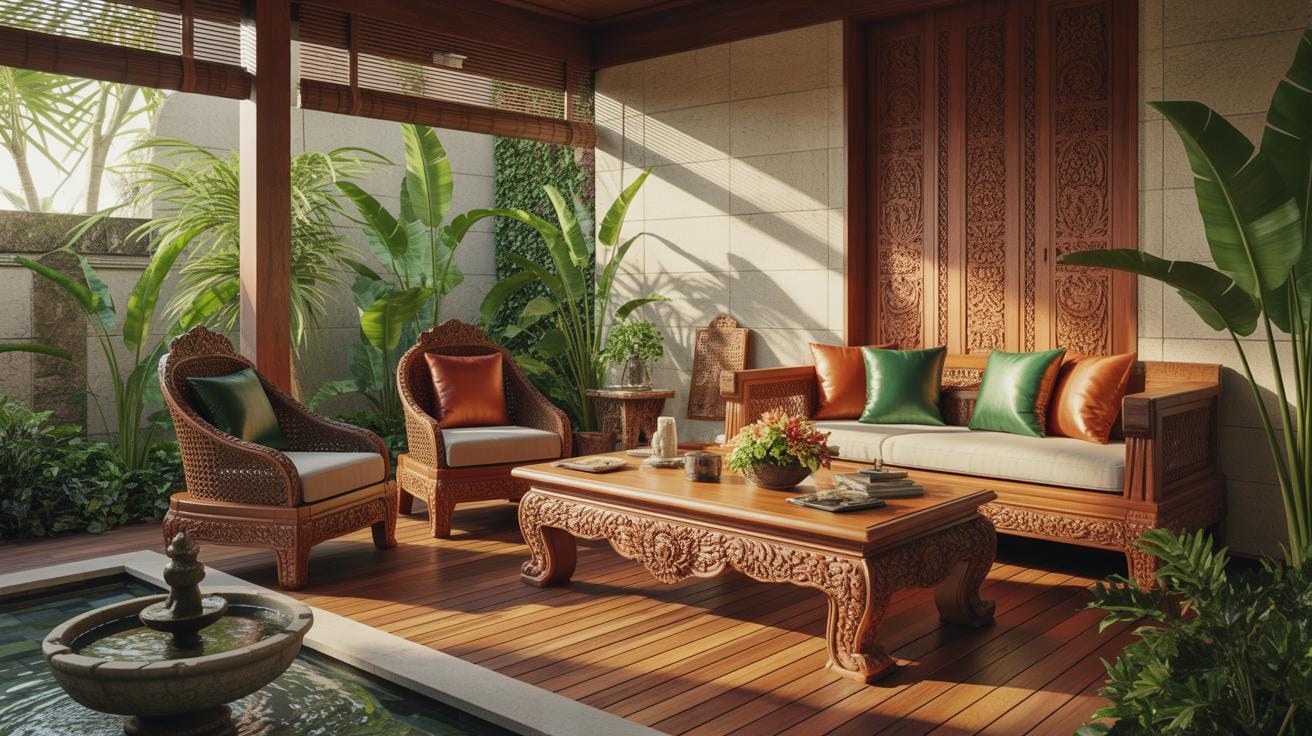
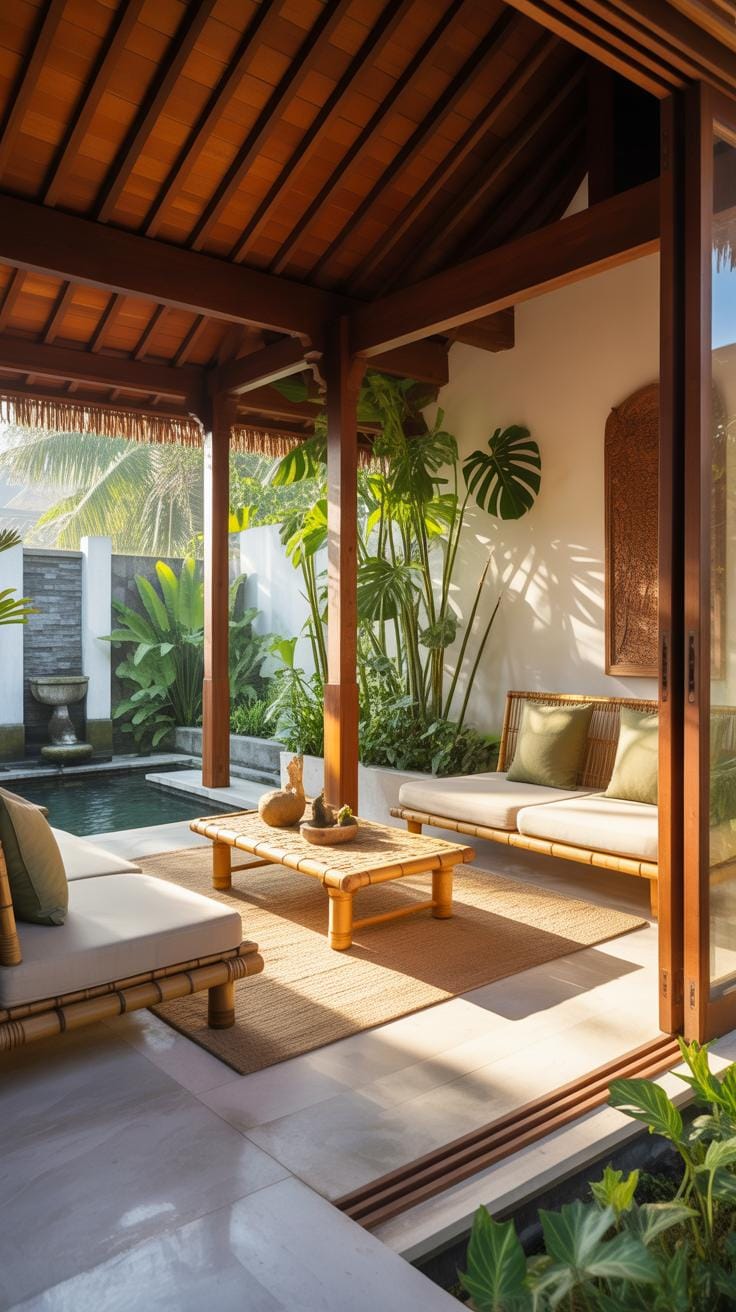
Position stone fountains at the entrance or central courtyard of your Bali Home to regulate air temperature and ground the energy. Use hand-carved volcanic basalt or paras stone to ensure durability. These features mimic the natural irrigation systems found across the island. A House In Bali relies on the sound of moving water to mask local noise. This creates a psychological barrier between the street and your private sanctuary.
Water placement must follow traditional spatial orientation for maximum impact. In many Bali Houses, the water flow directs toward the main living area to symbolize a continuous cycle of life. If you are building a Beach House In Bali, use saltwater-resistant pumps and non-porous stone. This prevents erosion from the sea air and keeps the feature functional. Proper drainage prevents stagnant water and keeps the environment clean.
Meditation Corners
Designate a specific corner for a prayer nook or relaxation space to improve your mental clarity. Use reclaimed teak timber or bamboo to build a raised platform. This elevate-and-isolate tactic is common in a Bali Tree House or high-end Eco Villas In Bali. Keep the area clutter-free to allow for deep breathing. Use neutral tones and natural fibers for floor mats. This setup mirrors authentic Bali Homes.
Integrate the surrounding landscape into your relaxation space to blur the line between indoors and outdoors. This is a core philosophy of Living In Bali. Proper ventilation is critical in these nooks to prevent heat buildup. You can find similar airflow principles in a modern Balinese Bathroom Design where open ceilings are standard. Use simple stone pedestals for incense or candles. This creates a functional ritual space without the need for excess furniture.
The Artistic Craftsmanship Of Bali Houses
Carved Woodwork
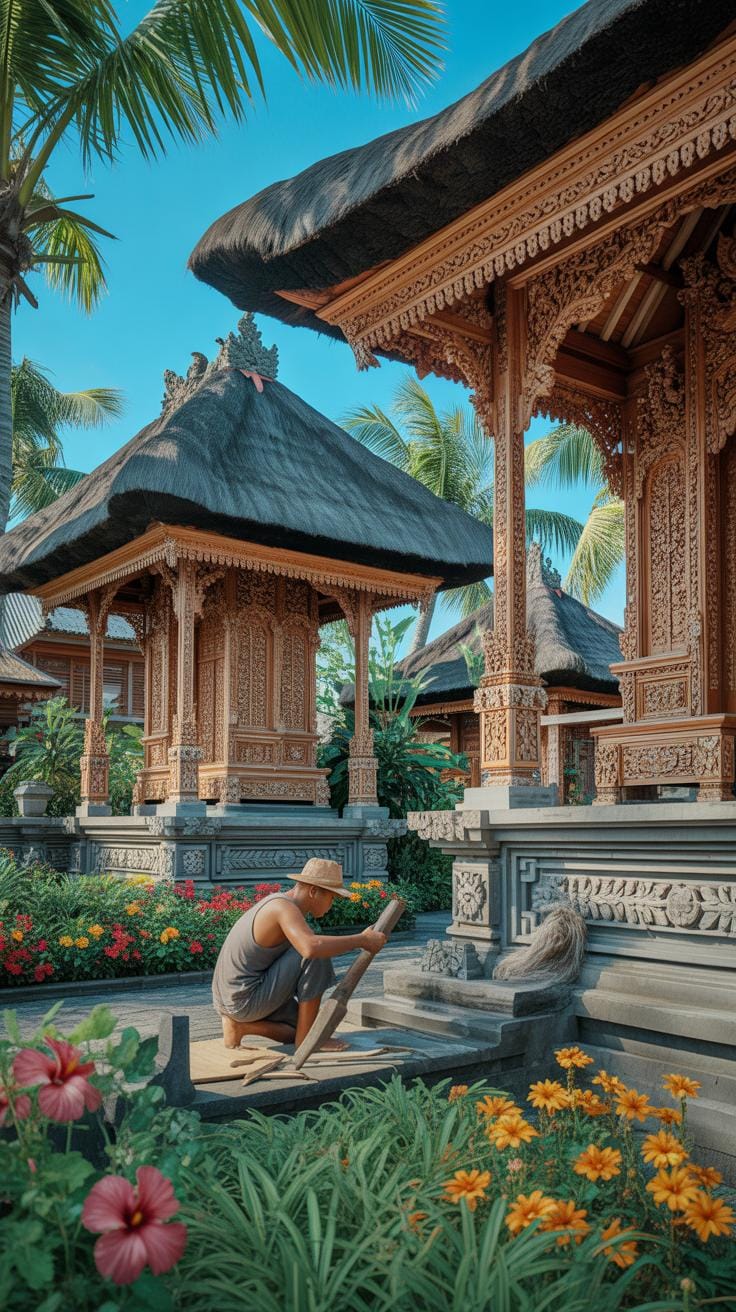
Teak wood defines the structural integrity of a Bali Home. This timber resists termites and rot in high humidity. Hand-carved doors serve as the primary entry point for a Beach House In Bali. These carvings often feature floral patterns known as Puspamekar. This style signifies life and growth. Every House In Bali uses these doors to establish a clear boundary between public space and private sanctuary.
Builders integrate these carvings into a Bali Tree House or the frame of Eco Villas In Bali to ensure airflow. Precision matters when fitting these heavy panels. Master carvers follow strict proportions based on human measurements. This ensures the door fits the owner specifically. Using recycled teak is a common tactic for modern Bali Homes. It provides a weathered look while maintaining the strength needed for long-term structural stability.
Artisanal Decor
Sourcing decor from local villages supports the economy of Living In Bali. Direct trade ensures funds reach the carvers and weavers. Bali Houses often feature volcanic stone basins which are central to a Balinese Bathroom Design. These stones come from local riverbeds. Workers shape them by hand using chisels. This process creates unique pieces that industrial machines cannot replicate. Buying locally reduces transport costs and environmental impact.
Standard Bali Houses leverage these artisanal skills to create custom interiors. You can find woven seagrass mats and bamboo partitions across most Bali Homes. This strategy relies on natural materials found within the province. It keeps the aesthetic consistent and authentic. Maintaining a connection to the village craft ensures that your property reflects genuine cultural standards. This approach turns an ordinary house into a functional piece of art through community collaboration.
Choosing Your Sanctuary A House In Bali Vs Abroad
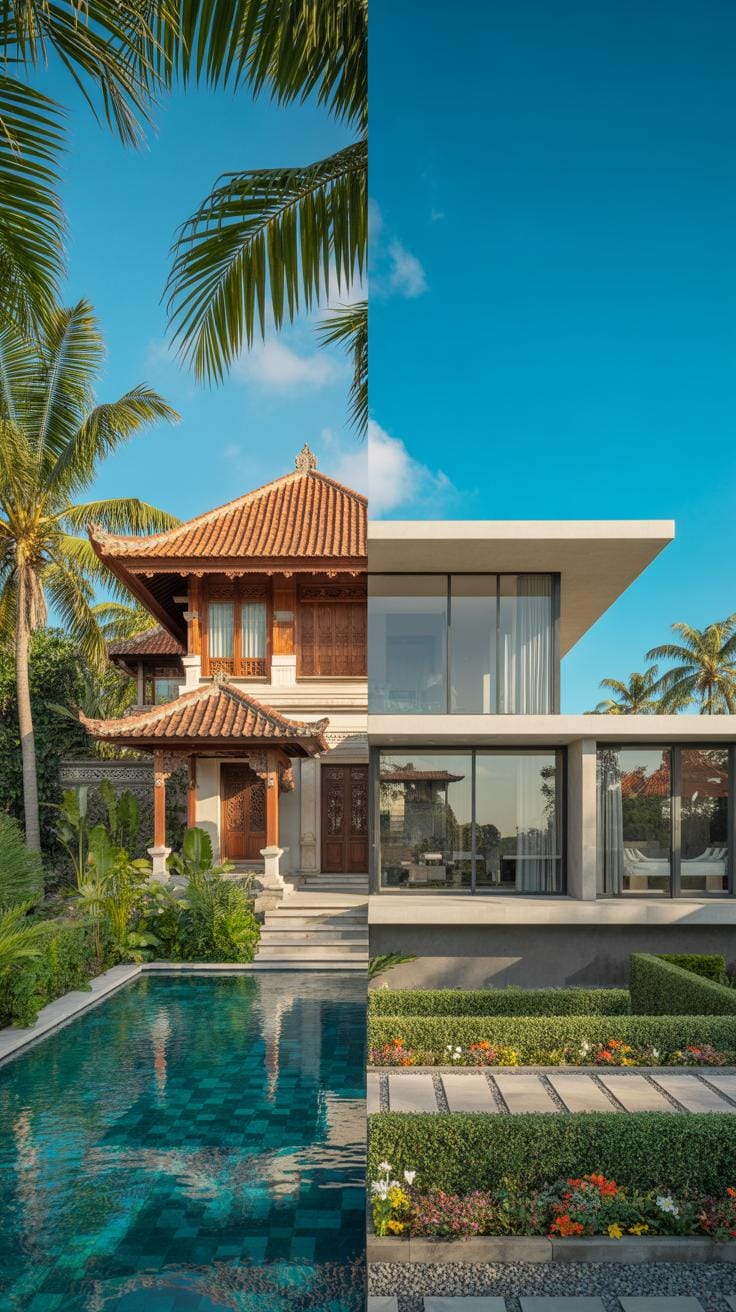
Tropical Adaptations
Building a Bali Home in colder climates requires shifting from open-air layouts to thermal efficiency. You must replace the traditional thatched roofing of a Bali Tree House with high-performance insulation. Use double-glazed glass to mimic the transparency of Eco Villas In Bali while maintaining heat. High ceilings remain effective for air circulation. Focus on southern exposure to maximize natural light. This strategy recreates the bright feel of Living In Bali without the heat loss.
A successful Balinese Bathroom Design outside the tropics uses indoor gardens protected by glass. You cannot use the open-wall systems found in a Beach House In Bali in freezing zones. Instead, install radiant floor heating beneath natural stone tiles. Use teak or bamboo accents treated for high humidity. These materials provide the tactile warmth found in Bali Houses. Proper ventilation prevents mold while maintaining the aesthetic of Bali Homes located in high-moisture environments.
Minimalist Interiors
The House In Bali relies on the Sayan philosophy of space. This means every item must serve a function or offer spiritual value. Bali Houses use built-in storage to hide clutter. This keeps the floor plan open and clean. High-quality natural materials like petrified wood or rattan replace cheap plastic goods. This focus on durability reduces visual noise. It creates a calm environment similar to the high-end Eco Villas In Bali.

Living In Bali teaches that empty space is an active design element. Do not fill every corner of your Bali Home with furniture. Use low-profile seating to keep sightlines clear. This technique is standard in a Beach House In Bali to emphasize the horizon. Apply this to Bali Homes abroad by removing unnecessary decor. A minimalist approach improves focus and lowers stress. It turns any standard dwelling into a functional Bali Tree House sanctuary.
The Daily Rituals Of Living In Bali
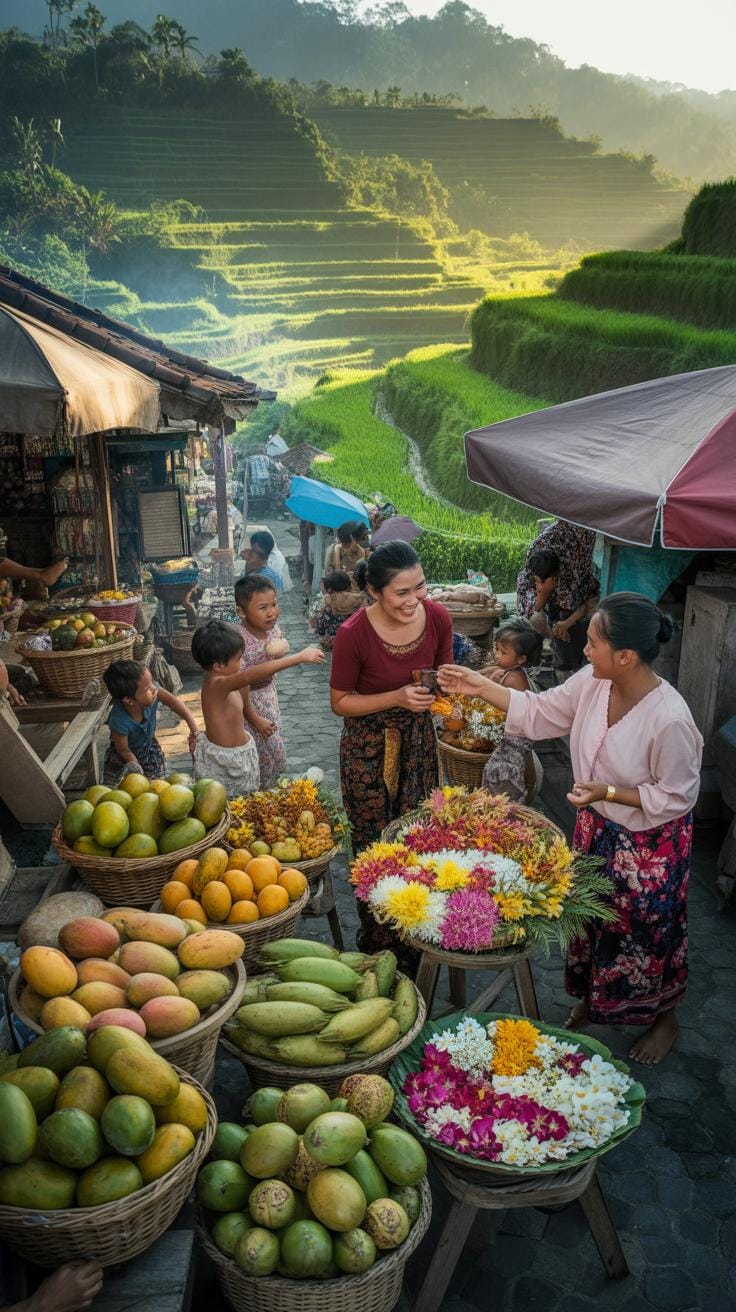
Mindful Presence
Traditional Bali Home architecture forces residents to slow down through physical transitions. Every Bali Tree House or villa uses raised thresholds and open pavilions called bale. These structures lack solid walls to ensure you remain aware of the changing weather and light. This tactical design means you cannot ignore your surroundings. You must adjust your pace to the humidity and the natural cooling cycles of the building.
Living In Bali requires a shift in how you move through your House In Bali. Walkways often sit over water or pass through thick vegetation. Designers use specific placement of stones and steps to command your attention to your footing. This layout prevents mindless rushing between rooms. Even a basic Balinese Bathroom Design uses open-air elements to keep you grounded in the sights and sounds of the immediate tropical environment.
Community Connection
The layout of Bali Houses prioritizes a central courtyard that links private bedrooms with shared outdoor spaces. This configuration facilitates a seamless transition between solitude and social interaction. Most Bali Homes feature a kitchen and dining area that stays open to the garden at all times. This removes the physical barriers found in Western construction. It creates a space where the family naturally gathers without feeling trapped inside.
Modern Eco Villas In Bali and the classic Beach House In Bali use these gardens as communal lungs for the property. Strategically placed seating areas encourage spontaneous conversation with neighbors or family members. By eliminating heavy doors and glass walls, your living space extends into the landscape. This structural choice reduces social isolation. It reinforces a connection to the local community and the surrounding natural world every single day.
Designing A Spa Experience With Balinese Bathroom Design
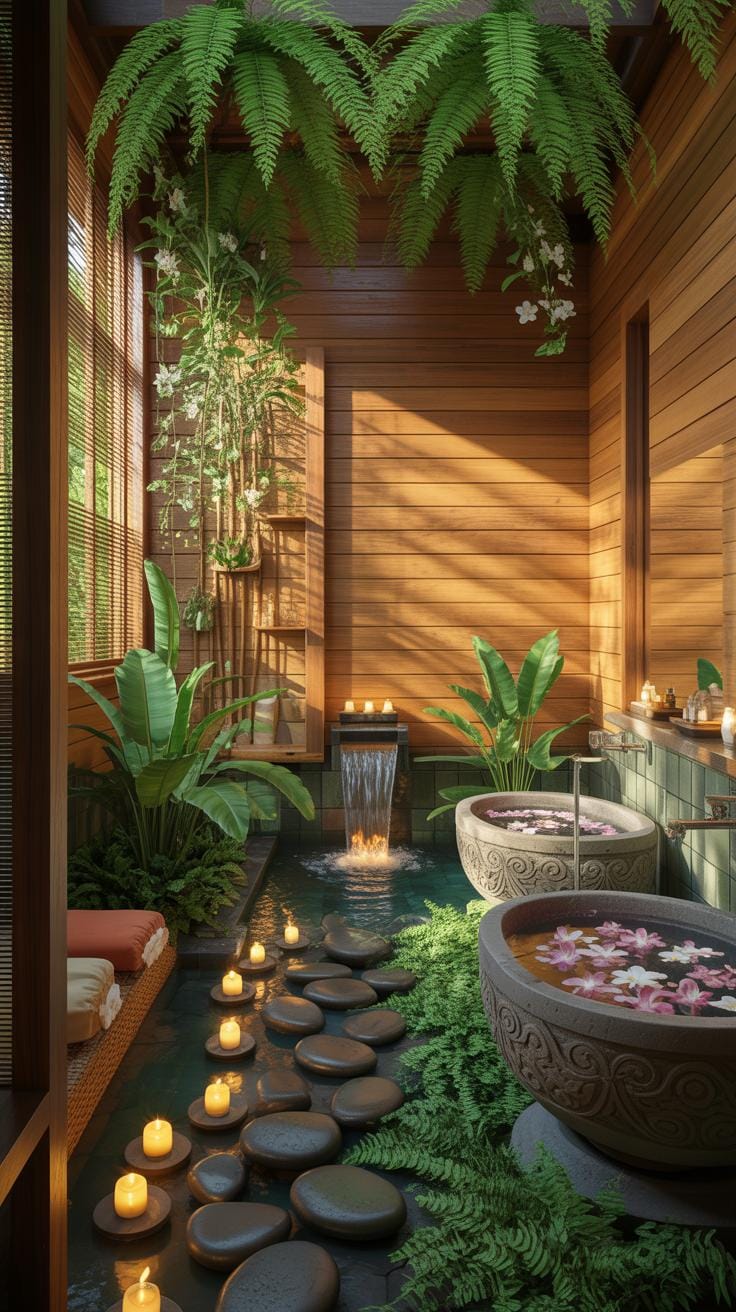
Bathroom Essentials
Balinese Bathroom Design focuses on the concept of open-air bathing to improve airflow and mood. Architects designing a Bali Home prioritize the spatial connection between the shower and the sky. You must manage drainage and slope to prevent water pooling in these semi-exposed areas. Strategic orientation ensures that any Beach House In Bali maintains high levels of natural ventilation to stop mold growth.
- Natural Stone Bathtubs: Hand-carved river stone or terrazzo tubs provide thermal mass. These heavy fixtures retain heat longer than acrylic alternatives found in standard Bali Homes. Proper floor reinforcement is mandatory to support the weight of these solid stone pieces.
- Rain Shower Heads: High-flow overhead fixtures simulate tropical rainfall patterns. Mount these from a ceiling beam or a wall arm at least seven feet high. This configuration is a staple in every luxury Eco Villas In Bali to enhance the sensory experience.
- Sunken Floor Drainage: Recessed floors allow for a seamless transition between dry and wet zones. Use high-grade stainless steel grates or hidden stone slits. This prevents water from escaping the bathroom area into the main living space of your House In Bali.
- Bamboo Accents: Use treated bamboo for towel racks or vanity ladders. This material resists moisture damage better than most softwoods when properly sealed. It adds a structural element common in a traditional Bali Tree House or eco-resort setting.
- Recessed Lighting: Warm LED strips hidden behind mirrors or under floating vanities provide low-intensity illumination. Avoid harsh overhead lighting that disrupts the calm environment. Proper lighting placement is crucial for safety and ambiance when Living In Bali after the sun sets.
Material selection dictates the longevity of your interior. Choose non-slip textures for all floor tiles to prevent accidents in wet zones. Use local limestone or slate to ground the room’s visual weight. Integrating these elements creates the foundation for all high-end Bali Houses. Solid hardware and simple layouts reduce maintenance needs while providing a high-end, functional aesthetic for daily use.
To be in Bali is to be in a state of grace where the soul finds quietude within the sanctuary of the home. Every corner of a Balinese dwelling is a prayer for peace and a reminder to breathe deeply.
Natural Aesthetics
Privacy in Balinese architecture relies on organic barriers rather than solid walls. Designers use volcanic stone walls to block lines of sight while allowing air to circulate freely. These walls serve as a backdrop for lush ferns and palms which act as natural sound dampeners. You can achieve this look in any Bali Home by placing thick vegetation along the perimeter of the bathing area.
Proper plant selection is vital for maintaining privacy in Bali Houses. Use broad-leafed species like monstera or traveler palms to create dense green screens. These plants thrive in the humidity of a bathroom and require minimal care. Combining raw stone with living walls ensures your House In Bali feels like a private sanctuary. This tactical approach to landscaping maintains security without sacrificing the open-air feeling.
Securing A Stress Free Future With Modern Bali Houses
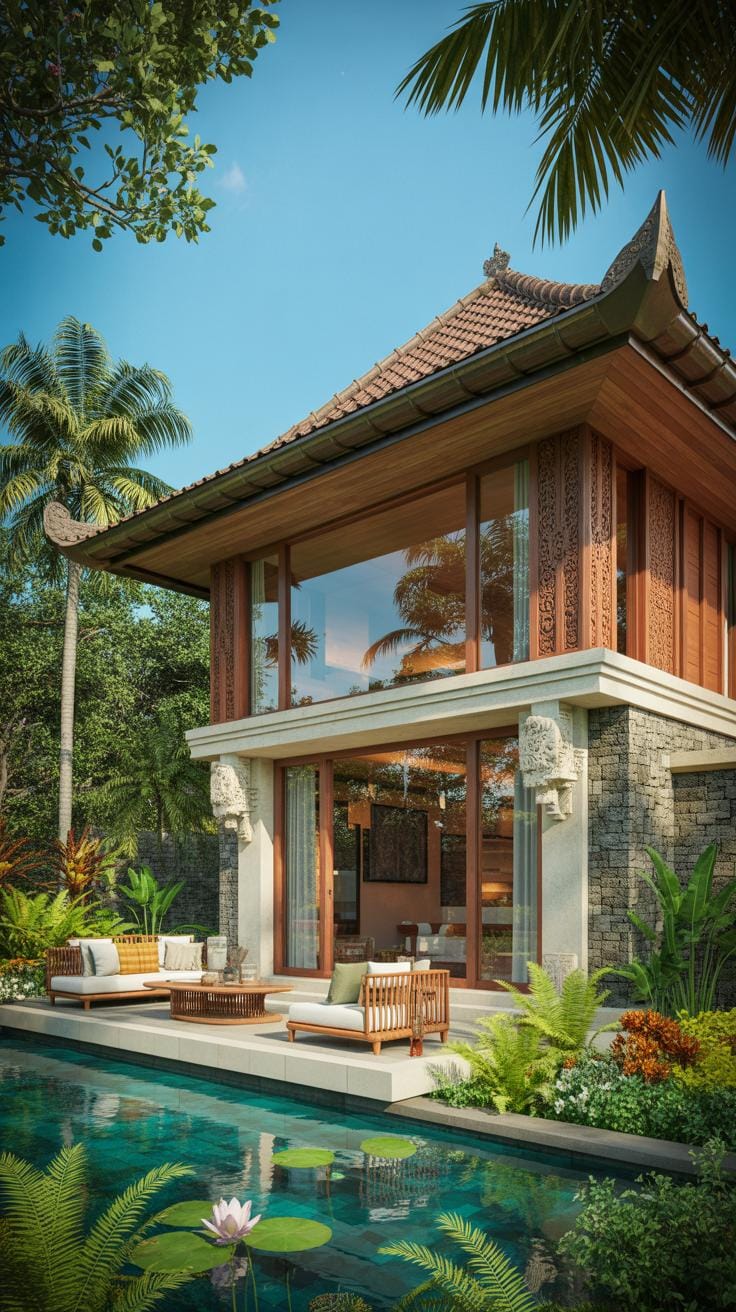
Biophilic Design
Biophilic design connects people to nature within a Bali Home environment. Modern builders use large glass walls and open floor plans to merge indoor and outdoor spaces. This strategy lowers heart rates and reduces cortisol levels for residents. A Bali Tree House often uses this technique by elevating living areas into the canopy. High ceilings and natural air currents replace mechanical cooling to improve overall health outcomes immediately.
Natural light dominates the interior of elite Bali Homes today. Strategic placement of windows ensures vitamin D exposure while maintaining privacy. Materials like bamboo, stone, and reclaimed wood ground the inhabitant in the local environment. Any Beach House In Bali must prioritize these organic materials to withstand salt air and humidity. Utilizing local resources reduces the carbon footprint and creates a deep sense of place for the owner.
Functional Sanctuaries
Designers now prioritize low-maintenance materials to ensure Living In Bali remains effortless. Polished concrete and volcanic stone provide durability without constant upkeep. Modern Bali Houses utilize smart drainage systems and weather-resistant sealants to prevent tropical decay. You must choose high-quality finishes to avoid expensive repairs later. This logical approach allows the homeowner to focus on relaxation rather than managing a never-ending list of property maintenance tasks.
A Balinese Bathroom Design should incorporate outdoor elements like stone tubs and tropical plants. This setup turns a standard utility room into a private spa. Successful Eco Villas In Bali integrate greywater recycling and solar heating into these spaces. Your House In Bali functions better when systems run themselves. Investing in quality engineering at the start guarantees a long-term peaceful lifestyle. High-performance design always beats aesthetic choices that lack a practical foundation.
Frequently Asked Questions

What are the core elements of a Bali-inspired home design?
The foundation of this style lies in the seamless harmony between indoor and outdoor spaces. To achieve a peaceful atmosphere, you should focus on using natural materials like reclaimed wood, bamboo, and stone. Incorporating lush greenery and flowing water features are essential Bali house secrets that help lower cortisol levels, creating a sanctuary that prioritizes relaxation and mindful living within your daily environment.
How can I incorporate Balinese wellness principles into my current floor plan?
You don’t need a total renovation to embrace these Bali house secrets; start by decluttering to allow energy, or “PRANA,” to flow freely. Position your furniture to face natural light sources and create a dedicated “zen corner” for meditation or quiet reflection. Using sheer linen curtains and Earth-toned textiles can instantly soften your home’s aesthetic, promoting a slower, more intentional pace of life every time you enter a room.
Is it possible to achieve a tropical Bali aesthetic on a tight budget?
Absolutely! You can capture the essence of a tropical retreat without a massive investment. Focus on affordable sensory shifts like burning sandalwood incense, adding potted palms, and swapping bright bulbs for warm, dimmable lighting. Thrifting teak-style furniture or using DIY woven rattan accents can give you that luxurious island feel. It is all about creating a rich, textured sanctuary through thoughtful, inexpensive natural details.