
Introduction
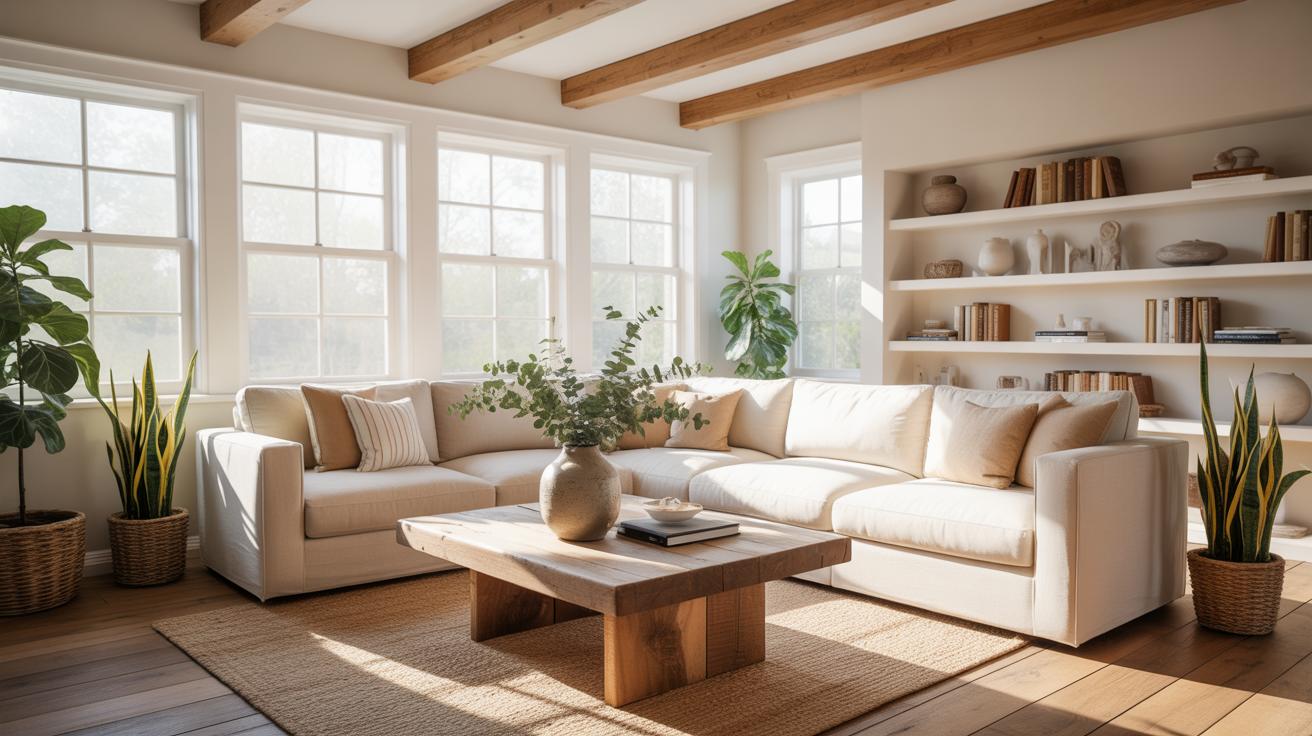
Modern farmhouse living rooms blend the warmth of rustic decor with sleek, contemporary design. This style creates a cozy yet fresh atmosphere. It fits well in modern homes and retains farmhouse charm through materials like wood, metal, and natural fabrics.
In this article, you’ll find practical ideas for designing your modern farmhouse living room. Topics include color choices, furniture setup, lighting, and decor items. Each section offers clear steps to help you create a comfortable and stylish space that matches your lifestyle.
Selecting The Right Color Palette

Choosing the right colors for your modern farmhouse living room is a bit of an art and a bit of a personal instinct. The key lies in balancing neutrals and warm tones carefully to foster an inviting and relaxing environment. You want a palette that feels timeless yet fresh. Usually, starting with a base of light neutrals like soft grays, creamy whites, or beige gives your space a versatile foundation. These hues reflect light and often make rooms appear larger and airier, which is handy if you have a smaller living area.
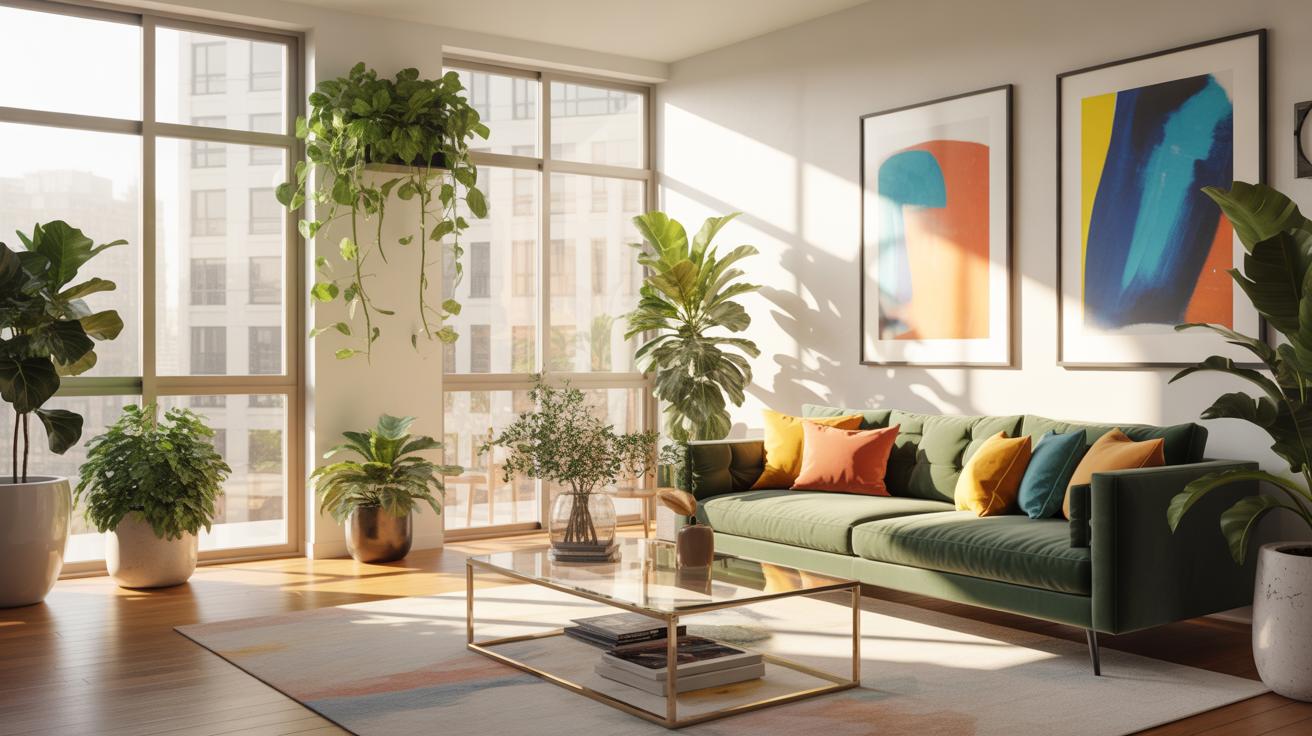
Adding warmer tones such as gentle taupes, muted ochres, or soft terracottas brings warmth. They make the room feel cozy, perhaps like the snugness of a countryside retreat. Keep in mind how different shades affect mood: neutrals calm and soothe, while warm colors can encourage comfort and connection. Combining both thoughtfully can help create a space that’s both lively and serene—although you might find it tricky not to lean too far one way or the other, causing either starkness or heaviness.
Neutral Colors Versus Warm Hues
Neutral colors, at their core, are those unobtrusive tones that don’t demand attention. Think whites, beiges, grays, and sometimes soft blues. They provide a blank canvas — they’re safe, light, and tend to make spaces feel open and clean. Warm hues, on the other hand, pull you in. These include shades like rusty reds, burnt oranges, golden yellows, and rich browns. They evoke a sense of hearth and home, which fits perfectly with farmhouse aesthetics.
In modern farmhouse rooms, blending those two can be both effective and aesthetically pleasing. For example:
- Walls painted a crisp, warm white or pale cream are great for neutrals.
- Introduce warm wood tones on furniture or flooring to anchor the room.
- A beige or light gray sofa accented with mustard or terracotta cushions adds just enough warmth without overwhelming the space.
It’s this interplay—neutrals grounding the space while warm hues add character—that breathes life into farmhouse style.
Accent Colors And Their Impact
Accent colors might be small but they pack a punch. A modest splash of rust-red, sage green, or navy blue can dramatically alter the room’s vibe. These pops draw the eye and can highlight architectural features or decor pieces like a vintage vase or patterned rug.
Choosing accent colors requires a bit of know-how: too many can disrupt harmony; too few might leave things feeling flat. Think about what kind of energy you want. For instance:
- Sage green adds an earthy freshness.
- Navy blue gives depth and a bit of sophistication.
- Burnt orange injects a cozy boldness without straying from farmhouse warmth.
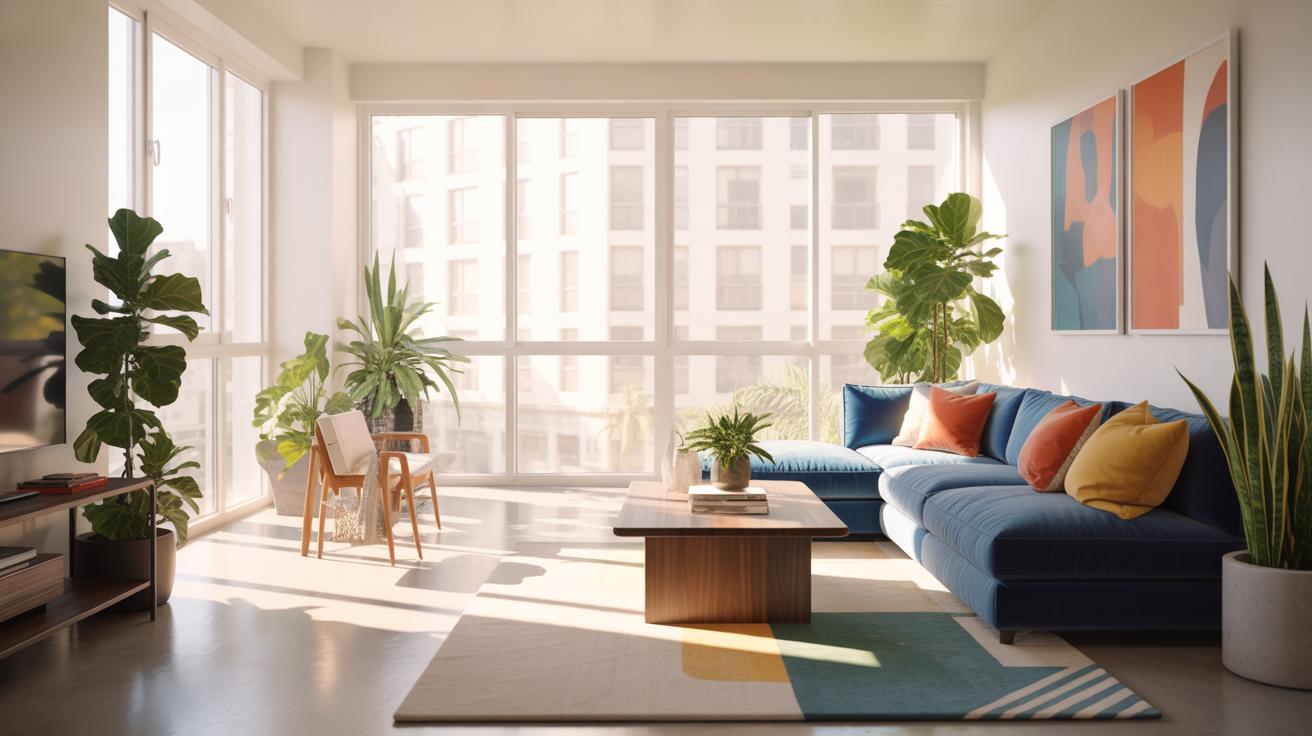
Personally, I find that introducing these accent colors through textiles or small decorative pieces lets you switch things up with relative ease. It’s like dressing your room for the season without a complete makeover.
Furniture Layout For Function And Style

When arranging furniture in a modern farmhouse living room, comfort and practical flow should lead your choices. Think about how you move through the space and how the furniture supports everyday activities. For example, placing a plush sofa facing a natural focal point such as a fireplace or a large window can create a cozy gathering spot without blocking pathways.
Options like overstuffed armchairs, slipcovered sofas, and farmhouse-style wooden coffee tables suit the aesthetic and serve well for comfort. Give enough breathing room between pieces—typically 18 to 24 inches—so everyone can get around easily, yet not so much that the room feels sparse or cold. It’s a delicate balance between openness and intimacy.
Sofas and chairs with soft, natural fabrics work best to keep things inviting. A mix of textures—wood, metal, textiles—adds visual interest without cluttering the simplicity. Maybe, consider furniture that can multitask, such as ottomans with storage, since modern farmhouse style leans towards practical living without sacrificing warmth or charm.
Prioritizing Comfort And Space
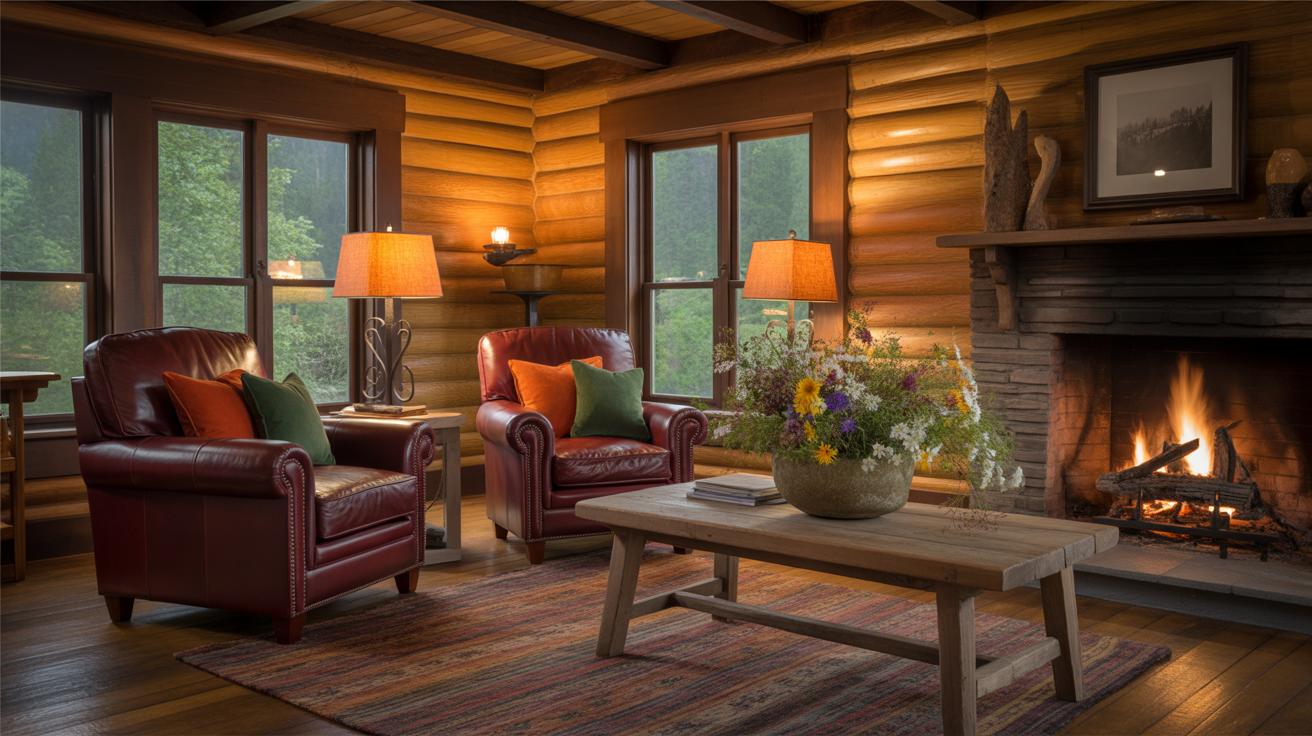
Modern farmhouse living rooms value comfort, but space matters just as much. I hesitate to say one is more important than the other since they’re intertwined. A cramped room stops being cozy quickly, while too much open space can feel cold. To strike a balance, remove unnecessary furniture to open up pathways and use rugs to define sitting areas, making the space feel anchored yet roomy.
Lighting plays a role too—natural light enhances openness, while soft warm lamps keep it cozy. Layer your lighting sources thoughtfully, and don’t be afraid to leave some empty corners; sometimes less really is more when it comes to flow and comfort.
Key Furniture Pieces To Include
- Sofa: The centerpiece. Choose one with clean lines and comfortable cushions, ideally in a neutral color that complements the farmhouse palette.
- Armchairs: Provide extra seating and balance the sofa. Look for slipcovered or leather options with a lived-in feel.
- Coffee Table: Essential for function and style. A reclaimed wood or metal-topped piece fits well, offering surface space without overwhelming.
- Side Tables: Small but vital. Place these near seating to hold lamps or beverages.
- Storage Ottoman or Bench: Multi-use furniture that adds comfort, storage, and seating, helping maintain the tidy, functional vibe.
- Bookshelves or Cabinets: Useful to showcase farmhouse decor while hiding clutter, blending utility with rustic charm.
Each piece plays a role in supporting a lifestyle that values simplicity and comfort. When selecting furniture, ask: Does this encourage gathering? Does it feel inviting? These questions often lead to pieces that embody the modern farmhouse spirit well.
Lighting Choices To Enhance Atmosphere

Choosing the right lighting in a modern farmhouse living room can really change the vibe. There are a few types to think about — ambient, task, and accent lighting. Ambient lighting sets the overall mood, like soft overhead lights or lantern-style fixtures that echo rustic charm. Task lighting is more focused — say, a floor lamp by the reading chair or sconces near the couch. Then there’s accent lighting, which spotlights art, architectural nooks, or even a wooden beam you want to draw attention to.
When picking fixtures, you might lean toward materials like wrought iron, brushed bronze, or matte black finishes. They mix well with farmhouse wood and stone. Think about mixing it up with pendant lights above a seating area or layered wall lights for some texture. You could go for a weathered look or choose simple, clean lines if you want a more contemporary edge. Lighting isn’t just functional here — it’s part of the design story.
Combining Ambient And Task Lighting
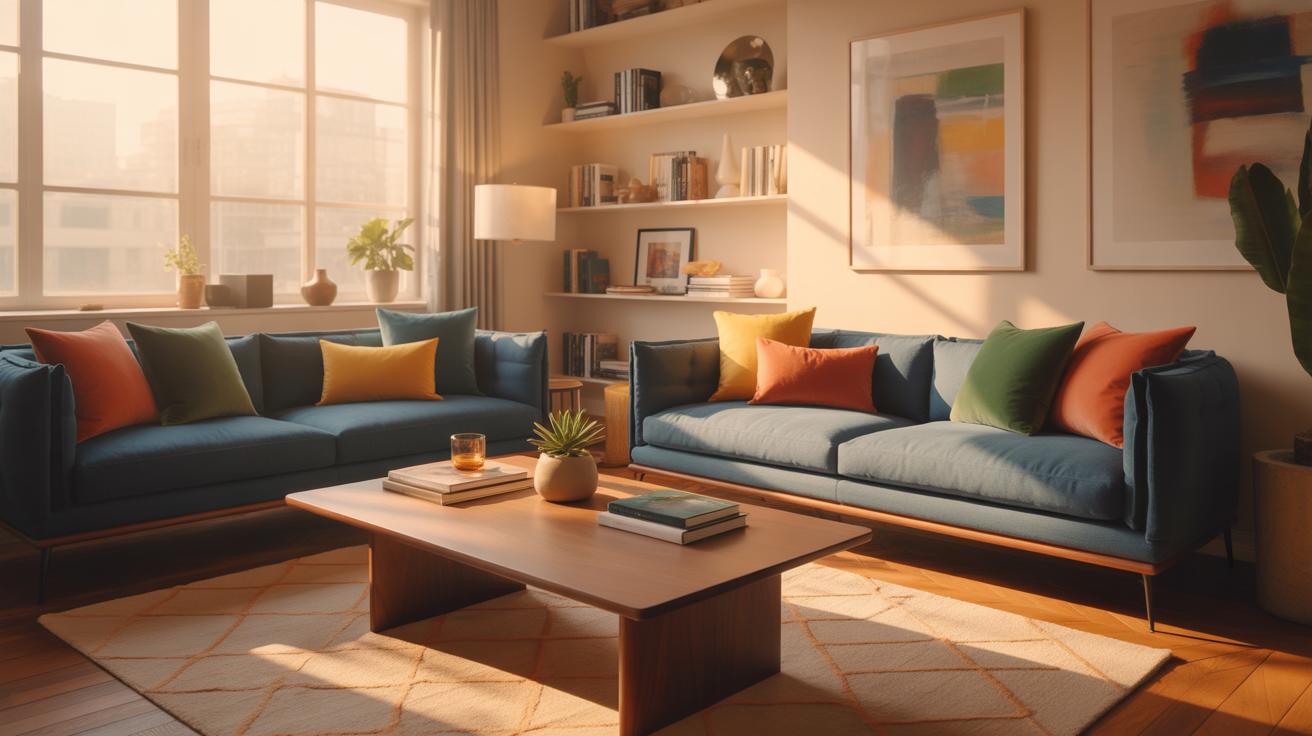
So what exactly do ambient and task lighting mean? Ambient lighting is your main source of light — it fills the room with a general brightness. Picture a farmhouse chandelier or recessed ceiling lights softly brightening the space. Task lighting, on the other hand, zeros in on specific activities. A table lamp near your favorite armchair, or an adjustable reading bulb by the sofa, makes these moments easier.
To make both work, try layering them thoughtfully. Use dimmable overhead fixtures for that cozy glow when you want to relax, then add task lighting where you need precision — puzzles, reading, or even working from home. This way, the living room feels both welcoming and practical, without any harsh glare or too-dark corners. It’s a balancing act, but once you get it, you’ll wonder why you ever settled for less.
Using Accent Lighting For Features
Accent lighting is a bit like putting a spotlight on your favorite part of the room. It’s less about lighting the whole space and more about creating focal points. Maybe that reclaimed wood wall or an old farmhouse window needs a bit of highlight — here, a subtle LED strip or a small directional fixture can do wonders.
You can also use accent lighting to bring warmth to vintage pottery, textiles, or ironwork. Try wall washers to illuminate textures or tiny lamps tucked behind a plant to cast soft shadows. These little touches can shift the ambience drastically. It’s about being selective — what parts of your living room deserve to stand out? Accent lighting answers that question, though you don’t want to go overboard. Just enough to add depth and interest without distracting from the room’s natural charm.
Decor Elements That Bring Warmth And Charm
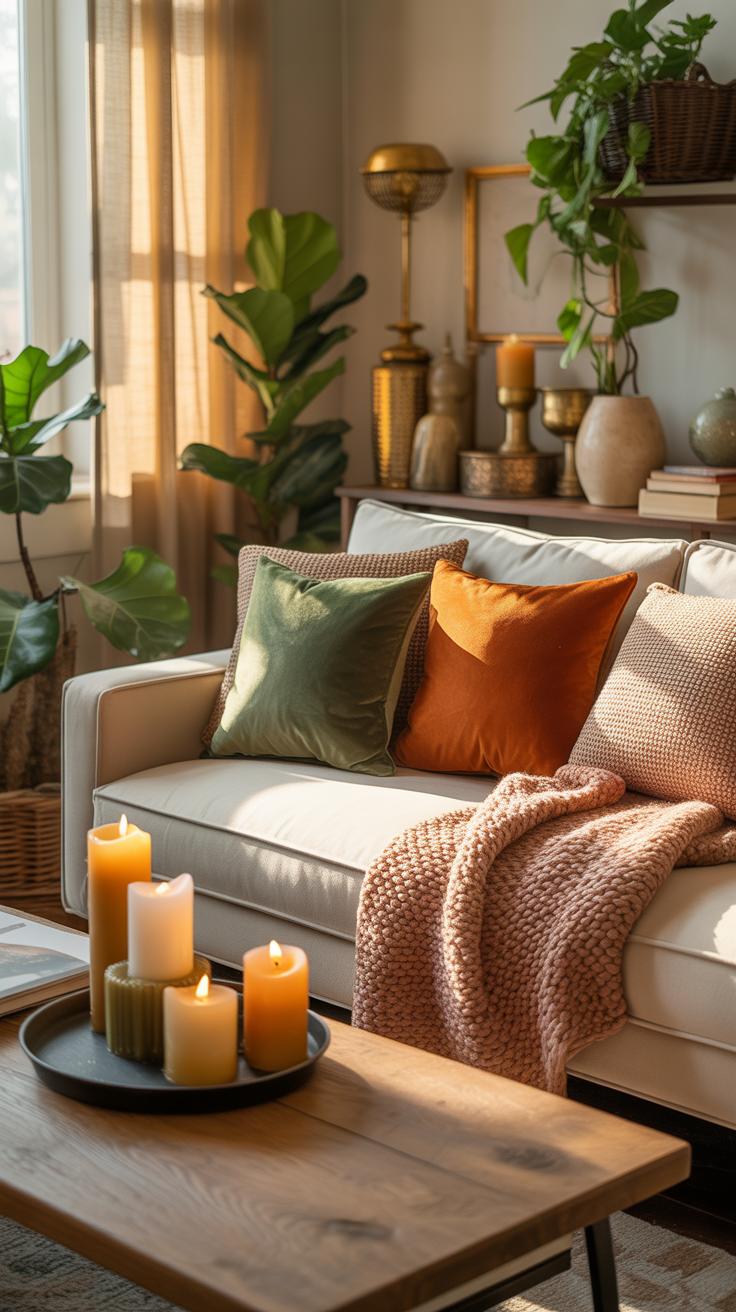
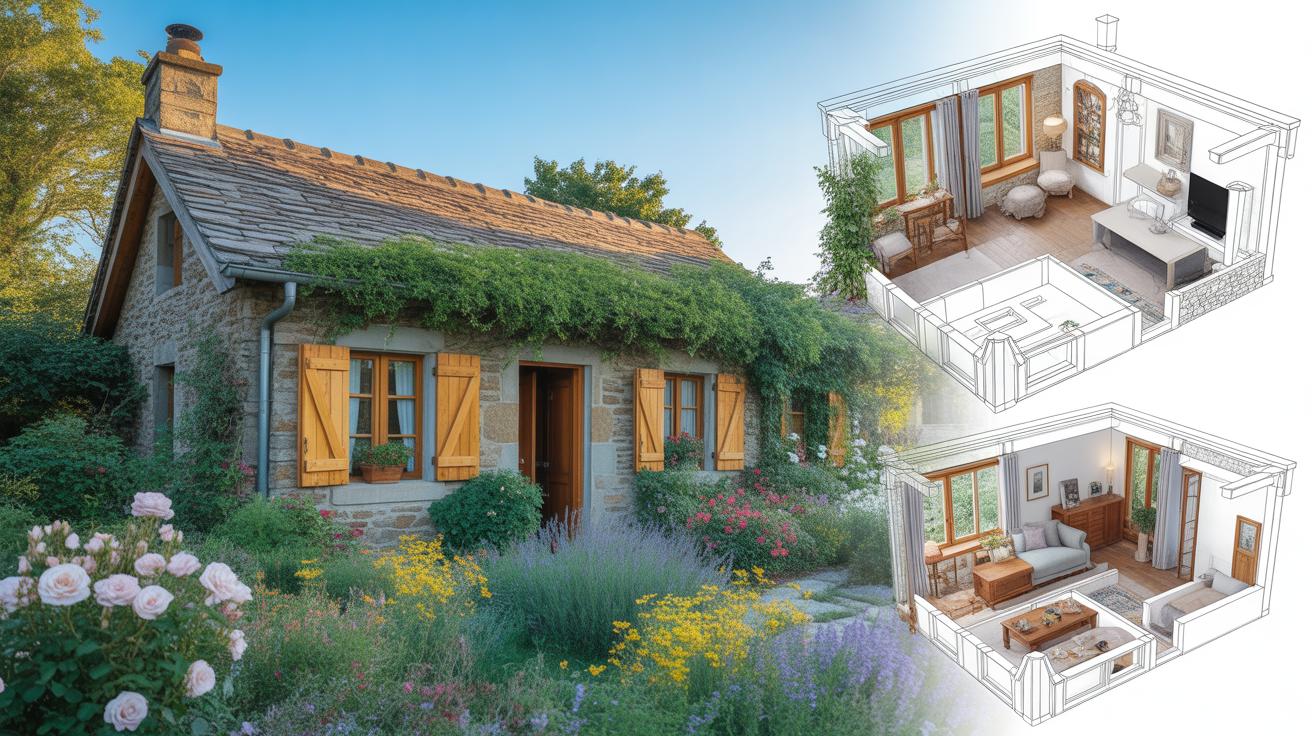
In a modern farmhouse living room, textiles, wall art, and greenery do more than just fill space—they wrap the room in comfort. Think about textiles like chunky knit throws or linen cushions. Their textures invite you to touch and relax, breaking any sense of coldness in the room. Rugs with natural fibers or muted patterns anchor the space, offering a warm, grounded feeling underfoot.
Wall art, perhaps a mix of vintage-inspired prints and modern farmhouse photography, personalizes the room while adding layers of interest. Don’t shy away from pieces that feel a bit rustic or handmade—they bring in that charm that feels authentic rather than staged.
Adding greenery, such as potted ferns or simple mason jars filled with fresh herbs, creates a gentle contrast to the often neutral palette. Plants bring life and an organic touch that quietly softens the structure of sharp lines and clean surfaces common in contemporary farmhouse designs.
Incorporating Textiles And Rugs
When choosing textiles and rugs, prioritize materials that invite a tactile experience. Wool, cotton, and linen work particularly well. Rugs in jute or braided styles provide texture without overwhelming the simplicity of farmhouse aesthetics. Patterns like subtle stripes, checks, or even faded florals can be effective, but avoid anything too busy.
The idea is to balance comfort with simplicity—think of a rug that feels like an old friend, one that’s both welcoming and visually soothing. A well-placed wool throw tossed over a chair or sofa doesn’t just add warmth but also layers depth and character to the room’s look.
Adding Greenery And Art Pieces
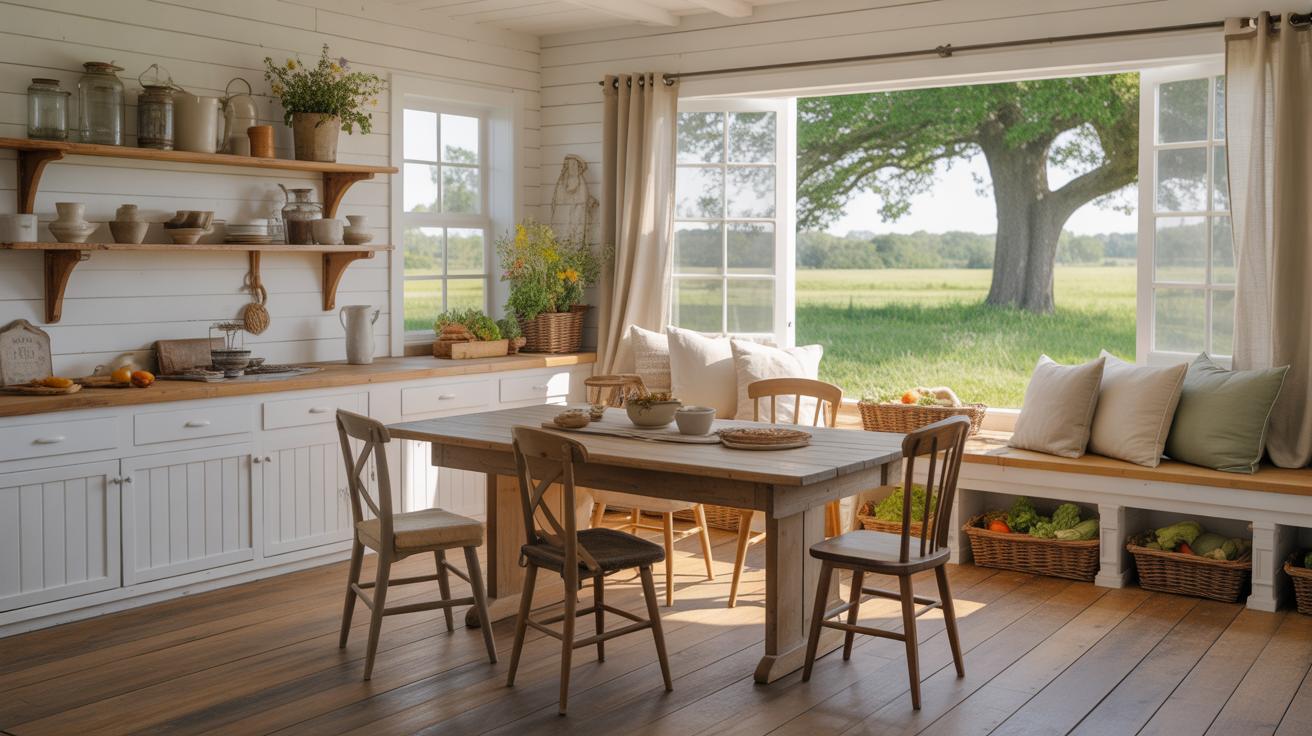
Plants in a contemporary farmhouse setting should feel effortless and natural. Choose species that thrive indoors without too much fuss—snake plants, rubber plants, or simple succulents work well. Their green hues break up the often monotone color scheme and introduce a fresh energy.
For art, lean into pieces that tell a story or evoke a sense of place. Vintage botanical prints, rustic landscapes, or black-and-white farmhouse photos can all work. Don’t hesitate to mix frames that show a bit of wear—it adds authenticity.
Remember, these elements are not just decoration. They personalize and soften your space, making it uniquely yours while enhancing the warm, inviting atmosphere characteristic of the modern farmhouse living room.
Storage Solutions That Blend With Style
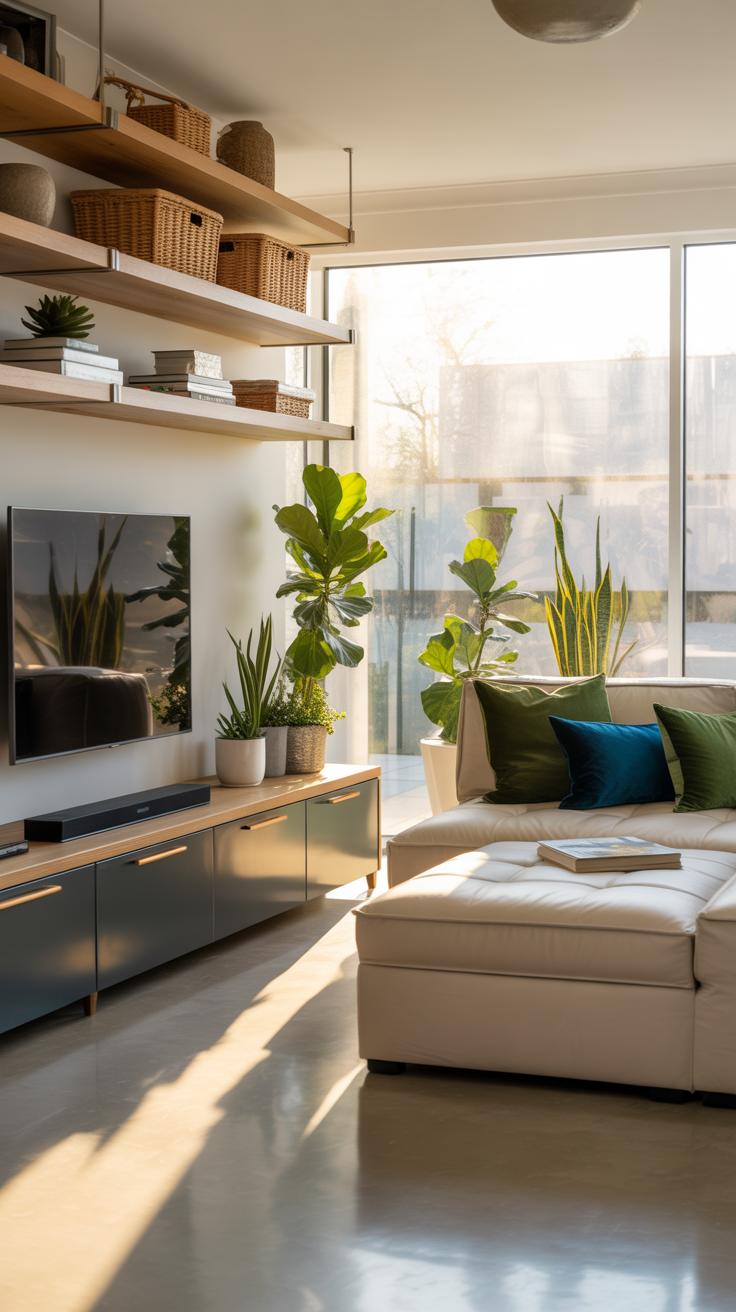
Keeping a modern farmhouse living room tidy calls for smart, stylish storage that doesn’t feel out of place. Open shelves, woven baskets, rustic cabinets, and multifunctional furniture are staples here. Shelves can display charming farmhouse decor, but they also invite dust and clutter if overfilled. Woven baskets are perfect for hiding blankets, toys, or magazines—adding texture without shouting “storage”. Closed cabinets work well for less-decorative items that you’d rather keep out of sight.
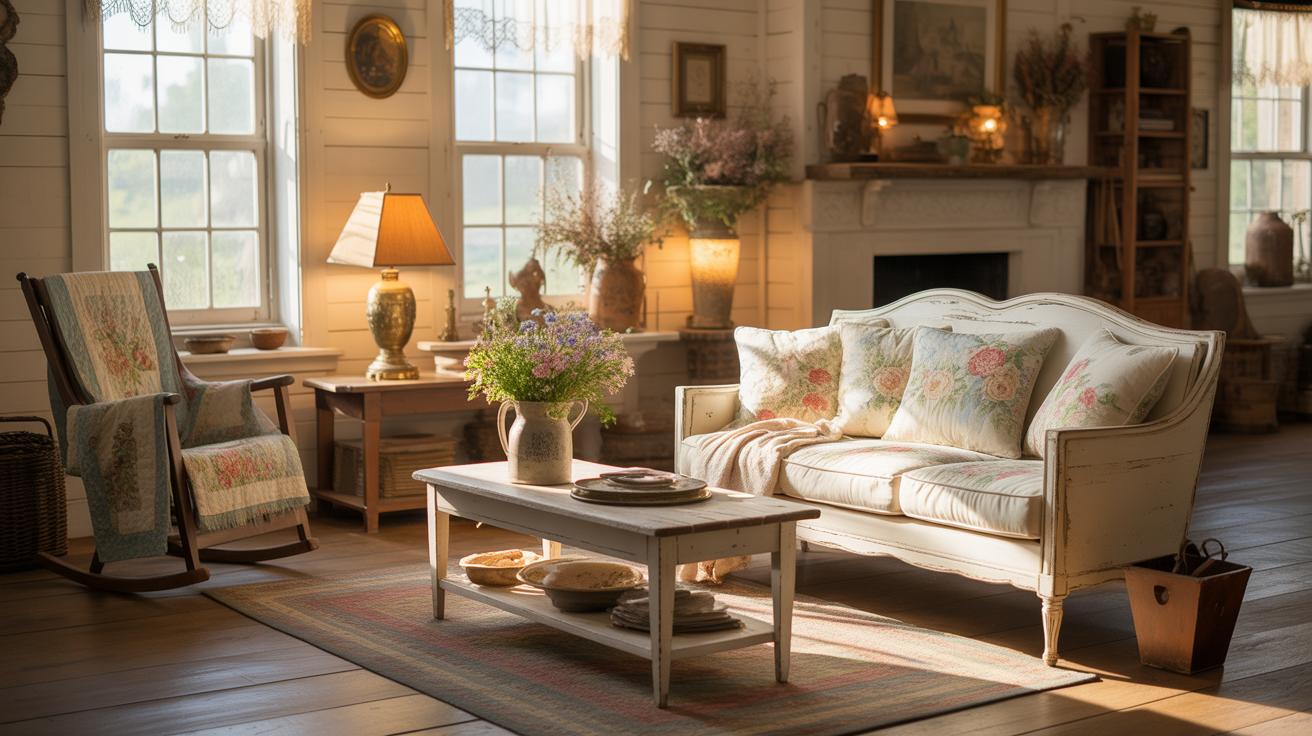
Multifunctional furniture, like ottomans with storage, benches with cubbies, or coffee tables with drawers, serve dual purposes. They’re lifesavers in farmhouse spaces that need to stay welcoming but also practical. You might hesitate at first, wondering if these pieces will crowd the room, but they often simplify your life by keeping daily clutter tucked away.
Open Shelving Versus Closed Storage
Open shelves show off heirlooms, plants, and books, enhancing the farmhouse warmth. But, they require constant upkeep to avoid looking messy. Closed storage hides the chaos but can make a room feel closed off if overused. So, a mix often works best: open shelves for personality, closed cabinets for neatness. When choosing, think about what you want visible every day and what you’d rather tuck away.
Using Multifunctional Furniture
Furniture that doubles as storage is a cornerstone of contemporary farmhouse living rooms. Consider:
- Storage ottomans that hold blankets but provide comfy seating
- Benches with built-in spaces for shoes or games
- Coffee tables offering hidden compartments
- Sofas with side pockets or compartments
These pieces keep essentials close at hand without sacrificing style or space. They’re especially handy in smaller rooms or for simplifying your daily routine. While some might worry multifunctional furniture could look purely functional and bland, farmhouse versions usually balance rustic charm and utility quite well.
Preparing A Budget Friendly Design Plan

Setting Priorities For Spending
When planning your contemporary farmhouse living room, it’s crucial to decide which elements deserve more of your budget. Focus on pieces you’ll use daily or that set the room’s tone—like a sofa or lighting. Sometimes, investing in good quality seating pays off since comfort matters. Other areas can wait; think rugs or decor accents, which can be swapped easily.
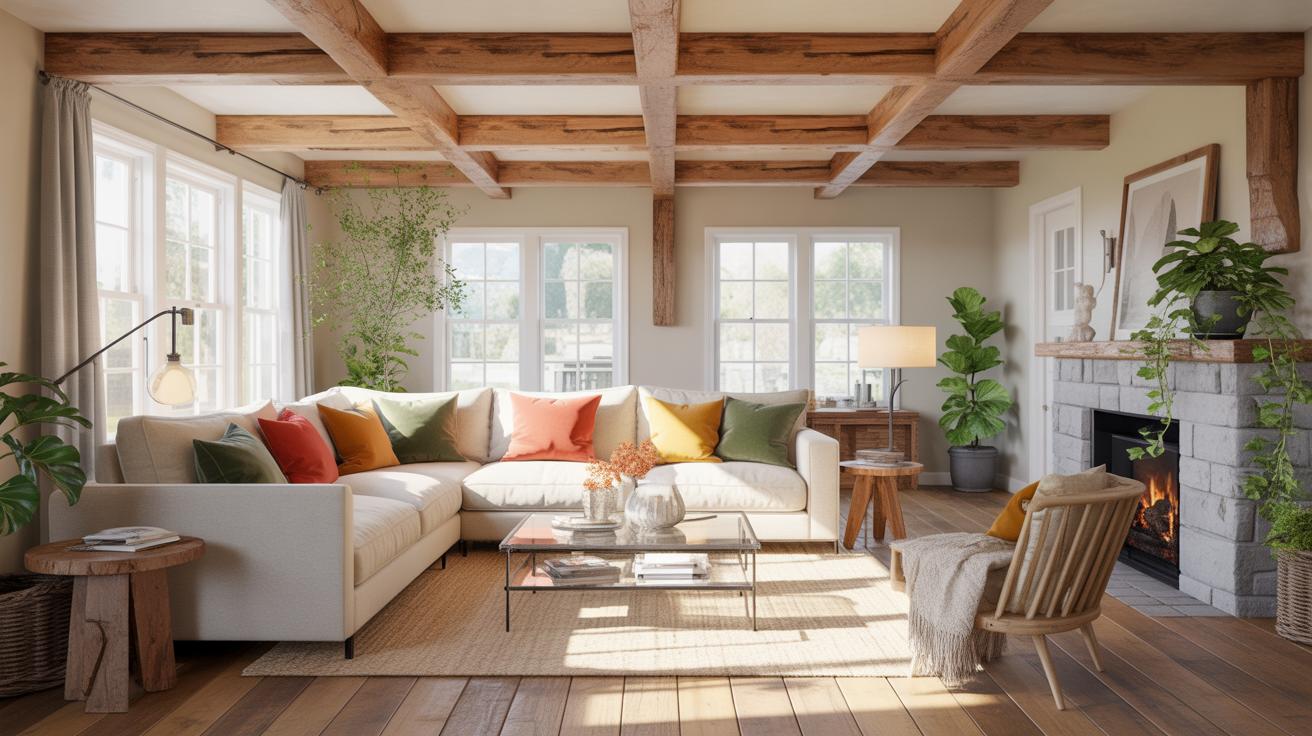
Try splitting your budget roughly into thirds: furniture, accents, and projects or renovations. But don’t feel locked in—your space might need more work on walls than furniture, or vice versa. You decide what feels right for your lifestyle and style.
Finding Affordable Materials And Decor
Don’t overlook thrift shops or online marketplaces; many quality farmhouse-style items pop up you wouldn’t expect. Reusing wood from old furniture or crates can give your room a unique character without the typical price. DIY projects, too, have a charm, like repainting old chairs or creating a simple reclaimed wood shelf.
Another tip: look for sales on basics, then personalize with handmade or secondhand decorations. This approach keeps costs low but results in a room that’s truly yours. It’s a balancing act, really, between saving money and not settling for less quality where it counts.
Styling Tips For Seasonal Updating
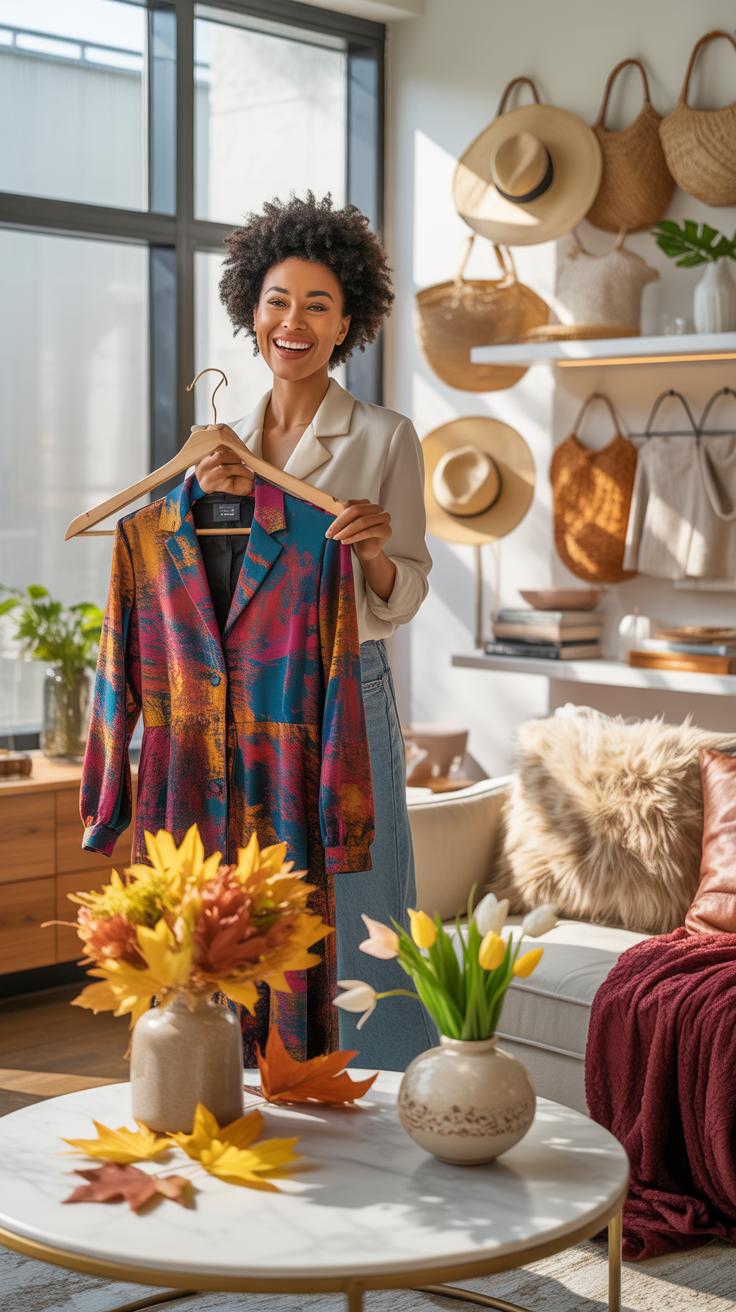
Refreshing your modern farmhouse living room with seasonal decor doesn’t have to be overwhelming. Small touches can shift the feel of the space without a full overhaul.
Consider swapping out accent pillows or throws to reflect the mood of each season. Soft pastels or floral patterns work well for spring, while crisp whites and light linens suit summer. As temperatures drop, richer textures like knitted wool or velvet in warm tones encourage coziness.
Another simple idea is to rotate decorative pieces like vases, candle holders, or picture frames. A ceramic pumpkin or autumn leaf motif for fall can transition to pine cones or evergreen branches in winter. These subtle shifts add visual interest while maintaining the room’s core style.
Think about incorporating nature-inspired elements—think fresh flowers in warmer months and dried arrangements or branches as the year cools. Keeping your seasonal updates small keeps your farmhouse space inviting without feeling cluttered or busy. Sometimes less really is more.
Switching Textiles For Seasons
Textile swaps are an easy way to signal seasonal change in the living room. For spring and summer, lightweight fabrics like cotton, linen, and chambray breathe life into the space. Colors can lean toward soft blues, pale greens, or creamy whites.
Come fall, shifting toward cozier textiles helps. Think chunky knits, flannels, or suede in muted hues such as burnt orange, deep reds, or mossy greens. Winter calls for heavier materials. Velvet cushions, faux fur throws, and wool blankets in jewel tones or classic neutrals create warmth and depth.
One thing to keep in mind: it’s okay to mix some textures and colors, even if they clash a bit. It’s more authentic this way, not overly designed or staged. Experiment and trust what feels right in the moment—your room should evolve naturally.
Using Decor To Reflect Holidays And Themes
Seasonal decor tied to holidays doesn’t require a lot of commitment. Small accents with thematic motifs can do the trick. A few tasteful pumpkins or gourds hint at fall without overwhelming the farmhouse vibe. Subtle garlands or wreaths work well for Christmas or Easter.
You might also try swapping out artwork or photo frames to reflect the holiday—maybe a dusty orange print for Halloween or a fresh green one around St. Patrick’s Day. Even a change in lampshade or table runner adds a new focal point.
It’s easy to slide these items in and out, making your living room feel timely and festive. The key is to keep the core farmhouse elements intact so the room always feels grounded and welcoming.
Balancing Tradition With Modern Elements
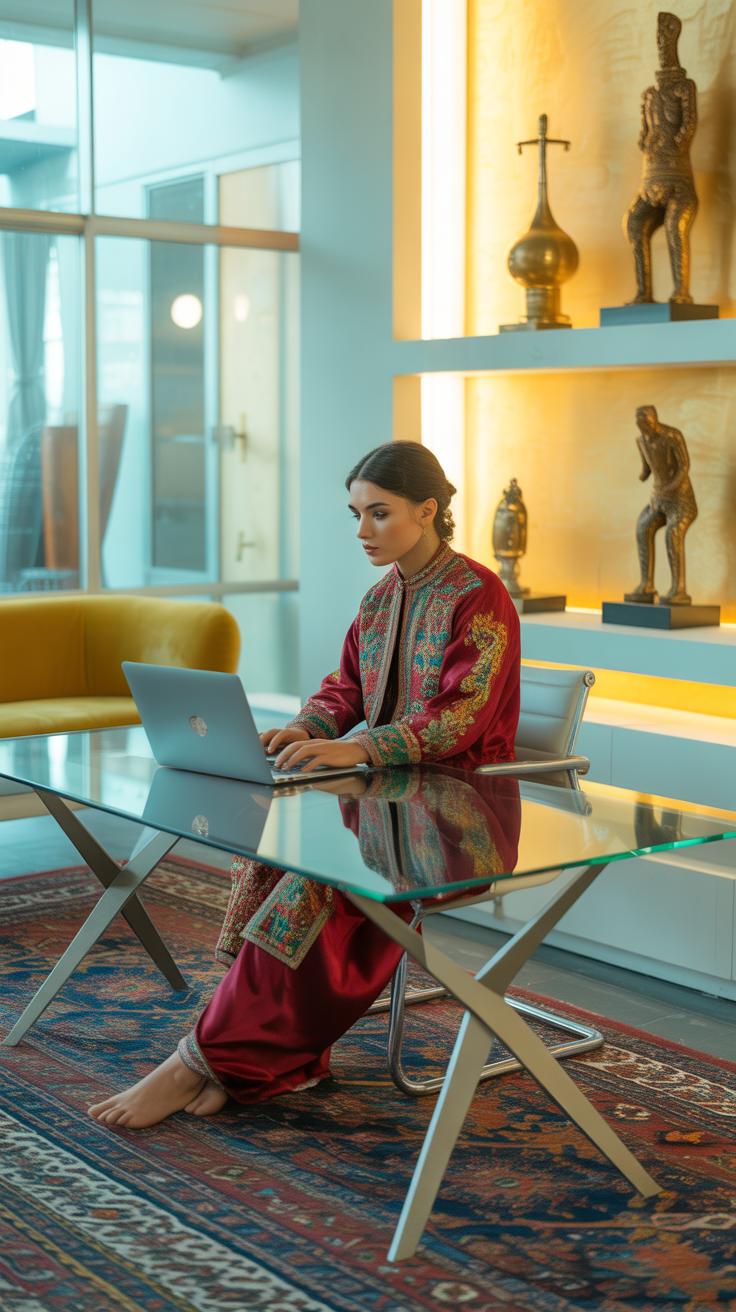
When you think about contemporary farmhouse design, it’s really about striking a balance between old and new. Classic farmhouse charm comes from its rustic roots—think rough-hewn wood beams, wide plank floors, and maybe even the occasional vintage metal fixture. These elements carry a warmth and history that you can almost feel, a connection to simpler times. Yet, without fresh updates, these features can start to feel, well, a bit tired or clichéd.
On the other hand, modern design brings in cleaner lines and less fuss. So, you might have a streamlined sofa with neutral tones or a sleek coffee table that contrasts with the rough textures of the wood. The trick, though, is not to let the modern feel sterile. Instead, it should complement and highlight the farmhouse character.
What’s interesting—maybe surprising—is how these two opposite styles can actually make each other look better. Rustic details get a fresh spotlight by sitting next to minimalist shapes, and those modern pieces feel more inviting when paired with cozy, timeworn elements. It keeps the living room from feeling stuck in one era or the other. You want your space to feel current, but not at the expense of its soul.
Preserving Rustic Details
There are certain farmhouse features that feel essential to keep. Wood beams overhead? Absolutely. They frame the room, giving it depth and texture. Shiplap walls add a familiar pattern that’s both subtle and distinctive—like a quiet nod to farmhouse roots. Even things like a stone fireplace or exposed brick can anchor the space in tradition. These details don’t just serve a decorative purpose; they tell a story and evoke a sense of nostalgia.
Keeping these elements works beyond just looks. They create an emotional connection, a feeling of home and comfort. I’ve noticed that rooms with preserved rustic features tend to invite longer, more relaxed stays—people want to sink into that vibe, it’s reassuring, familiar. If you were to remove them entirely, you might lose that intangible pull.
Incorporating Clean Modern Lines
Contrast comes through in the modern touches. Imagine simple furniture shapes with smooth edges and no excessive ornamentation. A plain linen sofa, metal or matte-finished lighting fixtures, or glass accents—they offer a visual break from the weightier rustic elements. This minimal decor helps the eye rest and prevents the room from feeling cluttered.
And yet, it’s more than just contrast. Modern lines can actually highlight rustic features. A sleek chair placed near a weathered wooden beam draws attention to both. The key is using just enough modern elements to bring balance, without overpowering the farmhouse essence you want to preserve. It’s about restraint.
Sometimes, I worry that in trying to keep the room modern, the farmhouse personality could fade. But from what I’ve seen, when done thoughtfully, the two styles become partners rather than competitors. You end up with a room that’s fresh but also deeply rooted—relevant today yet rich with history.
Conclusions
Creating a modern farmhouse living room requires balance. Use natural textures with simple colors. Arrange furniture to invite relaxation and easy conversation. Add lighting that highlights room features and adds warmth.
Apply the tips on colors, materials, furniture, and accessories from this article. Each step helps make your living room both practical and welcoming. Your contemporary farmhouse can become a pleasant spot for family and guests.