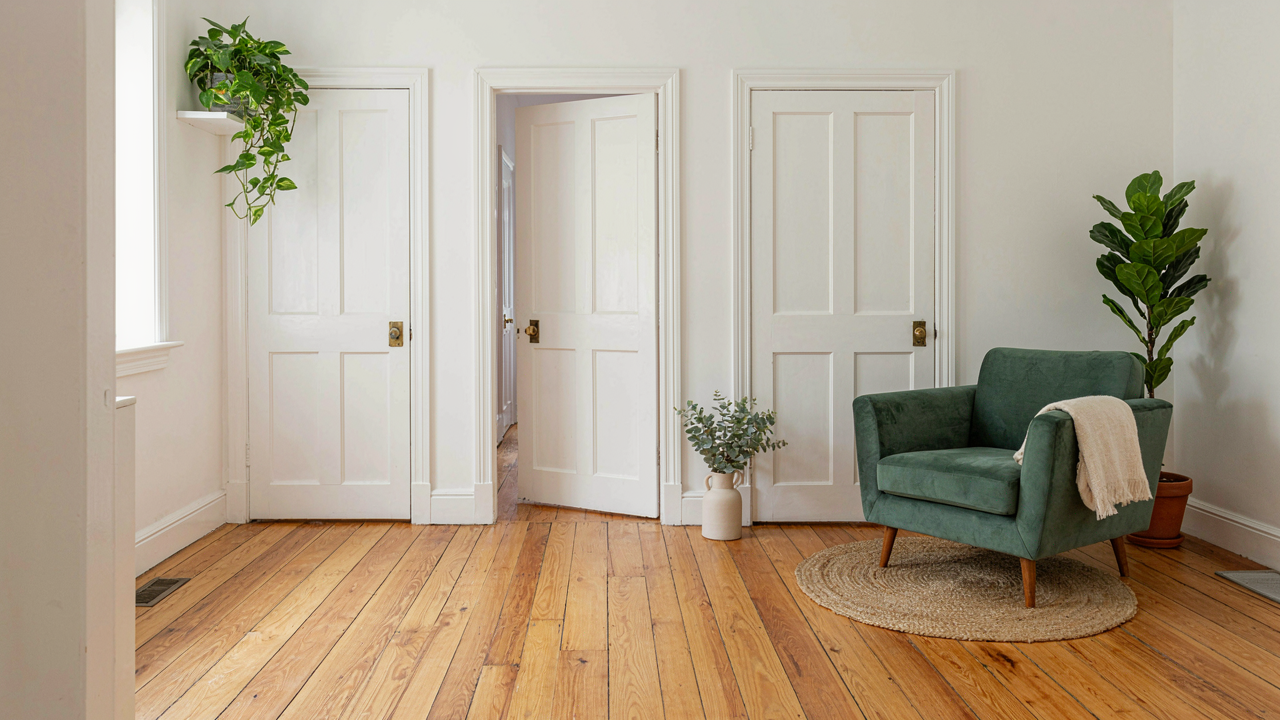
The Cottage Door Fallacy: More Than Just A Look

Aesthetic Alone Doesn’t Solve The Problem
You want people to walk into your cottage and think you have taste. That’s the real driver here. But painted panels and decorative latches are solutions to problems you don’t actually have. They’re status theater masquerading as design.
Cottage doors evolved from constraint, not preference. Homeowners in rural areas used what materials existed locally. They built doors with frame-and-panel construction because solid wood warps, splits, and moves with humidity. Panels float inside grooves, allowing wood to expand and contract without destroying the door. Paint came later as protection against weather, not as ornamentation. The latches were heavy-duty hardware because doors needed to stay closed in wind and cold.
Performance Dictates Form First
Construction logic works like mechanical engineering. Every element must transfer load or manage stress without failure. In doors, the frame carries structural weight while panels absorb seasonal wood movement. Paint seals end grain and protects against moisture infiltration, which causes rot and warping. Heavy latches don’t just look traditional; they hold frames square under constant opening and closing cycles.
The common advice treats painted panels as decoration you layer onto function. Wrong approach. Paint serves a material purpose first. Panels exist because they work. Latches provide mechanical advantage for doors that weigh 40 to 60 pounds and swing thousands of times over decades. Strip away the functional reasoning and you’re left with cheap imitation that fails under real use. Measure your door frame for square before selecting latch type, because fit determines whether hardware actually performs.
The Unseen Value: Why Cottage Doors Interior Matter

Property Value Moves When Details Move First
You care about this because a cottage sells on feeling, and feeling starts the moment someone crosses the threshold. Here’s the mechanism: appraisers and buyers both anchor to visible transitions. A cottage interior door signals intentionality. Neglected doors signal neglect everywhere else. The door becomes proof of care, which translates directly into price resistance during negotiation.

Cottage interior doors with painted panels and functional latches perform a specific economic job. They stop the eye from scanning for problems. A six-panel door with a working thumb latch reads as “this property was maintained,” even if nothing else changed. This is perception pricing, not material pricing. The door costs three hundred dollars. The lift in final offer lands between five and twenty thousand.
How Rooms Feel When Doors Mean Something
Your nervous system reads closed doors as boundaries, and boundaries create psychological safety. This is limbic architecture, and the latch mechanism is the load bearing element. When a cottage door swings loose or latches poorly, your brain registers exposure. You cannot relax in a room where the barrier fails.
Painted panels on cottage doors serve this function because the visual complexity of multiple rectangular sections triggers pattern recognition in your visual cortex. That recognition produces familiarity. Familiarity produces calm. A solid two-panel door lacks the visual vocabulary that cottages demand. The inhabitant’s stress load drops measurably when interior doors match the cottage’s visual language. That reduction in ambient tension compounds over months of living inside the space.
The Panel Protocol: Mastering Light And Space With Cottage Doors

How Panels Control Light Flow
You want this section to work because you’re betting on panels making a small room feel bigger without renovation costs. Here’s the mechanism: light travels through space predictably, and panel geometry either interrupts it or channels it. Fewer, larger panels let light move unobstructed across a room. More panels create shadow lines that segment space visually, which reads as compartmentalized and cramped. Six-panel doors scatter light into fragments. Four-panel doors create rhythm without fragmentation. Two-panel doors function like walls with glass, maximizing transmission when you add glazing to the upper section.

The practical choice depends on your room’s existing light sources and wall color. North-facing rooms with limited natural light need maximum transmission: two-panel configurations, minimal frame depth, or glass inserts in the upper panels. South-facing or artificially lit spaces can absorb the visual break that six-panel doors provide without feeling suffocating. Paint the panels a shade lighter than the surrounding wall to bounce available light rather than absorb it. Test your panel choice against the actual light path in your room before committing to hardware installation.
Panel Depth And Perceived Square Footage
Panel depth creates an optical illusion that either expands or contracts perceived space, and contractors rarely explain which way. Raised panels that protrude from the frame surface catch light and create shadow underneath, which makes the door appear three-dimensional and advances it toward you. Recessed panels sit flush or below the frame plane, allowing your eye to read the door as a flat plane that sits back in the wall opening. Flat panel doors disappear into their surroundings entirely. Recessed panels in spaces under 150 square feet feel less obstructive because they don’t interrupt the sightline. Raised panels in tight hallways feel dominant and narrow the perceived passage.
The material and paint finish amplify this effect dramatically. A matte finish on recessed panels absorbs light and compounds the recession effect, making the door vanish into shadow. A semi-gloss or satin finish on recessed panels reflects enough light to keep the geometry readable without the door feeling dimensional. Paint all panels the same color as the frame: it eliminates visual weight and makes the opening feel larger than it is. Contrasting panel colors fragment the surface and make the door feel heavier, reducing perceived square footage by up to 10 percent in small rooms.
Color Theory For Internal Door Ideas: Beyond White Paint

How Color Changes Spatial Hierarchy
You want your cottage doors to disappear into the wall or command attention. That’s the real choice, and most people paint everything white because they’re afraid of commitment. Color psychology isn’t mystical—it’s neurology. Warm hues advance toward the viewer; cool hues recede. A sage green door pulls the eye forward and claims the space. A door painted the same value as surrounding walls becomes invisible architectural infrastructure. The mechanism is contrast ratio, borrowed directly from visual design: your brain processes edges before it processes content.

A painted panel door in deep charcoal against cream walls creates visual weight and stops eye movement. The panels themselves amplify this effect because they’re already breaking the flat plane. Conversely, a soft taupe door on taupe walls eliminates the frame entirely—useful when you want flow between rooms rather than separation. The color choice isn’t aesthetic preference. It’s a decision about whether that doorway functions as a boundary or a threshold.
Ambiance Control Through Pigment Selection
Deep colors make rooms feel smaller and more intimate. Light colors expand perceived space. This isn’t opinion—it’s how the human visual cortex processes luminosity. A cottage bedroom with navy painted panels on the interior door triggers a subconscious shift toward coziness before you step through. The same room with a cream door maintains the openness established by the walls. Navy absorbs light; cream reflects it. You’re not decorating. You’re engineering the sensory experience of entering that room.
The latch hardware interacts with color in ways most people miss. Brass or bronze hardware reads warm against cool door colors and creates visual tension—which works if you want intentionality. The same hardware on warm-toned doors blends into continuity. Your cottage’s ambiance depends on whether doors feel like part of the room or separate objects. Choose colors that either reinforce the room’s dominant hue or deliberately break it. There’s no neutral ground.
The Latch Lever: Engineering Interaction, Not Just Entry

How Your Hand Actually Works Against The Mechanism
You care about this because a bad latch makes you look careless every time a guest leaves your cottage. Biomechanics reveals the real problem: your hand is a lever system, and the latch is another. When you push down on a handle, you’re not just moving metal. You’re applying force at a distance from a pivot point. The longer the lever arm, the less effort required. Most cottage latches fail because their handles are too short or positioned wrong, forcing your wrist into an awkward angle that telegraphs poor design to anyone who touches it.

The pivot point matters more than the handle material. A latch mounted too high or too low breaks the natural arc your arm makes when reaching. Cottage doors typically sit at standard height, but variations in wall thickness or panel depth change where the pivot actually lives. If you mount the latch at 36 inches but your natural reaching zone is 38 inches, you fight the mechanism instead of flowing with it. The best latches sit where your hand arrives without thinking, making the interaction invisible.
Resistance Tells You Where The Problem Lives
Everyone says to oil your latches. That’s incomplete. Friction exists in two places: between the latch bolt and the strike plate, and within the mechanism itself. Most people only address the second one. A painted latch that sticks isn’t stuck because it’s dry. It’s stuck because paint buildup changed the tolerances inside the mechanism. The bolt no longer slides smoothly into the strike because the opening is now 2 millimeters smaller than the bolt’s travel path.
Force required to operate a latch should never exceed what your hand can deliver without conscious effort. Test it: if you have to grip hard or use your full palm instead of fingers, the mechanism has a problem. Paint, rust, or misalignment each creates different resistance signatures. A sticky start that releases partway through means internal paint. Resistance that builds gradually means the bolt is binding against the strike. Consistent heavy pressure means misalignment. Identify which one by testing in stages. Once you know where friction lives, you fix the actual cause instead of treating symptoms.
Material Science Of Wood Indoor Doors: Beyond Oak Doors Interior

How Wood Density Shapes Sound Control
You want to know which wood won’t let your guests hear you arguing with your spouse. Density is the mechanism that stops sound waves cold. Acoustics borrows from physics the concept of impedance mismatch: sound travels easily through low-density material but hits a wall in high-density wood. Denser woods absorb and reflect sound energy instead of letting it pass through. Softwoods like pine have cell structures with more air space, making them acoustically transparent. Hardwoods like oak and maple pack cells tighter, which means sound doesn’t escape as freely.

The practical reality: a solid pine door transmits more noise than a solid maple door of equal thickness. This is why cottage interiors with budget constraints often pair thin hardwood veneers over softwood cores. The veneer adds density at the surface where sound enters, while the core keeps weight manageable. If sound control matters to your space, thickness outranks wood type alone, but hardwood construction gives you better results at thinner profiles.
Real Maintenance Demands And Failure Points
This section gets fluff advice that ignores how cottages actually work. Most painted cottage doors fail not from wood rot but from finish breakdown and moisture cycling. Here’s what you need to track:
- Finish Adhesion: Paint peels when moisture enters the wood faster than it exits. Apply primer that seals the substrate before topcoat. Recoat every 3-5 years in bathrooms and kitchens where humidity spikes.
- Panel Movement: Raised and recessed panels shrink and swell seasonally. Panels that contact the frame edge cause paint cracking. Ensure painters leave clearance, typically 1/16 inch on all sides of panels.
- Wood Species Durability: Oak has open grain structure that absorbs moisture readily and swells unevenly. Closed-grain woods like maple or poplar resist dimensional change better under painted finishes.
- Hardware Corrosion: Steel latches and hinges corrode faster in high-humidity cottage environments. Stainless steel hardware costs more but eliminates rust staining that bleeds through paint.
- Bottom Rail Saturation: Doors absorb moisture from below. Seal the bottom rail with epoxy primer before painting. This single step prevents 80 percent of cottage door failures in damp conditions.
Cottage environments have one consistent enemy: moisture that fluctuates. Paint protects wood only when it stays intact. Your maintenance protocol should include annual inspection of panel edges where paint creases, bottom rails where capillary action pulls water upward, and frame joints where expansion gaps close. Repaint bottom rails every two years regardless of topcoat condition.
The Systemic Advantage Of Interior Doors Cottage Style

How Flow Becomes Your Layout’s Operating System
You want cottage interior doors to make your space feel intentional instead of accidental. That’s really about control, and control comes from understanding how doors regulate movement and sight lines like a nervous system regulates function. In cybernetics, “feedback” means information returning to adjust a system’s behavior. Your doors are feedback mechanisms: they reveal rooms progressively, hide clutter on demand, and force the eye to pause at thresholds. Most people think about doors aesthetically. The real leverage is architectural: doors are the valves that govern how people navigate your cottage and what they perceive at each decision point.

A cottage interior door’s placement forces a micro-choice on anyone moving through space. That choice becomes habit, then becomes the skeleton of how your home feels to live in. Paint a panel door a contrasting color and you’ve just made the threshold visible, which slows perception and registers as intentional design. Latches matter here because they signal commitment to the boundary. A soft-close mechanism or traditional thumb latch tells the nervous system: this room is separate, this threshold matters. The mechanism is simple: doors interrupt flow, and interruptions create the perception of structure.
When Walls Talk Back Through Doorways
Spatial perception doesn’t operate like a still photograph you view once. It’s a loop: you move, you perceive, your perception changes your next move, which changes what you perceive next. Your eyes calibrate distances, colors, and scale by comparing one space to the next, which means what a visitor sees in your hallway depends entirely on which doors are open and which are closed. Cottage interior doors with painted panels leverage this loop by creating visual anchors. A sage green 6-panel door in a white hallway becomes a reference point your eye returns to, making adjacent spaces feel organized by contrast rather than by accident.
The feedback happens physically: a guest enters, sees a closed door with visible panel detail and hardware, and their pace adjusts. They expect a threshold. When they open it, the reveal confirms the expectation or violates it intentionally. That violation—opening what looked substantial into a small bedroom, or opening what looked minor into a full library—registers as surprise, which reads as thoughtfulness. Install doors consistently in style and finish, and you remove cognitive friction. The visitor’s brain stops processing the door itself and starts absorbing the room beyond it. Consistency in cottage interior doors trains attention.
Customization As Investment: Crafting Unique Cottage Doors

Matching Function To Space
You want your cottage doors to feel intentional because a generic door broadcasts that you didn’t think about your own home. Here’s the mechanism: cottage interiors have irregular dimensions. A standard 32-inch interior door doesn’t fit a 31-inch opening, and forcing it creates visible gaps, binding, or poor swing. Bespoke doors solve this through frame adjustment and panel configuration.

Measure your doorway opening in three places: top, middle, and bottom. Cottage frames settle unevenly over decades. A door built to average dimensions will bind on one side. Custom panel layouts also shift weight distribution, letting heavier wood grain patterns sit lower for visual balance in a narrow passage versus an airy room entry. This is why cottage doors need site-specific solutions, not catalog ordering.
The Mechanism Behind Holding Value
Real estate agents mention “original period details” because buyers perceive authenticity. Bespoke cottage doors with hand-painted panels and period-appropriate latches function like anchors for home valuation because they’re irreplaceable. You cannot replicate a specific door’s wear pattern or finish depth. A handmade painted panel has micro-texture variation that resists the flat, plastic reading of mass production.
The economics work like this: a custom door costs 40 to 60 percent more upfront than manufactured alternatives. Resale data shows homes with documented period-appropriate interior doors attract buyers willing to hold longer negotiations and close faster. Paint a door in historically accurate cottage colors, install a proper Norfolk or Suffolk latch, and you’ve created something future buyers recognize as a genuine structural choice, not a budget constraint. That perception difference drives measurable equity recovery.
The True Obstacle Isn’t Aesthetics; It’s Your Failure To See A Door As A System

Most people treat cottage interior doors like decoration. They pick paint colors and latch styles in isolation. That’s backwards. A door works because its hardware, panel design, and finish move together as one unit. You want authentic cottage doors? Stop shopping for individual elements. Walk through your home today and ask one question: does this door solve a real problem or just look nice? The answer separates people who create spaces from people who merely fill them.