
Introduction
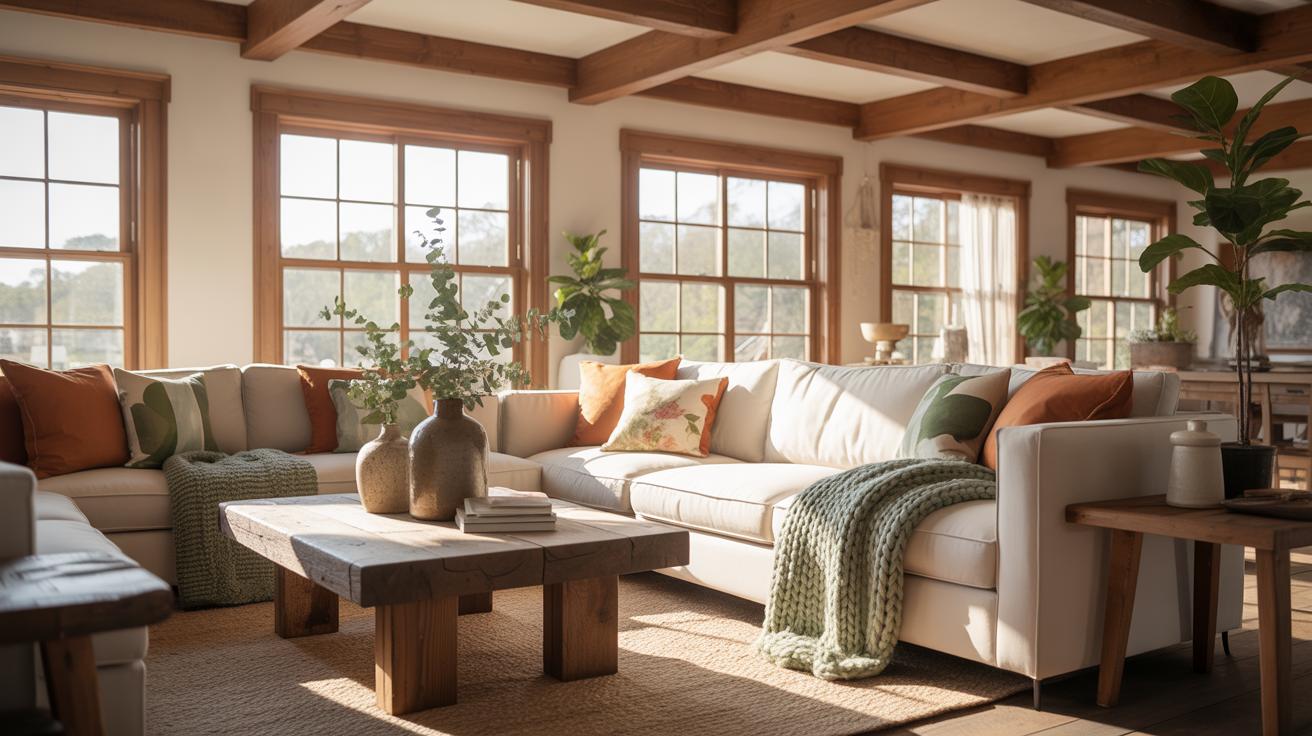
The cozy modern farmhouse living room decor style is perfect for those wanting to combine comfort and clean design. It mixes rustic charm with modern minimalism to create a space that feels inviting and fresh. This style allows you to bring nature inside using natural elements and warm textures.
In this article, we will look at simple ways to decorate your living room in a cozy modern farmhouse style. You will learn how to pick colors, furniture, lighting, and accessories that work together. Whether starting fresh or updating, these home living room ideas will guide you through the process.
Choosing Colors For Farmhouse Warmth
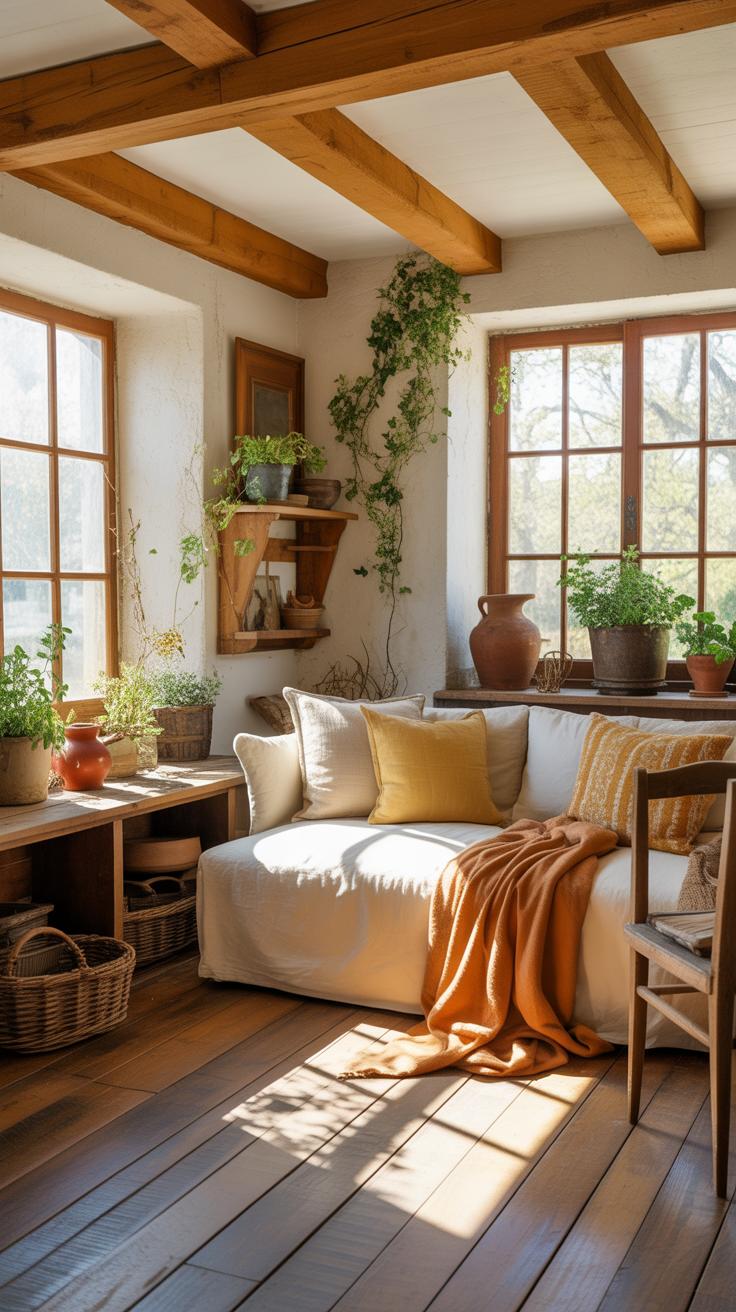
The colors you pick set the mood for farmhouse warmth, but it’s not just about picking any hue. Neutral tones like white, beige, and gray offer a calm, inviting backdrop essential in farmhouse style. These colors work because they reflect light and create a soft, airy feel, which can make your space feel cozy without crowding it. Think of warm whites that don’t feel sterile but more like a gentle hug — slightly off-white shades bring subtle warmth that’s easy on the eyes.
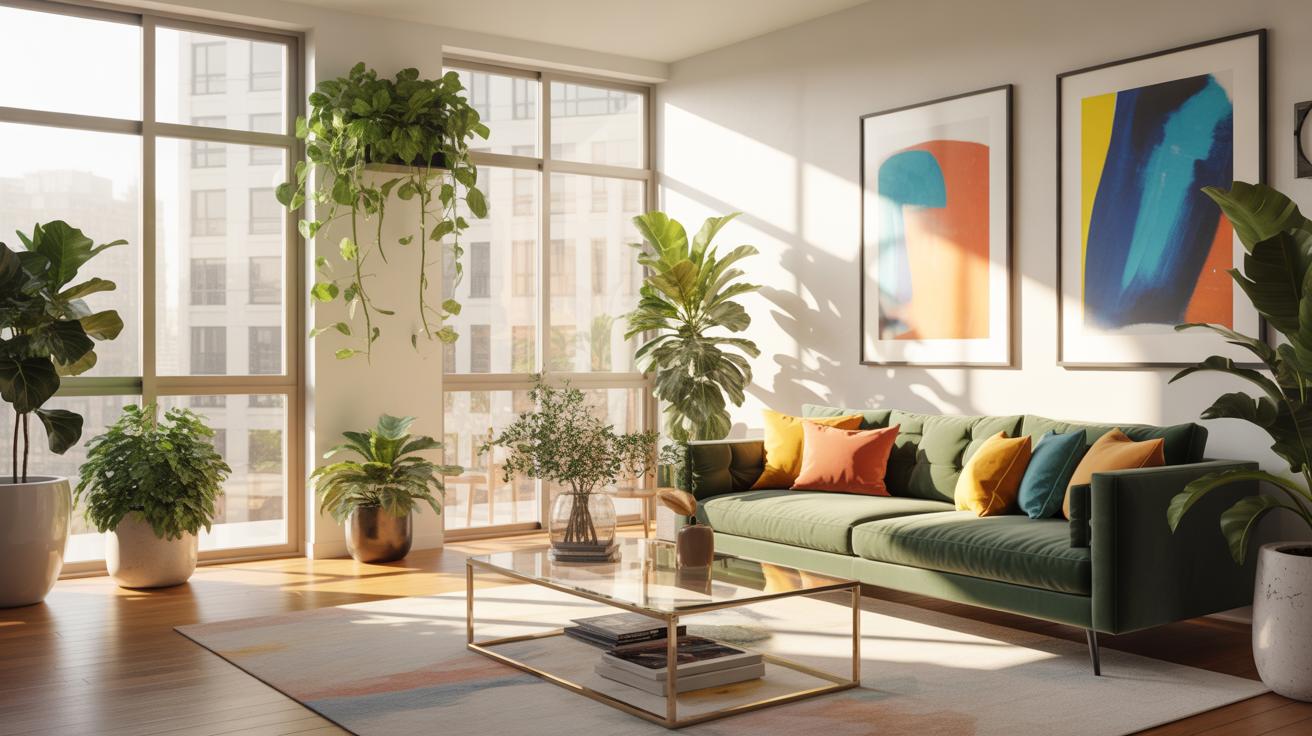
Besides neutrals, nature-inspired palettes bring farmhouse rooms to life. Soft greens, muted yellows, and gentle browns echo the outdoors, grounding the space. Imagine walls or furnishings in sage green or light ochre. These contribute warmth and a relaxed vibe.
Why Neutral Colors Work Best
Neutral colors do more than blend in; they make your living room flexible and timeless. I find that white, beige, or gray provides a clean canvas that’s pleasing but not bland. These shades are forgiving — they show wear less obviously and adapt easily if you want to change accent colors later.
Neutrals also help balance different textures common in farmhouse decor, like wood and metal. When everything else is busy or rustic, neutral tones keep the room grounded and cohesive. Plus, these colors naturally encourage relaxation — a core goal for any cozy living room.
Adding Pops Of Warm Colors
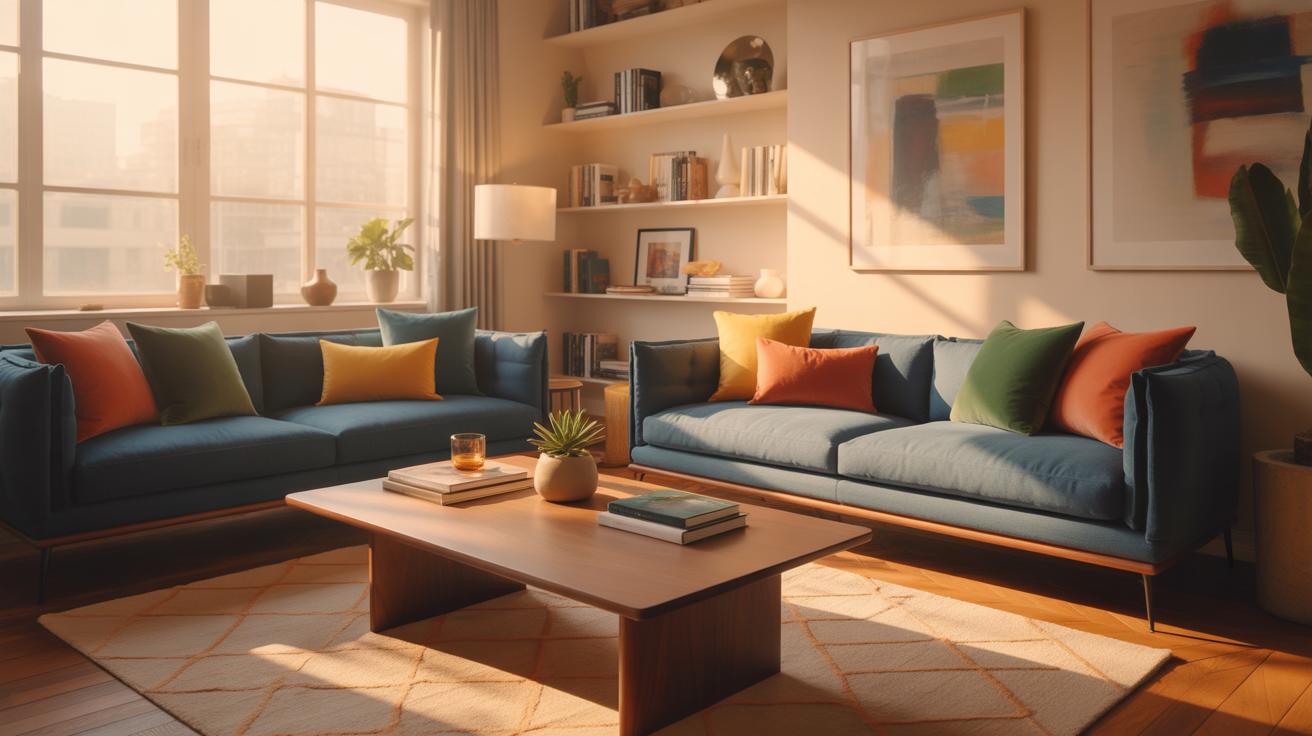
On the flip side, adding just a touch of color can really warm up the room without overwhelming it. A soft red throw pillow here, a muted green vase there, or a pale yellow rug can catch the eye and add depth. The trick is subtlety — these colors should complement, not compete.
Small accessories work well for this: consider warm-toned candles, linens, or artwork. These little hints pull the room together while keeping farmhouse calm and inviting. It makes you pause and notice—almost like a quiet conversation in the space.
Selecting Farmhouse Furniture Pieces
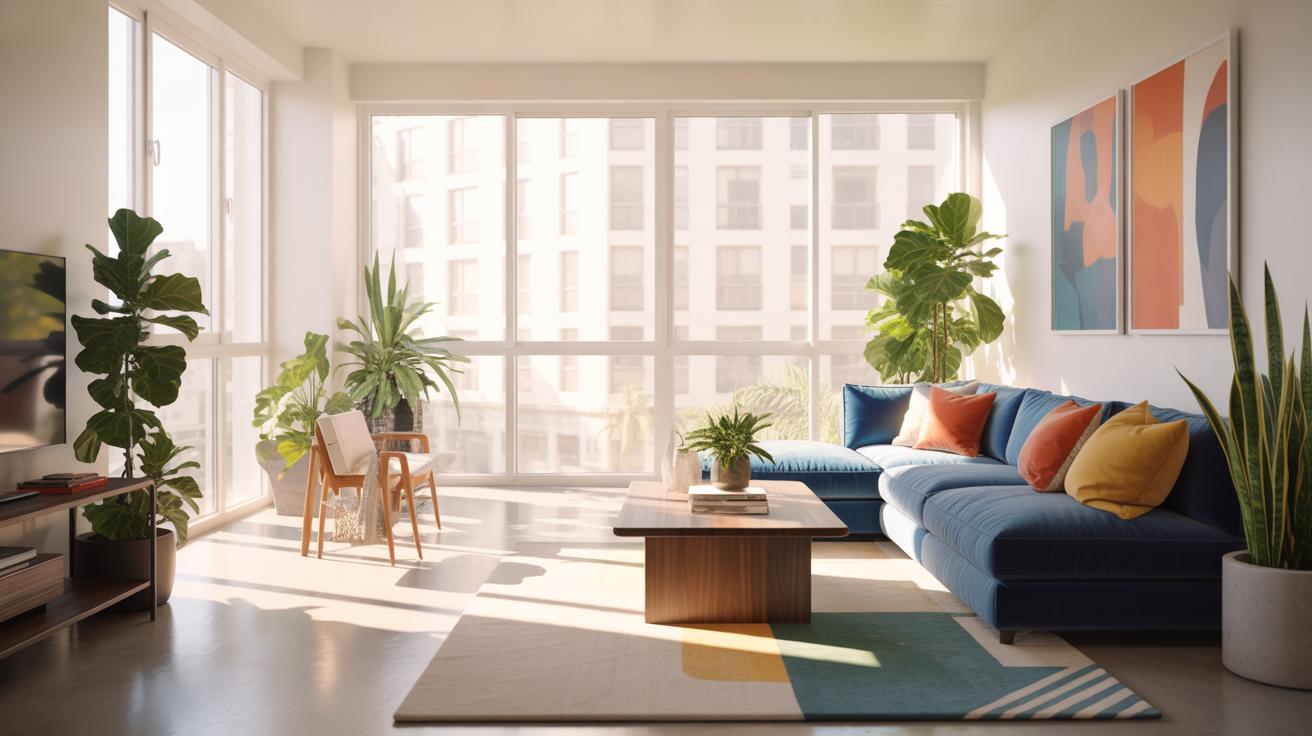
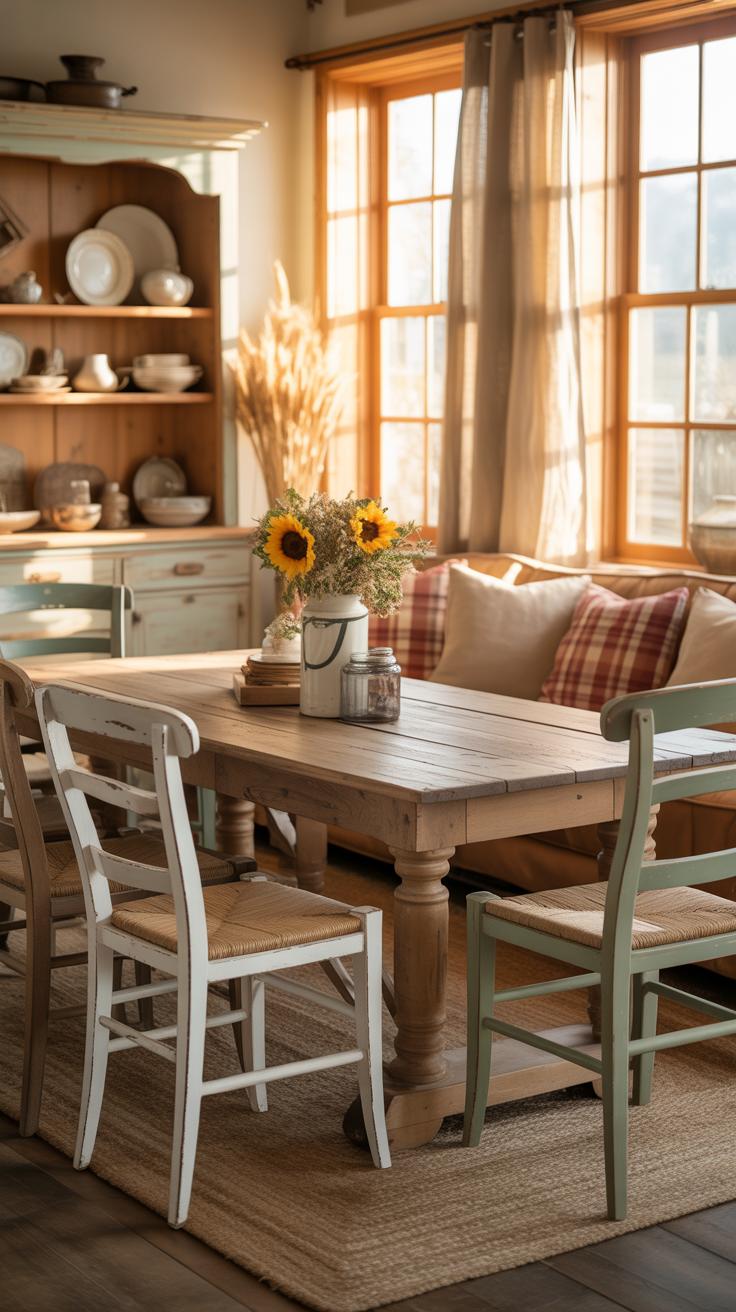
Typical Furniture Styles for Cozy Modern Farmhouse Rooms
When you think about furniture for a cozy modern farmhouse living room, simplicity is key. Furniture with clean lines and simple shapes tends to work best. Imagine sturdy wooden tables and chairs rather than overly ornate pieces. These pieces often carry a sense of function above form, which somehow adds to their charm. You might notice a blend of minimalism with rustic touches. For example, a sleek sofa with linen upholstery paired with a reclaimed wood coffee table offers a welcoming balance. Don’t overlook pieces with subtle detailing—like tapered legs or slightly distressed finishes—that keep things from feeling too stark.
Wood Choices for an Authentic Look
Wood is the backbone of farmhouse furniture, but not all woods convey the same feeling. Oak, pine, and maple are traditionally favored because of their durability and authentic rustic appeal. Perhaps you want a darker, weathered finish to invoke a sense of age and sturdiness, or maybe something lighter like whitewashed wood fits better for a softer, airier vibe. The finish has a big impact—matte and slightly rough textures tend to echo the farmhouse spirit more than glossy or polished surfaces. It’s about bringing a touch of the outdoors inside, yet not in a rough or unrefined way.
Mixing Old and New Furniture
Balancing vintage or rustic pieces alongside modern furniture can be tricky but rewarding. There’s something satisfying about pairing a timeworn wooden chest with a streamlined, contemporary armchair. This contrast keeps the room from feeling too one-note or predictable. One approach is to start with a neutral modern base—like a geometric sofa—and add character with older elements such as a distressed side table or an antique mirror. Don’t be afraid if it looks a little imperfect; these subtle clashes can make the space feel personalized and lived in. Though, I often wonder—what’s the right ratio? Maybe it depends on how much history you want your room to tell.
How To Use Lighting Effectively
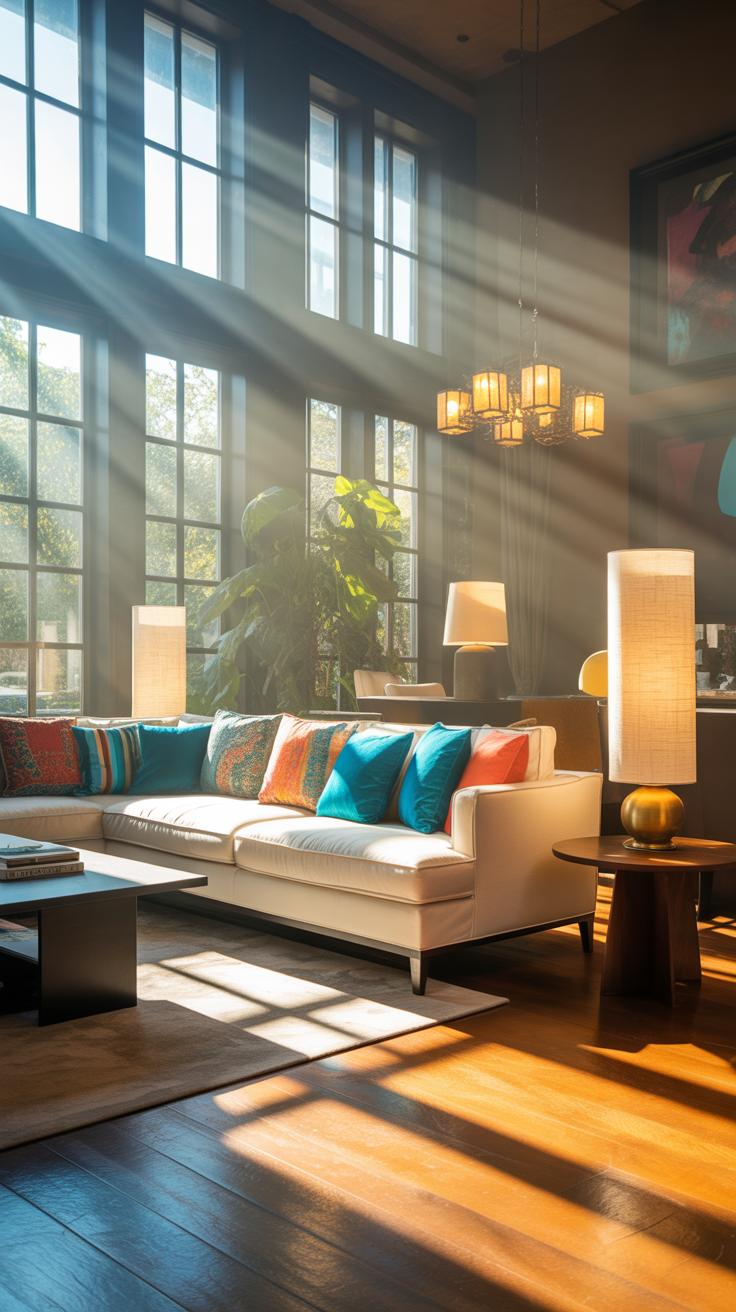
Lighting plays a crucial role in shaping the cozy vibe of a modern farmhouse living room. You might have noticed how natural light can immediately lift a space—it feels warmer, more inviting. To bring in more sunlight, consider options like enlarging windows or installing skylights, if that’s feasible. Even regularly cleaning windows and keeping window treatments minimal helps—a little effort goes a long way.
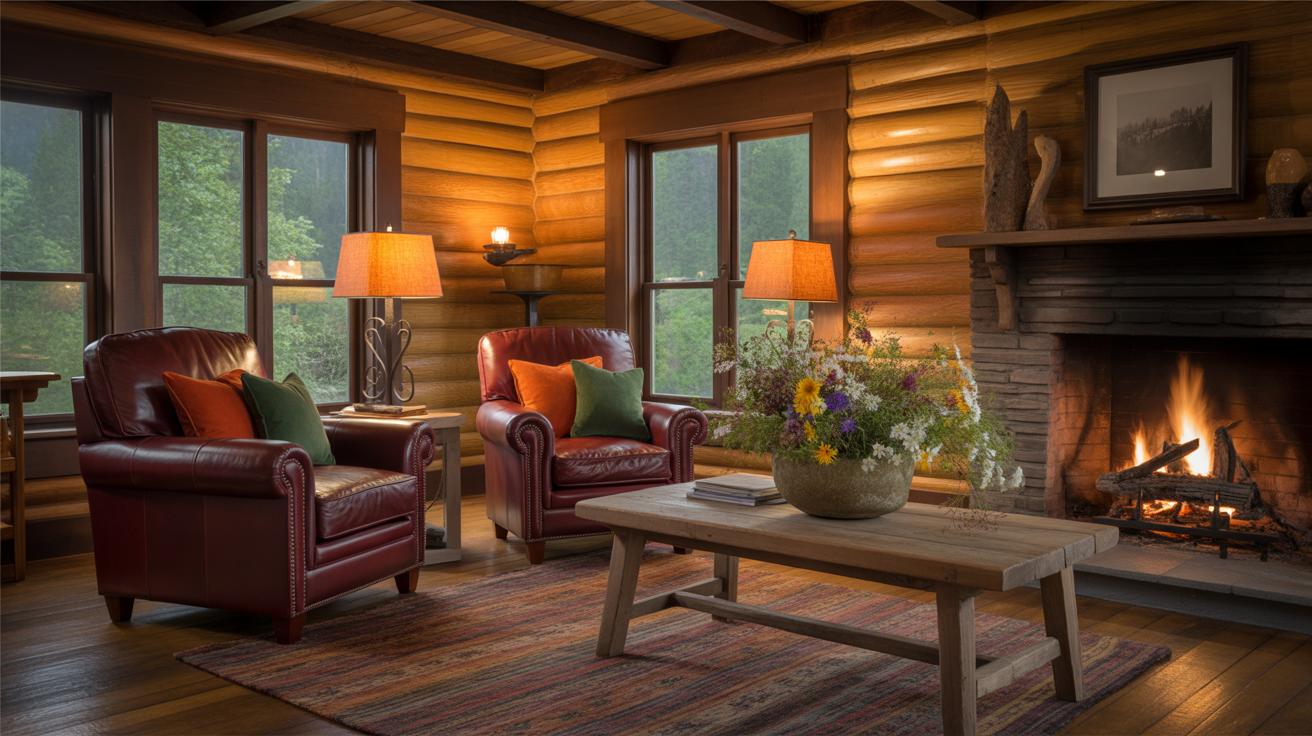
When it comes to fixtures, choosing warm light sources makes a noticeable difference. Lamps with soft, yellowish bulbs or lantern-style lights add that gentle glow reminiscent of rustic farmhouses. Candles, too, can be a subtle but powerful touch, especially in the evening. They create flickering, calming illumination that feels timeless and soothing.
Rustic fixtures with aged metals or distressed wood finishes naturally mesh with farmhouse style, but what I personally find intriguing is mixing them with modern shapes—sometimes the contrast feels unexpected yet comforting. Don’t shy away from playing with layers of light: overhead lamps, table lamps, and accent lighting all work together to create that nuanced, cozy atmosphere.
Have you experimented with your lighting setup? Sometimes adjusting just one element can transform the whole feel of your living room.
Decorating With Natural Materials
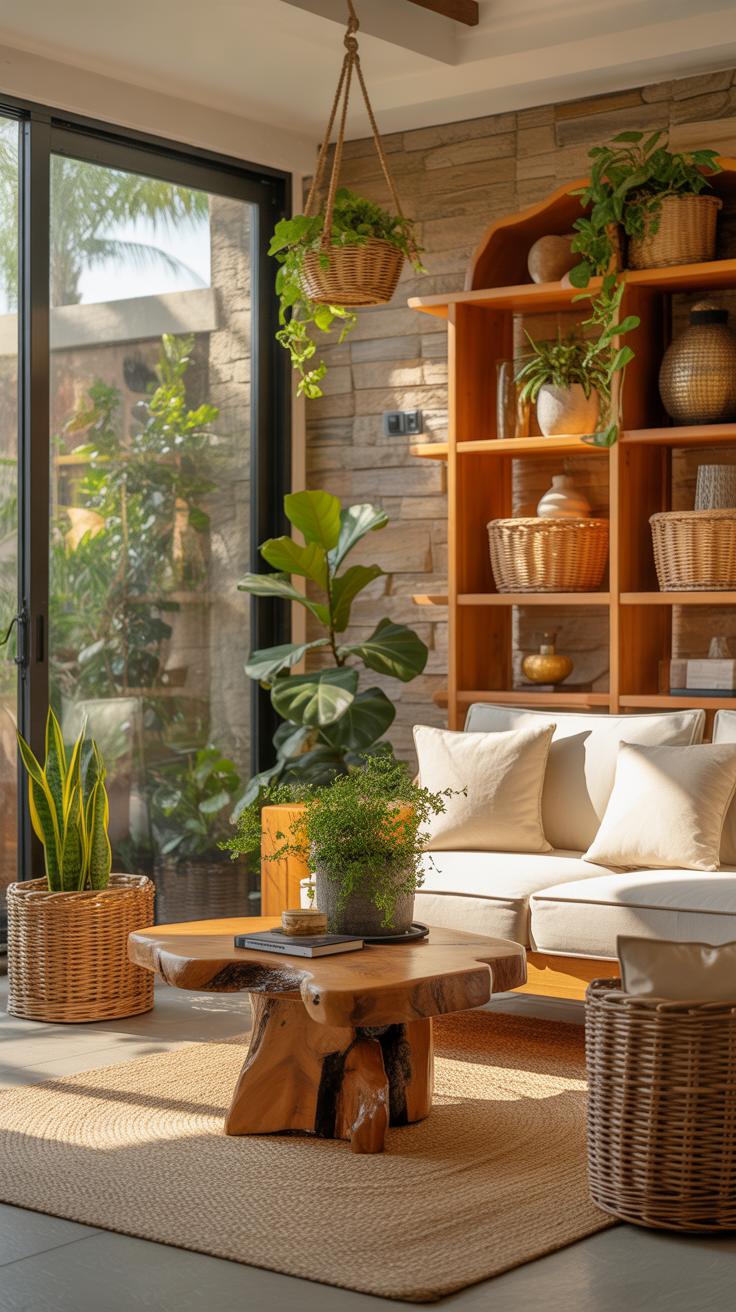
Using natural materials in your modern farmhouse living room instantly brings a sense of calm and simplicity. When you pick wood, linen, cotton, and other fibers, you’re not just adding texture — you’re also grounding the space in authenticity. I’ve found that these materials work best when arranged thoughtfully, not shoved in corners. For instance, a linen-covered armchair paired with a cotton throw laid casually over it invites you to sink in and relax.
Consider mixing materials, like a wooden coffee table sitting on a woven cotton rug. These contrasts don’t clutter; they lend character. And the arrangement — think about how your eye moves across the room. Natural materials feel best when they flow naturally, rather than being too symmetrical or staged.
Wood Accessories And Wall Art
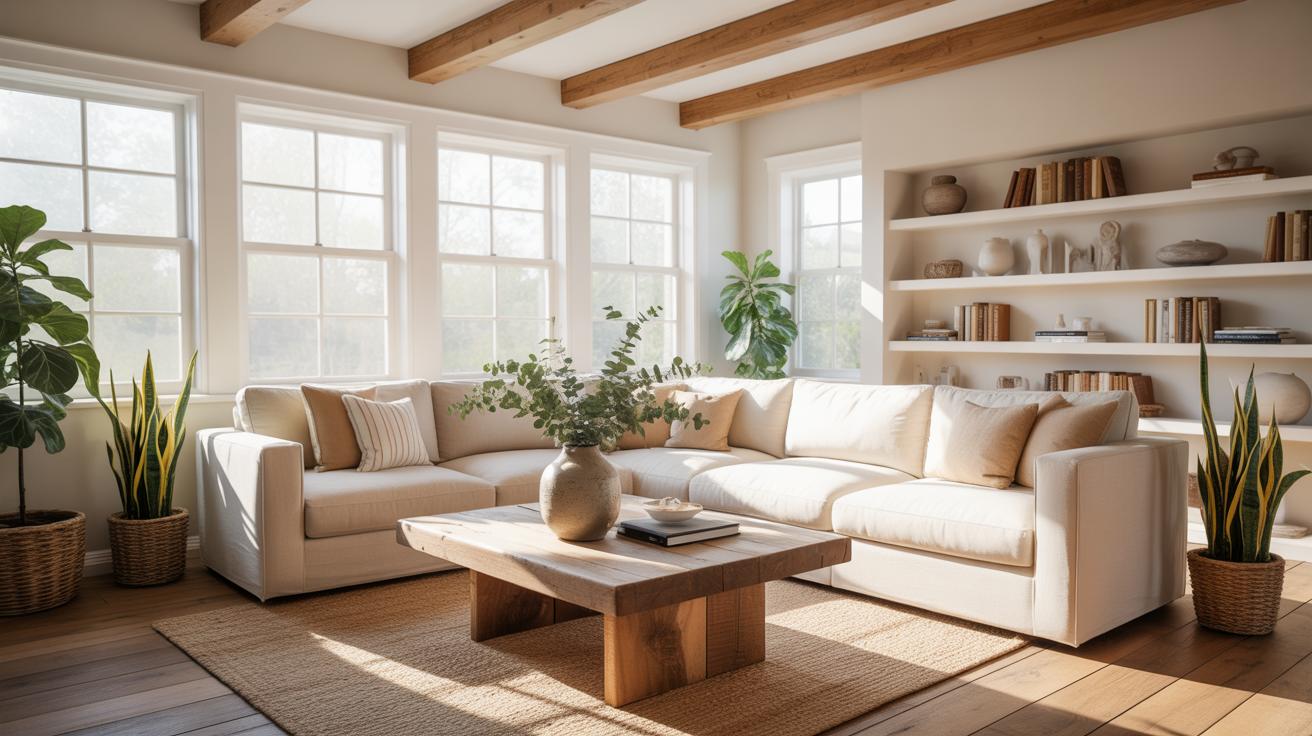
Wood has this quiet way of making rooms feel warm without shouting for attention. Wooden frames around family photos or rustic wall shelves can add that farmhouse charm you’re after. I often like to lean a large wooden art piece against the wall instead of hanging it – it’s a bit unexpected and more relaxed.
Don’t overlook smaller details, like wooden candle holders or a bowl on a side table. These simple additions accumulate to build a cozy warmth. And when it comes to wall art, choosing pieces with natural themes or wood carvings helps maintain that farmhouse vibe effortlessly.
Textiles That Add Texture
Cushions, throws, and rugs made from natural fibers are absolute musts in cozy farmhouse living rooms. They don’t just provide softness—they add layers of texture that make a room feel lived-in and inviting. A chunky cotton throw casually tossed over a sofa can transform the mood instantly.
Rugs can anchor the space and add warmth underfoot, especially if they have a woven or braided texture. A mix of cushions in linen and cotton with varying patterns or weaves prevents the look from feeling flat. Just remember not to overstuff; a few carefully chosen pieces go a long way in creating that soft, touchable atmosphere.
Playing With Farmhouse Patterns
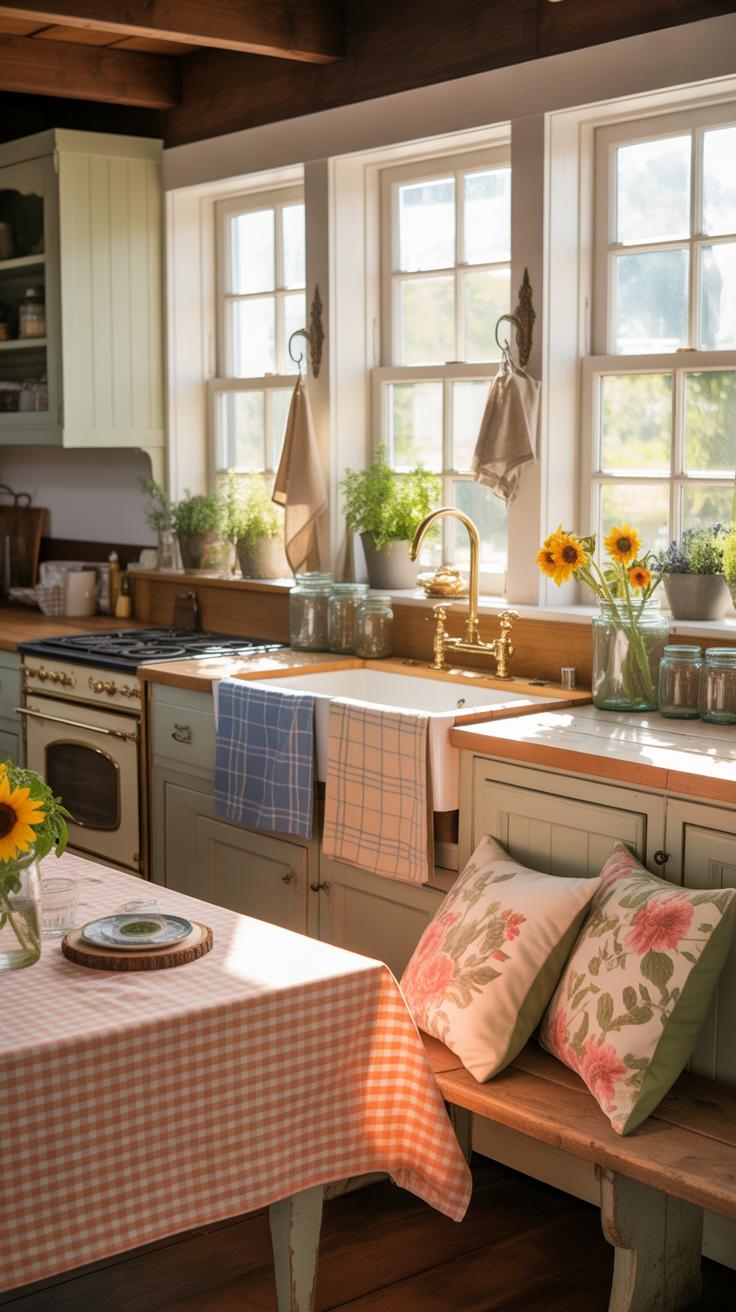
Patterns like gingham, plaid, and stripes have a strong presence in farmhouse decor. Each offers distinct textures and visual interest. Gingham, often seen as checks in bright and white colors, brings a charming simplicity to the room. It’s classic but doesn’t shout for attention, which suits a cozy farmhouse vibe well. Plaid, with its crisscrossed lines and varying color blocks, adds a bit more weight and historical feel.
When mixing these patterns, variety in scale is key. For example, a large plaid on a throw blanket works well against smaller gingham checks in cushions. Stripes, particularly subtle ones, offer a neat, linear contrast to the busier checks and plaids. You don’t want every pattern to compete; balance a bold pattern with something more muted to avoid chaos.
Using Plaid Correctly
It’s tempting to drape your sofa in a plaid fabric right away, but too much can make the room feel cluttered or, dare I say, dated. Instead, think of plaid as an accent rather than the main act. A plaid pillow here, a small plaid throw there. I once saw a farmhouse living room where plaid was on a single armchair. It anchored the space nicely without overwhelming it. Keep colors within the room’s palette to prevent plaid from stealing the spotlight.
Subtle Stripes And Checks
If bold patterns aren’t your thing, subtle stripes or tiny checks offer understated charm. Picture curtains with fine, narrow stripes that catch the light just so, or toss cushions bearing a delicate check pattern. These details complement a simple room without stirring too much visual noise. It’s a way to introduce farmhouse personality but keep the calm ambiance intact. Sometimes less does indeed feel more, especially when something subtle can whisper the style quietly.
Farmhouse Vs Modern Minimalism
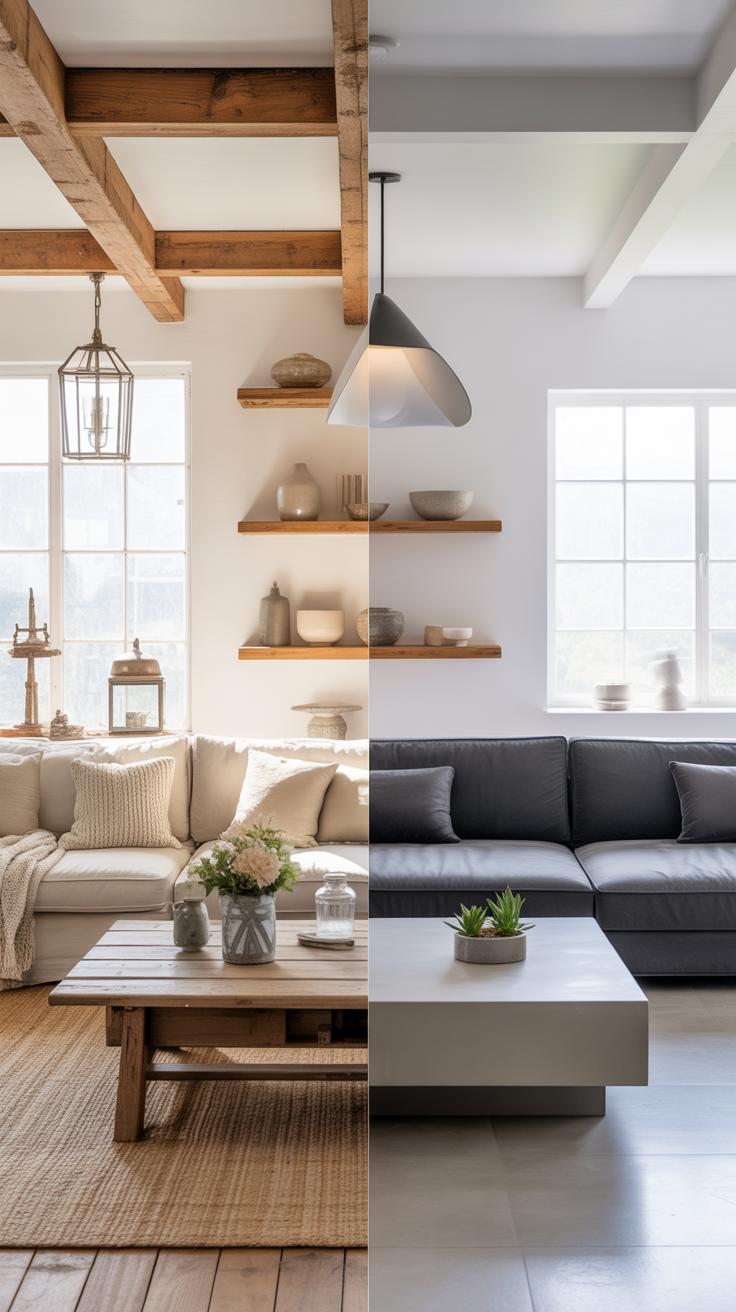
Where Farmhouse Adds Warmth
Farmhouse décor really emphasizes warmth and comfort. You’ll notice plenty of natural wood, soft textiles, and vintage or rustic accents—the kind that almost invite you to sink in and stay a while. These elements create a sense of coziness that can feel quite grounding. It’s a style that plays with texture and personality, rather than sleekness.
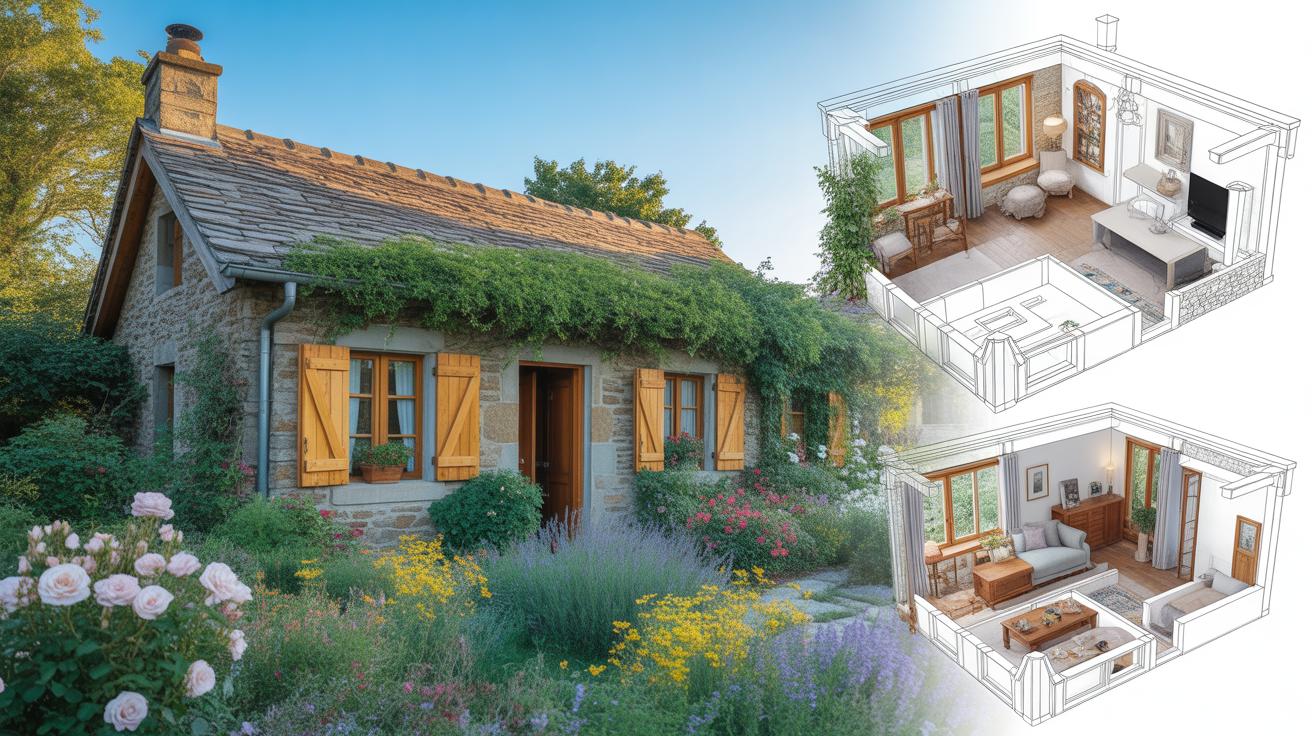
Compared to minimalism’s focus on clean lines and bare surfaces, farmhouse style doesn’t shy away from layering. Think plush rugs, textured pillows, and weathered furniture. These details add character and a lived-in quality, which minimalism tends to minimize, or even avoid.
Keeping It Simple With Minimalism
Minimalism takes a different approach—it’s about stripping down to essentials, so clutter stays out of sight. It helps rooms feel more spacious and peaceful because everything has a place or isn’t there at all. This doesn’t mean it has to be cold or uninviting though. When paired with farmhouse touches, minimalism’s open, uncluttered spaces allow those warm accents to shine more.
For example, a clean-lined sofa with soft, farmhouse-style cushions can blend these styles well. Minimalism offers a sort of calming backdrop, which is useful if you like the farmhouse look but worry it might get too busy. So, simplicity in form meets warmth in materials and finishes.
Balancing these two can be tricky and maybe a bit personal. Some people may prefer more vintage charm, others more sleek surfaces. The real question might be how much warmth you want in your space without losing the calmness that minimalism promises. It’s not always clear-cut, and sometimes a bit of trial and error helps.
Step By Step Farmhouse Setup Checklist
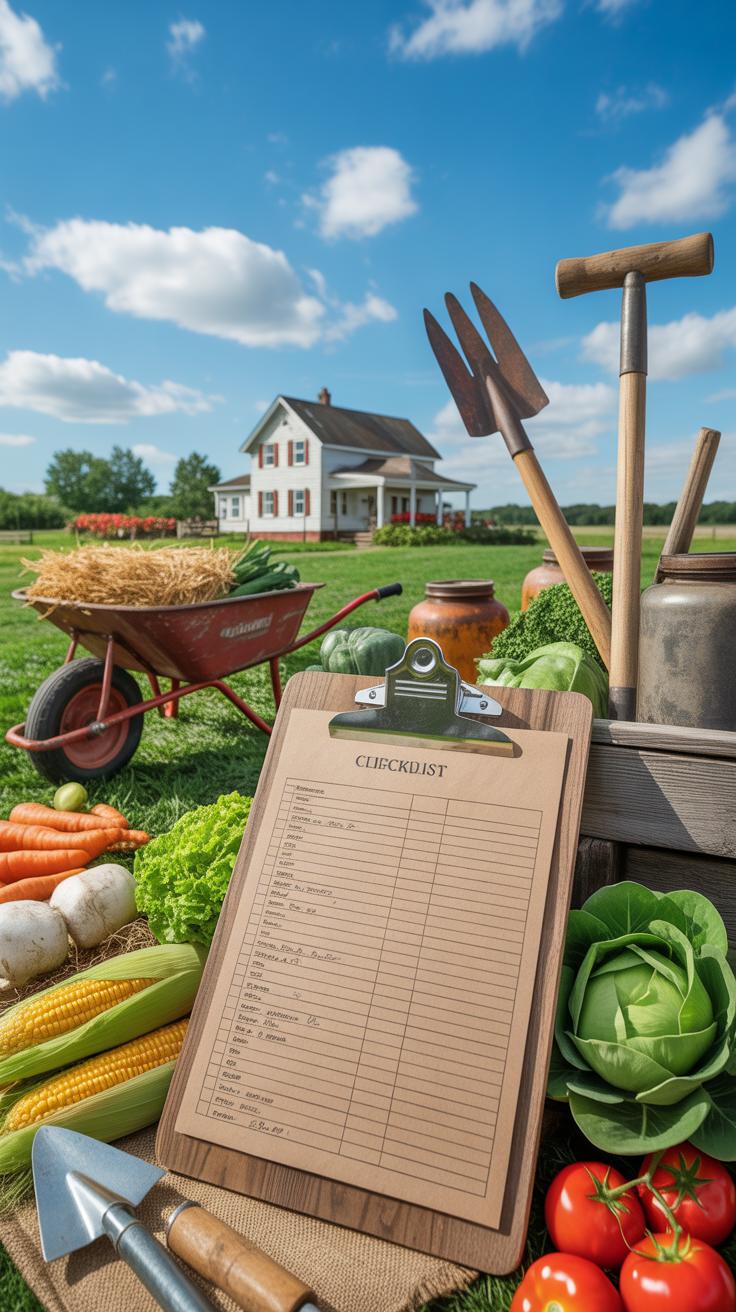
Setting up a cozy modern farmhouse living room takes a bit more than just placing a couch and calling it a day. To start, pick a warm, neutral color palette—think soft creams, muted grays, and gentle beiges. These colors create the perfect backdrop for farmhouse charm.
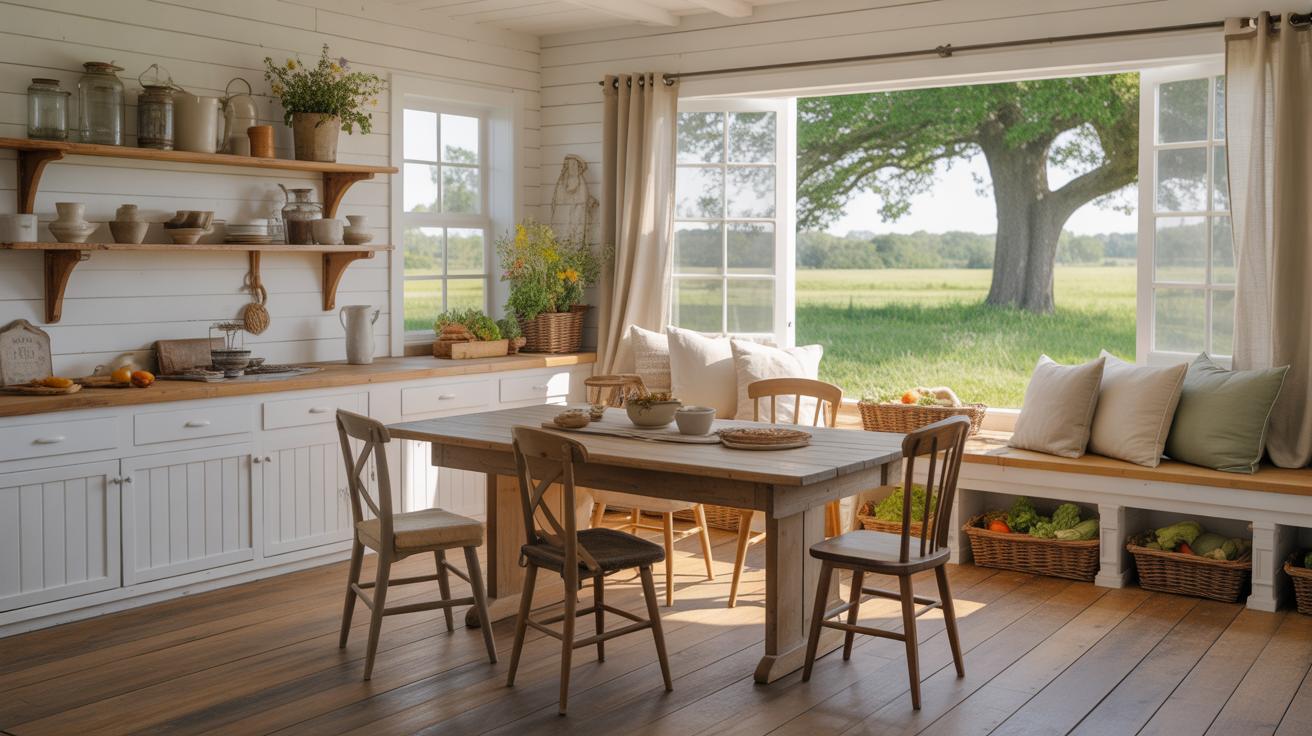
Next, select your furniture carefully. Look for pieces that feel both lived-in and fresh—maybe a sturdy wooden coffee table paired with a comfy slipcovered sofa. Don’t rush here; comfort is key.
Arrange your furniture with intention. Balance is good, but don’t get obsessed with symmetry. Let your living room feel natural and inviting. Rugs are helpful, especially textured ones that add warmth underfoot.
Lighting needs thought too. Mix lamps with overhead lights. Go for soft, warm bulbs instead of harsh whites; it changes everything in how cozy the room feels.
Planning Your Space
Before buying anything, take your measuring tape and sketch out your living room dimensions. Visualizing the space prevents you from overbuying or ending up with awkward layouts. It can be frustrating to find the perfect armchair only to discover it won’t fit!
Try to imagine how people will move around. Leave enough room to walk comfortably and consider focal points like a fireplace or a large window. Visualizing the flow helps avoid cluttered or cramped spaces.
Adding Final Touches
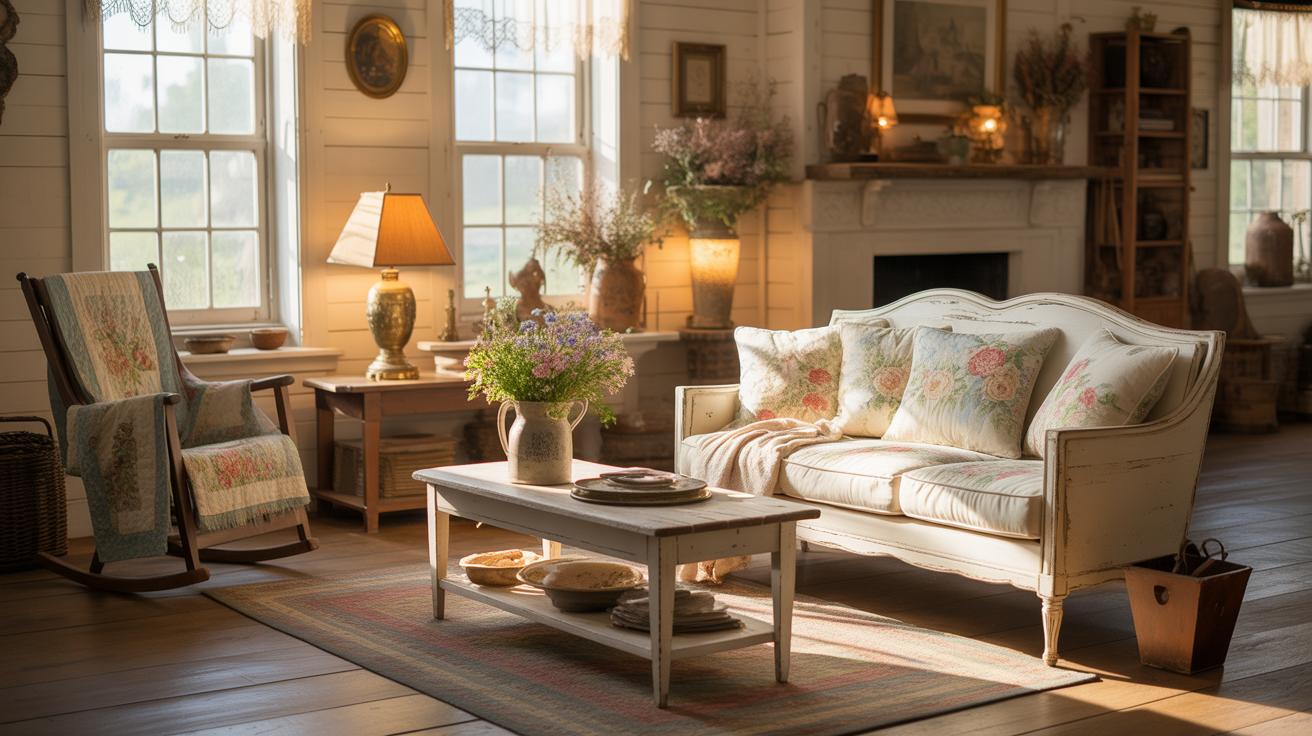
Now, it’s time to bring the room to life. Start by gently arranging your decor—family photos, vintage finds, or handmade crafts add personality without overwhelming the space.
Don’t forget plants. They not only improve air quality but add a bit of softness and color. A tall fiddle leaf fig or some hanging ivy can make a room feel alive.
Last but not least, double-check your lighting again in the evening hours to make sure the ambiance is just right. You might realize you need an extra lamp or a brighter bulb after all.
Setting up your farmhouse living room isn’t a race. Take your time, let things settle, and you’ll find the perfect mix of comfort and style.
Farmhouse Living Room Cost Breakdown
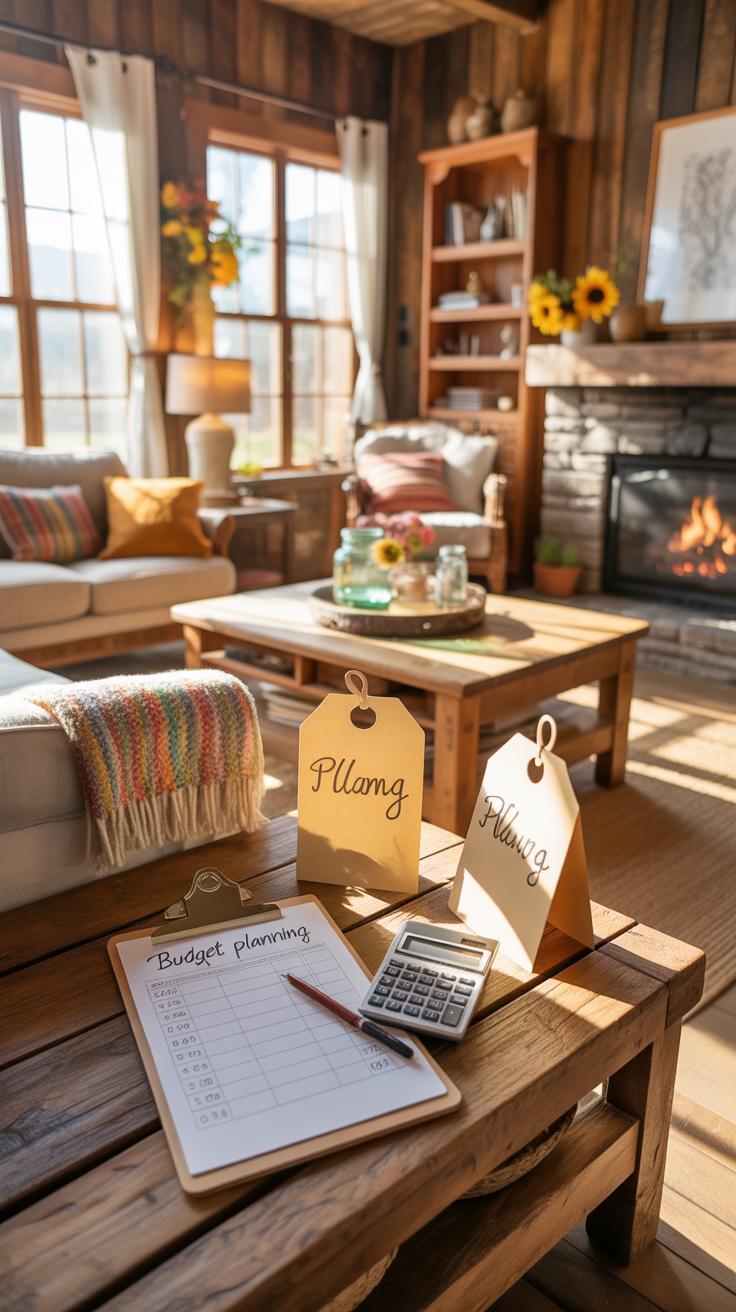
Creating a cozy modern farmhouse living room can span a range of budgets, so it’s helpful to understand where costs typically land. On a shoestring, you might spend between $500 to $1,500, focusing on essentials and DIY touches. At the higher end, premium designs can reach upwards of $5,000 or more, especially when investing in handcrafted or designer items.
Budget Friendly Options
If you’re aiming for affordability, thrift shops and online marketplaces often hold farmhouse-style treasures. Look for distressed wood furniture or simple slipcovered sofas—functional, rustic, and gentle on the wallet. Decorating with neutral fabrics, vintage-inspired prints, and DIY wood accents keeps the vibe authentic without being costly. Don’t overlook open shelves or reclaimed wood crates as budget-friendly storage and display solutions.
Where To Spend More
While savings are appealing, some items deserve a bit more investment. A sturdy sofa is key—not just for comfort but for longevity. Quality lighting fixtures, like black metal or farmhouse chandeliers, can elevate the space and last decades. Authentic wood coffee tables or vintage rugs also repay splurges with warmth and character. It’s tempting to skimp everywhere, but these durable items anchor the room and make a genuine statement.
Ultimately, the balance between cost and comfort is personal. What feels like an essential upgrade to one might seem unnecessary to another. How do you decide which pieces truly matter in your farmhouse living room journey?
Common Mistakes In Farmhouse Decorating
Overcrowding The Space
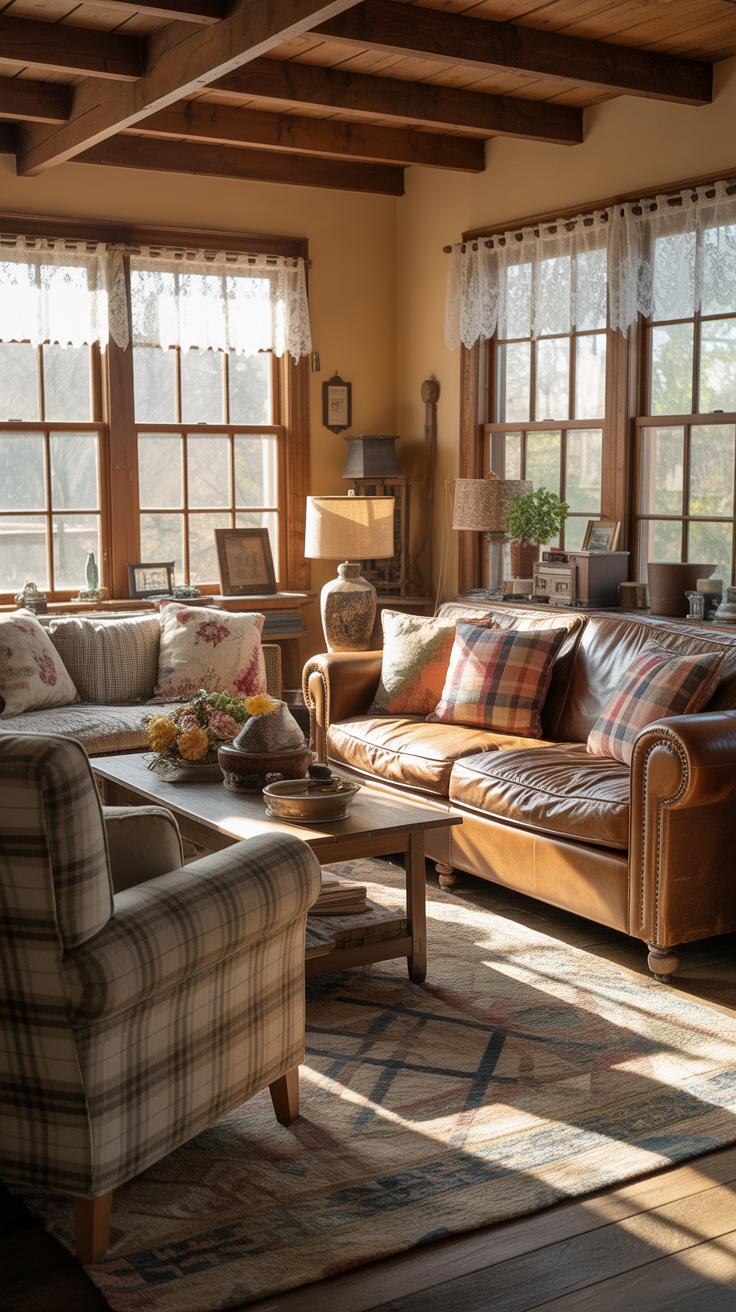
When decorating a modern farmhouse living room, it’s easy to fall into the trap of adding too much furniture or decor. The farmhouse style thrives on simplicity and warmth, so overcrowding the room can actually work against the cozy feeling you’re aiming for. Imagine a room where you can’t comfortably move around because there’s just too much stuff. It tends to feel cramped and chaotic, which defeats the purpose of a farmhouse’s calming charm. Think about choosing pieces deliberately—each item should have a purpose or a story. You might want to keep some negative space to let the room breathe. It’s tempting to fill every corner, but less is often more.
Ignoring Scale And Proportion
Scale and proportion can be a subtle problem, often overlooked until the room just doesn’t feel right. Furniture that’s too large can overwhelm the space, while tiny pieces may seem lost. Both extremes disrupt comfort and flow. You want a balance where seating invites you in but doesn’t ground the whole room too heavily. Pay attention to the relationship between the size of your furniture and the dimensions of the room. Spacing matters, too—a crowded sofa can block pathways, and uneven distances between items create a sense of disorder. Remember, comfort is key in farmhouse design. Ask yourself: Does the room allow for easy movement? Does it feel welcoming or cramped? Getting this right can take some trial and error, but it really makes a difference.
Real Life Cozy Farmhouse Examples
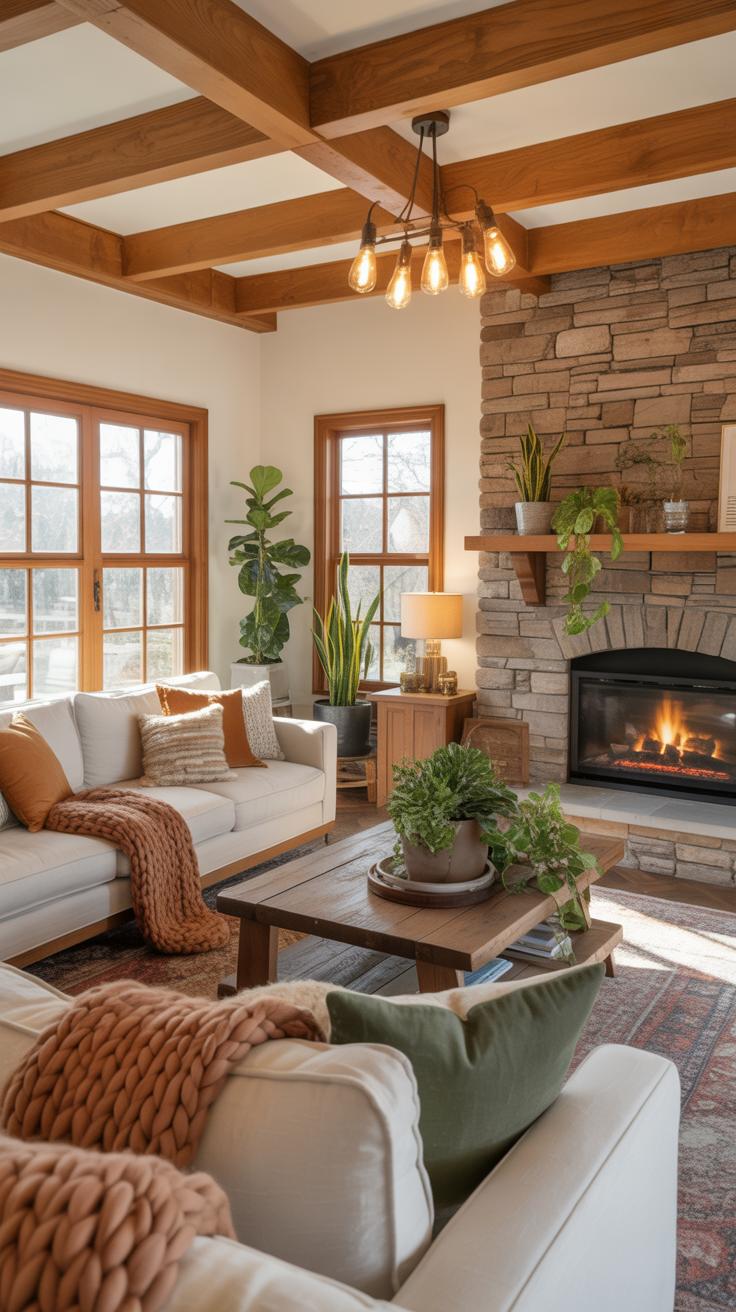
You might find it helpful to see actual living rooms that bring the modern farmhouse style to life. Take this small living room, for instance; it was tricky to work with tight quarters yet still feels warm and inviting. They leaned on neutral tones, layered textures, and a carefully chosen mix of rustic and sleek furniture. A classic barn-style sliding door, a reclaimed wood coffee table, and soft throw blankets create a sort of laid-back comfort that’s hard to ignore. The room’s simplicity really helps open up the space, while still wrapping you in that farmhouse feel.
On the other hand, large open living rooms have used wide plank wood floors, exposed beams, and overstuffed sofas to foster coziness without crowding the area. They cleverly offset the scale with plenty of natural woven materials — jute rugs, wicker baskets, linen curtains — that keep the room feeling grounded and approachable. Even with expanses of glass letting in light, these touches prevent the space from becoming too stark. It’s an interesting balance, one that makes you wonder if bigger necessarily means less cozy.
Have you ever thought about how important the scale of your furniture is in creating a cozy vibe? One home used a massive leather sectional—not usually what you’d expect in farmhouse decor—but with the right placement, it felt welcoming instead of overwhelming. Sometimes, mixing the unexpected with the traditional just works.
Conclusions
By focusing on warmth and simplicity, you can easily create a cozy modern farmhouse living room. Using natural materials and neutral tones builds comfort without clutter. Thoughtful decor choices help tie modern design with farmhouse charm.
Start small, like adding a wooden coffee table or vintage accents. Layer soft textiles and maximize natural light to enhance the feel. With these tips, your living room can transform into a welcoming farmhouse style space.