
Introduction
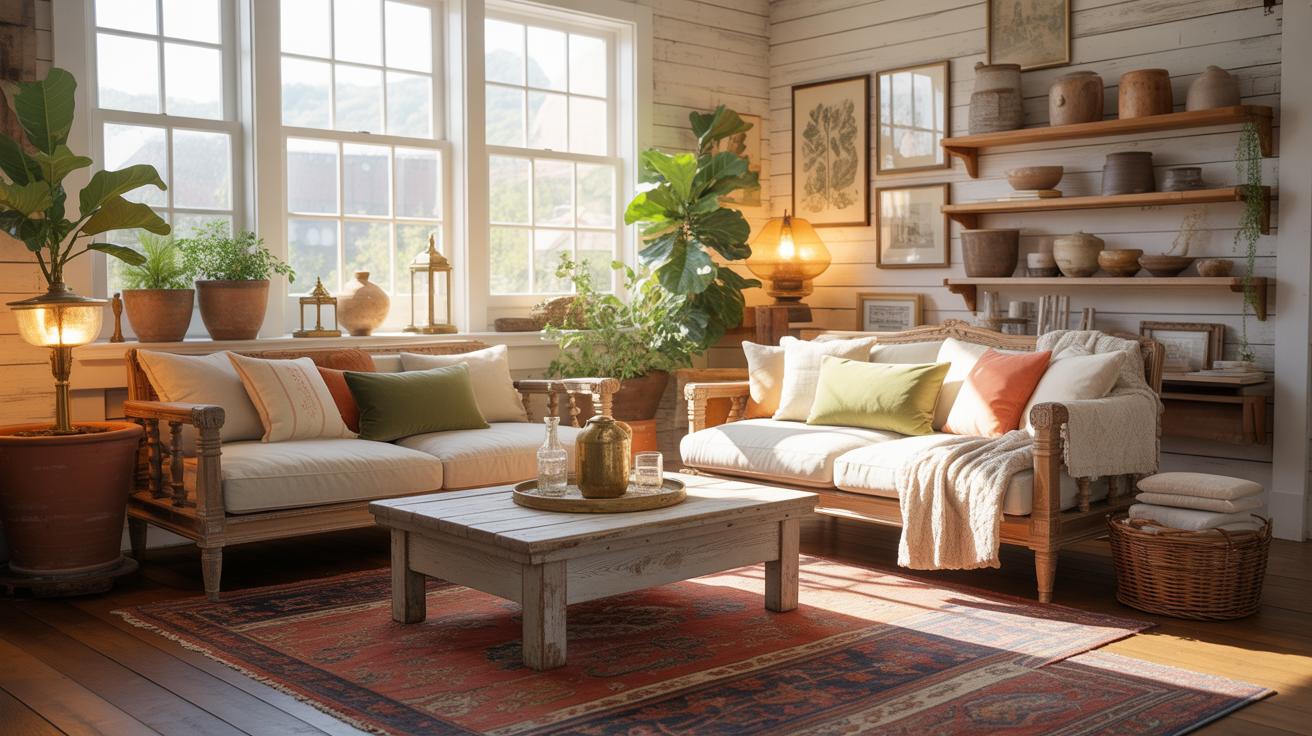
Cozy Farmhouse Style Living Room Decoration Design Ideas focus on bringing warmth, charm, and simplicity into the heart of your home. This style draws from rural influences, offering comfortable living spaces that mix rustic and modern elements. It is a popular choice for creating inviting rooms where families and friends enjoy spending time.
This article shares practical tips and design ideas to help you create a farmhouse living room that feels cozy and stylish. You’ll learn about essential features, furniture options, accessories, and color schemes that fit the farmhouse style. Whether you want a small change or a full room makeover, these ideas will guide your decorating process.
Farmhouse Living Room Essentials
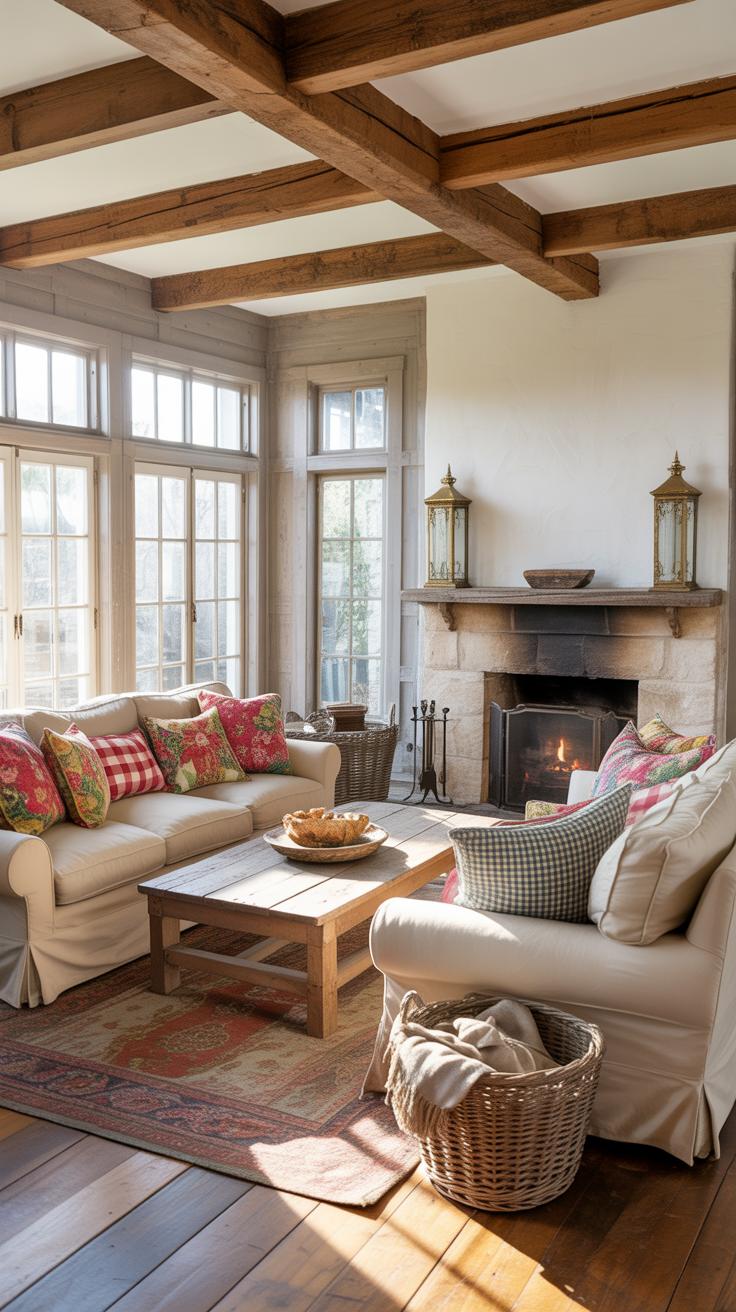
The essence of a farmhouse style living room lies in its simplicity and connection to the past. Architectural elements like exposed wooden beams draw the eye upward, reminding you of the building’s agrarian roots. These beams aren’t just decorative—they often speak to the original structural integrity of the home. The floors tend to be wide plank wood, sometimes a little worn from years of use, adding character you can almost feel underfoot.
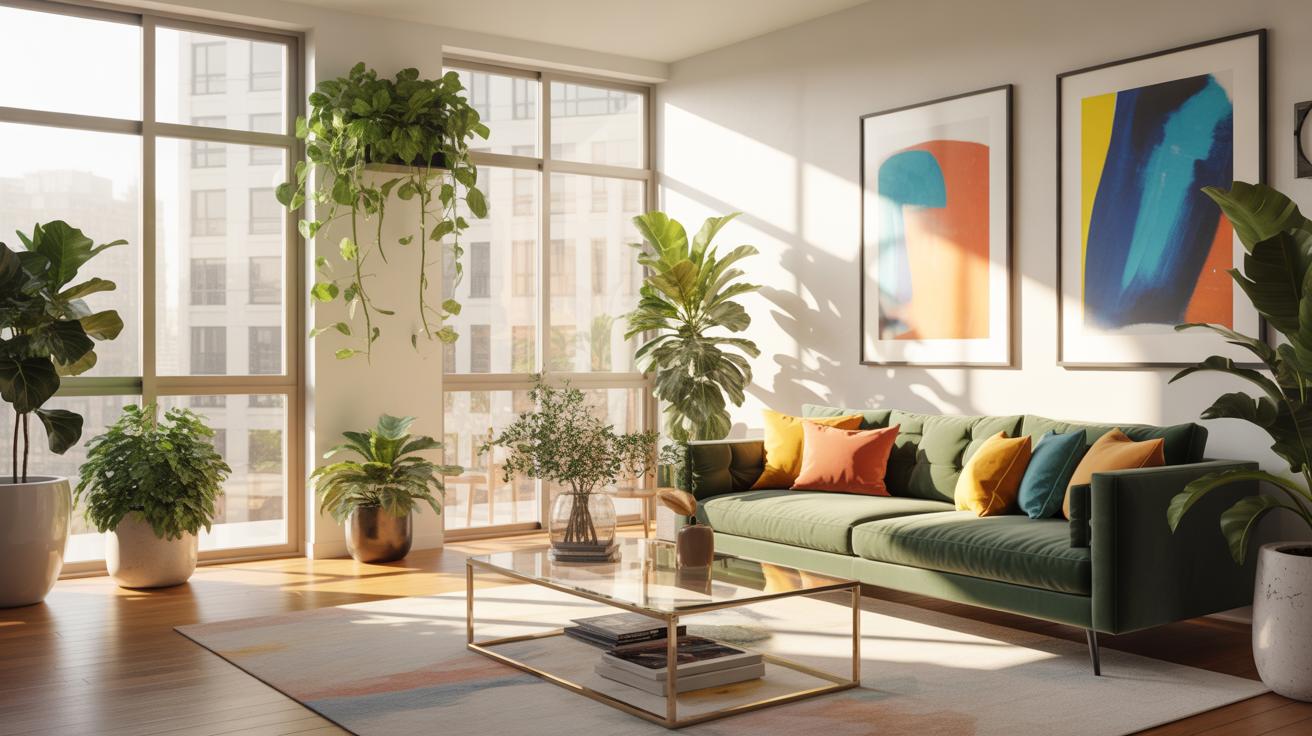
Materials play a huge role. Natural wood is everywhere, often paired with stone or brick, especially around fireplaces or accent walls. These tactile materials lend an honesty and groundedness that synthetic materials struggle to mimic. It’s about creating a space that feels open but grounded, bright but cozy. A farmhouse living room isn’t pristine; it welcomes the imperfections of natural life.
There’s a certain relaxed atmosphere too. It’s not about formality or perfect lines. Instead, comfort takes center stage—a space that invites long conversations, quiet moments, and the occasional clatter of everyday life. You might sense an understated warmth, a feeling you get when you know this room’s seen real stories unfold. In essence, farmhouse living rooms blend functional simplicity with a welcoming vibe, making it unique without feeling overly styled.
Key Features Of Farmhouse Style Living Rooms
Some features are almost signature to farmhouse living rooms:
- Exposed Beams: These ceiling details not only support the structure but act as visual anchors.
- Wood Floors: Often wide and with a natural finish, sometimes distressed or rustic.
- Natural Light: Large windows or multiple windows bring in plenty of daylight, softening the space.
- Fireplaces: A classic element, usually made of stone or brick and centered as a gathering point.
- Open Floor Plans: Spaces flow into each other; no closed-off rooms, just a natural interaction.
These elements combine to create a space that feels timeless yet lived in—a balance not every style manages to hit. You might notice how the walls often feature simple paints or even shiplap, avoiding anything flashy to keep attention on the room’s structure itself.
Common Furniture Choices In Farmhouse Living Rooms
The furniture in farmhouse living rooms echoes the style’s practicality and charm:
- Oversized Sofas and Armchairs: Choose pieces that invite you to sink in and relax, often upholstered in natural linens or cotton.
- Wooden Coffee Tables: Usually solid, sometimes reclaimed wood, with simple, sturdy construction.
- Open Shelving or Cabinets: These store everyday essentials while displaying rustic decor, pottery, or books.
- Storage Benches or Ottoman: Dual-purpose pieces that add utility without fuss.
- Vintage or Antique Accents: Maybe a well-worn trunk or a distressed ladder used for blankets adds a personal touch.
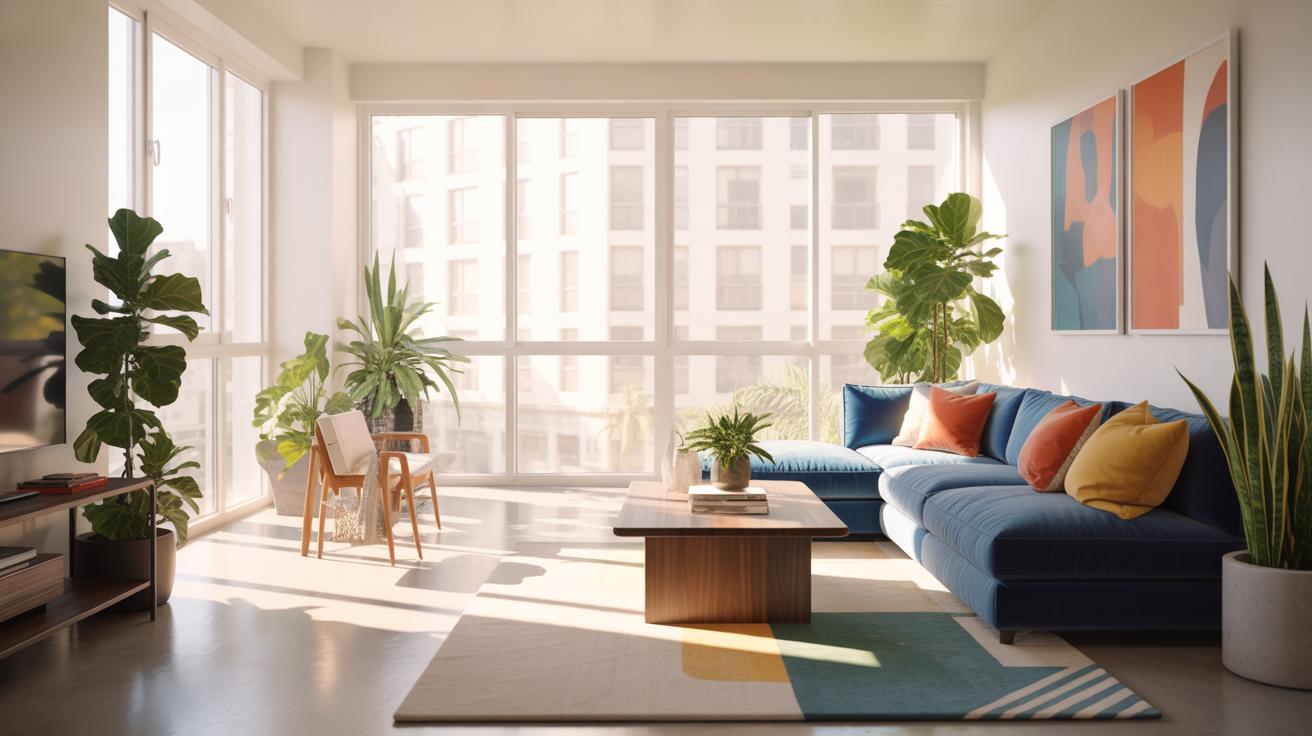
The focus is function first—and there’s a warm authenticity that results. In such rooms, each object feels useful, not just decorative. It’s a house that wants to be lived in. Perhaps that’s why farmhouse style often appeals; it doesn’t ask for perfection, just honesty and a bit of shelter from the outside bustle.
Choosing Colors For Farmhouse Style
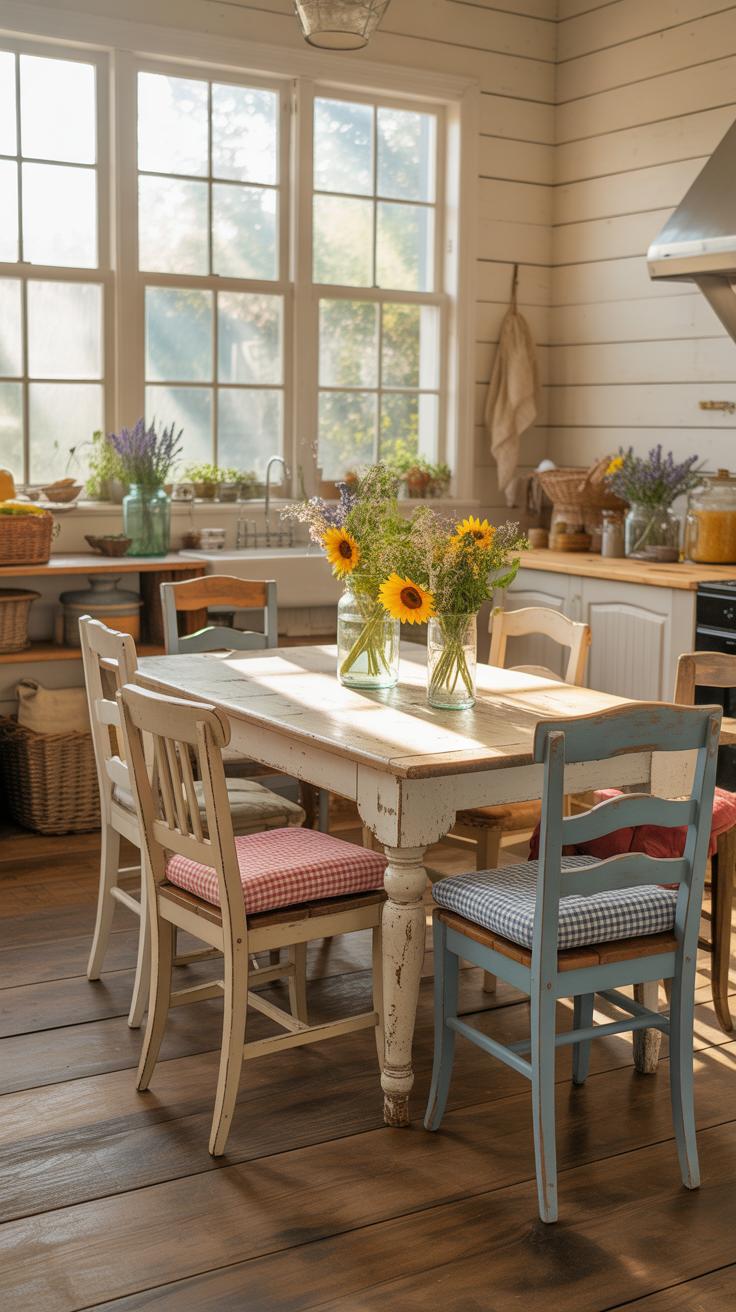
When picking colors for your farmhouse living room, I find there’s something quite grounding about starting with neutral shades. Think whites, beiges, and soft grays—the kind that don’t scream for attention but instead offer a gentle, calming canvas. These neutrals feel versatile, almost like an invitation to layer textures and accents on top without clashing. You can almost imagine the space breathing more freely with these tones as a backdrop.
But neutral doesn’t have to mean boring. Far from it. Pop in some accent colors, and suddenly the room gains a more personal touch, subtle yet noticeable. Soft blues and gentle greens often come to mind—they echo nature, perhaps the sky or fields you might see outside a farmhouse window. Warm reds, too, are tricky but effective if used sparingly, bringing in a cozy, lived-in feeling without overpowering the room’s lightness.
- Neutrals create a quiet base that feels broad and welcoming.
- Accent colors add interest and character but need to be balanced.
- Choosing shades inspired by nature can enhance farmhouse authenticity.
Honestly, sometimes I wonder if the best part about farmhouse palette choices is how forgiving they are. You can tweak tones, experiment with unusual accents, and still come away with something that feels like it belongs. Your living room can be calm but not dull, warm but not overwhelming. It might just depend on how you mix the quiet and the pops of color.
How To Pick Farmhouse Living Room Furniture
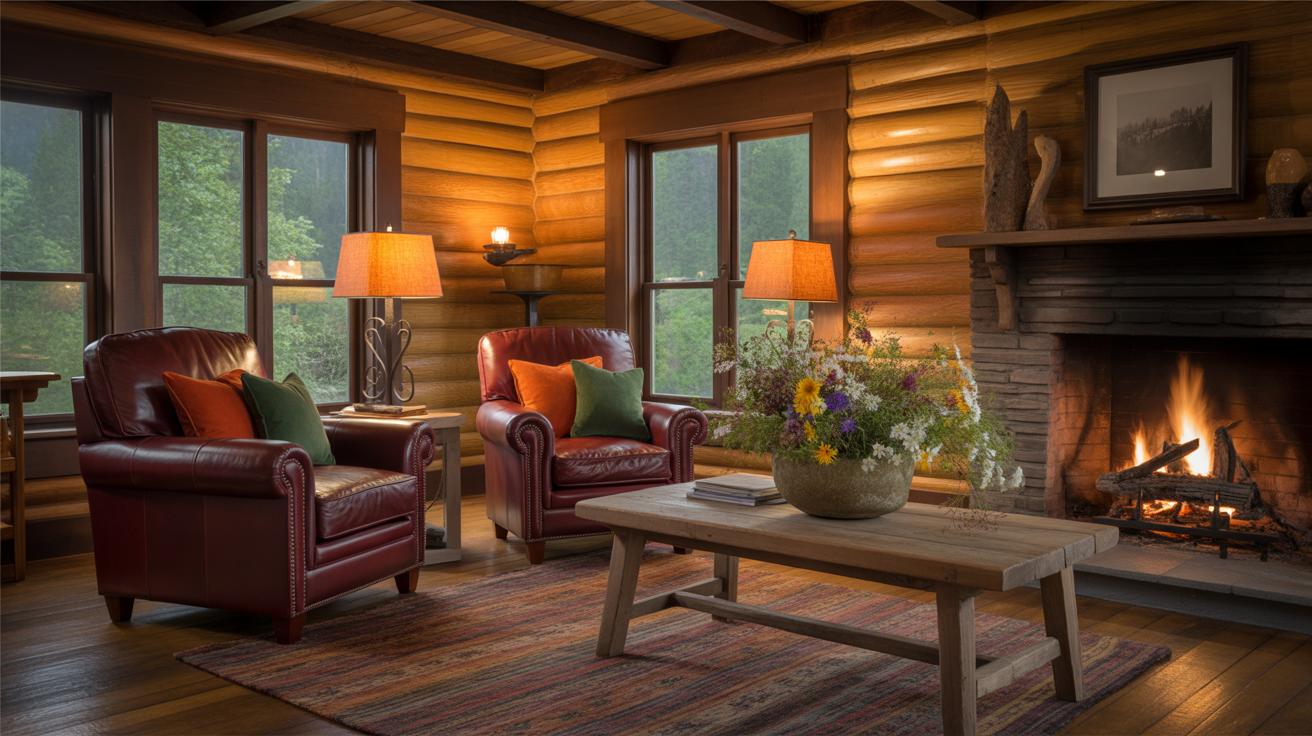
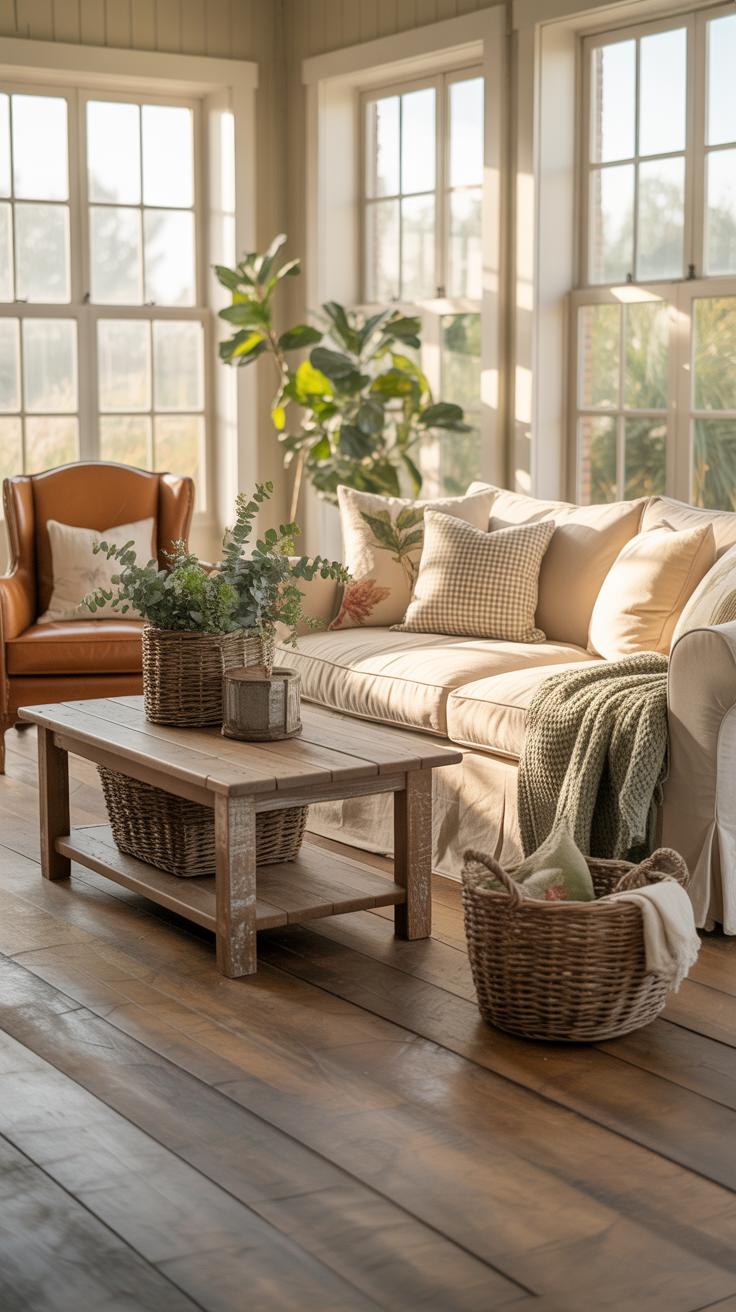
Choosing furniture for a farmhouse living room is less about following strict rules and more about finding pieces that feel right—durable enough to last, comfortable enough to enjoy, and styled just enough to hint at rustic charm without feeling outdated. Here’s a checklist that might help you as you shop or sift through what you already have:
- Durability: Look for furniture that can take everyday use, especially if you have kids or pets. Solid wood frames and sturdy metal bases often withstand wear better than particleboard or plastic.
- Comfort: A farmhouse living room should invite relaxation. Test cushions for softness and support, and consider upholstery that ages well, like linen or cotton blends.
- Style: Choose pieces that reflect a simple, lived-in feel. Think classic shapes with modest detailing instead of overly ornate designs.
Don’t be afraid to take your time deciding. Comfort sometimes comes before style, and with farmhouse furniture, there’s room for flexibility.
Material Choices Matter
The materials you pick can make or break the farmhouse vibe in your living room. Wood, metal, and natural fabrics all play their part here, but why?
- Wood: Whether it’s distressed oak or pine, wood brings warmth and authenticity. Imperfections and grain patterns add character that’s hard to replicate with synthetic materials.
- Metal: It’s not just for modern or industrial styles—wrought iron or brushed steel elements can ground your farmhouse pieces, adding a bit of ruggedness without dulling the overall look.
- Natural fabrics: Cotton, linen, and wool feel cozy and breathable. They wear well over time, and their textures enhance the casual, inviting aspect of farmhouse decor.
It’s tempting to pick every piece in wood, but mixing materials thoughtfully will lend your space more depth and personality. Perhaps you’ve noticed how metal legs on a wooden chair balance warmth with edge? That’s part of what makes these choices so satisfying.
Mixing Old And New Pieces
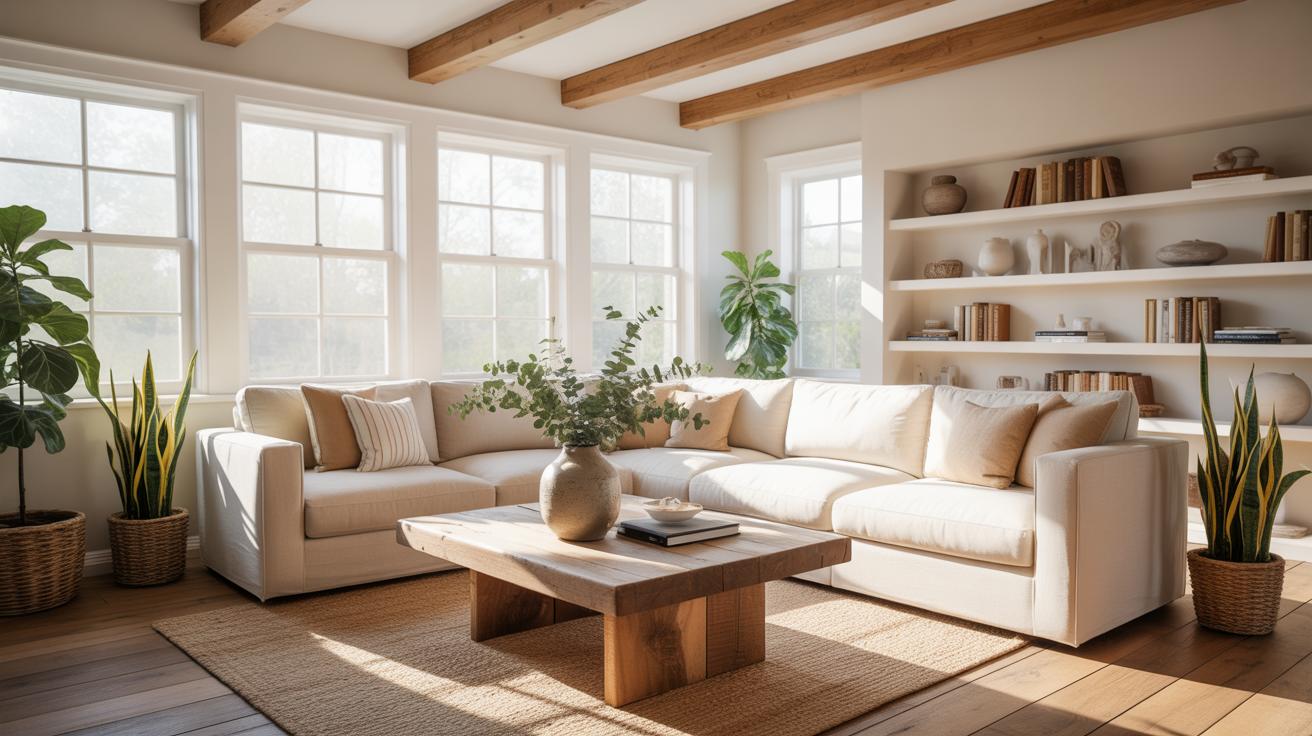
One of the joys—and challenges—of farmhouse style is blending the old with the new. You might have a vintage trunk or an heirloom rocking chair, and then a modern sofa or coffee table. Here’s a way to think about combining these:
- Start with a neutral base, like a comfortable contemporary couch, then layer in vintage chairs or side tables that show a bit of age.
- Use accessories such as throw blankets or cushions to tie old and new together subtly.
- Don’t worry if things aren’t perfectly matched; contrast often makes the space feel authentic, lived-in, and welcoming instead of like a showroom.
Sometimes mixing feels awkward at first, but that’s normal. Take a step back and live in the space for a bit—you’ll notice what works and what feels forced. It’s okay for your room to have a little bit of tension; it means it’s not just a copycat design, but a genuine expression of your style and history.
Farmhouse Decorating Mistakes To Avoid
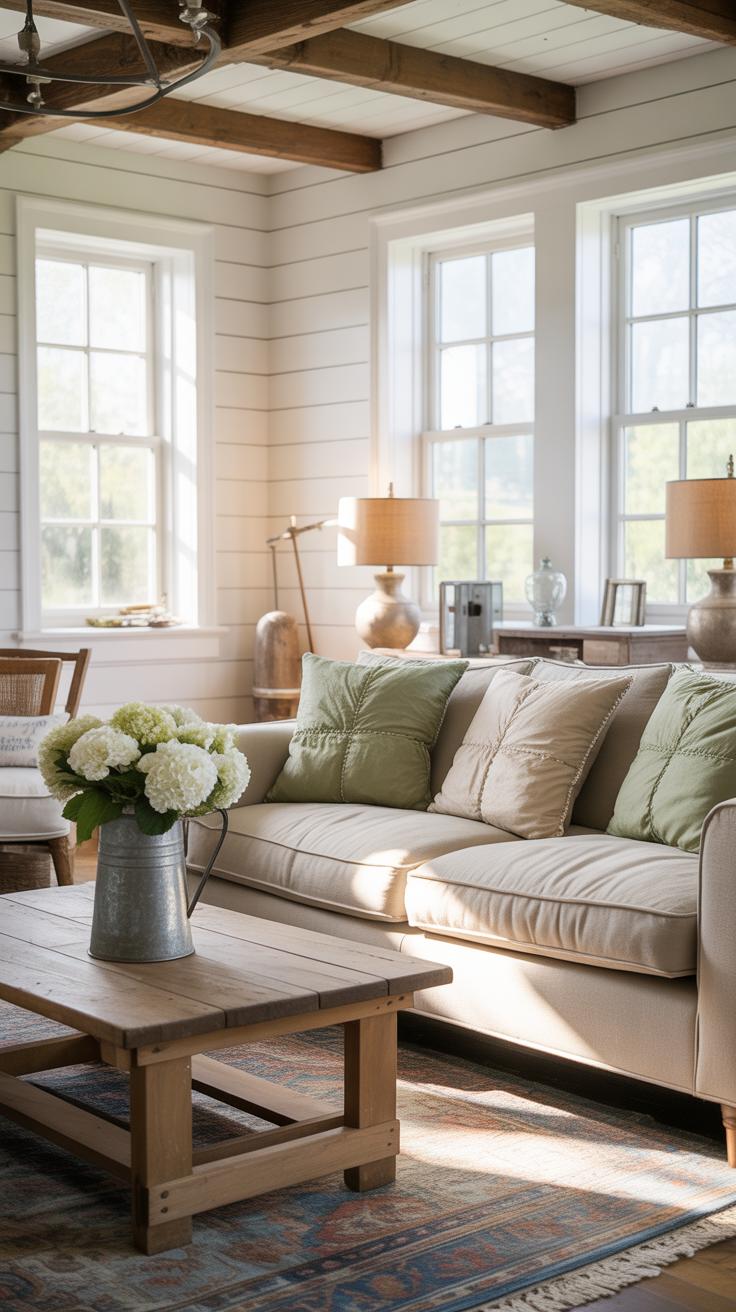
When decorating a farmhouse living room, one common mistake I see people make is filling the space with overly modern décor. Farmhouse style is rooted in rustic charm and simplicity. If you add too many sleek, minimalist pieces, the warmth and character start to disappear. You end up with a confusing clash that doesn’t quite feel right. It’s like you’re trying to mix two different decades that just don’t get along. So, hold back on the ultra-modern accents. Instead, choose items that feel handcrafted or have a bit of history. It keeps the vibe cozy and authentic.
Another thing that can go wrong is overcrowding the space. Farmhouse style thrives on light and openness—it’s meant to feel airy. When people cram in too many furniture pieces or decorations, the room can feel cramped and heavy. Don’t be afraid to leave some breathing room. Sometimes less is more, even if it feels tempting to display every rustic find. Personally, I’ve had to take a few things out more than once to regain that fresh feeling. So, ask yourself, does this add comfort or just clutter?
Lighting Options For Farmhouse Living Rooms
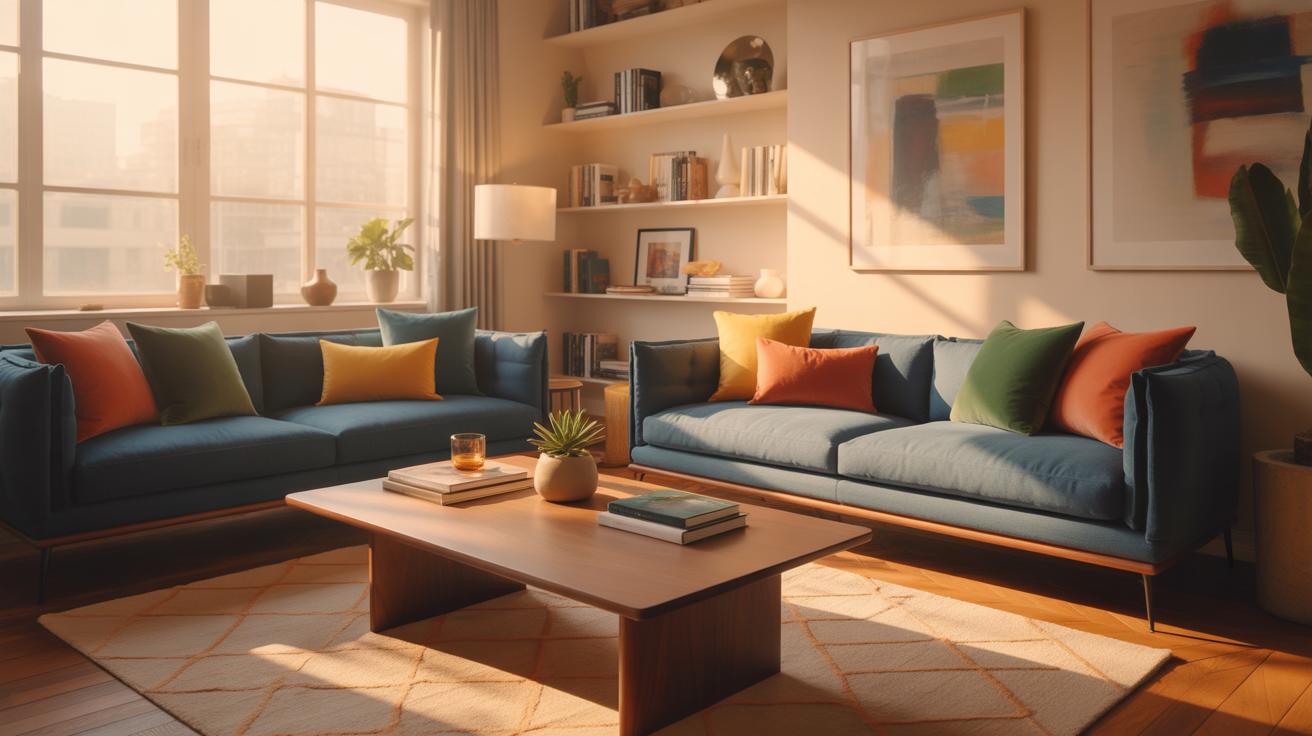
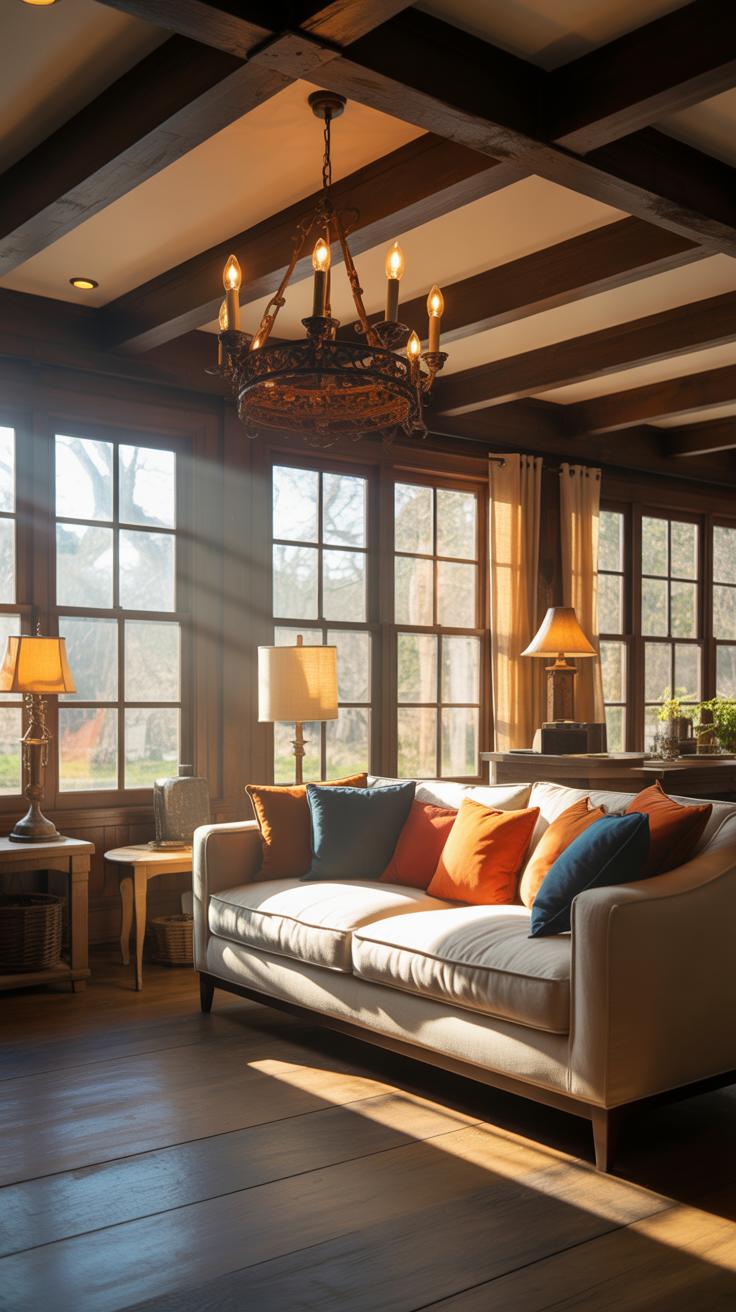
Farmhouse living rooms call for lighting that feels warm and inviting but also practical. You might want to consider a mix of fixtures that bring both character and function, like rustic chandeliers or metal lanterns. These pieces often have a bit of a rough, old-world charm, which fits right in with farmhouse décor. It’s not just about looking good—lighting needs to work for different activities and moods. So layering is key.
Try combining ambient lighting for overall brightness, task lighting where you might read or work, and accent lighting to highlight art or architectural features. For example:
- A large wrought iron chandelier can be the room’s centerpiece, providing soft ambient light.
- Complement this with table lamps or sconces near seating areas for task lighting.
- Use small spotlights or candles for accent lighting to create cozy corners or highlight rustic décor pieces.
This layering approach lets you adapt the space from lively gatherings to quiet evenings—it’s functional and mood-enhancing. If one element feels too harsh, dial it down or add softer layers. Finding the right balance might take some fiddling; lighting is more art than science in my experience. But when you get it, the room really comes alive without losing that farmhouse charm.
Adding Textiles And Accessories
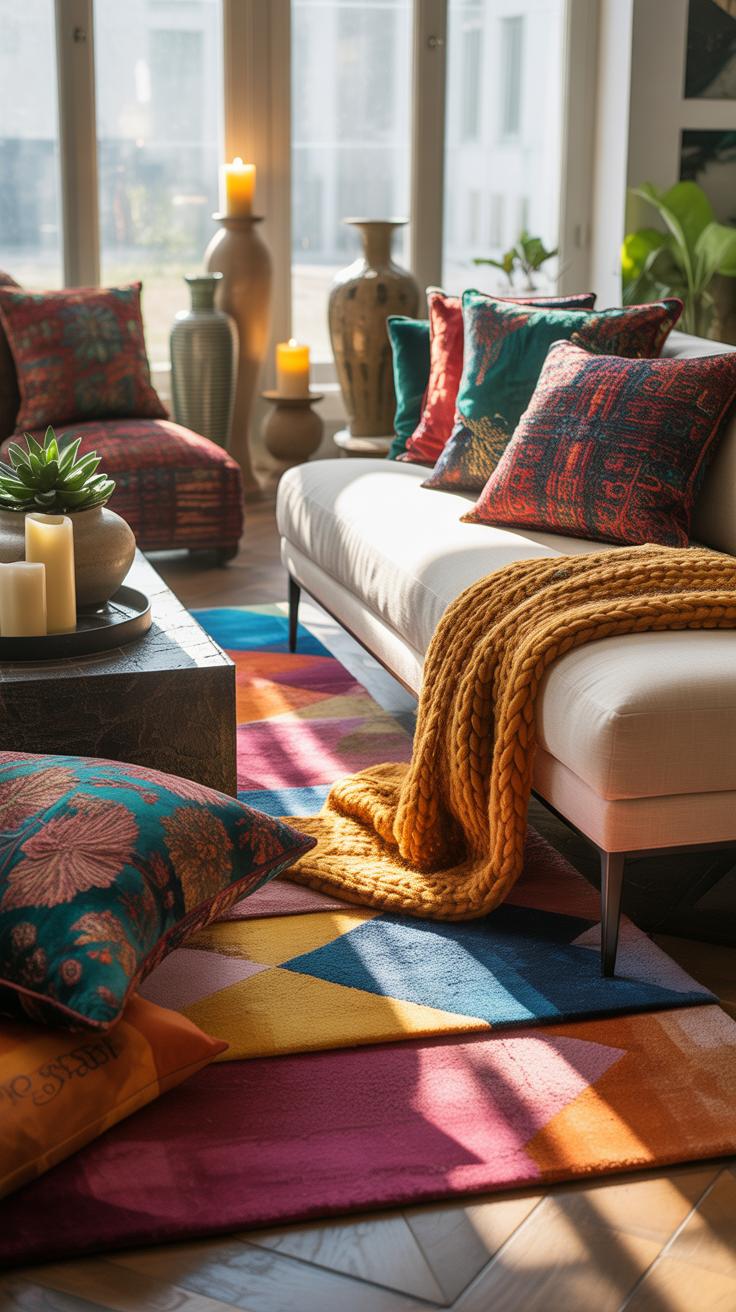
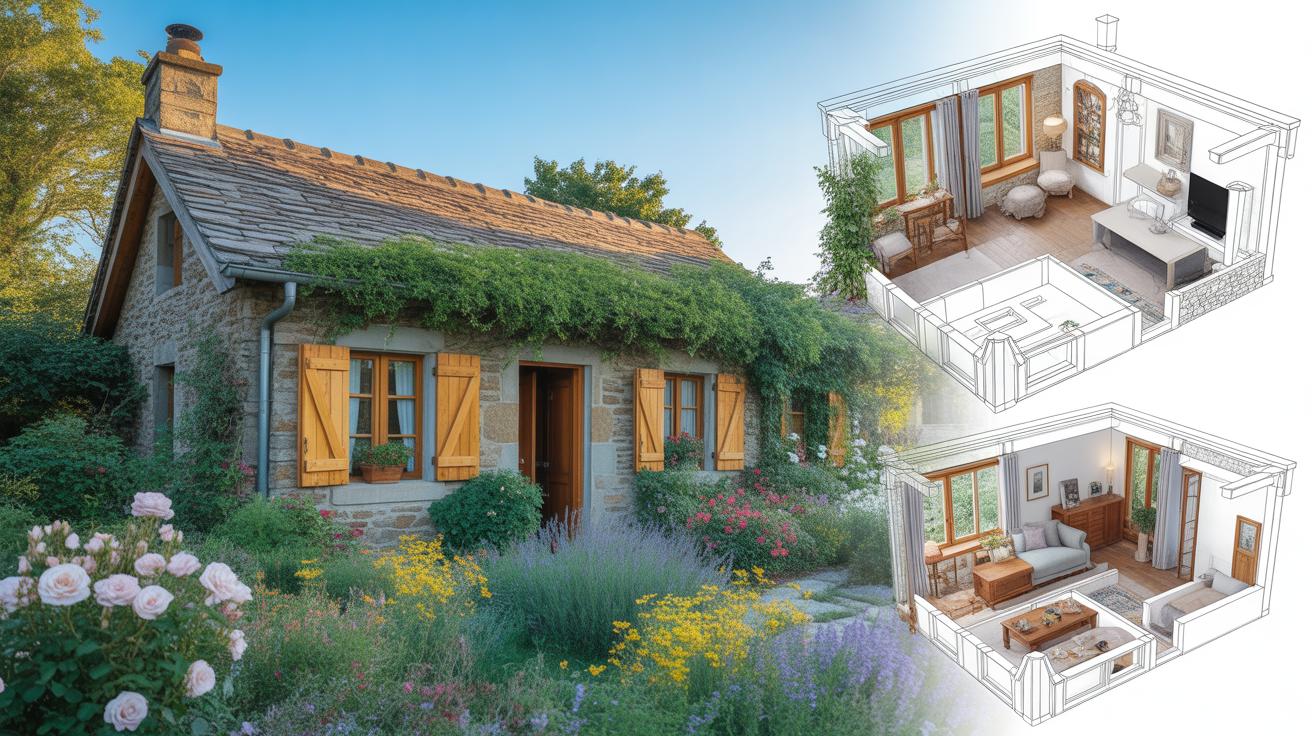
In a farmhouse-style living room, textiles do more than just cover furniture—they soften the whole space. Think about cushions and throws made from natural fabrics like cotton and wool. These materials bring warmth and texture, which, frankly, are hard to beat for creating comfort. Curtains made of lightly woven cotton can gently filter sunlight, adding a sort of quiet, lived-in feeling. You might think synthetic fabrics would be easier to clean, but they just don’t give the same approachable vibe.
Accessories also play a key role in adding personality. Simple, rustic items can work wonders. For instance, an antique sign hanging above a mantel or a collection of mason jars on a shelf can give your room character without feeling cluttered. Even straightforward artwork—nothing too fancy—like black-and-white sketches or vintage botanical prints, can complement the farmhouse aesthetic nicely. The charm lies in the details that feel authentic, maybe even a bit worn, rather than polished or brand new.
Have you ever noticed how these little touches can transform a room? It’s almost like they whisper stories from the past, making the space feel more welcoming and personal. You might find yourself wondering which piece will spark your next conversation.
Upgrading Farmhouse Living Room Layout
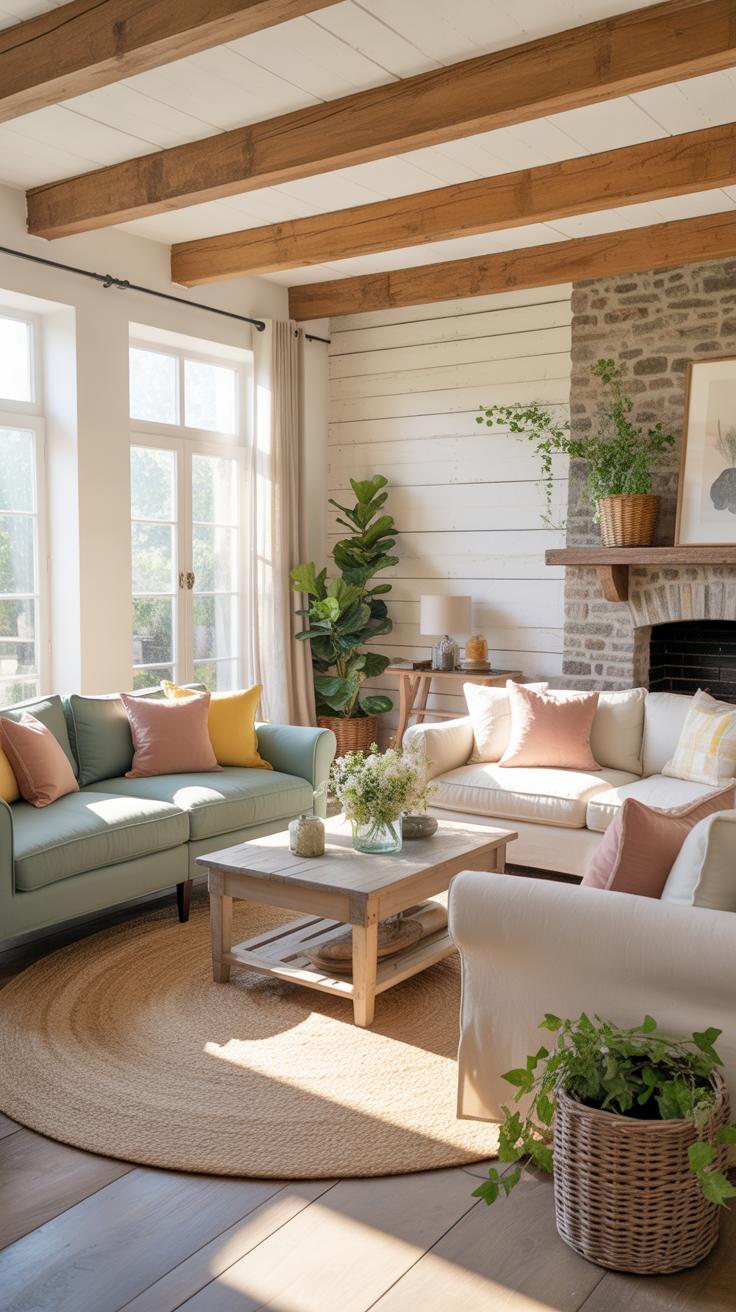
When planning your farmhouse living room layout, think beyond just placing furniture. Space matters. You want areas that feel open yet snug—spaces where people can gather without bumping elbows all the time. A good start is by anchoring your seating around a central focal point, like a fireplace or a large window. This arrangement naturally draws conversation and keeps the room balanced without feeling cramped.
Create Comfortable Conversation Areas
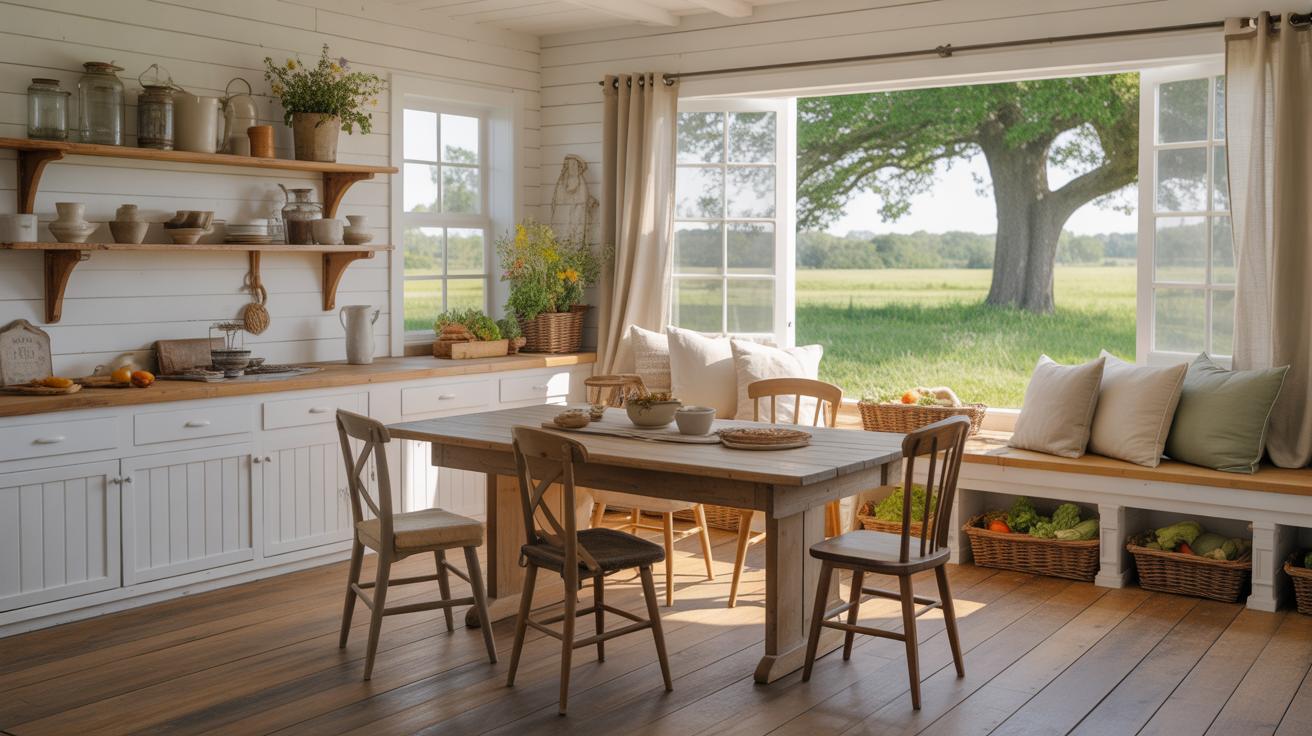
Seating should invite chatting, but not force it. Arrange sofas and chairs so faces naturally turn toward one another, but keep some room for easy movement. Too close and it feels stuffy; too far and the connection is lost. Maybe try pulling two armchairs at a slight angle near the sofa rather than lining everything up straight. This breaks the linear feel and sparks more intimate interactions. Think small grouping rather than one giant seating block. It’s these simple shifts that can change how the room “works.”
Balance Practicality And Aesthetics
Functionality is fine, but farmhouse style lives in the intersection of form and use. So, a large comfy sofa might be perfect, but balance it with a rugged wooden coffee table that’s easy to clean after a spill. Keep side tables within reach to hold drinks or lamps, but don’t overload corners and pathways. Use a mix of textures—wood, metal, soft fabrics—to create a room that feels lived-in yet thoughtfully styled. And don’t obsess over symmetry; a slightly off-center rug or an asymmetrical décor display often adds character through its imperfection. It’s about feeling cozy, not perfect.
Farmhouse Style Living Room Example Cases
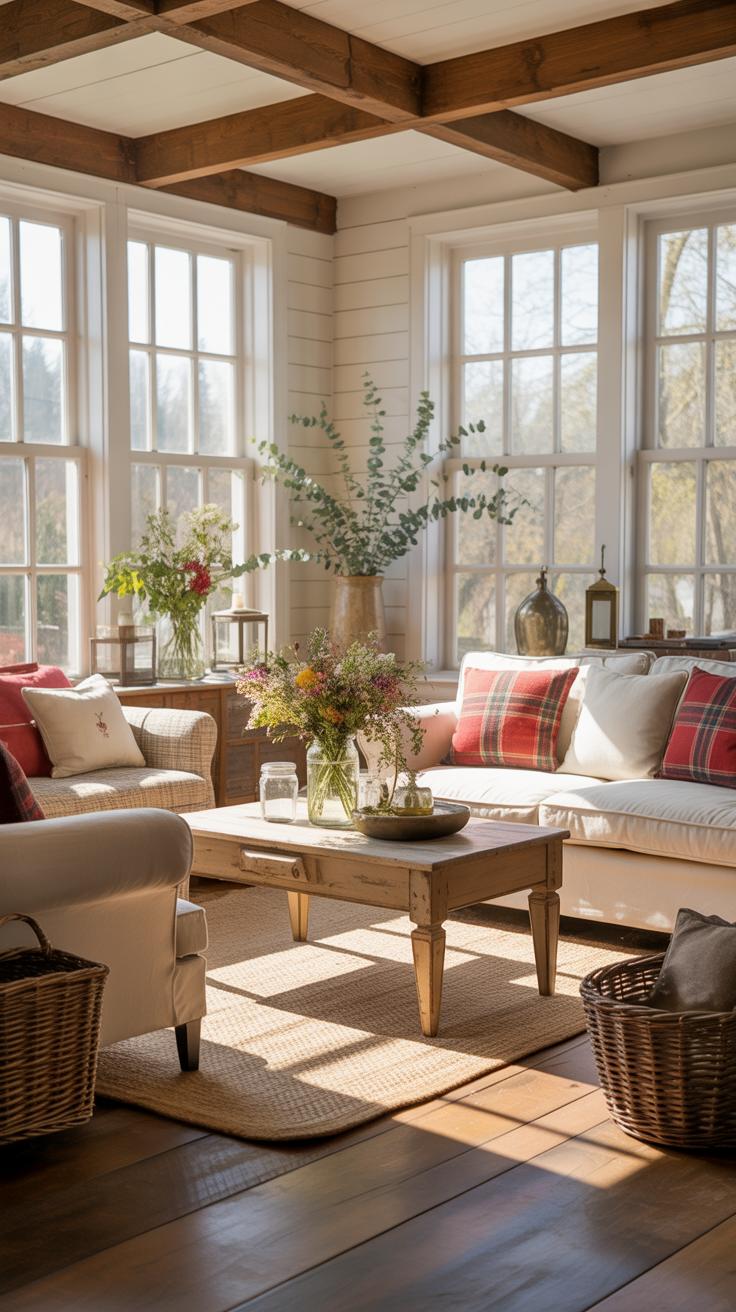
Looking at real homes can give you useful ideas when designing your own farmhouse living room. One small space example I came across was a compact living room where every item was carefully chosen to enhance both function and style without overcrowding. They used light colors—mostly whites and soft greys—to open up the room. Cleverly placed storage, like built-in shelves and a cozy bench with hidden compartments, kept clutter at bay. This makes me wonder if you might feel cramped trying farmhouse style in a small urban apartment, but these cases prove you don’t have to.
On the other hand, larger rooms offer a different canvas. One example highlighted a spacious farmhouse living room with exposed wooden beams and large windows that bring in natural light. The layout mixed open space with grouping furniture in areas for conversation and relaxation, keeping coziness without feeling crowded. A large, rustic coffee table anchored the space, alongside comfortable, oversized sofas. Sometimes, a big space can feel empty if not arranged thoughtfully—these examples show how to avoid that.
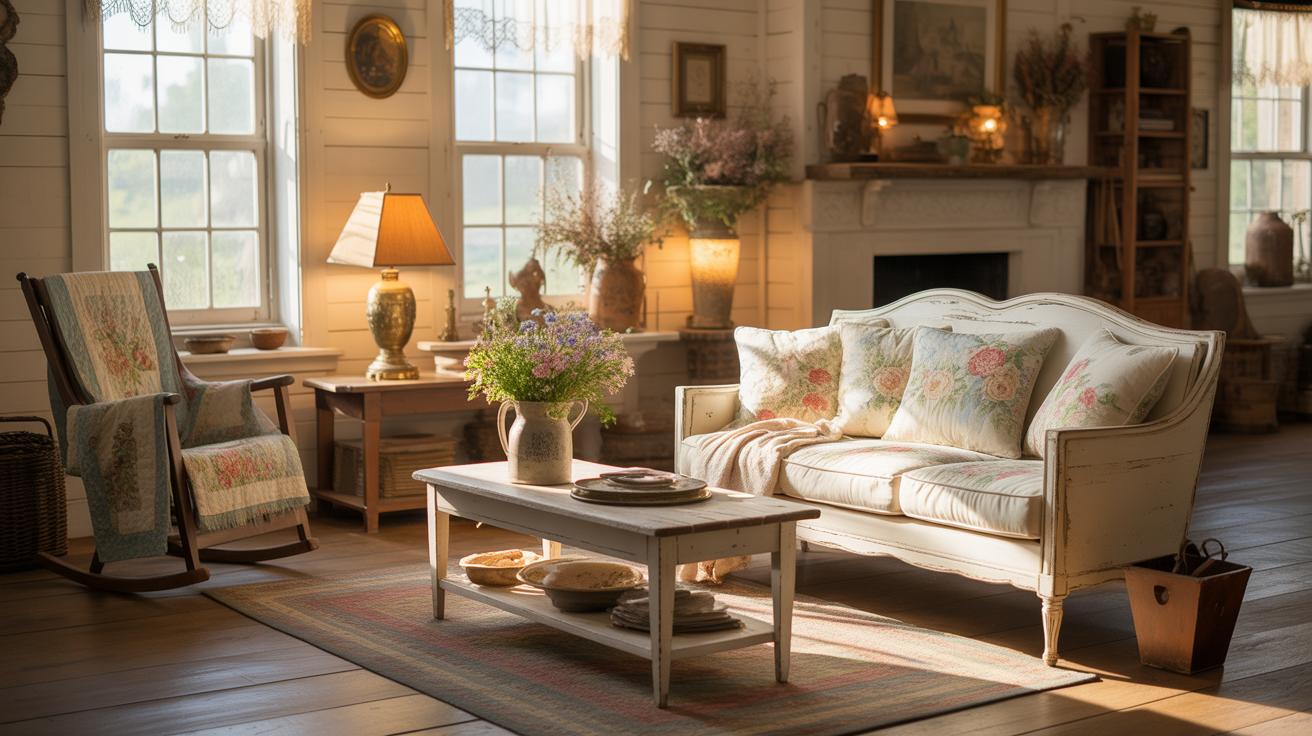
These cases showcase the flexibility of farmhouse style, whether your room is petite or expansive. They certainly encourage experimenting with textures and layouts to find what suits your specific needs and space.
Conclusions
Your cozy farmhouse living room is an achievable goal with clear ideas and simple materials. Using the right furniture, colors, and décor can bring a warm and inviting atmosphere to your home. Remember to focus on comfort and natural elements to keep the farmhouse style true to its roots.
By following these design ideas, you can create a living room that feels both timeless and personal. Whether you like traditional touches or a more modern take, farmhouse style offers flexibility for everyone. Start with small steps and enjoy building your perfect living room space.