
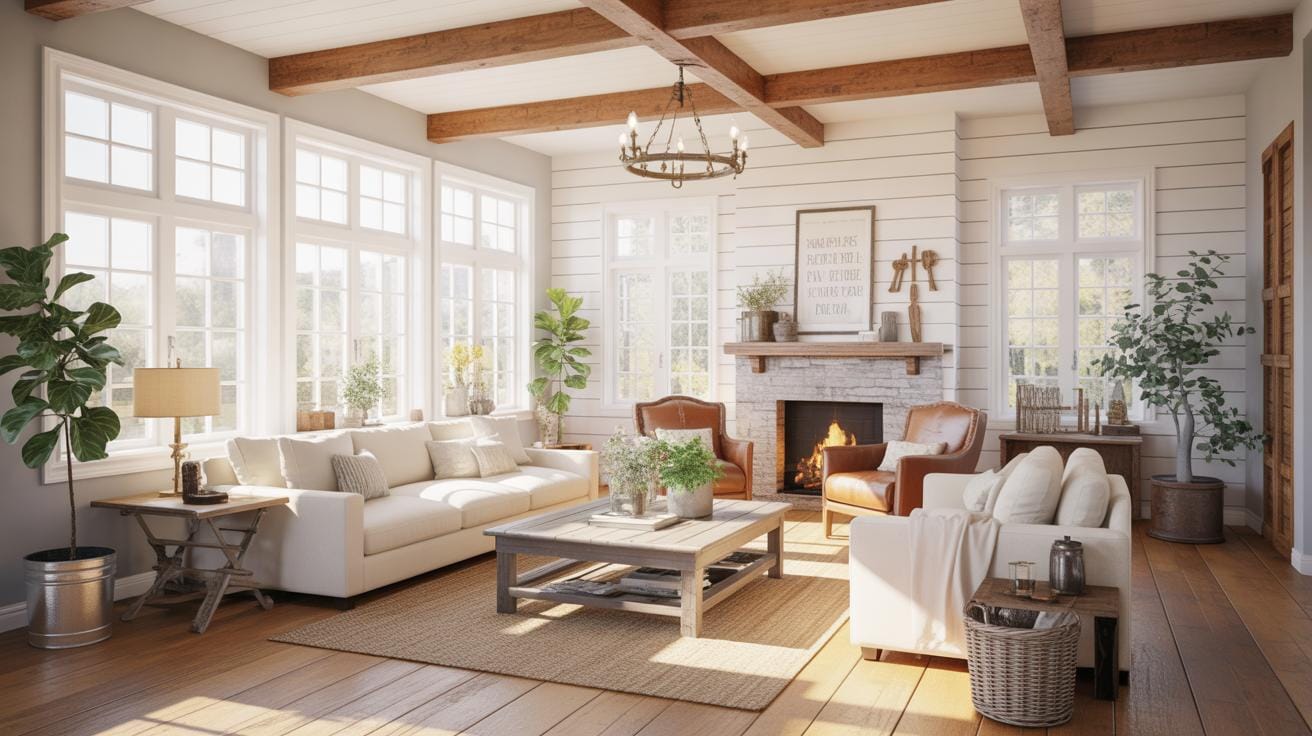
What Defines a Modern Farmhouse Living Room
The modern farmhouse living room blends rustic charm with contemporary simplicity to create warm and inviting spaces. This style focuses on natural materials, neutral colors, and a practical but elegant design. It suits those who want a cozy home with a clear character.
In this article, you will find clear guidelines on the essential elements, layout tips, decorations, and furniture choices to help you create a modern farmhouse living room. These trends encourage comfort, functionality, and timeless style, making your living room a central part of your dream house interior.
Modern Farmhouse Living Room Essentials
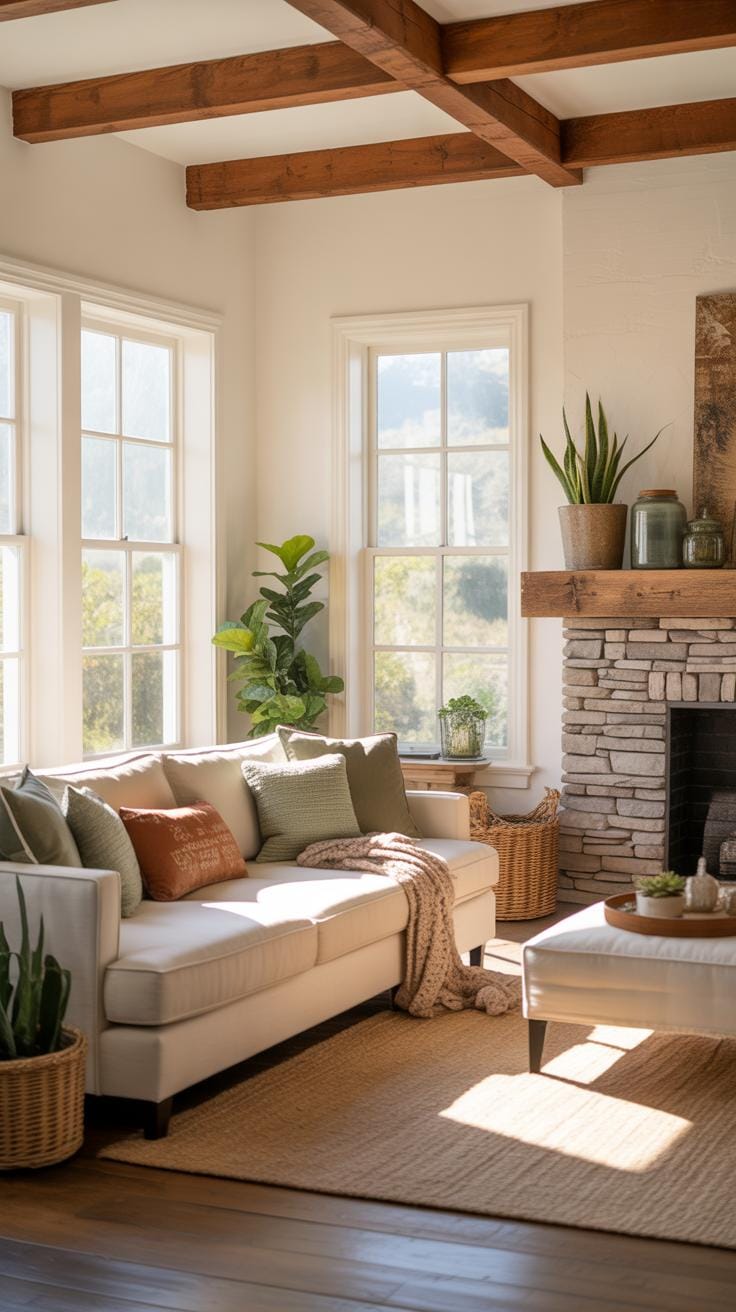
The modern farmhouse living room holds a unique charm built on a careful blend of elements that feel both fresh and familiar. The color palette is typically soft and neutral—think whites, creams, gentle greys—that paint a calm, inviting canvas. But these hues aren’t just bland background; they quietly highlight other features and invite natural light in, making the space feel airy.
Materials play a huge role here, especially wood. Reclaimed or distressed wood is frequently chosen not just for its looks but for the sense of history it brings. Alongside wood, you’ll find metal accents—often black or brushed—offering a subtle contrast. Cotton and linen textiles with a natural, hand-woven texture complete the tactile experience, making the room feel understated yet warm. It’s almost like each material is chosen to speak a bit about nature and tradition but with a present-day twist.
Key Elements Of Modern Farmhouse Style
Some specific features define this style, forging a visual identity ready to be recognized without confusion. Wooden beams across the ceiling often steal the show, though they don’t have to be overly massive or rustic. They bring strength and architectural interest to what might otherwise be plain ceilings.

Shiplap walls, painted usually in lighter tones, create texture without overwhelming the senses. Neutral tones throughout the space enforce a soothing environment, letting other design components quietly coexist. Metal accents, especially in lighting fixtures, hooks, or small furniture legs, add a practical yet stylish edge that avoids feeling too country or old-fashioned.
Combining Comfort And Rustic Charm
Here’s where the style gets interesting. It’s not just about looking quaint; comfort is king. You’ll often notice oversized sofas and plush armchairs, draped in soft, natural fabrics. Conversely, rustic elements like rugged wooden coffee tables or exposed brick corners reinforce the farmhouse feel.
The trick lies in the balance: too much rustic and the room feels cold or unfinished; too much softness and the look becomes bland. By mixing in well-chosen pieces that carry an organic, handmade vibe but with inviting, soft cushions and throws, the space feels lived-in and welcoming. Personal touches—say a knit throw, some vintage books, or a well-worn basket for blankets—complete the ambiance, making it both stylish and delightfully cozy.
Choosing Furniture For Modern Farmhouse Rooms
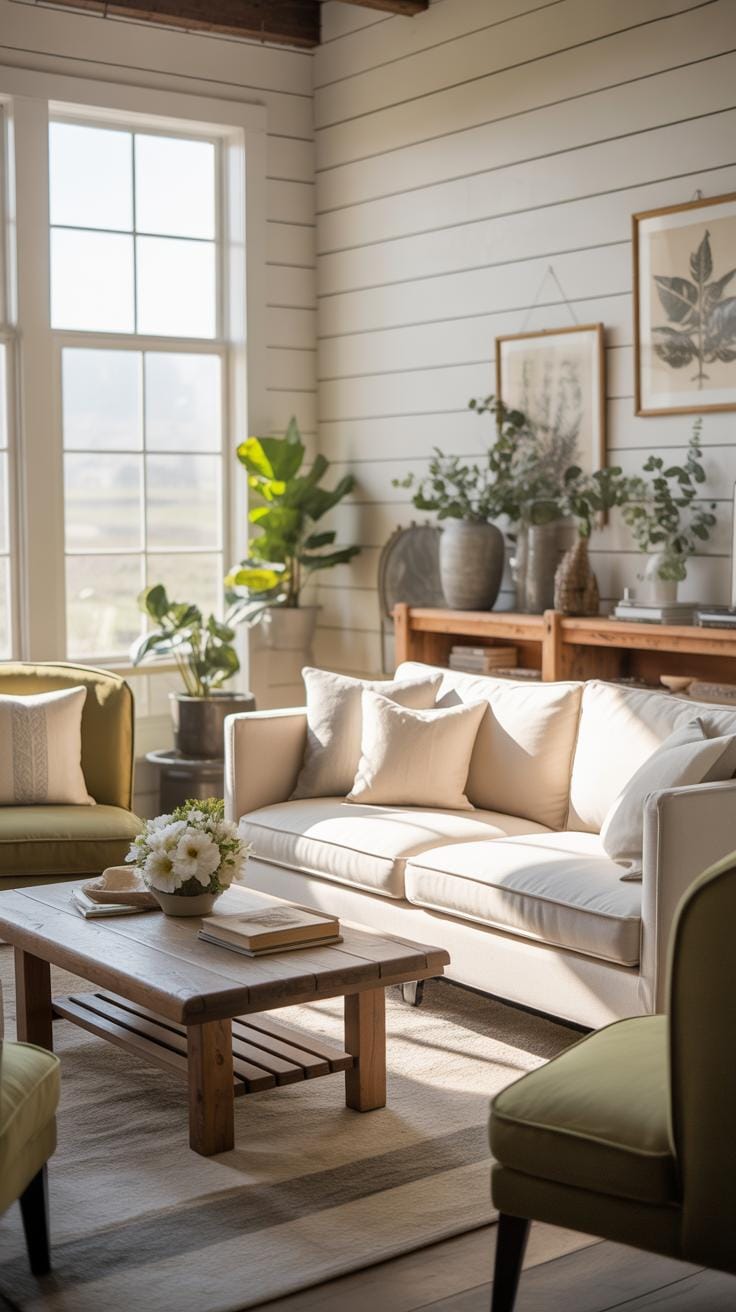
Wooden Furniture And Metal Accents
When picking furniture for a modern farmhouse living room, reclaimed wood often takes center stage. You might notice its rough texture and patina bring a certain character you just can’t get from new materials. Pairing this wood with metal accents—think iron or brushed steel—adds an industrial touch that balances the rustic vibe. It’s not just about looks; reclaimed wood pieces tend to tell stories, and that history feels alive in your space.
Arranging Furniture To Maximize Space
Arranging your furniture is a bit of a puzzle. You want a setup that feels open but doesn’t sacrifice warmth. Try pulling your sofa away from the walls to create conversation areas—it’s surprising how this small adjustment can boost comfort and flow. Place chairs to invite interaction but not block walkways. Coffee tables should provide accessibility without crowding. And don’t hesitate to leave patches of floor visible; too much furniture can feel cramped in a farmhouse room.

Overall, think of your layout as a balance between inviting and practical. Sometimes, less really is more when it comes to furniture placement. Experiment and see how your room breathes with different arrangements—it’s worth the trial and error.
Lighting Tips For Warm Comfortable Spaces
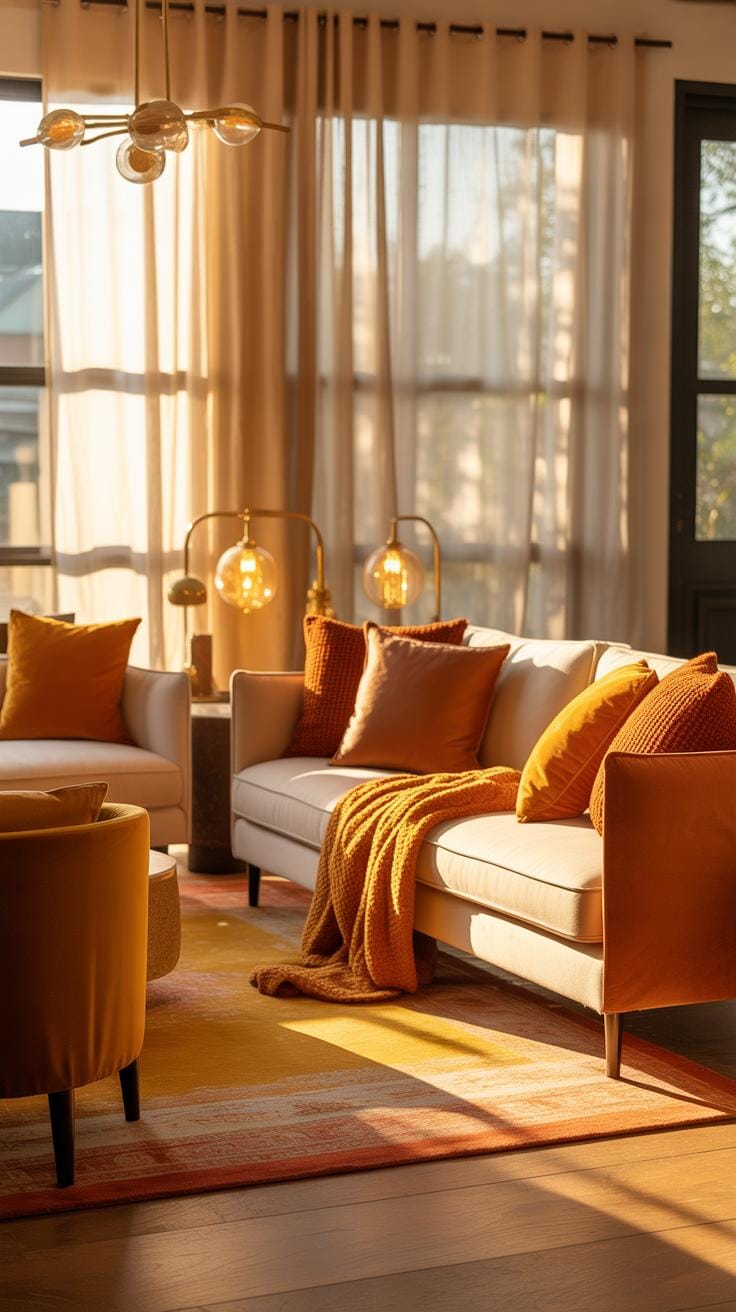
Lighting can make or break the feeling of a modern farmhouse living room. It’s not just about illumination but about shaping warmth and inviting comfort. Natural light should be your first consideration. Large windows without heavy drapes invite sunshine, but you might want sheer curtains or blinds for privacy without sacrificing brightness. There’s something slightly calming about sunlight filtering gently into a room, don’t you think?
Now, about fixtures – farmhouse style often leans towards wrought iron chandeliers or lantern-style lamps. These fixtures offer a rustic, authentic touch that blends well with wooden beams or neutral tones. I’ve seen rooms where a single chandelier becomes the focal point, hanging over the seating area, casting perfect shadows that enhance the cozy vibe.
Layering your light sources also matters here. Combine overhead lighting with table lamps and wall sconces. Using dimmable bulbs might help you adjust mood and function as the day progresses. This kind of flexible lighting setup is not just practical but feels more deliberate, more lived-in.

Placement plays a role too. Think about corners where light can soften shadows or near art pieces or shelves that deserve highlighting. Sometimes, unexpected spots benefit from a gentle glow.
Decor Ideas To Personalize Your Space
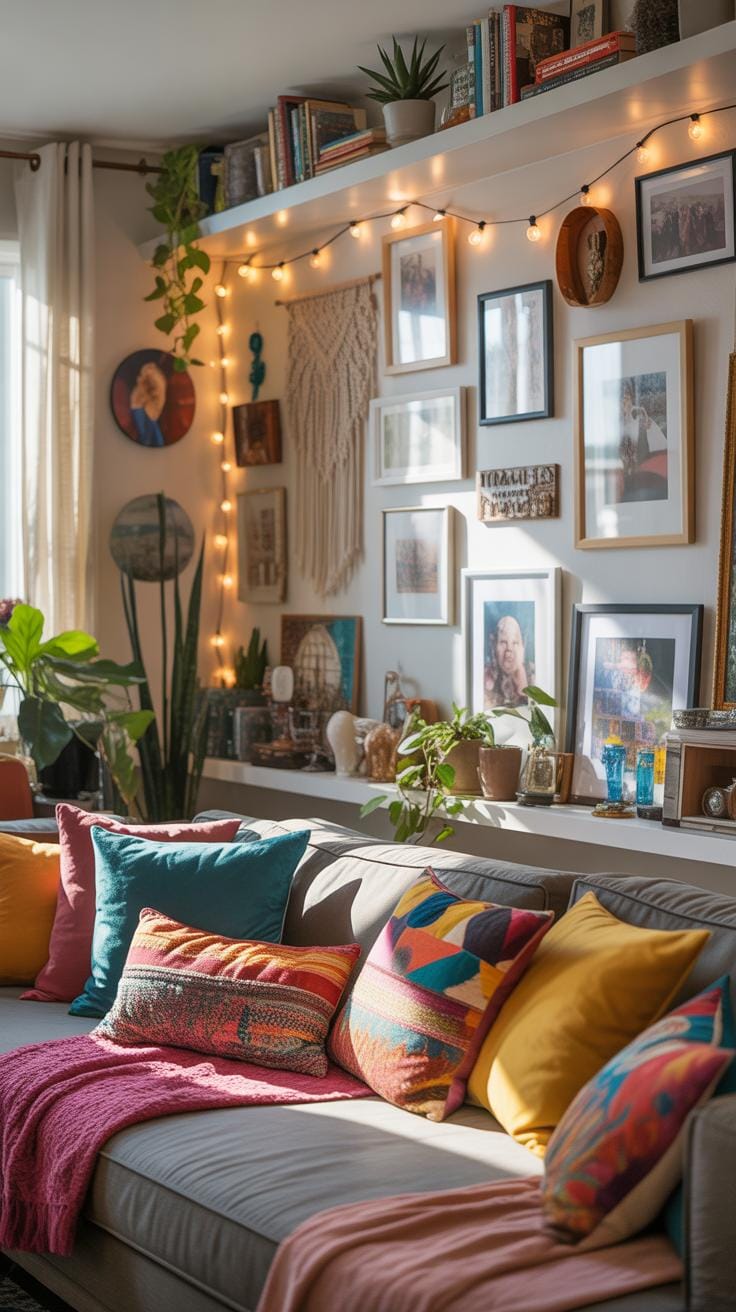
Personal touches bring a farmhouse living room to life. Vintage signs can add a nostalgic vibe, whether they hang above the mantel or lean casually against a wall. Woven baskets aren’t just functional; they bring texture and warmth when clustered under a console or stacked near a cozy chair. Greenery—even just a simple potted plant—can brighten corners and soften harder lines in the room. Layered textiles, like a chunky knit throw over a linen sofa or patterned pillows, invite comfort and invite you to stay awhile.
There’s something comforting about mixing old with the handmade. Vintage décor pieces—perhaps a weathered wooden tray or distressed candlesticks—carry charm and history. Handmade crafts, especially those with simple, rustic finishes, fit perfectly with farmhouse themes. They show care and individuality, subtle but meaningful details that mass-produced items often lack.
Nature-inspired decorations pull the outdoors in. Plants are obvious choices but don’t overlook floral patterns in upholstery or curtains, which can add a delicate edge. Natural fibers—think jute rugs or cotton cushion covers—keep the feeling grounded. These elements reflect the farmhouse ethos of simplicity and connection to the land without trying too hard.

Try asking yourself: What objects tell your story? What textures make you feel at home? Incorporating these could be easier than you think. Sometimes it’s just about picking what feels right—even if it’s a little unexpected. That’s the charm, isn’t it?
Modern Farmhouse Vs Traditional Farmhouse
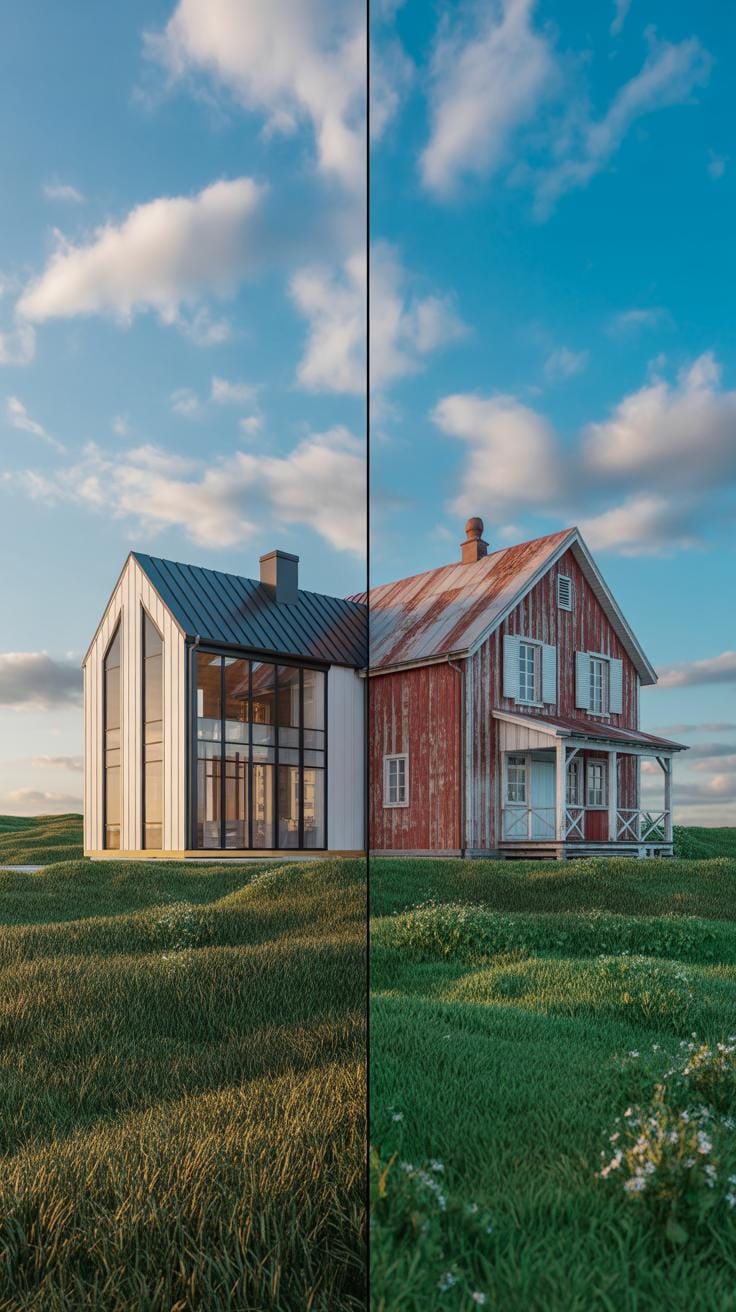
The modern farmhouse living room feels lighter, and maybe a bit more deliberate in its choices compared to its traditional counterpart. Design elements lean toward clean lines and simplicity, while traditional styles often embrace more ornate details and vintage touches. It’s intriguing how these differences shape the feel of your space.
Color schemes bring this contrast into sharper focus. Modern farmhouse favors muted tones—think soft greys, gentle whites, and natural hues—that create a calm, serene space. Traditional farmhouses, on the other hand, tend to invite bolder colors like deep reds, forest greens, and mustard yellows, which can feel cozy but sometimes overwhelming.
Furniture choices also tell a story. Modern farmhouse rooms often showcase pieces with sleek, minimal profiles, blending function with style. Multi-purpose furniture—like ottomans with storage or convertible tables—is common. In contrast, traditional farmhouse furniture relies on heavier woods, carved details, and classic silhouettes that speak of history and craftsmanship.

More than aesthetics, functional updates set modern designs apart. Open floor plans make the living room feel connected to kitchens and dining areas, perfect for gatherings or casual family time. And while traditional rooms might stick to a straightforward furniture setup, you’ll find modern farmhouse living rooms cleverly incorporating multi-use pieces that adapt as needs change.
Thinking about these differences, which vibe feels more like home to you? Is it the clean, airy pace of modern spaces or the warm, layered character of traditional settings? Either way, blending some elements might just make your living room uniquely yours.
Setting Up A Modern Farmhouse Living Room Checklist
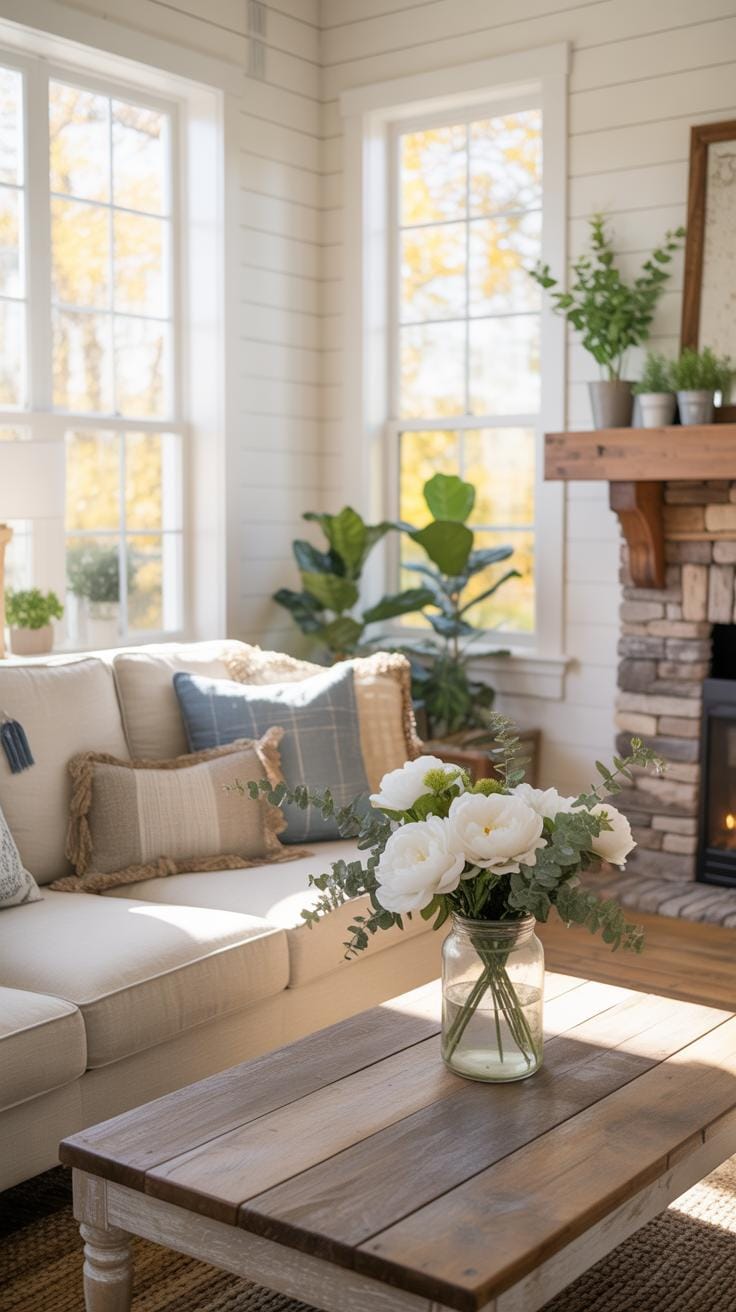
Setting up a modern farmhouse living room can feel like piecing together a puzzle, where every element subtly contributes to the whole. First, pick your foundation pieces wisely. A sturdy, comfortable sofa in a neutral fabric often serves well, complemented by a couple of armchairs. Don’t hesitate to invest in good-quality wood furniture—it brings the farmhouse vibe alive.
Next, consider the lighting. Go for fixtures that strike a balance between rustic charm and modern simplicity, like wrought iron chandeliers or simple metal lamps. They establish mood without overwhelming the space.
When it comes to floors, hardwood or laminate in warm tones fits well. Layer with cozy rugs that add personality and softness underfoot.
Finally, introduce personal touches—family photos in wooden frames, simple pottery, or vintage finds. They provide that lived-in feeling, which is essential for the farmhouse aesthetic, and, well, that’s what makes a house a home, right?
Start With Color And Walls
Choosing paint colors is, honestly, the step where you set the mood. Soft whites, creams, or muted grays form the typical color palette. They offer a blank canvas that feels fresh yet comfortable. If you’re feeling a bit bold, a muted sage or navy accent wall might work well with the farmhouse look.
Wall treatments contribute tonne to the vibe. Shiplap, with its simple horizontal lines, is a classic choice that instantly suggests farmhouse style. It’s not just decorative; it adds texture and interest without shouting for attention.
If you’re lucky enough to have an exposed brick wall, embrace it. Its honest, rough texture complements farmhouse design’s emphasis on natural materials. If you don’t have brick, faux brick panels or wallpaper can serve as a reasonable stand-in.
Finish With Textiles And Accessories
The final flourish is all about textiles and accessories. Rugs are great for grounding the room. Patterns that nod to classic Americana, like plaid or simple stripes, can work well, but don’t feel compelled to restrict yourself.
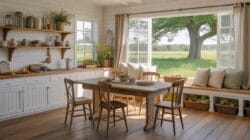
Pillows and throws add comfort, but also allow you to play with texture—think linen, cotton, or woven fabrics. Layering these textiles gives the room warmth and invites you to linger a little longer.
Don’t forget the smaller details: carved wooden bowls, vintage books, or iron candle holders. They might seem insignificant alone, but together they create a sense of personality and history that makes a modern farmhouse living room truly cozy.
Common Mistakes To Avoid In Farmhouse Living Rooms
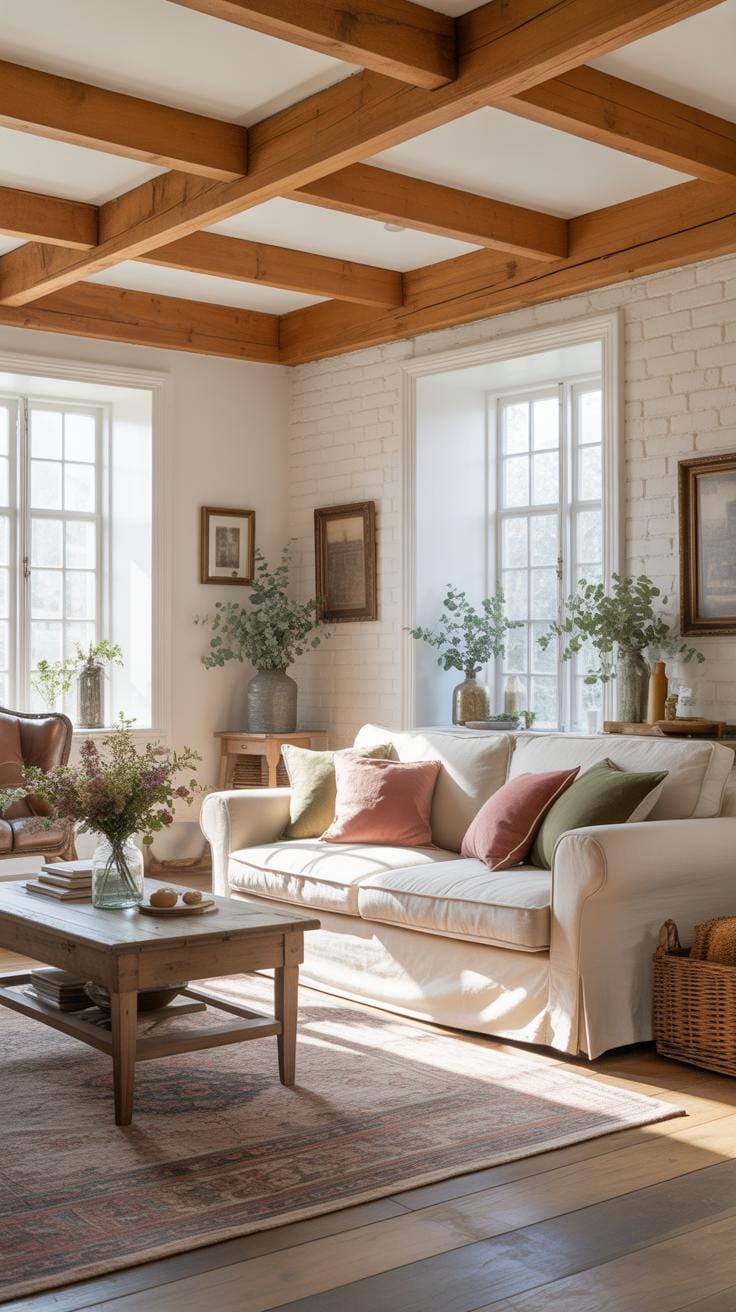
When setting up a modern farmhouse living room, it’s easy to get carried away and clutter the space with too many pieces of furniture. You might think more is better, but too much furniture can make the room feel cramped and lose its inviting, open-air charm. A good rule of thumb is to select only key pieces that serve a purpose, allowing you to move around comfortably without bumping into things. Openness is what often defines this style—so take care not to crowd the space.
Lighting is another factor many tend to overlook. Poorly lit rooms can feel gloomy, which works against the light and airy vibe modern farmhouse interiors aim to create. Natural light helps, but if that’s limited, choosing the right lamps and fixtures is crucial. Think about different light sources—overhead, task, and ambient lighting—to keep the room warm and welcoming all day long.
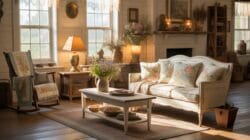
Finally, the color palette can make or break the farmhouse look. Mixing too many colors or bold patterns might seem fun at first, but it often leads to a chaotic feel instead of the clean, cohesive ambiance you want. Sticking to muted tones and coordinating hues maintains calm and keeps the aesthetic simple. If you do want to add colors, try subtle accents that won’t overwhelm the senses.
Examples Of Modern Farmhouse Living Rooms
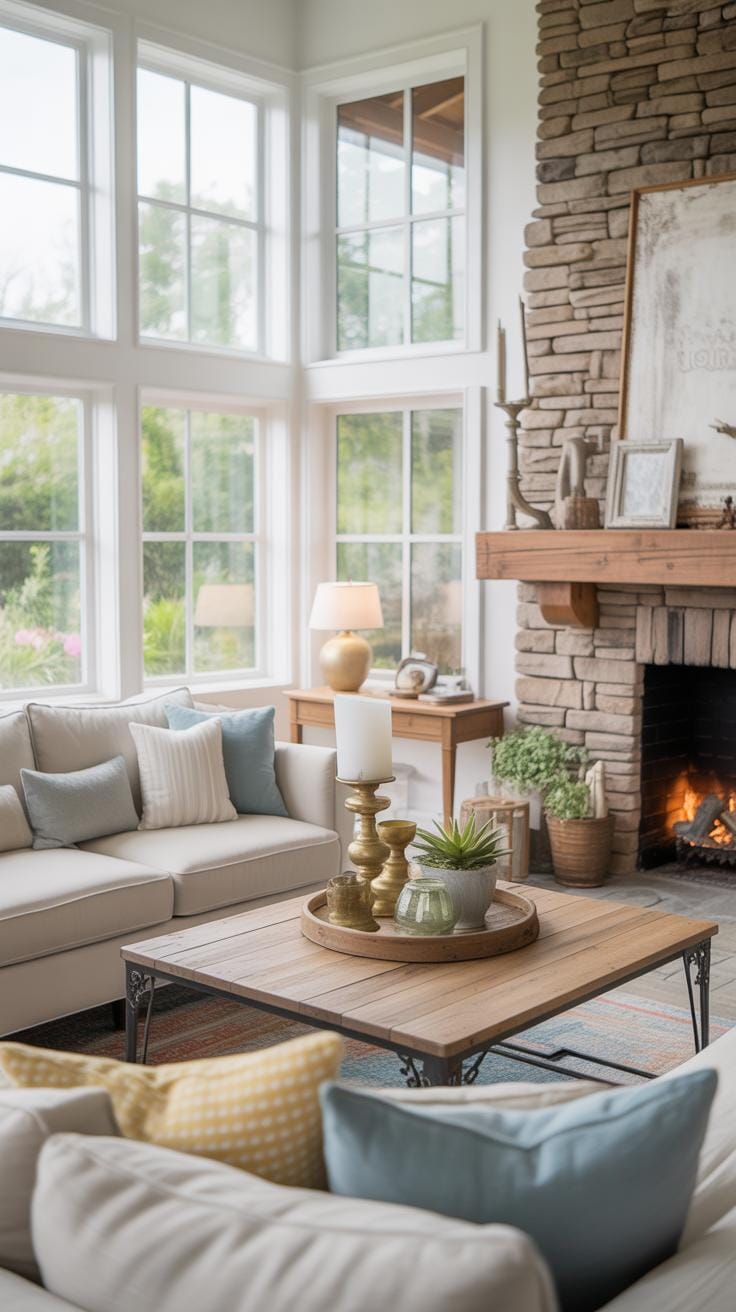
When you step into a modern farmhouse living room, you might find yourself caught between charm and comfort without the room feeling overdone. Take, for instance, a space with neutral tones—think soft grey walls paired with crisp white trim and touches of natural wood. The unifying thread here is simplicity, but it’s a simplicity that doesn’t bore; instead, it invites calm and focus. The grey acts almost like a soft backdrop, while the wood accents—for example, a distressed coffee table or beams overhead—bring warmth without shouting for attention. It’s subtle but just enough.
On the flip side, some rooms lean into rustic furniture and layered textures. Imagine a living room where rough-hewn, reclaimed wood couches sit beneath warm, golden lighting. Maybe you’ll notice a thick, woven rug beneath your feet and cozy, oversized pillows inviting you to sink in. This layering doesn’t just build visual interest; it welcomes you in, a little like a warm hug at the end of a long day. That mix of raw materials with cozy fabrics can make any space feel lived-in, not staged.
- Neutral palettes with wood details keep things grounded, avoiding any flashiness.
- Layered textures—from soft linens to rugged wood—create a tactile experience.
- Warm lighting transforms these rooms from just visually appealing to genuinely inviting.
- Reclaimed furnishings add character and a sense of history to modern layouts.
Does your own living room lean more toward that quiet, simple elegance or the layered, rustic appeal? Sometimes striking the right balance feels tricky, but these examples show it’s more about what feels right to you than ticking design boxes. Maybe that’s exactly the beauty of modern farmhouse style—it’s personal, yet familiar.
Conclusions
Modern farmhouse living rooms balance traditional rural charm with modern design principles. By using natural materials and clean lines, you make the space feel both inviting and fresh. The style values comfort without losing elegance.
Following these design trends and tips will help you create a living room that welcomes family and friends. Keep your space simple but meaningful, focusing on practicality and atmosphere to enjoy your dream farmhouse interior every day.