
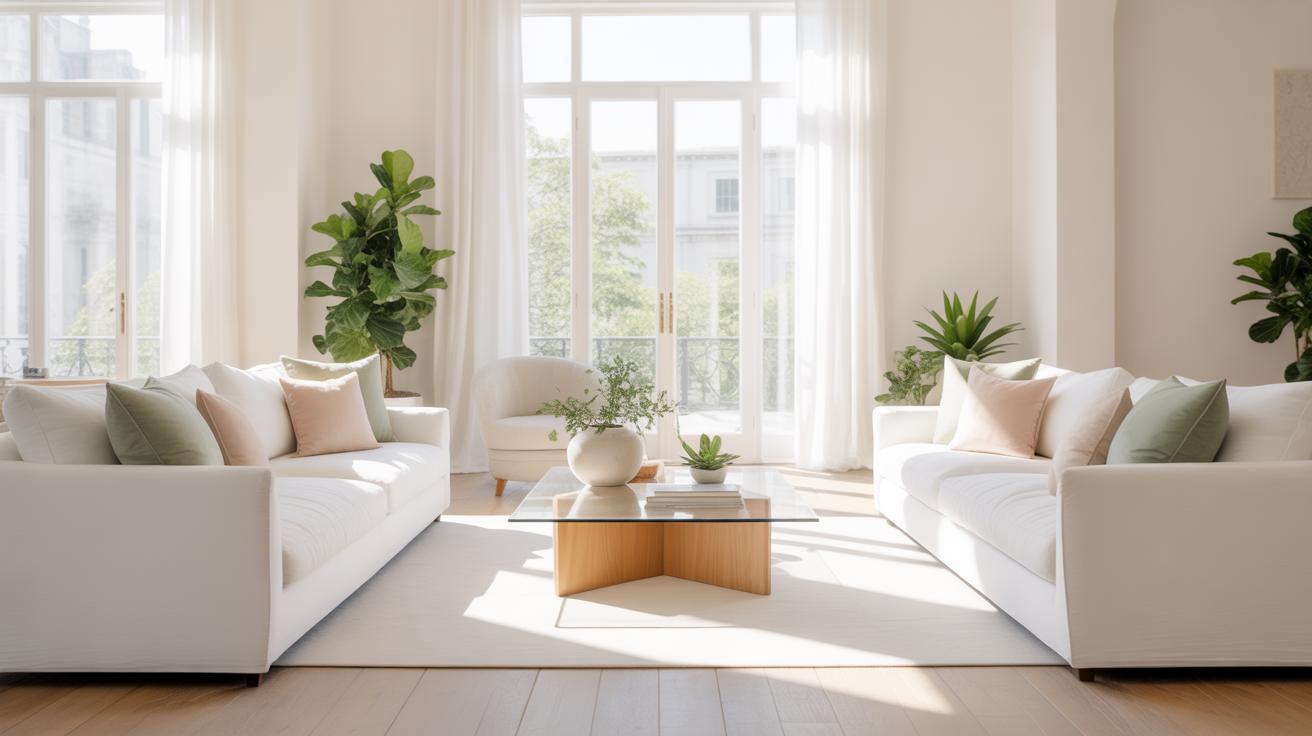
Why White Living Rooms Feel Clean and Bright
A white living room can create a sense of cleanliness and simplicity. It offers a blank canvas that allows you to decorate in a minimalist style with ease. Choosing white as your primary color can brighten the space and make it appear larger.
This article covers white living room decor ideas for those who want a clean, minimalist space. You will learn about selecting shades, furniture placement, adding textures, and combining white with other colors to keep your living room practical yet stylish.
Selecting White Paint And Materials
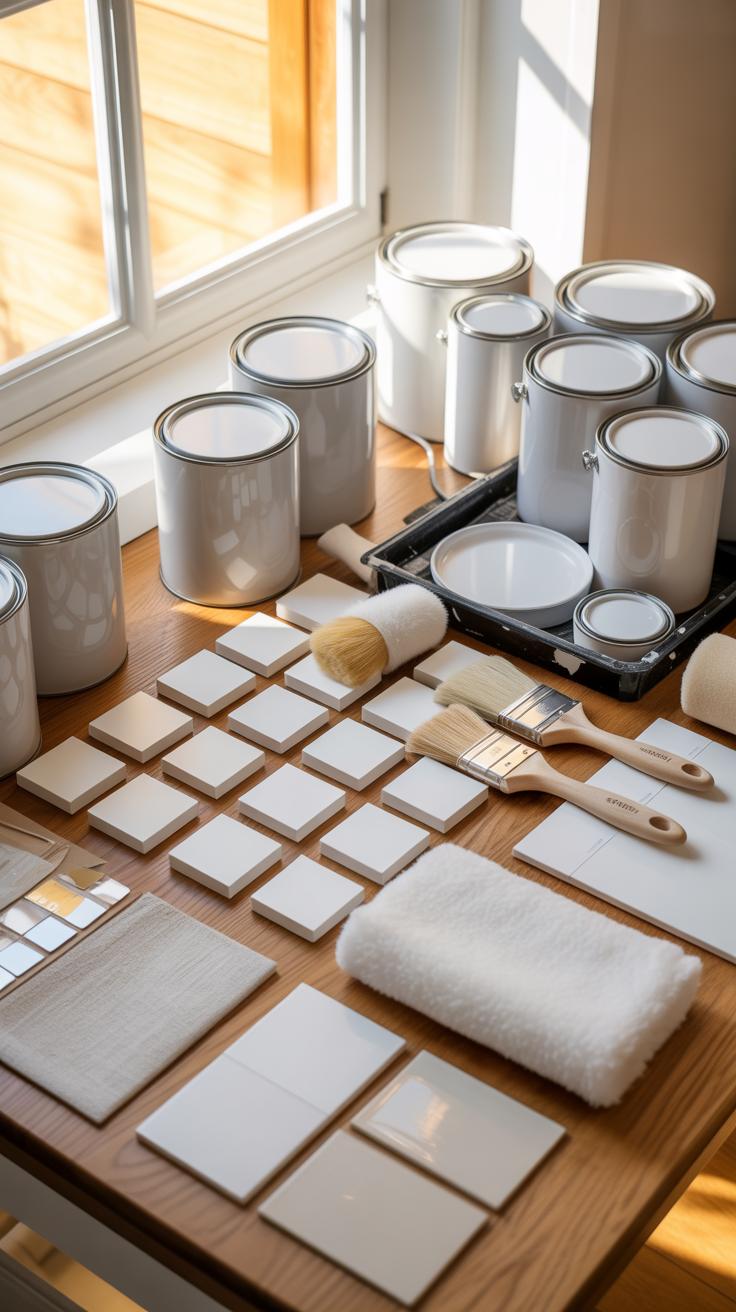
When choosing white paint for walls, ceilings, or furniture, it’s not just about grabbing any tube labeled “white.” The truth is, whites come in many shades—cool, warm, creamy, stark—and your choice affects the whole room’s vibe. For example, a bluish white can feel crisp but cold, while a warmer white offers softness without messiness.
Picking the finish also matters. Matte finishes absorb light and give a velvety feel, perfect if you want to hide wall imperfections. Satin or eggshell finishes reflect more light, making the space brighter, but they reveal flaws more easily. So, consider the room’s lighting and condition.

Furniture in white needs careful material selection. Painted wood or metal can work well, but think about durability and ease of cleaning. Laminates or lacquered finishes often suit a minimalist style because they offer a smooth, effortless look without a lot of texture. Also, materials like white leather add a sleek touch but need regular care. What’s your tolerance for upkeep? That can help guide your decision.
Organizing Furniture For Open Space
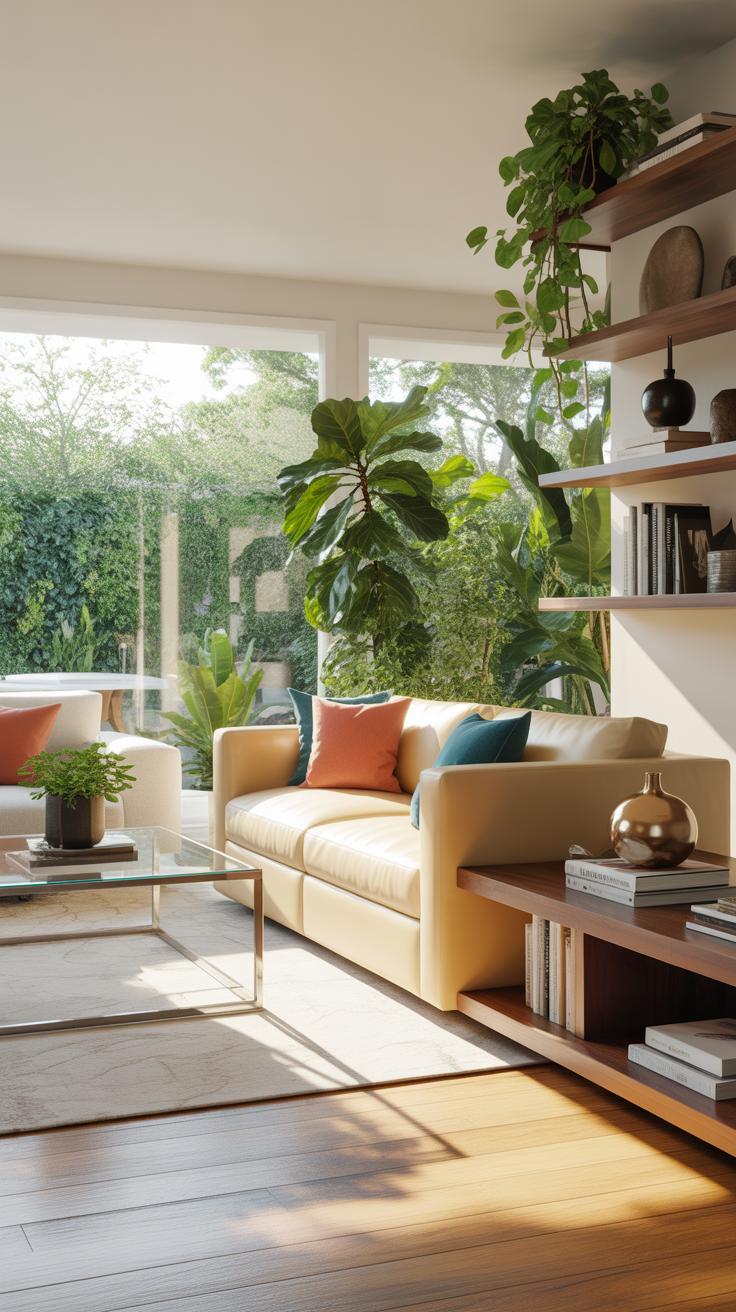
When arranging furniture in a white living room, the goal is to keep things feeling open and uncluttered. You want to avoid crowding the space, or else the pristine white walls and floors can start feeling a bit overwhelming instead of calming. One trick is to allow clear walking paths that flow naturally from one area to another—try not to force the layout into strict symmetry.
Function and aesthetics need to find a middle ground. Pick a sofa that’s comfortable but not oversized. Coffee tables should be sleek and unintrusive, maybe with storage options hidden away, so you can tuck clutter out of sight. Floating shelves save floor space and add a bit of structure without bulk. It’s a balance that doesn’t always come easy, and sometimes you might lean more toward usefulness than pure style, or vice versa.
Furniture Placement Tips
Think about how you move through the room. Position your sofa facing the main entrance or a window for a focal point that feels inviting. Place side tables close enough to be useful but not so close that they cause congestion. Shelving can be along walls where it won’t break the open flow—maybe consider open-backed shelves to make things feel lighter. Avoid any furniture that blocks natural light or creates heavy visual barriers.
Choosing Minimalist Furniture Styles

Minimalism calls for simplicity in shape and form. Stick to furniture with clean lines and no excessive ornamentation. Think low-profile sofas, simple metal or wooden legs, and tables with slim tops. Materials like light wood, glass, or matte finishes complement white surroundings nicely without drawing too much attention. Oddly enough, sometimes a slightly imperfect or worn piece can add warmth to an otherwise stark setting.
Adding Texture Without Color
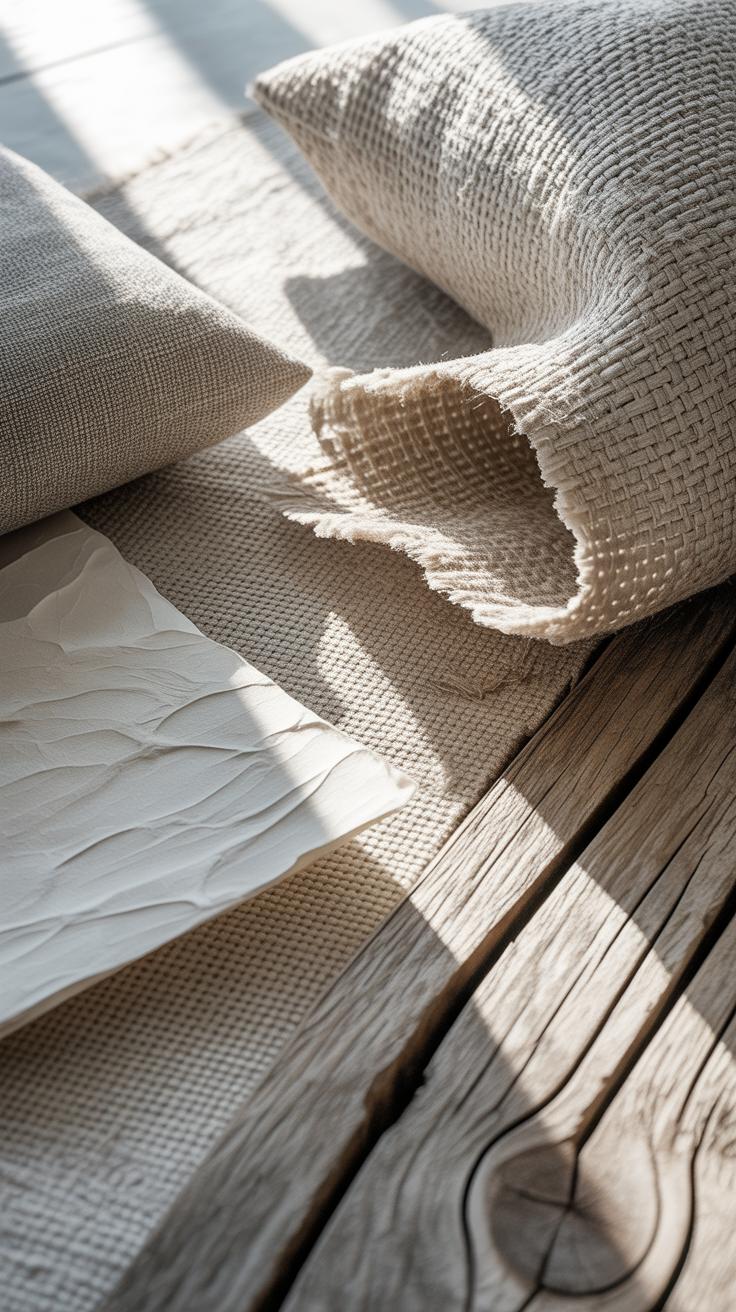
White living rooms can risk feeling flat or sterile, even when the intent is minimalism. The trick? Introducing texture. Texture brings depth and interest without changing the palette, which is crucial in maintaining that clean, calm vibe.
Using Fabric And Rugs
Think beyond plain cotton or smooth surfaces. Choose fabrics with visible weaves or a subtle nap, such as linen, boucle, or even silk blends. Drapes can catch light differently, softening the space. Rugs offer another layer: a shaggy wool rug, a woven sisal, or a patterned flatweave in white tones gives your feet—and your eyes—something to linger on. It’s almost like the room breathes through these materials. Plus, fabrics can age and fray over time, adding character in ways paint simply can’t mimic.
Alternative Wall Textures
Walls don’t have to be smooth just because they’re white. Textured wallpaper with raised patterns or handmade paper can subtly shift the wall’s presence without a single hint of color. Another option might be wood paneling painted white—imagine the grain catching shadows through the day. Or plaster walls with a rough hand-finished effect can feel organic and tactile. Each of these introduces dimension, making the white walls less of a blank canvas and more of a backdrop that invites touch, not just sight.
Combining White With Accent Colors
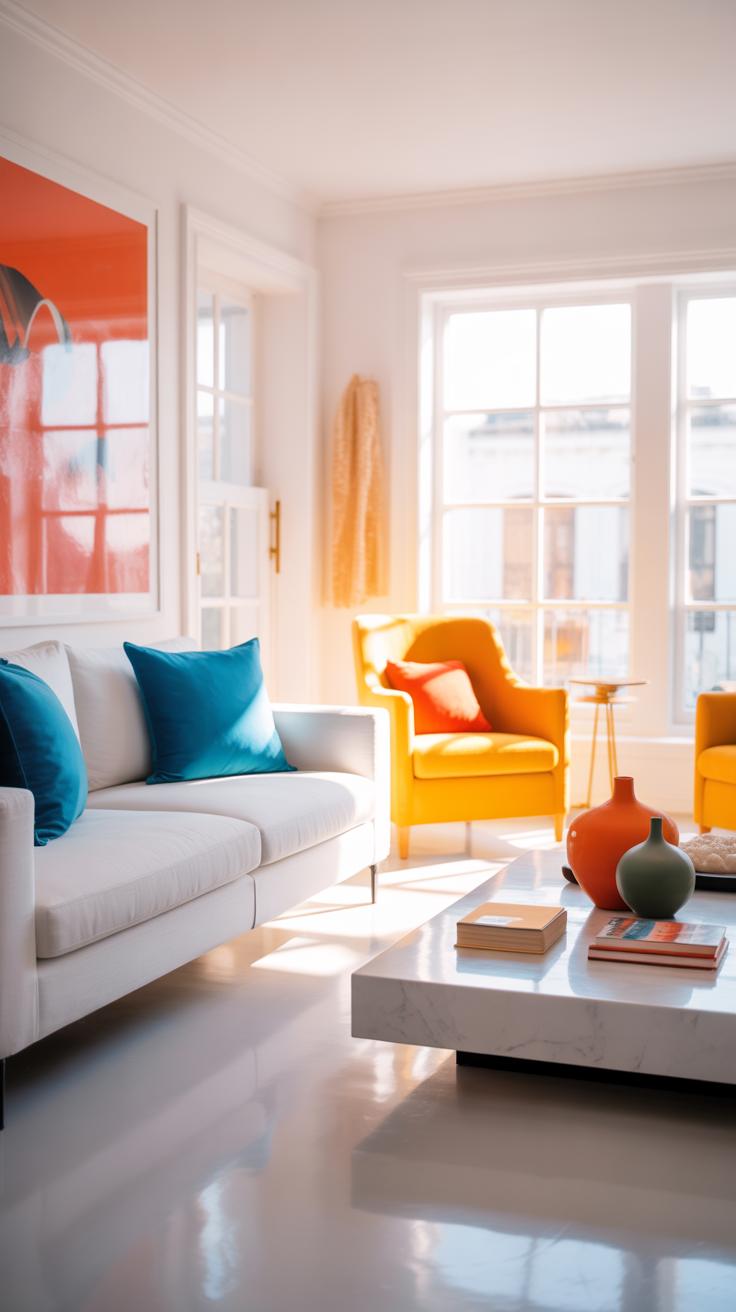
When working with a white living room, it’s tempting to flood the space with bold colors, but that risks ruining the minimalist vibe you’re aiming for. Instead, you might want to weave in accent colors gently—almost like a whisper rather than a shout. Think of small touches rather than large swaths. For example, a soft pastel pillow or a subtle piece of wall art can do wonders without taking over.

Some color options that tend to play well with white and still keep things calm include muted blues, warm grays, gentle greens, and even soft blush tones. These colors feel quiet yet alive, steering clear of anything too loud. You could use these hues in cushions, a throw blanket, or a small rug—places where a little pop is noticeable but never overwhelming.
Placing accents strategically makes all the difference. Pillows on a white sofa, a single piece of artwork against a blank wall, or a small side table painted in a soft accent color can provide visual breaks. It’s tempting to try and balance things evenly, but sometimes an off-center placement or an unexpected corner can add a bit more interest without clutter.
Have you ever noticed how even a tiny colored vase on an otherwise white shelf can shift the whole room’s energy? It’s these small, intentional touches that keep your minimalist space feeling alive, not sterile. So maybe resist the urge to cover every surface, and instead choose your spots wisely. It’s a slower, more thoughtful approach, but isn’t that what minimalism is about anyway?
Lighting Strategies For White Rooms
Natural Light Tips
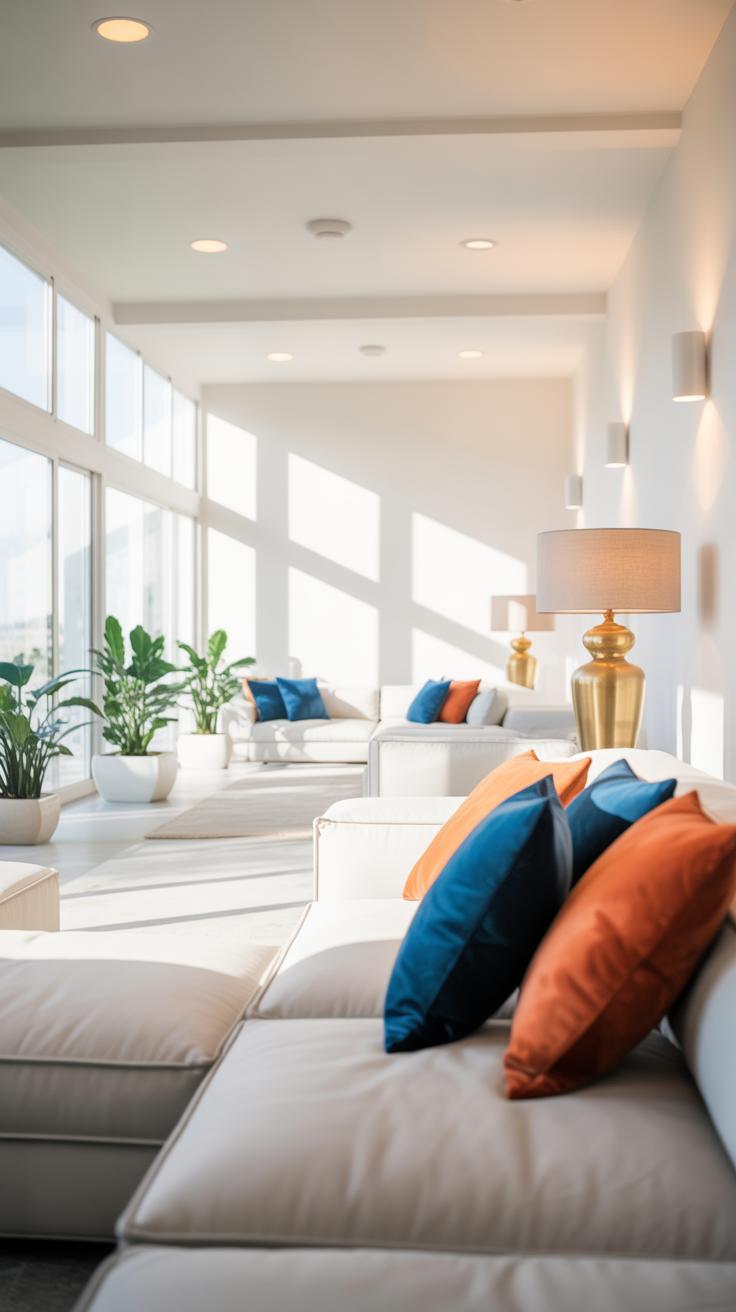
White living rooms rely heavily on natural light to highlight their clean, minimalistic appeal. If you can, position your white living room facing east or south to catch maximum daylight throughout the day. Large, unobstructed windows work best. When it comes to window treatments, try sheer curtains or light-filtering blinds — they soften incoming light without dimming it too much. Heavy drapes tend to swallow light and counter the airy feel you want for a white space.

One simple trick: keep windows clean. It sounds obvious, but dust and grime can dull natural brightness more than you’d expect. Also, consider reflective surfaces near windows, like a strategically placed mirror or glossy furniture, to bounce natural light deeper into the room.
Artificial Lighting Choices
Artificial light must complement the natural glow, not overpower it. Use a mix of light sources — overhead fixtures combined with table and floor lamps help create layered illumination. Lamps with white or translucent shades diffuse light evenly, preventing harsh shadows that break the minimalist vibe.
Bulb choice matters here. Look for bulbs with a color temperature around 2700K to 3000K for warm, inviting whites rather than cold, clinical tones. Placement of fixtures plays a role too. Avoid direct ceiling lights that cast stark, flat light. Instead, opt for adjustable lamps to highlight areas and add soft warmth where natural light fades in the evening.
Experiment with dimmers. Having the option to tweak light levels adds ambiance and lets your white living room shift from bright and lively to cozy and calming, depending on mood and time of day.
Cleaning And Maintenance Tips


Keeping a white living room fresh isn’t always straightforward. You might find yourself hesitating before using certain cleaners or worrying that furniture will yellow. Yet, with some attention and care, those concerns can be eased. For furniture, it’s best to pick materials that can handle gentle cleaning. Fabric sofas should be protected with washable covers or treated with stain repellents to prevent stubborn marks.
For daily upkeep, small routines go a long way. Wiping surfaces down with a microfiber cloth each evening helps prevent dust buildup. Quick spot cleaning when spills happen—rather than letting them sit—makes a real difference. Don’t forget to regularly vacuum rugs and cushions to keep dirt from settling deep in fibers.
When stains do occur, certain methods prove effective. For common food or drink spots, dab with mild soap and water, then blot dry. Stronger blemishes might need diluted vinegar or baking soda paste—but test any cleaner first on an inconspicuous area to avoid surprises. These practical steps might seem simple, but they help maintain the bright, fresh look that white spaces demand.
Decorating Walls And Shelves Simply
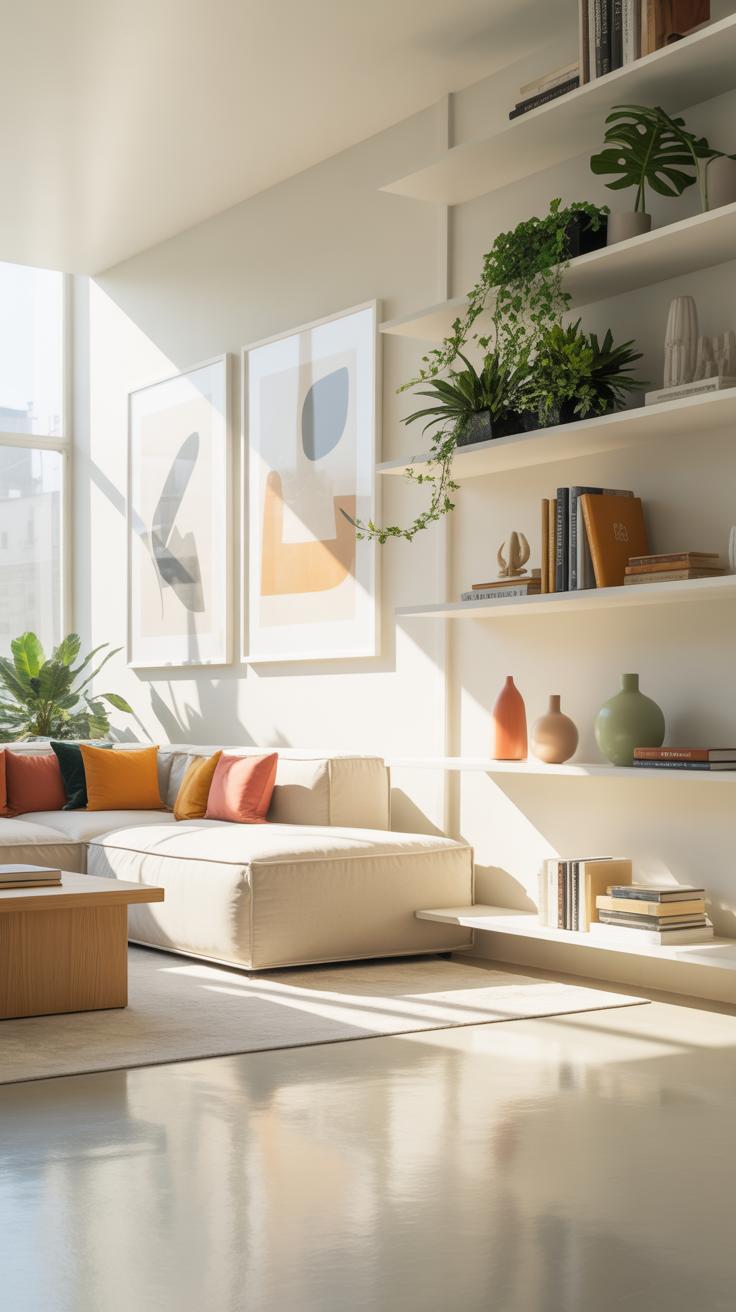
When it comes to decorating walls and shelves in a white living room, the goal is to keep things simple and uncluttered. This isn’t always as easy as it sounds, right? A minimalist space can quickly become overwhelmed if too many items compete for attention. Instead, try focusing on just a few key pieces that add interest without creating visual noise.

For walls, consider a single large piece of art or a modest gallery wall of small monochrome prints. White walls are a perfect backdrop for subtle color pops — gentle blues, soft grays, or muted earth tones work nicely. You don’t want the art to shout, but rather hint at personality quietly. Sometimes I’ve found that a mirror with a thin frame or a simple floating shelf can be just enough to avoid that “bare” feeling.
On shelves, less truly is more. Aim for neat arrangements of books, plants, and carefully chosen decor objects. Books can be stacked horizontally or vertically, mixing textures and heights. A small potted plant can add a refreshing touch of life without cluttering. And perhaps a few personal mementos or sculptural forms can provide focal points without crowding the shelf. Avoid cramming every inch — let things breathe.
Would you agree that it takes a bit of trial and error? Sometimes stepping back and living with a setup for a few days makes clear what works. Minimalism isn’t about having no belongings but about making thoughtful choices that respect the space’s peaceful simplicity.
Incorporating Plants And Natural Elements
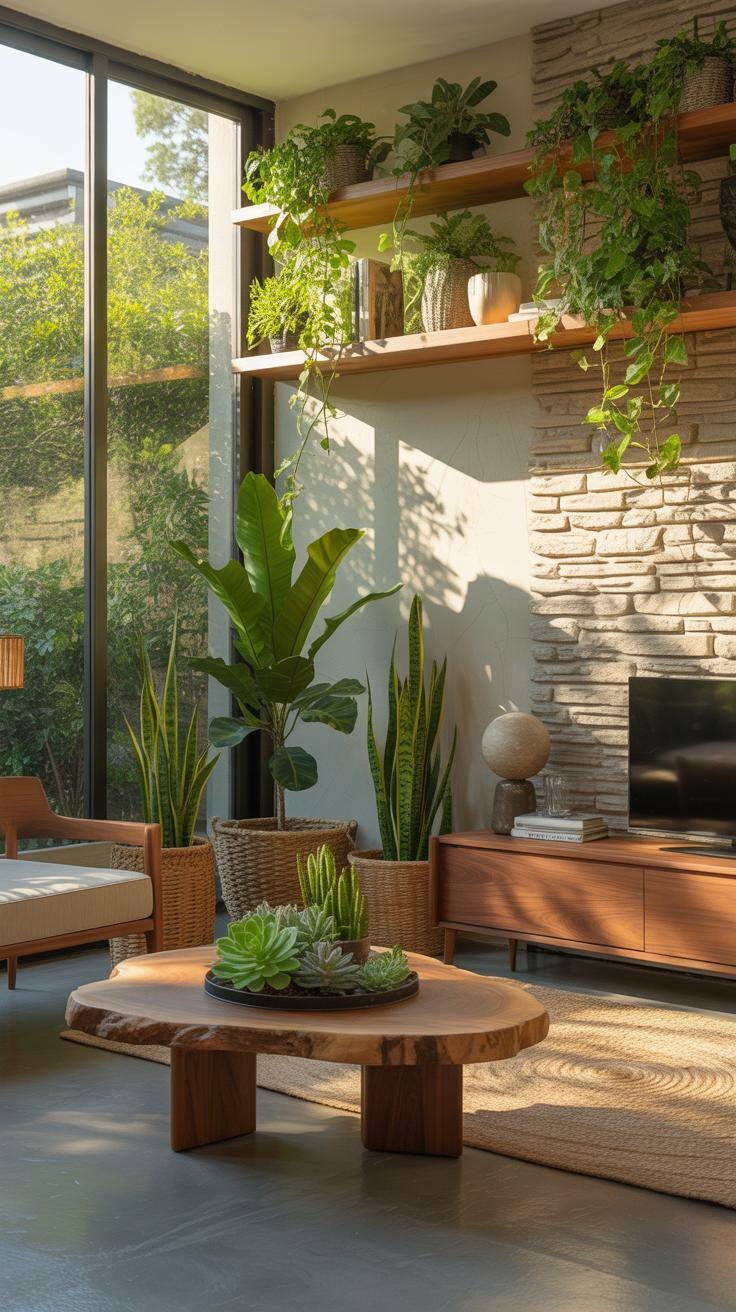
A white living room immediately suggests cleanliness and simplicity, but it can sometimes feel a little cold or stark. That’s where plants and natural materials come in. Adding a bit of greenery or organic texture breaks up the monochrome without overpowering the calm vibe. Plants introduce life, color, and even air-purifying benefits, while natural materials like wood and stone subtly warm the space.
Best Plants For Indoor White Spaces

Choosing plants for a white room means thinking about contrast and ease of care. You don’t want to fuss too much, but you want something that looks fresh and vibrant. Some low-maintenance options that tend to thrive include:
- Snake Plant – tough, with sleek upright leaves that contrast nicely against white walls.
- ZZ Plant – a bit shiny, can handle lower light, and doesn’t require frequent watering.
- Peace Lily – elegant white flowers that quietly reinforce the room’s palette without blending in entirely.
- Pothos – trailing vines that add softness and dimension, easy to grow anywhere.
- Succulents – perfect for small spaces, with varied shapes and textures.
Each of these brings a bit of nature’s unpredictability into an otherwise controlled setting. The extra green can be surprisingly grounding if you’ve ever spent time in a purely white space that feels too clinical.
Using Wood And Stone Elements
Natural elements like wood and stone counterbalance white’s sterility in subtle but powerful ways. Wood pieces — think coffee tables, frames, or shelving — add warmth through their color and grain. Even the type of wood can vary the effect: lighter woods like oak stay airy, while deeper woods introduce a touch of richness. Stone, such as marble or slate details, lends texture and solidity, offering contrast without clutter.
When incorporating these materials, aim for simplicity. One or two pieces with natural textures keep the room looking calm and intentional. For instance, a wooden floorboard running beneath a white sofa can make the space feel more connected to the earth. Stone accessories — perhaps a carved bowl or a decorative tile — add interest without detracting from the minimalist scheme.
It’s tempting to pack in lots of natural pieces, but that risks losing white’s defining lightness. Instead, think layers of simplicity: white walls, a few plants, and well-chosen wood or stone accents that invite you to look closer without overwhelming the senses.
White Living Room Vs Other Color Schemes

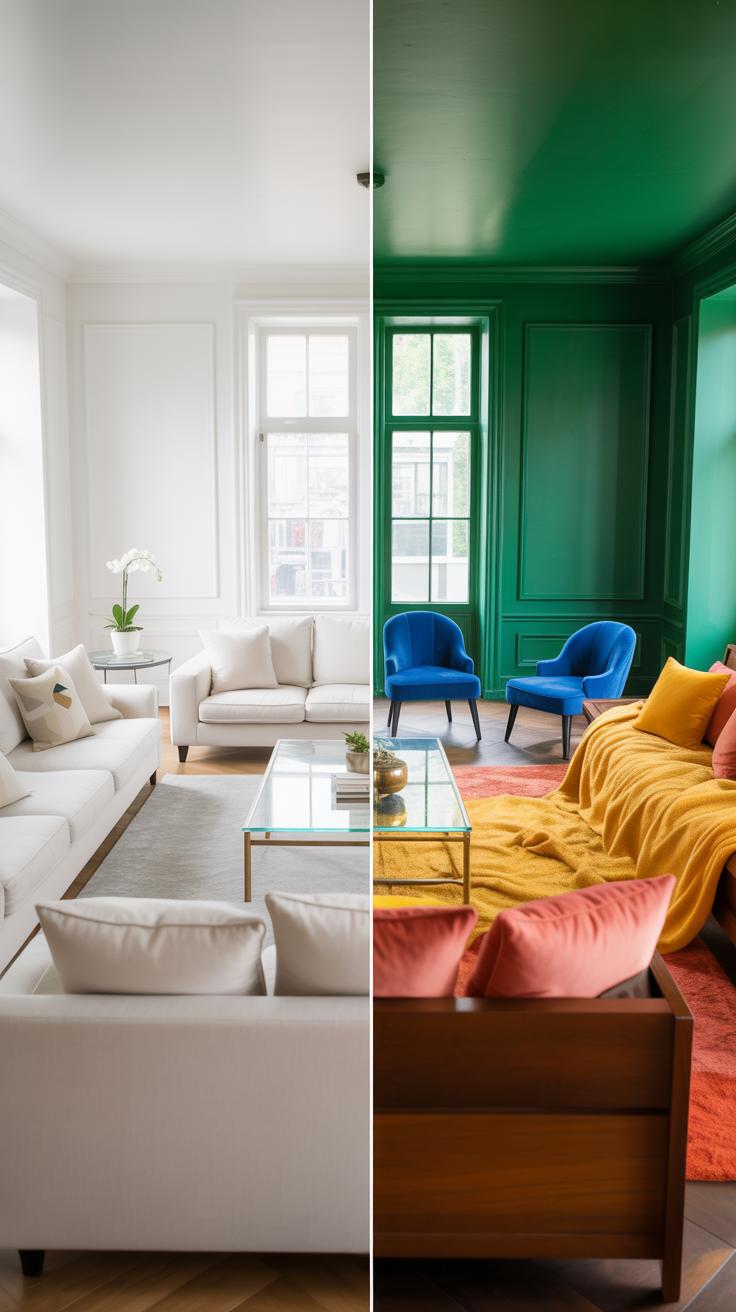
Choosing white for a living room sets a stark contrast to softer palettes like beige or more muted tones such as gray. White instantly brightens a space and offers a clean blank canvas that other colors sometimes lack. It’s like the room breathes more freely; you can almost feel the openness.
On the flip side, beige and gray lean towards warmth and coziness—they tend to mask imperfections better and rarely feel too cold or clinical. But their subtlety might make a space feel a bit closed in or dull, especially without proper lighting. White demands attention but can also accentuate every detail, clean or not.
Advantages Of White Rooms
White is a favorite for minimalist design due mostly to its simplicity. It reflects natural light wonderfully, making spaces appear larger and airier. I guess that’s why so many photographers prefer white backgrounds—it doesn’t distract from what matters. In living rooms, white supports a calm, uncluttered vibe that encourages relaxation and focus.
Moreover, white pairs nicely with almost any accent color or texture, allowing flexibility in decor choices. Whether modern or rustic, white can unify diverse elements effortlessly. That said, the brightness isn’t always gentle; it’s invigorating, sometimes too stark for those who prefer subtlety.
Challenges Of Maintaining White
Living with white on walls and furniture isn’t without hassle. It can show stains, dirt, or even everyday dust very easily, making it tempting to over-clean or stress about upkeep. You might find yourself wiping down surfaces more than you’d like, which can be tiring or frustrating.
One way to manage this is to invest in washable paint or durable fabrics meant for heavy use. Also, introducing a few textured or matte elements can help hide imperfections without sacrificing the overall white aesthetic. Still, it’s something to consider carefully—white demands commitment, both in cleaning and care.
Step By Step White Living Room Setup
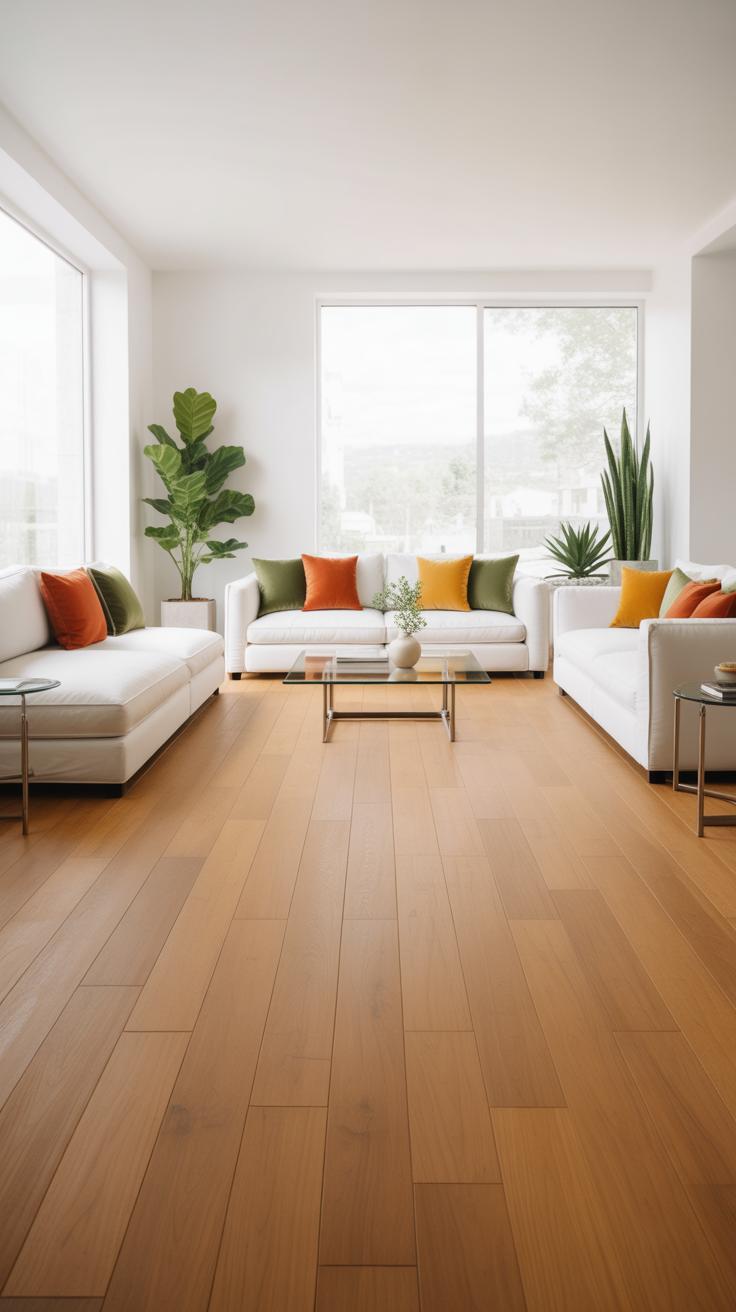
Planning Your White Living Room
Start by measuring your living room carefully. Note the dimensions of walls, windows, and doorways. This will help you avoid buying furniture that won’t fit or overcrowd the space. It’s easy to get carried away with ideas, but precise measurements keep things realistic.
Next, set a budget. White-themed rooms can quickly become expensive if you pick high-end pieces or specialty items. Decide how much you want to spend on furniture, paint, and accessories. It might feel restrictive, but having a clear budget means fewer surprises later.
Spend some time visualizing the space. Think about how light moves through the room at different times of day—this affects how the whites will appear. Sketch a rough layout or use digital tools to imagine furniture placement and color accents, even if subtle. The key is not just white everywhere, but a cohesive, peaceful space.
Decorating And Final Touches
Once you have your pieces, start by placing the largest furniture first. Sofas and tables come first because they anchor the room. Don’t be afraid to leave some empty zones; a white room sometimes benefits from breathing space.
After that, add accessories like rugs, cushions, or curtains to break monotony. They should be whites or very soft shades that don’t clash. Small plants or natural textures can ground the space and keep it from feeling sterile.
Finally, reflect on lighting. White walls can reflect light brilliantly but can also highlight imperfections or shadows. Consider installing adjustable lighting to create different moods. It’s also handy for highlighting art or focal points you want to draw attention to. Adjust as you live in the room—you might find the setup changes as you get accustomed to the space.
Conclusions
White living room decor focuses on simplicity and cleanliness. Using various shades of white can add depth while keeping the calm, minimal atmosphere. Furniture arrangement should emphasize open space and function, never clutter.
Textures and accents help break the monotony of white without losing the minimalist feel. When done right, a white living room offers a timeless space that is both inviting and easy to maintain. Give these ideas a try to refresh your space with clarity and comfort.