
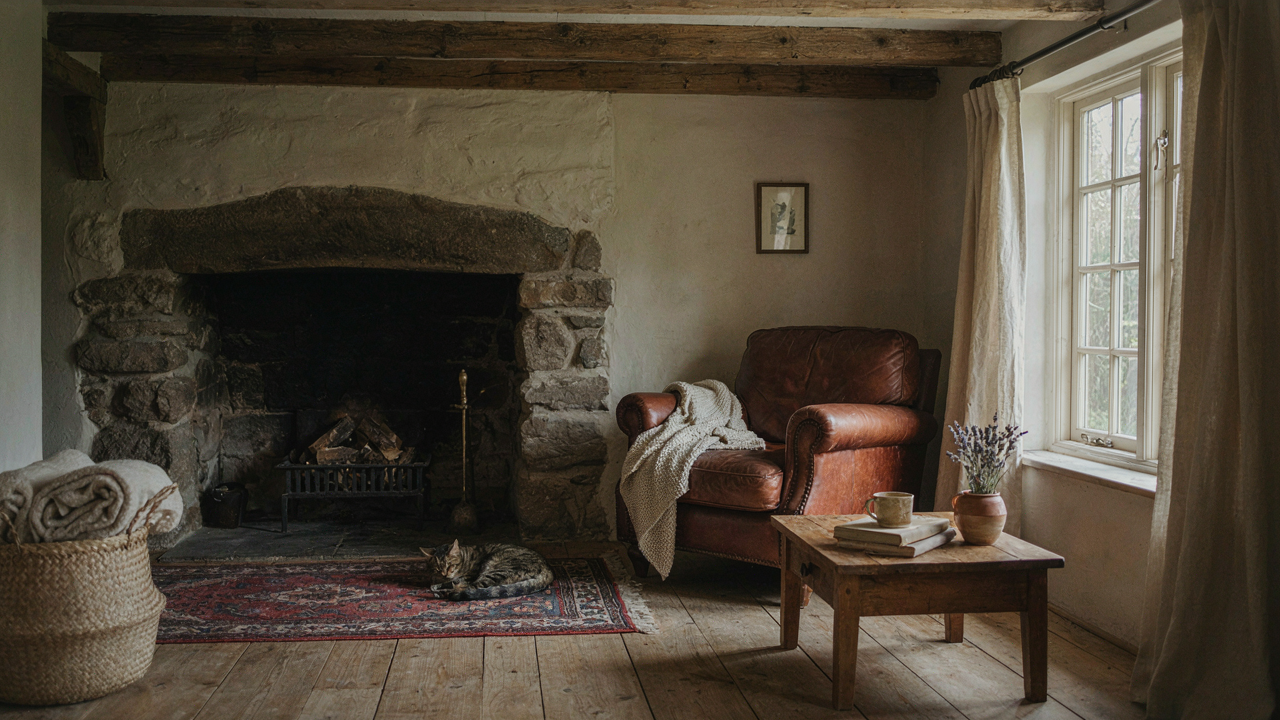
The Illusion Of Instant Patina
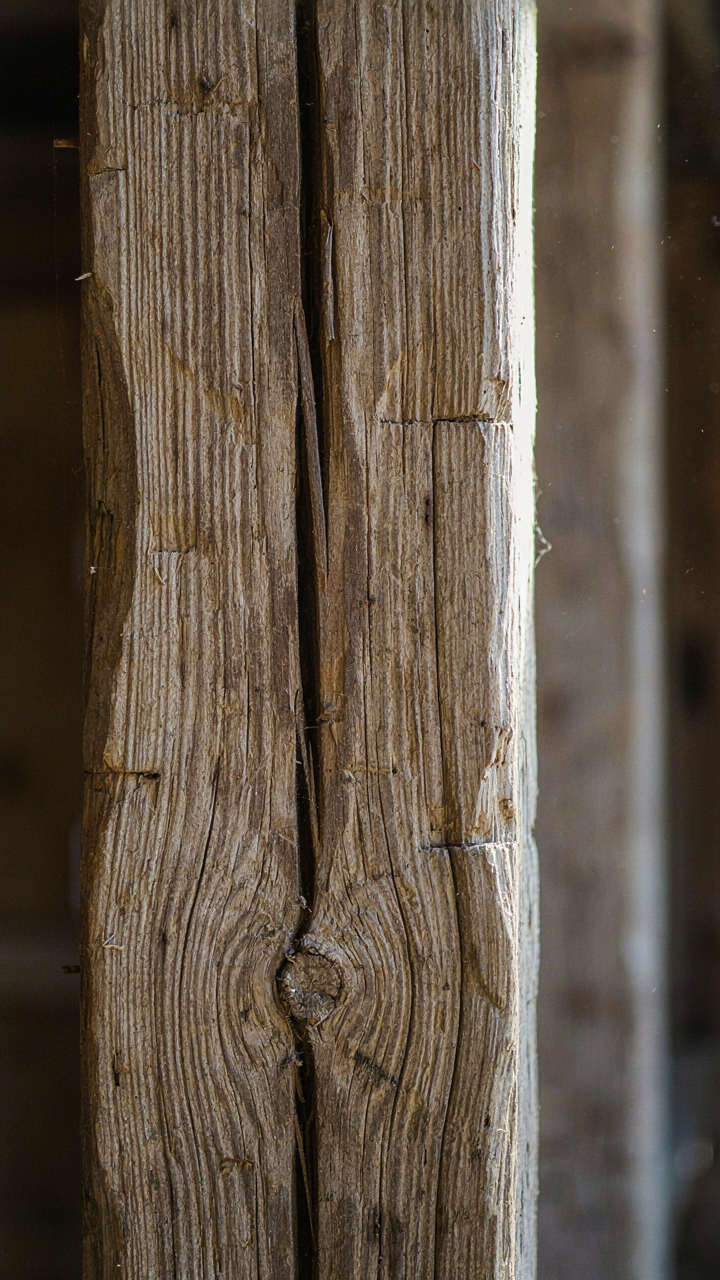
Why New Distressed Fails
You want people to think your cottage has history you didn’t actually build. That’s the real agenda here, and it matters because it’s exactly why factory-distressed wood looks like a costume. The distressing industry applies damage uniformly, which violates how actual weathering works. Real wear concentrates in high-traffic zones and under water runoff. It follows physics, not aesthetics. Machine-distressed edges look identical across a room because they came from the same mold. Nature creates variation by targeting specific stress points, never the whole surface equally.
The deeper problem: new distressed wood hasn’t experienced the dimensional changes that real aging creates. Wood swells and shrinks with moisture cycles over years. This movement opens joints, lifts grain, and creates micro-cracks that no sandblaster can replicate convincingly. When you run your hand across authentic aged timber, you feel uneven surfaces that tell a story of specific exposure. Factory distressing feels theatrical because it lacks this mechanical history. Buyers and guests sense the difference even if they can’t name it.
Authentic Aging Time Weather Use
Authentic patina requires a mechanism: exposure. Wood ages through repeated cycles of UV light, temperature swings, moisture absorption, and physical contact. A cottage beam that spent decades under open eaves shows different weathering than one shielded under an overhang. The wood doesn’t just darken; it develops a surface layer of oxidation and micro-erosion that protects deeper fibers while creating visual depth. This process takes years, not weeks. You cannot compress it without abandoning authenticity.
The protocol is straightforward: source genuinely old wood, position it where it will experience real use and exposure, then document the ongoing changes. Reclaimed timber from barns, mills, and old structures already carries this history in its grain and surface. Install it in locations where it will weather further: exterior walls facing weather, interior beams in open kitchens where heat and moisture cycle regularly, flooring in high-traffic areas. The wood’s past becomes its present, and its present becomes its future. Let time do the work you cannot fake.
Unfitted Kitchen French: The Anti Showroom Approach
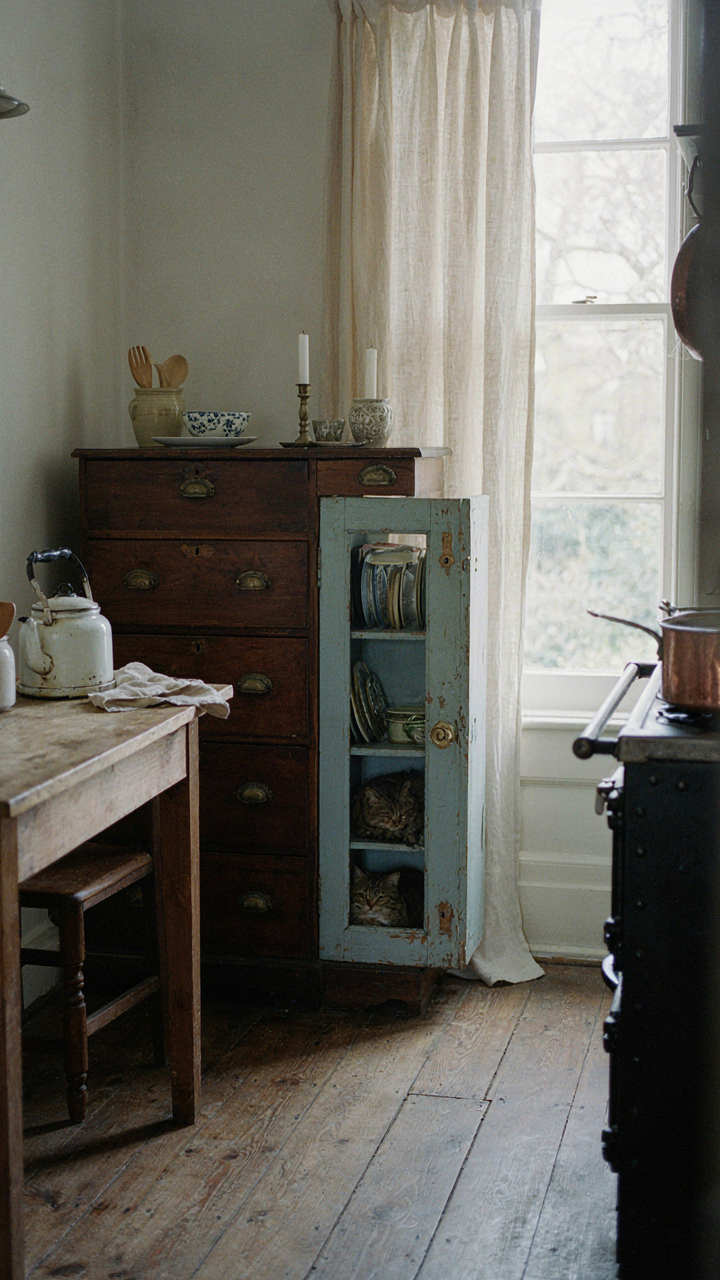
Salvaged Pieces, Not Matching Sets
You want permission to stop pretending your home needs to look like a catalog spread. The real mechanism at work here is constraint. French rural kitchens evolved from necessity, not design boards. Families bought a cabinet when they had money, a table from a neighbor’s estate sale, a hutch from a different era entirely. This forced mixture is what reads as authentic now because it actually was authentic then.

Matching sets were a luxury most cottages never had. A pine dresser from 1890 sits next to a painted cupboard from 1920. The wood tones clash. The hardware doesn’t line up. This is not a failure of planning. It’s the signature of a space built over decades, not assembled in a weekend. Your kitchen gains depth because its pieces carry different histories.
Function Before Visual Continuity
The common advice says to “find a cohesive look.” That’s backward. Rural French kitchens prioritized what the space had to accomplish, not how it looked doing it. A heavy farmhouse table went in the center because that’s where the family ate and the work happened. Open shelving held frequently used items within arm’s reach, not because it looked rustic but because it saved steps during cooking.
When you organize around utility first, visual coherence emerges on its own. A worn marble countertop stays because it works for pastry, not because it matches the aesthetic. Hooks go on walls where hands naturally reach them. Hooks don’t care about style. Authenticity in rustic cottage kitchens comes from watching how people actually move through the space, then letting that movement dictate placement. This approach eliminates the friction between what looks good and what functions well. Function builds the layout first. Design follows.
Cabin Cottage Homes: Beyond The Log Cabin Fetish
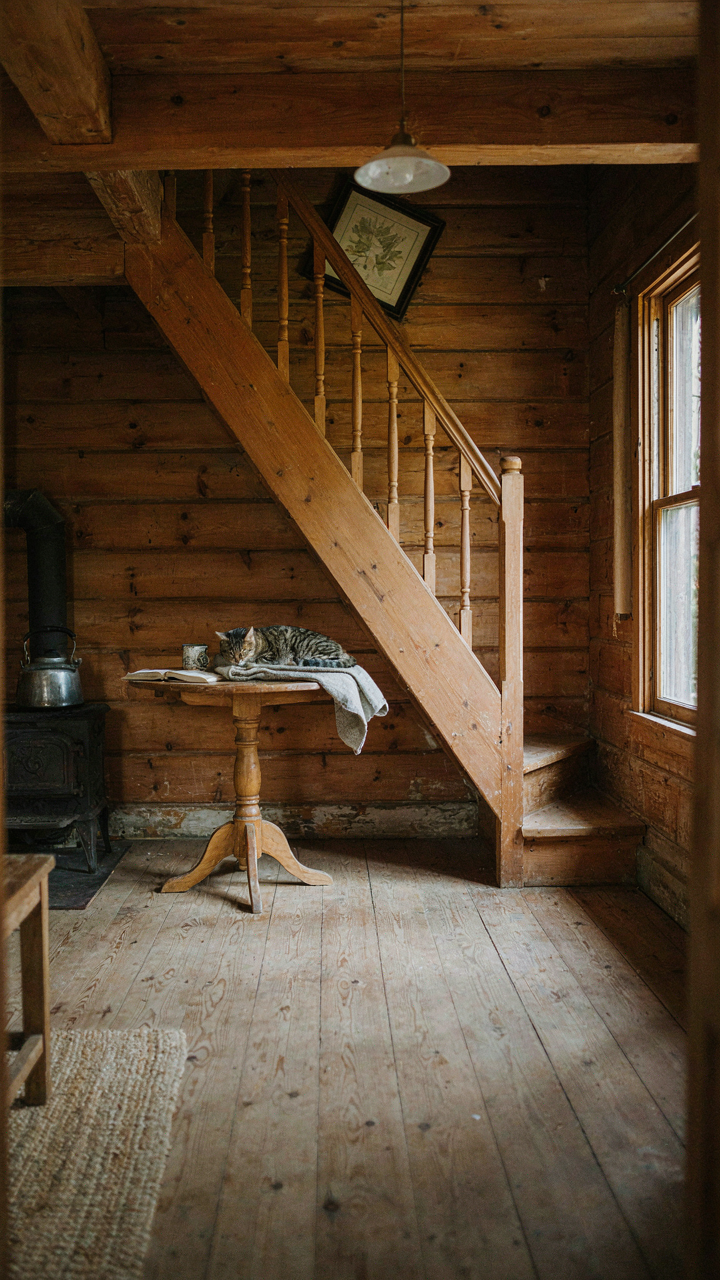
Small Footprint, Intelligent Design
You want a rustic cottage because you think it signals you’ve escaped the rat race. The real mechanism is constraint. A small footprint forces you to design intentionally instead of sprawling into waste. This is basic supply-side economics applied to architecture: scarcity breeds efficiency.

Cottage design predates modern sprawl by centuries. Pre-industrial homes stayed small because materials, labor, and heating costs made waste impossible. A 1,200 to 1,600 square foot cottage isn’t quaint nostalgia—it’s the default when you can’t afford to heat dead space. Today, that constraint becomes your advantage. Every square foot demands purpose.
The layout solves this. Open-plan kitchens bleeding into living areas weren’t invented by Instagram. They worked because one room doing multiple jobs meant fewer walls, less heat loss, simpler construction. Tight stairs, low ceilings, and compact bathrooms aren’t design flaws—they’re the infrastructure of efficiency. When you stop fighting the small footprint and start leveraging it, the cottage stops feeling cramped and starts feeling complete.
Embracing Imperfection As Character
The design principle here is entropy. In thermodynamics, entropy measures disorder. In rustic cottage design, disorder—visible wood grain, uneven walls, weathered surfaces—signals authenticity because imperfection is harder to fake than perfection.
Weathered wood doesn’t come from a factory. It comes from time, sun damage, wood movement, and genuine use. Attempting to simulate this with stains and distressing techniques fails because the mechanism is missing: real weathering happens through exposure and cycle stress, not surface treatment. The cottage aesthetic works when you source genuinely old materials or accept that new wood will age in real time. Plaster cracks, uneven floors, and visible joinery aren’t problems to hide. They’re proof the structure is settling and moving naturally, which old timber frames do for decades.
The trap most people fall into is treating imperfection as decoration. It isn’t. Imperfection is what happens when you stop refinishing and start maintaining. Stop sanding walls smooth. Stop caulking every gap. Stop trying to make a 1920s cottage look like it rolled off a 2024 production line. The maintenance protocol is simple: preserve the damage, repair the failure. A crack that doesn’t spread stays visible. A board that splits but holds stays in place. This is how character actually forms.

The Entropy Of Warmth: Nature Cottage Edition
When Decay Becomes The Design
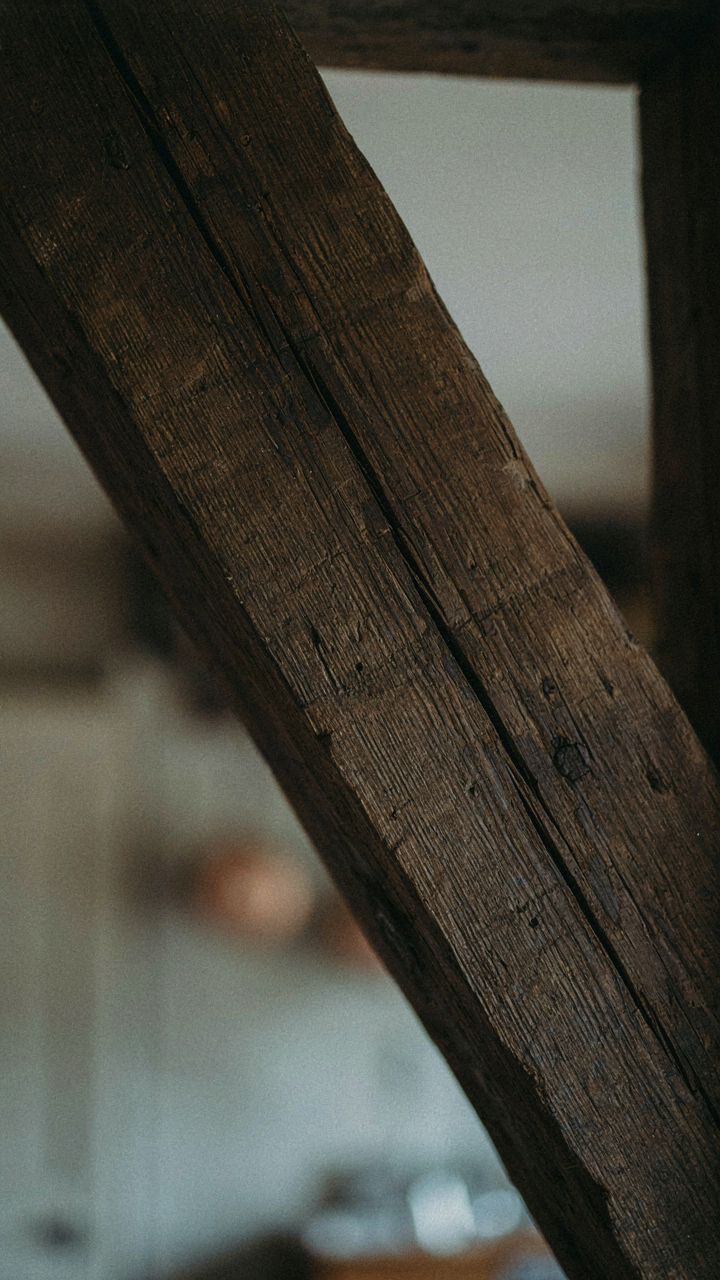
You want permission to stop fighting the house. That’s the real reason you’re reading this. The common advice on rustic cottages treats weathering like a problem to manage instead of the actual material you’re working with. It’s backwards. Entropy—the physics term for disorder increasing over time—is what makes a cottage feel lived-in rather than performed. Wood doesn’t fail. It transitions. Accepting that shift changes everything about how you build interiors.
The weathered wood in a rustic cottage isn’t salvaged nostalgia. It’s the documented record of how material responds to moisture, sun, and time. A beam darkened by decades of ambient humidity tells you where air actually moves through the space. Checking and cracking in wood shows you load paths and seasonal wood movement. Instead of hiding these marks, they become your design baseline. This means you stop fighting entropy and start reading what the house already knows about itself. Use those patterns to inform where you place heavy furniture, where you add insulation, where air needs to flow.
Rhythm Mirrors Real Systems
Permaculture observes how natural systems self-organize, and the same principle applies to cottage interiors. A permaculture zone is defined by how often you interact with it. Translate that to your layout: the most-used spaces should require the least energy to maintain, while peripheral spaces can tolerate more decay and irregularity. Your kitchen acts like zone one. Your guest bedroom acts like zone three. This isn’t decoration theory. It’s resource allocation.
Most cottage interiors fail because they try to impose uniform finish standards across all spaces. Instead, map your actual daily movement through the house, then tier your material choices to match use intensity. High-traffic areas need durable wood and sealed surfaces. Low-traffic areas can embrace rougher finishes and visible weathering. This reduces maintenance load and creates authentic variation instead of forced rusticity. The mechanism is simple: finish quality matches function, which means the house stops fighting you and starts supporting how you actually live in it.

Cute Cabin House: The Practicality Paradox
Form Follows What Actually Works
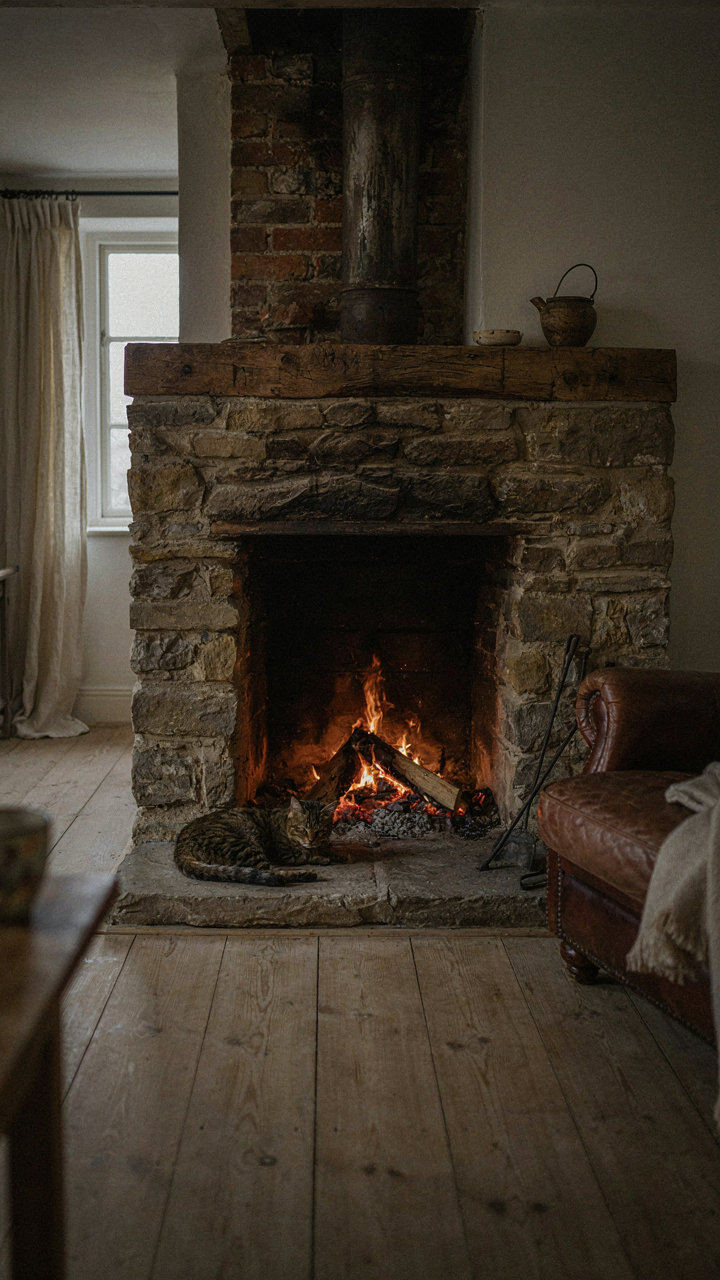
You want a rustic cottage because it looks like it doesn’t try. That’s the real sell. But here’s what nobody says: that effortless look only exists when function runs the entire design from the start. In engineering, form follows function means the shape solves a problem first, then looks right second. A rustic cottage works the same way. The exposed beams aren’t there for aesthetics. They’re structural. The stone fireplace isn’t quaint. It’s heat. The layout isn’t charming. It’s efficient.
When you reverse this order and pick aesthetics first, you get a cottage that photographs well and fails constantly. Leaks appear where windows weren’t sized for weather. Drafts migrate through walls designed for looks, not insulation. The kitchen becomes unusable because the layout prioritized views over workflow. The mechanism is simple: every design decision must solve a material problem before it solves a visual one. Start with what the structure needs to survive. Beauty emerges from that constraint, not the other way around.
Upkeep Dictates The Whole Blueprint
Most design advice treats maintenance as an afterthought. It’s not. Maintenance is a structural constraint that shapes every material choice and spatial decision in a rustic cottage. Wood that looks weathered requires active management or it decays. Stone that appears rustic needs drainage or it absorbs moisture. Metal hardware oxidizes or corrodes depending on exposure. Ignore this and you’re funding constant repair cycles that destroy the cottage’s function.
The real protocol: specify materials based on their maintenance cost and frequency, not their appearance. Reclaimed wood requires different upkeep than new timber stained to look old. Lime mortar in stone joints needs repointing on a schedule different from modern cement. Thatch, if you use it, demands skilled labor that’s rare and expensive. Before selecting any material, ask what it demands every year, every five years, every twenty years. Build the maintenance timeline into your budget and timeline at the start. If you can’t afford the upkeep, the material doesn’t belong in your cottage.

Old Wooden Cottage: The Material Honesty Protocol
When Wood Tells The Story You Can’t Fake
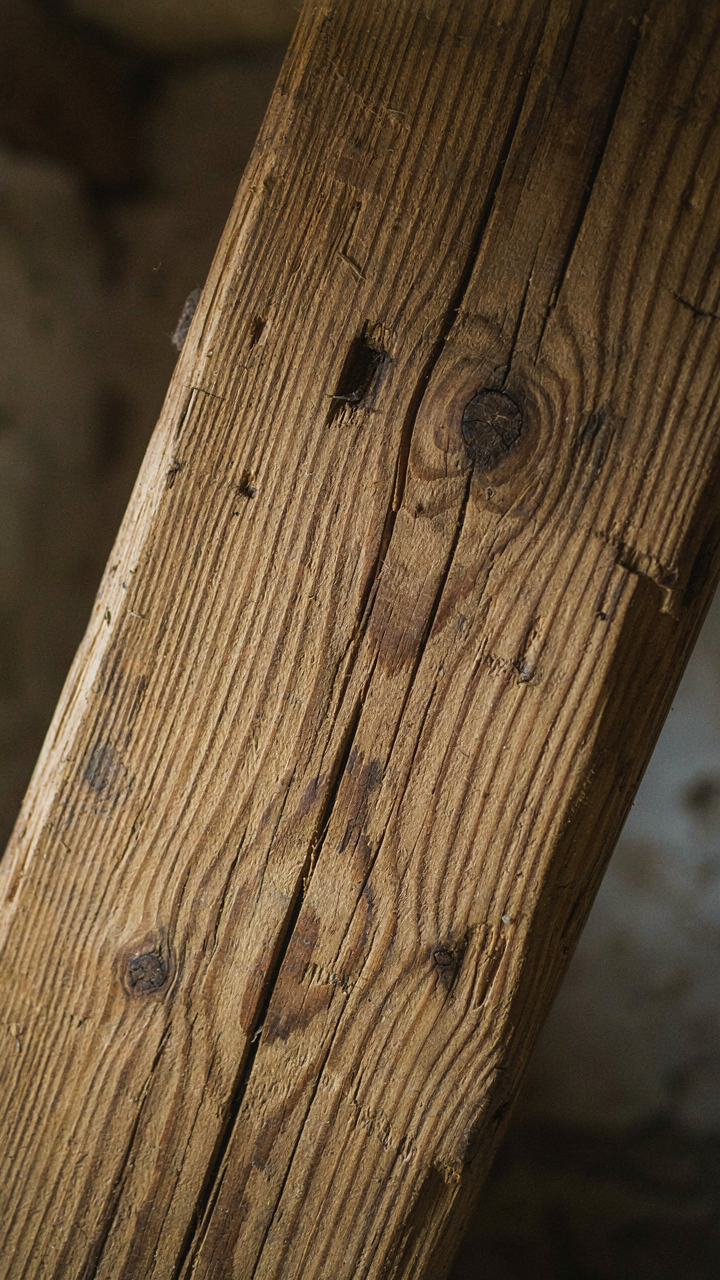
You want the wood to look old because you think it signals authenticity—that you have taste, history, depth. Here’s the mechanism: wood grain, knots, and patina function as a historical record. They’re evidence of age that cannot be manufactured convincingly. Think of wood the way archaeologists think about stratigraphy—layers that reveal sequence and time. Old timber cottages didn’t choose their grain patterns; they inherited them from growth rings that recorded droughts, abundant years, and environmental stress. This layering is your actual material.
When you study a timber cottage’s exposed beams or weathered siding, you’re reading a timeline. Growth rings show how fast or slow the tree grew. Checking patterns reveal where wood dried unevenly. Discoloration marks where water sat or light hit differently over decades. A builder can’t replicate this legitimately without actually waiting. This is why authentic weathered wood costs more—it carries real information. Your job isn’t to create the appearance of age; it’s to source material that already carries it and resist the urge to “improve” it.
Refinishing Is Where Authenticity Dies
The standard advice tells you to sand, stain, and seal old wood. This is wrong. Refinishing treats wood like a blank canvas to be corrected, when the correction itself destroys the material honesty you’re after. Every coat of polyurethane, every stain application, and every sanding pass removes evidence. You end up with wood that looks uniformly aged, which is a dead giveaway that it’s been processed.
Authentic rustic cottages preserve the wood as it settled. That means dust, minor damage, uneven weathering, and color variation stay. Your protocol: clean with soft brushing or dry cloth only. If structural integrity requires treatment, use penetrating oil that soaks in rather than sealing on top. The surface should remain tactile and imperfect. Wood that’s been left alone reads honest; wood that’s been refinished reads performed.

Country Home Wendy Interior: The Deliberate Accumulation Method
Curated History, Not Clutter
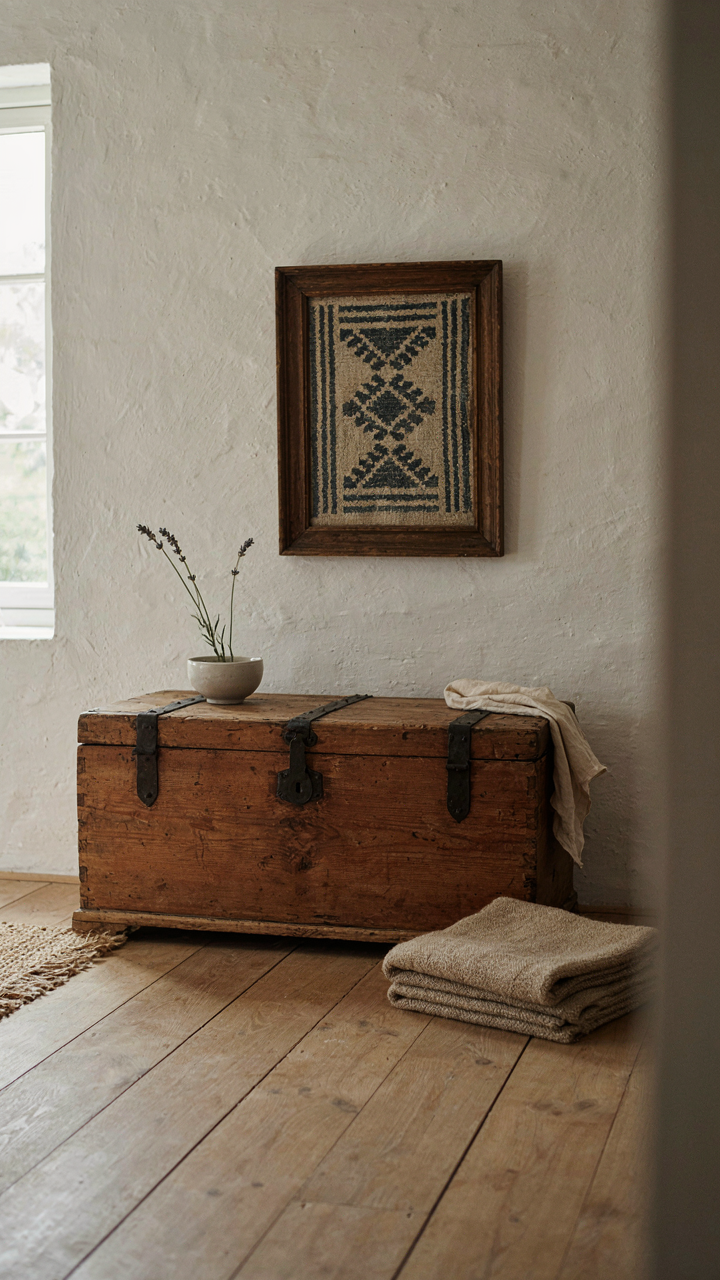
You want permission to buy more stuff and call it design. Here’s the mechanism: rustic cottage aesthetics borrow from archaeology, not interior decoration. An archaeologist doesn’t display every artifact found on a dig. She displays the ones that tell a story and reveal function. The difference between a rustic cottage that works and one that looks like a thrift store is selection pressure. Every object must justify its presence through either visual weight, functional use, or narrative clarity.
Most advice says “collect what speaks to you.” That’s backwards. Start by removing everything that doesn’t speak clearly. The real constraint is restraint. A rustic cottage that accumulates thoughtfully creates rhythm through negative space and intentional gaps. Each piece demands attention because competition for visual real estate is fierce.
- Salvaged architectural elements: Reclaimed mantels, doors, and shutters carry structural history and weathering patterns that new materials cannot replicate. Source from documented buildings rather than generic salvage yards.
- Handmade ceramics and pottery: Locally fired or vintage pieces show tool marks and glaze variation that mass production eliminates. Each piece functions as evidence of human labor.
- Vintage textiles with wear: Wool blankets, linen, and rugs display actual use patterns. The fading and fraying become proof of time passage, not defects.
- Cast iron and forged metal: Kitchen tools, trivets, and hardware reveal blacksmith technique through surface texture. Rust and patina work as a timeline.
- Field-sourced natural materials: Stone, driftwood, and found wood pieces anchor the interior to the physical landscape surrounding the cottage. Specificity matters more than uniformity.
The protocol: audit your current objects for redundancy and visual noise. Keep one exceptional version of each category. A single statement bench beats twelve decorative chairs. This forces intentionality and prevents the accumulation trap that kills rustic design.
Personal Narrative In Every Object
Stop treating objects as decoration. Each piece lives in your cottage because it carries information about a specific moment, person, or choice you made. This isn’t sentimentality. It’s the structural difference between a curated environment and a staged one. Your guests feel it immediately because narrative cohesion triggers pattern recognition in the brain. A room full of unrelated “rustic” items reads as confused. A room full of objects tied to deliberate choices reads as lived-in.

The mechanism works because humans decode environments for intention. When every object connects to a decision you made or a person you knew, the cottage becomes a physical autobiography. Someone’s grandmother’s quilts hanging in rotation. A wood table built from a tree that fell on your property. A cast iron skillet inherited and still cooking with. The weathering and marks become evidence of specific use, not generic aging. This transforms a rustic cottage from a aesthetic category into a location with actual history.
Rustic Kitchen With Vintage Table: Beyond Pinterest Polish
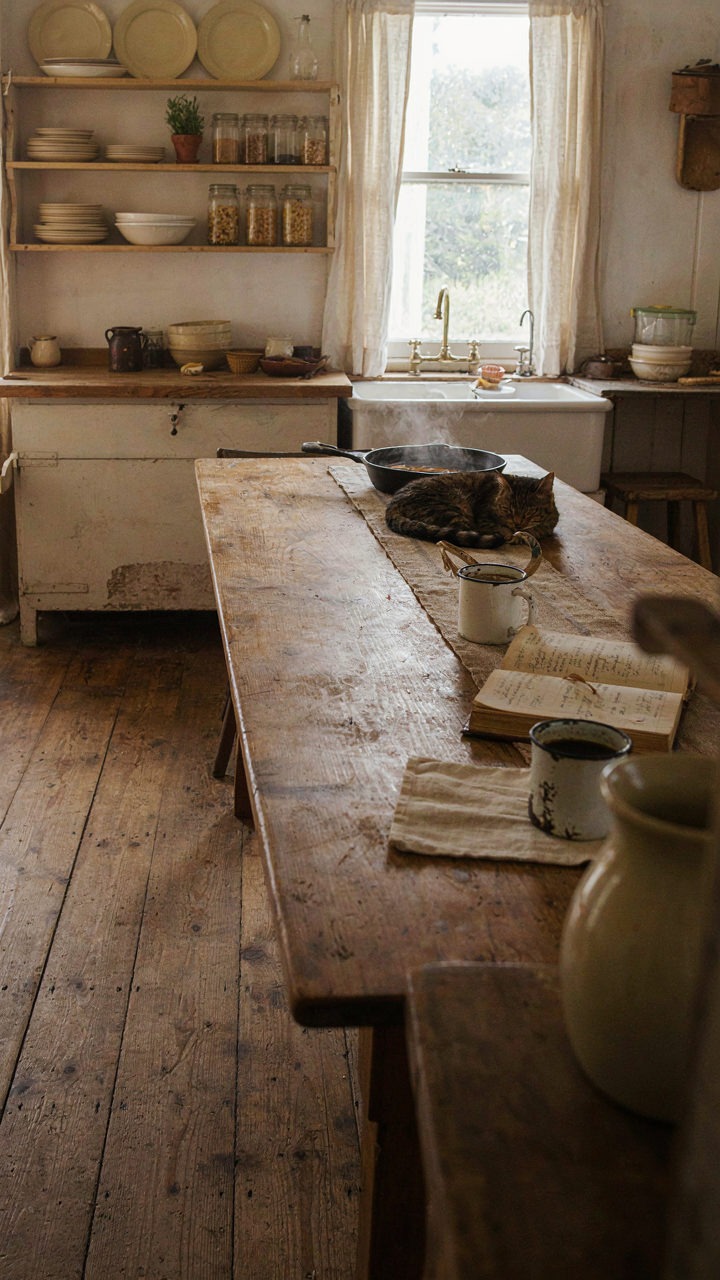
Worn Surfaces Tell Stories
You want permission to stop pretending your home is new. That’s the real currency here. The mechanism is simple: patina signals time, and time signals value. A surface that shows use doesn’t whisper status. It announces it.
Worn wood in a rustic cottage kitchen functions like a credibility marker. Deep scratches, faded stain, dents from decades of service—these aren’t flaws to hide. They’re evidence. A table that looks untouched reads as inexpensive reproduction. A table that shows actual damage reads as inherited or discovered. The cottage aesthetic hinges on this distinction. Your eye registers the difference instantly, even if your brain hasn’t named it yet.
The Scarcity Economics Of Vintage Sourcing
Everyone says “check local antique shops and estate sales.” That’s incomplete advice that costs you money. Economics teaches us about supply constraints. Apply that lens directly: authentic vintage pieces command premiums precisely because supply is finite and demand keeps climbing. The moment something becomes easy to find online, it stops signaling scarcity.

This means your sourcing strategy must invert. Stop hunting what’s already listed. Hunt what hasn’t entered the market yet. Private sales, farmhouse cleanouts, regional auctions outside major cities, direct purchases from aging homeowners—these channels yield pieces priced by sellers who don’t know what dealers would charge. The vintage table at an estate sale across town costs a third of the one in a boutique showroom. Your job is to move faster than the market catches up to the price.
Rustic Dining Room With Checkered Floor: The Anti Trend Imperative
Why Utility Beats Novelty
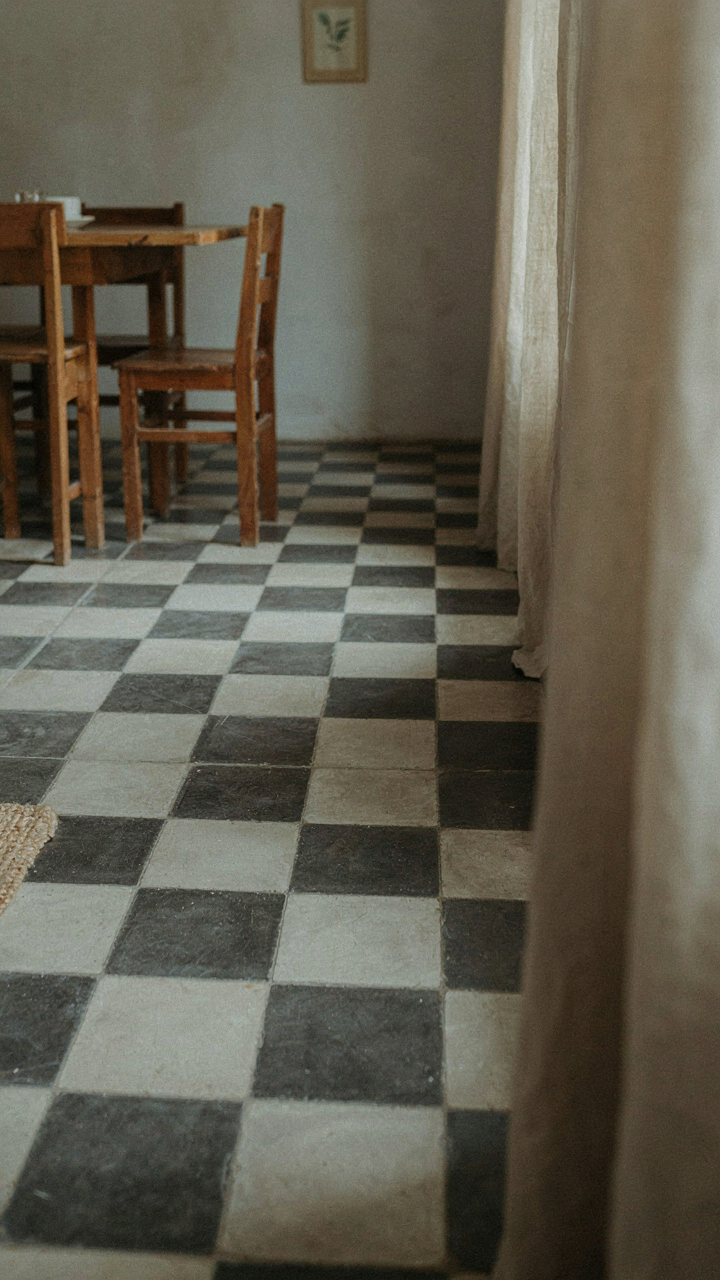
You want permission to stop chasing the next design thing. A checkered floor in a rustic cottage works because it solves a problem, not because it looks good in photos. The mechanism is survival bias: patterns that persist do so because they perform. Checkerboard tiles emerged in kitchens and dining rooms centuries ago because the alternating colors mask wear and hide food debris between cleanings. The pattern doesn’t age poorly because it was never decorative first.
Timelessness operates on the same principle as product reliability. A tool you use daily doesn’t become dated because it works. The checkered floor in a rustic cottage functions identically whether installed in 1890 or 2024. You’re not choosing it for trend compliance. You’re choosing it because dark and light squares reveal dirt less obviously than solid surfaces, and because the visual rhythm makes the space feel intentional without requiring maintenance rituals.
The Cost Of Chasing What’s Next
Most interior advice tells you to pick a style and commit. That’s wrong. What actually happens is you pick a style, commit, then two years pass and the algorithm shows you something newer, and you feel the itch to renovate. The real cost isn’t the money spent updating. It’s the cognitive load of deciding again and the opportunity cost of time spent shopping instead of using the space.
A checkered floor refuses obsolescence by design. It doesn’t reference a moment in history. It references function. When you build around function instead of trend cycles, renovation becomes unnecessary. The dining room stays usable and coherent for decades without redecorating. Start by choosing one durable material you’d install whether anyone was watching or not, then build the rest of the room in service to that anchor point.
Your Longing For Rustic Isn’t About Decor; It’s About Escaping The Manufactured Present
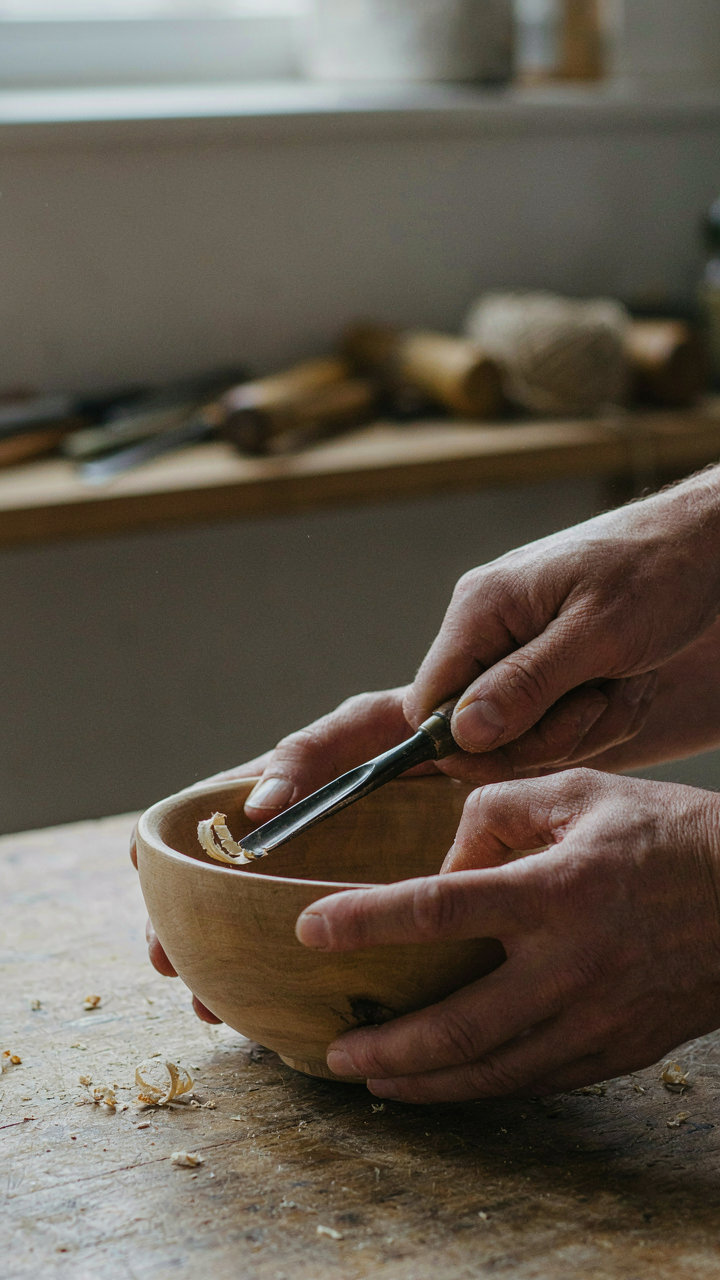
You don’t want a rustic cottage because of exposed beams. You want it because your nervous system is drowning in artificial light, artificial temperatures, artificial choices. A weathered wood table isn’t nostalgia. It’s rebellion. Today, walk into your space and remove one thing that hums, glows, or connects to the internet. Replace it with something that requires your hands to use it. That single act rewires your relationship with comfort. Stop decorating your escape and start building it.