
The Heirloom Fallacy: Why “Old” Isn’t Always “Warm”
Patina Versus Paint Job
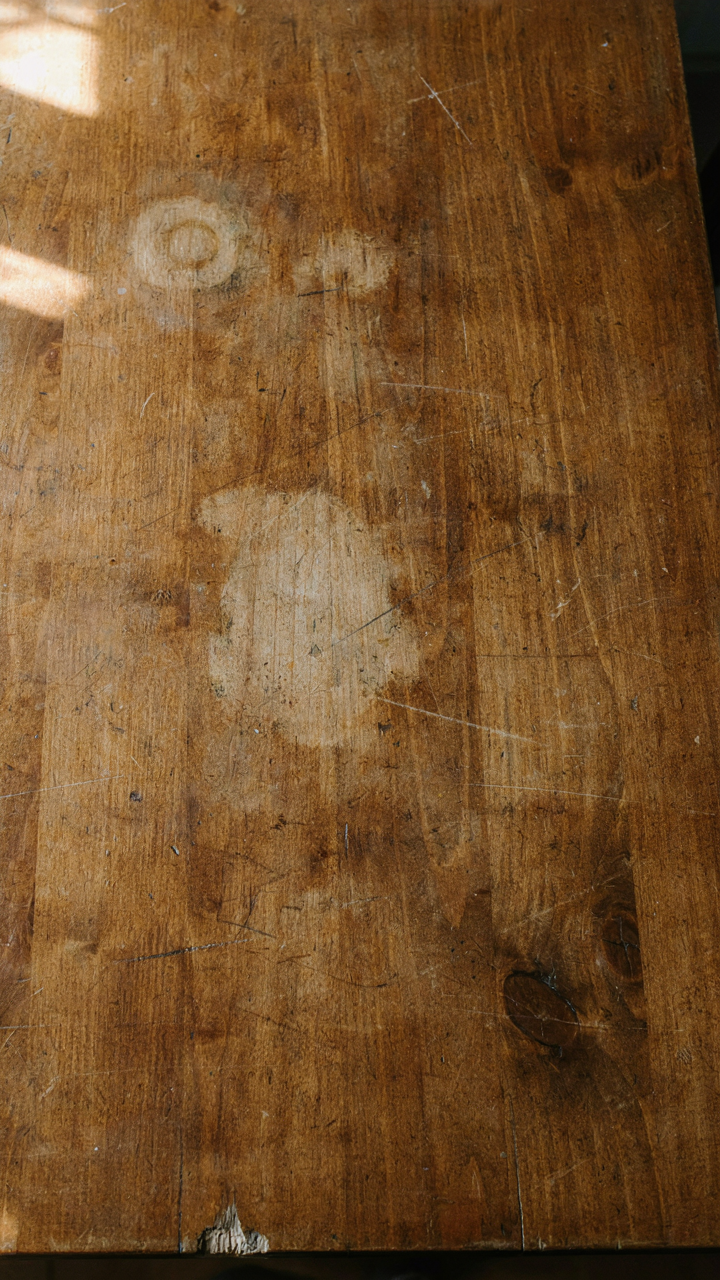
You want to believe that age equals character because buying real heirlooms costs money you don’t have. The mechanism is simple: authentic patina forms through actual use and time, while manufactured distress is cosmetic theater applied in a factory. Real patina on wood shows uneven wear where hands grip, where dust settled, where finish wore thin from function. Manufactured distress hits every surface equally, following no logic except aesthetic formula. You can feel the difference before you think it.
True vintage pieces carry the marks of their specific history. A farmhouse table’s top is lighter where elbows rested for decades. Hardware shows genuine oxidation, not applied toning. Paint cracks follow the wood’s grain and movement, not a predetermined pattern. When you run your hand across authentic aged wood, the surface tells a story of actual friction and exposure. Manufactured versions feel smooth despite their scarred appearance because machines create uniform patterns. Stop buying distressed pieces marketed as “vintage.” Buy actual vintage, or buy new and live with it honestly.
The Mass Market Authenticity Trap
The emotional void in factory-distressed cottage decor is the same as wearing a band t-shirt of music you don’t listen to. You’re paying for the signal, not the substance. Mass production optimizes for visual recognition of “vintage,” not for the actual properties that make old things feel warm. A piece made last month in a warehouse in Vietnam with intentional dents and stains triggers no memory, no connection, no reason to care beyond its appearance.
Genuine heirloom warmth comes from specificity and history. Your grandmother’s kitchen table carries the weight of actual meals shared, actual hands working. A commercially distressed reproduction carries only the weight of a marketing department’s guess about what “vintage” should look like. The emotional response you’re chasing requires real stakes: the object mattered to someone before it mattered to you. Buy pieces with documented history, pieces from local estate sales, pieces with obvious use patterns that no factory could replicate. This shifts your focus from looking old to actually being old.
The Curatorial Imperative: Selecting Pieces That Speak
Objects With Weight And Origin
You want permission to buy things and call it decorating. Here’s the mechanism: objects with traceable history trigger narrative in your brain, which your eye reads as intentionality instead of accumulation. A piece with a past stops looking like clutter the moment you know where it came from.

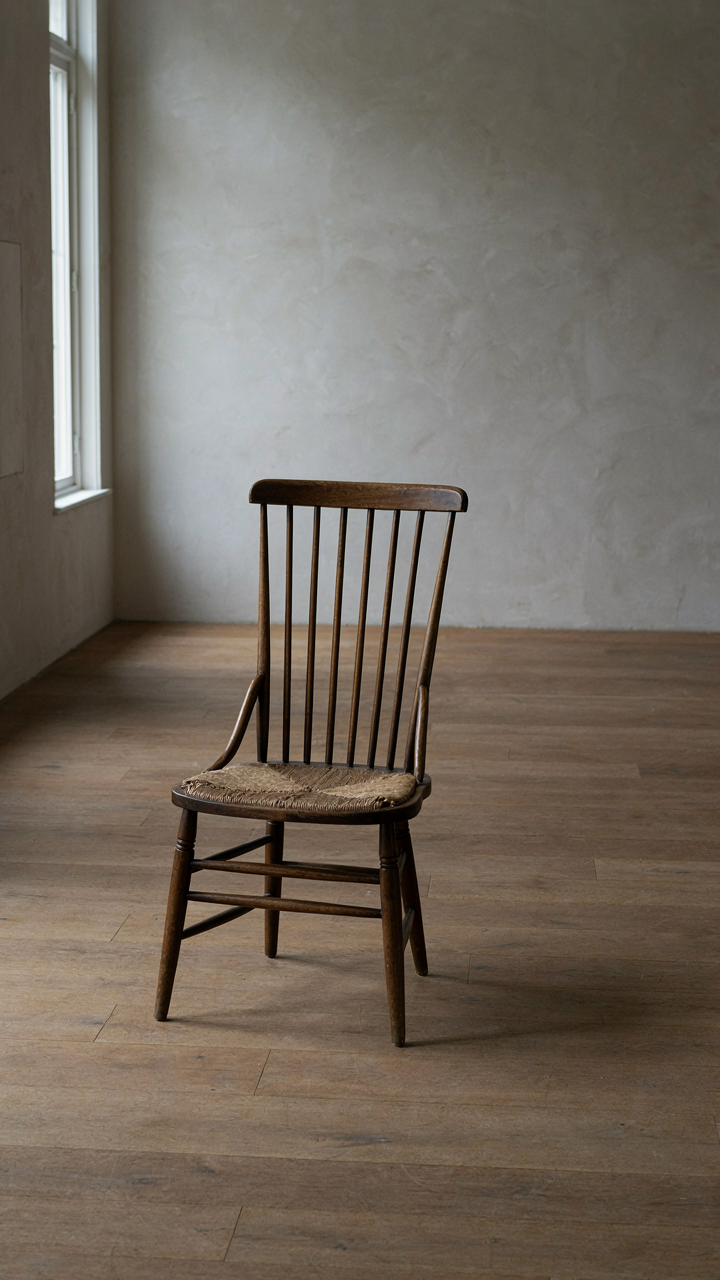
Vintage cottage decor lives or dies on specificity. A generic wooden chair is furniture. A ladder-back chair from a 1920s farmstead in Vermont is a story you can stand on. The difference is documentation, not aesthetics. Hunt for items with maker marks, construction methods that date them, or provenance you can verify. Auction house catalogs, antique dealer descriptions, and construction details like joinery style tell you what you’re actually bringing home.
Density Beats Volume
The common advice says fill space thoughtfully. That’s weak. The real principle comes from curation in museums: every object must justify its presence through either visual weight, functional purpose, or narrative load. Nothing else belongs.
Filler decor is the tax you pay for not making decisions. A room stuffed with five vintage plates, three woven baskets, and assorted candlesticks reads as indecision masquerading as charm. Each piece you place should answer a specific question: Does this object anchor the room’s story, serve the space functionally, or create a focal point people notice first? If it does none of these, remove it. When selecting new pieces, apply this gate: if you can replace it without the room losing coherence, it wasn’t essential.
The “Grandma Cottage Core Aesthetic” Algorithm
Layering Textures Creates Visual Authority
You want this space to feel intentional and accumulated, not sparse and temporary. That’s the real driver. Visual depth in cottage interiors works like signal-to-noise ratio in information design: the more distinct layers you introduce, the more your eye has something to process, which registers as richness rather than clutter. Mismatched textures work because they break visual monotony while maintaining coherence through restraint.

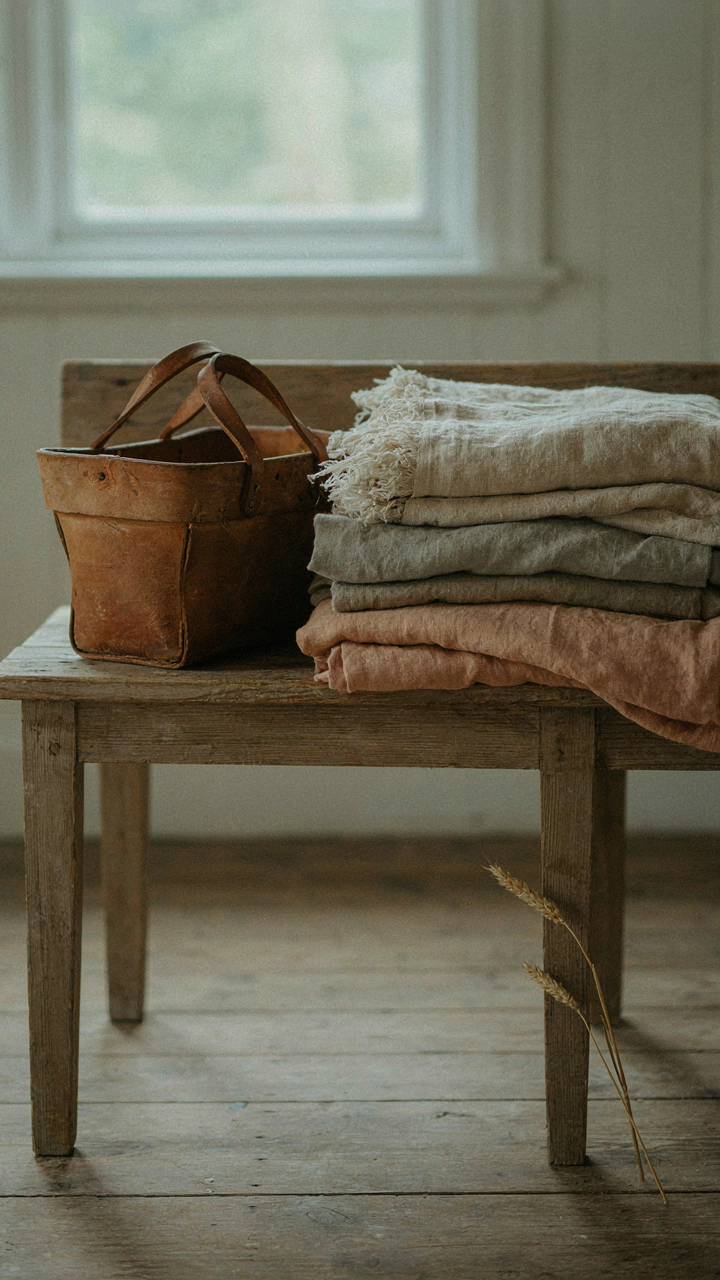
Start with a base of natural fibers: linen on upholstered pieces, wool in rugs, cotton in throws. Layer a printed textile over solid upholstery, then add a patterned cushion in a different scale. The mechanism is contrast without discord. A smooth ceramic table surface pairs with a rough-woven placemat. Add a quilted runner. The eye moves through registers of texture instead of settling on one flat plane, which is what makes a room read as “lived in” rather than “decorated.”
Objects With Wear Beat New Decoration
Common advice says add vintage decor pieces to achieve the look. Wrong framing. The actual mechanism is functional history, not aesthetic nostalgia. A cottage space works because items inside it solve problems first and look good as a side effect. A scratched wooden cutting board hung on a kitchen wall isn’t there because it’s charming. It’s there because it was used daily for decades and earned its place.
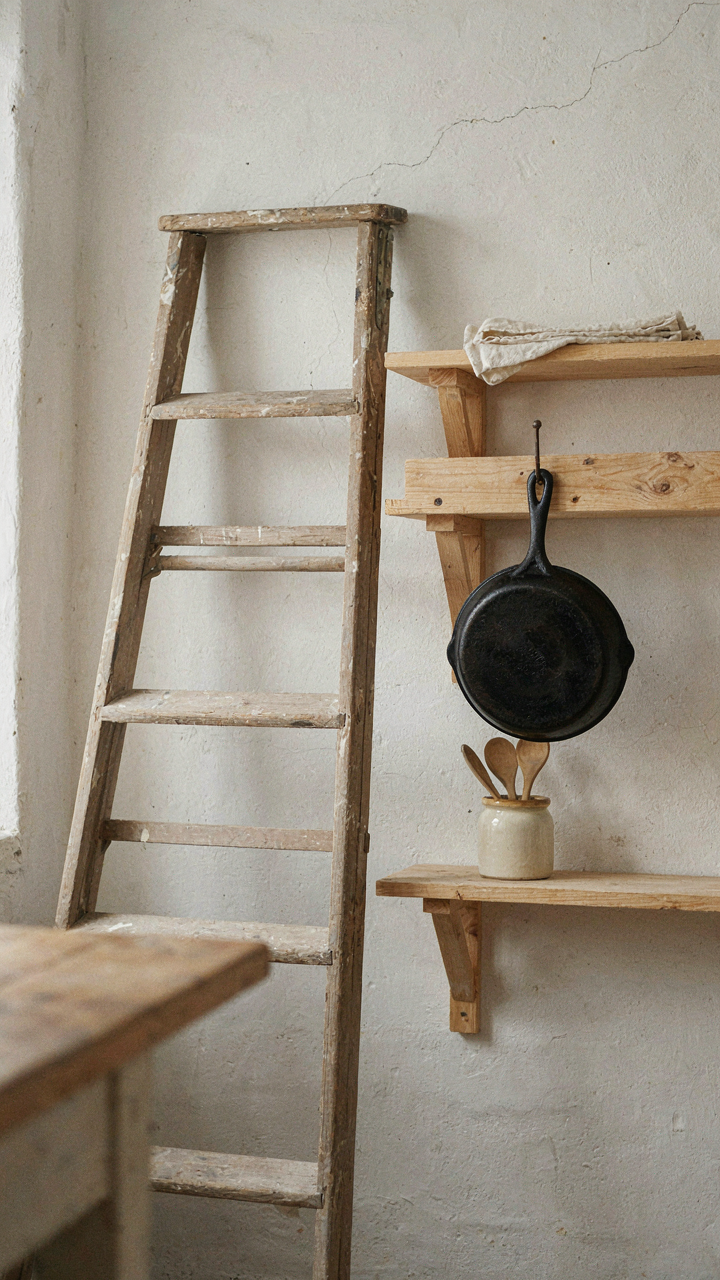
This separates genuine cottage decor from the Instagram version. Prioritize items that show evidence of use: worn leather handles on baskets, faded fabric from sunlight exposure, scratches on wooden surfaces from utility. A cast iron skillet with seasoned patina carries more weight than a decorative cast iron replica. Integration happens when you position functional objects where they logically belong. The worn butter churn sits near the kitchen. The old wooden ladder leans in a corner where blankets actually hang. Utility creates permission for placement.
The Vintage Mudroom: Entryway Cottagecore Blueprint
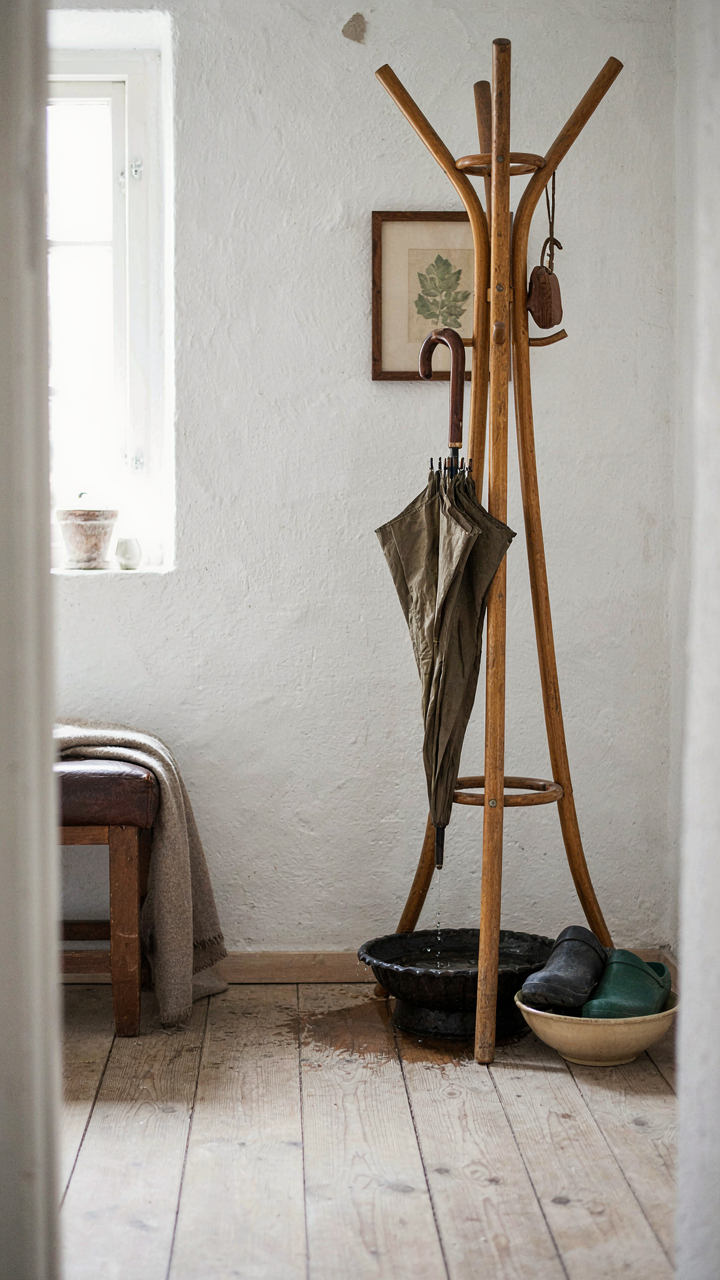
Antique Storage That Actually Works
You want the mudroom to signal you own heirloom pieces, not just that you understand aesthetic theory. The mechanism is constraint: vintage storage forces you to own fewer things and organize what remains, which is why it looks intentional instead of accumulated. Coat stands, umbrella holders, and wall-mounted shelving from the early 1900s were engineered for daily use, not display. They solve a real problem while doing the work of décor simultaneously.
- Bentwood coat racks: Austrian designs from the 1880s-1920s use steam-bent wood and simple joinery. They hold weight without hardware and age gracefully.
- Apothecary cubbies: Shallow wooden wall units, originally used for herbs and medicines, now hold keys, gloves, and hats. Each cubby enforces one-item-per-space discipline.
- Cast iron umbrella stands: Heavy, stable, and designed to drain water without rotting wood. Common from Victorian-era homes, still functional.
- Shaker-style pegs: Simple turned wood on rails, originally from American religious communities. Modular, replaceable, and scale to any wall length.
- Wooden boot scrapers: Mounted at door frames, these cast iron or wood fixtures remove soil before entry. Practical first, decorative second.

The payoff isn’t visual noise. A single quality piece that serves two functions beats five decorative items doing one. Choose storage that requires regular use and develops patina from handling, not pieces locked behind glass.
Entries That Say Something True
Vintage entryway design works like storytelling in literature: specificity builds credibility, generality destroys it. A mudroom filled with period-correct pieces nobody recognizes reads as curated knowledge. One that mixes eras randomly reads as indecision. Place a cast iron boot scraper beside the door, hang a linen apron on a peg, set a wooden tray for incoming pocket items. These signal lived experience with old objects, not Pinterest assembly.
Guests notice practical details faster than they notice aesthetics. A working umbrella stand that catches water stops leaks before they happen. Coat hooks positioned at functional heights mean coats stay hung. A worn hall table with a drawer handles actual entry debris. Vintage cottagecore succeeds when each piece removes friction from daily movement, then the age and finish become the secondary reward.
The Patina Principle: A Physics Of Worn Beauty
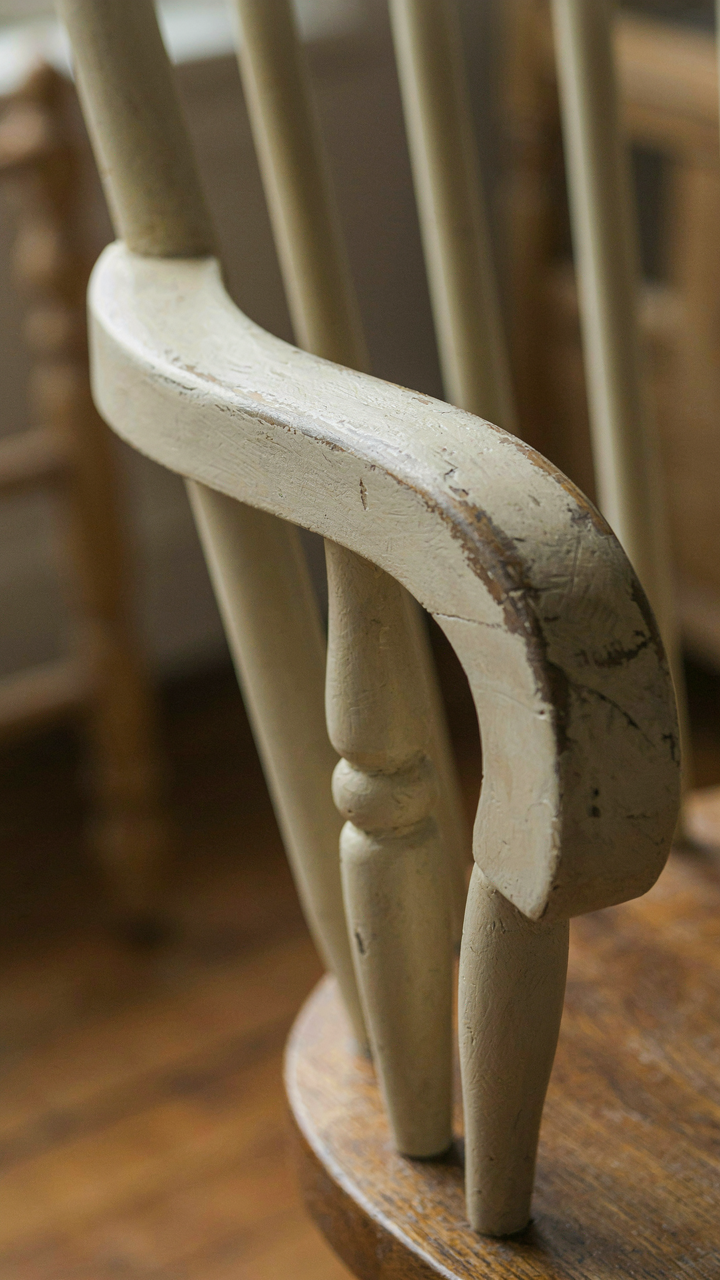
How Materials Age And Reveal Character
You want patina because it signals you own something old enough to matter. Here’s what actually happens: thermodynamics governs material decay. Heat, moisture, and oxidation break chemical bonds over decades. Wood fibers compress and darken. Metal surfaces oxidize into stable compounds. Fabric loses dye saturation through photodegradation. This isn’t randomness. It’s a predictable physical process that creates visual evidence of time.

Vintage cottage pieces carry this evidence visibly. A hand-painted Windsor chair shows wood grain darkening where hands gripped it. Brass hardware develops a patina layer that protects the base metal underneath. Linen develops a softer drape as cellulose fibers break down. None of this happens overnight. The material must actually age under real conditions to develop authentic character.
Wear As Design Strategy, Not Accident
Everyone says embrace imperfection. That’s incomplete. Entropy in design means you’re using disorder as a structural element in your visual hierarchy. Entropy increases in all systems. Surfaces decay. Finishes fail. Paint cracks in predictable patterns along wood movement lines. The mistake most decorators make is treating wear as a flaw to apologize for, when wear is actually information about how the object functioned and survived.
A distressed finish applied in a factory isn’t patina. It’s a costume. Authentic vintage cottage pieces show wear patterns that match their original use: darker wood on chair seats from contact, faded fabric on sun-facing sides, scratches on table edges where dishes slid. These patterns aren’t random. They tell you where people actually lived with the object. Identify the wear pattern on any piece you’re considering, then verify it matches the piece’s probable history before purchasing.
Rustic Country Home Decor: The Art Of Unfinished Elegance
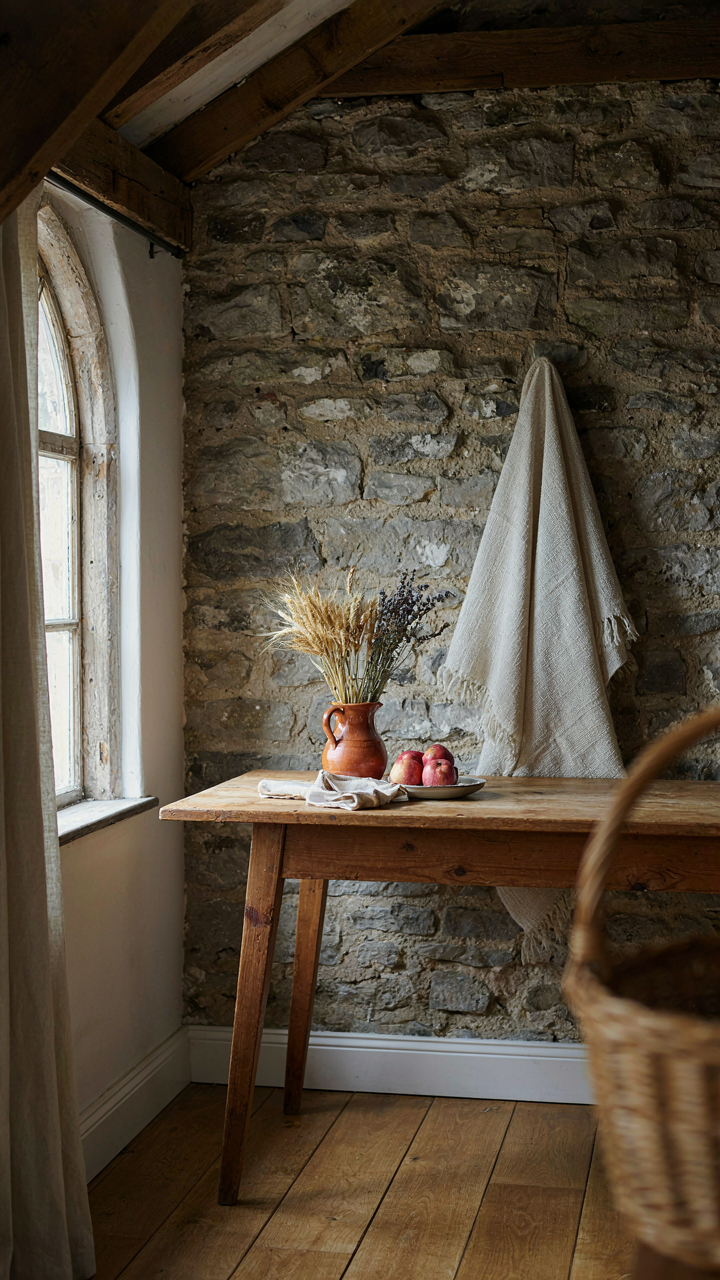
Exposed Wood And Stone Speak Louder
You want permission to skip the polish. That’s the real reason you’re reading this. The mechanism is simple: raw materials work in cottage decor because they communicate age and survival, not because they look “authentic.” Weathered wood and unfinished stone carry visual weight that finished surfaces can’t match. A beam with visible grain and tool marks tells a story. Smooth drywall tells nothing. Cottage interiors leverage this by leaving structural elements visible instead of hiding them behind contemporary finishes.

Stone and wood age visibly, which creates the illusion of depth in a small space. Exposed foundation walls, reclaimed floorboards, and rough-hewn beams force the eye to move across texture rather than flat planes. This isn’t decoration. It’s spatial manipulation. The cost matters too: leaving materials unfinished often costs less than finishing them, which is why working cottages historically used this approach. Modern cottage design adopted the look because it worked, not because it was trendy first.
Soft Furnishings Against Rough Surfaces
The textile-to-structure ratio determines whether a room feels inviting or abandoned. Cottage design works when you anchor rough materials with fabrics that compress and yield to touch. A linen throw on an unfinished wooden chair signals comfort. The same chair without it reads as incomplete. The contrast creates the effect. Linen, wool, and cotton absorb light where stone and wood reflect it. This optical balance prevents the space from feeling cold or industrial.
Layering soft elements over hard surfaces is the structural principle behind this. Place a sheepskin over a wooden bench. Drape quilts on iron bed frames. Hang woven blankets against stone walls. Each soft element doesn’t hide the rough material. It interrupts the visual dominance of it. The room stays raw and grounded while remaining approachable. This specific balance prevents cottage decor from tipping into either austerity or over-decoration. You execute this by committing to a 60-40 ratio: 60 percent hard surfaces visible, 40 percent soft textiles breaking them up throughout the space.
Cottage Antique Decor: Strategic Scarcity For Impact
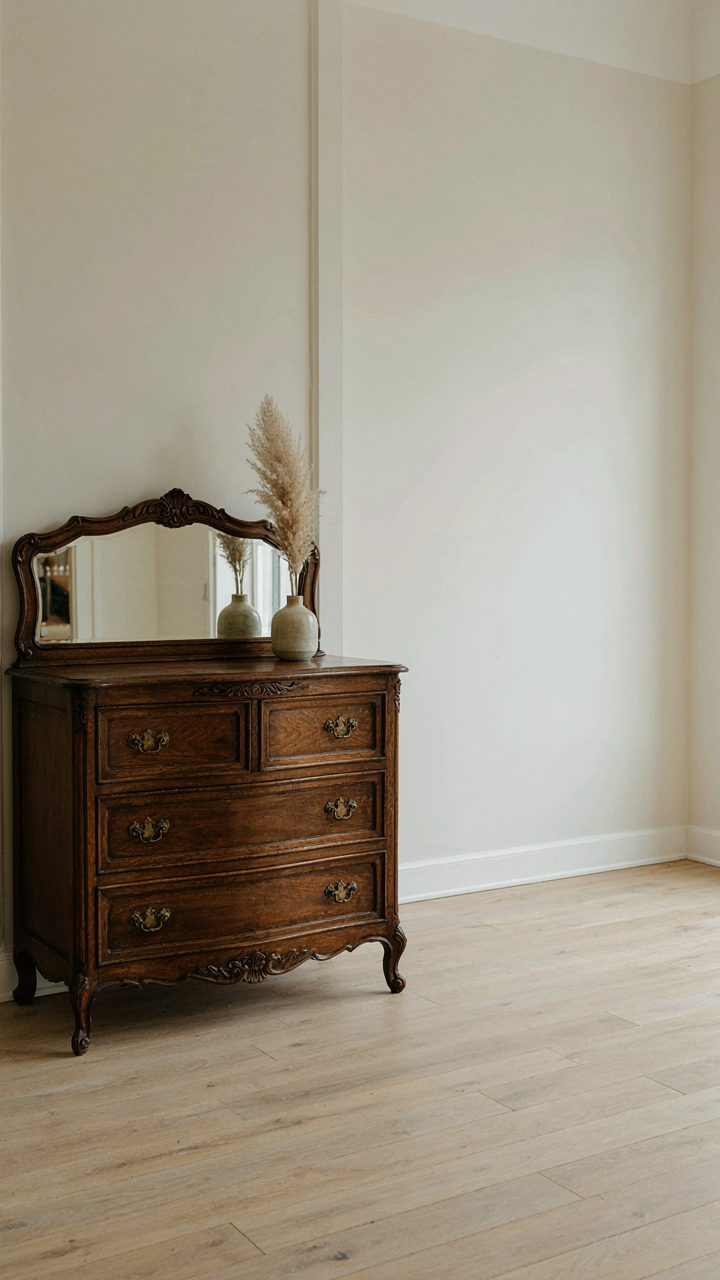
One Statement Piece Per Room
You want your guests to feel the weight of history without feeling buried under it. That’s the real mechanic here: scarcity creates authority. In economics, limited supply drives perceived value. The same principle applies to antiques in a cottage. One authentic dresser from the 1920s commands attention when it stands alone. Ten dressers scattered across rooms dilute that signal into noise.

The focal point strategy works because the eye has nowhere else to go. A single piece becomes a story. Multiple pieces become a flea market. Choose one anchor per room, position it where light hits it naturally, and let the supporting decor fade into the background. The antique does the work. Your job is getting out of its way.
Restraint Over Accumulation
Everyone collects antiques wrong. They fill empty wall space, they chase every estate sale, they believe more equals authenticity. It doesn’t. A room with one exceptional piece and simple surroundings reads as intentional. A room stuffed with six mediocre antiques reads as indecision.
Restraint forces you to choose better pieces in the first place. When you limit yourself to three antiques per room, you stop grabbing whatever matches the aesthetic and start hunting for items with real craft or history. This shifts your purchasing from volume to quality. The result is a cottage that feels curated, not accumulated.
Country Home Decor Farmhouse: Beyond The Trendy Vignette
Utility First, Aesthetics Second
You want farmhouse decor because it signals you’re grounded and authentic, but you’re actually buying staged Instagram rooms. The mechanism is simple: farmhouse design works when objects serve a function first and look good because they’re built to last. A wooden ladder leaning against a wall isn’t decor. It held hay bales. A cast iron pan on open shelving isn’t styled. It cooks dinner three times a week. This distinction matters because authentic farmhouse pieces carry their history through use, not through curation.

Real farmhouse interiors came from necessity, not Pinterest boards. Farmers kept items because they worked, because replacing them cost money, and because durability mattered more than trends. When you reverse-engineer this logic for your cottage, you stop asking “does this look farmhouse?” and start asking “would this object have actually lived here, and would it earn its space through function?” A milk churn becomes legitimate because dairies used them. A weathered farm table becomes legitimate because families ate at it daily for decades. This is the threshold between decor and history.
Worn Surfaces Tell The Real Story
The common advice says distress your new furniture to make it look old. That’s backwards. Distressing is theater. Real age leaves evidence you can’t fake: specific wear patterns from repeated contact, patina that develops unevenly based on light exposure and humidity, nail holes from previous hardware, stains from actual spills that set over years. When you buy genuine vintage cottage pieces, you’re buying the documentation of how people actually lived.
Surface degradation follows laws of physics, not interior design trends. Wood wears where hands grip. Metal oxidizes based on moisture patterns. Textiles fade according to sun angle and fiber type. These marks aren’t random. They’re data. When you source authentic farmhouse pieces, you’re sourcing objects that already completed their education. You don’t need to create the patina. You need to stop hiding it under polyurethane. The wear is the warmth. Find pieces that show it plainly, and let them stand as evidence.
The Real Obstacle Isn’t Finding Vintage Pieces; It’s Your Inability To See Them As Narrative Tools
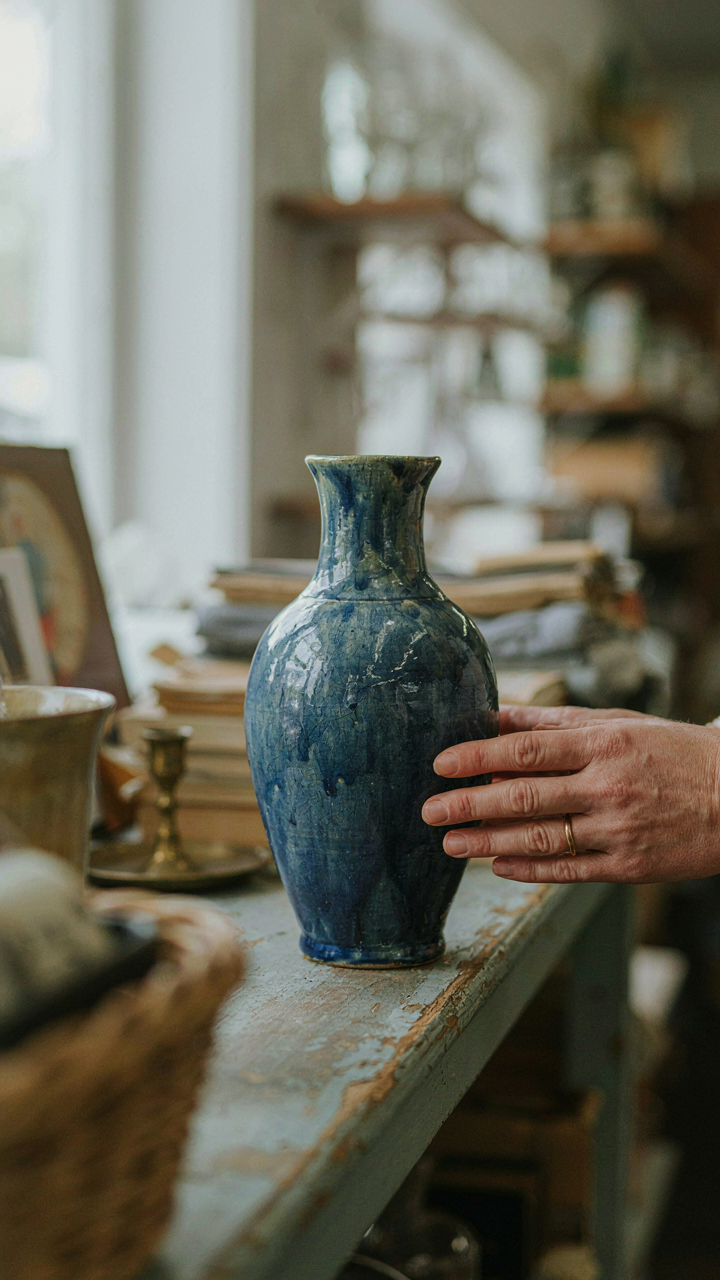
Most people treat vintage cottage decor like a matching set to buy. Wrong. Each piece tells a story about who lived before you, what mattered to them, how they spent their time. The shift happens when you stop collecting objects and start collecting evidence of real lives. Walk through one thrift store this week. Don’t look for things that match your room. Look for things that make you curious about the person who owned them first. That curiosity is the only real design principle you need. Your home becomes a museum of meaning, not a showroom of things.