
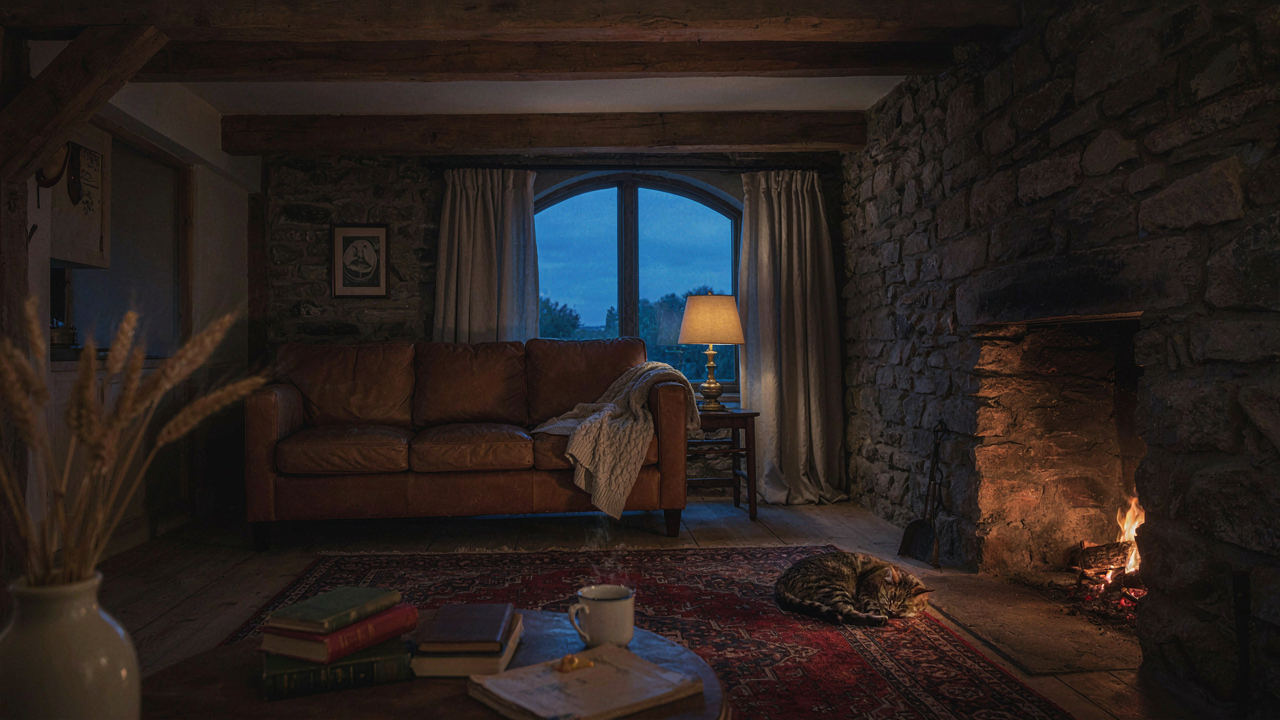
The Illusion Of “Warmth”: Beyond The Bulb Temperature

Color Temperature Is Not Warmth
You want your cottage to feel inviting because you’re afraid it won’t, and you’ve been told that “warm white bulbs” solve this. They don’t. Physics distinguishes color temperature from perceived warmth, and cottage lighting confuses the two constantly. Color temperature measures light in Kelvin, a unit of absolute heat. A 2700K bulb isn’t warm because it’s hot—it’s warm because your brain associates that wavelength with fire and candlelight. The actual heat output is irrelevant to how cozy a space feels.
What matters is how light bounces off surfaces and how your eye interprets the reflection. A 2700K bulb hitting matte cream walls reads differently than the same bulb hitting glossy white drywall. The material absorbs and diffuses light, which your brain processes as warmth or coldness before you consciously register color temperature. Reflectance, not Kelvin alone, determines perceived warmth. Most cottage lighting advice skips this entirely and focuses only on the bulb spec, which is why generic recommendations fail in real rooms.
Why Warm White Often Falls Flat
The standard advice—”buy 2700K bulbs for cottage vibes”—ignores a critical variable: brightness. A dimly lit 2700K bulb at 300 lumens registers as dingy and sparse. The same 2700K at 1200 lumens fills a room with genuine warmth without feeling artificial. But most people add warm bulbs without adjusting lumen output, creating shadowy, uncomfortable spaces that read as cheap instead of charming.
The mechanism is simple: your eye needs sufficient light to perceive color accurately. Below a threshold, any light—warm or cool—appears murky and flat. Cottage spaces demand intentional layering: ambient light at adequate brightness, accent lighting on textured surfaces, and task lighting where needed. Measure your ambient lighting in lumens first, select color temperature second, then validate the result by sitting in the space at dusk. If it still feels off, the culprit is placement or reflectance, not the bulb.
The Inverse Square Law Of Cozy: Mastering Light Fall Off
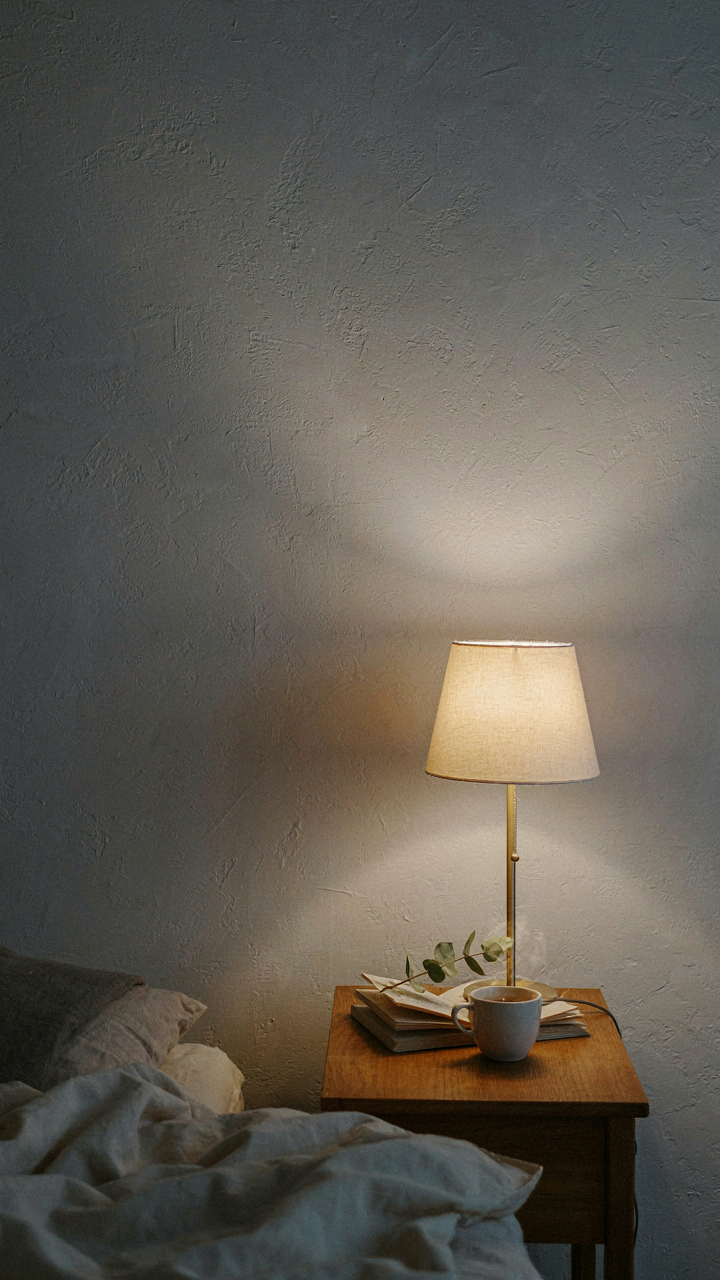
Why Distance Matters More Than Brightness
You want people to think your cottage feels intentional, not just lit. The physics is simple: light intensity drops by the square of the distance from the source. Double your distance from a lamp, and you get one-quarter the light. This isn’t theoretical. It’s why a bedside table lamp feels intimate at three feet but harsh at one foot.

Most cottage lighting advice skips this entirely and just says “use warm bulbs.” That’s incomplete. The fall-off rate determines whether your room feels designed or cluttered. A 60-watt bulb positioned eight feet away delivers softer, more diffused light than the same bulb at four feet. Positioning beats wattage for creating the evening glow you actually want.
Layering Light To Anchor Specific Zones
Forget the idea that one central fixture should light your whole room. That creates flatness. Instead, position multiple lower-wattage sources to create pools of light that fade naturally into shadow. A 40-watt table lamp in a corner, a wall sconce at eye level near seating, and perhaps a floor lamp behind furniture each dominate their own three to five foot radius.
This approach works because your eyes adjust to the brightest point in view. Darker zones become acceptable, even restful, when brighter zones anchor them. Place lamps at the edges of your seating area rather than in the center. The fade-off becomes a feature, not a flaw. Your brain registers this as intentional design, not poor planning. Measure distances during setup to guarantee each light source sits at least six feet from adjacent seating when possible.
Cottage Core Light Fixtures: The Strategic Deployment Of Shadows
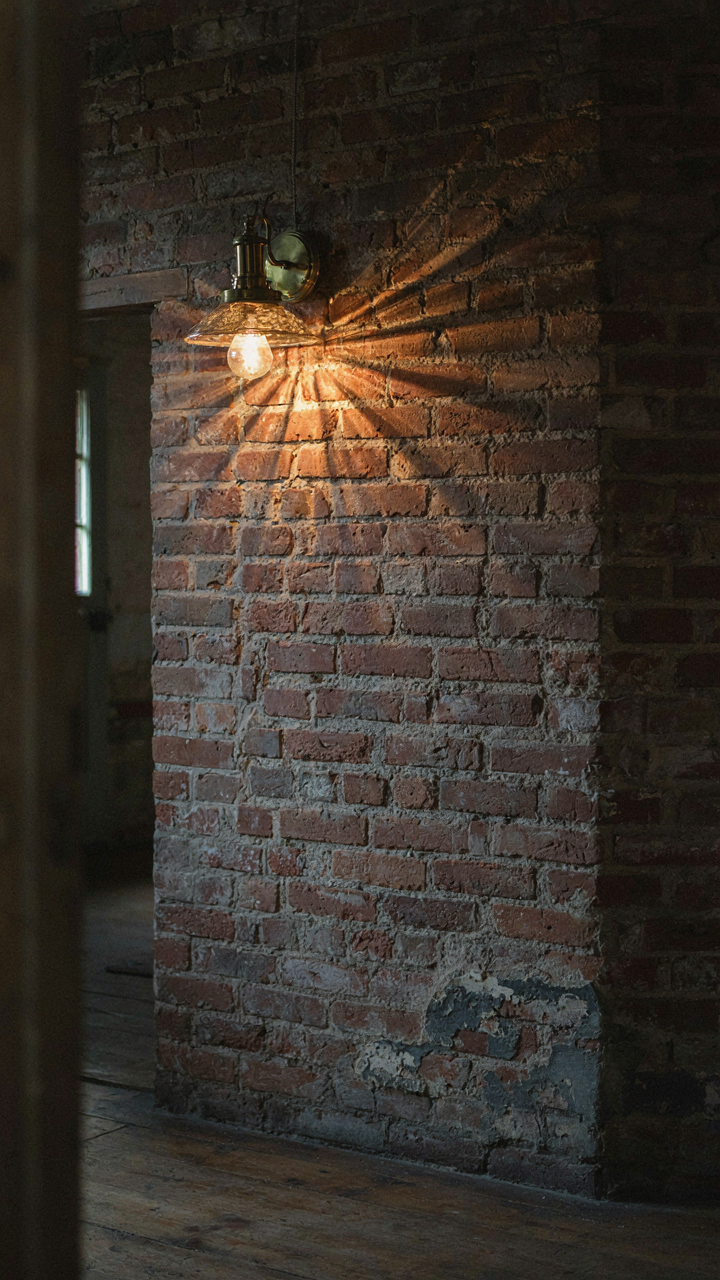
When Darkness Becomes The Real Material
You want people to think your cottage is intentional, not just old. That’s the real motive here. But most cottage lighting advice gets this backwards: it treats shadow as a problem to solve instead of recognizing shadow as the actual design element. In theatrical lighting, they call this “negative space”—the absence of light sculpts perception more than the light itself. Cottage fixtures work the same way. The shadow cast by a vintage brass sconce tells you more about the room than the bulb does.

The mechanism is contrast. Your eye doesn’t register absolute brightness. It registers the gap between lit and unlit zones. A 40-watt Edison bulb in a dark corner creates more visual interest than a 60-watt recessed light that floods everything uniformly. Traditional cottage spaces used sparse, localized light sources because electricity was expensive, not because it looked good. But that constraint became the aesthetic. Deploy fixtures strategically to create pools of light and deliberate voids. This generates depth that flat, ambient lighting cannot achieve. The fixture placement matters more than the wattage.
Contrast As The Engine Of Visual Drama
Here’s what everyone misses about “cozy lighting”: the cozy part doesn’t come from warmth alone. It comes from tension between visibility and obscurity. Light and shadow need each other to register as dramatic. A room lit uniformly to 300 lumens feels flat and corporate. The same room with 150 lumens concentrated in one corner and deep shadow elsewhere feels intentional and layered. This is basic perceptual psychology. Your brain interprets high contrast as information-rich. It interprets flat illumination as cheap.
The practical move: pair bright task lighting (reading lamps, pendant fixtures over tables) with zero supplementary ambient light. Let walls and corners go dark. Position vintage fixtures like table lamps or wall-mounted Edison units to cast deliberate shadows on textured surfaces—exposed brick, wood beams, plaster. The shadows interact with surface texture and create micro-variation that holds attention. Don’t light the room. Light specific objects and let the room reveal itself gradually as the eye moves through darkness.
The “Sanctuary Protocol”: Layering Cottage Lighting Ideas For Psychological Comfort
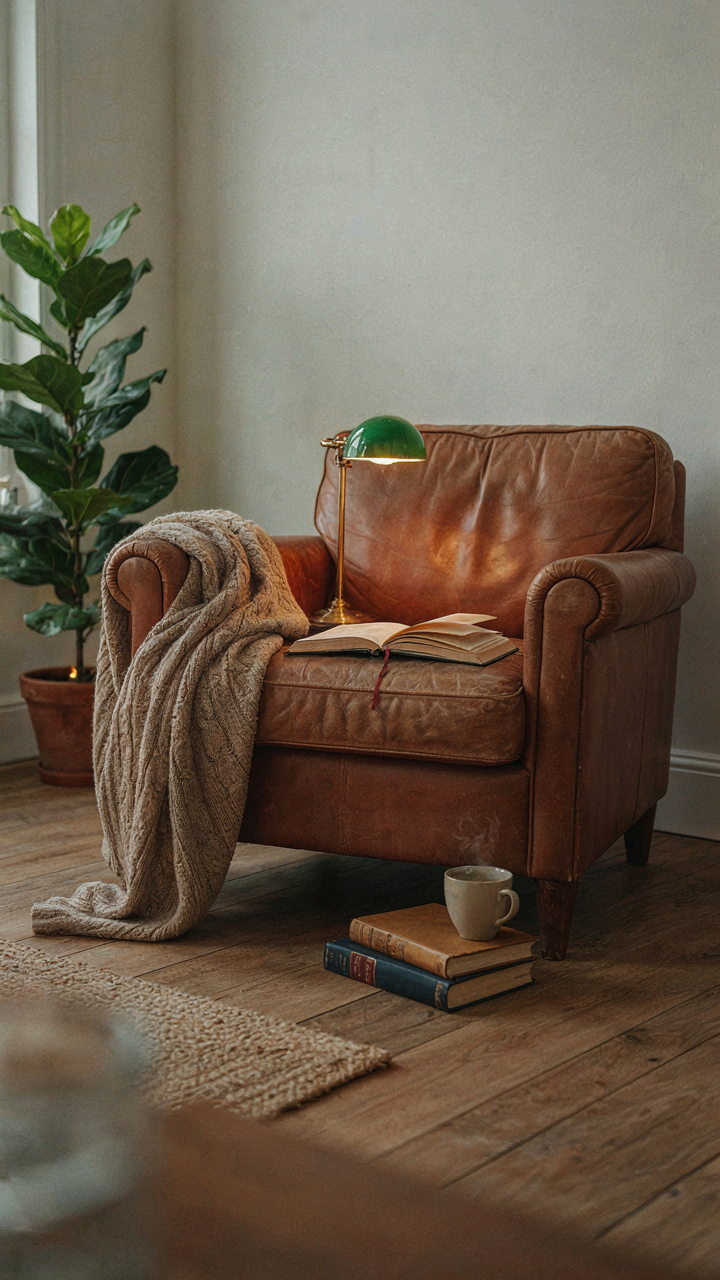
The Three Tiers Of Light Control
You want cottage lighting to feel intentional without looking staged, because you know staged spaces read as inauthentic. The mechanism is hierarchical: ambient light sets baseline visibility, task light handles specific functions, accent light creates visual interest. This functional stack isn’t aesthetic choice. It’s the operating system that lets you dial comfort without rewiring your space. Most people skip this step and dump uniform brightness everywhere, which triggers the opposite response.

Ambient lighting forms your baseline. Use ceiling fixtures or uplighting to establish soft general illumination that covers the entire room. Task lighting targets where work happens: reading nooks, kitchen counters, desk areas. A 60-watt equivalent bulb at 2700K addresses this zone. Accent lighting highlights architectural features or objects. A single lamp near a bookshelf or a wall sconce beside a painting creates focal points that guide attention. The ratio matters: ambient should dominate, task and accent support it.
Building The Emotional Response Through Layered Control
Neuroscience borrowed the term “gating” from electrical engineering to describe how the brain filters sensory input. Cottage lighting uses the same principle: each layer gates how much light reaches your nervous system at any moment. You’re not fighting physics here. You’re engineering a response by controlling what stimuli enter the room. Low-intensity ambient plus selective task lighting triggers parasympathetic activation faster than bright, even illumination ever will.
The protocol is specific: establish ambient at 300-500 lux using warm-toned sources, then add task layers only where needed. Dimmers on ambient circuits let you drop intensity as evening progresses. When you switch off accent lighting, the room contracts psychologically. When you add it back, attention expands. This isn’t subtle psychology. It’s mechanical response to graduated stimulus. Your brain doesn’t require poetic lighting. It requires predictable variation in brightness and color temperature that matches your daily rhythm.
English Cottage Lighting Ideas: Rejecting The Overhead Tyranny
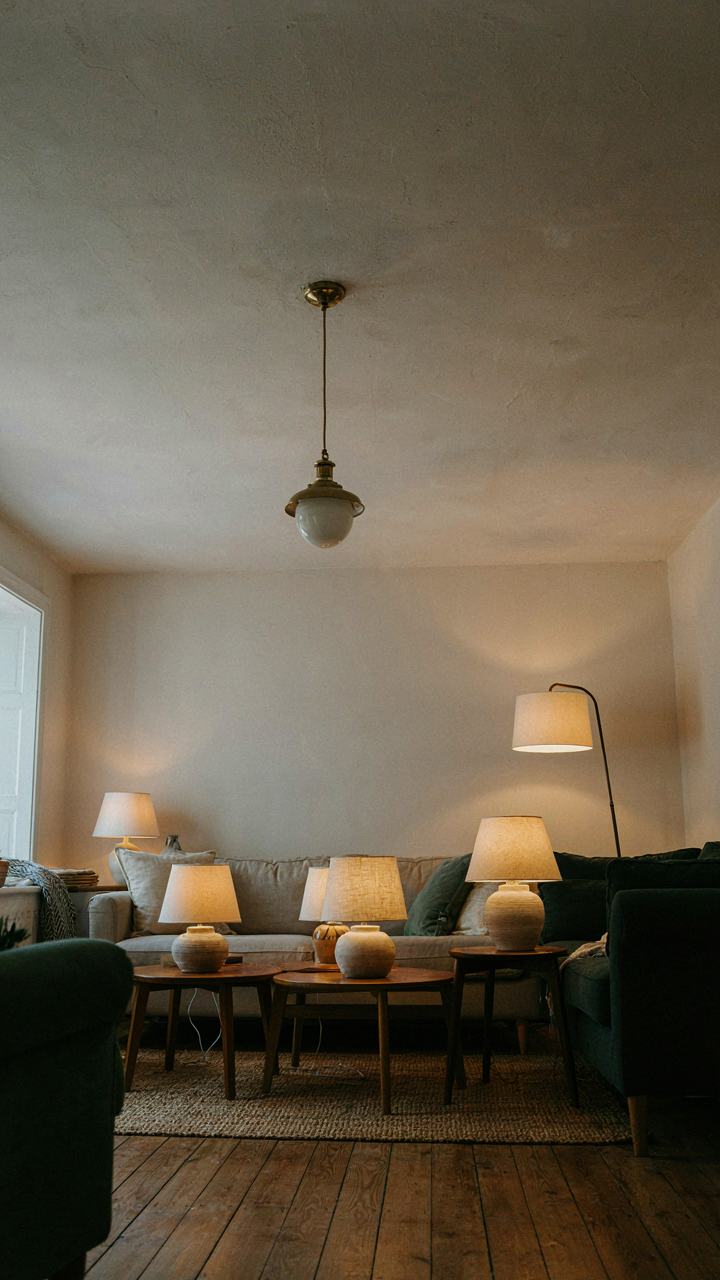
Why Ceiling Lights Often Kill Cozy
You want people to think your home feels intentional and curated, not like you settled for whatever the builder installed. Here’s the mechanism: overhead lights create uniform illumination across a room, which your brain reads as institutional or utilitarian. This comes from lighting design’s principle of task versus ambient lighting. In cottages, task lighting is the enemy of atmosphere. A single ceiling fixture broadcasts light downward and outward equally, flattening shadows and eliminating the depth that makes a room feel lived-in rather than inspected.

The common advice says “just dim your overhead lights.” That misses the core problem. Dimmed overhead light still spreads evenly, still lacks focal points, still signals “temporary” rather than “intentional.” Ceiling fixtures work against the cottage aesthetic because they treat the room as a space to illuminate uniformly instead of a space to inhabit selectively. The fixture itself draws attention upward, breaking the coziness you’re actually after.
Lower Light Sources Create Intentional Depth
Positioning light sources below eye level forces your eye to land on objects and surfaces rather than scan the whole room at once. This creates what architects call visual hierarchy but what actually matters is this: people feel more at ease when they can’t see everything simultaneously. Table lamps, wall sconces mounted at shoulder height, and floor lamps with diffused shades push light onto specific surfaces—a book, a texture, a corner—leaving the rest of the room in controlled shadow.
Cottage spaces become intimate not through dimness alone but through directed light that lets shadows exist. A lamp on a side table next to seating throws light downward and sideways, creating pools rather than fields. This is why the English cottage interior tradition relied on multiple lower sources instead of one central fixture. The mechanism is straightforward: install sconces at 60 inches from the floor and place table lamps at the edges of seating zones, then remove or abandon the overhead light entirely.
Country Cottage Lighting: The Dimmer’s Dominance
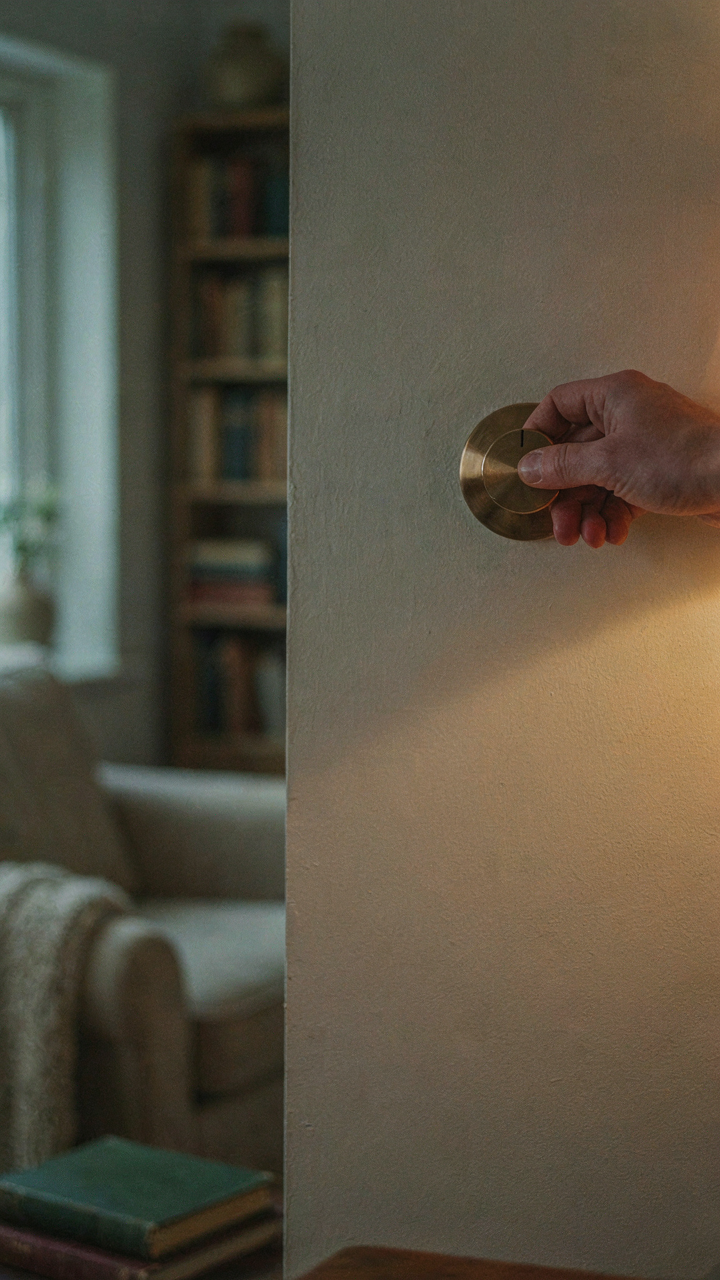
Why Dimmers Actually Matter
You want dimmer switches because they let you control a room’s atmosphere without replacing fixtures or moving furniture. The real mechanism: dimmers reduce voltage sent to your bulbs, lowering light output while simultaneously warming color temperature. Most people treat dimmers as optional comfort. They’re not. They’re the difference between a cottage that feels like a showroom at noon and one that transforms at dusk.

The physics of incandescent and halogen bulbs creates this effect naturally. When you dim, filaments burn cooler, shifting output toward orange and red wavelengths. LED bulbs don’t do this unless they’re specifically labeled dimmable. Not all are. This matters because cottage lighting relies on this warmth shift to trigger the psychological anchor people actually want: a space that feels intentional, settled, and harder to leave. Install dimmers on 60 to 70 percent of your cottage’s evening-use circuits.
Adjusting Light For Real Behavioral Change
People assume mood lighting means soft light everywhere. Wrong. Mood shifts demand contrast and specificity. Your brain doesn’t register “dim” as a feeling. It registers relative brightness drop and redirect of attention. Lower light in one zone while keeping task areas bright, and you’ve engineered psychological weight toward the dim space.
This is why restaurants dim ambient light while keeping table and food zones brighter. Your eyes follow bright spots. Cottage spaces work the same way. Set dimmer ranges so your primary gathering area sits at 30 to 40 percent output by evening, while reading nooks stay at 60 to 70 percent. Use wall-mounted rotary dimmers over toggle switches. They invite micro-adjustments throughout the evening. Your hand reaches for them naturally. This replaces the friction of getting up to flip switches, which breaks momentum and kills the accumulated feeling you’ve built.
Cottage Style Lighting: Beyond The Fixture Fetish
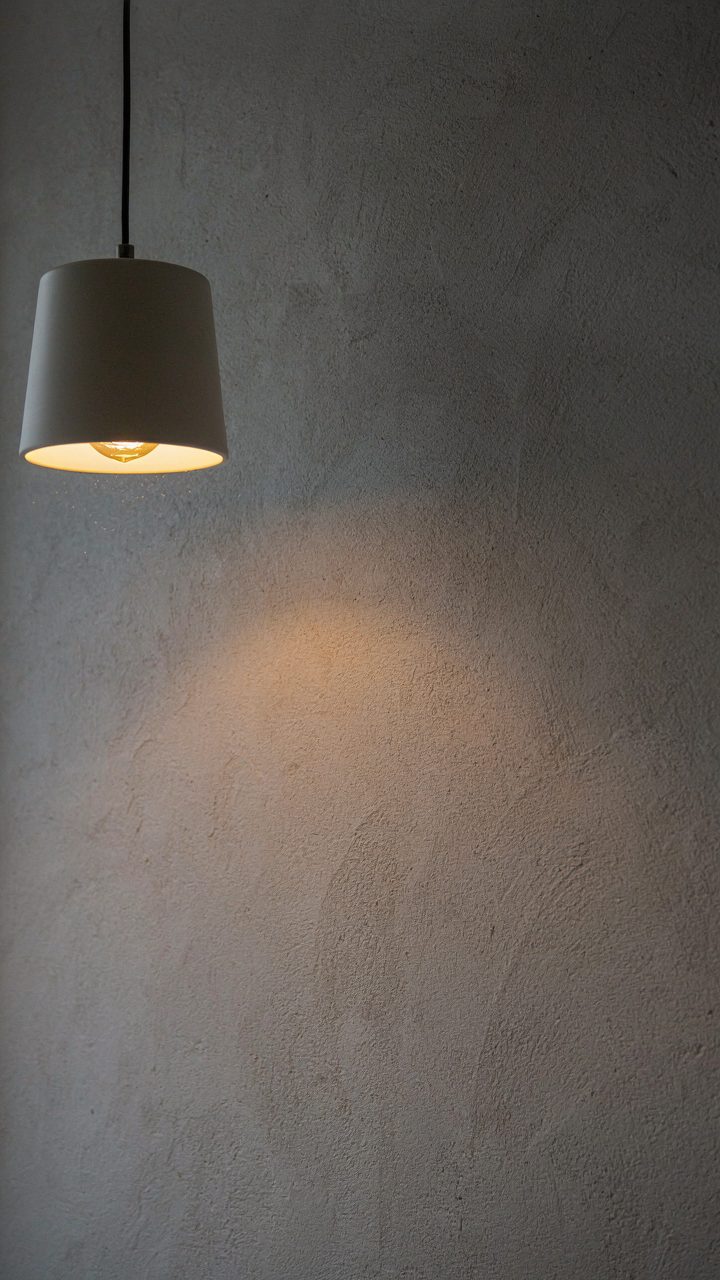
The Fixture Is Not Your Brand
You want people to notice your taste when they walk in. That’s the real reason you’re reading this section. Stop. The fixture itself is irrelevant to cottage lighting. The mechanism is simple: light quality determines mood. A brass sconce with a cheap bulb creates worse ambiance than a plain ceramic holder with proper warm output. Cottage style succeeds because it prioritizes what light does, not what contains it.

The housing is just the delivery system. Cottage interiors work when they feel lived-in and functional, not curated. A fixture telegraphs effort. Good light broadcasts ease. You notice the glow on a wall or how faces look in a room, never the metal shape holding the bulb. This is why cottage lighting outlasts trends. It’s built on physics, not fashion.
Light Output Separates Real From Decoration
Stop confusing fixture aesthetics with light quality. Most cottage lighting advice leads you toward pretty housings that emit weak, yellow-tinted light. That’s decoration pretending to be lighting. Real cottage lighting uses color temperature and lumen output as the primary variables, not the shade material.
Warm light comes from 2700K color temperature, which matches tungsten bulbs from the early 20th century. Cottage homes adopted this standard because it was the only option, then it became the aesthetic. The actual mechanism is this: lower color temperature light signals safety and relaxation to your nervous system. Higher lumens in a warm color fill space without glare. A bare bulb at 60 watts of 2700K output creates better cottage ambiance than a decorative sconce at 40 watts of 3000K. Choose bulb output first, then find the fixture that holds it without obstruction.
Cottage Lamps: The Unseen Grid Of Power Distribution
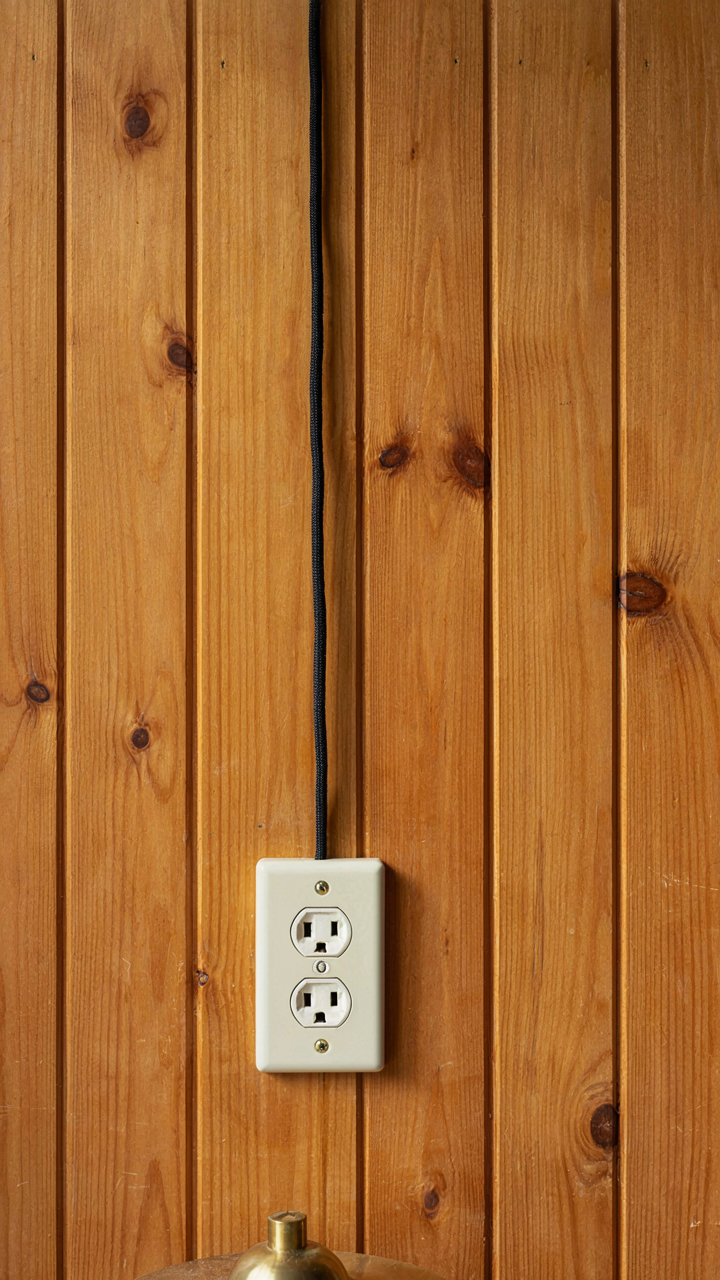
Wiring Layouts For Flexible Lighting Arrays
You care about this because bad wiring forces you to choose between aesthetic placement and functional control. Here’s the mechanism: electricity behaves like a supply chain—it needs redundancy or it fails. Circuit design is the field, and load distribution is the term that matters. Most cottage owners wire lights in series (one outlet feeds the next), which means one bad connection kills the whole line. Parallel circuits distribute voltage equally and allow independent control. Run separate circuits for different zones: kitchen task lighting on one, living room ambient on another, bedroom accent lights on a third.
- Dedicated circuits for high-draw fixtures: Pendant lamps and table lamps pulling constant current need their own 15-amp line to prevent breaker trips and voltage drop over distance.
- Two-way switching at key points: Install switches at entry and exit points of rooms so you control lights without walking to a single wall location.
- Outlet placement 12 to 18 inches above furniture height: Position outlets behind seating areas and side tables so lamp cords stay hidden and proportional to the space.
- Conduit runs along existing beams or baseboards: Hide wiring in rigid or flexible conduit rather than burying it in walls, which makes future changes impossible without tearing drywall.
- Ground floor distribution panel with clearly labeled breakers: Label every circuit by room and fixture type so you can isolate problems and adjust loads without guesswork.

Parallel wiring costs more upfront but saves money over time because it eliminates the false economy of one outlet serving four lamps. When one lamp fails, the others stay on. When you want to adjust brightness on a single fixture, you don’t affect the rest of the room.
Outlet Placement For Precise Lighting Control
Most cottage lighting advice tells you to “place outlets where you need them.” That’s incomplete. The real problem is thermal load and wire resistance. Put too many outlets in one corner and heat accumulates in the junction box. Space outlets 8 to 10 feet apart along walls to prevent voltage drop, which dims lamps the farther they are from the breaker panel. Behind seating, place outlets at 12 inches above table height so lamp bases sit flush without visible cords. In reading nooks, dual outlets let you run a lamp and a phone charger without reaching for adapters. Strategic placement means you control mood and function with switches, not by hunting for outlets or stringing extension cords across the floor.
Install outlets on walls that receive evening sun last. Outlets on western walls heat up faster in summer, which can degrade wire insulation over years. Orient outlets horizontally rather than vertically to reduce dust accumulation inside the box. Run a test with your lamp placement before the electrician finalizes outlet height, then never change it after installation.
The Real Warmth Isn’t In The Bulb; It’s In The Boundaries You Create
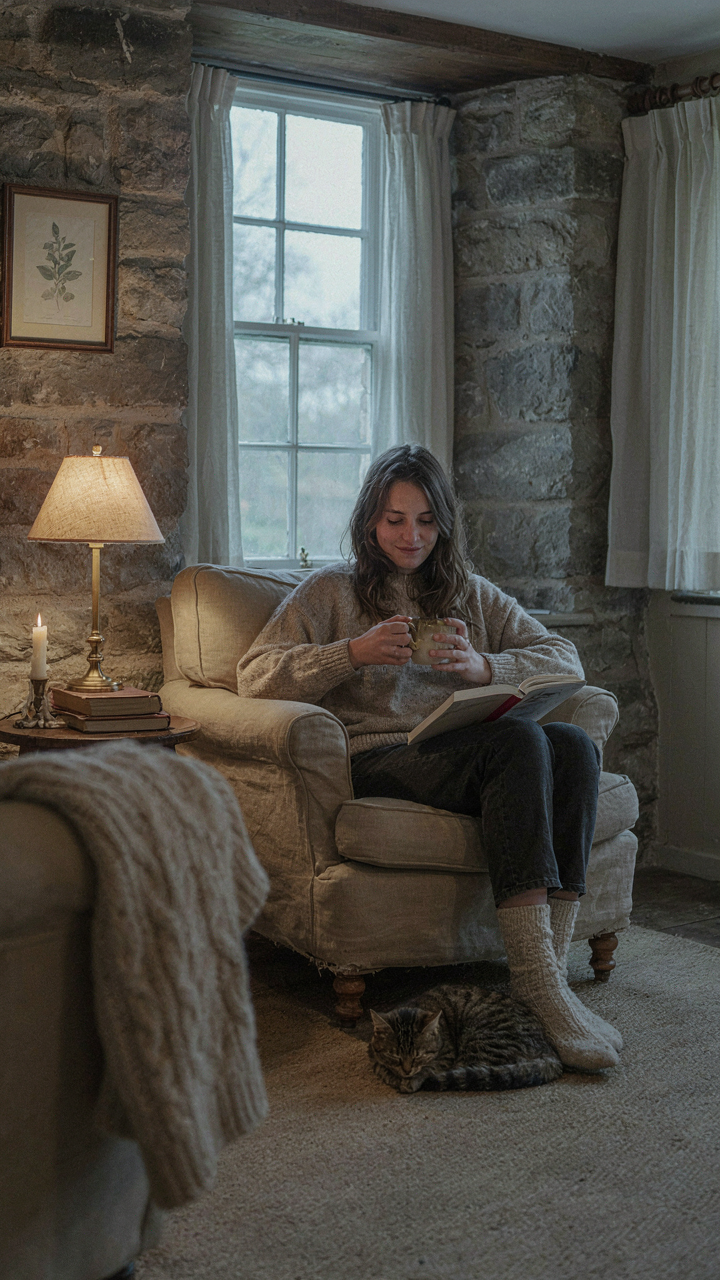
Most people obsess over wattage and color temperature. They miss the actual game. Cottage lighting works because it creates separation between you and the chaos outside. It defines a space as yours. Stop chasing the perfect bulb and start asking: what areas do I actually want to exist in? Pick one room this week. Install one warm fixture. Watch how it changes your presence. The best cottage lighting doesn’t illuminate a space, it claims one.