The Folly Of Imitation: Why Most Swedish Farmhouse Fails

Trends Die, Principles Endure
You want the aesthetic without understanding why it exists. That’s the mechanism that kills every Swedish farmhouse interior attempt: buying the look while ignoring the logic. Swedish farmhouse emerged from material scarcity and climate demands, not from a designer’s mood board. The style solved problems. When you strip away the problem, you’re left with decoration that signals nothing but effort.
Most people copy the surface: whitewashed walls, distressed wood, linen textiles. These elements mean nothing isolated. In actual Swedish farmhouses, time-worn wood wasn’t a design choice—it was the only wood available after decades of use in harsh Nordic conditions. The patina came from function, not from intentional aging techniques sold online. This distinction matters because it changes what you’re actually building.
The False Promise Of Instant Authenticity
Design borrows from economics: you cannot compress decades of wear into weeks of shopping. The trap is believing that buying “distressed” wood or “aged” finishes gives you the real thing. It doesn’t. You get the appearance of authenticity without any of the substance. Your room signals that you know the aesthetic. It doesn’t signal that you understand the craft.
The real mechanism is time. Swedish farmhouse interiors earned their character through actual use, through seasonal temperature swings, through people living in them for generations. You cannot purchase that. What you can do is source genuinely old materials—reclaimed floorboards, salvaged beams, actual antique textiles—and let them occupy your space honestly. Stop trying to fake the aging process. Start sourcing pieces that already completed it.
The Time Worn Wood Manifesto: Embracing Imperfection

What Patina Actually Signals
You want worn wood because it reads as expensive without the price tag. Here’s the mechanism: patina is biological and chemical evidence. Surface cracks, color variation, and worn edges tell a specific story that new wood cannot fake without decades of actual use. Swedish farmhouses used this principle deliberately—they didn’t refinish beams. They let them darken and weather because that visual record proved the structure had survived.

Patina communicates survival and authenticity in ways pristine surfaces cannot. A beam with deep color variation and surface checking has endured temperature swings, humidity changes, and load stress. Swedish farmhouse builders understood that this damage was not a flaw to hide—it was certification of performance. The wood proved itself by staying intact through actual seasons and actual use.
Abandoning The Newness Trap
The common advice says blend old and new pieces for contrast. That’s incomplete. The real problem is that new wood ages differently than old wood, creating visual discord instead of cohesion. Swedish farmhouse interiors failed when owners mixed untreated new timber with genuinely aged beams because the growth rates, grain response, and weathering patterns don’t align.
Authentic aged character requires accepting that wood will move, crack, and shift—and that these changes are not restoration failures but design features. In Swedish farmhouse tradition, builders selected wood species that weathered predictably, like pine and spruce, then allowed the material to express its actual age. The strategy is simple: source wood that already carries its history, or commit to waiting. Anything else reads as manufactured nostalgia.
Swedish Farmhouse Design: The Scarcity Principle In Action
Constraint Beats Abundance Every Time
You want this style because it signals you’re secure enough to own less. That’s the real move. Swedish farmhouse design operates on the economics principle of scarcity: limited items command attention. Fewer pieces in a room force each one to earn its place. A single worn wood table becomes the focal point instead of disappearing into visual noise. This isn’t minimalism rebranded. It’s strategic restraint that makes your space function harder.

When you remove the clutter, light travels differently. Shadows hit time-worn surfaces and create depth. A sparse room invites the eye to rest instead of dart around looking for somewhere to land. The farmhouse interiors of rural Sweden emerged from necessity, not philosophy. Resources were limited. Space was shared. Every object needed purpose. That constraint produced the aesthetic people now chase across Instagram, paying premium prices for the economic reality of historical scarcity.
Objects That Hold Value
Pieces meant to last fifty years cost more upfront but eliminate the hidden tax of constant replacement. Swedish farmhouse design prizes enduring materials: solid wood, hand-forged hardware, natural textiles that age visibly. A worn pine table from the 1800s commands higher prices than new particle board because it’s already completed its proof. It survived. The design philosophy here isn’t about age for nostalgia’s sake. It’s about betting on materials that compound in character over decades.
A hand-thrown ceramic bowl or linen runner accumulates proof of function. Scratches, fading, worn edges tell the story of actual use. This isn’t damage. It’s evidence of value delivered. When you buy pieces built for longevity, you stop treating your interior as a temporary stage set. You invest in stability. The mechanism is simple: select objects with high material integrity and proven durability, then place them where they’ll be used consistently enough to show that wear deliberately.
The Swedish Cottage Method: Light, Air, And Function
Windows As Load Bearing Infrastructure
You want this aesthetic because it signals you understand constraint and turn it into advantage. That’s the real appeal. In structural terms, Swedish farmhouse design treats windows like load-bearing walls in architecture: they don’t just admit light, they organize the entire interior spatial hierarchy. Northern latitudes demand this approach by necessity, not choice.

Swedish cottage interiors maximize southern and western exposure through larger window openings relative to wall area, often positioned to catch low winter sun angles. Deep sills serve triple duty: they hold thermal mass during cold months, provide functional surfaces for objects and plants, and create shadow depth that prevents the flat, washed-out feel of diffused northern light. This isn’t decorative. The placement dictates furniture arrangement, work zones, and traffic flow.
Arrangement Beats Aesthetics
The common advice says Swedish farmhouse is about white walls and minimalism. Wrong. It’s about ruthless spatial efficiency disguised as simplicity. Every piece occupies a zone that earns its position through daily function, not visual balance.
Functional layouts in Swedish cottages emerged from tight quarters and multi-purpose rooms where families worked, ate, and slept in the same space. Furniture placement creates implicit zones without walls. A dining table becomes a work surface by day, a gathering point by evening. Built-in benches store goods vertically while seating people. Heavy wood pieces anchor rooms and act as room dividers. Remove one non-functional object from your space and replace it with something that serves two purposes. Document what shifts in how you actually move through the room.
Traditional Swedish House Interior: The Material Truth
What Actually Lasts In A Room
You want this aesthetic because it signals permanence and restraint, two things your life probably lacks. The real mechanism is material degradation. Swedish farmhouses used what survived their climate: wood doesn’t rot fast in cold, stone holds heat, wool resists decay. Pick materials based on how they fail, not how they look today.

Swedish builders weren’t choosing materials for design. They chose what the local forest provided and what the regional climate wouldn’t destroy. This constraint created the look, not the other way around. That’s the inversion most interior design misses entirely.
The Materials That Define The Space
- Hand-hewn timber: Structural beams and wall panels from local pine and spruce, left unfinished or lightly treated. Shows tool marks and grain variation that factory wood cannot replicate.
- Stone foundations and hearths: Granite, limestone, or fieldstone set with lime mortar. Thermal mass that regulated temperature before insulation existed.
- Linen and wool textiles: Locally produced fabrics for window coverings, cushions, and wall hangings. Natural dyes from regional plants created the muted color palette.
- Unpainted or lime-washed surfaces: Wood left raw or treated with lime wash that allows the material to breathe and patina over decades.
- Cast iron and wrought iron hardware: Doors, hinges, and fixtures forged by local blacksmiths. Designed for function, not ornament.
These materials weren’t sourced from catalogs or imported. A farmhouse interior reflected what existed within walking distance. This is why copying the look without understanding the constraint produces something hollow. You need the actual material logic, not the visual output.
Skill Built Into Every Joint
Craftsmanship in Swedish farmhouses was economic necessity, not artistic flourish. Builders had to maximize limited materials. A joint done poorly wasted expensive timber. A poorly fitted stone let cold through. Precision came from material scarcity, not passion for the craft.
Local resource utilization meant using every part of the tree and adapting techniques to regional stone types. A carpenter in Dalarna worked differently than one in Skåne because their forests and stone deposits differed. The interior reflects this specific knowledge, not general European carpentry. Replicating this requires understanding your own local constraints, not importing Swedish solutions wholesale.
Swedish Kitchens: Engineered For Sustenance, Not Show
Surfaces That Survive Daily Use
You want your kitchen to look intentional and aged, not shabby. The real mechanism at work here is material selection based on damage tolerance, not aesthetics. Swedish farmhouse kitchens used wood, stone, and ceramic because these materials wear predictably and improve with use rather than degrade visually. Scratches, stains, and patina become part of the narrative instead of flaws demanding repair.

Painted wood dominated Swedish kitchen surfaces because paint hides damage while protecting the substrate underneath. Oiled or sealed wood performed the same function on work surfaces. Ceramic tiles on walls and floors resisted moisture and cleaned easily with water and lye soap. The kitchen wasn’t designed around achieving a look. It was engineered around the fact that kitchens destroy everything they touch, and these materials stayed functional for decades without cosmetic intervention.
Storage Built Into The Frame
Most design advice tells you open shelving creates visual lightness and accessibility. This is incomplete. Swedish farmhouse kitchens used built-in cabinetry because closed storage eliminated dust, pest entry, and the need to style everything constantly. Your kitchen doesn’t need to perform on Instagram.
Kitchens built walls with integrated cabinets and drawers using the same timber frame structure supporting the house. Storage became structural, not added. This reduced labor, lowered material costs, and kept food protected from contamination. The cabinet doors themselves were painted wood that concealed clutter and allowed one unified color scheme across the room. Built-in storage demands intentional organization once, then stays invisible. You assess your inventory one time, build the cabinet depth and shelf spacing to match, then operate the same system for years. The mechanism is constraint leading to efficiency.
The Scandinavian Country Style Protocol: Cultivating Calm
Sound Control Through Material Weight
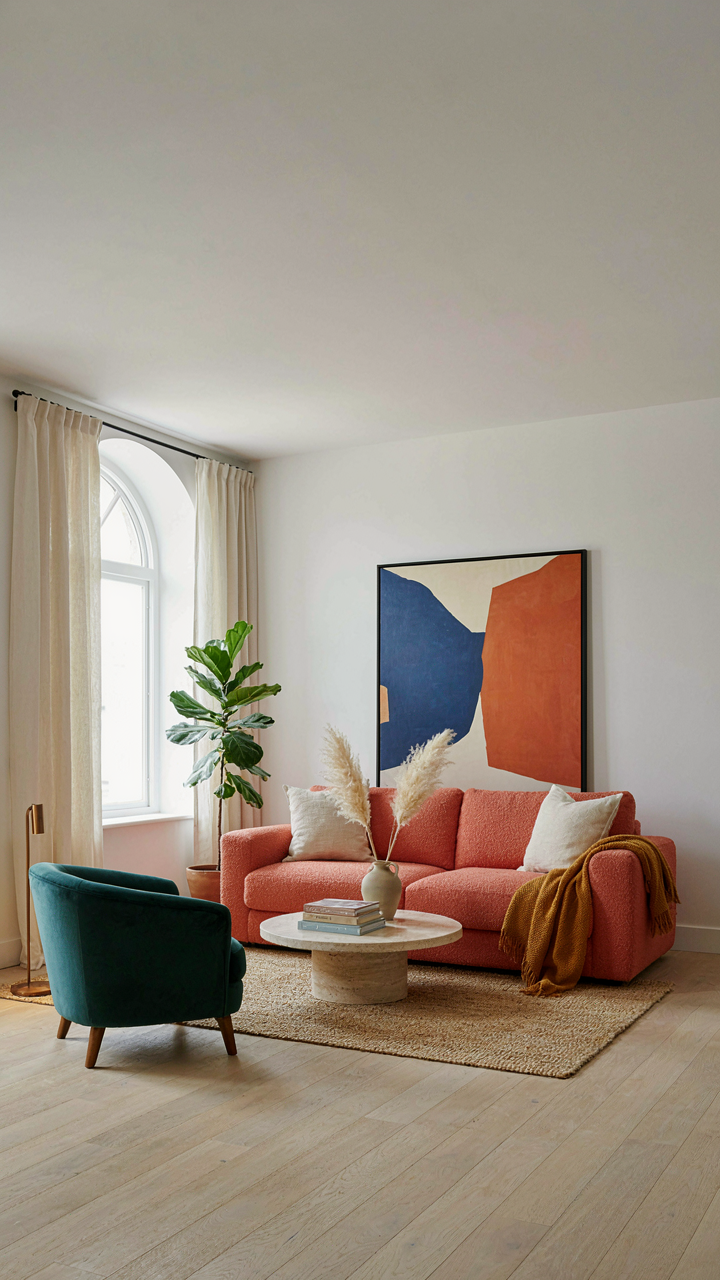
You want calm because you’ve confused silence with status. The real mechanism is acoustic absorption. Swedish farmhouses used heavy textiles not for decoration but because wool, linen, and layered fabrics dampen sound waves. This is pure physics: soft materials break up acoustic energy instead of reflecting it back into the room. A bare wood room amplifies every footstep and conversation. The same room layered with wool rugs, linen curtains, and upholstered furniture becomes acoustically dead.
Swedish farmhouse interiors achieve this through deliberate textile placement. Heavy linen curtains hung to the floor absorb high-frequency noise. Wool area rugs over time-worn wood floors add mass to the lower half of the room. Upholstered benches and chairs placed strategically break up hard surfaces. Thick tapestries or woven wall hangings serve dual purpose: they look intentional to the eye, and they work. The protocol is simple: count your hard reflective surfaces first, then cover them systematically with natural fibers. Do not rely on soft furnishings as afterthought.
Nature As The Structural Foundation
Biophilic design isn’t about adding plants to a room you’ve already built wrong. It’s about organizing the entire space around visible natural material and process. Swedish farmhouses didn’t follow biophilic principles because those principles didn’t exist as a named field. They followed them because the house was built from what surrounded it: wood, stone, clay. The mechanism is simple. Raw natural material reads to the nervous system as “safe” because humans evolved around it for 300,000 years.
Time-worn wood serves as the primary vehicle here. Exposed beams, unfinished floorboards, and visible wood grain create a material language your eye reads as living and changed by use. Secondary natural elements include raw linen, undyed wool, and stone or clay finishes on walls. These materials age visibly. They don’t fight entropy. Raw wood floors develop patina. Linen curtains fade and soften. Stone walls show mineral variation. The protocol is this: select one dominant natural material as your anchor, expose it fully, and let everything else reference it. Concealing wood grain or finishing everything smooth defeats the entire system.
Swedish Interior Design: Legacy Through Iteration
What Survives Gets Repeated
You want to know the secret because you think it’ll let you skip the work and land on something timeless. It won’t. But here’s what actually happens: evolutionary biology says organisms that adapt to their environment persist. Swedish farmhouse interiors work the same way. Designs that solved real problems for farmers in Stockholm and Dalarna got refined across generations. The ones that didn’t work disappeared. Time-worn wood became central not because it looked good, but because it was what survived the demands of a brutal climate and constant use.

The mechanism is simple: Swedish farmhouses didn’t get redesigned every decade. They got used, maintained, repaired, and modified by the same families for centuries. Wood that weathered well stayed. Paint colors that hid dirt and age marks became standard. Furniture layouts that maximized heat and movement remained. Every visible element you see in Swedish farmhouse interiors today is there because it solved a functional constraint. Strip away the aesthetic frame and what remains is a system optimized through repetition, not invented through inspiration.
Small Changes, Permanent Results
Most advice tells you to start from scratch or commit to a total overhaul. That’s wrong for a style built on incremental refinement. Swedish farmhouse design persists because it rewards small, continuous improvements over grand gestures. A farmer didn’t replace all his furniture at once. He repaired a table leg, then another, then eventually replaced the top. He added a shelf. He adjusted the stove placement. Each change was minimal, functional, and permanent.
This is how you apply it: stop planning a complete transformation. Instead, identify one element that’s failing functionally or aesthetically, then solve it with the smallest viable change. Replace one interior door with reclaimed pine. Sand and lighten the finish on existing shelving. Shift how you arrange seating to improve sightlines and heat distribution. Let each modification prove itself before moving to the next. The cumulative effect of dozens of small decisions creates authenticity that rushed, coordinated redesigns can never touch.
Your Real Obstacle Isn’t Finding The Perfect Antique; It’s Abandoning The Pursuit Of Curated Fantasy For The Discipline Of Lived-in Reality
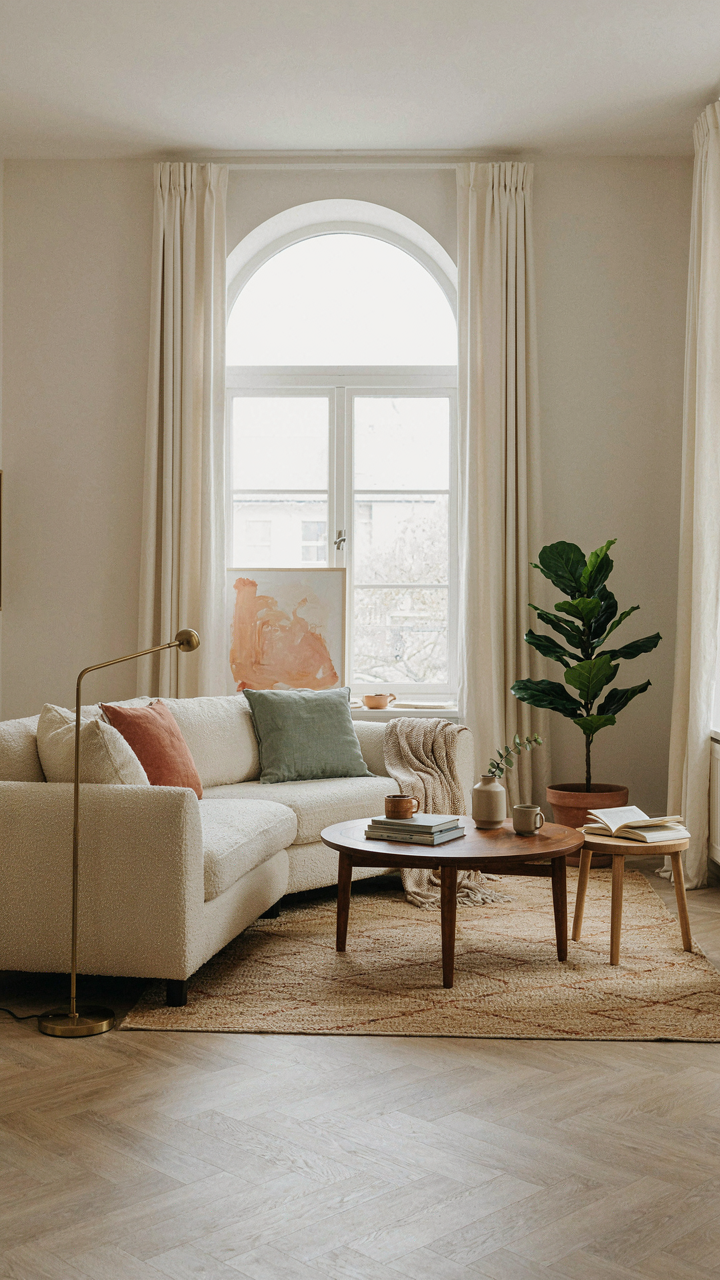
Stop waiting for the right piece to complete your vision. Your Swedish farmhouse doesn’t need curation. It needs use. Pull one worn wooden item from storage or a flea market today and place it where your family actually lives. Let it scratch. Let it fade further. Let it belong to your life instead of a magazine spread. The transformation happens when you stop designing and start inhabiting.