
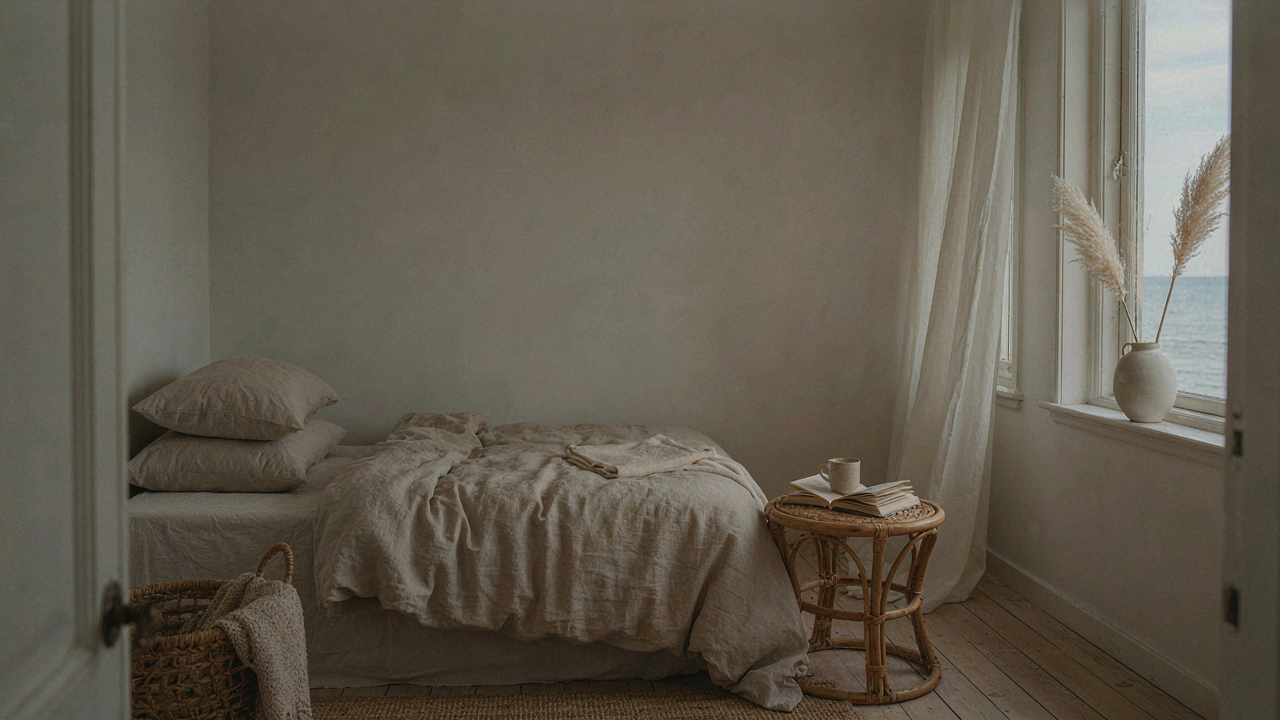
Ditch The Driftwood: The Illusion Of “Beachy Aesthetic Apartment”
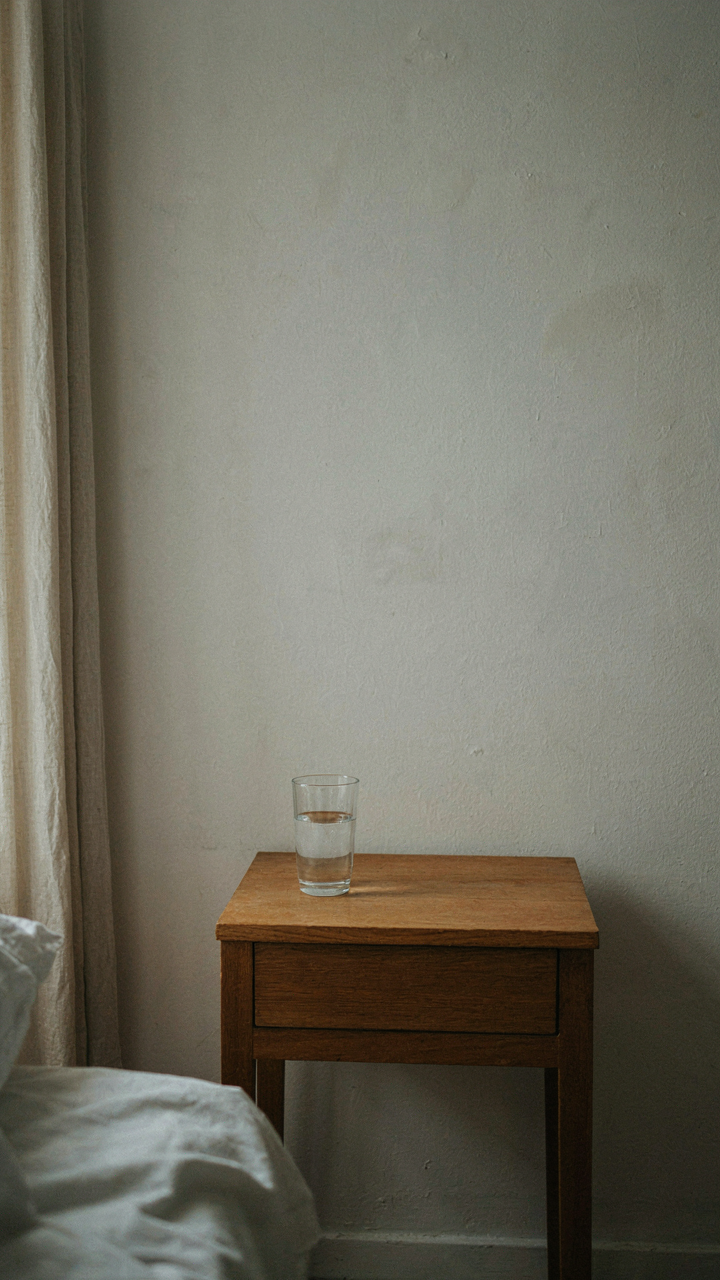
Visual Clutter As Cognitive Load
You want the beach cottage bedroom to signal you’ve figured out life. The real problem is that your brain processes every object in the room as a decision, and decisions drain the neural resources you need for sleep. Cognitive psychology calls this “decision fatigue”—the mechanism that degrades your mental performance with each choice your attention makes. A bedroom cluttered with nautical décor, woven baskets, and decorative objects forces your visual cortex to work during the hours when it should be powering down. You’re paying a neurological tax for aesthetic noise.
Most design advice says to add “personality” through objects. That’s backwards. A beach cottage bedroom that works uses empty wall space as intentionally as it uses filled space. Remove the decorative driftwood, the stacked books, the framed prints, and the textured wall hangings. Keep surfaces bare except for one nightstand item. Your nervous system doesn’t need visual interest at bedtime—it needs permission to stop processing. The fewer objects your eyes can land on, the faster your prefrontal cortex downshifts into sleep mode.
Sensory Inputs That Sabotage Rest
Beachy bedroom design typically loads the space with competing textures and materials: rough rope, smooth driftwood, grainy jute, synthetic linens, painted shutters. This isn’t aesthetic richness—it’s sensory competition. Your tactile system registers each material as distinct input. When your hand brushes the bedspread, your brain categorizes linen. When your shoulder touches a textured pillow, it registers another category. These micro-inputs accumulate into background neural noise that keeps you in a low state of alertness.
The mechanism is called “sensory gating”—the brain’s ability to filter irrelevant stimuli so you can focus. A bedroom with too many different textures weakens this filter. Instead, standardize materials: cotton sheets, one cotton throw, a single wood nightstand, linen curtains. Limit the palette to three textures maximum. Your nervous system will recognize the environment as predictable and lower its guard. The result isn’t style loss—it’s sleep gain. Make your bedroom texture-consistent, not texture-rich.
The Circadian Rhythm Re Calibration Protocol For Coastal House Bedroom
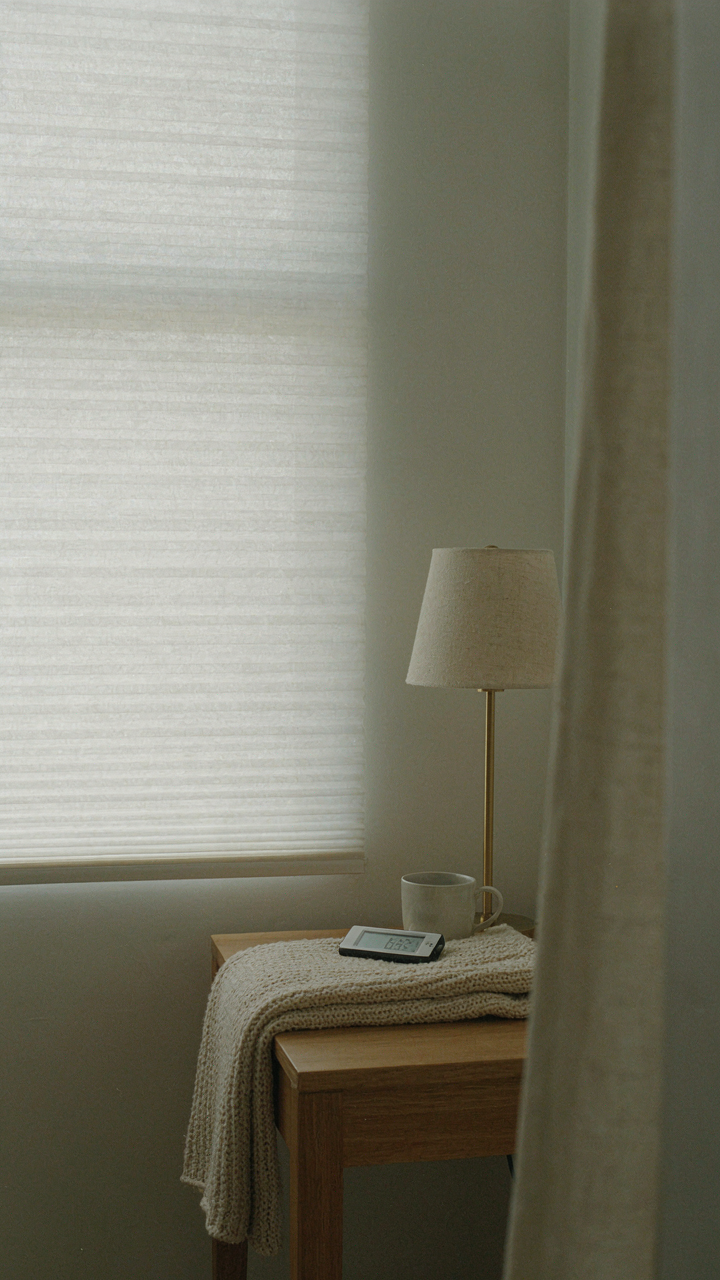
Blue Light Cutoff Before Dusk
You want to sleep better on weekends because you’re running a sleep deficit during the week and hoping the beach fixes it. It won’t, unless you control the input. Light spectrum directly triggers melatonin suppression or release, the same mechanism that keeps night shift workers permanently exhausted. Your bedroom’s light environment is the lever.

Standard advice says “use blackout curtains.” That’s incomplete. You need to eliminate blue wavelengths (380-500 nanometers) two hours before sleep, not just darken the room. Install warm-spectrum bulbs (2700K or lower) on all bedroom fixtures. Remove phones and screens by 8 PM. Beach cottages often have large windows facing east or west. Install cellular shades with blackout backing, not just linen drapes. The goal is zero blue light exposure during wind-down hours, period.
Room Temperature As Sleep Architecture
Temperature controls which sleep stage dominates your night. Neurobiology calls this thermoregulation, but in your bedroom it’s the difference between light sleep and deep REM cycles. Most people keep beach cottages too warm because ocean breezes feel good during the day.
Your core body temperature must drop 2-3 degrees Fahrenheit to initiate sleep onset and maintain deep stages. Set your bedroom to 65-68 degrees at night. Run a ceiling fan or portable unit to create air movement and accelerate heat dissipation from the body. If humidity exceeds 60 percent, the body cannot sweat efficiently to cool itself. A small dehumidifier addresses this faster than opening windows. Check the hygrometer before bed, not during the day. Temperature control before sleep matters more than comfort during waking hours.
Minimalistic Coastal Bedroom: Optimize For Absence, Not Presence
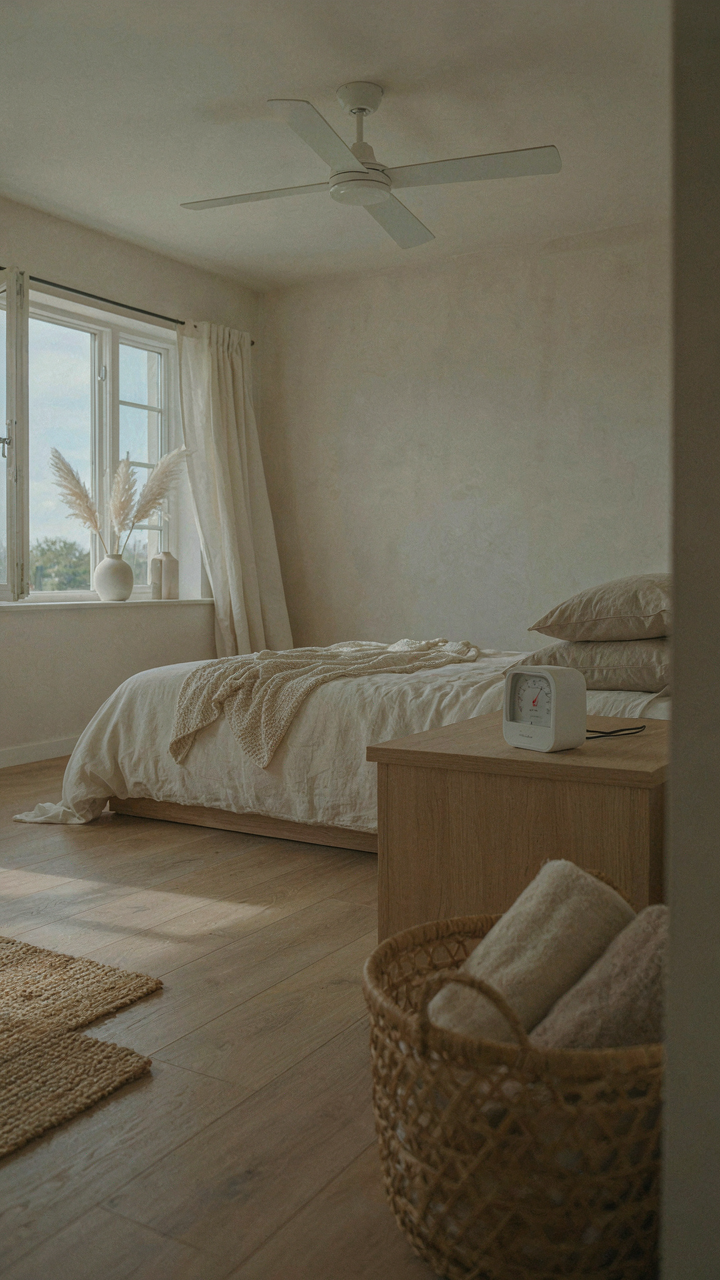
Sensory Feedback Loops That Actually Work
You want a beach cottage bedroom that requires zero mental effort to relax in, which is really code for: you’re tired of fighting your environment. Here’s the mechanism from cybernetics: a feedback loop is any system that measures its own output and adjusts based on that data. Your bedroom needs the same structure. Temperature drift, light creep, and sound infiltration are measurable inputs your nervous system detects even while sleeping. Most people ignore these because they assume comfort is subjective. It isn’t. Your body runs continuous calibration checks against your environment whether you’re conscious or not.

Install a basic thermometer visible from bed and adjust bedding layers weekly based on seasonal swings. Coastal air temperature varies between seasons, and your current setup probably locks you into one state year-round. Track which window treatments block morning light most effectively without trapping heat. Sound is harder to optimize because most people add white noise machines or earplugs instead of removing the source. Find what actually generates noise in your space: rattling blinds, air gaps under doors, loose window frames. Fix the source, not the symptom. When your room stops sending conflicting signals to your nervous system, sleep deepens without effort.
Environmental Self Regulation Through Constraints
Most minimalist bedroom advice stops at “remove clutter.” That’s incomplete. Real self-regulation comes from constraining what can enter the system in the first place. Pick one material palette and stick to it: linen sheets, cotton blankets, wood furniture, natural fiber rugs. This sounds aesthetic but it’s functional. Different materials off-gas, absorb moisture, and conduct heat at different rates. Mixing them creates competing microclimates your body has to constantly recalibrate to. Coastal environments add salt air and humidity variables that make material choice non-negotiable.
Set a rule: nothing enters the bedroom that isn’t on your approved material list. This removes the decision tax of evaluating each new item. Humidity control becomes automatic when you use natural fibers consistently because they regulate moisture without requiring active intervention. Windows stay closed during peak humidity hours, stay open during dry periods. This single protocol prevents the swing between clammy and stale air that wakes people at 3am. The room regulates itself once constraints are locked in place.
Beyond Blue Hues: The Neurobiology Of Color In Beachy Bedrooms Coastal Chic
What Your Brain Actually Does With Color
You want the beach cottage bedroom to feel effortless because you’re tired of carrying mental load into your sleep space. Here’s the mechanism: your brain processes color through two systems simultaneously. The first is conscious recognition. The second is a faster, older limbic pathway that triggers emotional response before you think about it. Coastal design leans on this second system, but most people get the colors wrong anyway.

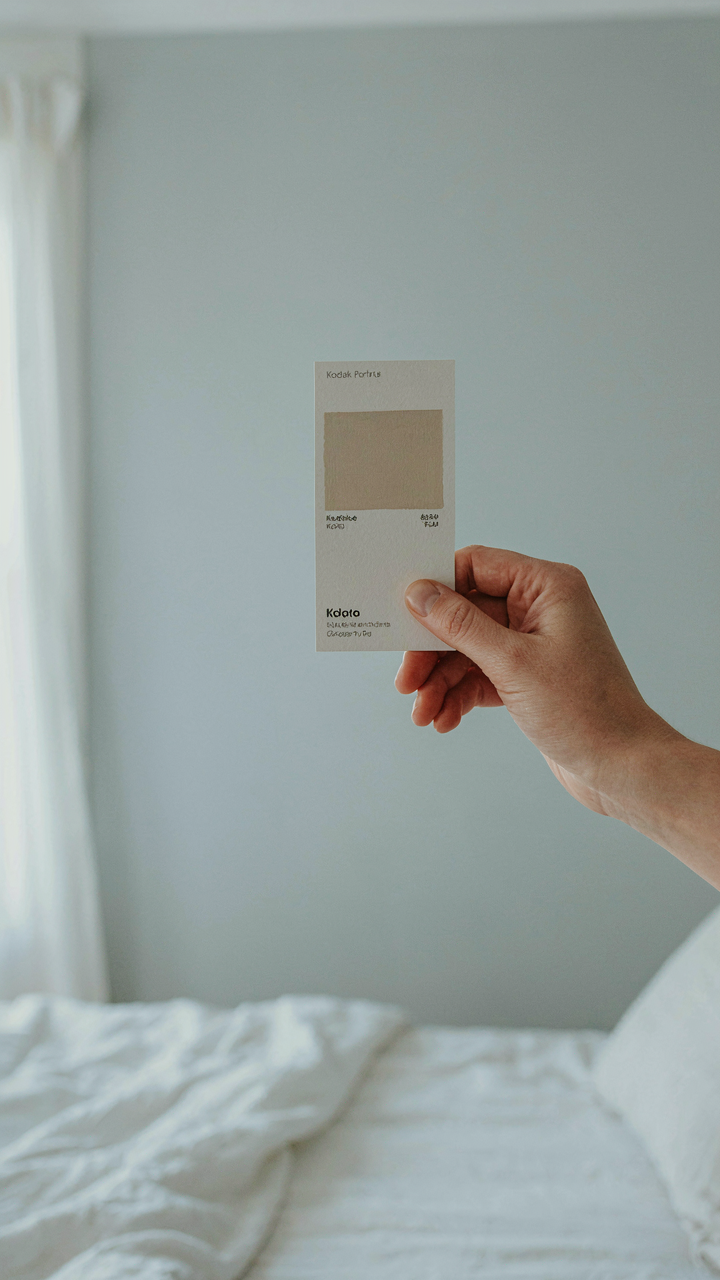
Neurobiology calls this the opponent-process theory of color perception. Your visual cortex doesn’t just see “blue.” It registers blue against its opponent color, yellow, which determines how calm or stimulating that blue actually feels. A beach cottage bedroom painted in pure cyan triggers the opponent response differently than a desaturated, gray-tinged blue. The difference isn’t aesthetic preference. It’s a measurable shift in how your nervous system prepares for sleep. You need the gray-tinged version because it reduces the competitive signal between opponent colors, lowering cognitive friction at the moment you’re trying to shut down.
Pigment Strategy Over Palette Trends
The common advice says “use coastal colors like navy, seafoam, and sandy tones.” That’s incomplete. What matters is pigment saturation relative to your room’s light source. A high-saturation seafoam under bright morning light becomes alerting by evening because the color intensity stays constant while your pupils dilate. Your brain interprets that as environmental stimulation. Desaturated, muted versions of the same hues work because they don’t compete for your visual attention as your light conditions change throughout the day.
Choose pigments that sit in the lower saturation range: grays with a hint of blue undertone rather than true blue, warm whites with minimal yellow cast, and neutrals that read slightly cooler than “sand.” This isn’t trendy. This is physics. When your bedroom color maintains visual calm across different times of day and lighting angles, your sleep onset happens faster and deeper. Apply this by testing paint samples under your actual bedroom lighting at 6 PM and 9 PM before committing to a gallon.
The Auditory Void: Sound Design For “Beach Cottage Bedroom” Tranquility
White Noise Versus Natural Soundscapes
You want this space to feel “authentic” without actually tolerating the chaos of real beach sounds at 3 AM. Here’s the mechanism: your brain separates signal from noise. White noise masks irregular sounds by occupying the auditory channel with predictable frequency data. Your nervous system stops searching for meaning in randomness and drops into sleep. Ocean recordings fail because they contain variation, which keeps your threat-detection system half-awake, waiting for the next sound spike.

The standard advice claims “nature sounds are always better.” Wrong. Nature recordings work only when they’re genuinely consistent. A true ocean loop—no birds, no waves crashing at random intervals, just the rhythmic undertone of distant swells—functions identically to white noise. Most commercial recordings layer in inconsistency to sound “real,” which defeats the entire purpose. Test this: play one for three nights and measure your sleep latency. If you’re still taking 20 minutes to fall asleep, the recording is doing the opposite job.
Acoustic Dampening Material Selection
Acoustic science has a term called “absorption coefficient”—the percentage of sound energy a material converts to heat rather than bouncing it back into the room. Apply this principle directly to your bedroom: a bare beach cottage bedroom with hard walls and tile floors has an absorption coefficient near zero. Sound waves ping-pong endlessly, keeping your brain in a state of mild vigilance. You need materials that eat sound before it reaches your ears.
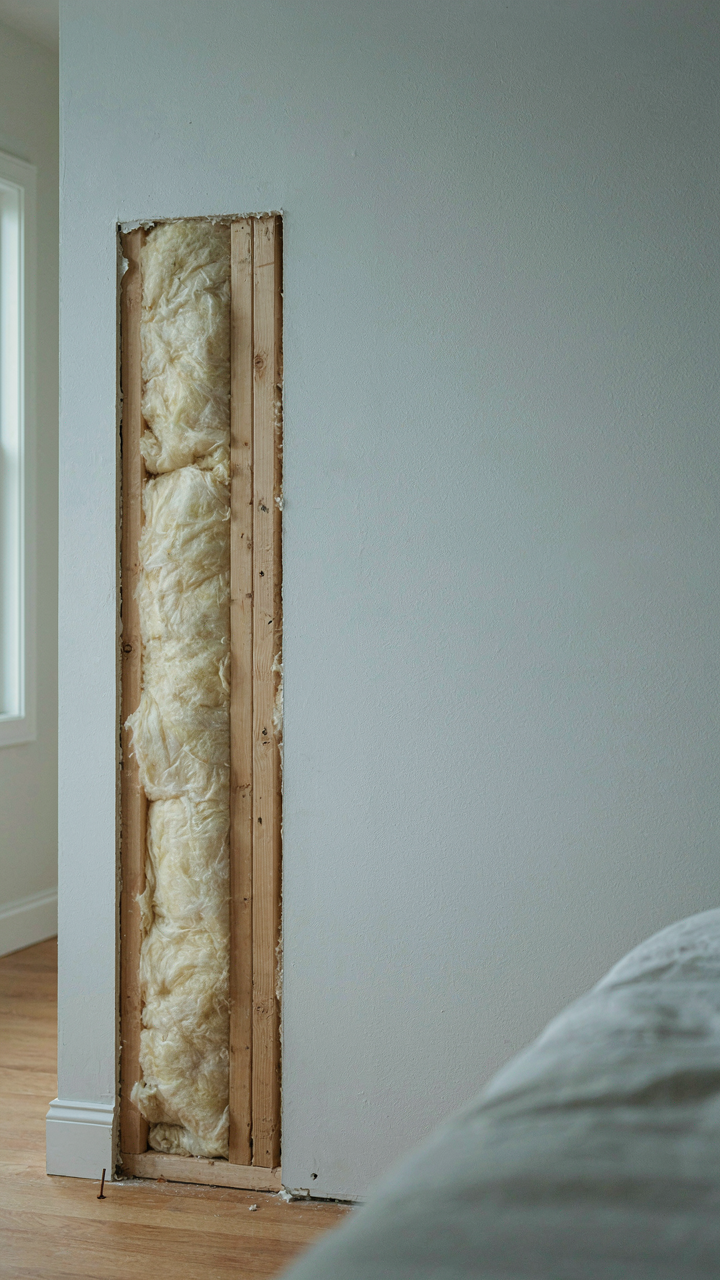
Fiberglass batts and open-cell foam are the actual workhorses here, not decorative “acoustic panels” you see online. Fiberglass absorbs across all frequencies; open-cell foam prioritizes mid and high frequencies. For a beach cottage, install fiberglass behind one accent wall or in the ceiling cavity above your bed. The goal isn’t perfect silence—it’s killing the acoustic feedback that keeps you half-conscious. One strategically dampened surface shifts your sleep architecture more than any sound machine.
Light And Bright Bedroom Ideas: Sunlight As A Sleep Trigger, Not Just Decor
Window Placement And Strategic Shade Control
You want your beach cottage bedroom to look good in photos. But the real reason you’re reading this is that you sleep poorly in unfamiliar rooms and you’re hoping decoration fixes it. It won’t. What fixes it is controlling light exposure using circadian biology, not interior design.

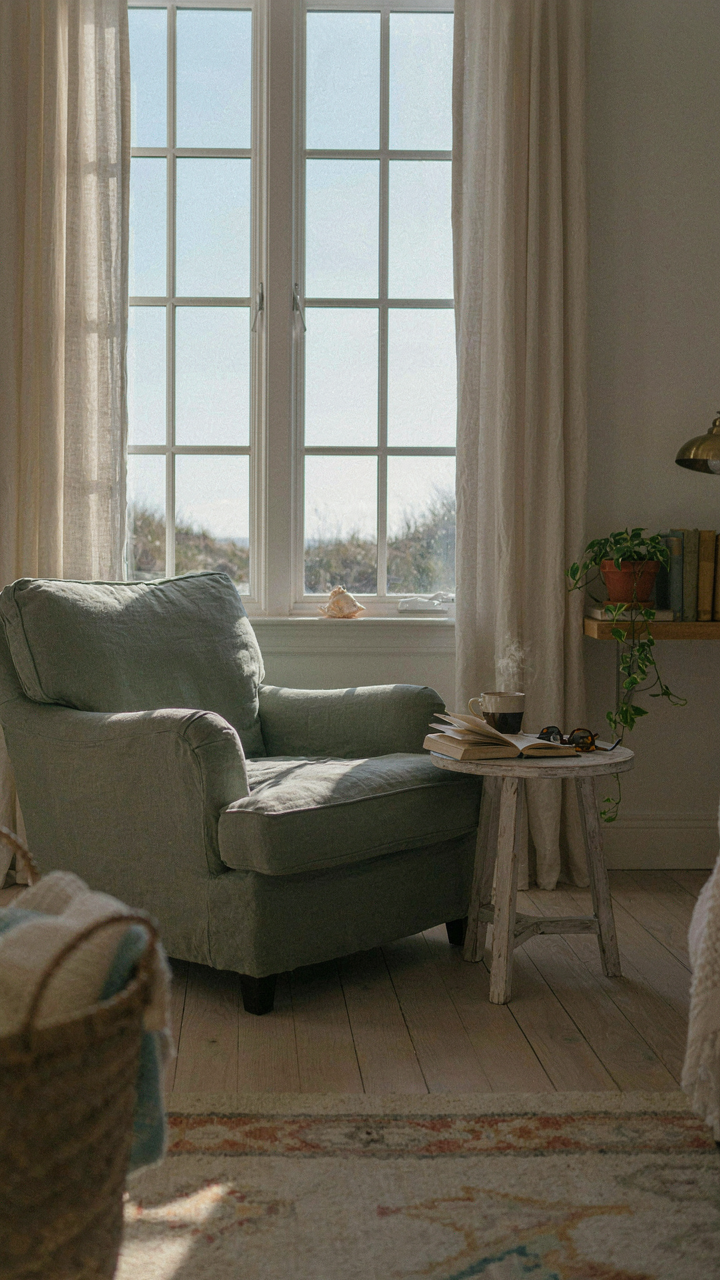
Your bedroom windows need east or southeast orientation. Morning light resets your circadian clock, telling your body when to produce cortisol and when to suppress melatonin later. Afternoon west-facing windows do the opposite—they flood your room with heat and bright light when you should be winding down. If your cottage has west windows, install cellular shades that block light completely without requiring blackout film that looks institutional. Linen Roman shades work too and age well in coastal humidity.
Maximizing Morning Light Exposure
Stop treating sunrise like optional. Circadian alignment happens through morning light, not evening dimness. A beach cottage bedroom should have unobstructed east or southeast exposure for at least two hours after dawn. This means clearing window sills, avoiding heavy curtain rods that cast shadows, and keeping glass clean. Salt spray coats windows faster than inland homes—a monthly rinse matters.
Position your bed so you face the window on waking. This forces light contact within minutes of consciousness. If your cottage layout prevents this, move a reading chair to catch first light and sit there for fifteen minutes with coffee. That single protocol shift—morning light exposure before anything else—will outperform every other sleep optimization in this article. Measure it by how quickly you fall asleep the following night.
The Unseen Scents: Olfactory Cues For Deep “Decoração Praiana” Sleep
Essential Oils And The Limbic System Route
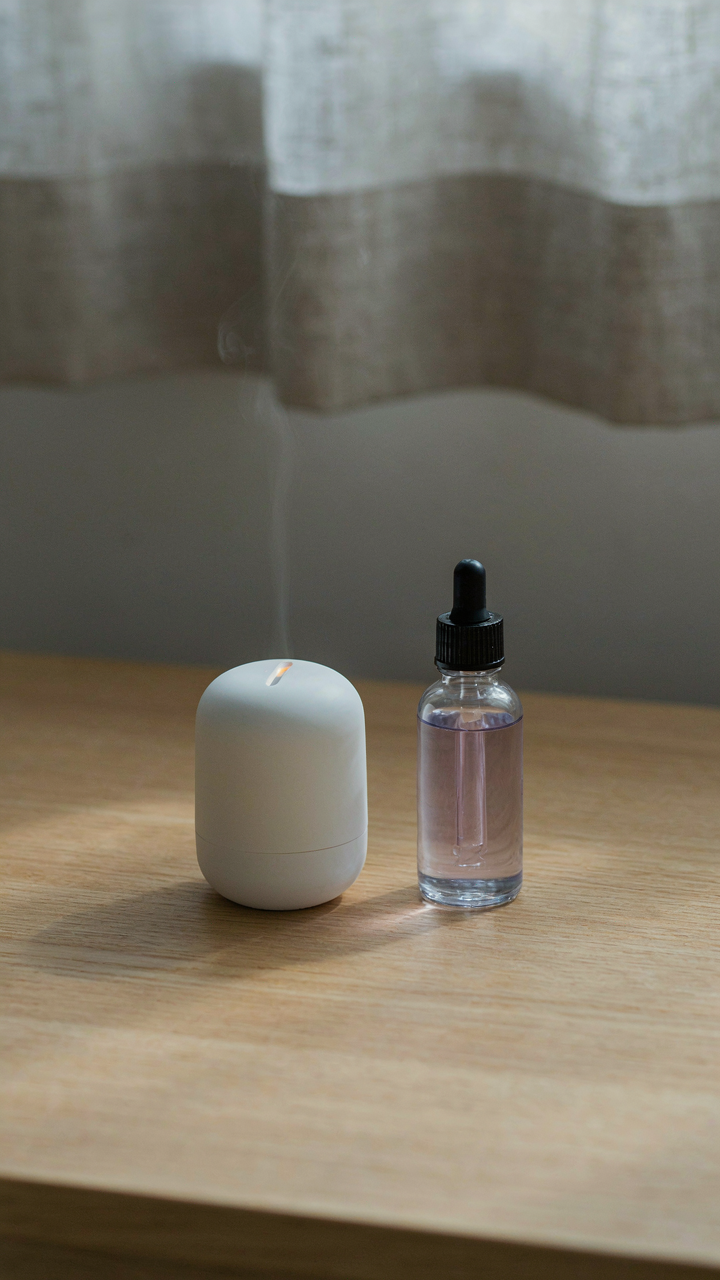
You want this section because you think a nice smell makes you feel better. That’s incomplete. Smell is the only sense that bypasses your thalamus and hits your limbic system directly, which controls sleep onset and emotional regulation. Neurobiology calls this the “olfactory bulb pathway.” In beach cottage bedroom design, this means scent functions as a control mechanism, not decoration. Lavender, chamomile, and cedarwood trigger parasympathetic activation through specific odorant receptors. This isn’t psychology. This is anatomy.

The common advice stops at “diffuse lavender and sleep better.” That’s lazy. Concentration and application timing matter. A diffuser running all night habituates your receptors by hour three, rendering the scent neurologically invisible. The protocol: diffuse for thirty minutes before sleep, then stop. Use five to seven drops of pure essential oil, not fragrance blends. Cedarwood works better than lavender for sustained sleep architecture because it binds longer to receptor sites. Apply this mechanism before bed, not throughout the evening.
Purging The Chemical Interference Layer
The bedroom doesn’t fail because it lacks good scents. It fails because off-gassing plastics, synthetic fabrics, and furniture treatments mask or override the limbic signal you’re trying to send. That’s the real problem nobody names. New paint, particleboard furniture, and polyurethane coatings emit volatile organic compounds that overstimulate your olfactory system and trigger low-level stress responses. Your nose can’t distinguish between threat and novelty at night. The signal drowns in noise.
Strip the room of synthetic materials before adding essential oils. Replace plastic storage with wood or glass. Air out the space for forty-eight hours minimum before occupancy. Open windows at dawn and dusk when exterior air is coolest and cleanest. Once the chemical baseline clears, introduce your chosen scent at reduced concentration. One or two drops instead of five.
Texture & Touch: Haptic Feedback In Your Beach Feel Bedroom
Materials That Actually Feel Right Against Skin
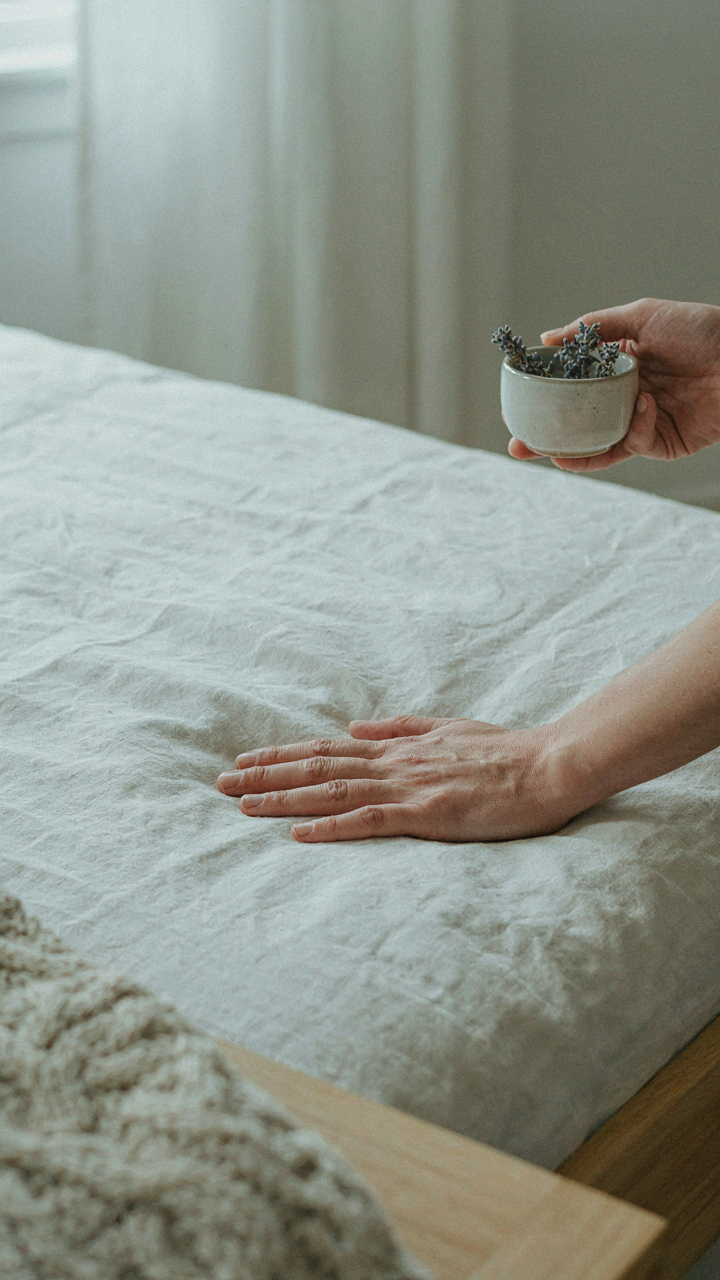
You want permission to spend money on bedding without feeling wasteful. Here’s the mechanism: your nervous system processes tactile input before your brain registers comfort, so cheap fabric that irritates skin keeps you in a low-grade alert state all night. Linen and cotton dominates beach cottage design for one reason—both fabrics have loose weaves that allow air circulation and won’t trap heat against your body. Linen specifically has a molecular structure with irregular fibers that create a textured surface your skin reads as “breathable” even when stationary.

Thread count marketing is noise. What matters is fiber length and weave density. Long-staple cotton (Egyptian or Pima, minimum 400 thread count) creates smoother fabric than short-staple blends because longer fibers interlock without pilling or snagging. Linen doesn’t need high thread counts—even 200 count linen outperforms 800 count short-staple cotton for temperature regulation. Choose one: pure linen for maximum breathability, or linen-cotton blend (60/40 ratio) if you want wrinkle reduction without sacrificing tactile performance.
What Actually Causes That Nighttime Skin Irritation
The common advice says wash new bedding before use. That’s incomplete. Residual dyes, optical brighteners, and sizing chemicals in factory-fresh fabric trigger histamine response in sensitive sleepers, but the real culprit is fiber damage from manufacturing. During processing, short-staple and synthetic blends develop microscopic fraying that physically abrades skin throughout the night. A single wash reduces this, but won’t eliminate it entirely if you chose low-quality fabric.
Swap your current sheets for 100% long-staple natural fiber and run two wash cycles before sleeping on them. Use plain water or unscented detergent—fragrance and softeners coat fibers and rebuild the barrier you’re trying to remove. Your skin will stop registering the fabric as a minor irritant within three nights, and you’ll actually sleep deeper because your nervous system stops running a background threat detection loop.
The Coastal Beach House Bedroom Declutter: Cognitive Load Reduction Principles
Storage Solutions For Mental Clarity
You want this section because you’re terrified a messy bedroom will broadcast that you lack control. That fear is real, but it misses the actual mechanism: clutter taxes working memory. Neuroscience confirms it. Your brain treats visible disorder as unfinished tasks. In a beach cottage bedroom where you sleep two nights a month, every visible object competes for cognitive resources you need for actual rest.

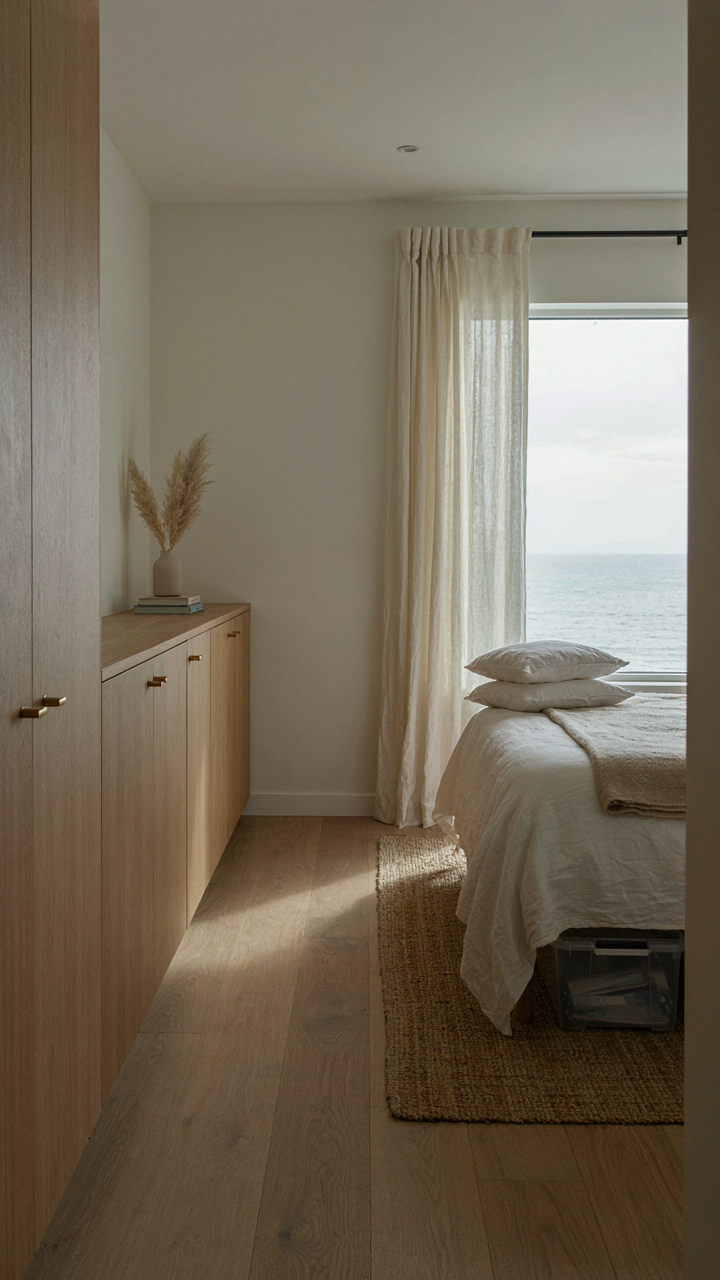
Coastal bedrooms require storage that handles salt air and humidity while keeping items invisible. The goal is zero visual noise.
- Closed wooden cabinets with moisture-resistant finishes: Seal off décor and clothing completely. Salt air corrodes exposed metal hinges, so marine-grade hardware matters. Keep cabinet doors closed always.
- Under-bed storage containers with tight seals: Captures seasonal items and linens without taking wall space. Elevation prevents moisture pooling on floors during high humidity.
- Wall-mounted floating shelves with built-in backers: Eliminates the visual clutter of standalone shelving. Backers hide wall imperfections and create a finished line. Mount high to keep sightlines clear from bed level.
- Woven storage baskets inside closets only: Use baskets as category containers, not as décor. They trap dust and salt residue; keep them contained behind doors.
- Vertical hanging systems for off-season clothing: Maximize closet depth without adding floor footprint. Vacuum-sealed bags compress seasonal items by 75 percent.
The mechanism is simple: put everything behind a barrier. Your brain stops processing hidden objects. Sleep quality improves because your visual cortex isn’t flagging thirty micro-tasks before your head hits the pillow. Storage isn’t decoration. It’s cognitive infrastructure.
The One In, One Out Object Rule
This rule is incomplete advice that most people misapply. You don’t enforce it per category. You enforce it per room, period. One new item enters the beach cottage bedroom: one item leaves entirely, not rotated to another room. This stops the migration of clutter that creates false scarcity and decision fatigue.
The real mechanism borrows from inventory management in supply chain logistics. Inventory costs money whether it sits on shelves or in your bedroom. The economic term is carrying cost. Your bedroom’s carrying cost is cognitive burden. Each item demands classification, organization, and mental processing every time you see it. When you add a new throw pillow, something of equal visual weight exits the room permanently. No “I’ll use that later in the office.” No “it goes in the closet now.” Out means gone. This enforces restraint at the purchase stage, which is where real decluttering begins. Most people try to organize their way out of a buying problem. That fails. The one-in, one-out rule makes buying the expensive action it actually is: the loss of something else.
The “Unplugged Retreat” Strategy For Your Beach Cottage Bedroom
How To Actually Stop Checking Your Phone
You want this to work because you’re tired of feeling like you don’t own your own attention. Here’s the mechanism: your brain treats notification removal like a forced dopamine fast. The discomfort peaks between hours two and four, then flatlines. Most people quit before that threshold because they mistake withdrawal for failure.
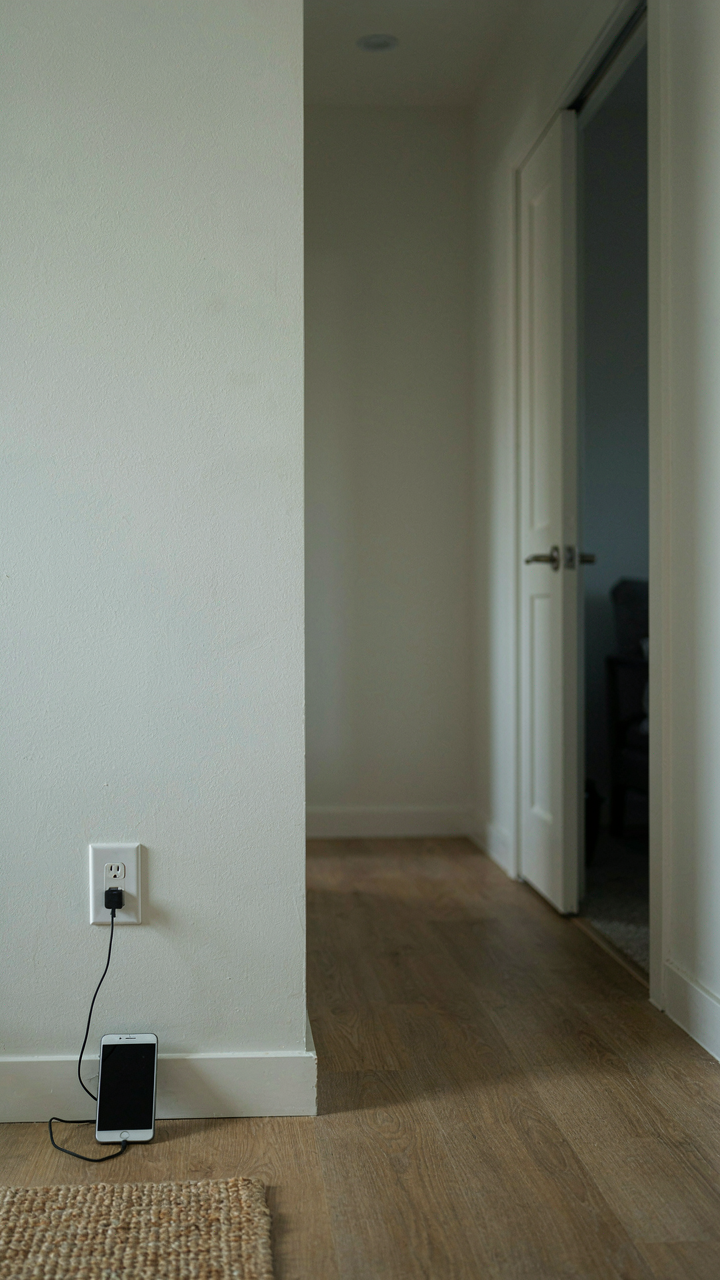
Start with logistics, not willpower. Put your phone in a different room entirely, not just face-down on the nightstand. The friction of retrieval kills the impulse reflex before it becomes a choice you have to make repeatedly. Your bedroom becomes a device-free zone not through discipline but through physical distance.
- Phone charging station outside bedroom: Place chargers in a hallway or kitchen so returning to get your device means leaving the sleep space entirely, breaking the half-asleep reach habit.
- Airplane mode starting thirty minutes before bed: Begin the dopamine taper early so your brain adjusts to stillness before you’re actually trying to sleep.
- Tactile replacement objects: Keep a book, notepad, or worry stone on your nightstand to redirect the hand-reach impulse that used to go toward your phone.
- Weekly check-in window, not constant access: Designate one fifteen-minute block per morning or evening to catch urgent messages, then return the phone to its external charging station.
- Alarm clock replacement: Buy a standalone battery-powered alarm so you eliminate the “I need my phone for the alarm” justification that sabotages every digital detox attempt.
Beach cottage bedrooms work because they’re temporally disconnected from your work life. The device-free setup actually sticks here because you’re already mentally primed to treat the space as separate. The removal becomes a feature of the location, not a personal failure.
The Physical Architecture Of Absence
Device-free zones don’t fail because of weak willpower. They fail because you haven’t designed the environment to make devices unnecessary. Borrow from naval architecture here: a watertight compartment isn’t secure because people promise not to open it. It’s secure because the door mechanism itself prevents opening.
Your bedroom needs the same principle applied. Remove outlets near the bed or use outlet covers that create friction. Keep the space visually empty of charging cables, cords, or adapter hubs. The absence itself becomes the signal to your nervous system that connection isn’t available here. You’re not depriving yourself. You’re stating a fact through design.
Light matters more than people admit. Beach cottage bedrooms often have large windows with curtains or shutters. Use these to control external light pollution and internal device glow. A truly dark room makes phone screens feel hostile and jarring instead of comforting. The ambient darkness reinforces the detox without requiring constant resistance. Your brain accepts what the environment communicates.
The Real Problem Isn’t Your Bedroom Decor, It’s Your Inability To Disconnect. Learn To Unhook From The Digital Tide
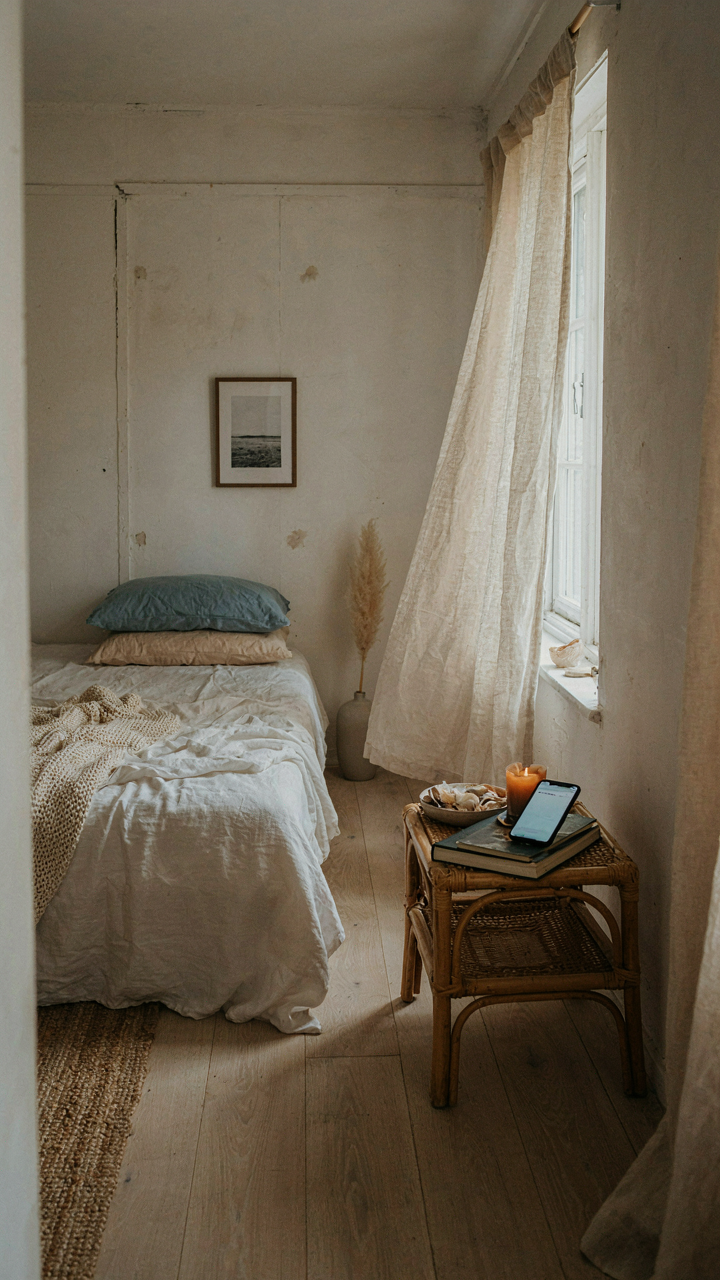
You can paint every wall coastal blue and scatter seashells across your nightstand, but your phone will still hijack your sleep. The beach cottage bedroom works because it signals to your brain that this space exists outside your real life. That signal dies the moment you scroll notifications at 11 PM. Delete the apps from your bedroom tonight. Not your phone. The apps. Your nervous system doesn’t care about thread count or driftwood headboards. It cares that you’re finally treating rest like something worth protecting.