
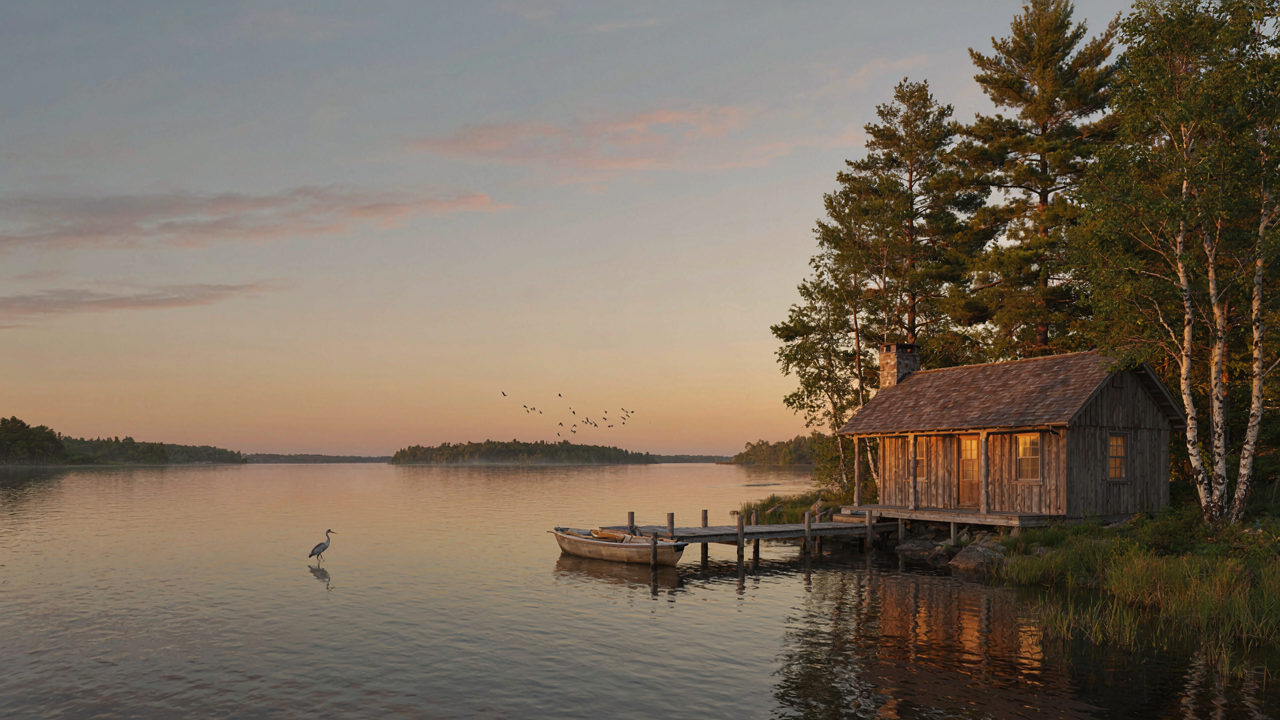
The Intentional Disconnect Protocol

Remove Wi Fi From The Main Room
You want people to think you’re above phone addiction while you secretly check email every four minutes. Here’s the mechanism: friction. In behavioral economics, friction is the resistance between intention and action. Apply it to your lake house by physically removing the router from your primary living space. Not hiding it. Removing it. Your guests can’t disconnect from what’s technically available.
The common advice says to just “encourage people to put phones away.” That’s useless. People don’t operate on encouragement. They operate on what the environment makes easy. When the Wi-Fi password requires a twenty-minute boat ride to retrieve, the math changes. Visitors settle into what’s actually present in the room instead of performing presence while mentally elsewhere.
Design Surfaces That Demand Attention
Tactile materials interrupt the autopilot brain. Wood with visible grain, stone with temperature variance, linen with actual texture. These aren’t decoration. They’re competing stimuli that win against the phantom buzz of a notification. Every surface in a lake cottage should have a physical property that requires your hand or eye to process it differently than drywall and glass.
The old lake house vernacular got this right by accident. Wide-plank flooring, exposed beam ceilings, and stone fireplaces forced engagement. Modern cottages strip this down and add ambient lighting instead, which just creates a prettier waiting room for screens. Reverse engineer the friction. Choose materials with genuine surface variation. Place them where people naturally sit. Let the room’s actual texture become the default activity.
Beyond Aesthetics: Function First Lake House Decorating Ideas

Comfort Over The Instagram Version
You want the lake house to feel like a retreat, not a showroom you’re afraid to use. That’s the real driver here, and it matters because most lake house advice reverses the priority. You’ll see endless posts about matching throw pillows and color palettes. Ignore that. The mechanism is simple: comfort is a physical state, aesthetics is a feeling. One compounds over time. The other fades after the first weekend.

Start by treating furniture like equipment, not decoration. A worn leather sectional that supports your back beats a pristine linen sofa you perch on. Cotton-blend linens that survive weekly washing outperform delicate fabrics. Wood tables that take water rings from a forgotten glass work harder than ones that demand coasters. The lake house exists for use, not preservation. Comfort means you actually relax instead of managing the space.
Materials Built For Moisture And Time
Durability in lake environments isn’t optional, it’s physics. Apply the concept of load-bearing capacity from structural engineering to every material choice. Your furniture, textiles, and finishes all carry the load of humidity, temperature swings, and salt air if you’re coastal. Most decorating advice ignores this entirely and recommends materials that fail fast in these conditions.
Canvas, linen, and performance fabrics survive lake houses. Leather develops character from humidity instead of cracking. Solid wood and metal with proper sealing handle moisture better than veneers and particle board. Ceramic, concrete, and sealed stone work for surfaces because they resist water damage. Paint specifically formulated for moisture-prone areas prevents peeling. Pick materials that improve with use or degrade slowly, not materials that require constant maintenance to look acceptable. This approach eliminates the decision fatigue of “protecting” your lake house from its own environment.
Vintage Lake House Decor: Echoes Of Authenticity
Hunt For Origin, Not Labels
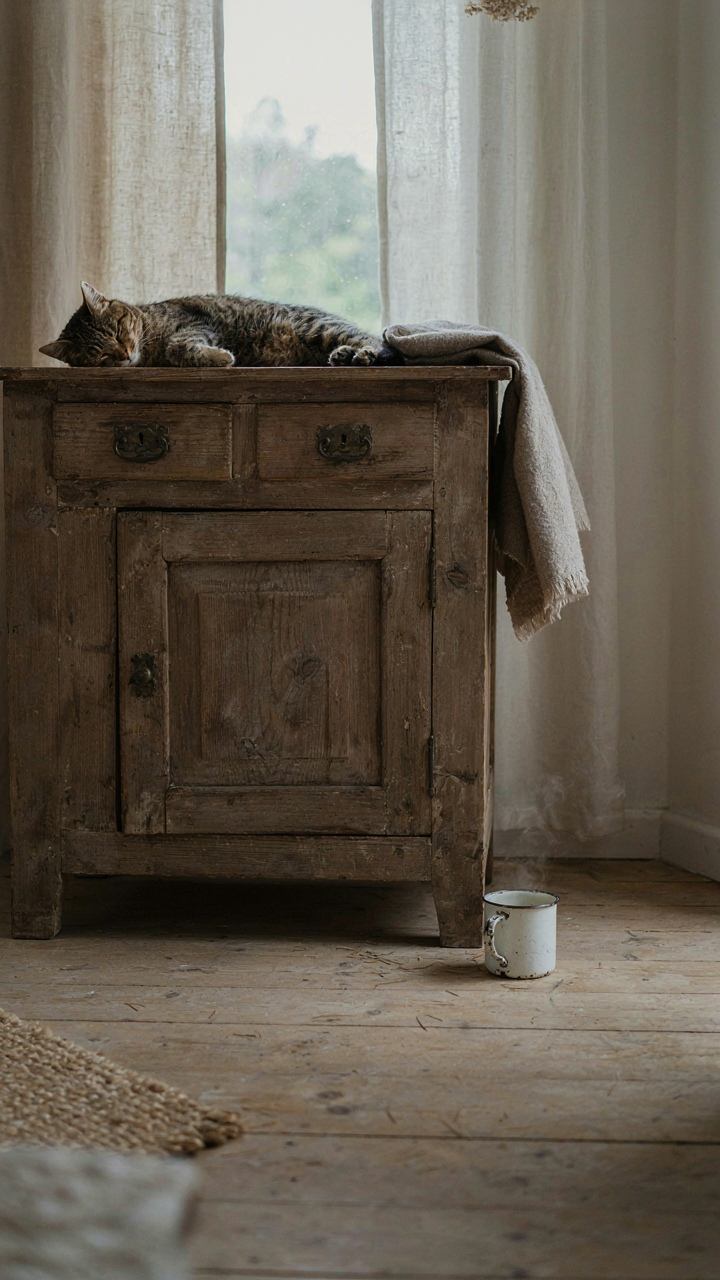
You want vintage to signal you have taste and history on your side, not that you bought it last month. The mechanism is simple: authenticity compounds. A piece sourced from an actual lake community in the 1970s carries provenance your wallet cannot fake. Hunt estate sales, local antique dealers, and architectural salvage yards in regions with established lake house culture. These sources yield pieces that lived the life you’re staging. Mass-market “vintage-look” furniture signals the opposite of what you intend.

Provenance matters because locals know what belonged there. A pine cabinet from a cottage in the Adirondacks feels right in a lake house because it was built for that climate and space. Regional antique shops stock pieces designed for the actual conditions: wood that resists moisture, finishes that patina predictably, scale that fits smaller rooms. Buying from sellers rooted in lake country means the pieces already passed the durability test.
Objects That Carry Time Forward
A weathered piece doesn’t just decorate. It narrates. Buying vintage lake house decor isn’t about collecting artifacts—it’s about curating evidence. Each scratched surface, faded finish, and worn edge documents real use. A dented metal canoe paddle, a rope-handled wooden crate, a sun-bleached life jacket: these aren’t props. They’re testimony. The story accelerates when pieces cluster around actual function: fishing gear on walls, cast iron on kitchen hooks, worn dock clamps as shelf brackets.
The protocol is simple: choose pieces that show their job, not their age. A scratched wooden table didn’t get marked by time sitting in storage. Someone ate meals on it, spilled coffee, set down fishing poles. That damage is proof. Arrange these objects by utility, not by period room perfection. A tackle box sits where you’d reach for it. Books stack on surfaces where someone actually reads. This transforms vintage decor from museum display into a lived narrative.
Lakehouse Cabin Decor: The Psychology Of Sanctuary
Design That Mirrors How Nature Actually Works
You want a lake house that feels different from home because you suspect your life needs fixing, and you’re right. The mechanism is biomimicry: copying natural systems to solve design problems. Nature doesn’t decorate randomly. Trees grow toward light. Water flows downhill. Organisms cluster near resources. Lake house cottage design works the same way. Instead of fighting these patterns, you align furniture, materials, and light sources with them.

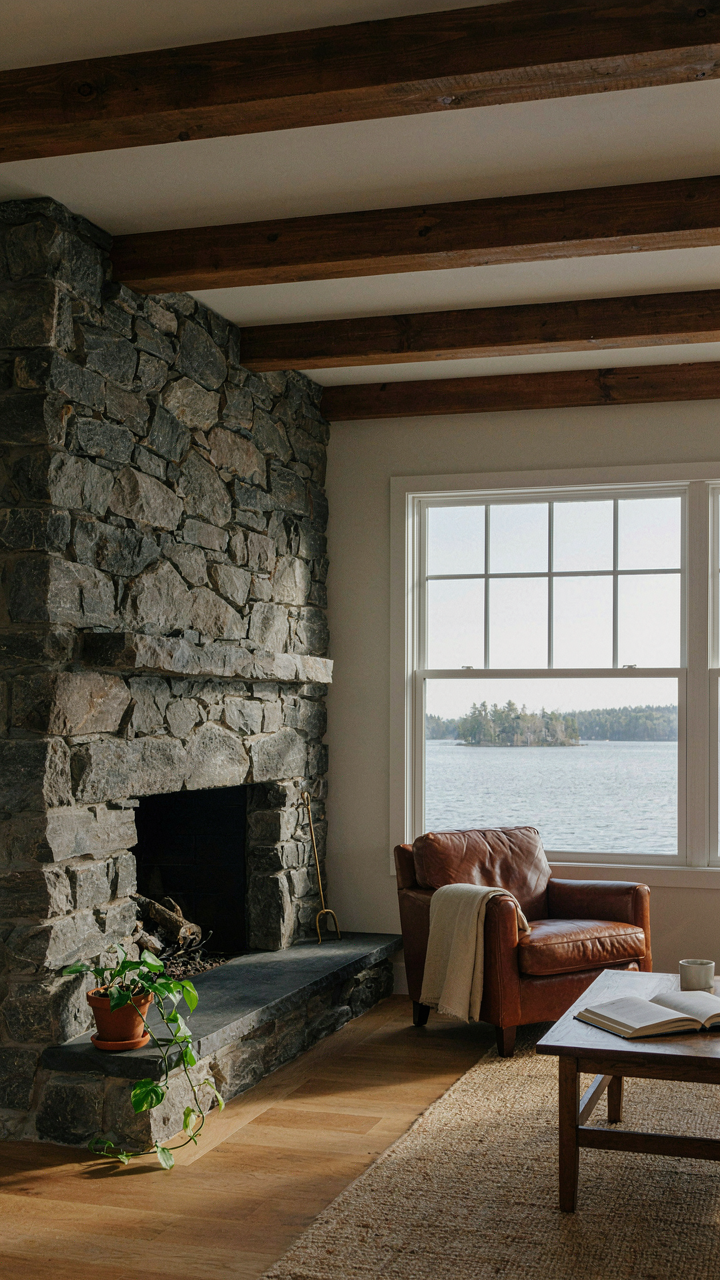
Raw wood, stone, and water features aren’t trendy accents. They’re the design language your nervous system evolved to read. A stone fireplace anchors a room the way a geological formation anchors a landscape. Exposed beams mirror tree canopies overhead. These aren’t choices. They’re translations of systems that kept humans alive for millennia. Your cottage succeeds when it stops pretending to be anything other than an extension of its surroundings.
The Environment That Lets Your Brain Stop Working
Flow state isn’t mystical. It’s the result of removing friction between intention and action. Your lake house either removes friction or adds it. The common advice says “minimize clutter.” That’s incomplete. You need to minimize decision points. Every object in view that doesn’t serve a current activity steals cognitive resources. A lake house cottage works when the path from entry to sitting to eating to sleeping requires zero navigation decisions.
Layer your environment to support one dominant activity per zone. The living room isn’t a showroom. It’s a reading and conversation space with sight lines to water, seating arranged for both, and zero decorative objects competing for attention. Kitchen workflows demand prep surfaces near storage. Bedroom lighting must shift from bright to dim without switches requiring thought. The mechanism is simple: eliminate the gap between what you want to do and the space’s readiness to let you do it.
Lake Cottage Decorating Ideas: Minimalism For Mental Space
Decluttering As A Practice, Not An Event
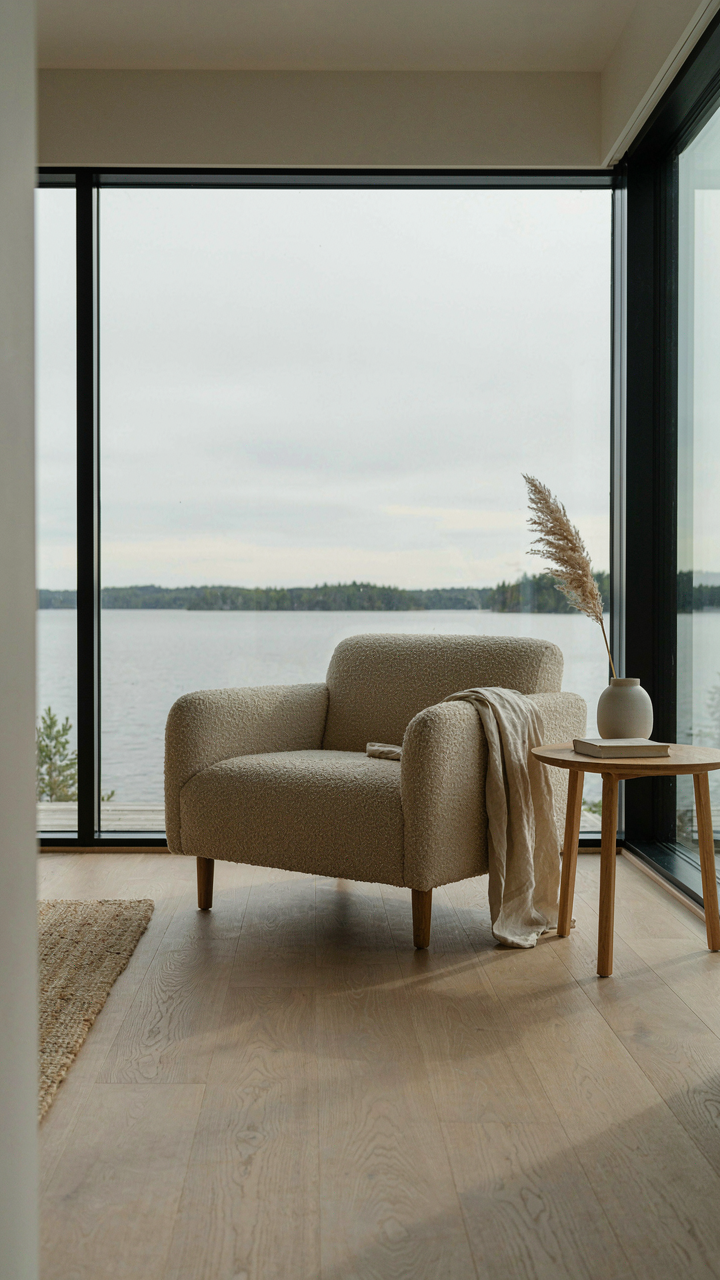
You want your lake house to feel peaceful because you think emptiness equals calm. That’s backwards. The mechanism is this: your brain treats every object as an unfinished task. Each item demands a micro-decision about its placement, purpose, and relevance. Decluttering isn’t about aesthetics. It’s about removing decision fatigue so your mind actually rests when you arrive.

Most decluttering advice tells you to sort by category or use emotion as a filter. Neither works for lake houses. The real discipline is functional honesty: does this serve the specific activities you do here? A cottage isn’t a storage unit. If you haven’t used something in two seasons, it’s not coming back into rotation. Remove it.
The Tangible Cost Of Owned Possessions
Owning less stuff isn’t aspirational minimalism. It’s economics. Every object has a hidden tax: storage space costs money, cleaning takes time, and decision-making drains mental energy. Lake houses compound this problem because seasonal gaps make you forget what you own, forcing you to repurchase duplicates.
- Fewer Textiles: Limit throw blankets, pillows, and rugs to exactly what fits your rotation. Excess creates clutter and duplicates seasonal storage needs.
- Single-Purpose Tools: Replace multipurpose gadgets with one tool per task. A cottage kitchen needs a coffee maker and a kettle, not seven appliances.
- Consolidated Decor: Choose one design language and commit. Mixed styles force you to keep backup pieces “just in case.”
- Limited Art and Accessories: Five well-placed pieces beat twenty scattered around. Each item should anchor a room’s visual weight intentionally.
- Reduced Furniture: Keep seating to what actually fits your guest count. Extra chairs are clutter masquerading as hospitality.
The freedom isn’t about having nothing. It’s about having only what requires maintenance and decision-making. Before bringing anything new into your cottage, remove something of equal size first. This creates a hard boundary against accumulation.
Cozy Lake House Decor: The Sensory Experience
Textures That Demand Touch
You want people to feel like your lake house is different from their own home because you want permission to feel different there too. The mechanism is simple: texture removes friction between your body and your environment. When your hand hits rough linen or a nubby wool throw instead of sterile cotton, your nervous system registers the shift. You’re not just seeing comfort—you’re feeling it.

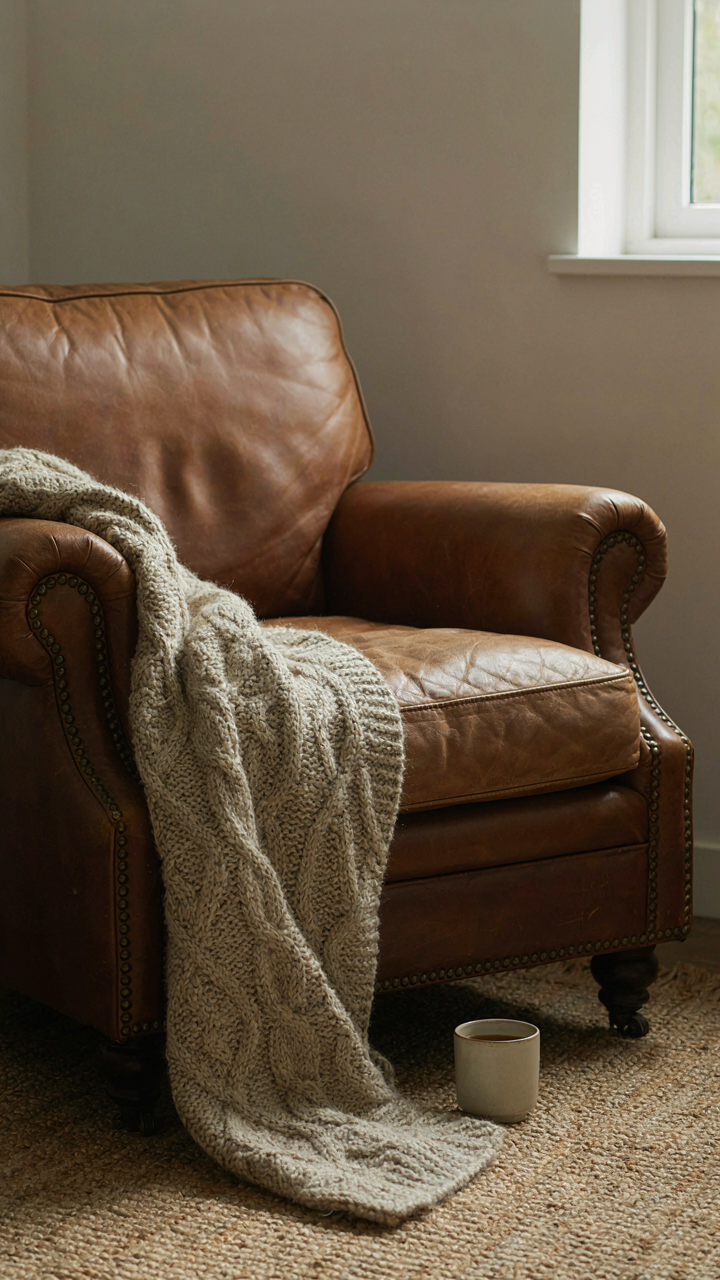
Cotton canvas, wool, and raw linen work because they have visible weave. Stone and reclaimed wood carry age through their surface. These materials don’t smooth away their own history. Layer a chunky knit blanket over a vintage leather chair next to a jute rug. The variance in surface density forces your tactile senses to stay present. Forget the generic advice about “soft furnishings”—what matters is resistance and variation, not softness alone.
Ambient Light Without The Performance
Most lake house lighting advice misses the core function: light controls whether you’ll stay or leave a room. This is basic neuroscience. Your circadian rhythm and arousal state respond to light temperature and intensity before your conscious mind notices. A bright overhead fixture triggers alertness. Dim, warm light signals rest. Strategic placement means you’re not installing mood—you’re installing behavioral options.
Use multiple low-wattage sources instead of one dominant fixture. Table lamps with warm-toned bulbs (2700K color temperature) near seating areas. Sconces flanking a fireplace or window. Edison-style bulbs aren’t decoration—they’re functionally lower intensity than modern LEDs, which matters physiologically. Position lights so you can dim them independently. The goal is to build an environment where staying relaxed requires zero willpower. Your body should default into the state you want, not fight against what’s overhead.
Pottery Barn Lake House: The Illusion Of Aspiration
What Aspirational Design Actually Sells
You want proof that your taste exists. That’s why this section matters. Pottery Barn built a $2 billion empire on a specific mechanism: packaging middle-class desires as upper-class achievement. Their lake house line doesn’t sell furniture or decor. It sells the narrative that buying curated items signals you’ve arrived at a life stage where weekends matter enough to design for them. The brand doesn’t invent trends—it identifies what people already want to believe about themselves, then gives those beliefs a product code.

The mechanism works through what retail strategists call “aspirational pricing.” Items cost enough to feel like investments but stay within reach of dual-income households. A Pottery Barn linen pillow costs three times what an identical one costs elsewhere, but the premium transfers social meaning onto the object itself. You’re not buying softness. You’re buying evidence. When guests see that label, the decor makes a claim about who you are before you speak.
Separating Real Comfort From Branded Desire
Most advice tells you to “curate intentionally” or “buy what speaks to you.” That’s useless. The actual question is mechanical: Do you need this object to function, or do you need others to see you’ve bought it? The gap between those two states is where Pottery Barn operates. A side table serves utility—holding drinks, lamps, books. A Pottery Barn side table serves identity. Both cost money, but only one delivers functional value. Most lake house buyers conflate the two and end up with expensive versions of things they didn’t actually need.
Start by listing what your lake house actually demands. Durable seating that handles moisture and salt air. Storage that resists mildew. Textiles rated for humidity. Lighting that works in bright afternoon glare. Once you’ve solved those mechanical problems, everything else is decoration. At that point, you can choose Pottery Barn or a local maker or a thrift find. The brand choice stops mattering because the real work—function—is already complete.
Lake House Interior Decor: Crafting Your Own Rules
Stop Copying Pinterest
You want permission to trust your own taste instead of feeling like you’re doing it wrong. Here’s the mechanism: design trends exist because they’re easy to market, not because they work for your specific space and life. Lake house cottage decor has no fixed rules. The moment you treat someone else’s aesthetic as law, you’ve already lost. Your cottage solves a problem nobody else has—how you actually spend time there. Start by naming that problem, not by scrolling for validation.

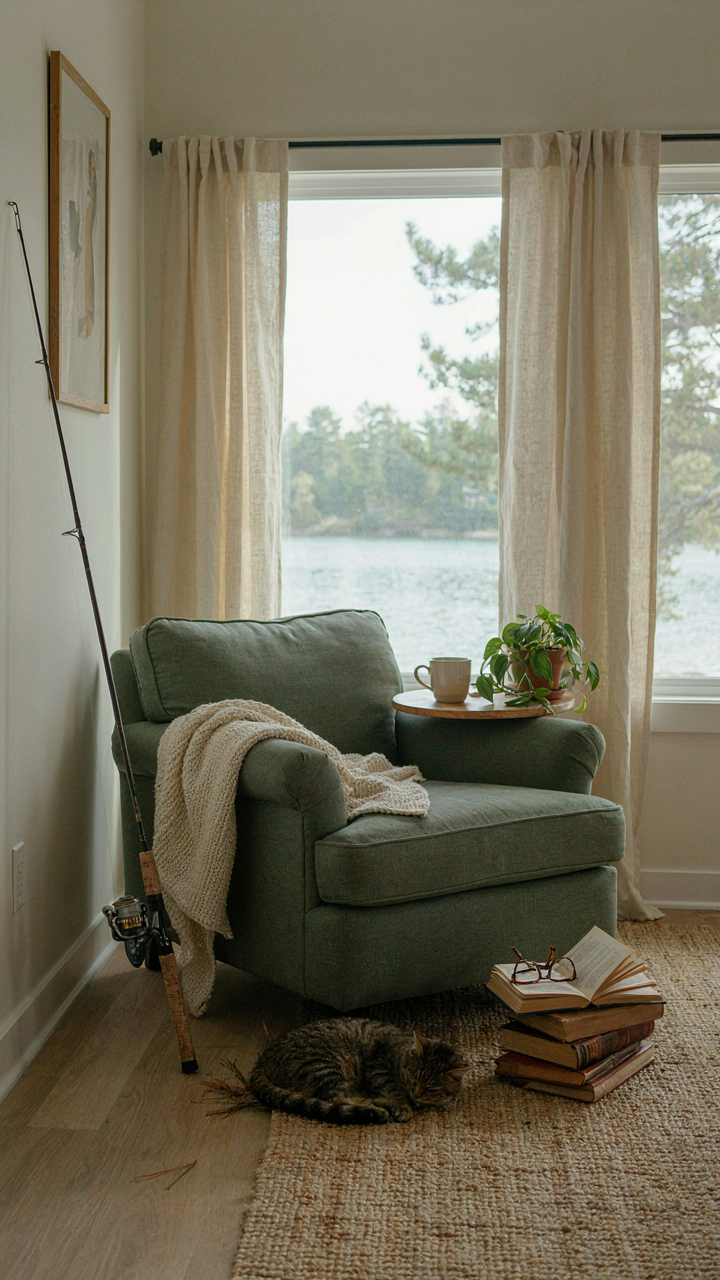
The common advice tells you to pick a palette, stick to it, and curate everything. Garbage. That approach builds homes for magazine shoots, not weekends. Your lake house doesn’t need cohesion—it needs function wrapped in restraint. If you fish in the morning and read at night, the space should support both without apology. Stop filtering your choices through whether they match. Start filtering through whether they matter to how you live there.
Build In Room For Becoming
Evolution in design works like ecological succession in biology: you plant initial conditions, then observe what actually thrives. Don’t furnish your cottage completely. Leave gaps. This isn’t minimalism dressed up as philosophy—it’s tactical. Gaps let you test what works before committing money and space. Imperfection also signals lived-in, which is the actual goal of cottage decor. Perfection reads as unused.
- Unfilled wall space: Paint or leave bare for six months. You’ll discover whether you actually want art there or if the emptiness works better.
- One flexible furniture piece: A console table or credenza that can move between rooms as your needs shift seasonally or yearly.
- Mixed wood tones: Don’t match your finishes. Walnut, oak, and pine in the same room create authenticity that matching sets destroy.
- Visible wear on textiles: Canvas, linen, and wool age gracefully. Embrace scuffs and fading rather than replacing items when they show use.
- Open shelf styling with gaps: Stock 60% of your display shelves. The blank spots prevent visual noise and let you add finds without rearranging everything.
Your cottage won’t be finished, and that’s the point. Finished spaces feel dead. Lived-in spaces breathe. When you find something—a side table from a local carpenter, vintage decoy from a market—you add it without demolishing what came before. This approach transforms your cottage from a design project into an actual home. The protocol is simple: wait three months before buying anything permanent. If you still want it, and it solves a real problem, then you keep it.
Your True Obstacle Isn’t Decor, It’s The Relentless Pursuit Of An Image
You don’t need another throw pillow. You need to stop performing relaxation for people who aren’t there. Lake house cottage decor becomes real when you stop chasing Pinterest boards and start choosing what actually makes you want to stay longer. The gap between a staged room and a lived-in one is permission. Pick one thing you genuinely love today and place it where it belongs, not where it photographs well. Everything else follows from that single act of honest preference.