
The Gaines Effect: Why Surface Level Imitation Fails
What You’re Really Afraid Of
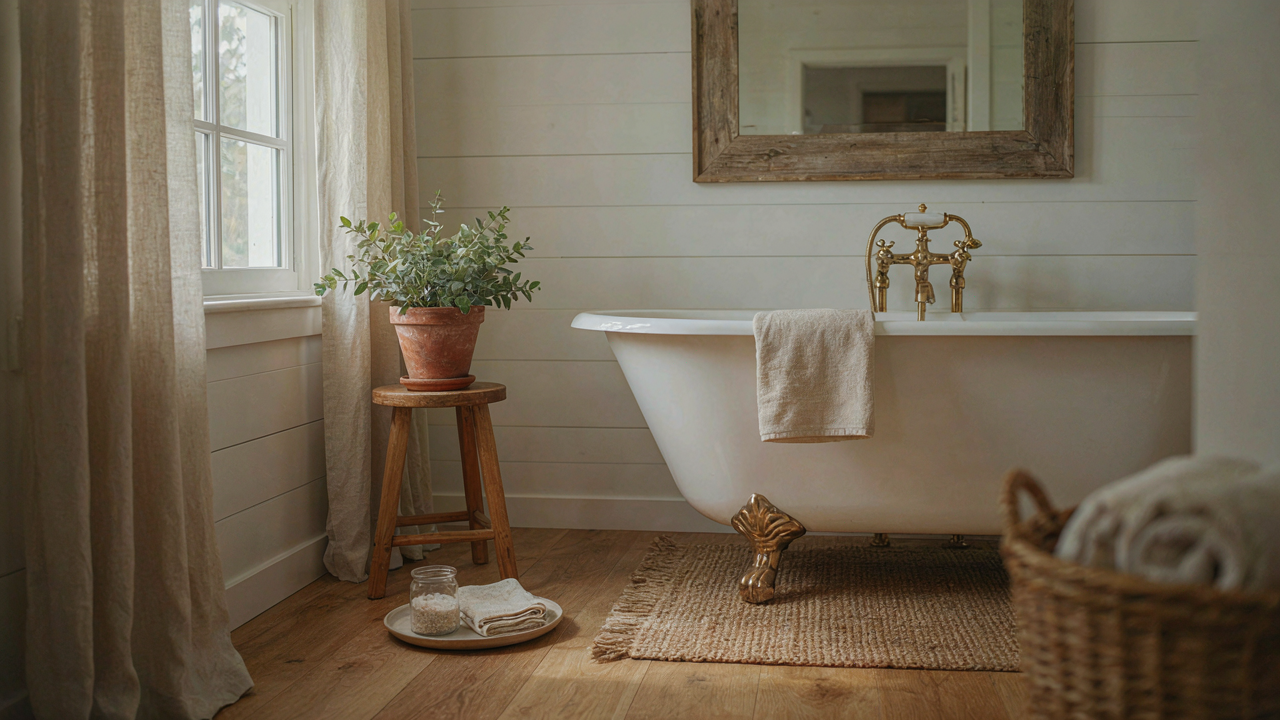
You want the bathroom to signal taste without requiring taste. That’s the trap. Most people copy Joanna Gaines bathrooms by collecting surface elements: shiplap, vintage mirrors, neutral palettes, farmhouse fixtures. They miss the actual system. In systems theory, this is called confusing the signal for the signal-generator. The bathroom doesn’t work because it looks like hers. It works because her choices follow a constraint-based design logic most people never reverse-engineer.
The mechanics are simple. Gaines starts with material authenticity and spatial proportion, not aesthetics. She uses shiplap because it’s cheap and honest, not because it’s trendy. She picks finishes that age visibly, creating the impression of history. She constrains the color palette to force material quality to carry the visual weight. Most recreations skip this and just paint everything white, add a reclaimed wood sign, and call it done. The result feels like a theme park version of the original.
Paying For Consensus
Generic farmhouse bathrooms cost more than they should because they’re built on borrowed legitimacy instead of function. When you assemble a bathroom around “farmhouse style” as the organizing principle, you’re not making decisions. You’re shopping from a predetermined list that includes items that contradict each other. You end up overspending on the right aesthetic markers while cutting corners on what actually matters: layout, material durability, and fixture performance.
The hidden cost isn’t the shiplap or the vintage mirror. It’s the wrongly-sequenced renovation decisions that force expensive fixes later. You install trendy fixtures that fail in five years because they prioritize looks over engineering. You commit to a color scheme that limits future updates, locking you into aesthetic choices instead of functional ones. The real answer is simpler: design around what performs and ages well, then let the aesthetic emerge naturally from constraint and material choice.
Deconstructing Magnolia: The Unseen Principles Behind Joanna Gaines Bathroom Design
When A Space Stops Performing
You want to know how to steal Joanna’s design moves without looking like you’re copying a catalog. The real mechanism at work is this: people confuse “polished” with “real,” and Joanna’s bathrooms work because they feel lived in despite being immaculate. This isn’t about taste. It’s about constraint. Every element in a Magnolia bathroom earns its place through function first, beauty second. The order matters.

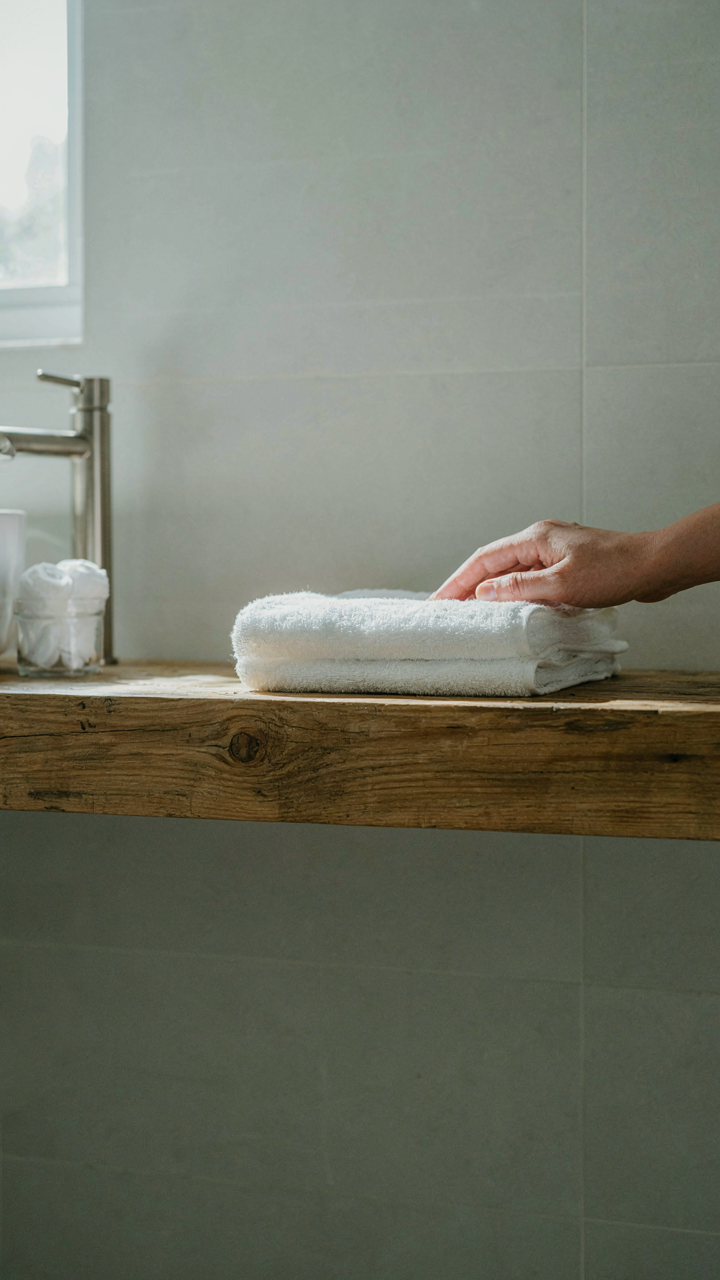
Most design advice tells you to layer textures and add personality. That’s backward. Start with what the space actually needs to do: hold towels, store products, provide light, facilitate cleaning. Once you’ve solved those problems with honest materials, the personality emerges automatically. Joanna uses reclaimed wood, simple hardware, and open shelving not because they’re trendy, but because they solve real problems while aging gracefully. Fake elements stick out immediately. Real ones compound in value.
Tension Between Eras
Magnolia bathrooms operate on a principle borrowed from architecture called “contextual contrast,” where old and new elements reference each other without competing. A vintage clawfoot tub sits next to contemporary fixtures. Shiplap walls pair with modern lighting. The tension is deliberate, not accidental. This prevents the space from feeling like a museum or a showroom.
The mistake most people make is treating old and new as equal design partners when they should operate as primary and accent. Joanna typically anchors the room in one era, then introduces the other as strategic punctuation. A 1920s aesthetic might define the core (tub, tile pattern, vanity structure), while brushed nickel hardware and minimal LED lighting create the modern edge. This creates perceived depth without visual chaos. The protocol: choose your anchor period first, then identify two to three points where the alternate era can genuinely improve function or light, then stop.
The Root System Protocol For Lasting Joanna Gaines Bathroom Appeal
Structure Beats Decoration Every Time
You want your bathroom to look like Joanna’s because you’re afraid it’ll look cheap if it doesn’t, and cheap feels like failure. Here’s the mechanism: Joanna’s bathrooms hold up because she builds from the substrate up, not from Pinterest down. Her approach mirrors how trees establish permanence through root systems before visible growth happens. She invests in tile quality, plumbing infrastructure, ventilation systems, and material selection before touching paint or accessories. Most people reverse this and wonder why their bathroom falls apart in two years.

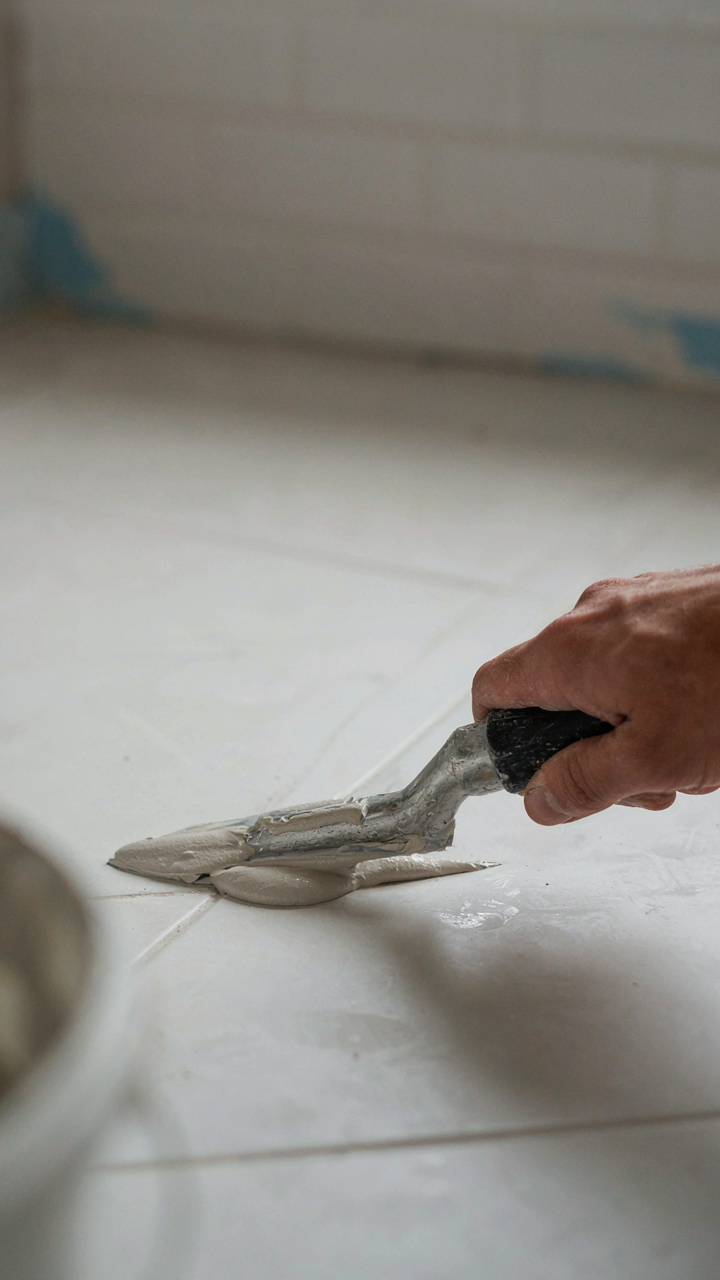
The difference between a bathroom that ages well and one that degrades is invisible for the first eighteen months. Joanna sources materials that function under humidity stress. Grout compounds, waterproofing membranes, and fixture quality determine longevity. Decorative choices matter, but they sit on top of systems that either fail or endure. When you see her finished bathrooms in magazines, you’re seeing the result of specification choices made during framing and rough-in phases. Skip this work and no amount of shiplap fixes what’s breaking underneath.
Materials That Perform Under Pressure
Joanna’s bathroom selections prioritize performance specs over trend cycles. Ceramic and porcelain tiles withstand moisture and thermal expansion better than porous stone. Her fixture selections lean toward mid-range to premium commercial-grade hardware, not decorative faucets that corrode. Durable materials cost more upfront but eliminate replacement cycles that compound expense and frustration over time.
Grout selection directly impacts tile longevity. Epoxy or urethane grout resists staining and moisture penetration far better than standard cement grout. Ventilation sizing matters more than most people realize. Undersized exhaust fans create humidity pockets that damage framing and drywall behind visible surfaces. The protocol is straightforward: specify materials by performance rating before aesthetic preference, then layer design choices on top of systems built to last.
The Scarcity Principle: Crafting Unique Joanna Gaines Bathroom Ideas
Finding What Others Overlook
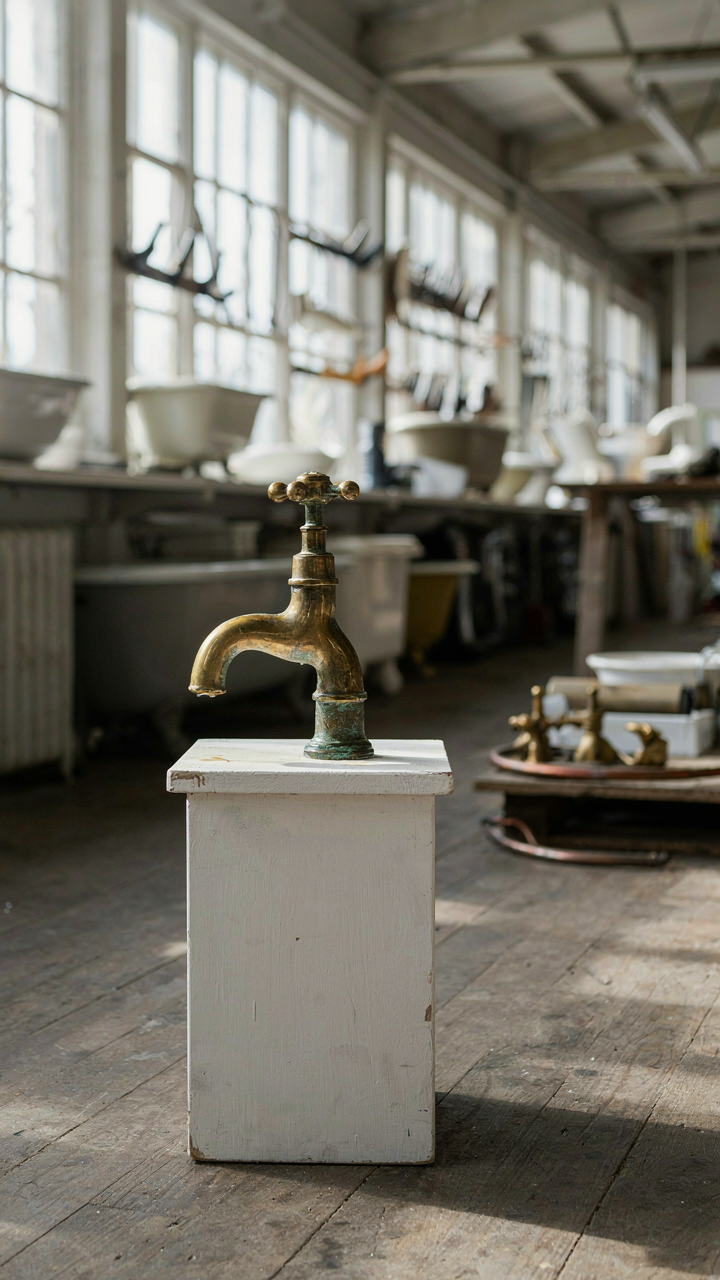
You want your bathroom to feel intentional, not like everyone else’s. The real mechanism here is supply constraint. In economics, scarcity creates perceived value. Apply this to your bathroom: source elements that aren’t available at big box stores. Joanna Gaines rarely uses mass-produced fixtures as focal points. She sources reclaimed wood, vintage hardware, and custom millwork that force intentionality in every choice.

Reclaimed wood mirrors, vintage brass fixtures, and hand-finished tile don’t appear in standard bathroom catalogs. You find them through salvage yards, architectural salvage shops, and specialty suppliers. This friction in sourcing is the feature, not the bug. The effort required to source different materials means fewer homes end up with identical bathrooms. Start with one anchor piece—a reclaimed wood vanity, a vintage light fixture, or a unique tile pattern—then build around it.
Story Over Decoration
Most bathroom design advice says “add personality through accessories.” That’s wrong. Personality requires context, not objects. A Joanna Gaines bathroom works because each element connects to a deliberate narrative. A vintage apothecary cabinet isn’t random—it references the home’s era or a specific design intent. The mirror frame material matches the wood tones elsewhere in the space. Lighting recalls period-appropriate craftsmanship.
The mechanism is constraint through narrative. Once you establish your story, you reject 90 percent of options automatically. You don’t debate whether to add a floating shelf because your story already answered it. This reduces decision fatigue and creates cohesion that reads as “expensive” even when individual pieces cost less than generic alternatives. Pick one design premise—farmhouse restoration, mid-century function, or period authenticity—then use it to filter every single choice.
The “Ecosystem” Model For Joanna Gaines Bathroom Cohesion
When Materials Speak The Same Language
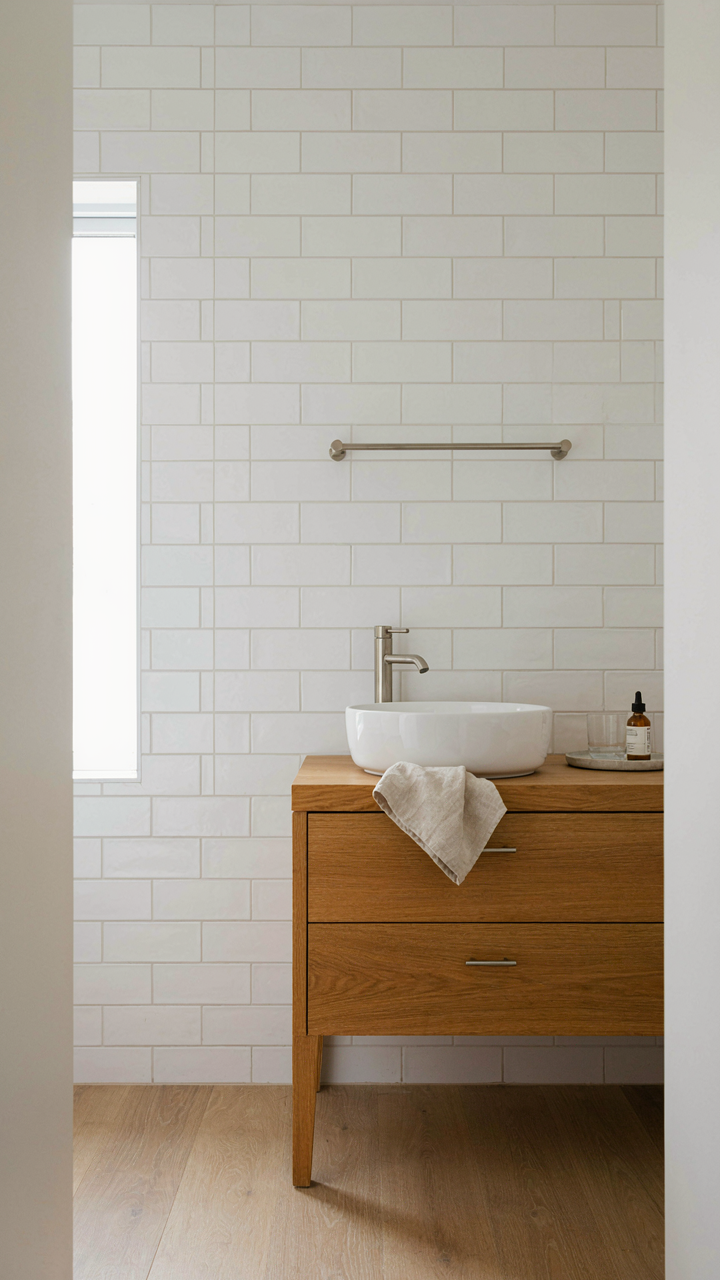
You want your bathroom to feel intentional instead of assembled, which is just another way of saying you want to feel like you have taste. Here’s the mechanism: in biology, an ecosystem survives because species don’t compete for the same resources. Apply this to bathrooms. Joanna Gaines uses material repetition as the binding agent. Shiplap, natural wood, and metal hardware don’t fight for visual dominance because each occupies a specific functional role. Shiplap covers walls and creates texture. Wood appears in vanities and shelving. Metal appears in fittings and mirrors. They coexist because they serve different purposes.

The common advice is to “pick a color palette and stick with it.” That’s incomplete. Color alone doesn’t create cohesion. Material language does. When you specify white subway tile for the shower, natural oak for the vanity, and brushed nickel for the faucet, you’re not decorating. You’re building a system where each element reinforces the others. The eye doesn’t perceive these as separate choices. It perceives them as a unified grammar. This is why Gaines bathrooms read as finished even when they’re minimal. Start your project by naming three materials you’ll repeat throughout the space, then map where each one appears before you buy anything.
How Proportion Controls The Room’s Nervous System
The real problem with most bathroom renos isn’t bad taste, it’s scale confusion. You install a vanity that’s too small, a mirror that’s too large, and suddenly nothing feels right. Joanna Gaines treats proportion as a distribution system where each element must earn its visual weight. A large mirror over a small vanity creates optical discord. The mirror demands attention the vanity can’t support. Fix this by letting the vanity anchor first. The mirror should be roughly 75 to 80 percent of the vanity width. Lighting should flank the mirror at proportions that make sense to the eye, not fit the electrical rough-in.
The vanity itself sets the scale for everything downstream. If you use a 36-inch vanity, your mirror becomes roughly 30 inches wide. Your sconce placement falls 36 to 40 inches apart. Your open shelving, if you add it, uses the same width logic. This creates what feels like inevitability. Gaines bathrooms work because they feel like there was only one correct way to arrange them, even though many arrangements existed. Measure your wall, subtract 12 inches total for clearance, then divide that number by three. The resulting measurement becomes your vanity width. Every other proportion flows from this single decision.
Mastering The “Wabi Sabi” Aesthetic In Your Joanna Gaines Bathroom Makeover
Imperfection As Intentional Design
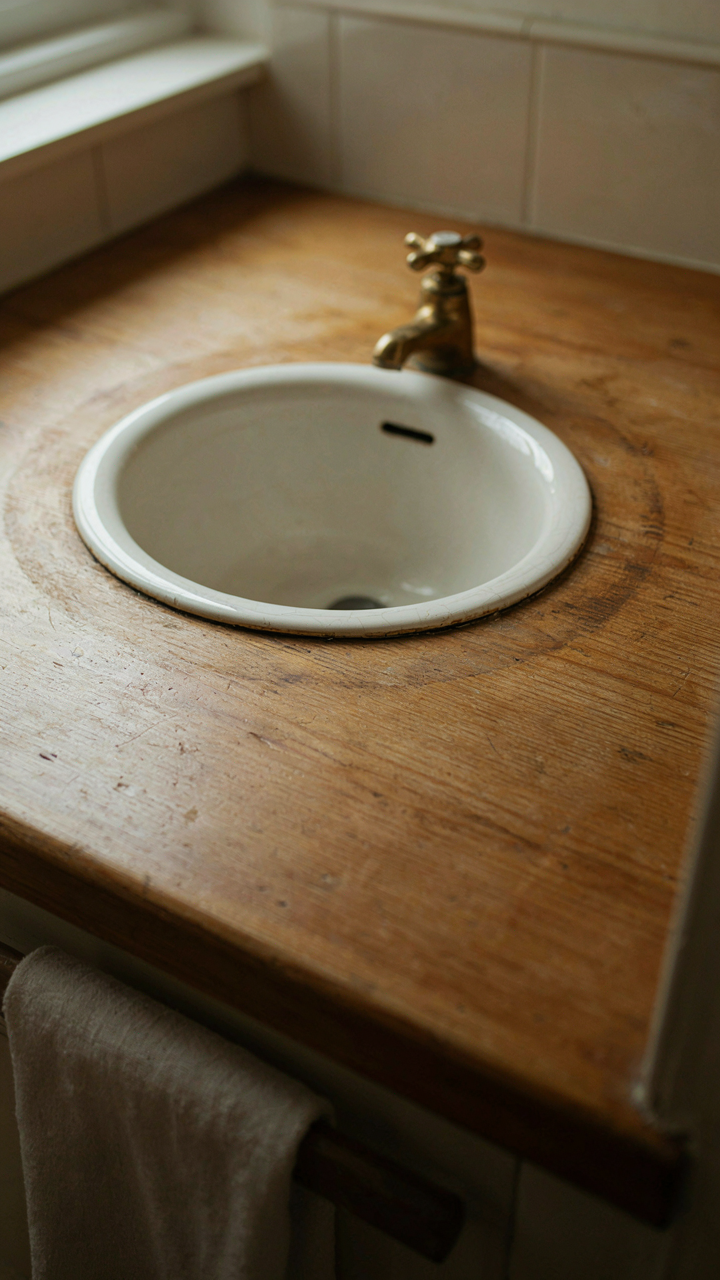
You want permission to stop chasing flawless. That’s the real pull here. Wabi-sabi operates on the opposite mechanism of mass production: it treats decay and wear as evidence of authenticity rather than failure. Joanna Gaines bathrooms built on this principle reject the sterile marble-and-chrome template. Visible wood grain, water stains that don’t vanish, chipped tile edges, uneven grout lines—these become the texture of a room that’s lived in rather than staged.

The mechanism is simple: perfection signals artifice. Imperfection signals time, use, and presence. When you embrace worn surfaces in a Joanna Gaines bathroom, you’re not hiding negligence—you’re making a statement that the space matters more than its flawlessness. This requires intentionality. You choose the specific wear patterns you’ll allow. You source materials that will patina visibly. You resist the urge to refinish or restore things to factory condition once they show age.
Materials That Reward Time
- Reclaimed wood vanities: Timber already carries decades of weathering. Water damage, nail holes, and color variation become the story you buy into, not problems to hide or refinish.
- Raw brass hardware: Uncoated brass oxidizes into warm browns and greens over months. This natural patina deepens the wabi-sabi principle without effort on your part.
- Aged limestone or concrete floors: Both materials develop darker tones and subtle scratches with use. These changes improve the aesthetic rather than diminish it.
- Unglazed ceramic tile: Matte finishes and slight color inconsistencies between tiles create visual depth. Grout lines stay visible and become part of the design rather than something to conceal.
- Soap stone countertops: This material darkens and develops patina from water and oil exposure, creating a lived-in richness that sealed granite cannot replicate.
The mistake most people make is buying materials meant to age well but then sealing, waxing, or protecting them to death. That defeats the entire purpose. In Joanna Gaines bathrooms that work, homeowners select their aging materials upfront and then let them change. The protocol is straightforward: choose your materials based on how you want them to look in five years, not how they look on day one.
Beyond The Buzzwords: Realizing Your Best Bathrooms (Not Joanna Gaines Best Bathrooms)

The Style You Actually Want, Not The One You Think You Should
You’re looking at Joanna Gaines bathrooms because you’re afraid your taste isn’t good enough. Here’s the mechanism: borrowed confidence feels safer than building your own. But style isn’t transmitted through imitation. It emerges from constraint and repetition of what you genuinely respond to. Start cataloging bathrooms you’ve actually liked, not ones you thought were impressive. Notice what repeats: color, material, proportion, light direction. That pattern is your style emerging from underneath the noise.
Your authentic preferences aren’t hiding in trend cycles. They’re built on the spaces you’ve inhabited and the materials you’ve touched. Joanna Gaines bathrooms work because they’re constrained by her worldview: farmhouse vernacular, neutral palettes, accessible luxury. Your worldview is different. Your constraints should be different. The bathroom you build should feel like it couldn’t have come from anyone else’s choices. That’s the only metric that matters.
Taste Into Execution Without The Gap
This is where most people fail: they identify what they like, then hire someone to interpret it. That gap destroys accuracy. Industrial design calls this “specification tolerance” the distance between intent and output. Close the gap by deciding three concrete things before anything else. One: the dominant material (tile, concrete, wood, stone). Two: the light source (natural window position, fixture style). Three: the color limitation (three colors maximum). Those three constraints eliminate 90 percent of bad decisions.

The execution then becomes mechanical. You’re not choosing between infinite options. You’re solving for those three anchors. Every tile, finish, and fixture gets evaluated against whether it supports those constraints. Joanna Gaines bathrooms succeed because constraints are visible throughout. The shiplap wall supports the farmhouse angle. The subway tile supports the neutral palette. You apply the same logic: pick your three constraints, then build everything outward. Start by selecting your dominant material before anything else.
The Final Verdict: Why “Recreating” Joanna Gaines Bathroom Ideas Is A Trap
Imitation Collapses Without Context
You want someone else’s bathroom because you’re afraid your own taste will fail you. Here’s the mechanism: Joanna Gaines bathrooms work because they’re engineered around her client’s specific constraints—budget, square footage, existing plumbing, regional material costs, and personal daily rituals. You see the finished image. You don’t see the fifteen decisions that got rejected. When you try to copy the result without the input data, you’re building on sand.
The common advice says “take inspiration and make it your own.” That’s incomplete. Taking inspiration without understanding the problem it solved creates a bathroom that looks derivative and feels wrong. You’ll sense it the moment you step in. The proportions won’t match your space. The material choices won’t age the same way in your climate. The workflow won’t fit how you actually move through the room.
Design Authority Starts With Constraints
You don’t need permission to trust your judgment—you need a system to build it. In architecture, constraints are the raw material. Your bathroom’s dimensions, your budget, your daily routine, your water pressure, your lighting conditions—these aren’t limitations to work around. They’re the data that informs every real decision.

Start by documenting what actually matters to you. Not what looks good in a photo. What makes you frustrated or happy every single morning. Does the sink location force you to stand in shadow? Does the vanity storage waste space? Does the layout create a traffic jam when two people use it? Write these down. Now design against them. That’s not inspiration—that’s authority. A bathroom built on your constraints will outlast any trend or recreated aesthetic.
The Real Renovation: Why Your Bathroom’s Soul Trumps Its Skin
Stop chasing Joanna Gaines bathroom aesthetics like they’re some holy blueprint. The shift that matters isn’t about shiplap or neutral palettes. It’s recognizing that your bathroom either energizes you or drains you every morning. Pick one element you actually use daily—your sink, your mirror, your lighting—and upgrade it today. Everything else follows. Your bathroom doesn’t need to look like hers. It needs to feel like yours.



