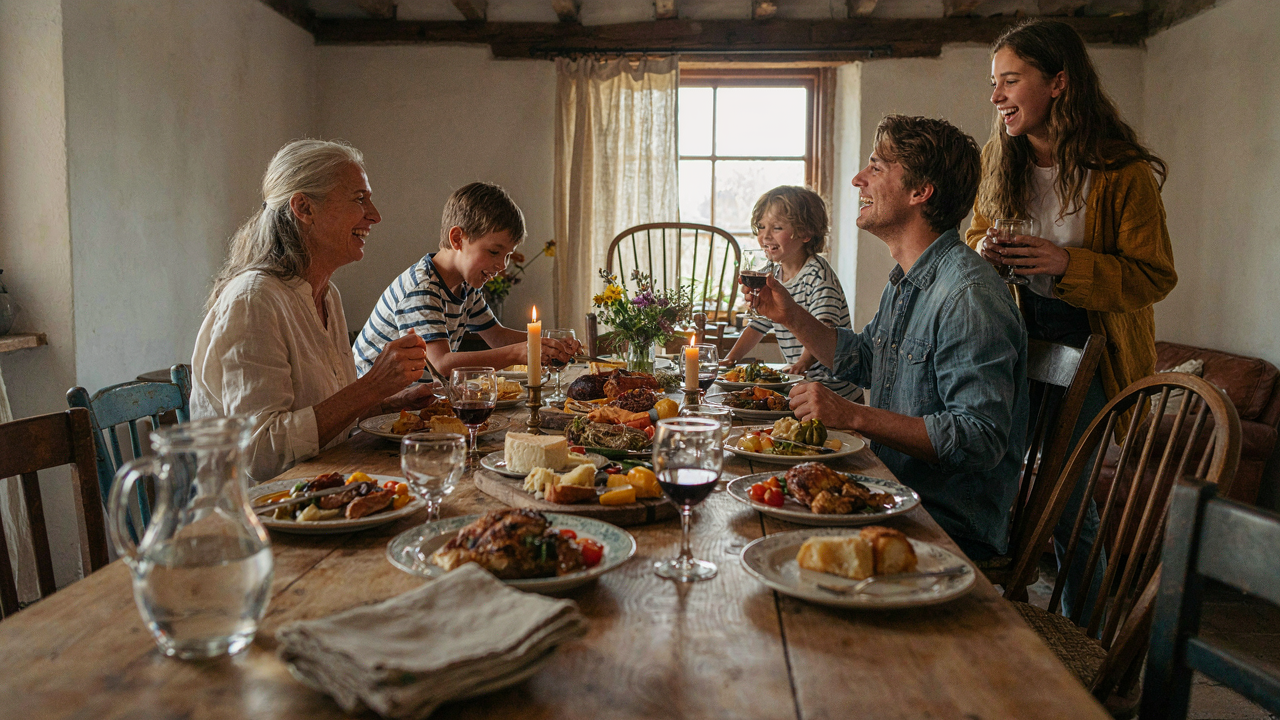
The Conversation Crucible: Rejecting The Open Concept Fallacy
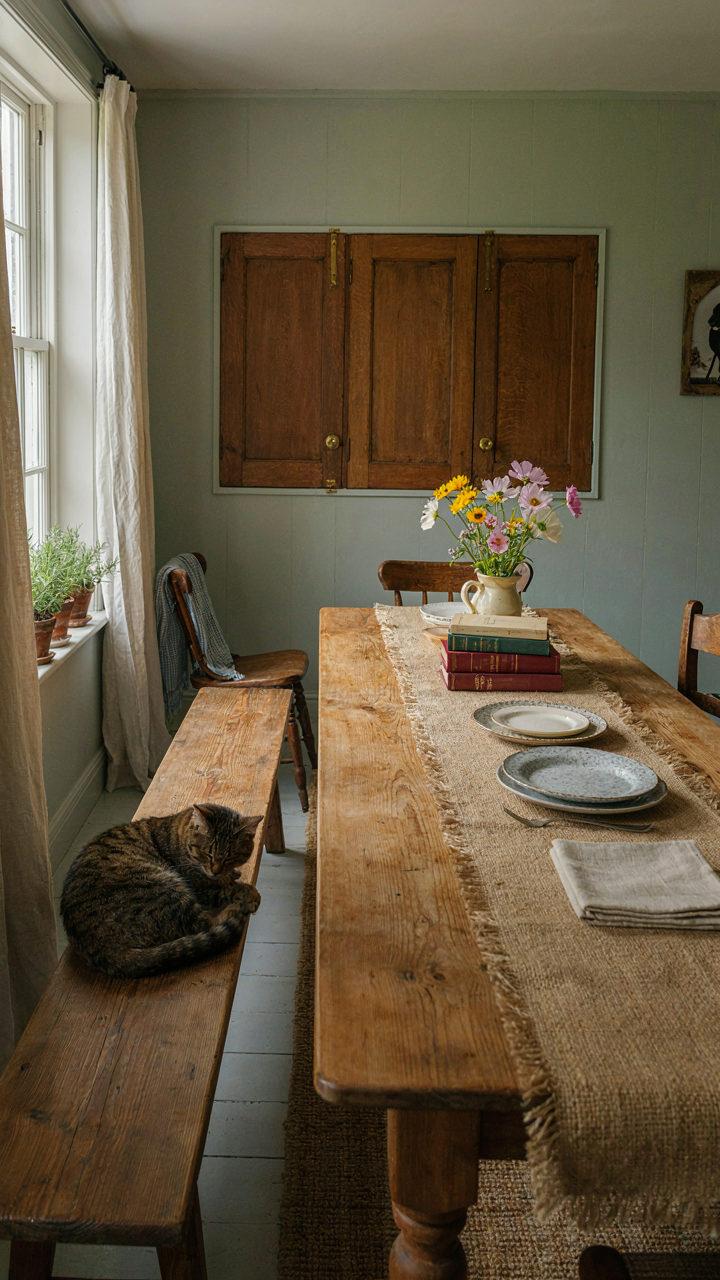
Why Walls Actually Enable Connection
You want the farmhouse dining room to feel effortless and social, so you think removing walls is the answer. It isn’t. Open-plan dining kills sustained conversation because it distributes attention. Acoustics from physics shows us that sound disperses in open space. A farmhouse dining room operates the same way: voices scatter, distractions multiply, and the table becomes background noise instead of the focal point. People shorten their stays. The mechanism is real.
The farmhouse tradition understood this without naming it. Separate dining rooms with doors, windows that frame the space, and walls that define boundaries forced attention inward. Conversation deepened because it had nowhere else to go. Modern design reversed this by treating connection as a function of visibility. It’s backwards. Build walls. Let people focus on each other instead of the kitchen, the living room, and whatever else sits in the sightline.
Enclosed Spaces Force Engagement
Farmhouse dining rooms from the 18th and 19th centuries were small chambers by design, not accident. Limited square footage concentrated energy. People stayed longer because the room held them there physically and psychologically. Modern builders assume bigger is better for entertaining. That logic fails when you actually want extended dinners. The room’s boundary becomes an invisible container for attention and time.
Closing off your dining room from adjacent spaces stops the bleed of activity. A closed door signals that dinner is happening here, not in five other places simultaneously. Implement this: build or retain a single entry point, keep the room at roughly 12 by 14 feet minimum, and use substantial furniture that anchors the space. The dining table itself becomes the only reasonable focal point. Dinner lasts longer. Conversation goes deeper.
The Un Curated Table: Authentic Farmhouse Dining Room Ideas
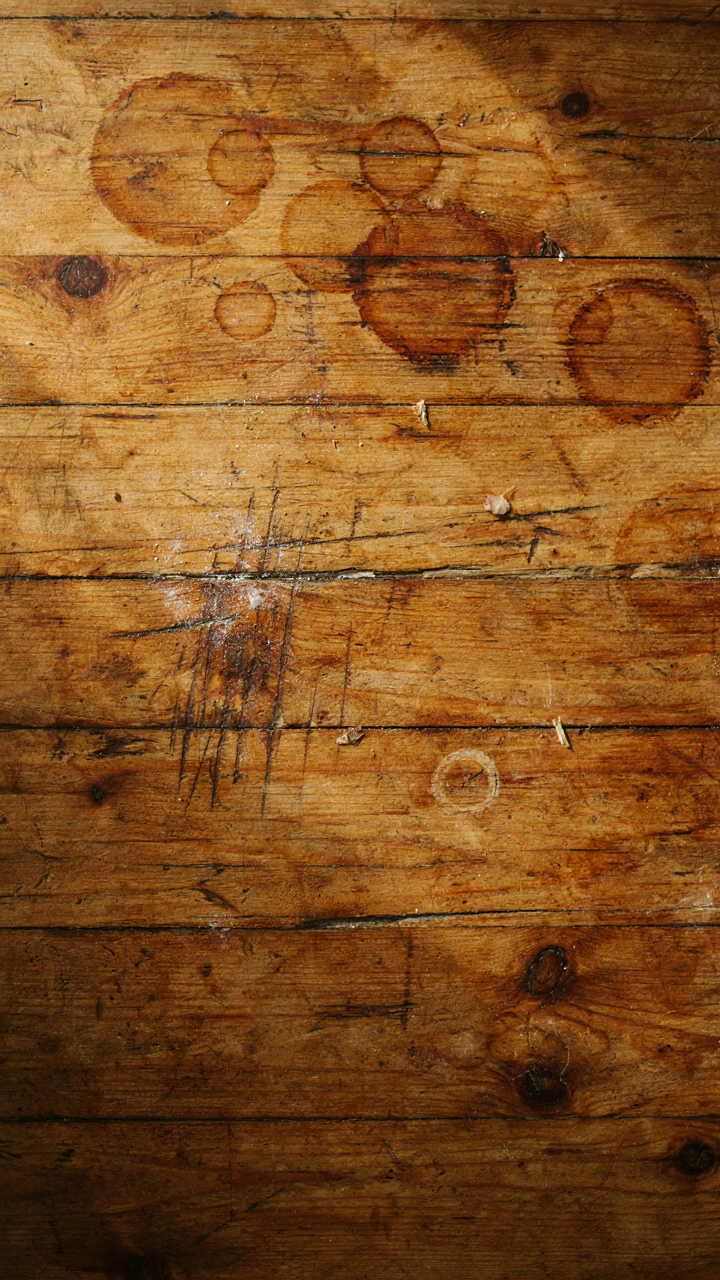
Surfaces That Show Their Age
You want to believe your dining room looks effortlessly timeless instead of decorated. That’s the real pull here. The mechanism is simple: visible wear signals authenticity because it can’t be faked without looking contrived. Farmhouse dining rooms built before the aesthetic became a marketing category featured tables and chairs that showed decades of use. Scratches, discoloration, and structural repairs weren’t design choices. They were evidence of function.

This doesn’t mean buying pre-distressed furniture from a box store. That’s the lazy interpretation that turned farmhouse into a mass-market category. Real worn surfaces come from wood that’s been refinished once or twice, not manufactured to look beaten. Reclaimed wood tables carry actual history. If you’re using new wood, let the table collect marks naturally over years of use, or source genuinely aged pieces from salvage yards and estate sales.
Tools Beat Decoration
The advice to “mix old and new” misses what actually makes a farmhouse dining room work. Economics drove the original design: farmers bought what served multiple purposes. A dining table wasn’t decor. It was where the household did accounting, processed food, repaired equipment, and ate. That multipurpose reality is what distinguished farmhouse from every other aesthetic.
A farmhouse dining room feels authentic when it contains things that do work. A wooden shelf holding serving bowls used during meals. A table surface marked by knife marks and stains that won’t come out. Seating arranged for stability during labor, not sculptural form. The protocol: evaluate every object by whether someone would keep it if your house was rebuilt tomorrow. Remove pieces that exist only as visual references to the concept of “farmhouse.”
Modern Farmhouse Dining Room Lighting: The Circadian Sync Protocol
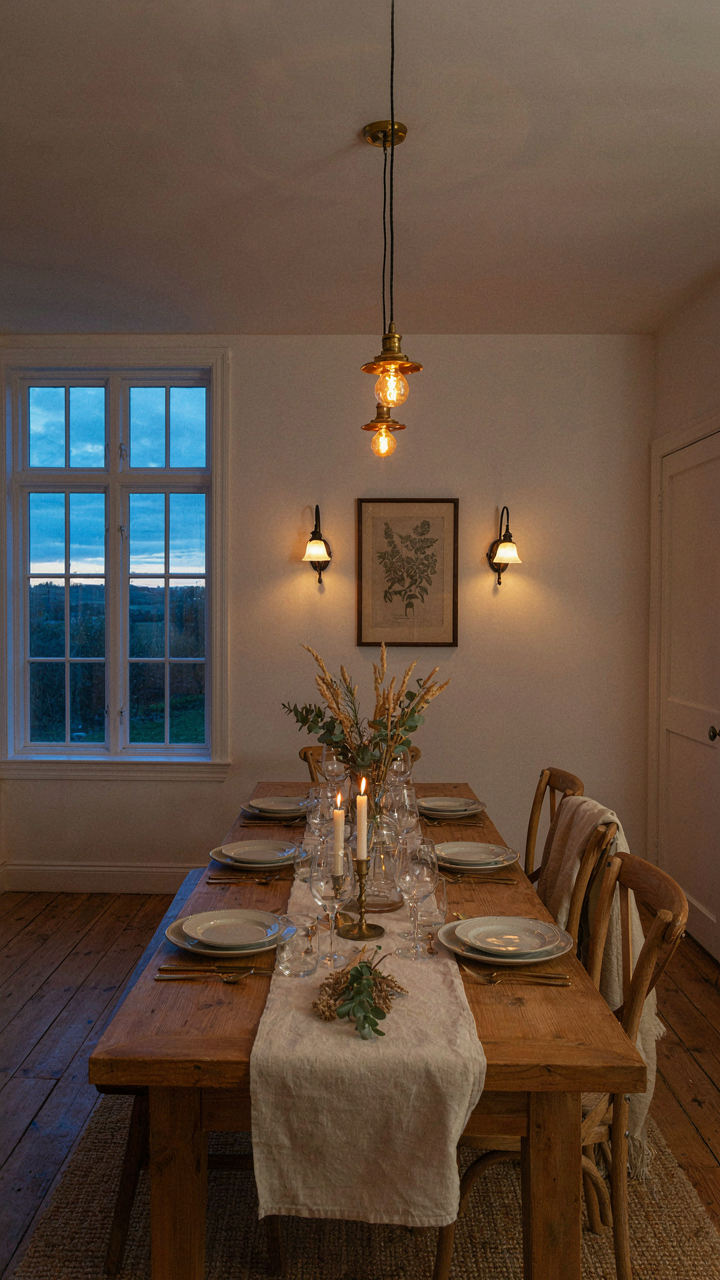
Warm, Dimmable Light For Psychological Comfort
You want your guests to linger at the table because lingering signals status, and status signals you’ve built something worth sitting in. Here’s the mechanism: circadian biology treats light intensity and color temperature as time-of-day signals. Your brain reads bright blue-white light as morning and triggers cortisol and alertness. Warm, dim light signals evening and activates parasympathetic nervous system dominance, the state where digestion improves and conversation deepens.

Modern farmhouse dining rooms need 2700K bulbs on dimmer switches, not fixed brightness. This mimics the way natural light shifts across a farm day. Start dinner at 50 percent brightness, then drop to 30 percent after the first course. The guests don’t consciously notice the shift, but their bodies relax into it. Warm, dimmable light extends meal duration and conversation quality without anyone feeling manipulated. The mechanism is biological, not decorative.
Overhead Fixtures Belong In Kitchens
Everyone says “add a statement chandelier” as if overhead lighting hasn’t been the enemy of intimate dining for decades. Overhead fixtures cast shadows under cheekbones and create unflattering angles. They also flood the table with uniform brightness, eliminating the visual hierarchy that makes spaces feel intentional. Farmhouse dining demands layered lighting instead.
Use wall sconces flanking the buffet or sideboard, pendant lights on chains lowered 24 to 30 inches above the table perimeter, and candles in hurricane glass on the surface itself. This creates zones of brightness that guide the eye without flattening faces. Task lighting from sconces handles food prep visibility without dominating the room’s mood. The psychological shift is instant: guests feel observed as people, not objects under interrogation lights.
The Ergonomic Imperative: Chairs For Endurance, Not Show
Comfort Beats The Instagram Feed
You want chairs that look right because you’re afraid people will judge your taste. But that’s not the real problem. The real problem is that bad chairs end dinners early. People leave when their backs hurt. Conversations die. The whole point collapses. This is basic biology: sustained discomfort triggers the nervous system to seek escape. In ergonomic terms, you’re fighting against “postural fatigue,” the degradation of muscle endurance under static load. A farmhouse dining chair must function as a load-bearing seat, not a prop.

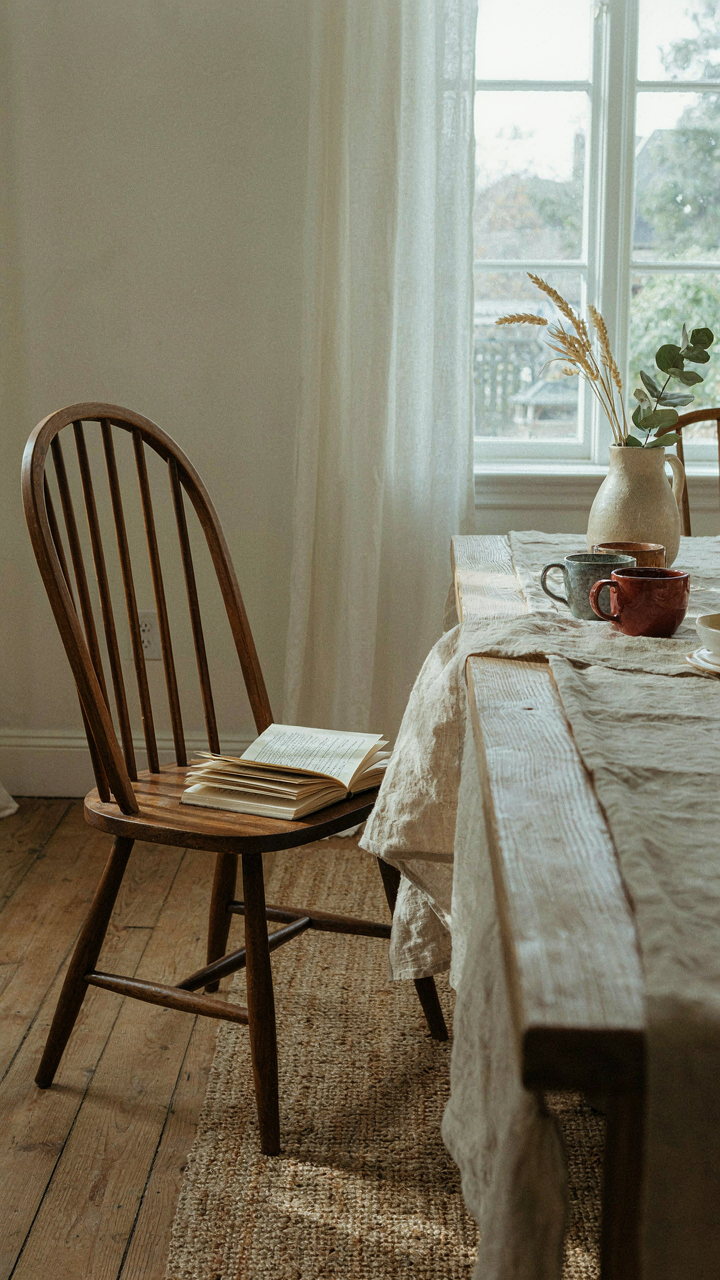
Most farmhouse advice treats comfort and aesthetics as separate buckets. They’re not. A chair with proper lumber support, seat depth, and arm positioning doesn’t sacrifice looks—it demands them. Farmhouse design emerged from rural necessity, where furniture had to perform under real use. A spindle-back Windsor chair or a rush-seat ladder-back endured eight-hour work days because the proportions were engineered, not guessed. Test your candidate chairs for thirty minutes minimum before buying. Pain is data. If your back or legs hurt before the meal ends, the chair fails its job.
Seat Height And Back Architecture
The standard dining chair sits 17 to 19 inches high, with a table height around 30 inches. This creates roughly 10 to 12 inches of clearance, the range where thighs rest parallel to the floor and feet plant firmly. Get this measurement wrong and you create compressive load on the underside of your thighs, cutting circulation and triggering the leg-fall sensation that kills long dinners. Measure your table height first. Then buy chairs that fit that specific dimension, not generic “dining height” approximations.
Back support matters more than padding. A farmhouse chair’s back should hit your lumbar curve at waist level, not float three inches away. The angle should recline slightly, typically 5 to 10 degrees from vertical, to distribute spine load across the chair’s frame instead of concentrating it in your lower back. Wood spindles or a ladder-back slat system accomplishes this better than upholstery alone because the structure forces proper positioning. Test this by sitting and sliding your hand behind your lower back. No gap means the chair fits your skeleton, not your fantasy of what farmhouse should look like.
Sound Engineering: The Acoustic Damping Strategy (Borrowed From Audio Production)
Why Hard Rooms Kill Conversation
You want people to linger at your table because you’re hosting, not because they feel trapped in a concrete bunker. Most farmhouse dining rooms fail here: bare wood, plaster, and stone amplify every clink and voice, forcing diners to speak louder and leave earlier. Audio production teaches us that hard surfaces are reflective boundaries, like mirrors for sound. In acoustic terms, your farmhouse dining room needs absorption coefficient—the measure of how much sound energy a material dissipates instead of bouncing back.

The mechanism is simple physics. Sound waves travel until they hit a surface. Hard, dense materials like wood beams and tile floors reflect those waves back into the room, creating echo and fatigue. Soft, porous materials trap the waves inside their fibers, converting acoustic energy into heat. A long dinner requires the second option. Without it, conversation becomes aerobic exercise, and your table empties by dessert.
Soft Surfaces That Actually Stop Sound
The common advice here is backwards: people think adding a rug or two solves the problem. It doesn’t. You need strategic layering of materials with different thicknesses and densities to absorb across the full frequency range.
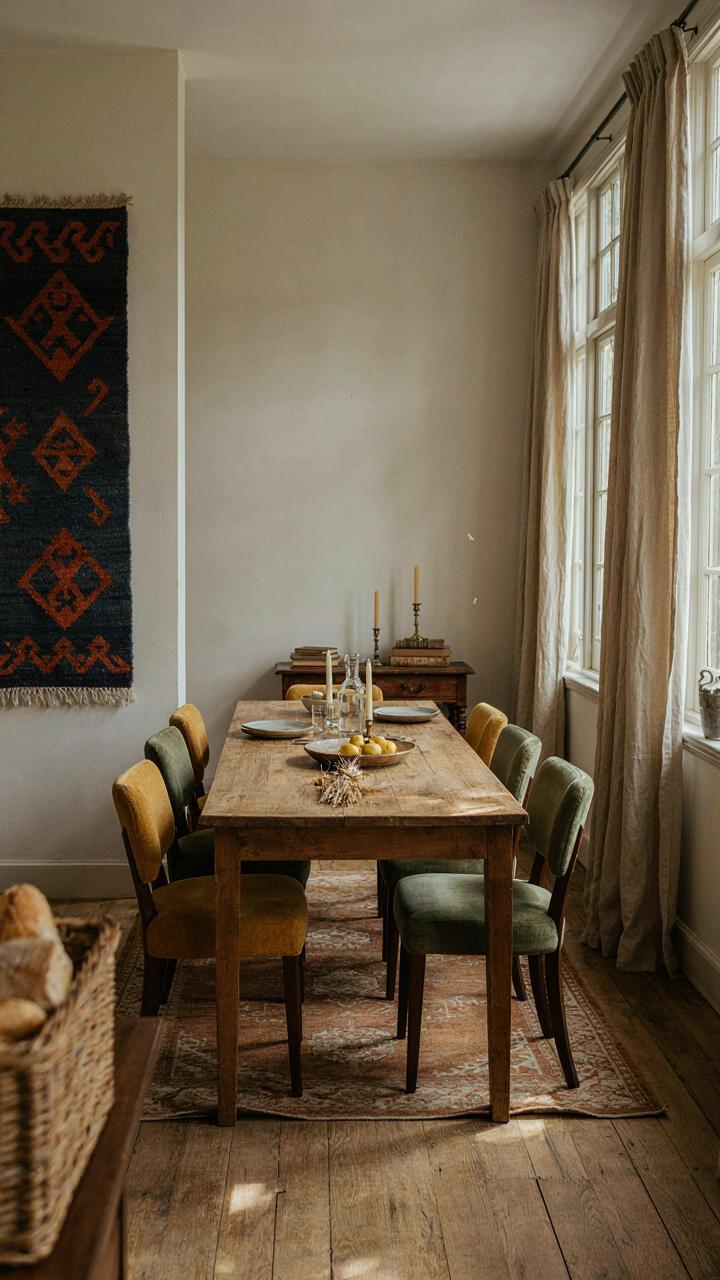
- Heavy linen curtains: Hang floor-to-ceiling on one or two walls, even if windows don’t require them. Linen absorbs mid to high frequencies effectively and gives you control over when to deploy them.
- Upholstered seating: Chairs with thick padding and fabric (not leather) absorb sound better than wood alone. Bench seating with cushions traps acoustic energy throughout the meal.
- Layered textiles on table: Tablecloths over pads, runners, and cloth napkins reduce the reflection from the table surface itself. This stops one major source of clatter from dishes and silverware.
- Wool or jute area rugs: Place a rug under and slightly beyond the table footprint. Wool absorbs low frequencies; jute handles mid-range. Combined, they cover more ground than either alone.
- Wall hangings and tapestries: Woven pieces mounted 2-3 inches from the wall create an air gap that amplifies absorption. Avoid thin decorative cloth; thickness matters.
Combine these layers, not individually. A bare farmhouse room needs all five working together to shift the acoustic environment enough to matter over a three-hour dinner. Test the change by clapping in the room before and after adding textiles. If the clap still echoes sharply, you haven’t absorbed enough yet.
Modern Country Dining Room Flow: The Unseen Pathways
The Route Between Seats And Kitchen
You want people to linger at your table without feeling trapped, and that requires invisible pathways most farmhouse dining guides ignore completely. Borrow from logistics: a farmhouse dining room needs clear “throughput zones” where bodies move without disrupting conversation or bumping chairs. The mechanism is simple. If guests fight for space between the table and the kitchen, they cut dinners short. They don’t sit longer. They leave.

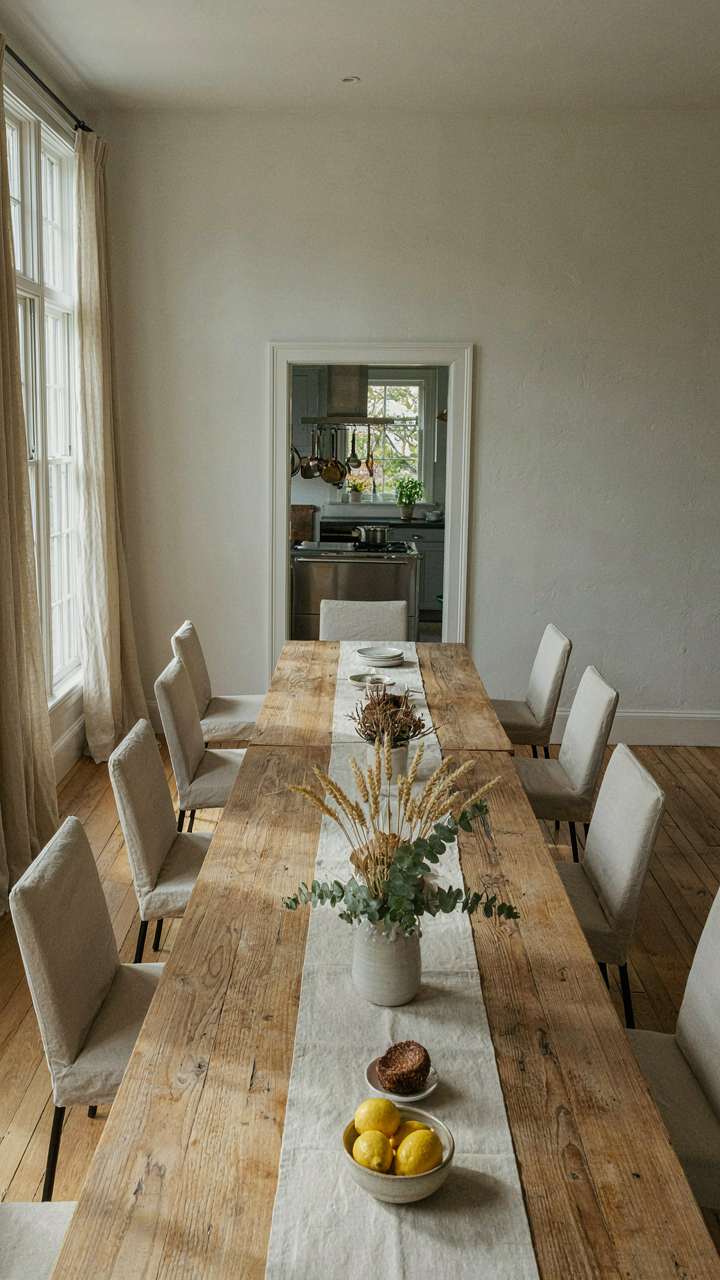
Position your table to leave at least 36 inches of walking space on all sides, preferably 42 inches on the kitchen approach. This isn’t aesthetic preference. It’s functional clearance. When someone walks past without scraping a chair or forcing others to stand, the dinner continues uninterrupted. A farmhouse table centered in the room with equal margins performs better than one pushed against a wall where only one side has access.
Removing What Blocks Movement
Most farmhouse dining setups fail because designers add decorative obstacles that create dead zones. Side tables, storage benches, and hutches crammed into corners seem useful until a guest navigates around them three times during one meal. Stop treating the dining room as a display case. Treat it as a route.
The rule: remove anything between the table’s perimeter and the room’s exits. This includes console tables behind chairs, bar carts in corners, and oversized credenzas. Every object you add becomes a cognitive load for people moving through the space. If a piece doesn’t support sitting or serving, it blocks flow. Clear pathways make longer dinners possible because guests aren’t subconsciously calculating whether to stay or leave based on how inconvenient movement feels.
Sensory Anchors: More Than Just Farmhouse Dining Room Decor
When Scent Becomes Architecture
You want people to feel at home so they stay longer at your table. That’s the real play here. But most farmhouse advice treats scent like decoration—optional, nice-to-have. Psychology calls this “olfactory priming,” and it works because smell bypasses cognitive filters and hits memory and emotion directly. A farmhouse dining room needs scent as structural support, not accessory.

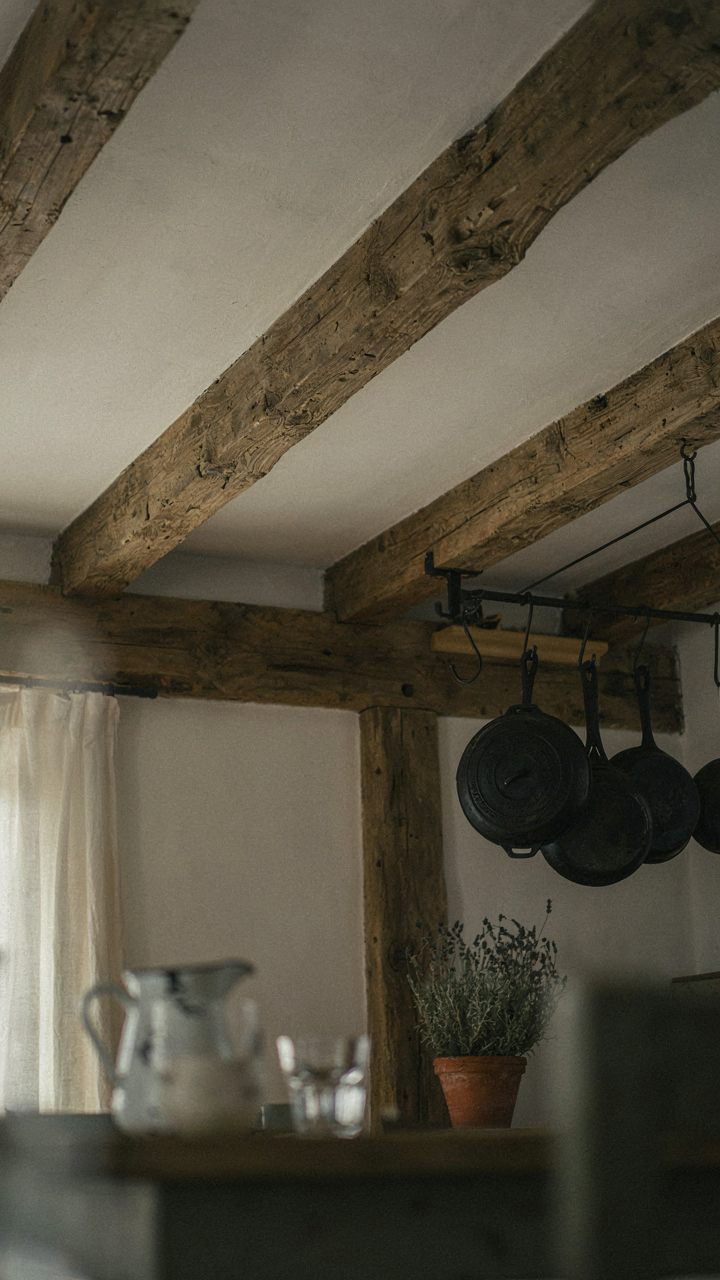
Wood aging, bread cooling, and fireplace char create baseline scents that signal safety and permanence. These aren’t perfumes you apply. They’re byproducts of materials that already exist in the space. Reclaimed beams release terpenes as they age. Cast iron cookware seasoning builds layered smell over years. Fresh herbs dried on open shelving contribute botanical notes without trying. The mechanism is simple: your nose tells your nervous system this place has history and is maintained by someone who cares enough to cook.
The Weight Of What You Touch
Nobody talks about this part because it sounds soft, but texture blocks distraction. When hands find something substantial to touch during dinner, it anchors the nervous system to the present moment. Farmhouse dining rooms work because they pile textural variety onto the table and chairs: rough linen, worn wood grain, unglazed pottery. This isn’t about comfort alone. It’s about engagement.
Solid wood chairs without upholstery force you to shift position, which keeps you present. Unfinished table surfaces show grain and splinters that reward close attention. Linen napkins wrinkle and absorb differently than cotton. Cast iron holds heat longer and transfers it to your hands. The person sitting across from you notices when you’re fidgeting with the tablecloth instead of leaving. Sustained dinners need this friction. Design the surface interactions first, then everything else follows.
The Declutter Doctrine: Focus On Presence, Not Possessions
Why Empty Space Works Better Than Stuff
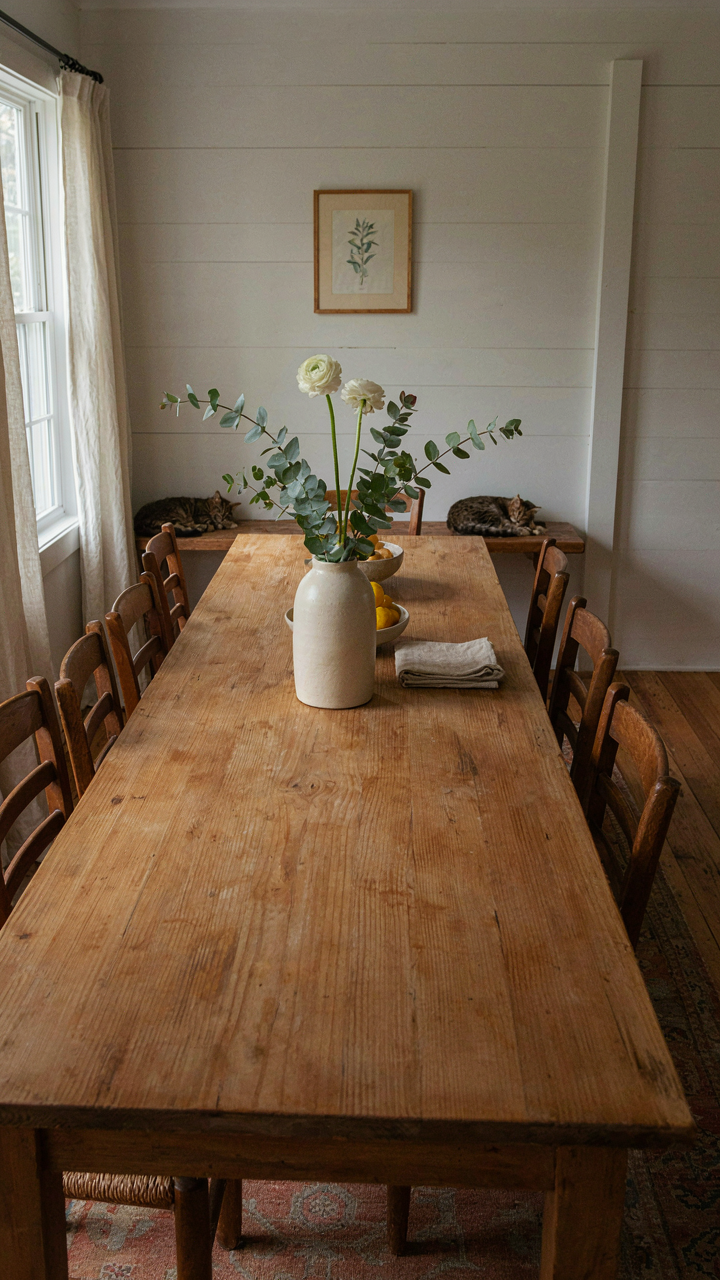
You want your farmhouse dining room to feel intentional because clutter reads as a lack of control. Here’s the mechanism: your brain treats visual noise as unfinished tasks. Each object demands processing power. Remove it, and that cognitive load transfers to the people at your table instead of the room itself. The farmhouse aesthetic borrowed from agricultural restraint, not maximalism. Farmers kept dining spaces spare because objects competed with function and conversation.

A cluttered farmhouse dining room doesn’t feel rustic or charming. It feels chaotic. The distinction matters because intention is visible. When you strip a space down, every remaining piece signals choice. A single centerpiece hits different than seven decorative objects fighting for attention. Start by removing everything that doesn’t serve eating, conversation, or the structural aesthetic of the room itself. This isn’t about sterile minimalism. It’s about removing friction between people and presence.
The Visual Noise Problem Nobody Addresses
Common advice says “add greenery” or “style your table,” but that assumes the baseline is already clean. It rarely is. Visual noise isn’t just clutter. It’s competing focal points that fracture attention. Your eye lands on a wall hanging, then a shelf, then a candle, then a picture frame. That fragmentation happens in milliseconds, but it’s exhausting. Your guests feel it without naming it. The mechanism is simple: a focused visual field allows deeper conversation because less of the brain’s processing power goes toward environmental scanning.
Start the removal process in layers. First: anything decorative that doesn’t connect to the farmhouse grammar of the room goes. Second: multiples of the same object (five small vases instead of one). Third: anything that requires regular cleaning or arranging. A clear table surface, bare walls, and empty shelf space aren’t boring. They’re the foundation for actual presence.
Farmhouse Dining Room Decor Ideas: The Imperfect Imperative
Asymmetry Beats Matching Sets
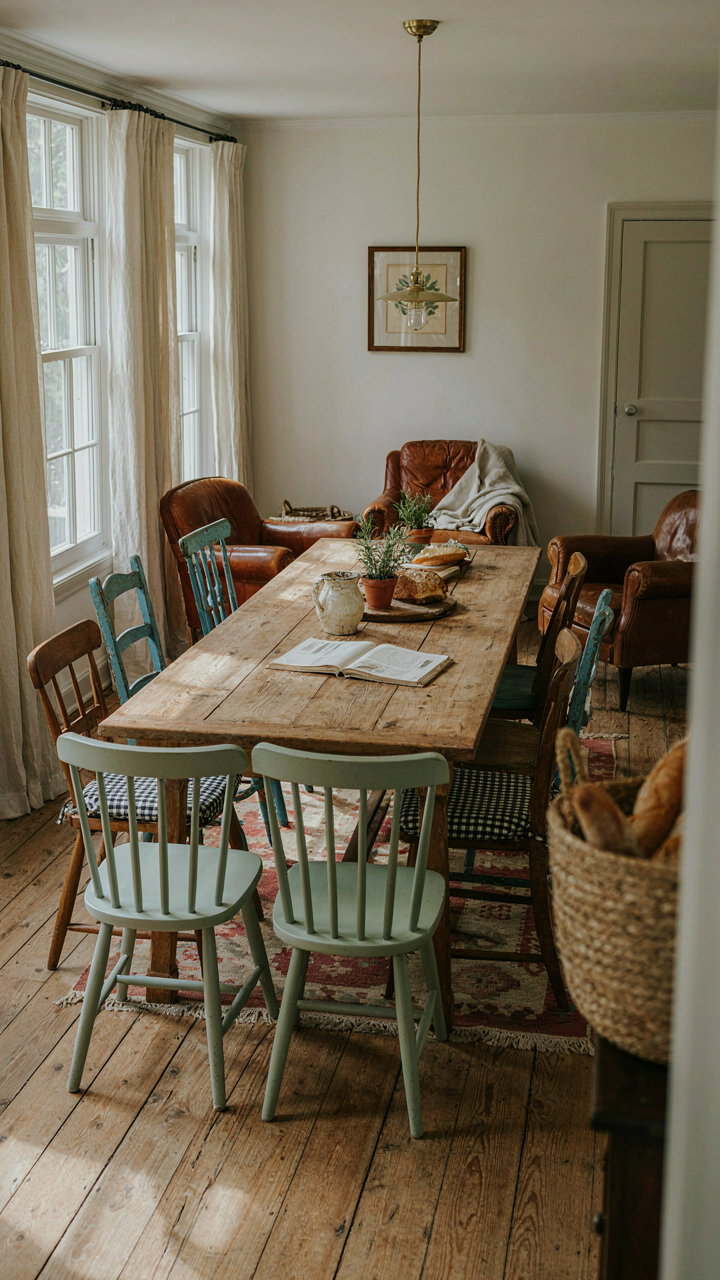
You want permission to ignore the decorating rules you think you should follow. Here’s the mechanism: symmetry signals control and expense. Asymmetry signals time, use, and authenticity. Farmhouse dining rooms work because they look lived-in by necessity, not design choice. A mismatched chair pulled from another room, a sideboard with uneven patina, a chandelier slightly off-center from the table—these register as honest before they register as intentional.

Most design advice tells you to buy coordinated suites. That’s backwards for farmhouse. You’re not creating a room. You’re curating evidence of real life. Mix wood tones across the table and chairs. Leave one wall bare where another holds shelving. The asymmetry becomes the proof that this space wasn’t assembled from a catalog. Rooms built this way age better because imperfection was the design from the start.
Objects With Provenance, Not Just Provenance Stories
Forget the narrative. People buy old things and invent their histories—a table “passed down for generations” that came from an estate sale three years ago. That’s not what makes objects work in farmhouse dining rooms. What works is actual evidence of use: the worn spot on a bench seat, the ring stain on wood, the patina that won’t wash off. These aren’t stories. They’re data.
A chair with genuine wear functions differently than a new chair distressed to look old. The grain of the wood settles differently. The joints move in specific ways. Guests feel that difference, even if they can’t name it. Source pieces from actual farmhouses, auctions, and restoration salvage yards where the wear matches the construction method. The object’s age must be consistent with its damage pattern. That alignment is what triggers the response: this is real.
The Dining Room Style Deception: Why Trends Kill Connection
Timeless Principles Over Moving Targets
You want permission to buy the right things once instead of chasing what’s popular next year. Here’s the mechanism: trends in farmhouse dining rooms operate like fashion cycles. They spike, saturate, then collapse. What looks “current” in 2024 looks dated by 2027. The farmhouse aesthetic itself was a reaction against mid-century minimalism, which was a reaction against postmodernism. Each wave erased the last one.
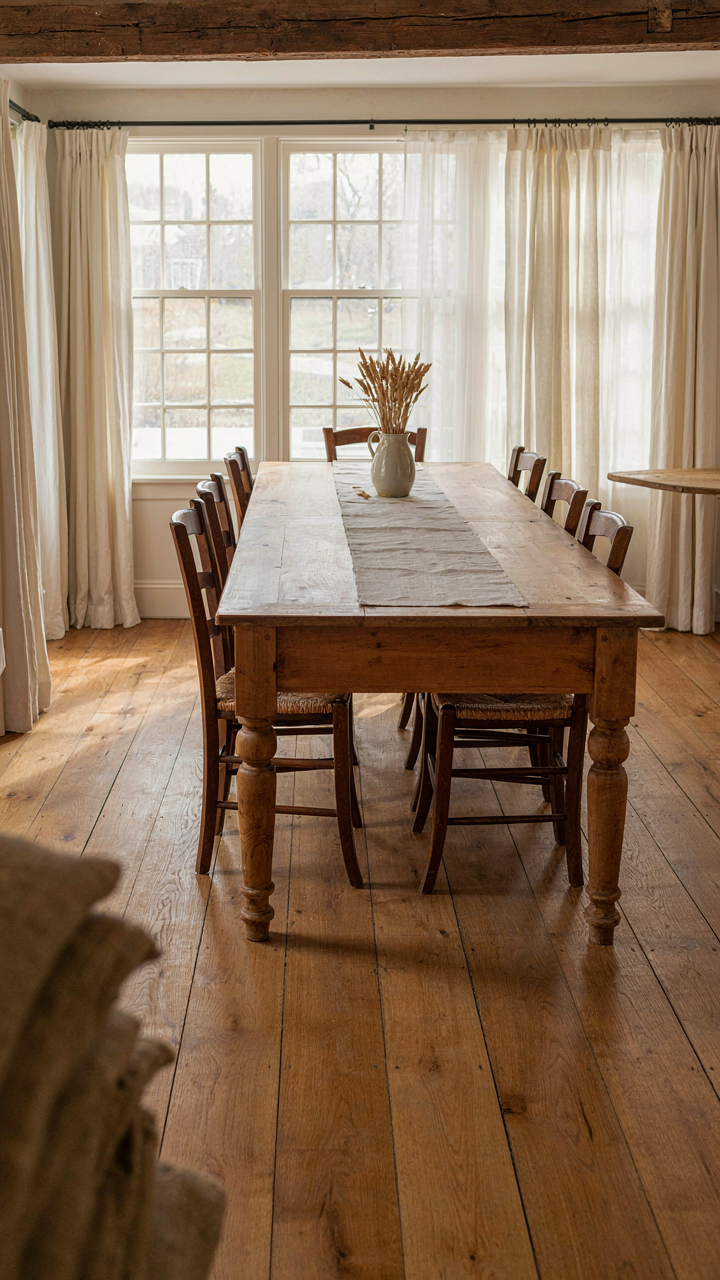
The real play is understanding what endures. Solid wood tables work because wood doesn’t trend. A long harvest table functions the same way in 1890 and today. Benches with proper joinery last decades. Scale and proportion matter independent of era. Heavy construction, honest materials, and functional layout outlast any design cycle. Build your room around these constants and trends become irrelevant.
Function Dictates Form, Not Vice Versa
Most farmhouse dining advice gets this backwards: people choose pieces because they look good in photos, then wonder why their room feels dead during actual meals. The mechanism is simple. If your table is too narrow, people can’t pass dishes easily. If your chairs are uncomfortable after twenty minutes, long dinners don’t happen. If lighting is dim and atmospheric but you can’t see your food, connection fails.
Start with how bodies move through the space. A farmhouse dining room meant for real gatherings needs elbow room between diners, clear sightlines, chairs that support your back properly, and light you can actually see by. Width matters more than length. Seating comfort beats aesthetic impact. These aren’t compromises. They’re the opposite of compromise. When the room works mechanically, the style takes care of itself.
The True Obstacle Isn’t Your Dining Room; It’s Your Refusal To Prioritize Genuine Human Connection Over Curated Aesthetics
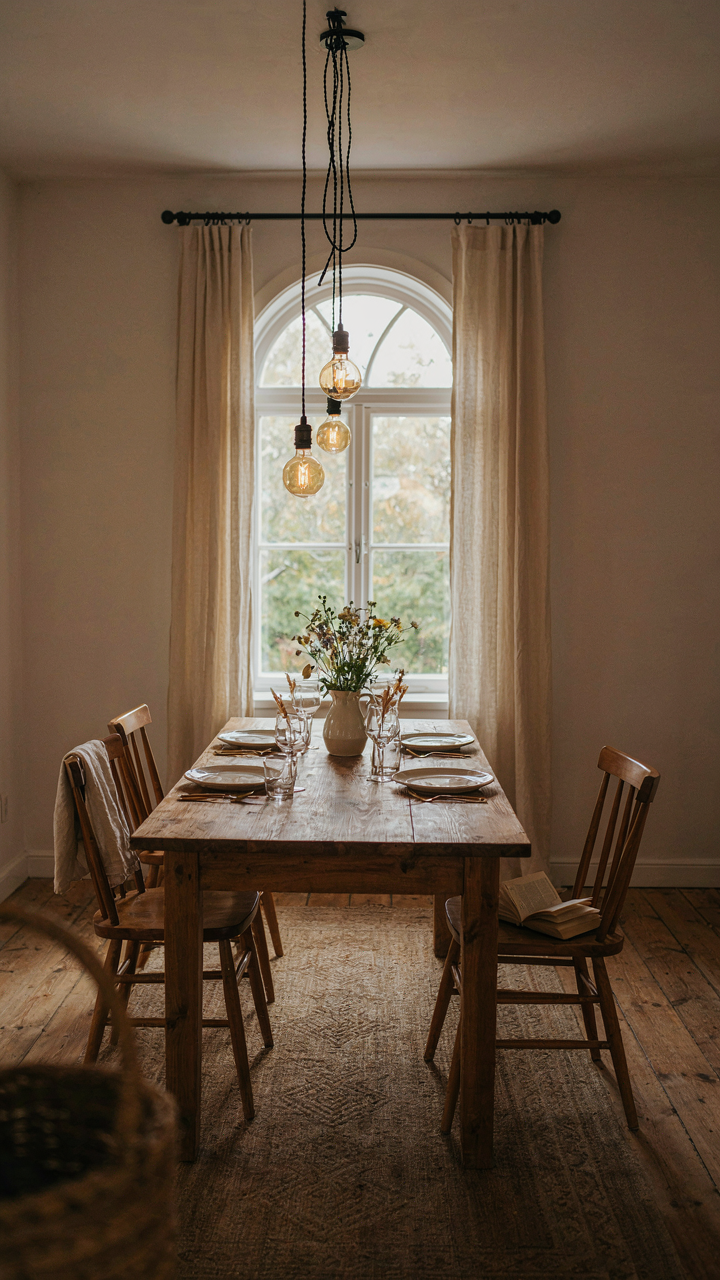
You can buy every reclaimed wood table and Edison bulb on the market, but you’ll still eat alone if you don’t actually invite people over. The farmhouse dining room works because it signals you’re done performing and ready to eat. Stop treating your space like a photo shoot. Pick one day this week and fill that table with humans you actually want to talk to. Everything else follows from there. A room full of strangers proves nothing; a table full of laughter proves everything.