
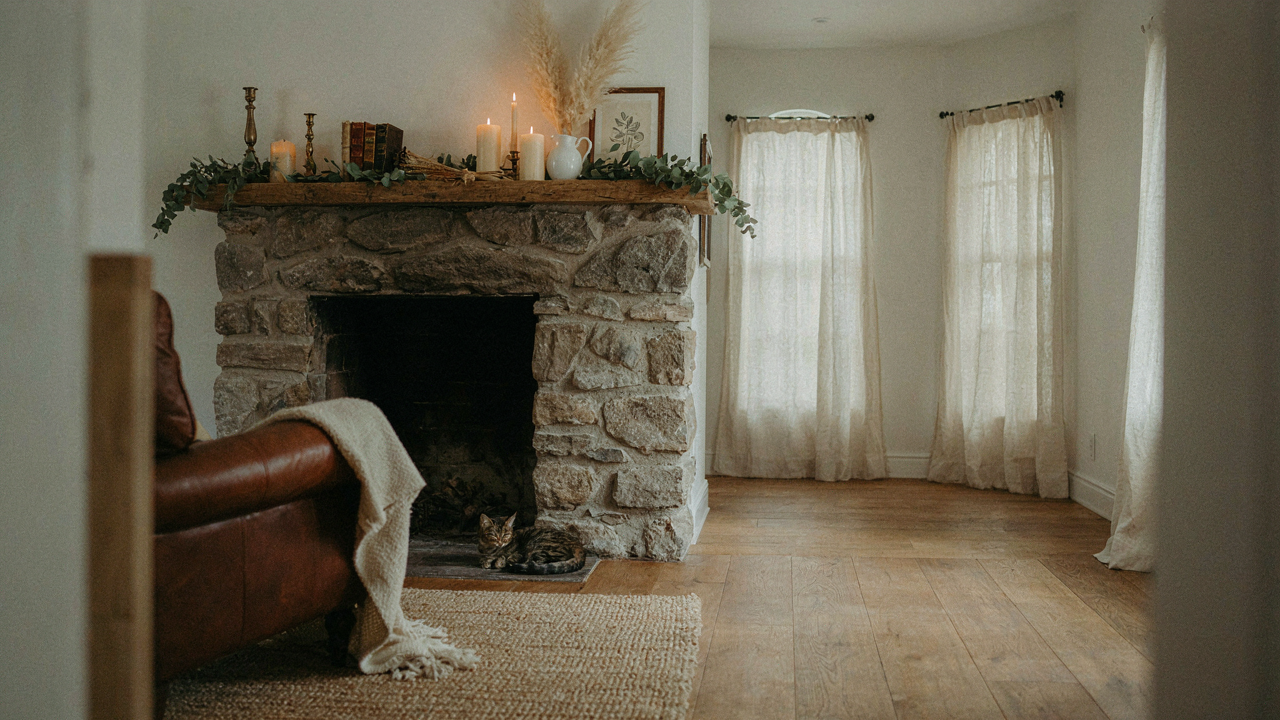
Beyond Trends: Why Your Farmhouse Mantel Decor Actually Matters
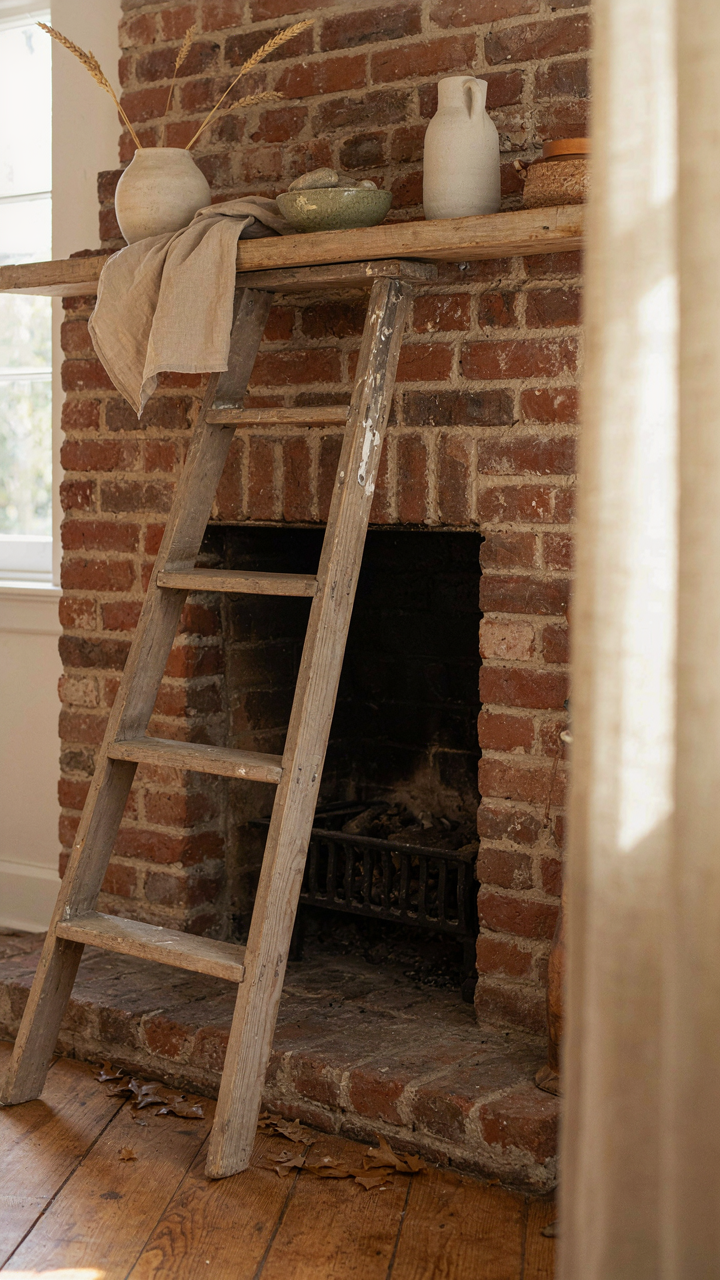
The Decor Treadmill Never Stops
You want your mantel to feel “current” without admitting you’re chasing approval from people you don’t know. Here’s the mechanism: the decor industry runs on planned obsolescence. Trends shift every 18 months so manufacturers can sell you replacement items. You buy, display, photograph, then discard when the next seasonal look arrives. The cycle feeds itself because social media rewards novelty over stability. Farmhouse decor is particularly vulnerable here because its core aesthetic—reclaimed wood, vintage metal, natural materials—gets repackaged as “trending” every few years when it’s actually just the same foundational elements wearing different labels.
The escape isn’t about ignoring trends entirely. It’s about recognizing which pieces solve a real visual or functional problem and which ones exist only because an algorithm decided this quarter needs “maximalist farmhouse” instead of “minimal farmhouse.” A wooden ladder propped against your mantel works for fifteen years because it stores blankets and adds height variation. A mass-produced “reclaimed” wooden sign with a generic saying works for eight months before it feels stale. One is infrastructure. One is inventory. Build your mantel around infrastructure.
What Endures Versus What Sells
Personal meaning doesn’t photograph well for engagement metrics, which is why nobody talks about it in design spaces. A mantel with three objects your grandmother gave you, one piece of pottery you made, and one plant you’ve kept alive for two years will mean infinitely more to you than a perfectly curated mantel of store-bought “vintage finds.” The second one might get more Instagram likes. The first one gets kept. Farmhouse design actually has an advantage here because its roots are in utility and inheritance, not performance for an audience. Real farmhouse pieces entered homes because they worked, lasted, or had history attached to them. Not because they matched a mood board.
The protocol is simple: before adding anything to your mantel, answer this one question: “Why does this specific object live here?” If your answer is “because it’s trending” or “because it looks good in photos,” stop. If your answer is “because I made it,” “because it belonged to someone I knew,” “because I use it regularly,” or “because it reminds me of something real,” it stays. That distinction separates a mantel that documents your life from a mantel that documents your algorithm consumption.
The Personal Resonance Protocol For Farmhouse Mantel Decor

What Your Objects Actually Signal
You want your mantel to look intentional because a random collection reads as either lazy or desperate. Here’s the mechanism: every object on your mantel is a claim about who you are. The real work isn’t aesthetic—it’s identifying which claims are true and which ones you’re faking.

Start by naming three core values that actually drive your decisions. Not values you think you should have. If you value efficiency, that shows up in how you organize. If you value heritage, you gravitate toward items with provenance. If you value novelty, you swap things seasonally. Your mantel becomes honest when it reflects what you actually optimize for, not what sounds good in a design magazine.
The Narrative Layer, Not The Surface
Most farmhouse mantel advice is wrong here: people treat each piece as independent. A candlestick, a framed photo, a decorative box. That’s decoration. What works is treating your mantel like a timeline of decisions that matter to you.
Build your mantel around objects with attached stories. A wooden bowl your grandfather used. A pressed flower from a specific trip. A handwritten recipe card. A piece of reclaimed wood from a barn renovation you completed. These items connect to moments, not just aesthetics. When someone asks about a piece, the answer reveals something true about you. That credibility is what makes farmhouse design feel authentic instead of manufactured. Arrange your mantel so the eye moves through a sequence of meaning.
Seasonal Shifts: The “Ecological Niche” Of Your Mantel

Your Mantel As A Living System
You want seasonal decor to feel intentional rather than scattered. Here’s what actually happens: your mantel operates like an ecosystem. In biology, an ecological niche describes how an organism fills a specific role within its environment by adapting to available resources and constraints. Your mantel works identically. It occupies a fixed physical space with defined dimensions, light exposure, and traffic patterns. The decor you place there must adapt to these constants while responding to exterior seasonal signals. Most people treat mantels like blank canvases that reset quarterly. They don’t. They’re bounded systems where every swap creates visual friction or harmony based on how well the new elements fit the existing architecture.

The mechanism is constraint-based design. Your mantel’s width, depth, and viewing distance determine what actually reads as “seasonal” versus what disappears into visual noise. A wreath that dominates in a narrow hallway becomes invisible on a 72-inch limestone mantel. The light source matters more than the object. North-facing mantels require warmer, more reflective materials in winter because natural light is already cool and recessed. South-facing ones need visual weight in summer when hard light creates harsh shadows. Before you buy seasonal decor, map your mantel’s microclimate. Note where sunlight hits at different times of day, where dust accumulates, and which zones guests actually see from the room’s natural traffic flow.
Adaptation Without Starting Over
The common advice says swap everything seasonally. That’s expensive and creates decision fatigue. The real mechanism is layering and substitution within a stable core. Establish permanent anchor pieces that work across all four seasons. These are typically large items: a substantial mirror, a tall vase, or wooden elements that read neutral year-round. Farmhouse design historically valued utility over display, so multipurpose objects fit the aesthetic better than single-season ornaments. These anchors create visual stability while secondary pieces rotate in and out.
Your secondary layer handles seasonal communication. These items are smaller, cheaper to replace, and positioned where light hits them directly. In spring, add fresh branches in a consistent vase. In autumn, substitute dried corn stalks or wheat bundles without moving the vase itself. Winter calls for candles or mercury glass in the same zones. Summer reduces visual weight by removing items entirely, letting the mantel breathe. The swap takes minutes, not hours. Keep all seasonal pieces in one labeled box per season. When you pull it out, you’re not deciding what goes where. You’re installing a preset configuration that already tested well in your specific space last year.
Modern Farmhouse Mantel Ideas: Less Is More (Authenticity)
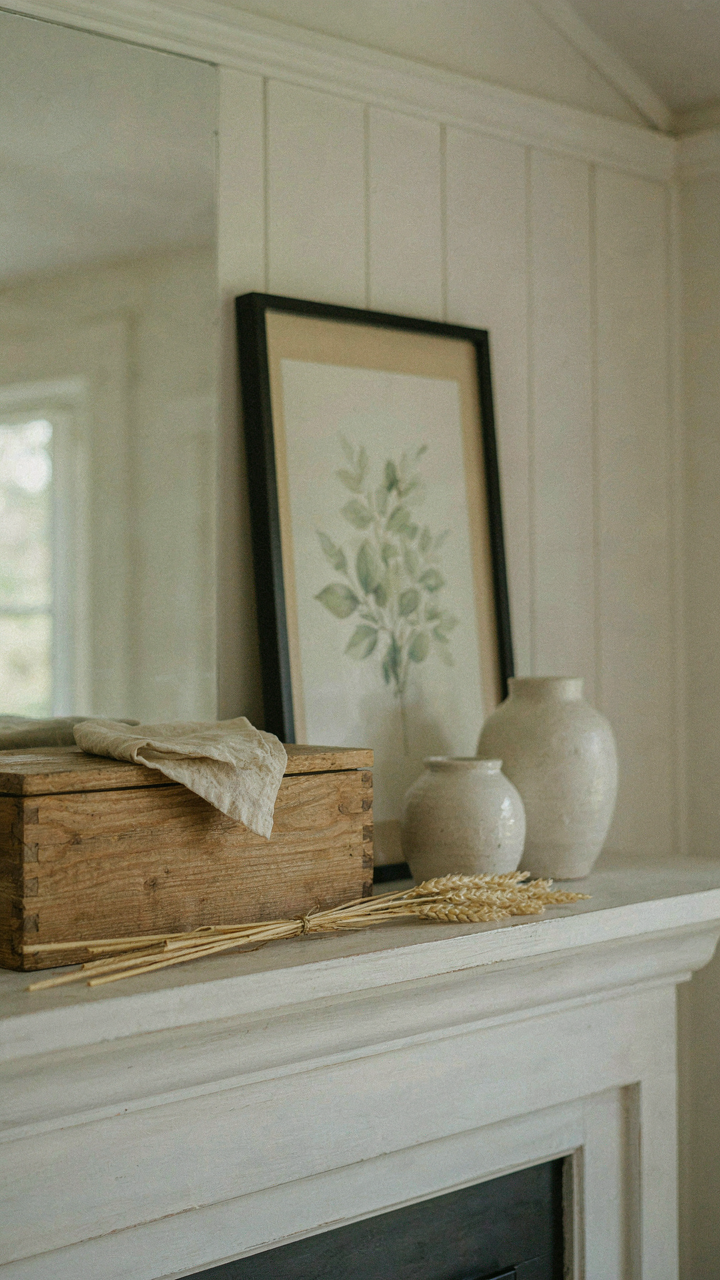
The Silence Between Objects
You want permission to own less because it signals restraint and taste. Here’s the mechanism: clutter on a mantel reads as indecision. Every object competes for visual weight, so your eye lands nowhere. The farmhouse aesthetic comes from rural practicality, not abundance. Farmers kept mantels functional because they lived there. Remove items that don’t earn their space through either use or deliberate visual purpose. The mantel becomes a decision-making tool, not a storage unit.

Empty space on a mantel does more work than filled space. It creates rhythm. It lets individual pieces breathe and register with actual presence. When you strip a mantel to five objects instead of fifteen, each one becomes louder. The viewer’s attention focuses. This is why gallery walls fail on mantels but sparse arrangements succeed. The farmhouse aesthetic isn’t about quantity. It’s about evidence of choice.
Weight Distribution Without Symmetry
Balance in design borrows from physics: objects exert visual weight based on size, color, and density. A dark ceramic pitcher pulls attention harder than a pale candle. On a mantel, you place heavy pieces off-center and let negative space do the balancing work. Symmetrical mantels look formal and staged. Asymmetrical placement feels inhabited. You’re creating visual equilibrium, not visual matching.
Start with one anchor piece that commands the space, then build around it with smaller items that don’t repeat its visual weight. A large wooden box on the left needs lighter objects on the right. A tall frame on one end balances with a cluster of smaller items on the other. The goal is to make viewers perceive stability without obvious arrangement. Test your placement by stepping back. If your eye settles in the middle of the mantel, you’ve failed. It should travel across the entire surface and land on intention.
Rustic Mantel Decorating Ideas: Embracing Imperfection
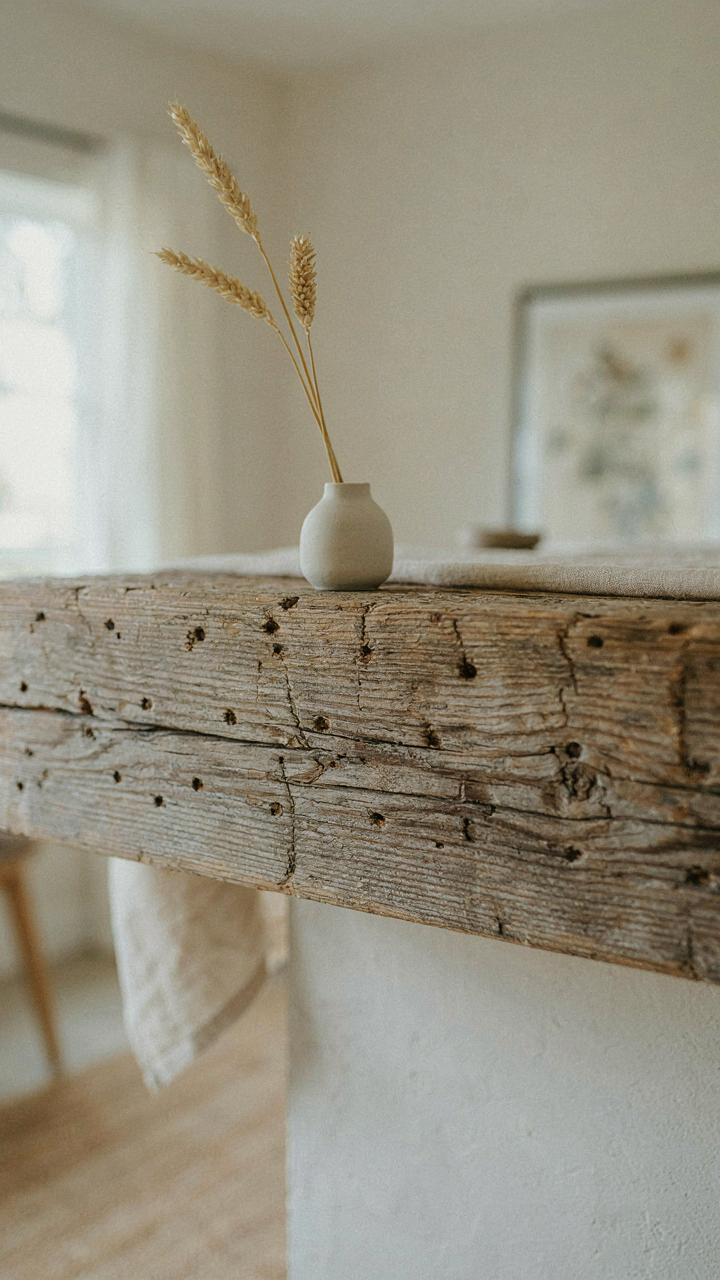
Worn Wood And Weathered Surfaces
You want permission to stop fighting decay. Here’s what actually happens: aged wood and weathered surfaces work because they signal time and use, which the human brain reads as authenticity. This is borrowed from metallurgy, where patina forms as a protective layer over the base material. On a mantel, the patina becomes the entire point. Distressed finishes, peeling paint, and surface damage aren’t flaws to hide. They’re the proof that something survived long enough to matter.

Reclaimed barn wood, old fence posts, and salvaged architectural pieces land on mantels because they carry visual evidence of their past. A beam with nail holes and weather checking reads differently than new wood stained to look old. The mechanism is simple: your eye detects real versus performed degradation instantly. Grab materials that already have a history built in rather than manufacturing one. The cost difference is negligible, but the credibility gap is massive.
Natural Grain And Raw Edges
Farmhouse design rejects the smoothed-down aesthetic entirely. Unfinished or minimally finished wood surfaces expose the actual structure of the material, from grain variation to knots to color shifts across the same board. This contradicts mainstream design advice that pushes consistency and uniformity. The truth is messier. Raw edges and irregular grain patterns anchor a mantel because they prove the piece came from a real log, not a factory template. Your mantel becomes a specimen rather than decoration.
Stone, metal, and weathered ceramic pieces work on the same principle. Collect items with visible tool marks, oxidation, and surface irregularities. A cast iron piece with rust bloom, a stone with uneven edges, a pottery piece with unglazed sections. These details compound to create visual weight that polished, perfect pieces cannot achieve. Your mantel should look like you found these things, not ordered them. Start by removing anything symmetrical or too uniform.
Fireplace Decor Ideas: Extending Your Mantel’s Influence
When The Hearth Becomes The Room
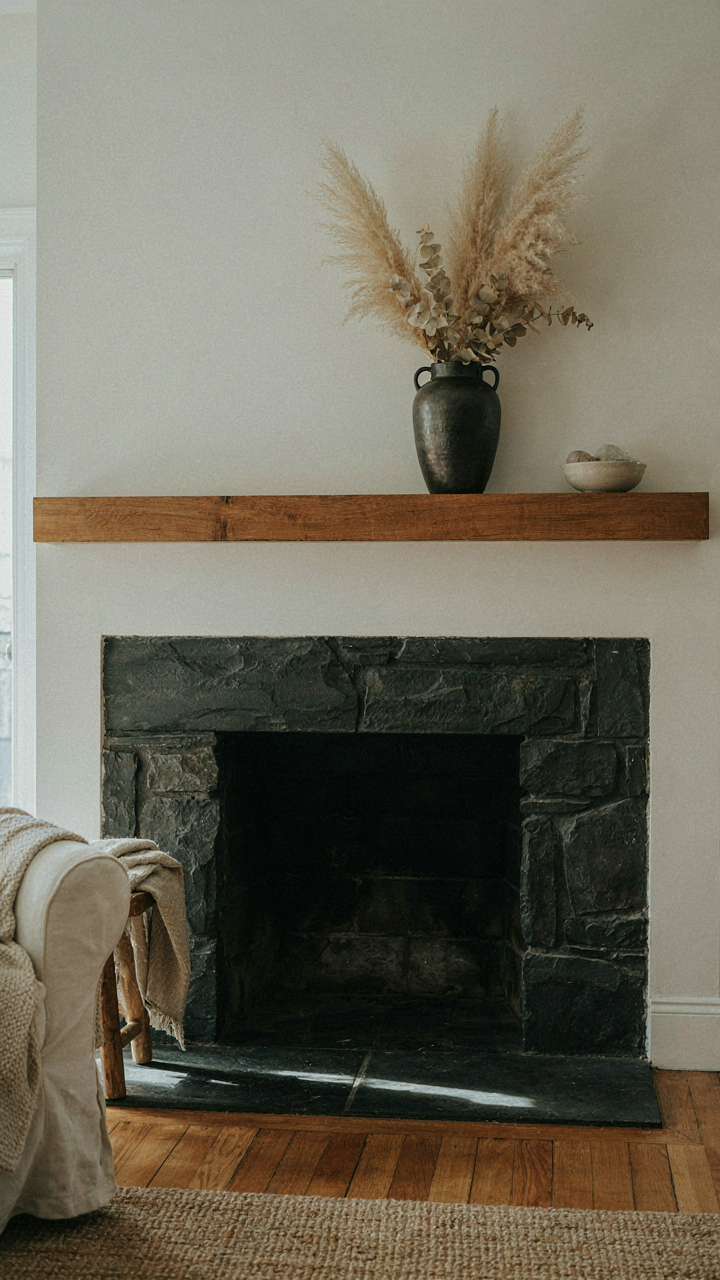
You want your mantel to feel intentional, not like you assembled it from a catalog. Here’s the real mechanism: your fireplace is a thermal anchor—it literally draws the eye because it’s the warmest object in the room. Treat it like a visual hierarchy problem, not a decoration problem. The hearth and mantel work as one thermal and visual system. Most people decorate them separately, which breaks the logic your eye naturally follows from floor to focal point.

The stones, brick, or surround you choose set a constraint that forces every mantel decision afterward. A dark slate hearth demands different scale and color from a pale limestone one. The mantel sits as a horizontal line interrupting that vertical mass below. Don’t fight this relationship by adding competing textures to both surfaces. Anchor the hearth with one strong material choice, then use the mantel to breathe visual space above it. This isn’t aesthetic theory—it’s how your brain processes a room’s spatial depth.
Scale, Sight Lines, And What Actually Works
Most advice about mantel styling ignores the physics of how objects relate across distance and height. Sight lines determine what reads as balanced. An object on the far left of your mantel vanishes if you view it from an angle. An object too small creates visual noise. An object too tall breaks the horizontal plane that makes a mantel feel restful. Scale your items relative to the mantel’s length, not to your hand.
- Proportional height rule: Decor should not exceed one-third the distance between the mantel and ceiling, keeping the space above the focal point open and uncluttered.
- Three-item clustering: Grouping objects in odd numbers creates visual rhythm without symmetry, but space them intentionally across the mantel’s length to avoid crowding.
- Negative space placement: Leave 40 to 50 percent of your mantel bare, especially in smaller rooms where visual clutter compresses the space feeling.
- Depth layering: Position taller objects toward the back, shorter ones forward, so the eye reads depth instead of a flat plane of stuff.
- Color blocking by season: Switch one main element per season instead of replacing everything—this reduces decision fatigue while maintaining freshness.
When you test an arrangement, step back six to eight feet and view it from the room’s main seating position. If something reads as an afterthought, it is one. Move it or remove it. The mantel’s real job is to anchor the room’s visual weight without demanding attention—functional restraint beats decorative abundance every single time.
Next To Fireplace Ideas: Maximizing Underutilized Space
Storage That Doesn’t Look Like Storage
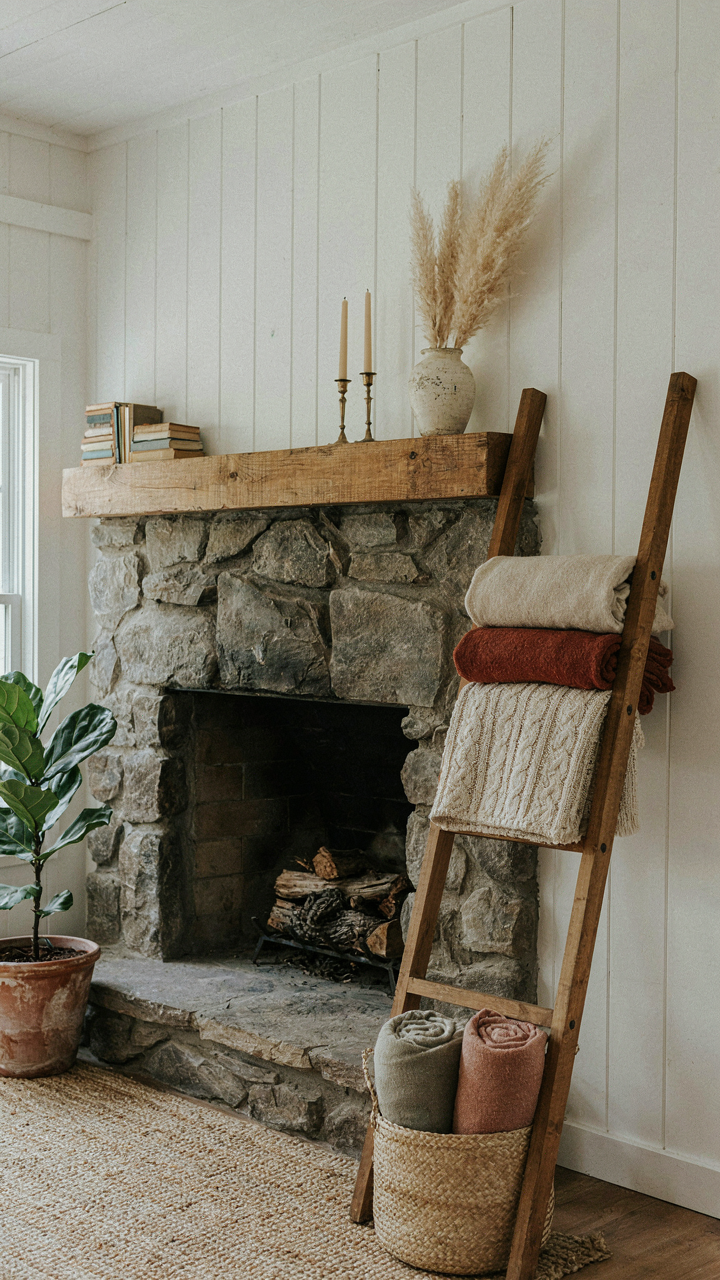
You want the space next to your fireplace to feel intentional, not like a dumping ground for things you couldn’t fit elsewhere. The real mechanism is this: farmhouse aesthetics work because they disguise function as decoration. A wooden ladder, woven baskets, or a vintage trunk beside the hearth holds blankets and firewood while appearing to serve the visual story you’re telling.

The mistake most people make is treating adjacent fireplace space as negative space. It’s not. It’s a stage for objects that solve problems while reinforcing your design. Metal buckets hold kindling. Open shelving displays folded throws. A reproduction apothecary cabinet stores matches and fire starters behind glass. Each piece works double duty: it organizes what you need and looks deliberate doing it.
Building Distinct Visual Zones
Composition matters here like it matters in architecture: you need visual weight distributed, not clustered. The mechanism borrowed from spatial design is “negative space amplification.” One tall element (a standing candle holder or weathered birdhouse) anchors the zone. Surrounding it with lower-profile items creates rhythm and prevents the area from feeling crammed or chaotic.
Most advice says “balance both sides of the fireplace equally.” That’s lazy. Farmhouse interiors work precisely because they’re asymmetrical. One side can hold a heavier storage element while the opposite side features a single statement piece or clear wall space. This tension is what makes the room feel collected over time, not purchased as a set. Treat each adjacent zone independently, then step back to ensure they reference each other through material (wood, metal, woven) rather than mirror each other.
Decorating A Mantel Ideas: The Art Of Subtraction
Stop Adding And Start Removing
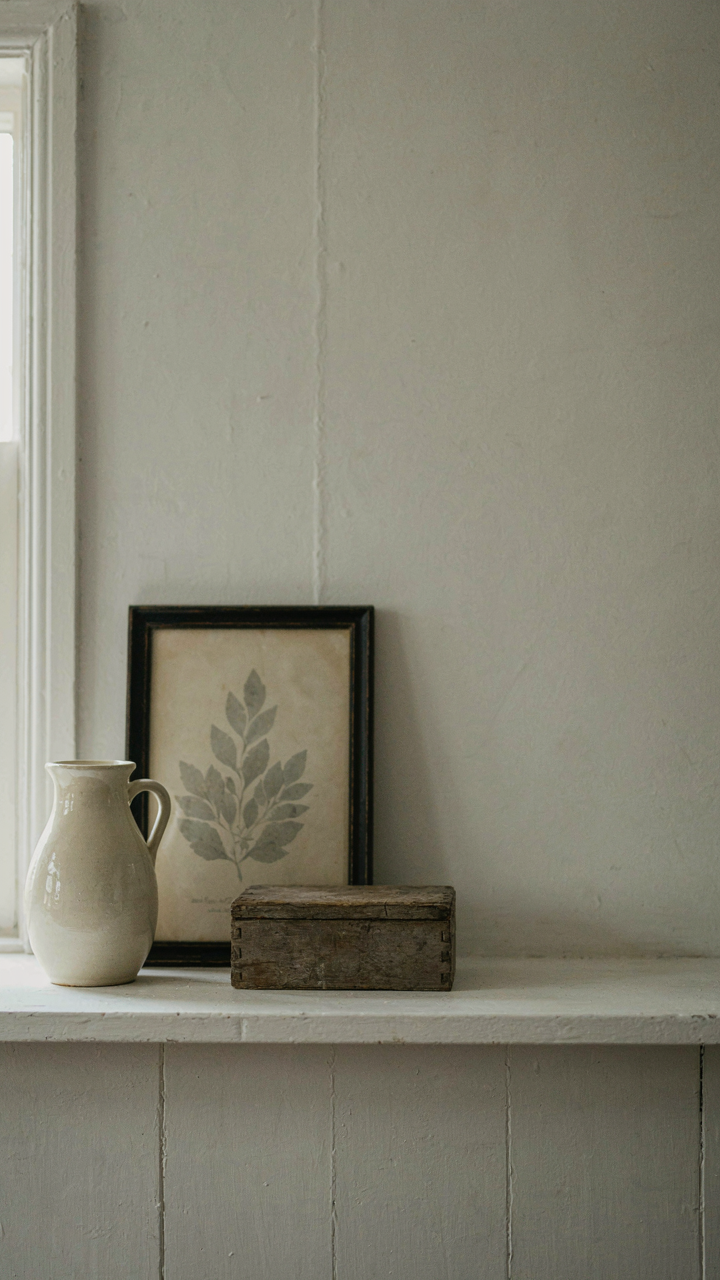
You want permission to keep fewer things on your mantel because clutter makes you feel like you’ve failed at decorating. Here’s the real mechanism: farmhouse design borrows from scarcity economics—the fewer items present, the higher the perceived value of each one. When you remove an object, the remaining pieces don’t just look better. They demand attention. A single ceramic pitcher occupies mental space that ten scattered trinkets never could. The mantel stops being storage and becomes a statement.

Most advice tells you to “curate carefully” or “choose quality over quantity.” That’s incomplete. The actual work is identifying which pieces create visual friction—items that compete for attention rather than support it. A weathered wooden box next to three glass votives next to a framed print creates noise. Remove the votives. Now the box and print have room to breathe. Now they matter. The mechanism is contrast through absence, not abundance.
What Remains Holds All The Weight
When your mantel contains fewer items, each one carries the entire load of communicating your aesthetic. This means you cannot hide behind volume. A single wrought iron candlestick on a farmhouse mantel has to earn its space through authentic patina, honest proportions, or genuine age. You cannot fake it with quantity. The items that survive your subtraction become the actual definition of your space.
This is why farmhouse mantels that work feel intentional rather than decorated. Three objects arranged with two feet of breathing room between them create a visual rhythm that reads as deliberate. Remove the last decorative piece you added last week. Notice what the mantel says without it. That silence is the design working.
The Only Truly Seasonal Decor Is A Reflection Of Your Evolving Self

Most people swap their mantel decor because a calendar told them to. You should swap it because you changed. Your farmhouse mantel isn’t a museum exhibit that rotates quarterly. It’s a living mirror of who you are right now. Pick one item from your home today that actually means something to you, place it on your mantel, and build around that single anchor. Decor follows intention, never the other way around.