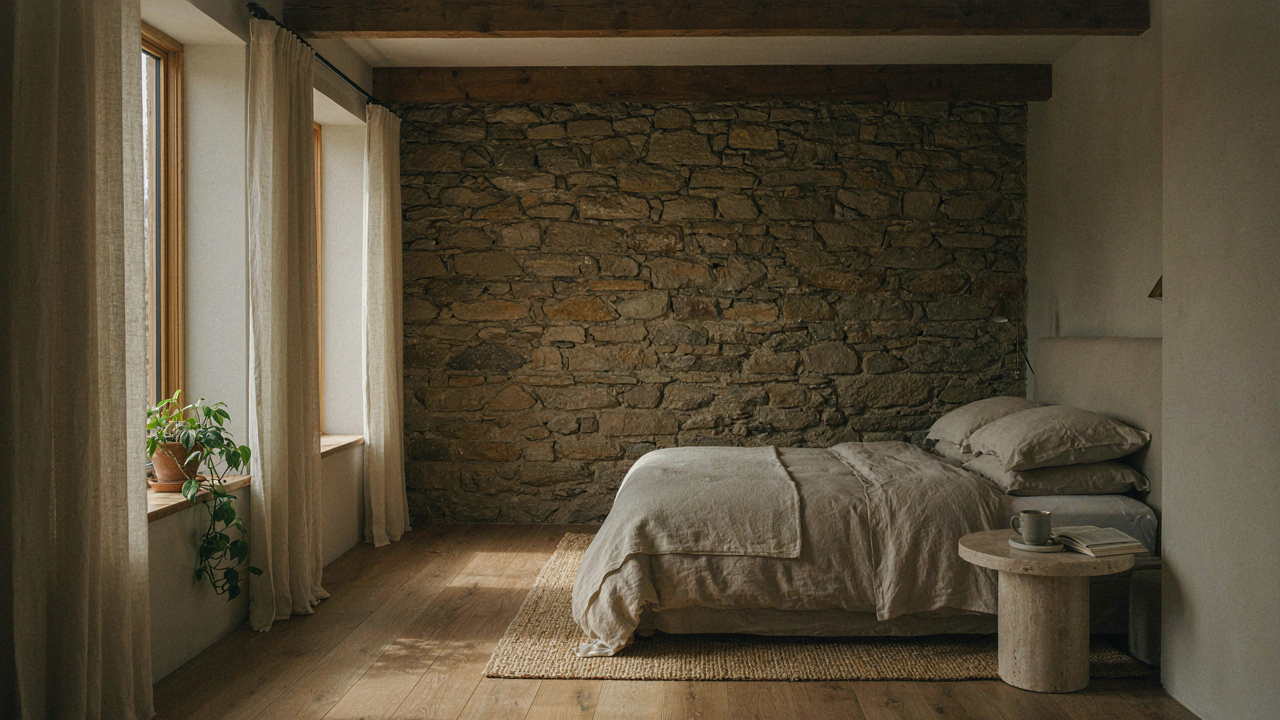
The Uncomfortable Truth Of Modern Ranch Bedroom Ideas
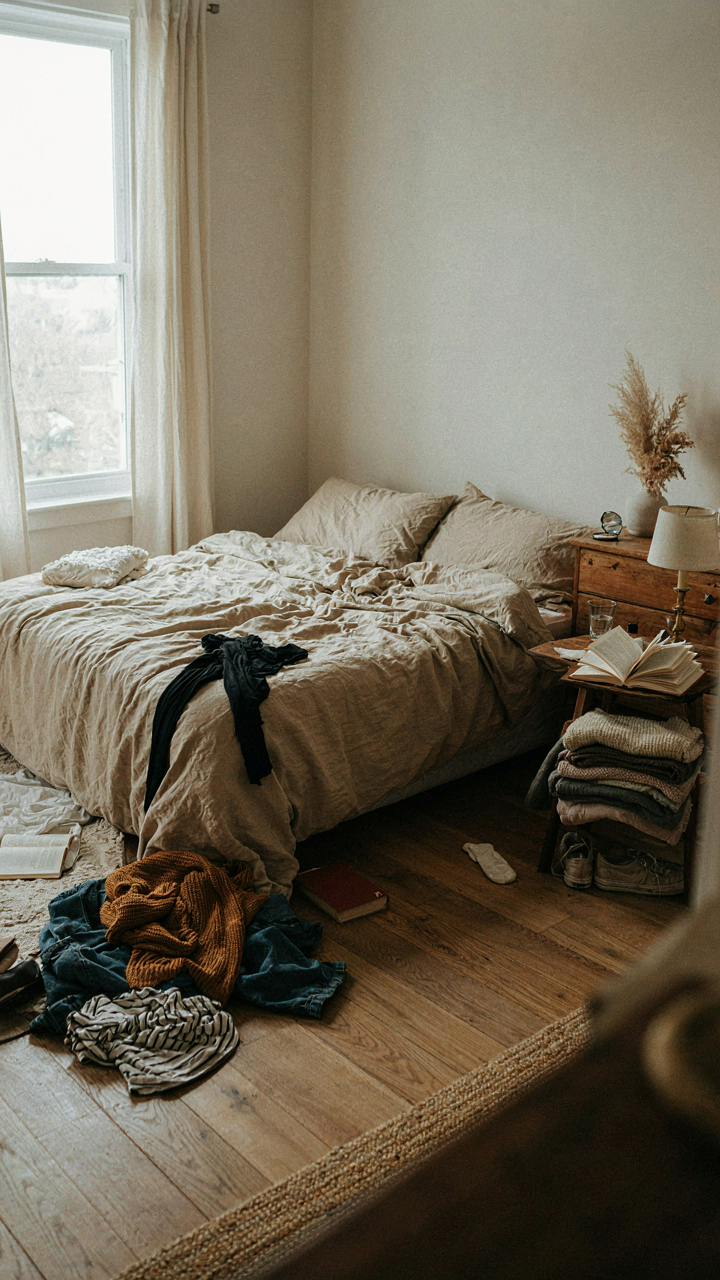
Natural Materials Don’t Solve Storage Problems
You want a modern rustic bedroom because it sounds peaceful, and peace sounds like success. Here’s what actually happens: you layer natural textures—wood, stone, linen—without a system for containing your life, and suddenly the room feels chaotic instead of calm. The mechanism is simple. Rusticity signals authenticity, which our brains read as “fewer things.” But modern life generates stuff. Wood beams and exposed stone look intentional. Unmade beds and scattered clothing look like failure. The aesthetic doesn’t fix the behavior.
Real modern rustic design requires aggressive constraint. You need fewer items, not more materials. A reclaimed wood nightstand holds three objects maximum. A linen throw goes on the bed frame, not draped across a chair. The natural materials work because they’re clean and minimal, not because they’re rustic. Remove the assumption that “natural” automatically creates calm. It doesn’t. Discipline does.
The Anxiety Of Manufactured Authenticity
Forced coziness creates tension because your nervous system detects the lie. You’ve styled your bedroom to look like a cabin, but you work from a desk in the corner and your phone charges on the nightstand. This cognitive friction costs mental energy every time you enter the room. The gap between the aesthetic promise and actual function triggers low-grade anxiety, not relaxation.
Modern rustic spaces work when the design matches how you actually live. If you work remotely, embrace it—place a simple wood desk intentionally. If you read in bed, add a focused light source rather than hiding it. If you exercise, store weights on a clean metal rack. The room’s power comes from honest design, not theme park authenticity. Stop performing rusticity and start building function that happens to use natural materials. The calm follows the alignment, not the other way around.
Deconstructing “Rustic”: It’s Not Just Brown Farmhouse Bedroom Wood
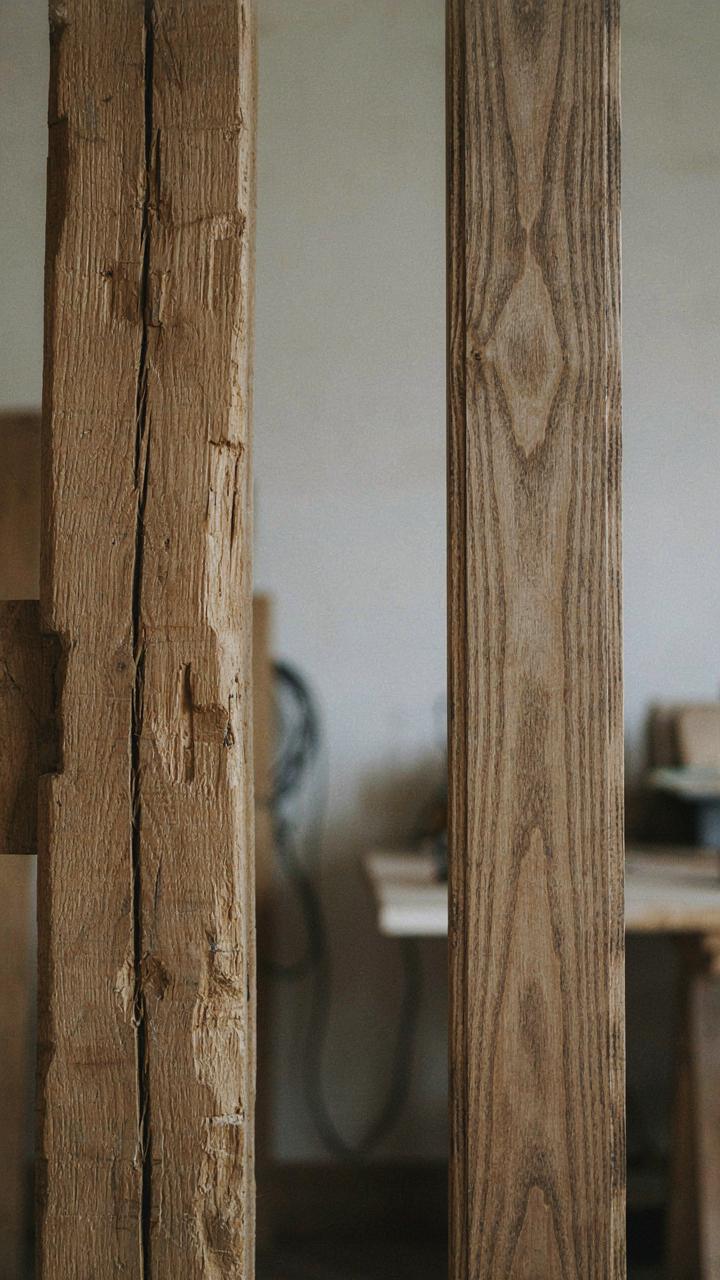
Real Versus Replicated Material Character
You want rustic to signal taste without admitting you’re scared of looking sterile. Here’s the mechanism: genuine rustic emerges from material honesty—objects that show their age or construction method because that’s how they were actually made, not because a factory added fake distressing. A hand-hewn beam carries tool marks from a chisel. Reclaimed wood shows nail holes and color variation from decades outdoors. Mass-produced “rustic” furniture arrives pre-aged from overseas factories, indistinguishable from every other piece in a catalog.

The difference isn’t subjective. Real rustic materials reveal their history through irreproducible wear patterns, joinery techniques, or material degradation that took actual time. Veneer over particle board pretending to be solid wood reads as fraudulent to your eye even if you can’t articulate why. Authentic rustic doesn’t perform rusticity—it contains it. Your bedroom absorbs genuine materials differently than imitations because light refracts off real texture, and your nervous system registers the difference.
Honest Construction Over Cosmetic Aging
Everyone says “mix old and new,” which is advice so generic it collapses under scrutiny. The real principle borrowed from industrial design is structural integrity: function precedes form. A nightstand built to last decades, with joinery that actually supports weight and drawers that glide on proper hardware, reads as rustic because the construction itself is visible. You see the mortise and tenon joints. You notice the wood grain and honest finish. That’s rustic.
Slapped-on stain and artificial distressing become visual noise once you train yourself to spot them. A bedroom wall made from actual reclaimed barn siding differs from wallpaper printed to mimic it—one has dimensional depth, the other has none. Your eye catches the deception because deceit compresses information. Build or source furniture that proves its durability through design rather than decoration. When materials and joints do their actual job, the room communicates stability instead of trying to convince you of it.
The “Less But Better” Modern Rustic Bedroom Design Protocol
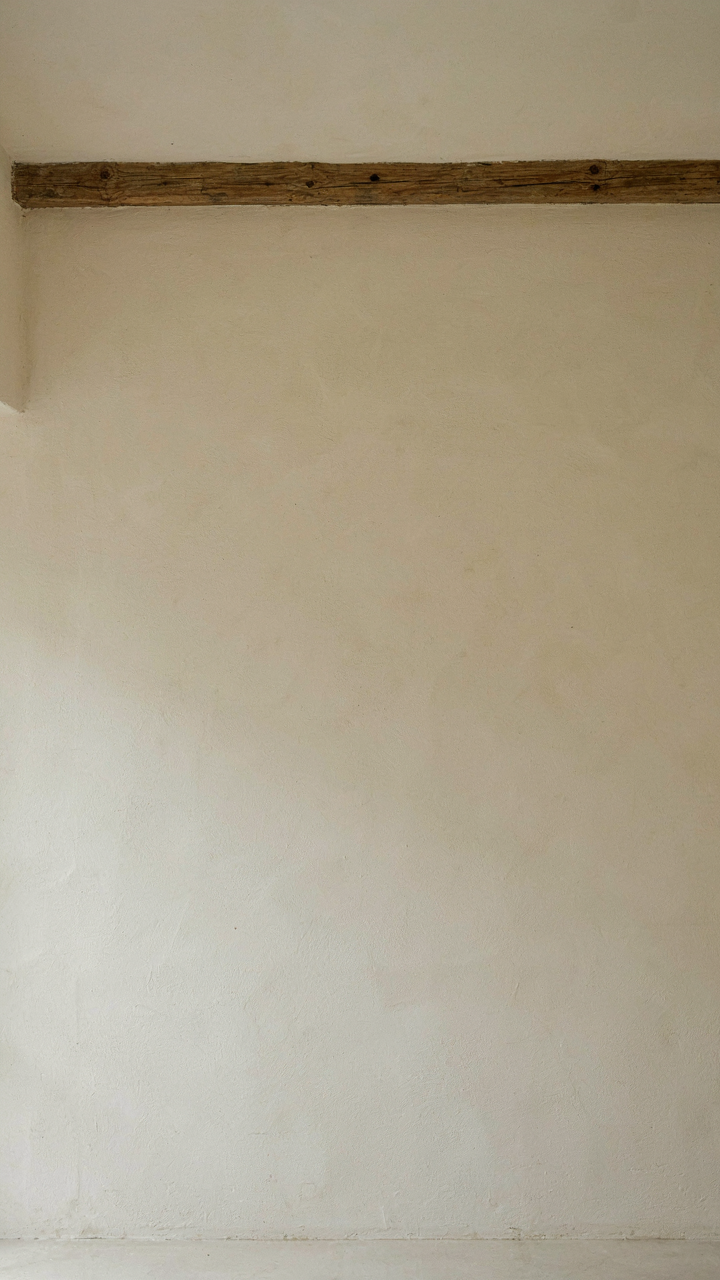
Strategic Voids: The Power Of Empty Space
You want permission to own less and feel like you’ve won. That’s the real move here. In design, what we call negative space in graphic design is exactly what stops a room from collapsing into visual chaos. Modern rustic bedrooms work because they apply this principle ruthlessly: they leave walls bare, nightstands clear, and floor space open. The rusticity comes from raw materials and texture, not from filling every surface.

Most advice says “add storage to hide clutter.” Wrong angle. The mechanism is different. Empty wall space makes a room feel larger and forces you to be selective about what stays visible. A single wooden beam, exposed brick, or stone accent wall reads louder when surrounded by calm. The bedroom isn’t a gallery where every item earns display space. It’s a breathing room where restraint is the aesthetic.
Curated Vs. Collected: Deliberate Object Selection
The difference between a modern rustic bedroom that works and one that just looks old is intentionality. Collected rooms accumulate: the vintage ladder you found, the mason jars, the reclaimed wood sign. Curated rooms build a visual argument. Each object either serves the room’s material palette or it goes. A wrought-iron bed frame works. A wrought-iron bed frame plus decorative wrought-iron wall art plus vintage iron keys on the nightstand does not.
Pick materials that repeat across the room to create coherence. If your nightstands are reclaimed wood, let that be the wood story. Don’t add a wooden ladder, wooden shelving, and wooden wall paneling. Instead, pair that wood with one textural contrast: linen bedding, plaster walls, or stone accents. Limit yourself to three material families maximum. This constraint forces you to think like an editor instead of a collector, and the room becomes restful instead of busy.
Light As Architecture: Sculpting Your Modern Farmhouse Bedroom Ideas
Windows And Daylight Positioning
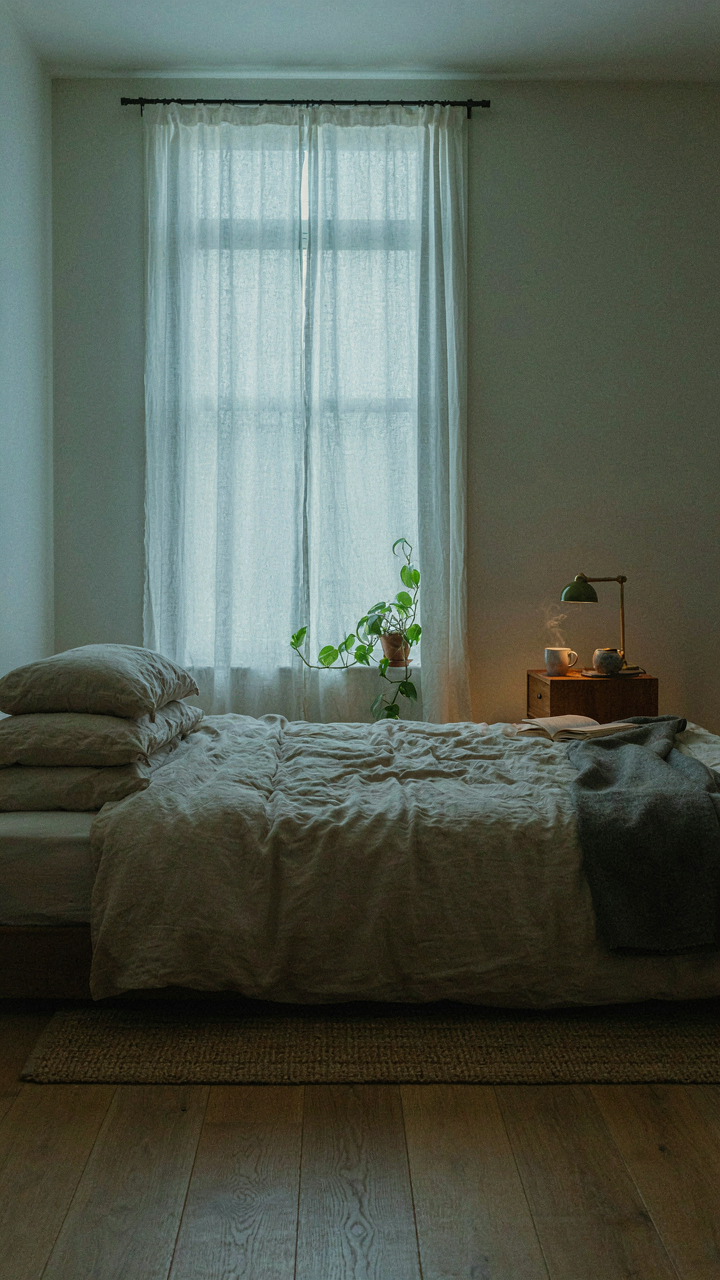
You want this section to work because you sense that light controls mood, and controlling mood feels like controlling your life. Here’s what actually happens: daylight acts as a circadian anchor. Your nervous system responds to light wavelength and intensity, not intention. Modern rustic bedrooms fail when designers treat windows as decoration instead of biological infrastructure.

East-facing windows deliver cool, shorter-wavelength light in early morning. This triggers cortisol production and regulates your sleep cycle forward. South-facing windows bring consistent, neutral light throughout the day without the harsh intensity of afternoon west-facing exposure. Position your bed perpendicular to windows, not facing them directly. Direct morning light while sleeping destroys melatonin production and fragments rest quality, no matter how “natural” it feels.
Layered Depths For Controlled Activation
The common advice says “add ambient, task, and accent lighting.” That’s incomplete. Psychology borrowed from theater design shows that light layering controls emotional state through selective attention. Modern rustic bedrooms need three distinct brightness zones you can toggle independently based on time of day and neural state.
Ambient lighting should sit at 200-300 lumens, coming from above or indirect wall sources. This baseline keeps you oriented without overstimulation. Task lighting targets specific zones like bedside tables or reading corners at 400-500 lumens, allowing focused activity. Accent lighting uses warm dimmers at 2700K color temperature to signal wind-down mode. Install dimmer switches on every circuit. The ability to collapse brightness is the actual mechanism that triggers parasympathetic activation, not the fixtures themselves.
The Feedback Loop Of Farmhouse Bedroom Design (Cybernetics Applied)
Your Room Talks Back To You
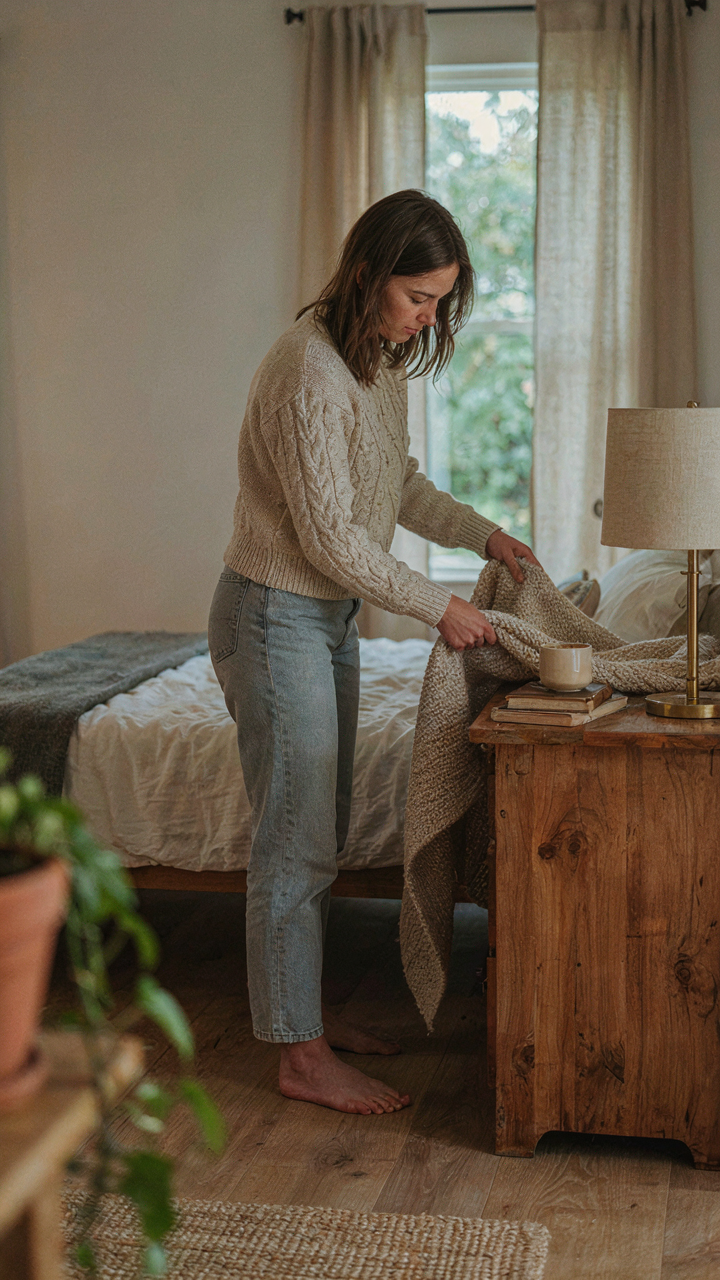
You want your bedroom to feel intentional without feeling like you tried too hard. That’s the real fear underneath. Here’s the mechanism: cybernetics teaches us that any stable system requires feedback. Your modern rustic bedroom operates the same way. You place a reclaimed wood nightstand. You sleep next to it for two weeks. Your brain registers whether the texture, weight, and material composition either calm or agitate your nervous system. The room outputs data through your sleep quality, how often you reach for your phone, whether you linger in the space or rush through it. You adjust based on that output. This is not decoration. This is a closed loop.

Most design advice treats the bedroom as a static object you finish and leave alone. Wrong. The space only becomes functional when you let it inform your next move. A chunky linen duvet cover teaches you something different than a smooth cotton one. Raw wood beams overhead create different air circulation patterns than drywall. Warm incandescent bulbs versus cool LED fixtures shift your melatonin production in measurable ways. The room sends signals. Your job is to read them and recalibrate. This is why the best modern rustic bedrooms belong to people who actually use them and pay attention, not people who bought a Pinterest board.
The Space Evolves Or It Stagnates
Farmhouse design emerged from necessity, not aesthetics. Early rural homes used whatever materials were available and modified them as life changed. A barn door became a bedroom door because the family needed it. The principle holds now: your bedroom must adapt to how you actually live, not how you imagine you live. Most people treat bedroom design as a one-time event. They buy a set of pieces, arrange them, and assume permanence. The room then becomes a museum of their old choices. Your modern rustic bedroom will tell you when adaptation is required. Maybe the natural light shifts with the seasons and your reclaimed wood accent wall looks different in December than September. Maybe you work from your bedroom now and the nightstand setup no longer fits your workflow. Maybe you sleep better when the room temperature stays cooler, so you need different fabric weights.
The feedback loop demands one non-negotiable protocol: move something in your bedroom every four to six weeks. Not everything. One element. Swap the throw blanket location. Rotate which wall holds the mirror. Change the height of a shelf. This breaks the stagnation and forces your brain to re-evaluate the space as a functioning system rather than background furniture. You’ll notice what actually serves you and what you’re keeping out of habit.
Mastering The Modern Cottage Bedroom Palette: Beyond Monotony
Subtle Contrasts: Depth Without Distraction
You want a monochromatic room because you’re afraid of making a mistake. That fear keeps you trapped in beige walls with beige bedding with beige curtains, which reads as neglect, not restraint. The mechanism here is contrast threshold: just like in visual perception, your eye needs a reference point to register depth. Without it, the room flattens into visual nothing.

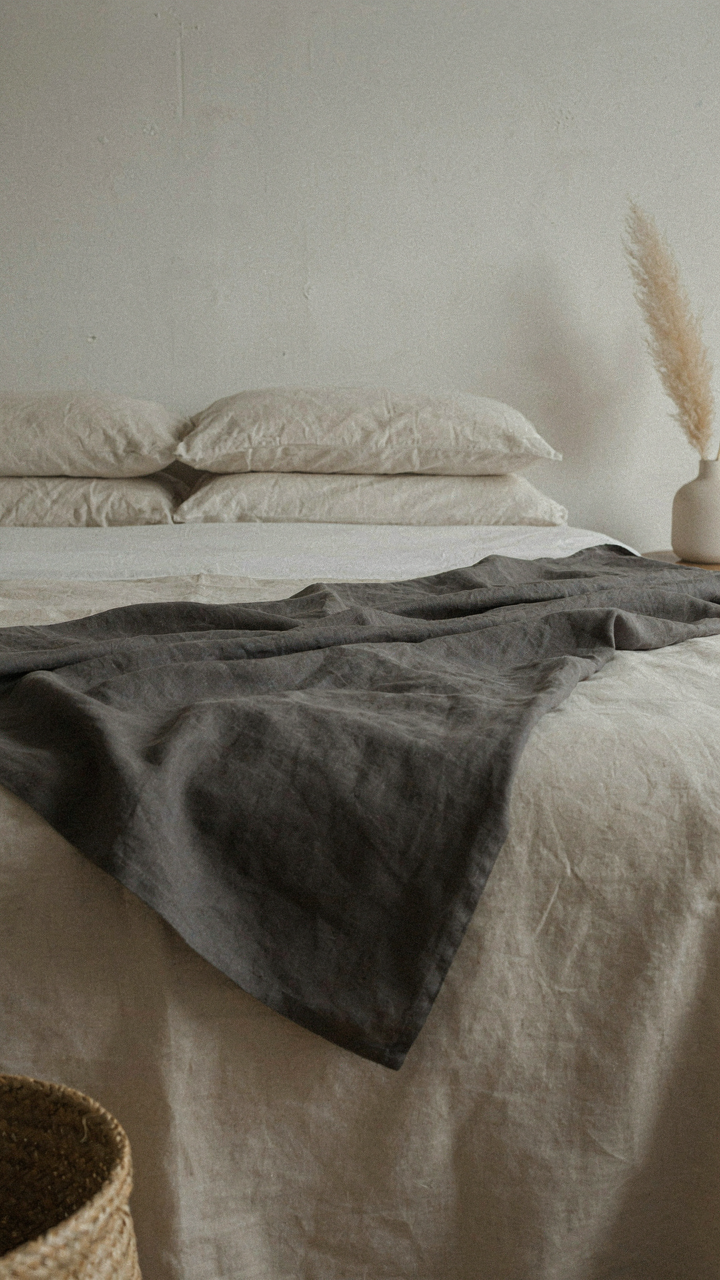
Modern rustic design requires strategic contrast, not chromatic variance. Pick a base neutral—warm gray, soft taupe, or greige—then introduce ONE accent that breaks the plane by five to ten shades. A weathered wood headboard against cream walls works. A charcoal linen throw on a cream bed works. The specificity matters: you’re not aiming for harmony. You’re creating a focal point that makes the rest recede.
Texture As Color: Visual Interest Through Tactility
Most advice tells you to “layer textures for warmth,” which is vague enough to justify throwing in seven different materials and wondering why the room feels chaotic. The real mechanism is that texture creates shadow and light variation without adding pigment. A linen duvet reads lighter than a wool throw at the same tonal value because weave density changes how light reflects.
Modern rustic bedrooms use texture as a substitute for color saturation. Raw wood surfaces, chunky knit blankets, stone or brick accents, linen fabrics—these introduce visual complexity while keeping the palette narrow. Apply this rule: if your walls and furniture use three colors or fewer, you can use five to seven distinct textures. This is where the room gains personality without becoming visually loud. Source materials with different weave patterns, wood grain variation, and natural surface irregularities rather than reaching for bright accent colors.
The Functional Core: Not Your Grandma’s Farmhouse Master Bedrooms Decor
Storage That Works Without Screaming For Attention
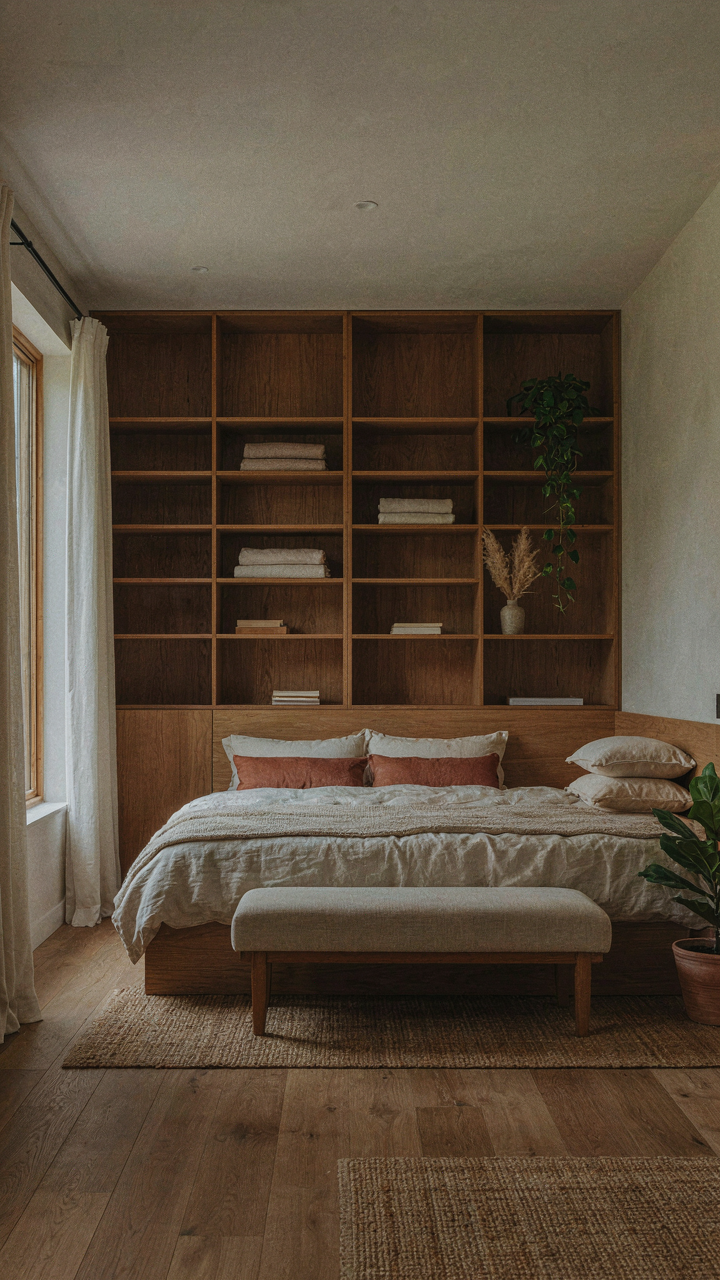
You want storage that looks intentional, not like you’re hiding clutter behind barn doors. The real mechanism here is visual hierarchy: your eye should land on the bed and natural light first, not on where you stashed your winter clothes. Modern rustic storage doesn’t announce itself. It integrates into the wall plane or uses materials already present in the room—wood that matches your frame, metal that echoes your hardware, textiles that blend rather than contrast.
- Built-in wooden shelving: Frame open shelving with reclaimed or stained wood that mirrors your bed frame. Keep items organized and minimal to avoid visual noise that disrupts calm.
- Low-profile storage benches: Position at the foot of the bed in solid wood or upholstered leather. Serves dual purpose without eating vertical space or breaking the horizontal sightline.
- Recessed closet systems: If budget allows, recess shelving into wall cavities with sliding barn doors or simple frames. Eliminates the bulge that makes rooms feel cramped.
- Woven baskets under side tables: Tuck storage under nightstands using natural fiber baskets. They read as decor while holding what you actually need within arm’s reach.
- Wall-mounted ladder shelving: Lean a wooden or metal ladder against the wall for folded blankets and books. Creates vertical interest without the permanence of built-in cabinetry.

The rule: storage should require intention to notice. If a guest’s eye lands on your dresser before your headboard, you’ve failed the hierarchy test. Move or modify until the room reads as a place to rest, not a place where things are stored.
Where Your Body Actually Needs Investment
Common advice says “buy a nice mattress.” That’s incomplete because it ignores the mechanism: your nervous system doesn’t care about thread count. It cares about spinal alignment and pressure distribution, which a mediocre mattress at the right firmness beats an expensive one at the wrong one. Test before you buy. Lay on candidates for 10 minutes minimum. Your lower back and shoulder will tell you what no review can.
Beyond the mattress, invest in pillows that match your sleep position and a frame sturdy enough that you feel zero flex when you move. Most modern rustic frames—reclaimed wood or metal—lack center support, which creates the subtle bounce that wakes you at 3 AM. Add a center beam if needed. The pillow should cradle your neck without angling your head. Replace it yearly; they compress. Your waking hours depend on these three things. Everything else in the room is window dressing.
Integrity Of Materials: The Farmhouse Style Bedrooms Standard
Real Wood And Stone Beat Fake Every Time
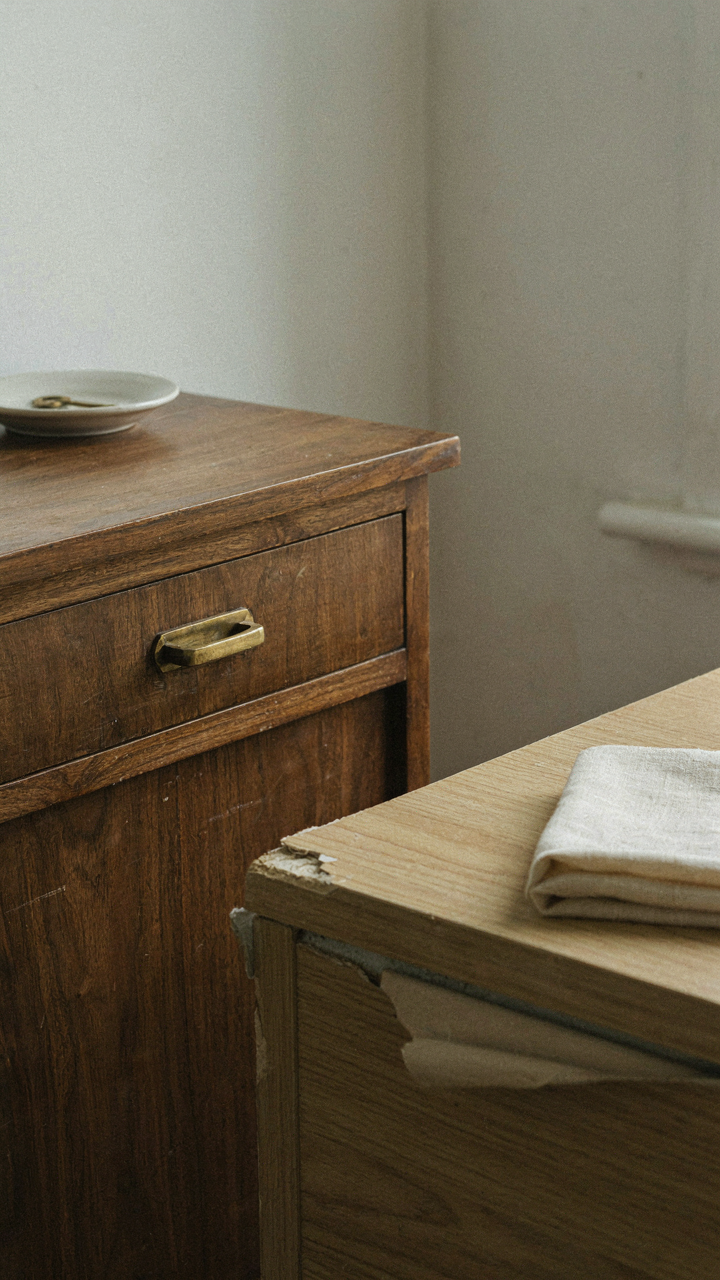
You want this room to feel authentic because authenticity signals you didn’t cut corners, and cutting corners signals you don’t know better. Here’s the mechanism: manufactured materials degrade predictably and visibly. Real wood and stone age in ways humans find trustworthy. A reclaimed barn beam darkens and weathers. Laminate peels. One tells a story. One tells the truth about your budget.

Solid hardwood, stone, and metal don’t require replacement cycles. Veneers separate. Composite finishes crack under temperature swings. Real materials respond to humidity and use in ways designers expect and plan for. Stone holds temperature. Wood breathes. These aren’t romantic qualities. They’re structural facts that determine whether your bedroom costs you money in five years or holds its value.
Buy Once Because Replacement Math Doesn’t Work
The longevity argument isn’t sentimental. It’s economic. A solid walnut nightstand costs more upfront. A particleboard version costs less but needs replacement in eight to twelve years. Over thirty years, you buy the fake one four times. The math eliminates the choice.
Real materials compound in value through use. A wool area rug darkens and softens. A quality linen headboard fades and gains texture. These changes signal quality to your brain because they match how durable goods behave in the real world. When replacing cheap materials, you stop the process and restart the clock. When maintaining real materials, you deepen them. Specify solid wood frames, authentic stone surfaces, and natural textiles upfront. Source from suppliers who provide material specs and expected lifespan, not just product photos.
The Human Element: What “Comfort” Actually Means In A Room Farmhouse Decor
Sensory Experience Controls The Nervous System
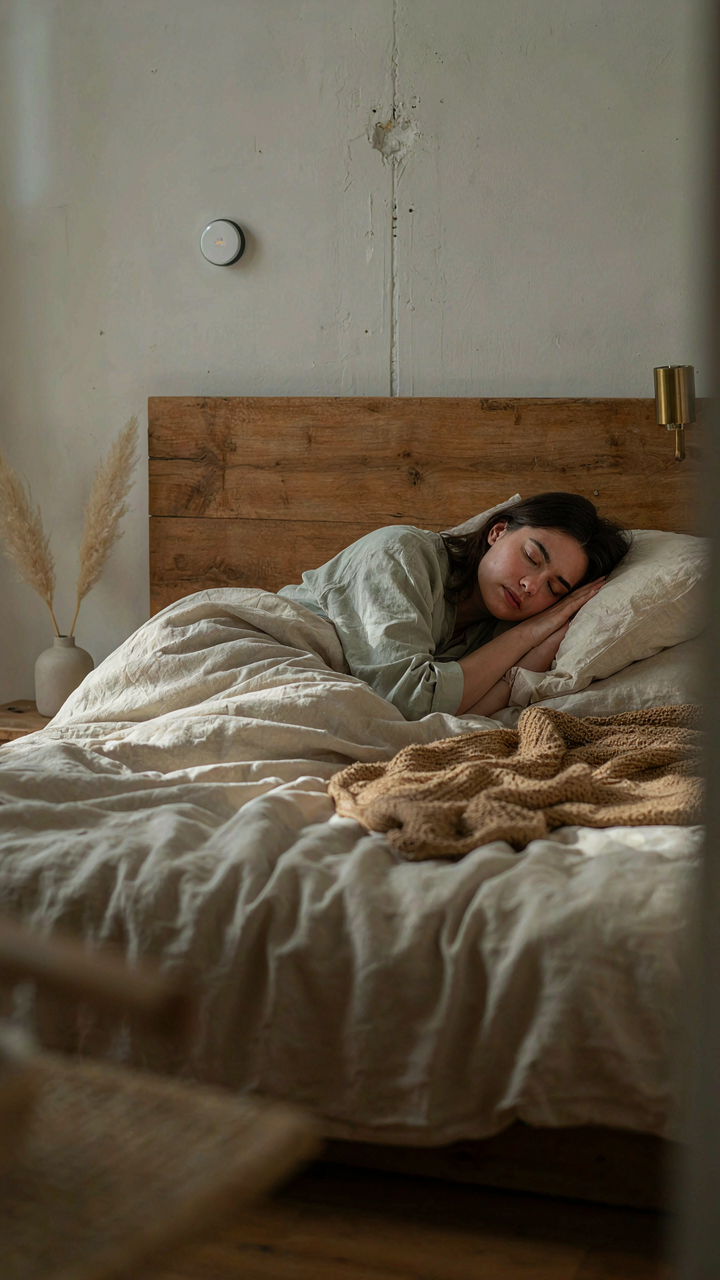
You want this room to feel restorative because you’re exhausted, and you’re betting a bedroom aesthetic will solve that without actually changing your life. Here’s the mechanism: comfort isn’t a feeling, it’s a physiological state triggered by sensory input. Sound, smell, and temperature are the three variables that either activate or deactivate your parasympathetic nervous system. Ignore them and the room fails at its single job.

Temperature control is mechanical. Modern rustic bedrooms typically use natural materials—wood, linen, wool—that regulate moisture and air flow better than synthetic alternatives. The target range is 65 to 68 degrees Fahrenheit for optimal sleep. If your bedroom runs hot or cold consistently, no amount of styling fixes the underlying problem. Install a smart thermostat or use layered bedding you can adjust. Sound requires a different approach. Ambient noise above 40 decibels disrupts sleep architecture. Thick curtains, area rugs on hard floors, and heavy upholstered pieces absorb sound naturally. Smell operates through the olfactory system directly into the limbic system. Avoid artificial scents. Fresh air circulation, natural wood off-gassing, and clean textiles create the sensory baseline. These aren’t decorative choices. They’re engineering decisions that determine whether the room actually works.
What Makes A Space Feel True To You
A room resonates when it reflects the actual life you live, not the life you perform for others. The farmhouse aesthetic sold online is often pure theater—staged for photographs, designed for strangers’ approval. Your bedroom should contradict that instinct entirely. Personal meaning comes from objects and materials that have survived your actual use, or that connect to decisions you’ve genuinely made about how to live.
This is why inherited pieces outperform bought-new farmhouse decor in modern rustic bedrooms. A weathered wooden dresser your grandmother used carries a different neural load than a reproduction piece from a furniture catalog. Your brain recognizes the difference. The mechanism is specificity. Generic comfort is contradiction. Specific comfort—the exact bedside table height you need, the particular wood species that reminds you of a place you’ve lived, the textile weight that matches your sleep preference—compounds over months of use. Build the room by adding one piece at a time based on actual need, not aesthetic categories. Document what works and what doesn’t. After six months, you’ll own a bedroom that fits your body and behavior, not a showroom that fits your aspirations.
The Un Decorated Bedroom: Your Ultimate Sanctuary
Strip Away The Superfluous For Genuine Peace
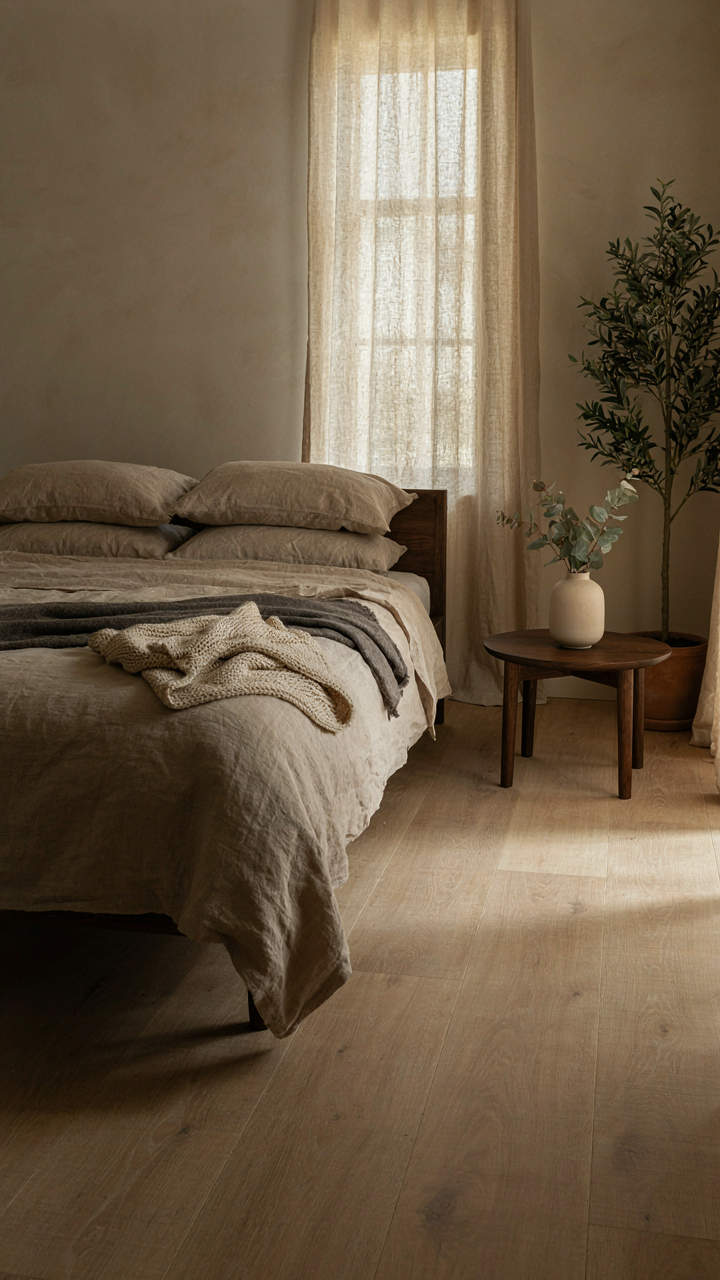
You want permission to have less and still look intentional. Here’s the mechanism: your nervous system doesn’t calm down because a room looks curated. It calms down because it processes fewer stimuli. Neurology, not design theory, is what matters. Every object in your field of vision costs cognitive load. Most modern rustic bedrooms fail because they add texture and warmth without subtracting noise. The wood beam, the vintage lamp, the layered rug, the woven basket all compete for attention at once.
The real move is constraint as a design material. Start by identifying what you actually use: bed, nightstand, one light source. Everything else is decoration masquerading as necessity. Remove items one at a time and measure your sleep quality for three nights. Your body tells you what works faster than your eye does. A modern rustic bedroom that genuinely calms you will feel sparse to visitors. That discomfort they feel is them noticing the absence of filler. You’ve won.
True Comfort Lives In Simplicity
Minimalism gets preached as cold and stark, but that’s incomplete analysis. The issue is minimalism stripped of warmth, not minimalism itself. Modern rustic solves this by keeping texture while killing clutter. One reclaimed wood wall. One natural fiber rug. One ceramic or metal light fixture. That’s your material vocabulary. The mistake most people make is treating “rustic” as an excuse to accumulate. A chipped wooden nightstand, a vintage mirror, a woven throw, three books, two candles, a lantern. Each item individually justified but collectively destructive to calm.
The protocol: audit every object by asking whether it serves function or breaks your focus. Function means you use it daily or it meaningfully affects comfort (temperature, light, rest). Everything else gets moved to another room for thirty days. If you don’t retrieve it, it leaves permanently. A modern rustic bedroom becomes a sanctuary through removal, not addition. The bed is the centerpiece. Everything around it fades into the background. That’s the state you’re after.
Your Bedroom Isn’t A Mood Board; It’s A Psychological Buffer. Stop Decorating And Start Designing
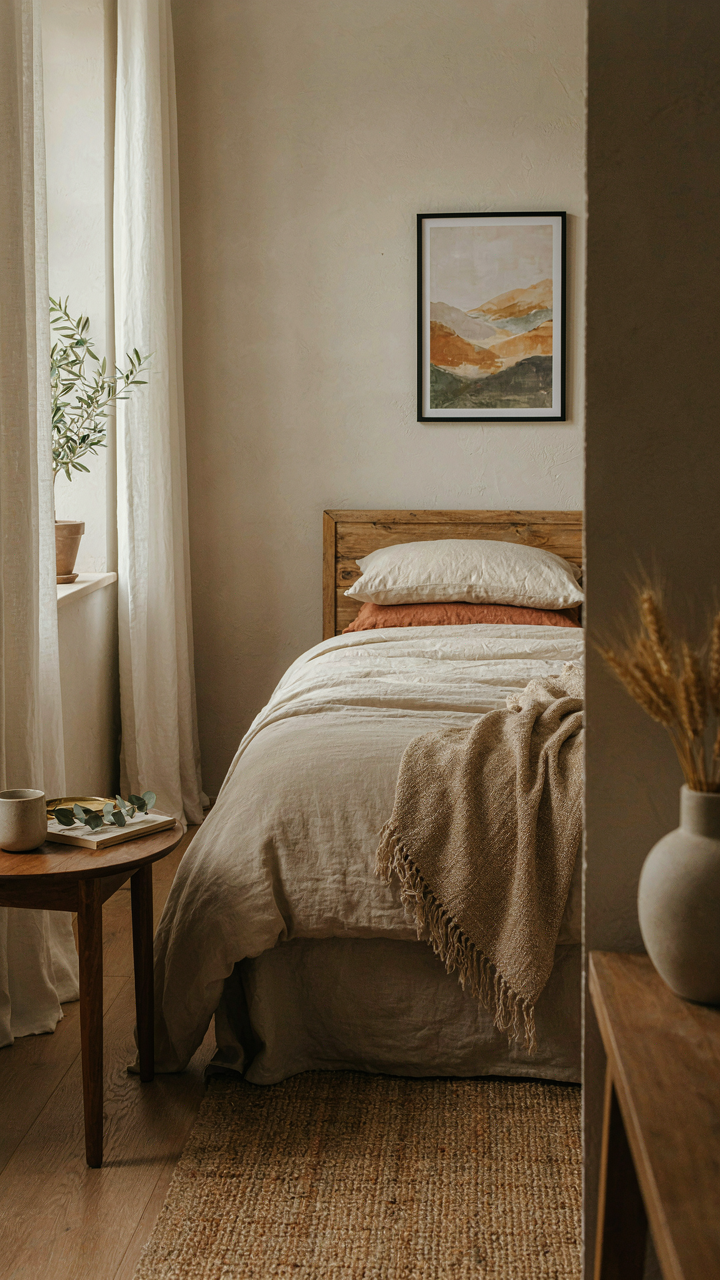
Most people design their modern rustic bedroom for the Instagram version of themselves. They buy the aesthetic and ignore the function. Your bedroom either protects your nervous system or it doesn’t. Raw wood, warm lighting, and natural textures aren’t decoration choices. They’re neurological tools. Walk into one room right now and remove the thing that feels out of place. That single decision matters more than any purchase ever will. Your bedroom works when you stop thinking about how it looks and start feeling how it heals.