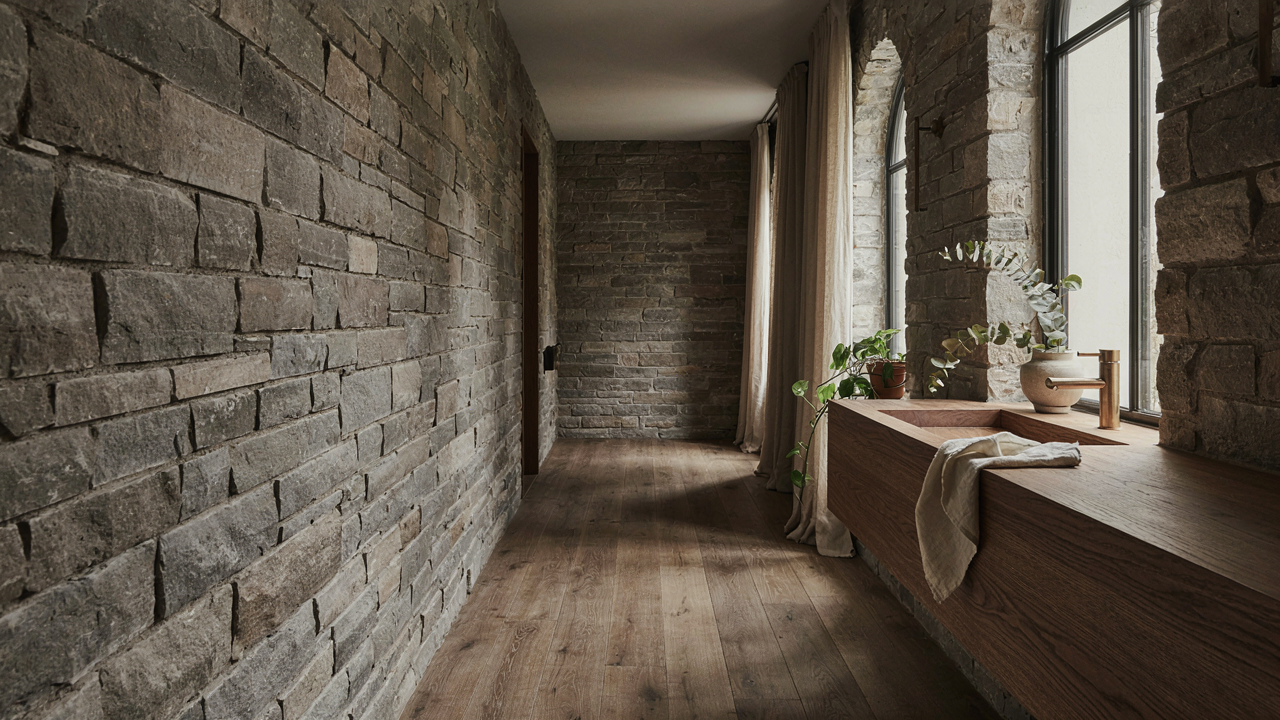
The Material Deception: Why Stone & Wood Aren’t Just “Pretty”
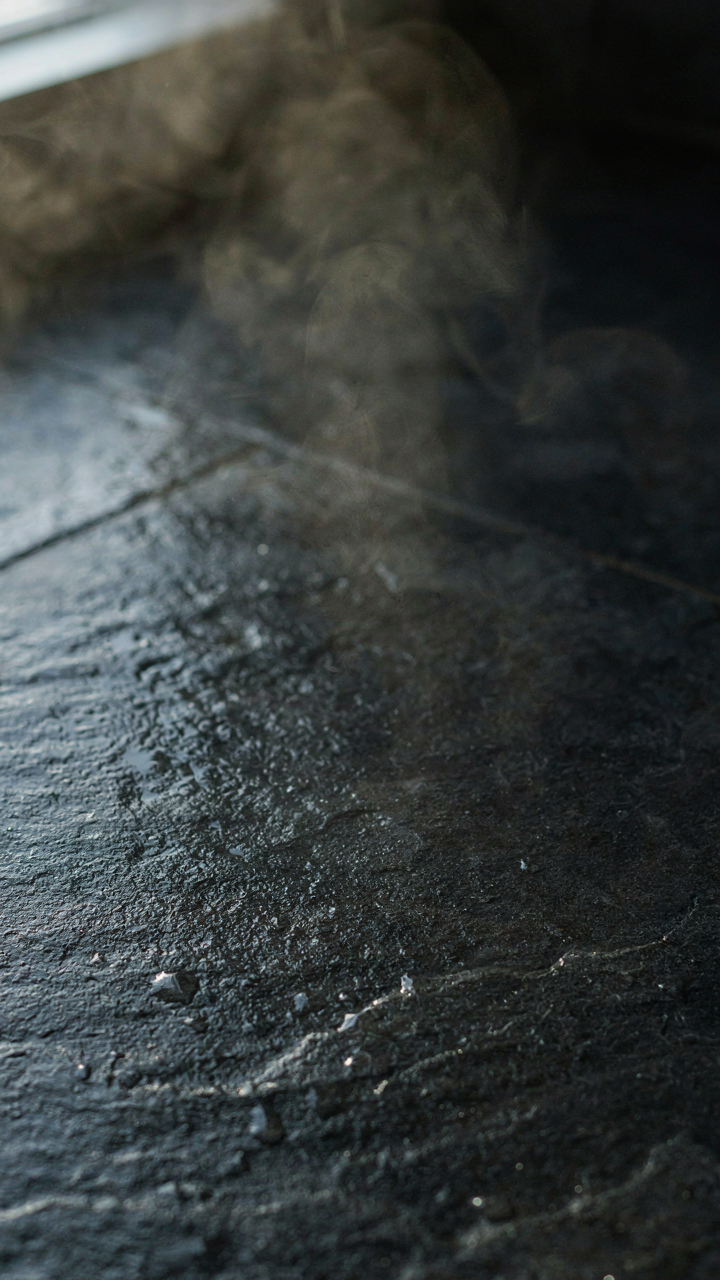
Stone Absorbs And Releases Heat On Its Own Schedule
You want stone in your bathroom because it looks intentional. But the real reason to spec it is thermal mass—a physics term meaning materials store and release energy over time. Stone does this constantly. It absorbs heat when your shower runs hot, then radiates that warmth back into the room after you leave. This isn’t decoration. This is climate control baked into the material itself.
Slate, granite, and marble all perform differently here. Slate holds heat longer than granite. Marble cools faster but distributes warmth more evenly across surfaces. The mechanism is simple: dense materials with high specific heat capacity take longer to warm up and longer to cool down. Your bathroom floor won’t frost over after a hot shower if you’ve used proper stone. The humidity stays stable because the stone absorbs moisture vapor, then releases it gradually as temperature shifts. This is why old bathrooms with stone floors feel less clammy than tile-only rooms.
Wood Breathes When Air Pressure Changes
The common advice says wood rots in bathrooms, so avoid it entirely. That’s incomplete. Wood responds to humidity fluctuations like a living membrane—this is hygroscopy, a term from materials science. Wood fibers absorb moisture when humidity rises and shed it when humidity drops. In a modern rustic bathroom, this means wood paneling or vanities actively regulate air moisture, not passively sit there looking rustic.
The catch is species and finish. Untreated softwood warps and deteriorates. Sealed hardwoods like teak or white oak resist moisture while retaining hygroscopic properties. When you finish wood with proper sealant, you’re not killing its ability to breathe—you’re controlling the rate at which it absorbs and releases moisture. Install wood where ventilation already exists, not where water pools. A wood vanity base survives in a modern rustic bathroom because air moves around it, not because you got lucky.
Beyond Beige: The Modern Bathroom Green Infusion Protocol
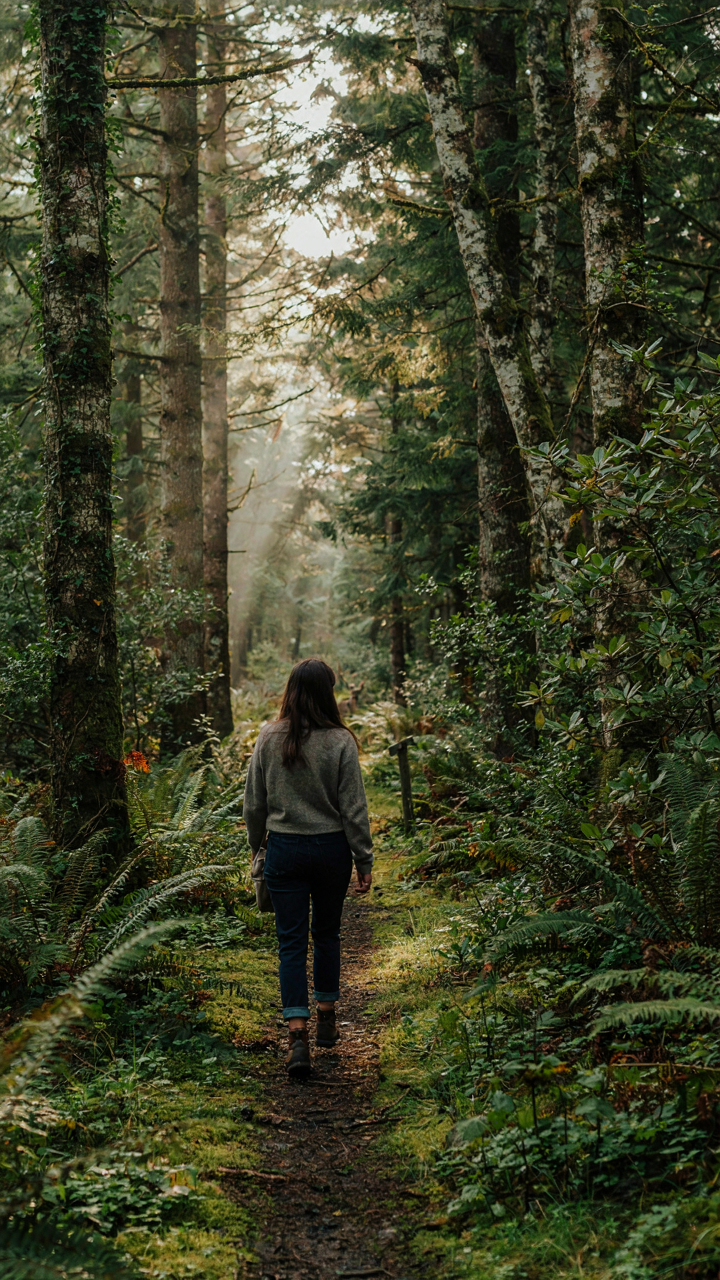
Why Deep Green Works In Stone And Wood Spaces
You want green in your bathroom because you’ve seen it work in high-end hotels and you’re afraid beige makes you look like you gave up. Here’s the mechanism: biology, not aesthetics. Deep greens trigger the parasympathetic nervous system, the same response that calms you during walks in forests. In modern rustic bathrooms with exposed stone and warm wood, deep greens act as a visual anchor that prevents the space from feeling chaotic. The stone provides neutrality, the wood provides warmth, and the green provides neurological relief.

The reason this works better than soft pastels is contrast and saturation. Pale greens disappear against light stone and fade into the background clutter of your bathroom vanity. Deep greens, particularly forest and hunter tones, create a focal point without fighting the natural materials. Pair them with charcoal grout on stone walls or let them emerge through a single accent wall behind your vanity. The green stops the eye deliberately, which makes everything else feel intentional.
Strategic Placement Over Saturation
Everyone dumps green everywhere and ends up with a forest that feels like humidity trapped in tile. The correct move is restraint through positioning. Choose one primary zone: behind the vanity, as a feature wall with stone cladding, or as grout color in a stone accent. This single location becomes the design anchor. The rest of the bathroom supports it through neutral stone, warm wood tones, and clean fixtures.
Green works best when it competes with the strongest visual element in the room, not every surface. If your stone wall already commands attention, green works as a secondary detail through towel bars, a single piece of cabinetry, or accent lighting that highlights the stone texture. If your space lacks a dominant feature, make green the dominant feature and let the wood and stone recede into supporting roles. The rule is simple: one green zone, everything else earthy and neutral.
The Primitive Contrast Method: Stone Bathroom Shower & Wood Integration
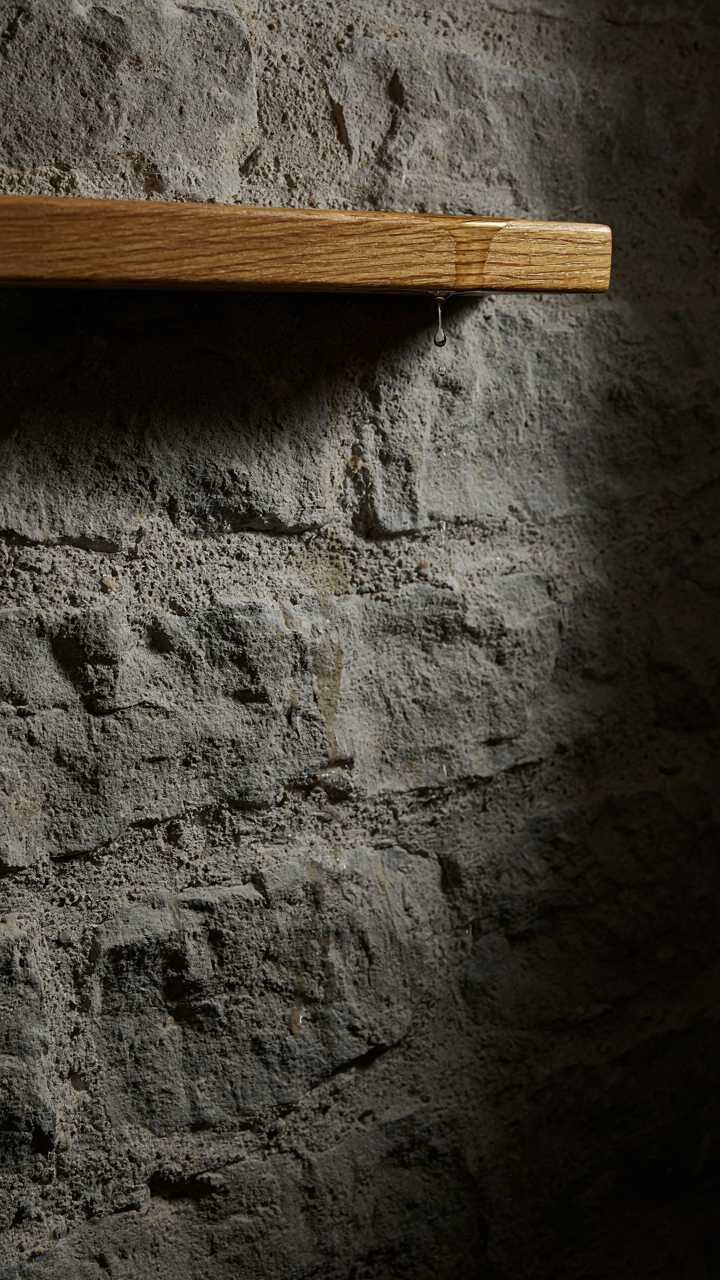
Rough Stone Against Smooth Wood
You want this to look intentional, not like you grabbed whatever materials were on sale. The real mechanism is tactile opposition: rough stone absorbs light and stops the eye, smooth wood reflects it and moves the eye forward. This creates depth without adding square footage.

Stone’s texture comes from its formation, not finishing. Slate, granite, and limestone all fracture along natural planes, which means you cannot smooth them into uniformity without losing what makes them worth using. Pair this against finished wood—typically sealed cedar, teak, or reclaimed barn wood—and the contrast becomes architectural rather than accidental. The stone grounds a space. The wood humanizes it.
Visual Hierarchy Through Material Placement
Most bathrooms treat stone and wood as equal weight. Wrong. In graphic design, contrast creates hierarchy. Apply the same logic: make stone the dominant background, wood the secondary accent. This prevents the space from feeling chaotic or overstuffed.
Install stone as your shower wall surround or floor base. It handles moisture, establishes a visual anchor, and claims the largest surface area. Wood enters as a frame, shelf, or vanity front—always in smaller quantities and always where it won’t experience direct water spray. The eye reads the dominant material first, understands the space second. Position wood to interrupt stone strategically, not to compete with it. This is the difference between a designed bathroom and one that just happened to have both materials in it.
Reclaiming The Natural Master Bath: Light, Air, And Water Flow
Windows And Daylight Positioning
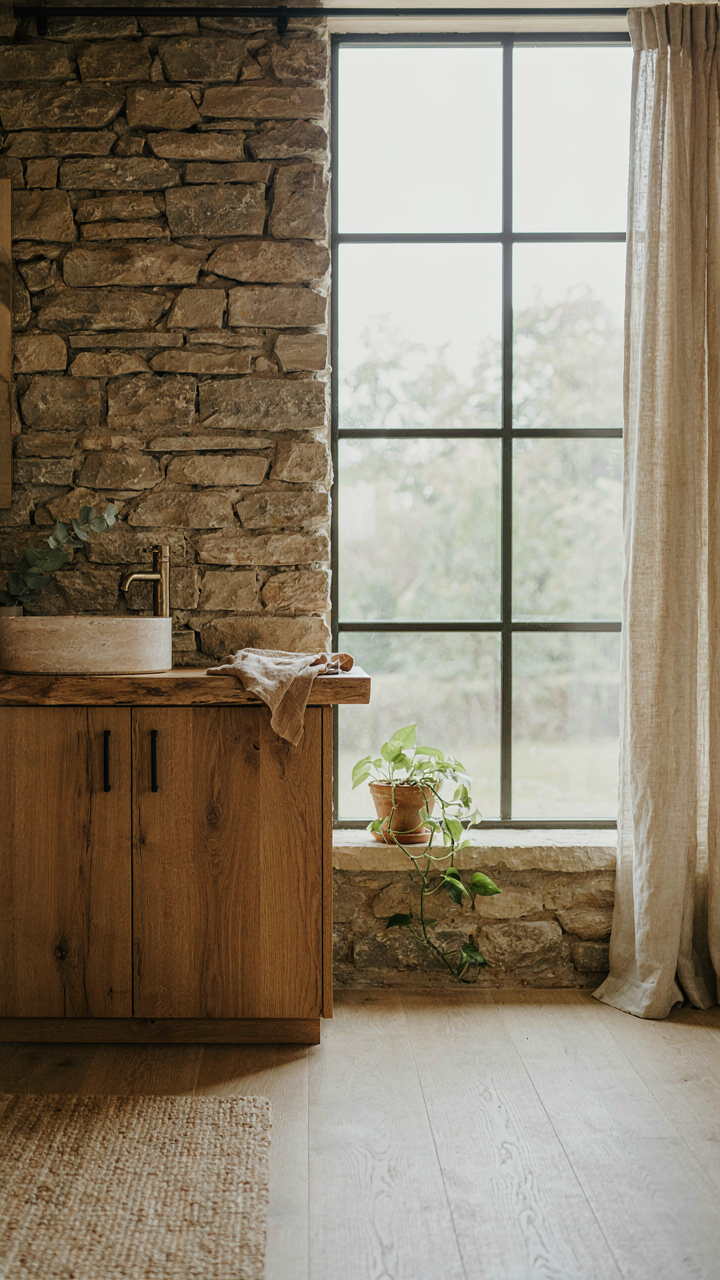
You want this bathroom to feel expensive without trying. That signal comes from light quality, not fixtures. Circadian biology shows your body tracks light wavelength and intensity to regulate cortisol and melatonin. Position windows on the east or south wall to catch morning or midday sun. Stone and wood absorb and reflect light differently depending on angle and time, so placement matters tactically.
North-facing windows deliver flat, consistent light that won’t bleach wood finishes or create harsh shadows on stone textures. If your only option is west-facing, install exterior shading or frosted glass to kill afternoon heat gain without losing the light you need. The goal is directional control, not maximizing brightness. Your master bath should feel like a specific time of day felt good, not like you’re standing in a showroom.
Air Movement And Humidity Control
Most bathroom ventilation advice ignores sensory experience entirely. Exhaust fans pull moisture out, but they create dead air. Strategic ventilation means designing cross-flow. If you have windows on opposing walls, crack both during and after showers to establish actual air movement instead of stagnant suction. This keeps stone and wood from absorbing excess moisture that breeds mold and degrades finishes.
Size your exhaust fan to CFM requirements for your square footage, but position the intake and exhaust strategically. Place intake vents near the shower or tub where moisture concentrates. Route exhaust through exterior walls, not into attics. Humidity should move through and out, not linger. Install your fan on a humidity sensor timer so it runs only when needed. This prevents the sealed, sterile feeling typical bathrooms create while actually protecting your materials.
The Sensory Architecture Of Green Shower Bathroom Spaces
Texture Contrast In Green Tile Design
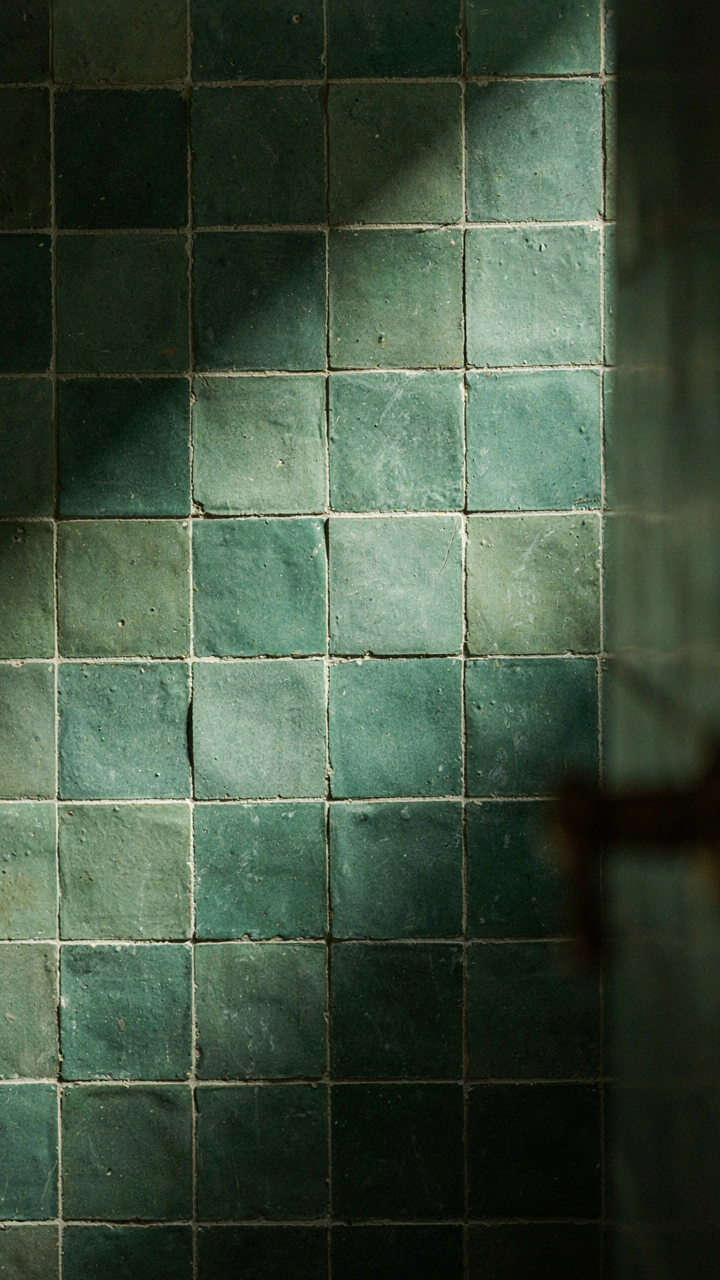
You want this space to feel expensive without looking like you tried too hard. The real mechanism is friction: your eye and hand need resistance to register quality. Smooth surfaces alone read as cheap. Green tile in modern rustic bathrooms works because the material itself creates a conversation between matte and subtle gloss. Slate, penny round ceramic, or handmade zellige tiles interrupt light unevenly. This imperfection signals craft, not mass production.

The texture strategy isn’t about random mixing. You’re layering one primary green tile with one complementary surface. Matte subway green paired with rough-hewn stone ledges. Or polished celadon against tumbled limestone. The shower surround becomes tactile architecture. When a guest runs their hand across it, the neurons fire differently than they do on uniform surfaces. That’s the sell.
Sound Absorption In Natural Materials
Acoustic engineering teaches us that hard, reflective surfaces amplify sound while porous materials dampen it. In the modern rustic bathroom, water noise becomes a design problem most people solve wrong. They tile everything and wonder why the shower roars. Stone and wood don’t just look intentional; they absorb the frequencies that make bathrooms feel clinical.
Rough-faced stone walls around the shower reduce reverberation. Wood paneling, if sealed properly for moisture resistance, breaks up sound reflection that tile alone cannot. Install stone or wood on at least two perpendicular surfaces within the shower zone. This creates an acoustic pocket. The result feels contained, personal, less institutional. Water running becomes ambient noise instead of assault.
Lavatory Ideas: The Unseen Psychology Of Water Fixtures
Water Flow As A Neurological Anchor
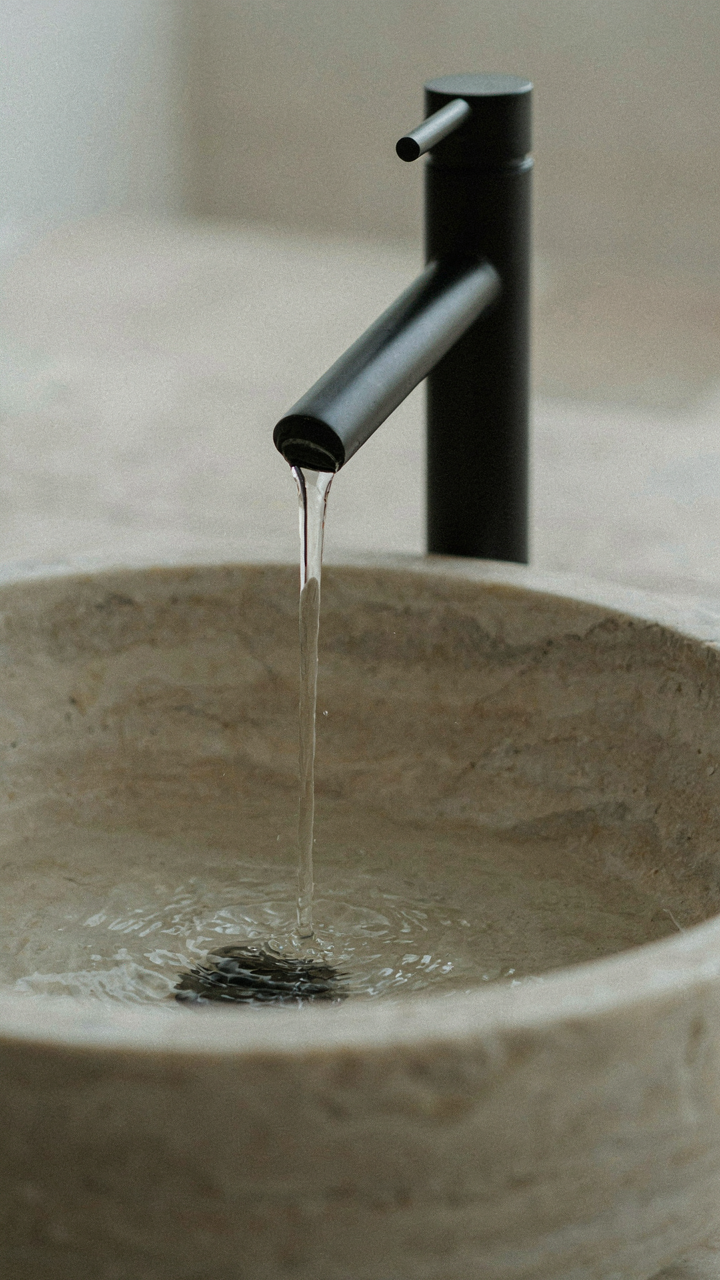
You’re reading this because you sense your bathroom experience matters more than you’re willing to admit. The real mechanism: flowing water triggers your parasympathetic nervous system through rhythmic auditory input, the same cybernetic feedback loop that regulates breathing and heart rate. In cybernetics, feedback is information that loops back to control a system. Your faucet’s water pattern becomes that feedback. A steady, predictable stream creates homeostasis. Erratic flow creates cognitive load your brain has to process, even subconsciously.

Modern rustic bathrooms exploit this by pairing natural stone basins with faucets that deliver consistent, laminar flow. The stone amplifies and softens the acoustic signature simultaneously, which is harder to engineer than it sounds. Stone’s porosity absorbs high frequencies while its mass reflects low frequencies, creating a sound profile your nervous system recognizes as “natural.” This isn’t atmospheric design thinking. It’s applied neurology. Install your faucet to deliver water at a 15 to 20-degree angle to the basin surface, not straight down, to maintain auditory consistency across usage patterns.
Fixture Design That Rewires Your Hand Behavior
Most faucet advice focuses on looks. That’s incomplete. Ergonomic faucet design directly shapes hand positioning, which determines water temperature perception and mineral deposit location on your skin. Your hands move to where the faucet’s geometry allows them to move. A fixture with a lower spout angle forces your wrists into supination, which reduces fine motor control and increases water splashing. A higher angle, paired with a wider base, keeps your wrists neutral and concentrates water flow to the drain, not the countertop.
Matte black or oil-rubbed bronze fixtures in modern rustic bathrooms work because their texture provides tactile grip feedback without requiring conscious thought. Your hand naturally grips slightly tighter on textured surfaces, triggering proprioceptive awareness of your position. This prevents the common problem of fixture handles becoming deposition points for mineral buildup and soap scum. The tactile signal tells your brain where the control is before you see it. Specify fixtures with handles positioned at 45 degrees from vertical, not perpendicular, to support natural hand approach angles during the morning and evening routines most people actually perform.
The Proportionality Principle: Big Bathroom Sink Ideas Done Right
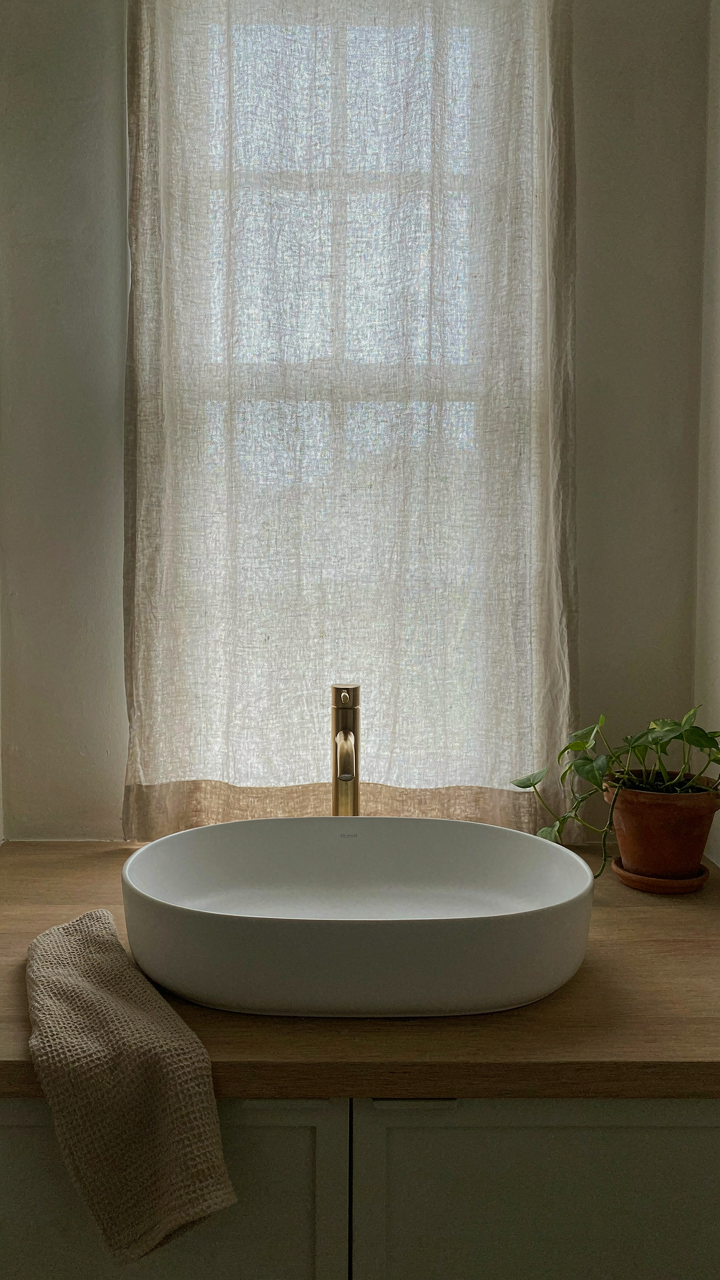
When Your Sink Overwhelms The Room
You want a statement sink because you think it signals taste. It doesn’t. A sink that dominates your bathroom signals poor spatial math. The real mechanism is borrowed from architecture: load-bearing capacity. A sink’s visual weight must match the room’s capacity to hold it without collapse of visual hierarchy.
Bathroom square footage determines sink scale. A 40-inch vessel sink in a 35-square-foot bathroom creates tension that reads as wrong before your brain names why. A 24-inch basin in the same space breathes. The sink should occupy 15-25% of your vanity countertop, not dominate it. Wood vanities in modern rustic design need restraint, not maximum stone or ceramic.
Basin Form Dictates What Actually Works
The common advice says choose the basin style you love first, then build around it. Wrong. Function controls form in modern rustic bathrooms. An undermount basin hides its rim, making the countertop dominate. A vessel sink makes the basin the focal point. A drop-in sink splits visual weight equally between rim and countertop. Your bathroom’s wall space and lighting determine which one functions.
Stone countertops with wood bases demand specific basin logic. Stone’s visual weight needs a lighter basin form, or you stack heavy on heavy. Vessel basins work here because they lift visually off the surface. Undermount basins work when the wood vanity is thin and minimal. The basin’s depth also matters: deeper basins in smaller bathrooms eat counter space and create awkward reach angles. Install a 14-16 inch basin depth for 36-42 inch vanities, not 18-20 inches.
Bright Bathroom Remodel: The Illumination Imperative
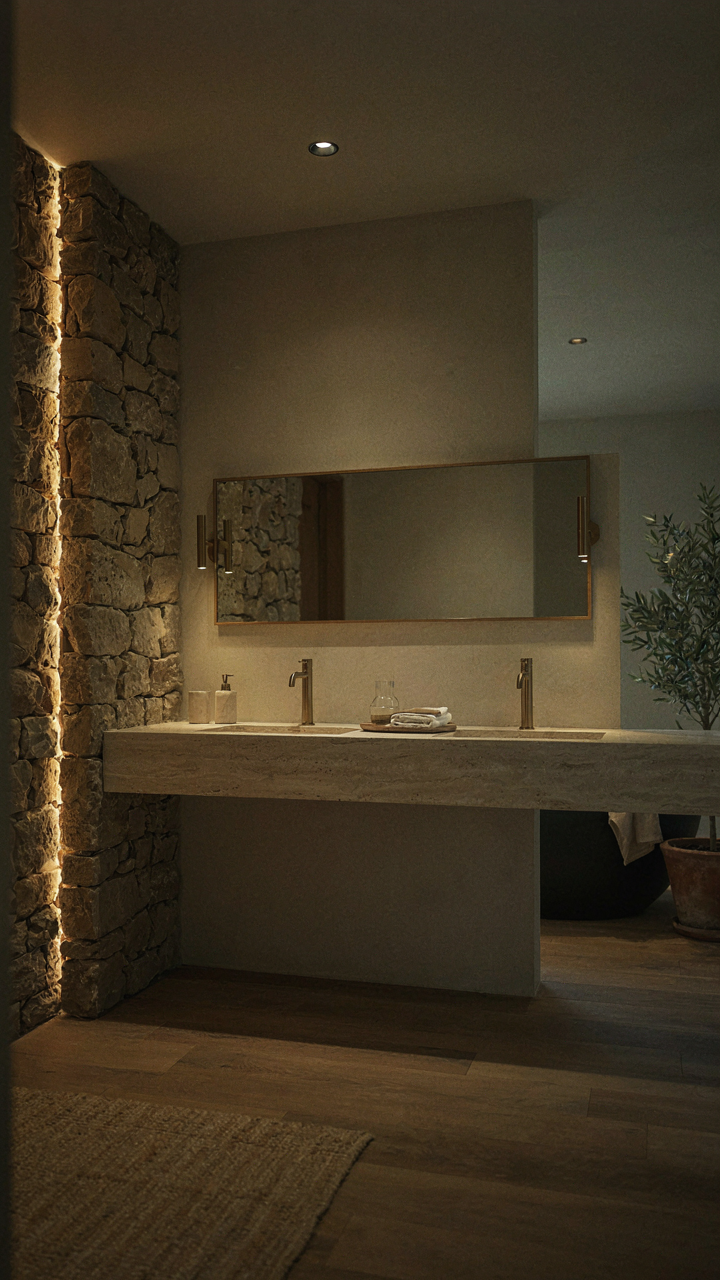
Layered Lighting For Mood Modulation
You want people to feel something when they walk into your bathroom, and you’re hoping light does the work for you. Here’s the mechanism: layered lighting works like frequency separation in audio production. Different light sources at different intensities and color temperatures occupy different visual bands, so your eye processes depth instead of flatness. A modern rustic bathroom needs this separation to stop feeling like a hospital or a hotel hallway.
The standard advice is “add three light sources.” That’s incomplete. You need task lighting at the mirror for function, ambient lighting for the room volume, and accent lighting that hits your stone or wood at an angle that shows texture. Task light goes at eye level flanking the mirror, 36 to 40 inches from the floor. Ambient light comes from ceiling or high wall placement, 7 to 10 feet up. Accent light grazes your materials from the side or above. Each operates on a separate dimmer circuit so you control them independently.
Strategic Light Against Visual Clutter
Most rustic bathrooms fail because they treat lighting as decoration instead of as the tool that either reveals or hides every flaw in the space. Light is a signal amplifier. Whatever you illuminate, you emphasize. Whatever you leave dim, your eye ignores.
- Recessed fixtures above vanities: Position these 24 inches from the mirror surface, angled down 15 degrees. This kills shadow on the face and prevents the mirror from becoming a dark reflective void.
- Linear under-cabinet strips: Place these along vanity bases to float the cabinetry visually and reduce the mass of solid wood. Use 3000K color temperature to match warm wood tones.
- Uplighting on stone features: Mount small fixtures behind or below your stone wall or accent feature. This creates separation between surfaces and prevents visual noise from competing textures blending together.
- Dimmers on all circuits: Non-negotiable. A bright bathroom at midnight and bright at dawn are two different experiences. Dimming is how you control perceived scale and mood without adding or removing fixtures.
- Fixture finish matching materials: Choose bronze or aged brass fixtures to echo wood and stone tones. Chrome and polished nickel fight against rustic textures and introduce visual contradiction.
The outcome is not more light, but cleaner light. You cut visual noise by directing illumination where it matters and letting the rest fall into shadow. This makes a small bathroom feel intentional instead of cramped, and a large bathroom feel cohesive instead of scattered. Install each circuit on its own dimmer and test all combinations before finishing.
Green Tile Bathrooms: The Subtlety Of Lasting Impact
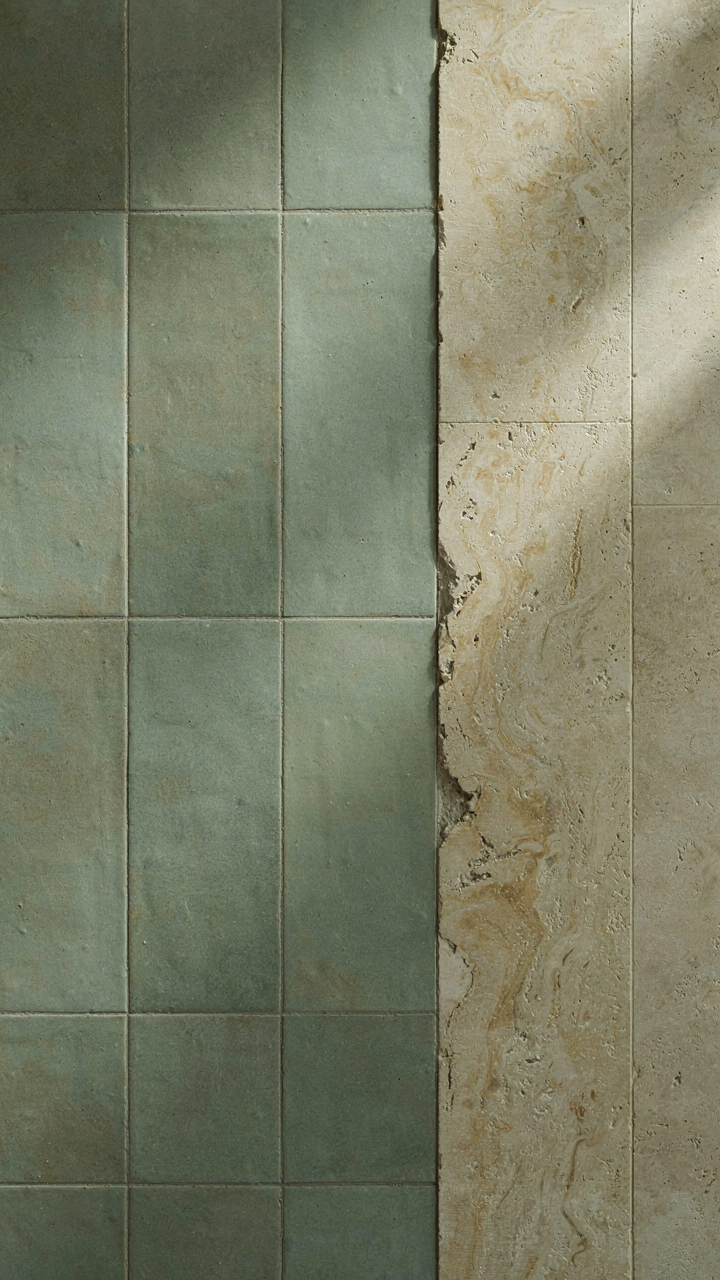
Enduring Green Tile Choices Without The Trend Collapse
You want green tile because it signals taste and restraint. The mechanism that kills most green tile bathrooms is saturation. When everyone uses the same sage or seafoam, your bathroom becomes dated the moment a new palette enters magazines. The solution isn’t to chase rarity. It’s to pick green tile based on undertone stability, not fashion cycle. Warm greens with ochre undertones age better than cool greens because they anchor to natural materials like wood and stone instead of floating as a statement.
Matte finish green tile outlasts glossy. Gloss shows water spots, soap residue, and footprints within weeks. Matte hides these marks and maintains its original appearance for years. The best modern rustic bathrooms pair muted green tile with natural stone accents in complementary earth tones. This combination creates visual weight that prevents the space from feeling trendy or temporary. Your tile choice becomes invisible to trends because it works with geology, not against fashion cycles.
The Actual Maintenance Reality Of Natural Materials
Everyone says natural materials require “more care.” That’s vague and useless. Here’s what actually happens: stone and wood expand and contract with humidity. Your modern rustic bathroom has higher moisture than living spaces. Grout between green tile absorbs water and grows mold if you don’t interrupt the cycle. Sealing grout every 18 to 24 months stops this. Without sealing, you’re fighting biology, not maintaining aesthetics.
Wood elements in a bathroom don’t rot from use. They rot from standing water and poor ventilation. Install an exhaust fan rated for your bathroom’s square footage and run it during and 20 minutes after every shower. Wipe down wood surfaces weekly with a dry cloth. Natural stone tile demands the same grout maintenance as ceramic, but stone itself doesn’t degrade from water contact. The hidden mechanism is ventilation: poor airflow kills everything in a bathroom; good airflow extends the life of all materials by decades.
The True Luxury Isn’t The Finish; It’s The Environment’s Unburdening Effect On Your Nervous System
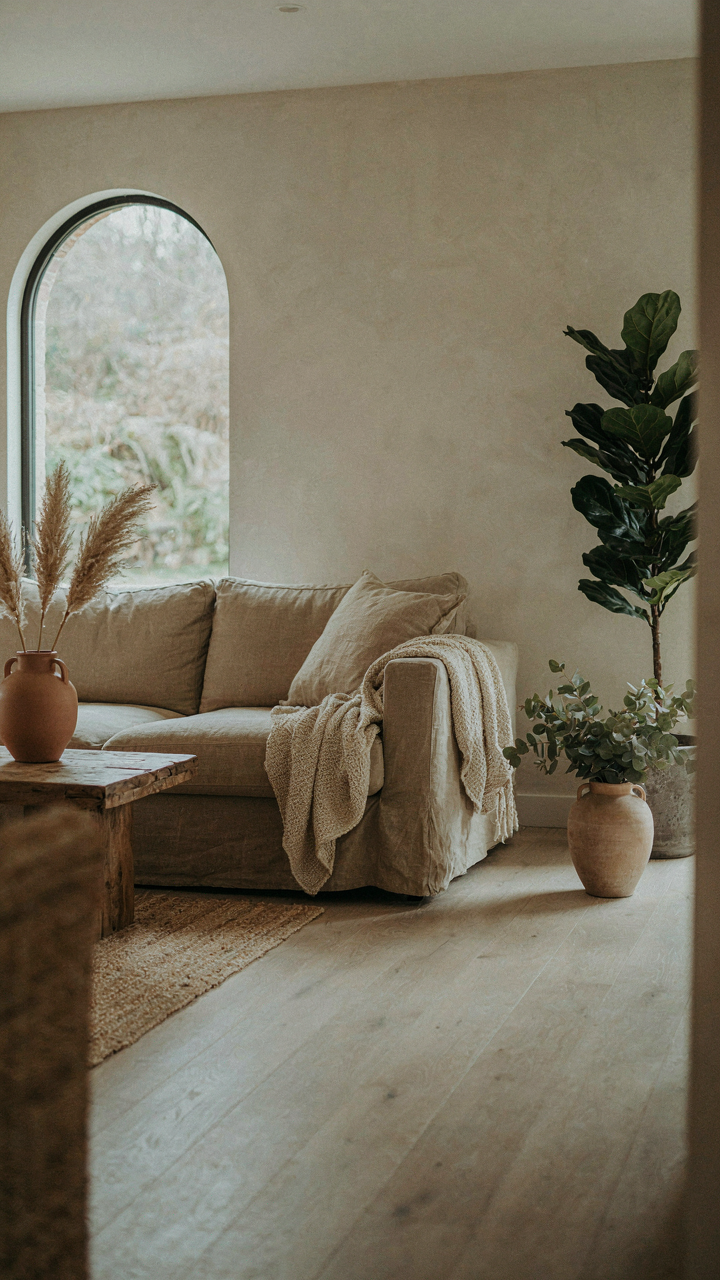
Most people chase aesthetics. They buy the reclaimed wood and the stone and call it done. That’s not luxury, that’s decoration. Real luxury is a space that stops your mind from racing the moment you walk in. Modern rustic bathrooms work because they trigger something primal in you. Raw materials, honest textures, minimal noise. Your body recognizes safety. Today, pick one element in your bathroom that feels fake and replace it with something real. The rest follows. Your nervous system doesn’t lie about what it needs.