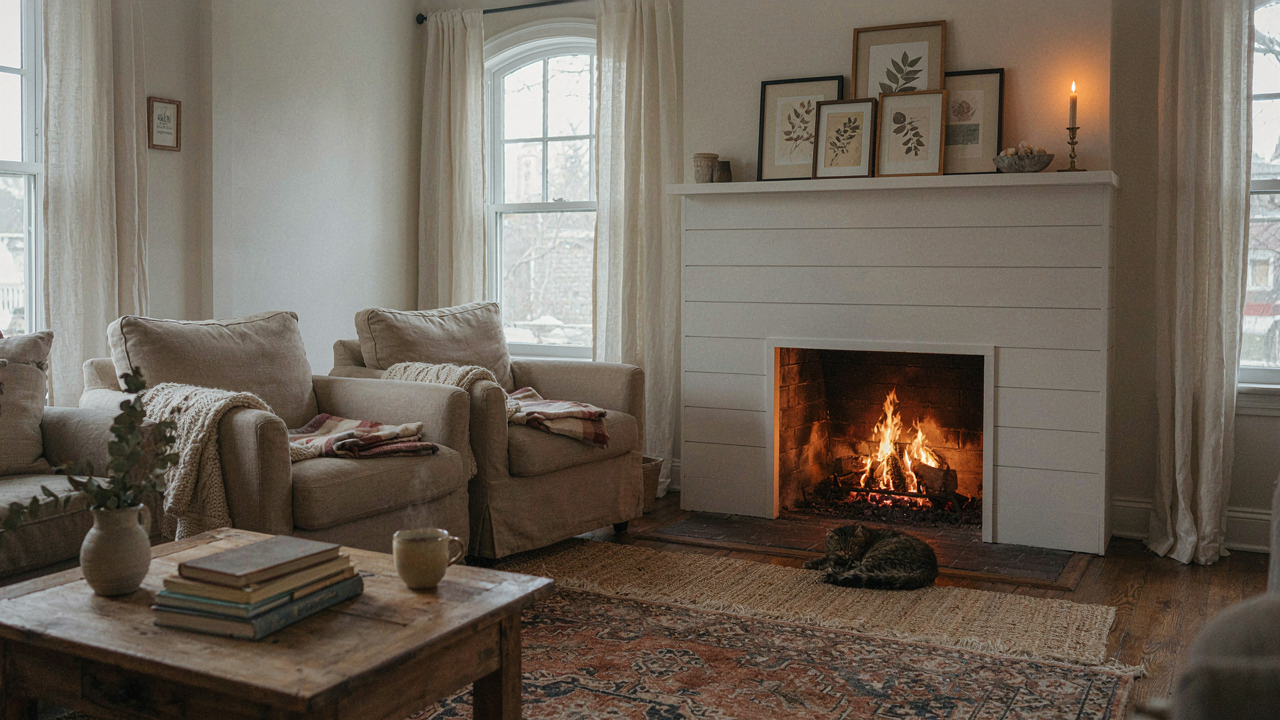
The Shiplap Fireplace Fallacy: Why “Cozy” Is Overrated
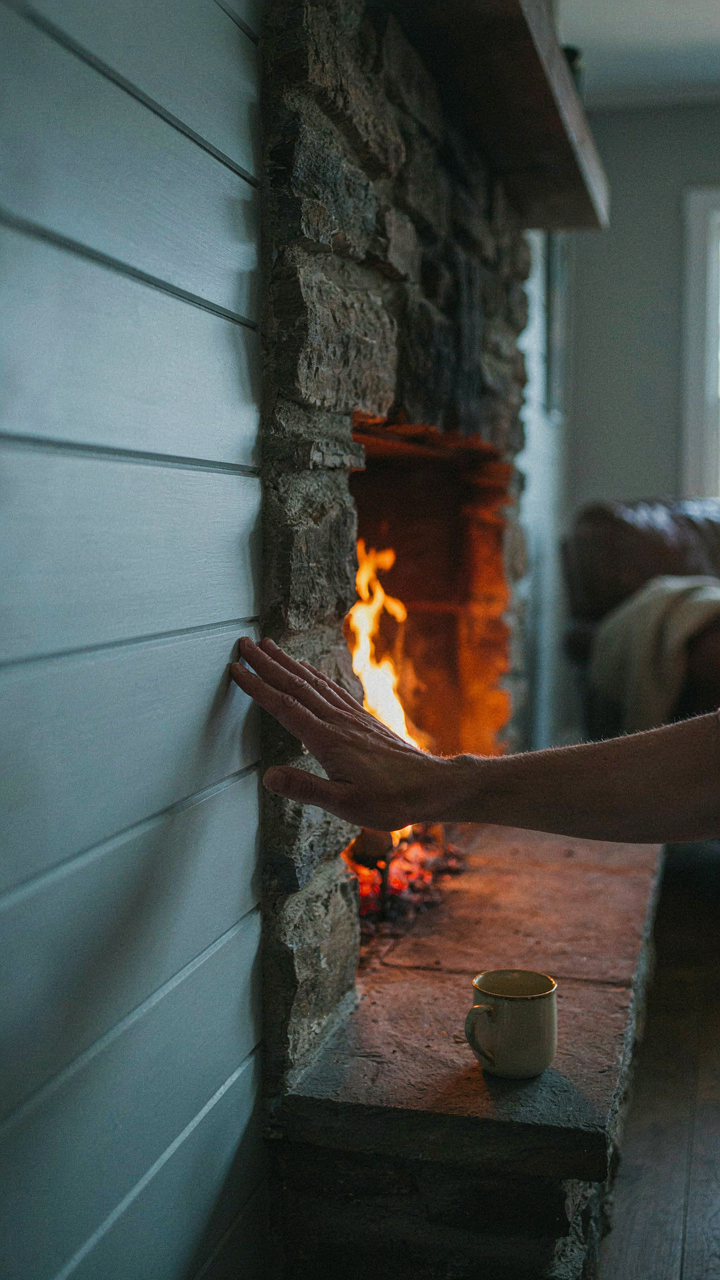
The Warmth Illusion Nobody Names
You want people to feel something the moment they walk into your room, and you think a shiplap fireplace delivers that sensation automatically. It doesn’t. Shiplap around a fireplace is pure theater. The boards themselves conduct heat poorly and sit far enough from the actual fire source that they stay cool to the touch. What you’re actually buying is the idea of warmth, which is a social signal, not a thermal one. Your brain sees rustic wood, thinks “farmhouse,” and assigns comfort retroactively. The fireplace itself generates heat. The shiplap just narrates the story you want people to believe about your space.
The real mechanism here borrows from stage design: you’re creating a focal point that anchors attention before guests process temperature or actual functionality. Shiplap works because it breaks visual monotony and frames the fireplace as intentional rather than incidental. But here’s what gets left out of design blogs: if the fireplace isn’t positioned correctly for heat distribution, or if your room has poor insulation, all the shiplap in the room won’t change comfort levels. You’re decorating a problem instead of solving it. Start by verifying your fireplace actually warms the space. Then add shiplap.
Function Before Finishing
Most design advice skips this entirely, and it costs homeowners money and frustration. Shiplap installation around a working fireplace requires specific clearance from heat sources, proper fire-blocking materials behind the boards, and ventilation planning that prevents moisture trap buildup. Standard horizontal shiplap (the farmhouse default) will warp if exposed to temperature cycling without a vapor barrier behind it. Vertical or angled shiplap performs better near active heat, but few contractors mention this because it costs more labor to install.
The second layer: shiplap finish matters more than style around a fireplace. Paint-grade pine absorbs soot and smoke staining faster than primed or sealed options. If you run your fireplace regularly, unfinished or poorly sealed shiplap will gray and discolor within months, creating maintenance work nobody budgets for. Choose materials rated for high-temperature exposure and apply a non-flammable primer before any final finish. Measure your fireplace’s heat radius first, then select shiplap materials that can handle that environment.
Deconstructing The Farmhouse Aesthetic: It’s Not Just Shiplap

What Actually Anchors A Room
You want shiplap because you think it signals taste and restraint, but you’re really afraid of looking like you tried too hard. The mechanism is simple: shiplap alone reads as surface treatment. The fireplace becomes a focal point only when you stack material contrast against it. Stone, brick, or plaster underneath the boards creates depth. Paint color on the shiplap matters less than the texture variation it creates with adjacent surfaces. A fireplace surround with uniform material and uniform finish disappears into the wall.

Material hierarchy is borrowed from architecture, where load-bearing elements anchor a structure. On your fireplace, the same principle applies: one material should dominate visually, then secondary materials break that dominance. If shiplap covers the entire surround, add a mantel in reclaimed wood or metal. If shiplap frames only the opening, anchor the base with a different texture. The contrast is what commands attention, not the boards themselves.
When Farmhouse Becomes Costume
The common advice says to layer in vintage accessories and neutral tones. That’s incomplete. Farmhouse stopped being an aesthetic and became a formula the moment mass retailers packaged it. You can own a shiplap fireplace without participating in that formula. The distinction: intentional material choices versus decoration borrowed from a mood board. A shiplap fireplace in a modernist home reads differently than one in a cottage because context determines meaning, not the material alone.
Avoid thematic clichés by removing anything that exists only because it’s “farmhouse coded.” Distressed finishes, oversize typography, and galvanized metal accessories exist as signals, not solutions. They solve nothing. Instead, choose materials that perform a function first and happen to fit the aesthetic second. A working fireplace surround in shiplap needs a mantel that holds weight, protection from heat damage, and a base that resists moisture. Build those requirements first, then notice whether the result feels authentic or staged.
The Focal Point Protocol: Commanding Attention With Your Shiplap Accent Wall
When Size Betrays Your Intent
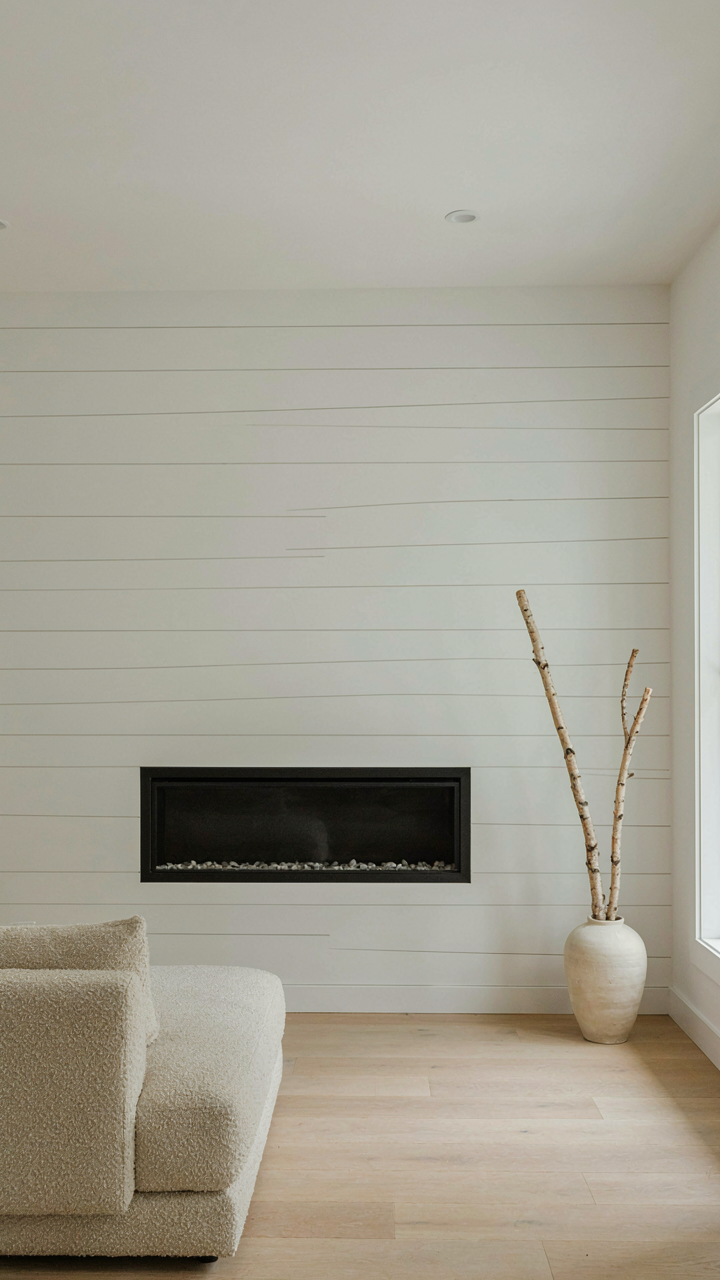
You want people to walk into your room and see the fireplace first because you’re afraid they’ll miss it entirely and judge your taste based on whatever else they land on. That’s the real issue. Here’s the mechanism: scale in architecture works like contrast in design. A shiplap fireplace wall must occupy between 25 and 40 percent of the room’s visible wall space to register as primary. Go smaller and it competes with furniture. Go larger and it dominates to the point of discomfort. The common mistake is treating shiplap as decoration rather than proportion. A properly scaled fireplace wall anchors the entire room’s visual weight without requiring paint tricks or accent colors.

The vertical dimension matters more than the horizontal. Shiplap runs horizontally, which creates visual width. But your fireplace opening itself pulls the eye vertically. Stack your shiplap high enough to create ceiling-to-mantel continuity, and you’ve established authority over the space. Most people stop at chair rail height on surrounding walls and cut off the fireplace wall early. That fractures the focal point. Extend the shiplap from hearth to ceiling uninterrupted. This single decision determines whether your fireplace commands the room or just occupies it.
Visual Hierarchy Demands Strategic Sacrifice
Placement is not about where the fireplace looks best in isolation. It’s about which walls in the room create the strongest sightline the moment someone enters. In retail design, we call this the “power wall” principle. Your shiplap fireplace should occupy the wall that every entry vector naturally terminates at. This is usually the wall opposite the primary entrance, but not always. Map your actual traffic patterns. If people enter from the side, a perpendicular fireplace wall creates a jarring pause. Align it with the natural eye path and you’ve eliminated cognitive friction.
The surrounding walls must recede visually. Don’t install shiplap on multiple walls in the same room. The consensus advice says “shiplap everywhere for farmhouse authenticity,” which is how rooms become visually chaotic. Use your shiplap fireplace wall as the anchor, then treat adjacent walls with restraint—flat paint, minimal texture, or complementary materials at lower visual weight. This subordination makes the fireplace impossible to ignore. Your fireplace owns the hierarchy because you’ve stripped competing elements of their visual authority.
Painting Shiplap: The Unseen Power Of Color Psychology
Beyond White: Unexpected Palettes
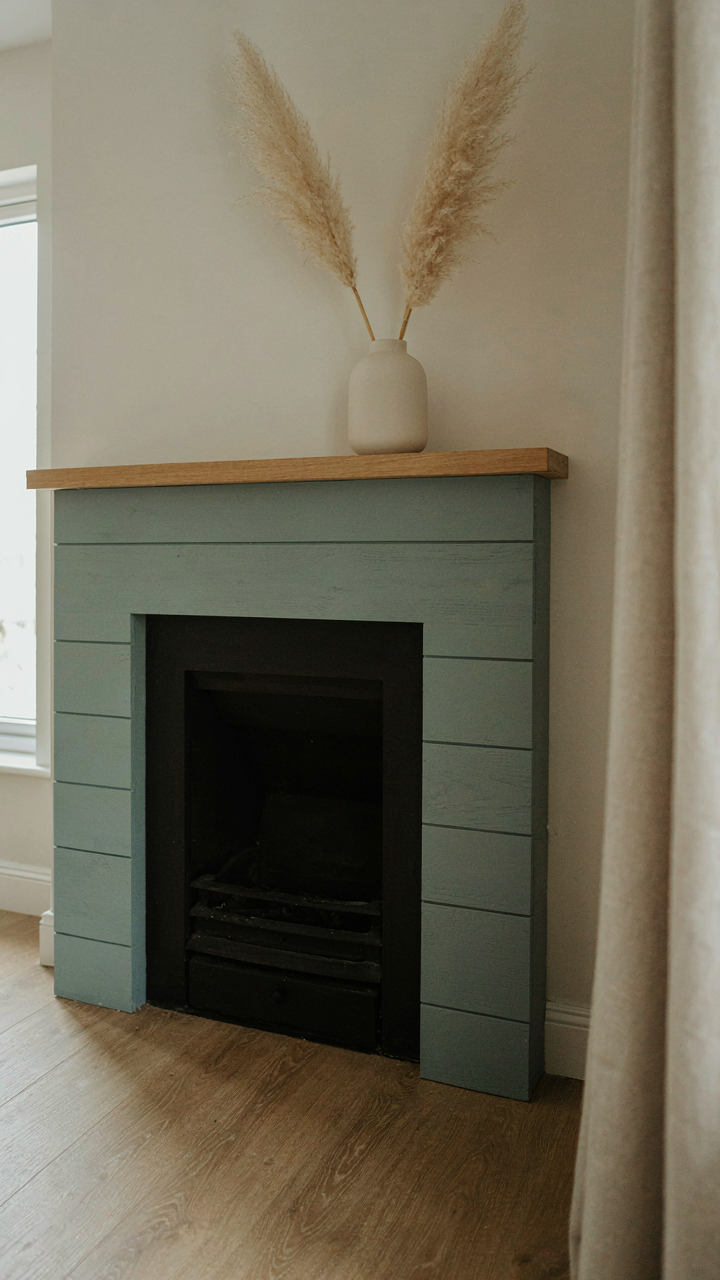
You’re reading this because white shiplap feels safe, and you’re terrified of picking the wrong color. Here’s what nobody says plainly: white shiplap is the default because it’s forgiving, not because it’s correct. Color psychology in interior design operates like contrast in photography—the surrounding hues determine how your fireplace reads in the room. A pale gray, warm cream, or even muted sage shifts the entire focal point’s emotional weight without requiring architectural changes.
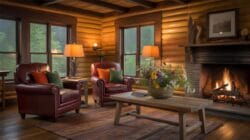
The farmhouse aesthetic doesn’t demand white. It demands restraint. Soft charcoal, warm taupe, or dusty blue shiplap behind a fireplace creates depth that white erases. These palettes still feel open but anchor the room with intention. The key mechanic: darker shiplap makes your fireplace surround recede slightly, forcing attention onto the hearth itself rather than the wall treatment. Lighter palettes do the reverse—they expand visual space but compete with the focal point. Test your chosen color on full boards in your actual lighting before committing to the entire wall.
Paint Finishes: Texture And Light Play
Finish choice controls how light behaves on shiplap grooves, which most people overlook entirely. Matte and flat finishes absorb light, softening the shadow lines between boards. Semi-gloss and satin finishes reflect light into those grooves, amplifying texture and creating micro-shadows that read as dimension. This is directional lighting applied through paint chemistry—the finish becomes a reflective tool, not decoration.
Behind a fireplace, matte or eggshell finishes dominate farmhouse design because they suppress glare from firelight and ambient room light. The trade-off: they’re harder to clean and show marks. Satin finishes offer a middle ground for maintenance while still controlling light reflection enough to preserve the shiplap’s texture without making it look plastic. Apply finish in even coats perpendicular to board direction. Stop here: choose your finish based on your actual cleaning tolerance and light sources in the room, not on trend.
Modern Farmhouse Fireplace: The Contrast Principle
When Old Collides With New
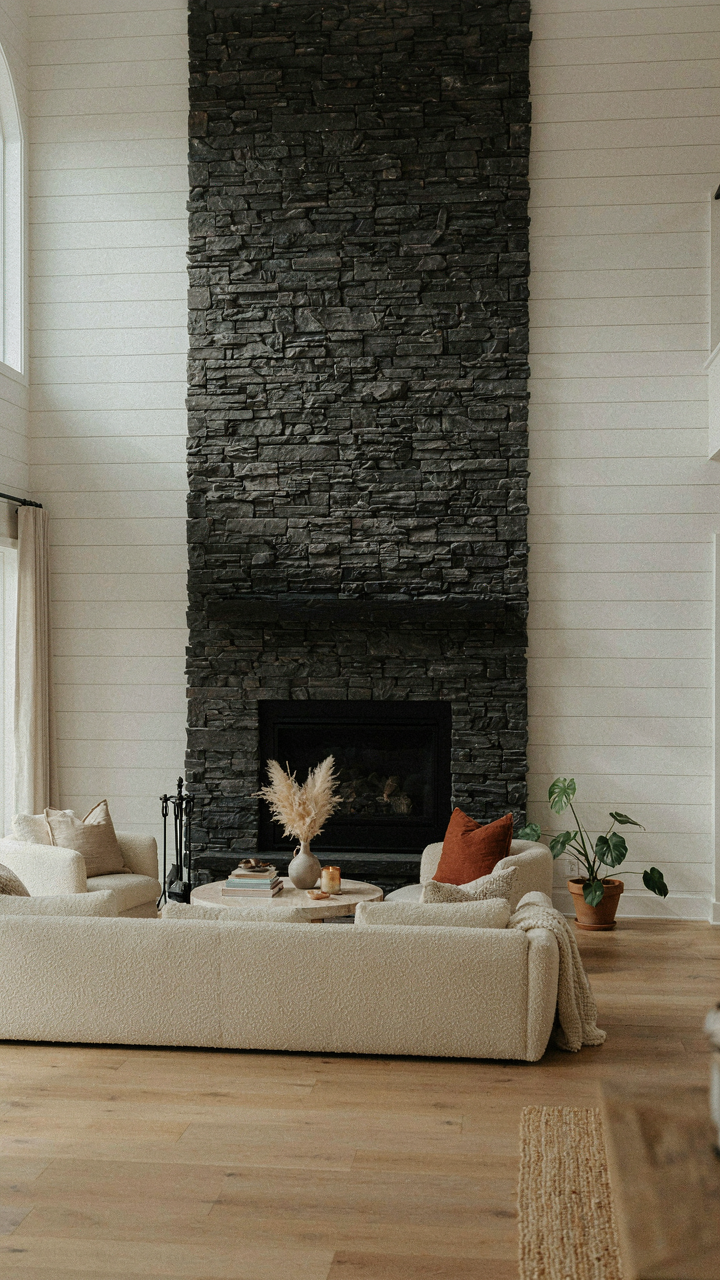
You want this fireplace to signal taste without screaming “I tried too hard.” The real mechanism is contrast. Designers call this visual tension in composition—borrowed from graphic design—and shiplap acts as the neutral field where opposing elements don’t cancel each other out but amplify each other instead. Shiplap’s uniform grid actually makes variance more visible, not less. Paint it white or soft gray, then introduce a fireplace surround in reclaimed brick, blackened steel, or dark stacked stone. The fireplace becomes the anchor. Nothing fuzzy happens here.

The contrast isn’t decoration. It’s structural. Your eye lands on the fireplace first because shiplap’s repetition creates a visual baseline that makes anything different pop. This is why generic farmhouse fails—people use shiplap everywhere and wonder why nothing stands out. You need the fireplace to be the breaking point. When you introduce material variance, you’re not adding elements. You’re creating hierarchy. The fireplace stops being background and becomes purpose.
Sharp Lines Against Texture
Common advice says to blend textures for “warmth.” That’s incomplete. Shiplap’s strength is its precision—consistent grooves, clean edges, mechanical repetition. This orderliness demands contrast to avoid looking sterile. A firebox with irregular stacked stone or rough-hewn timber creates the tension that makes the space read as intentional rather than half-finished. The contradiction between shiplap’s uniformity and the fireplace surround’s irregularity is what drives the aesthetic. You’re not softening anything. You’re weaponizing geometry.
The placement matters tactically. If your shiplap runs horizontally, run your fireplace surround vertically or use stacked patterns that resist the horizontal flow. If your shiplap is vertical, horizontal stone or brick reads as disruption. This isn’t symmetry. It’s calculated opposition. Install your fireplace surround so its visual weight breaks the shiplap’s rhythm at eye level, forcing the viewer to stop and process two competing systems before moving on. The mechanism converts visual discomfort into visual interest.
Fireplaces With Shiplap: Integrating The Screen (Or Not)
When Your TV Becomes The Compromise
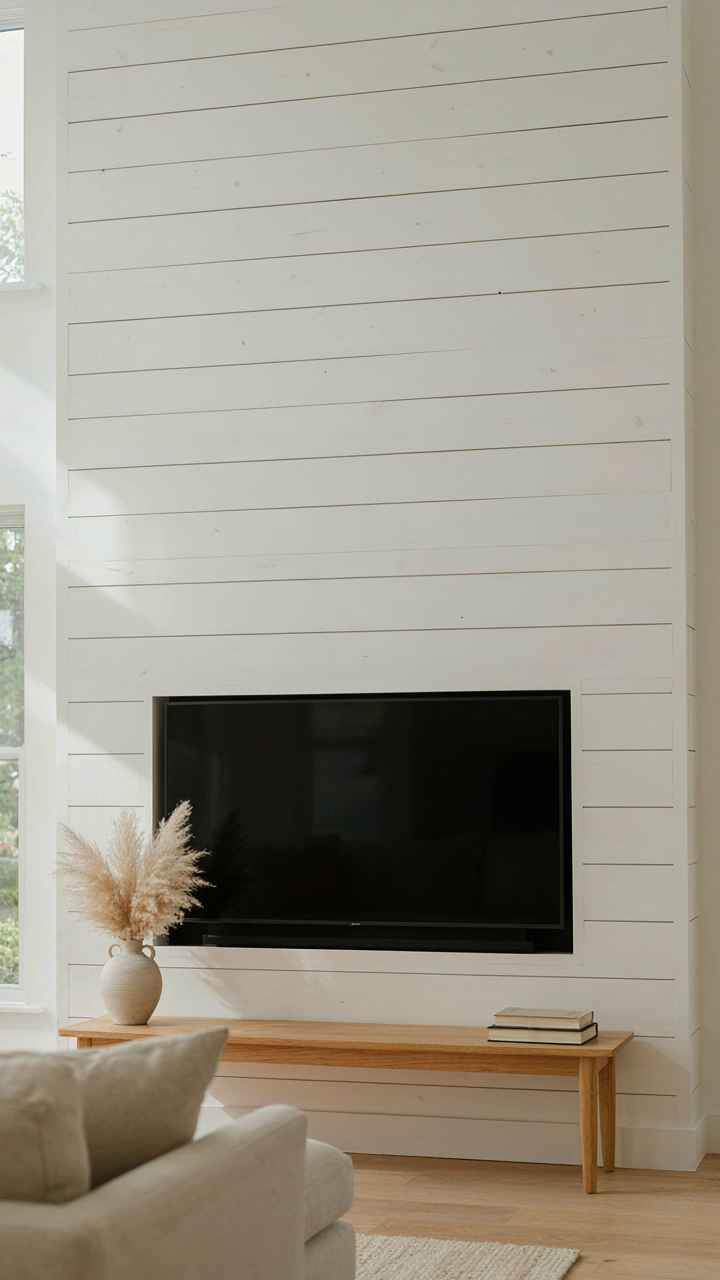
You’re worried the TV will kill the farmhouse aesthetic you spent money building. Here’s the mechanism: a fireplace with shiplap reads as a design statement, but add a TV and it reads as a living room that happens to have a fireplace. The gap between those two perceptions is what you’re actually buying. Strategic concealment works because it lets you preserve both the status of intentional design and the functionality of a media wall without choosing between them.

The standard move is mounting a TV above shiplap and calling it done. That’s lazy. Real integration means either framing the TV as a deliberate negative space in the shiplap pattern, or hiding it behind a motorized frame that drops down when not in use. Some builders run shiplap horizontally around the TV to interrupt its visual weight, making the screen feel like it belongs to the wall rather than dominating it. Others leave shiplap off the TV zone entirely, dropping to drywall or a contrasting material, which creates a visual frame that says “this section operates differently.” The goal is making the TV feel like a feature you chose rather than a compromise you made.
The Deliberate Absence
The anti-TV fireplace exists in direct opposition to mainstream thinking that every focal point should perform multiple functions. Fireplace without television means you are choosing warmth and gathering over entertainment distribution, which is an actual statement in 2024. This isn’t about judgment. It’s about recognizing that shiplap fireplace gains power specifically from constraint, the same way a luxury car gains appeal from exclusivity.
When you remove the screen, shiplap fireplace becomes a conversation anchor instead of a passive backdrop. People sit closer. They talk longer. The design carries weight because nothing dilutes it. If you want the TV, mount it elsewhere. Run the shiplap floor to ceiling around the fireplace opening, uninterrupted. Let the fire do the work it was built to do.
The Echo Chamber Effect: Shiplap Wall Living Room Fireplace As A System
How Spatial Feedback Shapes Room Movement
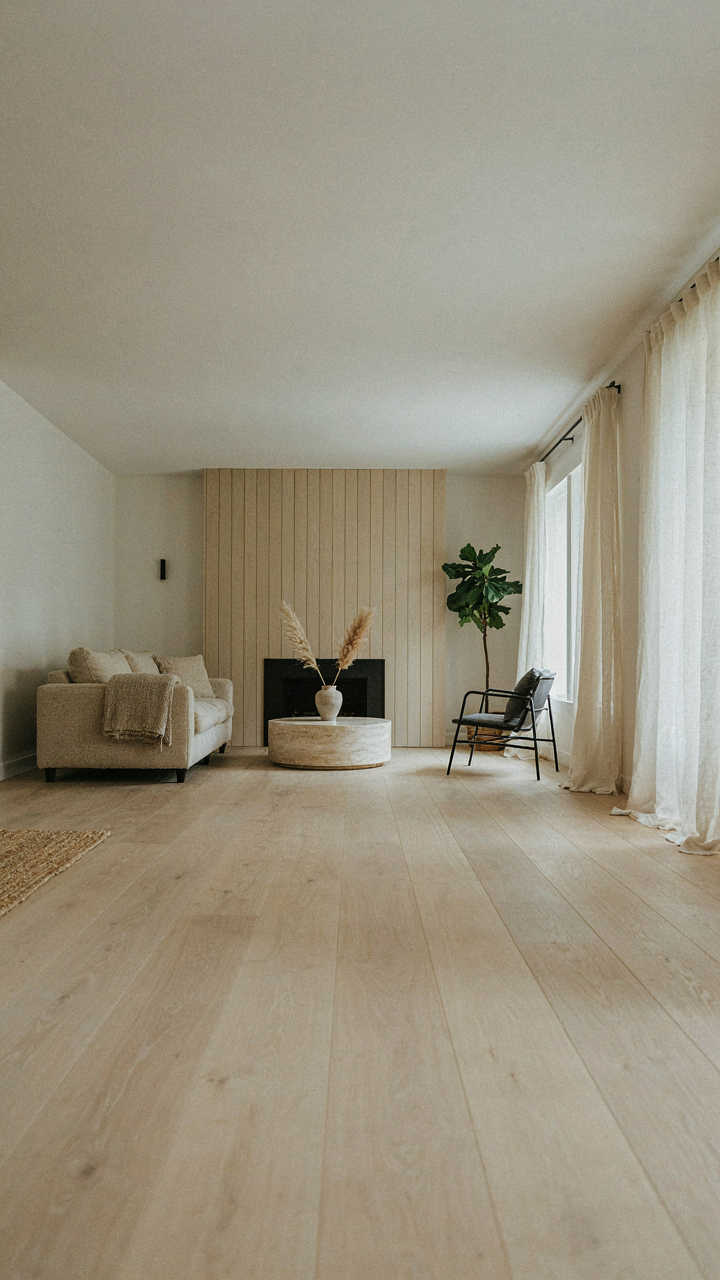
You want this fireplace to feel like the natural center of gravity in your room, not a decoration you hung on a wall. That’s the real pitch underneath every shiplap fireplace you see in design magazines. Cybernetics teaches us that systems maintain stability through feedback loops, and a shiplap fireplace operates as a feedback mechanism for how people move through and perceive your space. The vertical lines of shiplap create directional pull toward the hearth. Your eye follows the pattern upward, then the mantel catches it, then the fireplace opening anchors it. Movement follows attention.

The common mistake is treating shiplap as pure aesthetics. It’s not. The material’s rhythm and horizontal-to-vertical transitions create spatial information that your brain processes before you consciously notice it. When shiplap is installed with consistent board width and spacing, it establishes a visual frequency. That frequency either invites people toward the fireplace or pushes them away, depending on how it’s proportioned relative to the room’s dimensions. Install boards too wide or too narrow, and the pattern becomes noise instead of signal. The fireplace stops being a focal point and becomes just a wall.
Visual Tension And Its Resolution
Homeostasis in design means your eye stops working the moment everything achieves perfect balance, which is exactly when a room becomes boring. A shiplap fireplace maintains engagement by introducing controlled asymmetry that demands resolution. The vertical boards naturally create lines that compete with horizontal elements like a mantel, the hearth opening, or surrounding furniture. This tension is what makes people actually look at the fireplace instead of glancing past it.
The fireplace opening itself becomes the point where visual tension resolves. Your eye travels the shiplap lines, encounters the mantel’s horizontal break, then resolves into the dark opening of the fireplace. Without this release point, the shiplap reads as busy rather than intentional. Size the opening relative to board width and wall height so the fireplace achieves visual dominance through proportion, not volume. Too small and it disappears into the pattern. Too large and the shiplap becomes decorative framing rather than a compositional system. Test this by stepping back twelve feet and observing whether your attention settles on the fireplace or slides across the wall.
Fireplace Ideas With Shiplap: The Unconventional Mantel
When The Beam Becomes The Problem
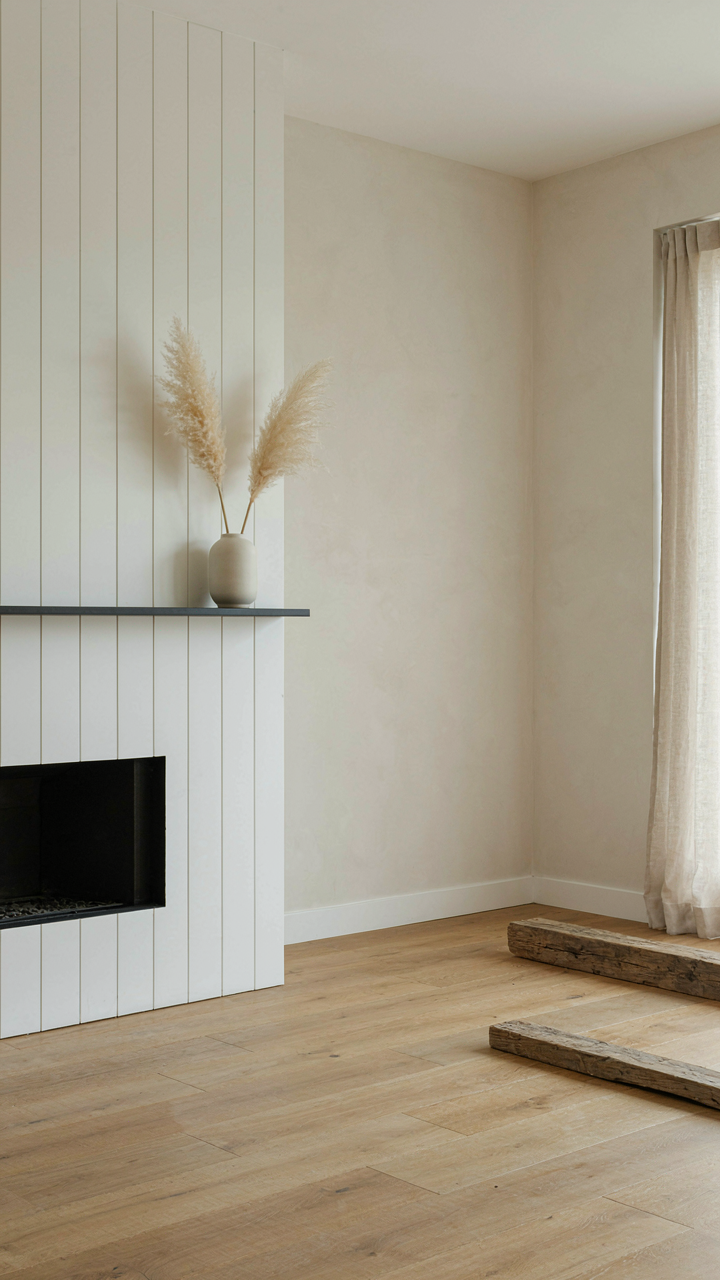
You want the fireplace to feel authentic, which means you’re probably afraid of looking like you tried too hard. The real mechanism at play here is constraint. When you nail a faux beam above the mantel, you’ve locked yourself into one visual lane. Real design flexibility comes from treating materials as interchangeable, not sacred. Steel, reclaimed wood, stone, or plaster all work above shiplap if you’re solving for the same structural and visual weight.

The beam-obsessed approach treats the mantel surround like it needs a hero object to justify its existence. It doesn’t. A shiplap fireplace can carry blank space, negative room, or unexpected texture without needing timber overhead. This shifts the fireplace from a prop that needs decoration to an architectural element that breathes. You choose materials based on what the rest of your wall needs, not what farmhouse tradition demands.
Restraint Wins The Room
Minimalist mantels with shiplap work because they exploit the texture already present in the wall. Add one object, a single candle, or nothing at all, and the shiplap becomes the focal point instead of serving as backdrop. Maximalist styling stacks objects, frames, and decor until the shiplap disappears behind layers. Neither is correct, but one solves a problem faster than the other: restraint reduces decision fatigue and extends the lifespan of your design before it reads as dated.
The choice between these two approaches determines maintenance burden. A minimal mantel requires you to keep it clean and intentional or it looks abandoned. A maximalist mantel hides dust and lets you swap objects monthly without the space feeling abandoned. Pick the one that matches your actual behavior, not the lifestyle brand you follow online. If you layer objects, commit to rotating them monthly or the fireplace becomes visual clutter nobody notices.
Durability & Maintenance: The Unsexy Truth Of Your Shiplap Fireplace
Longevity Through Proper Installation Essentials
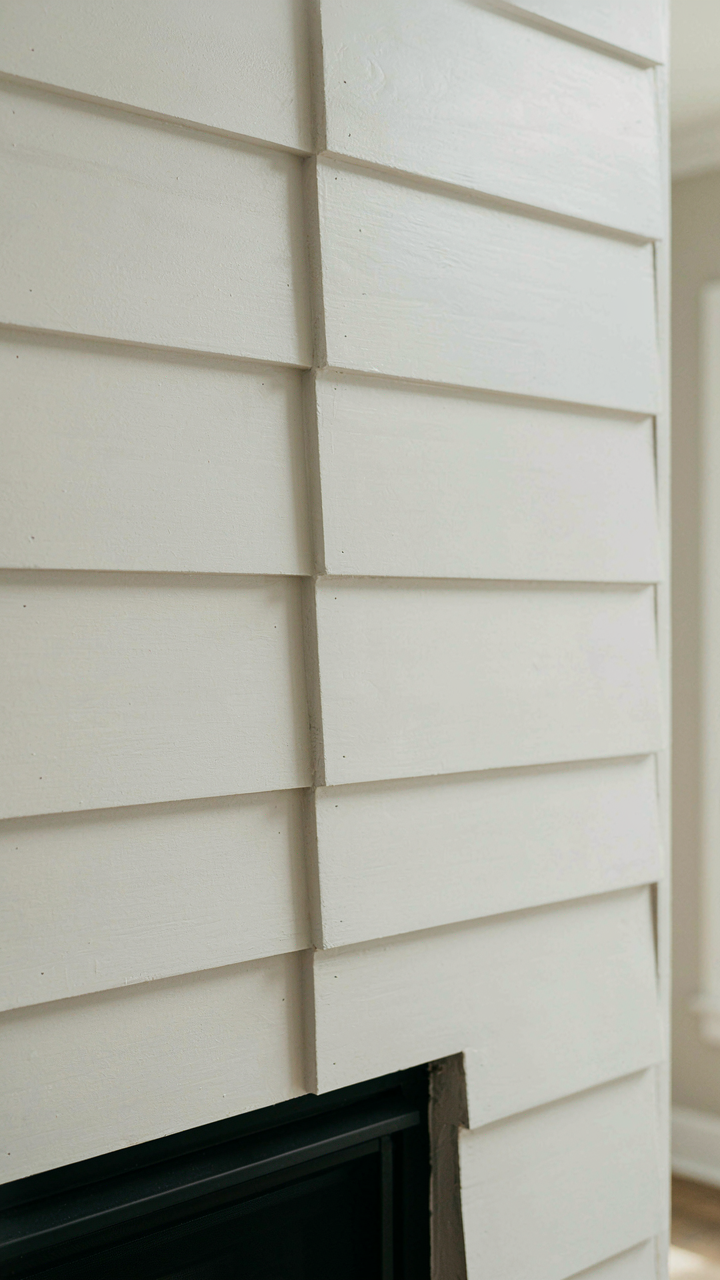
You’re worried this won’t last, which really means you’re afraid you wasted money on a trend. The mechanism is simple: shiplap around a fireplace fails because installation ignores thermal expansion. Wood moves when heat cycles through it. Most installers treat shiplap installation like drywall work, which is wrong.

Here’s what actually determines longevity:
- Fastening strategy: Use finish nails or staples spaced 16 inches apart along the groove, not the face. This allows the boards to expand and contract without buckling or splitting at visible seams.
- Moisture barrier installation: Place a vapor barrier behind shiplap before mounting. Fireplace heat can drive moisture backward into the wall cavity if unprotected, causing rot in the framing.
- Board acclimation: Let shiplap sit in the installation space for 48 hours before hanging. Wood adjusts to ambient humidity, and skipping this step causes gaps or crowning after heat exposure.
- Sealant application: Use a high-heat polyurethane or silicone caulk rated to 300+ degrees Fahrenheit in all gaps and joints. Standard caulk fails and yellows under fireplace temperatures.
- Clearance from heat source: Maintain minimum 12 inches from direct flame or firebox opening if the shiplap is exposed to active fire. If it’s above a modern insert or electric unit, distance requirements vary by product specification.
The boards themselves don’t fail under heat. The installation does. Shiplap survives decades when fasteners account for movement and moisture is managed aggressively. Most failures happen in the first two years because installers skip acclimation and use standard materials.
Cleaning And Care Routines
Shiplap around a fireplace collects soot, dust, and creosote residue differently than shiplap elsewhere in your home. The grooves trap particulate matter, and heat accelerates dust adhesion. Standard cleaning methods don’t work here, so most people either neglect it or damage the finish trying.
Vacuum grooves first using a crevice attachment weekly during heating season. This removes loose debris before it hardens. For stuck-on residue, use a soft-bristle brush with mineral spirits on a cloth, not liquid applied directly. Wipe in the direction of the grain. Avoid pressure washers entirely, even on low settings, as water forces into the joints and behind the boards. For stubborn soot stains, a solution of equal parts white vinegar and water works without damaging the wood or finish. Test on an inconspicuous section first. Reseal the shiplap every two to three years with a matte polyurethane rated for heat exposure, applying thin coats that don’t build up in the grooves.
Your Fireplace Isn’t The Problem; Your Generic Approach To It Is. Stop Decorating, Start Designing
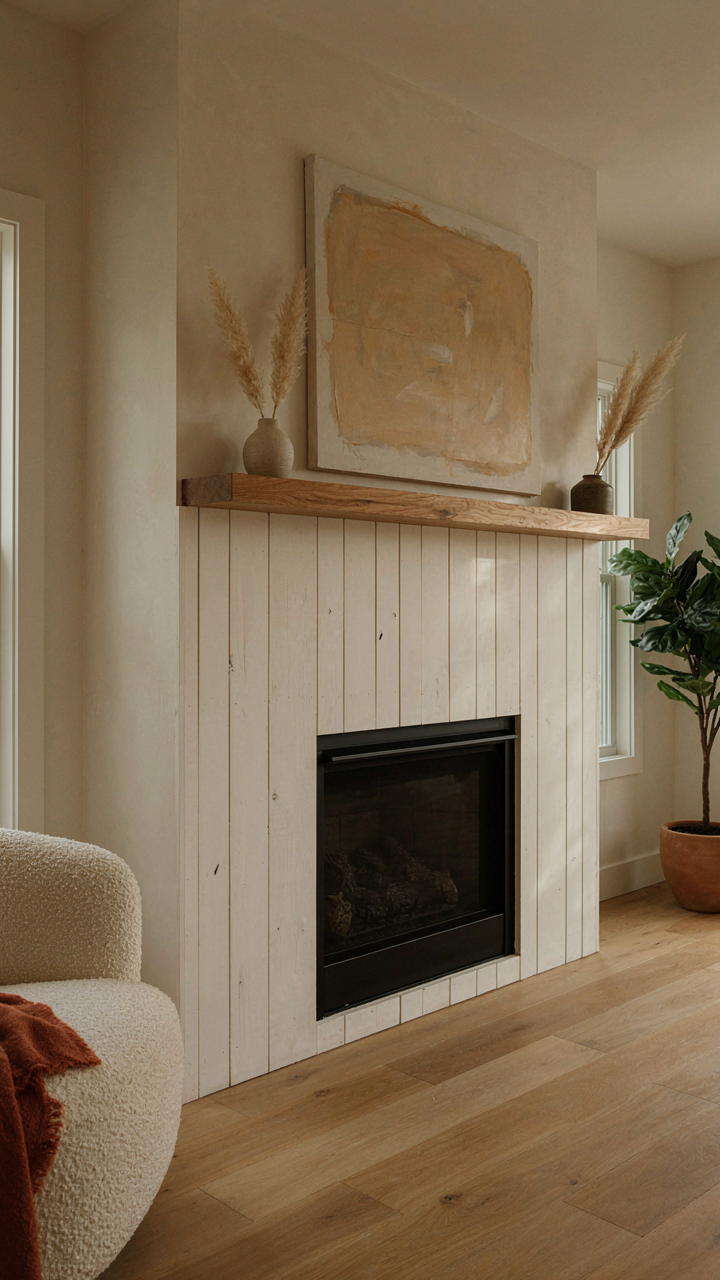
Most people slap shiplap on a fireplace and call it done. You’re not most people. The difference between a forgettable focal point and one that actually commands a room comes down to one choice: are you following a trend or building something with intention? Your shiplap fireplace works when it solves a problem in your space, not when it matches Pinterest. Pick one element today—the hearth material, the mantel depth, the board orientation—and make it weird on purpose. A fireplace that makes sense only to you beats one that looks like everyone else’s every single time.