
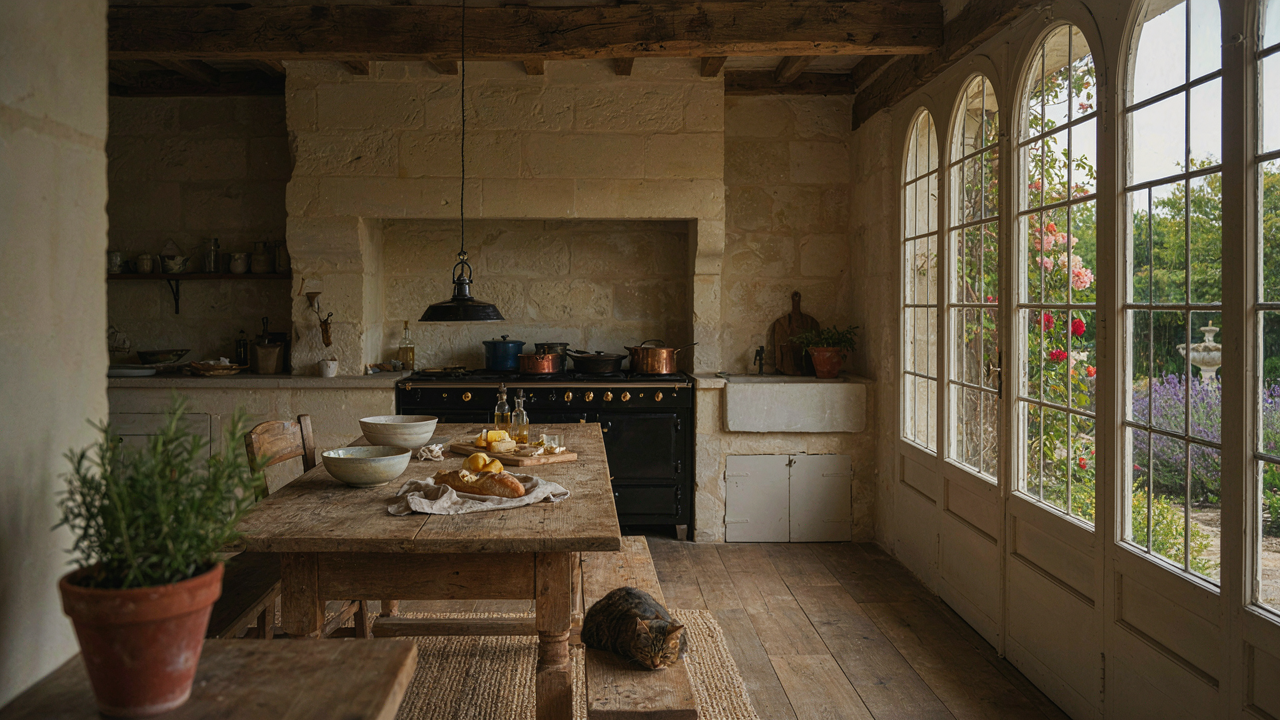
The Rustic Paradox: Why “Refined” Isn’t What You Think
Authentic Rustic Elements, Not Mass Produced Distressed
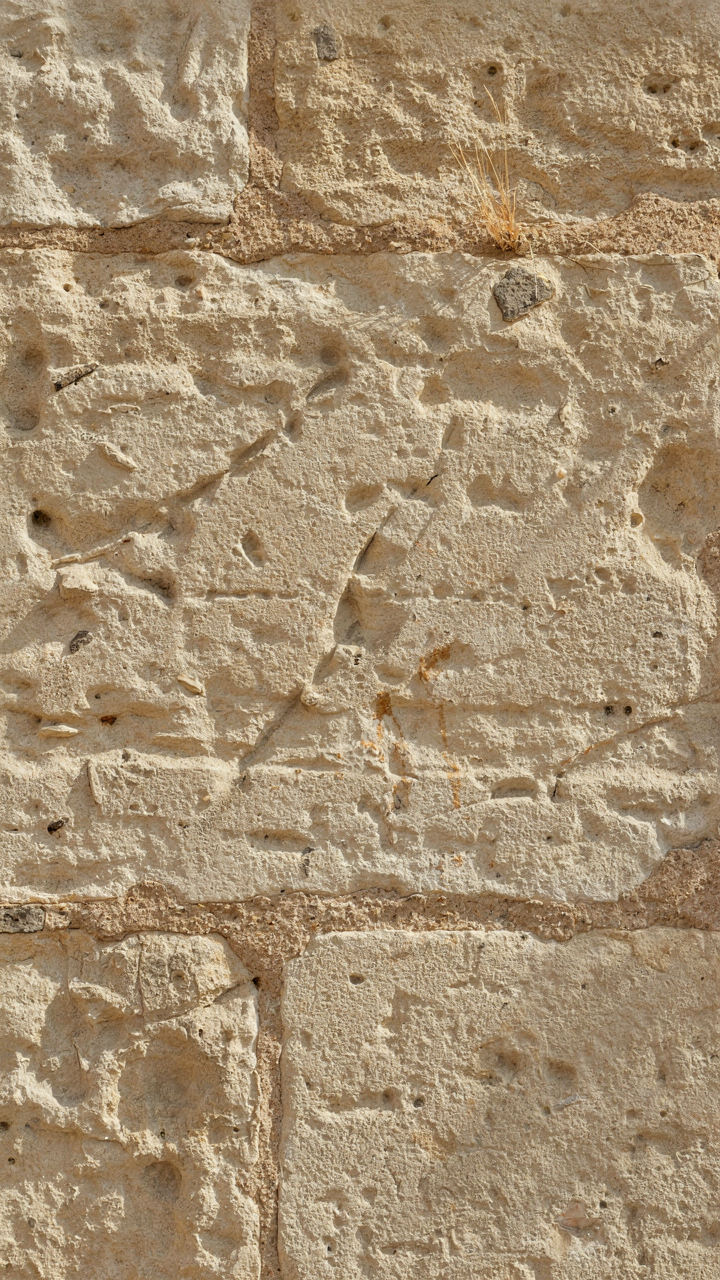
You want the aesthetic without the work, the story without the time. The real mechanism here is scarcity. In economics, scarcity creates value, and French country farmhouses operated on that principle for centuries. True rustic elements came from constraint, not choice. A worn limestone wall wasn’t distressed for effect—it weathered because it faced actual weather. The difference between authentic and fake isn’t sentimental. It’s structural.
Mass-produced distressed furniture signals the opposite of what you intend. Factory-aged wood beams, pre-cracked plaster, and artificially stained textiles read as performance because they’re uniform. Real wear patterns are chaotic. A salvaged French limestone mantel shows different erosion on each face depending on exposure. An authentic farmhouse door has uneven paint layers because people painted it multiple times across decades, not all at once in a factory. Source materials with provenance, not aesthetics.
The Subtle Elegance Of Imperfection And Patina
Imperfection is legible only when it’s earned. A cream-colored plaster wall with water stains tells a specific history. A perfectly distressed wall tells a marketing story. The tension between rustic and refined dissolves when you stop thinking of them as opposing forces and recognize patina as evidence. Evidence proves authenticity. The visible repair, the worn threshold, the stained ceiling beam from old smoke—these aren’t flaws. They’re credentials that communicate restraint and function over aesthetics.
When you see French farmhouse interiors that feel both elegant and weathered, the mechanism is selective preservation. Owners maintained what mattered functionally—the roof, the structure, the hearth—and let cosmetic surfaces age naturally. This creates an aesthetic hierarchy that reads as refined because nothing is artificially emphasized. The goal isn’t to achieve a look. The goal is to stop fighting the surfaces you have and let time do the work instead.
The Anti Trend Protocol: Building A Timeless French Farmhouse Interior Design
Invest In Bones, Not Noise
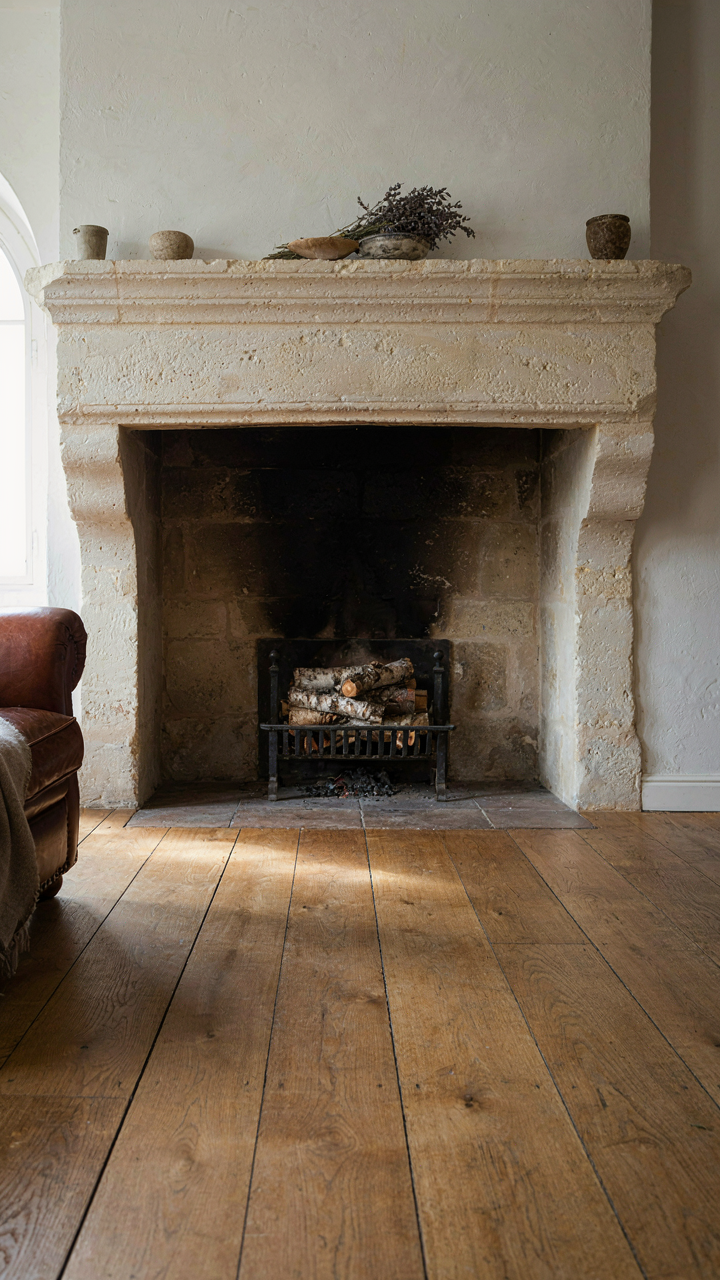
You want your home to feel intentional instead of decorated, which means you’re terrified of looking like you tried too hard or picked wrong. The mechanism is simple: French farmhouses survive centuries because they were built for function first, then inhabited long enough to accumulate character. Start by anchoring your space in pieces that serve a structural role—a limestone fireplace, wide-plank oak flooring, exposed beam ceilings, stone walls. These don’t date. They’re not trends. They’re the skeleton everything else hangs on.

The common advice says “mix high and low.” That’s incomplete. The real rule is this: spend deep on things you cannot replace or repair easily, spend light on things that age visibly or change function. A solid walnut dining table from the 1800s appreciates. A linen slipcover doesn’t. An antique cast iron stove becomes a focal point. The seasonal throw blanket becomes clutter. French farmhouse interiors weren’t built by people who shopped seasonally. They were built by people who bought once and refined for decades.
Accumulate, Don’t Curate
French country farmhouses didn’t start perfect. They started empty and filled through deliberate acquisition over time, which means your impulse to stage everything at once is the opposite of how this aesthetic actually works. Each piece should have utility or provenance—a copper pot because you cook with it, a cabinet because you store in it, a chair because someone sat in it regularly. This isn’t about the story you tell guests. It’s about objects earning their place through use.
The layering happens through restraint, not abundance. Add one significant piece every six to twelve months. Source from regional antique dealers, not global retailers. Prioritize items from French-speaking regions when possible—Provence, Normandy, Brittany—because proportions and materials reflect the climate and culture of those specific places. Your kitchen should look lived in by someone who cooks. Your bedroom should look occupied by someone who sleeps there regularly. That’s the mechanism: accumulated evidence of actual living, not assembled evidence of taste.
Beyond The Vignette: Functional Elegance In French Country Farmhouse Decor
Utility As The Foundation
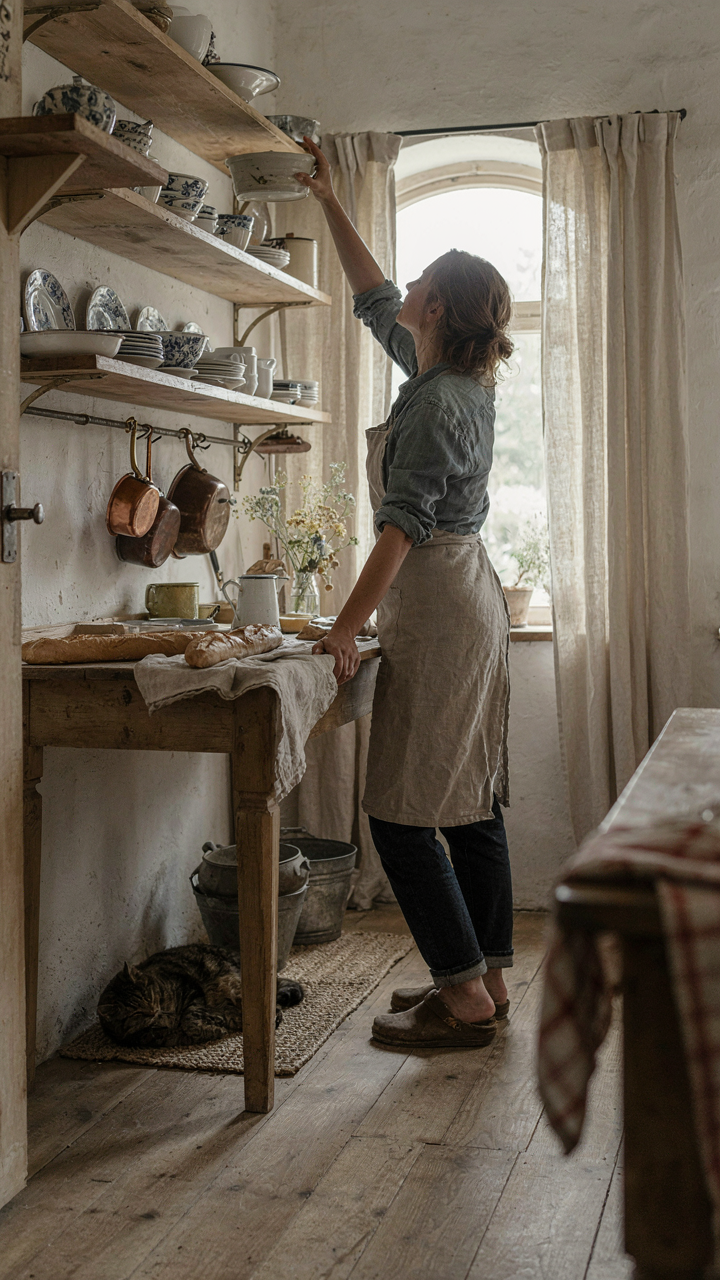
You want your space to look effortless and lived-in without admitting you’re performing for guests. That’s the real tension. French country farmhouse design solves this by starting where architecture solves problems: utility comes first, and beauty follows from honest constraint. A farmhouse kitchen’s open shelving wasn’t aesthetic choice—it was necessity. Servants needed fast access to everyday dishes. The design looks refined now because necessity forced efficiency. Copy the mechanism, not the image.

Rural French properties had limited resources and no replacement cycles. Every object earned its place through function. A side table held a lamp and held butter. A hutch displayed ceramics and stored linens. The visual hierarchy happened naturally because objects served multiple purposes. When you reverse-engineer a space for function first, decoration stops feeling like decor and becomes evidence of how you actually live. That distinction is the entire game.
Purpose Before Ornament
Most advice says choose pieces you love, then arrange them. That’s backwards and wastes money. French country farmhouse pieces won the survival test across generations precisely because they made work easier first. A worn oak table isn’t beautiful because it’s worn—it’s worn because families used it daily for meals, prep, and sorting tasks. The finish tells the story of function.
Start by listing what actually happens in each room. Identify bottlenecks. A reading chair goes where natural light hits and where you can set a cup without reaching. A dresser goes where you dress, not where it photographs well. The aesthetic emerges when you solve the real spatial problem. Arrange your space around the activities that consume hours, not the ones you perform for Instagram. Function lived honestly creates the refinement people mistake for intentional design.
The Material Truth: What Defines French Farmhouse Style
The Materials That Actually Work
You want this style because it signals you understand quality. Here’s what actually matters: French farmhouse style doesn’t survive on sentiment. It survives on material honesty. Like load-bearing architecture in structural engineering, each material in a French farmhouse carries real weight—it performs a function and shows that function without hiding it.
- Solid wood: Oak, chestnut, and walnut from local forests. Worn surfaces reveal grain and patina, not damage. Supports beams, flooring, and furniture that function for decades.
- Lime mortar and stone: Breathable lime-based mortar bonds fieldstone walls. Adapts to seasonal moisture swings without cracking. Regional stone color varies by geography and quarry source.
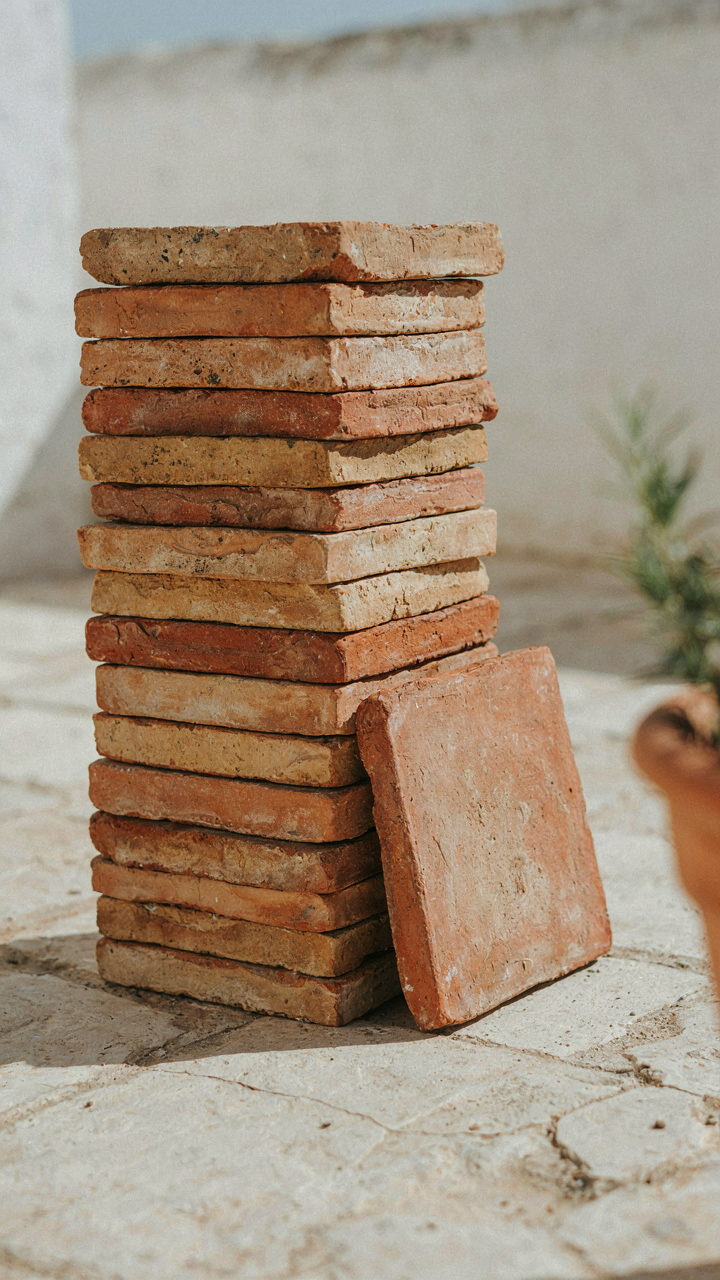
- Terracotta and clay tiles: Floor and roof tiles fired once, then aged. Natural color variation comes from clay composition and firing temperature, not manufacturing inconsistency.
- Wrought iron: Hand-forged hardware, hinges, and fixtures. Weight and joinery visible. Oxidizes naturally without coating or maintenance theater.
- Linen and hemp textiles: Fibers absorb and release moisture. Wrinkles are structural—they indicate natural fiber movement, not poor care. Dye fades predictably over years.

The mechanism is simple: materials that age visibly build trust. French farmhouses didn’t choose these materials for nostalgia. They chose them because they outlasted trends and held up in actual use. That durability is why the aesthetic endures.
Why Substitutes Fail Faster Than You Think
The common advice says “stay true to the style.” That’s incomplete. The real issue is that synthetic substitutes violate the contract French farmhouse design makes with time. Faux finishes, laminate stone veneers, and polyester linen imitations age differently than real materials. They look cheaper the moment light changes because the degradation pattern is wrong.
Cheap substitutes crack and peel in ways authentic materials don’t. Engineered wood swells unevenly. Vinyl tile splits under temperature shifts. Polyester rope doesn’t develop patina—it yellows and becomes brittle. Your eye detects this inconsistency even if you can’t name it. You’ve trained your brain to spot materials that behave like materials. Fakes behave like plastics. The solution isn’t spending more everywhere. It’s spending precisely on visible surfaces that age, and simplifying everywhere else. Substitute where touch and time don’t matter. Commit to real materials where they do.
The Illusion Of Effort: Cultivating Elegant French Farmhouse Charm
The Natural Flow Of A Lived In Space
You want people to think your home happened by accident, that refinement just landed there without you trying. Here’s what actually works: French farmhouses succeed because they operate on accumulation theory, the same mechanic that governs ecosystems. A forest doesn’t arrange itself for beauty, it layers growth over decades. Your space needs the same principle applied deliberately.

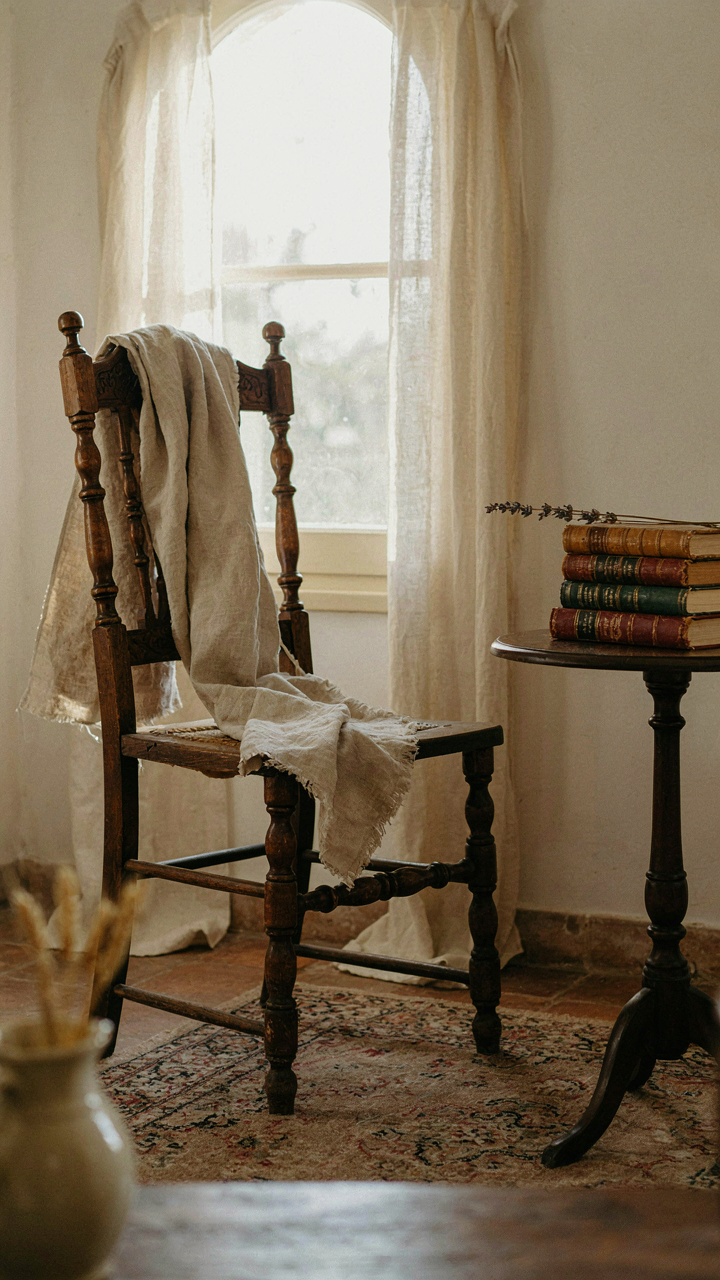
The mistake most people make is treating a farmhouse like a gallery opening. They buy matching sets, arrange everything at right angles, and strip away personality because they think that reads as “clean.” Real French country farmhouses absorb life. Objects sit where they’re useful. A worn linen cloth drapes a chair back because someone sat there and left it. A table carries the marks of meals, not the sheen of showroom finish. This isn’t laziness masquerading as style. It’s the deliberate creation of friction-based authenticity.
Curated Collections Not Staged Displays
Staging is the confession that nothing matters except the impression. Curation means you own things because they function, survive, or genuinely move you. French country farmhouse owners collected vessels because they cooked and preserved food, not because stoneware was trending on Instagram. The objects that remain in these homes are there for reasons that predate social media by centuries.
The protocol: acquire one category of items intentionally over time. Collect earthenware bowls, copper pots, or old books because you use them or because each piece tells you something specific. Stop buying to fill gaps. Stop curating to photograph. Let your collection grow sparse enough that every object has a reason to exist in that room, on that shelf, at that moment. The space feels elegant precisely because nothing fights for your attention.
The French Country Home Decor Conundrum: More Than Just Toile
When Pattern Actually Disappears
You want to know how to use pattern without looking like you’re trying too hard. That’s the real fear here: that toile or Provençal prints will read as costume instead of inheritance. The mechanism is contrast through restraint. French country farmhouses didn’t layer patterns because they loved maximalism. They layered them because each element solved a functional problem first, decoration second.

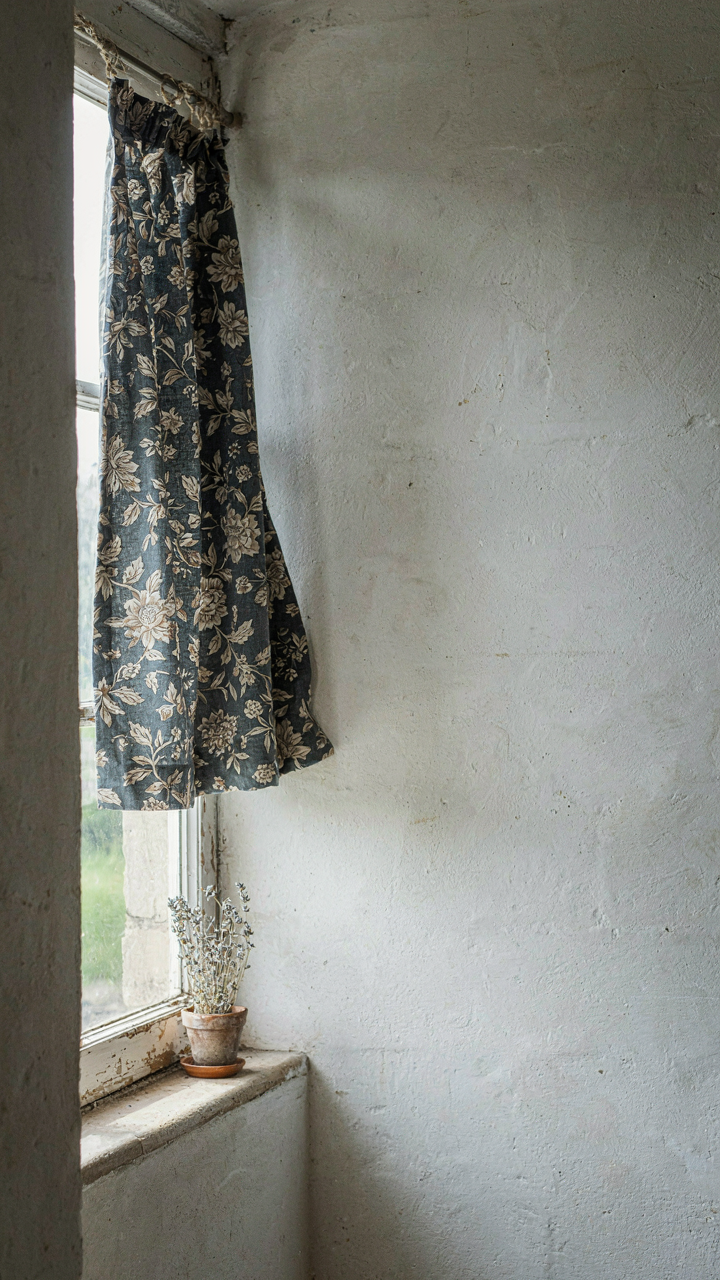
The actual sophistication lives in negative space and material weight. A single toile curtain panel works because the linen itself carries visual gravity. A patterned fabric placed against bare plaster or whitewashed wood doesn’t compete. The pattern recedes into context. Start with monochromatic or cream base layers, then introduce one printed textile per room that touches only one surface. This isn’t minimalism. It’s priority stacking.
Textiles As Load Bearing Structure
Textiles in French country homes function like load-bearing walls in architecture. They don’t just soften a room. They anchor it. A worn linen tablecloth isn’t decoration. It’s proof of use, which creates permission for everything else to exist at lower intensity. Without textiles that show patina and actual wear, the entire aesthetic tips toward staged rather than lived.
The textile’s job is to establish what era this room occupies. Aged hemp grain sacks, faded indigo linen, hand-loomed wool blankets. These materials tell time. They give permission for imperfection everywhere else. Place a single worn textile as the room’s material anchor. Everything else organizes around its color and texture. This is how farmhouses feel inhabited without feeling cluttered.
Modern French Country Design: The Art Of The Anomaly
When Contradiction Becomes The Point
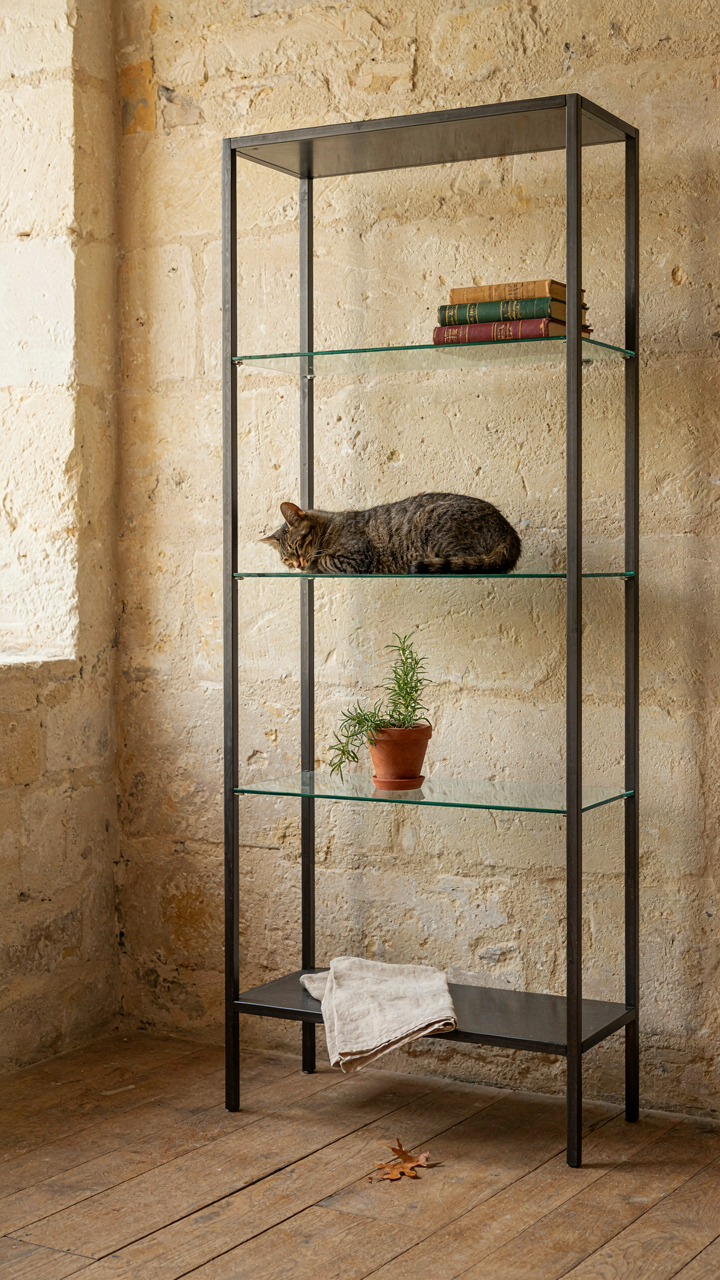
You want permission to break the rules without looking like you don’t understand them. That’s what this section gives you. Modern French country works because it weaponizes contrast, not softens it. Borrow the concept from signal processing: noise and signal create meaning only through difference. A 200-year-old limestone wall means nothing until you place a steel and glass shelving unit against it. The clash is the design.

French farmhouses were built to last through seasons, wars, and poverty. They absorbed whatever materials and methods survived long enough to be useful. That pragmatism is what gets misread as “charm.” Modern French country applies that same logic: use what solves the problem, not what fits the narrative. A minimalist white kitchen in a 18th-century cottage isn’t betraying the style. It’s completing it.
Restraint As The Invisible Structure
Minimize means subtract until nothing else leaves. Most design advice tells you to add French elements until the space feels French. That’s backward. Strip the room to its load-bearing walls first. What remains? Stone, timber, proportion, light. Those are already French. Everything else is noise you’re adding back in by choice, not default.
The mechanism here is specificity. Each object you place must have a reason that isn’t decorative. A single wooden ladder against a whitewashed wall works because it’s functional. Twenty brass knobs on a kitchen island fail because they’re only there to signal rusticity. The restraint lens forces you to defend every decision through utility or structural logic, not mood. That discipline creates the refined part of the equation.
The Ecological Niche Of French Farmhouse Interior Design Ideas
Source Materials From Your Actual Region
You want your farmhouse to feel authentic without looking like you bought it from a catalog. The mechanism is biogeography: organisms thrive when their environment matches their origin. Apply this to materials. Stone from your region, reclaimed wood from local barns, plaster made from local clay—these elements carry the visual language of their place. Your eye recognizes this coherence even if you can’t name it.

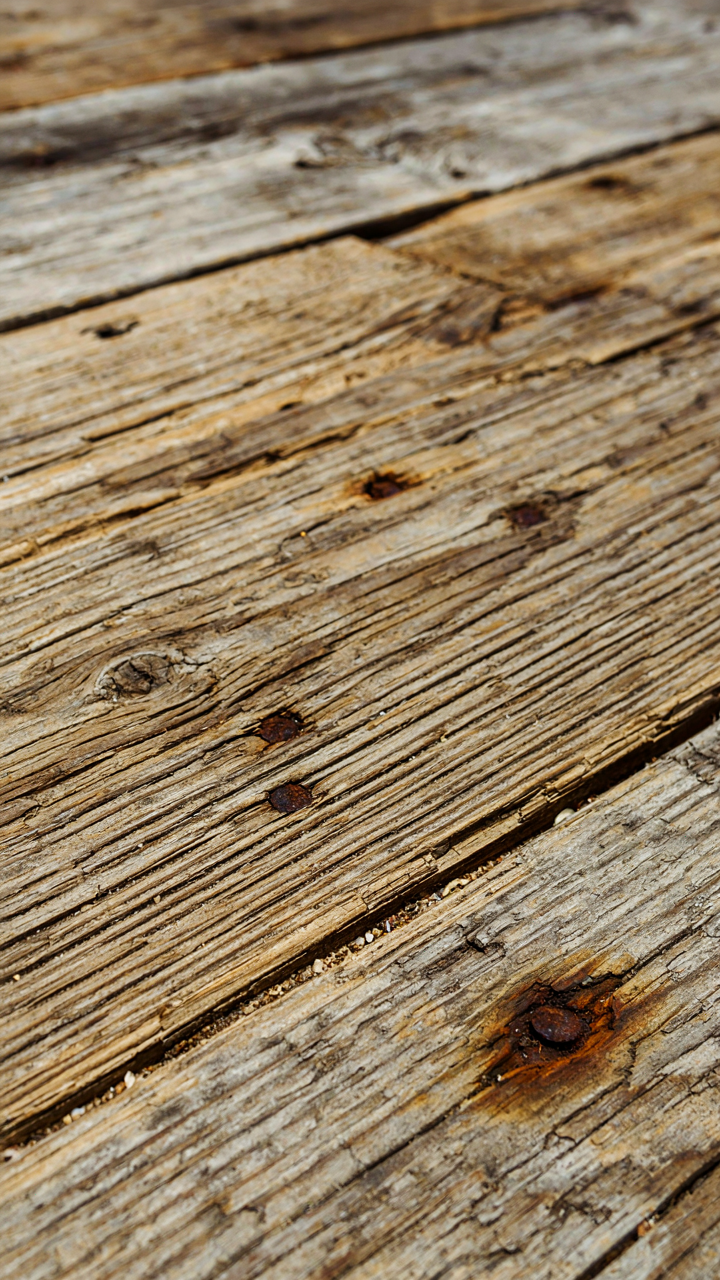
French farmhouses work because the French didn’t ship Provence stone to Normandy. They built with what existed locally. You replicate this by refusing to source everything online. Visit salvage yards in your actual region. Buy reclaimed materials from demolished structures within 50 miles. The color palette, texture, and wear patterns will sync with your geography instead of fighting it. This is not decoration. It is ecological alignment applied to interior space.
Surface Decay As Design Language
Most advice says to add “distressed” finishes to look aged. This is backward. Real aging isn’t random. Biogeography teaches us that erosion follows patterns: water runs downward, foot traffic wears specific paths, light fades exposed surfaces predictably. French farmhouse interiors show these patterns because time created them, not because someone sprayed paint to fake history.
Study how weathering actually occurs in your climate. In humid regions, walls develop different patinas than in dry areas. Wood darkens unevenly based on sunlight exposure. Plaster cracks along structural stress lines, not arbitrarily. When you understand the mechanism, you can position aged finishes where erosion logic demands them: doorframe edges, window sills, high-traffic thresholds. This turns your interior into a place that earned its appearance rather than purchased it.
The Curatorial Imperative: Becoming A Steward Of French Country Modern Farmhouse
Investment Grade Pieces Over Trend Capture
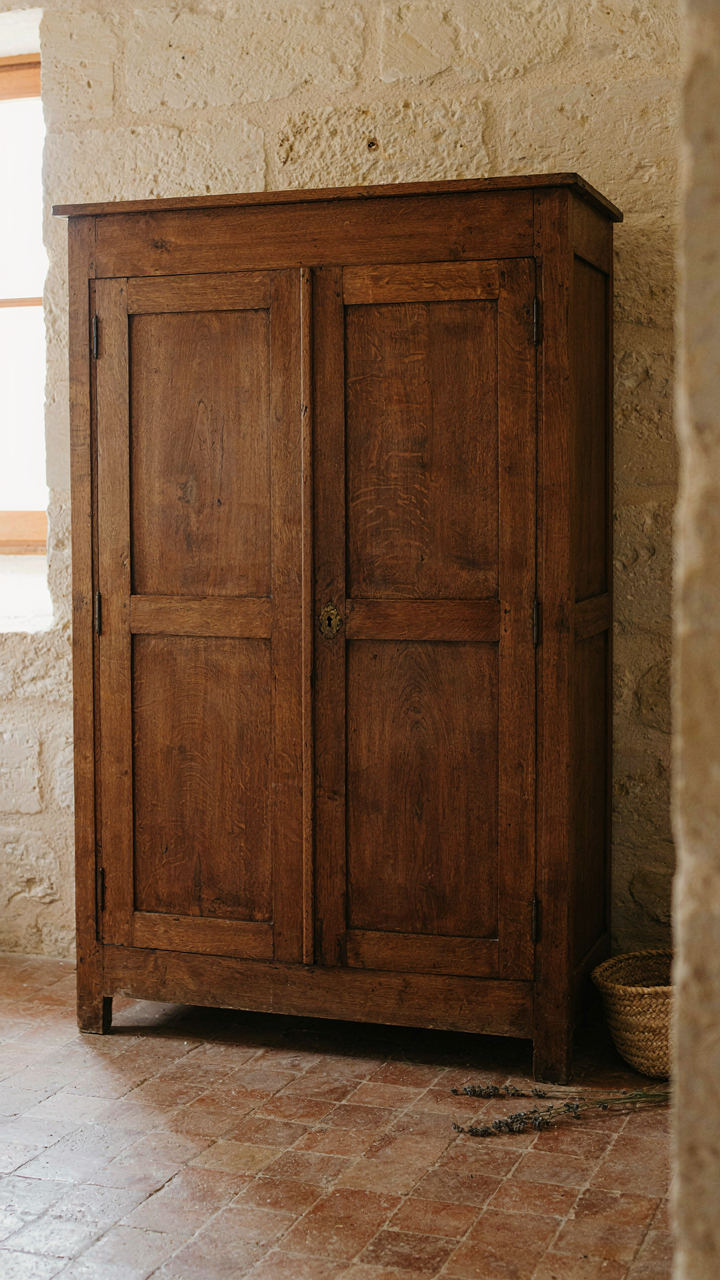
You want permission to spend money without feeling like you wasted it. The mechanism here is simple: French country farmhouse pieces either appreciate or they depreciate, and the difference tracks directly to material quality and craft authenticity, not to how well they photograph. A solid walnut armoire from Provence circa 1890 holds value because the wood, joinery, and proportions refuse to cheapen over time. A reproduction piece made to look old fails because the material betrays the lie the moment someone touches it.

The filtering rule is this: buy only what was made to last through actual use, not display. Original French country farmhouse pieces were built for rural working families who needed furniture to survive decades of labor and weather. They survived because the joinery was load-bearing, the finishes were oils and waxes that patina rather than crack, and the proportions fit human bodies doing real work. When you reverse-engineer that standard into your buying decisions, you eliminate 90 percent of the mediocre inventory cluttering the market.
The Catalog Against Replication
Every farmhouse you see that feels hollow has the same problem: the owner treated it like a mood board instead of a system. You stock it with pieces that match the aesthetic checklist, but the space reads as themed because nothing inside earned its place through actual function or family history. Authentic French country farmhouse design emerges when you select pieces based on what your household actually does, not on what a designer said a French farmhouse contains.
The antidote is constraint. Commit to one source region and one era. If you build the house around Normandy pieces from the 1800s, the proportions, finishes, and wear patterns tell a coherent story. The wood species match. The hardware reflects the same regional metalworking. When you mix Provençal pieces with Norman pieces with reproduction pieces from three different makers, you create visual noise that reads as imitation. Your job is curator, not collector. Every piece must defend its presence by reference to place and time, not by matching a color wheel.
The Legacy Fallacy: Why French Country Farmhouse Is Never Finished
Design As Constant Recalibration
You want to believe your farmhouse will reach a state of completion, a moment where everything clicks and you stop spending money. That’s the real fear here. The mechanism at work comes from biology: French country farmhouses operate like living systems, not static objects. They adapt. Materials settle and shift. Light angles change seasonally. Proportions that felt balanced in summer feel cramped in winter. The original builders understood this. They didn’t “finish” their homes. They established a baseline that invited modification.
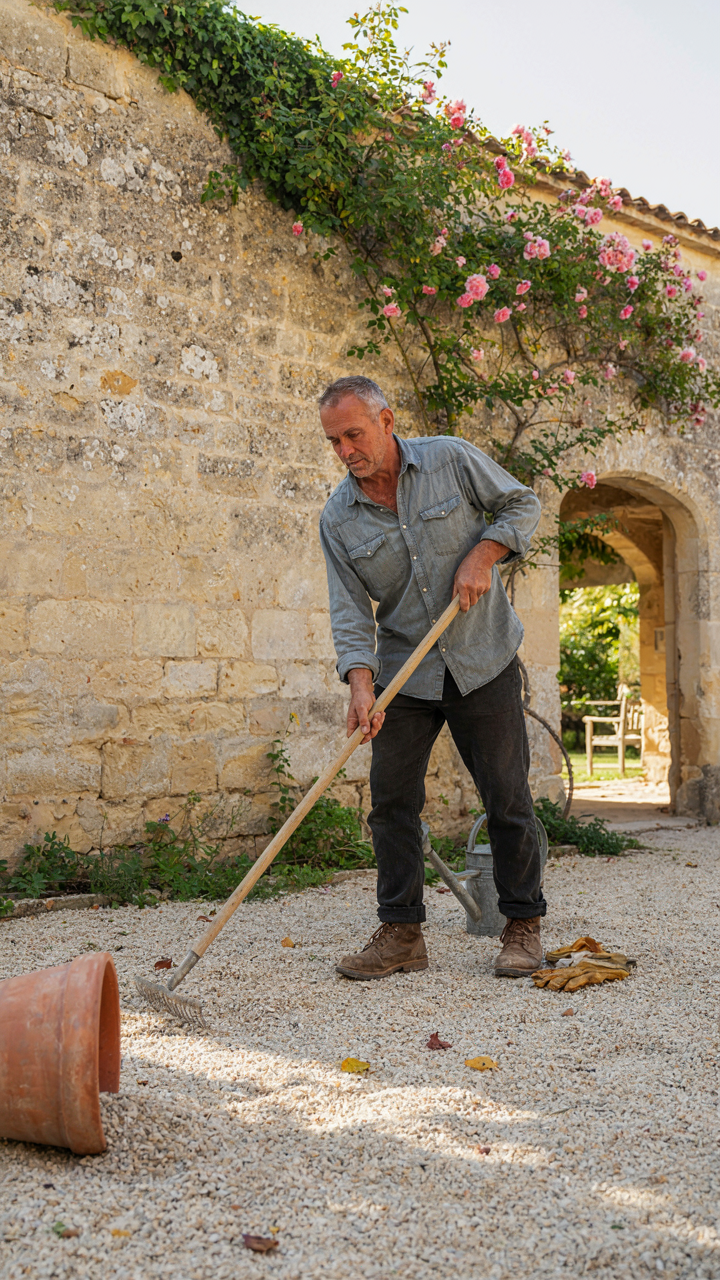
What looks like a completed farmhouse in a magazine is actually a photograph taken at a specific moment in time. The owner has already changed the window treatments twice since the photo. The plaster has already been patched in three places. The gravel in the courtyard gets raked and replaced on a cycle. Treating your farmhouse as a project with an end date sets you up for frustration. Treating it as a system that needs seasonal assessment and intervention aligns you with how these buildings actually function.
The Home That Demands Participation
French country farmhouses reject hands-off ownership. The stone breathes. The wood moves with humidity. Plaster cracks aren’t failures, they’re information about what the house needs. Owners who accept this stop fighting the house and start listening to it. A crack in a wall tells you about settling, moisture, or material stress. Instead of panicking, you document it, assess it, and respond proportionally.
The maintenance calendar structures everything. Spring reveals winter damage: frost heave, water infiltration patterns, roof stress points. Summer is for exterior work while conditions allow. Fall is for sealing and preparing. Winter exposes system failures before they cascade. This isn’t romantic. This is operational discipline. Your farmhouse will never be finished because it’s not supposed to be. The day you stop maintaining it is the day it begins to fail. Set expectations on that reality and you’ll actually enjoy what you’ve built.
Your Fear Of Bad Taste Isn’t A Design Problem; It’s A Failure To Understand Organic Evolution
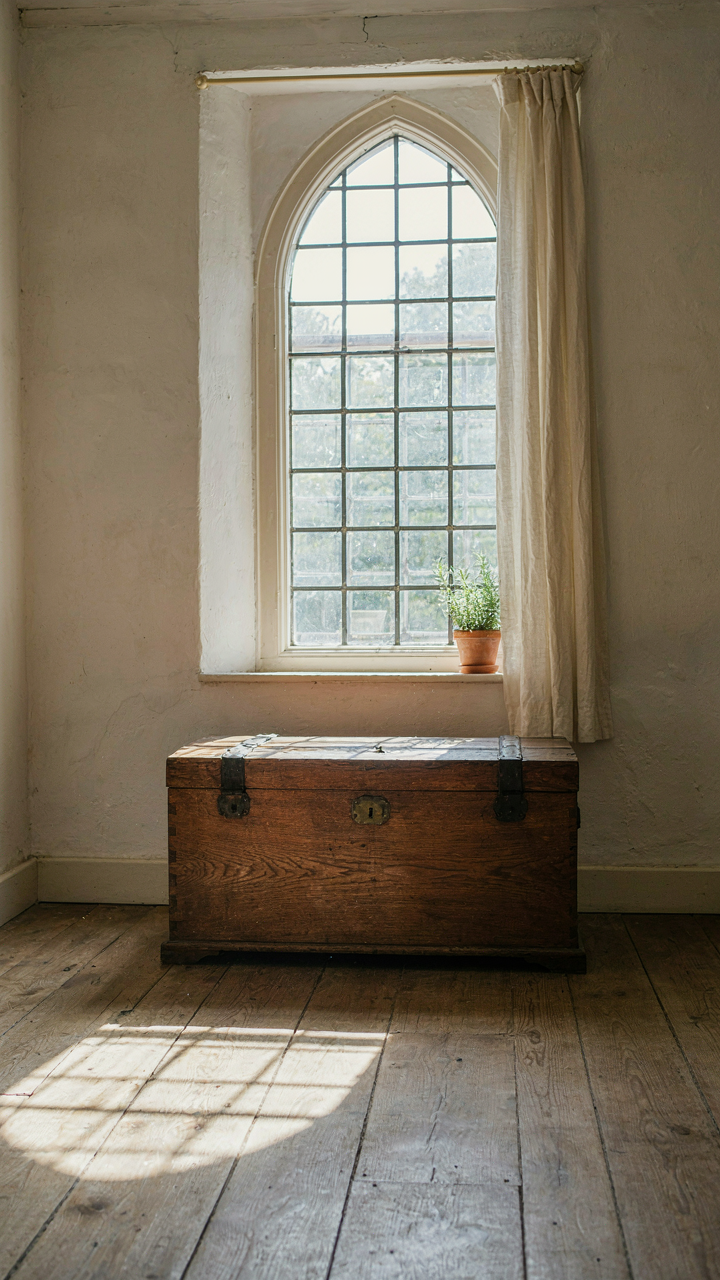
Stop treating your farmhouse like a museum exhibit. Real French country homes evolved over decades, layers stacking on top of each other, mistakes included. You’re scared of clashing textures and mismatched eras because you think design happens all at once. It doesn’t. Pick one room. Buy one piece that actually moves you. Live with it for a month. Let your space tell you what comes next instead of downloading a Pinterest board and calling it a plan. The best farmhouses weren’t designed. They were lived in.



