
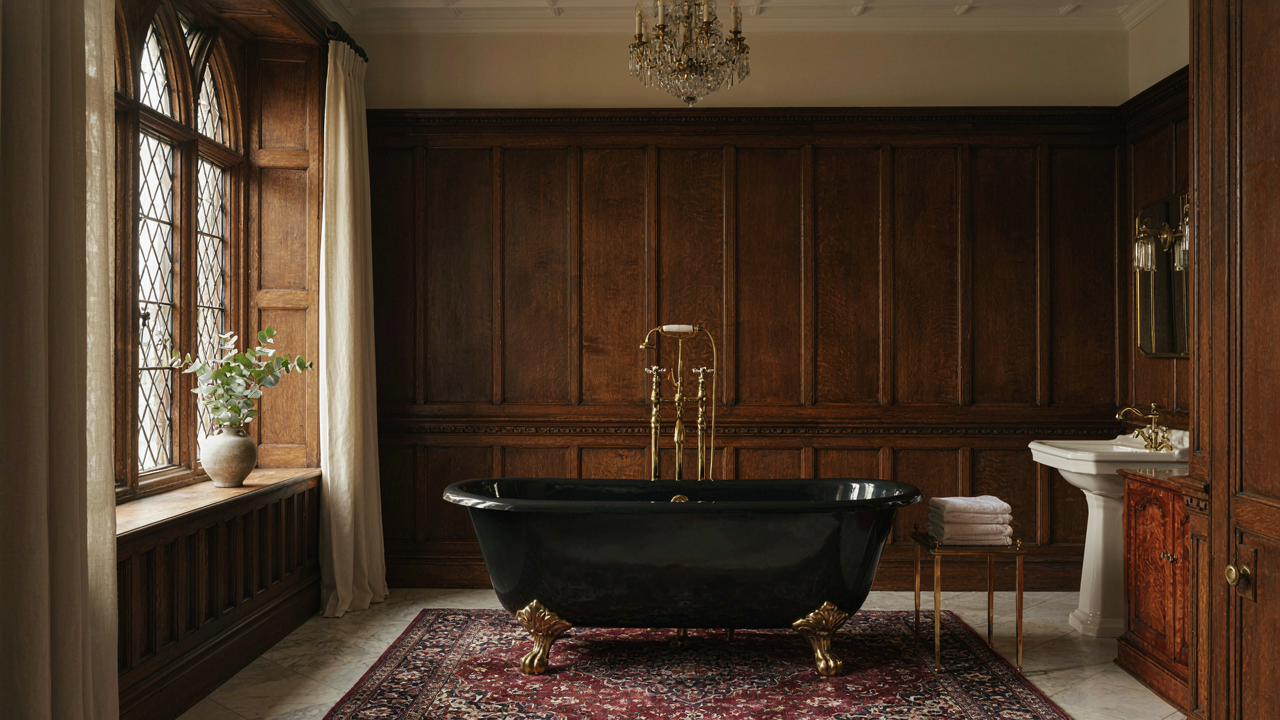
The Illusion Of Opulence: Beyond The Surface Level Glamour
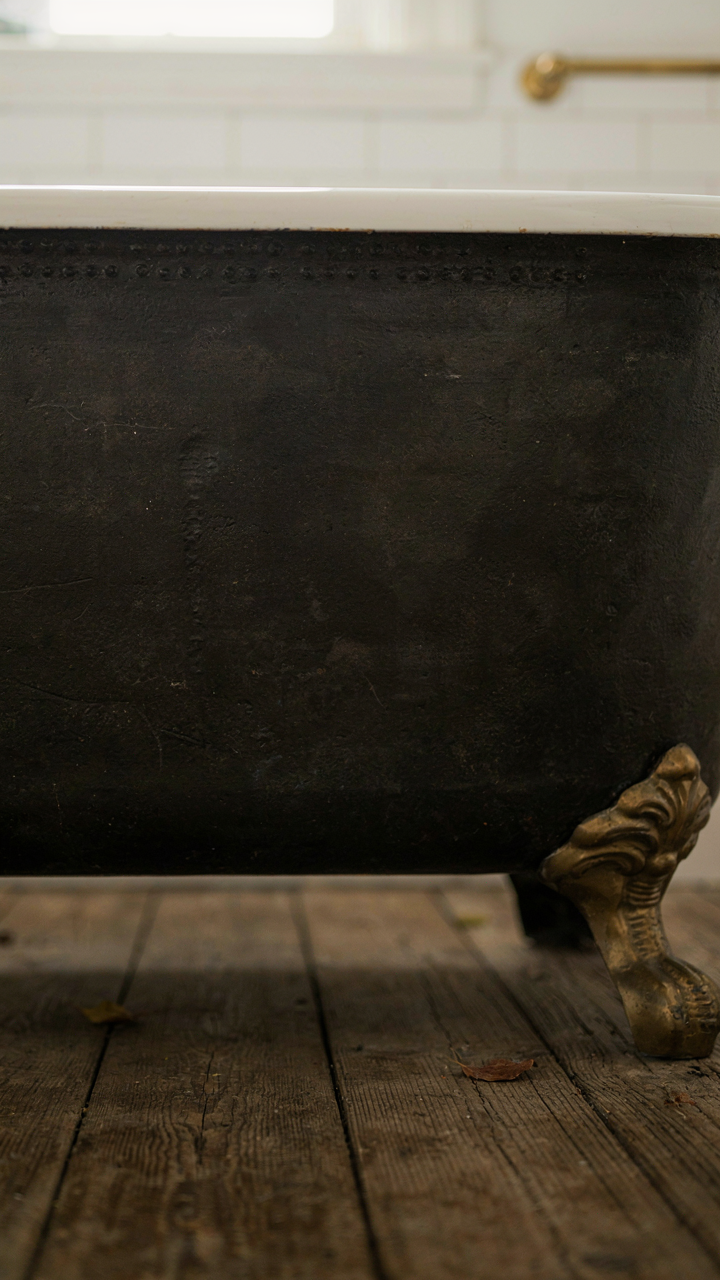
Real Materials Versus Knockoffs
You want to feel like you own something valuable. That’s the real reason you’re here. The mechanism is simple: Victorian bathrooms trigger status because they signal historical authenticity and wealth. But most people can’t tell the difference between cast iron and stamped steel, or between original subway tile and modern reproduction.
Authentic Victorian materials have specific properties that reproductions skip. Cast iron clawfoot tubs weigh 300 to 400 pounds and have walls thick enough to hold heat for hours. Reproduction tubs are lighter, thinner, and cool faster. Original marble has grain variation and minor surface irregularities from the hand-finishing process. New marble is uniform because machines cut it. Porcelain that predates 1920 has a specific gloss and durability that modern glazing doesn’t replicate. Check the underside of fixtures. Authentic pieces show manufacturer marks, hand-tooling marks, or patina patterns that random reproduction can’t fake consistently.
Bathroom Function Over Period Authenticity
The advice most people follow is wrong: don’t recreate a Victorian bathroom exactly as it worked in 1890. That means no running water reliability, no electrical outlets, no proper ventilation, and no insulation. The real move is Victorian aesthetics with modern infrastructure hidden.
Victorians had outdoor privies, chamber pots, and bathing once weekly in many households. When indoor plumbing arrived, bathrooms became cramped utility spaces, not showrooms. The visual identity people chase now comes from late Victorian and Edwardian bathrooms, when gas heating existed and fixtures got intentional design treatment. Keep the clawfoot tub, the subway tile, the pedestal sink. Run supply lines through walls, hide the vent stack, install a modern mixing valve inside period-appropriate faucet handles. The mechanism is honest function wearing vintage skin.
The Anti Fussy Formula: Stripping Down Victorian Style
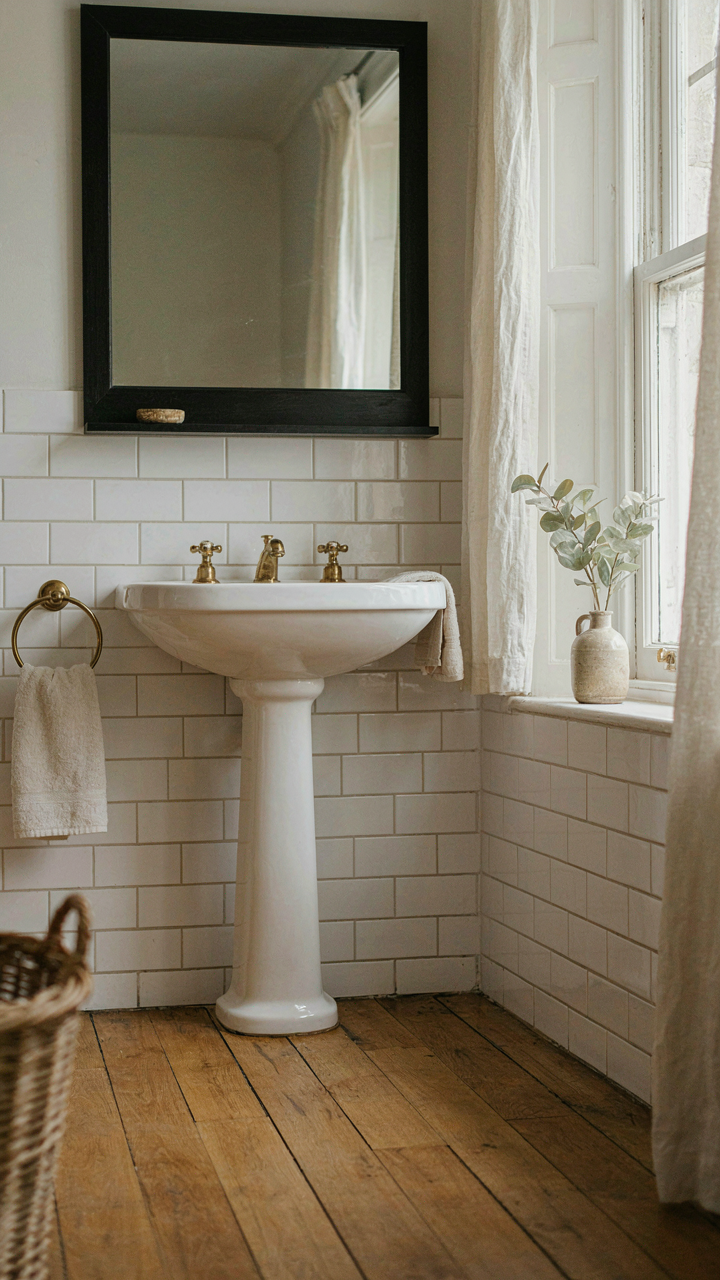
Minimalist Victorian Accents, Maximum Impact
You want Victorian without looking like you raided a museum gift shop. The real mechanism here is constraint. Victorian bathrooms actually succeeded through limitation, not abundance. The era had fewer production options, so designers relied on material quality and proportion instead of quantity. A single clawfoot tub, one brass fixture, white subway tile—these choices work because they echo how Victorians actually built when they couldn’t manufacture endless options.

The common advice says “add Victorian touches.” Wrong. Start by deciding what stays, not what gets added. Pick one dominant material: clawfoot tub, or pedestal sink, or hex tile—not all three fighting for attention. Everything else becomes supporting cast. A black-framed mirror above a simple sink reads more authentically Victorian than a bathroom drowning in brass, wall sconces, and patterned tile. Restraint was the Victorian luxury, not ornamentation.
Editing For Effect, Not Decoration
Design follows the same principle as writing: cut everything that doesn’t advance the story. A Victorian bathroom doesn’t need vintage bottles on shelves, claw feet on every surface, or floral wallpaper competing with marble. The original Victorian aesthetic came from technical constraint and material honesty, not decorative excess. Victorians invested in one standout piece—a cast iron tub, quality brass fittings, solid wood cabinetry—and left everything else clean.
Start with white walls or soft neutral paint. Add the clawfoot tub or pedestal sink as your anchor. Everything after that should justify its presence through function or material quality alone. No decorative soap dishes shaped like shells. No unnecessary shelving. No pattern layered on top of pattern. If you remove an element and the bathroom feels incomplete, keep it. If removing it feels like relief, it was clutter masquerading as style. Edit until nothing can be removed without damage to the design.
The Clawfoot Conundrum: More Than Just A Tub
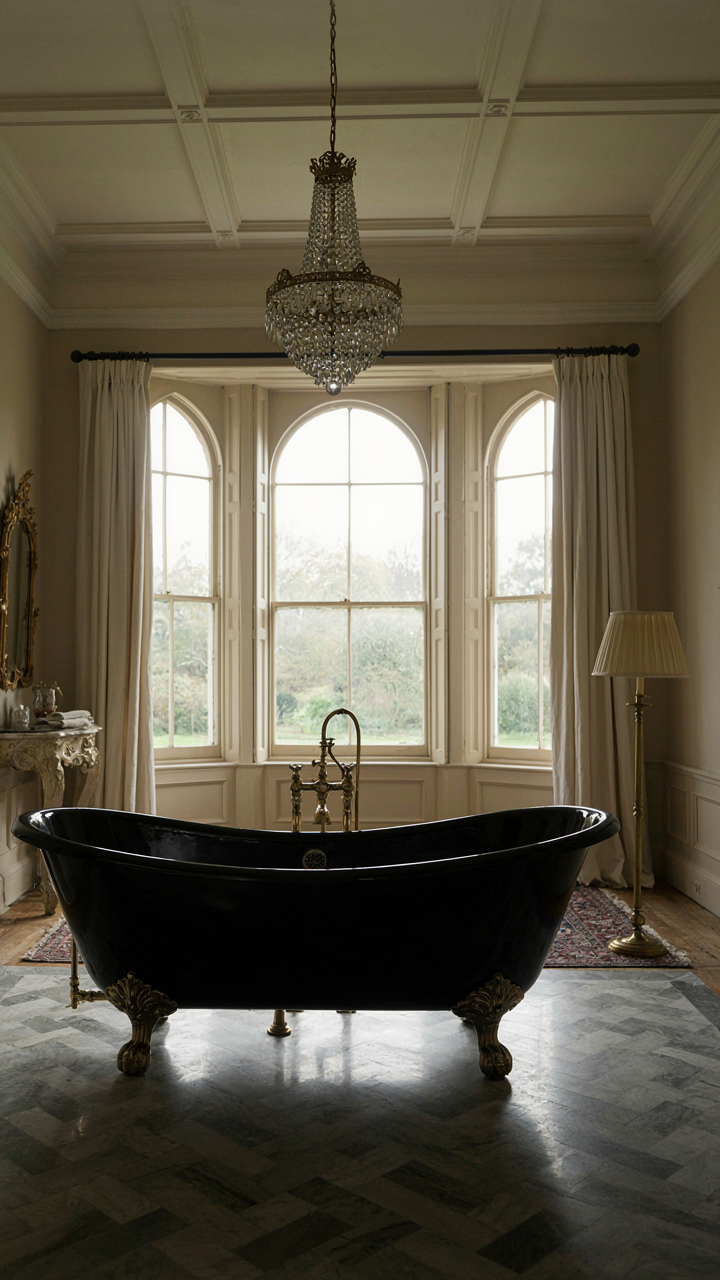
When The Bathtub Became Status
You want a clawfoot tub because you think it signals taste. That’s the real mechanism at work. The clawfoot didn’t appear in Victorian bathrooms by accident—it emerged during the 1880s when cast iron manufacturing became cheap enough for mass production, but the design itself borrowed from furniture language. Wealthy homeowners placed tubs in the center of rooms like freestanding pieces because plumbing wasn’t yet hidden behind walls as a standard practice.

The clawfoot represented a specific moment: when industrial production met classical aesthetics. The feet mimicked Chippendale and Queen Anne furniture legs, which meant your bathroom looked like your parlor looked intentional. This wasn’t about comfort or function. It was about proving you owned something that could stand alone and still belong in a room. The tub’s visibility became the point.
Material Choices Drive Everything Else
Cast iron dominates clawfoot construction for one reason: durability and heat retention. Modern manufacturers also use acrylic, which costs less and weighs a fraction of cast iron, but acrylic flexes under weight and loses heat faster. Enamel coating on cast iron chips over time and requires maintenance. Acrylic needs regular sealing and stains easily. The choice between them isn’t aesthetic—it’s about how many years you’ll actually use the thing before it degrades.
Size dictates placement more directly than any design theory. Standard Victorian clawfoot tubs run 54 to 66 inches long and 28 to 32 inches wide. Anything longer than 60 inches requires a bathroom larger than most homes have. Before you fall in love with a tub, measure your doorway, hallway, and the actual floor space. Placement near windows or exterior walls affects water temperature and plumbing routing costs. Clawfoot placement isn’t flexible—install it where supply and drain lines already exist, or budget for breakage.
Victorian Bathroom: The Unseen Mechanics Of Ambiance
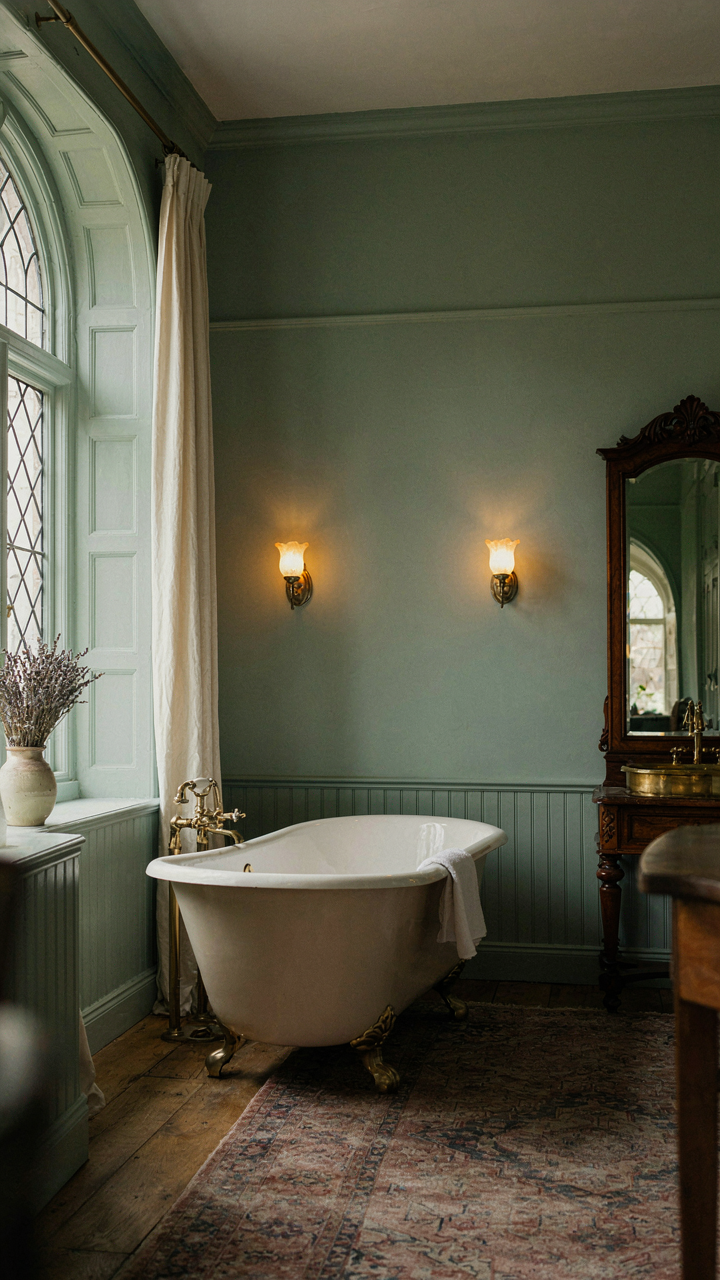
How Light Shapes Your Nervous System
You want this room to feel expensive and calm because you know people judge you by your bathroom. Here’s the actual mechanism: lighting operates through intensity and color temperature, not vibes. Victorian bathrooms used gas fixtures that produced warm, diffuse light around 2000-2400K. This wavelength triggers lower cortisol and activates parasympathetic nervous response. Modern recessed lighting at 4000K+ does the opposite—it signals alertness and expense anxiety.

The physics here matters because you can’t fake it with paint or fixtures alone. Warm Edison bulbs in period sconces or a central fixture with frosted glass diffusion recreates the original effect without the gas flame risk. Position light sources to bounce off walls rather than aim directly at the mirror—Victorians understood this through trial, not because they read about it. This single change eliminates the clinical bathroom feel that reads as cheap regardless of your actual spend.
Tile And Porcelain: Where Sound Becomes Texture
Everyone says Victorian bathrooms need hard surfaces because they look period-correct. That’s incomplete. Hard surfaces control acoustics through absorption and reflection. Victorian tile—typically glazed ceramic or encaustic cement—reflects sound and creates natural dampening. This makes the space feel controlled and deliberate rather than hollow. Porcelain and ceramic both deliver this, but glazed finishes outperform matte because they scatter sound waves instead of trapping them.
The actual protocol: use glazed tile on walls and floors, keep grout lines tight, and avoid too much soft furnishing that kills all reflection. A single textile—a linen bath mat or window curtain—breaks up acoustic harshness without erasing the character. Acoustics aren’t about silence; they’re about how sound behaves when it hits a surface. Victorian materials engineered rooms where footsteps sounded solid and water running had presence without noise pollution.
Old Fashioned Bathroom Tile: The Enduring Grid System
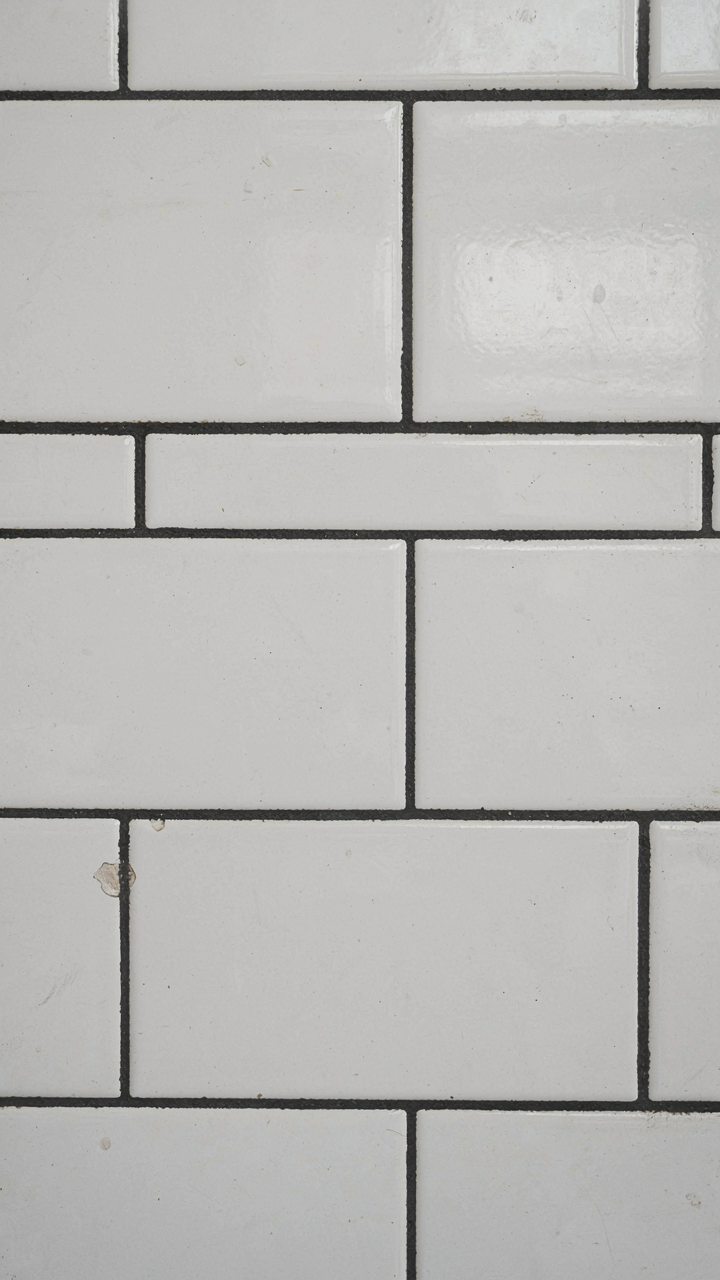
When Geometry Solved A Problem
You want this section because you’re betting that understanding Victorian tile patterns will make your bathroom look intentional instead of like you copied Pinterest. Here’s the mechanism: Victorian tile patterns weren’t decorative choices—they were problem-solving. The grid system emerged from necessity. Bathroom walls needed protection from moisture and condensation. Small tiles with frequent grout lines did two things simultaneously: they broke up surface area so water couldn’t travel far, and grout absorbed moisture before it penetrated plaster underneath.

The geometric patterns themselves came from industrial production constraints. Manufacturers could stamp identical tiles cheaply, then arrange them in repeating sequences. Encaustic tiles (clay with inlaid colored patterns) dominated from the 1860s onward because they held their color permanently—unlike painted surfaces that faded. The grid wasn’t aesthetic preference. It was the direct output of material physics meeting manufacturing capability.
What Modern Tile Gets Wrong About Period Correctness
Most advice tells you to find “authentic Victorian patterns” and install them everywhere. Wrong. The mistake is treating Victorian tile as a unified style. What actually happened: wealthier homes used encaustic tiles with intricate geometric borders. Middle-class bathrooms used cheaper glazed tiles in simpler patterns or solid colors. Working-class properties used plain white subway tiles when they could afford tile at all.
Modern tile production lets you buy historically styled tiles, but the installation method matters more than the pattern itself. Victorians set tiles with mortar beds that created visible grout lines—thick ones. Contemporary thin-set installation with narrow grout lines erases the visual weight that made the original designs read correctly. Your tile pattern is only half the equation; the grout line width determines whether it actually looks period or just looks like a theme park version. Set your grout lines at a minimum of half an inch to restore the visual hierarchy the original builders relied on.
Moody Victorian Bathroom: Mastering The Shadow Play
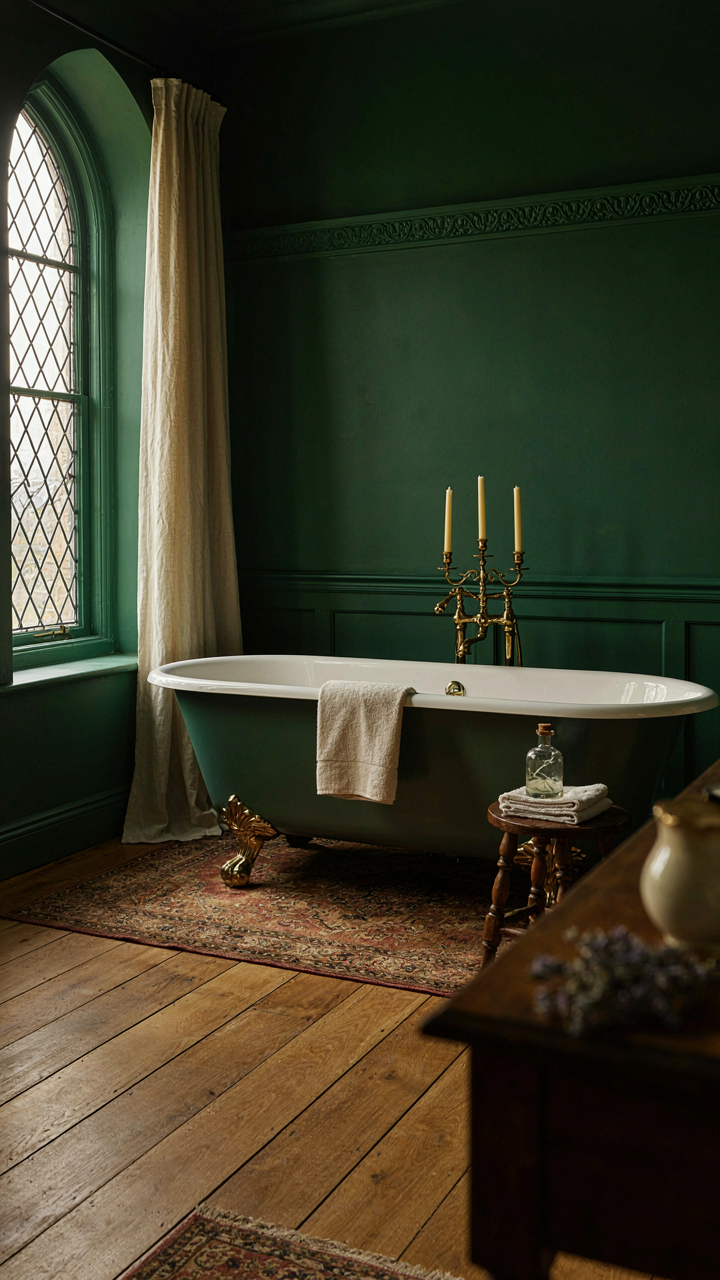
Paint Without The Cliché
You want the moody Victorian bathroom because it signals you understand something most people don’t: restraint reads as wealth. The real mechanism is saturation and depth, not just picking dark colors. Victorians didn’t use flat blacks or grays. They used deep jewel tones and earth pigments that absorbed light differently depending on the room’s natural exposure and artificial lighting. The depth comes from layering undertones. A deep forest green has blue and black underneath. A moody burgundy carries brown. This makes the color feel dimensional, not like you painted it yesterday.

The mistake people make is treating color as binary: light or dark. Victorian bathrooms used what’s called selective saturation. High saturation in jewel tones on walls created drama. Lower saturation on trim and ceilings prevented the space from collapsing. If your bathroom has north-facing windows, a deep slate blue with gray undertones won’t feel suffocating because the cool light bounces off it differently than it would a warm burgundy. The undertone matters more than the color name. Always test samples under both natural and artificial light for a full day before committing.
Where Darkness Actually Works
Conventional advice says dark bathrooms feel small. This is incomplete. Dark tones work strategically when you control contrast and keep surfaces clean. The actual principle comes from architecture: visual weight. Dark walls anchor a space and make fixtures pop if you use the right materials. Polished chrome, marble, or glazed tile against deep walls creates visual separation. A black or charcoal wall behind a white clawfoot tub doesn’t shrink the room. It frames the tub as the object worth looking at.
The protocol is simple. Use dark tones on the wall opposite your primary light source. Use lighter tones on the wall where light enters. This creates directional emphasis without suffocation. Matte finishes on dark walls absorb light and add mystery. Glossy finishes on white or cream trim redirect that absorbed light back into the space. Paint the ceiling a full shade lighter than the walls, even if that ceiling is still dark. This keeps the eye moving up instead of feeling trapped. A moody Victorian bathroom uses darkness as a framing device, not as the entire visual strategy.
The Victorian Bathroom Workflow: Designing For Utility
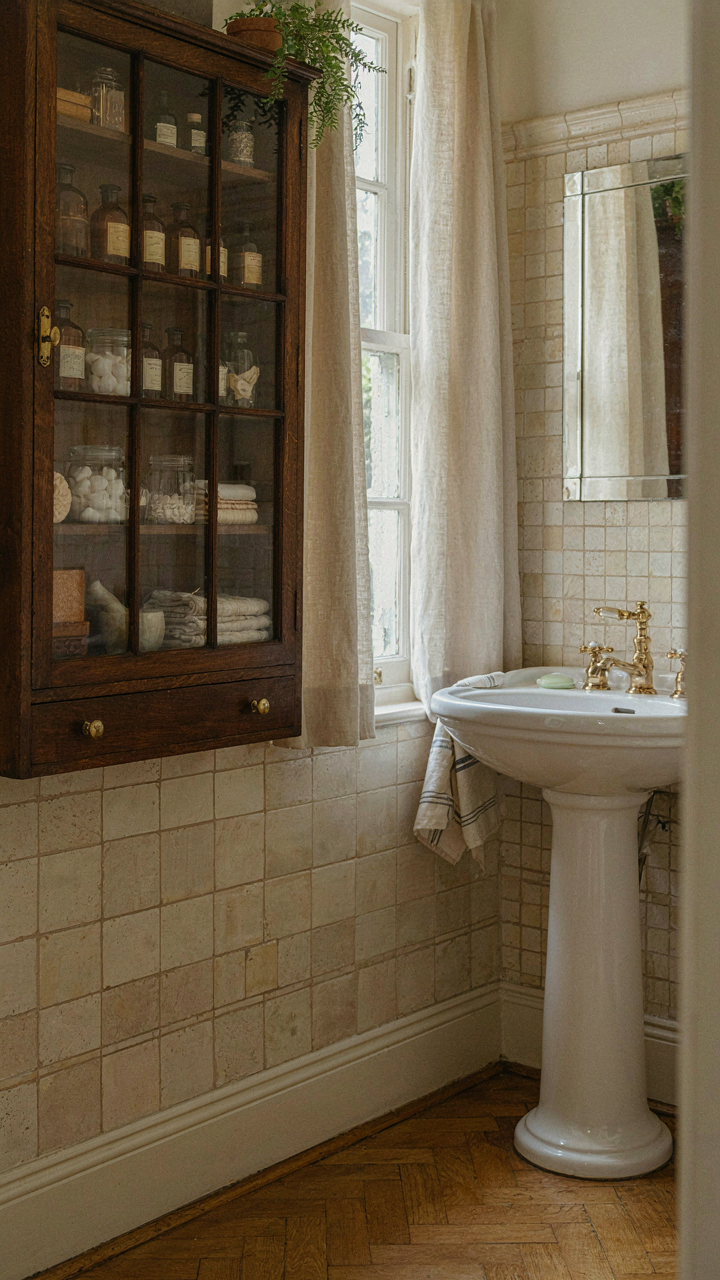
Period Fixtures Built For Real Use
You want a Victorian bathroom because it signals taste and history. But the real advantage is that Victorian fixtures were engineered before aesthetics decoupled from function. Form follows function here means the clawfoot tub’s height, slope, and rim diameter were determined by actual human bodies and water physics, not Instagram appeal.

Victorian plumbing fixtures operated on gravity and simple mechanical principles. The pedestal sink’s design forced water to drain efficiently without pooling. Tub dimensions reflected the average body size of the era, not modern proportions. Faucet handles required purposeful hand movements. Toilet tanks sat high because water pressure needed assistance from gravity. Every dimension solved a real problem first, then looked intentional second.
Storage That Fits The Aesthetic
The common advice says to hide modern storage behind period-accurate cabinet doors. That’s backwards. Victorian bathrooms had visible storage because concealment required space they didn’t have. Medicine cabinets, open shelving, and towel racks stayed exposed by necessity, then became part of the design language.
Your storage strategy must match this constraint logic. Use apothecary-style wall cabinets in wood or mirror to handle daily items. Install towel bars at the height Victorian fixtures used them, around 24 to 30 inches from the floor. Incorporate a pedestal or cabinet base under the sink to store cleaning supplies and linens. The mechanism here is simple: store only what belongs, where it belongs, so nothing needs hiding. This keeps the room functional without fighting the period aesthetic through awkward modern retrofits.
Victorian Bathrooms Ideas: Curating The Narrative, Not Collecting
The Objects That Matter
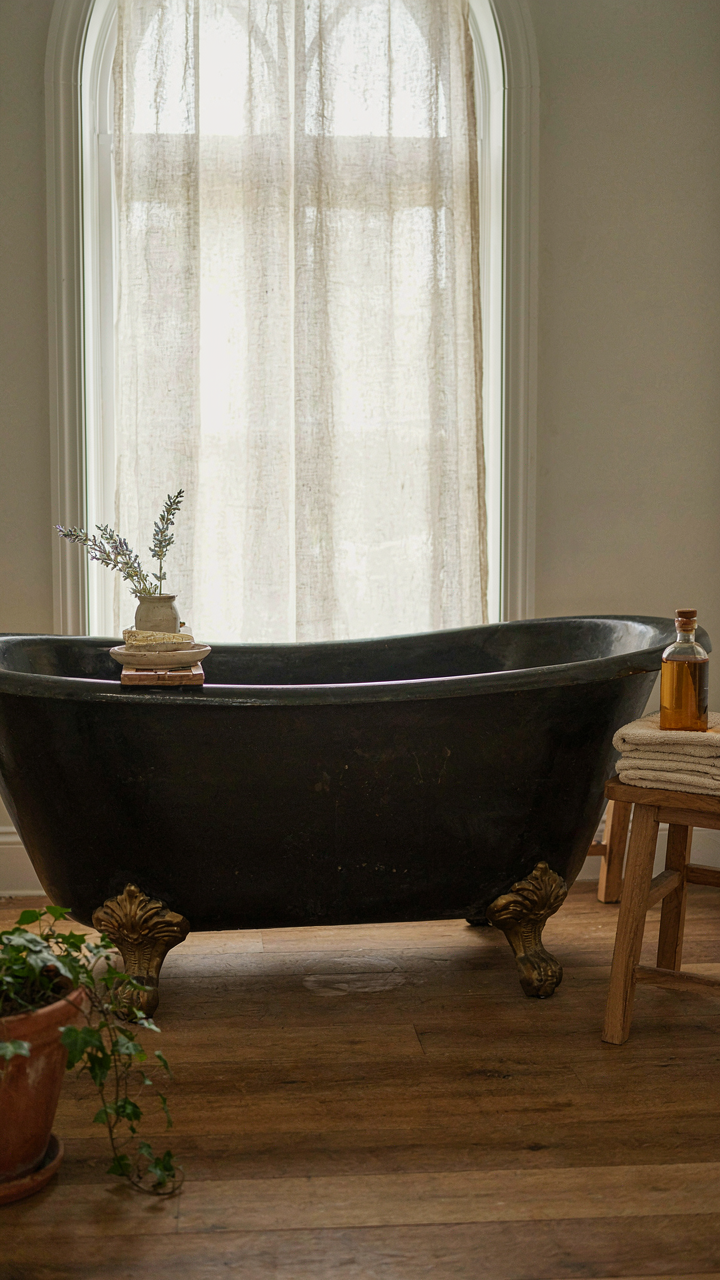
You want people to think your taste is refined. That’s the real reason you’re reading this. The mechanism nobody states: Victorian bathrooms fail when they become about accumulation instead of intention. A clawfoot tub means nothing if it sits next to mass-produced brass fixtures bought in bulk. The difference between a curated space and a cluttered one isn’t budget. It’s whether each object has a reason for existing there.

Personal artifacts anchor a bathroom to your actual life. A medicine cabinet inherited from your grandmother functions differently than one you ordered online. It carries weight. Victorian design worked because Victorians lived with objects that meant something: soap dishes from specific trips, mirrors with dents that proved use, towel racks that supported daily rhythm. When you reverse-engineer this aesthetic without the narrative, you get a showroom.
Living Spaces Refuse Museums
The museum trap is real, and everyone falls into it anyway. You’ve seen bathrooms staged like the past never ended, where nothing gets touched and humidity slowly kills the wood. That’s not Victorian. That’s taxidermy. Victorians used their bathrooms constantly. Moisture accumulated. Fixtures wore. Surfaces changed color.
A living Victorian bathroom shows use without showing neglect. The clawfoot tub gets cleaned regularly but retains its original patina where cleaning won’t reach. The subway tile shows actual water spots. The fixtures function reliably because they’re maintained, not because they’re precious. The protocol: accept authentic wear as part of the design, maintain mechanically, and refuse the impulse to restore everything to mint condition. What survives regular use tells the real story.
Your Fear Of Tastelessness Is Not Solved By More Decoration, But By Deeper Understanding
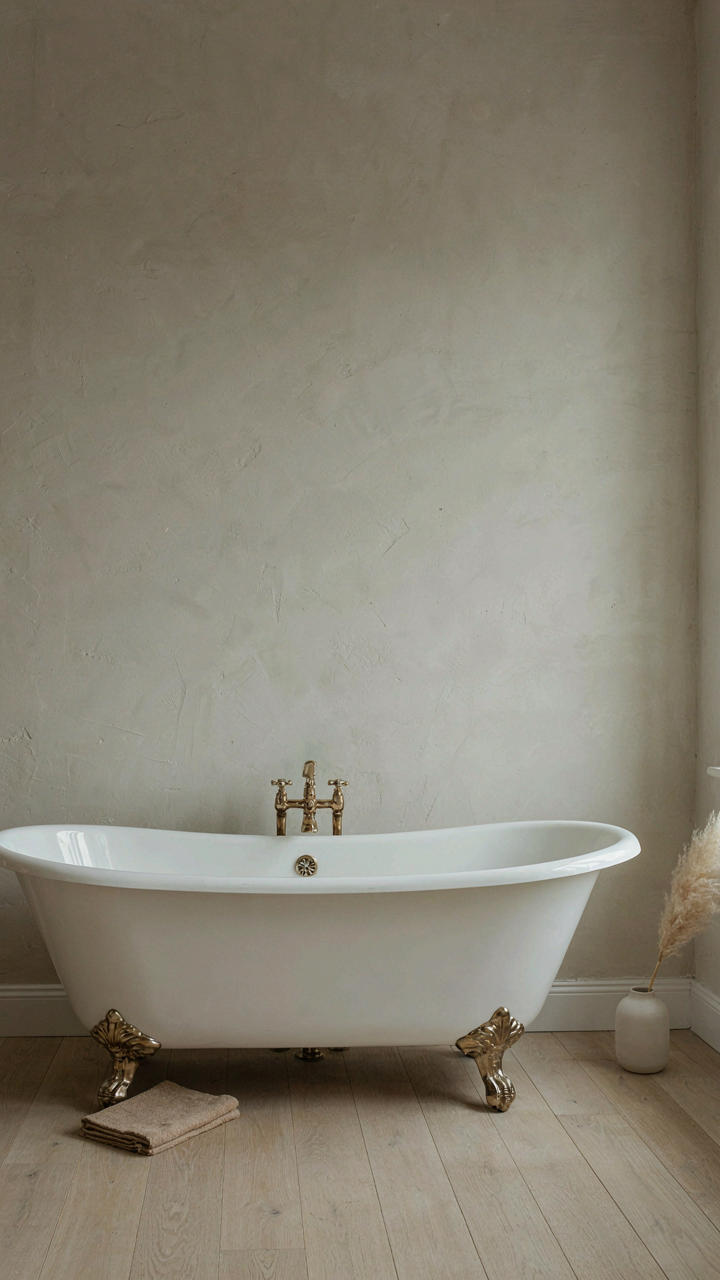
Most people buy Victorian bathroom fixtures to feel sophisticated, then drown the space in clutter because they don’t understand the actual principle underneath. The Victorians weren’t maximalists. They were proportionalists. They understood negative space, material restraint, and why one perfect clawfoot tub beats ten mediocre accessories. Stop collecting pieces. Study one room you actually love for twenty minutes today. Notice what’s absent, not what’s there. Taste isn’t about having more. It’s about knowing what to leave out.




