
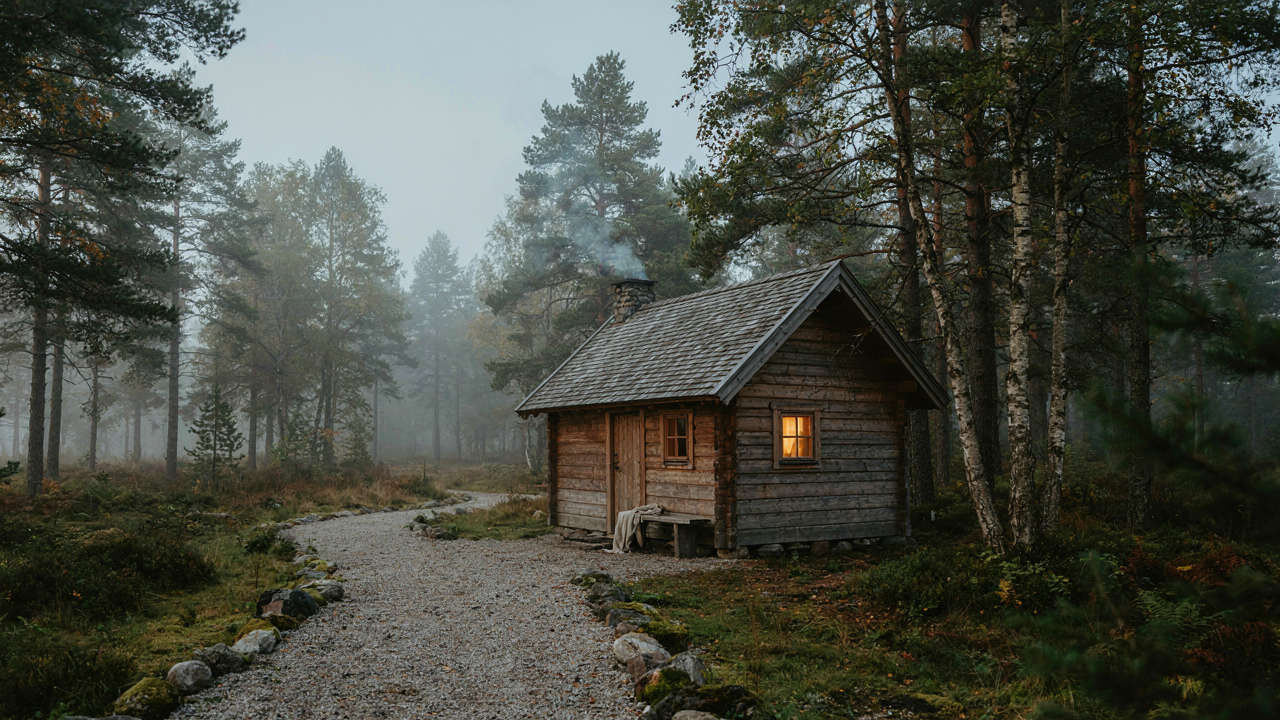
Beyond The Welcome Mat: The Selfish Motive For A Guest Cabin
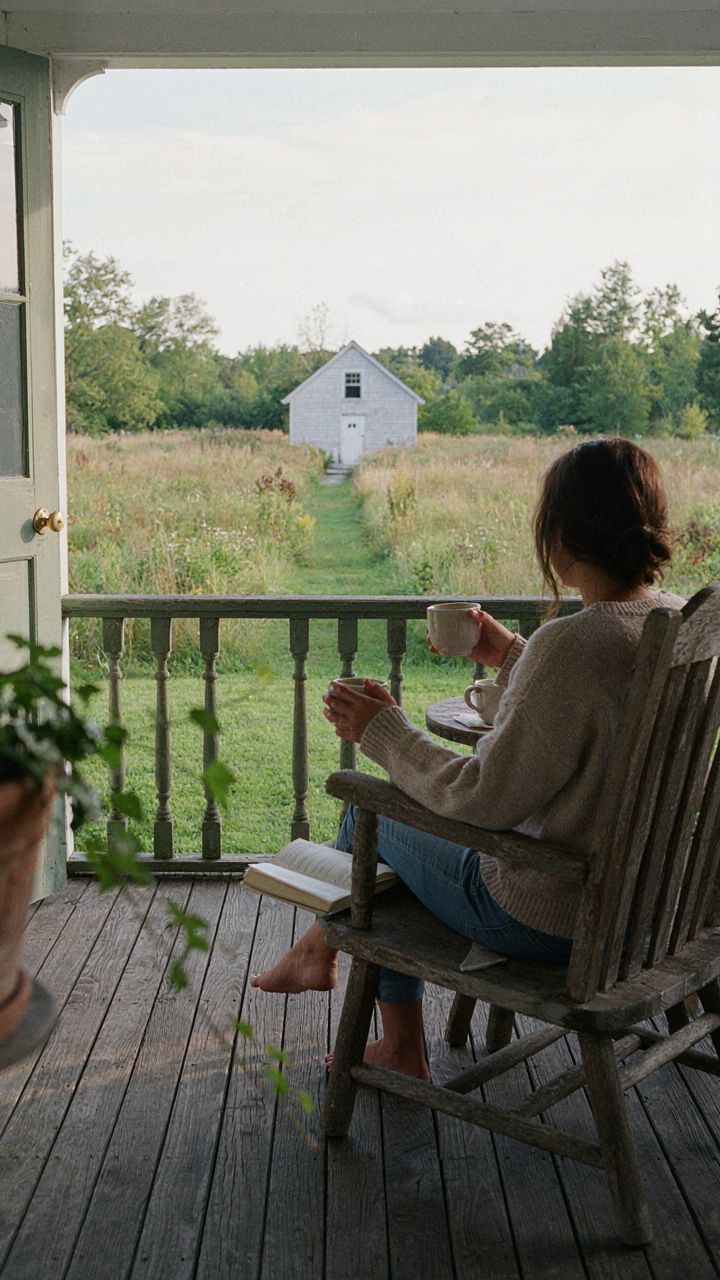
Control Over Your Own Territory
You want a guest cabin because you don’t want guests in your house. That’s the real reason nobody admits. From territorial biology, you’re establishing a buffer zone—a defined perimeter that separates your private domain from visitor access. Without it, guests colonize your kitchen, your hallways, your schedule.
A guest cabin enforces a boundary without requiring conversation. Your guests enter through their own door, use their own bathroom, operate on their own timeline. You reclaim your morning coffee ritual. Your bedroom door stays closed. Your living room remains yours after 9 p.m. The mechanism is simple: physical separation eliminates the negotiation.
When Cohabitation Breaks Down
Most advice about hosting says to “make guests comfortable.” That misses the real problem: extended proximity creates friction nobody prepared for. Different sleep schedules, bathroom timing, kitchen habits, and noise tolerance collide fast. A guest cabin solves this not by being nicer, but by creating distance.
When guests sleep thirty feet away instead of down the hall, small irritations don’t accumulate into resentment. You’re not managing their comfort every waking hour. They’re not aware of your morning routine or your work calls. Separation converts a potentially strained visit into a manageable one. Install a direct exterior entrance, separate HVAC if possible, and ensure the guest cabin has full kitchen access so nobody needs to enter your main house for basic needs.
The “Buffer Zone” Protocol: Strategic Placement & Design
Distance Creates Discretion
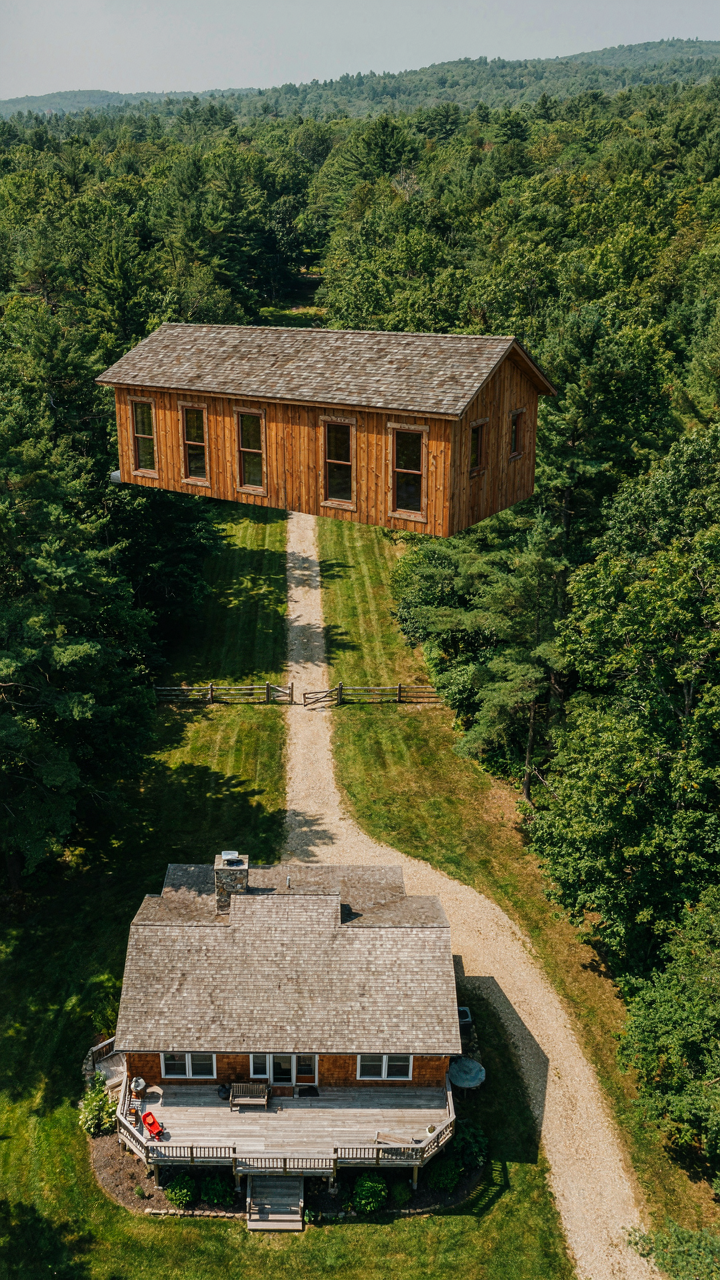
You want guests far enough away that you don’t feel watched. That’s the real reason this matters. Psychologically, proximity breeds obligation. You monitor behavior. You adjust yours. The mechanism comes from territoriality research: humans maintain invisible boundaries based on relationship type and context. A guest cabin isn’t a guest room. It requires spatial separation to reset the social contract. Placing it 75 to 150 feet from the main house breaks the line of sight and eliminates ambient awareness of each other’s routines.

This distance also protects your schedule. You move through your property without explanation or small talk. Guests can’t accidentally catch you working, exercising, or doing nothing. The separation works both directions. Neither party feels the friction of forced proximity masquerading as hospitality. Standard practice places cabins too close, treating them as extensions of the home. That defeats the purpose. The buffer zone should make both parties forget the other exists until they decide to interact.
Sound Stops Resentment
Everyone claims they want quiet. What they actually want is the absence of evidence that someone else is living nearby. Sound carries intention. Footsteps at 2 AM read as disrespect. Walls that fail acoustically create a permanent state of low-grade irritation that guests and hosts both blame on sleeping arrangements rather than poor design. Double stud walls with staggered framing, combined with mineral wool insulation, eliminate most interior noise transmission. Exterior noise requires a different approach: mass and air gaps matter more than absorption.
Install windows rated for sound reduction specifically, not just thermal efficiency. The real protocol: build the cabin shell first using mass and separation, then add interior acoustic treatments only where needed. Most builders reverse this and wonder why conversations still carry. A single-pane window negates everything else you built. Roof lines should extend over walls to create air barriers. Once sound stops traveling between structures, resentment stops building alongside it.
Bunkie Ideas Interiors Guest Cabin: Designing For Discretion, Not Dependence
The Restraint Principle
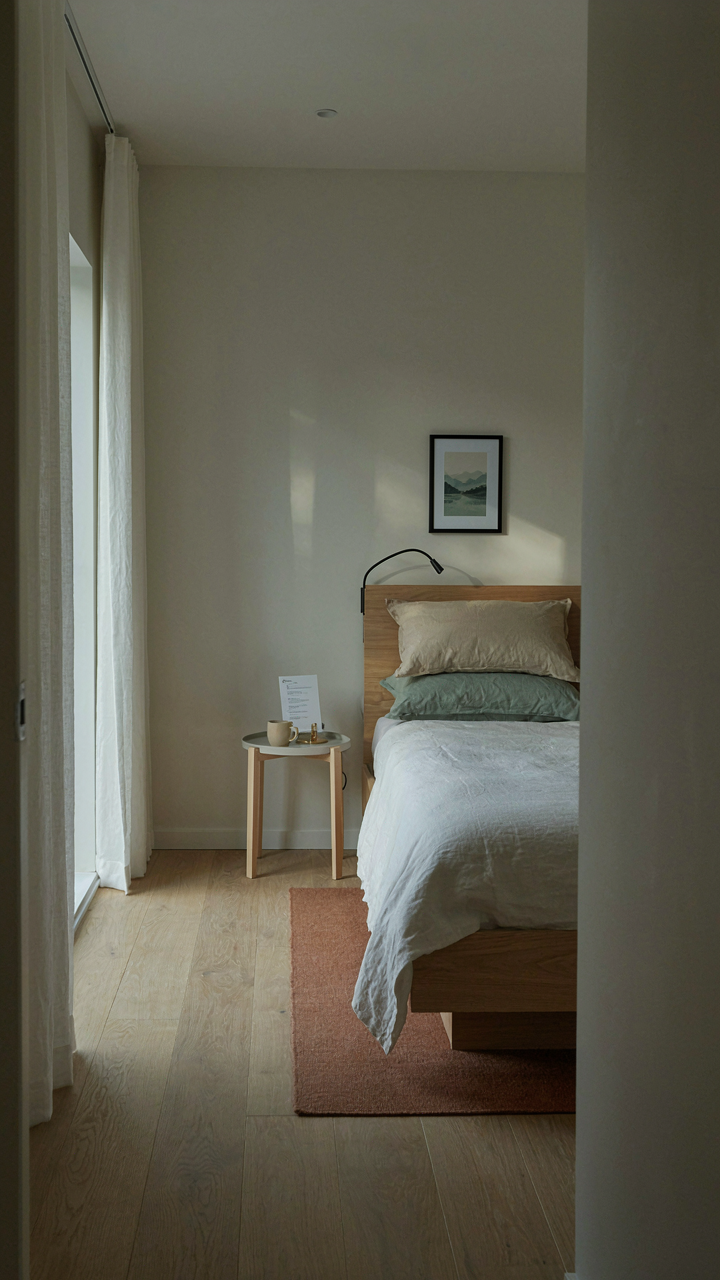
You want guests to feel taken care of without realizing they’re being managed. That’s the real tension here. Minimalist interiors work because they signal intentionality, not neglect. Every object you include must justify its presence through function or genuine comfort. Empty walls and clear sight lines create psychological spaciousness that luxury clutter destroys. This approach borrows from scarcity economics: constraint increases perceived value. One quality bed frame beats three mediocre chairs. Guests notice what’s absent only when they actually need it.

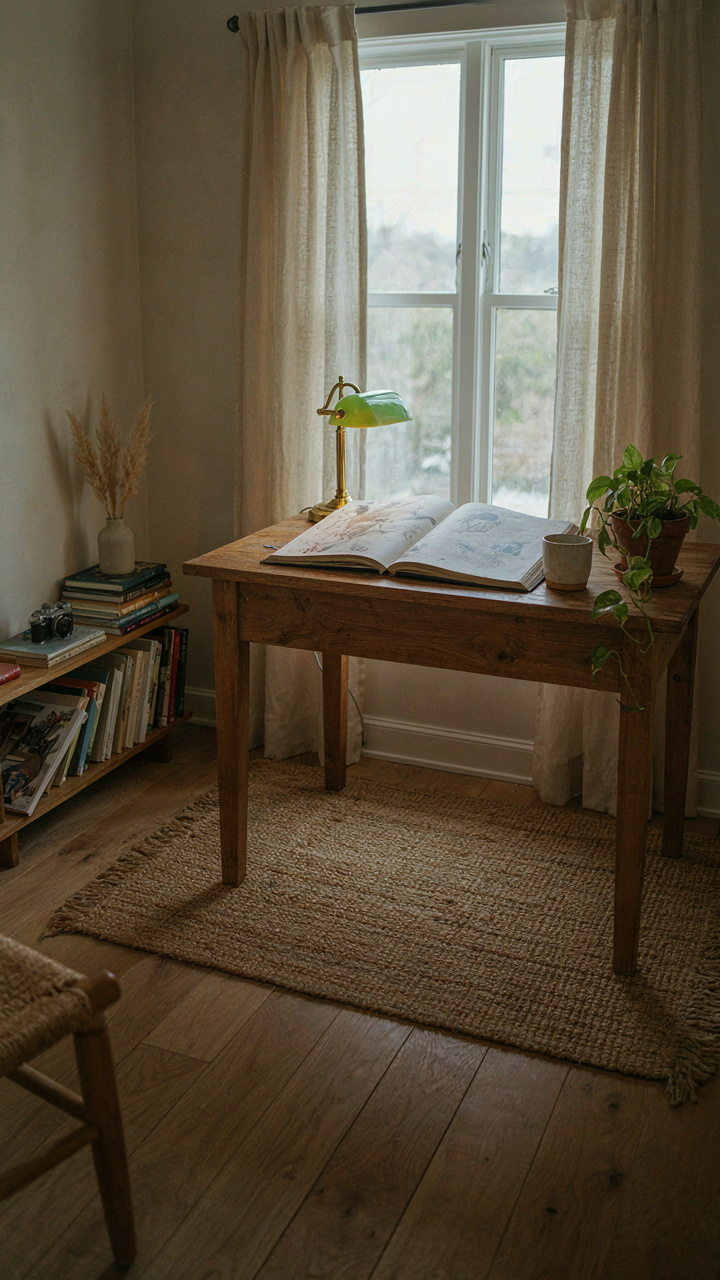
The mistake most people make is confusing minimalism with austerity. A guest cabin needs warmth. That means a functional heater, good lighting, and one or two pieces that aren’t purely utilitarian. The cabin should feel like someone designed it, not abandoned it. A single quality rug, one landscape print, proper curtains for privacy. These are the difference between sparse and intentional. Remove everything that serves no purpose. Keep everything that does.
Stock It Like Someone Lives There
Guests expect a basic supply kit, not a hotel turnover cart stocked for five-star service. The protocol is simple: provide what prevents friction during a two-to-three-night stay, nothing more. This means the guest doesn’t need to hunt for toilet paper at 11 PM or realize there’s no way to make coffee. You’re solving problems before they arise, not creating an experience.
- Linens and Towels: Two complete sheet sets, two bath towels, two hand towels, one washcloth per guest. Fresh, plain, functional. Replace after checkout, not during stay.
- Kitchen Essentials: Coffee maker, tea, basic cooking oil, salt, pepper, dish soap, sponge. No pantry stocking. Guests bring food or nearby options exist.
- Bathroom Basics: Toilet paper, hand soap, one roll of paper towels, trash bags. Full-size bottles signal a hotel. Travel sizes signal a guest cabin.
- Climate Control: Extra blanket folded at bed foot, space heater if climate demands, working thermostat. Temperature management prevents complaints faster than anything else.
- Information Only: Printed WiFi password, emergency contact number, checkout instructions, local restaurant list. Digital clutter creates friction. Physical simplicity speeds decisions.
The boundary between hospitality and hotel dependency is thin. Overstocking signals you don’t trust guests to plan. Understocking signals carelessness. The real mechanism is this: stock only items that prevent a guest from contacting you during their stay. Anything beyond that is overhead you don’t need.
The “Information Asymmetry” Advantage: What NOT To Tell Your Guests
Keep Expectations Low On Arrival
You want guests to feel like they got a deal. That’s the real reason you’re reading this section—status anxiety wrapped in hospitality language. Here’s the mechanism: information asymmetry from economics. When guests arrive expecting less than what you’ve actually built, the gap between expectation and reality becomes the entire experience. A sparse listing creates that gap. A guest cabin that surprises beats one that disappoints.

Don’t stock the cabin with every amenity before guests arrive. Provide the essentials: clean bedding, heating, water, functional plumbing. Leave the premium touches undiscovered. A fully stocked kitchen cabinet, extra blankets, local coffee, or a curated book shelf become delightful surprises when guests find them, not baseline expectations. This reframes the stay as generous instead of transactional.
Your House Stays Closed
The common advice here is soft: “Establish boundaries” and “set guidelines.” Wrong framing. You’re not managing expectations through politeness. You’re establishing separate territories. Your house is off-limits because it removes the permission question entirely. Guests don’t wonder what they can access. They know.
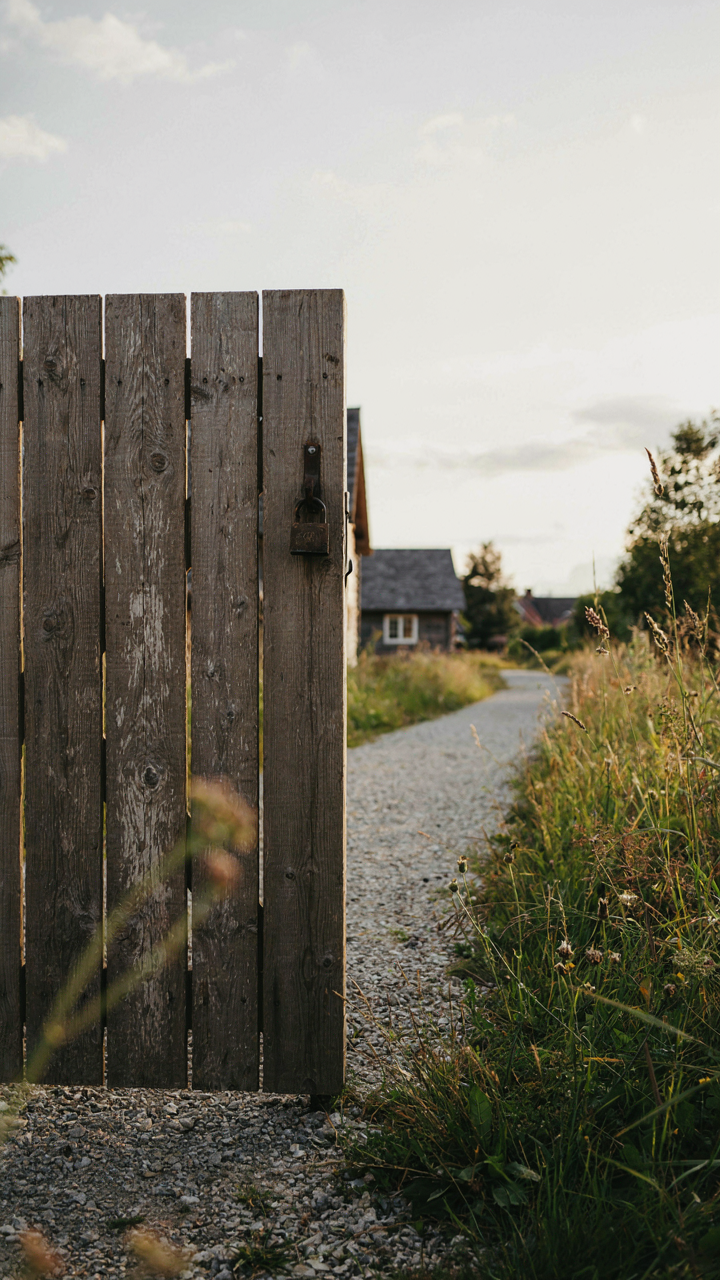
Build a threshold between spaces—a gate, a path, a clear architectural break. If the cabin sits on your property, the separation must be physical, not just verbal. Guests respect lines they can see. They’ll probe lines they can’t. A locked door on your house is cleaner than a verbal request not to enter. The cabin becomes their domain for the duration. Your house remains invisible to them. This eliminates friction and keeps the dynamic professional.
Mini Chalet, Tiny House Chalet: Utility Vs. Extravagance
Build For Use, Not For Instagram
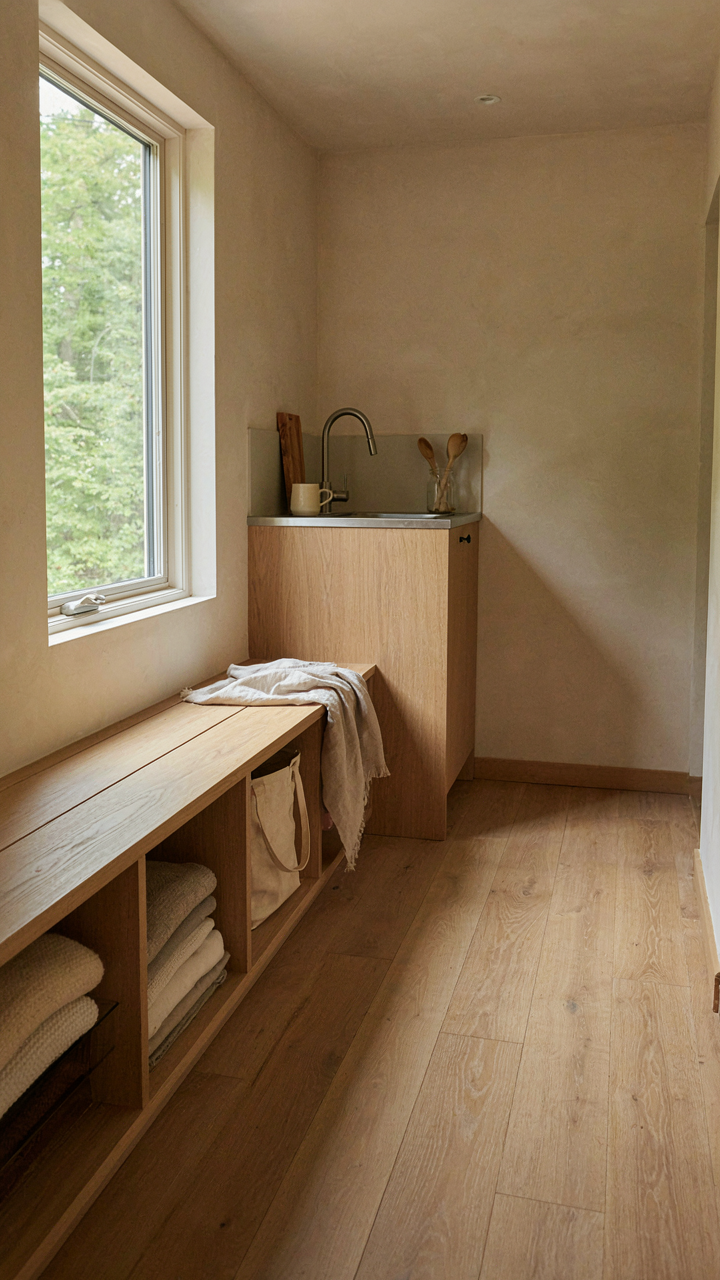
You want guests to feel like they’re staying somewhere special, which really means you want to feel like you built something impressive. The mechanism that separates functional guest cabins from expensive mistakes is constraint. Borrow from military logistics: every element must serve at least two purposes or it doesn’t exist. A built-in bench becomes storage and seating. Walls become insulation and sound dampening. Redundancy kills budget faster than anything else.

Start with what guests actually need during a one-to-three-night stay: a bed that doesn’t make them hate mornings, a bathroom that works without drama, a kitchen that prevents hunger, and heat that functions. Everything beyond this baseline is negotiable. The common advice says “add character with rustic touches,” but that’s just permission to spend money on decoration. A cabin with real utility needs zero decoration because the function becomes the aesthetic.
Stop Upgrading Before You Start
Upgrade creep is economic entropy applied to cabin design. Every feature you add at the planning stage costs less than retrofitting it later, so the temptation is to over-specify. The cabin industry profits from this mentality. You don’t need heated floors, a sauna, a fire pit area, and smart lighting in year one. You need guests to show up, sleep well, and leave satisfied.
Set a material and systems standard, then enforce it ruthlessly. Specify one type of faucet for every sink. Choose one flooring throughout. Use one paint color for all interior walls. This isn’t laziness, it’s leverage: you reduce decision fatigue, cut procurement complexity, and simplify maintenance for years. When a guest mentions something missing on their next visit, that’s your signal to add it, not your cue to have installed it speculatively.
Shed Roof Home, Shed Style Roof: Architectural Autonomy
Build What You Actually Need, Not What Looks Correct
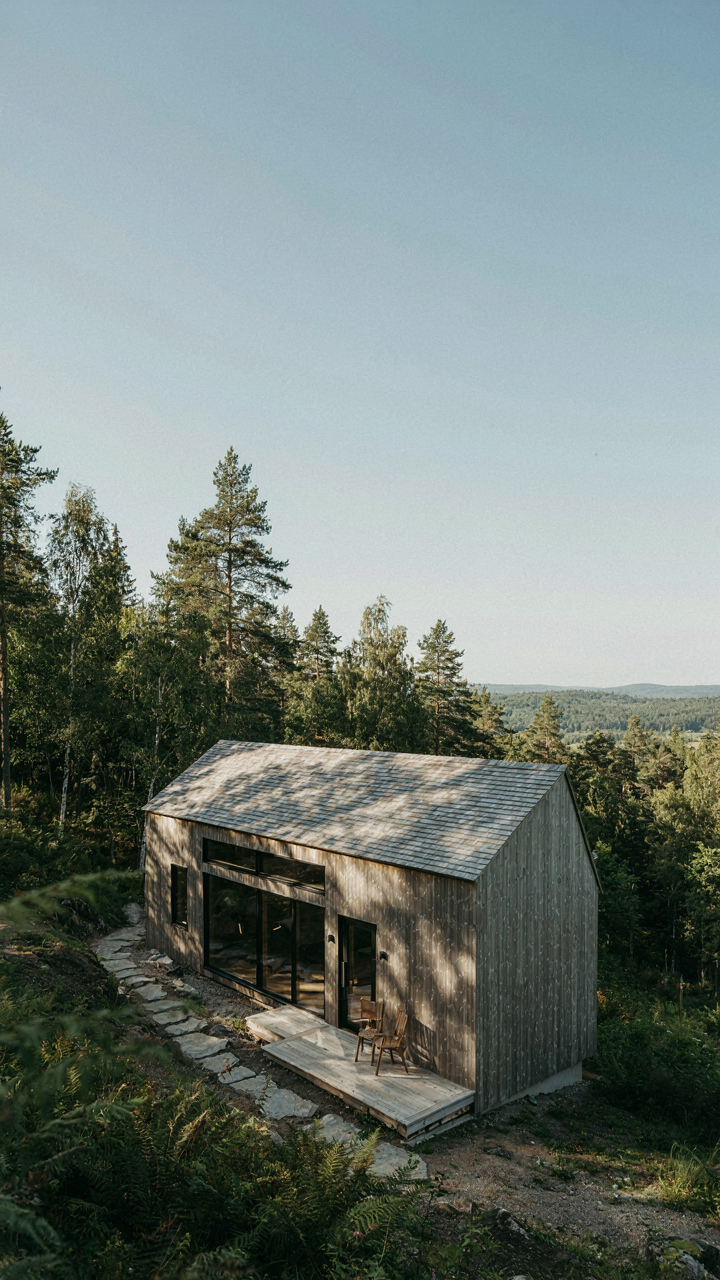
You want permission to break the rules. That’s the real reason shed roofs appeal to you—they sidestep the aesthetic authority that makes most homeowners feel like they’re building wrong. Here’s the mechanism: shed roofs (single-slope designs angling one direction) eliminate the constraint of symmetry that dominates residential architecture. This frees you to orient the cabin based on solar gain, wind exposure, view angles, and functional layout instead of conforming to what neighbors expect a house to look like.

The shed roof is borrowed from industrial and agricultural design, where form follows mechanical purpose rather than tradition. Your guest cabin needs rain protection and structural integrity. A shed roof delivers both without the unnecessary complexity of a gable or hip configuration. Stop designing for validation. Size the roof angle to your climate’s precipitation patterns and your cabin’s thermal needs. A steeper pitch sheds snow load faster in alpine regions; a gentler slope reduces wind resistance on exposed sites. This is autonomy translated into material choices.
Natural Materials That Disappear Into Site
Everyone says “blend in with natural materials,” which is advice so hollow it collapses under scrutiny. What actually blends a structure into landscape is material weathering speed matching the environment’s aging process. Wood siding weathers to gray on its own timeline. Metal roofing oxidizes to rust-brown or can be chosen in earth tones. Composite materials that stay artificially pristine forever stand out more than honest aging ones.
The shed roof’s visual profile is already low and horizontal, which reduces perceived bulk on sloped terrain. Pair this with a material that weathers into the site rather than away from it. Cedar or reclaimed barn wood grays naturally. Standing seam metal in weathering steel or matte charcoal recedes visually. The cabin becomes part of the landscape’s visual progression, not an object placed on top of it. Select materials based on your site’s dominant color palette at three seasons, then choose the finish that transitions toward those tones within five years of exposure.
Cabañas Pequeñas, Chalés Pequenos: The Economic Leverage Of Detachment

Why Hosting Away From Home Actually Pays
You want a guest cabin because you’re tired of visitors sleeping in your spare bedroom. That’s the real reason most people explore this option, though they frame it as hospitality. Economics calls this the opportunity cost of hosting, and your cabin solves it by creating distance. When guests sleep elsewhere, you reclaim your primary residence as yours again. This isn’t generosity. It’s boundary management disguised as premium accommodations.

The mechanism is simple: separation reduces friction. A guest cabin lets you control when interaction happens instead of hosting someone in your living space for 16 waking hours. They arrive, you greet them, they retreat to their own walls. Your life doesn’t pause. Your kitchen doesn’t transform into a public space. Your schedule doesn’t compress around their comfort. This structure makes longer stays economically tolerable because the hidden cost of hosting vanishes.
The Personal Space Dividend
Most advice treats a guest cabin as a luxury amenity. Wrong. It’s a capital asset that generates returns through preserved sanity and protected time. In real estate valuation terms, you’re pricing the option value of solitude. When you own the space where guests sleep, you own when you see them. That control has monetary value in what economists call the personal space dividend. You quantify it by measuring what you’d sacrifice if forced to host in your primary home instead.
Calculate this simply: if one guest visit costs you two lost workdays of focus, and your work generates income based on that focus, a cabin’s construction cost breaks even after roughly six to eight visits depending on your hourly rate. The cabin pays for itself by enabling you to say yes to guests without destroying your productivity or marriage. Structure the space so guests need nothing from your main house, and you’ve converted an obligation into a sustainable income stream or reputation asset. The pivot happens when you stop thinking of it as a favor and start thinking of it as a professional separation layer.
The “Escape Pod” Philosophy: Your Refuge, Not Their Retreat
Your Space, Your Rules
You want a guest cabin because you’re fantasizing about being the generous host, but the real fear is losing control of your own property and peace. The mechanism is simple: a guest cabin only works when you design it to enforce boundaries without conversation. Think of it like a security perimeter in military doctrine—you’re not being hostile, you’re establishing a demilitarized zone that protects both sides by making the terms of occupancy physical, not emotional.

The cabin must have independent infrastructure. Separate entry, separate utilities, separate parking. This isn’t luxury—it’s operational necessity. When guests can’t wander through your main house at 6 AM looking for coffee, when they can’t hear your arguments or see your mess, the relationship stays cordial. The structure does the work your mouth never could.
The Bolt Hole For When You Need It
Guests love the idea of your cabin until they actually need to use it, at which point you realize you’ve handed someone else the key to your solitude. Build the cabin first for yourself as an actual alternative residence, not as a theoretical guest space. This changes everything about how you design it—you’ll add amenities you actually want, not what you think impresses people.
If the cabin sits empty 80 percent of the time waiting for visitors, you’ve built a liability masquerading as generosity. Design it so you use it regularly: office space, studio, retreat quarters. When guests arrive, you’re letting them borrow something that already serves you. The moment it becomes guest-only, you’ve surrendered it. Keep a backup key in a separate location and rotate your personal use through the seasons so the space never goes stale.
The “Exit Strategy” Blueprint: Setting Clear Boundaries And Departure Timelines
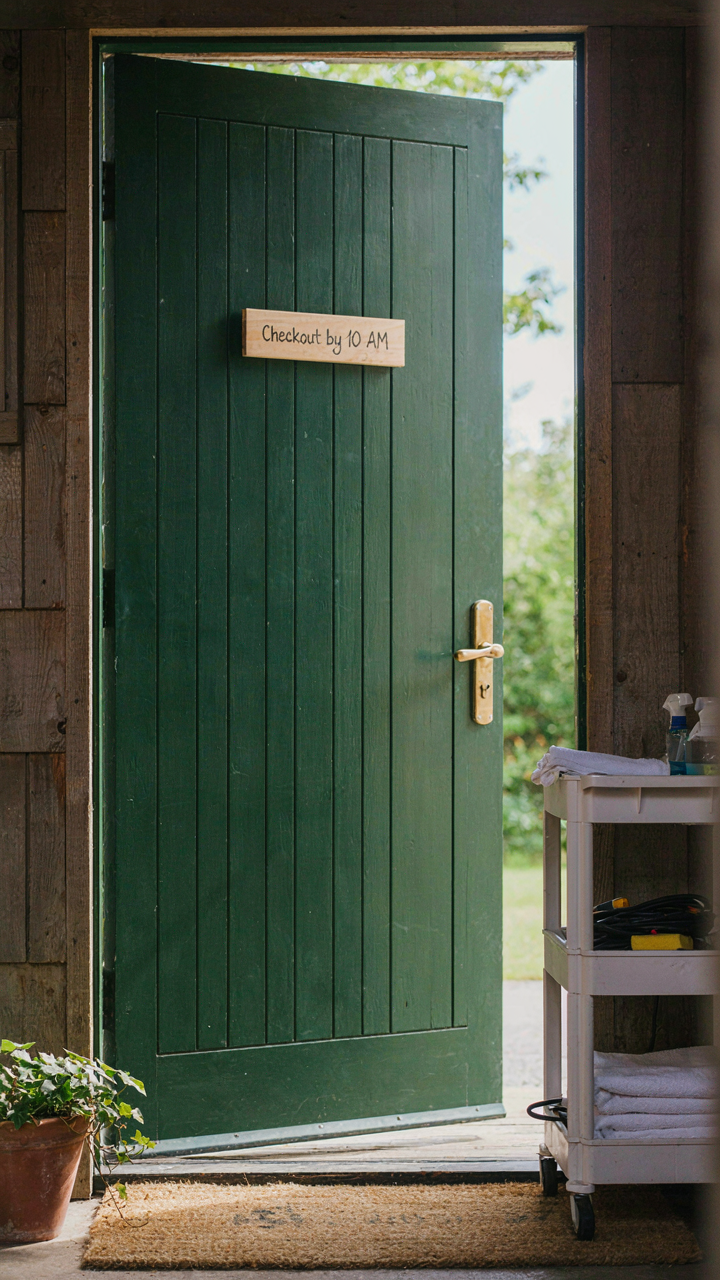
Decide The Length Before They Arrive
You’re afraid of being rude. That’s why you avoid stating visit length upfront, and that’s exactly why guests stay two days longer than intended. The mechanism is simple: absence of constraint creates unlimited expectation. Guests fill the vacuum you leave. Communicate duration in the booking confirmation, not as a suggestion but as a logistical fact. Weekend cabin stays work because the boundary is built into the format. You must do the same intentionally.

Specify arrival and departure times down to the hour. Not “around Friday” but “Friday at 4pm, Sunday at 10am.” This removes negotiation entirely. A guest cabin isn’t a hotel, but it still operates on a schedule. Your own life depends on knowing when the space becomes yours again. Send this detail in the initial message, repeat it in the confirmation, and include it in any pre-arrival communications. The repetition isn’t excessive. It’s protection.
Make Departure Non Negotiable
People delay leaving because you haven’t made staying past checkout costly. Not expensive costly, but friction costly. The common advice here is vague: “be friendly but firm.” That’s useless. Instead, create a concrete protocol. Schedule your own activity for post-checkout that requires the space to be empty. A cleaning crew. A repair person. A family event. This removes the decision from emotion and places it into logistics.
Guests respect what has a reason beyond preference. State the reason clearly: “The cabin needs to be ready for the next guests by noon,” or “Our cleaning schedule starts at 10am sharp.” Make departure automatic, not a favor you’re granting. The last guest you host teaches the next ten guests how seriously you treat your boundaries. Your protocol is: checkout time is firm, you communicate it three times minimum, and you have a scheduled activity that forces compliance. Execute this consistently and guest turnover becomes predictable instead of a source of friction.
The Selfish Sanctuary: Why Your Guest Cabin Is Your Ultimate Power Play
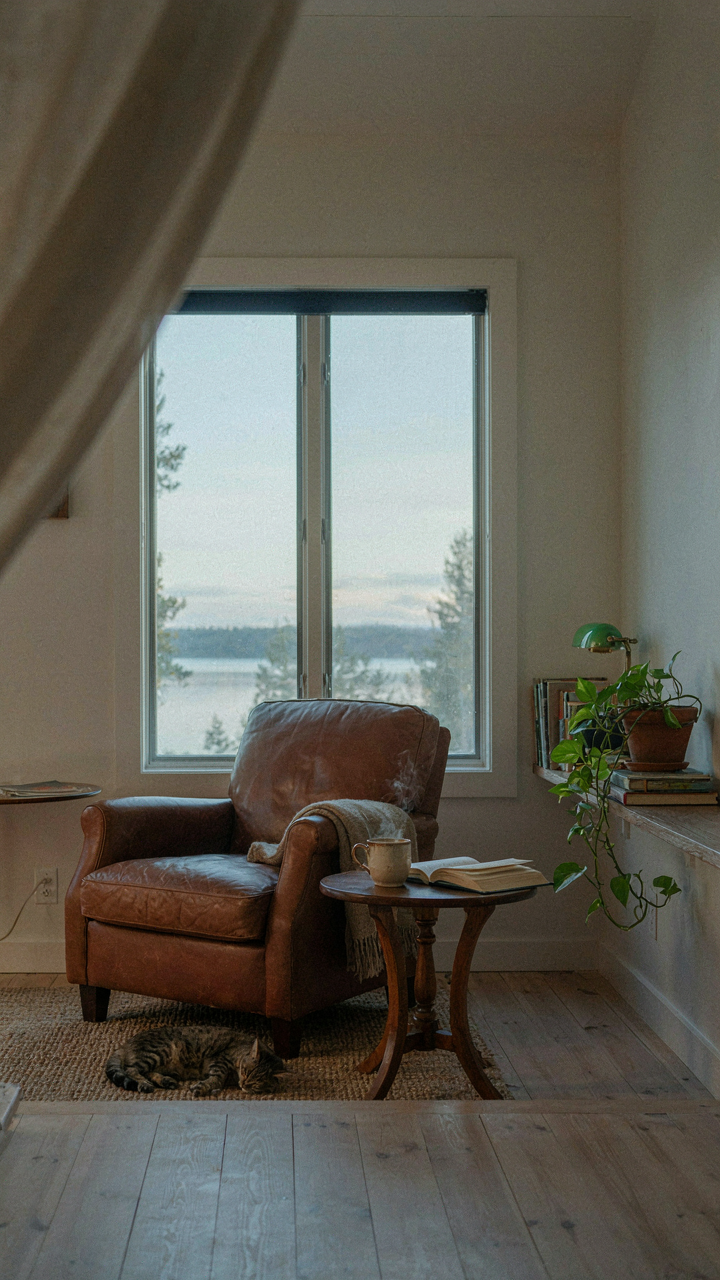
Stop building a guest cabin for other people. Build it for yourself. The best guest cabins filter out the noise, the obligations, and the people who don’t matter. They become leverage. When you control where people sleep, you control the narrative. You decide who earns access to your world. Today, sketch the single room that would make you want to disappear there. Not for guests. For you. A guest cabin without a selfish core is just a hotel you’re paying to maintain.