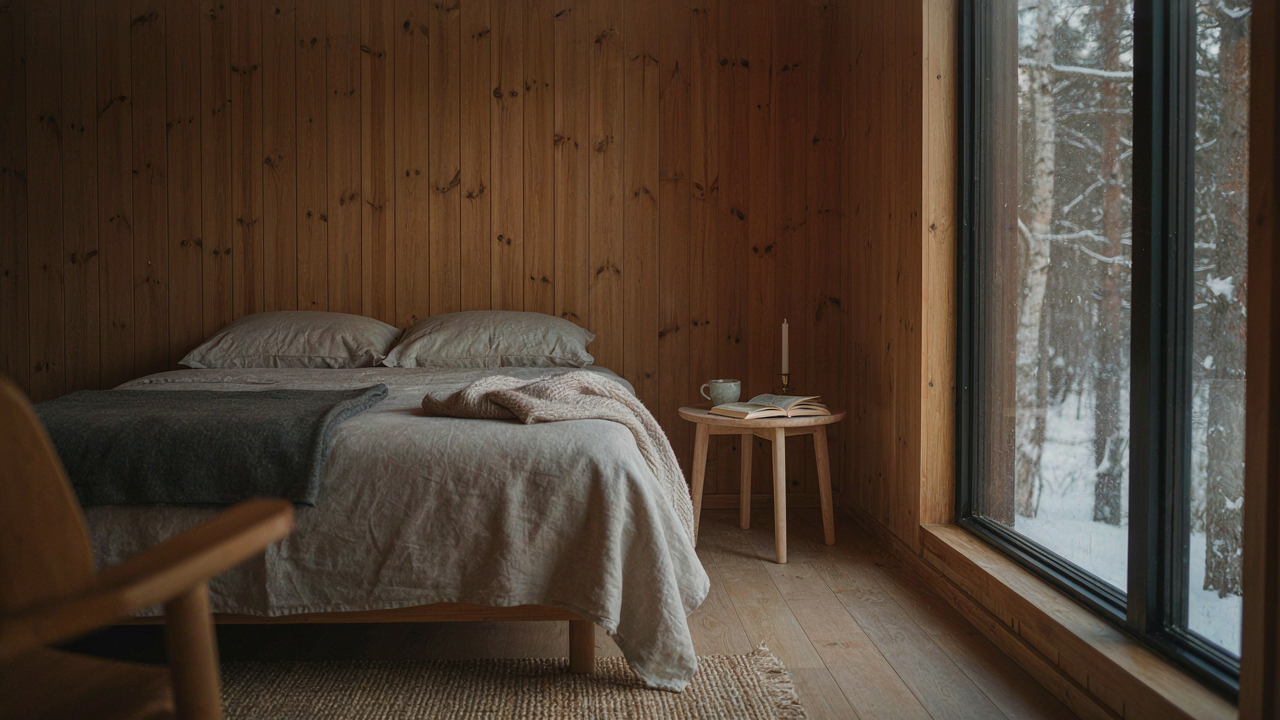
The Cognitive Load De Escalation Protocol For Scandi Cabins
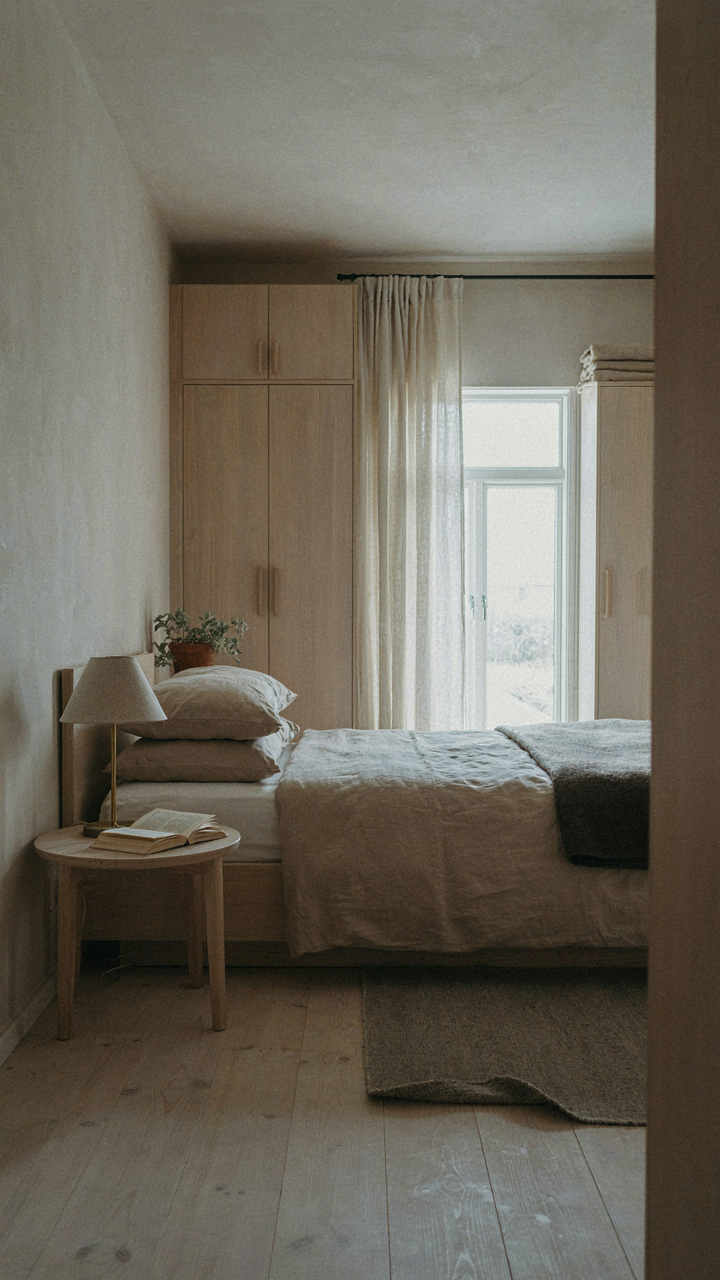
Minimalism As Environmental Friction Reduction
You want minimalism to make you look thoughtful. That’s not what it does in a bedroom. The real mechanism is cognitive load reduction, borrowed directly from information theory: every object in your visual field demands processing power, even subconsciously. Scandinavian cabin bedrooms strip this down by treating the room like signal versus noise. Fewer items mean fewer decisions your brain makes before sleep even starts.
The common advice says “remove clutter.” That’s incomplete. You need to remove the decision surface entirely. A Scandi cabin bedroom uses built-in storage, wall-mounted shelving, and unified material palettes so your eye lands on nothing that requires categorization. Nightstands hold one lamp and one book. Walls stay bare or feature a single tonal artwork. This isn’t aesthetic purity; it’s tactical neural shutdown before unconsciousness arrives.
Spatial Workflow Alignment For Sleep Preparation
Room layout in Scandi design isn’t random. It’s reverse-engineered from the actual sequence of actions you perform before bed. Your entry path, your undressing zone, your approach to the bed, your nighttime bathroom access: each one gets physical support through placement. Poor layouts force micro-decisions and backtracking. A well-arranged cabin bedroom eliminates friction by making the next required action physically obvious.
Bed placement against a wall perpendicular to the door is standard practice in Scandinavian interiors because it anchors the room’s geometry and creates a natural traffic flow that doesn’t route through your sleep zone. Dressers position near the entry so you change clothes before moving deeper into the space. Pathways to windows stay clear so you can open them for ventilation without navigating obstacles. Each placement serves function first, then aesthetic follows. The mechanism is simple: fewer obstacles, fewer activation energy required, sleep arrives faster.
Beyond Beige: The Psychology Of Nordic Palettes In Tiny Cabin Bedrooms
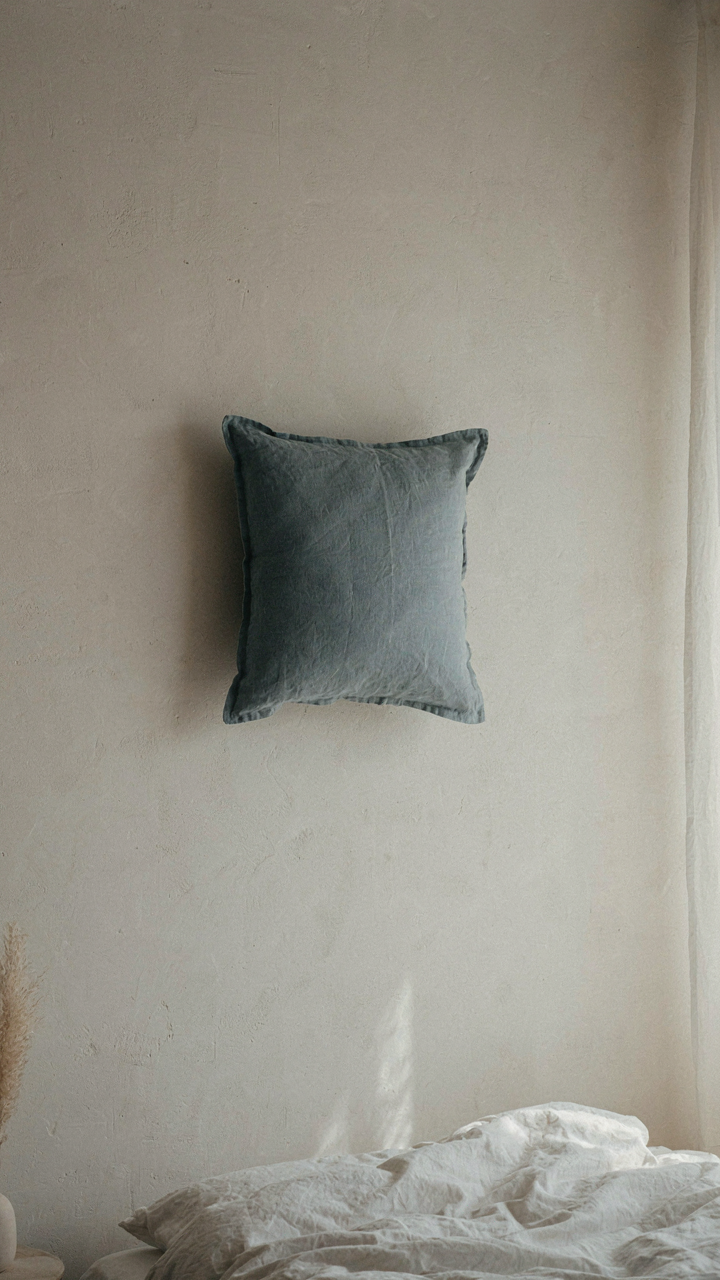
Muted Tones Create Measurable Calm
You want this section to validate that your expensive cabin purchase was smart. Here’s what actually matters: neuroscience calls it “stimulus reduction,” and it’s the mechanism behind why Nordic bedrooms work in confined spaces. Your brain processes fewer color signals, which lowers cortisol. Scandinavian design leverages this deliberately. The palette isn’t beige by accident or poverty. It’s engineered restraint.

Whites, soft grays, and warm off-whites dominate Nordic cabin bedrooms because they reflect light in small rooms without creating visual noise. A single muted accent—dusty blue, charcoal, or natural wood brown—provides focus without overstimulation. The strategy works because your eye stops scanning. It finds a resting point instead of jumping between competing colors, which is exactly what prevents sleep. Paint the walls a true Nordic white (not pure white, which reflects too harshly), keep trim and ceiling the same family, and anchor one wall in a low-saturation natural material like untreated pine or linen.
Constraint As A Design System
Everyone says “keep it simple.” That’s meaningless. Constraint is a design system, not a vibe. Limiting your palette to three colors maximum in a cabin bedroom isn’t deprivation. It’s signal-to-noise engineering. When you have six or more colors competing in 120 square feet, your nervous system never settles. It categorizes, compares, judges. That’s cognitive load.
Muted color choices work because they reduce the brain’s categorization work, freeing mental resources for relaxation instead of processing visual information. Pick your three colors before you furnish: base (wall color), secondary (bedding or accent piece), tertiary (single textile or object). Everything else mirrors one of these three. This isn’t boring. It’s the difference between a room that lets you sleep and one where your brain stays alert all night, searching for threats in visual variation.
The Materiality Mandate: Honest Textures In Your Cabin Bedroom
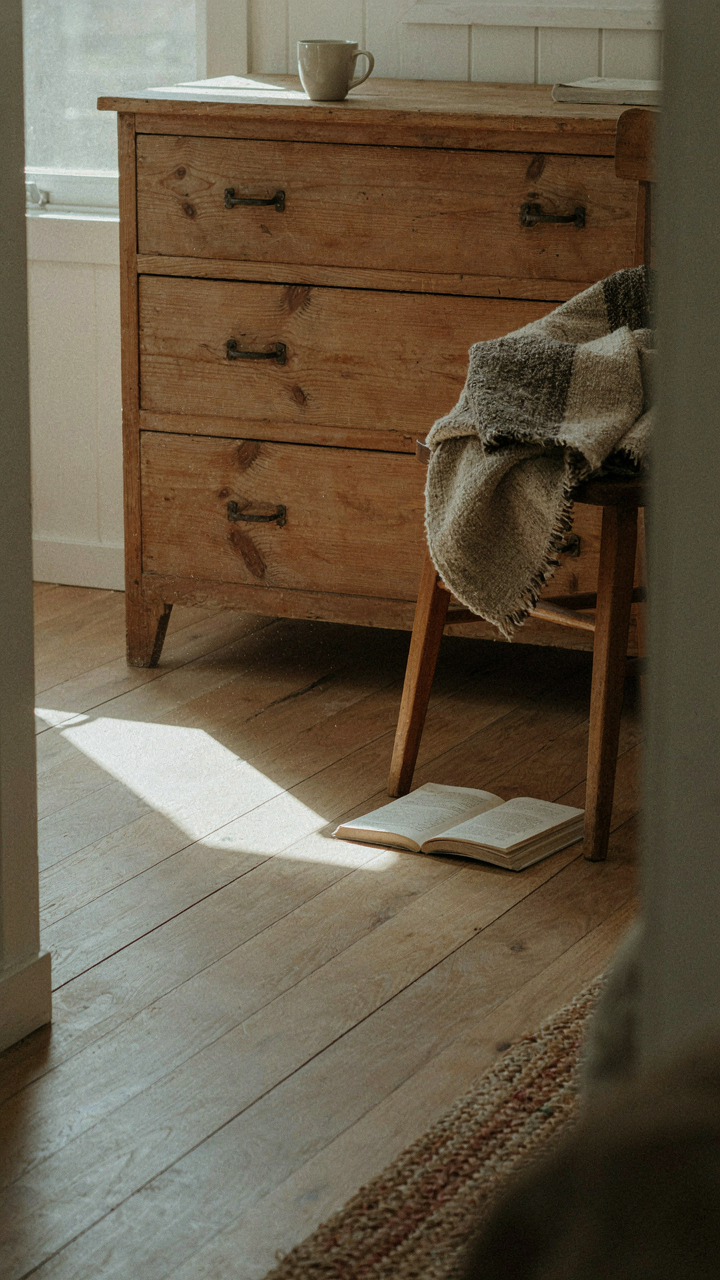
Natural Materials For Tactile Grounding
You want this room to feel “authentic” because you’re tired of synthetic spaces that don’t signal safety to your nervous system. The mechanism: your skin reads material density and temperature before your brain processes it. Natural materials conduct heat differently than synthetics, triggering parasympathetic activation the moment you touch them. This isn’t aesthetic preference. This is neurology.

Scandinavian cabin design emerged from material scarcity and extreme climate, not Instagram aesthetics. Builders used what survived winters: untreated wood, undyed wool, raw linen. These materials age visibly, which your brain interprets as honest. A synthetic comforter hides degradation. A wool blanket shows wear as evidence of use, not failure. Your sleep deepens when your environment stops lying.
Wood, Wool, Linen: Sensory Inputs For Deeper Rest
Pine, spruce, and birch dominate Scandinavian cabin interiors because they’re local and thermally stable. Wood panels on walls moderate humidity naturally, preventing the dry-throat problem synthetic drywall creates. Wool bedding regulates temperature within 1-2 degrees of skin temperature without trapping moisture. Linen sheets cool slightly on contact, which initiates the physiological shift into sleep onset.
The mistake most people make: they buy the materials but treat them like luxury items. They protect wool with plastic covers. They stain wood to “preserve” it, blocking the material’s ability to breathe. Raw, unsealed natural materials perform their function. The second you seal or wrap them, you’ve paid for the look while removing the mechanism. Buy untreated wood furniture. Wash linen and wool and use them directly on your skin. This is the setup that works.
Light As A Lever: Circadian Rhythms In The Ski House Bedroom
Morning Light Stacking For Alertness
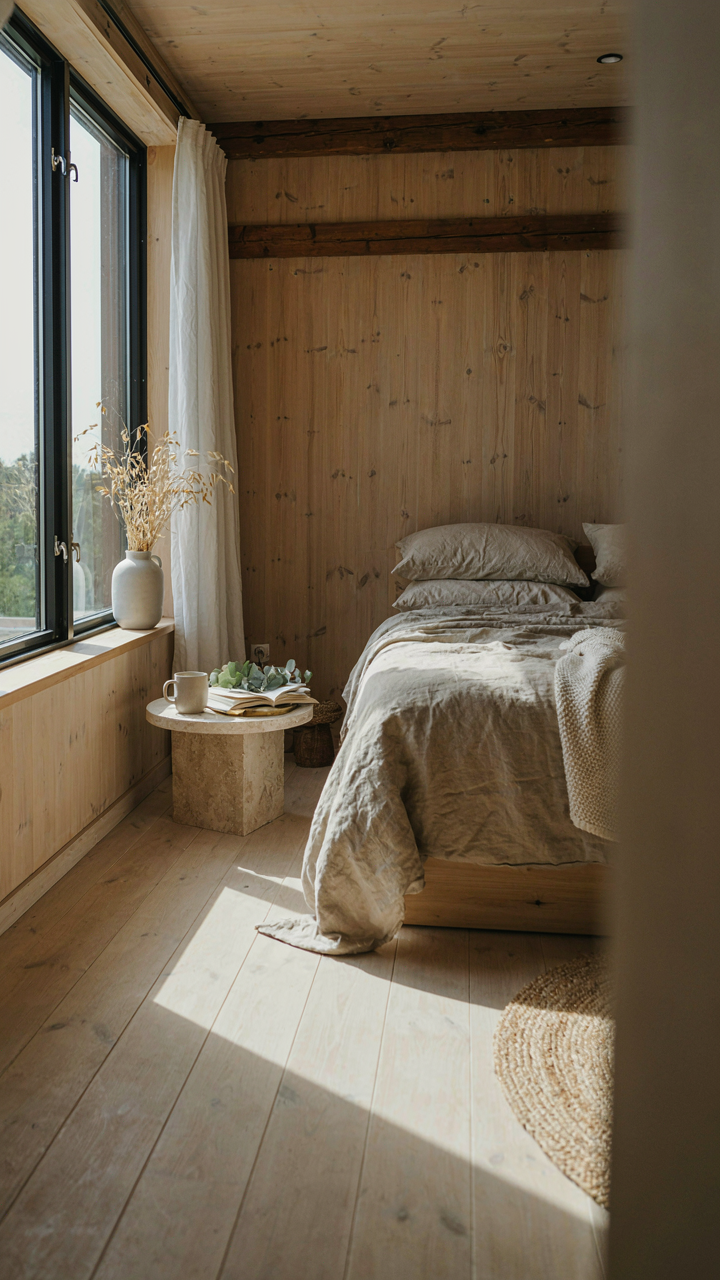
You want to believe a good bedroom is about darkness and isolation. The real mechanism is that your circadian rhythm operates like a biological oscillator in chronobiology, and morning light exposure is the input signal that sets the entire 24-hour cycle. Without it, your sleep schedule drifts. Most cabin bedrooms fail here because they prioritize coziness over function.

Scandinavian design solves this through window placement and material choice. East-facing windows in cabin bedrooms capture early sun without requiring active management. Large, unobstructed glass surfaces allow direct light penetration during the critical window between 6 AM and 9 AM. The bedroom should receive at least 30 minutes of direct sunlight upon waking. This isn’t comfort. This is synchronization.
Complete Darkness When Night Falls
Everyone says blackout curtains work. They miss that inconsistent light exposure nullifies the entire morning advantage. Your nervous system needs a hard boundary between day and night, not a gradient. Scandinavian cabins achieve this through layered textile blocking, not just heavy drapes.
Install blackout lined curtains that seal completely at the edges. Scandinavian manufacturers like Kvadrat and Hay produce wool-based options with light-blocking backing that mount flush against wall frames. Measure twice to eliminate light leakage at corners and the rod gap. Keep your bedroom below 5 lux during sleep hours, the threshold where melatonin suppression stops. Use no screens or red-light devices one hour before sleep.
The “Less But Better” Doctrine For Scandi Cabin Interiors
Curated Essentials Only
You want the cabin bedroom to feel peaceful, so you’re tempted to fill it with “calming” objects. That’s backwards. The real mechanism is cognitive load. Your brain processes every item in a room whether you’re conscious of it or not. More objects mean more decision-making, more visual noise, more friction between you and rest. Scandinavian design culture—born from harsh winters and limited resources—treats emptiness as a feature, not a failure. It’s permission to own nothing that doesn’t serve sleep or basic function.

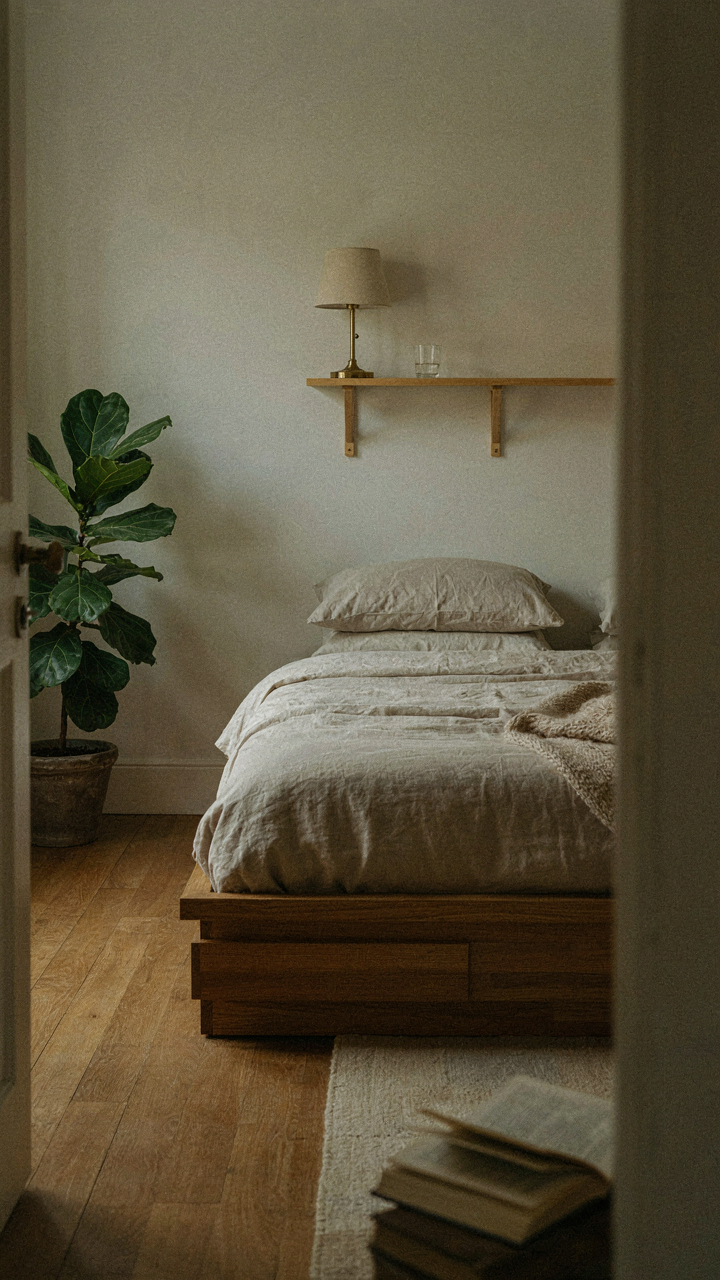
The difference between a Scandi cabin bedroom and a cluttered one isn’t aesthetics. It’s restraint executed as a system. You identify the ten to fifteen objects the room actually needs: bed frame, mattress, two nightstands, one lamp, bedding, one chair or bench, storage for clothes, one mirror. Everything else leaves. Not “minimizes”—leaves. Books on a shelf, artwork on walls, decorative objects: they’re friction. They survive only if they directly support sleep quality or maintain the room’s core function. When you remove what doesn’t belong, the remaining pieces become visible again.
Furniture That Earns Its Space
Multi-functional furniture isn’t a trendy compromise. It’s the load-bearing principle applied to bedroom design. In structural engineering, you eliminate components that don’t carry weight. Apply the same logic here: every furniture piece should solve at least two problems simultaneously. A wooden bench at the foot of the bed stores blankets while providing seating. A nightstand with drawers holds both a lamp and clothing. A bed frame with integrated storage eliminates the need for a separate dresser or chest.
This approach eliminates the cognitive overhead of deciding where objects belong. You own fewer total items because each one does more. Scandinavian cabin builders couldn’t afford separate furniture for every function, so they designed pieces with stacked purposes. A small wooden shelf above the nightstand holds a lamp, a glass of water, and a book. A low platform bed with drawers underneath consolidates sleeping surface and storage. Start by listing the functions your bedroom needs to support, then source furniture that addresses multiple functions in a single piece.
Acoustic Anarchy To Serenity: Sound Design In Your Log Cabin Interior
Insulation Kills External Noise Before It Enters
You want soundproofing because silence signals control, and a cabin without it signals you’re stuck listening to neighbors, traffic, or weather you can’t escape. The mechanism is straightforward: sound travels through air and vibration, and you stop it by breaking both pathways before it reaches your bedroom space.

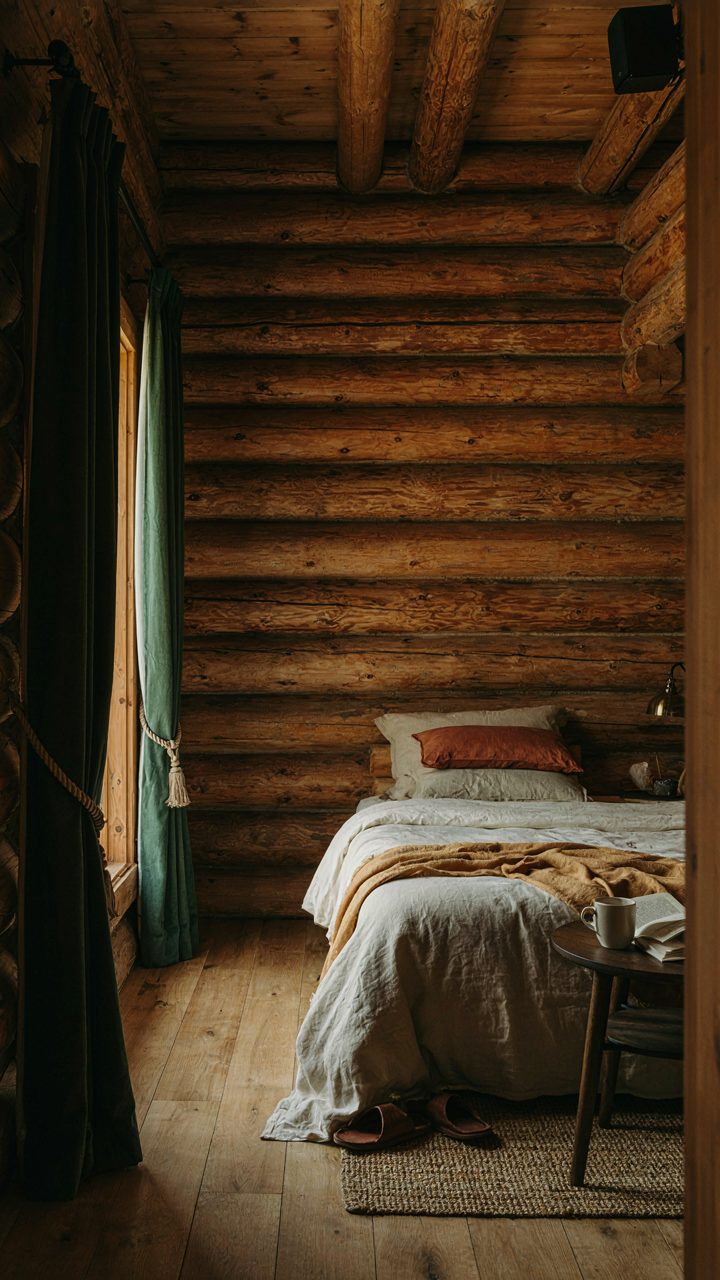
Log cabins create a specific acoustic problem. Wood conducts vibration efficiently, which means external noise doesn’t just enter through air gaps—it travels through the structure itself. Traditional Scandinavian cabins used thick timber logs for thermal mass, which provided accidental acoustic benefit, but modern construction often sacrifices this. The real move is layering: weatherstripped windows, insulated interior walls that float independently from the log structure, and mass-loaded vinyl behind drywall create redundancy that actually works.
Natural Cycles Override Artificial Sound
White noise machines solve the symptom, not the cause, and people use them as permission to ignore actual acoustic design. What your nervous system actually needs during sleep is predictability, not volume, and that’s where natural soundscapes operate differently than static noise.
Scandinavian cabin bedrooms benefit from consistent environmental sound that mimics what your body expects: rain on metal roofing, wind in coniferous trees, or distant water movement. These sounds contain variation within a stable frequency range, which your brain can habituate to without the jarring shifts that jolt you awake. Install speakers discreetly in ceiling corners, run nature recordings from reputable sources, and set volume barely above your ambient room noise—low enough that you forget it’s playing. This becomes your acoustic baseline, making actual intrusive noise stand out enough to wake you, or masking it entirely if you’ve designed the soundscape correctly.
The Bio Rhythmic Bedroom: Aligning Your Sleep With Nature In A Cottage Interior
Fresh Air Exchange Matters More Than You Think
You want to believe the bedroom itself makes you sleep better. The truth is simpler: your body won’t sleep deeply if CO2 builds up around your face. Scandinavian cabin design treats ventilation as a load bearing wall treats weight—it’s foundational, not decorative. Stale air forces your nervous system into subtle vigilance. Fresh air does the opposite.

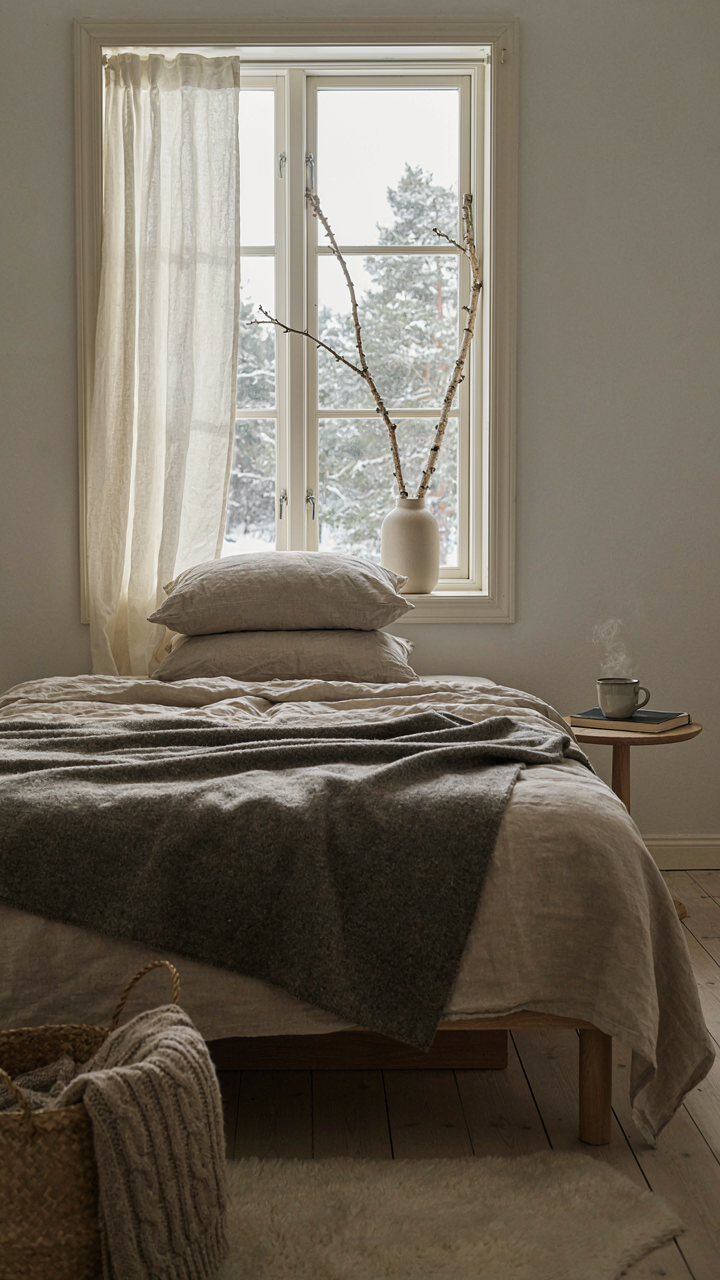
Scandinavian cabins use cross ventilation through opposing windows or wall vents. Position one window on the windward side, another on the leeward side. This creates passive air exchange without mechanical noise. The stack effect—warm air rising and exiting through high vents while cool air enters low—works continuously. Most bedrooms ignore this entirely and wonder why residents feel restless.
Temperature Precision During Sleep Cycles
The common advice is “keep it cool.” Incomplete. Your core temperature needs to drop 2 to 3 degrees Fahrenheit to enter deep sleep, then rise slightly during REM. Scandinavian cabins exploit thermal mass and seasonal materials to automate this. Stone, wood, and plaster absorb heat during day and release it steadily at night. Temperature stability, not coldness, is what matters.
Start at 65 to 68 degrees Fahrenheit. Layer bedding so you can adjust without waking. Wool blankets over linen sheets let you shed or add coverage mid sleep cycle without friction or noise. Heavy curtains block morning light that would spike cortisol early. The mechanism is precise: cool enough to trigger thermoregulation, stable enough that your body settles into a rhythm instead of chasing temperature.
The “No Fly Zone” Protocol: Digital Detox For Scandinavian Cabin Bedrooms
Creating A Device Free Sleep Sanctuary
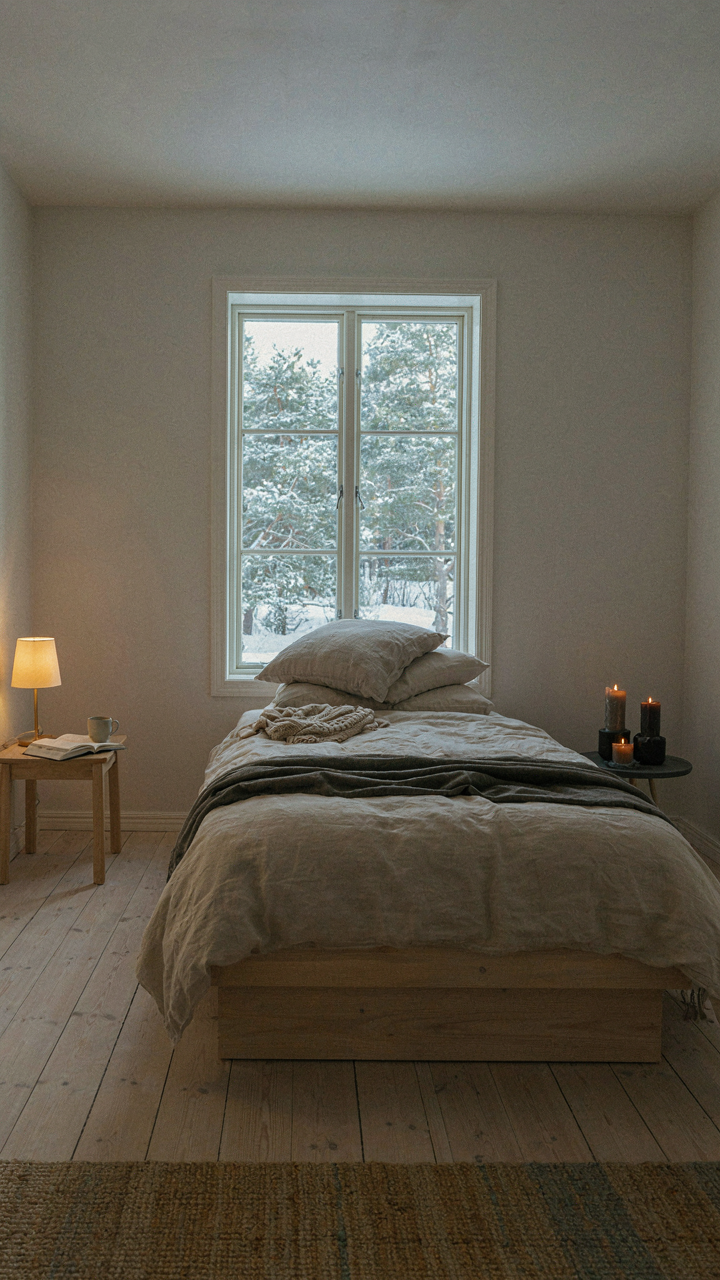
You want this because you know your phone is sabotaging your sleep, but admitting you can’t control it feels worse than just accepting the exhaustion. The mechanism is simple: your brain treats the bedroom as a context, not a room. Scandinavian cabin design already separates functions by space—cooking happens in one zone, sleeping in another. This isn’t decoration philosophy. It’s environmental psychology. The bedroom must become neurologically distinct from work and stimulation.

The practical move is total removal, not compromise solutions like “phone on silent” or “across the room.” Your nervous system doesn’t distinguish between a buzzing phone and a silent one. The threat remains. Scandinavian interiors historically used minimal furniture and clear spatial boundaries because function demanded it. Apply the same logic here.
- Physical Phone Removal: Place devices in another room entirely, preferably not visible from the bed. The bedroom becomes a dead zone for notifications.
- Charging Station Outside: Keep all charging cables and devices in a hallway or separate room. The friction of retrieval breaks the unconscious reach habit.
- Replace The Ritual: Keep a book, journal, or simple analog clock on the nightstand. Your hand needs something to reach for at 2 AM that isn’t a screen.
- Alarm Clock Alternative: Use a traditional bedside alarm or your phone’s native alarm set before entering the room, then remove the device entirely.
- Weekend Enforcement: If weekday removal feels extreme, enforce it on weekends first. You’ll see sleep quality shift within three days and won’t want to stop.
The Scandinavian cabin bedroom works because it enforces boundaries through design, not willpower. Devices outside the room aren’t a suggestion. They’re the default state. Your sleep depth improves measurably when the brain stops anticipating stimulation.
Blue Light Filters And Evening Screen Habits
The common advice here is wrong. Blue light filters don’t solve the problem because the problem isn’t the color of the light. It’s the cognitive activation. Your brain doesn’t care if the blue wavelengths are filtered. It reacts to content and the behavioral expectation of response. A dimmed screen is still a screen demanding your attention.
If you must use screens in the evening before bed, the real mechanism is timing, not filtering. Stop all screen use ninety minutes before sleep. This gives your parasympathetic nervous system time to downshift from stimulation mode. Scandinavian cabin bedrooms emphasize this through their physical setup: lighting comes from warm sources like candles or low-wattage lamps, not devices. The environment enforces the rule your willpower won’t.
The Asymmetry Advantage: Imperfect Balance For Genuine Comfort In Your Scandi Cabin
When Perfect Rooms Feel Wrong
You want your cabin bedroom to look intentional and designed, not like you overthought it. The real mechanism: your nervous system doesn’t sleep better in symmetrical rooms because symmetry signals control, artifice, vigilance. Scandinavian design actually rejected pure symmetry decades ago. The minimalism people associate with Scandi interiors wasn’t about creating sterile balance. It was about removing waste so the room’s actual geometry and inhabitants could breathe. Asymmetry in cabin bedrooms works because it mirrors how humans actually occupy space, not how architects draw it.

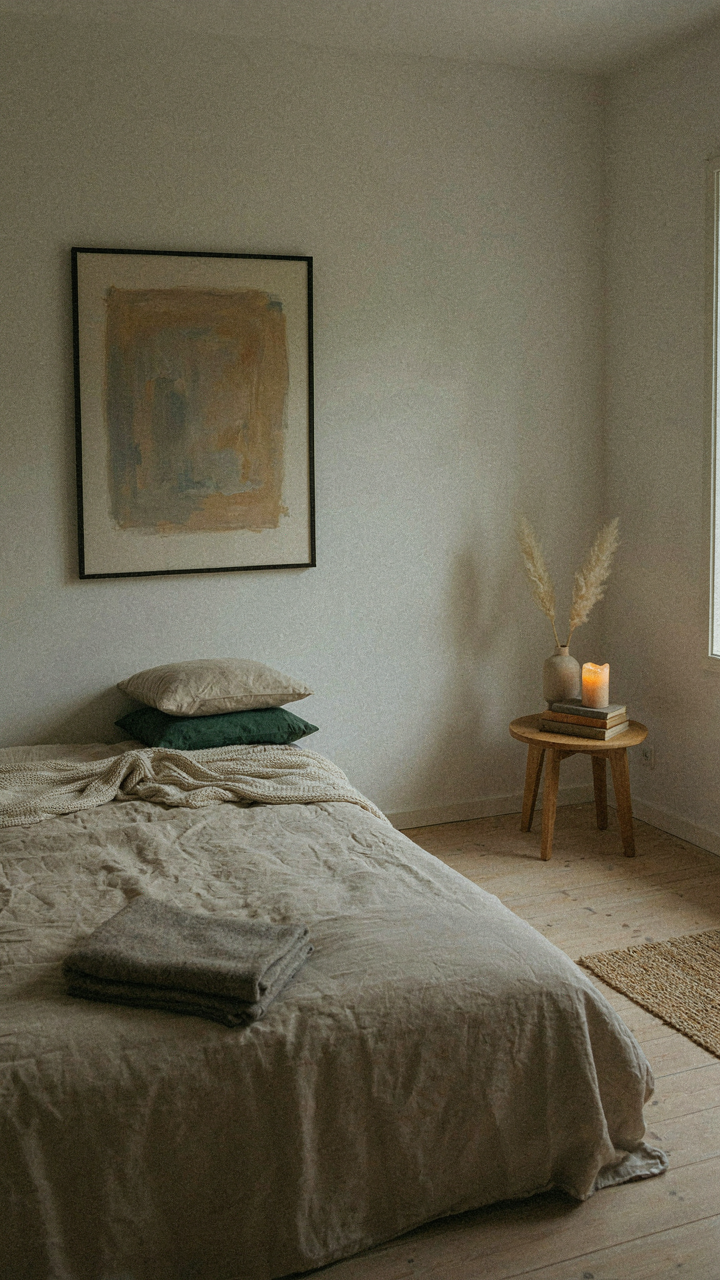
Symmetry communicates “this room was planned by someone else.” Asymmetry communicates “this room adapted to how I live.” A nightstand only on one side, a single piece of art off-center, a window that doesn’t frame the bed evenly—these aren’t oversights. They’re signals that the space exists for use, not observation. Cabin bedrooms perform better when they abandon the false promise of balanced perfection and instead distribute visual weight based on function. Position your bed perpendicular to the dominant light source instead of centered opposite it. Anchor one corner with a small desk or reading chair. This teaches your brain to read the room as lived-in, not staged.
Controlled Randomness Builds Rest, Not Tension
Chaos theory teaches that systems with built-in irregularity reach stability faster than rigid ones. Apply this to a cabin bedroom: random elements actually accelerate the nervous system’s shift into rest mode. The mistake most people make is thinking visual interest means scattered clutter. It doesn’t. Controlled randomness means deliberate placement of elements that break predictable patterns without creating cognitive load. A Scandinavian cabin bedroom uses this through texture, not quantity.
Layer materials in non-uniform ways. Linen bedding with a knit throw on one corner, not draped symmetrically. A wooden shelf unit with books standing and some lying flat. Stone or concrete visible on accent wall sections, not covering the full surface. Varying wood tones across the room’s furniture rather than matching everything. This approach comes directly from how traditional Scandinavian interiors evolved—materials were combined based on availability and durability, not design rules. The visual complexity settles your sleep because it stops your brain from pattern-matching and over-analyzing. To implement: choose three textures, place them in positions that aren’t mirrored, then stop adding. Your instinct to “balance” it out is the enemy here.
The Single Purpose Room: Your Cabin Bedroom As A Sleep Command Center
Work And Distractions Don’t Belong Here
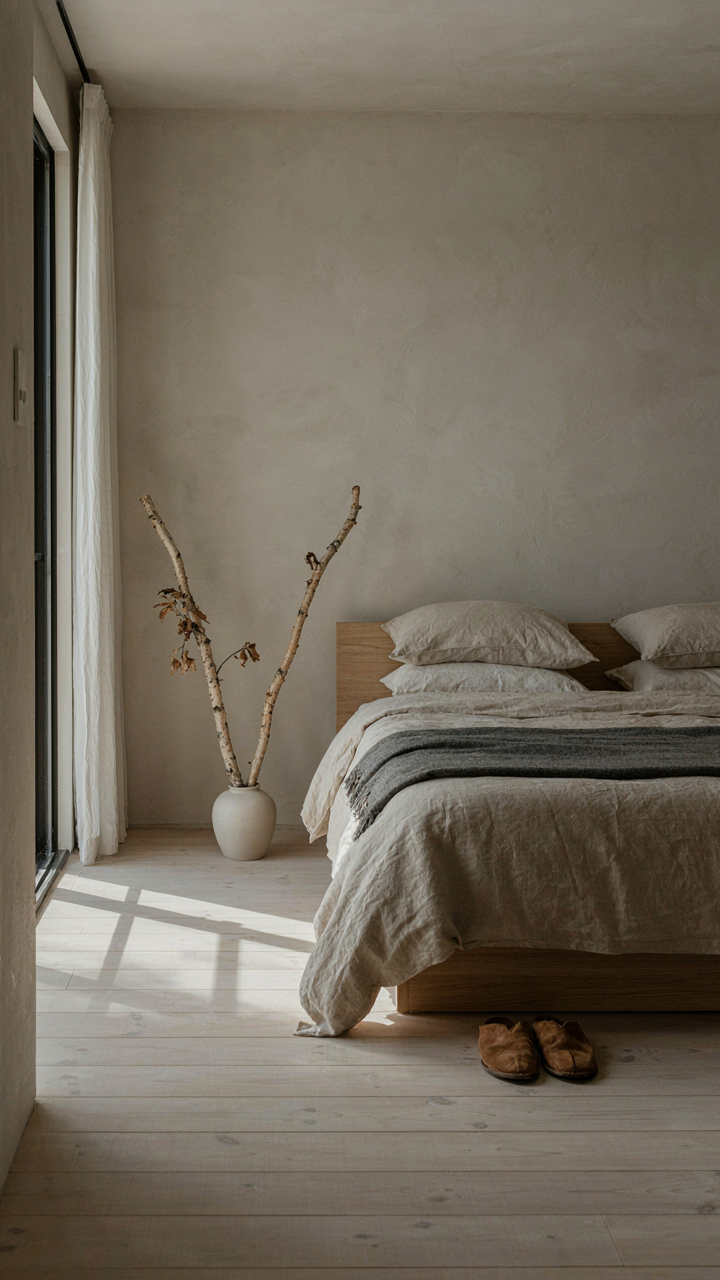
You want your bedroom to feel special because deep down you know it signals discipline to yourself and others. The real mechanism is simple: your brain treats the bedroom as whatever you train it to be. If you work there, study there, or scroll there, your nervous system learns to stay activated in that space. Scandinavian cabin design solves this through pure subtraction, not decoration. Remove the desk, the laptop station, the filing cabinet, the exercise equipment. The room becomes neurologically distinct from productivity zones.
Scandinavian interiors emerged from resource constraint, not aesthetic preference. Northern climates demanded efficiency. People lived in small spaces and segregated function deliberately because survival depended on it. Your cabin bedroom operates the same way: one function means one neurological state. The moment you remove competing stimuli, your body recognizes the boundary. Sleep initiates faster because there’s nothing pulling your attention into a work mindset. This isn’t about minimalism as style. It’s about removing the mechanism that keeps your brain alert.
Rapid Sleep Onset Through Environmental Design
Sleep initiation is a physics problem, not a willpower problem. Your circadian system responds to light wavelength, room temperature, and sensory consistency. Scandinavian cabin bedrooms nail this through material choice and layout discipline. Warm timber walls absorb light rather than bounce it, reducing retinal stimulation. Wool textiles and natural fibers dampen sound reflection. The room becomes neurologically quiet before you even lie down. Temperature control matters: Scandinavian bedrooms sit cool, around 60 to 67 degrees Fahrenheit, the optimal window for sleep onset.
The mechanism works because you’re removing friction from the sleep transition. Western bedrooms often feature high-gloss surfaces, LED lighting, and visual clutter that keeps your eyes processing information. A Scandinavian cabin bedroom strips this away. Light-colored wood, matte finishes, and minimal surface variation mean your visual system downshifts naturally. Darkness deepens without artificial blackout systems fighting brightness. Your breathing synchronizes with the room’s acoustic properties. Within minutes of entering, your parasympathetic nervous system activates. The environment does the work your willpower cannot.
The Clutter In Your Bedroom Mirrors The Chaos In Your Mind; Fix One, Free The Other
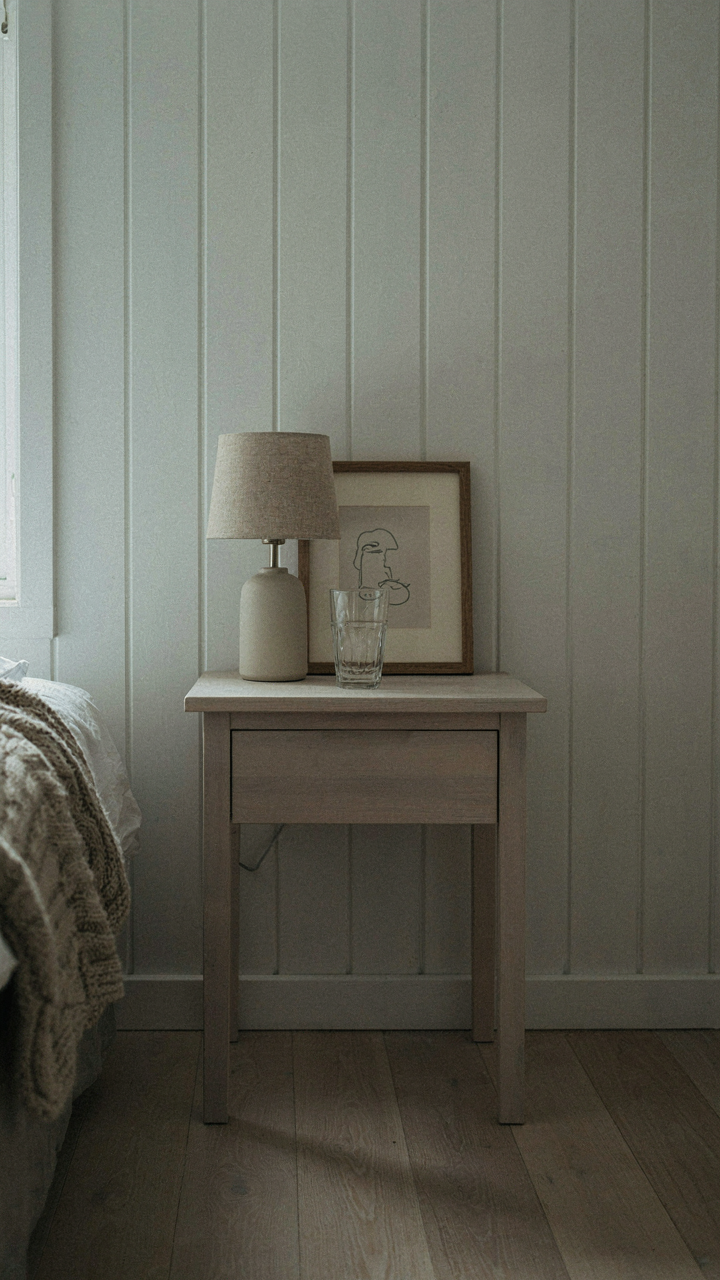
Most people redesign their bedroom and wonder why sleep still sucks. The real problem: you’re decorating around dysfunction. A Scandinavian cabin bedroom works because it removes decisions, not adds aesthetics. Your brain can’t rest when it’s processing visual noise. Tonight, remove everything from your nightstand except a lamp and water. One action. One night of actual rest proves the mechanism. Your sleep quality depends less on what you add and more on what you subtract.