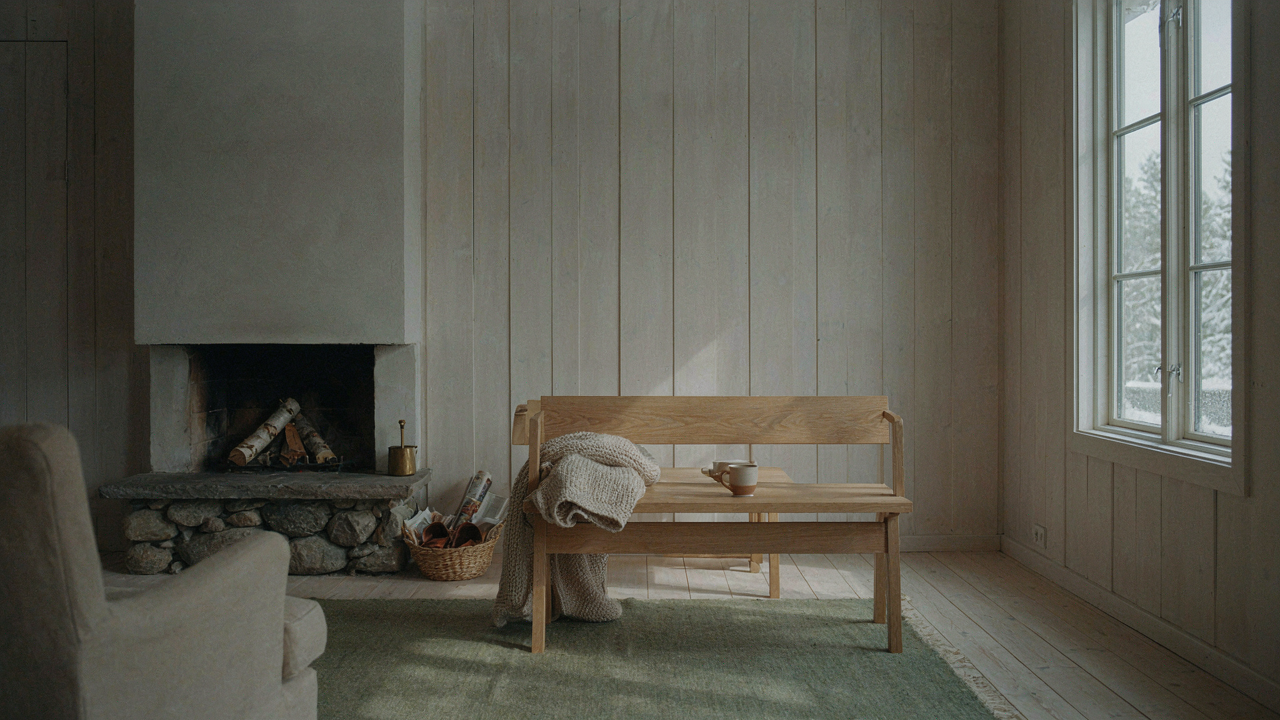
The Scandi Cabin OS: Beyond The Aesthetic Illusion
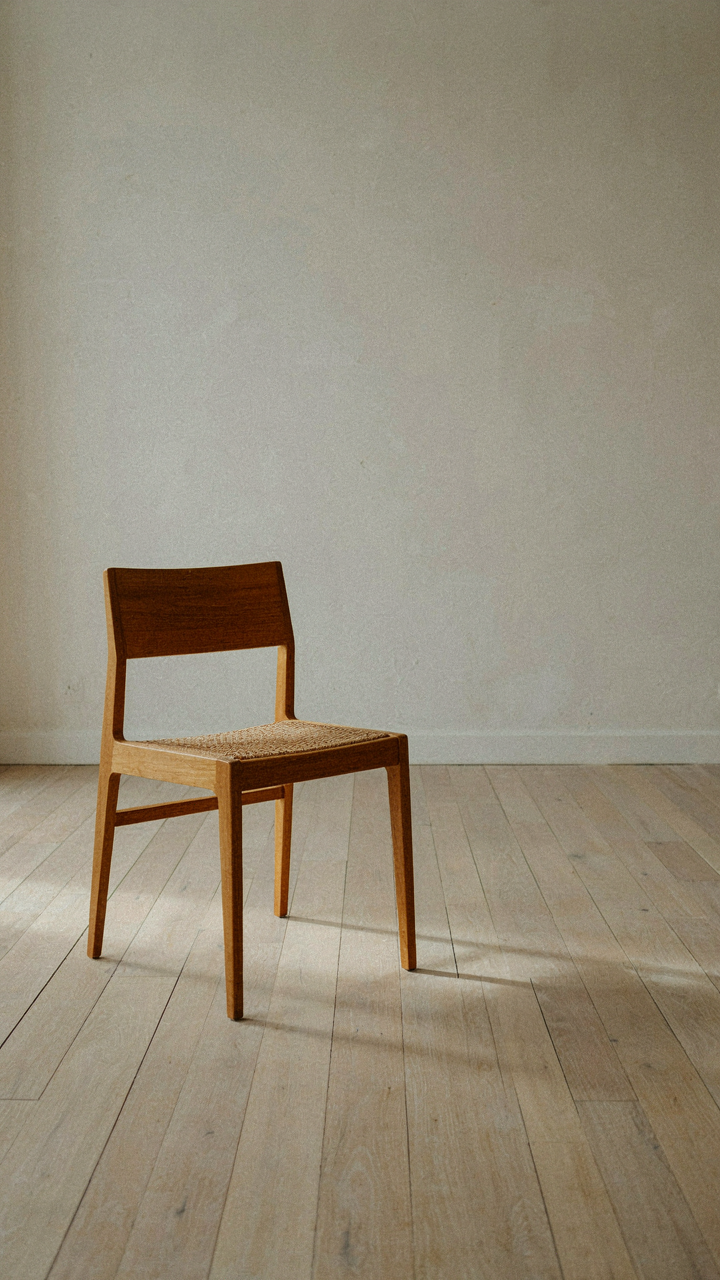
Why Pale Wood Feels Calm But Isn’t
You want permission to believe a room can think for you. The mechanism doing the actual work isn’t the wood color—it’s constraint. Scandinavian cabin design operates like a decision-removal system. Pale wood, white walls, and minimal objects force your eye to stop searching. There’s nowhere left to land, so your nervous system stops scanning. The calm is neurological friction reduction, not aesthetic magic.
The mistake most people make is assuming the palette creates peace. Wrong. The palette creates predictability. When every surface reflects light the same way and every object serves one purpose, your brain stops pattern-matching for threats. This is why Scandinavian cabins feel restful even when technically sparse. You’re not admiring beauty—you’re experiencing the absence of visual noise. The wood species matters less than the uniformity it enforces.
Utility As The Real Design Skeleton
Everyone says function follows form in Scandinavian design. They have it backward. Function is the form. The pale wood furniture you see in a cabin interior isn’t pale because minimalism demands it—it’s pale because Nordic climates required it. Light colors reflect the weak winter sun. Pale wood doesn’t warp or show moisture damage like darker species do in damp cabin conditions. The aesthetic emerged from material logistics, not philosophy.
This distinction matters because it tells you what to actually build. A chair isn’t beautiful because it’s simple; it’s simple because a cabin chair must survive temperature swings, be moved easily when you need floor space, and not demand maintenance you can’t perform remotely. When you reverse-engineer from use case instead of copying the look, you stop buying decorative objects and start acquiring tools that happen to look restrained. The cabin interior that works is the one where every piece answers a specific climate or spatial problem first.
Pale Wood: The Biofeedback Mechanism
Your Nervous System Reads Wood Color Before Your Brain Does
You want pale wood in your cabin because it signals safety, not because it looks clean. Neurobiology matters here. Your parasympathetic nervous system processes natural tones—the wavelengths reflected by birch, ash, and spruce—faster than it processes your conscious thoughts about aesthetics. Pale wood sits in the visual spectrum your brain evolved to associate with open, non-threatening terrain. The mechanism is simple: muted, warm neutrals trigger a downregulation response. Your cortisol drops before you realize why the space feels different.

Scandinavian designers didn’t stumble into this by accident. They built cabins in environments where pale wood was the dominant material—birch forests, pine interiors, ash beams. That repetition created a cultural feedback loop. The palette became synonymous with safety because it was the actual environment. When you replicate that palette indoors, you’re not importing aesthetic preference. You’re importing a nervous system instruction that says “this is a known, protected space.” The effect compounds over weeks. Your body learns the cabin faster when pale wood is the visual anchor.
Touch Activates Grounding Before Sight Does
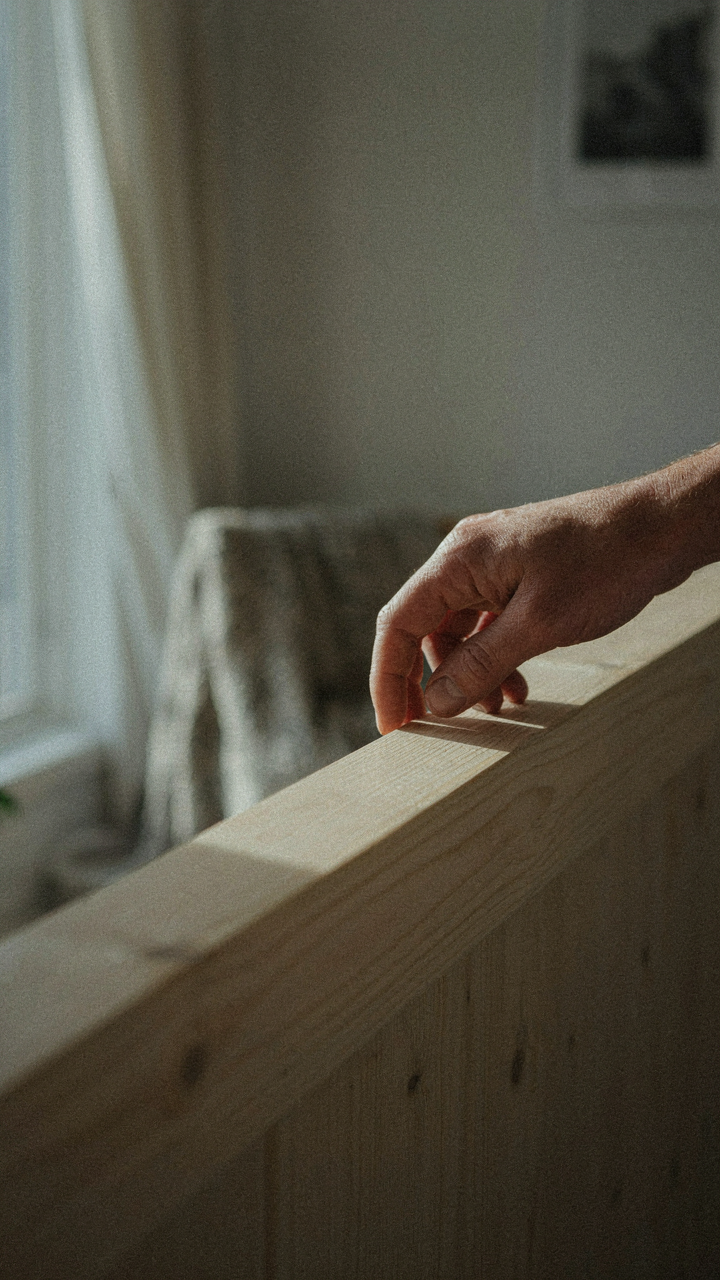
Wood texture matters more than most interior writing admits. Touch engages your proprioceptive system—the mechanism that grounds your body in physical space—before visual input even registers fully. Pale woods like pine and birch have distinct grain patterns and tactile properties. When you run your hand across a pale pine beam or ash tabletop, your skin reads the microscopic variations in surface texture. This tactile data anchors you to the material world.
The Scandinavian cabin tradition emphasizes exposed wood surfaces for this reason. Walls, ceilings, furniture, and trim are rarely painted over. You encounter the wood constantly, touching it incidentally. This repeated tactile contact builds a somatic sense of place that paint or veneer cannot replicate. Your nervous system learns the cabin through contact, not just view. To activate this mechanism, prioritize unfinished or lightly oiled pale wood surfaces throughout high-touch zones: railings, tabletops, door frames, and stair treads.
The Nordic Cabin Interior Illumination Protocol
When Your Body Runs On Light, Not Willpower
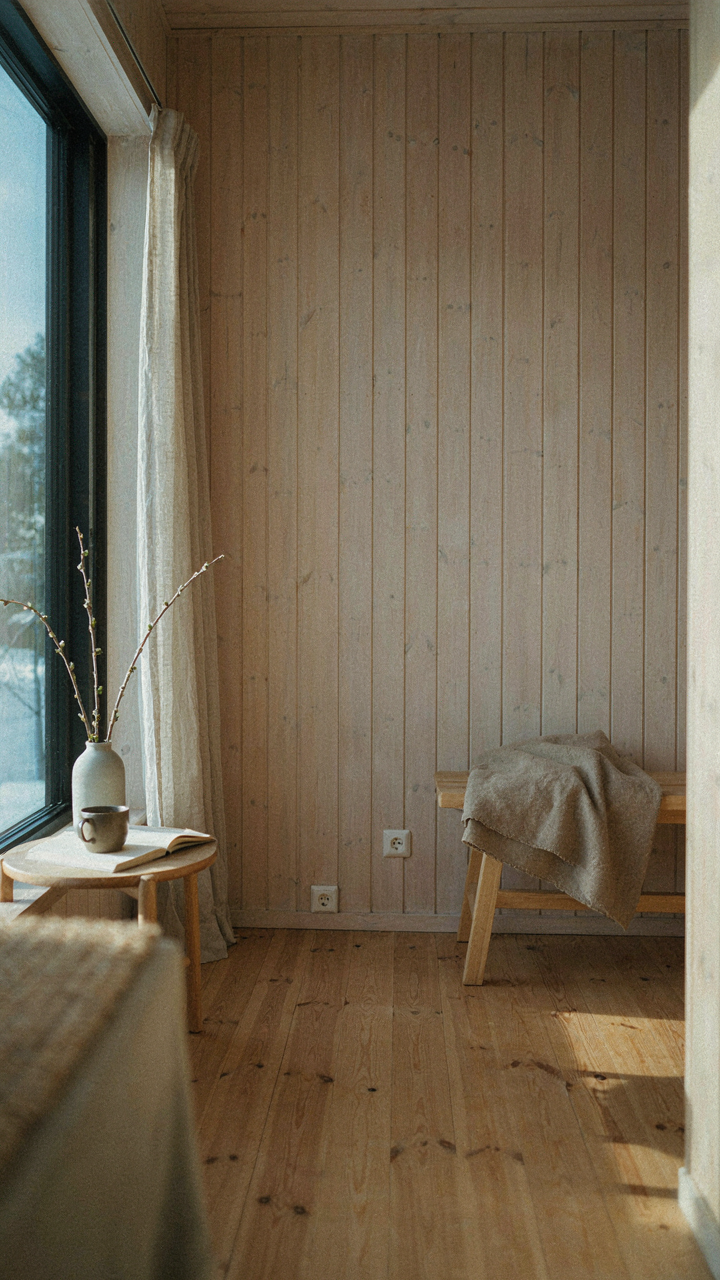
You want this section because you sense that lighting affects mood but can’t articulate why, and you’re hoping someone names the mechanism so you stop feeling like you’re guessing. Here’s the mechanism: biology, not aesthetics, drives Nordic cabin lighting. Your circadian rhythm is a 24-hour biological clock that syncs to light exposure. It controls cortisol release, melatonin production, and whether you sleep or stay wired at midnight. Pale wood interiors amplify this effect because they reflect rather than absorb light, meaning your nervous system receives clearer signals about time of day.

Scandinavian cabin design emerged from climates where winter darkness lasted months. Designers didn’t optimize for beauty first. They optimized for survival. They positioned windows to capture southern light, kept interior surfaces reflective to distribute that scarce light deep into rooms, and avoided dark finishes that would compress available brightness into corners. Modern pale wood cabins preserve this protocol. The pale finish isn’t decorative. It’s a physiological tool. Your body reads the reflected light and adjusts hormone production accordingly, which means you sleep better, wake sharper, and don’t need artificial stimulation to function.
Light As A Biological Amplifier
Everyone says “let natural light in.” Nobody says why it matters more in a cabin than anywhere else. A cabin isolates you from stimulus. No traffic noise, no crowds, no phone notifications forcing your attention outward. This sensory deprivation makes your nervous system hyperresponsive to light signals. Bright morning light through a window hits your retina and drives alertness faster than it would in a city. The pale wood surfaces around that window intensify the effect by reflecting light back to your eyes rather than losing it to dark absorption.
This is why Nordic cabins pair pale wood with minimal artificial lighting during daylight hours. The design isn’t about aesthetics or minimalism. It’s about maintaining circadian alignment without pharmaceutical intervention. Your performance, mood, and sleep quality depend on receiving clear light cues when they occur. At dusk, keep artificial lighting warm and low-intensity to avoid suppressing melatonin. Pale wood continues to reflect even dim light, so you need fewer fixtures to navigate and function. The protocol is simple: maximize light exposure during day hours, minimize it after dark, let the pale wood do the work of distribution rather than installing more bulbs.
Minimalism: The Cognitive Load Reduction Strategy
When Your Space Stops Fighting Your Brain
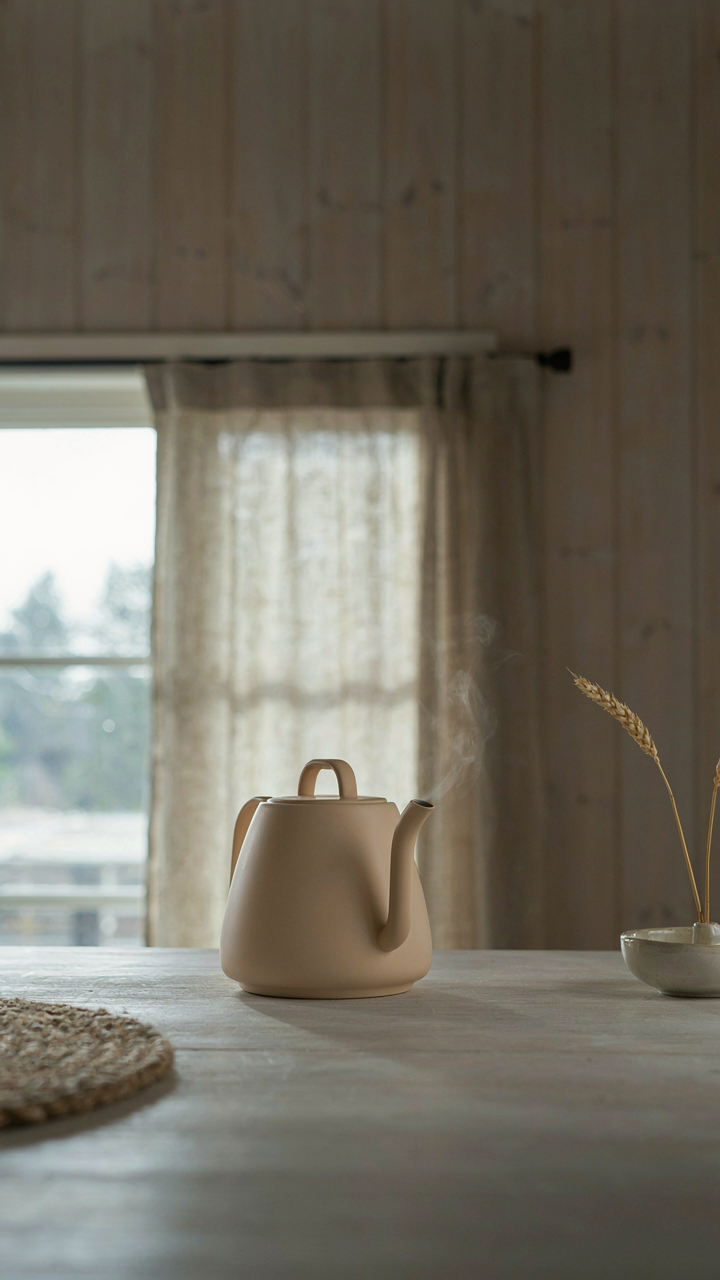
You want minimalism because you’re drowning in choices and tired of managing stuff. The real mechanism is cognitive load. Your brain has limited processing power. Every object in your cabin demands a micro-decision: where does it go, does it stay, is it broken, should I move it. Scandinavian minimalism doesn’t eliminate things randomly. It eliminates the friction between you and rest.

Pale wood cabins became the standard in Scandinavia because they expose every object placed inside them. Dark interiors hide clutter. Light interiors reveal it. This forced discipline into the culture. You can’t hide a poorly chosen item in a birch-lined room. The design philosophy evolved from necessity, not aesthetics. Long winters meant people lived in tight spaces. Clutter became unbearable fast.
Essential Objects, Radical Purpose
Most design advice says “keep what you love.” That’s incomplete and honestly lazy. You end up keeping decorative items that trigger guilt or obligation instead of use. Essentialism in Scandinavian cabin design works differently. You keep objects that perform function or repair a broken mental state. A lamp serves light and shadow. A chair serves sitting and posture. A throw serves warmth and texture. Everything compounds toward the primary function of the space: rest and mental clarity.
The pale wood frame of a Scandinavian cabin becomes the baseline. Against it, every addition becomes a choice with weight. Swedes and Norwegians didn’t develop minimalism as a trend. They developed it because adding something to a sparse room is a commitment. You can’t pretend it’s not there. The mechanism is accountability. When every item is visible and its purpose is known, you stop acquiring things that don’t map to actual needs.
Textural Play: The Sensory Engagement Loop
When Touch Becomes Neurological Signal
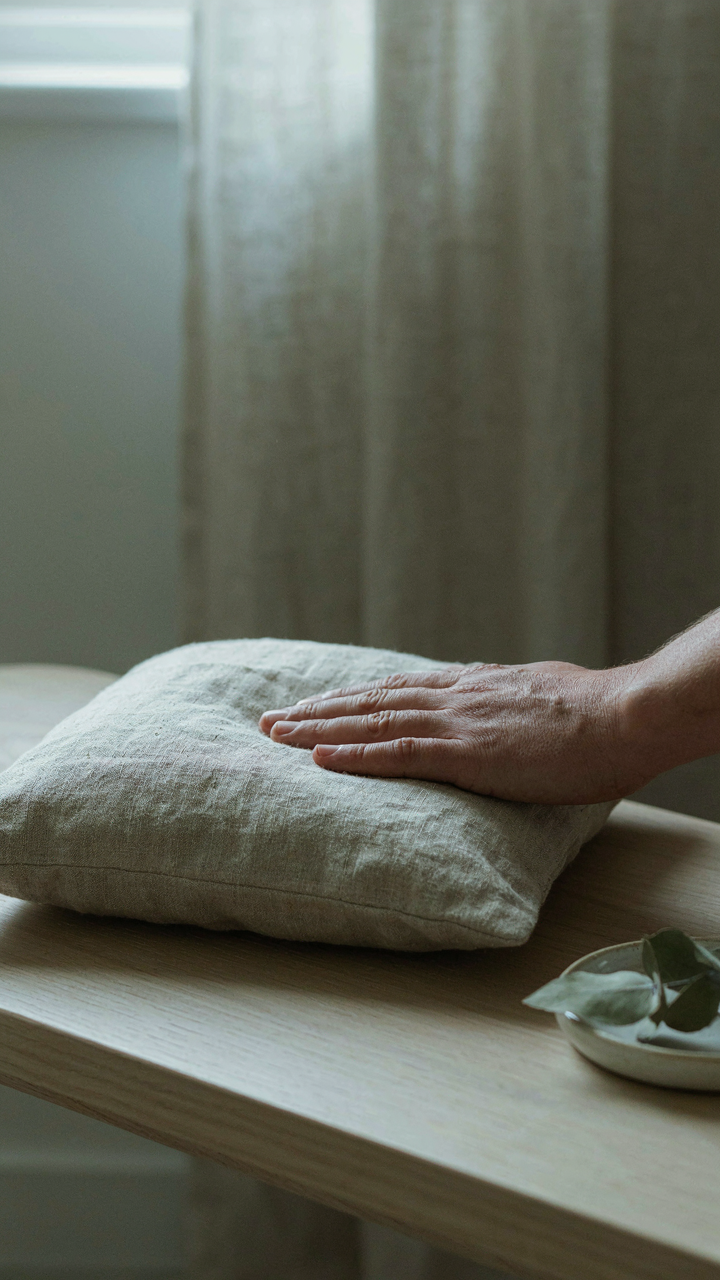
You want this section because you’re hoping texture is the design shortcut that makes a room feel expensive without the price tag. It isn’t. But neuroscience explains why pale wood interiors consistently trigger calm: tactile feedback directly impacts the nervous system. When your hand meets rough linen or unfinished birch, mechanoreceptors fire signals to your brain faster than visual processing completes. Scandinavian cabins weaponize this lag. The room feels safe before you consciously register why.

Pale woods like spruce and pine are porous. Their grain catches light irregularly, creating micro-shadows your eye reads as texture before your hand confirms it. This disconnect between visual texture and actual texture is the mechanism. The nervous system prepares for tactile input based on what it sees, then receives confirmation through touch. Repetition of this loop trains your parasympathetic response. Smooth pale walls would achieve none of this. The texture is the signal.
Building The Physical Foundation Of Rest
The common advice is wrong: texture doesn’t make a room feel cozy. Texture creates a measurable shift in how your body interprets threat. Safety studies in environmental psychology distinguish between visual clues and tactile ones. Your palm against untreated wood lowers cortisol. A cabin interior that prioritizes this uses materials that invite contact, not just observation. Pale woods must retain their surface variation. Polishing them flat kills the entire mechanism.
Linen, wool, and natural fibers do the work that paint cannot. Layer these against pale wood surfaces. The sequence matters: rough texture first, then smoother elements, then soft textures. Your hand moves across the room and encounters different densities. Each transition resets the nervous system’s attention. Burnt sienna leather or dark wool accents against pale wood create contrast that makes tactile variation register faster. The final step is placement: arrange seating so people naturally touch wood frames and fabric without thinking about it.
Scandinavian Cabin Interior Layout: The Flow State Grid
Movement Without Friction
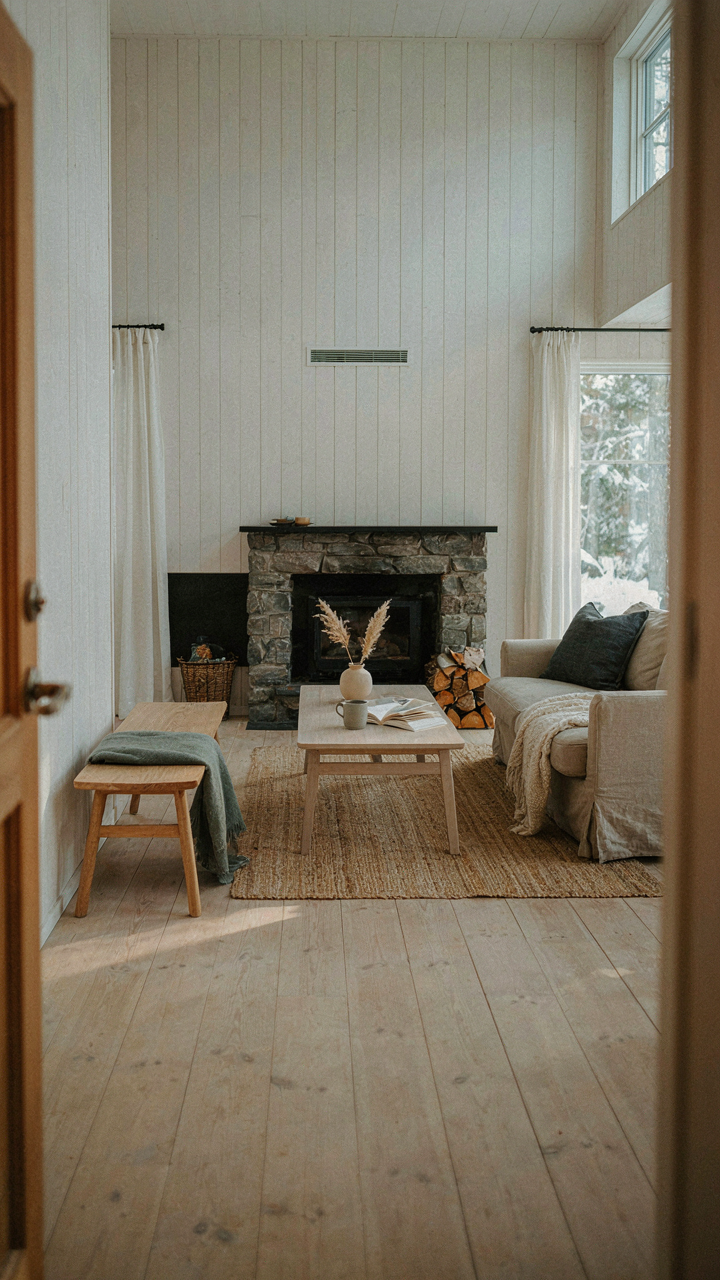
You want this section to prove you can design a space smarter than everyone else. The actual mechanism is simpler: Scandinavian cabins work because they treat layout like a constraint satisfaction problem from systems design, not decoration. The room itself becomes the grid. Pathways between the entry, kitchen, living area, and bedroom follow the shortest logical routes. No ornamental furniture blocking traffic. No dead zones that trap movement. Pale wood floors expose this structure visually, which forces intentional placement.

The cabin layout prioritizes efficiency as its primary aesthetic. Swedes and Norwegians built these spaces in climates where wasted steps meant wasted heat and time. The layout reflects that—open sightlines from one functional zone to the next, minimal corridors, walls positioned to create natural task separation without visual walls. When you scale this principle to modern cabins, you’re not being minimalist for style points. You’re making every square foot pull weight.
Work And Rest In Separate Territories
The common advice is to use furniture to “define zones.” That’s incomplete. Scandinavian cabin interiors actually use distance and functional isolation. A desk positioned at the cabin’s far end from the rest area doesn’t just look separate—it becomes neurologically separate. You’re not fighting ambient stimulation while trying to focus. The brain settles into one mode per space. Pale wood tones reinforce this psychologically without visual noise. Same material, different intentionality in placement.
Position your deep work surface where natural light enters consistently but where sightlines don’t pull toward the living area. Bedrooms or alcove spaces work here. The rest zone takes the social center, usually near the hearth or primary light source. This isn’t about aesthetics matching. It’s about your nervous system not toggling between states every thirty seconds. Establish one entrance to your work territory and move your desk there first.
Integrating Nature: The Biophilic Calibration
Windows As Framing Device
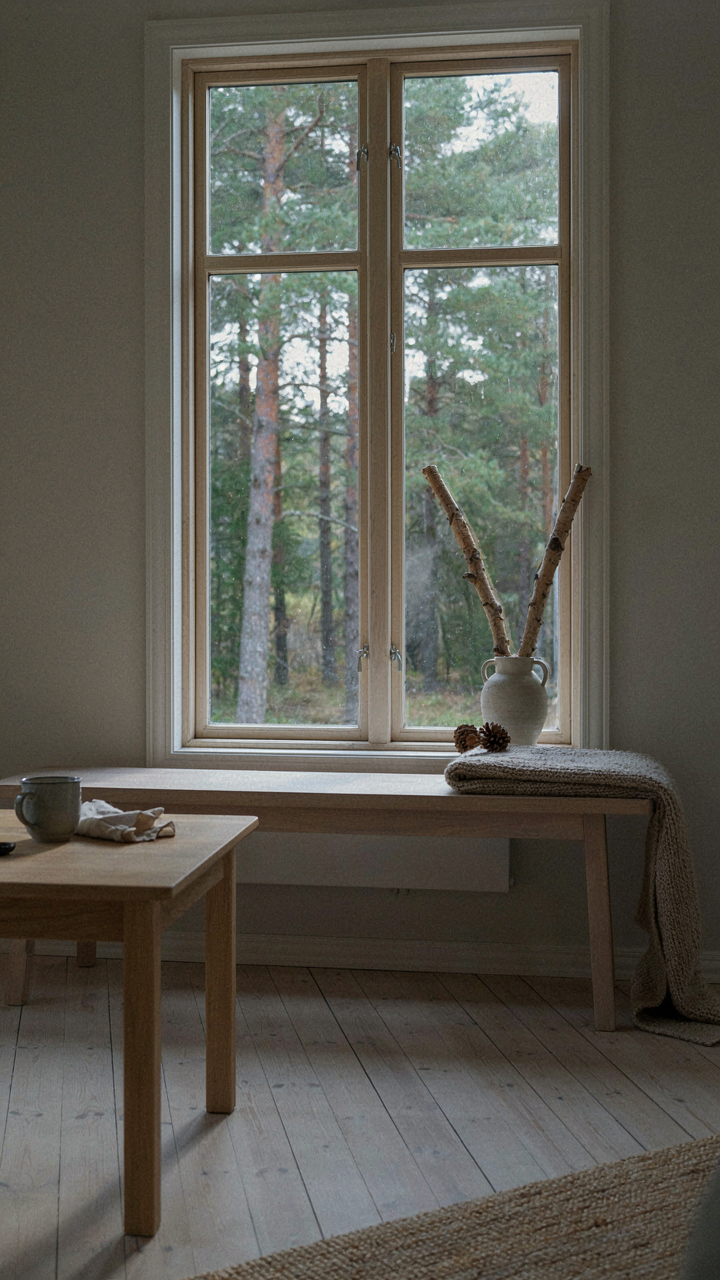
You want this section because you sense that a cabin without views feels like a failure, like you bought the wrong property. The mechanism is simpler: windows aren’t decorative. They’re the primary control lever for whether a space feels confined or continuous. Scandinavian cabin design treats the window as architecture, not afterthought. Large, unobstructed glass positioned to frame specific landscape elements—a treeline, water, rock formations—collapses the boundary between interior and exterior. The frame matters more than the glass itself.
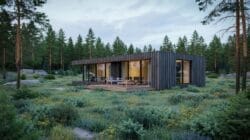
Placement determines everything. South-facing windows in Scandinavian cabins capture low-angle winter light without summer heat gain because latitude handles the angle for you. Position seating to align with the view, not away from it. A poorly placed window becomes visual noise. A strategically placed one becomes the room’s organizing principle. Pale wood frames compound this effect by staying visually neutral, refusing to compete with what’s outside. Install windows to acknowledge the landscape, not to fill wall space.
Raw Materials As Translation
Biophilia is the term from environmental psychology describing humans’ innate need to connect with natural systems, and Scandinavian cabin interiors deploy this through material selection rather than imagery. The mechanism works like this: raw wood, stone, and linen read as “outside” to your nervous system because they’re minimally processed. Your brain recognizes them as extensions of the forest, not objects manufactured in a warehouse.
Pale pine and birch dominate Scandinavian cabins specifically because they’re local and they age visibly. A lighter wood shows dust, weathering, and time—all signals of authenticity your brain trusts. Granite or fieldstone on hearths and foundation walls grounds the space literally and psychologically. Linen textiles in cream or grey tones avoid synthetic sheen. Never layer these materials because aesthetic pleasure matters less than the primitive recognition response. The raw material does the work. Your job is removing obstacles to that recognition.
Modern Scandinavian Cabin Interior: Building Your Resilient Sanctuary
Design With Intention, Not Impulse
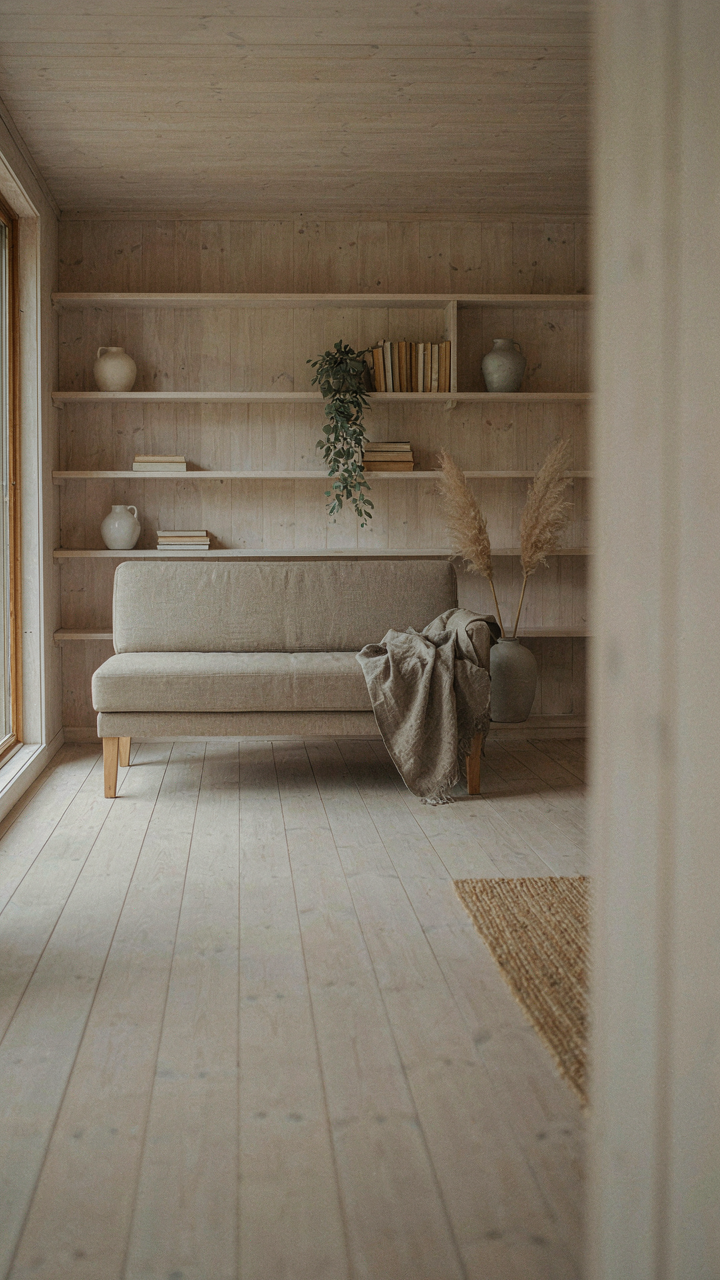
You want this space to feel meaningful because you’re tired of buying things that don’t stick. The mechanism is constraint. Scandinavian cabin design works because it operates within severe material and climate limits. You choose one pale wood species, commit to it, and build outward. This isn’t minimalism as aesthetic choice—it’s minimalism as structural honesty. When you limit your palette, every object becomes load-bearing in the visual field.
- Establish Your Primary Wood: Select one pale species (birch, ash, or spruce) and use it for flooring, structural elements, and built-in storage. This creates coherence without effort and prevents the visual noise of competing wood tones.
- Define Your Textile Anchor: Choose a single neutral linen or wool in cream, stone, or warm gray for seating and soft furnishings. All accent textiles reference this baseline rather than competing for attention.
- Set Lighting Temperature: Install fixtures that deliver 2700K warm light only. No cool lighting. This single rule eliminates the dead zone where Scandinavian spaces look sterile and corporate.
- Create Storage Sequences: Design built-in cabinetry that hides 85 percent of daily objects. What remains visible should serve function first, decoration second or never.
- Plan Seasonal Rotation: Designate specific storage for seasonal textiles and objects. This prevents visual accumulation and keeps the space feeling intentional across weather changes.

The execution step is this: before buying anything, photograph three Scandinavian cabins you actually want to live in. Note the exact wood tone, count the visible objects in each room, and measure the distance between seating and a window. These become your operating parameters.
Surface Level Versus Structural Design
Everyone imitates the finish and misses the reasoning. You see a Scandinavian cabin interior and think pale wood plus white walls equals Scandinavian cabin interior. Wrong. That’s cargo cult design. The real structure is that Scandinavian interiors solve problems created by climate and geography. Long darkness demands specific light distribution. Short building seasons demand durable materials and efficient assembly. Limited local resources demand material honesty—you don’t veneer particleboard in a cabin culture that respects wood as a finite resource.
Superficial imitation borrows aesthetics and abandons function. You buy a pale wood coffee table, paint the walls white, add a sheepskin rug, and call it done. The space still feels hollow because you haven’t addressed why those elements exist. A real Scandinavian cabin interior locates its pale wood where it catches and distributes natural light from limited windows. It uses white on walls to amplify that light, not to create Instagram contrast. The sheepskin goes where people sit during winter months, not where it looks neutral. When you design backward from climate and use, the aesthetic arrives as a byproduct of problem-solving, not as a visual goal imposed from outside.
Your Real Problem Isn’t A Lack Of Pale Wood; It’s Your Inability To Design Your Own Internal Operating System

Most people buy pale wood and expect it to fix their space. It won’t. A Scandinavian cabin interior works because it reflects a system of thinking, not a collection of objects. Your home mirrors how you actually operate. Before you buy anything, audit your daily rituals. What do you do first thing? Where do you need calm? Where do you need energy? Design those moments first. The wood follows the blueprint you’ve already built in your mind. Start today by mapping one room to one specific ritual you want to protect. Everything else is just decoration filling empty ideas.