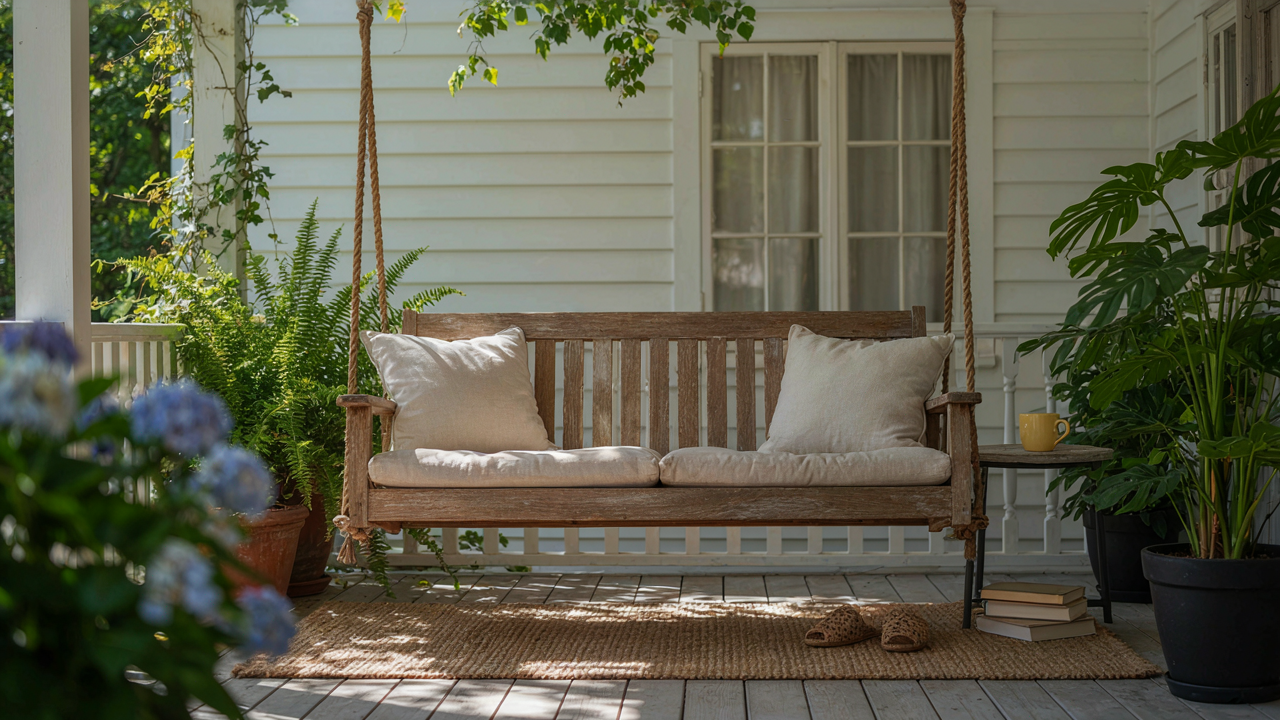
The Unseen Value Of The Cottage Porch Swing

It’s Not Just A Place To Sit
You want permission to stop working. A cottage porch swing doesn’t give you that—it forces a decision to actually take it. The mechanism is friction removal. Most people don’t rest because the transition feels illegitimate. A porch swing collapses that gap. The act of sitting in one signals completion to your brain in a way a couch doesn’t. You’re outside. You’re visible. You’re committed to the pause.
The porch swing emerged as furniture during the Victorian era, around the 1850s, when porches became architectural extensions of homes rather than afterthoughts. Builders began designing them specifically for social gathering and contemplation. The form stayed consistent because it solved a real problem: creating a threshold space between domestic life and the world. That threshold matters more now than ever.
Where Your Attention Actually Goes
Economics has a concept called opportunity cost: what you give up when you choose one thing over another. Your porch swing forces a clean trade. Sitting there means your phone stays inside, your emails pause, your to-do list halts. Most people think rest fails because they lack discipline. Wrong. Rest fails because the environment doesn’t demand separation.
The swing’s motion is passive. You don’t drive the rhythm. Your legs do minimal work. This matters because active rest—scrolling, reading, even focused thinking—keeps your nervous system partially engaged. A porch swing lets you drift without guilt because the motion itself is the justification. You’re not wasting time. You’re maintaining equilibrium. The ritual becomes the reason.
The Minimalist Porch Swing Protocol
Durability Over Aesthetic Trends
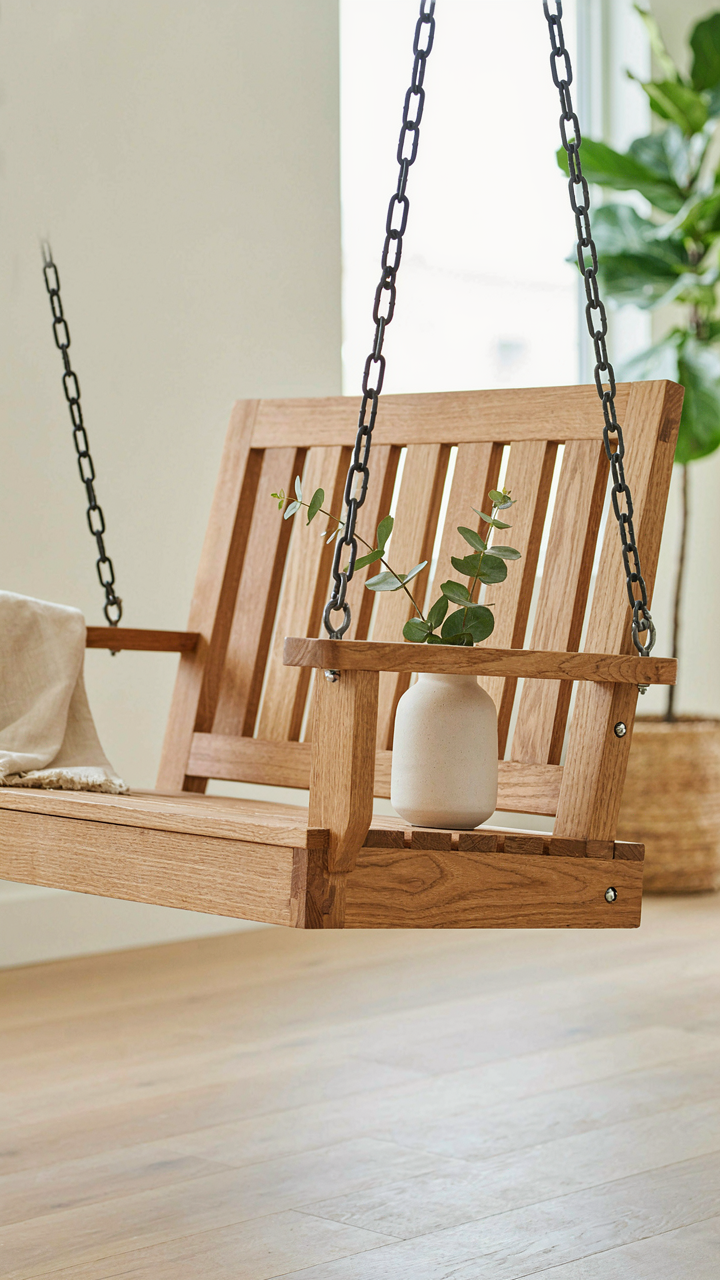
You want people to think you’re the type who sits on a porch swing and reads Thoreau, but what you really want is permission to stop shopping. The mechanism is simple: trends in porch swing design cycle every three to five years, but structural failure doesn’t care about cycles. A swing built with mortise and tenon joinery and hardwood chains lasts thirty years. A swing built with pocket holes and steel S-hooks lasts five. Choose materials and joinery based on load capacity and weather resistance, not on what design blogs feature this season.

Hardwood selection determines lifespan more than any other variable. White oak, hickory, and teak resist rot and insect damage naturally. Galvanized or stainless steel hardware doesn’t corrode. Rope fails; chains don’t. Install a swing you can use for a decade without rebuilding it, and you stop treating it as a seasonal decoration to rotate out.
Comfort Without Decoration
The mistake everyone makes is padding a swing like it’s a bedroom. More cushions don’t equal more comfort; they trap moisture, accelerate fabric breakdown, and force you to store them every fall. Comfort comes from three mechanisms: seat depth, backrest angle, and hang point height. A seat sixteen to eighteen inches deep lets your legs extend naturally. A backrest angled fifteen to twenty degrees supports your spine without strain. Hang points positioned so your feet touch the floor when sitting creates a natural rhythm and reduces hip strain.
Solid wood requires no padding. A properly dimensioned seat in white oak or ash distributes weight evenly and naturally flexes with body weight. If you need cushions, use one thin, removable cushion made from outdoor-grade fabric and take it inside when rain approaches. This setup forces you to commit to comfort through design instead of buying your way into it through accessories.
Cozy Porch With Hanging Swing: The Biofeedback Loop

What Your Body Learns From Motion
You want a porch swing because you sense, correctly, that sitting still doesn’t work anymore. Neurobiology calls this proprioceptive feedback: your nervous system reads motion and adjusts its state based on the signal. A swing delivers gentle, rhythmic acceleration and deceleration to your vestibular system, the same mechanism that keeps you balanced. Your body interprets this specific motion pattern as safe. It downregulates threat detection.

The mechanical rhythm matters more than the scenery. A swing moving at 40 to 60 cycles per minute, with an arc between 20 and 30 degrees, produces a parasympathetic response. You’re not relaxing because the porch looks nice. You’re relaxing because your inner ear and proprioceptors are receiving data that says the environment is predictable and controlled. Consistency of motion is the variable. Jerky, irregular swinging produces the opposite effect.
Environmental Design As Nervous System Calibration
Most people treat a porch swing as decoration. It’s actually a tool for state management. You control three mechanical inputs: the anchor point, the chain or rope length, and the seat suspension type. Each one determines how your body reads the motion. A swing hung from a solid beam transfers floor vibration into your seat, adding tactile feedback that amplifies the calming signal. Chains produce more vibration than rope. Rope produces more damping.
The real leverage is in the suspension system. Hanging a swing from a rigid structure using metal chains creates direct coupling between structure movement and seat movement. Your nervous system processes this as “solid foundation, minor perturbations.” A swing on a floor stand with heavy rope and felt-lined suspension creates more isolation. The signal your body receives is: “everything is dampened, nothing threatens stability.” Choose the anchor system based on the state you need to produce, not on what looks right.
Cute Porch Is A Deception: Optimize For Experience

The Comfort Threshold Separates Use From Abandonment
You want the porch swing to look good because you think that’s what makes you use it. That’s backwards. The mechanism is simple: comfort determines whether you actually sit in the swing, and actual use is the only metric that matters. A swing with poor lumbar support and shallow seat depth collects dust regardless of its aesthetic appeal. You’ll visit it twice, decide it’s uncomfortable, and stop.

The distinction that matters is between a decorative object and a functional tool. A cottage porch swing needs to support your body weight for hours without creating pressure points. Seat depth should allow your feet to touch the ground while seated, or have footrests that do. Backrest angle matters more than cushion color. Test the swing yourself for at least thirty minutes before committing. If you can’t sit in it comfortably for that duration, the design fails its core purpose.
Materials That Survive Five Years Of Weather
The advice to pick materials based on how they photograph misses the actual failure mode: rot, rust, and material degradation. In wood swing construction, the critical factor is grain orientation and finish application, borrowed from marine woodworking where exposure to water determines lifespan. Cedar and teak resist decay naturally, but only if the finish penetrates the wood fiber and reseals every twelve to eighteen months. Metal chains corrode from salt air and humidity. Synthetic rope frays and loses tensile strength under UV exposure.
Cottage porch swings built before 1980 typically lasted decades because manufacturers used thicker materials and applied finishes in multiple coats. Modern production cuts both. The mechanism for longevity is repetitive maintenance, not material selection alone. Inspect chains and fasteners every spring for corrosion. Sand and refinish wood surfaces annually in humid climates. Replace rope when fibers begin separating. A swing maintained this way outlasts one built from premium materials that receives no upkeep.
Cottage Porch Aesthetics: The Signal Of Intentionality
Designing For Deliberate Pause
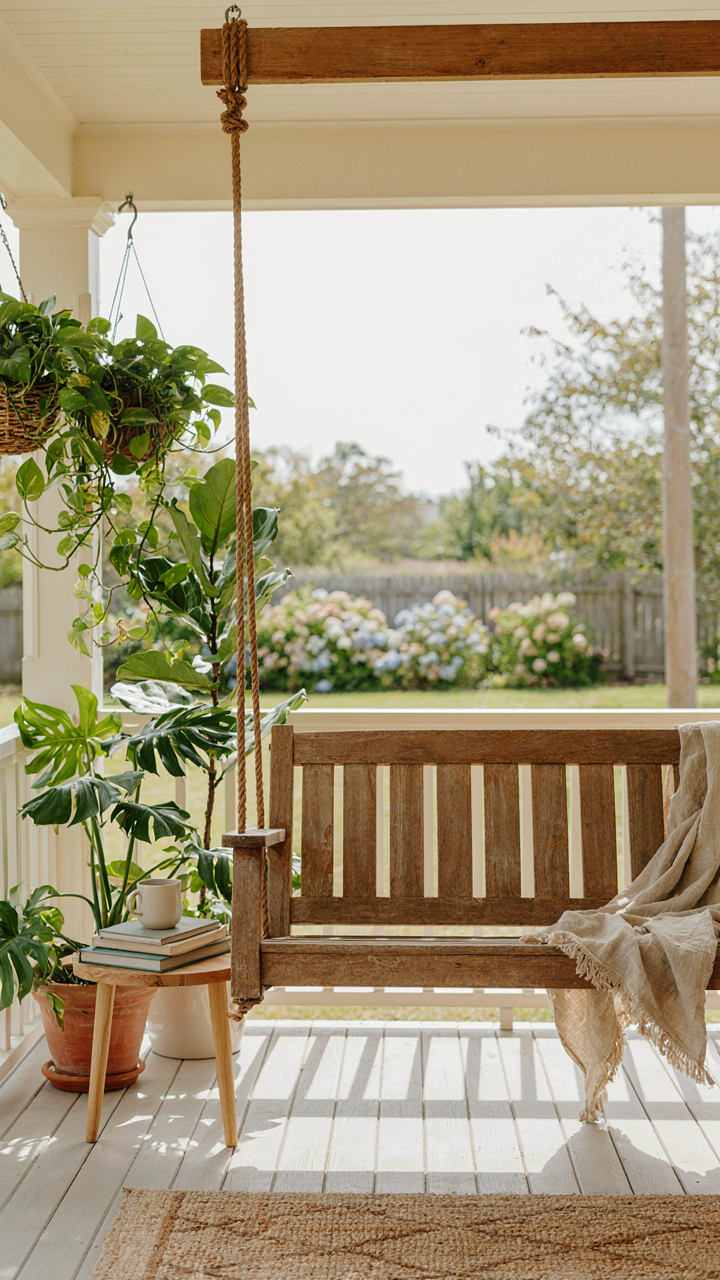
You want people to know you’re the type of person who sits still on purpose. That’s the real reason this matters. The mechanism: a cottage porch swing signals intentionality through constraint. When you remove friction from comfort, people notice the choice. A swing that works well forces you into a rhythm. You can’t multitask on it. The design does the filtering.

The best cottage porch swings use weight and suspension to create a specific cadence. Hardwood frames, typically oak or hickory, hold momentum longer than metal. The seat depth matters because shallow seating breaks the rhythm every few minutes. You’re either designing for a genuine pause or performing one. Most people get this backward and end up with something that looks the part but feels restless. The rope or chain length determines how much of your body weight the frame absorbs versus your legs. Get this wrong and you’re fighting the swing instead of surrendering to it.
Removing Friction From Distraction
Everyone says to make your porch “peaceful,” which is useless advice because it tells you nothing about what creates chaos. The real mechanism comes from environmental psychology: eliminate unnecessary inputs. A cottage porch swing situated near a window where you can watch the driveway teaches your brain to expect interruption. Position matters more than aesthetics here. Place the swing perpendicular to the main sightline of your property, not facing foot traffic or the front gate.
Color and material contrast work as friction points too. A swing in bright primary colors or reflective finishes pulls your attention inward toward the object rather than outward toward thought. Muted tones, weathered finishes, and natural materials create visual resolution. Your eyes don’t keep searching. The physical details also prevent distraction: a properly maintained swing with smooth joints and consistent motion doesn’t create micro-jolts that interrupt focus. Test the frame for squeaks or binding before considering the setup complete. Small mechanical friction becomes mental friction. Eliminate both.
Cozy Outdoor Porch With Swing: The Asymmetric Advantage
Where Effort Compounds Into Calm
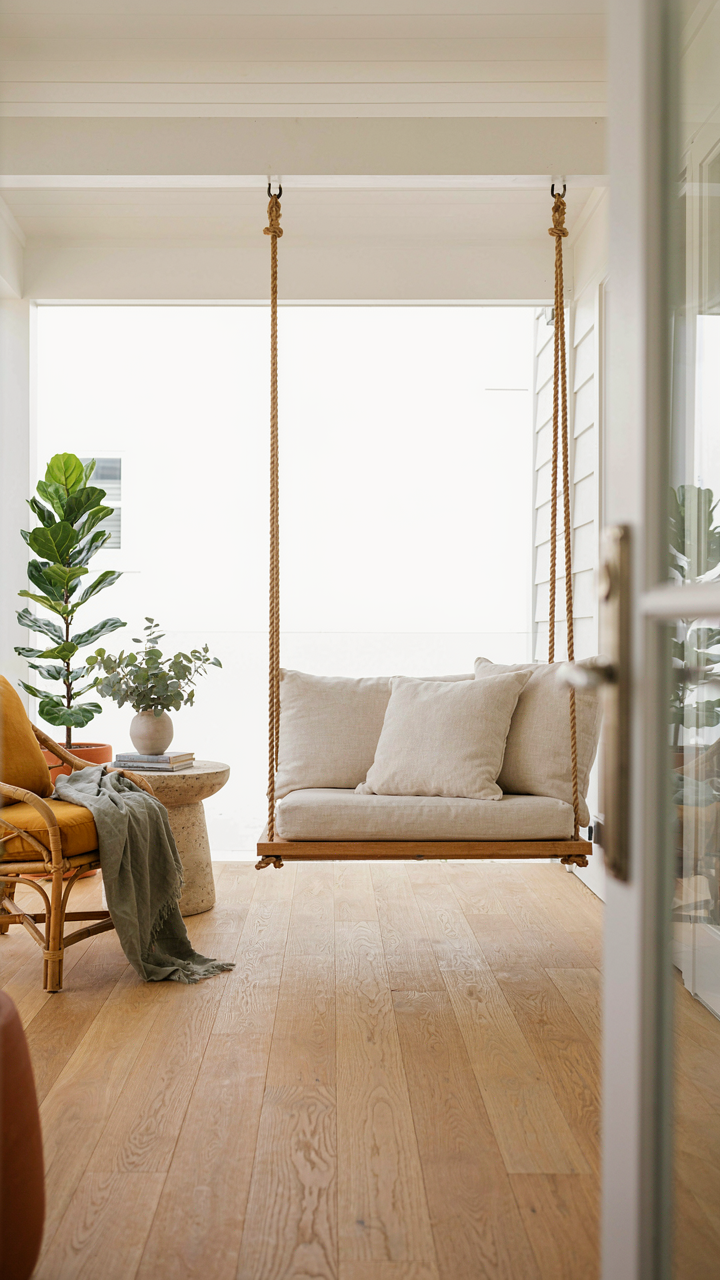
You want a porch swing because you’re tired of scrolling on a couch and calling it rest. The real mechanism here comes from ergonomics: a swing doesn’t demand active posture maintenance. Your body settles into suspension, not support. The seat height and rope angle matter because they determine whether your legs dangle, rest flat, or fold naturally. Most people buy a swing and hang it wrong, then blame the design. The physics is straightforward. Gravity pulls down. The ropes pull at an angle. Your spine gets to decompress instead of compress like it does in a chair. That’s the asymmetric advantage: minimal conscious effort produces measurable relaxation.

A cottage porch swing works because it inverts the typical relaxation equation. You’re not fighting furniture. You’re cooperating with it. The gentle motion triggers the vestibular system in your inner ear, the same mechanism that calms infants. But most people focus on aesthetics and miss the structural decisions that actually deliver calm. Rope thickness, anchor point height, and seat depth either amplify or sabotage the effect. Hang it too high and you’re straining. Too low and your knees hit your chest. Get the geometry right once, and the relaxation compounds every single afternoon you sit.
The Minimal Input Protocol
Common advice says add cushions and throws. That’s decoration logic, not function. What actually maximizes calm is removing friction between you and the act of sitting. The list below isolates what creates passive relaxation without requiring you to manage variables.
- Anchor Point Height: Set ropes 7 to 9 feet high on a standard cottage porch. This creates the arc needed for your feet to barely graze the floor, allowing rhythmic toe propulsion without effort or strain.
- Seat Depth Measurement: A seat depth between 22 and 26 inches prevents your knees from hanging off the edge or your legs from bunching. This dimension alone controls whether the swing feels supportive or unstable.
- Rope Angle at Rest: Ropes should sit at 15 to 25 degrees from vertical. Steeper angles require more muscular tension to maintain position. Shallower angles reduce the soothing swing motion amplitude.
- Movement Initiation: A single toe push should maintain gentle motion for 20 to 30 seconds minimum. If you need constant correction or re-pushing, the weight distribution or anchor point needs adjustment, not more cushions.
- Weathering Timeline: Rope absorbs moisture and weakens over 18 to 24 months in humid climates. Inspect connection points every spring. Preventive replacement beats sudden failure during peak relaxation season.
The setup is tactical, not decorative. Once these five variables sit in the correct range, you stop thinking about the swing and start thinking about nothing. That’s when the afternoon actually slows down. The swing does the work. You just show up.
Porch Swings Hanging: Applying Systems Thinking

Where The Swing Lives On Your Porch
You want placement advice because you’re afraid of wasting money on a swing that ends up in the wrong spot, invisible and unused. Military strategy calls this “positioning for lines of communication.” Your porch swing needs sightlines—visual access from where people actually sit and move. Place the swing where it anchors the porch’s natural gathering zone, not tucked into dead corners. The goal is to make the swing the obvious choice, not an afterthought.

Most advice treats porch placement like interior design. Wrong. It’s about traffic flow and sight angle. Position your swing perpendicular to the porch’s main entry, not parallel. This lets people see it before they decide where to sit. The swing becomes a destination, not decoration. Mount it where wind exposure is moderate—protected from brutal afternoon sun but catching cross-breeze. Distance from the porch edge matters too. Give yourself three feet minimum from railings to allow full swing motion without interference.
Suspension Mechanics And Motion Duration
Physics governs how long your swing actually swings. The suspension system determines decay rate—how fast the motion dies. Most people hang chains wrong, killing momentum prematurely. Chains transfer shock with every link movement, creating friction losses. Use wrought iron chain with smooth links rated for your load. The attachment points matter as much as the chain itself. Your porch beam must handle dynamic force, not just static weight. A 200-pound person in motion creates 300-plus pounds of force at the peak swing arc.
The pivot point is where mechanics either work or fail. Hang your swing from a through-bolt that threads into the beam, not a hook screwed into the surface. Through-bolts distribute force across the beam’s full depth. This prevents the creeping failure that kills swings after two seasons. Space your suspension points 48 to 60 inches apart for a standard two-person swing. Closer spacing increases pitch angle and shortens motion life. Hang the chains at an angle of 15 to 20 degrees from vertical to maintain optimal arc without binding on the chains themselves.
Farmhouse Porch Swings: The Counter Cultural Statement

The Quiet Rebellion Against Always Being Reachable
You want permission to be unavailable without feeling guilty about it. A farmhouse porch swing signals that permission to yourself and others. The mechanism is borrowed from economics: opportunity cost. When you’re sitting on a swing, you’ve made a visible choice to not optimize that hour. That visibility matters. It forces commitment. Your phone stays inside because the swing itself is the activity, not a waiting room for the next one.

Farmhouse design emerged as a response to industrial standardization, not as nostalgia. The movement prioritized materials that aged visibly and spaces designed for doing nothing productive. A porch swing embodies that directly. You can’t swing while checking emails. The design does the filtering for you. This is why farmhouse aesthetics persist: they’re actually structured to resist distraction by their very nature, not through willpower alone.
Real Connection Requires Friction
Common advice says porch swings create connection through coziness. That’s incomplete. Connection requires friction, meaning there must be cost to leaving the conversation. A porch swing creates literal friction: once you’re seated and moving in rhythm with another person, standing up interrupts the swing’s momentum. You’ve created a physical consequence for abandoning the interaction. That matters more than ambiance.
The farmhouse porch swing works because it establishes a behavioral boundary without speaking it. Two people on a swing can’t both scroll. You can’t pace. You can’t hide behind tasks. The constraint forces eye contact, turn-taking, actual listening. When you sit down to swing, you’re entering a protocol that demands presence. Build your cottage porch swing ritual by establishing this single rule: the swing is a phone-free zone. No exceptions, no exceptions for emergencies. The exception is what destroys the boundary.
Front Porch Swings Ideas: The Deliberate Disconnect
Crafting A Space For Introspection
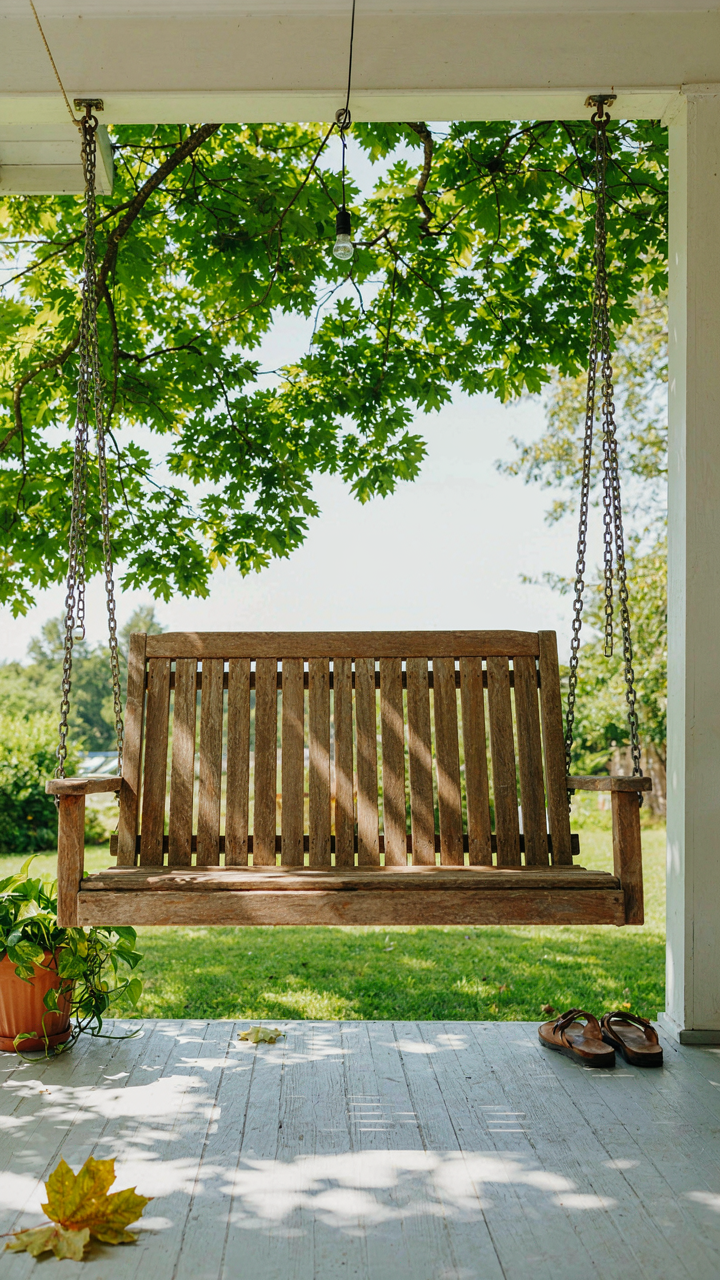
You want permission to sit still without feeling lazy. That’s the real draw here. The mechanism is environmental design: you’re using a cottage porch swing as a friction remover between intention and action. In physics, friction opposes motion. A porch swing does the opposite. It removes the friction between you and the act of stopping. The swing exists as a deliberate artifact that signals to your brain: sitting here is the activity, not preparation for one.

Most people treat their porch as leftover space. They furnish it like an afterthought. The swing changes this. It becomes a threshold object. Once you’re in it, the motion itself becomes the practice. You’re not thinking about what to do next because the swing is already doing something. The pendulum motion, the creak of the chains, the slight sway. Your nervous system registers this as permission to disengage from productivity.
Resisting The Urge To Multitask
Everyone brings their phone to the porch swing. They sit for four minutes, swipe through notifications, and convince themselves they’ve rested. This defeats the entire purpose. Multitasking isn’t a failure of willpower. It’s a failure of environment design. Your cottage porch swing must become a phone-free zone by default, not by motivation. This means the swing should be positioned far enough from your house that retrieving your phone requires deliberate effort.
The swing’s isolation is its core function. Real introspection doesn’t happen when your attention is split. A hand-pushed swing, chains made from galvanized metal or rope, and wood that requires maintenance all create minor points of friction that keep you present. You notice when the paint flakes. You hear when the chains need oil. These small sensory details anchor you to the moment. That’s the mechanism working. Build your swing setup so doing nothing becomes harder to interrupt than doing something.
The Real Obstacle Isn’t Choosing A Swing; It’s Your Inability To Disconnect When The Opportunity Presents Itself

You’ll buy a cottage porch swing and use it twice. Not because it’s uncomfortable. Because you’ve trained your brain to equate stillness with wasted time. The swing doesn’t fix that. You do. Delete the apps from your phone today. Sit for thirty minutes without reaching for anything. That’s the real purchase you’re making. The swing just holds your body while your mind finally catches up.