The Raw Material Imperative: Why Authentic Textures Trump Imitations
Where To Find Real Materials
You want the cabin to feel earned, not purchased. That’s the real driver here. The mechanism is simple: your eye detects material honesty or it doesn’t. Genuine wood, stone, and metal carry patina, weight, and irregularity that signals time and use. Reclaimed lumber from old barns or salvage yards beats new wood stained to look old. Fieldstone and slate come from actual geological deposits, not factories. Wrought iron carries hammer marks from actual forging, not injection molds.
Local stone yards and timber suppliers are your primary sources. Ask specifically for reclaimed or salvaged material rather than new stock made to look rustic. Antique dealers and architectural salvage companies stock original hardware, doors, and structural beams. Regional quarries sell locally sourced stone that fits the geography of real cabins in your area. Visit these suppliers in person. You cannot assess material authenticity through photos or descriptions alone.
The Fake Finish Problem
Most advice tells you laminate and veneer are acceptable shortcuts. They are not. Laminate and vinyl-wrapped stone fail because they cannot age. Real materials develop character through weathering and use. Laminate stays frozen in its original state, betraying the facade instantly to anyone who has touched actual wood or stone. Engineered veneers peel, fade, and crack differently than solid material. The tactile experience is completely different.
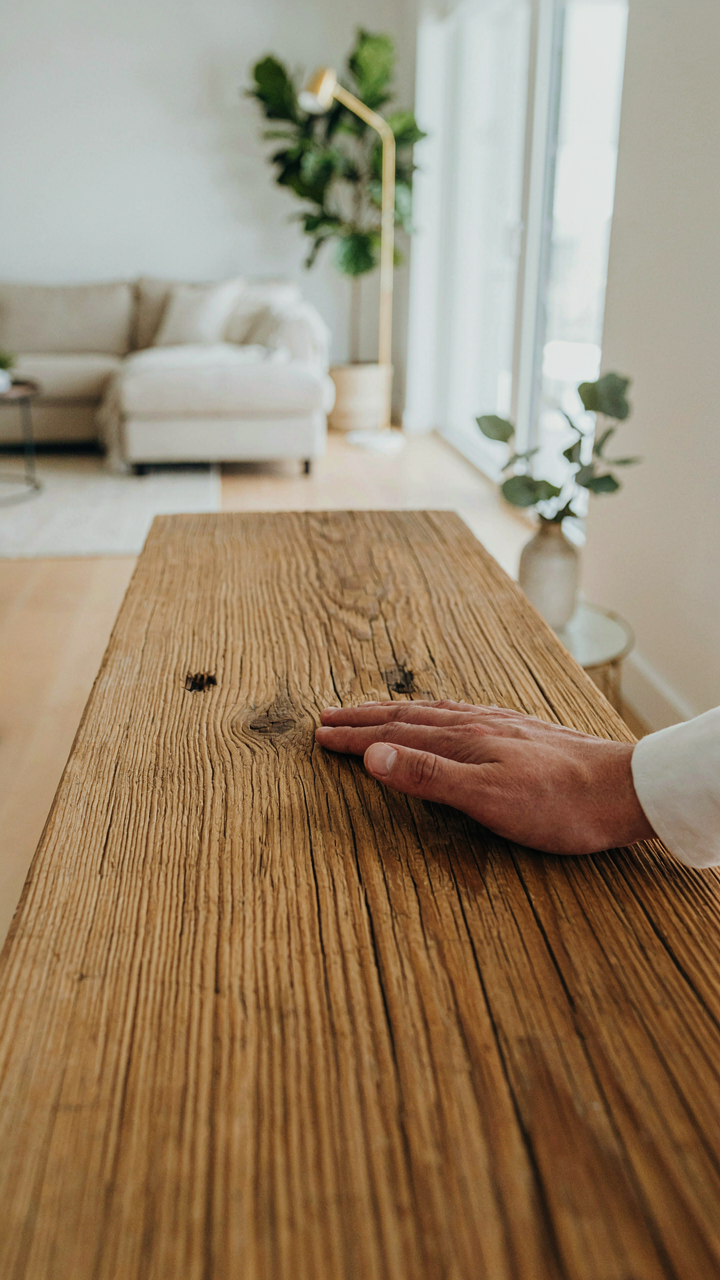
Your decision point is tactile. Run your hand across any surface before buying. If the texture stops at the surface and the backing feels hollow or plasticky, reject it. Solid wood develops a patina and changes color over decades. Real stone maintains its weight and temperature. Metal oxidizes and deepens. Fakes do none of this. Choose material that will look better in ten years, not worse.
Beyond The Buzzwords: Deconstructing Rustic Cabin Interiors
Touch Before Taste
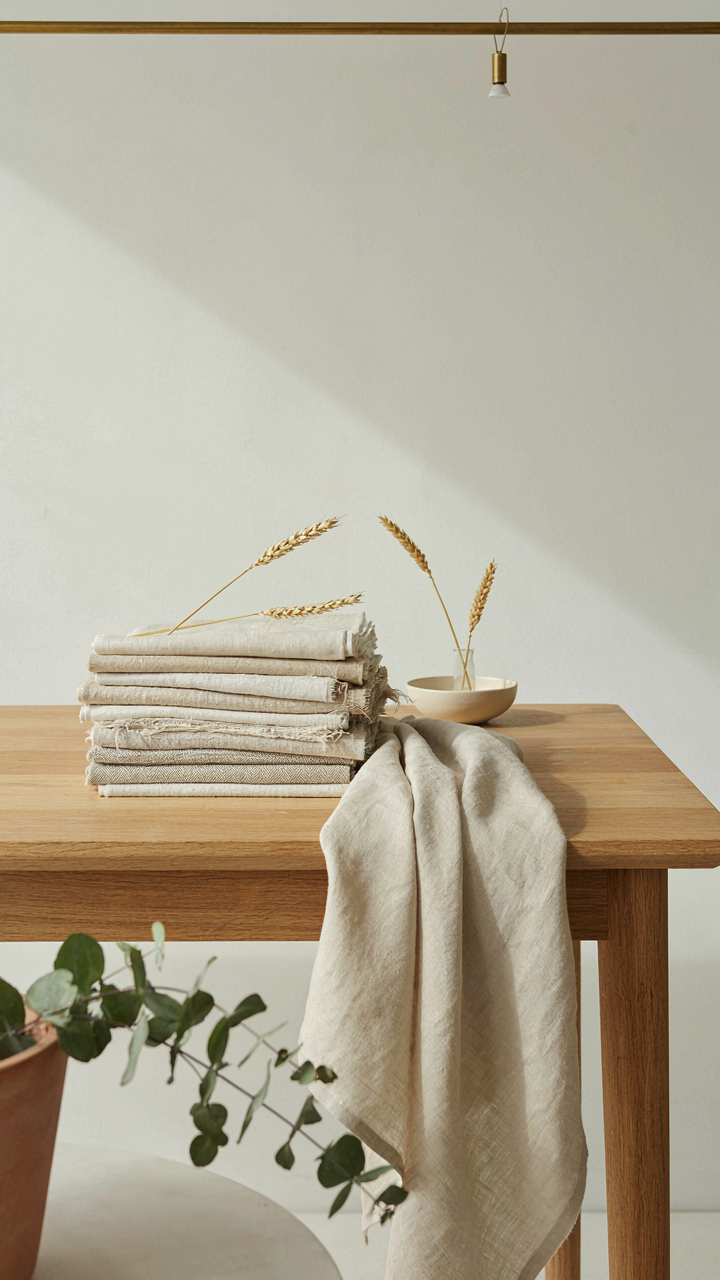
You want permission to buy rough textures without feeling like you’re settling for less. Here’s what actually matters: rustic design isn’t about age or expense—it’s about tactile contrast. Your nervous system reads texture before your brain reads style. Raw wood, stone, and linen trigger the same calm response that stripped-down environments produce. The mechanism is simple. Your eye processes visual information slowly. Your skin reads texture instantly. Cabins work because they load the sensory experience with low-stimulation materials that don’t compete for attention.

Most rustic decor advice skips this entirely and focuses on “authentic” sourcing or historical accuracy. That’s backwards. You don’t need an 1800s hand-hewn beam to get the effect. You need a surface that actually feels different when you touch it. Rough-sawn wood, unfinished stone, undyed linen, and weathered metal all work because they register as real to your tactile nervous system. That’s why a new beam with hand-planing marks works as well as an antique one. The texture carries the signal, not the age.
The Antique Trap
Common advice says rustic means old or reclaimed. Wrong. Reclaimed material sells at premium prices precisely because people believe the story, not because the material performs better. Salvaged barn wood and new rough-hewn lumber deliver identical texture. The difference is cost and scarcity mythology. Most rustic cabin interiors fail because they chase authenticity instead of function. You end up spending triple on materials that do the exact same job as affordable alternatives.
The real mechanism: reclaimed materials work when they have visible patina that signals durability and use. New wood with hand-distressing achieves this at a fraction of the cost. Your eye detects wear patterns, not age. Rough texture, color variation from weathering, and visible joinery all communicate the same message whether the wood is fifteen years old or one hundred fifty years old. Stop paying for backstory. Buy the texture profile and move on.
The Northwoods Cabin Decor Principle: Less Is More
Stripping Down To What Actually Works
You want permission to buy less stuff and feel like you made the right call. Here’s the mechanism: minimalism in cabin design isn’t about deprivation. It’s about removing visual friction so the materials themselves become the statement. Northwoods cabins succeeded because settlers couldn’t afford clutter. Necessity became aesthetic. What worked then works now because the principle is sound: fewer objects mean each one holds weight. Your eye lands on texture, wood grain, and space instead of competing for attention across a crowded room.

The common advice says “choose a color palette and stick to it.” That’s incomplete. The real move is selecting one dominant material and letting it own the space. A cabin with exposed log walls, rough stone fireplace, and a few hand tools on the mantle reads instantly. A cabin stuffed with rustic signs, faux antiques, and seasonal decor reads like a gift shop. Scale matters. A single large wooden beam draws more interest than twelve decorative shelves. Restraint is the actual design decision.
The Strength Of Empty Wall Space
Negative space in design borrows from architecture’s principle of load-bearing walls: the gaps matter as much as the structure. A bare log wall isn’t wasted real estate. It’s functional visual rest. Your brain processes cabin interiors faster when it isn’t decoding clutter. Hunters and trappers lived with minimal wall decoration because their environment provided enough stimulation. Modern cabins ignore this and pack every wall. The result feels cramped regardless of square footage.
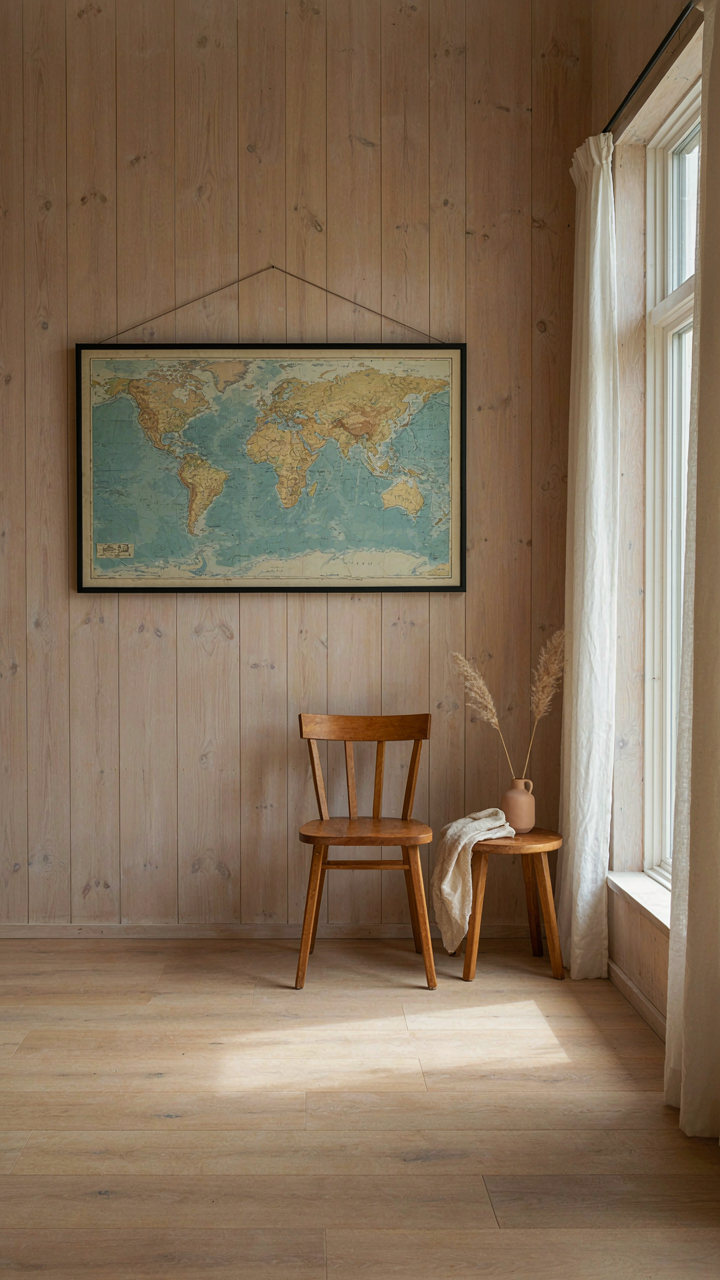
The mechanism works like this: remove one decorative item per wall and observe how the remaining pieces gain presence. A single framed vintage map reads stronger when surrounded by wood and air than when flanked by five other items. Negative space creates hierarchy without you stating it loudly. This applies to shelving too. Empty shelf space between objects makes each one legible. The tactic is intentional gaps, not sparse abandonment.
The Elemental Contrast Method: Juxtaposing Rough And Smooth
Raw Wood Meets Soft Textiles
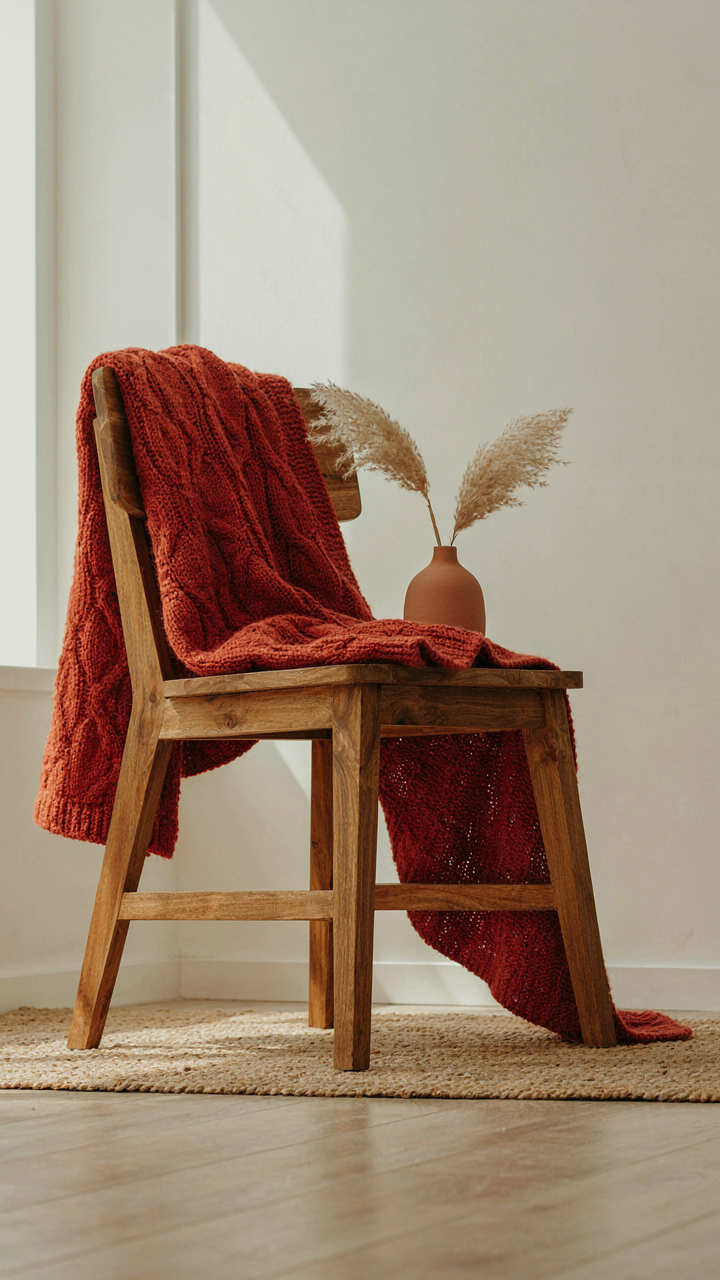
You want permission to spend money on texture without looking like you’re trying too hard. Here’s the mechanism: contrast stops the eye. Your brain registers difference before it registers anything else. A rough wood beam against linen doesn’t feel chaotic because the two textures anchor each other instead of competing. The wood says “structure.” The textile says “inhabit.” Together they create resolution.
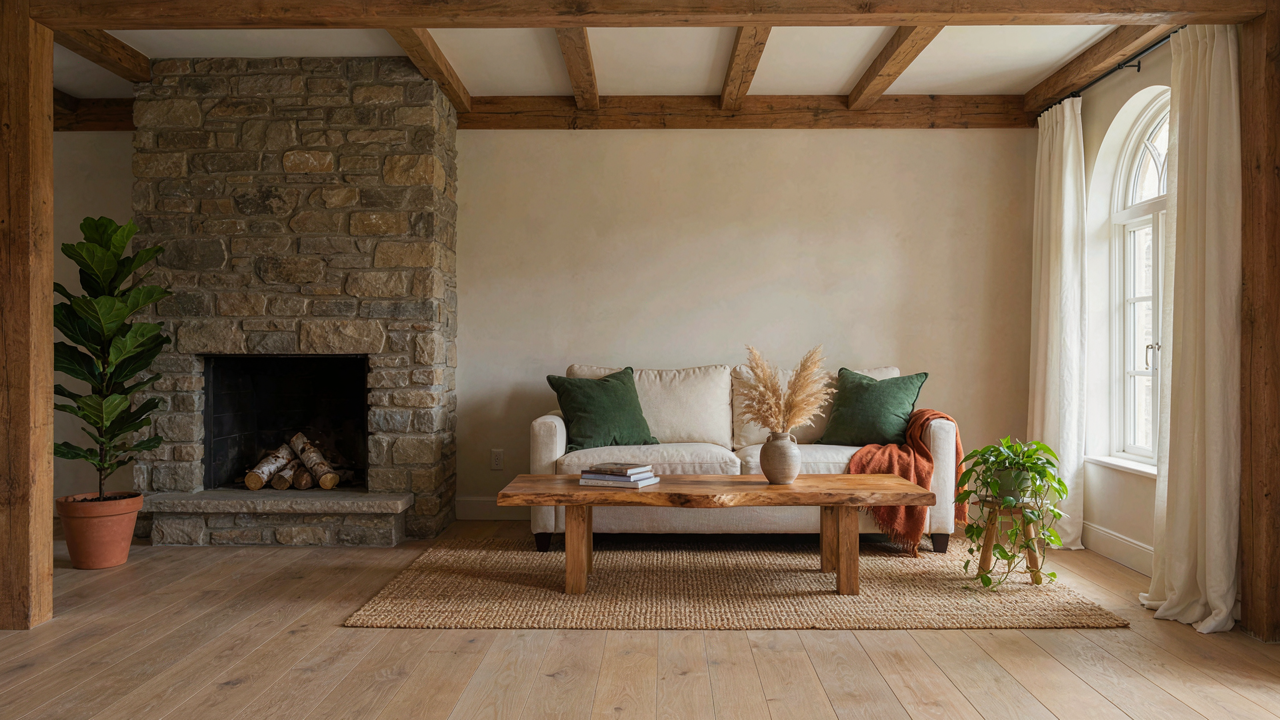
Pair heavy timber beams or reclaimed wood walls with wool throws, linen upholstery, or canvas. The roughness of hand-hewn wood grain needs soft weight against it to prevent the space from reading as purely industrial or austere. A chunky wool blanket draped over a rough-hewn wooden chair frame doesn’t soften the wood—it completes it. Place woven area rugs over bare wood floors. The fibers create visual and tactile relief without erasing the floor’s character. This isn’t decoration layered on top of structure. It’s structure speaking to comfort in a single gesture.
Metal And Glass Against Organic Forms
Borrowed from architectural tension principles, think of this as load distribution—one material doesn’t carry all visual weight alone. A wrought iron fireplace poker leaning against stacked stone doesn’t look industrial because the iron’s hard geometry breaks up the stone’s irregular surface. Glass shelves above rough wooden mantels work the same way. The transparency creates visual space the wood can’t provide by itself.
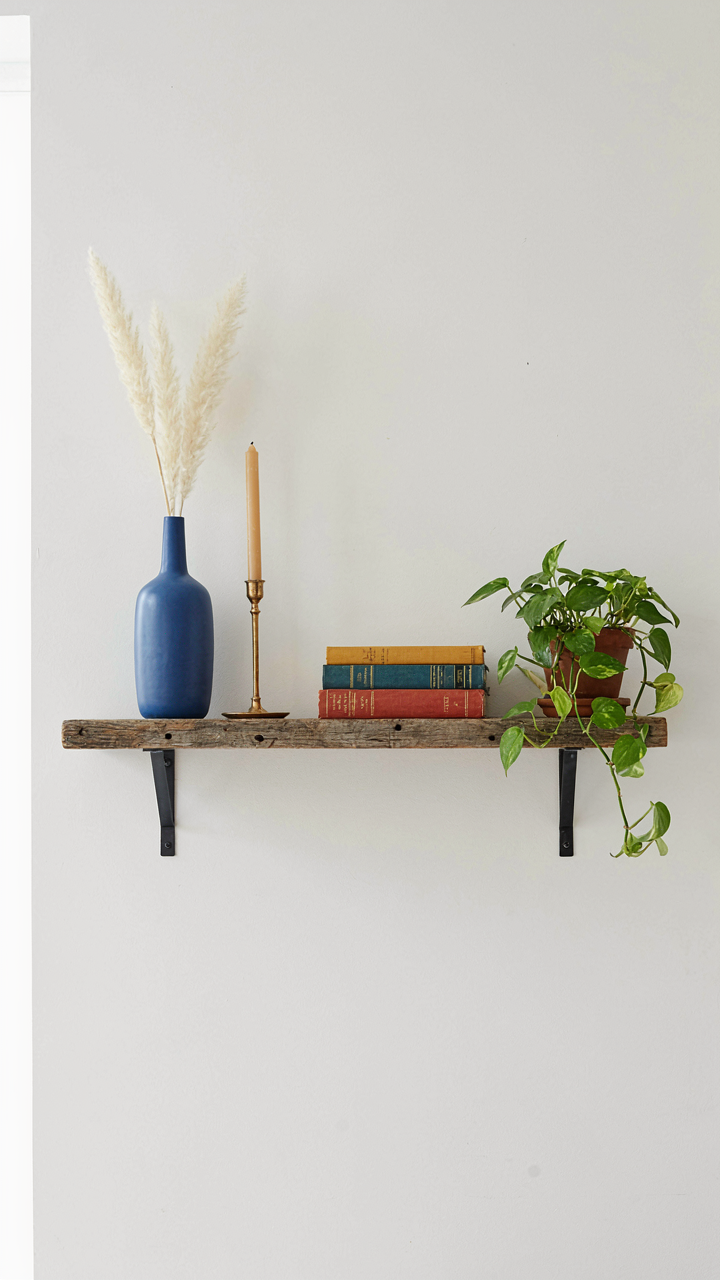
Incorporate black metal brackets holding live-edge wood shelves. The metal frames the wood’s irregularity instead of concealing it. Position a glass-top table on a reclaimed wood base. The transparency lets the wood grain remain visible while metal hardware anchors the piece to function. Tall iron candlesticks on a rough wooden console table create vertical accent without adding bulk. The mechanism is simple: hard, reflective, geometric materials need organic surfaces to offset their coldness. Install them as functional anchors, not afterthoughts. Each metal or glass element should solve a structural or practical problem first.
One Room Cabin Ideas: Maximizing Impact In Small Spaces
Furniture That Earns Its Floor Space
You’re worried a single room won’t feel like a real home. The actual problem is that most furniture sits there doing one job when it could do three. In cabins, the mechanism is density: every piece must justify its square footage by serving multiple functions simultaneously.

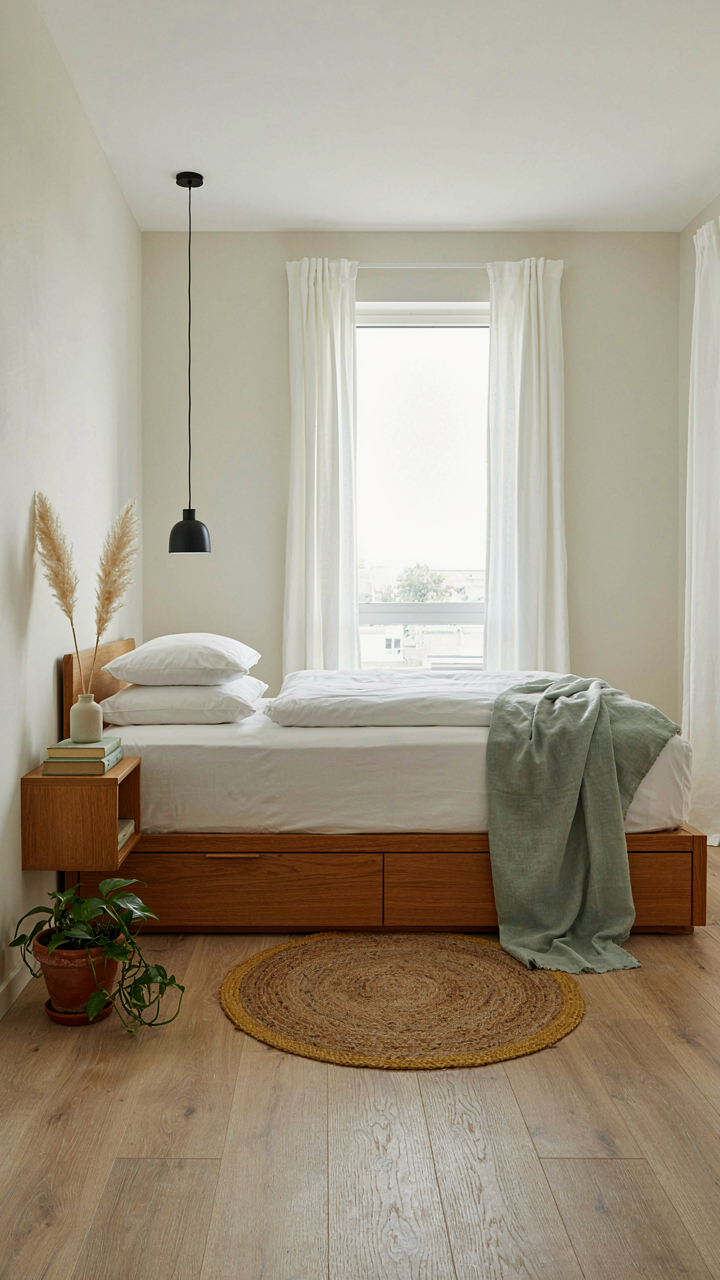
A bed frame with storage drawers underneath doesn’t just sleep you. It holds seasonal gear, extra bedding, and tools you’d otherwise stack in corners. A timber dining table that folds at one end becomes desk space or prep surface when meals aren’t happening. This isn’t decoration. It’s resource allocation. The difference between a cramped cabin and a functional one often comes down to whether your furniture works or just occupies space.
Real multifunctional pieces use construction methods borrowed from naval and RV design, where engineers maximize utility per cubic foot. A heavy wooden bench with lift-top storage built into the seat combines seating, dining, and containment in one footprint. This approach works because it treats the cabin like a boat: every component must account for its weight and volume, or it gets cut.
Choose furniture built for load, not trend. A solid wood piece rated for actual use beats a decorative statement. Install your multifunctional items permanently or semi-permanently so they stay stable and earn trust through durability, not because they look expensive or novel.
Walls And Ceilings As Storage Systems
Vertical real estate in one-room cabins isn’t decorative. It’s your inventory system. The mistake most people make is treating walls as visual canvas instead of functional infrastructure that holds the things that would otherwise pile on your floor.
Rough-hewn wood shelving anchored directly into cabin beams or log walls becomes both display and storage without eating table or floor space. Heavy-duty brackets rated for actual load bear the weight of books, gear, and supplies. Pegboard painted to blend with cabin finishes holds tools, kitchen items, and seasonal equipment where you can see and grab them. The key mechanic here is visibility: when items live at eye level on walls, you stop duplicating what you already own. You use what you have instead of buying again because you forgot what was stored in the back corner.

Mount shelving at varying heights so the arrangement breaks up blank wall space while serving actual storage needs. Deep shelves for bulk items sit below shoulder height. Narrower shelves for displayed objects and books sit higher. This staggered system prevents the bunker feeling of uniform shelving while keeping everything accessible and out of the way.
The Bio Responsive Design Protocol For Cabin Home Decor

When Your Space Mirrors What Your Body Expects
You want your cabin to feel restful because your nervous system is exhausted from stimulation that contradicts its operating instructions. Biology doesn’t care about your aesthetic preferences. Biomimicry as a design field borrows from evolutionary biology the principle that organisms solve problems through structural adaptation. In cabin decor, this means the visual patterns your eyes encounter should match patterns your brain recognizes from natural systems. Exposed wood grain, stone layering, and branch formations aren’t decoration. They’re information your visual cortex processes as safe and coherent.
The mechanism is straightforward: your brain spends cognitive energy reconciling what it sees with what it expects. Smooth drywall and uniform paint demand processing. A textured stone wall requires zero interpretation. When you replicate the fractal patterns of tree bark, the honeycomb structure of wasp nests in woven textures, or the stratification of canyon walls in stacked stone, you’re giving your visual system a familiar language. Your nervous system stops working and relaxes instead. This is why cabins with authentic natural textures produce measurable calm and why generic “rustic” decor with fake finishes creates unease you can’t name.
How Light Schedules Control Your Actual Mood
You’ve been told cabin lighting should be warm and dim. That’s incomplete. What matters is how light timing aligns with your circadian physiology, the internal clock that governs sleep, hormone production, and focus. Cabins that fail this protocol leave visitors groggy and irritable regardless of comfort. The real mechanism involves lux levels and spectral range at specific times of day. Morning light from large east facing windows should carry high blue spectrum content to trigger cortisol and alertness. Evening light must drop to warm amber wavelengths below 3000 Kelvin to preserve melatonin production.

Practical application requires two separate lighting layers. Primary daytime light comes from windows positioned to capture early sun and maintain it through midday. This isn’t about aesthetics. It’s circadian synchronization. Secondary evening lighting uses warm Edison bulbs, candles, or firelight that clusters in active zones while leaving peripheral space dark. The mistake most cabin owners make is lighting every room uniformly and dimly at all hours, which desynchronizes your clock more than city life. Arrange your cabin’s windows and supplemental fixtures so light intensity and color shift with the sun’s actual path. This single protocol change produces better sleep and energy than any furniture choice could achieve.
Scrap Wood Crafts: Intentional Imperfection And Storytelling
From Salvage To Surfaces
You want permission to stop buying mass-produced things and feel smart about it. The real mechanism is constraint-based design: limits force specificity. When you source reclaimed wood instead of ordering new stock, you’re working backward from material reality instead of forward from Pinterest. Salvaged barn siding, old floor joists, and deconstructed furniture demand that you design around their actual dimensions, grain patterns, and structural limits. This forces decisions instead of drowning them in options.
Turning salvage into function means treating imperfection as a design parameter, not a flaw to hide. Old wood carries nail holes, weathering, and color variation that screams authenticity because it cost something to acquire and cannot be replicated. Here’s what works:
- Floating Shelves From Reclaimed Beams: Install heavy timber directly into studs, letting the wood’s original surface and edge remain exposed. The weathered face becomes the display element.
- Cutting Boards From Barn Wood: Edge-grain boards from old structures retain their patina while serving a practical purpose in the kitchen.
- Wall Paneling With Mixed Widths: Salvaged boards rarely match in dimension, so stagger widths intentionally rather than forcing uniform sizing.
- Storage Boxes From Reclaimed Planks: Simple butt-jointed boxes made from old wood read as intentional craft instead of rough carpentry.
- Mantel Tops And Hearth Surrounds: Thick reclaimed timbers frame fireplaces with weight and history that new wood cannot replicate in decades.
The work happens during sourcing, not assembly. Salvage yards and deconstruction companies stock material at lower cost than new timber, but you must know what you’re hunting for before you arrive. Measure your space, identify the functional need, then find wood that fits rather than modifying wood to fit a preconceived design.
The Weight Of Real History
Worn surfaces carry narrative data that new wood cannot manufacture. A piece of reclaimed flooring shows foot traffic patterns, tool marks, and wood movement from climate exposure. Repurposed items work in rustic cabins because they broadcast a specific story: this object lasted long enough to be worth saving. Marketing calls this “authenticity.” The mechanism is simpler: scarcity signals value.

When you place a salvaged door as headboard or mount old metal hardware on a handmade shelf, you’re anchoring the room to a time when objects were repaired instead of replaced. This visual language reads as deliberate restraint in a cabin context. The worn patina on an old piece of kitchen equipment or the faded paint on reclaimed shutters does more communication work than any new object finished to look distressed. Source material with genuine wear, place it where it functions, and leave the surface alone.
Mountain Cabin Decor Ideas: Beyond The Trophy Hunt Aesthetic
Local Elements Without The Taxidermy
You want proof you belong in the mountains. The real mechanism is constraint. Borrowing from ecology, a cabin’s carrying capacity is how much flora and fauna it can display before it becomes a museum of dead things instead of a home. Most people hit that ceiling fast because they confuse abundance with authenticity.
The move is subtraction, not addition. Press wildflowers between glass sheets and hang them in simple wooden frames spaced far apart. Source local pinecones, branches with interesting grain, and river stones. Display three objects, not thirty. The gap between objects matters more than the objects themselves because it lets each one breathe and actually read as significant rather than clutter masquerading as character.
The Window As Your Primary Investment
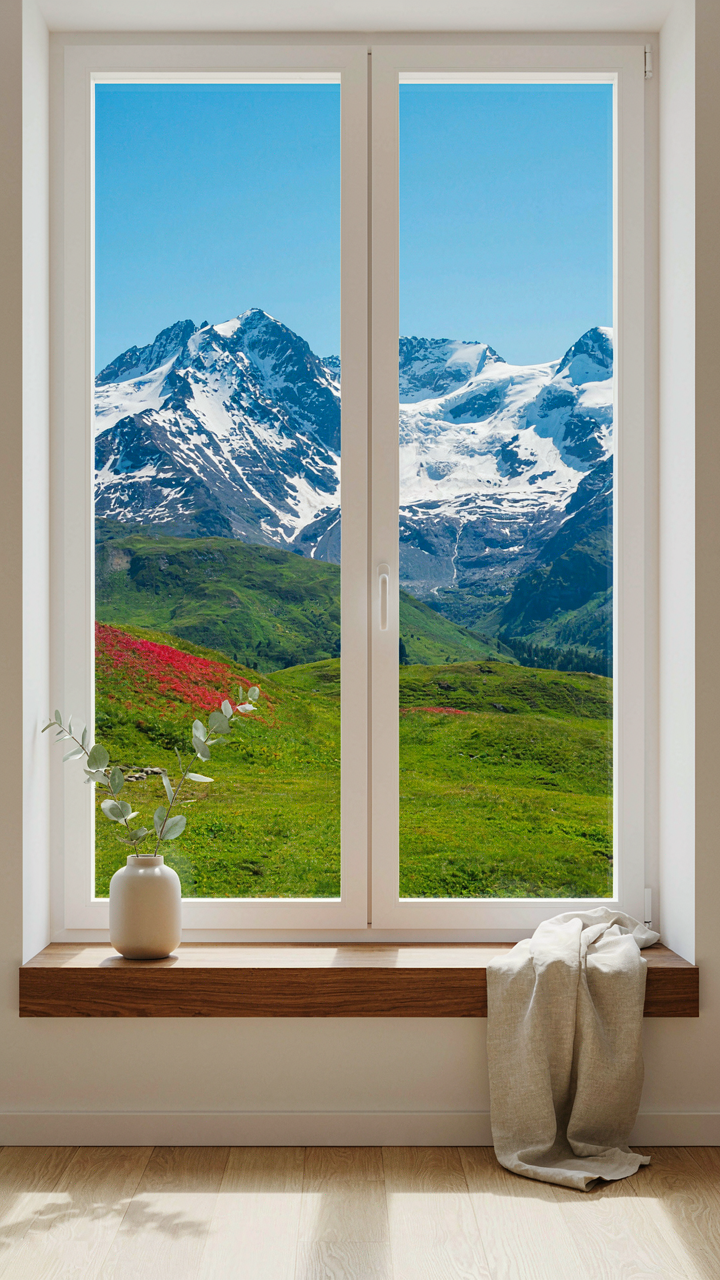
Stop buying art for cabin walls. The view is the art, and most cabin decor exists to compete with it instead of frame it. This is architectural triage: you’re choosing what to hang where based on sightlines, not on what fits the aesthetic.

Install deep sills on interior windows. Paint walls opposite major views in matte finishes that absorb light rather than reflect it, so the view stays dominant. Mount your seating so the best sight line happens naturally when you sit, not when you face the wall. The cabin’s real purpose is containment of the view, not distraction from it. Position yourself so the landscape does the heavy work.
The Unfinished Business Of Cabin Den Ideas
Spaces Built For Stillness
You want a cabin den because you suspect stillness is where actual thought happens, and you’re right. Most cabin decor advice treats the den like a showroom. The real mechanism: a den works when it removes decision fatigue, not adds it. Dark wood, stone, and leather don’t soothe you because they’re trendy. They soothe you because they’re low-contrast environments. Your brain stops scanning for threats and settles into parasympathetic mode. That’s the mechanism nobody names.
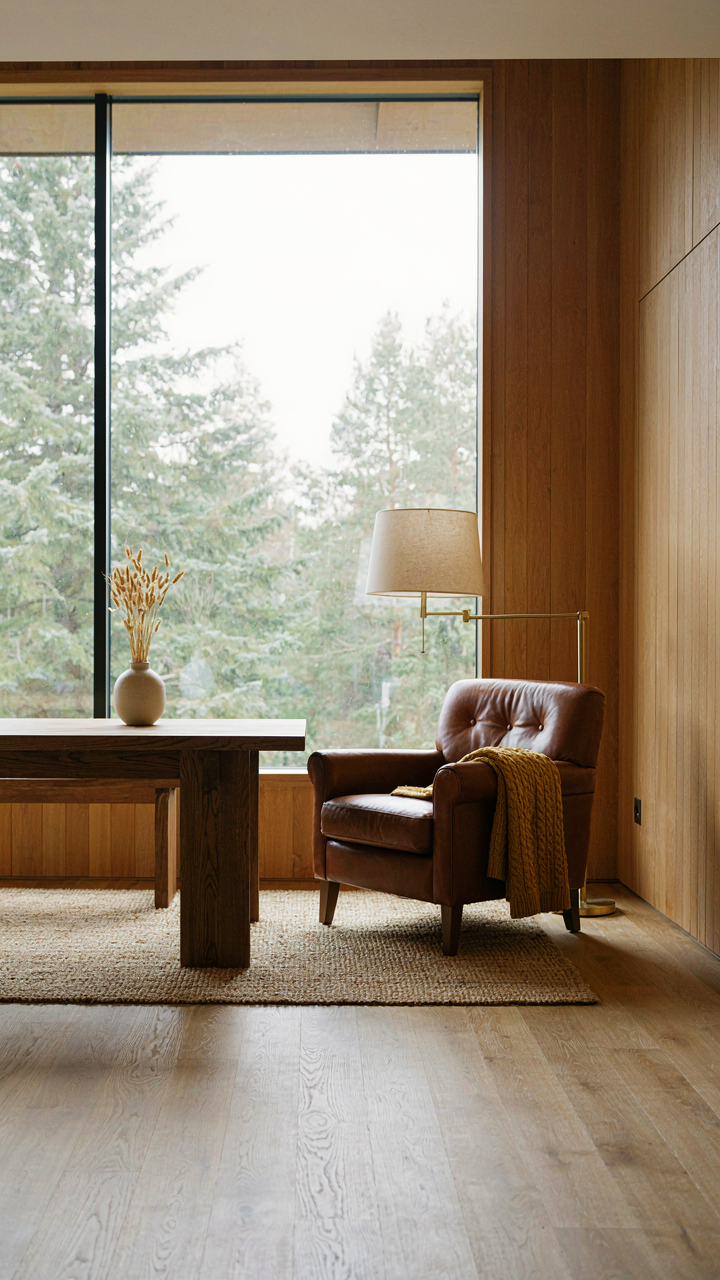
The practical setup is sparse. A heavy wood table. A single source of warm light. Stone fireplace or exposed stone wall. Raw wood beams on ceiling if you have them, or leave the ceiling plain. The cabin den that functions eliminates the visual noise most people think creates atmosphere. Bare walls work better than gallery walls. One rug, not layers. Leather ages and darkens with use, creating visual consistency over time instead of decay. This is why old cabins feel stable and new ones feel uncertain.
Furniture That Demands Attention
Design borrows from architecture the concept of “load bearing.” In a cabin den, load-bearing furniture creates the frame for how you’ll actually use the space. Everyone picks a chair or sofa and calls it done. The mistake is treating seating as decoration instead of as the primary statement about what happens here. If your den has a reading chair positioned toward a window with nothing else competing for visual weight, the chair becomes the focal point not through style but through placement logic. This is load bearing in practice.
Position your seating to face either the fireplace, a window, or the entry. Not the television. The furniture arrangement should make clear that this space exists for conversation, reading, or thinking, not for passive consumption. A sturdy wooden table anchors the room. Thick-legged tables in reclaimed oak or hickory read as functional, not decorative. Add a single lamp with a linen or canvas shade, positioned to cast light on the table surface, not the whole room. The goal is directional illumination. This setup broadcasts presence. When you sit, you’re not performing relaxation. You’re actually doing it.
The Real Obstacle Isn’t Finding The Right Decor; It’s Your Addiction To Overcomplicating Simple Spaces

You don’t need more rustic cabin decor. You need permission to stop. Most people strangle their spaces by layering too much texture, too many materials, too many “statement pieces.” Cabin spaces breathe when you subtract, not add. Pick three textures maximum. Commit to them. Go buy one item today that matches nothing else in your room on purpose. Restraint looks expensive because it actually is.