The Cognitive Dissonance Of Cottage Core Curtains

What Instagram Sold You That Your Room Doesn’t Need
You want permission to buy something that makes you feel less lost. That’s the real reason cottage core aesthetics matter to you right now. The mechanism is simple: design trends function like social proof in fashion. A curated image of linen curtains signals “I have taste” and “my life is intentional” without requiring you to actually build anything. The gap between the aesthetic and the function is where most people waste money.
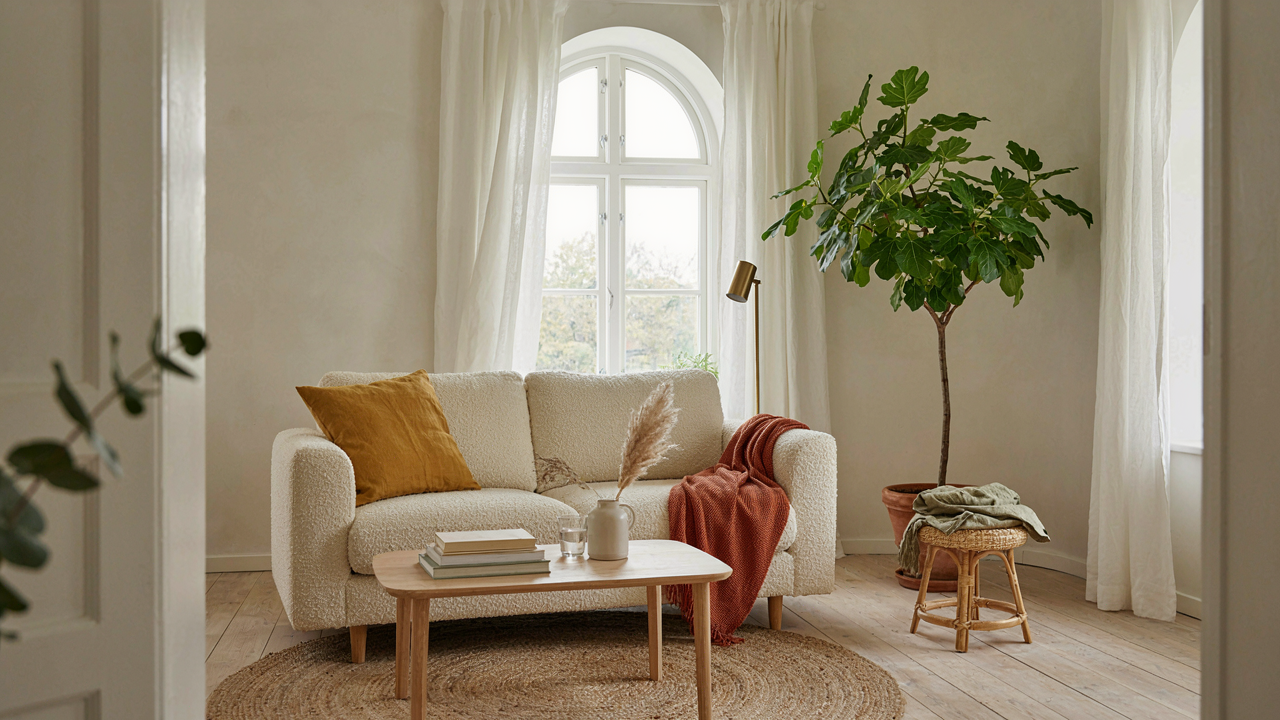
Cottage core curtains on social media are performance pieces, not functional textiles. The problem with treating them that way is you end up with fabric that looks right in a photo but fails in actual use. Real cottage curtains from actual cottages were made from materials that handled weather, light, and daily wear. They were chosen for durability first, appearance second. Today’s trend reverses that order entirely, and your window suffers for it.
Comfort Requires Friction With Reality
The honest truth about aesthetics versus function is that you cannot have both without deliberate trade-offs. Marketing tells you otherwise. Authentic cottage comfort comes from materials that perform in real conditions: linen that breathes and softens with washing, gingham that hides dust better than solid linen, lace that filters light without creating glare. These choices exist because they solve problems, not because they look good on a phone screen.
When you prioritize instagrammability, you choose thin, stiff fabrics that wrinkle aggressively and fade fast. You hang them on hardware that looks delicate but breaks under actual weight. You select colors that photograph well under specific lighting but look washed out in your home at 3 PM. The mechanism is inverted: start with what your room actually needs, then find the aesthetic that matches. Measure your windows first, choose your light control needs second, then pick your linen weight and weave pattern.
Linen Gingham: The Unsung Hero Of Environmental Regulation
How Linen Blocks Heat Without Blocking Life
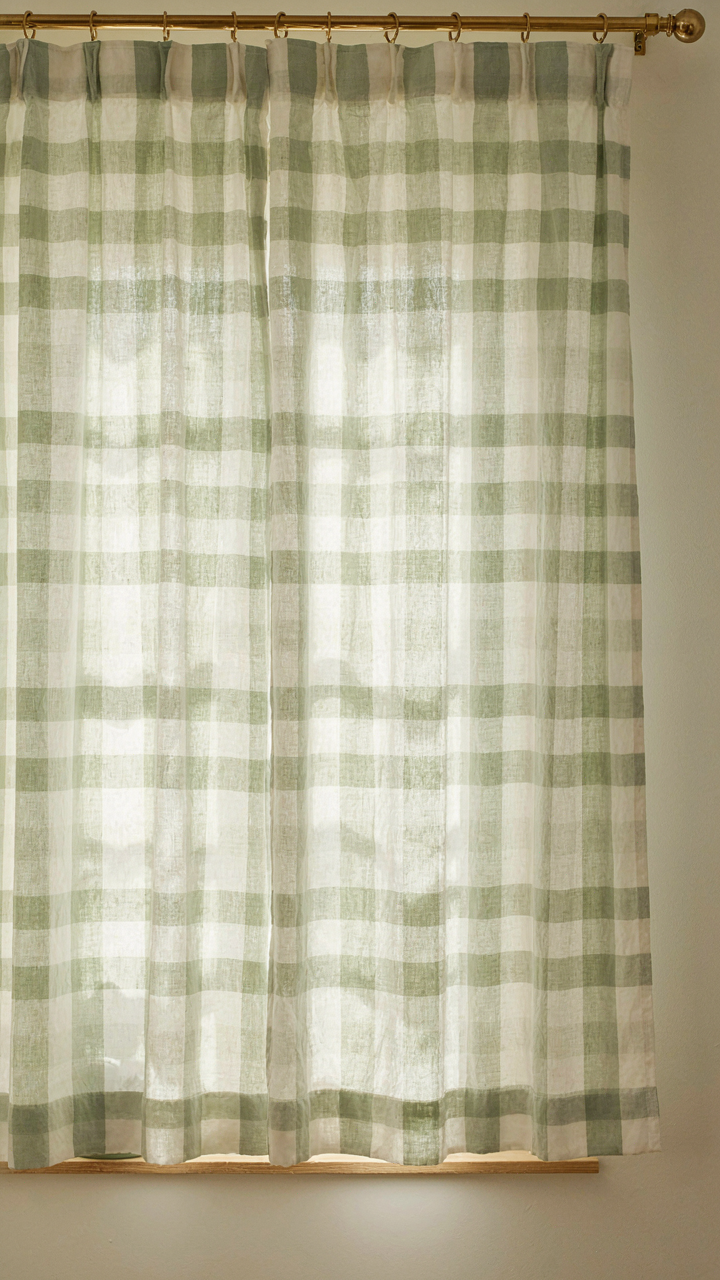
You want cottage curtains because you’re tired of either freezing at night or baking during the day while your neighbors judge your electric bill. Linen gingham works through thermal mass and light diffusion, which is borrowed straight from physics: the same principle that makes stone walls hold temperature. The weave structure traps air pockets between threads, creating insulation without density. Light scatters through the pattern instead of passing straight through, reducing radiant heat gain in summer while preserving enough visibility to avoid living in a cave. This is why period homes used linen long before central climate control existed.

Gingham’s checkered pattern amplifies this effect because the color contrast breaks up direct solar radiation. Dark squares absorb and re-radiate some heat outward, while light squares reflect it. The combination means your interior temperature stays more stable than it would with plain linen. You’re not paying for fancy technology. You’re paying for a weave pattern that was engineered by centuries of cottage living in variable climates. Cotton-linen blends perform similarly but pure linen maintains these properties longer as the fibers strengthen with age and washing.
The Durability Math That Justifies The Cost
Linen gingham costs more upfront than polyester alternatives, but the math flips after three years of actual use. Linen becomes softer and more effective with each wash, not weaker. The fibers strengthen when exposed to moisture, which is why old linen was historically passed down through families rather than replaced. Polyester degrades under UV exposure and heat cycling, requiring replacement every eighteen to twenty-four months. Linen gingham lasts eight to ten years with standard care because the natural fibers resist breakdown at the molecular level.
Maintenance is the hidden ROI driver nobody mentions. Linen requires basic washing and occasional ironing if you care about crispness, which you probably don’t in a cottage setting. It doesn’t hold dust the way synthetic fabrics do, so you’re cleaning your curtains less frequently. Stains respond to simple treatments because the fiber structure is open and forgiving. You wash, it releases dirt easily, and you move on. The low-maintenance reality means you’re not replacing hardware, dealing with mildew, or burning energy on heavy-duty cleaning cycles. Amortize the initial cost across a decade and linen gingham becomes the practical choice, not the romantic one.
Lace: Beyond Decorative – A Privacy Protocol

The Sight Line Problem
You want privacy without boarding up your windows like you’re afraid of the world. That’s the real tension here. Lace operates on a single mechanism: it blocks direct line of sight while maintaining light transmission. Daylight passes through the fiber structure, but the weave density breaks up the silhouette of anyone inside. Most people think lace is purely aesthetic. It’s not. The fiber-to-void ratio determines what an observer outside actually sees at different times of day.

Linen lace performs better than cotton lace for this job because linen fibers scatter light differently due to their structural properties. A standard linen lace curtain with a tight weave—60 to 80 threads per inch—creates enough diffusion that someone standing outside sees shadow and texture, not distinct movement or detail. Install lace panels as a permanent first layer on your window. Don’t layer them behind heavier curtains and call it done. Position them closest to the glass to maximize the privacy threshold while keeping the visual benefit of natural light intact.
The Layering Equation
Military strategy calls this defense in depth: multiple barriers that each independently function, but compound in effect when stacked. Lace provides the first barrier through its optical interruption. The second layer is spatial distance—the gap between your lace panel and any secondary curtain or blind. This gap matters because it prevents someone outside from pressing against the glass to look past the lace pattern. A 4 to 6 inch air space between lace and your secondary layer breaks the optical pathway completely.
Lace layering isn’t about making your room darker or prettier. Strategic layering makes you harder to read from outside. Deploy lace as your permanent layer, then add Roman shades or heavier linen panels on a separate track 6 inches behind it. This gives you three states: full privacy with both layers drawn, daytime privacy with lace alone, and full light transmission with both layers open. The mechanism is simple separation creates opacity that proximity cannot overcome.
The Biofeedback Loop Of Cottage Windows

Light Governs Your Sleep Architecture
You want cottage curtains because you’re afraid your bedroom doesn’t feel intentional enough. Here’s what actually happens: natural light entering through windows at specific times triggers your suprachiasmatic nucleus, a brain region that regulates circadian rhythm and melatonin production. Linen and lace don’t block light evenly. They filter it. This matters because filtered morning light still carries the blue wavelengths your body needs to anchor its daily cycle.

Cottage curtain materials create a dose-response problem nobody mentions. Heavy linen lets through 10 to 20 percent of incoming light depending on weave density. Lace transmits 40 to 60 percent. Your circadian system doesn’t care about aesthetic preference. It responds to light intensity and spectrum. If your cottage curtains block too much morning light, your melatonin won’t suppress properly. You’ll wake tired regardless of how many hours you slept.
Pattern Density And Visual Rest
Texture works as a perceptual anchor, not decoration. Neuroscience distinguishes between high-load and low-load visual environments. High-load spaces demand constant attention from your pattern-recognition systems. Low-load spaces let your visual cortex relax. Gingham and lace patterns in cottage curtains create controlled visual texture. The repetition is predictable, so your brain stops processing it as novel threat.
Most design advice treats pattern as style choice. Wrong. Pattern density directly affects your baseline cortisol and sustained attention capacity. A cottage curtain with tight gingham or dense lace provides enough visual interest to feel intentional but not so much chaos that it triggers vigilance. Hang linen gingham where you rest. Keep lace for rooms where you work or move through quickly. The mechanism is simple: your nervous system shifts state based on what your eyes process, so control what your eyes process.
The Curated Chaos Method: Vintage Curtain Integration
Where To Find Genuine Vintage Pieces
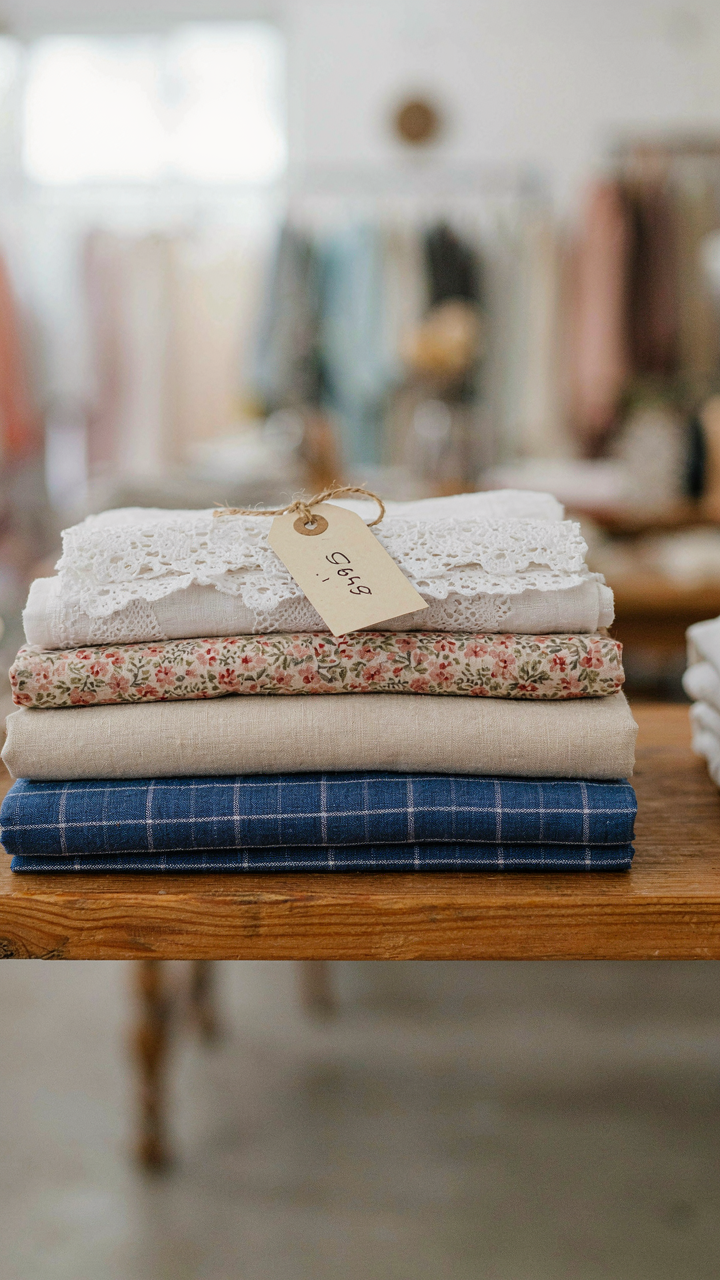
You want vintage curtains because they signal you didn’t buy everything at once from a catalog. That’s the real motive. The mechanism is scarcity. When a curtain panel has actual age, it carries proof of selection that new fabric cannot replicate. The sourcing matters more than the piece itself.
- Estate sales and auctions: Where families liquidate homes. Curtains often get overlooked, priced low, and retain original hardware and construction details that reveal era-specific techniques.
- Regional textile dealers: Specialists who focus on authentic linen, wool blends, and period-correct weaves. They verify fiber content and can date pieces accurately.
- Antique markets and fairs: Multi-vendor venues where you inspect fabric directly under natural light and compare pricing across multiple sources in one visit.
- Architectural salvage yards: Demolition sites yield curtains from homes being restored or cleared. Hardware and headings often remain intact, showing original installation methods.
- Online archives and local historical societies: Digital collections document curtain styles by region and decade. Cross-reference these before buying to confirm authenticity against reproduction versions.

The key is direct inspection. You need to feel the weave, check the seams, and examine how the fabric aged. Reproduction vintage does not develop the patina or fiber degradation that signals genuine age. When you buy sight unseen, you’re guessing.
Layering Patterns Without Visual Collapse
Most people layer patterns and create visual noise. That’s not sophistication. That’s indecision. The real principle comes from graphic design: contrast requires intentional hierarchy, not randomness. One pattern must dominate. The others support. Nothing competes equally.
A single large-scale gingham on the main curtain panel establishes visual weight. A narrow lace trim or band becomes the accent, applied at the edge where the eye expects transition. A secondary textile like linen only appears as a backing visible from inside the room or as a functional layer. Each texture occupies a specific spatial role. No two patterns fight for the viewer’s attention from the same distance.
Cottage Core Living Room Curtains: A Control Panel For Mood

Light Control Without The Pretense
You want people to think your living room feels naturally intimate. That’s the real reason you care about this. But mood lives in light, not decoration. Borrow from lighting design: curtains function as a dimmer switch, not a static backdrop. Linen and gingham cottage curtains work because their weave density controls light transmission at a molecular level. Tight weaves block more lumens. Loose weaves let diffuse light through without glare. The thickness of linen fabric ranges from 150 to 250 GSM (grams per square meter), and heavier weights reduce brightness by 30 to 50 percent.

Social interaction peaks at specific illumination levels. Dim light below 50 lux triggers withdrawal and fatigue. Bright overhead light above 300 lux creates agitation and guards people’s energy. The sweet spot for conversation sits around 100 to 150 lux, where faces read clearly but nobody feels exposed. Cottage curtains in gingham filter sunlight into a scattered pattern that naturally hovers in this range during midday hours. Measure your room’s existing light with a basic lux meter, close your curtains incrementally, and note when conversation rhythm shifts. That’s your calibration point.
Sound Absorption For Closer Conversation
The common advice is that curtains add “softness” to a room. Wrong. Curtains absorb sound through mass and air pockets, a mechanic borrowed from acoustics engineering. Impedance mismatch is the principle: sound waves lose energy when they hit materials with different acoustic properties than air. Linen fibers trap air in their loose weave structure, forcing sound waves to lose momentum. Gingham’s woven pattern creates small chambers that scatter sound rather than reflect it. A single panel of medium-weight linen reduces room noise by approximately 3 to 5 decibels, enough to make conversation feel private without soundproofing equipment.
Heavy linen curtains hung floor-to-ceiling and pulled fully closed perform better than lightweight versions or partially drawn panels. Hard surfaces like plaster and wood amplify voice and footstep noise. Curtains sitting 2 to 3 inches away from the wall (not flush against it) create an air gap that increases acoustic dampening. Install your cottage curtains on a rod that pulls them fully to the sides of your window frame rather than halfway, maximizing coverage. This single change drops perceived noise levels enough that people naturally lower their voice volume and lean in closer.
Vintage Bedroom Curtains: Engineering Sleep Sanctuaries

Total Darkness Shifts Melatonin Production
You want cottage curtains in your bedroom because you’re hoping they’ll make you look like someone who sleeps well. The real mechanism is simpler: your brain produces melatonin only when it detects near-complete darkness. This is a circadian biology problem, not a decorating one. Linen and lace fabrics popular in cottage design transmit light by default. Dense weaves block it. The trade-off between aesthetic and function exists because most cottage fabrics prioritize visual texture over light blocking.

Vintage bedroom curtains solve this by using layering, not by switching materials. A sheer lace layer stays visible for design coherence. A blackout liner sits behind it, invisible to anyone looking at the room. Linen pairs well with this approach because its natural texture absorbs light rather than reflecting it, reducing the harsh appearance of a pure blackout setup. The liner handles the biology; the linen handles the visual load.
Managing Light Leaks At Edges And Seams
The common advice says “get thicker fabric.” That’s incomplete. Physics calls this the inverse square law applied to interior design: light intensity drops dramatically with distance from the source, but only in a straight path. Gaps at the sides and top of curtains create direct pathways. Linen and lace don’t seal edges the way rigid blackout materials do.
Vintage bedroom curtains require mechanical solutions, not fabric ones. Mount the rod closer to the wall and higher above the window frame. Extend the curtain width 8 to 12 inches past the window on each side. Use a weighted hem or magnetic tape along the bottom to eliminate the gap where light enters lowest. This approach works with cottage aesthetics because it relies on placement and hardware, leaving the fabric itself authentic to the period.
Beyond Blinds: The Untapped Potential Of Cottage Window Treatments

Interior Shutters For Light And Privacy Control
You want shutters because you think they look period-correct, but the real mechanism is mechanical control. Shutters give you what blinds never do: the ability to modulate light without a pull cord or remote. Interior shutters pivot on hinges mounted to the window frame itself, letting you angle slats to direct light while maintaining sightlines. This is leverage applied to a problem most people solve passively.

Cottage interiors benefit from shutters because they compress function into the architectural layer. Instead of layering a separate treatment over the window, shutters become part of the trim detail. Linen or lace curtains then function as pure aesthetic overlay without bearing the weight of light control. Install shutters with adjustable louvers (typically one to two inches wide) to match the window proportions of your cottage’s era.
Tension Rod Systems For Fabric Drape
The standard advice is wrong: tension rods are not just for rental apartments. Fabric tension systems use compression rather than nails or brackets, which means you control the exact depth and angle of your curtain without permanent installation. This matters in cottages where original woodwork cannot be damaged. A tension rod holds linen or lace equally well as a traditional rod while preserving the window frame’s integrity.
The mechanism is pure mechanics. A rod slides into a bracket on one side, then tension is applied via a threaded mechanism on the other. Tighten the rod to hold fabric weight. This works for lightweight cottage fabrics like gingham or lace up to medium-weight linen. For heavier fabric, use dual rods at top and bottom to prevent sagging, then measure your window opening before ordering.
The Real Obstacle Isn’t Finding The Right Pattern; It’s Understanding That True Comfort Is A System, Not A Style, And Your Curtains Are A Crucial Control Valve
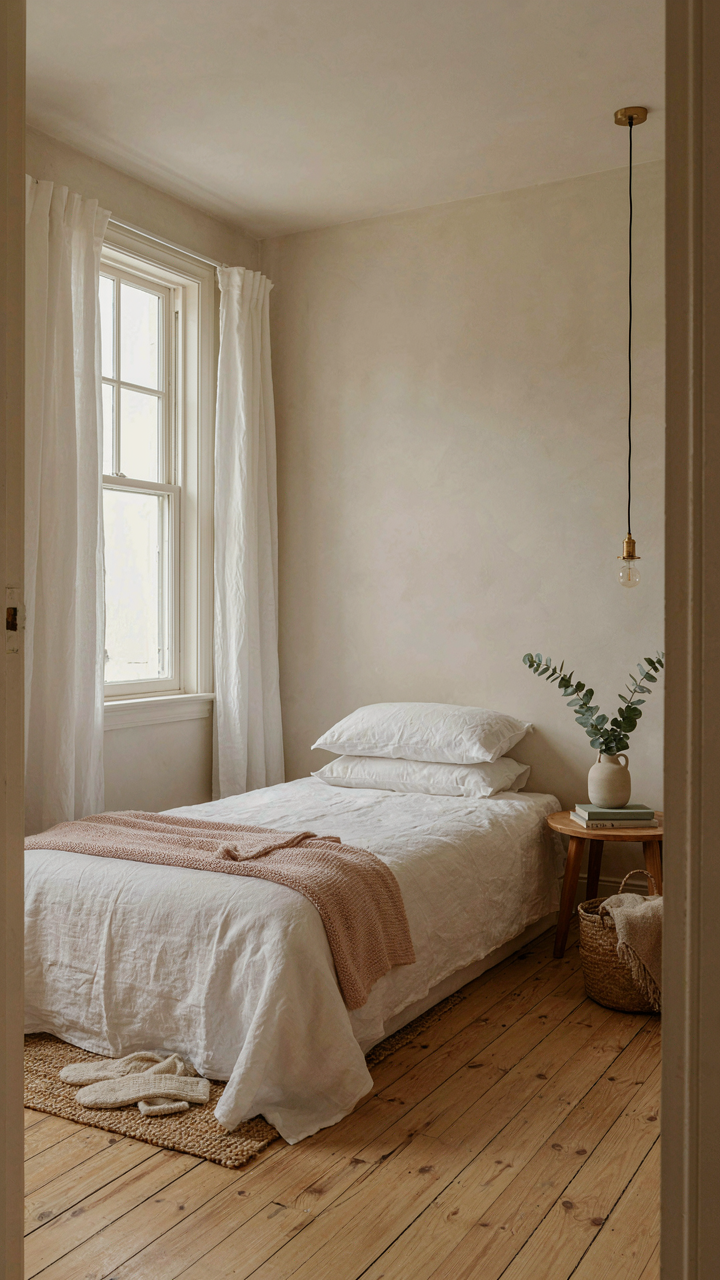
Most people pick cottage curtains for how they look. Wrong move. You’re actually engineering your environment. Linen gingham filters light without stealing it. Lace diffuses heat. Pattern masks dust. Stop shopping for aesthetics and start shopping for function. Pick one room today. Replace its curtains with linen. Live with it for a week. Your body will tell you what your brain keeps ignoring: the right cottage curtains don’t make a room feel better, they make your nervous system stop fighting the space.