The Unspoken Purpose Of Cottage Fireplaces: More Than Just Heat
Fire As The Organizing Principle
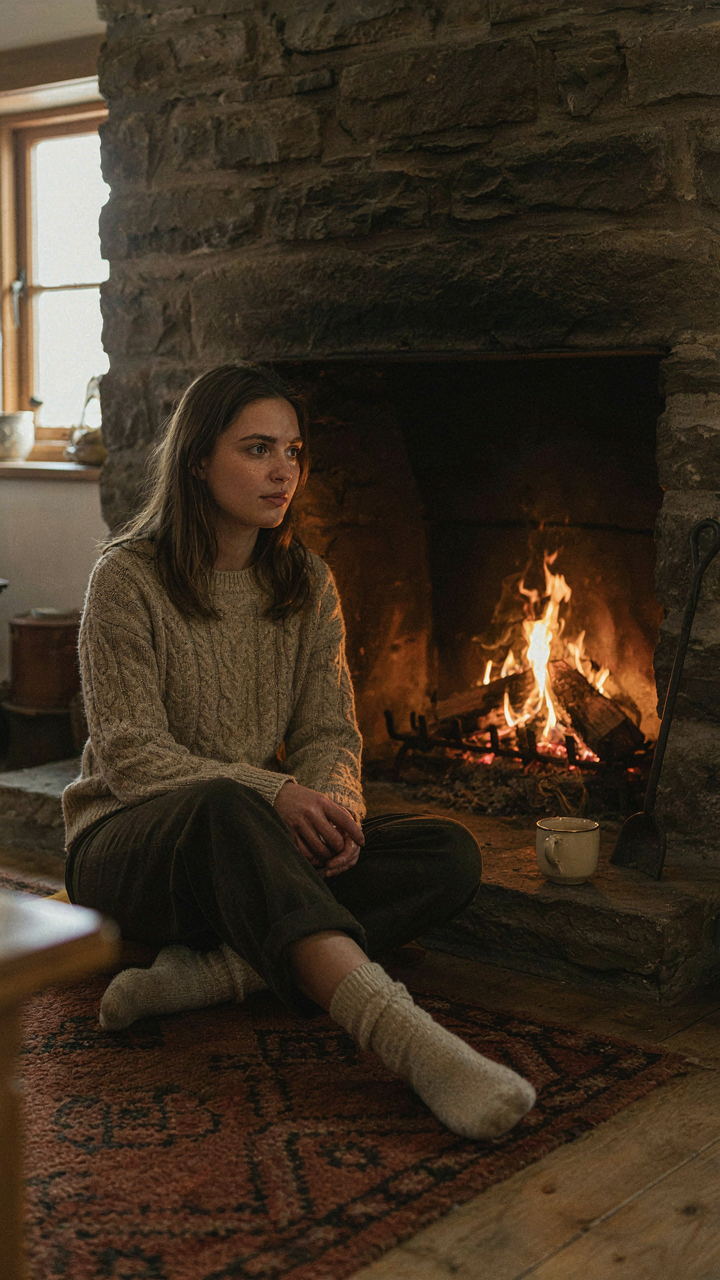
You want a cottage fireplace because you’re terrified of a home that feels empty and purposeless. A fireplace isn’t decoration—it’s an anchor. Anthropologically, humans are wired to gather around a central heat source. This isn’t sentiment. For millennia, the hearth was the literal center of survival: where food cooked, where families coordinated, where decisions happened. Remove that center and a space becomes a collection of rooms instead of a home.
The cottage fireplace replicates this neurological blueprint. It creates what archaeologists call a “focal point”—the single location your eye and body naturally orient toward. When you sit in a cottage with a working fireplace, your nervous system recognizes an ancient signal: this is where belonging happens. Modern open-concept homes fail because they obliterate this signal. A cottage fireplace restores it.
Stillness In A Fractured World
Psychology maps “anchoring bias” onto fireplaces better than any design term. Anchoring bias is when a single reference point stabilizes your perception of everything else around it. A fireplace serves as cognitive ballast. In a world of infinite digital input and spatial uncertainty, your brain needs a stationary object that demands nothing except presence.
The cottage fireplace becomes the only thing in the room you’re supposed to stare at without guilt. No screens, no optimization, no outcomes—just observation. This is why people report feeling calmer near active fires, even in climate-controlled homes where the heat is irrelevant. The fire itself is the mechanism. It moves unpredictably. Your attention softens. Decision fatigue drops. When you design a cottage fireplace, you’re not adding decor—you’re installing permission to stop.
The Log Burner Living Room: Efficiency, Not Just Aesthetics
How Fire Actually Moves Heat Into Your Room
You want a cottage fireplace that looks period-correct without turning your living room into a sauna or leaving you shivering. The real mechanism is combustion efficiency, borrowed from thermodynamics: you need to understand the energy transfer pathway from flame to room air, not just assume a pretty fire does the work.

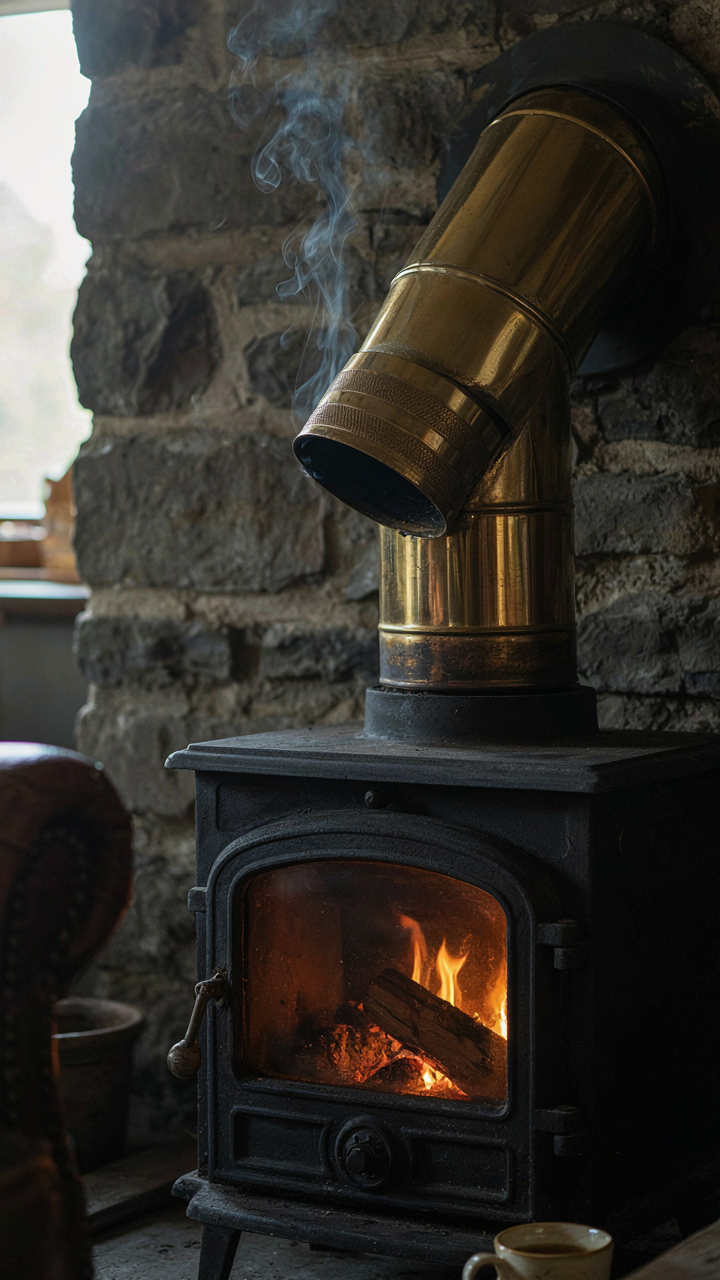
A wood fire produces heat in three ways. Radiation pushes warmth directly outward from the flame and firebox walls. Convection pulls cool room air into the fireplace, heats it, and releases it back into the room. Conduction transfers heat through the metal or masonry of the stove itself. Most cottage fireplaces waste energy because they optimize for aesthetics instead of this flow. The fire looks good but the heat exits up the chimney.
The Chimney Draft Problem Nobody Names
Most advice tells you a chimney should “draw well” without explaining what actually happens. A strong draft means hot combustion gases escape too fast, taking BTUs with them. The real trade-off: you need enough draft to prevent smoke backup, but not so much that you hemorrhage heat up the stack. Cottage interiors typically have poor sealing, which means your fireplace is competing with air leaks everywhere else in the structure.
Install a chimney damper or register if one doesn’t exist. This lets you throttle the draft after the fire establishes, reducing heat loss during steady burning. On older cottages, a simple metal plate with a handle positioned just above the fireplace opening works. Close it partially once flames stabilize. You’ll see immediate room temperature rise because you’re keeping more radiant and convective energy inside instead of venting it.
The Hearthstone Protocol: Reviving The Old Stone Fireplace
Know When To Rebuild, Not Restore
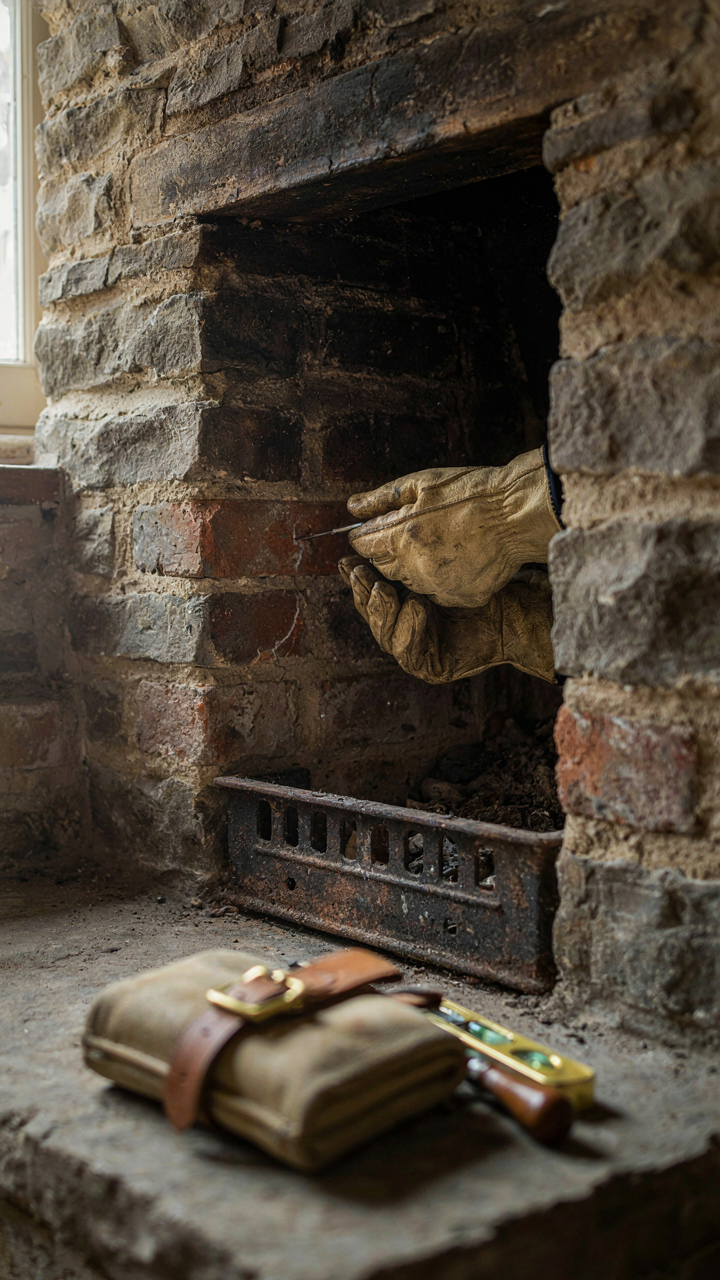
You want the authenticity without the liability. That’s the real tension here—heritage matters until it doesn’t, which is the moment a cracked firebox sends carbon monoxide into your cottage. Structural integrity is not negotiable. Think of a fireplace like load-bearing architecture: the visible part is only half the story. The internal clay tiles, mortar joints, and smoke chamber degrade silently. A mason’s inspection reveals what’s salvageable and what’s a legal risk. Most restoration guides skip this because it’s unglamorous.

A working fireplace depends on three failure points: the firebox itself, the flue integrity, and the chimney draft. Cracks in the firebox cost more to fix than demolition if they’ve spread into the smoke chamber. Mortar erosion in the flue accelerates draft loss and creosote buildup. If the previous owner let it sit for decades, you’re not restoring—you’re replacing internal components while keeping the exterior shell. This is cheaper than full removal but demands a structural assessment first, not an Instagram aesthetic call.
Matching Stone Without Faking It
Historic masons mixed local stone with lime mortar because both weathered at the same rate. Using modern Portland cement with old stone creates a hard bond that outlasts the stone itself, causing spalling and eventual failure. The mechanism is simple: materials must move together or the weaker one breaks. Your sourcing strategy depends on fireplace age, not preference. A Victorian cottage needs different stone than a 1950s ranch interpretation.
Genuine reclaimed stone costs more but integrates seamlessly because it’s already weathered to the local climate. New stone matching the original quarry works if you can identify the source, which requires geological knowledge most contractors lack. The practical path: hire a mason experienced with period-appropriate work, not a general contractor. They’ll source compatible materials through suppliers familiar with regional stone characteristics. Get mortar analysis done on existing joints before touching anything—wrong composition is how restorations fail silently over a decade.
Wood Burning Stoves Living Room: A Micro Ecosystem Of Warmth
How Heat Actually Moves Through Your Room
You want a wood stove because you think it’ll make your living room feel intentional and gathered. What actually matters is whether the heat reaches the people in it. Fluid dynamics governs this, and your stove is a convection engine, not a radiant heater sitting passively in the corner. Hot air rises from the firebox, hits your ceiling, cools, then sinks along walls back toward the stove. This loop repeats. Room geometry, stove placement, and chimney draft determine whether you get even warmth or dead zones.
Most people position stoves for aesthetics. The mechanism that works is thermal stratification control. Place your stove on an interior wall, not exterior, to prevent heat loss through the masonry. If your ceiling is higher than ten feet, rising heat dissipates before circulating back down effectively. Stove size matters precisely: undersized units cycle on-off constantly and waste fuel; oversized units overheat the immediate zone and leave corners cold. The draft speed of your chimney system determines burn efficiency and air circulation patterns throughout the room.
Sourcing Wood That Actually Works
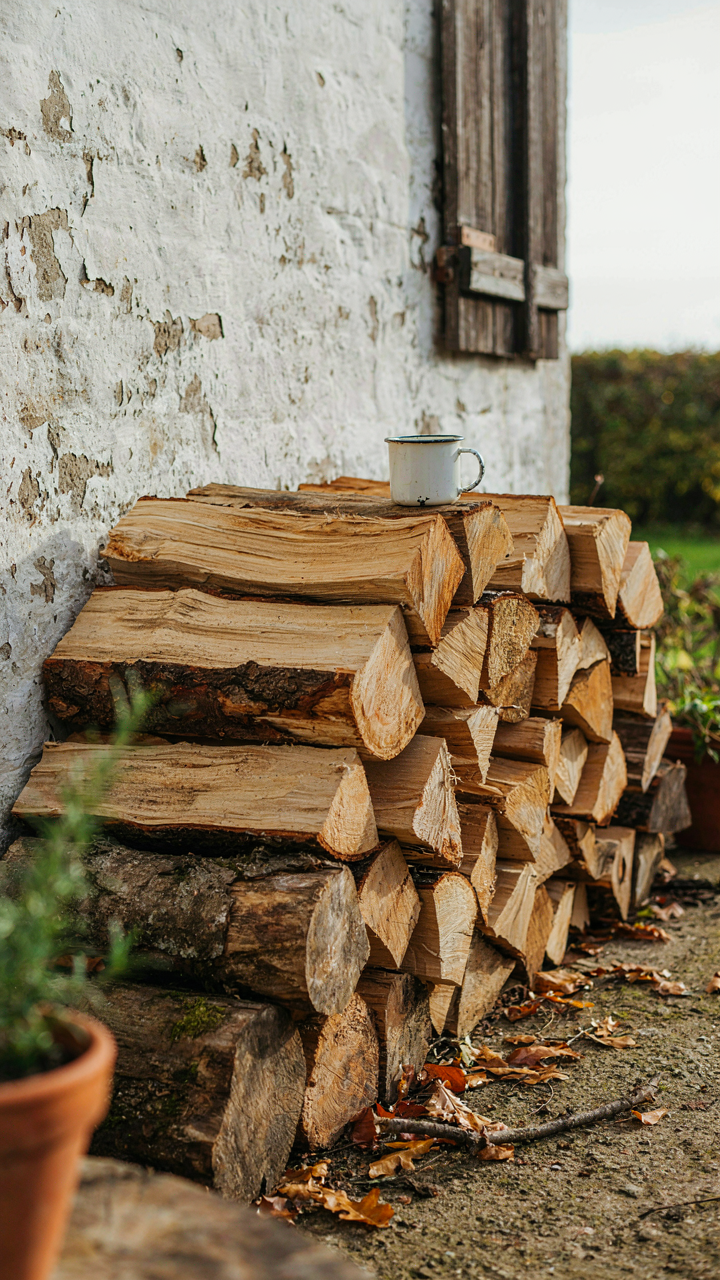
The common advice about “seasoned wood” is incomplete. You need to know moisture content specifically sits below 20 percent, measured with a meter, not guessed by weight. Split wood loses internal moisture faster than rounds. Hardwoods like oak and maple burn hotter and longer than softwoods, but require eighteen months of seasoning minimum in dry conditions. This isn’t optional.
- Hardwood Species Selection: Oak, maple, and ash burn 8000 to 9000 BTU per cord. Avoid softwoods like pine which create creosote buildup and void stove warranties.
- Split Size Protocol: Cut splits 4 to 6 inches wide, 16 to 18 inches long. Thinner splits dry faster and ignite more reliably than chunky rounds.
- Moisture Testing: Purchase a wood moisture meter. Anything above 25 percent moisture produces smoke instead of heat and clogs your chimney with deposits.
- Storage Method: Stack wood off the ground on pallets, cover the top only to let sides air dry, and keep away from direct rain contact. Ground moisture wicks upward into wood.
- Local Sourcing Strategy: Identify tree services and arborists in your region who chip nearby removal work. This costs 40 to 60 percent less than cordwood retailers.
Sustainable wood management means understanding your own consumption rate. A cottage stove burns one to three cords per heating season depending on outside temperature and how much you run it. Calculate this before harvesting or purchasing. Stack your seasoned wood in a single-layer system so you use the oldest inventory first, preventing rot from multi-year storage piles.
Beyond The Brick Fireplace: Unconventional Cottage Fireplace Ideas
Steel And Simplicity For Modern Cottages
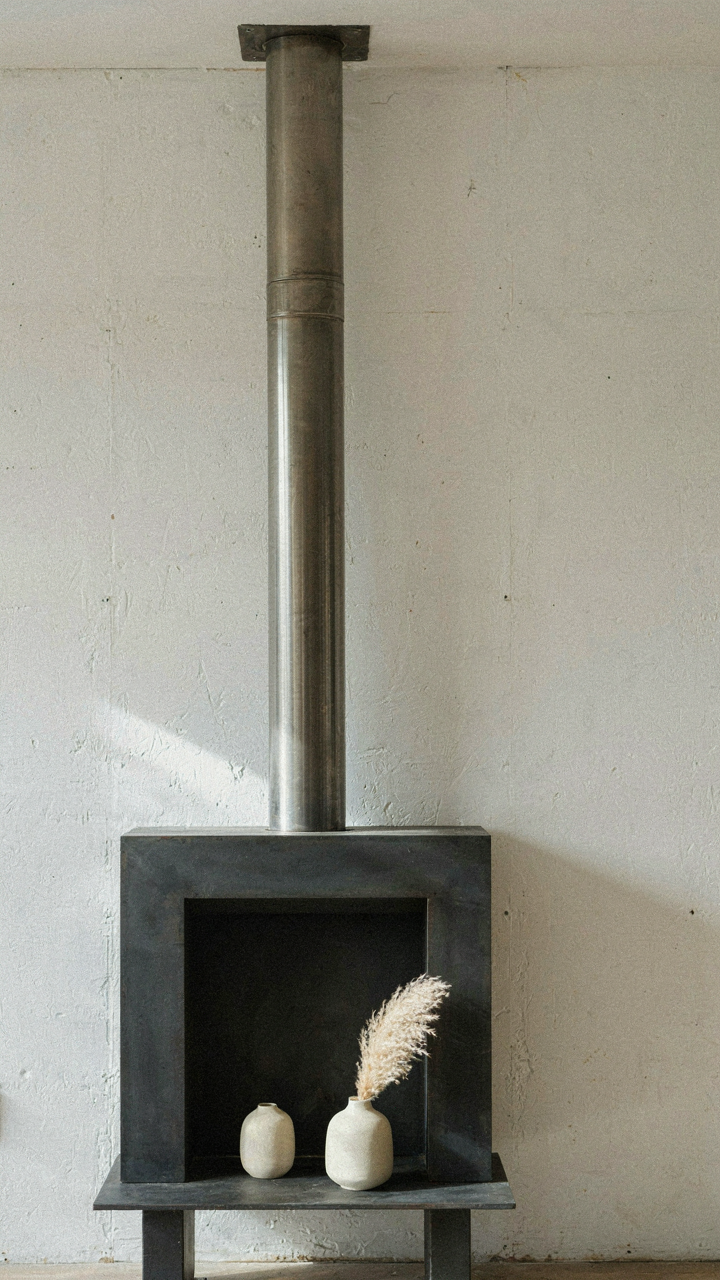
You want this section because you’re tired of the tired brick cottage aesthetic everyone else has. The real mechanism: minimalist metal designs work because they create visual contrast that makes a small cottage feel intentional instead of inherited. Steel and iron demand restraint. You can’t hide bad proportions behind ornament, so the fireplace gets built right or not at all.

Modernist design principles apply here like load-bearing walls apply to structure. The metal fireplace functions as a tension point between old and new. A simple steel surround with exposed flue piping costs less than traditional masonry and installs faster. The cottage reads as curated rather than cluttered. Raw metal oxidizes over time, developing a patina that looks honest instead of staged.
Salvaged Stone And Reclaimed Wood Hearths
The common advice says reclaimed materials add character. That’s incomplete. Reclaimed materials work because they eliminate the fake-aged problem that plagues new cottages. Old stone and wood carry actual use history, not manufactured distress marks. You’re not decorating. You’re inheriting.
Source reclaimed materials from structural salvage yards, not design boutiques. A hearth built from barn stone or recovered foundation blocks grounds the fireplace in real time. Reclaimed hardwood mantels from old barns or industrial buildings install as structural elements, not decoration. The material’s previous function doesn’t matter. Its density and weathering do. Install reclaimed elements with modern fastening systems. Disguise nothing. Let the fireplace tell you what it was before.
The Unseen Economics Of A Wood Stove Fireplace
Heat Output Versus Fuel Spend
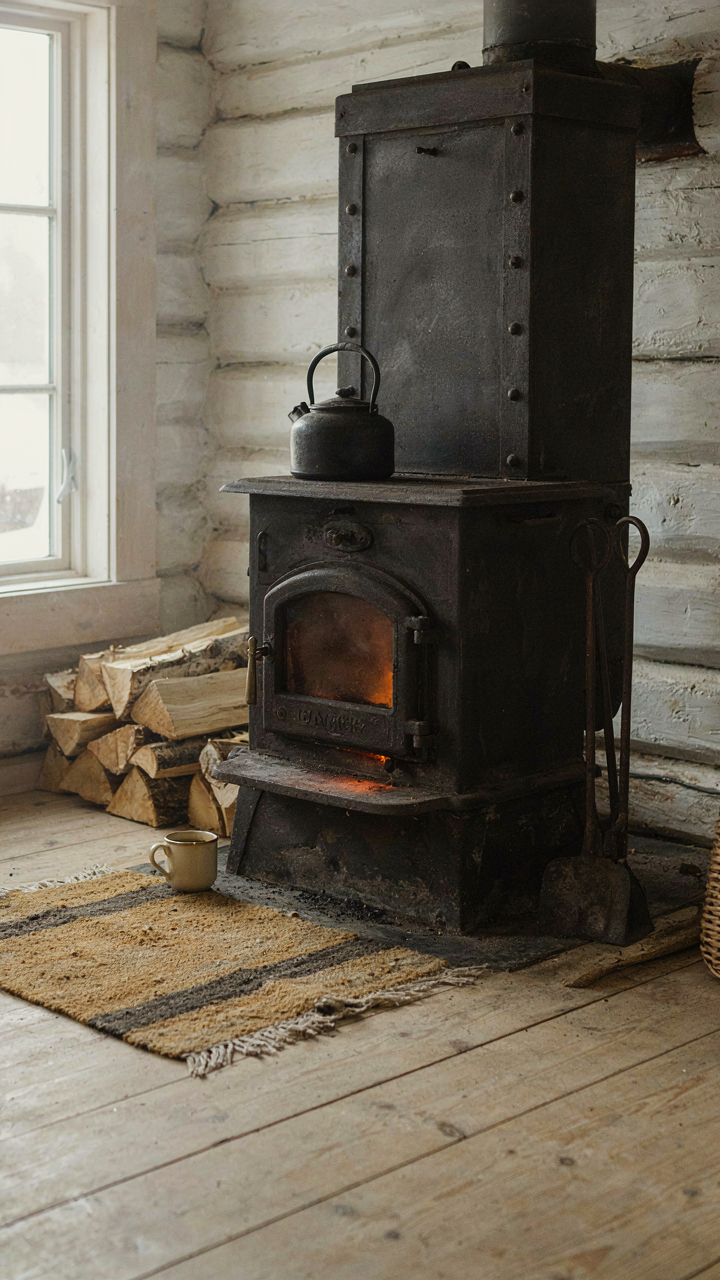
You want to believe the fireplace will pay for itself through heating savings. It won’t. Economics borrows the concept of efficiency ratios from engineering: output divided by input. A wood stove produces 60,000 to 90,000 BTU per hour, but cord wood costs $150 to $300 depending on region and seasoning. The math matters because most people burn through two to four cords annually for supplemental heat.

A 20,000 BTU natural gas furnace costs roughly $1.50 per hour to run. That same wood stove, burning one cord’s worth over four months, costs closer to $4 per day in fuel expense alone. The efficiency rating means nothing if you’re comparing apples to oranges. Wood stoves run at 70-85% efficiency. Furnaces run at 95%. The stove heats one zone. The furnace heats the whole structure. If you want genuine savings, you need to replace the primary system, not supplement it.
Real Value Accumulates Differently
Forget the payback period pitch. Nobody buys a cottage fireplace for ROI on heat alone. The actual mechanism is aesthetic durability and occupancy premium. A wood stove cottage becomes the gathering point. People stay longer. They come back. They rent it at higher rates if it’s a property investment. That’s the compounding return.
The tangible value sits elsewhere: reduced reliance on grid power during outages, lower insurance claims from heating emergencies, and resale appeal to a specific buyer profile. Focus on the stove’s lifespan instead of fuel cost. Cast iron models last 20 to 30 years with minimal maintenance. That longevity beats replacing a furnace every 12 to 15 years. Calculate total cost of ownership over two decades, not one heating season.
Cozy English Cottage Interior: The Fireplace As Functional Art
Built In Seating Around The Hearth
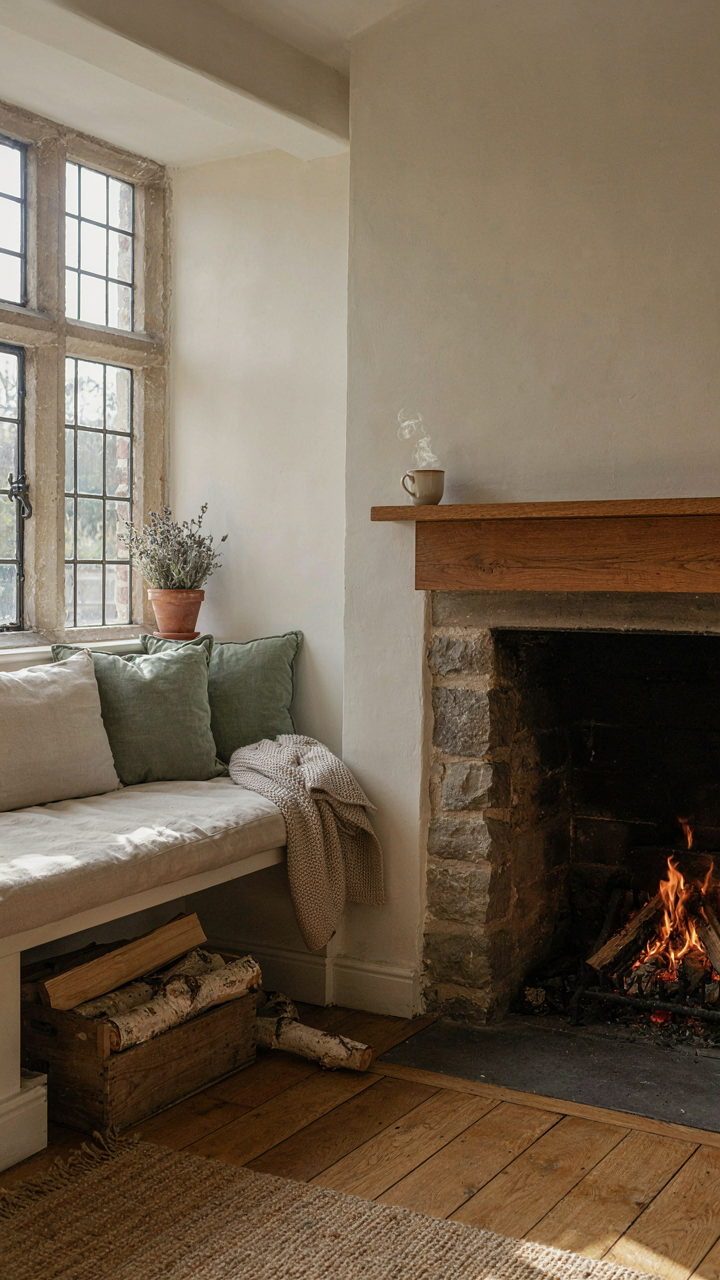
You want the fireplace to feel like the natural gathering point because you’re tired of spaces that look intentional but feel empty. The mechanism is proximity with purpose: seating built directly into the fireplace wall forces conversation and heat distribution into the same zone, eliminating dead space. English cottage design uses this constantly—window seats flanking the hearth, built-in benches with storage underneath. This isn’t decoration. It’s architecture that makes the room function.

Storage integrated into fireplace seating solves the real problem cottages face: clutter migration. A bench with a hinged top stores blankets, firewood, or tools directly where you need them. Recessed shelving on either side of the opening holds logs at arm’s reach without consuming floor space. The constraint of cottage dimensions forces this logic. You can’t waste square footage on furniture that only sits there looking purposeful.
Controlling Light Layers At The Fireplace
Lighting strategy borrows from film production, where light sources are layered to control mood and visibility—cottage fireplaces need the same calibration. The hearth glow alone creates pools of shadow that make spaces feel smaller and colder than they are. You have to counteract this deliberately. The common mistake is adding recessed ceiling lights that flatten the entire room. That kills what makes a fireplace worth having.
- Wall sconces flanking the mantel: Positioned at eye level, these bounce light off the chimney breast to fill shadows without competing with the fire’s directional warmth.
- Recessed lighting in the soffit above: Angled to wash the wall behind the fireplace, creating depth that makes the hearth feel like the room’s anchor rather than a dark hole.
- Accent lighting on stored objects: Low-voltage strips inside shelving or under seating highlight textures and break up the visual weight of dark brick or stone.
- Warm-toned table lamps on side surfaces: Positioned away from direct sight lines, these add ambient light that reads as natural without creating glare on the fire.
- Dimmers on all secondary fixtures: Allows you to drop ambient light when the fire is hot and strong, letting the hearth dominate as intended.
The fireplace stops working when it competes with overhead lighting. Your setup should make dimming the ceiling and reading by the fire feel like the default mode, not a special occasion. Install controls so you can adjust the secondary sources without leaving the seating area.
Cottage Style Fireplace Ideas: Rejecting Generic “Cozy” Advice
Function Before Aesthetics
You want a cottage fireplace because you’re afraid it won’t work when you need heat. Here’s the mechanism: a fireplace is thermal equipment first, decoration second. The common advice treats it backwards. You see Pinterest boards full of styled mantels and forget the unit must move air and manage combustion or it becomes a liability.

Start with the flue system. A cottage fireplace needs proper draft, which depends on chimney height, diameter, and insulation value. Get this wrong and you get smoke in the room, not warmth. The firebox itself must be sized to the room volume. A massive stone surround means nothing if the opening is too small to heat the space or too large to draw properly. Consult a chimney professional about your specific structure before choosing materials.
Materials That Actually Age Well
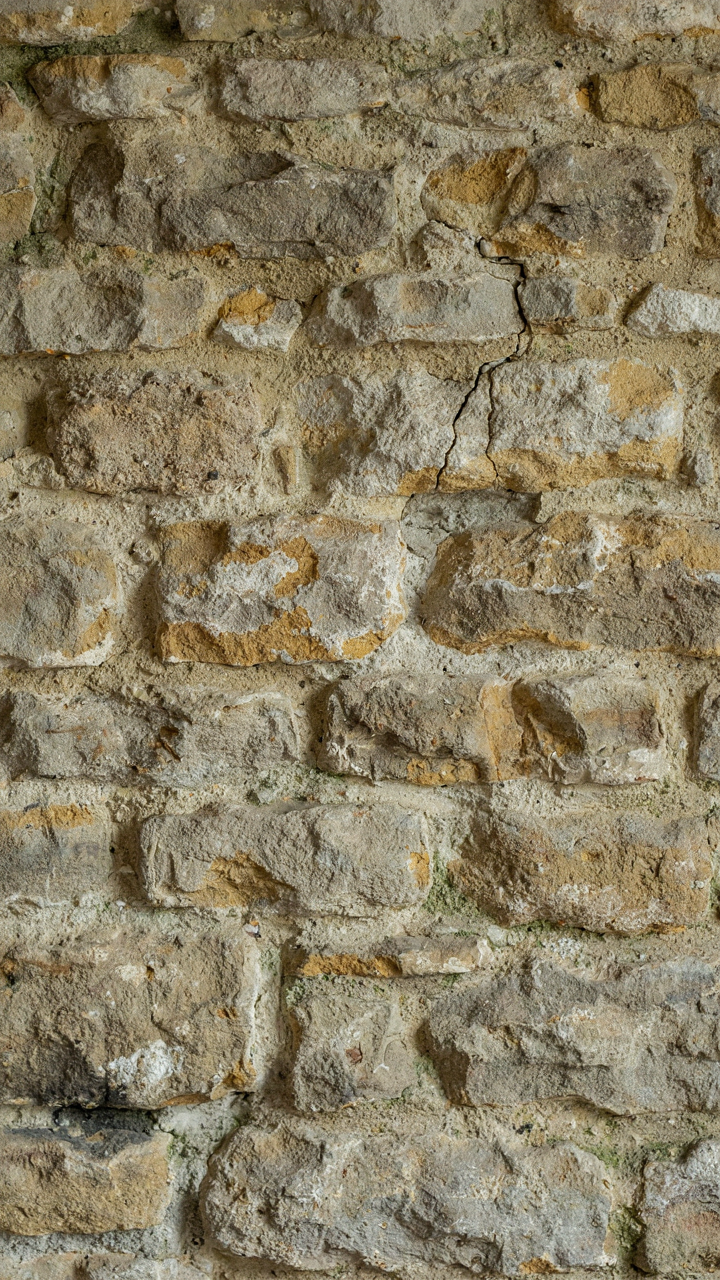
Authentic materials aren’t quaint. They’re chosen because they handle repeated heat cycles and decades of use without failure. Faux stone veneers and artificial brick fail differently than real masonry does. Real stone and brick develop character and patina. Fake materials peel, separate, and date themselves in five years.
Use reclaimed brick from demolished structures if budget allows. It carries actual history and fires have already stress-tested it. Fieldstone works better than cut stone for cottages because it requires less precision in laying and hides settling cracks naturally. Mortar matters more than the stone itself. Use lime-based mortar, not modern Portland cement, because it’s softer and lets the structure move without cracking. The protocol is straightforward: source materials locally, understand their thermal properties, then build around what actually performs.
The Hearth: A Bulwark Against Modern Disconnection, Not Just A Fire Hazard
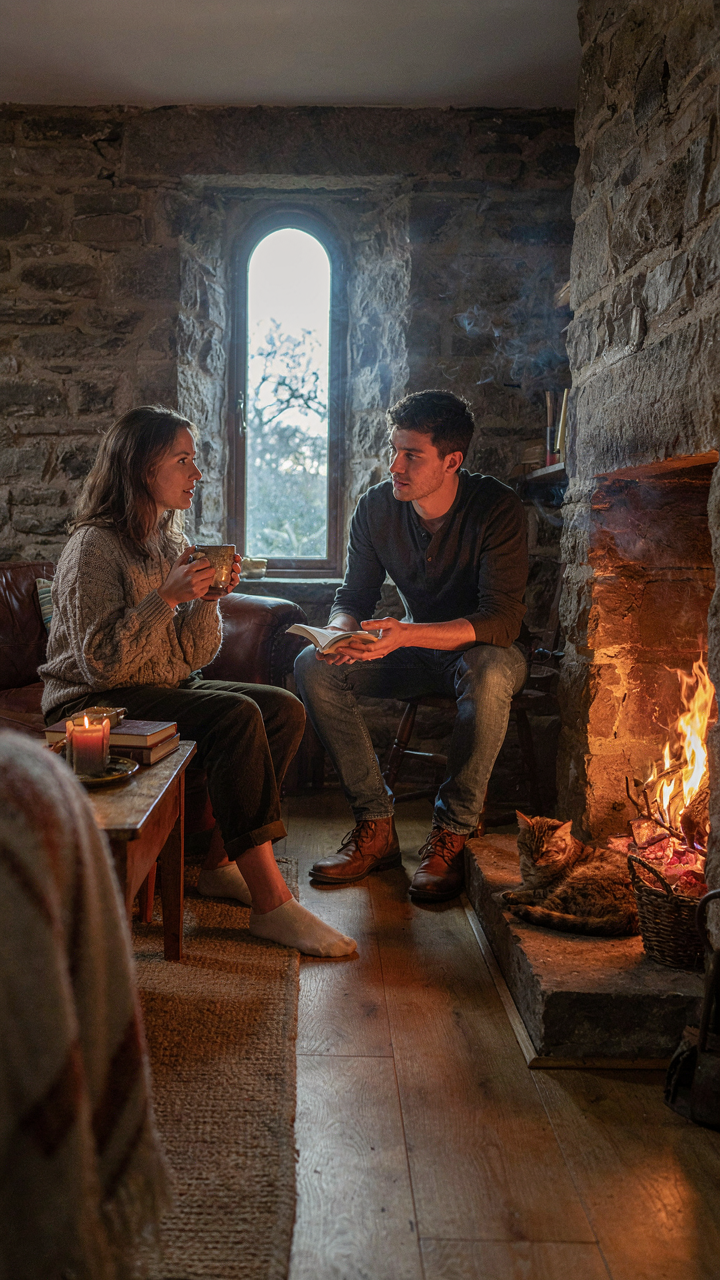
Your cottage fireplace isn’t decoration. It’s a gravity well that pulls people away from screens and toward each other. Most people build one and then leave it cold. Light it today. Not this weekend. Today. Watch what happens when your family actually has to gather around something real instead of staring at rectangles. A cottage fireplace does one job that nothing else can: it makes people want to stay in the same room.