
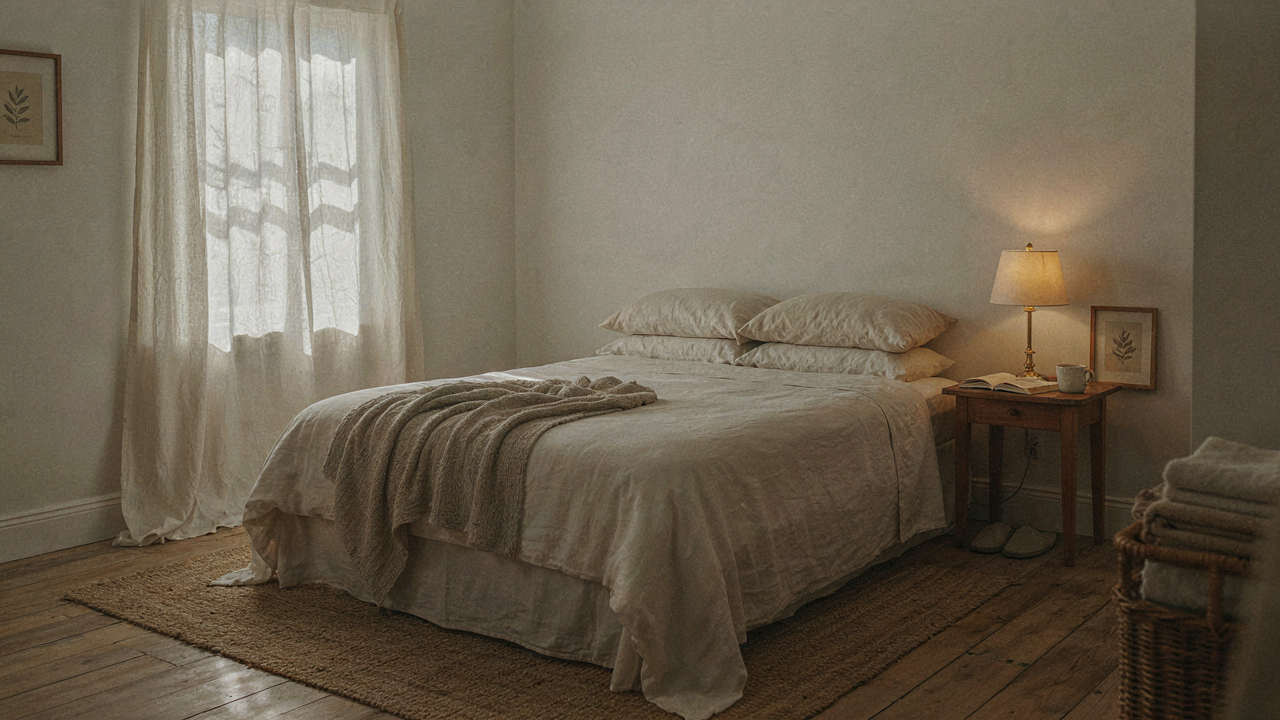
The Autonomy Protocol: Empowering The Overnight Visitor
Controls Within Reach
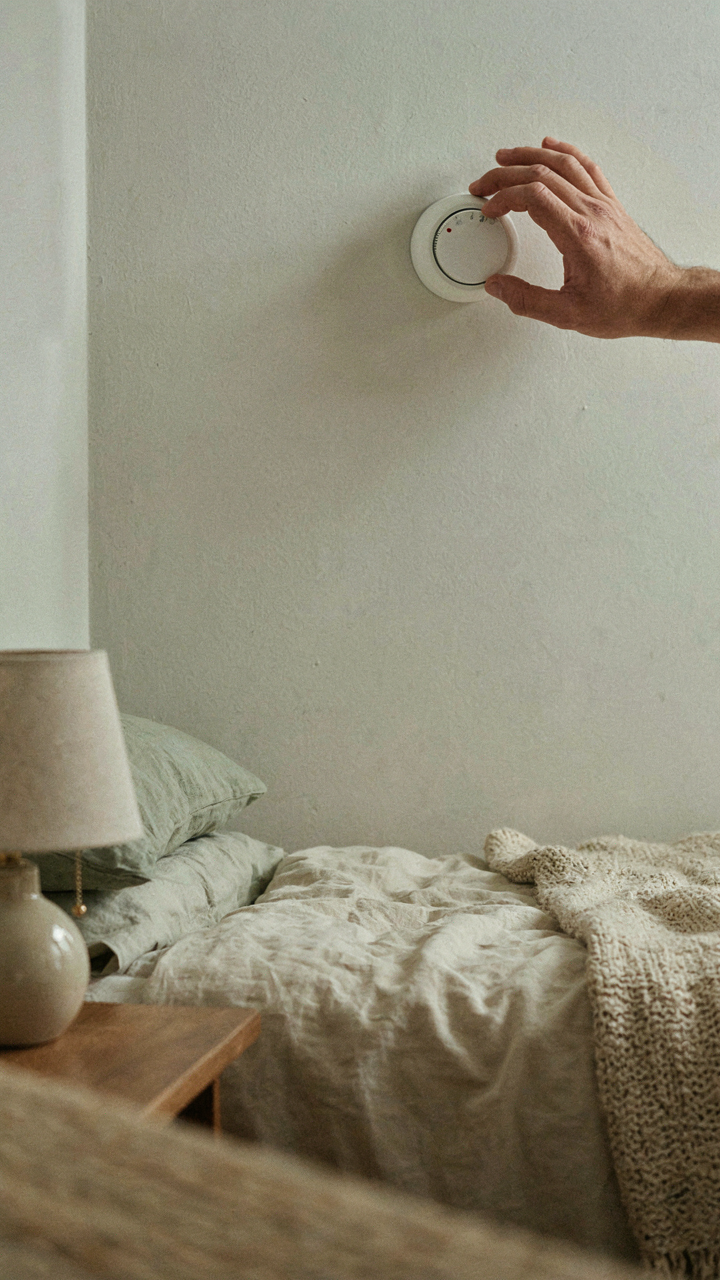
You want your guests comfortable because discomfort signals you didn’t plan. But the real mechanism is simple: people resent asking the host for basic adjustments. Thermostat, lighting, window operation, door locks—these need to be immediately accessible and functional without instructions. Place controls at eye level or on the nightstand. Test every switch, knob, and latch before the guest arrives. A guest who can’t adjust temperature without hunting you down has already decided your space failed them.
The economics of hospitality reward self-sufficiency. Every time a guest must interrupt you for comfort, you’ve created friction in the relationship and friction in their sleep quality. Mount the thermostat controller on the wall nearest the bed or provide a portable remote. Install bedside lamps with straightforward on-off switches, not touch-sensitive nonsense that requires trial and error. Guests should operate their environment like they own it, not like they’re defusing a bomb.
The Self Service Ceiling
Most cottage guides suggest “clear instructions” as though a laminated card solves autonomy. It doesn’t. Instructions are a symptom of poor design, not a substitute for it. The real answer is designing the room so few instructions exist in the first place. Label light switches directly above or beside them with the room or fixture they control. Make sure WiFi credentials are written on a card placed on the dresser, not buried in a binder. Stock the room with obvious essentials: phone charger, extra blankets, extra pillows, tissues, water glass. The guest should never wonder “where would that be” or feel the need to open unfamiliar drawers hunting for basics.
Anticipation is the mechanism at work here. You’re thinking ahead about friction points and removing them before they arise. Stock the nightstand with reading materials, a pen, notepad, and a small desk lamp if the room lacks one. Leave emergency contact information on the dresser, not in a welcome packet buried under brochures. The guest’s job is to rest. Your job is to eliminate every reason they can’t.
Beyond English Cottage Bedroom Ideas: Function Over Form
How The Room Actually Moves
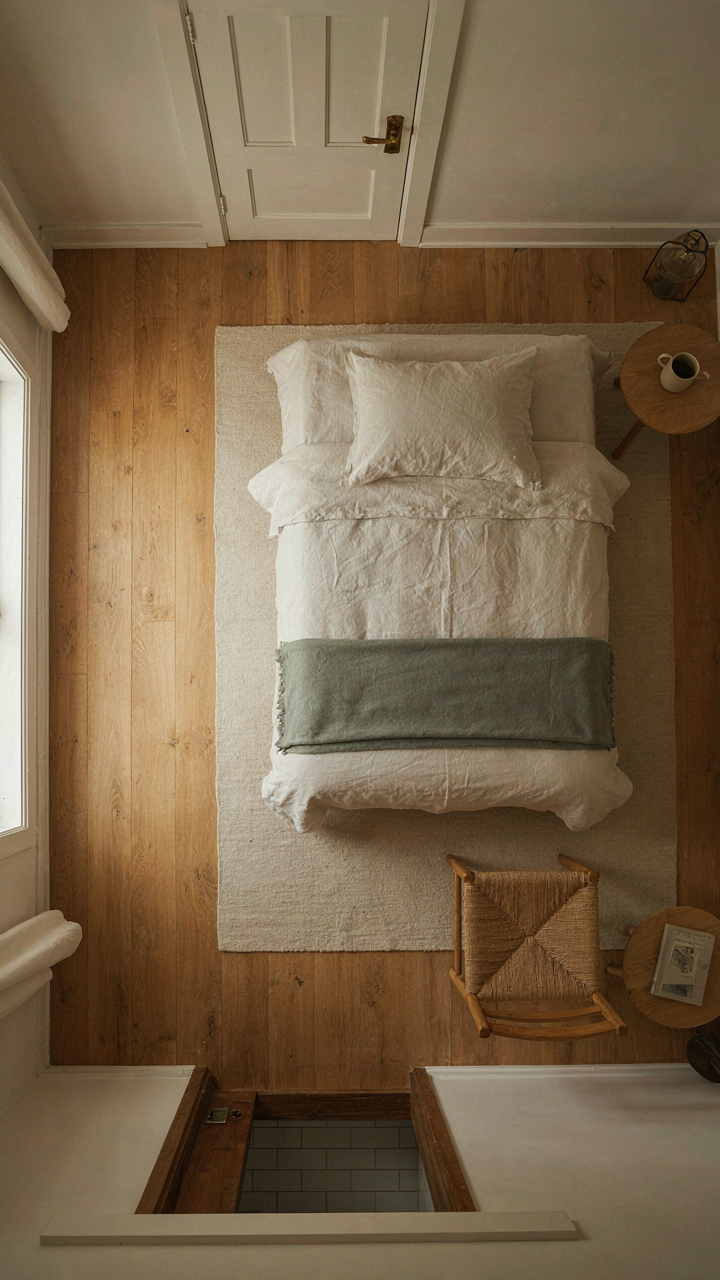
You want guests to feel welcome because their comfort reflects on you. Here’s the mechanism: furniture placement controls traffic flow, which controls how a guest’s nervous system reads the space. Borrow from architecture—think of sightlines as load-bearing walls. A bed positioned where it blocks the door creates visual tension. A nightstand placed where someone must shuffle sideways wastes their energy before they even sit down. The goal isn’t beauty. It’s removing friction from basic human movement.

The bed should anchor one wall, ideally visible from the entrance without being the first thing the eye lands on. The path from door to bed to bathroom should be clear and intuitive. One guest chair or bench at the foot works better than a full seating area that consumes floor space and creates dead zones. A small table beside the bed holds a lamp and a glass of water. Nothing is arranged to impress. Everything is arranged so a tired visitor can move through the room without thought.
What Actually Gets Used
Generic advice says accessorize. That’s wrong. Most guest bedroom clutter goes untouched. A guest doesn’t want fifteen throw pillows or a decorative mirror collection. They want the specific items that solve immediate problems. A bedside lamp with a switch within arm’s reach of the bed. Fresh, quality sheets that don’t slip off at night. Hangers in the closet, not a decorative coat rack that holds three items.
Stock the room with functional depth, not visual surface. Two extra blankets folded in the closet for temperature control. A water carafe on the nightstand so guests don’t hunt for drinks at night. Working outlets on both sides of the bed for charging devices. A small wastebasket that doesn’t demand artistic merit. These items solve what guests actually encounter, not what cottage aesthetics suggest you should have.
The Cognitive Load Reduction System For Guest Bedroom Ideas Cottage Style
Where Everything Has One Job
You want guests to feel comfortable because their comfort reflects on you. That’s not wrong, but it’s not the real lever. The real problem is that guests in unfamiliar spaces experience decision paralysis. They don’t know where things are, what’s available, or what you expect them to use. Borrow from information architecture: every object in the room should have a single, obvious function with zero ambiguity about where it belongs or what it’s for.

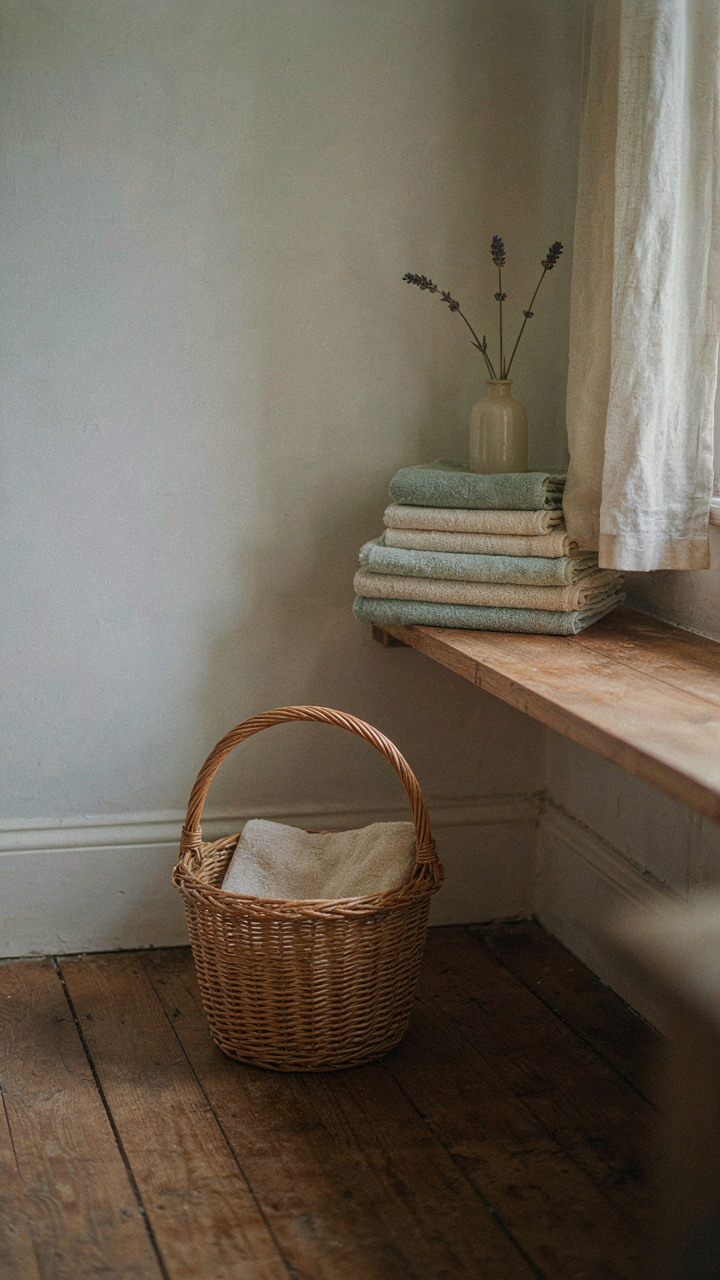
Stop the generic advice about “decluttering.” That misses the mechanism. A sparse room isn’t helpful if guests can’t decode what each item does. Label drawers with content inside. Put a small basket for dirty laundry on the floor, not hidden in a closet. Stack fresh towels on the bed or a dedicated shelf, not draped over a chair. The goal is eliminatingmental effort the moment someone walks through the door.
The Visible Answer Protocol
Guests ask questions they already know they shouldn’t have to ask. Where do I plug in my phone? Is this water glass clean or decorative? Can I open these windows? Do you want me to keep the door closed? The common move is to leave a printed note, which feels apologetic and creates more friction than it solves. Instead, answer questions through design.
Mount a phone charger with a visible outlet on the nightstand. Use an obvious bedside carafe with a drinking glass next to it, not a vase that might confuse intent. Open windows halfway to signal they’re functional. Leave closet doors ajar with hangers clearly visible. These aren’t decorative touches. They’re cognitive shortcuts that eliminate the gap between what a guest needs and what they’re willing to ask for. The setup finishes when a guest can navigate the room for 72 hours without interrupting you once.
Cottage Style Bed Frame: More Than Just A Pretty Face
The Real Cost Of Comfort
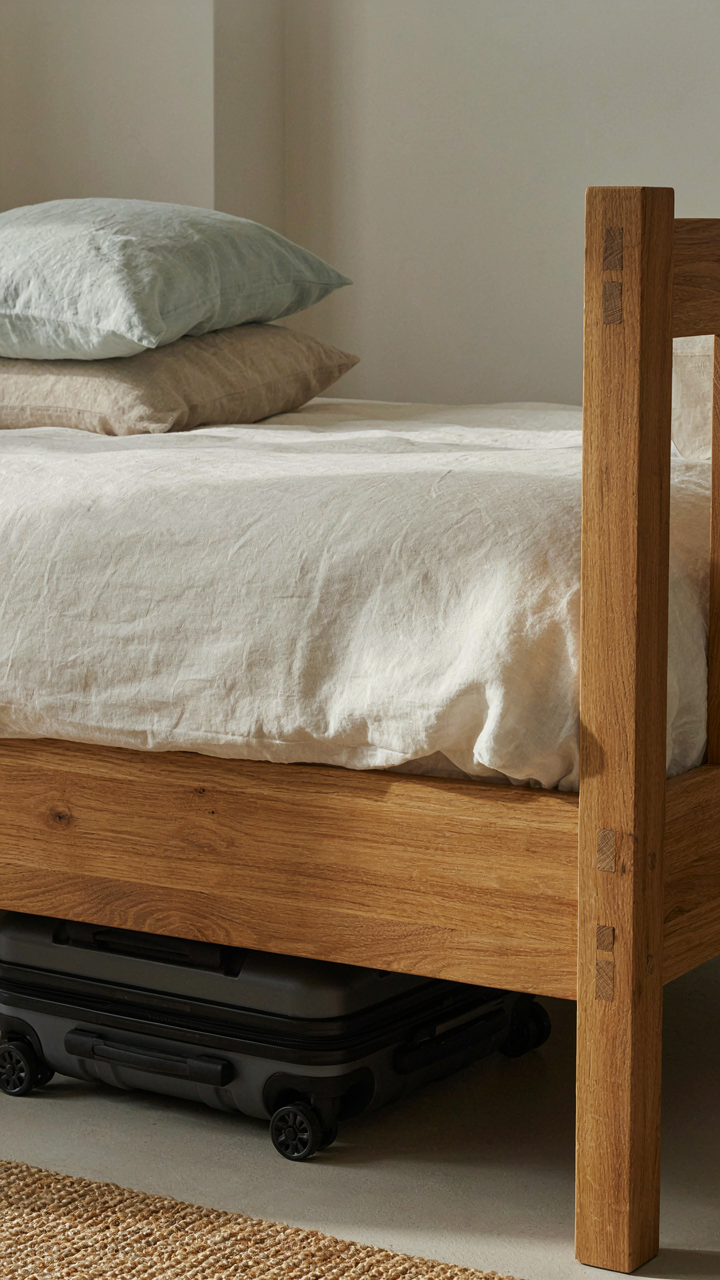
You care about this because a bad bed frame kills your reputation as a host faster than cold coffee. Here’s the mechanism: a bed frame either transfers or absorbs guest movement. Wood that’s properly jointed and supported absorbs it. Metal that’s loose or undersized transfers every shift to the whole frame, waking your guest at 3 AM when they roll over. Durability isn’t about lasting decades. It’s about consistent performance night after night, which means selecting materials that handle repeated stress without degradation.

Cotton rope beds and wrought iron frames dominated cottage design because they solved this problem with physics, not marketing. Modern cottage frames work the same way: hardwood with mortise and tenon joints outperforms particle board with cam locks. Slat support matters more than mattress type. A solid wood frame with properly spaced slats creates stable, silent sleep. Test the frame by applying weight at different points. If it flexes, creaks, or feels loose, guests notice immediately. Choose frames rated for your expected guest weight plus 25 percent buffer.
Storage That Actually Gets Used
Under-bed storage fails because people treat it like a bonus feature instead of the primary function. Cottages lack closet space by design, so your guest’s luggage needs a home that doesn’t require them to move the bed or contort their body. The storage area under a cottage bed isn’t decorative. It’s operational infrastructure.
Measure the clearance between the floor and bed bottom before buying the frame. Standard platform beds sit 12 inches high. Cottage frames often sit lower, limiting storage depth. Prioritize frames with 14 to 18 inches of clearance if you plan to slide storage bins underneath. Your guests will pack luggage, not decorative baskets, so dimension the space for standard rolling suitcases. A guest who can store their belongings without asking for help knows the room is built for them.
The Sanctuary, Not Showroom Principle For Cottage Bedroom Inspirations
Your Room Is Doing Invisible Work
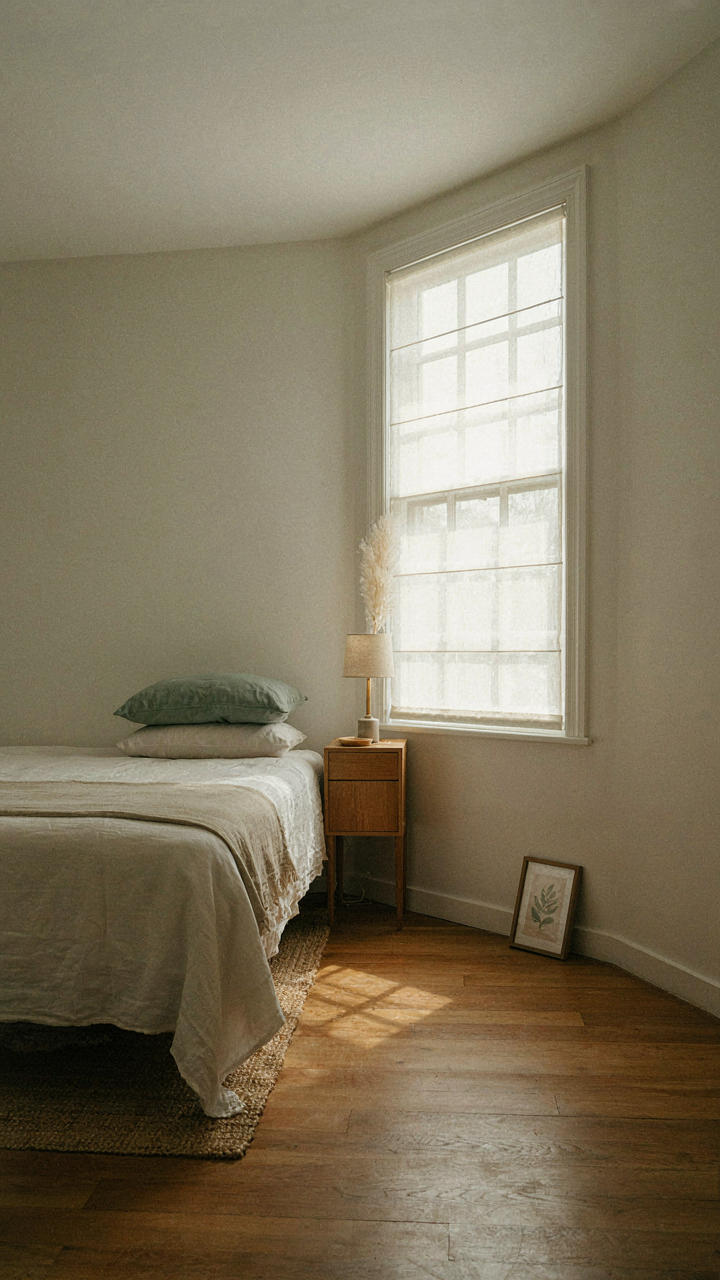
You want guests to feel like you put thought into their comfort, not that you decorated a museum exhibit. The real mechanism: a guest bedroom works through subtraction, not addition. Remove friction points before they surface. Biomimicry—the discipline of extracting design principles from biological systems—applies here. In nature, comfort emerges from alignment with cycles and instinct, not from ornamentation. A bird doesn’t nest in a showroom; it nests where survival requirements are met first, aesthetics second.

Most cottage bedrooms fail because owners confuse “thoughtful” with “decorated.” They layer in rustic accents, vintage finds, and themed elements that signal effort instead of delivering rest. The guest sees a curated space and performs gratitude rather than actually relaxing. Strip the room to its functional core: a bed that doesn’t sag, a pillow that supports the head, walls that don’t scream for attention, temperature control that works. Every element should solve a problem your guest faces in the first two hours of arrival, not prove your design taste.
The Circadian Rhythm Window
Light exposure drives your nervous system’s sleep-wake cycle more than any other input. This isn’t metaphor—it’s neurobiology. Window placement, curtain opacity, and bedside lighting determine whether your guest sleeps or scrolls at 2 AM. A cottage bedroom needs natural light on arrival to anchor the guest’s nervous system to local time, then blackout capacity at night to deepen sleep. Most cottages have small or poorly positioned windows. Work with what exists rather than fighting it.
Position the bed perpendicular to the window if possible, so morning light hits the guest without glaring directly on their face. Install cellular shades that block 95 percent of external light—not decorative curtains that leak around edges. Add a dimmable bedside lamp with warm color temperature (2700K or lower) for evening wind-down. Guests who sleep deeply return. Guests who fight the room’s light environment don’t book again.
Bedroom Ideas Cottage Style: The Un Curated Experience
Genuine Comfort Without The Thread Count Trap
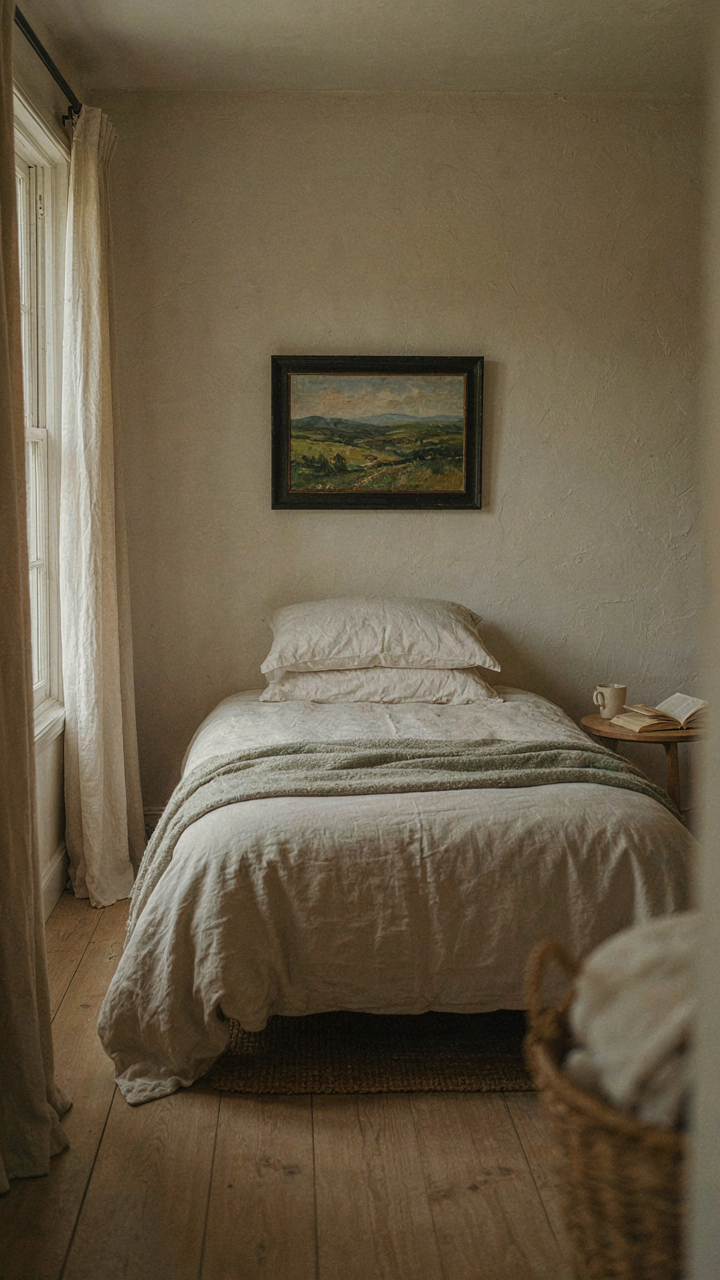
You want guests to think you have your life together, so you obsess over bedding specs that don’t matter. Here’s the mechanism: comfort isn’t a number. It’s friction, temperature regulation, and how a fabric behaves after six washes. High thread count often means tightly woven synthetic blends that trap heat and feel stiff. A 400-600 count cotton sheet with a loose weave breathes better and softens faster than marketing-tier 1200-count polyester blends.

Cottage guest bedrooms need bedding that performs, not performs for Instagram. Source 100 percent cotton or linen from suppliers who actually finish their fabric properly. The weight matters more than the count. A quality fitted sheet stays secure through the night without wrestling. Pillows should support the head, not collapse into pancakes by mid-sleep. Test your own guest bed for one full night before claiming it’s ready.
Clear Space Creates Mental Permission
Personal clutter in a guest room signals intrusion. It forces visitors into someone else’s domain instead of their own temporary sanctuary. This is basic environmental psychology: your brain reads scattered objects as unfinished business, which activates low-level alertness even during sleep. Guests relax slower and leave feeling like they occupied a closet instead of a room.
Remove all items that don’t serve the guest. Your tax documents, hobby supplies, seasonal storage, and family photos belong elsewhere. The room should feel borrowed and complete, not borrowed and abandoned. Leave one small element that reads as intentional—a single landscape painting or a plant in the corner—to distinguish it from sterile. This shift from “storage room we cleared out” to “actual guest space” happens the moment you stop keeping your stuff there.
Cottage Bedroom Ideas: The “Preparedness Fallacy” Countermeasure
Anticipate Needs Without Overloading
You want your guests to think you’re thoughtful, which is why you’re tempted to stock the room like a hotel. That instinct kills the actual purpose. The mechanism here borrows from inventory management: excess stock creates waste and decision paralysis, not satisfaction. Your guest doesn’t need fifteen pillow options. They need one good pillow and the confidence that you’ll respond if they ask for another.

The cottage guest bedroom works best when it answers the three core needs without noise: sleep, temperature control, and basic hygiene. Everything beyond that is negotiable and should live elsewhere in the house. A reading chair seems considerate until your guest has nowhere to set their bag. A side table stacked with books you think they’ll enjoy is clutter they didn’t ask for. Strip the room to what actually matters, then make those things excellent.
Emergency Essentials Keep It Simple
Most advice on guest room prep is incomplete because it treats emergencies as an afterthought. Make them immediate and visible instead. Your guest should know within thirty seconds where to find solutions for the problems they might face alone at 2 AM.
- Extra pillows and blankets: Store in a visible, labeled closet shelf or bench at the foot of the bed. Not hidden in a linen closet three rooms away.
- Basic first aid: Small, clear container with bandages, pain relievers, antacids, and antihistamine. Place on the nightstand or bathroom shelf where they’ll actually see it.
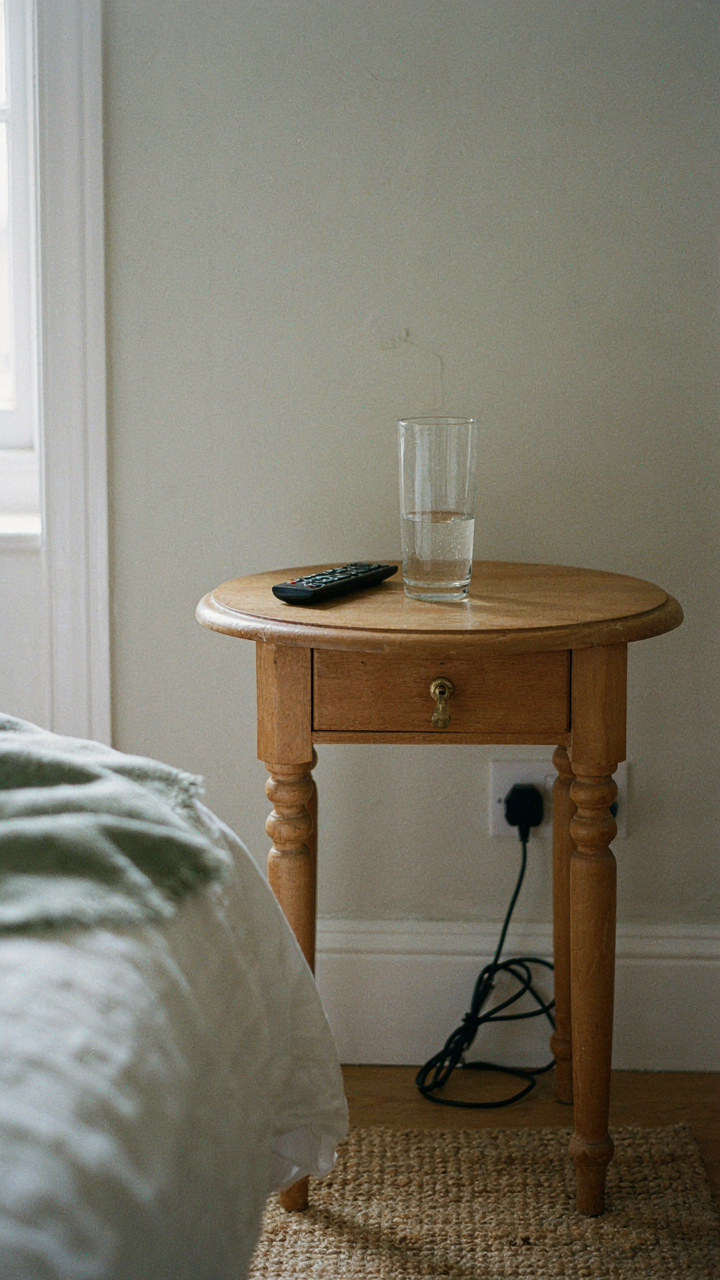
- Phone charger (multiple types): Keep one plugged in at the bedside outlet. No hunting through drawers or asking for adapters.
- Water pitcher or bottle: Fill it fresh before bedtime. Dehydration wakes people at 3 AM. A glass on the nightstand signals you thought this through.
- Tissues and trash bin: Essential but overlooked. Place both within arm’s reach of the bed. Guests won’t leave the room to find these.
The real mechanism is reducing friction between your guest’s problem and its solution. When they need something, they should find it without asking or exploring. This isn’t hospitality theater. It’s the difference between a guest who sleeps well and one who lies awake trying to figure out where you keep the extra blankets. Put everything they might need within three feet of the bed or bathroom mirror, clearly visible, ready to use.
The Panelled Bedroom Ideas Deconstruction: Why Authenticity Matters
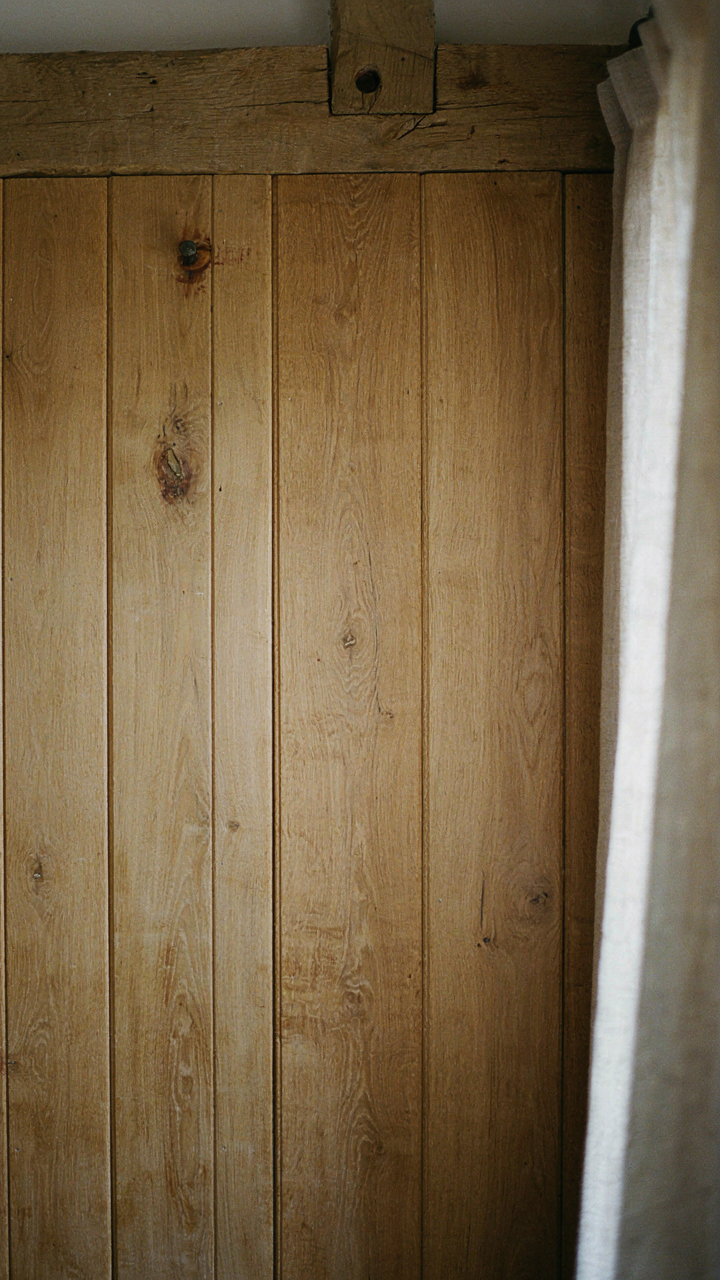
Keep Original Elements That Cost Real Money To Fake
You want panelling because it signals permanence and wealth. The mechanism is simple: guests register original architectural bones faster than they notice décor. A cottage with genuine period panelling already performed the work for you. Faking it with modern MDF board and paint creates the opposite effect—it reads as effort spent on theatre instead of substance.

Original panelling typically comes from one of three sources: hand-planed boards from the era the cottage was built, plaster infill between timber framing in older structures, or formal wainscoting installed during renovation by previous owners. Each carries visible marks of its time. These marks are the authentication signal your guest’s brain processes in seconds. Manufactured panelling tries to replicate this but always lands slightly wrong because it lacks the weight of actual age or the irregularities of real craftsmanship.
Real Materials Require No Narrative
Wood, stone, and plaster speak for themselves without explanation. The mistake most people make is treating them as design choices when they’re actually structural honesty. A stone feature wall isn’t there for aesthetic reasons in a cottage context—it’s there because the building needed it. This distinction matters because it removes the need for conscious styling, which always feels laboured in guest spaces.
Material honesty means you stop apologizing for imperfect surfaces. Rough-hewn beams, uneven plaster, visible mortar joints—these aren’t flaws requiring refinement. They’re evidence that the space was built to last, not assembled for Instagram. Your guest experiences this as competence rather than rustic theatre. The protocol is straightforward: expose what’s real, clean it without over-finishing, and leave the patina intact. Anything beyond that is performative.
Cottage Bedrooms Ideas: The “Quiet Architecture” Approach
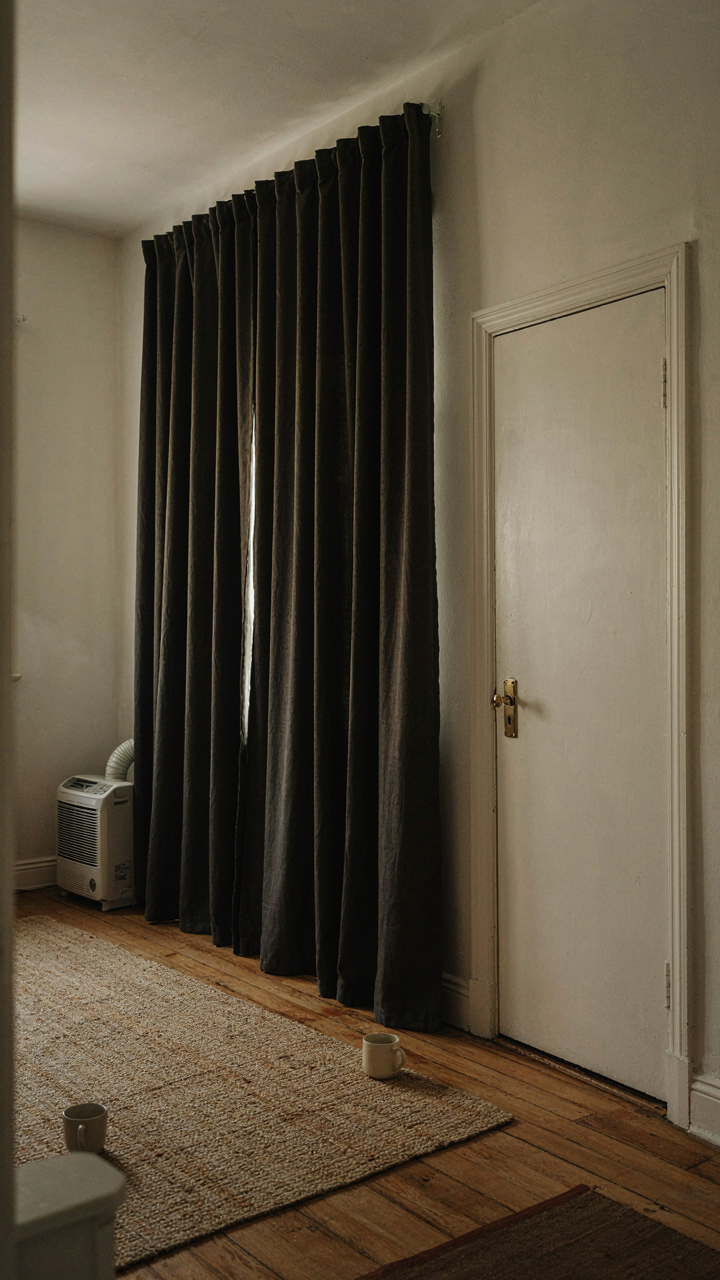
Sound Control Separates Rest From Intrusion
You want guests to feel like they disappeared into their own world, not like they’re trapped listening to your family move around downstairs. Acoustics operate on a simple physics principle: sound travels through air and vibrates solid structures. In a guest bedroom, this means blocking airborne noise from hallways and absorbing vibration from floors. Most cottage owners ignore this entirely, treating sound like background static guests should tolerate. It’s not. Sleep quality tanks when noise penetrates walls.

Heavy curtains, weatherstripping around doors, and rugs on hard floors form the core defense. Soft furnishings absorb sound energy rather than reflecting it back. Blackout curtains solve two problems at once: they block external light and dampen noise from outside. Layer these controls instead of choosing one. A guest room with bare walls, hardwood floors, and thin windows broadcasts every footstep and conversation. Add mass and friction to those surfaces and the room becomes a controlled environment.
Light Management Locks Down Sleep Architecture
Controlling light isn’t about ambiance; it’s about melatonin production. Darkness triggers the hormone that regulates sleep cycles. Guests arriving jet-lagged or overstimulated need a room that enforces sleep, not encourages it. The common advice here is to just add blackout curtains and call it done. That’s incomplete. You need layered light blocking at multiple entry points.
Windows require blackout-grade curtains or roller shades that seal to the frame edges. Light leaks from around the edges sabotage the whole system. Door gaps let hallway light seep through, so weatherstripping or door sweeps matter as much as window treatments. Even small sources like LED alarm clocks or phone chargers create enough ambient light to disrupt sleep onset. Remove or relocate them. The mechanism is straightforward: no competing light sources means the room enforces the sleep state your guest actually needs.
Temperature Puts Control In The Guest’s Hands
Individual climate control separates a tolerable guest room from one guests actually want to return to. Most cottages lack per-room temperature adjustment, forcing guests into whatever the main thermostat dictates. This creates friction. A guest who’s too cold at night can’t sleep. A guest who’s too warm opens a window and invites noise back in. You’ve solved the acoustic problem only to lose it to comfort politics.
Install a dedicated space heater or portable air conditioning unit if the room lacks individual climate control. Portable units aren’t elegant, but they work and they’re reversible. A guest with a direct control mechanism stops mentally negotiating with the temperature and sleeps. The cost of a quality portable unit is negligible compared to the loyalty gained from guests who sleep well. Give them the mechanism to adjust their environment. That’s the entire play.
Cottage Bedroom: The Art Of Strategic Neglect
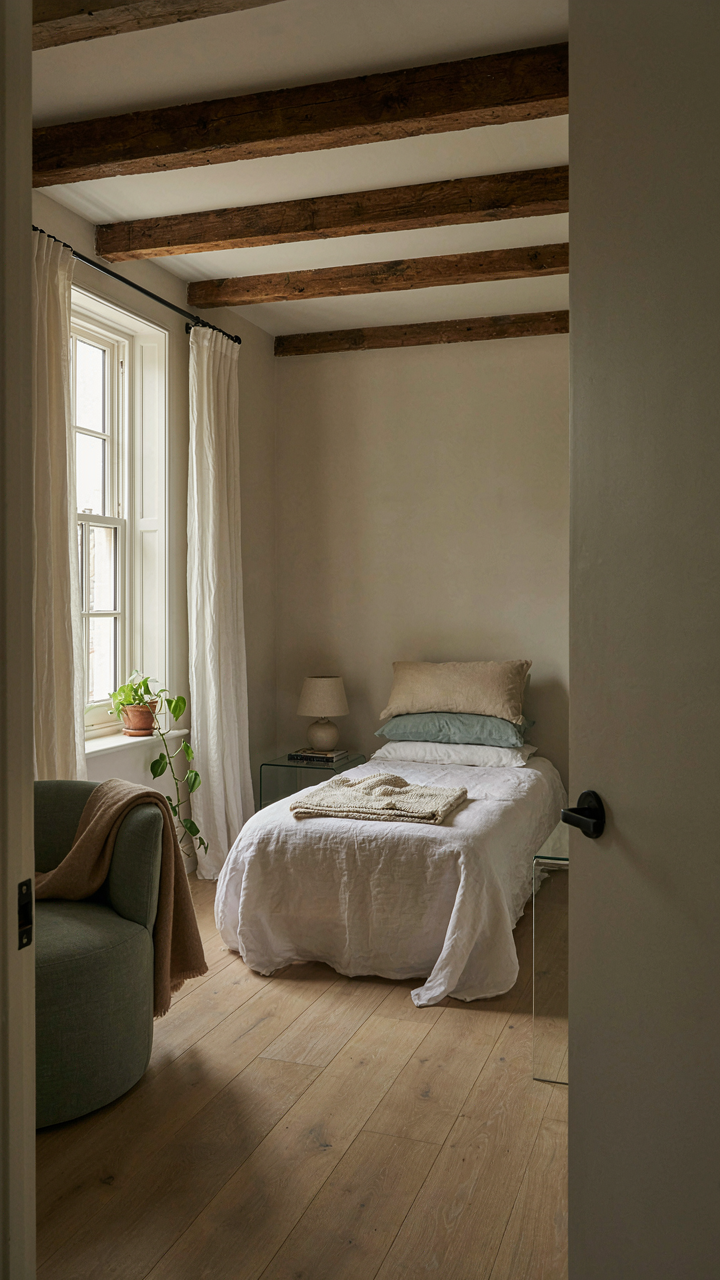
Remove Distractions, Keep Character
You want guests to feel special without admitting you spent months obsessing over their comfort. Here’s the mechanism: your brain confuses clutter with authenticity. In design terms, this borrows from signal-to-noise ratio in communications. A cottage guest bedroom with weak signal is one buried under decorative objects, throw pillows, and competing visual anchors. Strip the noise first.
Character doesn’t come from stuff. It comes from what remains after you remove everything unnecessary. Real wood finishes, exposed beams, a single piece of art that fits the space, linen that’s worn but maintained. A cottage guest bedroom works because guests can actually see the room. Leave the nightstand clear except a lamp and one book. Remove the decorative mirror collection. Kill the accent wall that matches nothing else in the house.
Choose Durability Over Trends
The common advice here is backwards. People tell you to refresh a guest room every few years, swap in new colors, update the aesthetic. That’s expensive and it fails the moment a guest stays longer than planned or arrives with different needs than you predicted. Instead, bet on materials that improve with time, not decline into dated territory.
Invest in a quality bed frame and mattress that lasts fifteen years, not three. Use paint colors that sit neutral—warm grays, soft whites, muted earth tones—because these never read as “from 2019.” Choose solid wood furniture over particle board. The maintenance protocol is simple: one annual deep clean, quarterly dusting, immediate repair of any damage. This approach costs less over a decade than constant minor updates and keeps the room functional for any guest type.
Your Guest Room Isn’t A Museum Exhibit. It’s A Functional Node In A Larger Network Of Hospitality. Failure To Treat It As Such Is The Real Misstep
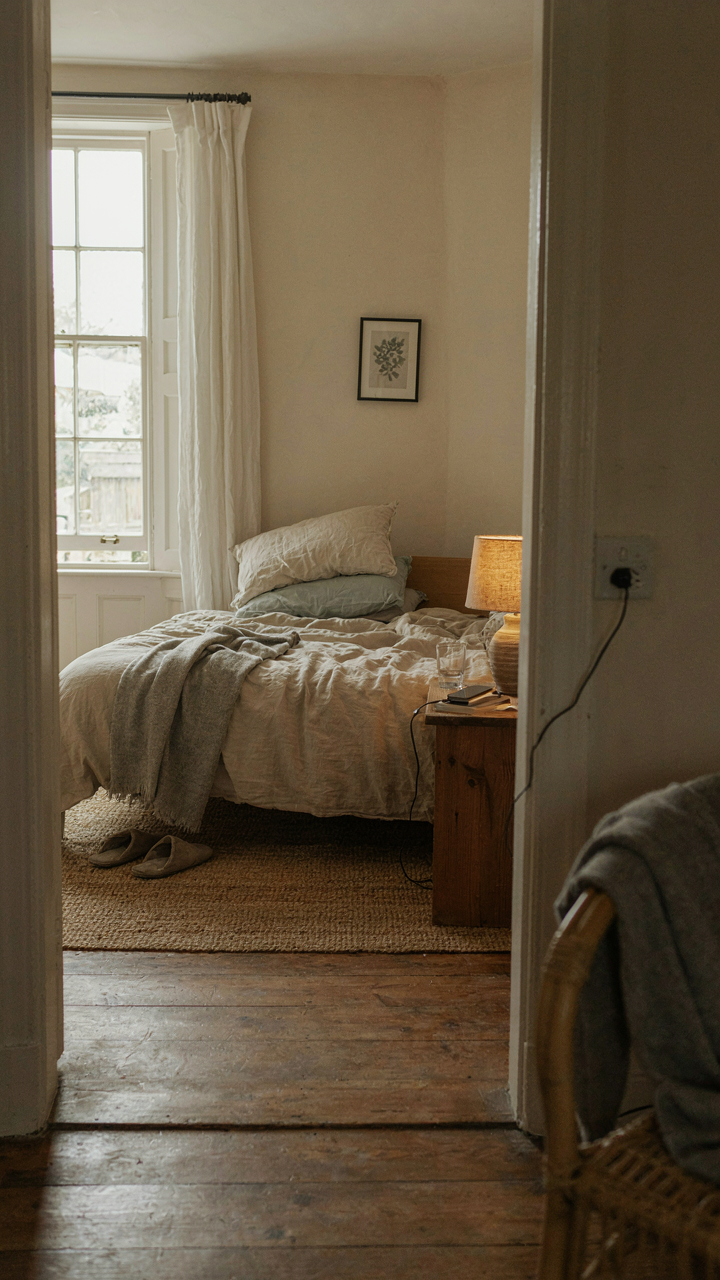
Stop designing your cottage guest bedroom for Instagram. Design it for the person sleeping in it. That means fresh air, a bed that doesn’t feel like a punishment, lighting they can actually control, and a charging cable that reaches the nightstand. Your guests remember how they felt, not how the room looked. Walk to your guest bedroom right now and spend one night there yourself. Sleep in that bed. Use that bathroom. Notice what’s actually missing. Then fix it before your next visitor arrives. People don’t travel to sleep in a room that makes them feel like a guest. They come back when they feel at home.