
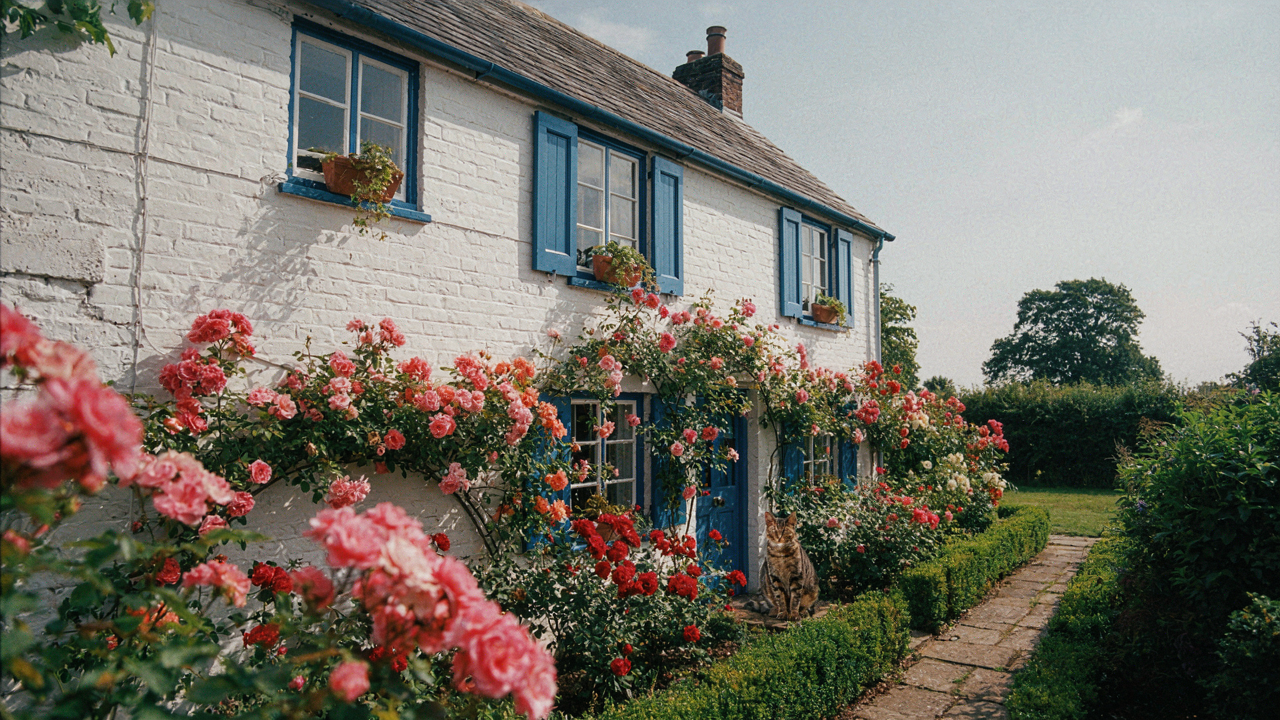
The Illusion Of Aesthetic First Window Shutters Exterior
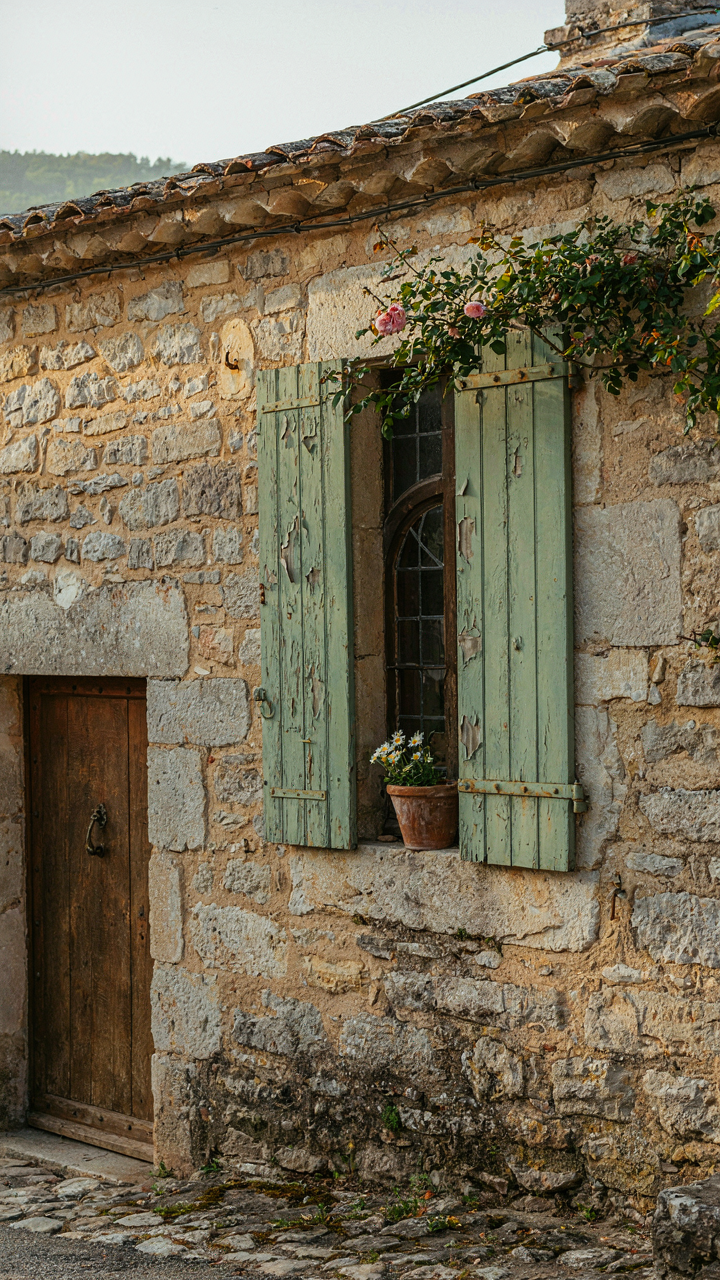
Shutters Existed Before Instagram
You want shutters because you saw them on a cottage and felt something. That feeling is status anxiety dressed up as taste. Here’s the actual mechanism: shutters were operational equipment, not decoration. Medieval and colonial shutters closed over windows to seal heat in winter, block light during day, and provide security when inhabitants left. Aesthetics came later, after function was solved. The pretty factor was a side effect of engineering.
Most people reverse this order. They see the look, want to replicate it, then wonder why their shutters don’t feel right on their house. The cottage shutter worked because it solved a real problem first. It looked good because it was built for purpose. That distinction matters more than any paint color or hinge style you choose.
Climate Reality Over Visual Preference
The common advice says “match your shutters to your trim or go bold with contrast.” This misses the actual decision tree entirely. Energy economics should come before color palette. Shutters on a coastal cottage face salt spray, humidity, and temperature swings that demand specific material choices. Shutters on a dry inland cottage need different maintenance schedules and material density. A painted wooden shutter in a wet climate fails faster than one treated for moisture. Your climate zone determines whether your shutters function or become decorative dead weight.
Start by mapping your specific climate stress onto material durability. Coastal properties need marine-grade treatments or composite materials that resist salt and moisture. Inland dry climates tolerate wood with standard finishes. Mountain properties with temperature extremes require materials with thermal stability. Once you’ve solved for climate survival, then you layer in aesthetics. The shutters that last longest always look best after five years because they’re still intact.
Unmasking The True Purpose Of House Shutters
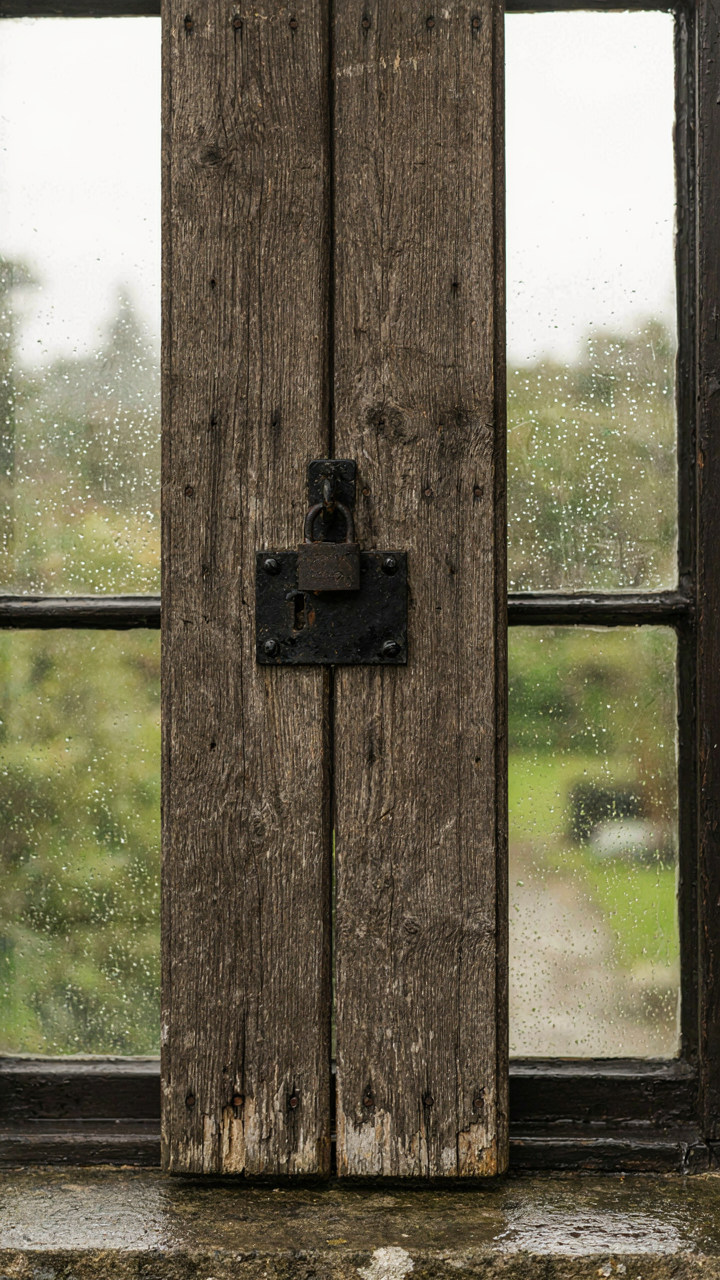
Weather Defense Over Aesthetics
You want cottage shutters to look period-correct because you’re worried your home won’t register as “authentic” to visitors. That fear is backwards. The real mechanism here comes from physics: shutters function as thermal and moisture barriers. Solid shutters reduce heat transfer through windows by up to thirty percent and block wind-driven rain that compromises seals and frames. Decoration came later. Protection came first.

Historically, shutters were load-bearing tools against climate, not props. Before modern weatherstripping and insulation, exterior shutters controlled what entered a cottage. Shutters closed during storms pinned windows shut and created an air gap that slowed heat loss. They also extended window frame life by decades because they kept driving rain off the glass and sill. The design choices that look “cottagecore” today—solid wood, proper overlap, tight hardware—all trace back to solving a mechanical problem.
Lockdown Function You Already Forgot
This one’s not mentioned anymore because we outsourced security to locks. That’s the mistake. In military terminology, shutters operated as a delay mechanism: they forced an intruder to spend time and make noise getting through them, buying occupants reaction time. Solid cottage shutters accomplish this without electricity, maintenance contracts, or app notifications. A closed shutter backed by a working latch creates a genuine barrier.
You don’t need panic-mode security theater. A cottage with properly fitted, latched shutters signals occupancy and creates friction for casual entry attempts. The mechanism is simple: closed shutters can’t be seen through, can’t be opened quietly without tools, and require deliberate effort to breach. Hardware matters here. Pintle hinges that bolt through the frame and substantial latches or ties installed correctly turn aesthetics into actual function. That’s the transaction you’re making when you pick solid over louvered.
Wood Shutters: Authenticity Vs. Aspiration
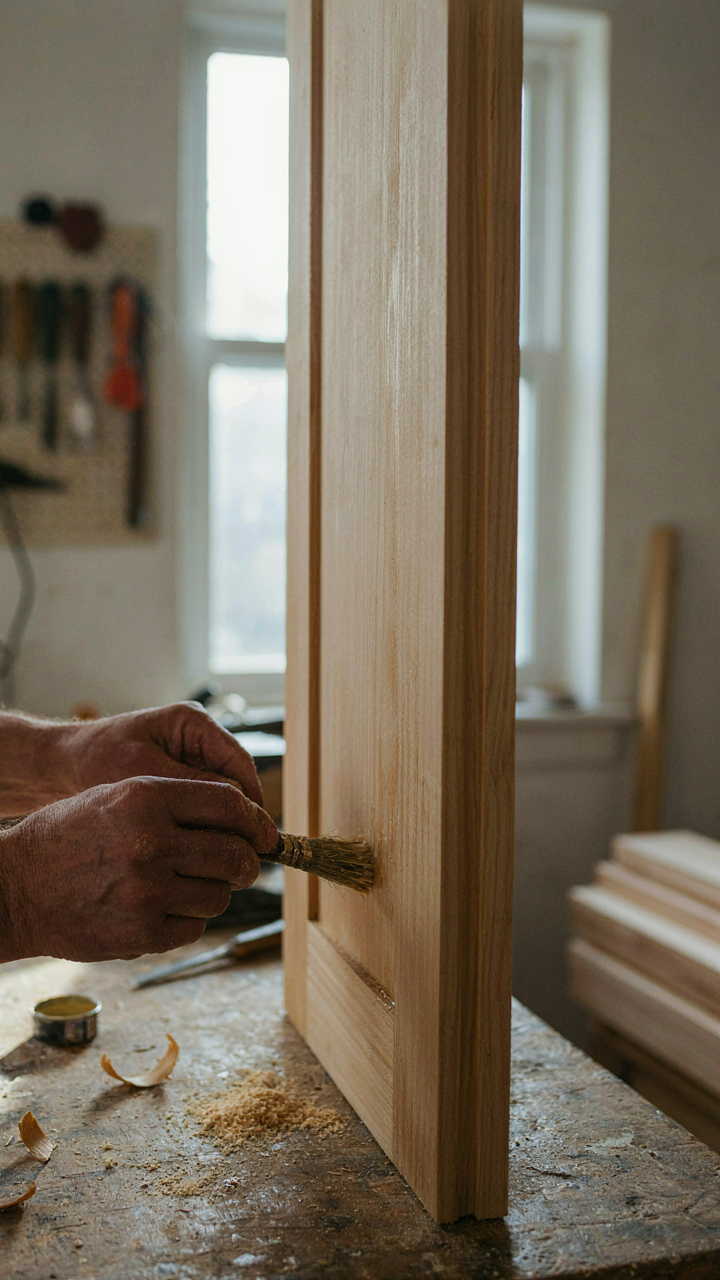
The Real Cost Of Material Honesty
You want wood shutters because they signal permanence and taste. Here’s what wood actually delivers: a material that moves, splits, and requires intervention to survive outdoors. Wood expands and contracts with humidity and temperature swings. This isn’t a flaw you can design around. It’s physics. Unlike vinyl, which stays inert, wood demands respect for its living nature or it deteriorates visibly and fast.

The honest pitch: solid wood shutters photograph well and age in ways that feel earned. They also fail predictably if you ignore their material requirements. Cypress, cedar, and mahogany perform better than pine because their natural oils resist rot, but no wood resists time without regular treatment. This fact shapes every other decision about installation, finish, and placement. Accept this upfront or buy something else.
Maintenance Reality: The Actual Schedule
Forget the fantasy of “low maintenance” wood shutters. That’s marketing language for carpenters and manufacturers, not homeowners. Painted wood shutters need repainting every four to seven years depending on climate. In salt air or high-humidity zones, that compresses to three to four years. Stained shutters exposed to weather fade faster and require stripping and refinishing, a more brutal intervention than a paint refresh.
The operative mechanism here is UV degradation combined with water infiltration at joints and hardware. You prevent failure by inspecting twice yearly, catching soft spots before they spread, and resealing or repainting before exposure becomes deep. This isn’t optional maintenance you delay. It’s the condition of ownership. If you commit to this rhythm, wood shutters deliver presence. If you don’t, they become eyesores faster than any other exterior element.
The DIY Shutters Exterior Myth: Competence Over Convenience
Carpentry Skills Beyond The Surface
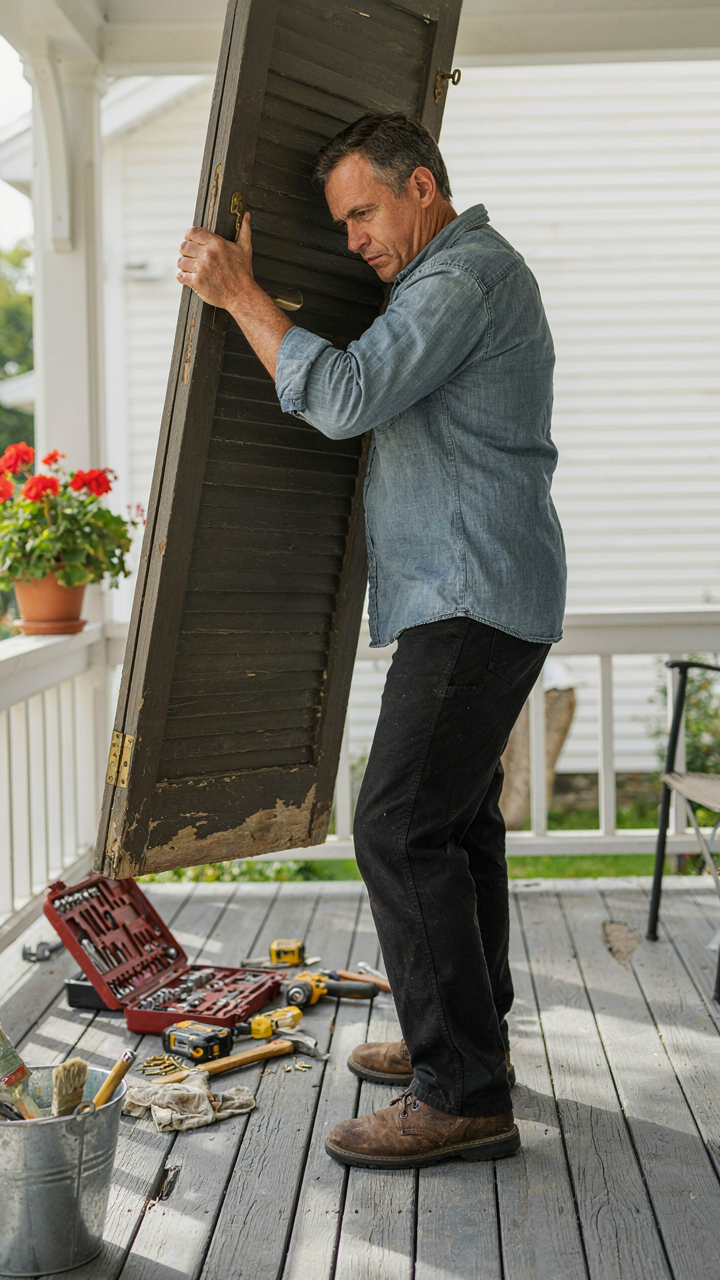
You want to believe you can build shutters yourself because it feels cheaper and more authentic. Here’s the mechanism: exterior shutters aren’t furniture. They’re load-bearing trim that fights weather, rot, and structural failure. Basic carpentry teaches you to cut and join. Exterior shutters demand knowledge of wood movement, water shedding angles, hardware load ratings, and regional climate stress. Most DIYers skip these because they’re invisible to the finished look.

Cottage shutters require frame-and-panel construction or board-and-batten assembly, each with different humidity response rates. Your stiles and rails must account for wood grain direction and seasonal expansion. Hinges carry concentrated stress at mounting points. Improper installation creates gaps that funnel water into your wall cavity. That’s not cosmetic failure. That’s structural rot you won’t see for three years.
Hidden Costs Buried In The Timeline
Everyone quotes materials. Nobody quotes failure. The cost fallacy assumes one pass produces a usable shutter. You’ll buy wood, discover warping mid-build, replace it, then discover your hinge placement was wrong because you didn’t account for the swell. You’ll repair failed seals. You’ll repaint sooner than factory-finished shutters because your finish won’t match industrial curing standards.
A single professional-grade cottage shutter costs more than an amateur version upfront. That premium covers kiln-dried lumber, engineered frame joints, and finishes applied in controlled conditions. Your amateur version saves money on materials but costs it back on replacement cycles and wall damage. Calculate your time at market rate, not what you wish you earned. Most DIYers never finish the math.
Cedar Shutters: Strategic Material Selection
Why Cedar Actually Lasts
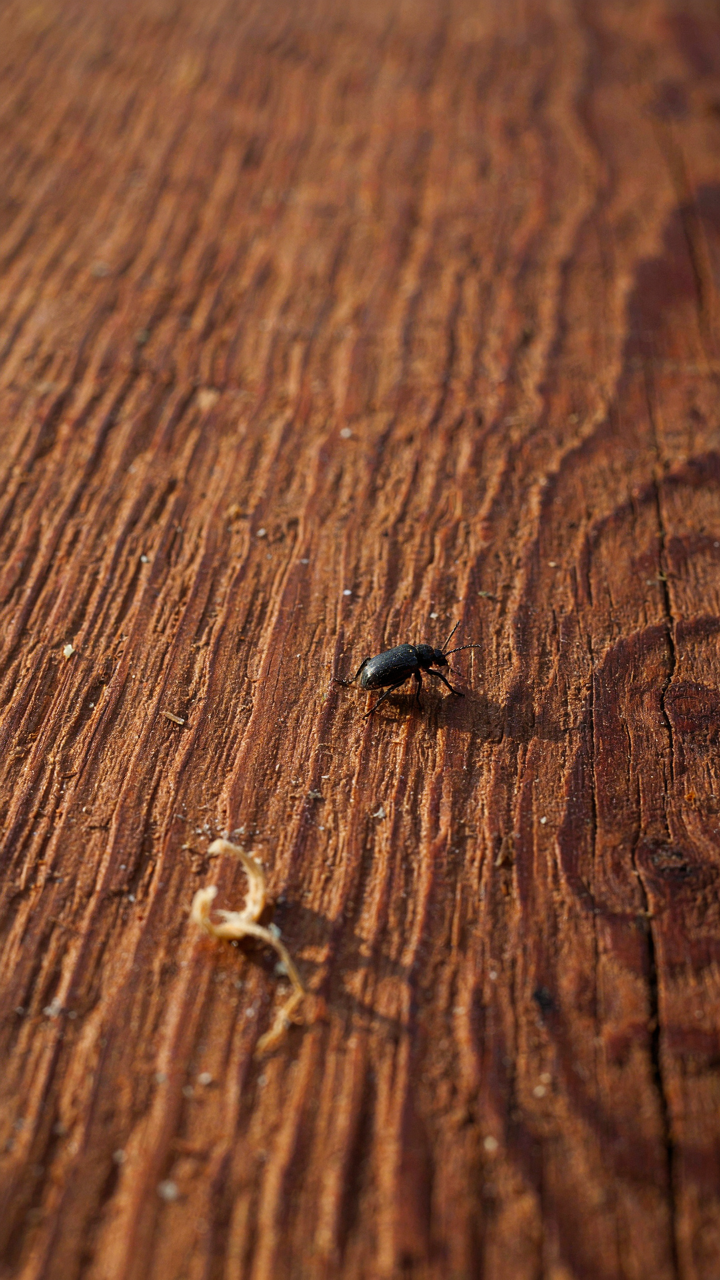
You want cedar because it signals permanence, but that’s not why it works. Cedar’s real advantage sits in its biology. The wood contains natural oils and compounds that resist decay the way an immune system fights infection. Specifically, thujaplicins in cedar actively repel fungal growth and insects without requiring chemical treatment. This is durability as mechanism, not marketing.

The longevity math is straightforward. Untreated cedar shutters last 15 to 20 years in typical exposure. Properly sealed cedar extends that to 30 years or beyond. The decay timeline accelerates in wet climates where fungal pressure is constant. Your maintenance protocol matters more than the material’s origin. Every two to three years, inspect for soft spots, reseal weathered edges, and replace damaged boards before rot penetrates the frame.
Where To Actually Source Cedar
The big box store sells commodity cedar that’s kiln-dried in ways that crack the wood faster. Real builders source from specialty mills that understand shutter grade requirements. You need vertical grain cedar, not flat grain. Vertical grain resists cupping and warping because water moves along the grain rather than pushing the boards sideways. Flat grain cedar fails inside five years on shutters because seasonal moisture swings destroy it.
Sustainable sourcing exists but requires direct relationships. FSC-certified mills exist and produce shutter-grade cedar without the environmental depletion. Your supplier should specify growth region and harvest method. Western red cedar from the Pacific Northwest behaves differently than Atlantic white cedar. Ask which species you’re buying, not just “cedar.” Then confirm the mill sealed all edges before delivery. This is the step most installers skip, and it’s the difference between a 15-year and 30-year lifespan.
French Country Shutters: A Cultural Misappropriation?
Where French Shutters Actually Come From
You want the aesthetic without the guilt. That’s the real tension here. French country shutters aren’t a style born from romance—they’re a functional response to climate and building codes that haven’t applied to most American homes for over a century. In the 18th and 19th centuries, French shutters evolved as load-bearing security devices. Solid wooden panels protected against weather, theft, and heat loss. They weren’t decorative first. The style followed the problem, not the other way around.

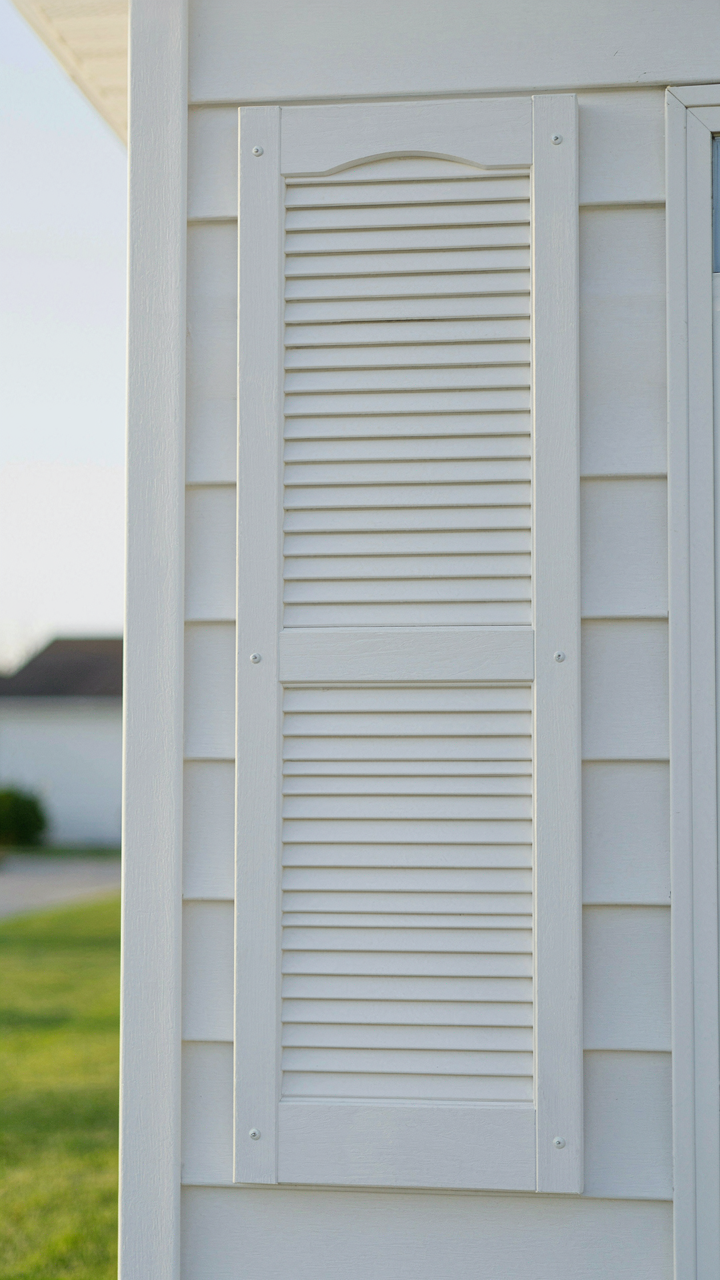
Most cottage shutters sold today bear almost no resemblance to their historical precedent. Original French shutters were hinged to the window frame itself, operable, and built from local timber that weathered visibly over decades. Modern cottage shutters are often fixed trim pieces made from composite materials, bolted to the exterior wall for appearance alone. If you’re installing them, you’re not adopting French functionality. You’re borrowing visual language while ignoring the constraint that created it.
The Cost Of Architectural Dishonesty
Architecture operates like evolutionary biology: form follows survival pressure, not taste. When you bolt French-style shutters to a New England colonial or a California ranch, you’re ignoring the actual pressures that shaped both the shutters and the house. That mismatch reads as visual noise to anyone who understands how buildings work. The shutters don’t earn their place through function—they announce their own uselessness, which undercuts the effect you’re after.
Pastiche works when it’s intentional and consistent. A Victorian cottage in a region where Victorian homes actually exist can carry French shutters if you commit fully to the reference and the materials match the regional vernacular. Half measures fail. If your cottage has vinyl siding and your shutters are PVC trim, the French reference collapses entirely. The mechanism is simple: authenticity compounds; fakeness broadcasts itself. Choose either full architectural commitment or don’t add the shutters.
The Functional Framework For Wooden Shutters
What Actually Lives Inside Your Shutters
You want shutters that look intentional, not like decoration someone forgot about. The mechanism is simple: shutters are load-bearing structures disguised as trim, and understanding what holds them up determines whether they stay functional or become a liability.

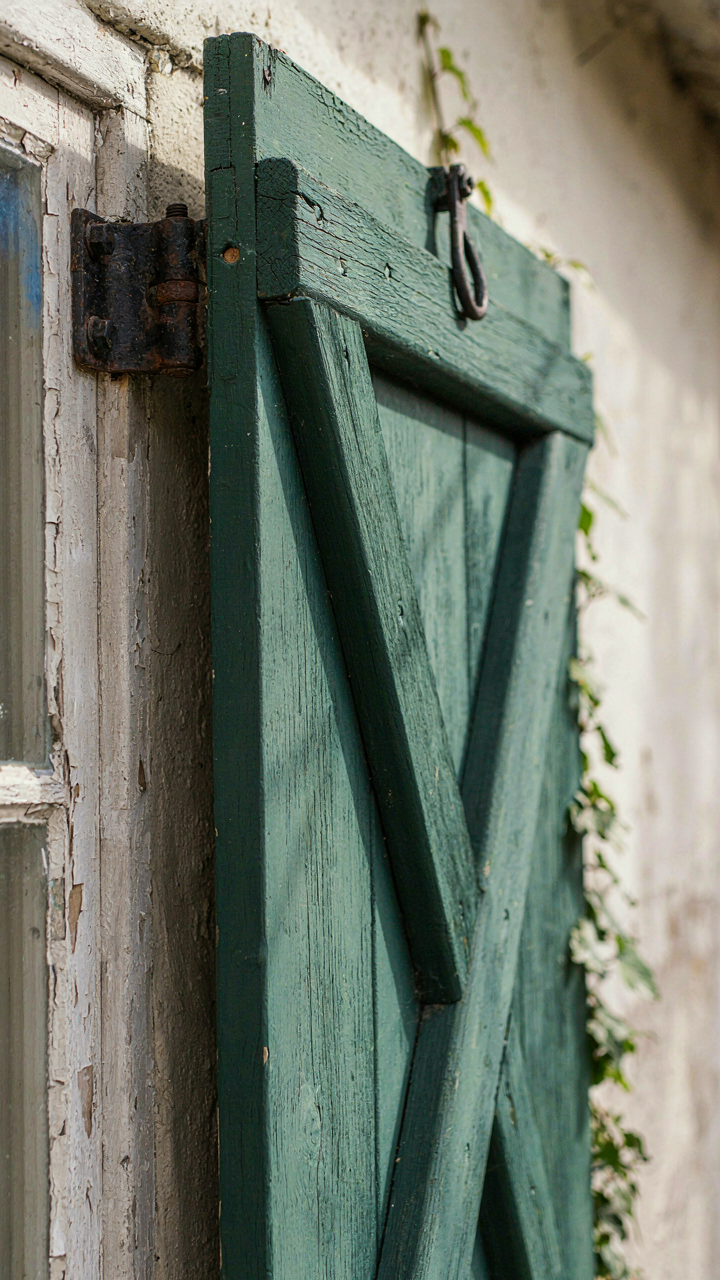
A wooden shutter has five core components. The frame consists of two vertical stiles and horizontal rails that create the perimeter and carry all structural load. The louvers or panels fill the interior, either as fixed horizontal slats or as a solid plank configuration. Hinges connect the shutter to the window frame or house wall and transfer the shutter’s full weight to the mounting surface. The shutter dog or holdback hardware secures the open shutter against the wall when you want it pinned back. The closing latch or catch keeps the shutter sealed when deployed. Each part fails independently, so knowing which one matters most prevents you from fixing the wrong problem.
The stiles and rails are the skeleton. They resist racking, which is the shear force that pushes a rectangle into a parallelogram. Louvers or panels distribute wind load across the frame surface area instead of concentrating stress at hinges. When a shutter lacks proper internal bracing or uses thin material, wind pressure bends the frame outward, and hinges tear away from the house. This is why period shutters used thicker wood and heavier joinery than modern reproductions: they had to absorb real operational stress, not just look correct from the street.
How To Mount Shutters That Don’t Fail
Installation determines whether shutters stay functional for decades or become cosmetic dead weight within five years. The common advice skips the actual load calculation and goes straight to “use corrosion-resistant fasteners,” which is like saying “use good brakes” without checking your car’s weight.
- Secure hinges directly to framing: Mount hinges into solid wood structure, never drywall or brick veneer alone. The shutter’s full weight plus wind load concentrates at hinge points, so anchoring into house framing prevents pullout failure and frame damage.
- Use fastener gauges matched to load: Quarter-inch bolts with washers handle full-operational shutters; smaller fasteners work only for decorative, non-operable shutters. Undersized hardware fails under real wind or manual operation stress within years.
- Space hinges at top third and bottom third: This geometry distributes load across the maximum structural span. Centering hinges or crowding them increases moment arm stress on frame members and accelerates wood fatigue.
- Verify shutter swing clearance before install: Shutters need full closure without binding on trim, glass, or house wall. Binding forces hinges into shear stress and bends stiles. Measure and test the swing path before fastening.
- Seal all wood exposed during installation: Freshly cut edges and raw wood at hinge mounting locations absorb moisture and decay rapidly. Prime and paint these surfaces immediately after hanging the shutter.
Operability is the test that exposes bad installation. Open and close the shutter by hand at least three times before considering the work complete. If it binds, binds after one season, or requires force, the frame is racking or hinges are misaligned. Fix it now instead of accepting a shutter that stops working after the first year. The mechanism is straightforward: secure fastening into solid structure, matched hardware gauges, proper spacing, and clearance verification prevent every common failure mode.
Rustic Shutters: The Authenticity Paradox
When Old Looks Intentional
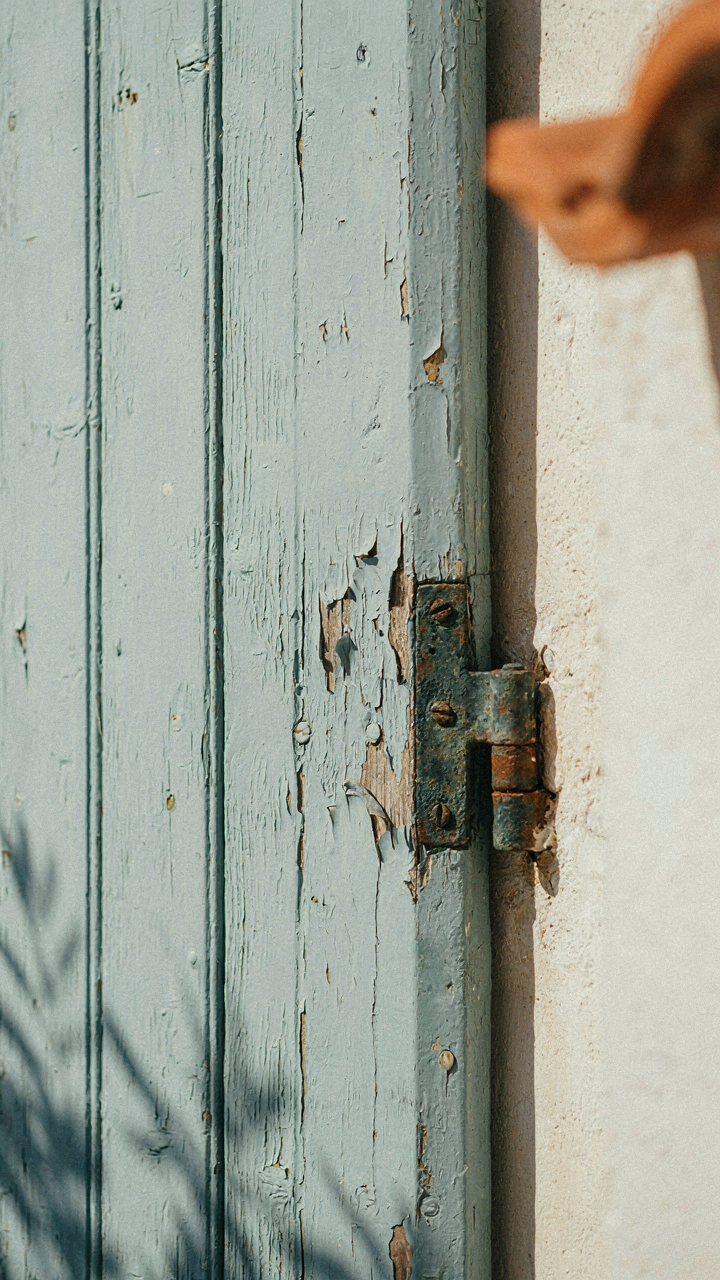
You want rustic shutters because you’re betting that visible wear signals taste and history you don’t actually possess. Here’s the mechanism: weathering is entropy, decay is failure. Weathering tells a story of exposure and survival. Decay tells a story of neglect. Borrowing from materials science, weathering follows predictable oxidation patterns while decay spreads randomly like a structural infection.

Real weathering on cottage shutters happens in specific zones. Wood grain raises and grays from UV exposure and moisture cycling. Paint peels in thin layers along grain direction, not in chunks. Hardware develops a uniform patina, not rust pitting. The damage is directional, following the weather and sun orientation. Decay looks like soft spots, deep checking, and wood that breaks rather than splinters.
The Economics Of Controlled Aging
The real estate industry has already named this: staged authenticity. You pay more for shutters that look like they’ve earned their damage. A ten-year-old shutter with genuine weathering costs less than a two-year-old shutter with artificial distressing because buyers can’t tell the difference, but they pay for the story either way.
Intentional aging works only when it respects how materials actually fail under specific conditions. Hand-planing edges, then sanding selectively, then exposing to weather for actual seasons beats paint-cracking techniques every time. The fake always shows in the randomness. Nature’s randomness follows rules. Your distressing process either matches those rules or it screams replica. The protocol is simple: age one shutter per season outdoors, then match that timeline and pattern on the rest.
The Shutter Longevity Protocol
Stop Waiting For Failure
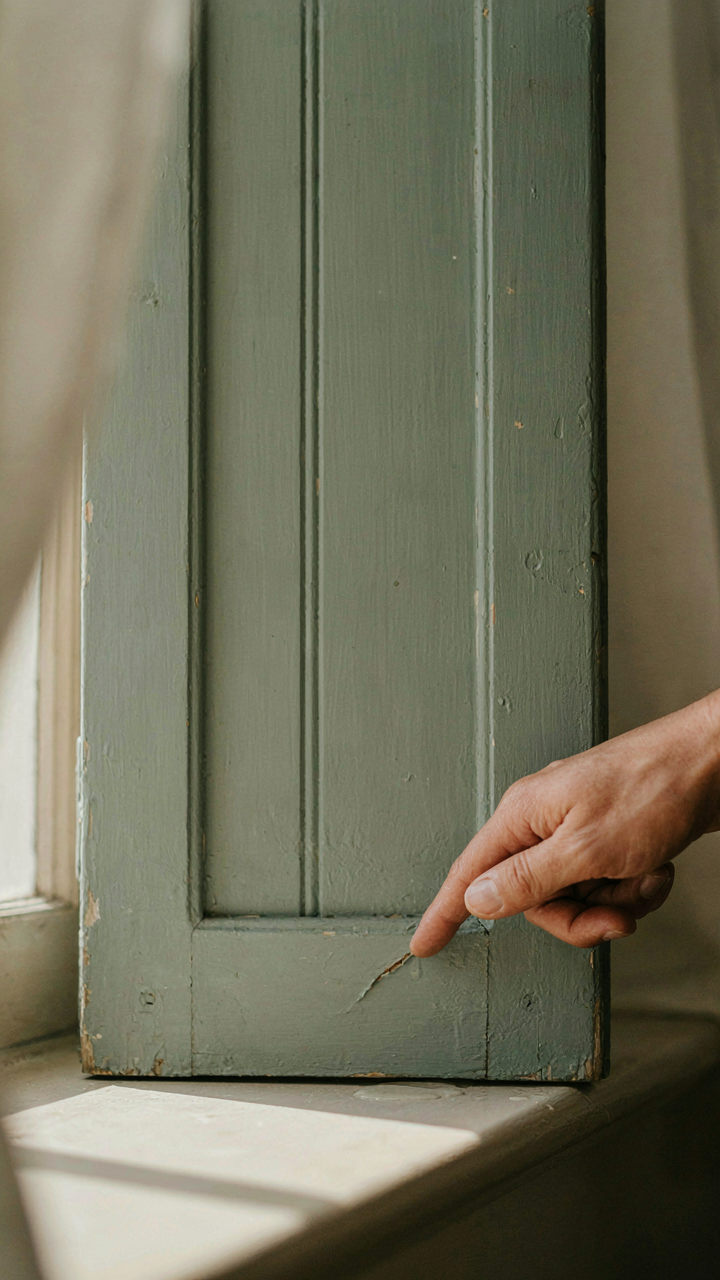
You’re hoping shutters fail slowly so you don’t have to think about them until they’re ugly. That’s denial dressed as planning. The mechanism is simple: wood and hardware degrade on predictable schedules. Temperature swings crack paint. Moisture enters joints. Hinges rust from inside out. Catch small problems before they compound into structural damage that forces replacement instead of repair.

Start with your shutters’ exposure. North-facing shutters weather differently than south-facing ones. Check paint for crazing or peeling every spring. Open and close them monthly to work lubricant into hinges and detect sticking before it becomes force. Look at the bottom rail where water pools. Water is the enemy. Everything else follows water’s path.
Repair The Right Failures First
The conventional wisdom says replace bad shutters. That’s wrong when the frame and hardware still function. Use cost-benefit analysis from construction economics: if repair costs less than thirty percent of replacement, repair wins. A rotted bottom rail on a wooden shutter costs far less to sister-splice than replacing the entire unit. A rusted hinge swaps out in minutes. Paint failure is cosmetic, not structural.
Prioritize by failure type. Surface paint cracks are maintenance, not emergency. Rotted corners at joints are structural and go first. Rusted hardware comes next because it locks the shutter against movement, forcing stress elsewhere. A shutter that won’t operate properly ages faster than one that moves freely. Fix what stops the shutter from functioning before you refinish what makes it pretty.
Beyond The Pretty Picture: Cottage Shutters For The Discerning Owner

Function Over Narrative
You’re here because you want shutters that look intentional, not like you fell for marketing. The mechanism is simple: most people confuse aesthetics with purpose, then wonder why their shutters fail in five years. Real value lives in three places: does it actually work, will it last, and who built it.
Functional shutters move. They seal against weather or they don’t. They operate smoothly or they bind. Durability comes from wood selection, joinery quality, and finish integrity. Craft matters because it determines whether your shutters handle seasonal expansion without warping, whether hardware corrodes, whether the frame twists. Ask makers about wood species, mortise depth, and topcoat frequency. These answers separate people who know their work from people who copy designs.
Build To Last, Not To Trend
Trend cycles punish shutters specifically because they’re visible, permanent, and expensive to replace. The military uses the term “logistics creep” for systems that become dependent on constant resupply. Cottage shutters face the same pressure: chase what looks current and you’ll refinish or rebuild within a decade. Build for permanence instead.
Permanence means choosing materials that age gracefully, not materials that age into liability. Real wood shutters patina. They weather. This is not a flaw—it’s the mechanism that keeps them useful across decades. Choose finishes rated for the climate you occupy, not the climate Instagram shows. Install hardware that resists corrosion in your specific environment. The concrete step: specify materials now based on 20-year performance data, not next season’s design feed.
The Real Problem Isn’t Your Shutters, It’s Your Desire To Conform
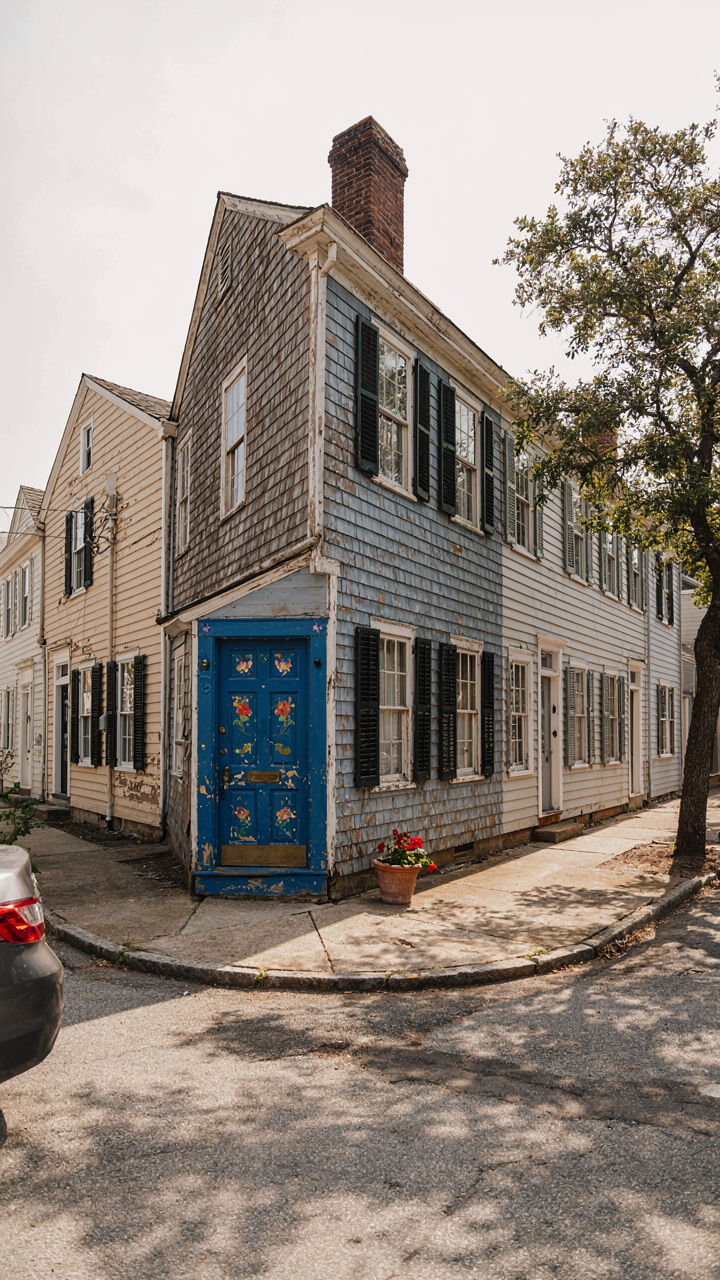
You picked cottage shutters because Pinterest told you to. Because your neighbor has them. Because they feel safe. The truth: most people choose shutters to blend in, not to stand out. Stop asking what shutters match your aesthetic. Start asking what aesthetic you actually want to live inside. Pick one shutter style today that excites you, not one that comforts you. Your windows don’t need to look like everyone else’s windows.