
The “Authenticity” Trap: Why Your Farmhouse Porch Feels Fake
Instagram Porches Aren’t Real Porches
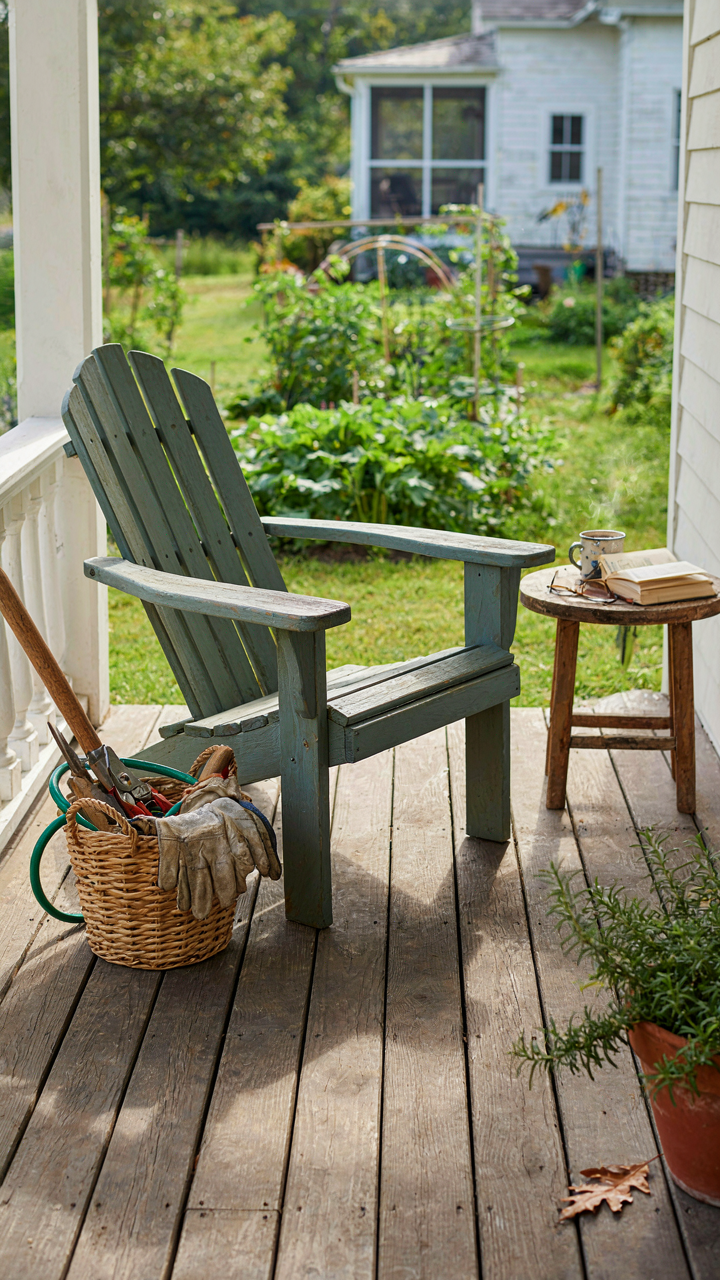
You want people to believe you live this way. The mechanism is simple: farmhouse aesthetic sells the fantasy of rural simplicity to people living in cities or suburbs. Instagram porches get styled, shot in golden hour, then abandoned. Real porches show wear. They have function debris. A working farmhouse porch exists to transition between outdoors and indoors, to store tools, to provide shade during work. It’s not a stage.
The curated farmhouse porch follows a formula: shiplap walls, vintage signs, potted plants arranged symmetrically, weathered wood that cost more new than it would have cost worn. This isn’t authenticity. It’s theater pretending to be authenticity. The original farmhouse porch had those things because they were cheap, functional, or inherited. You’re buying them deliberately. The difference matters because it changes how you use the space.
Actual Use Kills Perfection Immediately
Function breaks the aesthetic. A porch built for sitting on a swing while drinking coffee at 6 AM gets weathered differently than one decorated for photos. Rain stains wood. Dust settles on surfaces. Plants die or overgrow. Chairs get moved to follow shade. This is not failure. It’s evidence of use. The common advice says to “maintain” your aesthetic. Wrong. Maintenance is expensive and pointless if the goal is slow evenings outdoors, not content performance.
Start by naming what happens on your porch for at least three hours per week. Eating. Reading. Watching storms. Talking. Now build for that activity, not for appearance. A durable chair beats a decorative one. A table at eating height beats rustic and unusable. A roof overhang that actually blocks rain beats one that looks good but fails when weather matters. Use the space hard for thirty days. Then notice what breaks or wears. That wear pattern tells you what you actually built.
Beyond The Rocking Chair: Redefining Farmhouse Porch Decor

Utility Over Aesthetics First
You want people to think your porch is intentional, not just decorated. The mechanism is simple: farmhouse style traded on authenticity because those porches actually served work. People sat there to shell peas, repair tools, or watch livestock. The rocking chair was never the point. It was the byproduct of needing a place to rest between tasks.

Most farmhouse porch advice reverses this. It starts with the look and forces function underneath. That’s backward. Choose pieces that solve real problems first, then accept that they’ll look right because farmhouse design evolved from necessity, not Pinterest boards. A porch bench with deep storage underneath isn’t charming because it matches your aesthetic. It’s charming because it actually holds the seasonal gear you need outside.
Materials That Earn Their Keep
Farmhouse porches used wood, metal, and stone because those materials outlasted seasons. They weren’t chosen for texture or warmth. They were chosen because they worked. Pressure-treated lumber, cast iron brackets, and brick or gravel surfaces don’t rot, rust, or erode quickly. When you pick materials this way, the visual consistency happens automatically.
The common advice misses this: stop buying “farmhouse style” reproductions and start buying durable materials that contractors and farmers actually use. A simple steel porch swing costs less than a decorative wicker piece and lasts decades longer. Concrete steps with a metal railing aren’t precious, but they don’t need replacing every five years. Your porch should require maintenance, not constant replacement.
The Bio Rhythmic Porch: Syncing Your Space With Nature
Lighting That Matches Your Body’s Clock
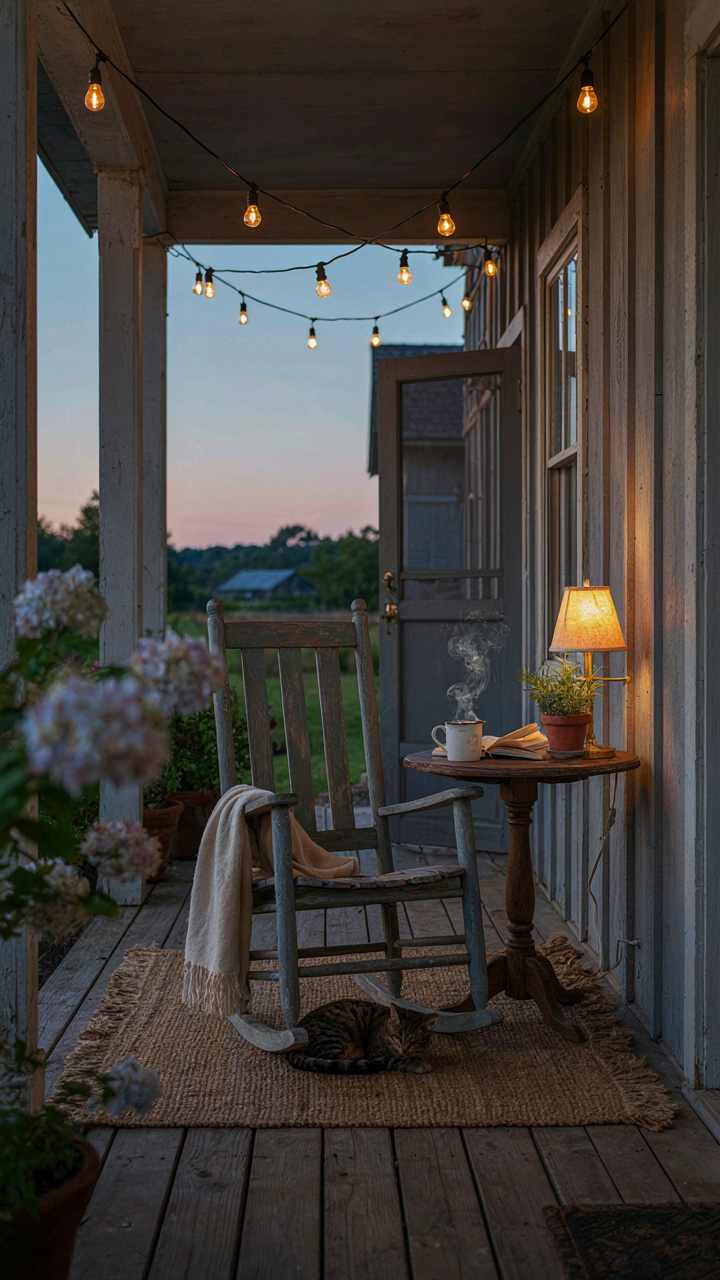
You want your porch to feel like a retreat, not a stage. The real mechanism is this: your circadian rhythm controls melatonin production, and blue light suppresses it. Warm lighting after sunset keeps cortisol down and signals your body to wind down. Edison bulbs, amber-tinted string lights, and warm white LED fixtures (2700K or lower) align with evening biology. The fixture matters less than the color temperature. Install dimmers on every light source so you control intensity as dusk deepens.

Evening wind down on a farmhouse porch demands deliberate light choices, not the default bright fixture every house comes with. Avoid recessed overhead lights or bright white bulbs entirely after sunset. Route ambient light from low-mounted sources: table lamps, sconces at waist height, lanterns on the floor. Your eyes never point upward. This setup takes thirty minutes to wire correctly and eliminates the stimulation that keeps you wired until midnight.
Evolution, Not Decoration
Biology doesn’t recognize static decor, and neither should your porch. Seasonal adaptation means replacing textiles, repositioning furniture, and shifting your entire setup to match what the land around you is doing. Summer demands light fabrics and open sightlines. Fall requires heavier throws, muted tones, and visual weight. Winter calls for enclosed spaces and insulating materials. Spring strips everything back. This isn’t trend chasing. This is matching your nervous system to actual environmental shifts. Your ancestors’ porches changed with the season because survival required it.
The common advice is to add a few pillows and call it seasonal. That’s lazy. Pull your rocking chairs closer together in winter and spread them wider in summer. Swap linen for wool. Move planters. Repaint or restain railings if that matches your local ecosystem’s color shift. Change happens quarterly, not yearly. The moment autumn light hits differently, your porch setup should reflect that shift within two weeks.
The “Entropy Erosion” Protocol: Maintaining Your House Front Porch

Choose Materials That Fight Time, Not Time
You want your porch to look intentional five years from now without becoming your weekend project. The real mechanism here is entropy from physics: disorder increases in closed systems unless energy is applied. Your porch materials either accelerate this decay or resist it. Wood rots. Metal rusts. Paint peels. Concrete cracks. Most people pick materials based on aesthetics alone, then get blindsided by maintenance. Wrong priority.

Cedar and pressure-treated lumber dominate farmhouse porches because they have genuine rot resistance built in. Cedar contains natural oils that slow fungal growth. Pressure-treated wood has preservatives forced into the grain under vacuum. Neither requires constant intervention. Composite decking exists as an alternative but trades authenticity for lower maintenance, a tradeoff worth naming honestly. Concrete, properly sealed and maintained, lasts decades on farmhouse porches in frost-heavy climates when you account for freeze-thaw cycles.
Cleaning Systems Beat Cleaning Habits
Your cleaning routine will fail because routines require willpower and willpower depletes. The alternative is designing a porch that sheds dirt and debris naturally rather than traps it. Sloped surfaces move water away. Horizontal railings collect dust. Vertical railings shed it. Mesh flooring on porch decks lets leaves and dirt fall through instead of accumulating. This isn’t aesthetic preference, it’s physics applied to behavior.
Pressure washing twice yearly handles most accumulated grime on a farmhouse porch. Use low pressure on wood to avoid splintering. Sealed surfaces need less frequent cleaning than unsealed ones. Pick one specific date each spring and fall, mark it, and do it then. Consistency beats sporadic effort every time. The mechanism: when cleaning attaches to calendar dates rather than feeling, you remove decision-making from the equation.
Farmhouse Front Porch Ideas For Real Life: Not Just Photoshoots
Materials That Actually Last Outside
You want your porch to look good in photos, but what you really fear is replacing it in three years. The mechanism is material selection based on weather cycles, not aesthetics. Farmhouse design borrows from agricultural engineering: choose materials with high fatigue resistance. Wood on a porch fails because it cycles through wet and dry states constantly. Cedar and pressure-treated pine handle this better than pine alone, but they still need maintenance schedules, not just occasional attention.

Composite decking eliminates wood rot entirely but trades authenticity for durability. Metal railings corrode without proper finish. Concrete and stone don’t fail fast, but they demand the right sealing protocol from installation day forward. The real choice isn’t between pretty and practical. It’s between accepting the maintenance cost upfront or paying replacement costs later. Pick materials, then commit to the schedule that keeps them standing.
Storage That Hides What Breaks The Spell
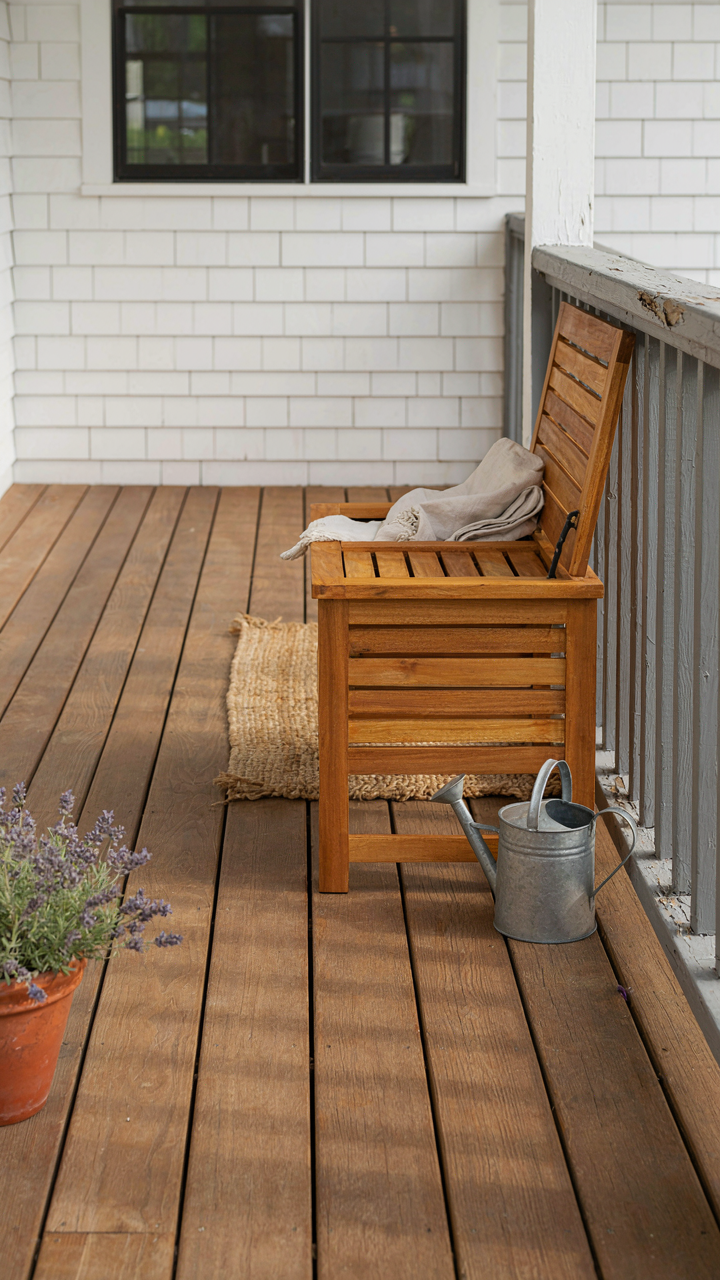
Generic advice says add benches with hidden storage. That’s incomplete. The actual problem is that porches become dumping grounds for outdoor equipment you use twice yearly. Bicycles, seasonal decorations, pool chemicals, gardening tools—they kill the slowness you’re designing for. Build vertical storage into the porch structure itself: wall-mounted cabinets that match the siding, under-bench lockers with proper weatherproofing, or a dedicated closet integrated into the porch’s footprint. This removes the choice to leave things visible. The items simply have nowhere else to live.
Weatherproofing storage is non-negotiable. Humidity degrades everything inside sealed spaces. Install ventilation holes or use slatted doors instead of solid panels. Label containers so you know what’s stored where without opening cabinets mid-evening. The mechanism: reduce friction between storing something and retrieving it later, so clutter stays hidden naturally rather than by willpower alone.
The False Promise Of Modern Farmhouse Porch: Unpacking The Trend
What Actually Qualifies As Modern
You’re drawn to “modern farmhouse” because it promises the status of intentional design without the commitment of choosing a real aesthetic. Here’s the mechanism: the trend borrows from economics the concept of arbitrage—buying low in one market, selling high in another. Modern farmhouse does this with farm authenticity. It takes genuine rural design elements stripped of their function and context, repackages them as curated lifestyle, then sells them back to you at urban prices.

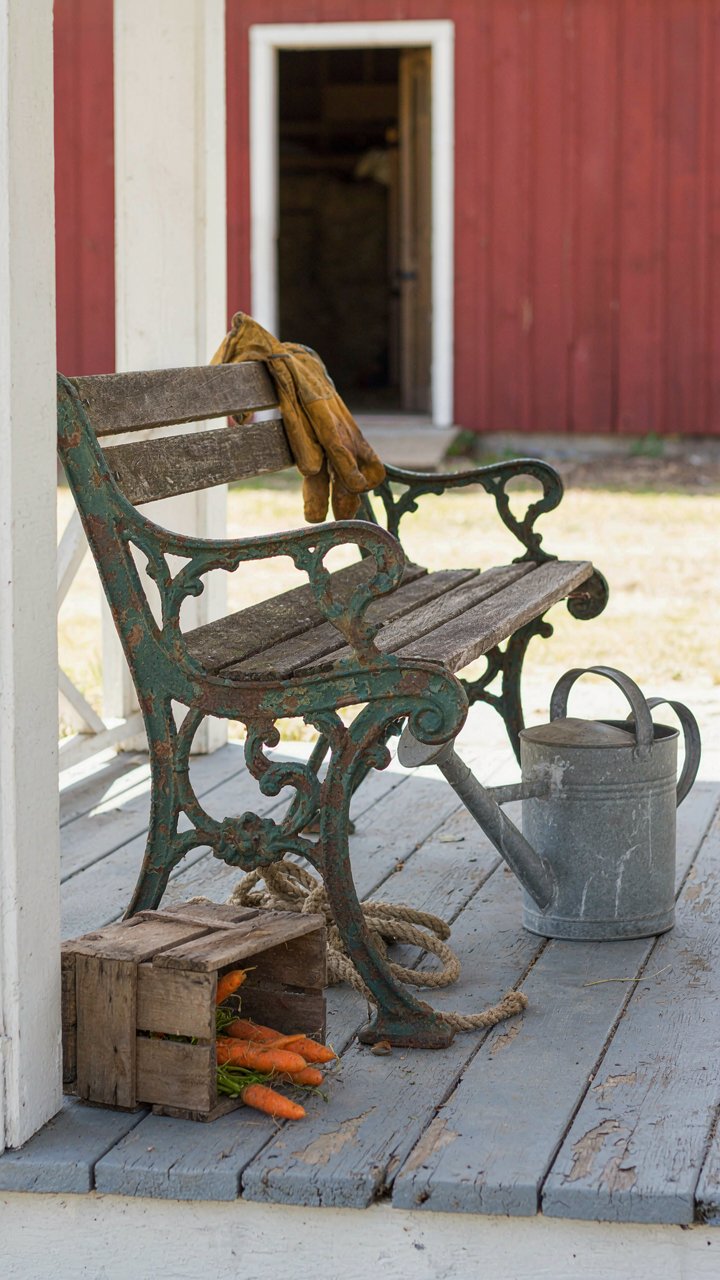
What’s actually modern is the accessibility. Shiplap, metal fixtures, and open shelving existed for practical reasons on working farms. The modern part is manufacturing these elements at scale and marketing the feeling of farm life to people who don’t live on farms. The hype is calling this innovation. It isn’t. It’s recycling agricultural necessity through an Instagram filter.
Design That Outlasts The Caption
The common advice is to “mix old and new.” This is lazy. Real longevity works differently: it privileges function over trend signals. A farmhouse porch endures when every material choice solves a climate or use problem first, and happens to look good second.
Start by auditing what you actually do on your porch. Do you sit there in rain? Build drainage. Do you store tools? Use materials that tolerate weather. Do you gather for meals? Choose seating that weathers seasonal shifts without cracking. Materials like cedar, cast iron, and untreated concrete have survived decades on working farms because they perform, not because they photograph well. Build your porch backward: lock down the practical infrastructure first, then layer aesthetics that align with it.
Front Porch Ideas Entrance: The Unspoken Hierarchy Of Arrival
How Sight Lines Control Behavior
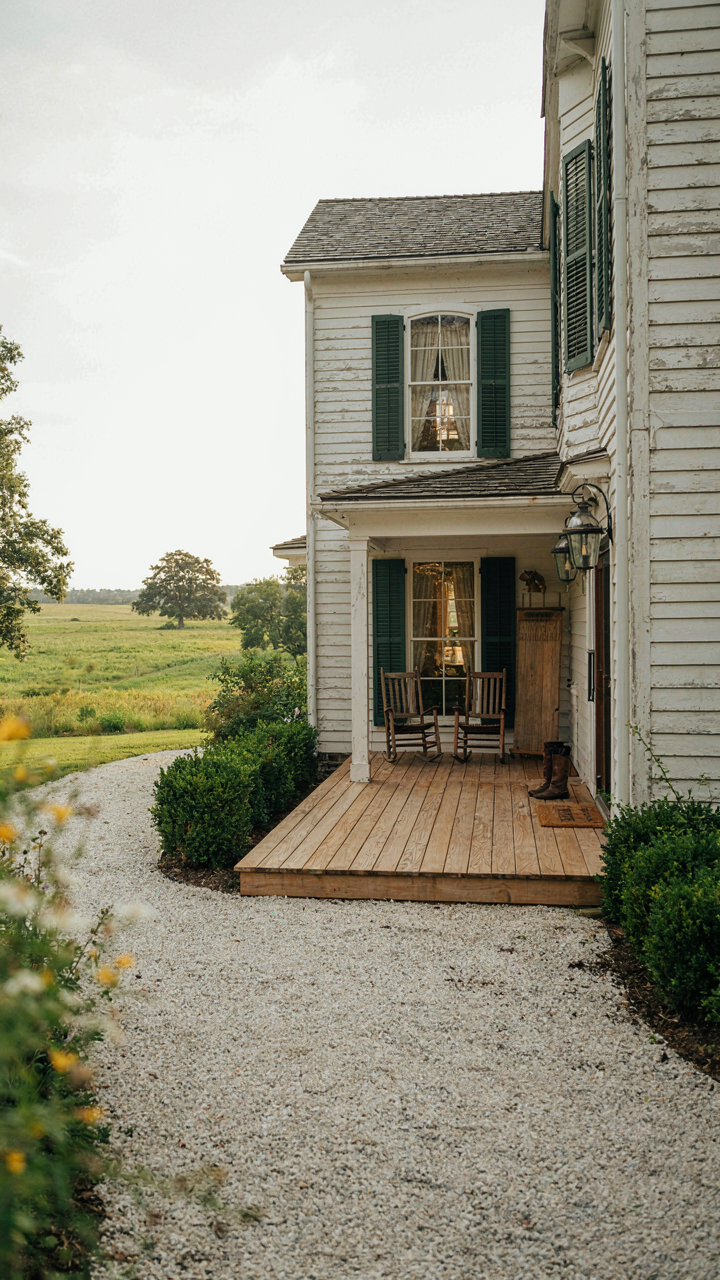
You want people to feel welcome, but what you really want is control over how they experience your property. That’s the real mechanism. Sight lines from the road or driveway determine whether someone feels invited or uncertain. A farmhouse porch entrance works when the eye finds a clear destination before reaching the door. Remove visual clutter between arrival point and entry. Plant trees or use fence lines to guide approach angles deliberately.

Psychologists call this “wayfinding,” but architects stole it first. Your porch entrance functions like a visual funnel. When someone turns into your driveway, their brain should immediately know where to walk. Most farmhouse designs fail here because owners add too many anchor points at once: decorative planters, seating, lighting fixtures. Each element creates cognitive noise. Keep the sight line clean. One strong focal point at the porch entry itself does the work.
Threshold Design Reduces Mental Friction
The transition from public to private space should feel inevitable, not abrupt. Most farmhouse porch advice tells you to add a welcome mat or a sign. That’s surface-level noise. What actually works is material and elevation change. Farmhouse porches traditionally used a step or two to shift grade, which served a practical drainage function but also created psychological separation. The step says “you’re entering something different now” without language.
Flooring material matters more than decoration. Move from driveway material to porch flooring deliberately. Gravel to wood. Concrete to stone. Asphalt to decking. The texture shift signals transition before the visitor processes it consciously. Pair this with a roof overhang that begins where the porch starts. Shade change plus material change equals boundary. This is why farmhouse porches work better than open decks. The architecture does the communication.
Front Porch Decorating Ideas That Actually Facilitate “Slow”
Comfort Over Clutter: Essential Elements For Relaxation
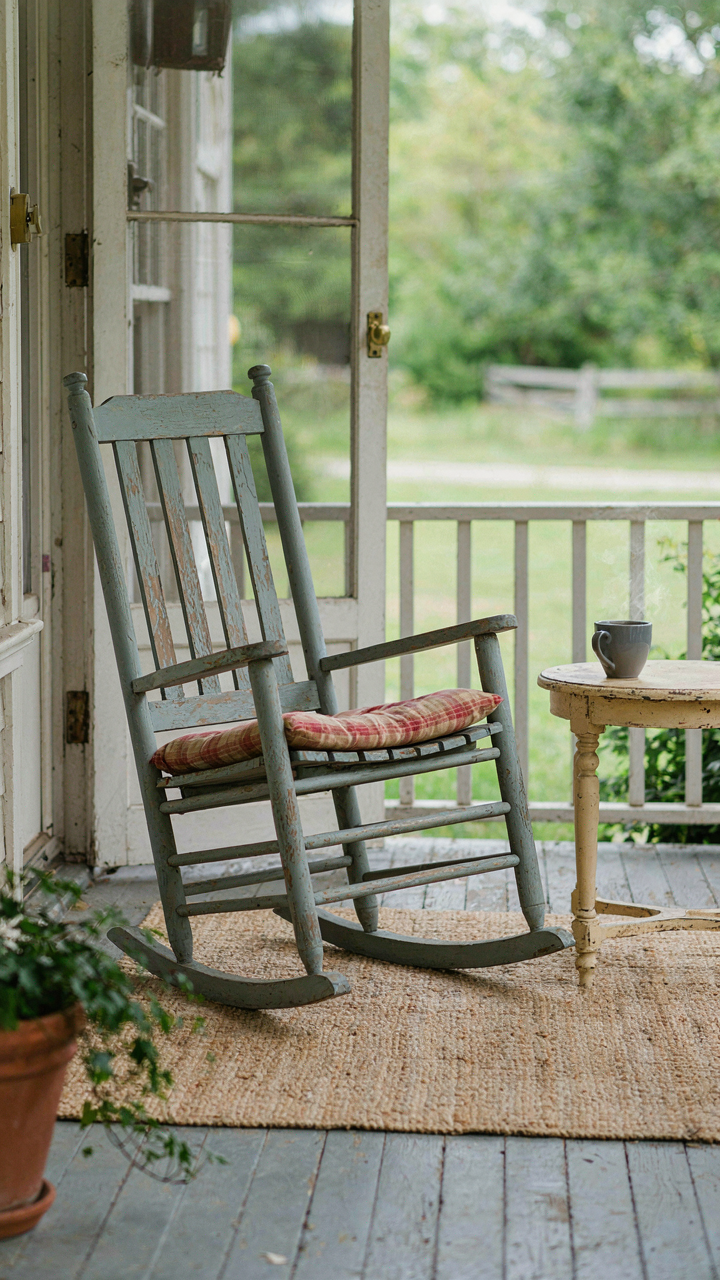
You want the porch to look intentional because you’re afraid it won’t read as refined if it looks sparse. Here’s the mechanism: friction kills slow. Every object on your porch either removes friction from relaxation or adds it. A decorative item that requires visual processing every time you sit down is friction. A chair you sink into without thinking is not.

Start with one quality seating piece per person. A rocker, a swing, or a bench. Choose materials that age visibly: wood, iron, woven rope. Skip anything that demands upkeep or looks factory-new after two weeks. The porch works when you can sit without cataloging what’s around you. One side table for a drink. That’s the threshold between function and clutter.
Sensory Engagement: Sound, Smell, Touch For True Unwind
Neuroscience maps relaxation onto sensory input, not visual decoration. Your nervous system quiets when receiving specific stimuli, not when counting aesthetic objects. Most porch advice focuses on what looks good. That’s backward.
- Wind chimes or bells: Metal or wooden chimes create ambient sound without demand. Position near where breezes naturally flow. Avoid electronic or novelty versions that break the acoustic envelope.
- Potted herbs or flowering plants: Lavender, mint, or jasmine release scent passively. Place within arm’s reach. Living plants also regulate air quality and create micro-temperature shifts your body registers.
- Natural fiber seating: Rope, woven wicker, or canvas engage tactile nerves when touched. Raw wood arms on rockers do the same. This triggers parasympathetic activation faster than smooth plastic or metal.
- Water feature: A small fountain or basin creates white noise that masks intrusive neighborhood sound. Moving water also lowers ambient temperature perception through air circulation and humidity.
- Worn wood flooring or mats: Textured surfaces underfoot send proprioceptive signals to your brain. Barefoot contact with aged wood or natural fiber rugs anchors attention to the present moment.
The porch becomes a slow space when your senses receive consistent, non-demanding input. Install one element per sensory category. Test it for two weeks. Add the next only if the first one survived weather and you actually use it. Decoration you don’t touch doesn’t work.
The “Big Front Porch Ideas Farmhouse” Delusion: Size Doesn’t Matter
Squeeze Function Into Confined Footprints
You want a sprawling farmhouse porch because you think space equals status. It doesn’t. The mechanism is constraint. In architecture, constraint forces priority. You eliminate the decorative and keep only what actually matters. A 6-by-8-foot porch that works beats a 20-foot expanse that sits empty because you didn’t design the use.

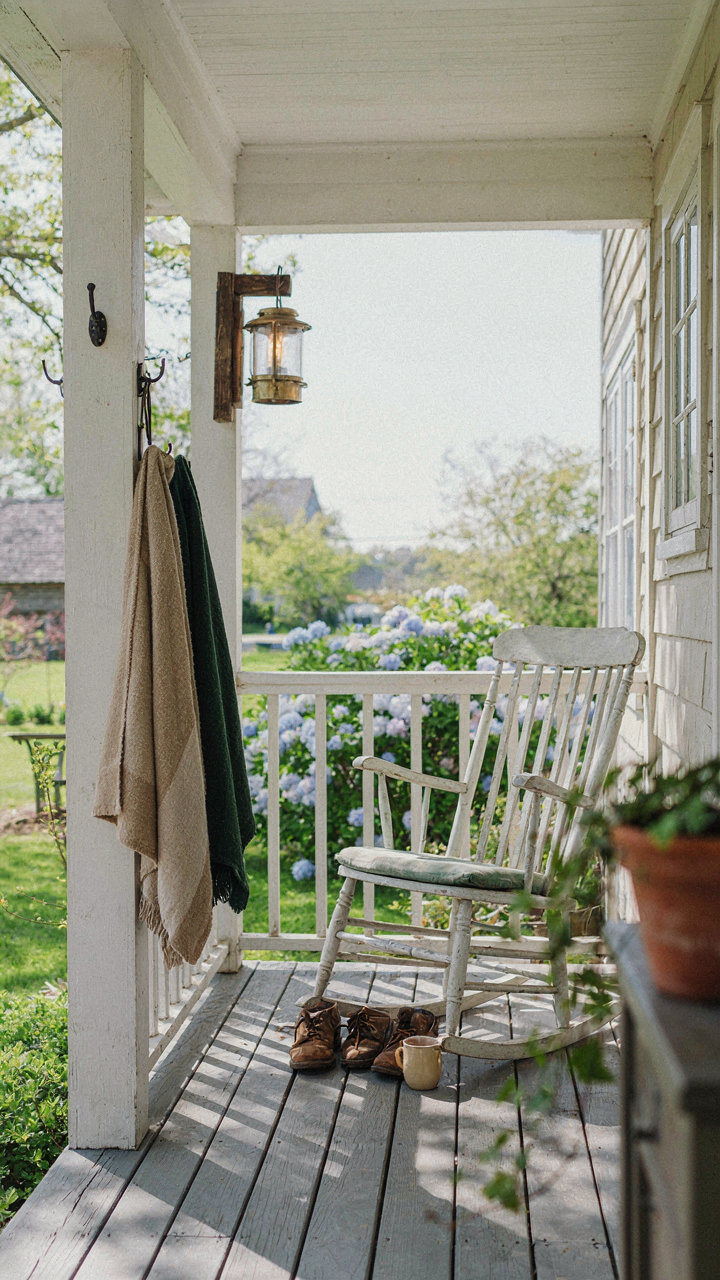
Small porches succeed because they demand intentionality. Every piece earns its place. A single rocker, one small table, and a clear sight line to the property does more than oversized furniture crammed into wasted square footage. The friction of limited space creates the focus that turns sitting into an actual practice instead of performative leisure.
Blend Activities In Layered Zones
Most advice about compact porches ignores what actually happens there. You don’t need separate zones for separate activities. You need overlap. A narrow bench against one wall becomes seating. That same bench holds a tray for tea. The table in front doubles as a footrest or a surface to set plants. The railing becomes a shelf for lanterns.
Stack your uses vertically and temporally, not horizontally. In morning light, the space is coffee and reading. By evening, it’s conversation and watching. The same physical arrangement serves both without rearrangement. Install hooks on posts for hanging blankets or baskets. Use a single side table instead of multiple pieces. One function, one element, solves multiple needs. This is how 8 feet of porch becomes as livable as 20.
Investment Vs. Expense: Your Farmhouse Porch As An Asset
Materials That Hold Their Ground
You’re reading this because you want permission to spend money without guilt. Here’s the mechanism: durable materials function like equity in economics. They appreciate through time while cheap materials depreciate the moment you install them. Wood, stone, and metal—the actual materials farmhouses used—require upfront capital but stabilize in value because replacement costs climb faster than inflation.
Cedar, treated pine, and composite decking hold their performance profile for 15 to 20 years with minimal intervention. Stone flooring and properly sealed brick withstand freeze-thaw cycles that destroy cheaper alternatives within five seasons. The real move isn’t choosing “quality.” It’s matching material lifespan to climate stress. A porch in Minnesota needs different material economics than one in coastal Georgia.
Design That Transfers To The Asking Price
Resale markets reward restraint, not trends. A porch that mirrors the home’s existing architectural language—whether that’s 1920s Craftsman, 1890s Queen Anne, or 1970s rural vernacular—signals maintenance and intention. Buyers read coherence as stability. Mismatched aesthetics signal guesswork, which triggers doubt about structural decisions beneath the surface.
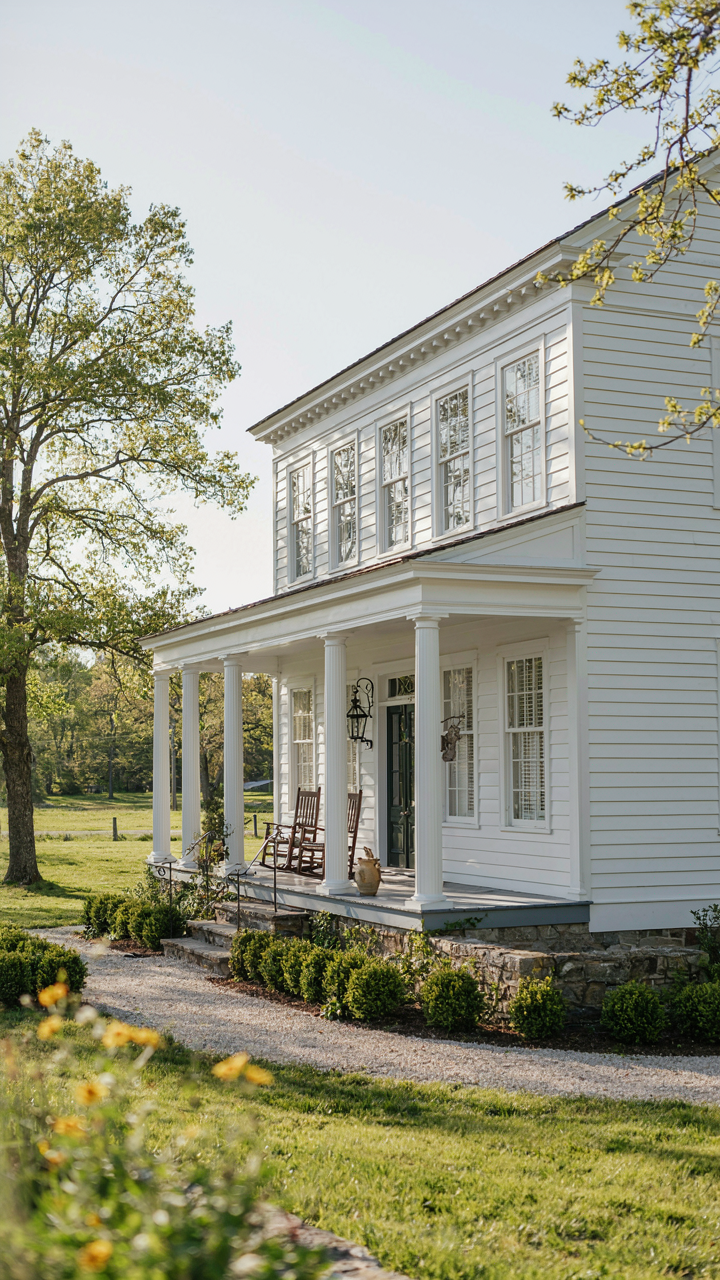
Specific design choices move the needle: period-appropriate railings, consistent material palettes, and functional layouts that match how the main house operates create tangible worth. A wraparound porch on a Greek Revival farmhouse reads as restoration. That same porch tacked onto a mid-century ranch reads as confusion. The difference in appraisal can shift five figures because the second scenario forces inspectors to question what else might have been installed without thought.
The Real Obstacle Isn’t Your Porch; It’s Your Expectation Of An Audience

You built the porch for Instagram. That’s the real problem. You’re performing for strangers instead of protecting time for yourself. The best farmhouse porch ideas aren’t pretty. They’re selfish. They’re about you sitting alone with coffee while the world stays inside. Stop designing for validation. Design for boredom. Design for silence. The moment you stop needing someone to see it is the moment it becomes worth seeing.