
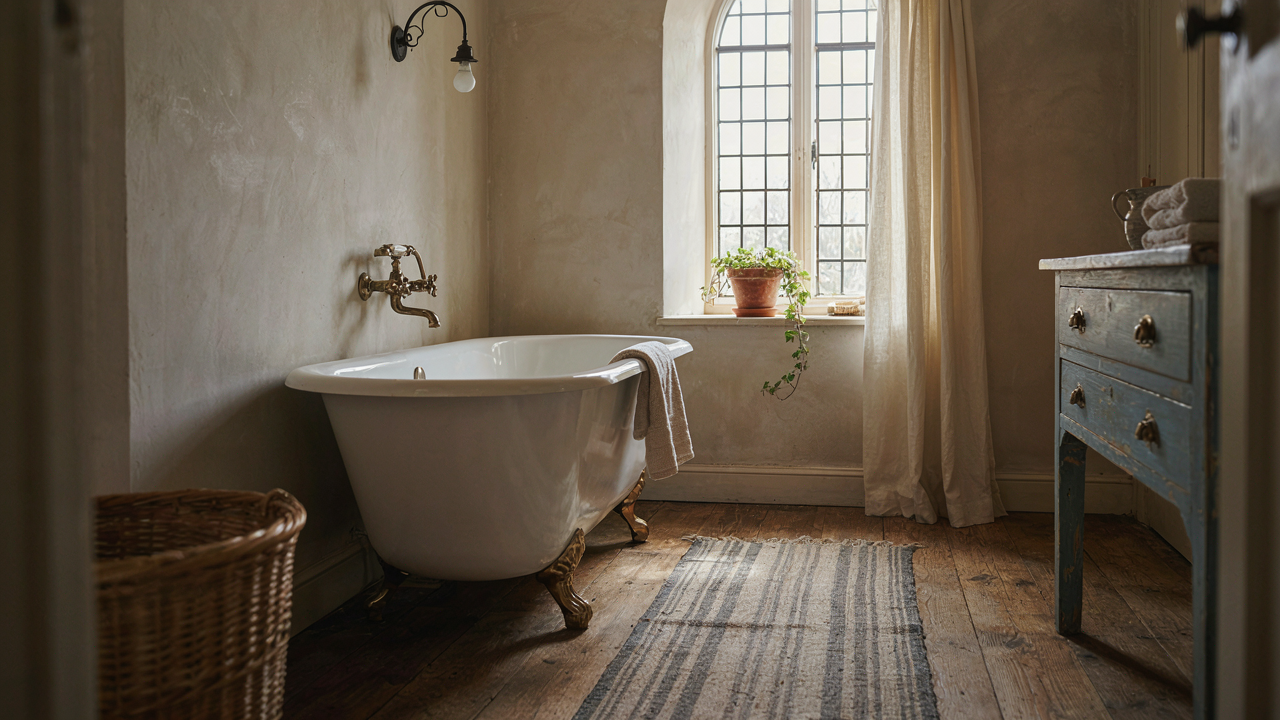
The Faux French Fix: Why Your “Charming” Bathroom Falls Flat
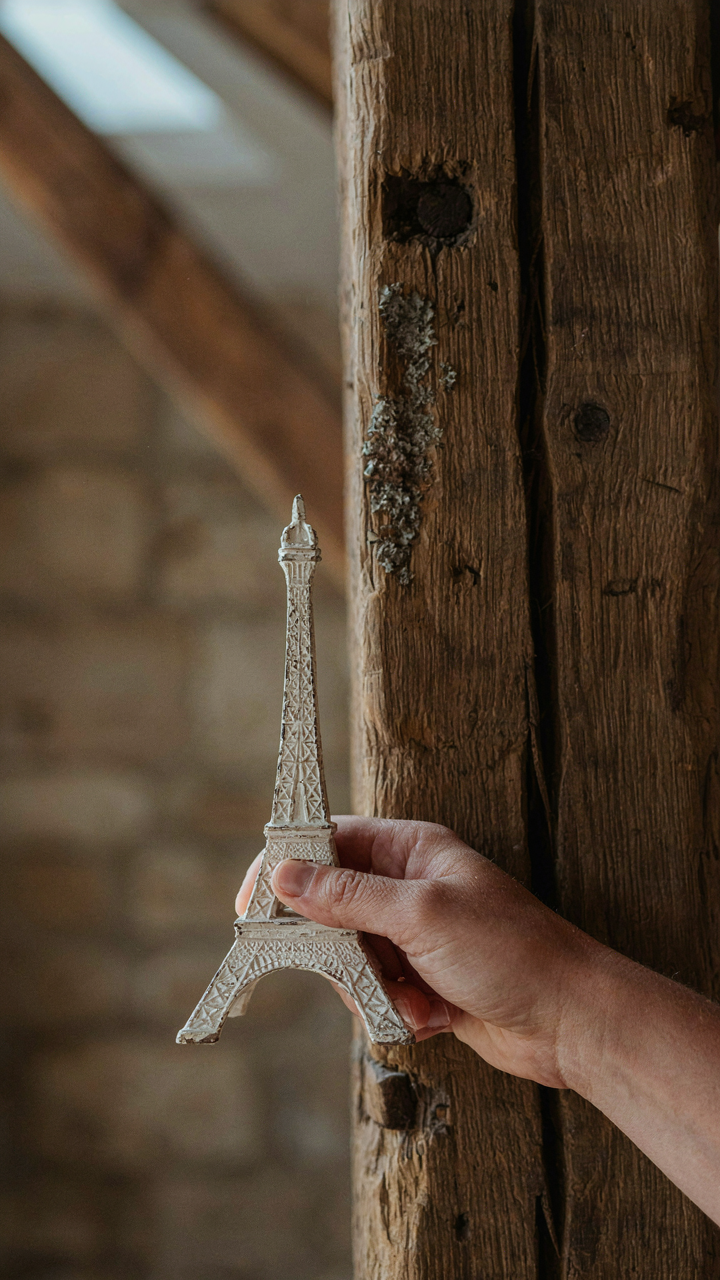
Spotting Surface Level Decoration
You want permission to believe that buying the right objects will make you feel cultured. Here’s what actually happens: you conflate aesthetic trappings with design intent, then wonder why your bathroom feels like a themed hotel lobby instead of a lived space. French country design isn’t about accumulating French-looking things. It’s about understanding why those things exist in the first place, then applying that logic to your specific bathroom. Most people skip this step entirely.
French country bathrooms emerged from regional European constraints, not Pinterest mood boards. Rural French homes used materials found locally, built fixtures to last decades, and favored function over decoration. When you copy only the visual surface—the aged mirrors, the weathered wood, the apothecary jars—you’re holding the prop without understanding the production. The authenticity gap widens because your bathroom has no reason to look that way beyond “it looks nice.” That reason matters more than you think.
The Real Cost Of Generic Imitation
Buying mass produced “vintage inspired” pieces costs more money and delivers less durability than either authentic antiques or functional modern alternatives. You pay premium pricing for the aesthetic signal while getting the longevity of neither. A distressed vanity cabinet from a big box store will show real wear in three years, not the intentional patina you paid for. Meanwhile, you’ve committed to a visual direction that pins your entire bathroom to a trend cycle. When French country trends down in five years, you own an expensive bathroom that now reads as dated rather than timeless.
The mechanism here is simple: imitation costs middle ground pricing for bottom-tier durability and top-tier obsolescence risk. Real antique pieces carry genuine history. Functional modern pieces offer honest materials. Faux versions promise both and deliver neither. Instead, make a binary choice. Either source genuine vintage pieces from architectural salvage yards and antique dealers where the distressing is real, or build your bathroom with solid materials in neutral tones that won’t feel trapped in a specific era. Don’t pay premium prices for the aesthetic without the substance.
Beyond The Instagram Filter: Unpacking Authentic French Country Bathroom

Where The Style Actually Came From
You want this look because it signals you have taste without trying. Here’s what nobody tells you: French country bathrooms didn’t emerge from design theory. They emerged from constraint. Rural French homes from the 18th and 19th centuries lacked running water, so bathrooms were afterthoughts added later, often in cramped spaces. Builders used what was available locally: limestone, clay tiles, reclaimed stone. The “charm” is actually the visible seam between old architecture and practical necessity.

The aesthetic became desirable only after rural France industrialized and these bathrooms became relics. What reads as intentional design today was originally just making do. This matters because it tells you what to prioritize: material authenticity over matched sets, visible patina over pristine finishes, and spatial awkwardness over forced symmetry. The style works because it doesn’t pretend to be perfect.
The Actual Load Bearing Elements
Most advice confuses accessories with structure. You can buy a vintage mirror and call it French country. That’s decoration, not design. The real load-bearing elements are the bones: lime-based plaster walls (not drywall), terracotta or limestone flooring, and cast iron or zinc fixtures that develop patina over time. These aren’t interchangeable with modern materials that mimic the look.
Lime plaster actually breathes and regulates moisture in ways modern joint compound doesn’t, which is why old French bathrooms feel different. Terracotta tiles absorb and release water gradually. Zinc develops a protective patina that improves with age instead of degrading. If you use modern drywall, vinyl flooring, and chrome fixtures, you have decoration in a French country shell, not an actual French country bathroom. The mechanism is material properties, not styling choices.
The “Material Language” Protocol: Speaking French Country Authenticity
Raw Materials Over Refinement
You want this to feel expensive without looking like you tried, which means you’re actually afraid of appearing desperate. The mechanism is simple: French country bathrooms use materials that speak through texture and age, not polish. Stone, terracotta, lime plaster, and reclaimed wood don’t need to be perfect. They need to show use. This is the opposite of the modern bathroom obsession with flawless surfaces. Authenticity in French country design means the material itself carries the visual weight, not the craftsman’s perfection.

Lime plaster walls in French country bathrooms weren’t chosen for aesthetics. They were practical. Lime breathes, resists moisture better than modern drywall, and develops character naturally over decades. Terracotta floor tiles came from regional clay deposits. Stone came from local quarries. The bathroom didn’t import materials from distant sources to prove status. It used what existed nearby. When you replicate this protocol, you abandon the impulse to match everything and instead let each material’s inherent variation become the design.
The Patina As Evidence
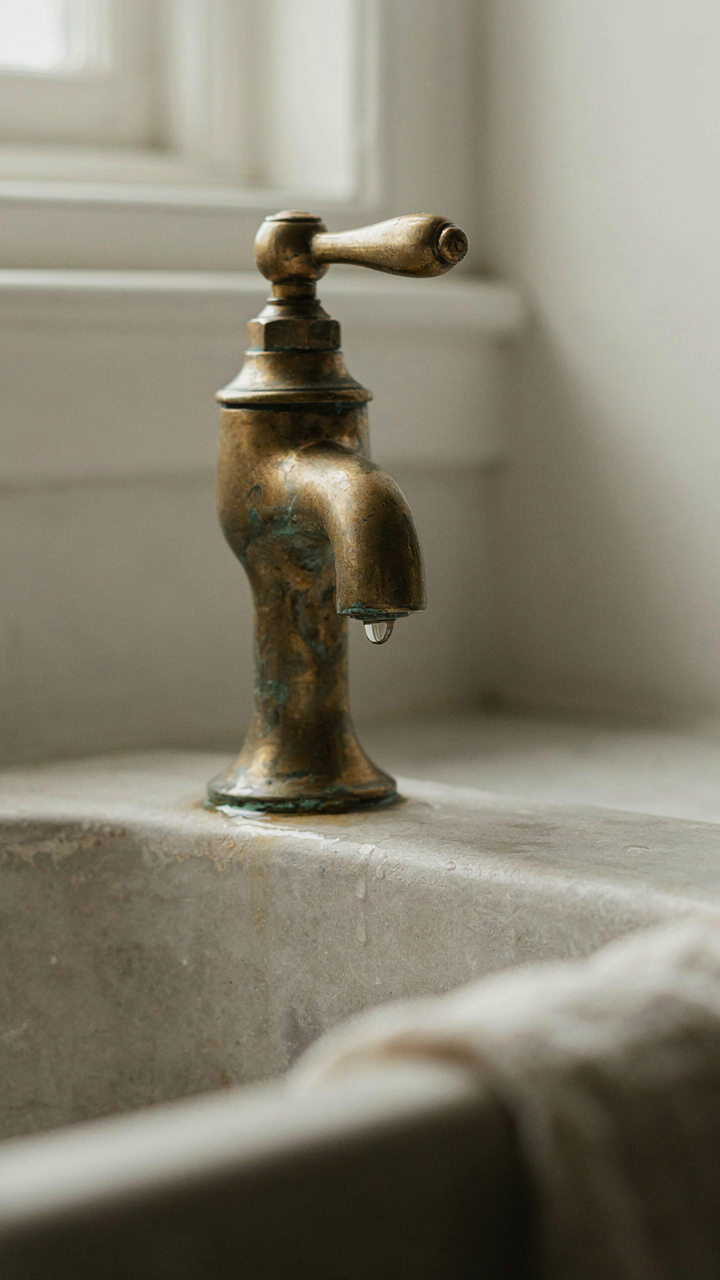
The common mistake is treating patina as damage to hide. Wrong. Patina is the record of function. In French country bathrooms, a distressed vanity or aged mirror frame isn’t a flaw you apologize for. It’s proof the space has history. Borrowing from material science, patina represents oxidation and weathering that changes surface properties over time. The French country bathroom doesn’t fight this process. It courts it. A new item treated to look aged fails instantly because it lacks the uneven wear patterns that only time creates.
The real protocol: use materials that patina visibly and unevenly. Brass hardware oxidizes to dark green. Mirrors with original mercury backing develop foxing. Wood vanities show water marks and color shifts. Iron fixtures rust with character rather than failure. When selecting finishes, reject anything sealed or protected against change. The bathroom becomes more authentic as it ages because the materials prove their function through visible transformation.
Modern French Country Bathroom: Bridging Eras Without Compromise
Integrating Contemporary Functionality
You want this to work without looking like you tried too hard, which is really about avoiding the appearance of compromise. Here’s the mechanism: French country bathrooms fail when homeowners treat old and new as opposing forces instead of nested systems. Think of it like load-bearing walls in architecture—some elements support everything else, and you build around them, not against them.

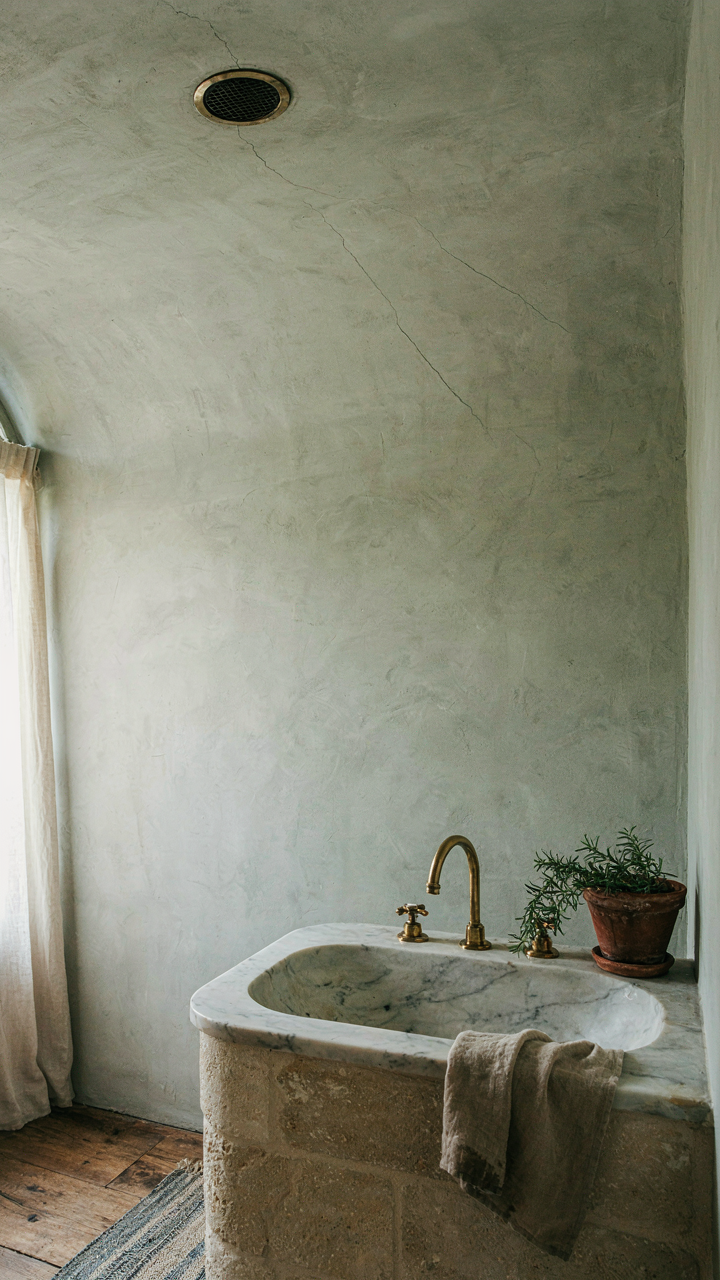
Modern plumbing, drainage, and ventilation are non-negotiable. They’re the skeleton. The aesthetic sits on top. Install a proper exhaust fan with ductwork—don’t hide it behind decorative grilles that reduce airflow. Use recessed fixtures in the ceiling if you must, but get the infrastructure right first. The moment moisture damage appears, the entire French country narrative collapses because you’ll need renovation, not restoration.
Strategic Minimalism In Vintage French Bathroom
The advice to “keep it simple” misses the actual lever you need to pull. Real French country bathrooms weren’t minimalist by philosophy—they were minimal because rural French homes from the 18th and 19th centuries had limited resources and storage. You replicate the constraint, not the aspiration. This means editing ruthlessly: every object you display must justify its presence through either function or genuine material history.
Remove the decorative towel ladder, the apothecary jars, the vintage signs. These read as theme-park staging now. Instead, anchor the space with one authentic focal point—a vintage zinc mirror frame, a reclaimed marble sink, original tile work—and let the functional pieces breathe around it. The bathroom works when someone entering it doesn’t immediately think “design.” Install a single open shelf for daily essentials and leave the rest empty.
The “Scarcity Principle” For Bathroom Ideas French Country
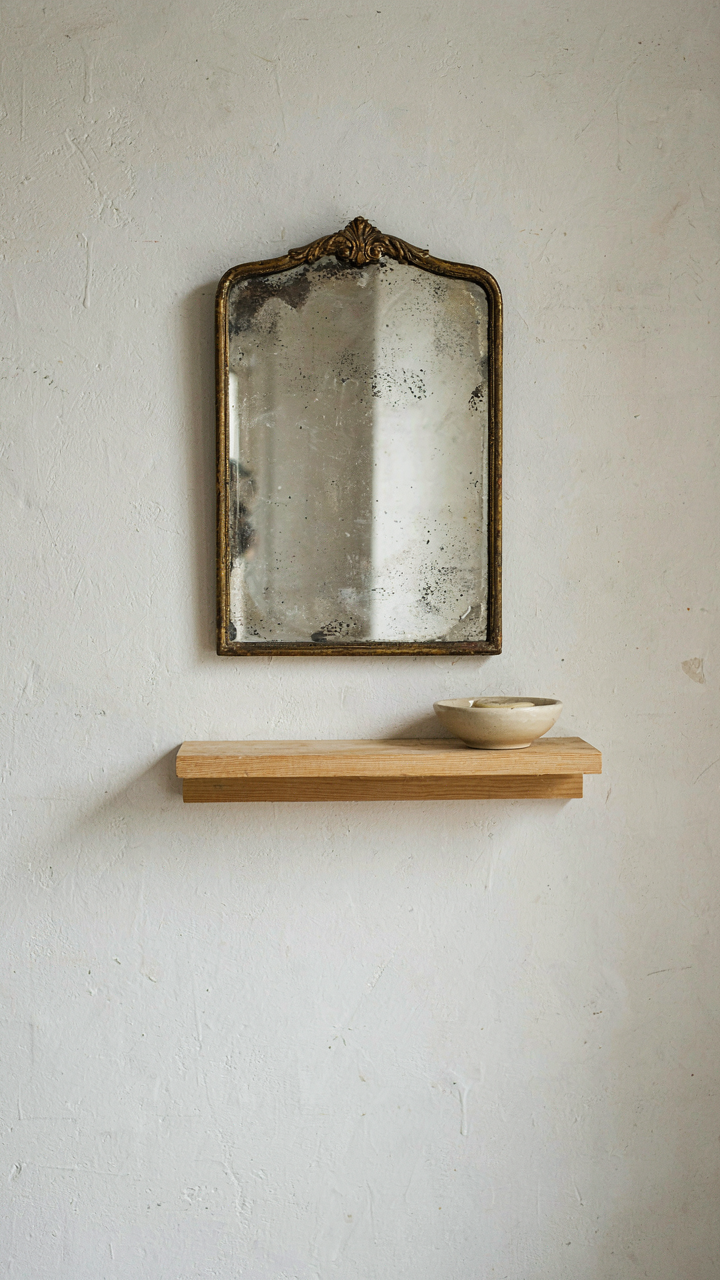
Strategic Restraint In Object Placement
You want your bathroom to feel curated, not cluttered, because clutter reads as poverty and chaos reads as tastelessness. Economics teaches scarcity: value increases when supply decreases. A French country bathroom applies this directly. One vintage mirror anchors a wall better than three. One ceramic soap dish on the counter outweighs five competing objects fighting for attention.

The mistake is treating the bathroom like a gallery opening. Common advice says “add character with objects.” What actually builds character is deciding what doesn’t belong. Vanity items, decorative trays, candles, plants, towel stacks all compete for visual real estate. In a French country space, each object must justify its position or disappear. A single apothecary jar beats a lineup of them. A wall-mounted soap holder negates the need for surface clutter.
The Economics Of Wear And Patina
Perfection costs money constantly. Imperfection costs nothing and gains value over time. French country design accepts this trade openly. A limestone sink with age marks costs less than one buffed to sterility and actually looks more authentic. Aged brass fixtures develop green patina that no new coating replicates. Cracks in vintage floor tiles tell a story that flawless tile cannot.
The real mechanism: imperfection removes your obligation to maintain perfection. A distressed mirror frame hides every fingerprint. Uneven plaster absorbs light differently than drywall, making the space feel lived in rather than staged. When you select materials with visible history, repairs and additions blend seamlessly instead of standing out as failures. The bathroom ages with intention rather than against it.
Lighting As Sculptor: Crafting Ambience In French Cottage Bathroom
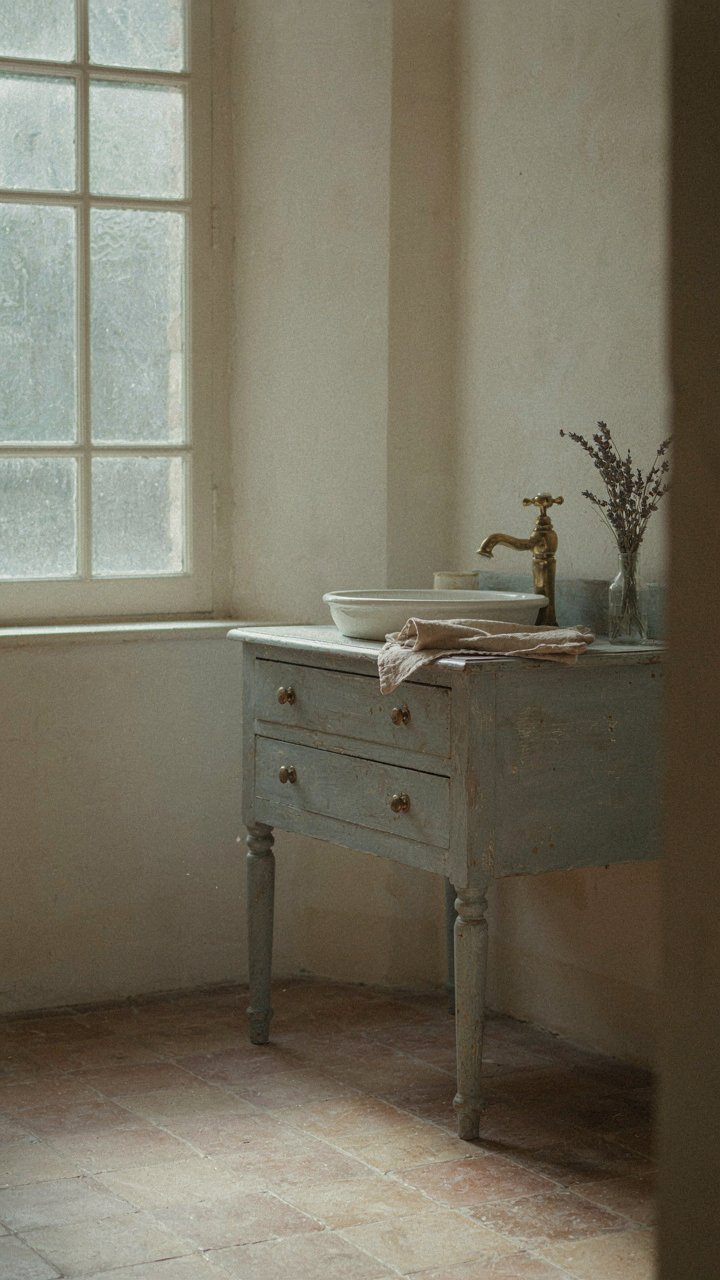
Windows And Daylight Positioning
You want this space to feel like a retreat, which means you’re actually buying permission to slow down. Here’s the mechanism: french country bathrooms work because they control where light enters, not how much. In rural French cottages, bathrooms were often small rooms with single windows positioned high on walls or facing north to avoid direct heat. This constraint became the design. North-facing windows deliver consistent, non-glare light throughout the day without temperature swings that damage period materials like aged marble or lime plaster.

Position mirrors opposite or adjacent to windows to bounce daylight deeper into the room without reflection glare on mirrors themselves. Avoid placing mirrors directly across from windows, which creates a wash-out effect and kills shadow depth. Frosted or wavy glass in windows—common in 18th and 19th century European bathrooms—filters harsh rays while maintaining privacy. The goal is controlled diffusion, not brightness maximization. Install window treatments that allow you to modulate light based on time of day and season, a practical detail french country design handles through linen curtains or wooden shutters that pivot for adjustment.
Layered Artificial Light Without Electricity Aesthetics
The common advice says “add sconces on both sides of the mirror for balance.” That’s incomplete. Lighting layers work like archaeological stratification in geology: each layer serves a distinct functional depth, and they must coexist without visual conflict. French country bathrooms historically used candles and oil lamps, which created pools of warm light with hard shadows. Modern electric fixtures should mimic this principle but solve the actual problems—shadow under the chin during grooming, general room visibility, ambient mood.
Install three light sources minimum: task lighting at mirror level (brass or wrought-iron sconces with 40-60 watt equivalent bulbs, 2700K color temperature), ambient overhead lighting recessed or in a period-appropriate fixture (separate switch), and accent lighting on architectural features like open shelving or tile work. Each operates independently. The mechanism: you’re training the eye to accept multiple light sources at different intensities, which prevents the flattened, clinical look of single-source overhead fixtures. Task light handles grooming accuracy, ambient light handles circulation safety, accent light handles the visual story you’re selling about age and texture.
The “Curated Chaos” Of A French Inspired Bathroom
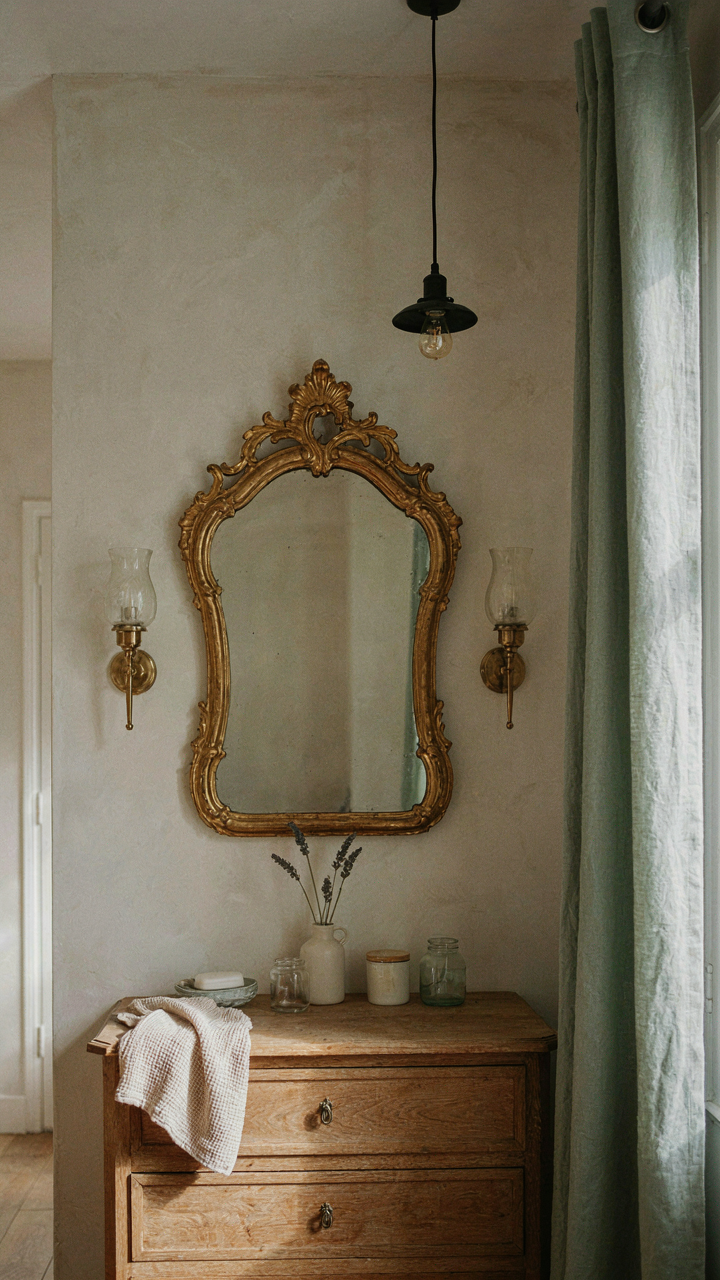
Symmetry With Intentional Imbalance
You want this to feel effortless, which is exactly why you’ll fail if you overthink it. The mechanism at work here is tension: French country design borrows from classical architecture’s balance but rejects its rigidity. Think of it like a musical scale instead of a grid. You establish a baseline symmetry—mirror placement, sink positioning, wall divisions—then deliberately break it with asymmetrical shelving, an off-center window treatment, or a vanity that doesn’t anchor dead center. This prevents the space from feeling staged or sterile.

The math works because your eye still registers the underlying order even when surface elements scatter. Place matching sconces flanking a mirror, then hang a single pendant light slightly off-axis above it. Install a medicine cabinet centered on one wall, but position open shelving beside it rather than opposite it. Bathrooms that nail this look aren’t balanced perfectly—they’re balanced purposefully, which reads as authentic rather than decorated.
Personal Objects That Ground The Space
- Vintage Glass Bottles: Repurposed apothecary jars or eau de cologne bottles clustered on a shelf create visual depth and suggest accumulated history rather than curated shopping.
- Hand-Thrown Ceramic Soap Dishes: Imperfect pottery from local makers signals that you value function over uniformity, core to French country logic.
- Inherited Metal Fixtures: A brass towel ring from an estate sale or an old bronze medicine cabinet hardware piece anchors the bathroom in actual time rather than trend.
- Botanical Prints or Engravings: Period-appropriate botanical art from the 18th or 19th centuries creates intellectual credibility and costs less than new gallery pieces.
- Natural Textiles With Visible Wear: A linen hand towel with fading or an antique cotton runner rug shows use rather than preservation, which is the opposite of precious.
The objects work because they interrupt commercial uniformity. You’re not buying a “French country bathroom set.” You’re sourcing individual pieces that a homeowner in Lyon or Provence would have actually accumulated over years—a chipped ceramic vessel, a tarnished mirror frame, a soap dispenser that doesn’t match anything else. When you place these pieces deliberately in empty space, the bathroom feels inhabited by decisions rather than dictated by a design template.
Function Over Frivolity: Practicality In French Bathrooms
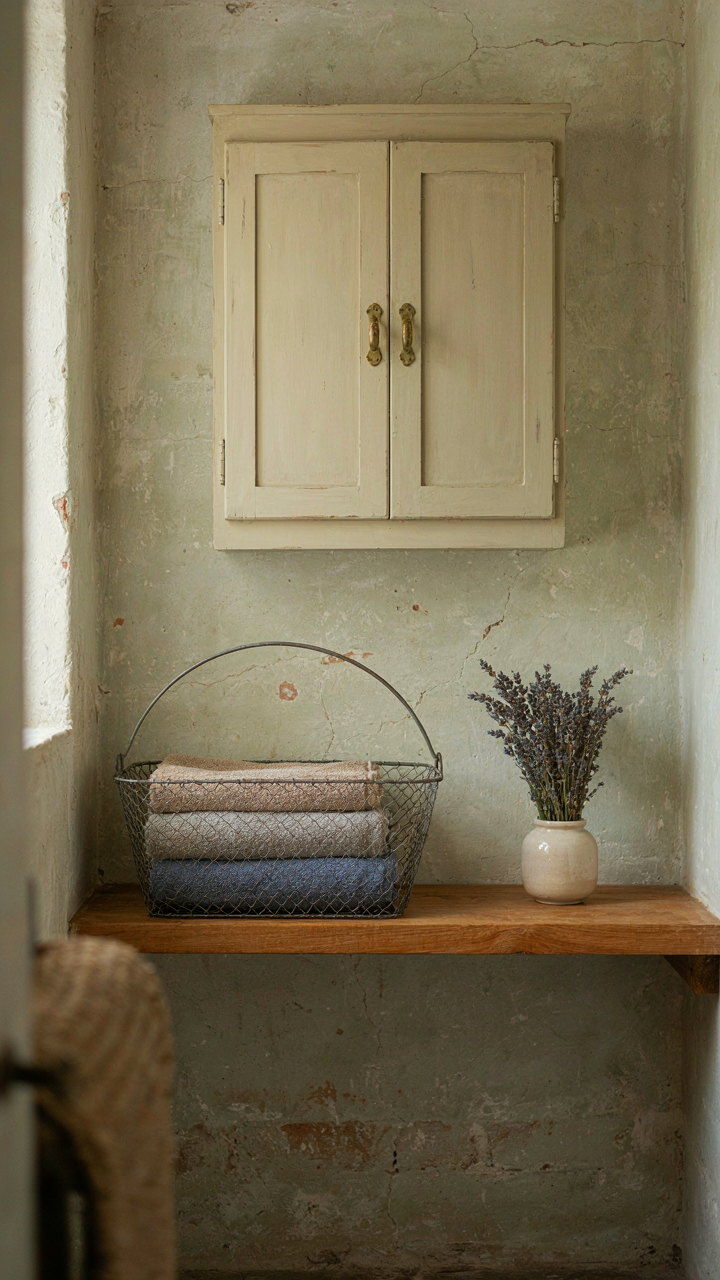
Hidden Storage That Doesn’t Announce Itself
You want your bathroom to look effortless, which is exactly why you’re stressed about where everything goes. The real mechanism here is constraint. French country design doesn’t hide clutter behind closed doors because storage is scarce—it hides it because visible utility breaks the visual rhythm that makes the space feel intentional.
Apothecary jars, ceramic vessels, and wire baskets work in French bathrooms not because they’re quaint but because they solve the actual problem: you need accessible storage that doesn’t demand attention. Open shelving with grouped items—soaps by size, linens by color, bottles by height—creates visual order that feels like restraint rather than decoration. This is what distinguishes a French country bathroom from one that simply looks cluttered with rustic props.
Materials Built To Survive Moisture And Time
Cheap advice says to use reclaimed wood because it looks authentic. That’s backwards. French country bathrooms use durable materials because they’re expensive to replace in a high-moisture environment, not because someone decided rust and water stains looked romantic.

Limestone, marble, and terracotta tile are the actual workhorses here. They’re porous enough to develop patina without rotting. Cast iron fixtures corrode predictably rather than failing suddenly like thin brass. Wood elements survive because they’re sealed with oil or wax that you refresh, creating a maintenance protocol rather than a design feature. When you select materials for a French country bathroom, you’re not choosing an aesthetic—you’re betting on materials that outlast trends and moisture cycles.
The Craft Of Age: Achieving Old World Patina, Not Just Damage
How Real Patina Forms On Materials
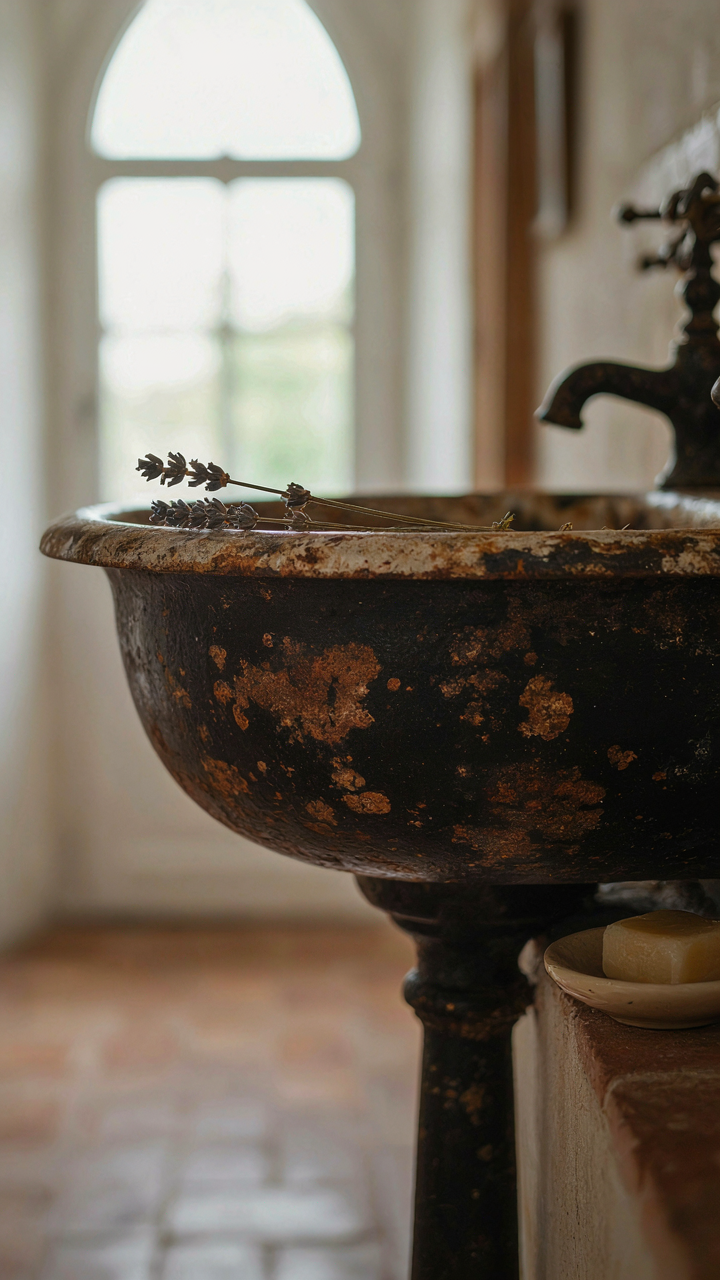
You want patina because it signals authenticity and cost—things money alone can’t buy quickly. Here’s the mechanism: patina is oxidation and mineral accumulation over time, the same electrochemical process that turns copper green or bronze dark. In a French country bathroom, this happens fastest on metals exposed to moisture, mineral-rich water, and air circulation. Lime deposits from hard water, rust blooming on iron fixtures, and verdigris on brass all follow predictable chemistry. You can’t fake this timeline; you can only accelerate the chemical conditions that create it.
Genuine patina requires understanding what each material actually does when exposed to its environment. Terracotta tiles develop a chalky white patina from mineral buildup and UV exposure over decades. Wrought iron rusts in layers—first bright orange, then deeper brown and black as oxygen penetrates deeper. Brass and copper oxidize unevenly based on humidity and water splash patterns. Stone develops a soft, worn edge from foot traffic and moisture cycles. The lesson: don’t treat all aging as the same process. Match your technique to the material’s actual chemistry, not to a generic “aged look” aesthetic.
The Difference Between Distressing And Deterioration
The common advice is wrong: artificial distressing and natural aging look completely different under close inspection. Distressing means you’ve applied random damage—dents, scratches, paint chips—without understanding how real wear patterns form. Real deterioration follows logic. Water damage occurs at consistent heights. Foot traffic wears paths, not scattered spots. Paint chips where moisture gets trapped, not where you scored it with a tool. Paint peels from the edges inward as water penetrates substrate boundaries. A French country bathroom that’s genuinely aged shows wear concentrated around faucets, on shelf edges, and along grout lines—predictable failure points.

The mechanism that separates authentic from cheap is consistency of cause and effect. Authentic aging shows evidence of the force that caused it. Scratched bronze from hanging towel bars follows the same trajectory every time. Tile grout darkens first at mortar joints where moisture settles. Limestone develops pitting where acidic water drips from fixtures. If you’re hand-distressing materials, you’re working backwards—creating damage without its cause. Instead, expose materials to the actual conditions that create aging. Use materials in their genuine functional spots, let water and air do the work, and accept the timeline. Real patina takes years; shortcuts show.
The Charming Bathroom You Chase Is A Mirror. It Reflects Your Inability To Escape Superficial Trends
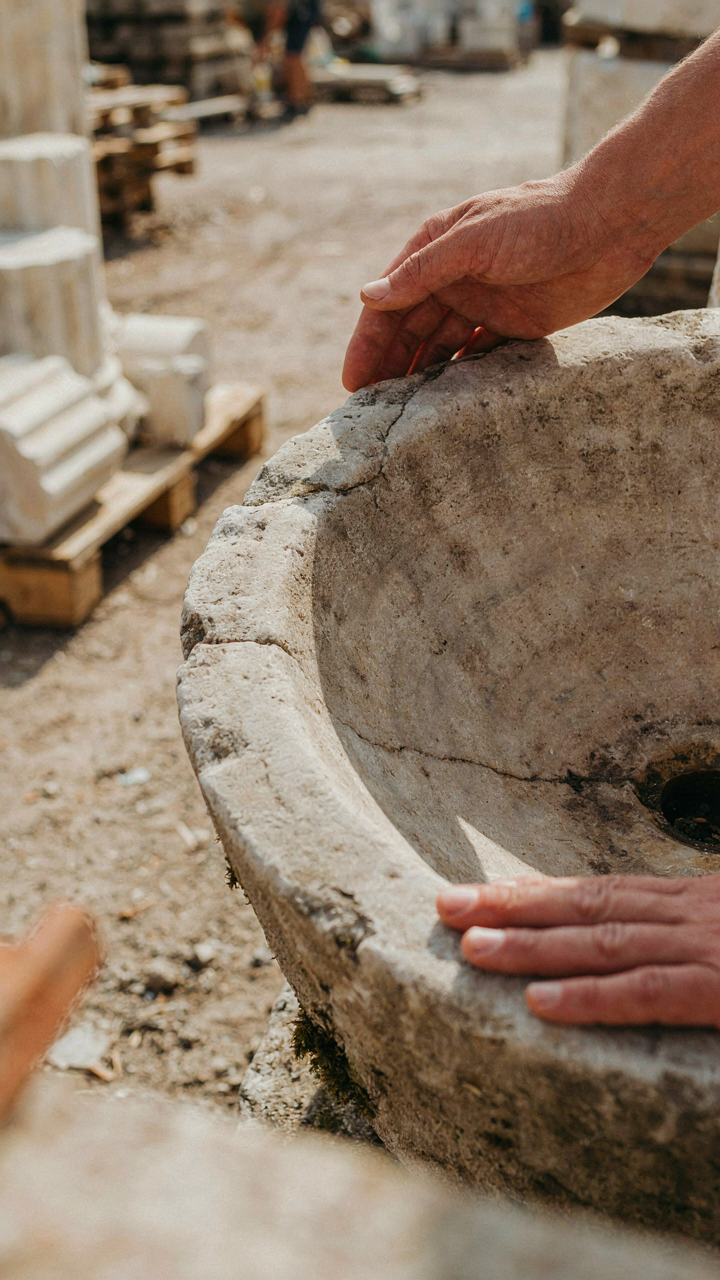
You don’t want a French country bathroom. You want permission to stop chasing trends. Stop scrolling. Pick one authentic element you actually love, not what the algorithm loves, and build around it. Go to a salvage yard today and touch something old. Your hands will tell you what your phone never could. Authenticity isn’t a design choice. It’s a refusal.



