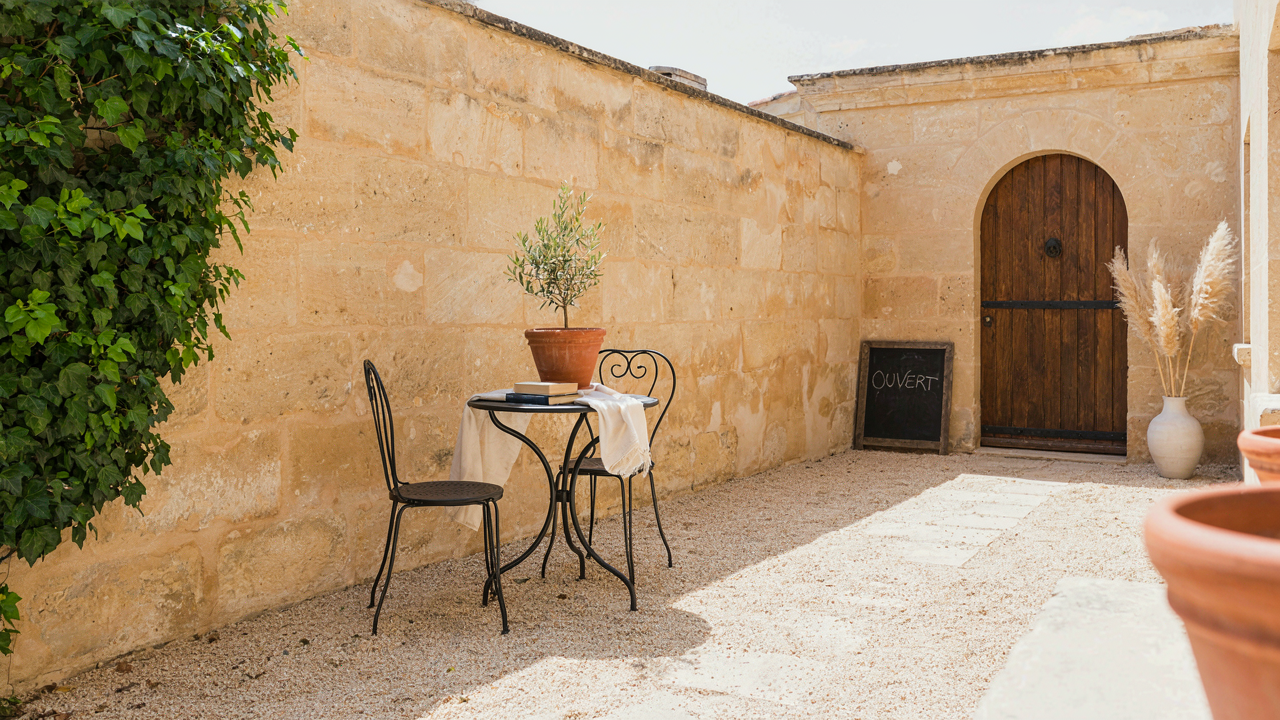
The Illusion Of French Country: What They Won’t Tell You

The Gap Between Pinterest And What Actually Exists
You want this because you think it signals taste and restraint. Here’s the mechanism: the French country courtyard you see online doesn’t exist as a unified aesthetic. It’s a collage of regional styles compressed into one fantasy. Provence looks nothing like Normandy. A Burgundy stone courtyard differs fundamentally from a Loire Valley one. Magazine editors and designers cherry-pick elements across centuries and regions, then present them as a coherent style.
Real French courtyards evolved from function, not design intention. Farmers arranged stones to manage water runoff. Merchants positioned courtyards to control heat and light through their business day. Nobility built them for privacy from street noise and dust. These weren’t aesthetic choices first. The beauty came after the problem was solved. When you copy the visual result without understanding the original constraint, you get a space that looks right but functions like decoration.
The Commercialization Of Authentic Design
Marketing doesn’t sell you the actual mechanism. It sells you an emotion attached to a visual. A French country courtyard became profitable the moment designers realized Americans would pay for the aesthetic without the context. Gravel, stone, terracotta pots, lavender, iron gates—these are now sold as a package deal that promises belonging to a lifestyle that never required those exact ingredients.
The authenticity trap operates like economics: scarcity creates value. Brands present “authentic” French courtyards as rare knowledge you can buy your way into. They omit that actual French courtyards reflected local stone availability, regional labor costs, and climate patterns unique to their location. A courtyard in Aix-en-Provence uses different stone than one in Brittany because those stones existed nearby and cost nothing to move. You cannot replicate this without understanding what drove the original choice. The commercialization works backward from aesthetic to reason, which means you end up with the look but not the logic.
Beyond Beige: The Unsung Palette Of A True French Garden

Stop Confusing Restraint With Colorlessness
You want a French courtyard because you think muted tones signal taste and sophistication—but that’s actually the mechanism working backward. French country gardens aren’t pale because restraint is the goal. They’re restrained because the materials themselves dictate color. Stone oxidizes. Gravel weathersand. Plants survive or die based on climate. The palette isn’t chosen for Instagram. It emerges from what actually grows and lasts in limestone soil under Mediterranean or Atlantic conditions.

The confusion comes from interior design trends that imported “French aesthetic” into minimalism. Actual French courtyards use ochre, rust, deep green, and terracotta because those materials anchor the space functionally. Lavender blooms purple. Aged stone turns amber. Gravel beds shift from gray to gold depending on light and moisture. The visual restraint you see is a side effect of durability, not a style decision.
Regional Stone Palette Shapes Everything
Provence and Burgundy don’t look the same because they sit on different geology. Provence limestone runs warm—honey and cream tones dominate. Burgundy stone trends cooler, grayer, with more slate influence. This isn’t decoration. The stone you source locally for a courtyard determines whether warm or cool tones read as authentic to that place. Importers sell a generic “French” palette that works nowhere specifically.
When you select gravel and stone for your courtyard, match it to your actual climate region, not a mood board. Provençal warmth requires lighter limestone and ochre-toned gravel. Northern French courtyards anchor with slate-gray stones and darker gravel that absorbs heat. The mechanism is simple: regional stone establishes the default color story, and everything else—plantings, weathering, patina—builds from that foundation.
The Anti Aesthetic: Why Imperfection Defines The Stone Courtyard
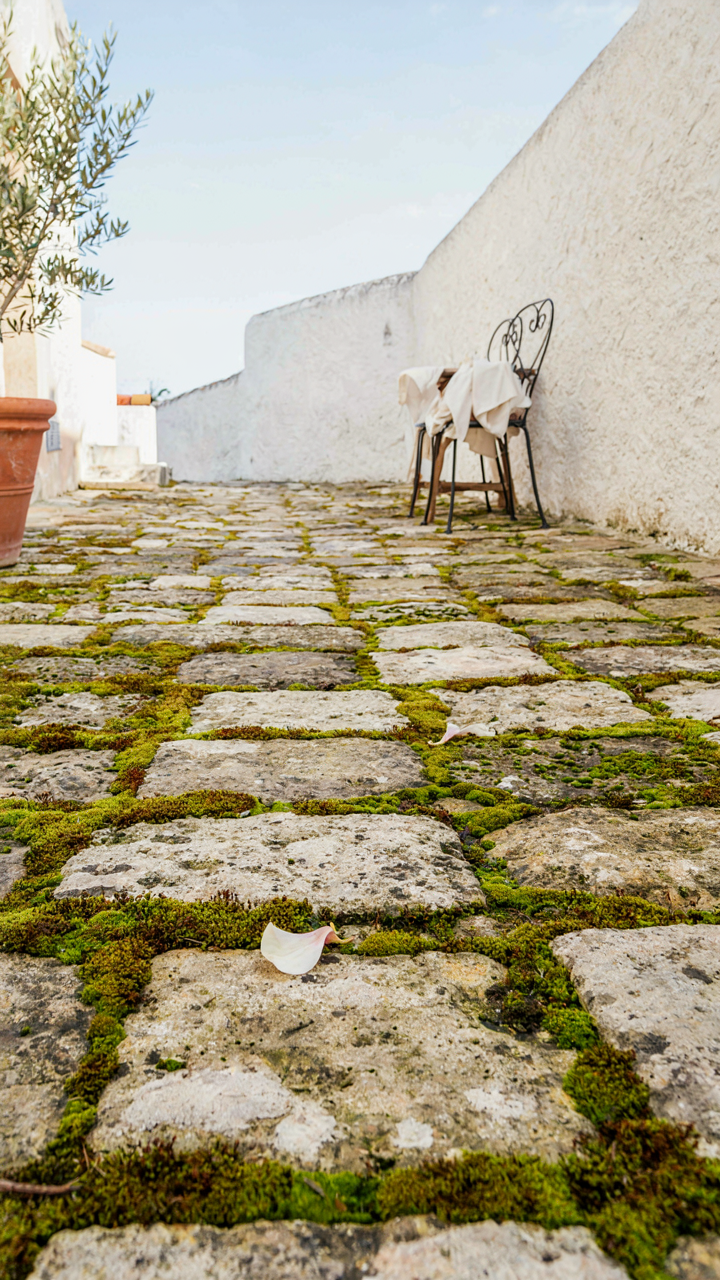
Patina Over Perfection The Value Of Age
You want your courtyard to look effortless because you’re afraid a polished space will expose the effort you’re actually willing to invest. The mechanism is borrowed from archaeology: a French country courtyard operates like a stratigraphic layer. Each season deposits visible time onto stone and gravel. This visibility is the entire point. A freshly laid courtyard reads as new construction. An aged one reads as inherited.

Patina signals belonging to a place, not conquest of it. Stone that shows water stains, weathered mortar joints, and uneven gravel settling tells a coherent story. Rural French estates didn’t achieve their look through maintenance plans. They achieved it through decades of use and minor neglect. The courtyard surface became a record. You’re not building that record in year one, but you’re establishing the conditions for it.
Embracing Natural Wear Not Sterile Newness
The common advice is wrong: don’t seal everything to preserve it. Sealing stops the aging process entirely and makes a courtyard look defended rather than lived in. Stone that’s sealed stays uniform in color and texture. Stone that weathers develops variation. The variation is what makes it read as authentic French country, not as a weekend project you completed.
Natural wear follows predictable patterns. High-traffic zones show different erosion than shaded corners. Gravel in pathways compacts and darkens from moisture and foot traffic. Moss grows in joints where water sits. These aren’t flaws to eliminate. They’re the mechanism that transforms a built object into something that belongs to its landscape. Let weather and use do the work instead of fighting them.
The Gravity Protocol: Designing Functional French Outdoor Patio Spaces
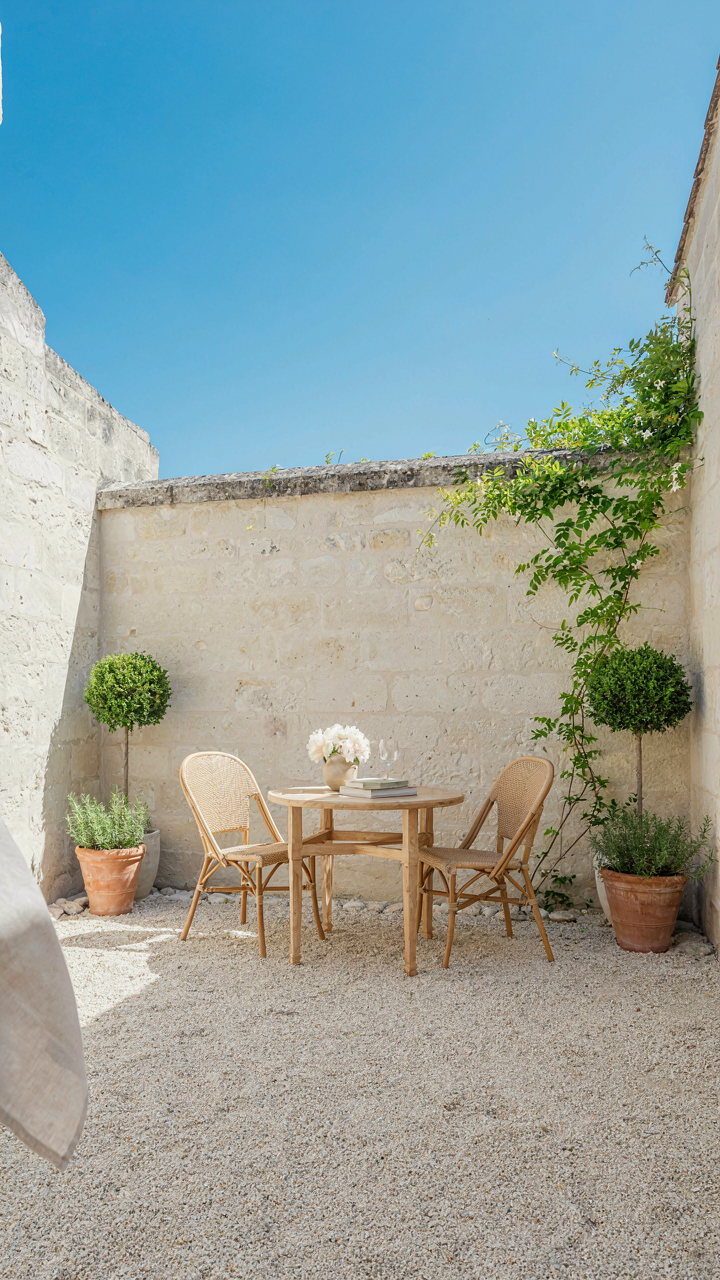
Site Planning As Energy Flow
You want your courtyard to look effortless. That’s the real motive here. But effortlessness in a French country courtyard comes from understanding one principle: energy flows downhill, and so does water, foot traffic, and maintenance burden.

Physics calls this gradient. In courtyard design, gradient is your primary tool. The French understood this without naming it. Medieval courtyards in Provence and the Loire Valley slope subtle amounts—rarely more than a 2 to 3 percent grade—to move water away from structures and toward drainage points. This isn’t decoration. It’s hydraulic necessity dressed up as symmetry. Most modern designs ignore slope entirely, then wonder why water pools near the house or foot traffic wears uneven paths.
Your courtyard centerline should be your highest point. Edge conditions should be lower. This creates natural movement: water moves out, people move toward the perimeter, and you avoid standing water in the middle where gravel collects debris. The gravel bed itself acts as a visible topography map. If you place it at varying depths, deeper gravel marks where water naturally collects. Shallower gravel marks your high zones. Stone placement follows the same logic. Position larger anchor stones along edges where they’ll shed water outward, not funnel it inward.
Drainage Systems That Actually Work
Everyone says “make sure water drains.” Nobody explains the mechanism. Here’s what actually matters: subsurface drainage must outpace surface water arrival, or gravel becomes mud.
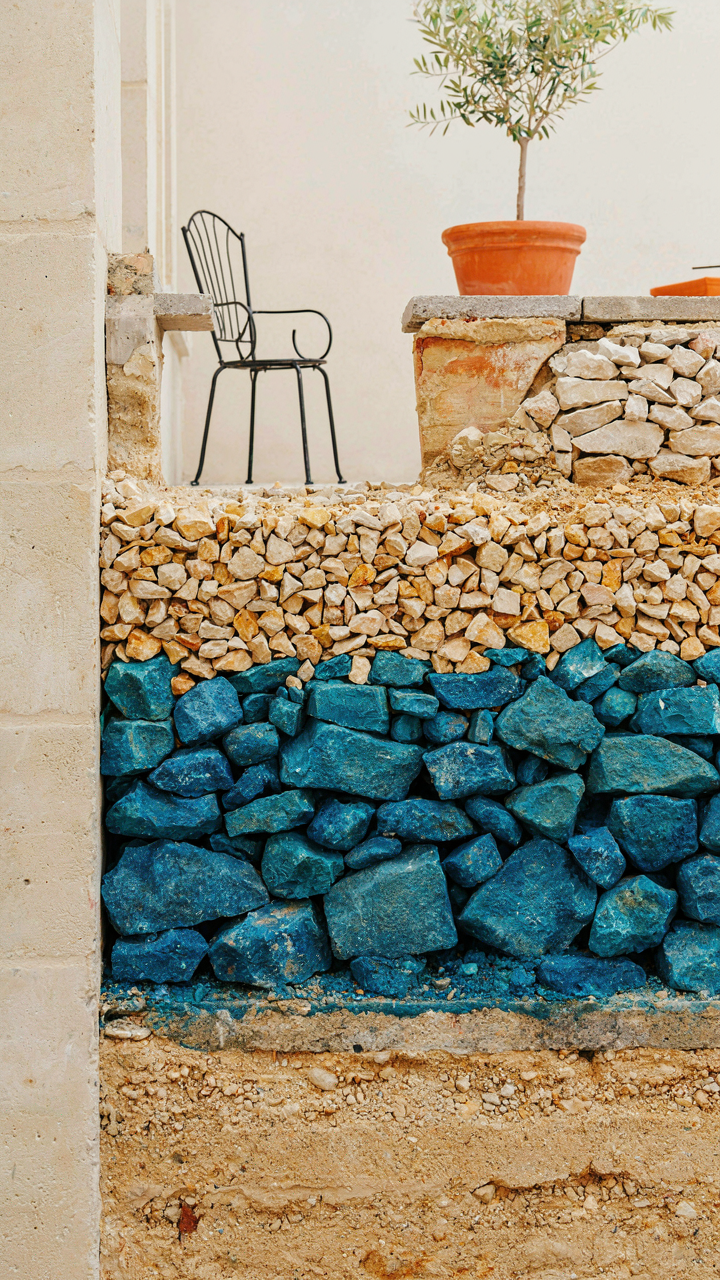
A proper French country courtyard uses layered drainage beneath the gravel. Start with a perimeter French drain—a trench running along the courtyard edge where it meets walls or property lines, filled with gravel and a perforated pipe that slopes to a natural outlet or dry well. This intercepts water before it enters your main courtyard. Above that layer comes a geotextile fabric to prevent soil migration. Then comes your gravel: typically 3 to 4 inches of larger stone (1 to 2 inches diameter) over 4 to 6 inches of smaller drainage rock. This layering allows water to percolate down while preventing fine sediment from clogging the system.
The critical detail most designers skip: your grade must pitch consistently toward that perimeter drain. Even a subtle high spot in the middle will trap water. Use a laser level during installation to confirm slope, not your eye. Stone pathways need the same treatment—they’re not just aesthetic. They’re drainage corridors. Position them to redirect water toward edge drains, not across the courtyard. This is why traditional French courtyards have radial or linear pathways: they’re engineered water management systems that happen to look intentional.

Deconstructing The Gravel Myth In French Courtyard Ideas
Gravel As Drainage Infrastructure
You want gravel to look intentional and weathered, like it belongs in a Provençal estate. That’s not why you should use it. Gravel functions as a permeable system—a hydrology problem solved, not a decoration applied. Water drains through it instead of pooling on clay or compacted earth, which is what happens under French courtyard stone.
The mechanism matters because standing water breaks down mortar between stone pavers, cracks clay tiles, and accelerates moss growth in shaded areas. Traditional French courtyards in regions like Aquitaine and Burgundy used gravel specifically to manage water runoff from roofs and surrounding walls. You either build the drainage layer intentionally or you pay for stone replacement in five years.
Stone And Gravel Types By Load And Drainage Rate
Gravel performs differently depending on size, density, and underlying substrate. Angular crushed stone drains faster than rounded pea gravel but locks together better under foot traffic. Rounded gravel settles and shifts, which is why French estates that handled cart traffic used larger stones or mixed sizes.
- Crushed Limestone (1-2 inches): Angular, compacts firmly, drains quickly, blends with regional stone palettes. Best for high-traffic zones near entrances where stability matters more than aesthetics.
- Pea Gravel (0.5-1 inch): Rounded, comfortable underfoot, slower drainage, requires edging to contain. Use in secondary courtyards or transition zones where appearance outweighs load demands.
- Jersey Shore Gravel (mixed 0.5-2 inches): Combines rounded and angular, regional variant with character, moderate drainage and compaction. Regional accuracy matters if you’re matching existing French properties.
- Slate Chips (flat, 0.5-1 inch): Drains poorly, shifts easily, but matches stone architecture in certain regions. Only viable in covered courtyards or decorative sections away from water flow paths.
- Marble Chips (1-1.5 inches): Expensive, reflects light, poor drainage compared to limestone. Functional only in dry climates or purely visual display areas, not working courtyards.
Substrate depth determines how long gravel performs its job. Standard French courtyard installations use 4 inches of gravel over 2-3 inches of crushed stone base. Without that base layer, gravel sinks into soil within two seasons, drainage fails, and you’re back to the water problem.

The Unseen Structure: Engineering Your French Courtyard Garden
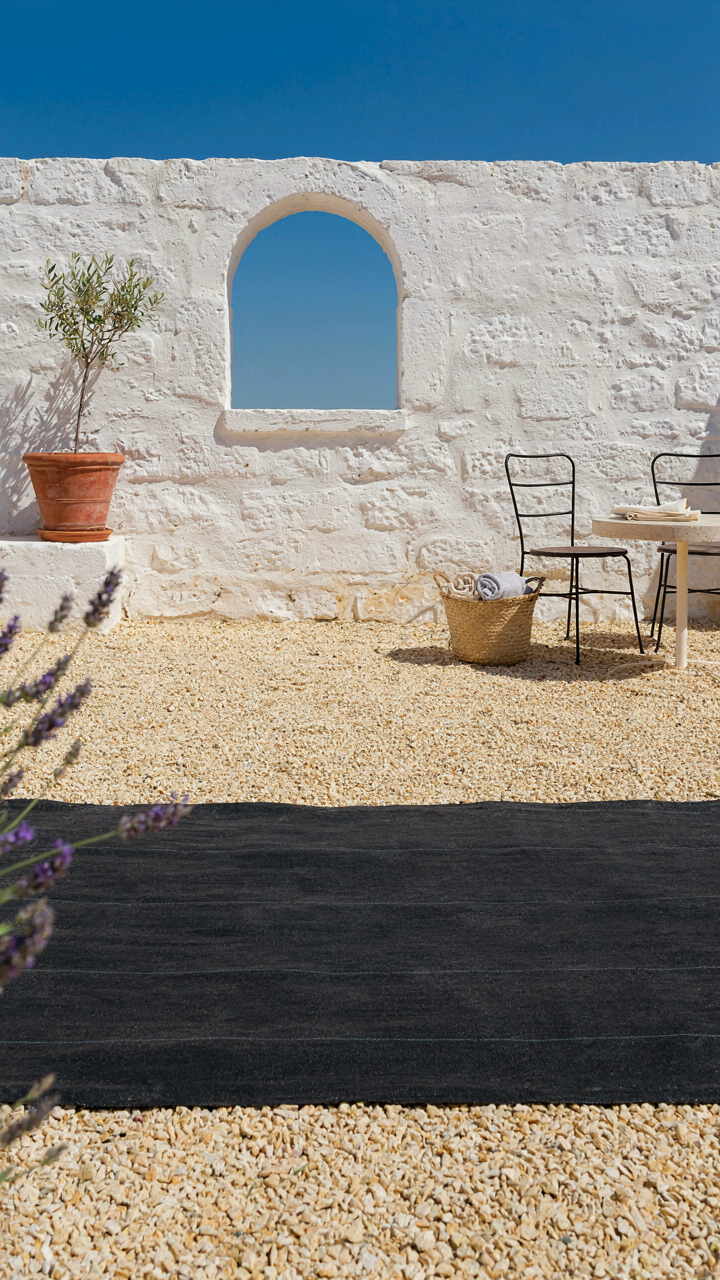
The Base Layer That Prevents Collapse
You want this to look effortless, like it’s been there for centuries. That requires the opposite: obsessive attention to what nobody sees. The real problem isn’t aesthetics—it’s that most people build courtyards that fail within three years because they skipped the foundation work. Think of it as load-bearing architecture: your gravel and stone surface must distribute weight and shed water simultaneously, or frost heave and settling destroy the entire scheme.
French country courtyards traditionally used compacted earth with stone laid directly on top. Modern construction adds structure. You need a sub-base of three to four inches of crushed limestone or recycled asphalt—material that compacts tight and allows water to percolate without pooling. Lay this on undisturbed soil or excavated ground. Over that goes landscape fabric, specifically the non-woven type that filters but doesn’t tear. Then your gravel or stone surface. Edging matters tactically: it holds material in place during settling and rain events, preventing your carefully arranged gravel from migrating onto adjoining surfaces within the first season.
Durability Built Into The Design
The common advice says to rake gravel annually and replace it when it breaks down. That’s maintenance theater masquerading as a solution. Real stability comes from material selection and installation sequence. Angular stone compacts tighter than rounded—it locks together. Rounded river rock migrates constantly. For a French courtyard, use gravel in the three-quarter inch range, crushed granite or limestone. This size resists displacement from foot traffic and doesn’t require constant raking. Beneath it, landscape fabric stops weeds from pushing through while allowing water drainage—the actual mechanism that keeps roots from destabilizing your surface.
Weed suppression fails when people use solid plastic sheeting or skimpy single-layer fabric. Water pools, roots still find gaps, and the whole system collapses. Use six-ounce non-woven landscape fabric or heavier. Overlap seams by six inches minimum. Pin it at intervals so settling doesn’t create voids. Check your courtyard’s actual drainage slope before installation—water must move away from structures at one-half inch per ten feet minimum. If it doesn’t, fix grading before laying anything down.

Beyond Roses: The Resilient Planting Of A French Garden
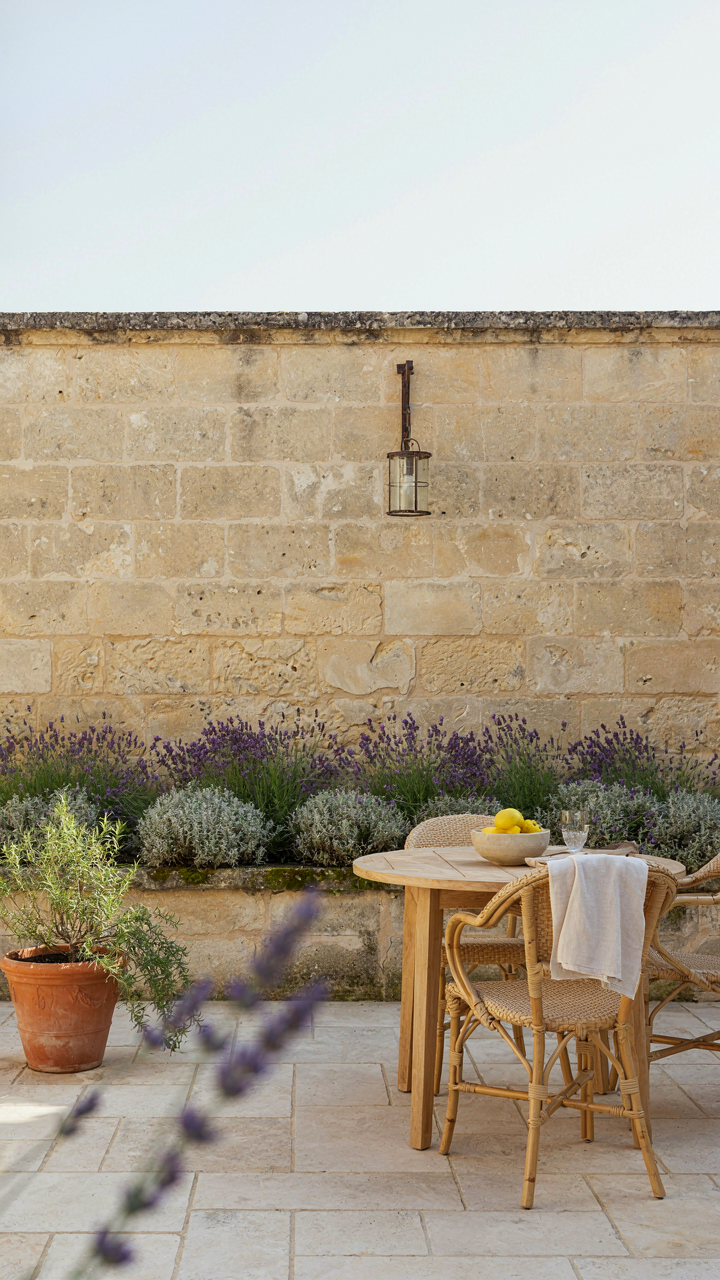
What Actually Survives In French Courtyards
You want the aesthetic without the constant maintenance. That’s the real problem here. The mechanism is this: French country courtyards succeed because they use plants that tolerate limestone soil, heat reflection off stone, and irregular watering. Lavender, santolina, and cistus aren’t romantic choices—they’re survival strategies. These plants evolved in Mediterranean climates where water vanishes and soil stays alkaline. They thrive where roses and ornamental grasses fail.
The courtyard becomes a microclimate. Stone walls radiate heat. Gravel reflects it further. Soil dries fast. Most gardeners fight this reality with expensive irrigation and amendments. The actual French approach accepts it. Drought-tolerant perennials like thyme, catmint, and salvia establish deep root systems that reduce dependency on overhead watering. Their silvery or gray foliage reflects additional heat instead of absorbing it. The plants don’t just survive—they perform better under stress.
Positioning Plants To Eliminate Future Work
Stop thinking about symmetry and start thinking about hydrology. Water moves downhill, pools collect near house foundations, and corners trap moisture longer than open areas. Position thirsty plants like roses near the lowest point where runoff gathers. Place drought-tolerant shrubs along the perimeter where heat intensity peaks. This is basic watershed logic applied to a fifteen-by-twenty courtyard.
The real work happens at installation. Group plants by water need, not visual appeal. Establish plants in spring so they develop root systems through their first full growing season before summer stress arrives. Once established, Mediterranean plants need zero supplemental water in most French climates. Water only during the first year. After that, intervention becomes the problem, not the solution.

The Authenticity Algorithm: Cultivating A Real French Country Garden
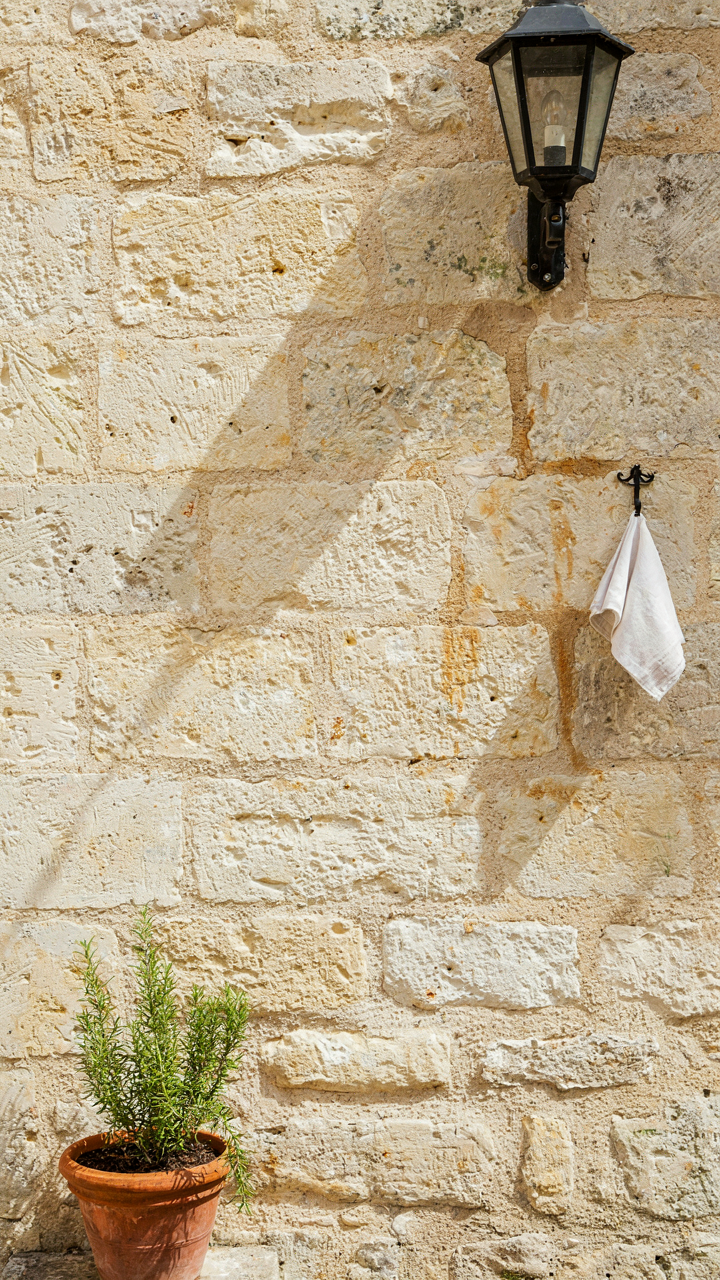
Source What Your Region Already Built With
You want this space to feel real because fake costs more in attention and money. The mechanism is simple: a French country courtyard works because it uses materials the region produces naturally, not because you imported them from somewhere else. Local stone, salvaged roof tiles, and regional gravel aren’t precious because they’re rare. They’re precise because they’re what builders actually had access to when they built the originals.
Stop shopping for “French” materials online. Find a stone mason or reclamation yard within fifty miles of your property. Regional limestone, slate, or granite will match your climate and soil better than anything labeled “Provence style.” The courtyard’s credibility comes from this constraint, not from ignoring it. Antique elements work the same way: salvaged shutters, iron grilles, and stone troughs function because they belong to the place you live, adapted over decades.
Build For A Century, Not A Season
The common advice says update your courtyard every few years to stay current. That’s backwards and expensive. A real French country courtyard was designed to last through multiple ownership cycles because nobody had the capital to rebuild it constantly. The mechanism here is economic: longevity compounds.
Choose gravel that compacts and binds over time rather than loose decorative pea gravel that requires yearly replacement. Lay stone in a pattern that handles water runoff without eroding the base. Use materials that weather gracefully instead of materials that fade or crack. French country courtyards show age through patina, not deterioration. This means spending more upfront on quality stone and proper drainage, then spending almost nothing for decades.

Italian Garden Influence: A Contrarian Perspective
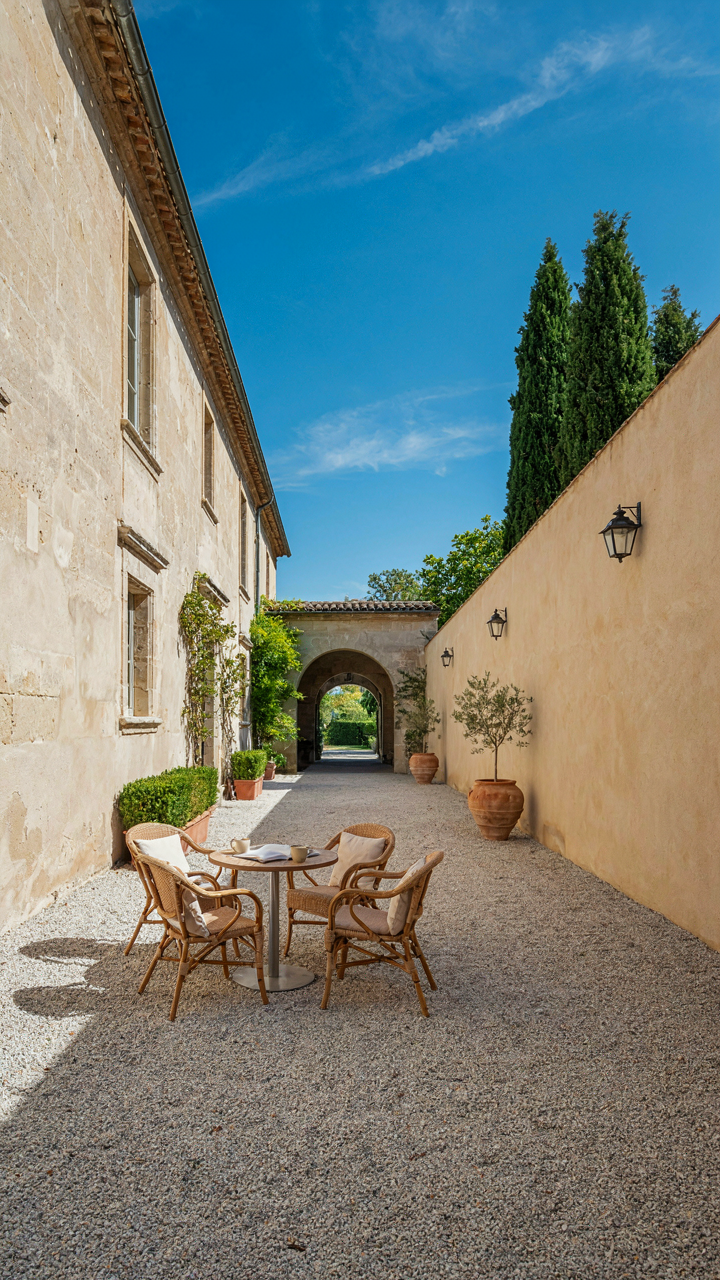
Where The Styles Actually Diverged
You want to know about Italian influence on French courtyards because it signals you understand design history. Here’s the mechanism: French aristocrats obsessed over Italian Renaissance gardens in the 16th century, then deliberately rejected their core principles to create something distinctly French. The Italian model emphasized perspective, symmetry radiating from a single vanishing point, and theatrical drama. French designers took the symmetry but flattened it, contained it, and made it serve function instead of ego. Gravel courtyards in French country homes echo this rejection by prioritizing practical circulation over visual spectacle.
The confusion happens because both styles use similar elements: stone, symmetry, water features, geometric planting. But the underlying logic differs entirely. Italian gardens manipulated terrain and forced nature into perspective tricks. French country courtyards worked with existing topography and created enclosed, self-contained spaces that felt inevitable rather than imposed. When you see a French courtyard with gravel pathways and a central focal point, you’re looking at Italian DNA filtered through French restraint. The Italian garden shouts. The French courtyard speaks.
What Restraint Actually Means In Stone
Most design advice conflates “subtle” with “boring.” That’s wrong. Subtle means every material choice eliminates something. In a French courtyard, an Italian designer would use three gravel colors to create depth and visual movement. A French designer uses one, because the second color competes for attention. The Italian influence introduced the idea of gravel as a design element instead of mere utility. French country practice asked: what if gravel just lets the architecture and stonework do the talking?
The refined distinction shows up in material hierarchy. Italian-influenced courtyards stack visual weight equally across elements. French country courtyards create a clear pecking order: stone walls dominate, gravel recedes, plantings stay secondary. When laying gravel in a French courtyard, use uniform size and color. Let the surrounding stone edges, weather-worn walls, and occasional stone features carry the visual load. The gravel stays quiet and lets circulation patterns emerge naturally from how people actually move through the space.
Your Greatest Barrier Isn’t Taste; It’s Your Inability To See Systems Where Others See Only Aesthetics
Most people buy gravel and stone, arrange them randomly, then wonder why their courtyard looks like a construction site. The difference between amateur and compelling? You’re treating materials as decoration instead of function. Gravel manages water. Stone creates flow. Texture directs the eye. Before you place a single rock, map your drainage patterns, foot traffic zones, and sight lines from every window. This shifts you from decorating to designing. Walk your courtyard today and actually trace where water pools and where people naturally move. You’ll stop fighting the space and start orchestrating it.