
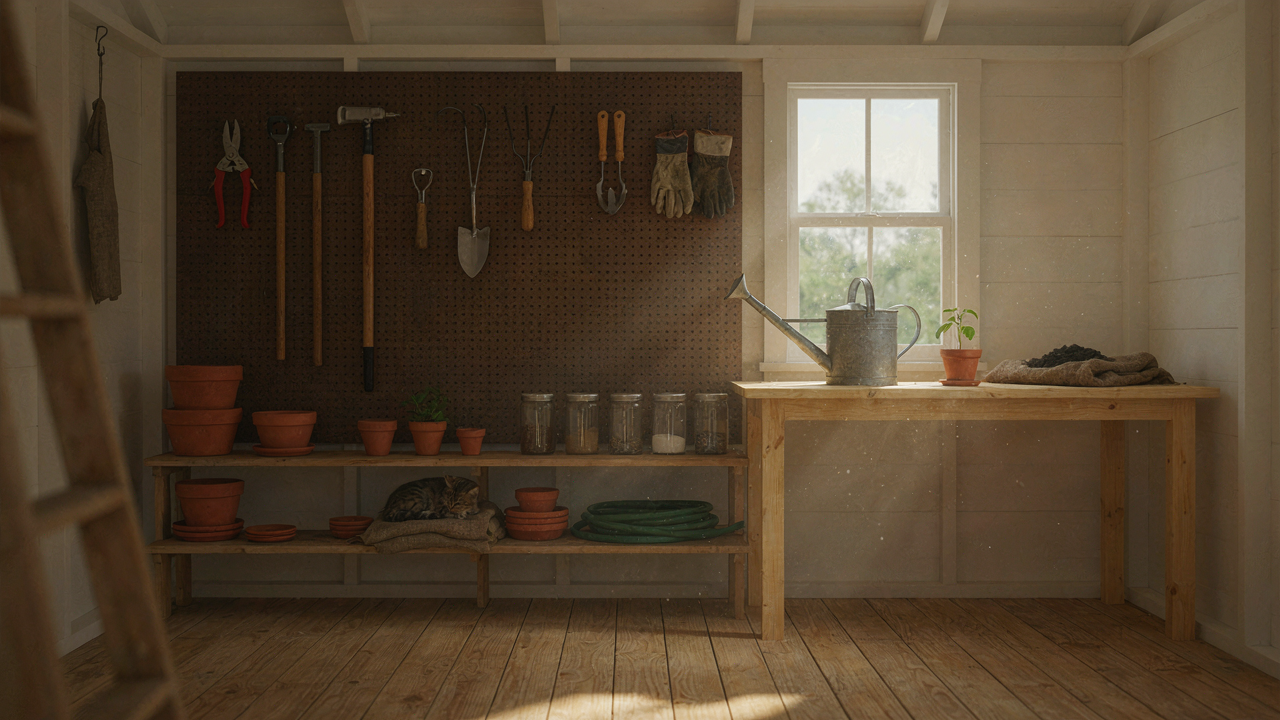
The Unseen Cost Of “Cute” Garden Shed Interiors
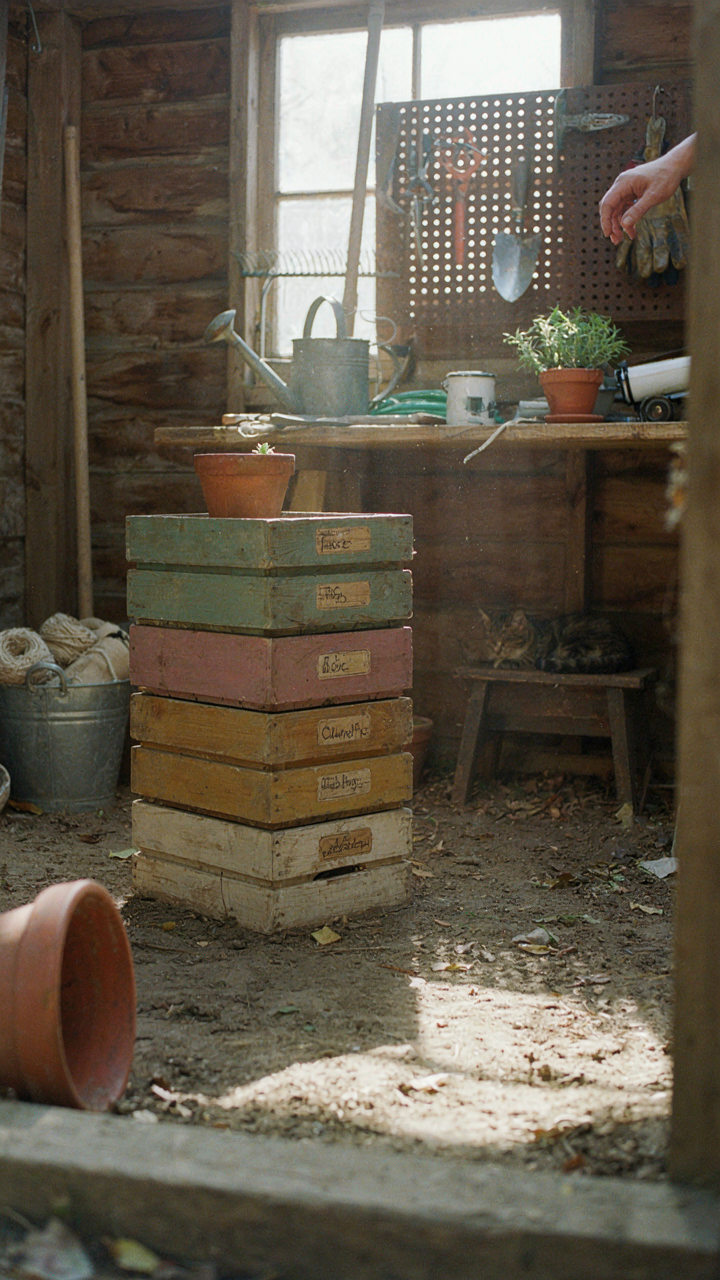
Aesthetics Versus Utility: Measuring Lost Time
You want your shed to look like it belongs in a design magazine because you think it proves you have your life together. Here’s what actually happens: decorative organization systems create friction between you and the tools you need. Every time you retrieve something, you navigate around the aesthetic instead of around the obstacle. That’s a time tax you pay repeatedly, and it compounds.
Utility beats appearance in a shed because the shed’s only job is speed of retrieval and tool protection. A pegboard painted in trendy colors still requires you to hunt for the right hook. A labeled wooden crate looks intentional but adds a step before access. The mechanism is simple: decorative choices add visual steps that slow physical steps. Strip the shed down to function first, then layer aesthetics only where they cost nothing operationally.
The Mental Burden Of Disorganized Storage
Cognitive load works the same way in a shed as it does in your home office or kitchen. Every item without a fixed location creates a micro-decision each time you enter. Where did I put the hedge trimmer last? Is the wire in that bin or that one? Your brain doesn’t distinguish between “minor uncertainty” and “real uncertainty”—both drain the same mental resource. You deplete decision-making capacity before you even pick up a tool.
The solution isn’t more storage bins or prettier labels. It’s a fixed location for every item that gets used regularly. One tool, one spot. No variation. No “it can go here or there.” The cognitive relief is immediate because your brain stops treating the shed as a search problem. Once you establish this protocol, retrieval becomes automatic, and the mental burden disappears entirely.
The Minimalist Shed Protocol: What Stays, What Goes
The One Year Rule Actually Works
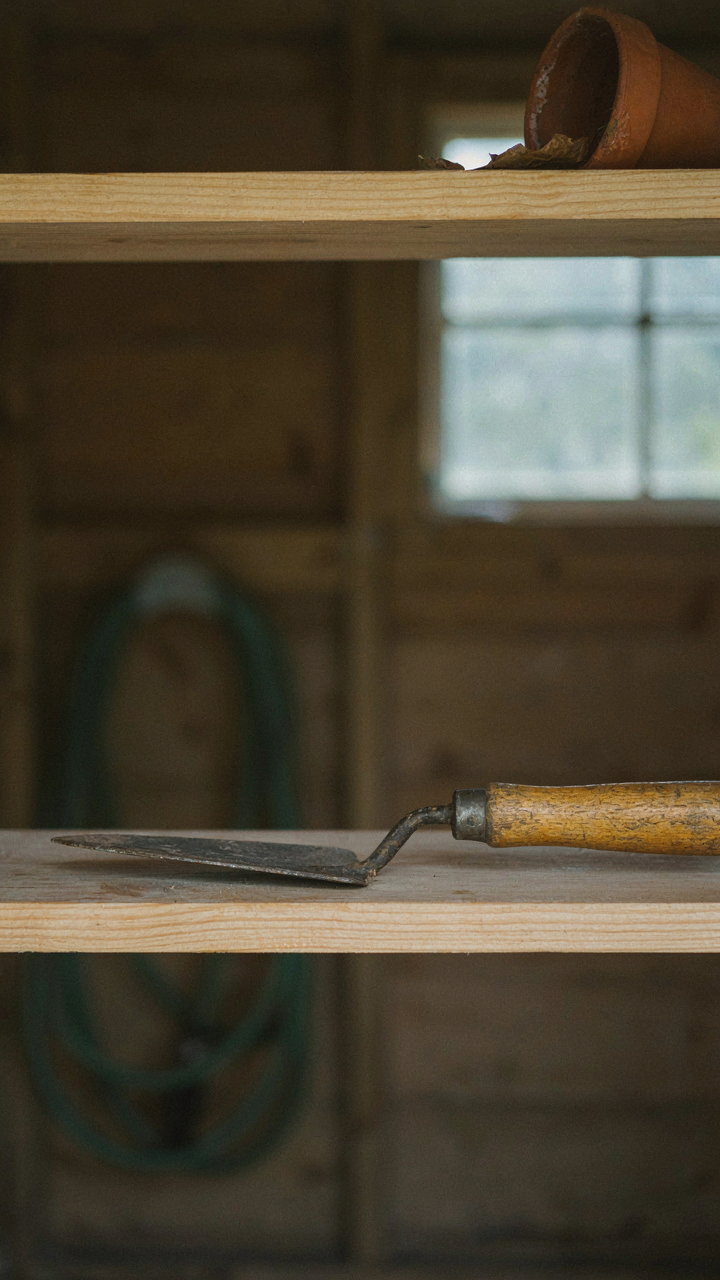
You want permission to keep things because throwing away feels like admitting waste. Here’s the mechanism: your brain treats unused objects as potential future solutions, not past mistakes. The one-year rule removes emotion by making retention a decision, not a default. If you haven’t used a tool in 12 months, you won’t use it. Not because you’re lazy. Because the problem it solves either doesn’t exist anymore or you found another way.

Document what you keep and when you last used it. Mark the date on the handle with a marker or note it on a shelf inventory. After one year passes, move questionable items to a separate zone for 30 days. If you don’t retrieve them, they leave. This isn’t theory. Construction sites, woodworking studios, and commercial kitchens all operate on this principle. Shed space costs money and attention. Unused tools cost both.
Reclaim Space By Cutting The Lie
Everyone says “donate unused items,” which sounds noble and dissolves the real problem. The real problem is you bought tools for projects that never happened. That’s not a shed storage problem. That’s a purchasing problem. Most sheds contain 40 to 60 percent items purchased for imagined futures. Selling or donating them is maintenance. Prevention matters more.
Stop the inflow first. Before buying a new tool, define the exact job it solves and when you’ll use it. If you can’t name the job within 48 hours, you don’t need it. For what already lives in your shed, apply brutal categorization: daily use stays visible and accessible, monthly use goes to secondary storage, yearly or less goes. Tools you haven’t touched in 18 months disappear that week, not next month. Move decisively or you won’t move at all.
Ergonomics Of The Garden Shed Interior: Your Body, Your Tools
Tool Placement For Fluid Motion
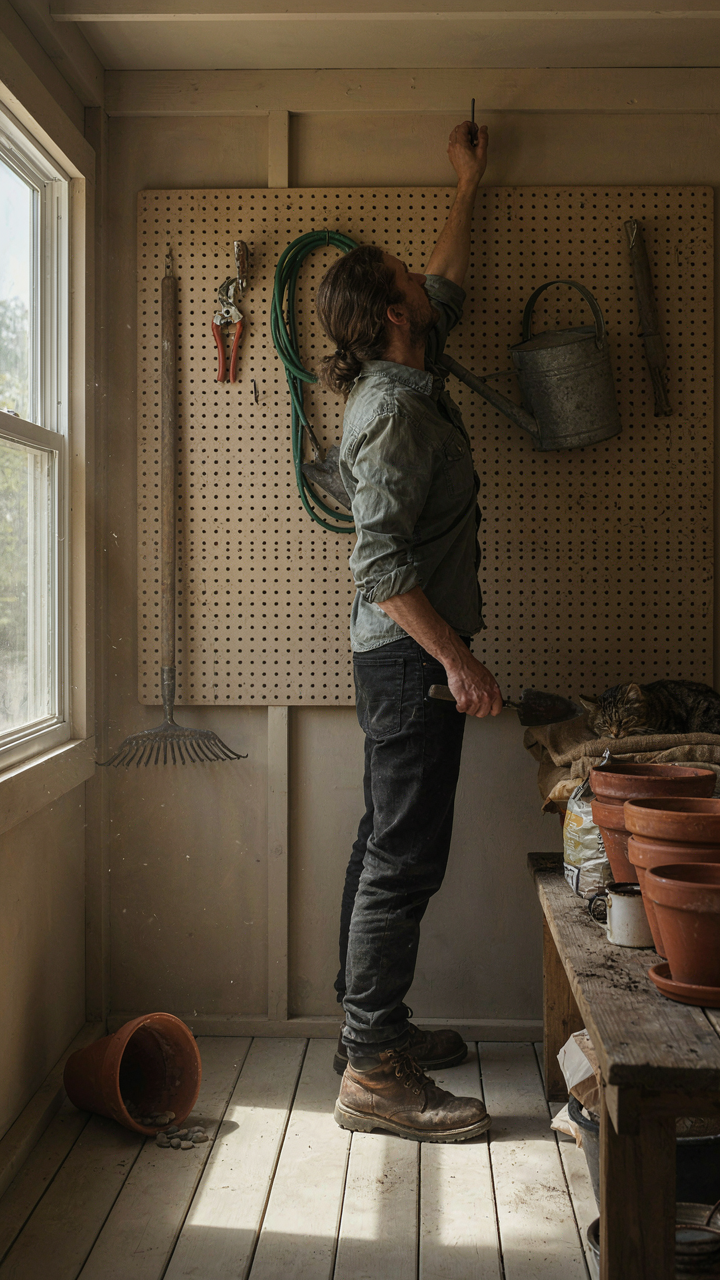
You want this section to make you feel like you’ve got your shed figured out. The real mechanism is biomechanics: the science of how bodies move through space. In a shed, this translates to reducing unnecessary motion cycles. Every time you reach for a tool, you burn energy and interrupt workflow. The difference between a shed where you work and one where you fight is measured in repeated micro-movements across a season.

The common advice says “organize by frequency.” That’s incomplete. Frequency alone ignores the actual movement pattern your body takes through the space. A hammer you use daily but store at chest height requires less total energy expenditure than a shovel you use weekly but retrieve from ground level. The body spends more metabolic cost bending and straightening than reaching laterally. Place your most-used tools in the zone between shoulder and hip height, arranged along your dominant movement vector through the shed. If you enter the shed, move to a workbench, then exit, that path determines your tool layout, not a category system on a wall.
Preventative Design Avoiding Common Shed Injuries
People call shed injuries “accidents.” They’re not accidents. They’re design failures wearing a disguise. The standard advice warns against clutter but never addresses why clutter creates injury: it forces the body into compensation patterns. Your ankle twists because you stepped on an unseen object while carrying something at chest height that blocked your sight line. Your shoulder strains because you twisted to grab a tool at an awkward angle instead of stepping to reposition. Your back fails because you bent forward from the hips instead of squatting, and you did that because the tool sat too low to allow a squat approach.
Preventative design means architecting the shed so the safest movement is also the easiest movement. Clear floor space means you never compensate with an awkward reach. Tool height zones prevent bending. Stable storage means nothing shifts under load, so you don’t grip harder to compensate. A pegboard with tool-specific cutouts means you don’t fumble or second-guess placement under time pressure. The mechanism is simple: reduce decision-making about movement, and you eliminate the deviations that cause injury. Start by measuring your own reach zones and movement patterns while performing three common tasks, then design storage around those actual dimensions, not theoretical ideals.
Small Potting Shed Interior Ideas: Leveraging Vertical Real Estate
The Physics Of Wall Mounted Storage
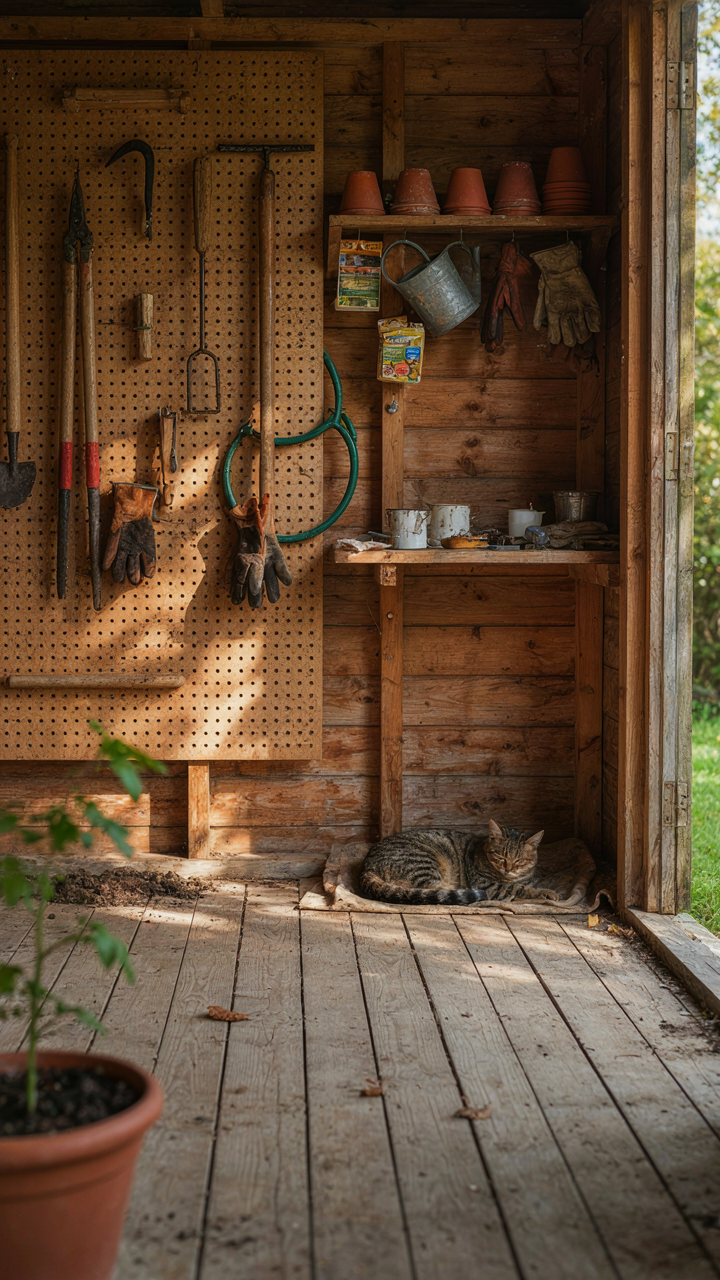
You want your shed to feel bigger without building an addition. That’s the real driver here. Physics calls this “load distribution”—spreading weight across a larger surface area instead of concentrating it on the floor. Apply that principle to your shed: walls hold far more than floor space ever will, and you stop wasting cubic footage the moment you stop thinking horizontally.

Wall-mounted systems work because they exploit what’s already there. Pegboards, French cleats, and rail systems anchor directly to studs, turning dead vertical space into functional storage. Install rails at elbow height and shoulder height, not just at eye level. Tools and containers hung on those rails stay accessible without consuming the floor where you actually move and work. This is mechanical advantage applied to organization.
Ceiling Storage Breaks The Floor Rule
Everyone talks about floor space. Nobody mentions that most sheds have ceiling height nobody uses. A potting shed with eight-foot ceilings wastes 40 to 50 percent of its volume by default because we’ve been trained to think vertically only up to arm’s reach.
Install ceiling-mounted systems using pulleys, chains, or simple beam brackets. These suspend seasonal items, bulky pots, or dormant tools six to eight feet overhead, retrieving them only when needed. The mechanism is straightforward: weight on the ceiling, not the walls or floor, keeps your working area clear. Attach eye bolts to joists, then secure sturdy netting or platform boards rated for your load. Measure first, install secure anchor points second, load third.
The Modular Garden Shed Storage System
Build Around What Changes, Not What Stays
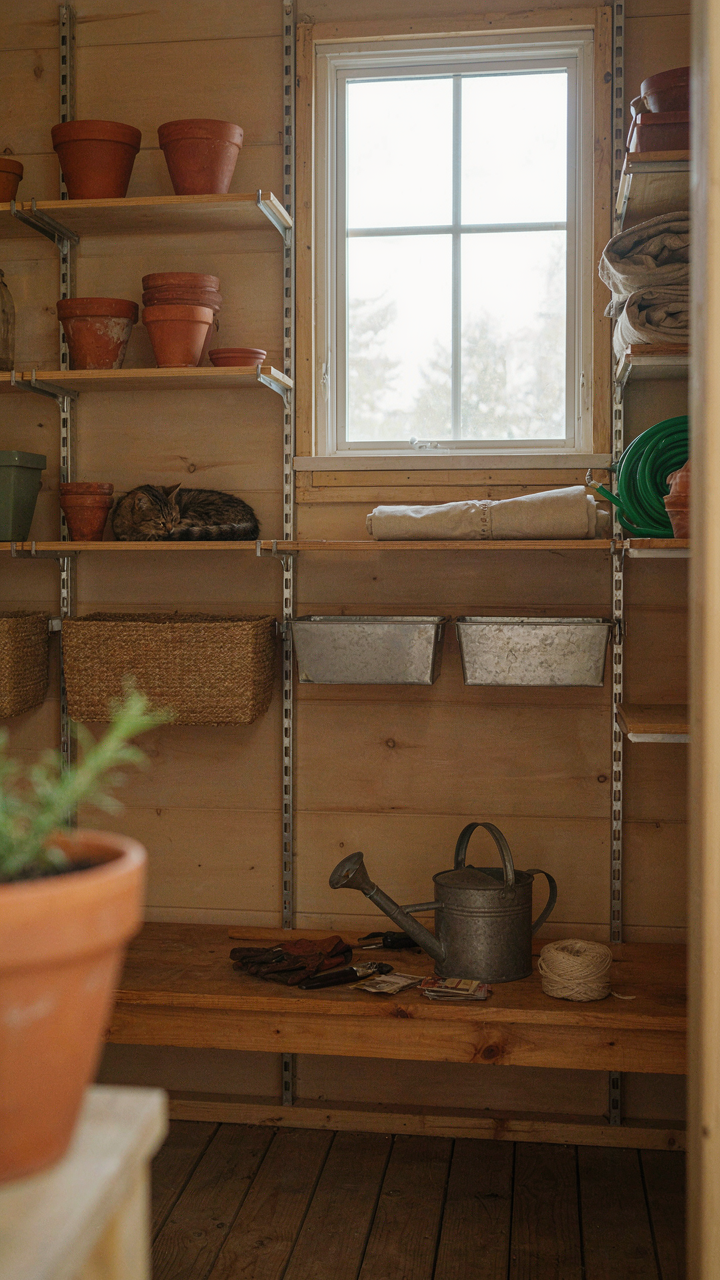
You want a shed that feels organized so you feel in control of your space. That’s the real reason this matters. The mechanism is simple: most people bolt down fixed shelving, then watch their needs shift. Tools get added. Seasonal items rotate through. The shed becomes rigid when it needs to breathe. Modular systems work because they treat your shed like a living tool, not a finished room. You swap, reconfigure, and adapt without ripping out infrastructure each time your gardening evolves.

Modularity borrows from systems theory in engineering: redundancy through interchangeable parts. Think of your shed walls as a grid, not real estate. Standardized mounting rails or pegboard systems create anchor points for anything to attach anywhere. You’re not committing to a single configuration. That flexibility costs slightly more upfront but kills the sunk cost of building something wrong. You reconfigure by moving brackets, not by demolition. The shed stays functional through change instead of becoming an obstacle to it.
Build Around What Changes, Not What Stays
The common advice here is surface level: “use modular shelves.” Wrong framing. The real work is picking a mounting standard and actually committing to it across the entire shed. If you use French cleats, use them everywhere. If you use wall-mounted rails, make those your system. Mixing standards turns your shed into a kludge where nothing interchanges. Standardized containers work the same way. A five-gallon bucket is not a container system. A set of identical bins stacked to a known footprint is. Cognitive load drops because your brain stops asking “where does this go” and just sees the open slot.
Pull everything out of your shed once. Sort it into categories: hand tools, power tools, seasonal, chemicals, small hardware. Measure the actual volume of each category. Now pick container dimensions that accommodate those volumes without waste. Use one size for tools, another for seasonal stock, another for small parts. Label by category, not by item. When you grab a tool, you don’t hunt for the specific wrench. You go to the tool container. The mechanism is constraint through consistency, not flexibility through variety.
Potting Shed Interior: Workflow, Not Whimsy

The Layout That Stops You From Walking The Same Path Twice
You want your shed to look intentional so visitors think you have your life together. Here’s what actually matters: layout controls movement, and movement controls time. Think of your shed like a kitchen—not for aesthetics, but for ergonomics. In kitchens, the work triangle minimizes wasted steps between sink, stove, and storage. Your potting shed needs the same principle: soil staging, potting bench, and seedling storage should form a logical path that never makes you backtrack.

The moment you force yourself to cross the same ground twice in one task, you’ve designed friction into your workflow. Position your potting bench where light hits it naturally and where you can reach soil bins, pots, and tools without pivoting your whole body. Store items at the point of use, not where they look balanced on a shelf. If you repot plants, your soil, pots, labels, and bench sit within arm’s reach. This isn’t decoration—it’s the difference between a shed you use daily and one you avoid because every task feels like a chore.
Surfaces That Survive What Dirt Does
Most shed storage advice treats the interior like a living room. Stop there. Porous wood shelving absorbs moisture, soil residue, and fertilizer salts. They create stains you can’t clean and wood rot you can’t stop. Use concrete flooring or treated wood with a sealant, metal shelving with powder coating, or polycarbonate work surfaces—materials that shed water and soil without holding bacteria or degrading. The potting bench itself needs impervious top material: metal, sealed concrete, or heavy-duty polycarbonate. Soil, water, and fertilizer will sit there daily. Untreated wood will fail in one season.
Install a sloped floor if possible—even a one-inch drop over eight feet moves water toward a drain point instead of pooling under your feet. If sloping isn’t an option, use a rubber mat with drainage holes in your work zones. Wipe down your metal shelving quarterly with a dry cloth to prevent salt buildup from fertilizer. This isn’t maintenance obsession. You’re preventing the shed from becoming a humid cavity where every surface rots and mold colonizes your seed stock. One protocol: after watering, squeegee excess water toward the door.
Garden Shed Ideas Interior: Illumination And Atmosphere For Productivity
Task Lighting For Work Zones
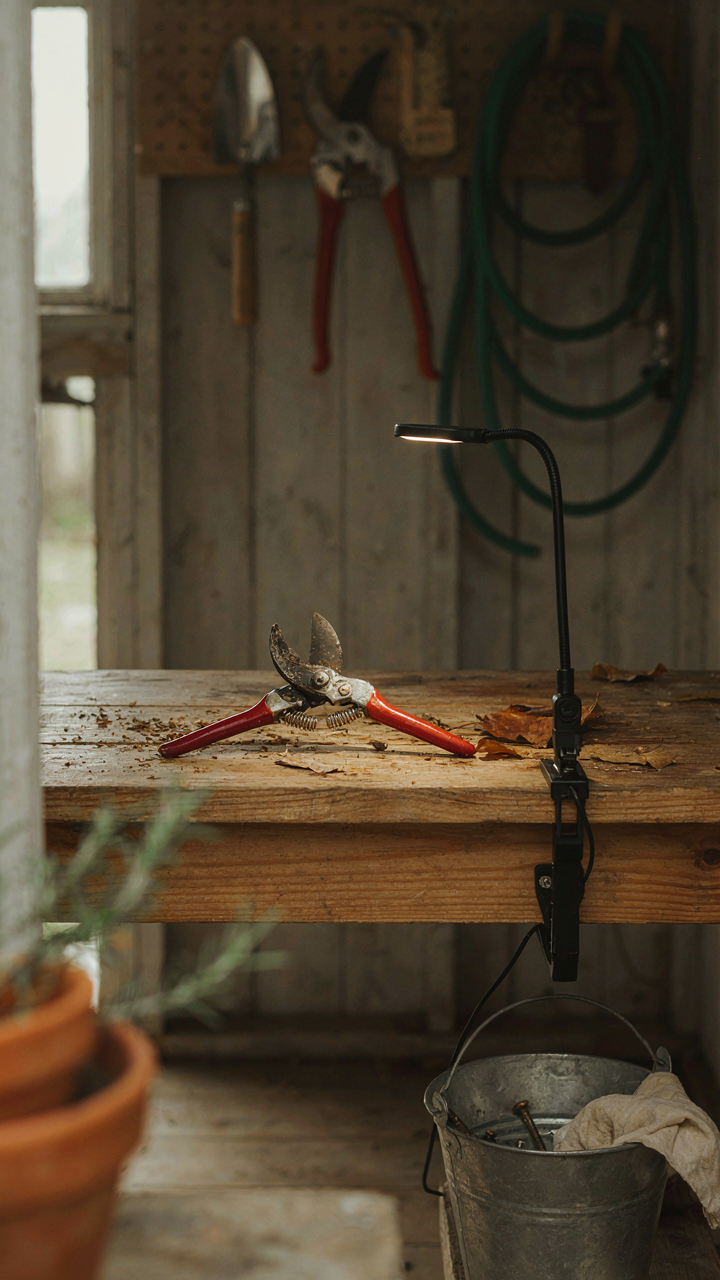
You want your shed to look intentional because a disorganized space signals incompetence, even to yourself. The mechanism is simple: your brain categorizes spaces by light distribution. Dark corners become dumping grounds. Lit zones become functional work areas. Task lighting isn’t about brightness. It’s about placement. Mount fixtures directly above your workbench, tool wall, or potting station. Position lights to cast minimal shadow where your hands operate. A single 40-watt equivalent LED fixture mounted 18 to 24 inches above a workbench eliminates the guesswork and cuts wasted motion.

Overhead ambient lighting is the trap people fall into. It spreads light everywhere equally, which means nowhere gets enough. Task lighting solves the real problem: you need to see what you’re doing in specific zones. Install fixtures on adjustable arms or goosenecks. This lets you redirect light as your work changes. LED strips under shelving illuminate tool storage without creating glare. Mount them low enough to cast light forward onto your work surface, not backward into your eyes.
Air Movement For Equipment And Health
Ventilation operates like humidity management in materials science. Wood, metal, and rubber all expand and contract with moisture. A damp shed creates rust on tools, rot on wooden handles, and mold on stored items. This isn’t hypothetical deterioration. It’s predictable physics. Install a small exhaust fan on one wall near the ceiling and a vent opening on the opposing wall at lower height. This creates cross-flow. Air moves moisture out consistently. You need 1 to 2 air changes per hour in a typical shed.
The second reason for ventilation is your own respiratory health when working with materials. Dust from sawing, sanding, or treating wood accumulates in stagnant air. Paint fumes linger. Chemical odors concentrate. A 12-inch diameter exhaust fan costs 40 to 80 dollars and operates on a thermostat trigger when humidity rises above 60 percent. Install it, wire it to an automatic humidistat, and stop thinking about it. Your tools stay functional. Your lungs stay functional.
Garden Shed Inside: Security And Tool Longevity
Stopping Theft Before It Starts
You care about this because losing tools feels like losing money you already spent. The real mechanism is visibility and friction. A thief targets sheds because they’re isolated and dark. You eliminate the target by making access harder and observation easier. Thieves move fast and avoid attention. Remove both conditions simultaneously.

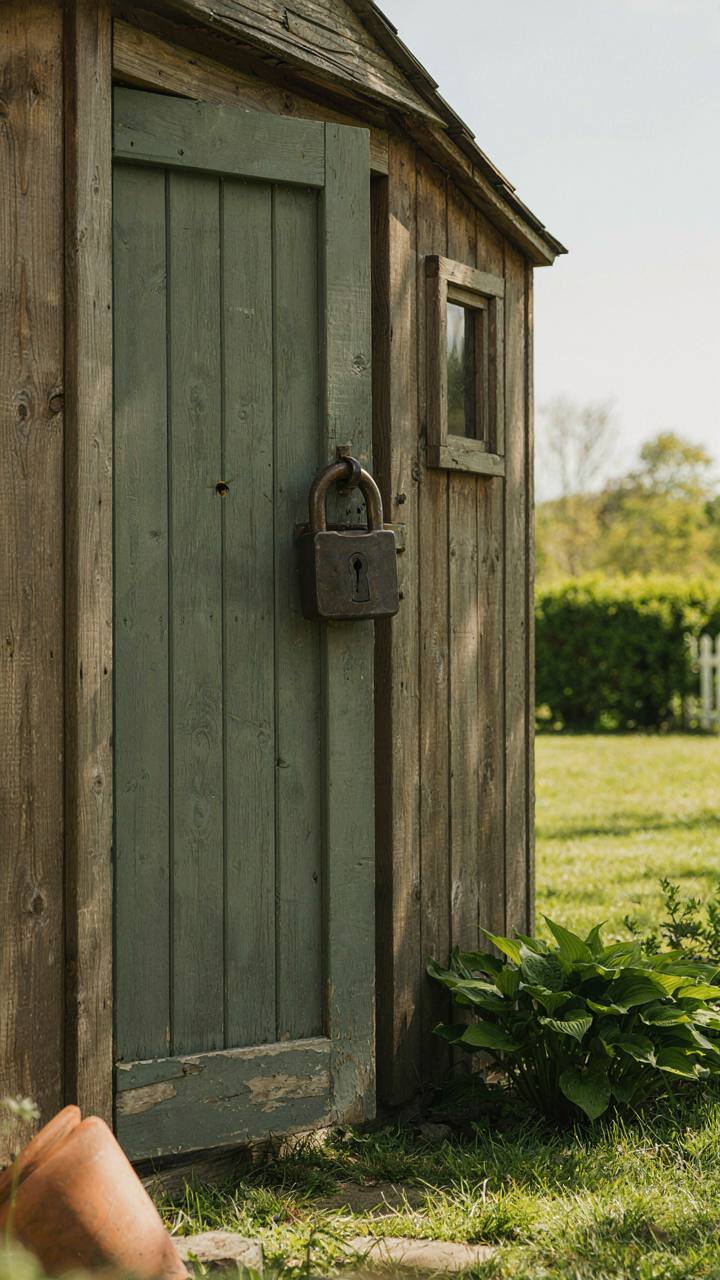
Install motion-activated lighting on the exterior and ensure sight lines from your house or street remain clear. Remove vegetation that blocks views. Reinforce the door frame with a proper striker plate, not the thin factory version. Use a padlock rated for outdoor use—hardened steel, not plated. Position your shed where neighbors or passersby can see it naturally. A locked door stops 80 percent of casual theft. Visibility stops the other 20 percent because it increases perceived risk.
Managing Moisture, Rust, And Rot
Rust is metal oxidation accelerated by moisture and oxygen—borrow from materials science and think of your shed as an environment controlling chemical reaction speed. Lower humidity slows oxidation dramatically. Most people ignore ventilation entirely and wonder why their tools corrode. That’s wrong. Ventilation is not optional.
Create passive air movement by installing vents on opposite walls near the top of your shed. Hot air rises and exits; cooler air enters from the lower opening. This cycle runs without electricity. Add a vapor barrier on the ground—thick plastic sheeting prevents ground moisture from rising into the space. Shelving height matters: store tools at least 12 inches off the floor to keep them above standing water during heavy rain or flooding. Monitor humidity with an inexpensive meter. Below 60 percent relative humidity prevents both rust and fungal growth on wood handles.
- Passive vents on opposing walls: Install soffit or gable vents to create continuous air circulation without mechanical systems, removing moisture that accumulates from temperature swings and rain.
- Vapor barrier flooring: Lay 6-mil polyethylene sheeting across the entire floor to block capillary moisture rise from soil, which is the primary cause of tool corrosion in sheds.
- Elevated tool storage: Place shelving and pegboards at least 12 inches above floor level to keep tools clear of pooling water and dampness that settles at ground level.
- Silica gel or desiccant containers: Deploy rechargeable desiccants in enclosed storage boxes or corners where air circulation is limited to absorb localized moisture around high-value tools.
- Stainless steel fasteners and hardware: Replace standard steel bolts, hinges, and shelf brackets with stainless equivalents to eliminate corrosion at connection points where moisture accumulates fastest.
The investment compounds over years. Tools stored in a dry, ventilated shed outlast those in sealed boxes by a factor most people never calculate. Test your setup after the first humid season: wipe a metal surface with a dry cloth. If condensation appears within minutes, increase ventilation immediately or add desiccants to high-value storage areas.
Garden Shed Decorating Ideas: Form Follows Function, Always
Workspace Branding Through Utilitarian Design
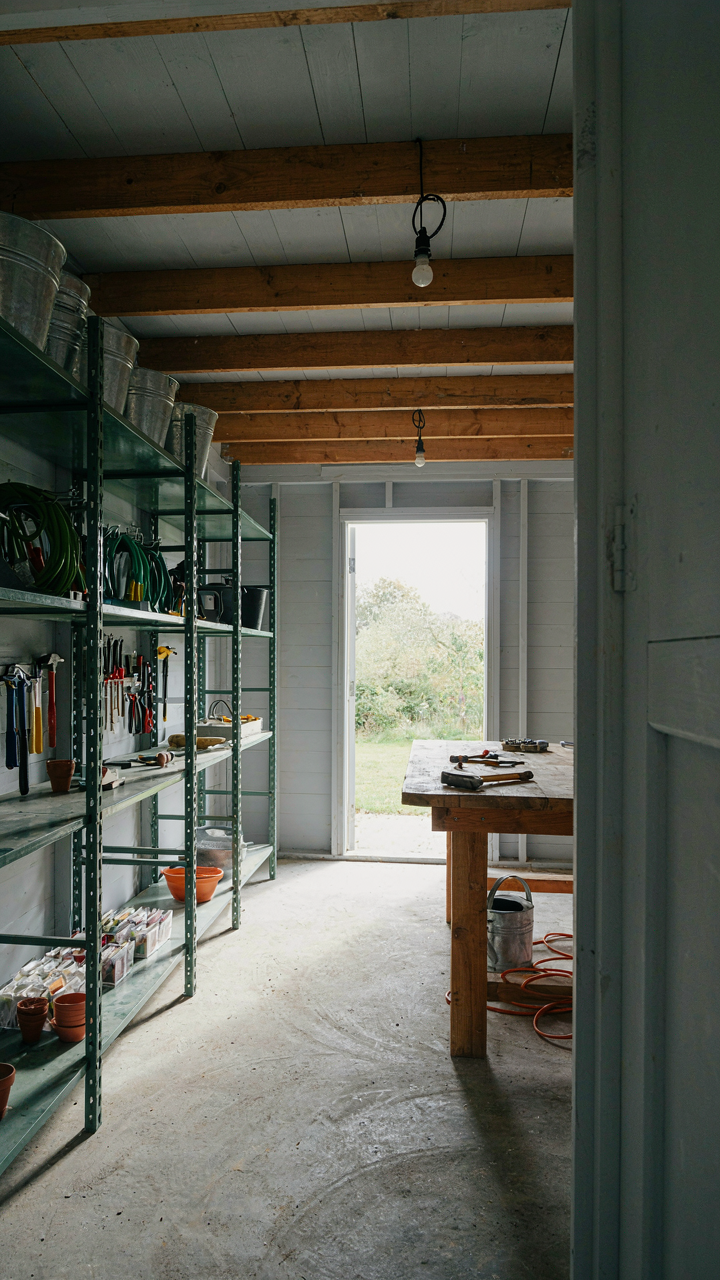
You want your shed to feel intentional because chaos feels like failure, even when it works fine. The real mechanism is this: utilitarian design from the Bauhaus movement stripped aesthetics down to material purpose. In a shed, that means every visible element earns its place through use, not decoration. Steel hooks hold weight. Concrete floors handle moisture and abuse. Wood workbenches support load. Paint protects surfaces and clarifies zones. You’re not decorating a shed. You’re making its function visible.

The common mistake is adding decorative objects to make a shed feel “personalized.” Wrong move. A shed decorated with sentiment clogs workflow. Instead, choose materials and finishes that already convey function. Industrial steel shelving beats painted wood because it signals durability and capacity instantly. Overhead pegboards with clear labeling aren’t decoration, but they look intentional because organization reads as design. The aesthetic emerges from constraint, not from trying to beautify a space. Let the system show.
The Real Cost Of Inefficient Space
Satisfaction comes from removing friction, not from looking at something nice. Most people chase the feeling by decorating. They hang vintage signs or add soft lighting. Meanwhile, their tools are still buried three layers deep, requiring the same frustrating search every time. That wasted motion compounds. You spend six minutes finding a screwdriver you know exists. Your body remembers that inefficiency. Your mood responds to it before you consciously notice. The only decorating that matters is the kind that speeds up your actual work.
A truly efficient shed requires one decision: organize for the task sequence, not for beauty. If you build shelves, position them where you naturally reach. If you mount tools, place them in the order you use them for your primary task. If you need lighting, install it where shadows currently kill visibility. The satisfaction is real because your nervous system stops working against you. When the space matches how your body moves, efficiency becomes invisible. That invisible quality, that ease, is the deepest aesthetic any shed can achieve.
The Only Clutter In Your Shed Is A Reflection Of The Clutter In Your Priorities. Fix Your Mind, Fix Your Shed
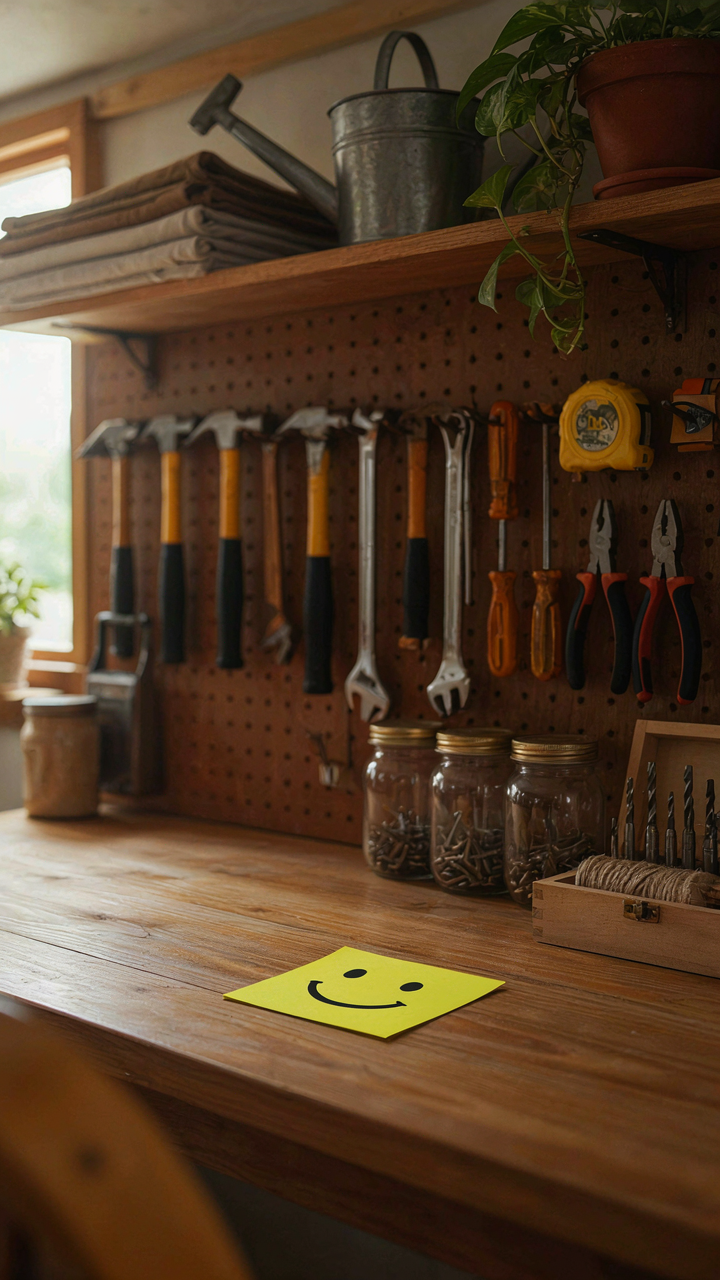
Most people organize their shed when they should organize their decision-making. You don’t have a storage problem. You have a “yes” problem. Stop buying tools you won’t use. Stop keeping things for an imaginary future version of yourself. Pick one area of your shed today and remove everything that doesn’t serve your actual life right now. What stays reveals who you really are.



