The Raw Wood Fallacy: Beyond The Log Cabin Aesthetic

What Raw Wood Actually Signals
You want raw wood because you think it proves you have taste and money without trying. That’s not the mechanism at play. Raw wood tables work in modern spaces because they solve a contrast problem. Your eye needs a break from flat, uniform surfaces. Wood grain and live edges create visual texture without cluttering the room. Most designers miss this: it’s not about rusticity at all. It’s about optical relief in a minimalist frame.
The confusion happens because Instagram saturated the category with heavy timber and farmhouse excess. Raw wood doesn’t require that. A modern rustic table is raw wood positioned against clean lines, minimal hardware, and restrained color. The wood becomes the statement because nothing competes with it. That restraint is what separates a functional dining space from a themed one masquerading as design.
Texture Without The Overload
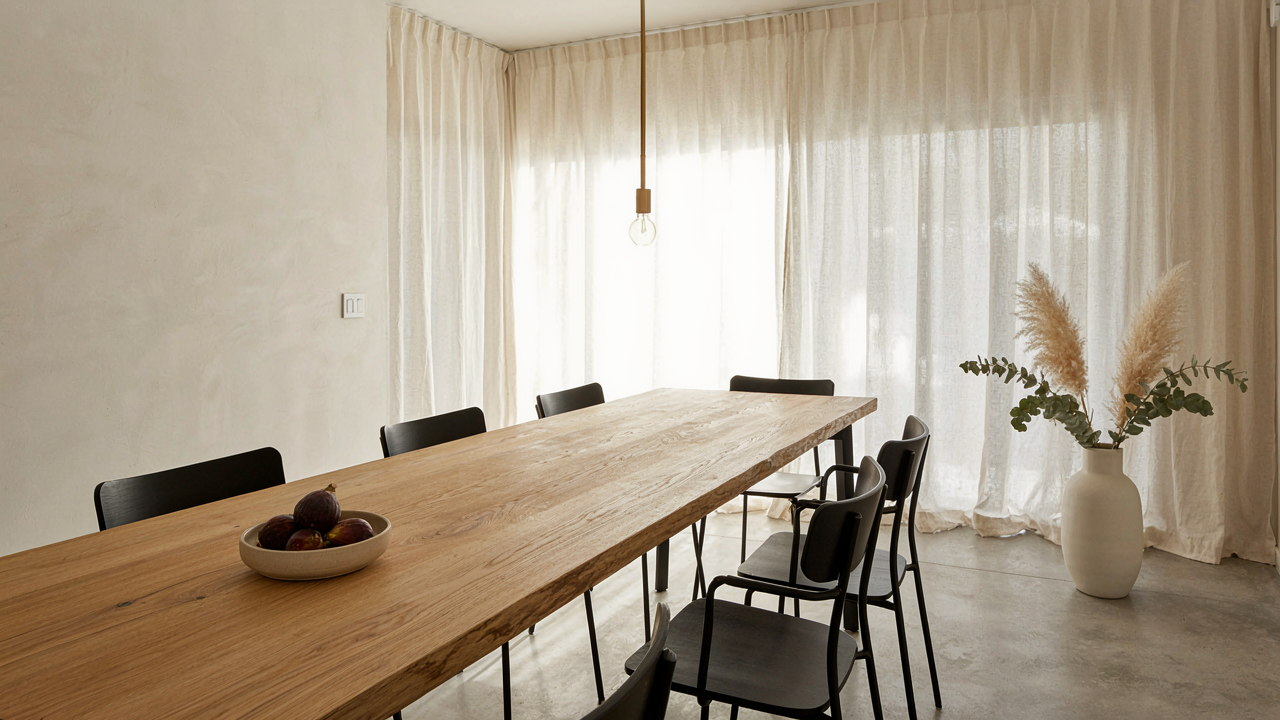
Common advice tells you to layer raw wood with more wood, stone, and vintage metals. That’s how you end up with a space that looks designed by committee. The real principle comes from contrast theory in visual design: opposing elements create hierarchy. Your raw wood table needs a stark counterpoint. This means concrete, powder-coated steel, or polished plaster walls. Not more natural materials fighting for attention.
The integration works when you treat raw wood as the single focal point, not one texture among many. Every other material in the room should recede. Metal chairs with minimal backs, neutral linen, simple concrete flooring. Your eye lands on the table’s grain and edge, then stops. That’s intentional design. The table becomes an anchor because everything else steps back. Build your room around the wood, not the other way around.
Modern Mountain Home Dining Room: The Contrast Principle
Where Raw Wood Meets Steel And Glass
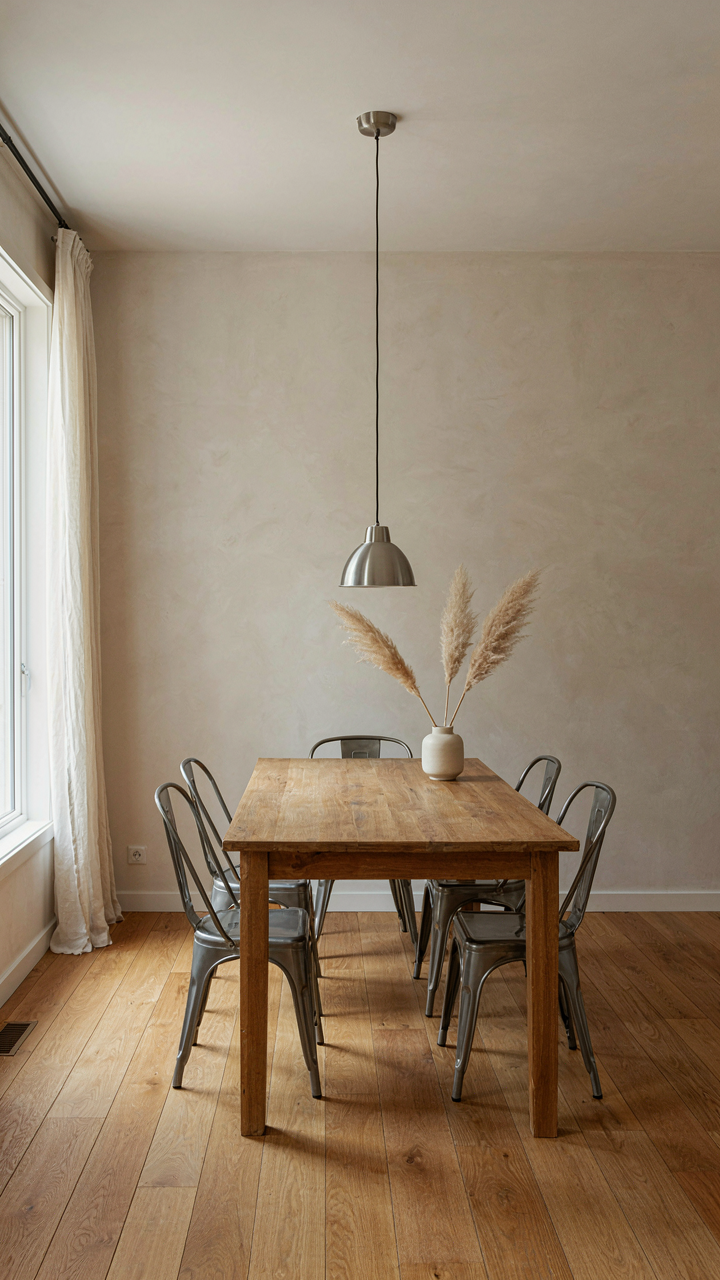
You want this room to feel expensive without looking like you’re trying. That’s the real motive. The mechanism is contrast: raw wood only reads as intentional when something deliberately opposes it. Borrowing from design physics, tension requires opposing forces. A smooth steel frame against rough timber creates the visual weight that makes people register the space as considered rather than cobbled together. The raw wood alone looks unfinished. The steel alone looks cold. Together they signal control.

Position your raw wood table as the anchor, then introduce one metal element as the counterforce. A steel-frame pendant fixture directly above it, or a blackened iron base supporting a reclaimed slab top, creates the opposition your eye needs. The contrast tells your brain this wasn’t accident. Scale matters here: the metal shouldn’t compete for visual real estate, just interrupt the softness enough to matter.
Material Juxtaposition For Deliberate Visual Friction
The common advice says pair natural with industrial for balance. That’s incomplete. You’re not balancing anything. You’re creating friction by forcing two materials to coexist in proportions that shouldn’t work but do. Matte wood against polished metal. Rough texture against smooth surface. Organic grain against geometric lines. The discomfort is the point.
Your raw wood table needs at least two opposing materials in the room to function. Not scattered. Concentrated. A concrete floor beneath the table, steel chairs around it, and blackened metal wall shelving creates a material narrative. One material alone reads as decor. Two or three create a system. The system is what makes the space feel inevitable rather than assembled from catalog pages.
The Unfinished Business: Embracing Imperfection (Wabi Sabi)

Where The Grain Tells The Story
You want permission to buy an expensive table that looks imperfect. Here’s the mechanism: raw wood grain, knots, and color variation aren’t flaws. They’re the visible record of how the tree grew, stressed, and adapted. A knot marks where a branch fell or was pruned. Grain variation shows growth rings compressed by drought or accelerated by abundant seasons. This isn’t aesthetic nostalgia. It’s material honesty. Modern rustic dining rooms weaponize this by placing unfinished wood where it becomes the focal point instead of hiding it under stain and polyurethane.

The common advice says to “celebrate natural character.” That’s hollow. What actually matters is contrast. A raw wood table with visible grain demands nothing from the room except clarity. No elaborate centerpieces. No tablecloths. No distraction. The wood does the work. When you commit to an unfinished surface, you’re forcing yourself to design everything else around restraint. The table stops being furniture and becomes a design anchor that makes mediocre styling look cheap by comparison.
Wood That Doesn’t Quit
Raw wood, minimally processed, outlasts treated alternatives because it doesn’t trap moisture inside a sealed shell. When sealed wood gets scratched, water penetrates the gap and delaminates the finish from below. Unfinished raw wood moves with humidity changes instead of fighting them. It’s a material science principle: accept stress instead of resist it. A raw walnut table will move slightly, season over time, and develop patina. In five years, it looks lived in. In ten, it looks like an heirloom. Sealed tables look dated in three.
Durability compounds through maintenance protocol, not material quantity. Raw wood tables need regular oiling, not refinishing. You apply finish as needed, not as a once-per-decade project that requires stripping and sanding. This keeps the surface genuine. Scratches and marks integrate into the wood’s story instead of sitting on top of a plastic film. The mechanism is simple: treat wood as a dynamic material, not a static object, and it serves you longer with less labor.
Beyond Seating: The Table For 6 Dining Flow Protocol
Dimensions That Prevent Regret
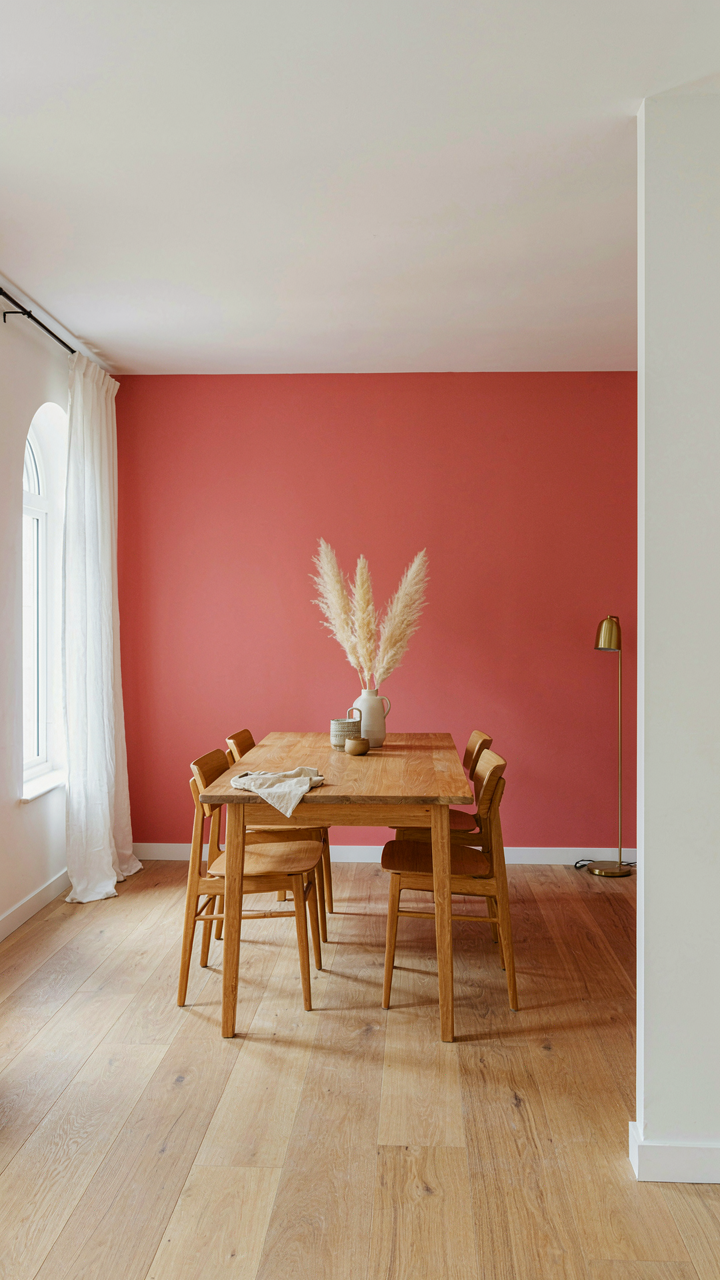
You want your guests comfortable so you look like you know what you’re doing. The real issue: most people size tables by aesthetic preference, not by the physics of human movement. A six-seat raw wood table needs a minimum of 36 inches of clearance on all sides to pull chairs without collision. Standard dimensions work: a 36-by-60-inch table seats six reliably with two on each long side and one at each head. Thinner live-edge tables feel less bulky but still occupy that footprint. Width matters more than length for modern rustic rooms because the wood becomes visual weight.
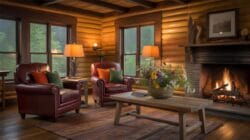
The chair seat height to table height ratio dictates comfort. Raw wood tables typically sit at 30 inches. Pair this with 18-inch seat heights for standard dining chairs. This creates 12 inches of knee clearance, the functional minimum. Measure your actual room before purchasing. A six-top in a room smaller than 12 by 14 feet creates a dead zone where you either squeeze past furniture or navigate like an obstacle course. The table size should allow two people to pass simultaneously without contact.
Circulation Creates Usable Space
Traffic patterns determine whether a dining room feels intentional or cramped. Military strategists call this “lines of advance”—the paths that let forces move without friction. In your dining room, map where people enter, move to the kitchen, and access seating without crossing the active table zone. A six-person raw wood table positioned against one wall wastes its visual impact and creates a bottleneck. Center it when possible, leaving at least 42 inches between the table perimeter and any surrounding wall or furniture. This is the minimum width for someone to move behind a seated guest without forcing them to stand.
The secondary movement path matters as much as the primary one. If your kitchen doorway sits perpendicular to the table, position the table so diners don’t face a traffic highway. Offset the table slightly or rotate it 45 degrees if the room allows. This simple shift makes the space feel less like a hallway with furniture. When people serve food or clear plates, they move predictably. Design around that motion, not against it. A dining room where someone can walk behind chairs without drawing shoulders back demonstrates proper flow.
The Biomimicry Blueprint: Mimicking Nature’s Efficiency

Wood Grain As A Structural Record
You want to believe your table will outlast your marriage. Here’s what actually matters: wood grain isn’t decoration—it’s a performance map. In biology, growth rings document resource scarcity and abundance; in a modern rustic dining room, grain patterns reveal wood density and stress distribution. Dense grain means the tree survived drought or competition. Those tight rings compress strength into smaller space. A table cut from old-growth wood with tight grain will support weight and absorb impact better than fast-grown timber, regardless of finish.

The practical read: examine grain tightness before purchase, not after. Tight, consistent rings indicate slower growth and higher density. Loose rings mean softer wood that dents under normal use. Run your hand across the surface—tight grain feels smoother and resists splintering. This is why reclaimed or salvaged wood commands premium pricing. It’s been stress-tested by time and use already. Choose density first, aesthetics second, and your table becomes heirloom-grade by accident, not intention.
Decay Resistance Through Wood Selection
Most people think all wood needs the same protection. They don’t. Some species contain natural compounds that repel rot and insects without chemical treatment. Walnut, oak, and cedar produce tannins and phenols that inhibit fungal growth. These aren’t added—they’re inherent. A walnut table exposed to moisture performs differently than pine because biology, not finish, determines resistance. The finish protects the surface; the wood protects itself.
Select species based on your climate and use pattern, not just color. In humid environments, walnut or white oak outperforms lighter softwoods structurally. In dry climates, this distinction matters less but still exists. When sourcing raw wood tables, ask the supplier which species they use and why. If they can’t answer, they’re selling furniture, not material science. Request wood that hasn’t been kiln-dried excessively—over-drying removes moisture but also removes some natural resistance compounds. The wood should feel alive in your hand, not brittle.
Dining Room Contemporary: Lighting As Sculptural Element
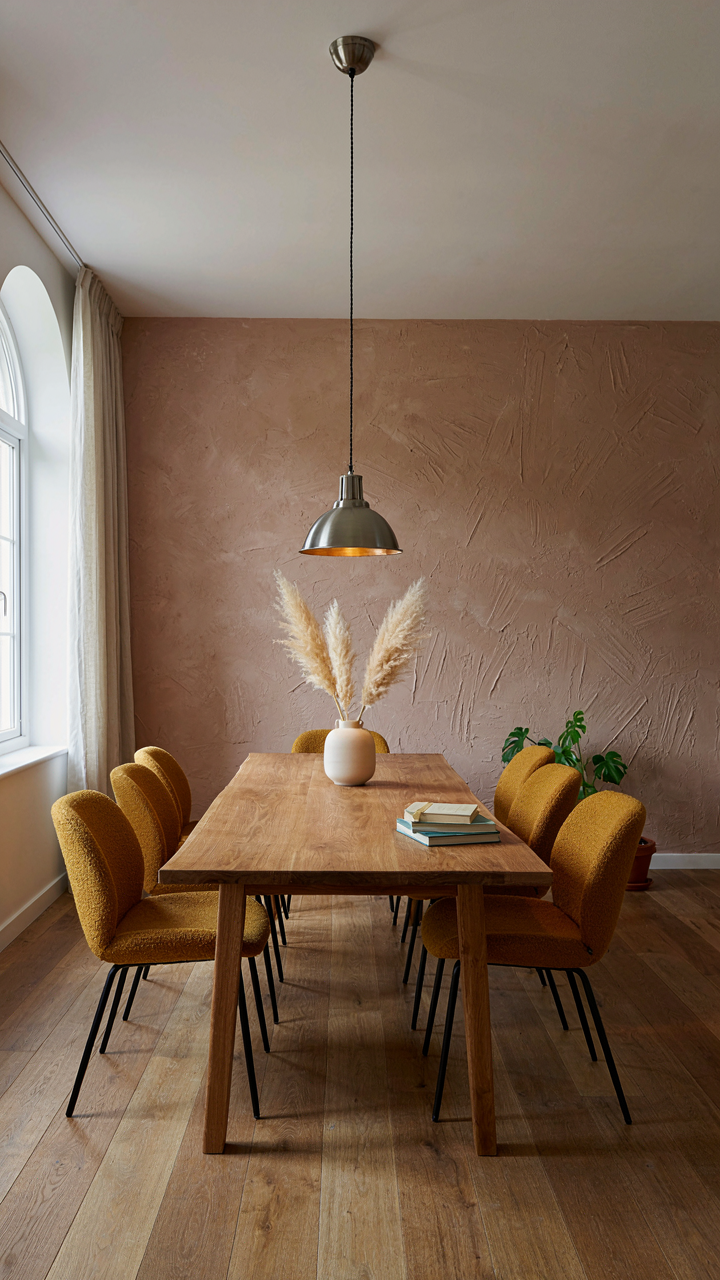
Pendants And Chandeliers As Visual Anchors
You want a pendant light to do the work of a conversation starter so you don’t have to actually design the rest of the room yet. Here’s the mechanism: industrial pendants and minimalist chandeliers function as focal points because they occupy both vertical and horizontal space simultaneously, forcing the eye to settle before scanning the rest of the room. A raw wood table needs visual competition above it or it dominates through default.

Industrial pendants work because they echo the material story of the wood below. Steel, cast iron, or Edison bulbs reference the utilitarian origins modern rustic claims to value. Minimalist chandeliers do the opposite: they create clean geometry that prevents the space from feeling cluttered by the texture already present in the wood grain and natural edges. Either direction works only if you commit. Half measures kill the effect.
Building Depth Through Layered Light
Lighting operates on the same principle as military strategy: you need three distinct layers of force to control the battlefield, not one overwhelming attack. Ambient light provides baseline visibility. Task light enables function at the table. Accent light creates hierarchy and depth. Most modern rustic dining rooms fail because they rely on one overhead fixture and call it done.
- Ambient Light: Recessed ceiling fixtures or a central chandelier at 7 to 8 feet above the table surface, set on a dimmer to adjust intensity without changing fixture type.
- Task Light: Pendant lights directly above the table, typically 30 to 36 inches above the surface, positioned to illuminate place settings without creating harsh shadows on faces.
- Accent Light: Wall sconces flanking a buffet, picture lights on artwork, or low-level lighting that emphasizes raw wood texture and material variation in the table itself.
- Dimmer Control: Every circuit should run through a dimmer. Non-negotiable. It’s the only variable that makes lighting functional across different times of day and occasions.
- Bulb Temperature: 2700K to 3000K for warm tones that complement wood. Anything cooler than 3000K flattens the richness of grain and natural finish.
Layered lighting isn’t aesthetic preference. It’s the technical difference between a dining room that serves its purpose and one that looks good in photos but fails in use. Install each layer on separate switches or zones so you control what activates. The raw wood table is your most expensive element. Light it strategically or waste it.
Dining Room Rustic Modern: The Texture Integration Matrix

Layering Materials Without Visual Chaos
You want your dining room to feel expensive and intentional, not like you grabbed whatever was on sale. The mechanism is constraint. Modern rustic spaces work because they stack textures within a narrow material palette, not by throwing everything at the wall. Woven textiles anchor softness. Metal accents catch light and ground the space. Concrete or stone finishes on a feature wall or base elements create visual weight without clutter. The trick is repeating these three material families across the room so they feel planned rather than random.
Start with your raw wood table as the dominant material. Then introduce woven pieces through a jute runner under the table or linen napkins that stay visible. Add metal through simple iron chairs, a steel light fixture, or copper accent pieces. Concrete enters through a polished floor, a textured accent wall, or even a simple concrete planter. Each material family appears at least twice, which signals intention. Avoid mixing five different wood tones, four metal finishes, and scattered textures. Repetition is what separates intentional from chaotic.
Building Depth Beyond Smooth Surfaces
Common advice says to mix matte and glossy finishes for depth. That’s incomplete. Tactile richness comes from surface variation that creates actual shadow play, not just visual contrast. Rough linen next to smooth concrete. Matte woven jute beside polished metal. Hand-finished wood grain beside machine-cut stone. The shadows cast by woven texture are what your eye reads as richness, not the finish type itself.
This is where most modern rustic dining rooms fail. They use all smooth surfaces with one rough element, then call it textured. You need at least three competing surface depths in sight lines. A woven wall hanging catches light differently than a concrete wall behind it. Metal chair legs create linear shadows that contrast with the organic grain of wood. Unfinished wood surfaces absorb light while polished surfaces reflect it. Run your hand across each material before committing to placement, then position them where they create the most visual shadow variation across the room.
Contemporary Interior Design Dining Room: The De Clutter Doctrine
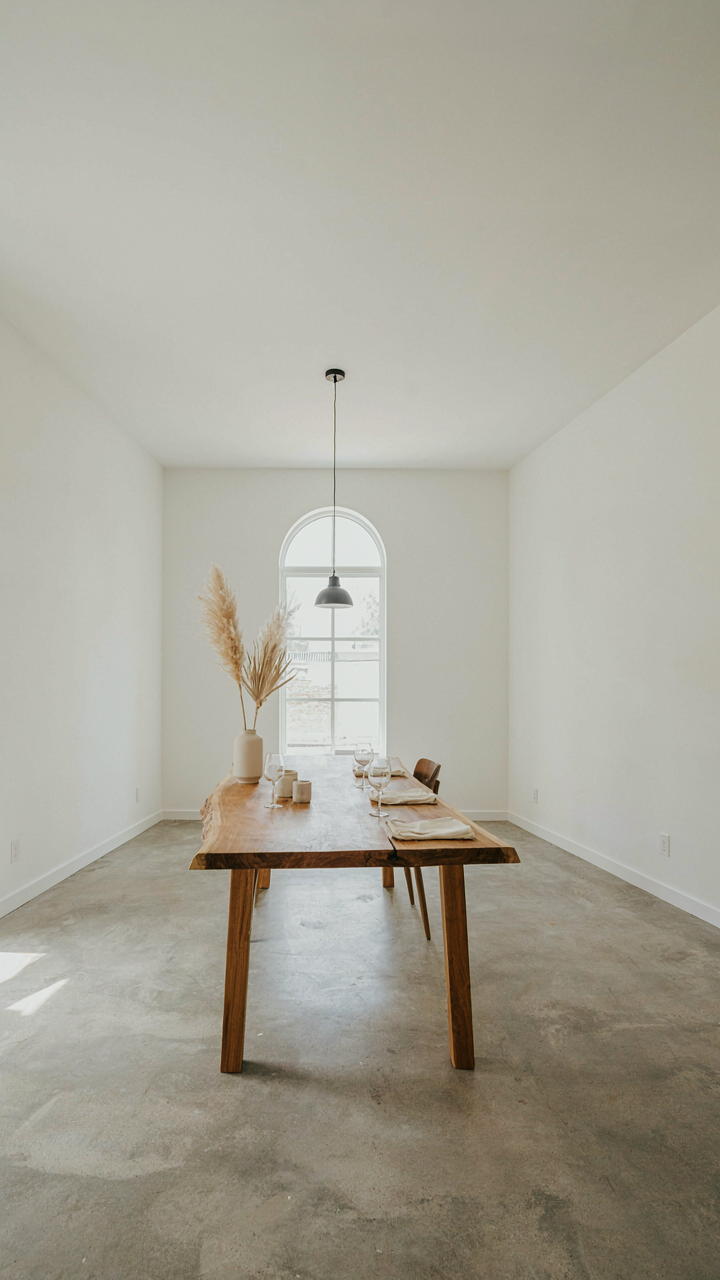
Let The Wood Breathe
You want permission to buy less. That’s the real draw here. The mechanism is scarcity. In economics, scarcity drives perceived value. A raw wood table surrounded by emptiness doesn’t whisper luxury—it screams it. Every object competes for attention in a crowded room. Remove the competition and the wood becomes the market. The table stops being furniture. It becomes the statement.
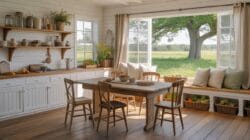
Most designers will tell you to add more to make a room feel complete. They’re wrong. A modern rustic dining room proves the opposite. Empty wall space beside a live-edge table creates contrast. That contrast is what your eye actually lands on. The wood grain becomes legible because nothing distracts from it. This is restraint by design, not restraint by budget.
Intentional Objects Over Accumulated Noise
Strategic placement means every piece earns its seat at the table. You’re not decorating a room. You’re building a visual argument. One pendant light above the table beats six scattered fixtures. A single sculptural chair at the head beats a matched set of four. The art you hang should connect to the wood’s color and texture, not compete with it.
Most people accumulate first and arrange later. Reverse the process. Decide what story the room tells before you buy anything. Does a modern rustic dining room need a sideboard? Only if it serves a function beyond filling floor space. A vase on the table works harder than wall décor that matches nothing. Start with the table. Add one piece. Live with it for a week. Add the next only when the room feels incomplete.
Mountain House Interior: Beyond The Generic ‘Cozy’
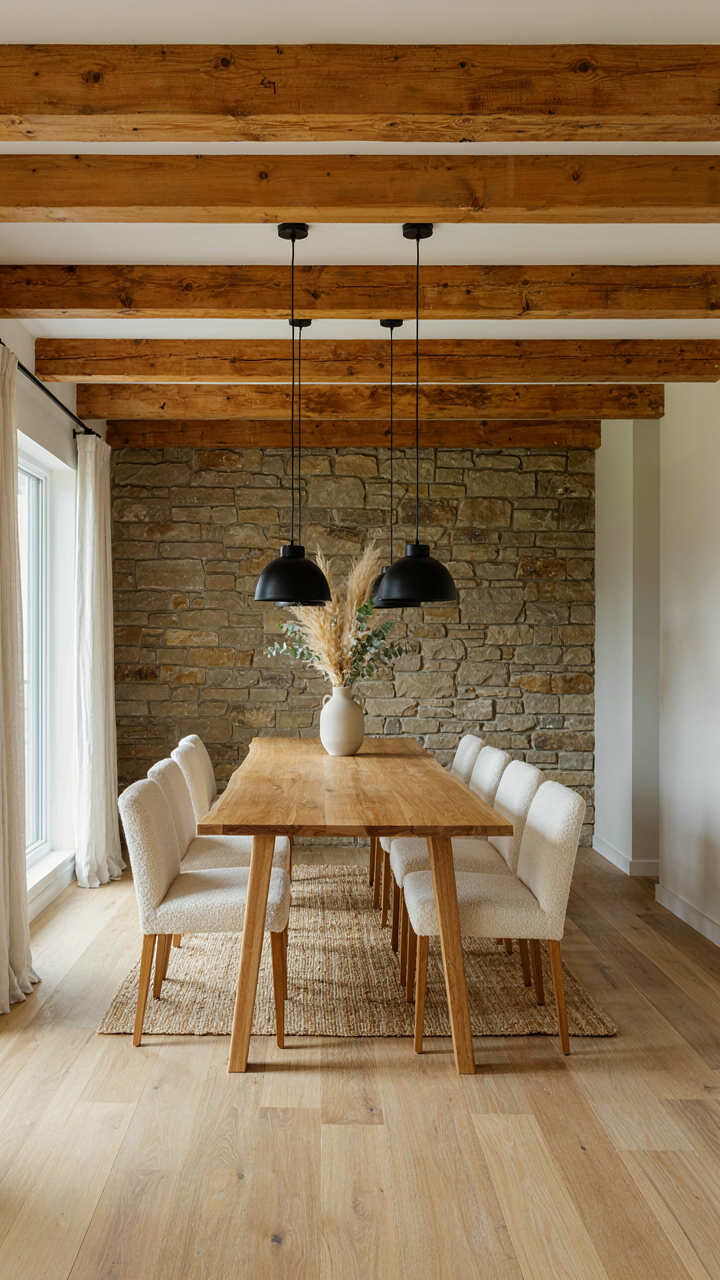
Exposed Beams And Stone Define The Space
You want this room to signal permanence and wealth without trying too hard. The real mechanism is structural honesty: expose what builders used to hide, and suddenly the room reads as intentional instead of decorated.
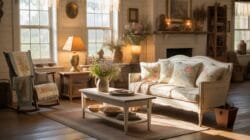
Exposed beams work because they solve a load-bearing problem visibly. In mountain homes, timber framing wasn’t ornamental—it was the skeleton. When you leave those beams exposed in a dining room, you’re not adding decoration. You’re revealing the system that holds the ceiling up. Stone walls function the same way: they’re thermal mass and structural support made visible. The room doesn’t feel designed. It feels inevitable.
The mistake most people make is treating these elements like wallpaper. You can’t slap a decorative beam on drywall and call it modern rustic. Authentic exposed beams require either genuine timber structure or architectural consistency with the rest of the home. Stone walls need proper grout lines, realistic material thickness, and integration with your raw wood table. One phony element collapses the entire premise.
Sightlines Control The Entire Experience
A dining room is only as powerful as what people see while seated. Position your raw wood table so the primary sightline frames a window or opens toward the room’s best architectural feature. This isn’t about views alone—it’s about anchor points that sustain attention across a meal.
Mountain house dining works through foreground and background layering. Your table occupies the foreground. The stone wall or window occupies the background. The distance between them creates perceived spaciousness. Position the table perpendicular to the view, not facing away from it. This forces guests to engage the space rather than stare at drywall. If the room lacks a natural focal point, the exposed beams themselves become it. Arrange seating so people see them, not just sit under them.
The actionable step: map your sightlines before placing furniture. Stand at each chair position and note what you actually see. Adjust the table placement until the view from the head of the table and from guest positions aligns with your strongest architectural element.
The Wooden Dining Room: Investment In Authenticity

Raw Wood Holds Value Where Trends Don’t
You want to believe your dining room purchase won’t look dated in five years. That’s the real thing driving this section. The mechanism is simple: raw wood tables depreciate slower than finished furniture because they sidestep trend cycles entirely. A solid walnut or oak table from 1980 looks acceptable today. A laminate dining set from 1980 looks like a museum piece. Raw wood gains character through use. It doesn’t accumulate the visual weight of obsolescence.
Quality raw wood tables retain 60 to 75 percent of their original value over a decade, depending on wood species and construction. Cheap particle board or veneer loses 80 percent within five years. The difference isn’t marketing. It’s material science. Dense hardwoods resist warping, scratching absorbs into the grain rather than exposing cheap substrate, and refinishing is always possible. You’re not buying an appliance. You’re buying a surface that becomes more interesting with damage, not less.
Where The Wood Actually Comes From
Sustainable sourcing is not a marketing term you should ignore. It’s an inventory problem disguised as ethics. Most raw wood tables now come from either FSC certified forests, reclaimed timber, or farmed timber operations. FSC certification means third parties verified the forest wasn’t clear-cut and local ecosystems remained intact. Reclaimed wood comes from deconstructed buildings or salvaged logs. Farmed timber grows on land designated for timber production, not converted from natural forest.
The real distinction most retailers won’t state plainly: FSC certified and reclaimed cost more upfront because they require tracing and verification. Uncertified “rustic” wood often comes from ambiguous sources. Ask your supplier directly about chain of custody documentation. If they can’t produce it, the wood’s origin is genuinely unknown. This matters not for virtue signaling but because traceable supply chains correlate with better construction standards and fewer surprises about wood behavior after purchase.
The Real Obstacle Isn’t Finding Ideas, It’s Shedding The Fear Of Commitment To A Genuine Aesthetic

Most people treat a modern rustic dining room like a rental they might abandon. They play it safe. They hedge their bets with bland compromises. But authenticity demands conviction. Pick one raw wood table today. Live with it for a week before you second-guess yourself. You’ll either feel at home or you won’t. Either way, you’ll know. The only bad modern rustic dining room is the one you designed by committee inside your own head.