
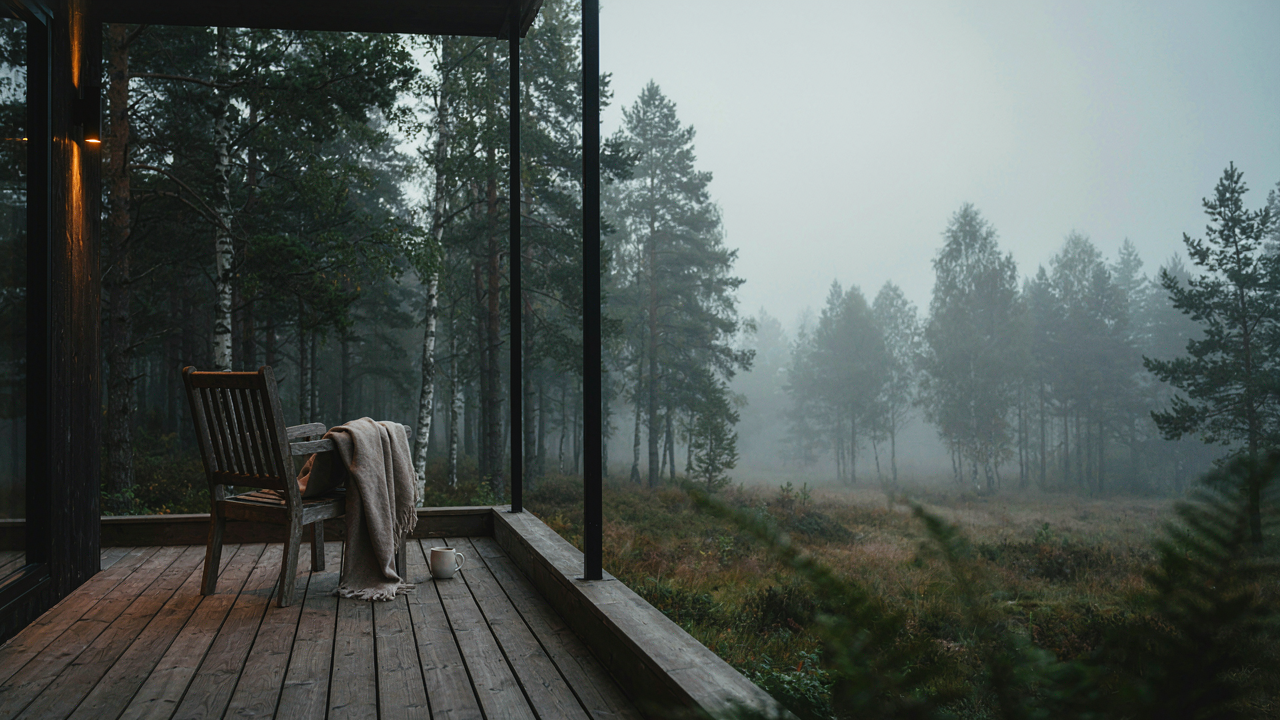
The Minimalist Porch Manifesto: Beyond Rustic Cabin With Porch Decor
Strip Everything Down First
You want a tiny cabin porch that feels intentional because you’re tired of owning stuff that owns you back. Here’s the mechanism: constraint forces clarity. Your porch isn’t small because you failed to plan—it’s small because the space itself demands that every object justify its existence. Remove everything that doesn’t serve morning solitude or basic function. No decorative lanterns. No throw pillows. No ambient clutter masquerading as coziness. What remains isn’t sparse—it’s decisive.
Start by cataloging what’s actually there. Write down every item. Then ask one question per object: does this get touched, sat on, or looked at during a quiet morning? If the answer is no, remove it. This isn’t ruthlessness for show. It’s acknowledging that a tiny porch has zero margin for waste. The space you gain isn’t measured in square feet—it’s measured in attention. You’re not distracted by visual noise because there is none.
The Function First Framework
Purpose drives every design choice on a tiny cabin porch, and the field of industrial design calls this constraint satisfaction—you nail down what the space must do, then strip away everything else. Your porch exists for one thing: facilitating quiet mornings. That means seating that supports your body for hours without complaint. A surface for coffee. Protection from weather. Sightlines to something worth looking at. Anything beyond this is decoration pretending to be design.
Most porch advice treats the space like a showroom. It isn’t. It’s a machine for a single job. Specify that job first. If your porch must hold one chair and nothing else, build for that. If you need a small table, measure coffee cup height and book thickness—then build to those dimensions exactly. The result looks minimalist not because you’re following a trend, but because you eliminated every decision that wasn’t anchored to actual use. Install one piece of seating. Ensure it’s comfortable for ninety minutes. Stop.
The Sensory Gate Protocol For Tiny Cabins
Visual Restraint Shapes Mental Quiet
You want the porch to signal that you’ve left the world behind—that’s the real draw here. The mechanism is simple: your brain processes visual complexity as threat. Too many colors, patterns, and competing focal points force your nervous system to work. A limited palette does the opposite. It tells your amygdala nothing requires scanning or evaluation. Restraint isn’t aesthetic weakness. It’s neurological efficiency.

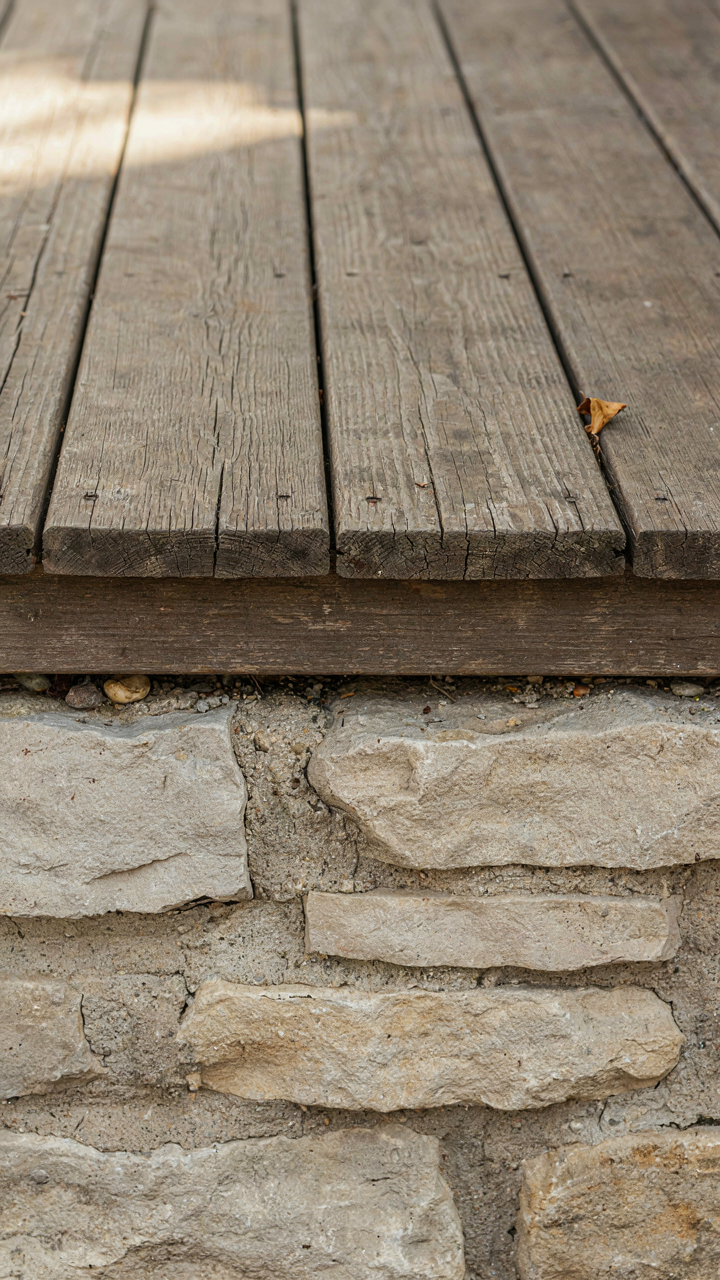
Apply this by anchoring the porch to two or three base colors maximum. Wood tones, stone, and one accent. Natural lines—the grain of weathered boards, the edge of stone foundations—give the eye something to follow without firing multiple attention circuits. Avoid ornament. The horizon line, a single tree view, clean railings: these are the visual anchors that matter. Everything else is noise you’re paying for with mental fatigue.
Acoustic Design Starts With Subtraction
Most porch advice treats sound as decoration—wind chimes, water features, bird calls—which misses the whole point. Acoustic engineering calls this “signal-to-noise ratio,” and tiny cabins reverse it: you want signal from nature, zero noise from human activity. Subtraction comes first. Block what intrudes before you amplify what soothes.
Install a solid roof overhang or partial cover. This stops rain percussion from becoming white noise that masks genuine quiet. Use weathering on wood rather than paint—it dulls sound reflection. If the porch faces a road or neighbor, consider a dense hedge line or fence placement that interrupts sound travel before it reaches the sitting area. Once external noise is managed, natural sounds—birds, wind through trees, distant water—surface on their own. You don’t manufacture them. You remove what blocks them.
The “Cognitive Reset” Corner: Essential Small Cabin Ideas

One Chair, Zero Options
You want to feel productive on a porch without actually committing to anything. Here’s the mechanism: your brain treats choice as work. In economics, this is called decision fatigue. Apply it to your tiny cabin porch by removing the variable entirely. One chair. That’s the entire furniture strategy. Not two chairs for “flexibility.” Not a bench that lets you shift positions. One.

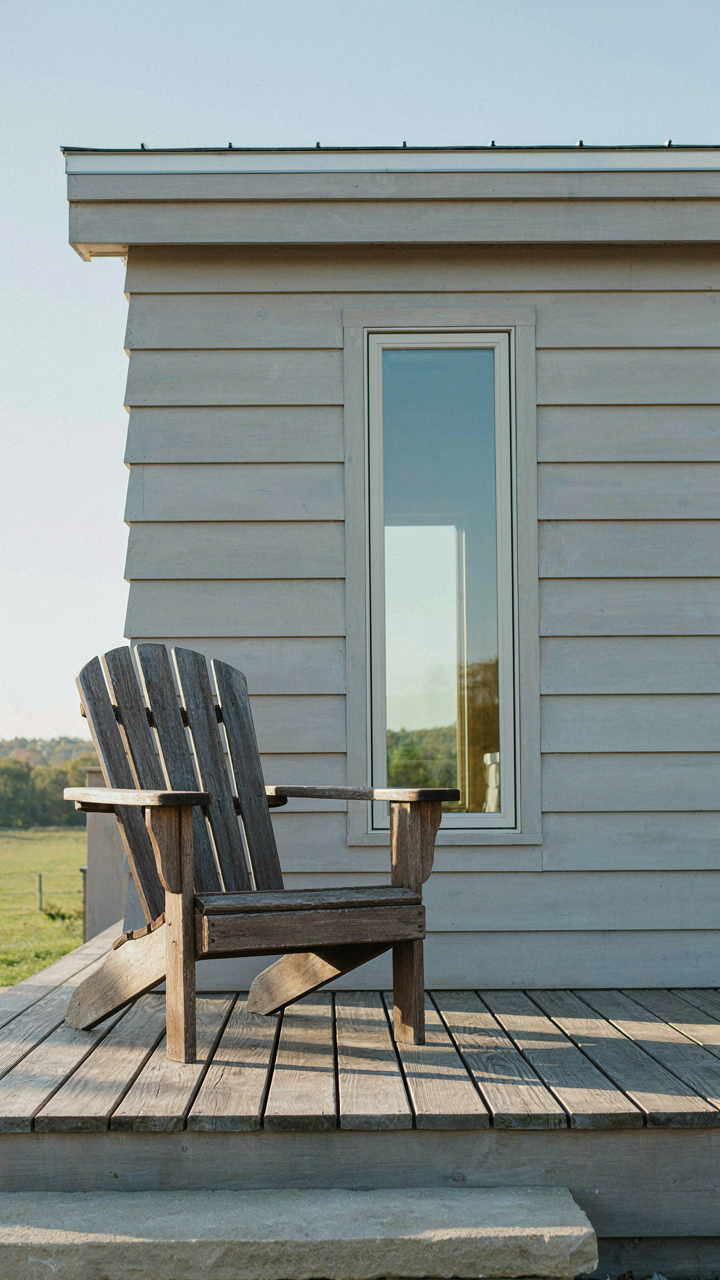
The chair does one job. It holds you while your nervous system downshifts. You sit there because there’s nowhere else to sit. No chair-to-chair migration. No repositioning to find the “right spot.” A wood Adirondack or simple metal frame works. Material doesn’t matter. Commitment does. Your porch becomes a constraint, not a shopping mall for postures.
The Single Surface Rule
Most cabin porch advice tells you to add “multiple functional zones.” Wrong. That’s just indoor thinking scaled down. Your tiny porch needs exactly one dedicated surface for one task type. A small table for coffee and a journal. Not coffee, journal, phone, book, and snacks spread across every edge. The constraint forces intention.
When your surface is small and singular, you physically cannot multitask. You pour coffee. You open the journal. You write. That’s the full sequence. No phone scrolling disguised as “checking one thing.” No overflow of objects that dissolves focus into visual noise. Place the table within arm’s reach of the chair. Arm’s reach. Nothing further requires getting up.
Lighting As A Focus Tool: Not Just Ambiance For Cabañas Pequeñas
Minimal, Directed Light For Early Mornings
You want your tiny cabin porch to feel intentional at dawn because it signals you’ve designed something worth protecting from the world’s noise. The mechanism is attention control. Borrowed from neuroscience: your brain allocates cognitive resources based on what light presents as salient. Directed light creates a focal point. Unfocused ambient light scatters your attention across the entire space, activating survival mode instead of contemplation.

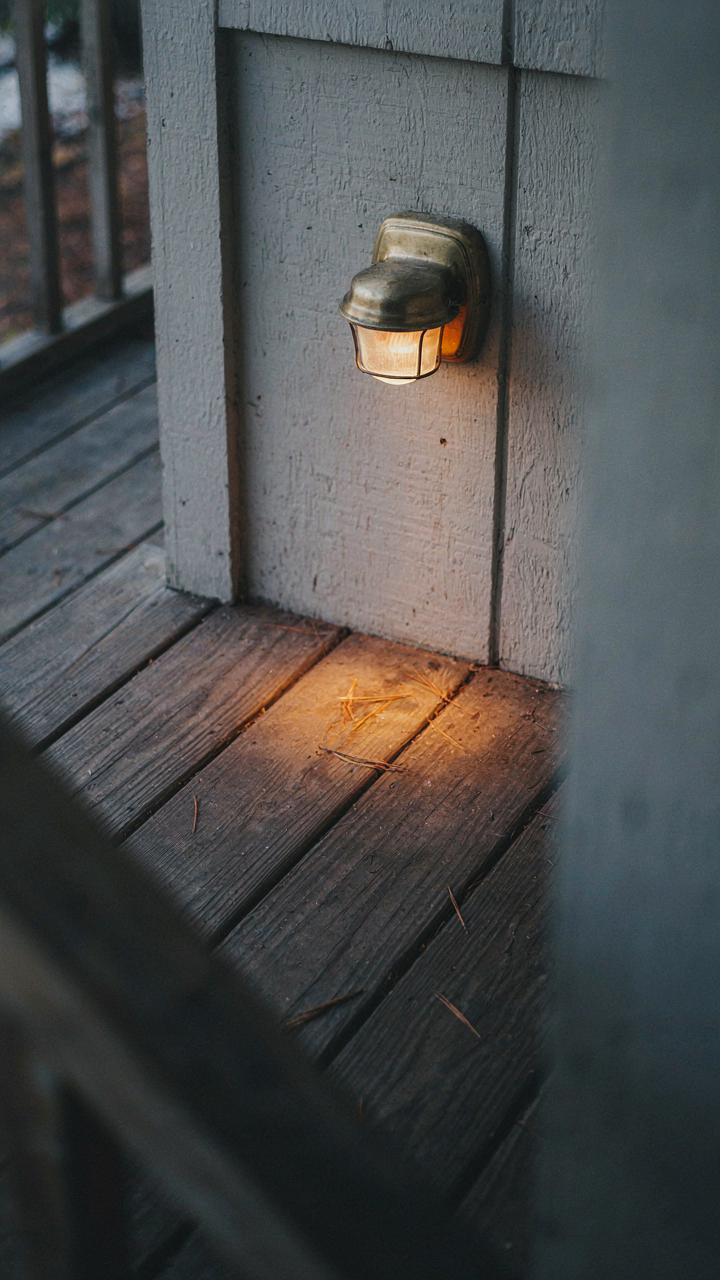
Place a single light source at eye level when seated, angled to illuminate only your immediate zone. This replicates the constraint that forces your mind inward. Wall-mounted fixtures or a single pendant work here. The porch becomes a defined theater for thought, not a stage lit for an audience that doesn’t exist.
Avoid Harsh Overheads, Embrace Subtle Glow
The common advice is wrong: soft lighting doesn’t make mornings better because of aesthetic feel. It works because your eyes remain relaxed and your cortisol response stays flat. Harsh overhead lighting triggers the same alert state as midday, neurologically hijacking the purpose of a quiet morning entirely.
Use warm-color temperature sources, 2700K or lower. Position them low and to the side. Recessed lights, small lanterns, or tea lights in fixed holders remove the need for you to adjust anything once you sit. The setup becomes a protocol. You arrive, you sit, the environment does the work. No fussing, no decisions, no waste.
Weatherproofing Your Intention: The Cabin With Porch Advantage
Overhangs That Actually Work
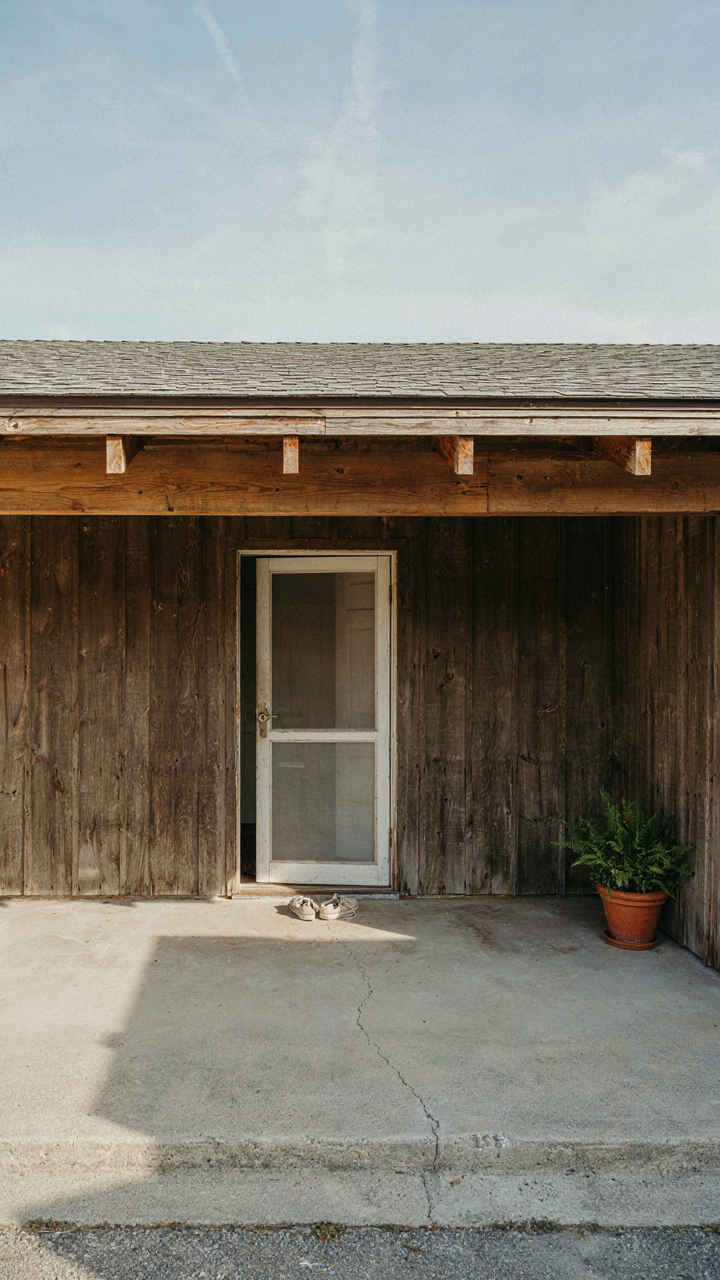
You want your porch to feel like an extension of indoor comfort without admitting it. Here’s the mechanism: a strategic overhang functions as a thermal and moisture barrier, borrowing from building science’s concept of the “dew point” – the exact temperature where water condenses on a surface. A 3 to 4-foot overhang stops rain from driving sideways onto walls and furniture while keeping morning sun accessible during winter months. The depth matters more than aesthetics.

Without sufficient overhang, your porch becomes a transition zone that stays damp. Rain reaches siding. Wood rot accelerates. Furniture deteriorates faster. A modest 4-foot extension changes the equation entirely: you gain usable dry space even during light precipitation, and you reduce maintenance cycles on exposed materials significantly. Most people underestimate how shallow a porch truly needs to be to fail.
Materials That Don’t Demand Constant Repair
The standard advice about “choosing durable materials” is incomplete. It misses that durability compounds – some materials require intervention every two years, others every decade. Metal roofing (standing seam or corrugated) sheds water aggressively and resists rot unlike asphalt shingles. Pressure-treated lumber or composite decking eliminates the rotting cycle that untreated wood demands. Concrete or stamped composite flooring handles moisture without warping.
The real decision tree: avoid any material that needs yearly sealing or staining. Sealed wood fails because seals crack, water gets trapped underneath, and rot starts underneath the protection layer. Maintenance-free means you actually maintain it. Pick materials where time is the enemy only, not the enabler of failure. Your morning routine happens on the porch itself, not repainting it.
The “Bio Rhythm Sync” Zone: Chalés Pequenos & Nature
Clear Sightlines To Living Landscape
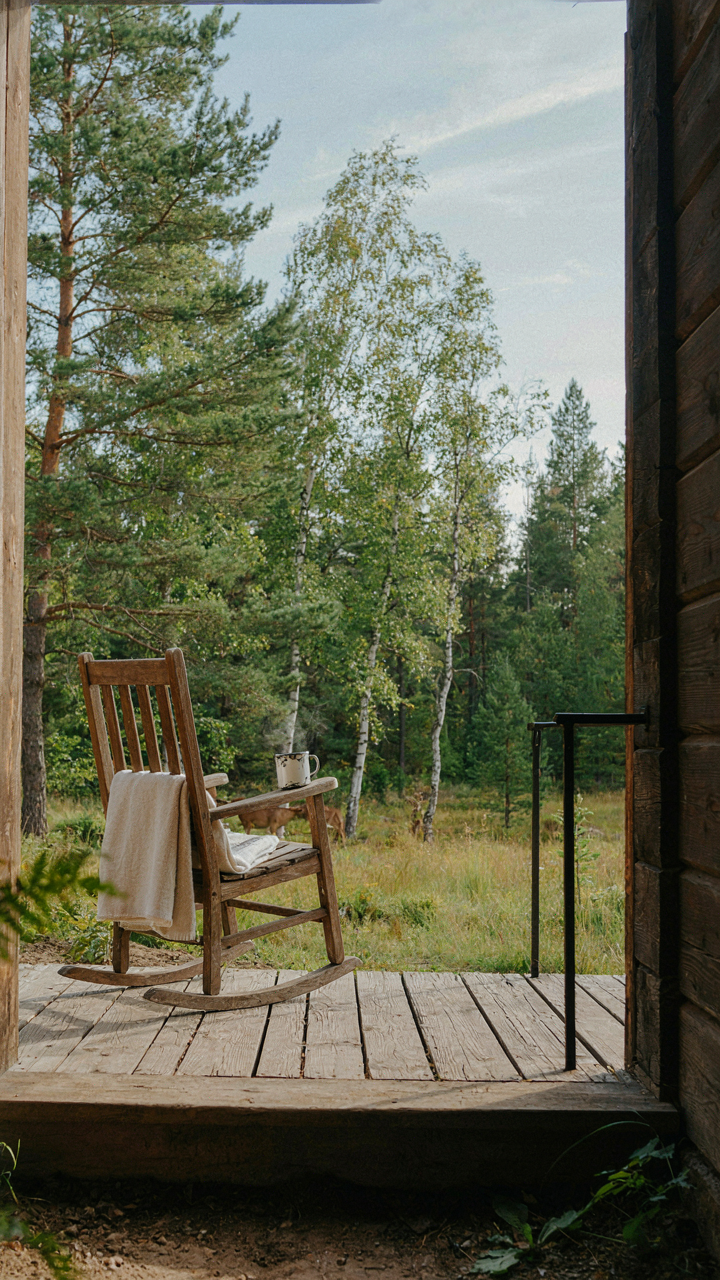
You want your tiny cabin porch to feel like an escape, which means you’re actually running from decision fatigue and noise pollution. The mechanism is simple: your nervous system tracks visual complexity. An unobstructed view of trees, sky, and horizon reduces cognitive load because your brain processes fewer competing stimuli. This is basic neurobiology, not philosophy.

Position your porch to face open sky or treeline rather than toward outbuildings, property lines, or neighboring structures. The depth of field matters more than the distance. A sightline through mixed tree heights creates visual rhythm without clutter. Trim lower branches on surrounding trees to create sight corridors. Remove or relocate feeders, decorations, and equipment that fragment the view into managed space rather than natural space.
Biological Elements That Regulate Presence
Most porch advice treats plants and water features as decoration. Wrong. They’re sensory anchors that regulate your circadian response. Ecology shows us that living systems emit patterns: bird calls at specific times, water movement on variable schedules, leaf shadow flicker. Your porch needs at least one active biological element, not a static one.
Install a low water feature (fountain or basin) within earshot but not dominant focus. Running water produces white noise that masks unwanted external sounds and creates a consistent acoustic environment. Add native shrubs or small trees at porch edges rather than potted plants. Root systems stabilize soil and create ecological continuity. The plants should require minimal intervention. If you’re maintaining them constantly, they become another task consuming morning attention instead of restoring it.
The Feedback Loop Porch: Applying Cybernetics To Maison Container
Design For Self Correction
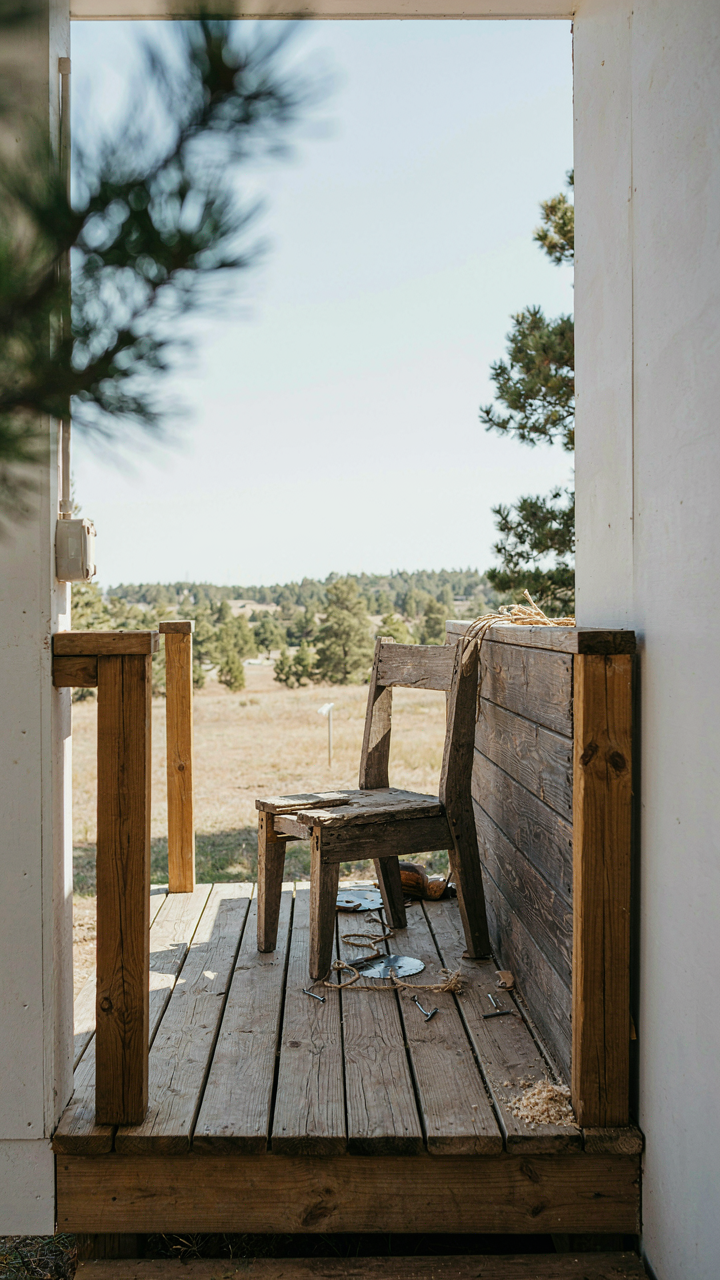
You want your tiny cabin porch to feel effortless. That’s the real motive. Effortless spaces signal you have your life handled, that you didn’t waste money on dead square footage. Cybernetics, the study of systems that self-regulate, offers the actual mechanism. A feedback loop porch corrects itself through observation. You build it rough, live on it, then adjust what fails. The porch becomes a system that tightens around how you actually behave, not how you imagined you’d behave.

Most porch design advice starts with aesthetics or layout. Wrong move. Start with sensing. Install your porch as a minimum viable structure: basic roof, railings that meet code, flooring that won’t rot in two years. Live there for a full season. Watch what fails. Does water pool in one corner? Does the morning sun hit your eyes at six AM instead of warming your back? Does wind tunnel through the gap between posts? Document these failures. Then modify. This is the feedback loop. The porch teaches you what it needs.
Optimize For Your Flow State
Measuring means you stop guessing. Track one metric for two weeks: how many mornings you actually use the porch, and for how long. Most people build porches they never sit on because the conditions weren’t dialed. Temperature matters. Sightline matters. Acoustics matter. If you’re cold, you leave. If you face a wall, you don’t return. If road noise dominates, the space fails its job.
After two weeks, adjust one variable. Angle the seating. Add a windbreak. Reposition the screen to block noise from one direction. Wait another two weeks. Track whether usage increased. The metric is not comfort. The metric is time spent. Raised time spent means the porch hit a flow state trigger. Repeat this cycle until your morning porch use becomes automatic, requiring zero willpower. That’s optimization complete.
Beyond The Instagram Aesthetic: Authentic Cabañas Rústicas

A Porch That Works Before It Looks
You want this section because you’re worried your porch will look cheap or unfinished compared to what you see online. The real mechanism is simple: Instagram shows you the final frame, not the failure. A functional tiny cabin porch solves problems first, then gains character from actual use. Weathered wood doesn’t photograph well until someone lives with it for years. You’re looking at the end state, not the process that created it.

Start by identifying what your porch actually does. Does it block wind? Does it dry boots? Does it catch morning sun or shade the entrance? Most cabin porches fail because they prioritize aesthetics over these jobs. A three-by-six porch with a single step and a roof overhang that sheds water beats a six-by-eight platform with decorative railings that traps moisture and ice. Build the mechanical system first. Paint and material choices follow once the porch earns its keep through two seasons of weather.
The Beauty Of What Breaks
Wabi-sabi comes from Japanese aesthetics and centers on embracing entropy as the design itself. In porch terms, entropy is your ally, not your enemy. The visible grain that deepens as wood weathers, the rust patina on metal brackets, the uneven wear on floorboards where people actually walk—these aren’t failures to hide. They’re the porch’s honest record. Most design advice tells you to seal and protect everything to keep it pristine. That’s backwards. A sealed porch resists its environment and cracks. An unsealed porch accepts weather and develops texture that no stain can replicate.
Accept that your porch will look different in year one than year five. The wood will gray. The metal will oxidize. New nails will pop slightly as the structure settles. You don’t fight this by adding sealers and caulk. You work with it by using materials rated for exposure and accepting that impermanence is the point. Choose rot-resistant wood species that improve with age, like cedar or larch. Set hardware with enough slack to move. Check fasteners twice yearly instead of trying to lock everything static. This keeps the porch functional and lets it age visibly, which is where real beauty lives.
The Morning Ritual Amplifier For Your Tiny Cabin Porch
Design Around What You Actually Do
You want the porch to feel intentional because an intentional space signals you have your life together. That’s the real draw. But intention only sticks when the physical layout matches your actual morning actions, not some aspirational version of yourself. This is ergonomics borrowed from manufacturing: operators work fastest and most consistently when tools sit exactly where the motion needs them. Your porch should function the same way.

Map your morning onto zones. If you drink coffee first, the mug lives steps from the door. If you journal, the chair faces what you want to see. If you stretch, you need clear floor space with something to hold. Don’t guess at layout. Do the routine once, note every reach and pivot, then build the porch around that pattern.
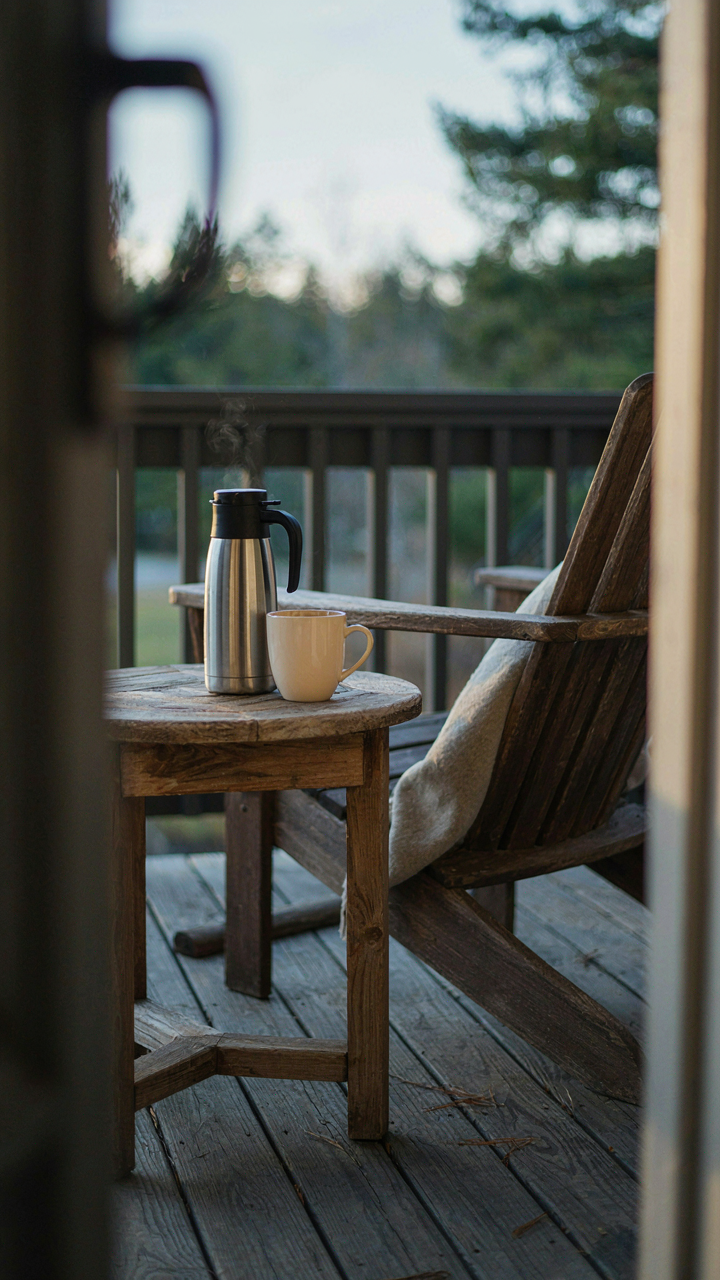
- Coffee station: Thermal carafe, mug, small table within arm’s reach of seating. Eliminates the trip inside mid-routine.
- Writing surface: Knee-high table or lap desk that works from your chair. Height matters for posture during long sits.
- Visual anchor: Position yourself to face one view, not the door or driveway. Repetition deepens the ritual.
- Footwear access: Boot rack or hooks at porch entry. Wet or muddy shoes never enter the cabin.
- Movement space: At least three feet clear for stretching or walking. Cramped space kills the habit fast.
The mechanism is friction reduction. Each extra step, each thing that requires you to remember or adapt, erodes the routine. A cabin porch that makes your morning automatic wins. You execute it without thinking, which is when ritual actually changes your mental state.
Prepare Everything The Night Before
The common advice here is to “set up your space.” That’s vague and useless. What matters is removing every decision point between waking and sitting. This is pure decision fatigue management. Your brain has limited bandwidth in the morning. Spend it on the experience, not on logistics.
Walk the porch the evening before and audit for incompleteness. Is the thermos empty? Fill it. Is the journal on the chair or inside? Move it. Are there dead leaves on the surface? Clear them. The goal is zero friction between stepping outside and beginning your ritual. When nothing requires thought or correction, you stay in the mental state the ritual creates instead of breaking it to solve problems.
The Ultimate Obstacle: You Mistake Serenity For Inactivity

Most people build a tiny cabin porch to escape. They think quietness means doing nothing. Wrong. A porch is a thinking machine. It’s where you process, plan, and make decisions without distraction. Your brain works better in silence. So today, sit on your porch for twenty minutes with a notebook. Don’t meditate. Write one problem you’ve been avoiding and three ways to solve it. Serenity without output is just procrastination wearing a better outfit.