The English Cottage Bathroom Vanity Delusion: Why “Charm” Kills Character
Generic Versus Lived In Character
You want people to think your bathroom wasn’t decorated, it evolved. That’s the actual status move here, not the other way around. The mechanism is simple: mass-produced cottage vanities all follow the same formula because they’re designed to appeal to the widest market. They prioritize visual markers of “cottage” over functional authenticity. Distressed finishes, decorative hardware, and symmetrical design communicate the aesthetic without requiring any real constraint or history.
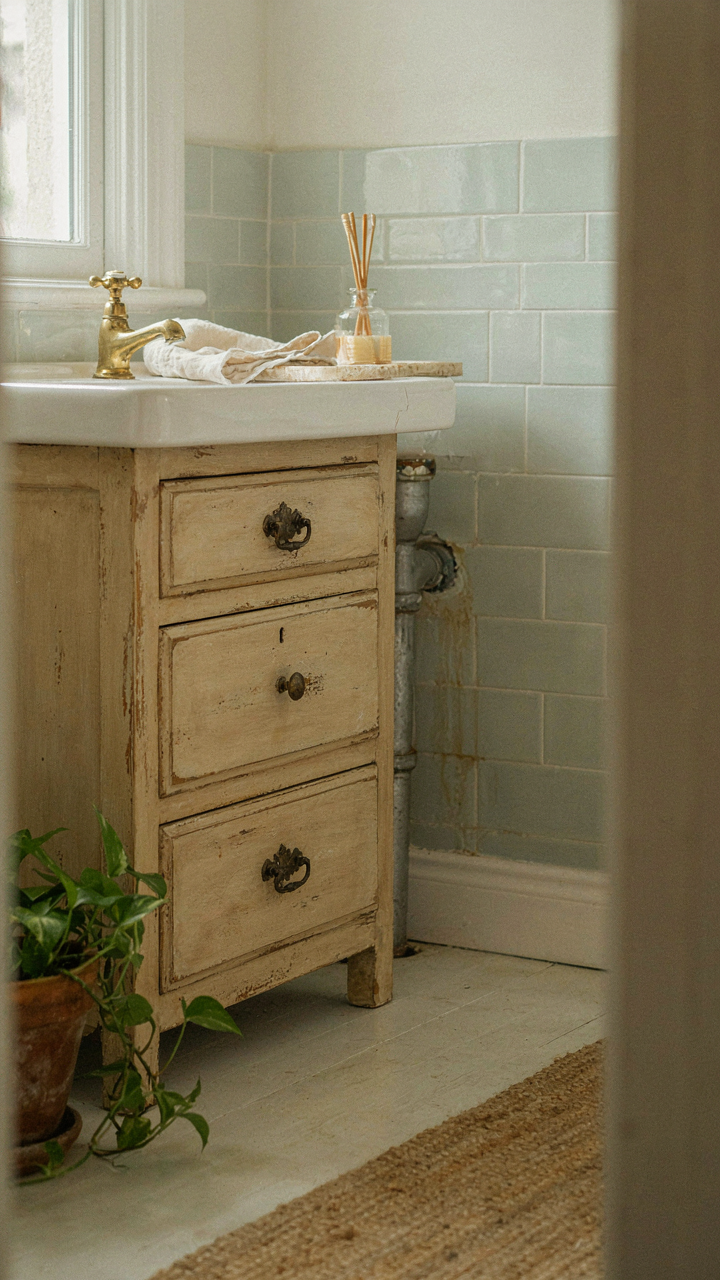
Authentic cottage bathrooms emerge from limitation and use. The vanity sits where plumbing already existed. Materials were chosen because they were available or affordable at the time, not because they matched a mood board. Paint chips off naturally. Hardware gets replaced piecemeal. This creates visual texture that can’t be replicated by buying a pre-weathered vanity from a furniture store. The difference reads immediately to anyone paying attention.
Avoiding The Theme Park Aesthetic
Theme parks and contemporary cottage design share the same fatal flaw from merchandising: they strip context away and amplify individual elements until nothing feels earned. A real cottage bathroom vanity reflects the house’s actual age, the original plumbing layout, and the owner’s genuine constraints. A theme park version stacks every “cottage” signal in one space: the distressed wood, the apothecary jars, the vintage mirror, the shiplap backdrop.
The practical move is to restrict your vanity to solving one specific problem in your bathroom instead of solving a visual fantasy. If your pipes run in a particular direction, build around that. If your mirror needs to sit at a specific height for the light fixture, start there. If you inherited old tile, work within it. These constraints create the appearance of authenticity because they are authentic. The vanity becomes an object with a reason to exist, not a costume piece.
The Functional Imperative: How Cottage Bathroom Ideas Dictate Form
Storage Needs, Not Visual Fluff
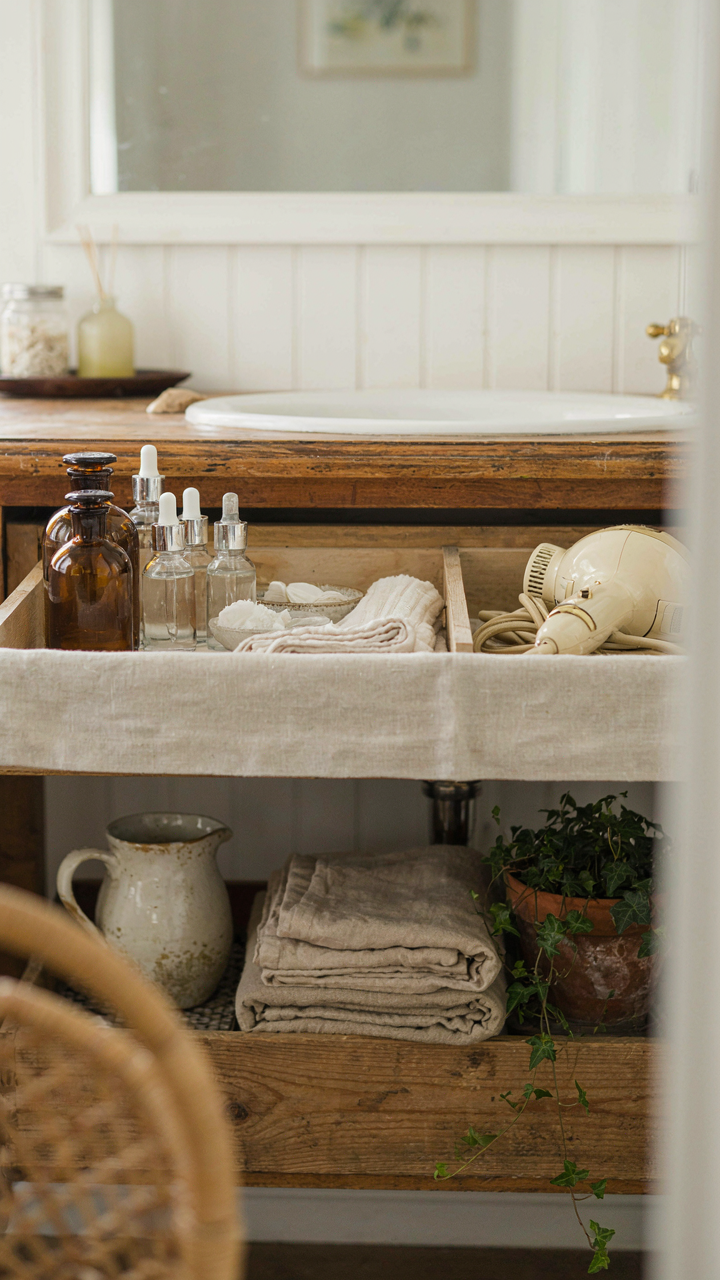
You want the vanity to look charming so you don’t have to admit you need somewhere to put things. Here’s the mechanism: a cottage bathroom vanity is a storage problem wearing a design costume. The moment you measure your actual bottles, towels, and daily-use items, the aesthetic choices disappear. You either have drawers deep enough for full-size bottles or you don’t. You either have a medicine cabinet integrated into the mirror or you’re storing things on open shelves, which reads as either intentional or neglected depending on what’s sitting there.

Real cottage vanities solve this by anchoring function first, then layering style on top. A 30-inch vanity with two drawers and an open shelf below handles the math: medications and small items in the top drawer, hair tools and cleaning supplies in the second, baskets or vintage crates on the shelf. This constraint shapes everything else. You’re not choosing between styles. You’re choosing what actually fits your life, then picking the wood finish and hardware that matches.
Durability As Foundational Beauty
Material endurance isn’t aesthetic advice—it’s structural economics. A vanity fails when moisture hits the substrate, and cottage style uses wood, which absorbs water like a sponge unless sealed properly. Real cottage vanities use solid hardwoods (oak, pine, or reclaimed timber) with marine-grade polyurethane or conversion varnish, not particleboard with veneer. The ones that last thirty years aren’t prettier than the ones that fail in five. They’re just built to handle humidity.
The hardware and plumbing connections matter equally. Brass and stainless steel fixtures resist corrosion in wet environments. The vanity’s drainage box needs proper ventilation underneath, or the wood rots from the bottom up invisibly. Cottage style wins because it looks intentional when you replace a single drawer front or repaint the base. You’re not disguising damage with trendy finishes. You’re choosing materials that age visibly rather than fail secretly.
The “Heritage Build” Protocol: Crafting Your Cottage Core Bathroom Vanity
Wood Selection For Permanence
You want this vanity to outlast trends because owning something substantial feels like winning. Here’s the mechanism: softwoods like pine and fir cost less upfront but move with humidity swings, warping mirror frames and door alignment within years. Hardwoods like oak, walnut, and maple have tighter grain structures that resist dimensional change. Reclaimed wood works—not for nostalgia, but because it’s already stabilized through decades of environmental cycling. The wood already survived its biggest threat.

Moisture destroys bathroom furniture faster than anything else. Cottage vanities live in spray zones where humidity fluctuates daily. Choose woods with proven track records in wet climates. Teak and mahogany naturally repel water due to oil content, but they’re expensive and extractive. Oak and maple accept quality finish systems that actually seal grain. The finish matters more than the wood itself—a proper penetrating oil or catalyzed lacquer stops moisture invasion at source.
Joinery Over Fasteners
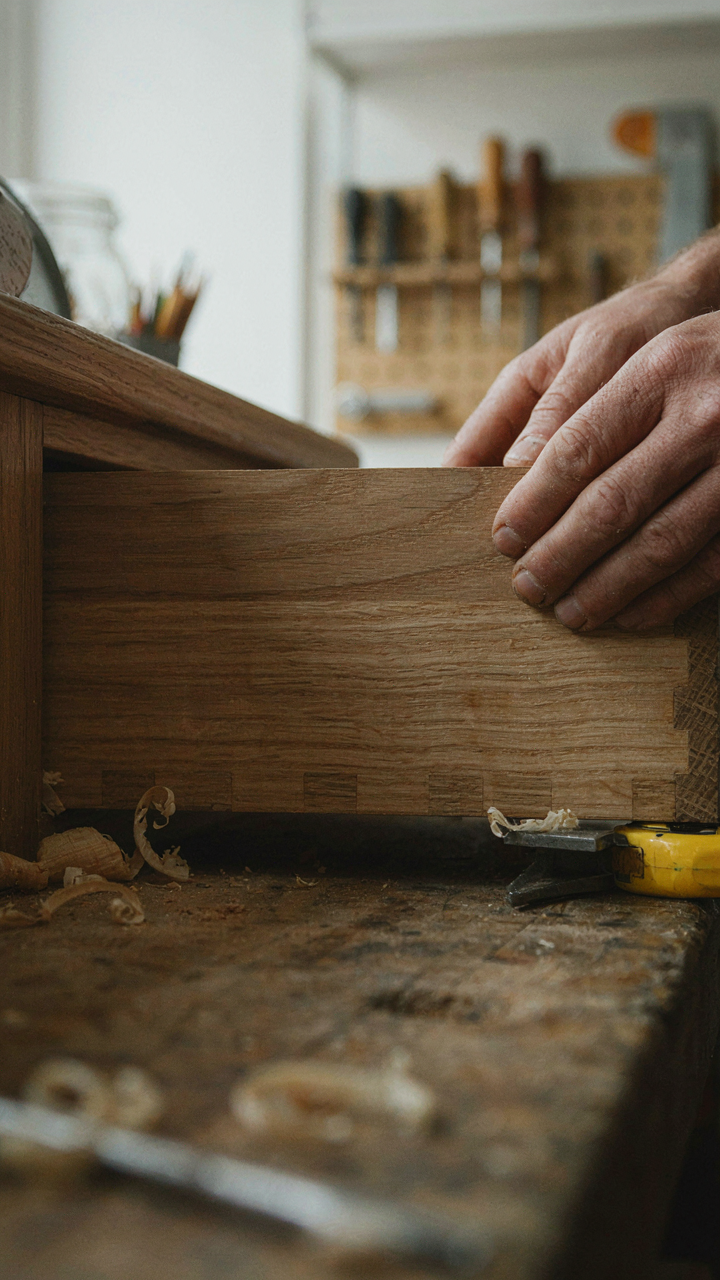
Screws and dowels fail under expansion and contraction cycles. Mortise and tenon joinery—where one board’s projecting part locks into another’s carved socket—transfers stress through geometry rather than hardware. This is tensile strength borrowed from structural engineering: the joint gets stronger as load increases because the parts lock tighter. Cottage vanities built this way survive a century of cabinet door swings without a single loose hinge plate.
Dovetail joinery on drawer construction does the same work. The interlocking fingers pull tighter as wood shrinks seasonally. Cheap vanities use pocket hole screws that strip as fasteners corrode and wood fibers compress around them. Your vanity’s drawer should move smoothly at year twenty because the joinery accounts for wood movement instead of fighting it. If the builder uses metal fasteners, verify they’re stainless steel or hot-dipped galvanized—not zinc-plated, which corrodes in bathroom humidity within five years.
Beyond The Mirror: Integrated Vanity Ideas In Bathroom Ecosystems
How Your Vanity Creates Daily Friction
You want a vanity that looks like it belongs in a 1920s farmhouse but functions like it was made yesterday. That tension between aesthetics and usability is the real problem nobody names. Cybernetics calls this feedback loops, and your cottage vanity needs them built in. Every time you use the sink, you either confirm the design works or you fight it. Poor drainage, countertop clutter, mirror placement that forces you to bend—these aren’t minor annoyances. They’re signals the vanity is rejecting your daily behavior.

The mechanism is simple: a cottage vanity must accommodate what actually happens in that bathroom, not what you imagined when you picked the style. Recessed outlets positioned for hair tools prevent cords from wrapping around faucets. Shallow drawers with dividers keep grooming items from becoming a tangled pile. A countertop depth of 21 to 24 inches prevents you from constantly bumping your thighs. The vanity that feels charming but forces you to contort is fighting you twice daily, and you’ll replace it within years despite loving how it looks.
Flexibility Built Into The Foundation
The common advice is to pick a vanity style and commit to it. That’s incomplete. Cottage style actually allows redundancy in your layout, which means you can adjust without starting over. Adaptability here means the vanity structure supports modifications—open shelving below can swap to closed storage, wall-mounted options can shift to floor-standing, and countertop materials can be swapped if one fails without replacing the entire unit.
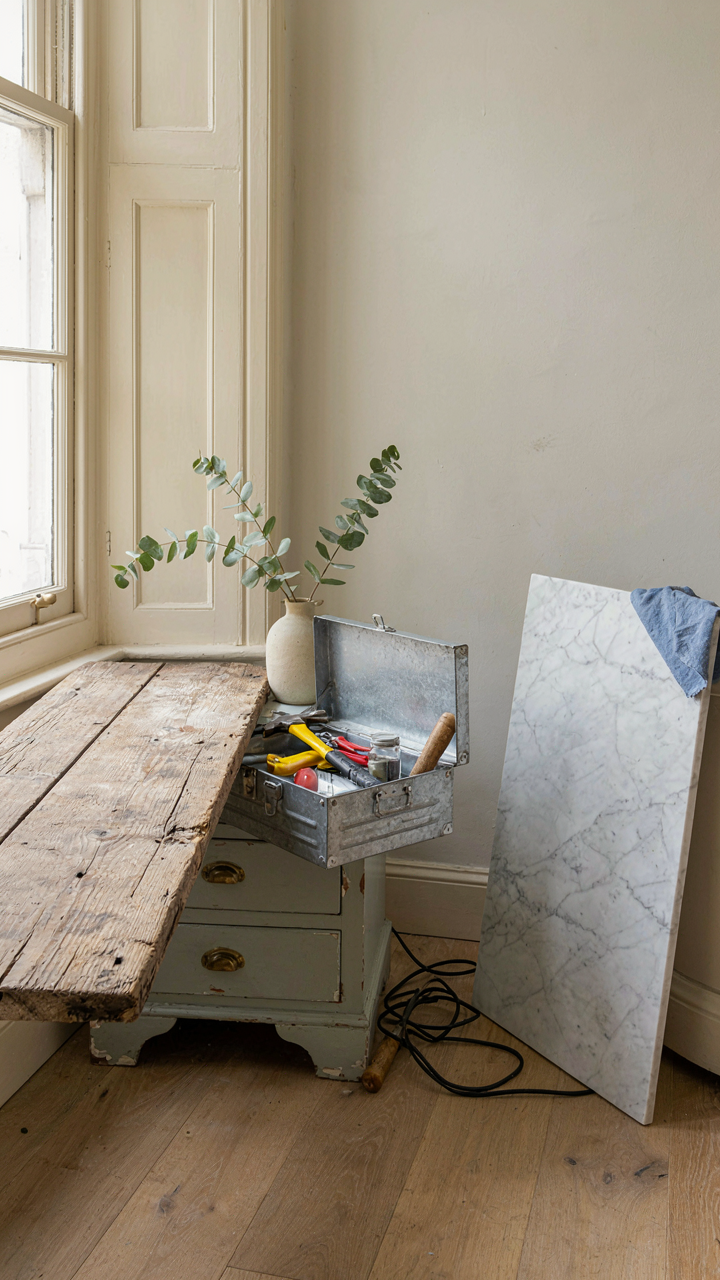
The practical step: choose a cottage vanity with modular legs rather than a fixed base, adjustable shelving rather than permanent dividers, and a countertop mounted separately from the cabinet body. This setup lets you remove and replace the surface without demolition. When your farmhouse-style reclaimed wood top develops water damage in five years, you swap it for marble or stone without rebuilding the whole unit. The Victorian-era furniture makers who designed cottage pieces understood this principle—they built to adapt to family changes and damage, not to discard and replace.
Upstairs Bathroom Vanities: Navigating Space Constraints With Purpose
Go Vertical, Not Wide
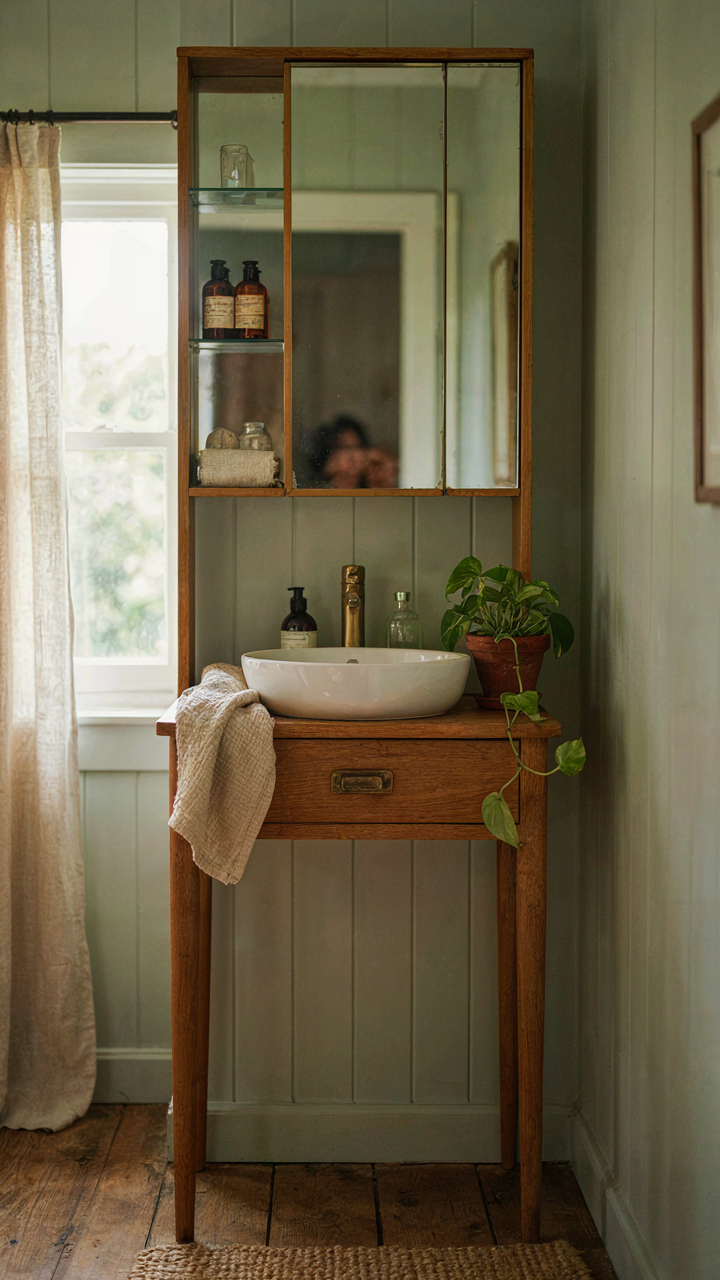
You’re worried an upstairs bathroom feels cramped, which means you’ll accept “cozy” as long as nobody sees you compromised. The real mechanism here borrows from architecture’s load-bearing principle: in tight spaces, vertical lines carry more weight than horizontal spread. A tall, narrow vanity cabinet moves storage upward instead of pushing the room outward. Wall-mounted medicine cabinets above the sink, open shelving that climbs toward the ceiling, and a vanity with legs create the illusion of floor space while stacking function. This isn’t decoration. It’s spatial math.

Cottage vanities work in constrained upstairs bathrooms because their proportions were built for houses that had them. Victorian and farmhouse designs favored tall legs and vertical grain in wood, naturally pushing the eye up rather than out. A 24-inch-wide vanity with a 36-inch-tall cabinet takes up less floor footprint than a sprawling 48-inch alternative while delivering comparable storage. The legs underneath matter more than you think. They break the visual weight of the piece and let light travel underneath, making the entire bathroom feel less dense. Install your vanity on a raised base, not directly on tile.
Light Creates The Illusion Of Depth
Reflection doesn’t solve small spaces. Reflection controls how the brain measures them. A well-positioned mirror behind or beside your cottage vanity doesn’t just bounce light around. It extends the perceived dimensions of the room by repeating visual information. Pair this with a single light source positioned above or beside the mirror, not below it. Overhead lighting from above the vanity creates shadows under fixtures and makes the space feel recessed. Side-mounted sconces flanking the mirror eliminate shadows on the face and push reflected light into dead corners where the walls meet.
Cottage bathrooms traditionally used single oil lamps or small window light. Modern fixtures should honor this by using warm color temperature bulbs between 2700K and 3000K, matching the historical context. Avoid cool white light that reads as clinical and shrinks perceived volume. A frameless or lightly framed mirror mounted full-height behind the vanity is standard practice now, not a trend. The mirror should reach from counter height to near ceiling. Position your vanity perpendicular to the window if one exists. This angles natural light across the counter and prevents direct backlighting that erases depth.
The Anti Trend: Authentic Finishes For Cottage Bathroom Vanity Ideas
When Wear Tells The Real Story
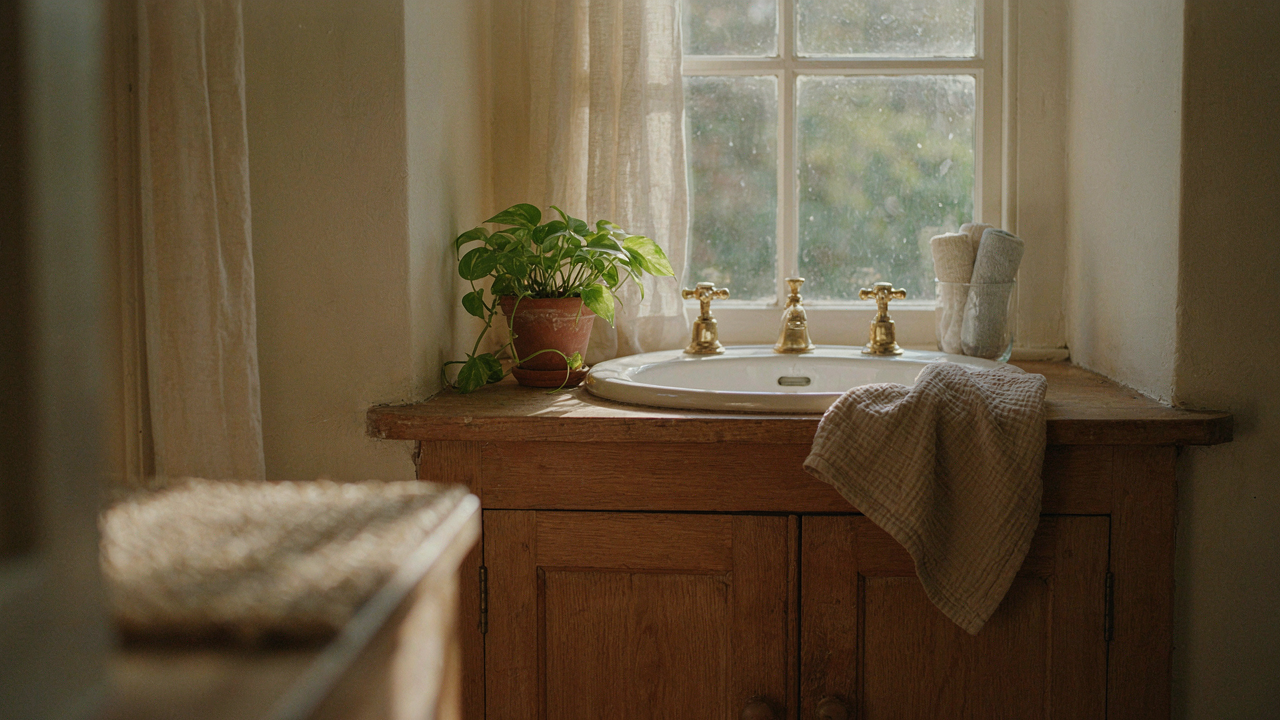
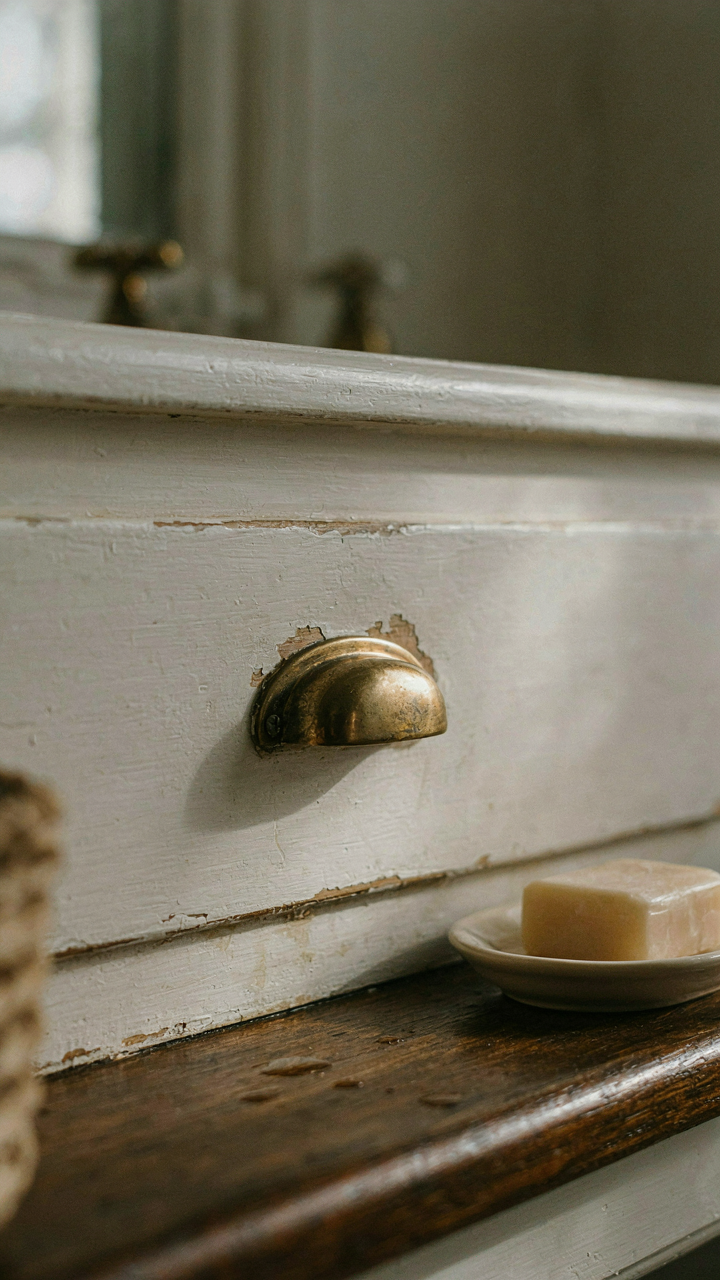
You want patina because it signals that your vanity has lived. It’s the inverse status move—you’re saying you don’t need new, you have old. But here’s the mechanism: patina works in cottage design because it communicates restraint and time, two things money alone cannot buy. Real aging happens through use, moisture exposure, and chemical reaction between material and environment. A cottage bathroom vanity gains credibility when its finish shows the actual path of water, soap, and friction.

Patina on wood isn’t decay—it’s evidence of function. Paint that has worn thin at the edges where hands grip the drawer pulls. Stain that has darkened where water pooled and dried repeatedly. Lacquer that has yellowed from years of steam and light. These aren’t flaws. They’re the vanity’s resume. Homeowners mistake this for fragility. It’s actually the opposite. A finish that shows its age has proven it can survive in the conditions you’ll actually create.
The Mass Market Lie About Distressing
Every factory in Asia now makes “distressed” vanities, and nearly all of them are wrong. They spray-gun artificial wear onto new wood in patterns that follow no logic. Real distressing happens in specific places—where hands repeatedly touch, where water sits, where hinges create pressure. The industry distresses everywhere equally, which is why it reads as costume. Cottage design demands the opposite: wear should follow the physics of actual use, not a design template.
- Hand worn edges: Real patina concentrates on drawer pulls, door handles, and the front edge where fingers grip during daily use. Factory distressing scatters random scratches that ignore these friction points.
- Water damage patterns: Authentic finishes show darkening and warping near the basin and drain areas where moisture naturally collects. Mass produced versions treat water damage as decoration rather than consequence.
- Lacquer yellowing: Aged finishes develop a warm amber tone from UV exposure and oxidation over years, not applied stain. This takes actual time and cannot be faked convincingly at production scale.
- Hardware imprints: Hinges, handles, and mounting hardware leave their own wear marks and compression patterns. Real vanities bear these specific signatures. Distressed ones omit them entirely.
- Inconsistent finish thickness: Authentic aging creates uneven paint or stain buildup from spot repairs and reapplications. Mass market distressing maintains uniform coverage, which betrays its falseness immediately.
The fix is simple: source actual antique vanities, or commission a builder who understands that aging is a process, not a texture to spray on. You’re looking for vanities where the finish degradation maps directly onto the geometry of how people use bathrooms. Buy the real thing or build it yourself. Don’t settle for the imitation.
Bathroom Vanity And Mirror: The Symbiotic Pair, Not Separate Entities
The Scale That Stops Looking Cheap
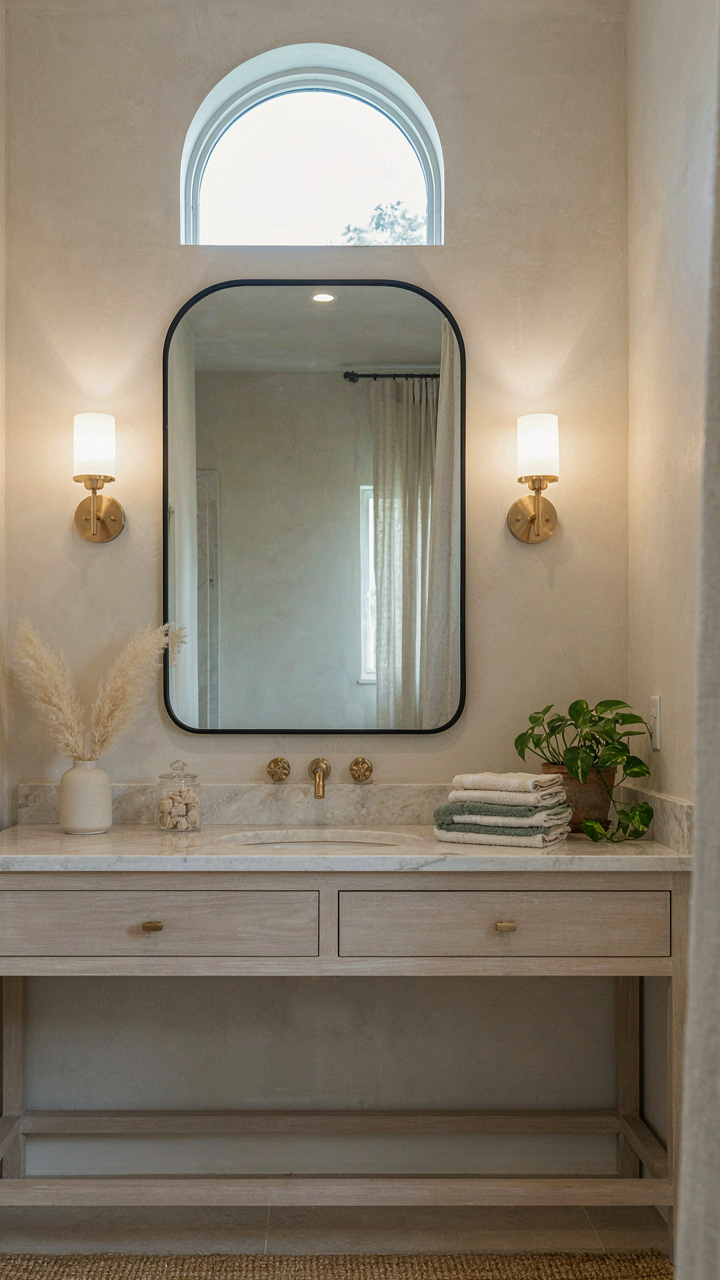
You’re worried the whole room will look off-balance if you get this wrong. The real mechanism is visual weight distribution—borrowed from graphic design, where a single heavy element needs counterweight or it tips the eye into discomfort. Your vanity and mirror must function as one mass, not two separate objects competing for attention.

Most people treat the mirror as an afterthought bolted above the vanity. That’s the mistake. A cottage vanity typically sits 30 to 36 inches off the floor. Your mirror needs to anchor proportionally to that unit’s width and height, not hang floating like an accident. A 48-inch-wide vanity demands a mirror that commands similar visual real estate—roughly 36 to 42 inches across—so the pairing reads as intentional, designed. Anything narrower looks unfinished.
Light Integration Determines Function Over Form
Mounted sconces flank the mirror in cottage bathrooms because they solve a problem, not because they look nice. The mechanism is simple: overhead lighting alone casts shadows across your face when you stand at the sink, making the vanity useless for grooming. Side-mounted lights eliminate those shadows and actually serve the vanity’s primary job.
Position sconces 24 to 30 inches apart horizontally, centered at eye level (roughly 60 to 65 inches from the floor). Integrate them into your mirror frame or mount them directly into the wall beside it. This pairing—mirror, lights, vanity—becomes one functional system. The mirror reflects the light back into your face for clarity. Skip this step and you’ve built a pretty shelf that fails at its core task.
The Investment: Why A True Cottage Bathroom Vanity Outlasts Fads
The Real Math On Bathroom Furniture
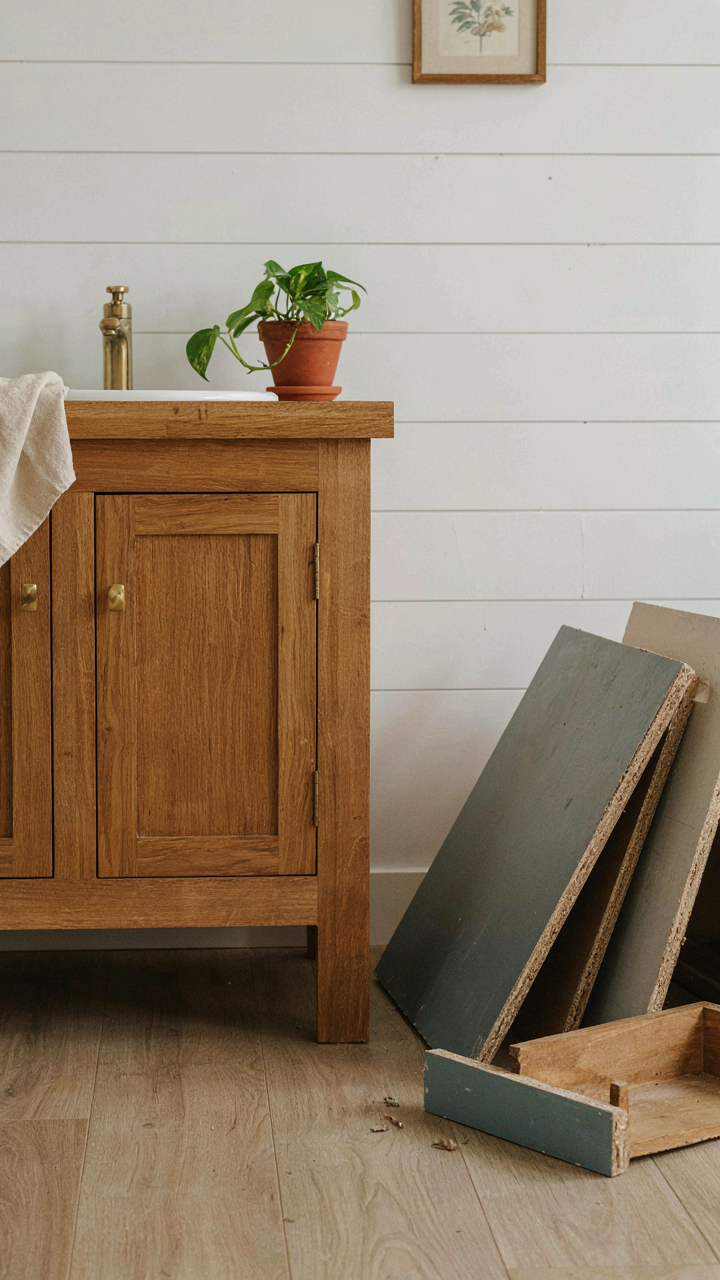
You’re worried you’ll waste money on something that looks dated in five years. Here’s the mechanism: cottage vanities resist obsolescence because they’re built on proportions and materials that predate trend cycles entirely. A solid wood vanity with simple frame-and-panel construction hasn’t changed meaningfully since the 1920s. That’s not nostalgia talking. It’s just superior ergonomics and joinery that survives actual use.

The spreadsheet comparison is broken. You can buy a particle-board vanity for $300 and replace it twice before spending what a proper cottage vanity costs upfront. But the particle-board unit fails at year four, demands landfill space, and forces you to renovate twice. The wood vanity costs more initially because it uses real joinery, solid lumber, and hardware that accepts repair. The real expense isn’t the price tag. It’s the compounding cost of replacement cycles.
Aging As Function, Not Defect
Common advice says cottage vanities need constant refinishing to stay relevant. That’s wrong. A well-finished wood vanity actually improves with patina. The finish darkens, minor dings accumulate character, and the piece reads as intentional rather than neglected. This is economics at work: the vanity gains what economists call negative depreciation over time because cottage aesthetics reward evidence of use.
Maintenance becomes part of the design language, not an obstacle to it. A cottage vanity might need resealing every seven to ten years, hardware tightening annually, and occasional touch-ups on the finish. These aren’t drawbacks. They’re the protocol that keeps the piece functional and visually coherent. When you commit to maintenance, you’re not preserving an object. You’re maintaining a system that outperforms every cheaper alternative by design.
The Real Vanity Isn’t In Your Bathroom; It’s Your Desperate Need For External Validation
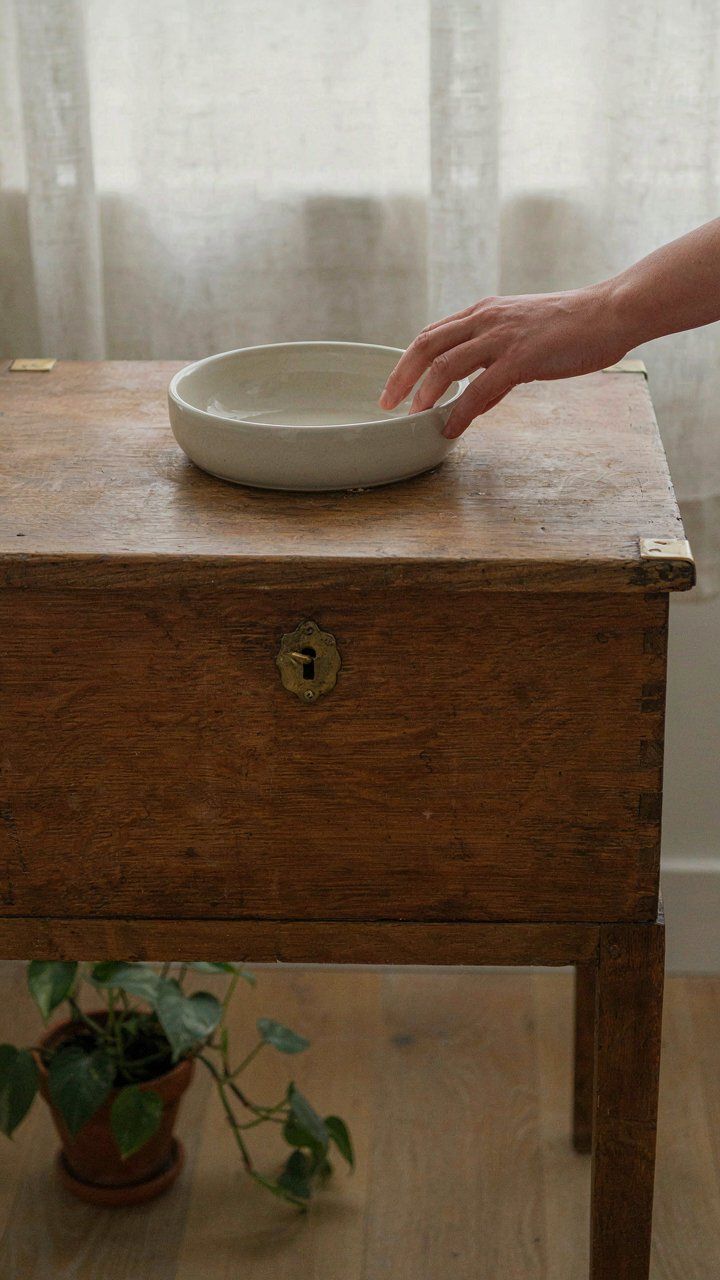
You picked a cottage vanity because it felt right, not because Instagram told you to. That instinct matters more than any design rule. Stop waiting for permission to trust your gut on what belongs in your space. Go find one piece of vintage furniture today that makes you feel something, then build around it. Your bathroom doesn’t need to look like everyone else’s to look like home.