The Unspoken Truth About Cottage Dining Rooms
Cozy Doesn’t Mean Functional
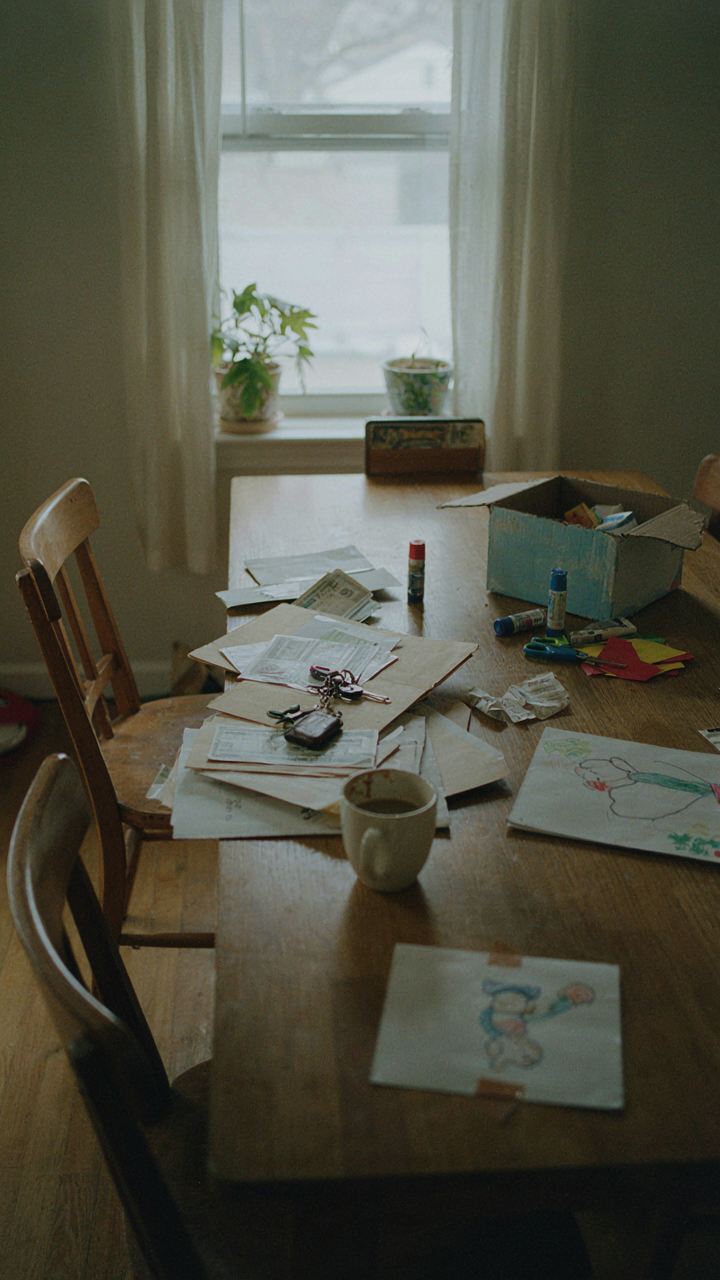
You want people to walk into your dining room and feel something. That’s the real driver here, not the furniture arrangement. The problem is that “cozy” has become a permission slip for clutter. Using industrial systems thinking, a cottage dining room operates like a bottleneck: too many objects competing for visual and physical space create friction, not warmth. Surfaces disappear under decorative pieces. Chairs wedge too close together. The table becomes a catchall for mail, keys, and forgotten projects.
Real coziness requires constraint. A functional cottage dining room strips away everything that doesn’t serve eating, conversation, or movement. This means choosing fewer pieces, ensuring adequate clearance around chairs, and protecting the table surface for its actual purpose. The aesthetic follows function, not the reverse. When you optimize for how people actually move and sit, the room feels inviting because it works, not because you’ve packed it with nostalgic objects.
Instagram Versus Dinnertime
Magazine spreads of cottage dining rooms show perfectly styled tables with empty chairs and nobody eating. Real family meals involve noise, spills, arguments about homework, and someone asking for seconds while another person leaves halfway through. The Instagram version prioritizes how the room photographs. Actual cottages prioritize how the room performs when six people occupy it simultaneously.
This gap reveals the core mechanism: aspirational design ignores behavioral reality. A cottage dining room built for the photo shoot fails when kids arrive. Seating arrangements that look balanced in a picture create dead zones where nobody wants to sit. Surfaces that look clean in morning light accumulate damage under regular use. Build the room for Tuesday night at 6 p.m. with everyone present, not for Sunday morning when nobody’s home. Every choice then becomes testable against actual use, not against an image.
Warm Wood: The Foundation, Not The Finish Line
Raw Grain Beats Paint Every Time
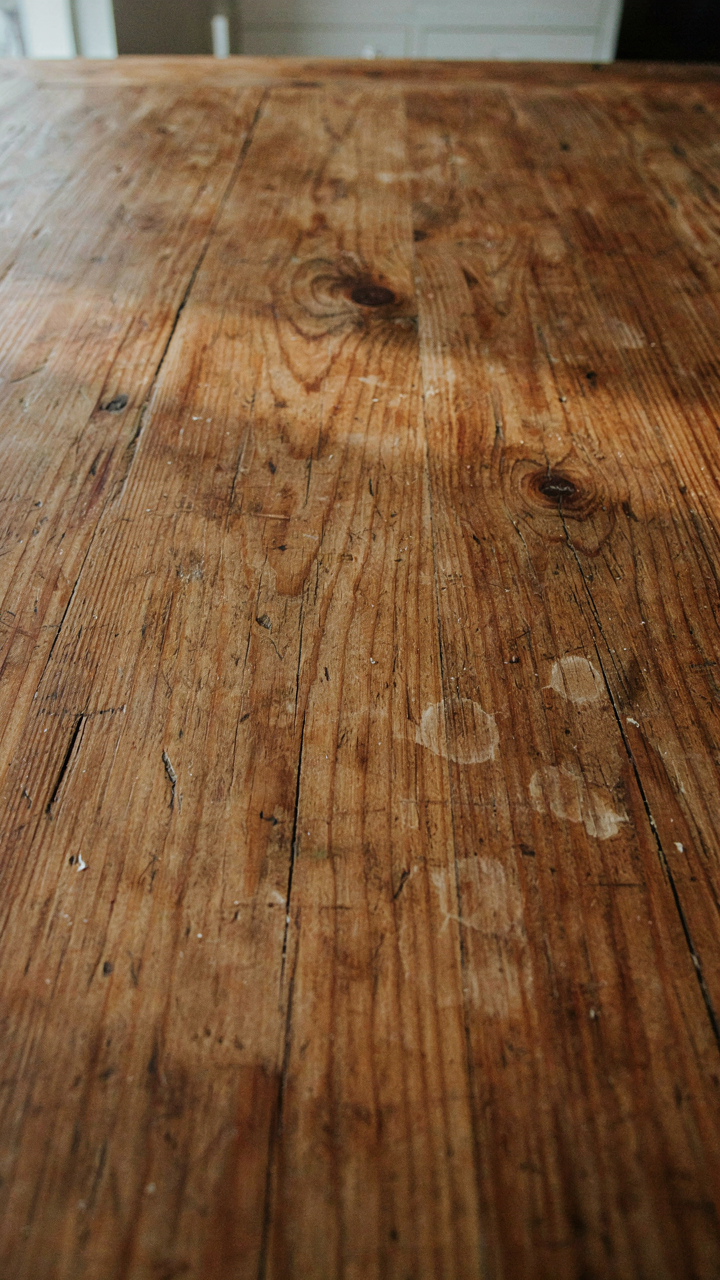
You want raw wood because it signals authenticity without effort, and painted surfaces feel like you’re trying too hard. Here’s the mechanism: unfinished wood grain accepts natural wear patterns that compound over years, creating a patina that reads as “lived in” rather than “decorated.” Paint locks the surface. It chips, peels, and requires maintenance cycles that reset the aging clock every few years.

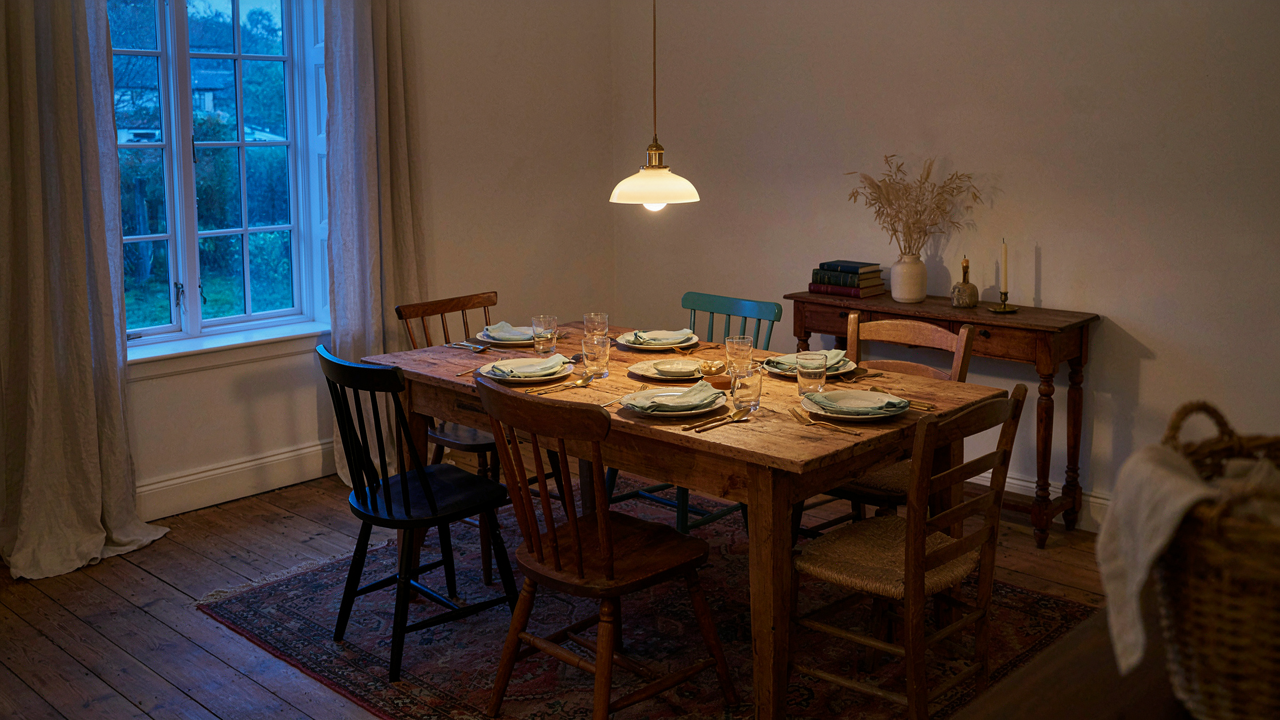
Salvaged wood with visible grain, knots, and color variation handles this work for you. A table that shows its history doesn’t demand perfection. Scratches, stains, and dents become evidence of use rather than failure. The wood’s cellular structure actually strengthens this effect—grain patterns guide how light hits the surface, making imperfections integrate visually instead of stand out. This is why reclaimed barn wood and old-growth timber hold value in cottage settings. They’ve already done the aging work.
Character From Actual History
The common advice says “mix styles for collected feel,” which is incomplete. Real collected spaces don’t mix styles randomly. They integrate salvaged pieces by matching the wood’s era and joinery, not by forcing a visual theme. A table from 1920s farmhouse furniture sits naturally next to 1940s Windsor chairs because both represent periods when wood quality and joinery standards were similar.
Start by sourcing pieces from similar decades within the cottage era framework, roughly 1890s through 1960s. Examine joinery first—hand-cut dovetails, mortise and tenon joints, and frame construction tell you how pieces will age together. The wood species matters less than the construction method. Mismatched finishes unify faster than mismatched joinery. Source one salvaged dining table or bench as your anchor, then build around its construction logic.
The Modern Cottage Dining Room: Beyond Floral Wallpaper
Restraint That Reads As Expensive
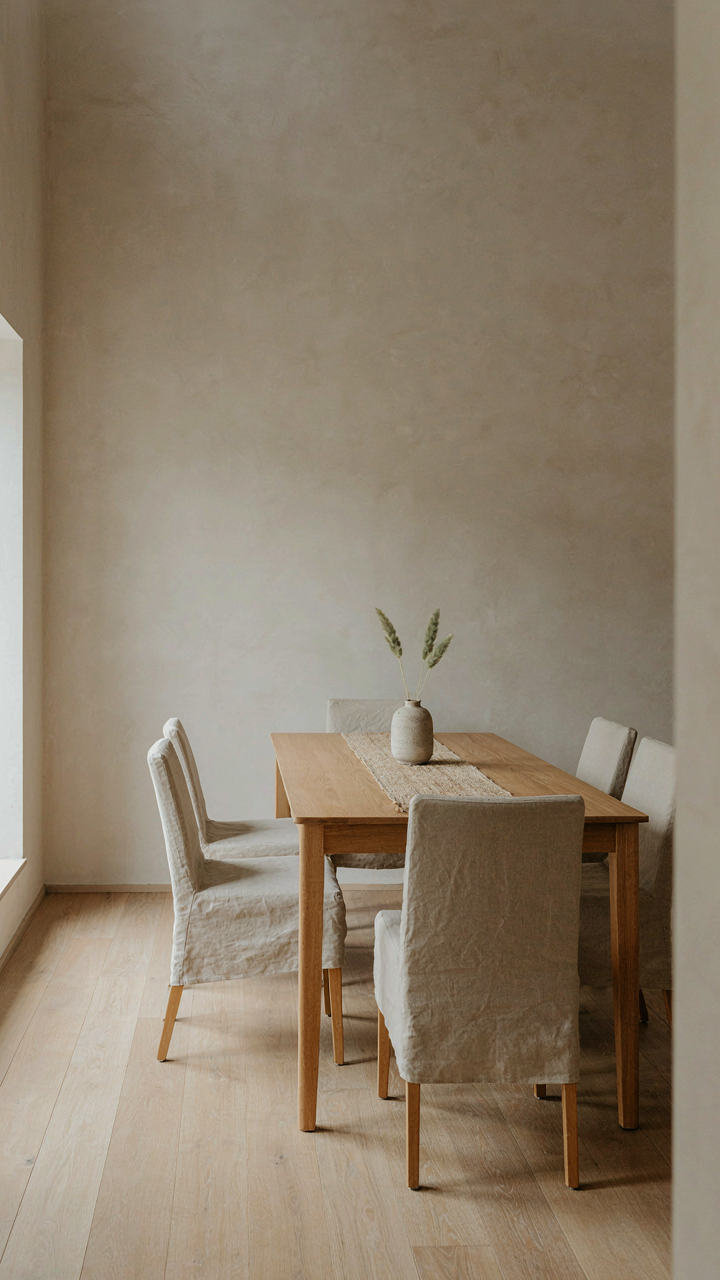
You want permission to keep things simple without feeling cheap. That’s the real tension here. The mechanism is constraint: limitation forces intentionality, and intentionality reads as taste. Modern cottage abandons the maximalist floral-on-floral approach that defined earlier cottage aesthetics. Instead, it borrows from Japanese design philosophy—the concept of “ma,” which treats empty space as an active design element. A bare wall becomes a choice, not an oversight.

This shift happened because Instagram cottage became a parody of itself. Rooms drowning in pattern and texture started feeling claustrophobic rather than charming. Minimalist cottage works because it removes visual noise while keeping warmth through material selection and scale. Wood tables, linen chairs, and uncluttered surfaces create breathing room. The dining room becomes functional first, beautiful second. This order matters.
Neutral Grounds For Actual Living
Common advice says “add pops of color” to neutral spaces. This is wrong. Neutrals don’t need color injections—they need depth through tone variation and texture. A cottage dining room built on true neutrals (warm whites, soft grays, natural wood tones) stays relevant for a decade because it doesn’t depend on trend colors fading in and out of favor.
The timeless appeal works through restraint, not blandness. Paint walls in warm white with slight undertones. Choose wooden furniture in honey or gray tones. Layer in linen, cotton, and weathered finishes. These materials shift subtly with light throughout the day, creating movement without pattern. Your dining room stays grounded. When you eventually redecorate, you’re adding to a strong foundation, not fighting against a dated color scheme or wallpaper choice.
Sage Green Cottage Dining Room: Nature’s Antidote To Overstimulation
Color Psychology Shapes Mealtime Behavior
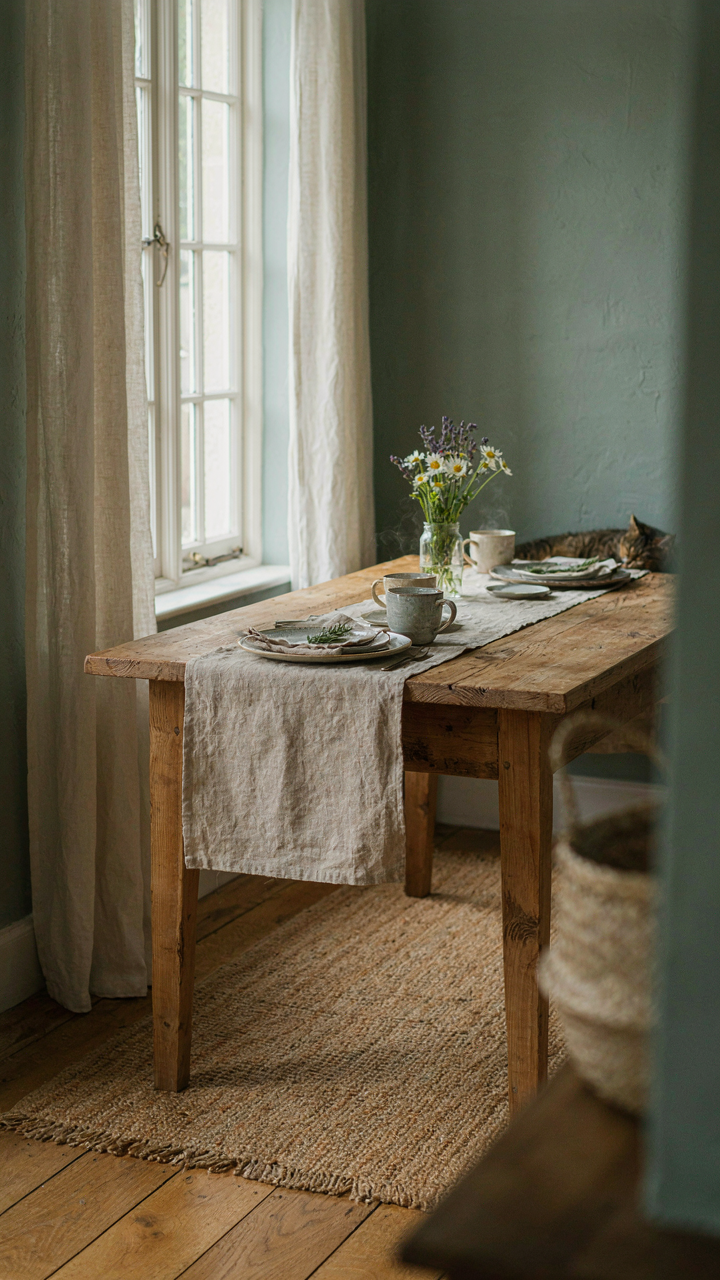
You want sage green because you think it looks peaceful, but the real reason you need it is that your nervous system won’t shut up at dinner. Neuroscience maps color to arousal states directly: warm reds and oranges trigger the sympathetic nervous system, the fight-or-flight circuit. Sage green sits in the frequency band that activates the parasympathetic response, the one responsible for digestion and calm focus. Your body doesn’t choose to relax in sage. It physiologically has less reason to stay vigilant.

The mechanism is simpler than interior design blogs admit: wavelength affects dopamine and cortisol production before conscious thought enters the picture. A sage green dining room doesn’t feel calming because it’s trendy or tasteful. It works because the color itself suppresses neural noise. Families who struggle with rushed eating, distracted conversation, or tension at the table report behavioral shifts within weeks of the repaint. The room does half the work before you sit down.
Raw Texture Anchors The Color
Sage green alone is decorative static without resistance. Pair it with natural textures and it becomes a system that holds attention in the present moment. Wood, linen, wool, and stone push back against the eye. They demand slightly longer processing time from the brain, which interrupts the default mode network that generates mental clutter. Rough surfaces aren’t prettier than smooth ones. They’re neurologically stickier.
Cotton table runners, reclaimed wood tables, and unfinished plaster create friction in the visual field. This friction is the mechanism. Smooth surfaces in a sage room let the eye drift. Textured surfaces anchor it. When dining surfaces offer tactile information, guests engage with the physical space rather than anxiety spiraling or phone reaching. The combination of color and texture creates environmental design that functions as a behavioral protocol, not a decoration you observe passively.
The English Cottage Dining Room: Imperfection As Design
Wear And Tear Tells The Truth
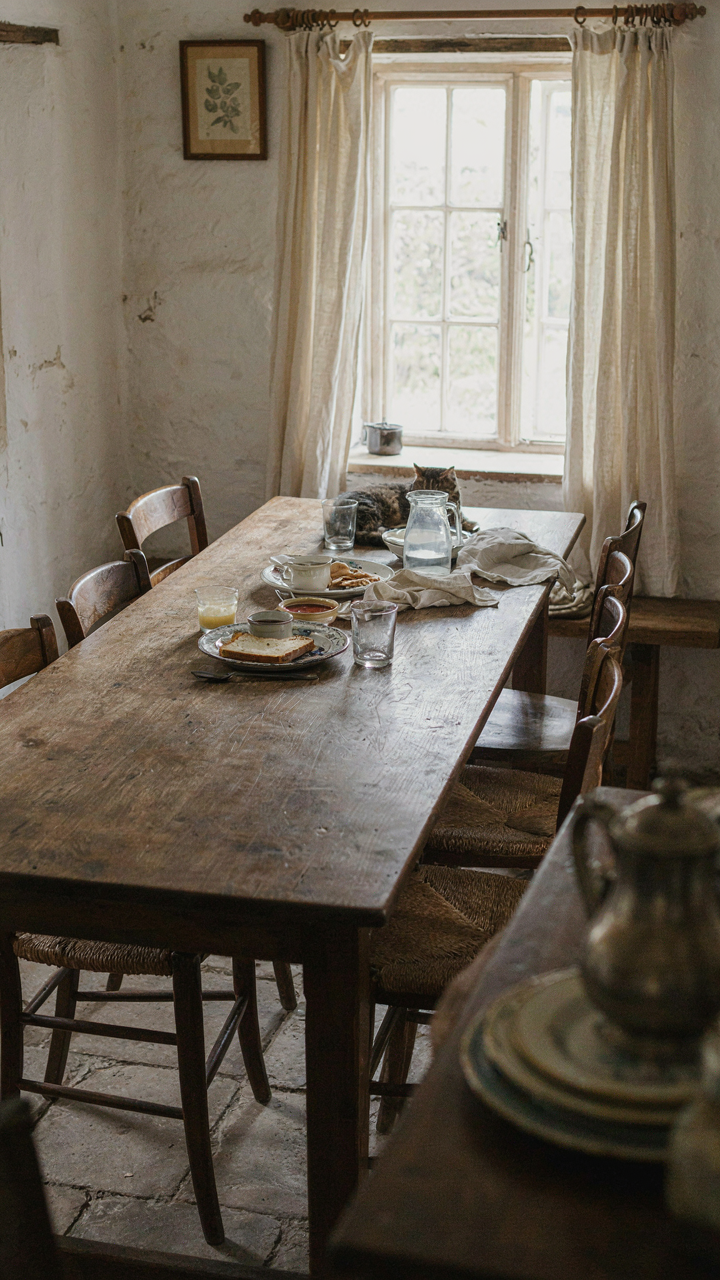
You want permission to stop refinishing everything because perfection feels sterile and you’re tired of the maintenance theater. Here’s the mechanism: in cottages built before 1950, visible wear signals authenticity to the human brain. A scratched table or faded paint doesn’t read as neglect—it reads as survival and use. The wood grain showing through worn finish proves the piece has earned its place. This isn’t an excuse for negligence. It’s about distinguishing between strategic patina and actual damage requiring repair.

English cottages never housed showpieces. Furniture was functional, and function created marks. A dining table with knife scratches, water rings, and finish wear from two centuries of family meals carries information no new reproduction can fake. You preserve these marks by not sanding them away. When a chair arm shows darkened wood from hands, you leave it. The cost of this approach is zero. The return is a room that doesn’t perform for guests—it just exists.
Mixing Eras Without Forced Harmony
The standard advice says “anchor with one statement piece” or “use a unifying color palette.” That’s incomplete. The real rule is economic: furniture in cottages arrived through inheritance and purchase across decades, not through a single design vision. Mix antique and modern by matching function and material weight, not style. A Victorian dining table paired with mid-century chairs works because both are solid wood and built to last, not because they share aesthetic DNA.
The mechanism borrowed from ecology is niche specialization: each piece occupies a functional niche in the room without competing for visual dominance. A modern glass pendant hangs above an eighteenth-century table because it solves a practical problem—light. A contemporary linen runner on an antique floor doesn’t announce itself; it protects and functions. Stop editing for visual consistency. Edit for structural integrity and usefulness instead. When you buy the next chair, ask if it performs a duty the room needs, not if it matches.
The Cottage Dining Room Efficiency Protocol
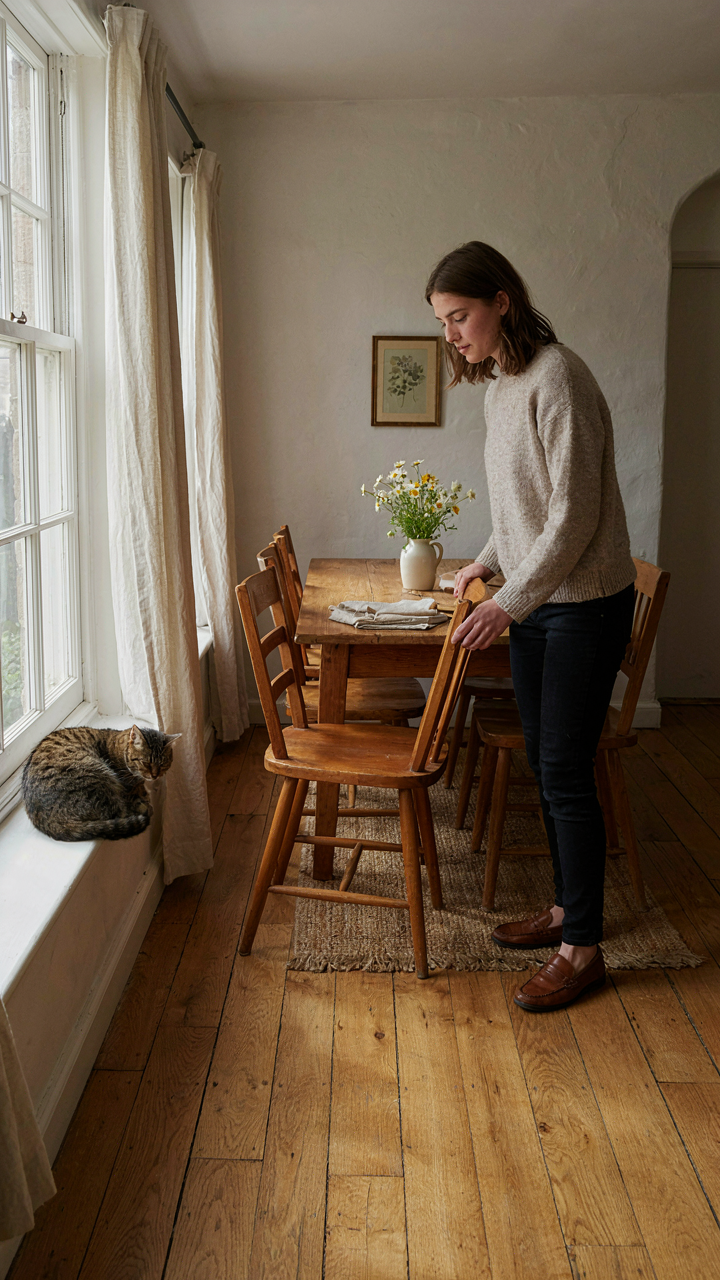
Eliminating Wasted Motion In Your Layout
You want your dining room to feel effortless because a cluttered setup signals poor control, and that bothers you more than you admit. Lean manufacturing teaches us one thing: eliminate waste before you optimize speed. In cottage dining rooms, the waste is motion. Every step from kitchen to table, every reach across the table, every trip back for forgotten items is waste. Map your actual traffic pattern during a real meal. Where do people bottleneck? Where do they reach across others? That friction is your data.

The mechanism is simple: reduce the distance between prep, serving, and eating zones. A cottage dining room works best when the kitchen threshold sits within six to eight feet of the table. This isn’t arbitrary. It’s the point where trips stop feeling automatic and start feeling deliberate. If your kitchen is twenty feet away, every plate delivery becomes a sprint. If it’s three feet away, the meal flows. Rearrange your table position or your kitchen access point. Pick one and test it for two weeks.
Optimizing Flow Without Redesigning Everything
Common advice says rearrange your furniture and everything fixes itself. That’s incomplete. The real problem is serving ergonomics, which most people ignore entirely. Serving ergonomics means the height and reach needed to place food on the table without strain or collision. Your table height should sit between thirty and thirty-two inches from the ground, standard for dining. Your chairs should leave a sixteen to eighteen inch gap between seat and table edge. This gives you working room.
Traffic flow depends on two things: width of the passage and direction of movement. A cottage dining room needs at least thirty-six inches of clear space behind chairs so people can pull out and stand without creating a trap. If you have a narrow cottage, you might need to angle your table slightly or choose chairs without arms. The protocol is this: measure your bottleneck spaces first, identify what’s stealing inches, then decide if it’s furniture that needs to move or furniture that needs to be replaced with something slimmer. Everything else follows from that decision.
Cottage Style Dining Room: Prioritizing Function Over Form

Furniture That Works For Its Keep
You want your dining room to look effortless, which means you’re actually terrified of it looking cluttered or temporary. Here’s the mechanism: cottage design wins because it treats furniture as tools, not decoration. Borrow from systems thinking in industrial design—every piece must have load capacity, the weight it carries relative to its footprint. A dining table isn’t just where you eat; it becomes workspace, homework station, and assembly line for holiday prep.
- Trestle or farmhouse tables: Designed for heavy use in working kitchens centuries ago. The underframe supports gathered weight without visual bulk. Easy to extend or move when needs change.
- Benches with hidden storage: Combine seating with lift-top compartments for linens, place settings, or seasonal items. They occupy floor space once anyway—extract utility from that decision.
- Drop-leaf tables: Legitimate cottage staple that shrinks or expands based on actual meals happening. Not decorative compromise, but honest response to variable household rhythms.
- Ladder-back chairs with rush seats: Traditional construction means repair is possible and affordable. Replaceable seats extend life indefinitely instead of requiring full replacement.
- Sideboard with working surface: Acts as serving station, beverage station, and food prep counter. The top must clear easily for functionality, not stay dressed for display.

The wrong move is buying pieces that look cottage but demand babying. Cottage furniture survived because it was built to be used hard and cleaned harder. A table with a finish so delicate you won’t let anyone actually dine on it has failed its only job.
Storage That Doesn’t Scream Storage
Cottage dining rooms don’t hide problems behind pretty containers. They integrate storage into the architecture itself through methods that feel inevitable, not afterthought. Plate racks built into walls, china cabinets positioned as room dividers, open shelving that frames windows—storage becomes the wall, not furniture floating in front of it.
The common mistake is treating storage as a separate problem, which forces you to choose between visibility and clutter. Cottage design solves this by making storage part of the room’s structure from the start. Tall cupboards flanking a fireplace work. Corner cabinets that fit awkward angles work. Floating shelves above a sideboard work. What doesn’t work is a modern storage ottoman that screams it’s hiding something. Measure your actual dishes, linens, and serving pieces first, then build or position storage to hold exactly that—no excess capacity that becomes junk magnet space.
The Unconventional Wisdom Of Cottage Core Dining Room Layouts
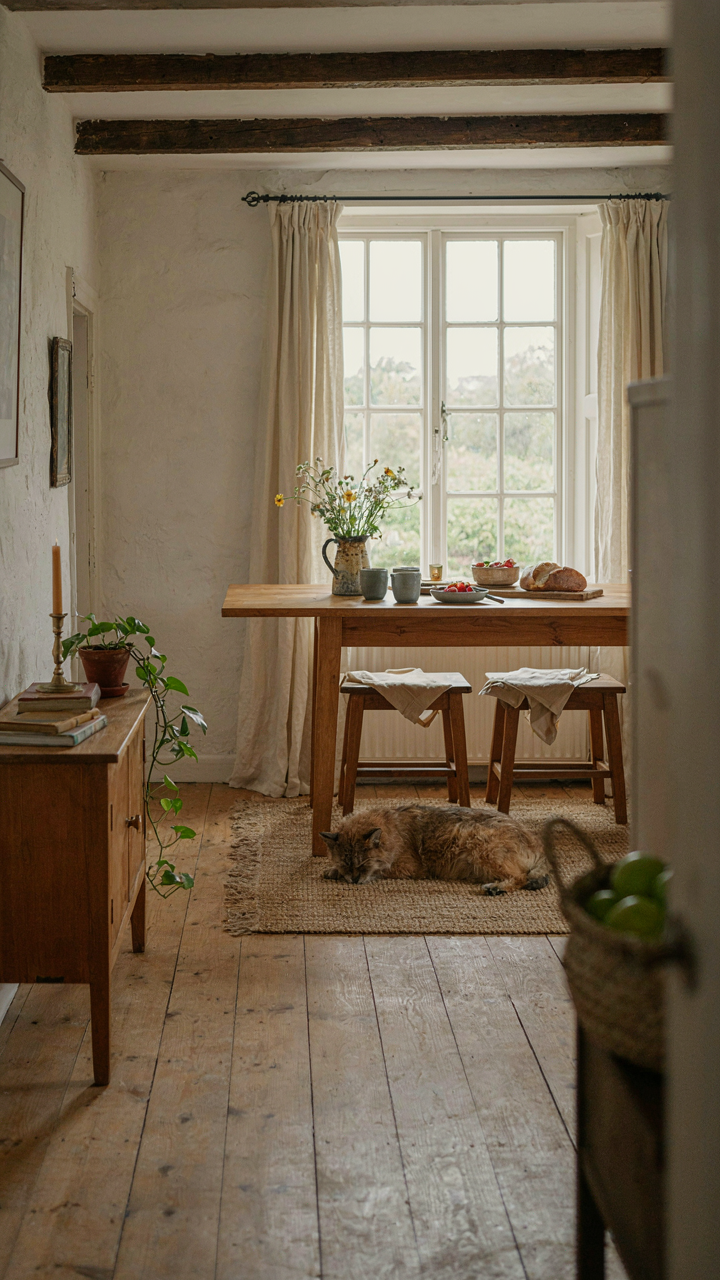
Reject The Centered Table Setup
You want permission to break the rules without feeling like you’re decorating wrong. Here’s the real mechanism: the centered rectangular table is a Victorian hotel layout designed for formal service and status display. It has nothing to do with how families actually eat together. Cottage dining rooms work because they abandon symmetry. Push the table toward a window. Angle it. Let the room’s actual function—feeding people you live with—dictate placement instead of interior design dogma pretending symmetry equals sophistication.

The centered table forces conversation across a barrier and locks everyone into assigned seats. It prioritizes the room’s visual balance over how bodies move through the space. Cottage design flips this by treating the dining table as a tool, not a focal point. Position it where light hits naturally. Where traffic flows without detours. Where someone can stand at the head without blocking the kitchen. Function determines form here, not the other way around.
Creating Spatial Division Without Walls
In urban planning, they use “defensible space”—territory that feels owned and protected without physical barriers. Your cottage dining room needs the same principle applied to micro-zones. You’re not carving up one room into separate spaces. You’re creating overlapping areas where different activities coexist without competing for attention. A small side table for puzzles or homework. A standing bar for snacks. A bench seat against the wall for reading before dinner starts. Each zone operates independently but feeds the same room’s energy.
The mistake most people make is treating the dining room as a single-purpose box. It’s either a table or it’s nothing. Cottage design uses depth and positioning to layer functions. A low bookshelf behind the seating area creates visual separation without closing off the space. A rug under the table defines the dining zone while an adjacent woven basket and side chair define a secondary activity zone. The room breathes because it serves multiple needs without one activity dominating the entire square footage.
Beyond Aesthetics: Cultivating The “Relaxed” In Cottage Dining Room Ideas
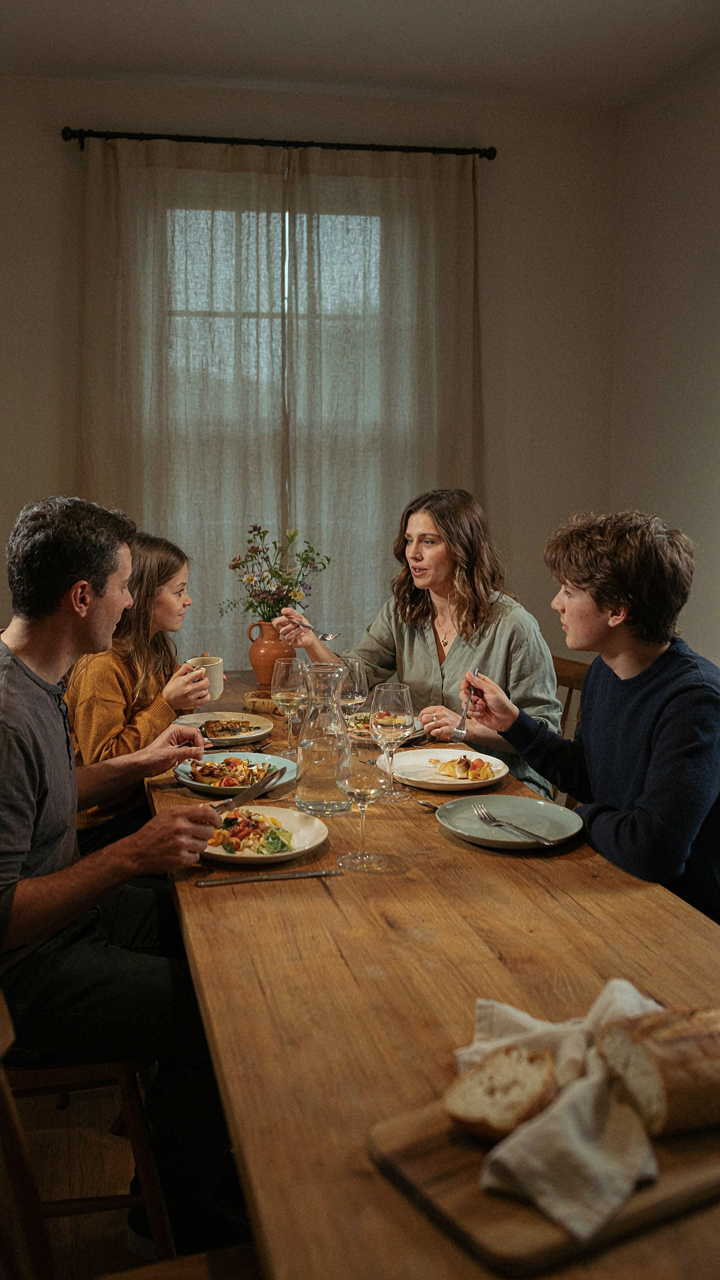
Phone Free Kills The Actual Purpose
You want a cottage dining room to feel relaxed because you’re afraid family connection is slipping away, and you think atmosphere does the work. It doesn’t. The mechanism is attention. Phones hijack it. A room can have perfect proportions and period details, but if everyone scrolls, the space fails its job completely.
The rule is absolute: no devices at the table. Not silenced. Not face-down. Not present. This isn’t about etiquette. It’s about cognitive load. The brain splits its focus the moment a phone sits visible, even unused. Research in distraction shows peripheral awareness of a device degrades conversation depth by forcing your mind to manage two competing environments simultaneously. Remove the object entirely, and cognition resets.
People Own What They Build Together
The false version of this advice says involve kids to teach responsibility. The real mechanism is stakes. When someone preps a meal or clears plates, they invest effort into the space and the moment. Investment creates ownership. Ownership creates care. Care extends to how people behave at the table because it becomes theirs, not something done to them.
Start with low-friction tasks. A child fetching napkins or a teenager handling plates isn’t punishment. It’s participation in a system. The cottage dining room becomes a functioning space they shaped, not a stage where they’re positioned. People relax at tables they help maintain because relaxation requires psychological safety. You build that through contribution, not decoration. Assign one specific role per person each meal and rotate weekly so no one owns resentment.
Modern Country Dining Room: Bridging Rustic And Refined
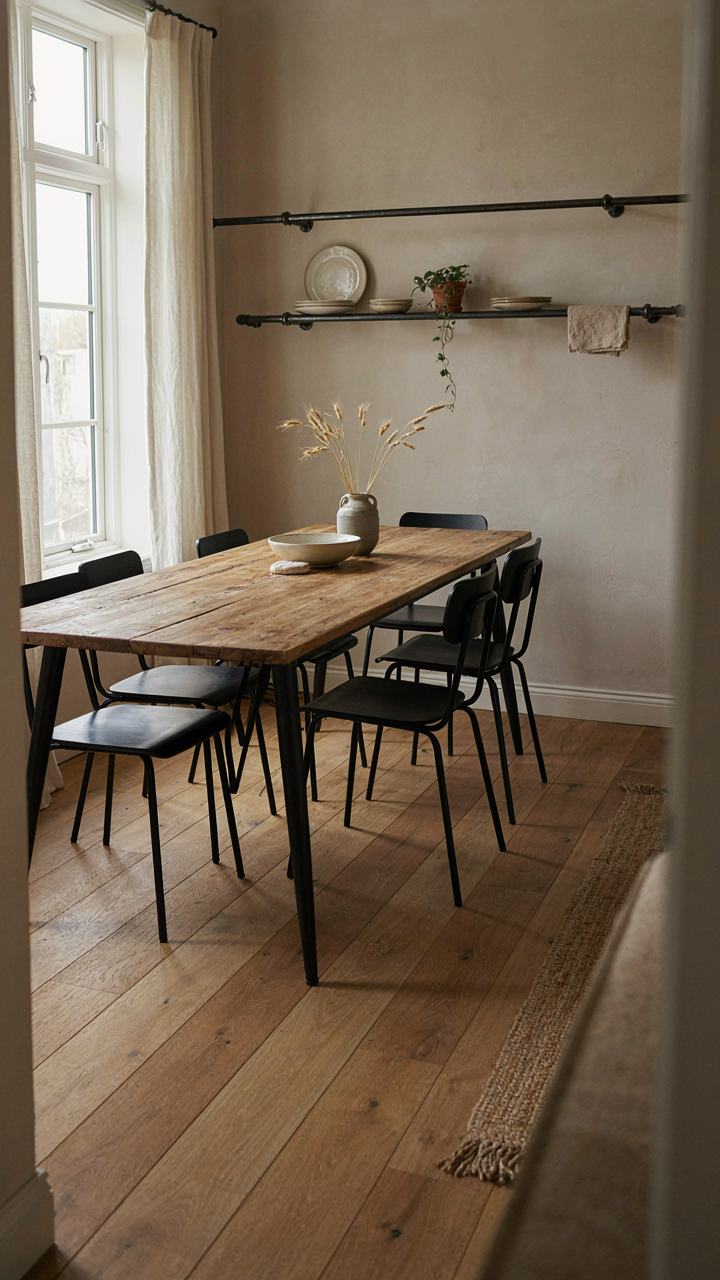
Natural Materials Meet Clean Lines
You want permission to spend money on something that feels expensive without looking like you tried. Here’s what actually happens: mixing raw wood with steel and glass creates visual tension that reads as intentional rather than confused. The mechanism is contrast. Your eye needs opposition to register sophistication.
The mistake most people make is treating natural materials and contemporary design as opposing forces. They’re not. Oak beams look sharper against matte black metal frames. Reclaimed wood tables gain presence when paired with minimalist chairs in solid colors. The cottage dining room becomes a controlled environment where nothing competes for attention because each element has a defined role.
Industrial Accents For Unexpected Visual Interest
Steel doesn’t belong in cottage design, which is precisely why it works. Using an industrial lens, think of your dining room as a system where materials have load capacity and function. An exposed steel beam or iron bracket isn’t decoration—it’s a visual anchor that prevents the space from feeling precious or overwrought.
Wrought iron light fixtures, steel pipe shelving, or cast iron hardware signal that comfort doesn’t require fragility. These accents interrupt the softness of upholstered seating and linen textiles. The result doesn’t feel designed; it feels discovered. Place one industrial element per wall, max. More than that becomes theme park. The action: source one authentic industrial piece—a salvaged factory pendant, a metal bracket shelf—and let it define how everything else sits in the room.
The Real Problem Isn’t Your Dining Room; It’s Your Definition Of Relaxed Family

Most people think a cottage dining room fixes family disconnection. It doesn’t. The room is just a stage. What matters is whether you actually show up to the table without your phone, without your agenda, without the noise. Pick one meal this week and remove every distraction from that room. No screens. No rushing. Just people and food. Your dining room becomes what you make it the moment you decide that showing up matters more than looking the part.