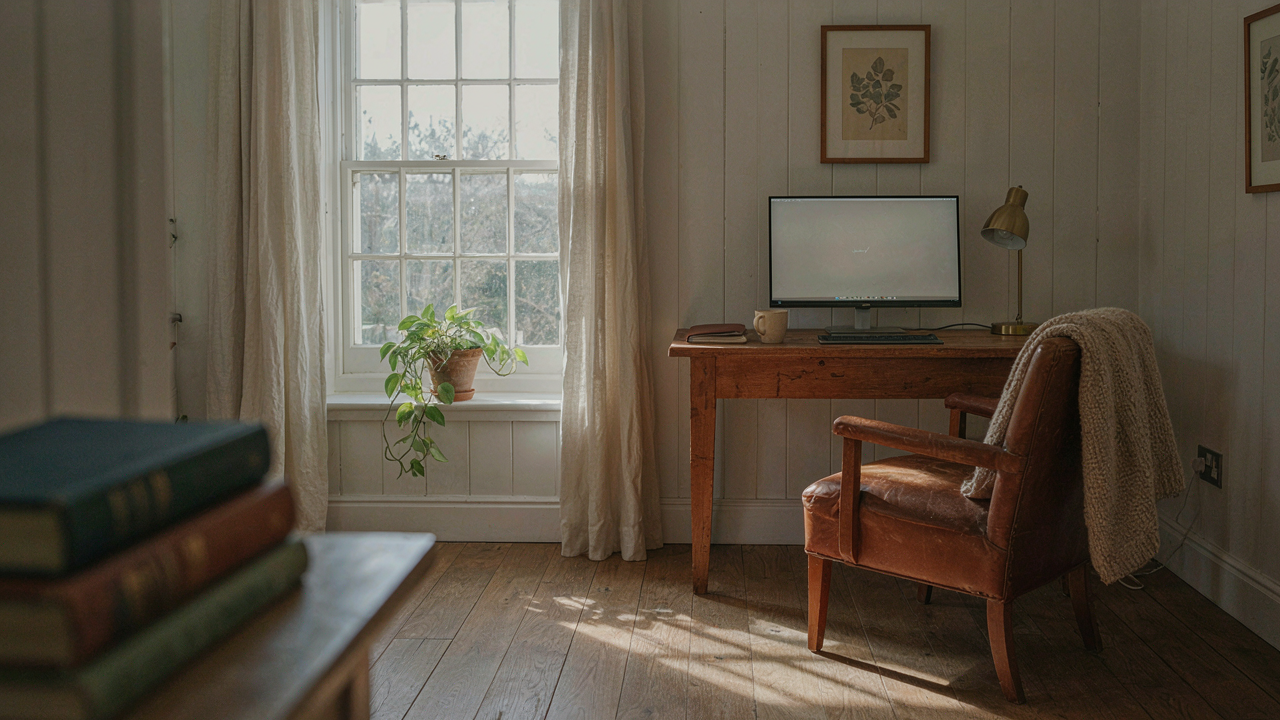
Beyond Instagram: The Real Function Of A Cottage Home Office
Escaping Digital Noise, Not Just Aesthetics
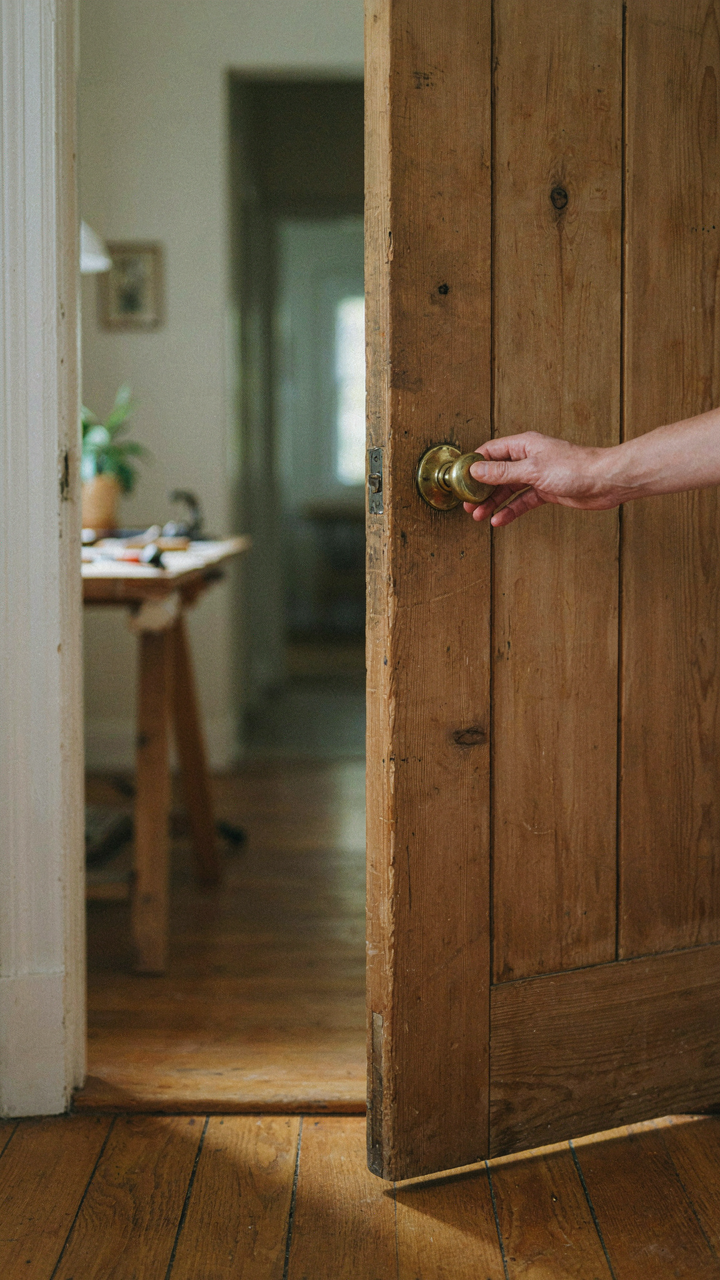
You want a cottage home office because you’re afraid the open floor plan and proximity to family won’t let you focus. Here’s what actually matters: a cottage office works because it exploits spatial separation as a psychological circuit breaker. Your brain treats a dedicated room as permission to switch modes. The moment you close that door, you’re not in your home anymore. You’re in a work container. This isn’t aesthetic preference. This is neurology.
The internet sells cottage offices as retreats filled with soft lighting and plants. That’s decoration masking the real mechanism. Spatial separation forces your nervous system to reset its context. A converted sunroom, converted barn corner, or enclosed porch tells your brain one signal: this location means focus mode. The physical threshold changes your neurochemical state faster than any productivity hack. When you work where you also eat and relax, your attention stays fractured because your environment sends no coherent signal.
The Subtle Anti Distraction Mechanisms
Distraction prevention isn’t about removing temptation. That’s incomplete. The actual lever comes from environmental design theory: you build friction into context switching. Each time your attention wanders toward a non-work task, the act of leaving your office and walking somewhere else creates a decision point. That walk is the mechanism. It interrupts the automatic habit loop.
A cottage office isolates your working environment from living spaces deliberately. Phone charging happens elsewhere. Snacks stay in the kitchen, not your desk. The coffee machine is outside your door. This isn’t about willpower. It’s about making every distraction require physical navigation. Your brain has to consciously choose to leave, walk, retrieve something, and walk back. That friction stops the impulse dead. Most people call this discipline. It’s actually just geometry.
The Analog Fortress Protocol: Building Your Anti Distraction Hub

Walls That Stop The Bleeding
You want a cottage office because you’re afraid your focus will evaporate the moment you sit down. It will, unless you architect physical friction into the space itself. Borrow from defensive architecture—the military discipline of controlling sight lines and access. Your cottage office needs the same principle: design sightlines so digital devices and external chaos aren’t in your visual field during deep work blocks.

Position your desk to face a wall or window, never the doorway or a screen’s edge that invites tab-switching. Close doors. Use filing cabinets or shelving to block views of personal clutter. The mechanism is simple: you can’t be distracted by what you can’t see. This isn’t motivation. It’s physics applied to workspace layout.
The Paper First Operating System
Everyone says go digital for efficiency. They’re wrong about cottage offices. The cottage setting actually rewards the opposite move because you have the space to spread out physical workflows without looking chaotic.
Keep a dedicated paper notebook for your daily task list. Use it before opening any application. Write with pen on paper for planning—not notes. This forces you to decide what matters before the notification economy hijacks your attention. Cottage offices benefit from distance from connectivity, so build workflows that don’t require constant screen validation. Store reference materials in print when possible. The friction of retrieving a book instead of searching online creates the pause you need to maintain direction. Your first action each morning hits paper, not a screen.
The “Deep Work” Alchemist: Crafting Uninterrupted Focus Zones
One Chair, One Surface, One Purpose
You want to believe a cottage office can be flexible. It can’t. You’re actually afraid of committing to a single task because it forces you to measure whether you’re actually producing. The mechanism is this: task-switching happens when your environment broadcasts multiple possible activities. Eliminate the broadcast.

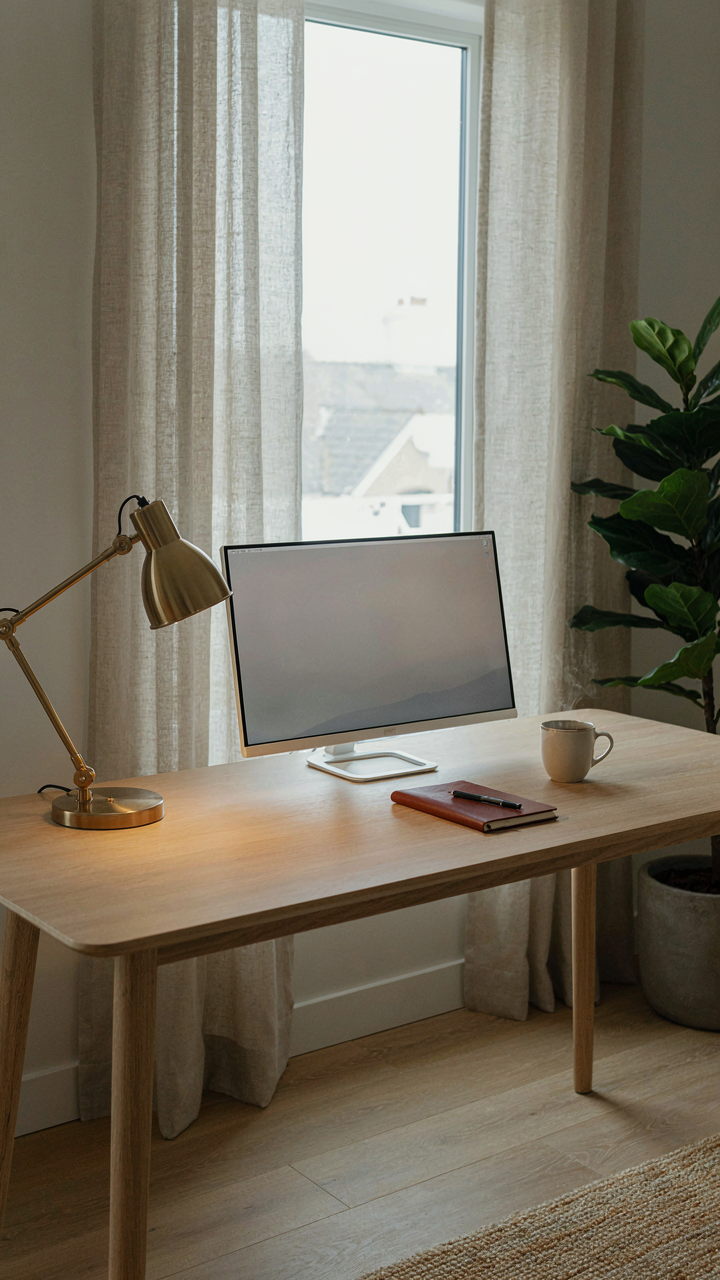
A desk built for one job—writing, coding, design—removes the cognitive tax of reconfiguring your space. Your brain stops negotiating what to do and starts doing it. A cottage office with a narrow desk, a single monitor arm, and one chair positioned at a fixed distance becomes a ritual container, not a multipurpose room. The friction of switching tasks rises dramatically. You stay.
Cortisol And The Rhythm Of Light
This isn’t about “ambiance.” Lighting is a neuroendocrine problem. Your eyes signal time-of-day to your hypothalamus, which governs cortisol release—the hormone that gates your capacity for sustained attention. Wrong light, wrong cortisol curve, collapsed focus by 3 PM.
A cottage office needs two lighting layers. First, indirect natural light from the side or behind your monitor during morning hours. Second, a color-tunable desk lamp that shifts from 5000K (daylight) in the morning to 3000K (warm) by late afternoon. This isn’t creative flourish. This is endocrine system alignment. Adjust the lamp’s angle every 90 minutes to prevent glare buildup on your screen. Track which angles preserve focus longest, then lock them in.
Silence Is Power: Acoustic Design For The Cottage Office
How Sound Travels Through Walls
You want silence because you think it signals professionalism to clients, but the real reason is neurological: your brain can’t do complex work under acoustic load. Sound physics treats cottages like sponges absorbing and reflecting waves. Most cottage walls are single-layer timber or plaster over stone—they stop almost nothing below 125 Hz. That’s why traffic noise, neighbor voices, and appliances penetrate so easily. You can’t engineer your way out of physics.

Dense materials kill sound. Mass is the mechanism. Fiberglass batts between wall cavities work because they trap air and dampen vibration. Rockwool performs identically and handles moisture better in older cottages. For retrofit work without opening walls, acoustic panels (melamine foam or fiberglass wrapped in fabric) absorb mid and high frequencies but don’t block bass. Layer cheap curtains behind panels to add mass. The goal isn’t perfection—it’s dropping ambient noise 6-10 decibels below your speaking voice threshold.
Finding Quiet Without Fighting Physics
White noise machines are band-aids that mask sound but don’t remove it, forcing your brain to filter two competing signals instead of one. Skip them. Natural soundscapes work differently because they match human auditory expectations from evolution. Rain, wind, running water, and birdsong all contain randomness without predictable patterns that trigger alertness. Stream these from a simple Bluetooth speaker positioned away from your desk, low volume, underneath your hearing threshold.
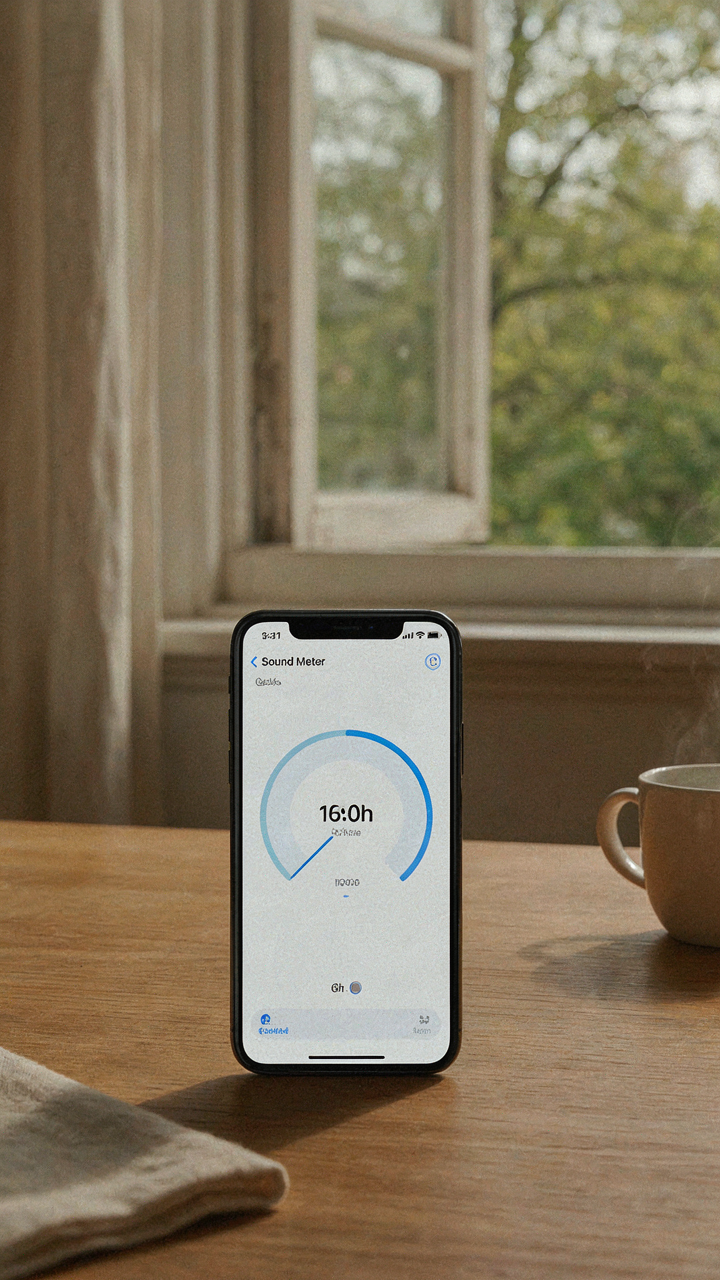
The cottage advantage is proximity to actual outdoor sound. Open a window if the environment is genuinely quiet—wind through trees, distant water, occasional wildlife. Measure this first: sit in silence for five minutes with a sound meter app and log the baseline decibel level. If it stays below 40 dB, your ambient exterior is better than any artificial generation. Position your desk parallel to the window, not facing it directly, so you get passive acoustic benefit without distraction. This approach costs nothing and matches your space instead of fighting it.
The “Flow State” Feedback Loop (Cybernetics)
Your Office Regulates Itself Or It Doesn’t
You want to believe that willpower and discipline alone keep you focused. They don’t. You’re hoping your cottage office setup can compensate for weak systems. It can’t. Cybernetics, the study of self-regulating systems, explains why: your office either feeds back information that keeps you in focus or it actively pulls you out. A self-regulating system uses feedback to maintain stability. Your cottage office is that system. The desk height, light source, door position, and noise level aren’t decorative choices. They’re control mechanisms that either amplify focus or introduce drift.

Most people design offices backward. They start with aesthetics or comfort and hope focus follows. Real setup works the opposite way. You map what breaks your concentration, then build barriers into the physical space so those breaks never reach your awareness. A squeaky door doesn’t just annoy you once. It trains your nervous system to expect interruption. Poor lighting doesn’t fade into background. It forces constant micro-adjustments in eye tension, draining focus like a slow leak. The office that works is one where environmental feedback automatically corrects you back toward deep work before you consciously notice you’ve drifted.
The Sensory Loop That Holds Attention
Feedback loops need sensors. In a cottage home office, your primary sensors are sensory thresholds: what you see, hear, and feel moment to moment. The loop closes when these inputs either confirm you’re in work mode or signal a breach. Flat, shadowless light tells your brain to stay in scanning mode. Directional light with warm and cool zones tells your brain where the work is. That’s not comfort. That’s navigation. Sound works the same way. Ambient noise above 50 decibels keeps your prefrontal cortex in interrupt-detection mode. Below 40 decibels, it settles. Your cottage’s natural quiet is a feature only if you actively protect it from leaks.
The mechanism is straightforward: design your cottage office so environmental feedback requires zero conscious interpretation. Place your desk to face the door so motion triggers visual feedback before it breaks focus. Use blackout materials on one wall to drop echo, lowering the sensory load. Set a specific work light that you turn on and off like a switch, not a dimmer. When turning on the light signals work time to your nervous system, you’ve closed the loop. You’re not fighting distraction anymore. Your office itself prevents it from forming.
Natural Light & Greenery: Not Just Pretty, But Productive
Window Placement For Glare Reduction
You want this section because you think natural light sounds productive, but you’re actually worried about squinting at your screen for eight hours. The real mechanism is simple: glare isn’t an aesthetic problem, it’s a focus killer. Light bouncing off your monitor forces your pupils to constantly adjust, draining cognitive resources before you even start working.

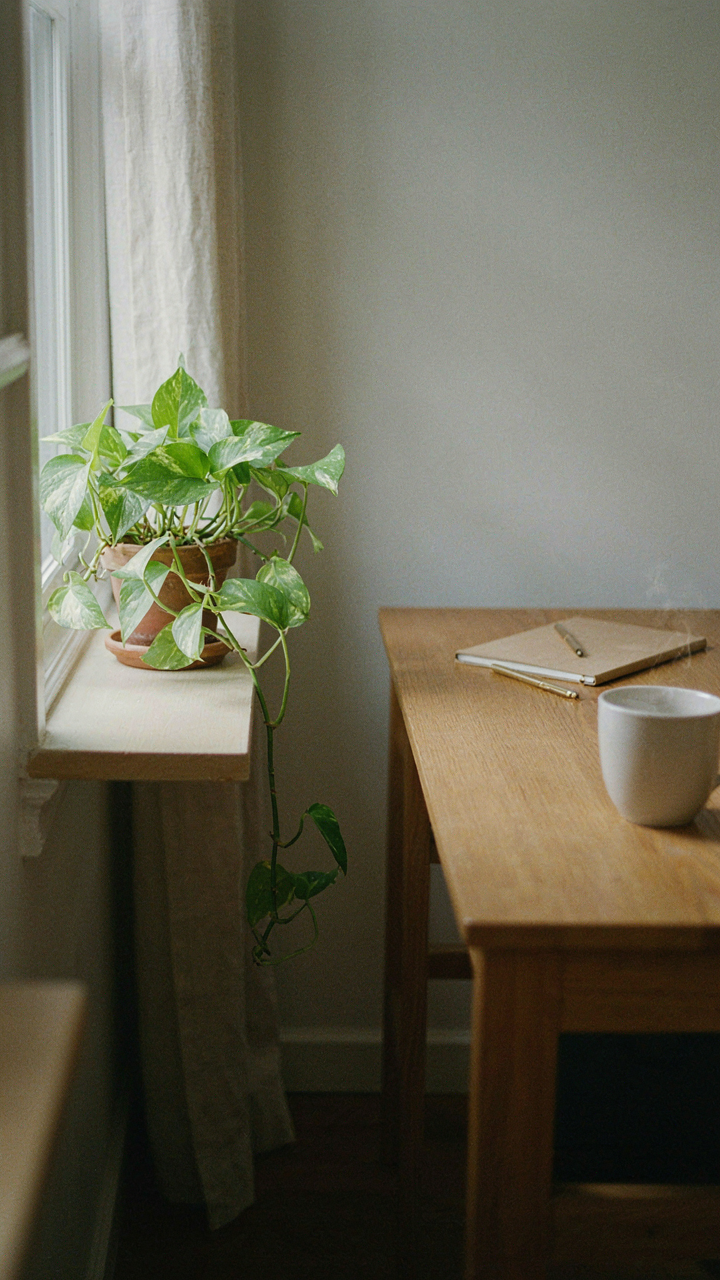
Position your desk perpendicular to windows, not facing them directly. North-facing windows deliver consistent, non-directional light without the harsh shadows and glare that south and west exposures create. If you’re stuck with a bright window behind your monitor, use a matte screen protector or mount a simple fabric shade you can adjust without blocking the light itself. The goal isn’t darkness. It’s stable, shadowless illumination that your eyes don’t fight against.
Plants As Attention Anchors
Biophilic design borrows from environmental psychology, which calls this “soft fascination” – the term for objects that hold your attention without demanding it. A plant in your line of sight works the same way a distant tree does during a forest walk. It gives your eyes a break point that costs nothing cognitively, which is why attention recovers.
Place one or two low-maintenance plants at eye level within your peripheral vision during work. Pothos, snake plants, and ZZ plants survive neglect and low light. You’re not decorating. You’re installing a visual reset button that fires every time your focus fractures. The moment you notice the plant instead of the screen, your parasympathetic nervous system downshifts slightly. That’s the mechanism. Execute it by placing a single plant on a shelf or stand at arm’s length to your left or right, where you’ll see it without turning your head.
Decluttering As A Weapon: The Minimalist Cottage Office
Visual Noise Kills Decision Making Before Work Starts
You want to feel productive without actually changing how you work. Here’s the mechanism: your brain treats every visible object as a potential task. Cognitive psychology calls this the “task activation effect.” In a cottage office, a stack of papers, a half-read book, or a decoration you’re unsure about all compete for your attention the moment you sit down. Your prefrontal cortex burns energy deciding whether to engage with each item instead of reserving that energy for actual work.

The common advice says “just clean your desk.” That’s incomplete. You need to remove things from your line of sight entirely, not just organize them neatly. A cluttered desk that’s organized is still a cluttered desk. Test this: work for two hours with visible distractions present, then work two hours with those same items in a closed drawer. You’ll notice the difference in focus velocity, not just comfort. The cottage aesthetic often encourages keeping “meaningful” objects visible. Resist this. Meaning doesn’t improve output.
Hidden Storage That Actually Works
Storage solutions fail because people treat them as decoration repositories instead of distraction vaults. The goal is brutal: if you can see it, it’s still stealing attention.
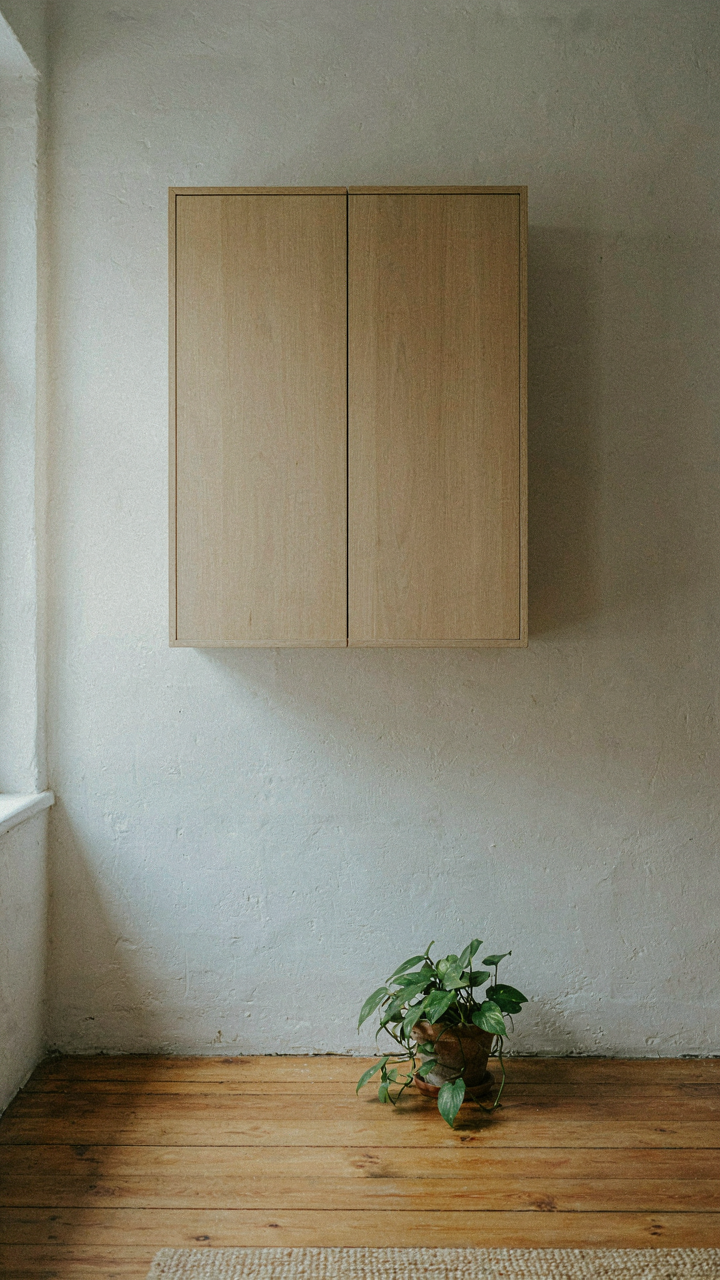
- Closed cabinetry with opaque doors: Wood or painted cabinet fronts block visual access to supplies, files, and materials. Glass-front storage looks intentional but defeats the purpose of hiding distractions.
- Under desk drawer units: Slides underneath your work surface for pens, notepads, and secondary tools. Keeps frequently used items within reach but completely invisible during focused work.
- Built in shelving with curtain panels: Cottage homes often have awkward nooks. Install shelves and hang fabric curtains that close across them. Textile absorbs sound and light while concealing contents.
- Lidded storage benches: Serve as seating and storage simultaneously. Real cottage offices used these for decades. Lift the lid only when you need something inside.
- Wall mounted cabinets above eye level: Position storage above your natural sightline when seated. You access it intentionally, not passively throughout the day.
The mechanism that separates functional storage from theater storage is access friction. If retrieving something takes three seconds, you’ll still grab it during a focus dip. If it takes twelve seconds, you won’t. Every hidden storage solution must require deliberate movement to open. This small gap between impulse and action is where discipline lives.
Ergonomics Of Endurance: Sustaining Focus Without Strain

The Chair And Desk Setup That Holds
You care about this because you’re hoping equipment will solve a discipline problem. It won’t. But the right setup removes friction that kills focus before willpower even enters the room. In ergonomics, we call this the concept of “load bearing”—a structure’s capacity to handle stress without failure. Your cottage workspace bears the load of eight-hour workdays. A chair that collapses that load into your lower back isn’t furniture; it’s a distraction tax.

The standard advice says “get an ergonomic chair.” That’s incomplete. You need a chair that matches your desk height, your torso length, and your actual work pattern—not a generic solution. Most cottage offices use dining tables or repurposed furniture where seat and surface heights don’t align. Measure from your elbow to the floor while seated upright. Your desk surface should meet that point or sit one to two inches below it. A chair with adjustable lumbar support matters less than a chair you can actually set to the right height. Wood or metal frames outlast plastic. Seat depth matters: your thighs should have two to four inches of clearance from the chair’s edge. This prevents circulation cutoff during long sessions.
Posture Rhythm And When To Move
Stop thinking of posture as a static position you hold. That’s the mistake. Posture is a rhythm. Your body enters fatigue cycles around forty to fifty minutes of fixed positioning. Your spine compresses. Your hip flexors tighten. Your shoulders climb. One blunt fact: sitting still is the problem, not the chair. The fix isn’t better equipment—it’s scheduled position changes that interrupt the decay cycle before it compounds.
Set a timer for forty-five minutes. At that mark, stand for two minutes. Walk to another room. Change your elevation. Don’t wait for pain to signal the need. Pain arrives after damage already accumulated. Real endurance isn’t about staying seated longer. It’s about structuring movement into your workday so fatigue never reaches the threshold that breaks focus. Set the timer now.
The Cottage Core Office: Aesthetic As A Productivity Enabler

Curated Decor For Mental Calm
You want permission to buy things and call it productivity. Here’s what actually works: your brain treats visual simplicity as safety, which lowers cortisol and extends focus. This is basic neurology, not decoration philosophy. Environments with fewer competing visual elements require less cognitive load to parse, leaving more mental bandwidth for actual work.

The mechanism is constraint. Pick a material palette first—wood, linen, one accent color—then stick to it. Natural materials like solid wood or stone reduce the decision fatigue your brain experiences every time you glance around the room. A cottage office doesn’t mean collecting items; it means choosing a coherent direction and refusing everything else.
Avoiding Cozy Clutter Traps
The common advice is wrong: a cottage aesthetic does not require accumulation. People confuse “lived-in” with “full,” and that confusion kills productivity. Clutter is visual noise that taxes your working memory. Every object on display competes for attention and degrades focus quality, even subconsciously.
Real cottage offices use negative space intentionally. One well-chosen piece of furniture beats five mediocre ones. A single shelf with ten carefully selected objects beats a shelf packed with thirty. Your job is to remove until the room feels composed, not add until it feels complete. Ask before each item stays: does this object directly support my work, or am I keeping it for the feeling it creates?
Technology Integration: Taming The Digital Beast
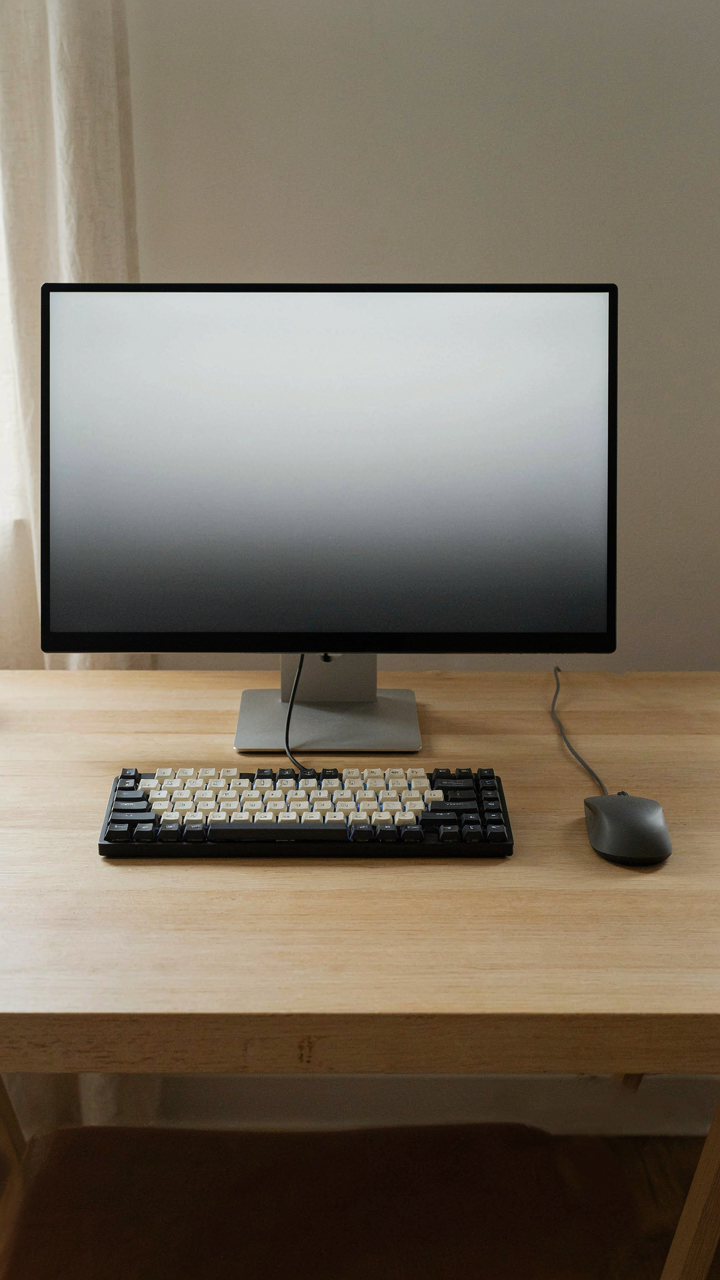
The Right Hardware Keeps You Off The Treadmill
You want tech that doesn’t demand maintenance. That’s the real motive here. Most people stock their cottage office like they’re outfitting a startup, then spend half their week troubleshooting cables and updates. The mechanism is simple: complexity breeds friction, and friction kills work.
Start with a single monitor. Not dual monitors, not a ultrawide curved panel. One quality 27-inch or smaller screen positioned at arm’s length eliminates the neck strain that comes from swiveling between displays. Pair it with a mechanical keyboard and a basic mouse. Nothing wireless that requires charging—hardwired peripherals stay on, stay reliable, and never interrupt your flow with a dead battery at 2 p.m.
Software Choices That Block The Noise
The common advice tells you to use every productivity app available. Wrong. Most of them become digital clutter that consumes attention instead of preserving it. The real mechanism comes from subtraction, not addition.
Use a single text editor for writing. Use a single project tracker for task management. Use one communication tool during specific windows only, not open all day. The constraint forces you to develop work discipline instead of outsourcing it to notifications. Close all browser tabs except one. One open tab per working session eliminates decision paralysis and the phantom urge to “quickly check something” that becomes an hour-long drift. Set your system to grayscale during work blocks. The reduction in visual stimulation removes the dopamine hook that keeps you returning to distracting sites. When you need color, you’ve created enough friction to make the choice intentional instead of automatic.
The Cozy Trap: Why Your Office Still Fails You

You don’t need another aesthetic. You need friction removal. Most cottage home offices fail because they look good but operate poorly. The shiplap doesn’t increase your output. The vintage lamp doesn’t clarify your thinking. Today, audit one workflow in your space. Find where you waste three minutes repeatedly. Fix that one thing. A beautiful office that fights you on every task is just an expensive distraction wearing a cottage dress.