
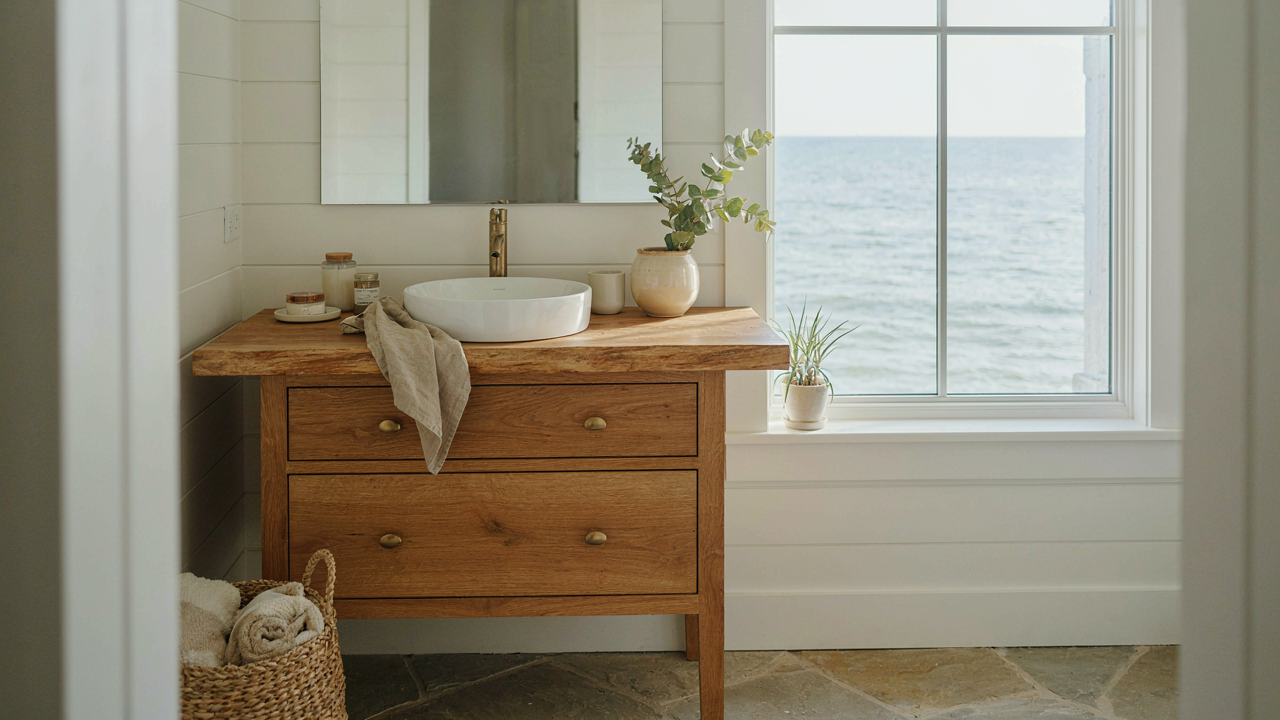
The Shore’s Impermanence Protocol: Design For Evolution, Not Stasis
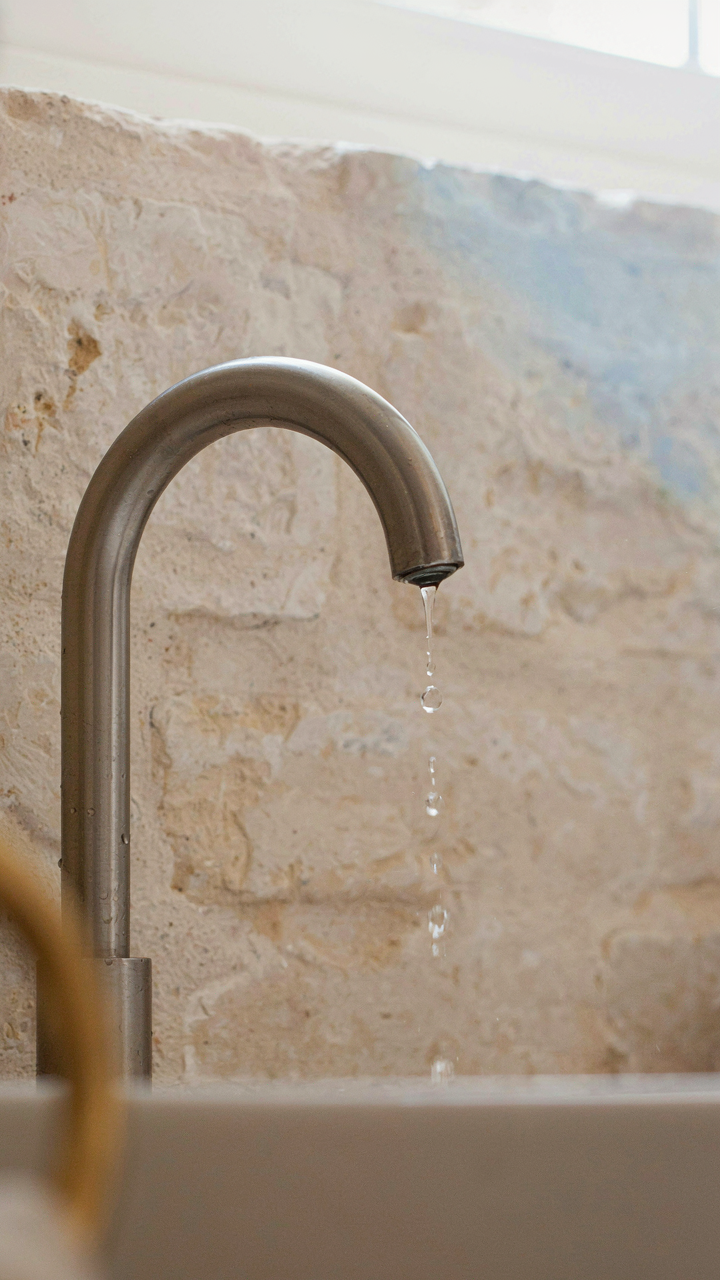
Borrowed Biology: Mimic Intertidal Zones
You want a bathroom that looks “timeless” because you’re afraid of wasting money on design that dates itself. That’s not the real problem. The real problem is you’re thinking like a landlocked person who confuses stasis with quality. Biology teaches us the intertidal zone—the space between high and low tide—thrives precisely because it adapts constantly. A coastal cottage bathroom should operate on the same principle: materials and finishes that shift with moisture and light, gaining patina instead of falling apart.
Stop fighting the salt air and humidity. Sealed wood, matte metal hardware, and natural stone all respond to coastal conditions in predictable ways. Stainless steel oxidizes into matte gray. Teak darkens. Limestone develops a lived-in surface. These aren’t flaws—they’re the design itself working. Your bathroom becomes a record of how you live in it, not a static catalog photo. Build this evolution into your material choices from day one, and you eliminate the false choice between looking good now and looking desperate in five years.
Materials That Gain Character, Not Decay
The standard advice here is wrong: “use materials that age well” is too vague to build with. You need to distinguish between patina and deterioration. Patina is a protective layer that forms on bronze, brass, and natural stone—it’s chemistry working in your favor. Deterioration is particle loss from paint, laminate failure, and rust bloom on low-grade steel. Coastal bathrooms fail when designers mix these two without intention.
Specify materials that have a historical track record in maritime environments: oiled teak, bronze fixtures, unsealed natural stone, and stainless steel. Each develops visible character while maintaining structural integrity. Your contractor should understand that matte finishes on hardware aren’t “unfinished”—they’re the endpoint of controlled oxidation. The patina layer protects what’s underneath. Inspect your bathroom annually and oil wood surfaces as needed. This isn’t maintenance theater—it’s the protocol that keeps materials advancing toward their best state instead of their worst.
Beyond Beige And Blue: The Authentic Coastal Cottage Bathroom Palette
Light As A Design Material, Not An Afterthought
You want the bathroom to feel “airy” because you’re afraid a small space will trap you. That’s the real problem. Light isn’t decoration in a coastal cottage bathroom—it’s structural. North-facing windows deliver flat, consistent illumination that won’t bleach tile or fade finishes. South and west exposures create glare on mirrors and moisture issues on glass. Position your mirror perpendicular to the window, not facing it directly. This bounces light into corners and eliminates the cave feeling without adding fixtures.

The mechanism is simple: reflected light travels further than direct light and costs nothing. Most bathroom designs ignore window orientation entirely and rely on artificial overhead lighting, which flattens the space and erases the coastal feeling. Skylights work if your cottage allows them, but they demand proper ventilation to prevent condensation damage. Install your exhaust fan on a timer that runs 20 minutes after showers end. This keeps moisture from settling on wood trim or creating mold in ceiling cavities.
Where Ocean Movement Lives On The Walls
Dynamic doesn’t mean chaos or pattern overload. Paint colors in coastal cottages should shift depending on light conditions throughout the day—this is the principle borrowed from atmospheric physics, where light wavelength determines perceived hue. A soft gray-green at dawn looks pale blue by afternoon and shifts toward taupe at dusk. This isn’t accident; it’s how you use undertone to create the illusion of water without literally painting waves.
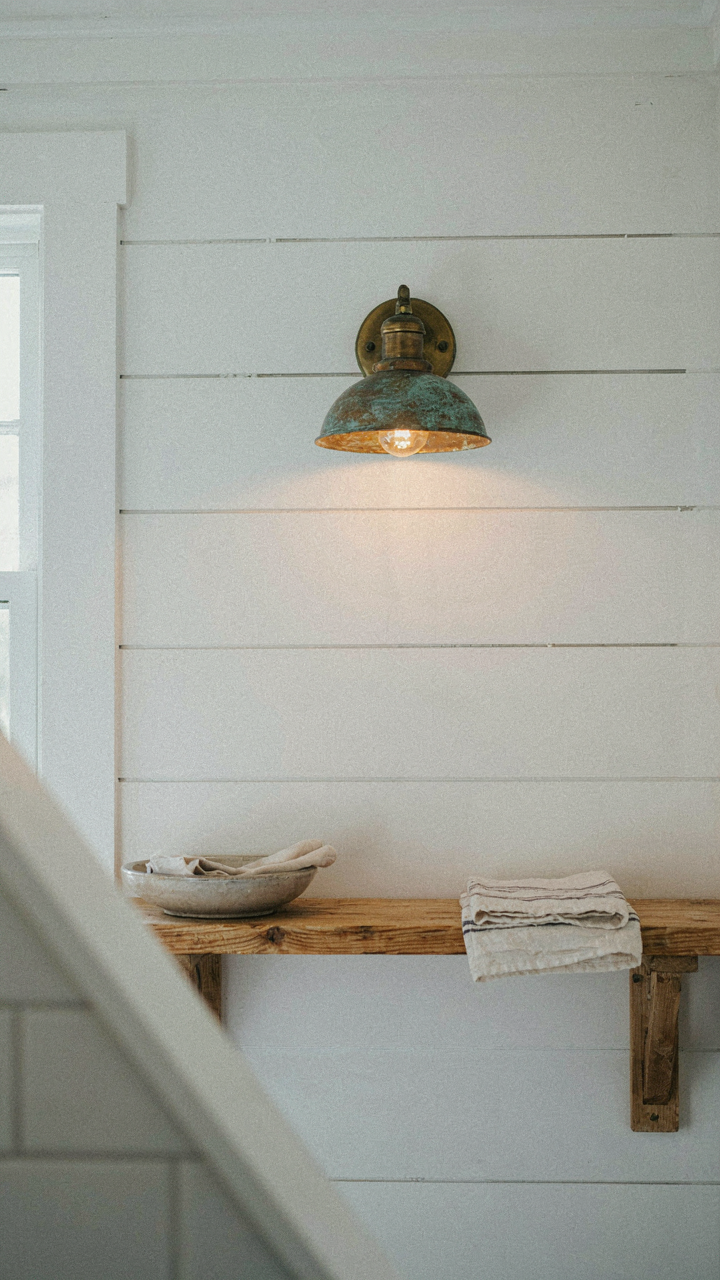
Accent colors work best when they reference actual coastal materials, not generic “ocean vibes.” Weathered copper fixtures oxidize to green over time. Raw wood trim develops silver patina from salt air. These are observable facts, not design trends. Bring one of these materials in—a single copper sconce or reclaimed wood shelf—and let it anchor the palette. Everything else becomes subordinate to that real material’s actual color changes. The bathroom then feels tied to a place rather than decorated from a mood board.
The Anti Kitsch Coastal Bathroom: Prioritizing Texture Over Theme
Raw Materials Over Styling
You want people to think your bathroom happened naturally, not that you bought a theme. That’s the real mechanic here. The shift from nautical decor to coastal authenticity mirrors the industrial design principle of “honest materials”—showing what something actually is instead of disguising it. Unpolished wood, raw linen, and natural stone work because they don’t perform. They just sit there and age.

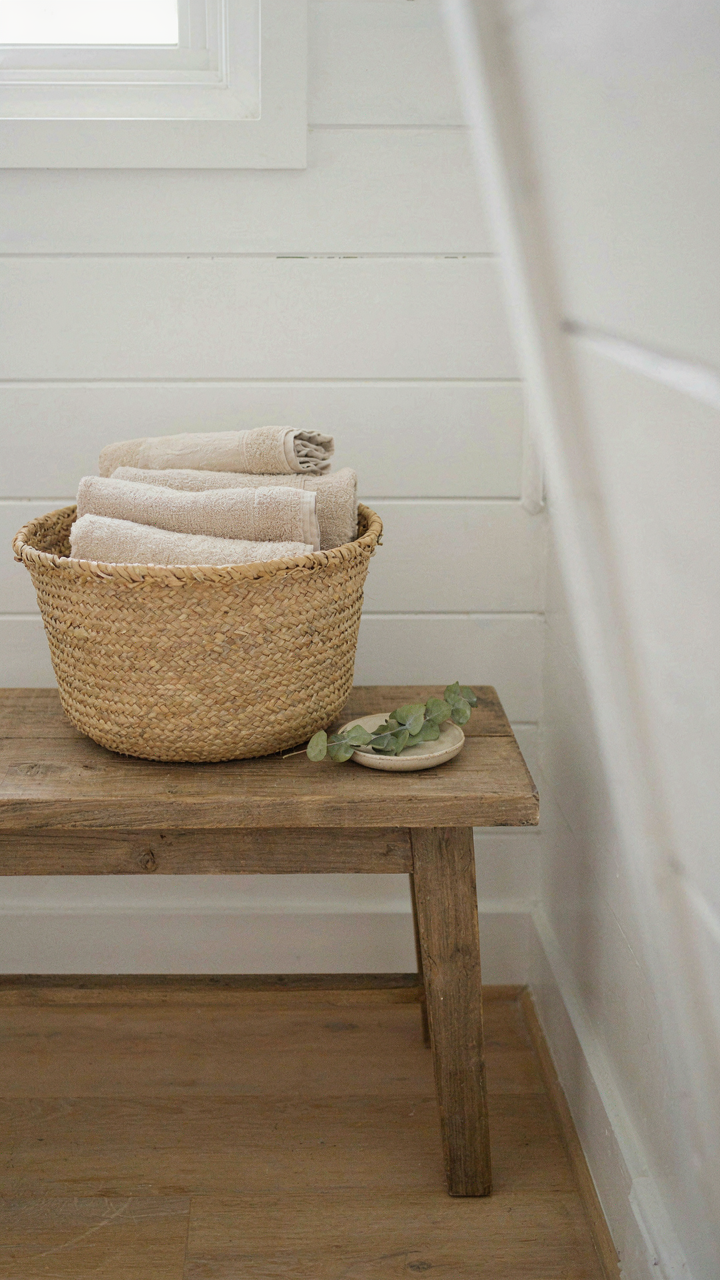
Reclaimed timber on accent walls or shelving beats painted shiplap every time. Woven seagrass or jute baskets function as storage while adding texture without announcing themselves. Limestone, travertine, or rough slate on floors or as shower surrounds handle moisture while looking like they belong near water. The material does the work. You don’t need to explain it.
Ditching The Anchor Tattoo Approach
Most coastal bathroom advice tells you to lean into nautical symbols. That’s lazy design. A fake ship wheel or mass produced driftwood art screams “I bought this at a home goods store and called it a vision.” Real coastal spaces don’t reference the ocean. They absorb its conditions. Salt air oxidizes metal differently. Humidity and light shape how materials actually behave in that environment.
Focus on what the coast does to materials, not what you think the coast looks like. Unfinished brass fixtures will patina. Concrete will develop mineral deposits from water exposure. Linen will soften and fade from humidity and light. These transformations are the actual aesthetic. When you select for durability and let physics handle the styling, you end up with a bathroom that reads as intentional, not decorated.
Function First: A Coastal House Bathroom Built For Life, Not Likes
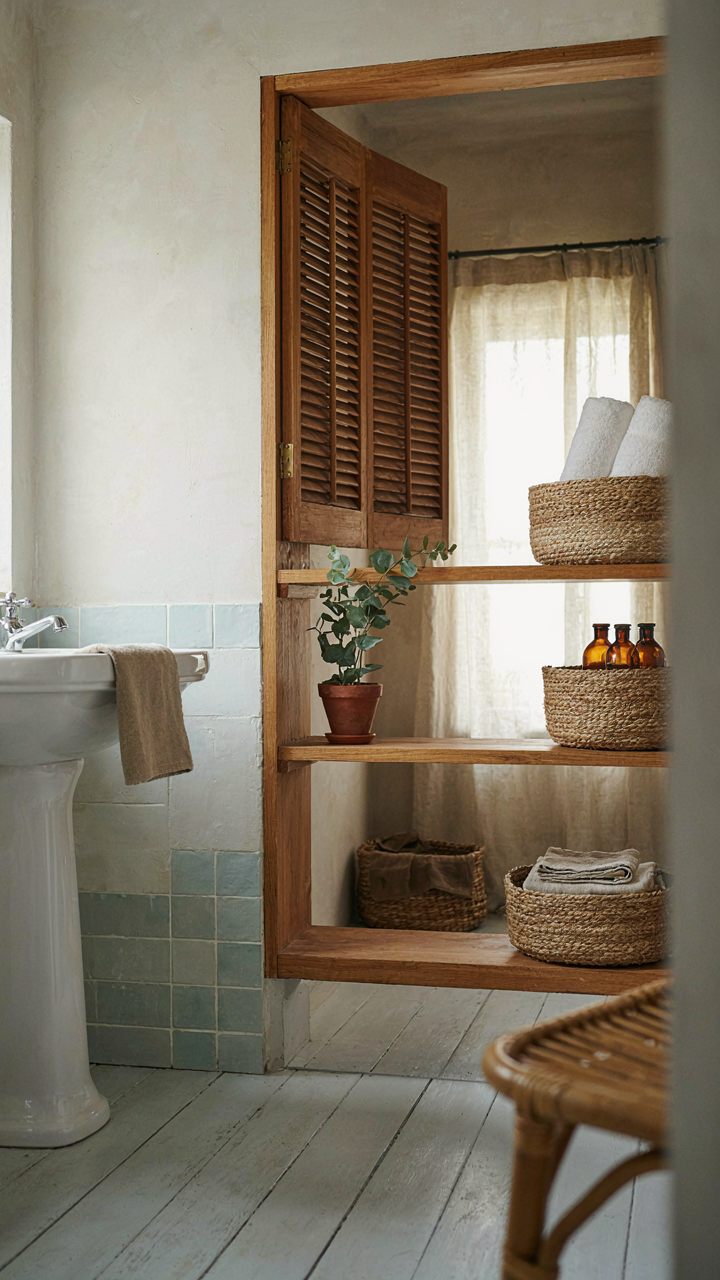
Storage That Survives Salt Air
You want your bathroom to look effortless, which is why you’re actually terrified of visible clutter ruining the aesthetic. The real mechanism here is vapor pressure. In humid coastal environments, moisture doesn’t just sit on surfaces—it migrates into enclosed spaces. Standard cabinets trap this moisture. You need ventilation within your storage itself.

Install open shelving with back vents or use cabinets with louvered doors that allow air circulation. Stainless steel or powder-coated metal hardware resists corrosion from salt spray better than brass or chrome. Woven baskets on shelves work because they’re porous—air moves through them constantly. Store only items you use weekly on open surfaces. The rest goes in sealed, desiccant-equipped drawers or a ventilated linen closet with an exhaust duct running to the outside.
Materials That Don’t Deteriorate
Everyone says “just use water-resistant materials,” which is incomplete advice. You need materials that actively resist the chemical reaction salt initiates on metal and porous surfaces. Ceramic tile withstands salt spray indefinitely. Porcelain resists better than ceramic because it’s denser—less water absorption means less freeze-thaw damage in coastal winter climates. Concrete with epoxy sealing works if you maintain it, but it requires resealing every two to three years.
Avoid untreated wood, standard drywall, and iron fixtures near windows or exhaust fans. Fiberglass reinforced panels cost less than tile and install faster, but they yellow and crack after eight to ten years in direct humidity. Use solid surface countertops like quartz or sealed granite instead of laminate. Paint the ceiling with marine-grade enamel, not standard latex—it resists moisture absorption and mildew growth far longer. Replace caulk every three years, not when it visibly fails.
The Beachy Bathroom Coastal Style Master Bath: Strategic Vistas
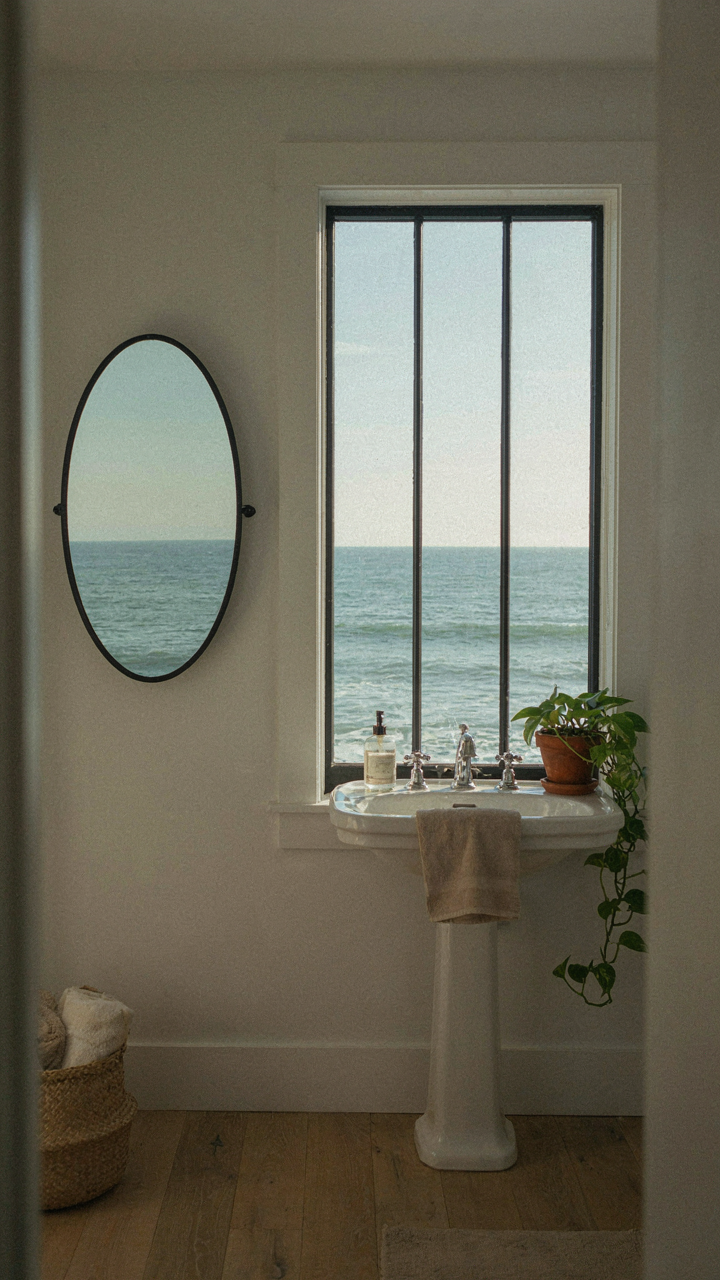
Window Placement Beats Decoration Every Time
You want people to notice your bathroom. That’s the real reason you care about views—social proof through architecture. The mechanism is simple: a well-positioned window does the work your decor can’t. Natural light and sight lines to water, trees, or sky create perceived luxury without buying anything. Poor window placement kills the entire coastal aesthetic, no matter what tiles you install.

Position windows at eye level when standing at the sink or sitting on the toilet. Avoid centering them on walls. Offset placements toward corners create depth and let you see more without turning your head. If your cottage has fixed windows, don’t fight it. Work with what exists. A single well-placed window outperforms three mediocre ones.
Texture And Material As Borrowed Elements From Nature
Applying architectural theory here: just as load-bearing walls distribute weight efficiently, natural materials distribute visual interest without overwhelming small spaces. The mistake most people make is treating materials as decoration. They’re not. Materials in coastal bathrooms work as functional anchors that happen to reference the shoreline.
Reclaimed wood, natural stone, and unfinished metals do the referencing. These aren’t ornamental—they manage moisture, age visibly, and require maintenance. A weathered mirror frame isn’t cute. It’s practical material that ties the bathroom to the exterior environment. Install open shelving using salvaged driftwood or local timber. Let it show water marks and patina. This signals authenticity faster than any trendy accent wall.
Lighting As Tide: Guiding The Coastal Bathroom Experience
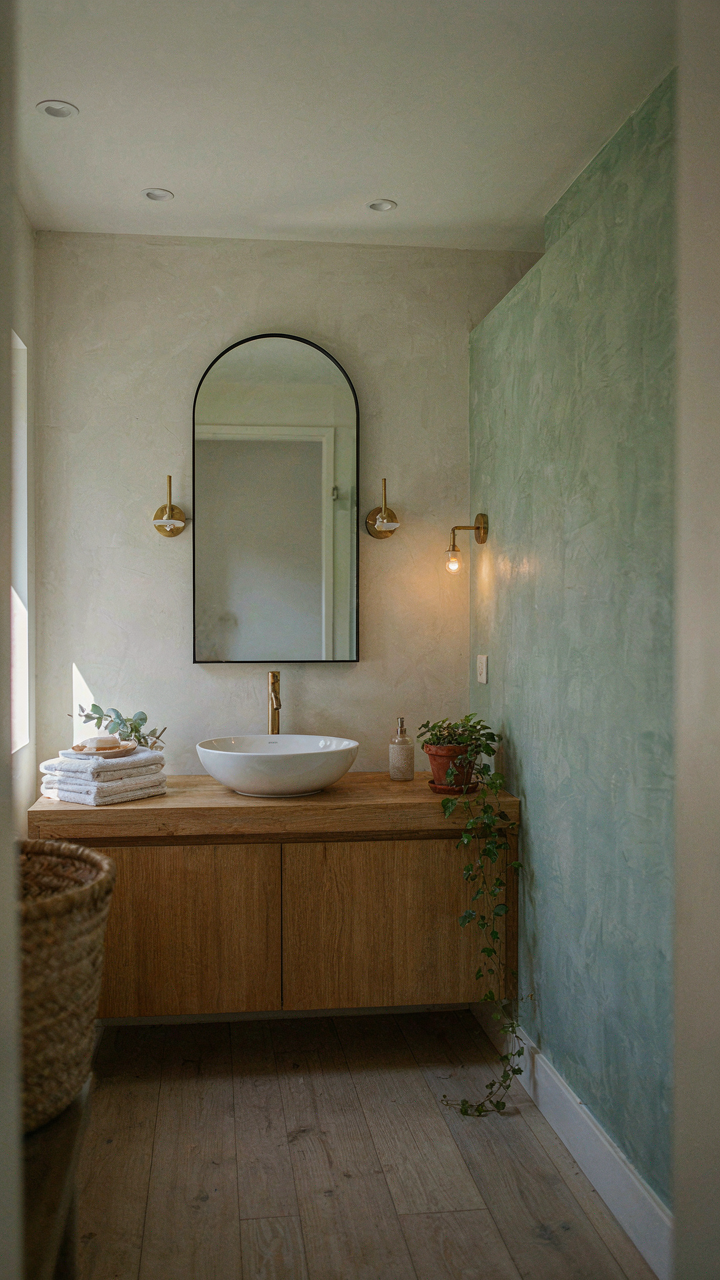
Layered Illumination For Shifting Moods
You want your bathroom to feel expensive without looking designed. Here’s what actually matters: lighting is the mechanism that controls perception of space and material. Think of it like tidal layering in oceanography—surface light, middle depth, and substrate all work independently but create the total environment. Most people skip this and install one overhead fixture, which flattens everything and makes expensive tile look cheap.

Coastal bathrooms need three distinct light sources working separately. Task lighting handles the mirror and sink—typically 40 to 50 watts of warm white (2700K) mounted at eye level on both sides of the mirror, not above it. Ambient lighting provides baseline visibility and comes from recessed fixtures or a central ceiling source on a dimmer. Accent lighting—wall sconces, under-cabinet strips, or shelf lighting—creates depth and pulls attention toward materials worth seeing. Each operates on its own switch or circuit so you control the mood without guessing.
Fixture Choices: Material, Placement, Function
Brass and oiled bronze corrode in bathrooms with poor ventilation. This is chemistry, not opinion. Coastal humidity accelerates oxidation, so fixture material determines maintenance burden. Stainless steel and powder-coated aluminum resist salt air better, but they read colder and cheaper unless you commit to industrial design. Brass works only if you accept it will patina and you’re willing to polish or let it age intentionally.
Placement beats decoration every time. Position sconces 60 inches from the floor, 36 inches apart at the mirror—this height and spacing minimize shadows on the face and suit standard mirror dimensions. Recessed lights go 4 to 6 feet from the wall to avoid harsh shadows and provide even coverage without glare. Vanity mirrors need dedicated front lighting; ambient ceiling lights alone create a cave effect. Run all circuits on 20-amp dedicated lines so dimming stays smooth and fixtures don’t flicker when you run the exhaust fan.
The Seaside Cottage Bathroom: Less Is More, More Or Less
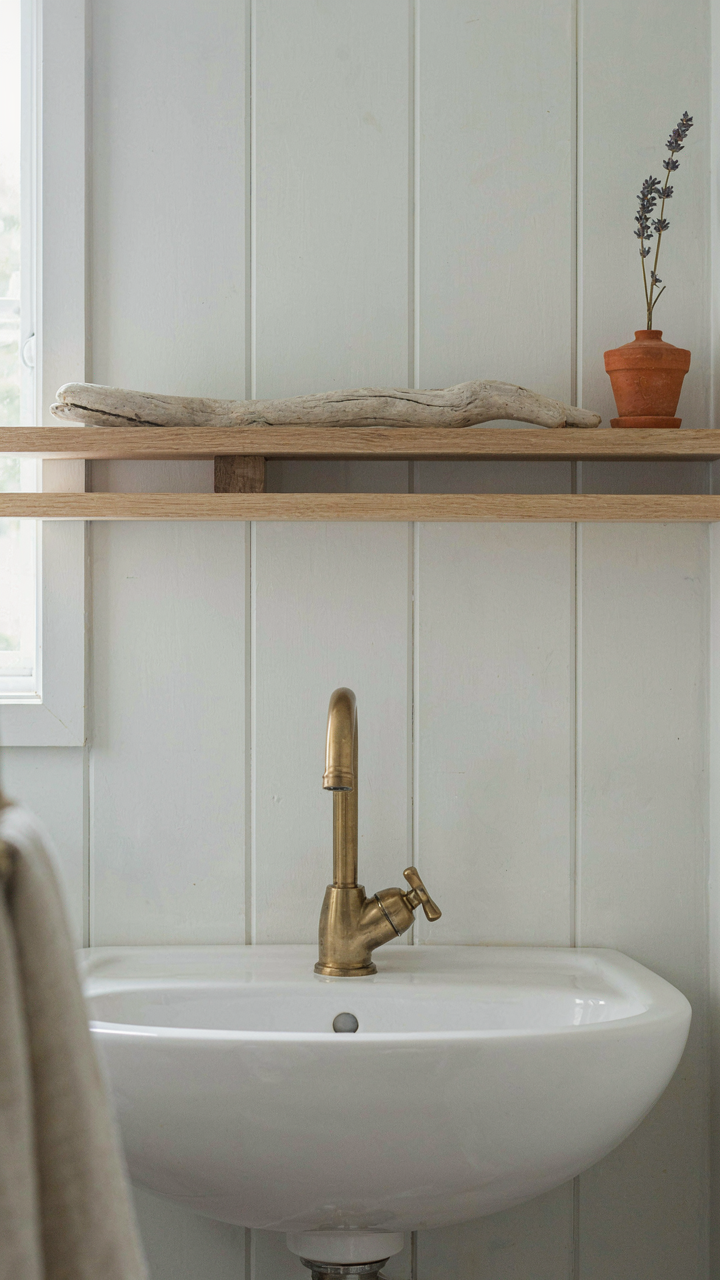
Clear Surfaces, Clear Mind
You want people to think you’re organized and intentional, not drowning in clutter. That’s the real reason this matters. The mechanism is simple: visual noise triggers cognitive load. Your brain processes every object in a space, whether you’re conscious of it or not. Clutter forces your nervous system to work harder just by existing in the room. A coastal cottage bathroom works because restraint is the actual design move, not the aesthetic side effect.
- Remove everything from counters weekly: Keep only active-use items visible. Everything else goes under the sink or in a cabinet. This isn’t minimalism theater—it’s functional clarity.
- Use closed storage for daily products: Bottles, brushes, and soaps live behind cabinet doors. Open shelving reads as intentional only when it displays one carefully chosen object, not a pharmacy inventory.
- Establish a single shelf for rotation: One open shelf displays a single seasonal item—a piece of driftwood, a stack of folded linens, a ceramic vessel. Nothing else. Rotate quarterly.
- Mount vertical storage above the toilet: Wall-mounted shelves or cabinets eliminate floor clutter. Vertical surfaces feel less dense than horizontal ones packed with items.
- Drawer dividers for small items: Toothbrushes, hair clips, and grooming tools go into divided drawers. Chaos hidden is chaos solved.

This isn’t about deprivation. It’s about making every object work harder. When you remove 80 percent of what sits in your bathroom, the remaining 20 percent becomes your actual design statement. That’s when the space stops feeling like it’s competing for attention and starts feeling like it breathes.
One Anchor Object
Coastal cottage bathrooms fail when they’re competing galleries. You see this constantly: driftwood on one shelf, shells in a jar on another, sea glass scattered across the counter. Visual noise dressed as design. The real mechanism here borrows from graphic design: a focal point creates hierarchy, which creates peace.
One object—not a collection—becomes the room’s gravitational center. This could be a large piece of bleached driftwood leaning against the wall, a single brass mirror with patina, a ceramic piece in the exact blue of shallow water, or a framed nautical chart. The object must occupy meaningful space and require no explanation. Everything else in the room recedes into support. Natural materials work because texture itself reads as a focal point without adding visual clutter. The object should sit where your eye lands first when you enter: typically above the sink or on a shelf directly across from the door. This single anchor eliminates the need to fill every surface with decorative items, which is where most coastal bathrooms lose credibility and become gift shops.
Investing In Intention: The Coastal Chic Bathroom, Built To Last
Timeless Design Over Trend Cycles
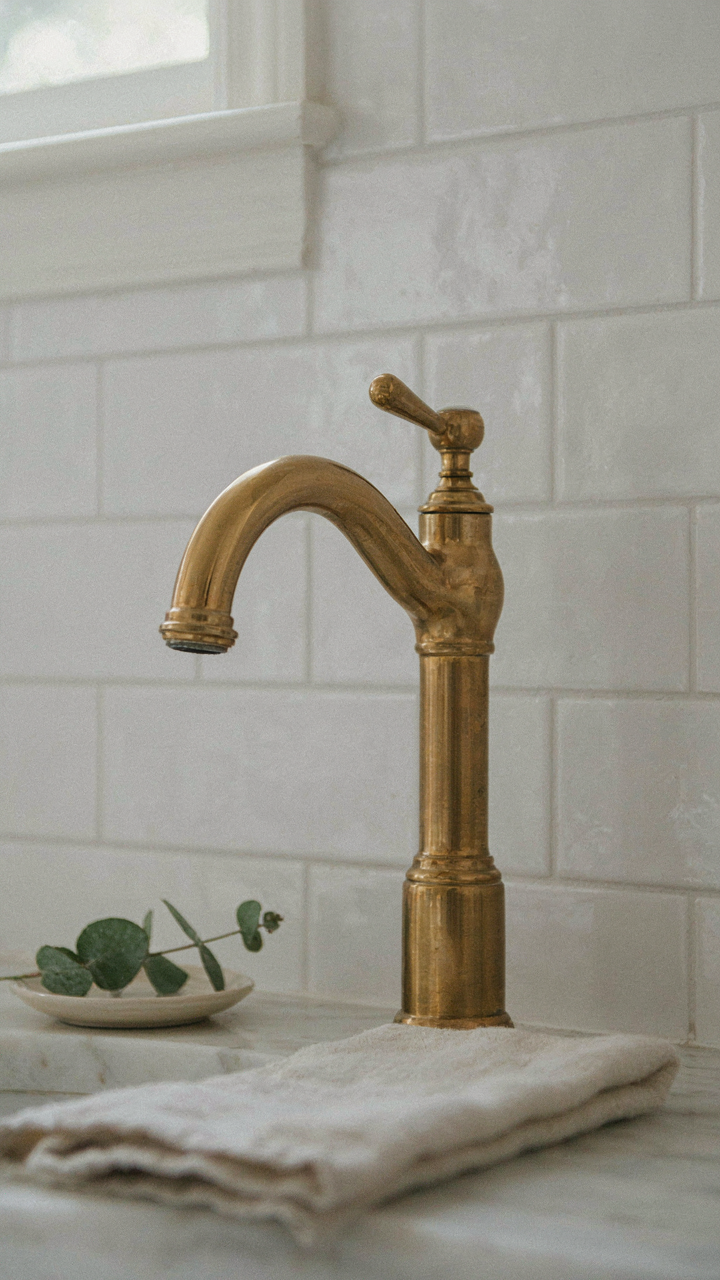
You’re worried this whole bathroom will look dated in five years, and you’re right to be. The mechanism is simple: trends move fast because the industry needs you to renovate again. Coastal design sidesteps this trap by anchoring to materials and proportions that don’t expire. White subway tile, natural wood, brass hardware, and stone—these aren’t trendy because they’ve worked for decades. They work because they’re honest about what they are.

The difference between a coastal bathroom that ages well and one that doesn’t comes down to restraint. Avoid color schemes that peak in one season. Stick to neutrals with texture rather than pattern saturation. The moment you fill a small bathroom with heavily patterned wallpaper or paint a vanity in a color that felt fresh last year, you’ve started a countdown timer. Invest in surfaces and finishes that prove themselves through time, not Instagram cycles.
Quality Fixtures As Permanent Infrastructure
Think of your bathroom fixtures like infrastructure in economics—they’re capital assets that either depreciate rapidly or hold value. A cheap faucet fails in three years. A solid brass or stainless fixture lasts twenty and costs less per year of use. This isn’t about status. It’s about replacement cost math. When you buy a low-grade vanity, you’re not saving money today. You’re borrowing money from your future self.
Quality fixtures also resist the corrosive environment that coastal bathrooms face. Salt air accelerates rust and mineral buildup on poor finishes. High-grade brass, marine-grade stainless, and solid wood with proper sealing handle humidity and salt exposure without degrading. The protocol is straightforward: choose fixtures rated for marine or wet environments, verify material composition before purchase, and avoid anything with hollow construction or cheap plating. Your bathroom will function identically five years in, or you’ll be replacing it—choose which cost you prefer.
Your Coastal Bathroom Isn’t A Museum; It’s A Functional Ecosystem. Stop Decorating, Start Designing For Resilience
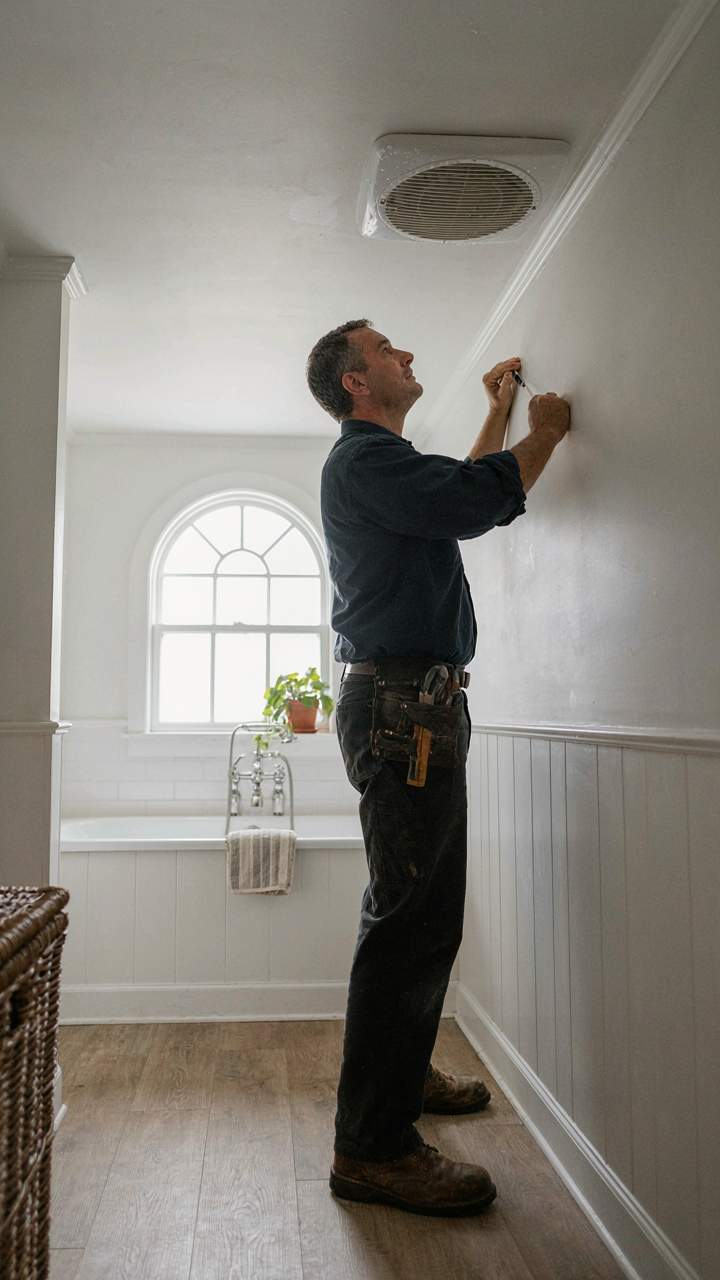
Most people design a coastal cottage bathroom to look like a catalog. They pick the aesthetic and stop. Wrong move. Your bathroom fights salt air, humidity, and temperature swings every single day. Pick one material in your space right now—tile, wood, hardware—and upgrade it to something that actually resists moisture instead of just surviving it. The difference between a bathroom that looks coastal and one that stays coastal is the difference between decoration and engineering. Your aesthetic only matters if it doesn’t rot in three years.