
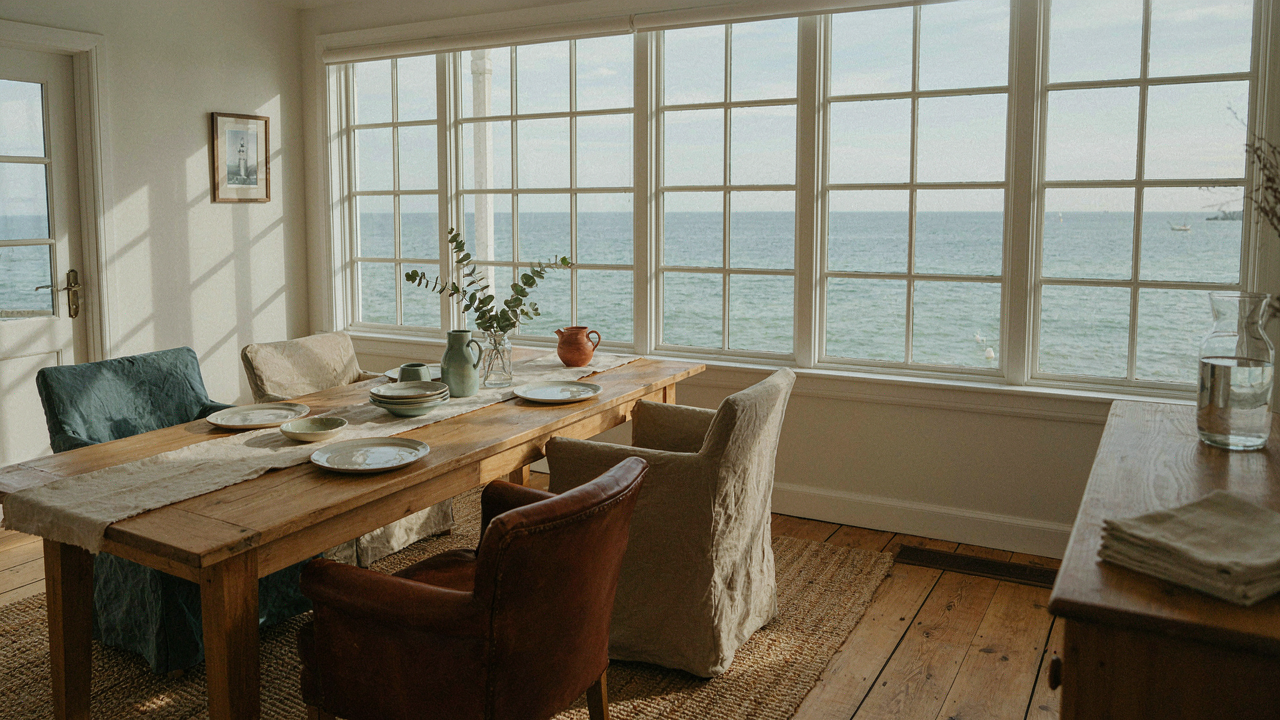
The “Effortless” Coastal Cottage Dining Room Is A Myth
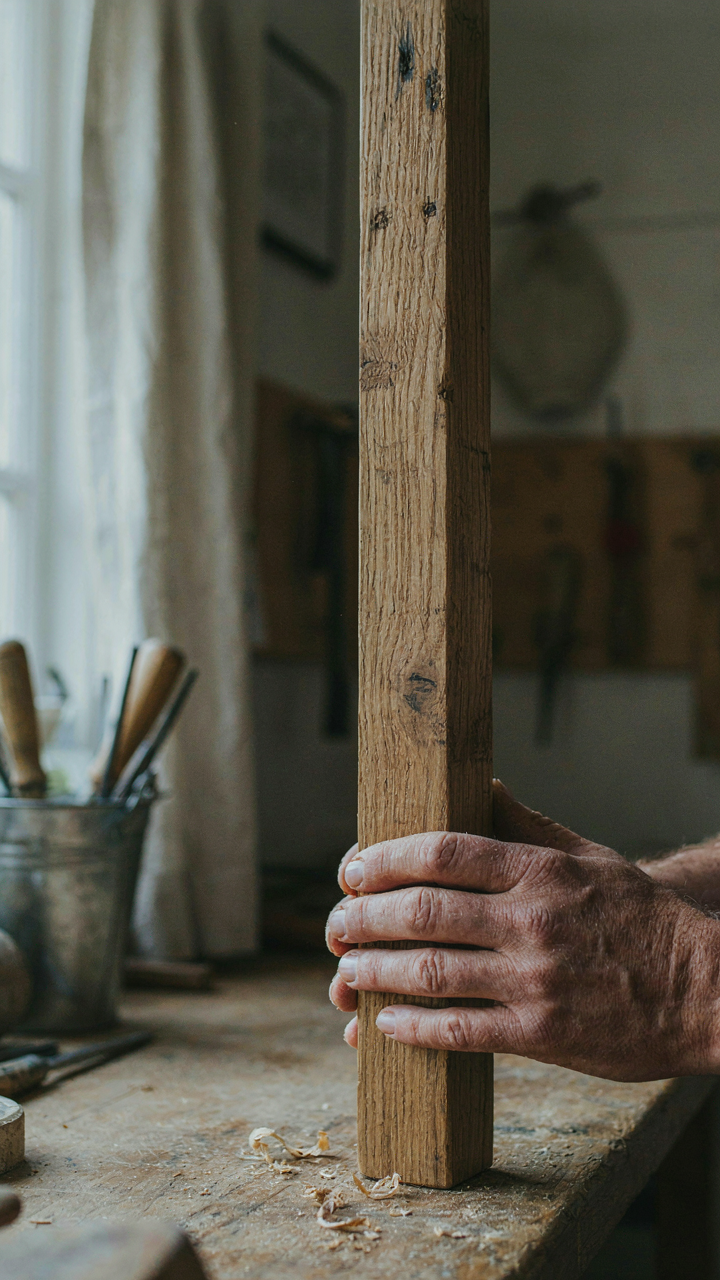
The Work Hidden Behind Casual Aesthetics
You want a dining room that looks like people just naturally gather there, like it happened by accident. That’s the real draw. But the casual coastal cottage aesthetic is engineered. Every element—the worn wood, the light, the table size, the material choices—requires deliberate decisions made before a single guest arrives. Rooms that feel relaxed are rooms where someone did the hard thinking so visitors wouldn’t have to.
The common mistake is treating coastal cottage design as a style filter you apply. It’s not. It’s a constraint system. Constraint forces specificity. A “rustic wood table” means nothing. A table made from reclaimed pine that seats eight without crowding, with a finish that masks spills, built to a height that works with your existing chairs—that’s a decision. That’s work disguised as simplicity.
The Difference Between Copying And Building
Most people copy the surface. They buy weathered-finish furniture because it photographs well, not because the finish solves a functional problem in their space. That’s why their dining rooms feel staged. Real coastal cottage design solves the actual constraints of how your family and friends move through that room. It answers questions first, then picks materials.
Start here: what happens during your actual gatherings? Do people linger at the table or migrate to adjacent spaces? Do you need the surface to handle wine spills, kids’ markers, or salt air corrosion? Does the room need to serve double duty as workspace on non-gathering days? Answer those questions before you touch a design choice. The aesthetic follows the function. When you reverse that order, you get Instagram that doesn’t work.
Beyond Beige: The True Coastal Color Palette Protocol

Muted Tones That Actually Work
You want your dining room to look effortless, but you’re terrified of picking the wrong color and wasting money on paint and furnishings. Here’s the mechanism: coastal color works through contrast, not saturation. In design language borrowed from signal processing, your muted tones act as the carrier wave, and your accent colors are the modulation. Without proper carrier definition, accents disappear or clash.

The mistake everyone makes is treating beige and off-white as interchangeable. They’re not. True coastal palettes use greyed-out tones derived from actual coastal light conditions: warm greys with slight taupe undertones, soft sage that leans towards grey rather than green, and pale blue-greys that reference weathered wood and storm skies. Benjamin Moore’s Hale Navy, Sherwin-Williams’ Alabaster, and Farrow & Ball’s Calluna work because they contain undertones that prevent flatness.
Natural Elements As Color Foundation
Coastal dining rooms pull color directly from materials present in the environment: sea salt deposits, driftwood weathering, sand composition, and oxidized copper or bronze fixtures. Don’t choose colors from inspiration boards. Choose colors from actual elements you can touch and observe in different light.
Place a piece of driftwood on your dining table. Place sand in a small glass jar. Hold copper or bronze hardware samples under natural light at different times of day. These become your official palette. Your wall color anchors the room, but your tableware, lighting fixtures, and textiles must echo the specific undertones present in those three objects. This prevents the scattered, generic look that kills coastal dining rooms and turns them into beige hotel lobbies.
Function Over Form: The Dining Room Coastal Imperative
When Sightlines Matter More Than Symmetry
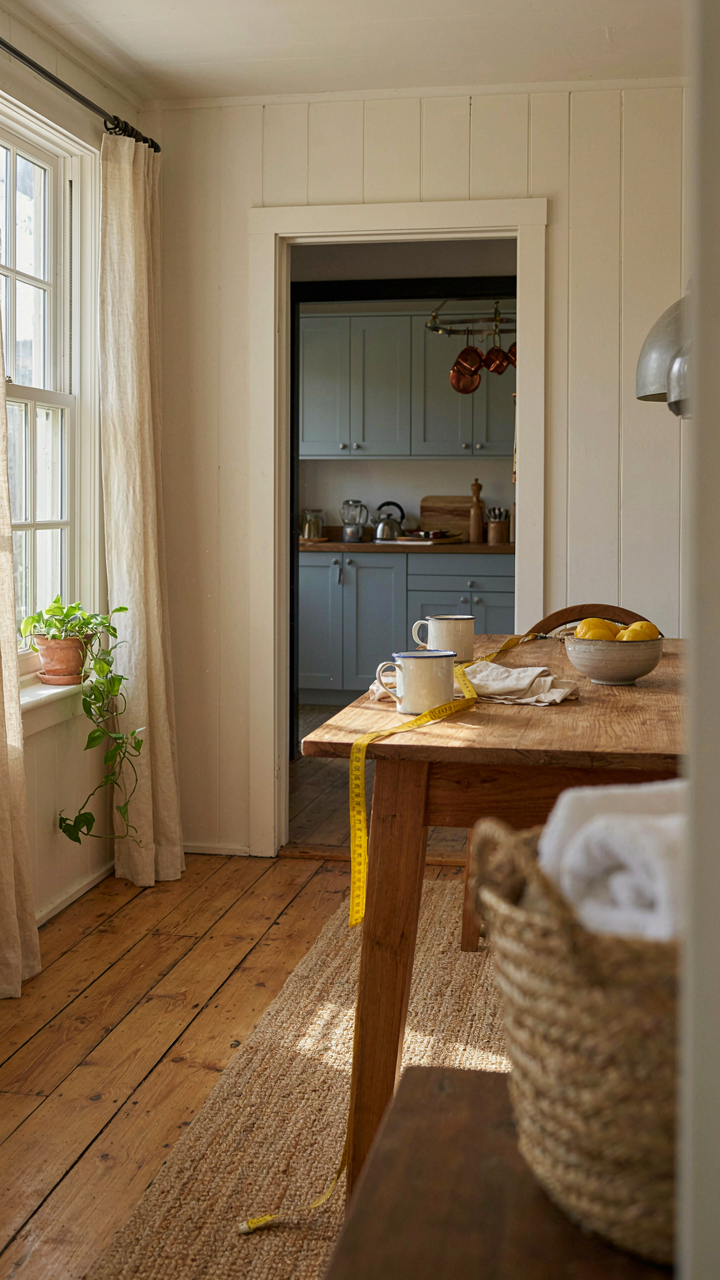
You want the room to look curated. That’s not why you’re really here. You’re afraid of looking unprepared when guests arrive and someone trips over a chair leg or can’t reach the table because you prioritized aesthetics over movement. The mechanism is simple: coastal cottage dining rooms work because they treat the space like a circulation problem, not a decoration project. Map your actual traffic patterns—entry to table, table to kitchen, kitchen back to entry—before you place anything. People move first. Everything else follows.

A tight cottage forces choices most designers avoid naming. Your room isn’t an open gallery; it’s a constraint that demands efficiency. Measure the walking path from your entry to the dining table. Subtract six inches on each side for actual human movement. That’s your real floor plan. Chairs should pull out without hitting walls or doorframes. Table width should allow someone to walk behind seated guests without contortion. This isn’t theory. Coastal cottages built in the early to mid 20th century used narrow footprints, which means every inch of your dining space either moves people or blocks them.
Salt Air Breaks Everything Eventually
The common advice says pick “coastal colors and light wood.” That’s incomplete. Salt spray corrodes metal, moisture warps untreated wood, and humidity cycles crack finishes. Your material choice isn’t aesthetic. It’s a durability calculation. Coastal cottage dining rooms require specific material behaviors, not just looks that photograph well on social media.
Teak and cedar resist salt damage because of their oil content and tight grain structure. Metal chairs oxidize in salt air unless sealed properly—stainless steel or powder-coated aluminum with annual inspection prevents rust from blooming on seat frames. Table surfaces need sealant reapplied every 18 to 24 months in active coastal environments. The mechanism: moisture doesn’t just live on surfaces in cottage dining rooms; it penetrates grain and corrodes from inside out. Your finish isn’t decorative protection. It’s a barrier you maintain or replace regularly. Check for soft spots in wood legs quarterly and refinish any exposure immediately.
The “Beachy Dining Room” Deception: Natural Materials That Last
Real Wood Beats Synthetic Every Time
You want the coastal cottage look without replacing your dining table in three years. That’s the real driver here, and it matters because cheap materials expose the gap between intention and execution faster than anything else in a room.

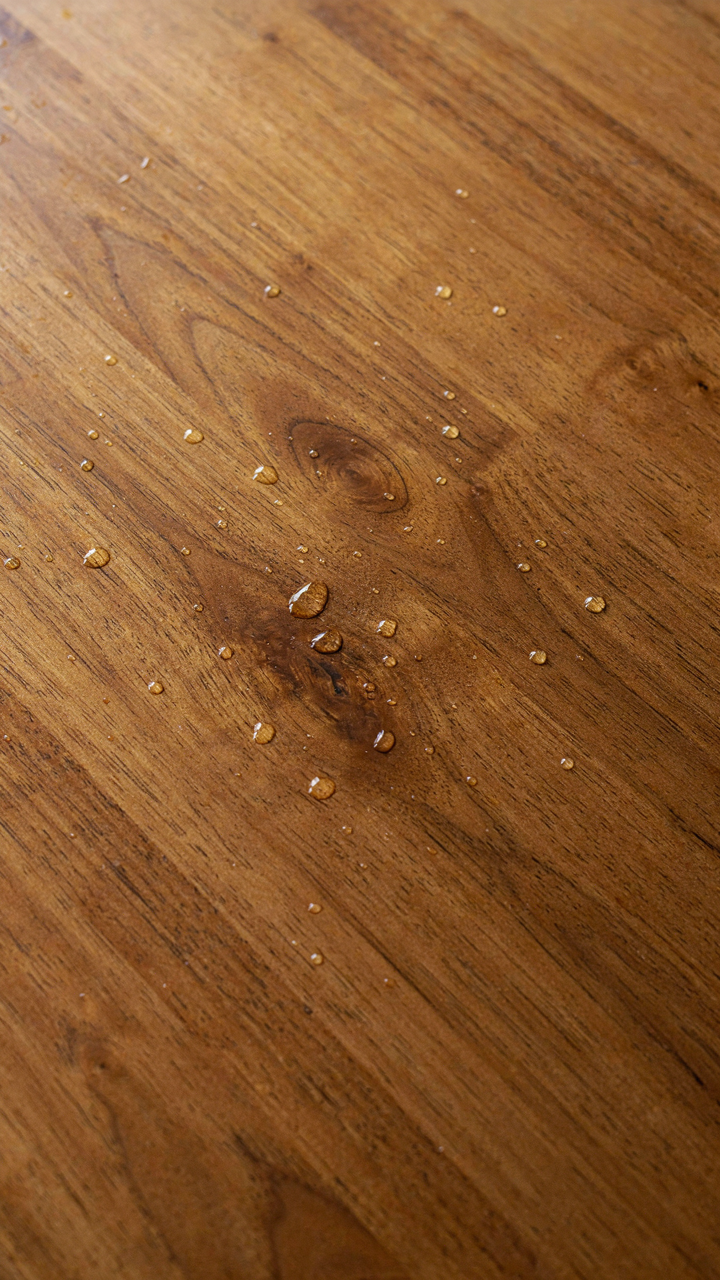
Solid hardwoods like teak, oak, and reclaimed pine are the load-bearing walls of coastal dining. These materials withstand salt air, humidity swings, and actual use because their grain structure handles moisture movement instead of warping under it. Teak produces natural oils that resist rot and salt spray without finish maintenance. Reclaimed pine carries authentic patina and comes already acclimated to age. New finishes like marine-grade polyurethane protect wood without the plastic feel that kills the whole aesthetic.
Fabrics That Don’t Disintegrate In Six Months
Most coastal dining advice stops at “pick light colors and natural fibers” then leaves you with linen that fades into oblivion or cotton that mildews. The real mechanism is fiber durability under coastal conditions.
Sunbrella and similar solution-dyed acrylics hold color because dye bonds to fiber before manufacturing, not printed on after. Linen works only if you accept fading as part of the design, not a failure. Wool actually resists salt air better than cotton because its lanolin content creates natural resistance to moisture absorption. For chair cushions and bench seating in a coastal cottage dining room, solution-dyed fabrics outlast natural fibers by years. The trade-off is texture. Accept it or choose natural fibers knowing exactly when you’ll replace them.
Coastal Kitchen Table And Chairs: Engineering For Conversation
When Table Shape Actually Matters
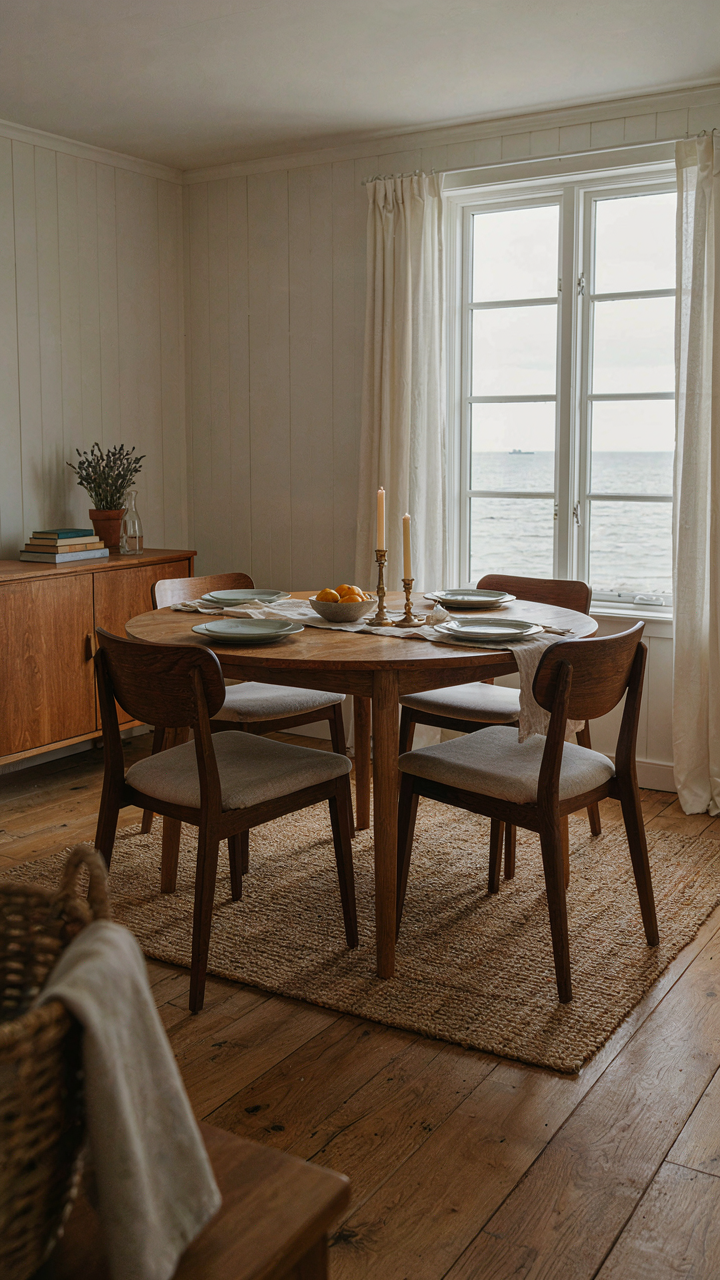
You want your guests to feel welcome without you having to perform hospitality theater. The mechanism is biomimicry, borrowed directly from ecology: natural gathering points concentrate resources and energy. A round or oval table mimics how humans historically clustered around water sources or fire. These shapes eliminate head and foot positions, which removes hierarchy from the room’s geometry before anyone sits down.

Rectangular tables work against prolonged gathering because they force a power dynamic onto the space. Two people inevitably anchor the ends while others line the sides like an audience. Coastal cottages that use oval or round tables report longer conversations and less forced small talk. The table shape changes behavior without anyone consciously recognizing why they’re staying longer.
Seat Comfort That Keeps People Talking
Most dining chair advice ignores what actually happens during three-hour meals with friends. Biomechanics tells us: sustained conversation requires a seat that supports the lumbar spine at a specific angle without restricting arm movement or leg positioning. Standard dining chairs fail here. They’re designed for eating, not talking. Your guests need a seat that doesn’t make them shift or ache within 90 minutes.
Coastal cottage tables pair best with chairs featuring a slight backward angle (around 5 to 10 degrees), firm but not rigid cushioning, and armrests positioned low enough to clear the table edge during gestures. The real mechanism: discomfort interrupts conversation flow. When someone’s back hurts or legs cramp, they leave the table. When the seat supports them, they stay. Pick chairs you’d sit in for extended periods without thinking about the chair itself.
Lighting Your Coastal Style Dining Room: The Ambiance Algorithm
Build Lighting That Works At Every Hour
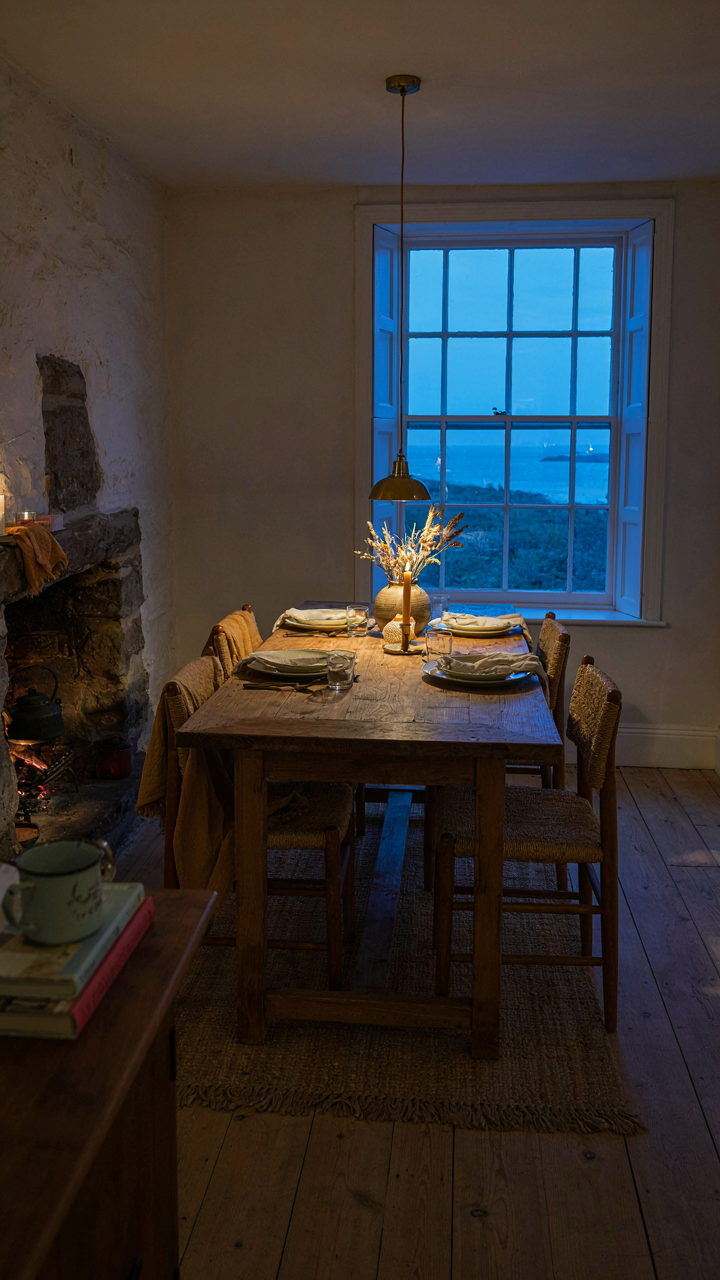
You care about this because you want guests to feel like your space is intentional, not like you’re scrambling between overhead switches. The mechanism is simple: coastal cottage dining rooms need three distinct lighting layers that operate independently, each solving a different time-of-day problem. Morning light should feel natural and bright. Evening light should feel intimate without dimming so far that conversation dies. This is how restaurants control mood without making diners feel manipulated.

Most people install one central fixture and call it done. That creates harsh shadows at 6 PM and wastes daylight during lunch. Install recessed lights on a dimmer for baseline illumination, add a statement pendant or chandelier for focused ambient light, and layer in wall sconces or a buffet lamp for task and accent work. Each layer operates on its own control, letting you compose the room’s feeling based on time and guest count rather than accepting what the builder handed you.
Choose Fixtures By Purpose, Not Pinterest
The advice that “coastal means white and natural” ignores the actual constraint: fixtures must survive salt air and humid conditions, which eliminates half of what looks good online. Brass oxidizes fast without proper coating. Fabric shades trap moisture. The real filter is function: what job does this fixture do, and what materials actually endure the environment you’re putting it in.
For a dining room that hosts regular gatherings, select fixtures in marine-grade brass, powder-coated steel, or sealed wood. Pendant lights work best over the table itself, positioned 30 to 36 inches above the surface to avoid blocking sightlines. Sconces flanking a buffet or sideboard provide task light without creating glare on the table. The protocol is this: identify the specific light need first, then choose a material rated for your climate, then evaluate form. That sequence prevents buying something that looks right but fails in two seasons.
Coastal Modern Dining Room: Decluttering For Clarity
Restraint Over Emptiness
You want permission to buy less because it feels sophisticated and costs less money. Here’s the mechanism: minimalism in coastal dining isn’t about having nothing. It’s about removing friction between you and the people sitting at your table. Every object that doesn’t serve gathering or genuine visual rest becomes cognitive load. Your guests feel it before they name it.

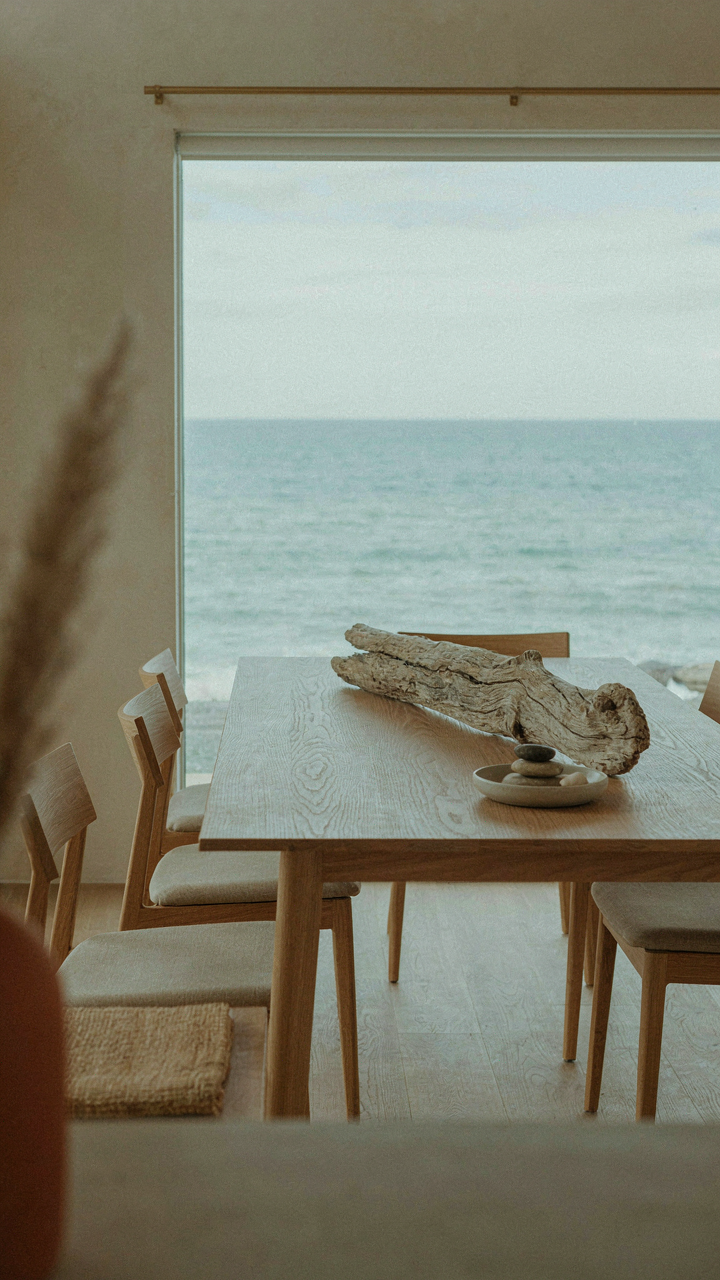
Coastal modern design borrowed from Japanese spatial philosophy the concept of “ma”—negative space that creates presence rather than absence. In your dining room, ma means the wall behind your table breathes instead of competes. One large piece of driftwood or a single framed print works harder than a gallery wall. The table itself stays visible, not buried under runners and centerpieces. Clarity lets conversation occupy the room instead of decor.
Objects That Anchor, Not Decorate
Stop collecting “coastal touches” from big box stores. A shell from a beach walk you actually took holds weight. A weathered wooden bowl that holds fruit and sits on your sideboard earns its place through use. Real connection to the coast means you can tell the story of how you got something in two sentences or less. If you can’t, it’s decoration masquerading as meaning.
Source pieces intentionally: local craftspeople, estate sales, genuine antique shops. A single piece of sea glass on a shelf costs nothing and reads authentic. Functional objects—a wooden serving board, linen napkins from a coastal mill, a ceramic pitcher you found—do double duty as gathering tools and visual anchors. Build your room around these earned objects. When you sit down to eat, you notice them because they matter, not because they demand attention.
Integrating The Outdoors: The Coastal Farmhouse Dining Room Transition
Where Walls Dissolve Into Sight Lines
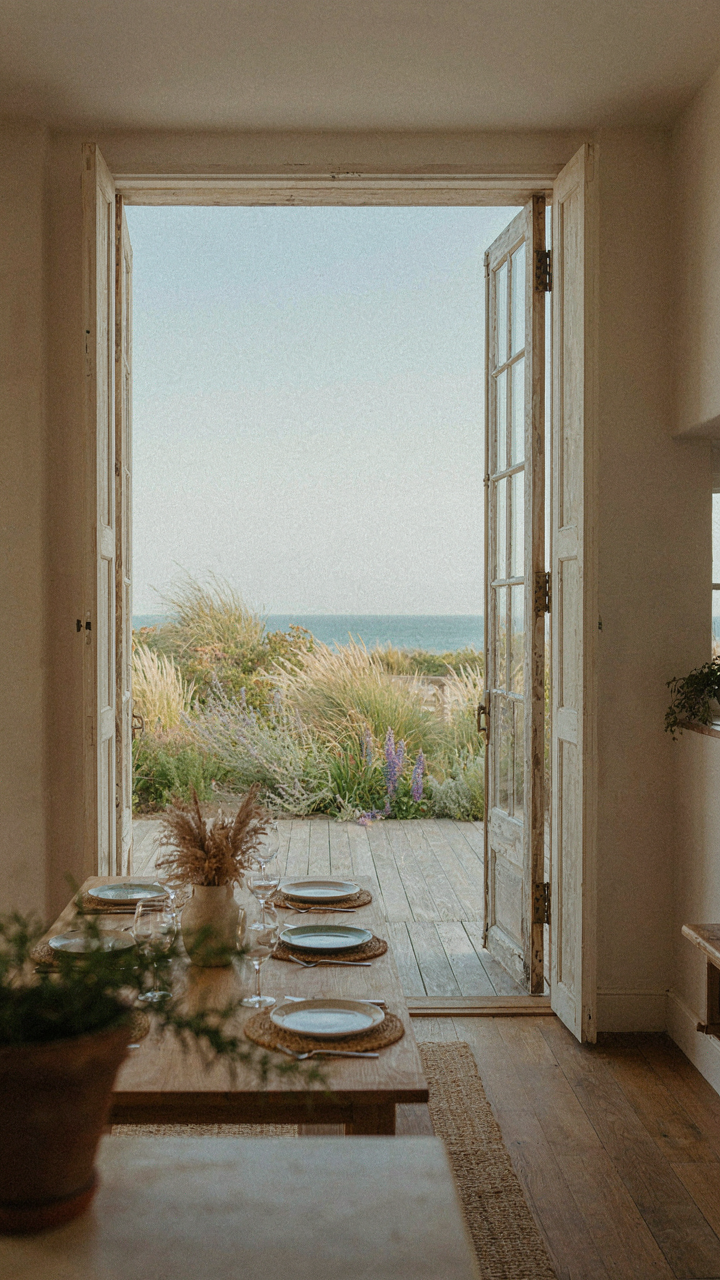
You want this transition because it makes your space feel larger without renovation costs. The mechanism is visual continuity. Architectural language from spatial design calls this “threshold dissolution”—removing the psychological barrier between inside and outside. A coastal cottage dining room achieves this by aligning sightlines, matching floor materials, and controlling the frame of what you see through glass. The goal isn’t decorative. It’s functional. Your gathering space expands the moment someone sits down and views the landscape as part of the room’s boundaries rather than an interruption.

Doors matter more than walls do here. Most people obsess over window treatments when they should obsess over door operation. Pocket doors, bifold doors, or hinged French doors that fully retract change the game. They don’t just open. They disappear. When a door becomes invisible in the open position, the exterior becomes architectural wallpaper. Install these on the wall facing your best view. Measure twice for swing clearance. The physical transition—moving from the dining table to the porch without stepping through a barrier—tells your brain the spaces are one organism.
Natural Materials That Anchor The Interior
This section filters what counts as “natural elements.” Random driftwood or shell collections don’t work. Intentional material choices do. Bringing organic elements indoors works through the principle of material honesty from industrial design—use a material for what it structurally is, not what it pretends to be. Raw wood, stone, and jute don’t compete with outdoor views. They echo them. Your dining room becomes a translation layer, not a rejection of the landscape.
- Reclaimed Wood Dining Tables: Salvaged timber sourced from coastal structures or barns grounds the space. The grain patterns and weathering tell a story that new furniture cannot replicate, and it anchors the room through weight and presence.
- Exposed Beam Ceilings: These reference vernacular coastal construction. Beams interrupt the horizontal plane and draw the eye upward, where light naturally travels, creating a rhythm that feels native to the coastal environment.
- Stone or Slate Accent Walls: A single wall in raw stone behind the dining area connects the interior to geological formations visible outside. It adds tactile depth without requiring continued maintenance like wood or plaster.
- Natural Fiber Area Rugs: Jute or sisal rugs define the dining zone while maintaining visual lightness. They don’t trap dust like synthetic fibers, and they weather gracefully, aging into the space rather than degrading.
- Untreated Wood Shelving: Open shelving in raw wood displays dishware and glassware while maintaining the material conversation with exterior views. Paint and stain interrupt this connection; natural wood preserves it.
The coordination between indoor and outdoor materials closes the perceptual gap. Select one primary outdoor material visible from your dining seat—weathered fence boards, coastal rocks, native plantings—and echo it indoors through texture or tone. Not color matching. Material matching. This is the specific action that signals to a visitor’s brain that the two spaces operate under the same design language. Your dining room stops being separate from the landscape and starts being part of it.
The Coastal Chic Dining Room: Authenticity Over Aspiration

Real Materials Beat Styled Surfaces
You want permission to buy the expensive thing because you think it signals taste. Here’s what actually matters: coastal cottage dining rooms work because they use materials that genuinely perform in salt air and moisture. Teak, reclaimed wood, and untreated metals don’t fade or corrode—they patina. Budget pieces that look coastal but aren’t built for it deteriorate visibly within months, which kills the entire aesthetic faster than admitting you chose wrong.

The mechanism is durability masquerading as design. A forty-year-old pine table with actual use marks reads as intentional. A particle board table with faux distressing reads as a lie you’re telling guests. Coastal authenticity requires materials that can survive humidity, salt spray, and repeated washing without falling apart. This filters your choices immediately. You stop chasing “the look” and start buying things that outlast trends.
Personal Taste Over Inspiration Boards
Everyone assembles a Pinterest board and ends up with someone else’s dining room wearing your address. The real work isn’t finding beautiful images—it’s identifying which design decisions actually align with how you gather. Do you cook before people arrive, or do you prep at the table? Do guests linger for four hours or two? Does your light come from east windows or west? These questions matter more than any mood board because they determine which pieces will actually function in your space.
The gap between inspiration and execution is always about constraints you haven’t named yet. Start by listing what must work practically, not aesthetically. Then design around those requirements. A coastal cottage dining room built on your actual gathering patterns will feel intentional instead of assembled. This approach eliminates the need to constantly refresh or second-guess your choices because the foundation is behavioral, not aspirational.
Your Dining Room Isn’t Failing, Your Expectations Are

You’re waiting for your coastal cottage dining room to feel like a magazine spread. Stop. The room works when people gather there and actually want to stay. Strip away the Instagram fantasy. Pick one thing today: swap your formal centerpiece for a wooden bowl, move the table six inches closer to the window, or light a candle that smells like salt. Small shifts create real atmospheres. Your space doesn’t need perfection—it needs permission to breathe.