The Folly Of Coastal Palettes: Why Your Beachy Exterior House Colors Will Fail
What Design Magazines Won’t Tell You
You want to believe a soft gray or weathered blue will age gracefully on your cottage. The real reason you’re reading this is fear that you’ll pick wrong and watch your investment look shabby in five years. Here’s the mechanism: design publications show you finished photos of cottages that are either newly painted or professionally maintained. They don’t show you the actual degradation timeline or the specific chemistry that determines whether your color choice survives saltwater exposure with dignity or transforms into something you’ll resent.
Most coastal cottage color advice treats paint like a static decision. It isn’t. The moment salt spray hits your exterior, a physics principle called differential weathering takes over. Your color fades unevenly based on sun exposure, salt concentration, and micro-climate variations on each wall face. A uniform beige doesn’t age into a pretty patina. It ages into proof that you didn’t understand how seaside chemistry works. The cottage that looks timeless in magazines used a specific material science approach to color selection, not intuition.
The Salt Air Assault You’re Not Accounting For
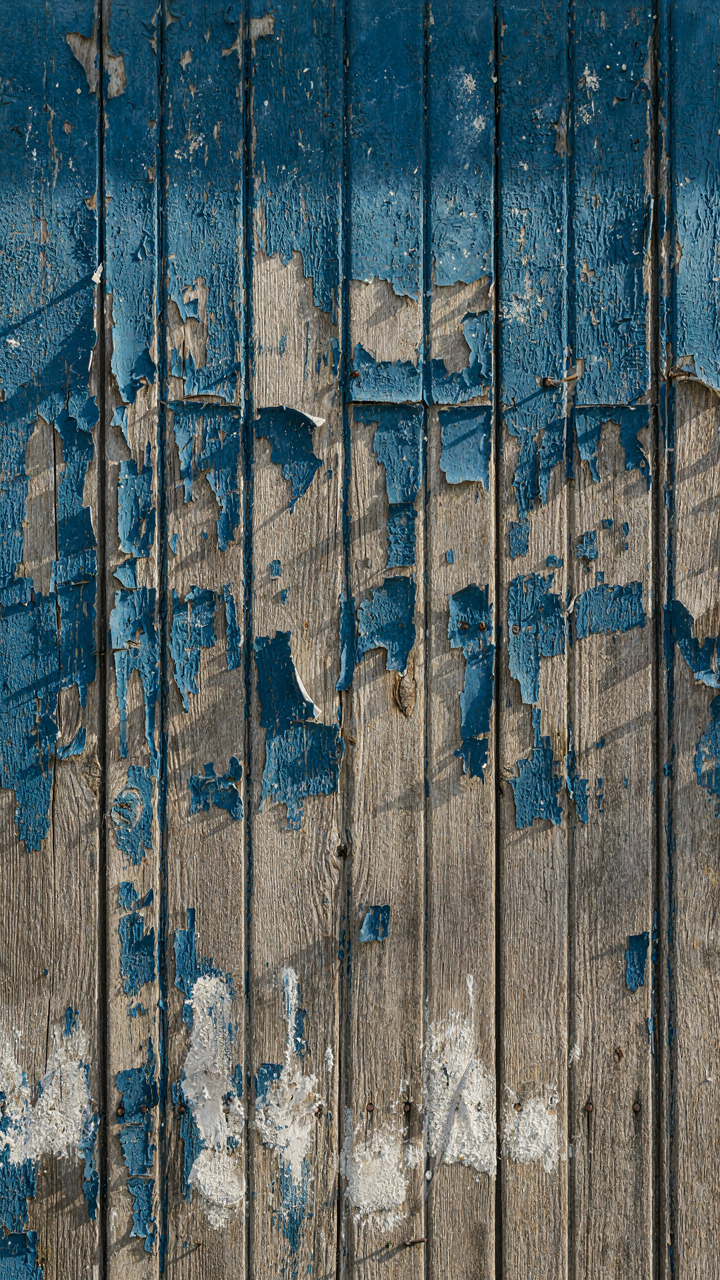
Salt corrosion operates like an accelerated economic model where your paint investment depreciates faster than you expect. The salt crystals don’t just sit on the surface. They penetrate the paint film, reach the substrate, and trigger oxidation and substrate degradation from inside the coating. Your color begins failing not when UV light fades the pigment, but when moisture and salt compromise the paint’s adhesion to the wall itself. This happens invisibly for months before you see visible peeling or chalking.
The standard recommendation to use quality exterior paint misses the actual problem. Quality helps, but it doesn’t stop the mechanism. Certain pigments and binders fail faster in salt environments regardless of premium pricing. Reds and oranges oxidize aggressively near salt water. Yellows chalk and leach quickly. Blues and grays show uneven fading patterns because the pigment particles degrade at different rates when exposed to salt’s ionic attack. The color that will hold visibly for a decade on a mountain home will show noticeable degradation in three to four years on the coast. You need pigments engineered for salt environments, not just better paint.
Beyond Aesthetics: The Material Science Of Coastal Exterior Longevity
UV Radiation Paint’s Silent Killer
You care about this because you want your cottage to look good in five years, not fade into a washed-out ghost of itself. UV radiation is a physics problem, and paint is your material’s only defense against photon degradation. Ultraviolet light breaks molecular bonds in pigment and binder. Coastal areas get more UV intensity due to reflection off water and sand. The damage starts immediately and compounds daily. Most homeowners notice it only after the discoloration becomes obvious, which means the structural compromise is already underway.

The common advice is to “use UV-resistant paint.” That’s incomplete. You need paint formulated with UV absorbers and stabilizers, not just marketing language about resistance. Acrylic latex and urethane-based coatings perform differently under UV stress. Lighter colors reflect more UV energy, which is why whites and pale grays last longer than deep blues or forest greens on coastal cottages. Repainting every four to six years isn’t a maintenance failure—it’s the cost of living near salt water. The alternative is watching your color fade into chalky surrender while the substrate degrades underneath.
Salt Corrosion How It Eats Your Cottage Exterior
Salt spray doesn’t just sit on your exterior. It initiates electrochemical corrosion on metal substrates and accelerates moisture damage in wood and masonry. The mechanism is straightforward: salt particles land on your siding, absorb atmospheric moisture, and create a conductive solution that attacks any ferrous or reactive metal. Paint alone won’t stop this. You need a moisture barrier underneath that actually functions. Most coastal cottages fail not because of paint color but because builders skipped the vapor management layer.
Zinc-rich primers and epoxy-based coatings work because they chemically resist the chloride ion attack that corrodes standard finishes. White and light gray cottages near the ocean often outlast darker colors not because of aesthetics but because lighter pigments typically pair with formulations engineered for salt spray environments. The real play is using paint rated for marine service, not just coastal aesthetics. Inspect every three years for salt residue buildup, wash it off immediately with fresh water, and recoat damaged areas before the substrate shows through. This is your actual protocol.
The “Sacrificial Layer” Protocol: A New Philosophy For Beach House Exterior Paint Colors
Paint Fade As Strategic Design
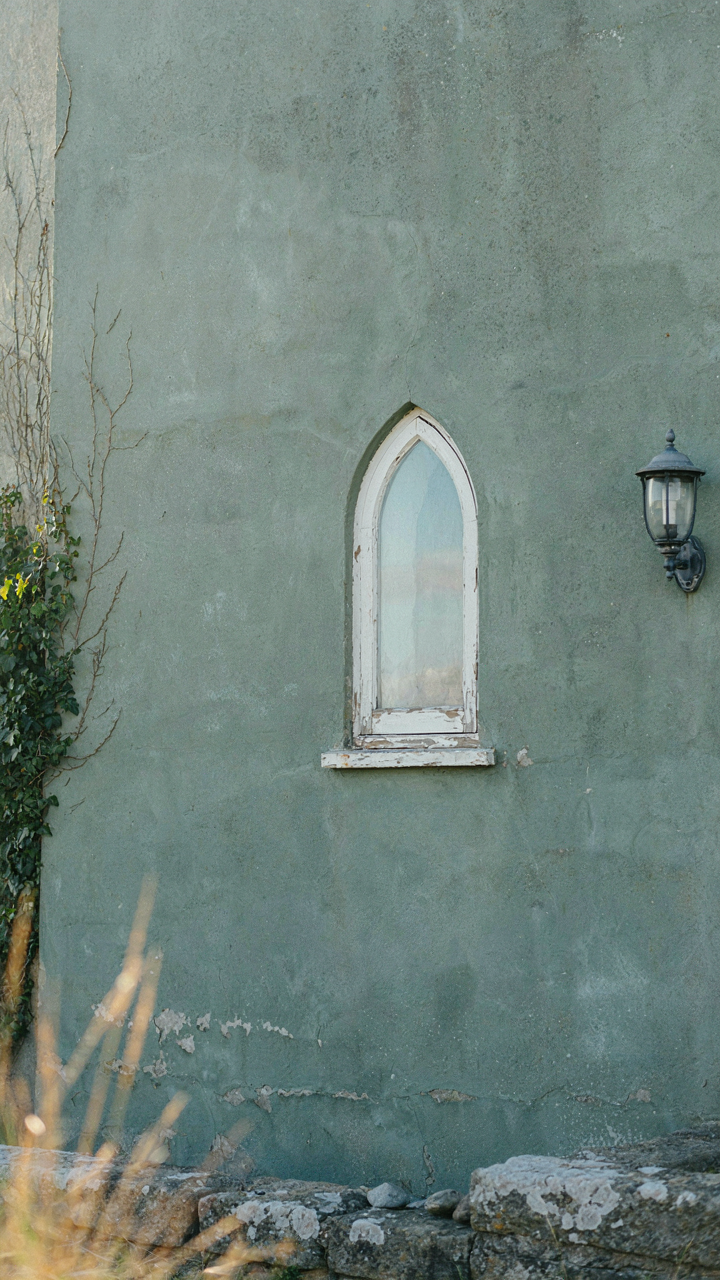
You want your cottage to look intentional, not neglected. That’s the real tension here. The mechanism is simple: coastal salt air degrades paint faster than inland environments because sodium chloride particles corrode binder chemistry in acrylic and latex formulas. Instead of fighting this, engineer it. Choose colors that improve as they fade.
Light grays, soft blues, and warm whites don’t just tolerate weathering—they hide it. This isn’t accident. When these hues fade under UV exposure and salt spray, they don’t look worse; they lighten into softer, more refined versions of themselves. A pale gray that fades becomes nearly invisible against morning fog. The degradation becomes the design. You’re not maintaining a pristine look. You’re managing a controlled descent into aesthetic maturity.
Colors That Age Into Authenticity
The common advice says repaint every five to seven years to maintain appearance. That’s wrong for coastal cottages. You’re fighting physics instead of leveraging it. Think of this like biological succession—the ecosystem strategy where pioneer species prepare soil for later growth. Your paint’s “pioneer phase” is its job to erode, revealing substrate and accepting weathering as inevitable.
Opt for colors already one step removed from their peak saturation. Muted sage, dusty blue, warm taupe, and off-white perform this work intentionally. These shades have no distance to fall before they hit authenticity. A saturated navy cottage looks abandoned after three years of salt fade. A muted blue-gray looks curated after five. Pick your fade destination first, then choose the color that reaches it gracefully.
Color Theory For The Ruthless: Optimizing Coastal Exterior House Colors For Endurance
Why Light Reflectivity Actually Matters To Your Paint Job
You want your cottage to look undamaged in five years because resale value is real. Here’s what matters: light reflectivity is a physics problem, not a design one. The solar reflectance value of your paint determines how much infrared energy the surface absorbs. Dark colors absorb more heat, which accelerates paint degradation, binder breakdown, and chalking. Light colors reflect that energy away, reducing thermal stress on the coating itself.

This explains why white and pale gray cottages dominate coastal regions historically. They weren’t chosen for purity or romance. They were chosen because they last longer. A paint with 0.65 solar reflectance versus 0.35 solar reflectance experiences measurably lower surface temperatures under identical sun exposure. The chemistry doesn’t care about your aesthetic preference. Lower temperature equals slower oxidation of the paint film.
Pigment Stability Under Salt And Extended UV
Most advice about coastal paint says use “quality exterior paint.” That’s incomplete. The real mechanism is pigment chemistry against UV radiation and salt air. Iron oxide pigments degrade faster than titanium dioxide under extended UV exposure. Organic pigments used in trendy cottage colors fade because salt air accelerates photochemical degradation of the resin binder. Coastal paint doesn’t fail because it’s cheap. It fails because the wrong pigment type reacts with salt chlorides and ozone.
Titanium dioxide white and light grays hold up longest because the pigment itself resists photochemical breakdown. When you select a coastal cottage color, you’re selecting the pigment’s molecular resistance to environmental stress, not the paint brand’s marketing. Test exposure data from paint manufacturers reveals which pigments remain stable at 2000 hours of accelerated weathering. Your cottage exterior color choice determines the timeline to repaint. Select based on pigment stability data, not trend cycles.
The “Exposure Gradient” Method: Tailoring Beach Cottage Exterior Paint Colors To Microclimates
Sun Facing Versus Sheltered Strategies
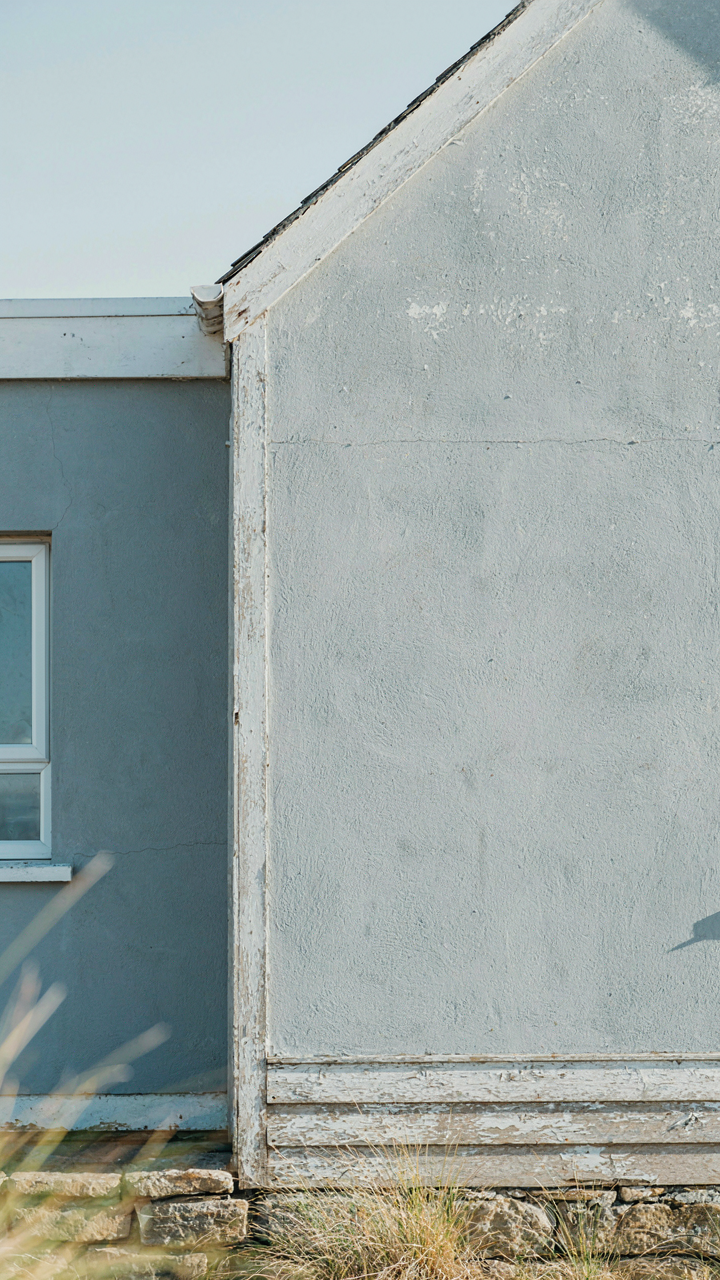
You want your cottage to look intentional from the street, not faded in three years. The real issue is that sun exposure creates a color degradation gradient—lighter colors show UV damage faster, while darker colors absorb heat that accelerates paint breakdown. Think of it like thermal stress: the mechanism is simple, the solution demands specificity.

South and west-facing walls receive direct solar radiation for 6-8 hours daily. Use off-whites, soft grays, and muted sage greens on these exposures. These colors reflect enough light to slow oxidation while masking the chalking that occurs when UV rays break chemical bonds in paint binders. Sheltered north-facing walls tolerate deeper tones because they never experience the same thermal cycling that degrades finish integrity.
Wind And Spray Zone Paint Selection
Salt spray doesn’t just corrode metal—it embeds sodium chloride into paint film, accelerating breakdown through osmotic pressure. Most guidance here is wrong: people assume you need glossy finishes for protection, but high gloss amplifies substrate failure by reflecting salt crystals directly into the film. Use semi-gloss or satin finishes instead.
Define your spray zones by proximity to breaking waves and wind direction. Within 100 feet of active beach, choose light blues, pale grays, or creamy whites in marine-grade acrylic latex formulas with mildicide additives built in. Beyond 100 feet but still coastal, standard exterior acrylics work—but still avoid high gloss. The critical step: power-wash the exterior every 18 months to remove salt residue before it penetrates the paint matrix.
The Unseen Battlefield: Primer And Substrate As Coastal Exterior Fortification
Why Your Primer Choice Actually Matters
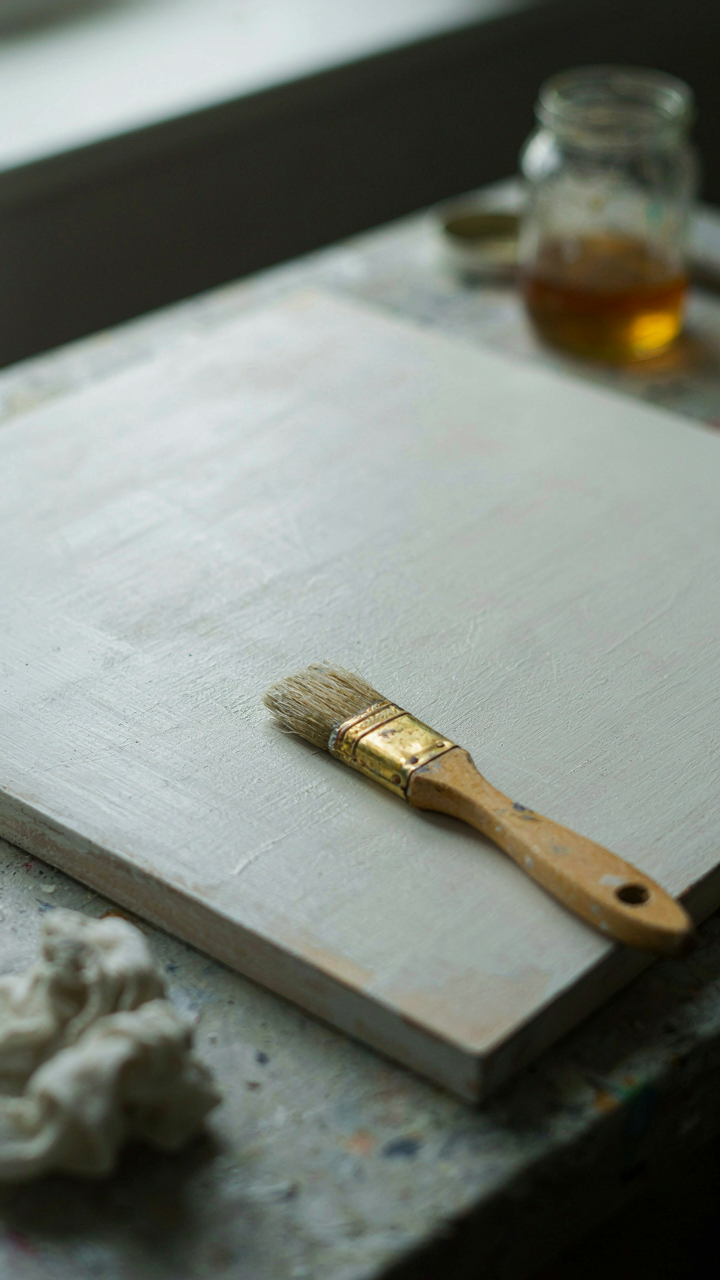
You care about this section because you want proof that spending money on primer prevents future regret. Here’s the mechanism: primer doesn’t just stick paint to wood. It creates a chemical bond that stops salt air from migrating between the substrate and the topcoat. Without it, moisture moves freely, lifting paint from underneath. Your color choice becomes irrelevant when the entire coating system fails.

Coastal environments demand primers formulated for salt exposure and moisture penetration. Standard primers fail because they lack the resin density to resist osmotic pressure. Marine-grade primers contain additives that repel salt spray and slow water vapor transmission. Choose wrong here and your cottage exterior will blister and peel within two to three years, regardless of how carefully you selected your topcoat color.
How Substrate Type Determines Coating Success
Material science teaches us that adhesion works like a mechanical lock: the substrate surface must have texture and porosity for paint to grip. Smooth, weathered wood or poorly prepared fiber cement doesn’t lock paint in place. Salt air accelerates adhesion failure on compromised surfaces because moisture finds every microscopic gap.
Wood substrates on coastal cottages require specific prep protocols. Sand to 80 to 120 grit to expose fresh fibers. Fill gaps and cracks with exterior-grade caulk that flexes with temperature swings. Fiber cement siding needs deglossing and cleaning to remove mill dust and residue. The substrate preparation phase determines whether your coastal cottage exterior colors stay locked in place or begin separating within months.
Seasonal Cycles: Applying Ecological Principles To Beach House Exterior Ideas
Paint Layers As A Living System
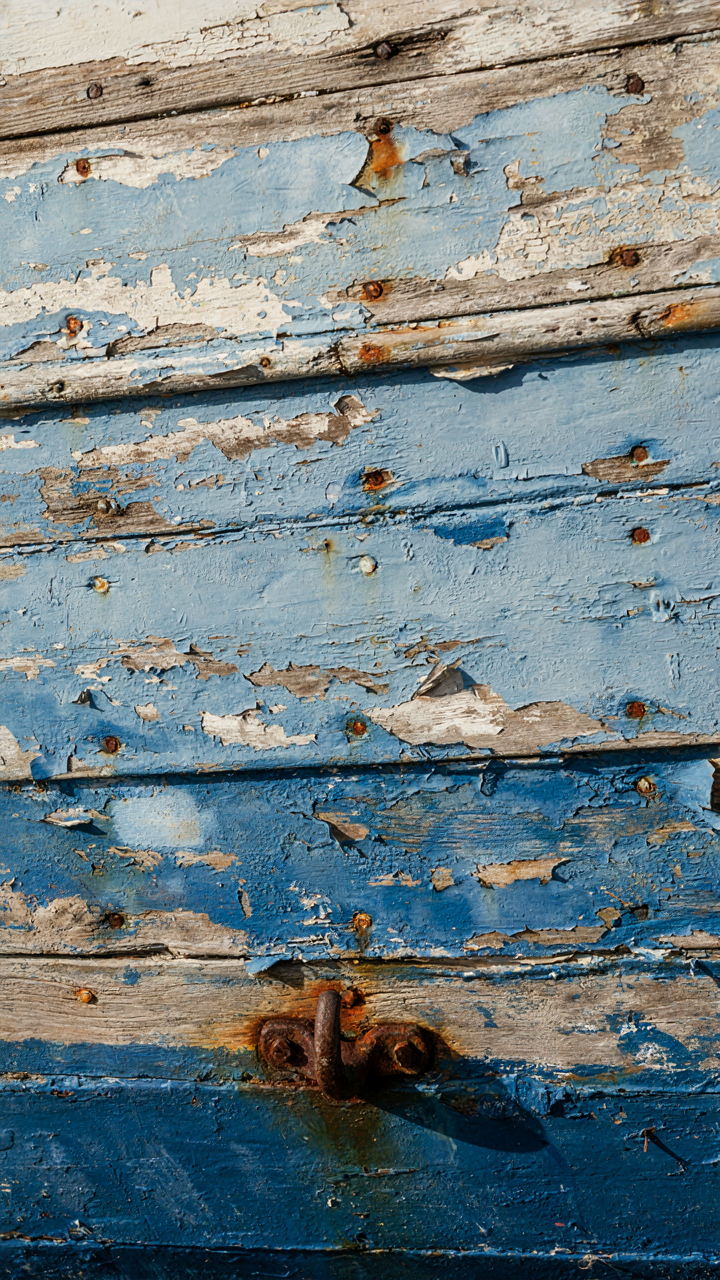
You want to believe one coat lasts forever because repainting feels like failure. It doesn’t work that way. Ecology uses the term “succession” to describe how ecosystems change predictably over time. Paint on coastal cottages follows the same principle: each layer responds to salt spray, UV exposure, and temperature swings, then fails in sequence, forcing the next layer to adapt or fail faster.

The first coat of exterior paint on a beach house faces marine salt almost immediately. Salt crystals embed in the paint film, creating micro-fractures that expand with freeze-thaw cycles. Within two to four years, that initial layer loses adhesion. The second coat then sits on a compromised base. Understanding this succession means you stop expecting paint to “hold” indefinitely and instead plan for staged reapplication, each layer specifically formulated for what the previous one couldn’t withstand.
Natural Materials Resist Through Adaptation
The common advice says pick weather-resistant colors and materials and forget about maintenance. Wrong. Real coastal resilience comes from materials that physically adapt to salt and moisture exposure, not materials that pretend they’re impervious. Cedar siding and lime-based finishes don’t resist the ocean—they accommodate it by allowing controlled weathering and vapor exchange.
Cedar contains tannins and natural oils that inhibit rot when exposed to salt air, but only if the wood breathes. A sealed, non-porous coating traps moisture behind the paint, accelerating rot. Lime wash, used on traditional coastal cottages in Cornwall and Brittany, actually works better over time because it allows the substrate to release trapped moisture while the lime cures through carbonation. The mechanism is simple: select materials that exchange water vapor with the air rather than block it entirely. This single protocol change extends your maintenance cycle from two years to four or five.
Maintenance As A Weapon: The Guerrilla Warfare Of Coastal Cottage Exterior Colors
Catch Small Damage Before It Spreads
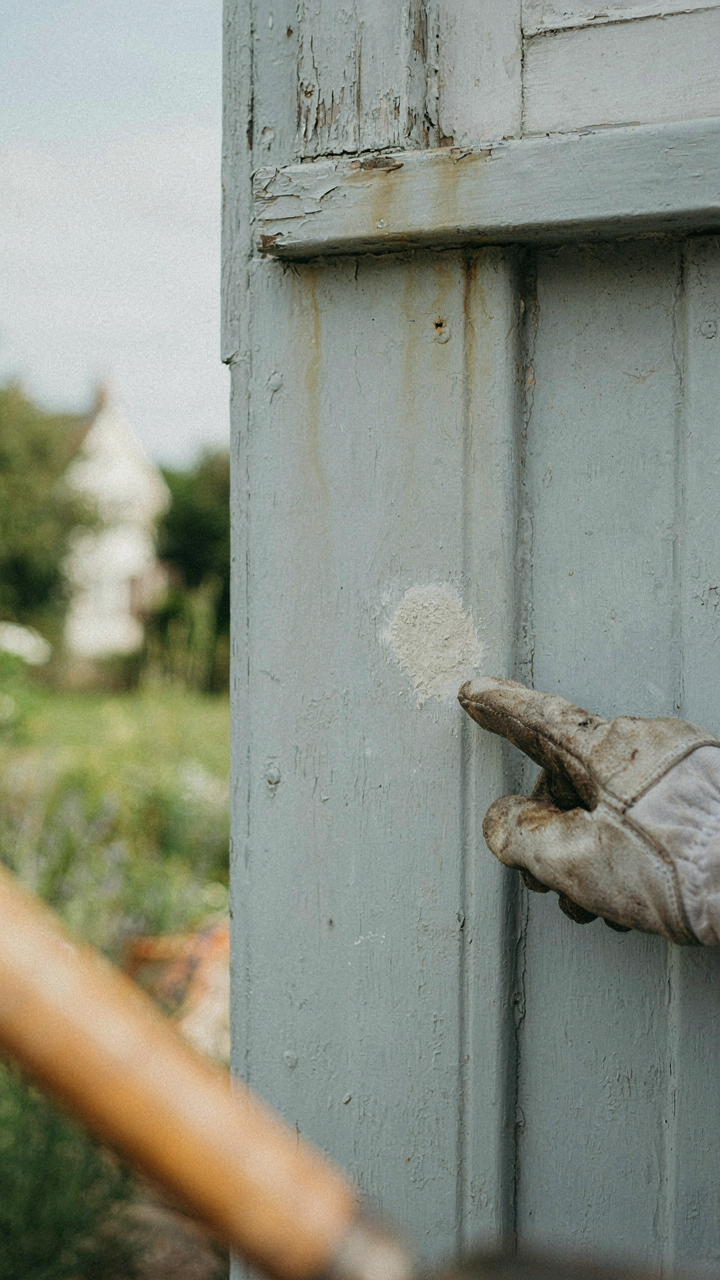
You want your cottage to look effortless and timeless, which means ignoring maintenance until something breaks. That’s the real fear underneath. In military strategy, supply lines determine outcomes. With coastal cottage colors, UV exposure and salt spray are your supply lines. They degrade paint systematically, starting at microscopic failure points. A hairline crack in finish becomes a channel for water infiltration. Water infiltrates, salt deposits accumulate, and the substrate corrodes underneath the paint. By the time you see visible damage, the mechanism has already won.

Inspect your exterior colors every three months, not annually. Look for chalking, where UV breaks down binders and paint becomes powder. Look for salt bloom, the white crusty residue that indicates chloride penetration. Look for paint bubbling near trim joints and window frames where water pools. These are early signals. Catch them at signal stage, not structural stage. A $200 spot repair now prevents a $2,000 repainting in eighteen months.
Minimal Touch Ups, Maximum Durability
The common advice is to repaint your entire exterior every five to seven years. That’s lazy and expensive. The real answer is targeted intervention. You repaint only the sections showing active degradation, using the same paint color and type to blend with existing finish.
- Salt-facing walls: Repaint south and southwest exposures every two to three years. These surfaces take the most UV and salt spray intensity.
- Trim and fascia: Touch up these areas annually. They channel water and hold salt deposits longer than larger panels.
- Above-grade siding: Paint degradation concentrates where moisture evaporates and salt crystallizes, typically in the twelve to thirty-six inch band above ground.
- Caulk joints before repainting: Failed caulk lets water travel behind paint. Recaulk with marine-grade silicone every two years minimum.
- Prime exposed wood immediately: If you sand through to substrate, prime within hours. Bare wood absorbs salt and moisture, accelerating decay under fresh paint.
The mechanism that matters is this: paint protects substrate through continuity and adhesion. A small failure point breaks that continuity and accelerates failure around it. Touch up the point before it spreads. Use the exact same paint type and color code to maintain adhesion with surrounding finish. Your exterior color stays consistent and your structure stays intact because you treated maintenance as prevention, not emergency response.
Beyond The Brush: Alternative Coatings For Extreme Coastal Exterior Environments
Modern Polymers: Engineered For Ultimate Resistance
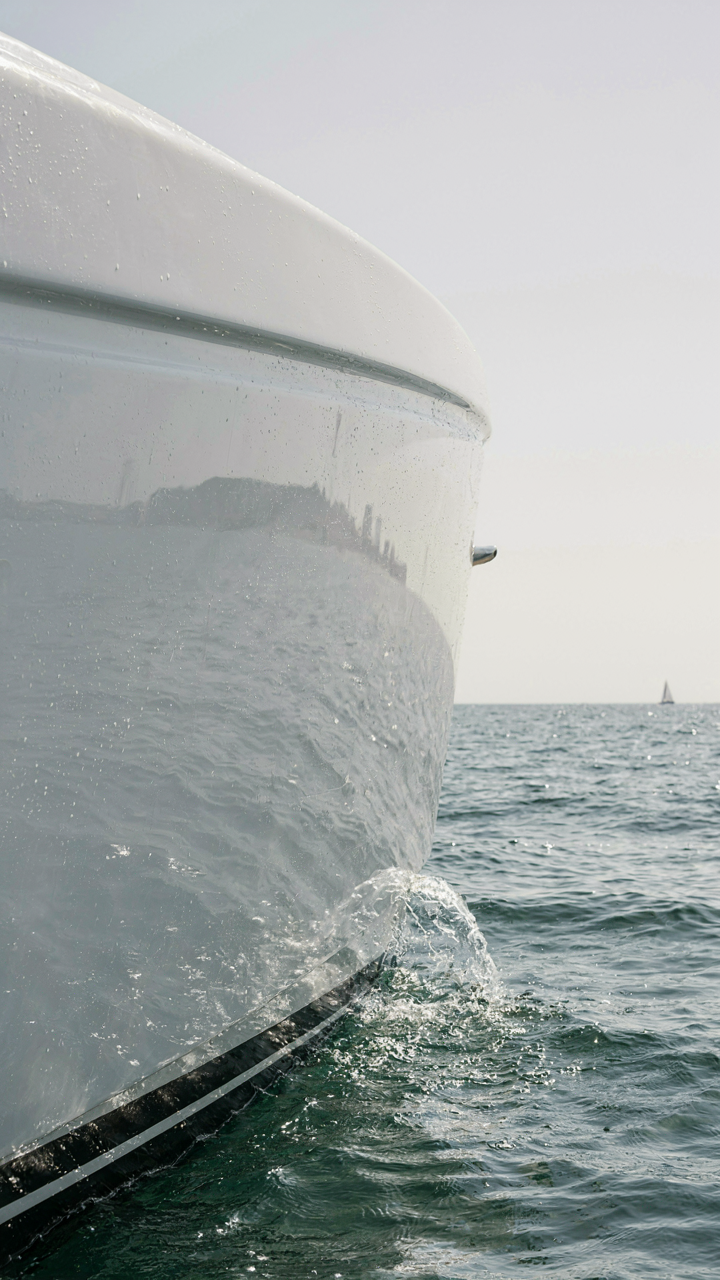
You’re reading this because you want to believe one coating exists that won’t fail you, and you’re hoping it costs less than replacing siding every seven years. The mechanism is simple: polymer chemistry borrowed from military and aerospace applications trades water absorption for molecular density. Traditional paint absorbs moisture into the substrate. Polymers don’t. They cure into films with closed-cell structures that salt spray and UV radiation cannot penetrate as easily.

Polyurethane and epoxy coatings dominate coastal applications because they bond at the molecular level rather than sitting on the surface like standard latex paint. Epoxy handles salt intrusion aggressively. Polyurethane offers flexibility, moving with substrate expansion without cracking. Neither requires primer in most cases because both chemistries attack oxidized surfaces directly. Application demands precision: humidity, temperature, and cure time specifications are non-negotiable. Skip them and the coating fails faster than paint applied in ideal conditions.
Sacrificial Finishes: Industrial Solutions Adapted
The common advice here is wrong: treating your cottage exterior like an industrial facility sounds excessive until you realize industrial facilities were built this way because failure is expensive. Sacrificial coatings work through erosion economics, not resistance. They corrode predictably and controllably instead of letting rust attack your substrate. Think of them as planned obsolescence on the coating layer, not the house itself.
Zinc-rich primers and aluminum flake coatings sacrifice themselves to protect what’s underneath. Zinc oxidizes preferentially to steel. Aluminum flake coatings create a metallic barrier that sheds salt deposits mechanically. Both require recoating every five to seven years, but they’re cheap compared to replacing compromised siding or dealing with structural rot. Apply sacrificial finishes over sound substrate only. If moisture already penetrated, no coating saves you from what’s already happened inside the walls.
The Aesthetics Of Reality: Embracing Imperfection In Beach Cottage Exterior
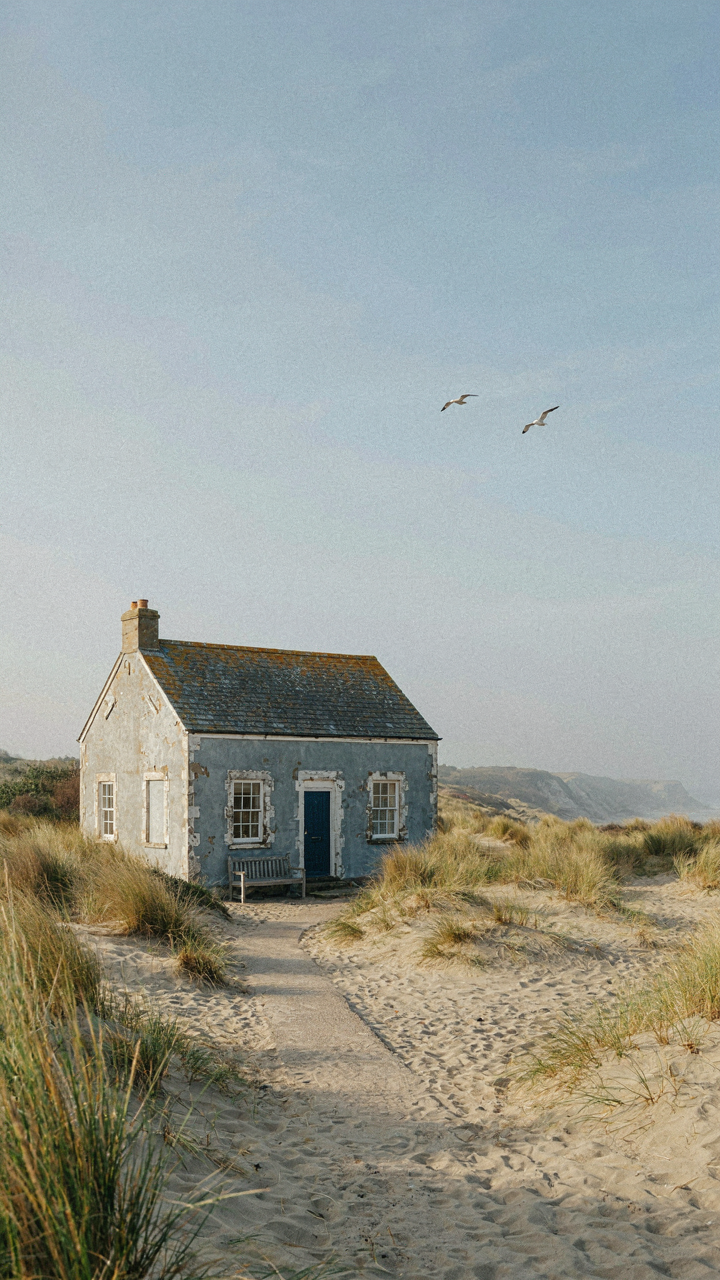
Worn Finishes Signal Authenticity
You want your cottage to look intentional, not abandoned. The mechanism is simple: entropy becomes design when you stop fighting it. In thermodynamics, systems naturally move toward disorder. Your coastal cottage exterior does the same. Salt air degrades paint, UV fades color, moisture breaks down sealant. Most people treat this as failure. It’s not. It’s the material telling you what it actually is.
Weathered finishes on coastal cottages aren’t neglect. They’re proof the house survived exposure. Soft grays, chalky whites, and faded blues emerge from paint breakdown, not intentional selection. This patina builds credibility faster than any marketing claim. Homeowners who fight this with constant repainting signal anxiety. Those who let it happen signal confidence. The cottage that looks like it’s been there fifty years actually belongs there.
Reject The Pristine Model
The advice to maintain flawless finishes on beach cottages is wrong. It burns money, time, and attention on the wrong priority. Coastal properties deteriorate by design of their environment. Fighting nature exhausts you. Accepting it frees you.
Sustainable beauty operates on a different logic than suburban maintenance. You paint less frequently, repair selectively, and let weathering do part of the aesthetic work. Faded sage or weathered cream requires zero stress about water spots or salt residue. The cottage improves with age instead of declining. Your annual maintenance budget drops. Your stress about “keeping up appearances” evaporates. The final step is simple: choose your cottage color with five to seven year weathering in mind, not year one appearance. That’s the protocol that works.
The Real Cost Isn’t In The Paint; It’s In Your Misplaced Priorities
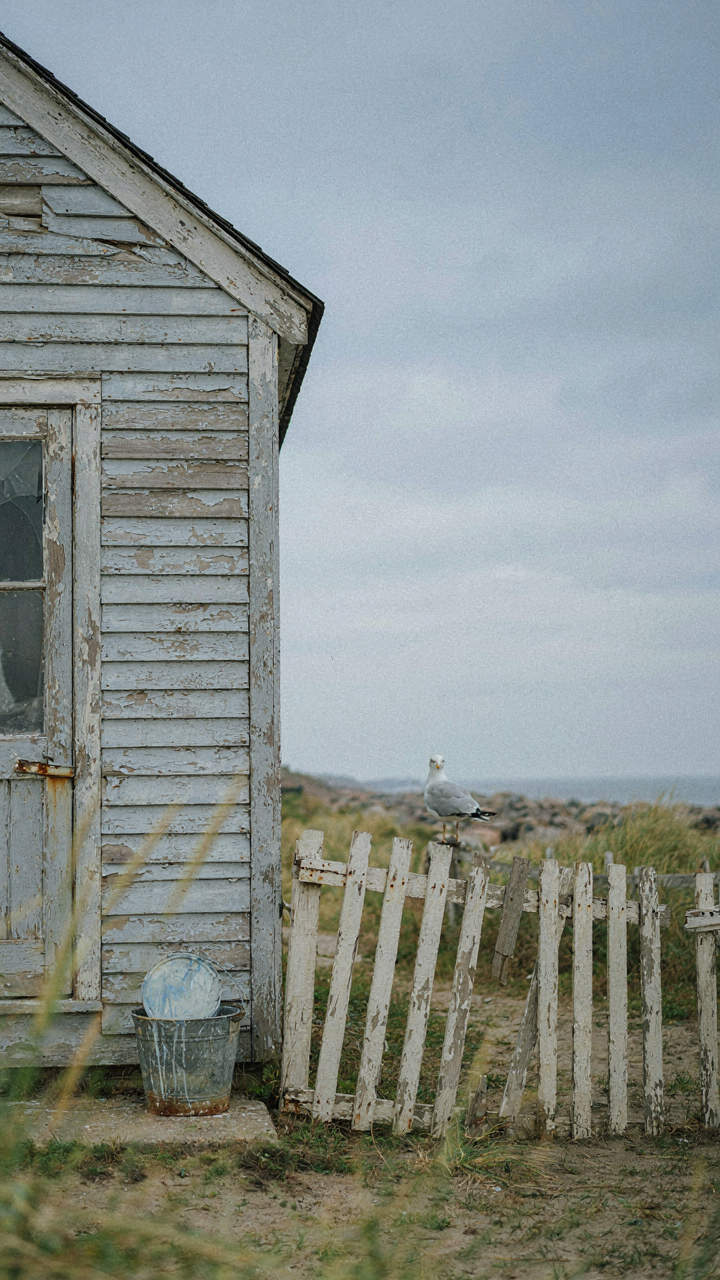
Most people obsess over coastal cottage exterior colors and forget they’re solving the wrong problem. The color doesn’t matter if you pick it for Instagram instead of for your actual house, your climate, your salt spray, and your gut. Stop researching what everyone else chose. Drive past ten cottages you love today, write down their colors, live with those photos for a week, then pick one. Your hesitation isn’t about paint. It’s about fear. The color you choose doesn’t define your home. Your willingness to choose defines you.