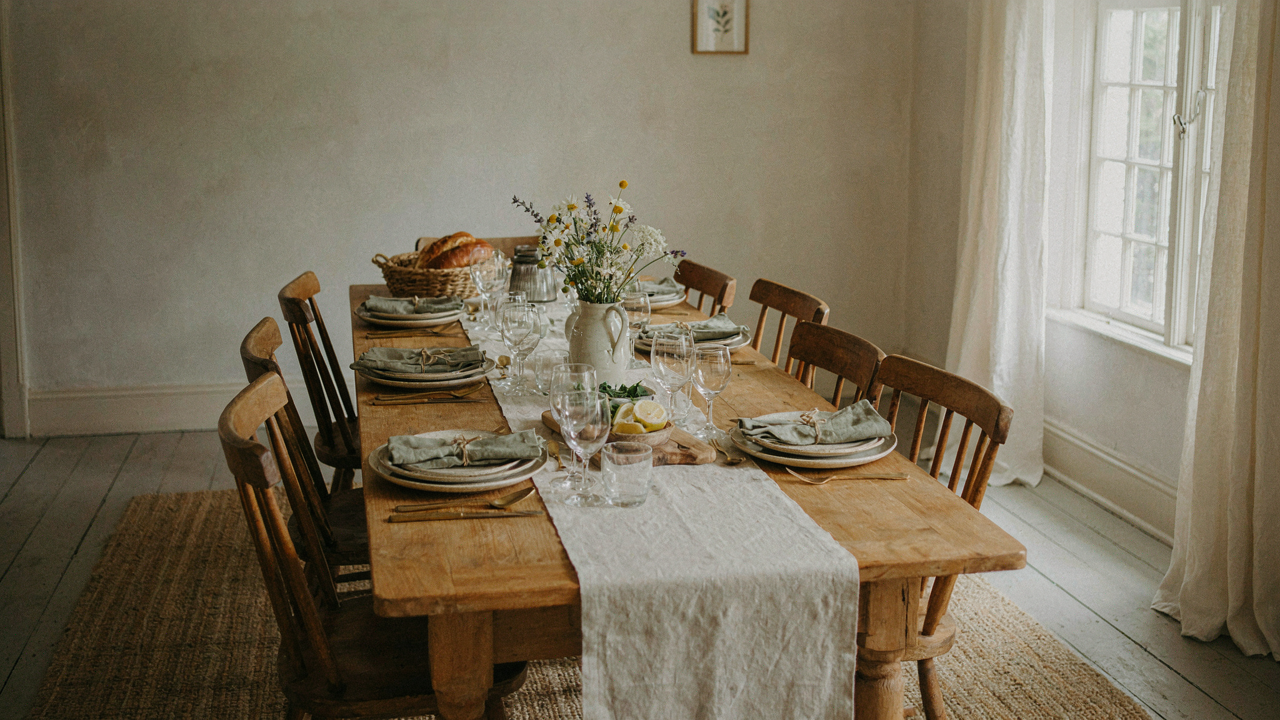
The “Cozy Rustic Dining Room” Deception: Why Aesthetics Alone Fail

Charm Without Purpose Is Just Expensive Decoration
You want people to walk in and feel something—that’s the real reason you care about this room. The mechanism is simple: aesthetics create the impression of function, but they don’t create the function itself. A country dining room works because of how bodies move through it, where light lands, and how long people can actually sit there without friction. Visual appeal masks poor workflow until someone tries to pass a plate across the table at full capacity.
Think of flow like load-bearing in architecture. Your dining room’s aesthetic is the exterior finish. The load-bearing walls are table placement, chair clearance, and service pathways. You can dress up a poorly planned room with reclaimed wood and vintage details, but when six people sit down and nobody can pull their chair back without hitting the hutch, the charm evaporates. The room fails because nobody designed the mechanics first.
The Clutter Paradox That Looks Like Heritage
Everyone confuses abundance with character, and that confusion costs money and livability. A country dining room doesn’t need more objects to feel authentic—it needs intentional objects that earn their space through actual use or genuine provenance. Filling shelves with decorative plates, vintage tins, and “farmhouse finds” creates visual noise, not warmth.
The real play is restraint disguised as abundance. Keep pieces that tell a specific story about how your family eats, gathers, or lived. A collection of mismatched vintage chairs works because they’re functional seating. A shelf of inherited serving pieces works because they’re used seasonally. Random antique objects scattered across surfaces work against you—they trap dust, block sight lines, and signal that you’ve mistaken Pinterest for design. Curate aggressively, then stop.
The Kinematic Efficiency Protocol For Your Dining Room Layout
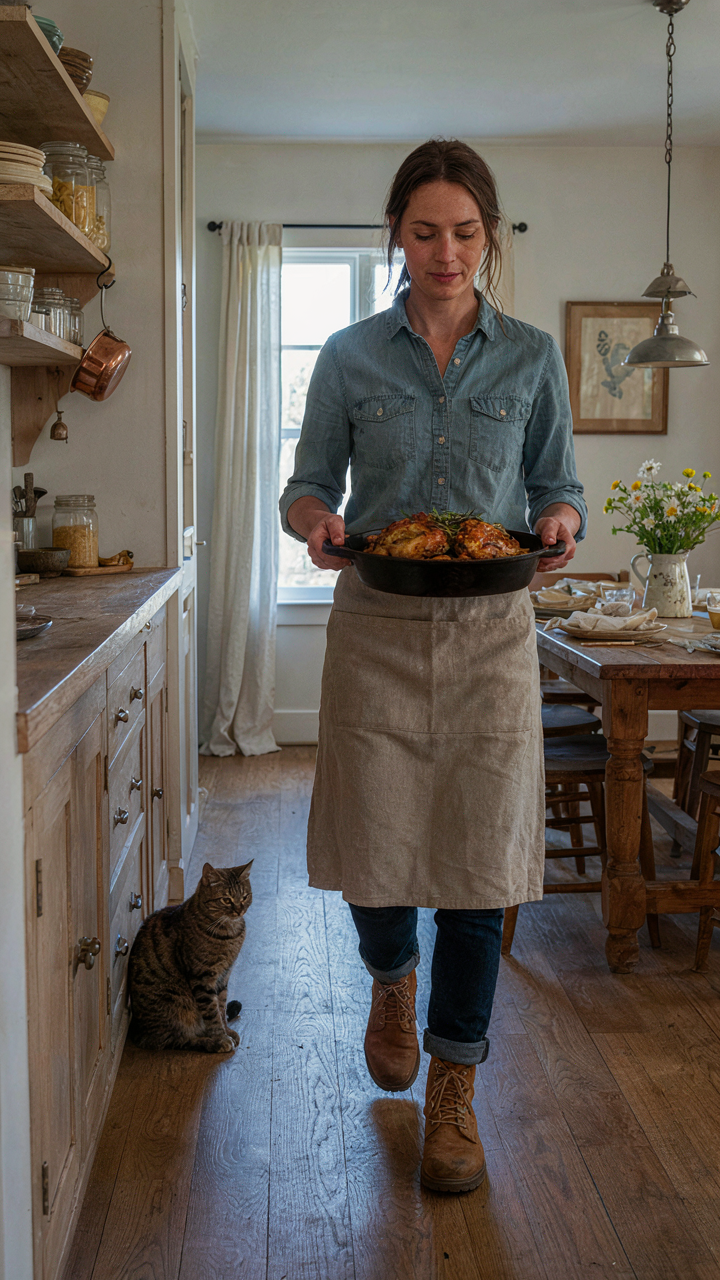
How Bodies Move Around The Table
You want people to linger longer and eat more, but you’re actually designing for friction. Physics applies here: traffic flow patterns determine whether your dining room becomes a gathering point or a bottleneck. Most country dining rooms fail because they treat the table as decoration instead of the center of a circulation system.

The real mechanism is simple. Position your table so people can move around it without bumping chairs, without squeezing past each other, without the kid knocking over a glass every time someone needs the bathroom. In country homes, this usually means centering the table with at least three feet of clearance on all sides. Tight spacing kills comfort. When bodies have room to move, the meal extends naturally. When they don’t, people leave.
The Kitchen To Table Path
Forget “make it cozy.” That’s decoration talk. Distance from kitchen to table is a labor cost you pay every single meal. The shorter the trip, the hotter the food arrives and the fewer steps the person serving burns on logistics instead of presence.
Country dining room layouts often stack the table far from the kitchen because the rooms are separate and large. Measure the actual walking distance from your stove to the table. If it’s more than twenty feet, you’re fighting physics every dinner service. Aim for direct sightlines and a clear path with no obstacles, sharp corners, or doorways that require two-handed navigation. This isn’t about luxury. It’s about whether the meal happens with energy or exhaustion.
Farmhouse Dining Room Ideas: Prioritizing Durability Over Delicacy

Wood That Actually Takes A Hit
You want a dining room that looks intentional, not destroyed. That’s the real fear here. The mechanism is simple: wood species have different hardness ratings measured on the Janka scale, which determines how much force required to dent or gouge the surface. Harder woods resist the daily violence of family life. Oak, hickory, and reclaimed barn wood rank high on this scale. Softwoods like pine and poplar look good for about six months before they start showing every scratch, spill, and chair leg scrape.

Farmhouse design traditionally used whatever survived the wear. That wasn’t aesthetic choice. It was economics. Oak farmhouse tables from the 1800s still exist because the wood refused to deteriorate. Pine tables from the same era are mostly gone or refinished beyond recognition. Pick your wood based on the Janka rating first, visual appeal second. If you’re buying new, ask the specific hardness number before you commit.
The Real Cost Of Looking Rustic
Everyone thinks rustic finishes hide wear. They don’t. Economics teaches about hidden costs. A barn-wood finish with visible knots and grain variation seems low-maintenance. It requires constant sealing to prevent the grain from trapping spills. Water sits in those cracks. Mold grows. You’re managing a biology problem disguised as aesthetics.
Smooth, hard finishes with matte or satin polyurethane actually cost less to maintain. A sealed surface resists stains, liquids, and scratches. Wipe it down weekly. That’s the protocol. Avoid glossy finishes on dining tables. They show fingerprints and dust, forcing you to clean constantly. Matte finishes on hard, sealed wood strike the balance between durability and the appearance farmhouse dining demands.
The Hidden Costs Of “Cottage Dining Rooms”: Time And Mental Load

Dust Traps Disguised As Character
You want a country dining room because you think it signals you have your life together. The mechanism is friction. Country design favors texture over surfaces, which means every shiplap board, woven place mat, and distressed wood frame collects dust at a different rate and requires different cleaning approaches. A smooth glass table takes one swipe. A farmhouse table with turned legs takes thirty minutes. The cognitive load isn’t the cleaning itself—it’s tracking which surfaces need what treatment and when.

Recessed shelving with open edges accumulates dust horizontally. Woven chair backs trap particles vertically. Vintage metal fixtures oxidize and need periodic polishing to prevent the patina from becoming actual deterioration. You’ll spend mental energy deciding whether aged surfaces are “supposed to look that way” or if you’ve failed to maintain them. Most people don’t account for this tax until they’re already committed to the aesthetic.
Visual Chaos Masquerading As Warmth
Cognitive load operates like a computer’s processing power—every object in your visual field demands resources from your attention system, whether you notice it or not. Country dining rooms traditionally layer patterns, textures, and objects: plaid curtains, painted cabinets, wall art, vintage serving pieces on open shelves, mismatched chairs, and decorative pottery. This isn’t cozy. This is visual noise operating at high volume.
Your brain categorizes each element. It processes the color relationships. It evaluates whether items “belong” together. That constant low-level sorting consumes energy that should go toward conversation or rest. The research on environmental minimalism shows that reducing visual complexity lowers cortisol during meals. A country dining room intentionally maximizes visual complexity. If you value the aesthetic, acknowledge you’re trading mental ease for the look. If you don’t actually value it, simplify now instead of fighting the exhaustion later.
Modern Country Dining Room: The Simplicity As Sophistication Law
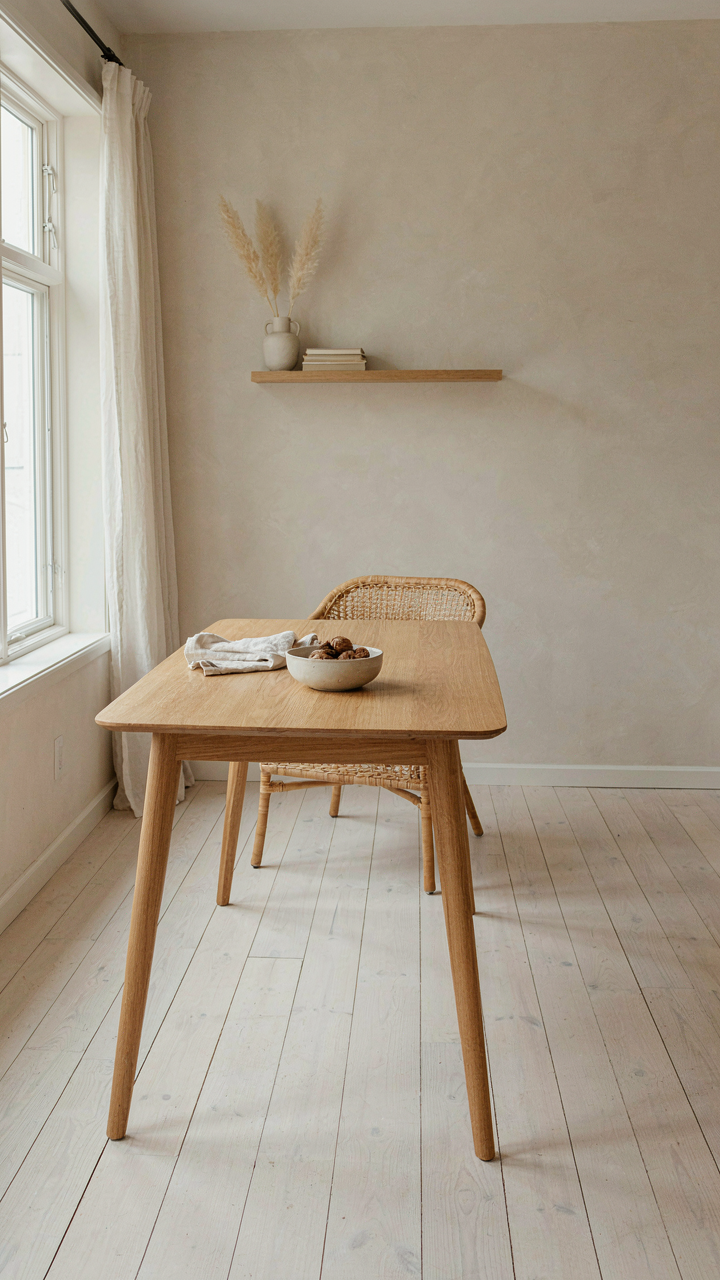
Clean Lines Enabling Mental Clarity
You want this section because you’re tired of seeing country dining rooms stuffed like attics, and you need permission to remove things without feeling like you’re abandoning the aesthetic. Here’s the mechanism: borrowed from architecture, clean lines function as visual silence. They reduce cognitive load. Your brain processes fewer objects, fewer competing angles, fewer decisions. This is why modern country works where traditional country often fails. A table with tapered legs reads faster than one with carved spindles. A wall with one floating shelf reads faster than three laden with tchotchkes.

The common advice says add rustic charm through abundance. That’s incomplete. Rustic charm comes from material honesty and proportion, not item count. Shaker furniture proves this. Wood grain, joinery, and form carry the weight. Nothing else needs to. When you remove decorative noise from a country dining room, the remaining objects become louder. The table becomes the table. The lighting becomes significant. The space becomes usable instead of performed.
Intentional Voids For Connection
Space between people and objects creates the actual dining experience. Physics calls this negative space. In country dining rooms, voids between pieces determine whether a table functions as gathering point or museum display. A table pushed into the center of the room with clear sight lines to adjacent faces produces conversation. Chairs crammed against walls produce performance anxiety. The void isn’t empty. It’s functional real estate.
Modern country dining rooms use breathing room as a tool. Leave space around the table. Keep the sideboard or buffet uncluttered. Let one large piece anchor rather than five small ones compete. This isn’t about minimalism or leaving things bare. It’s about understanding that people need to move, see each other, and feel permission to exist in the room without managing obstacles. The void is where the actual dining happens.
Beyond The Instagram Filter: Real World Country Dining Rooms
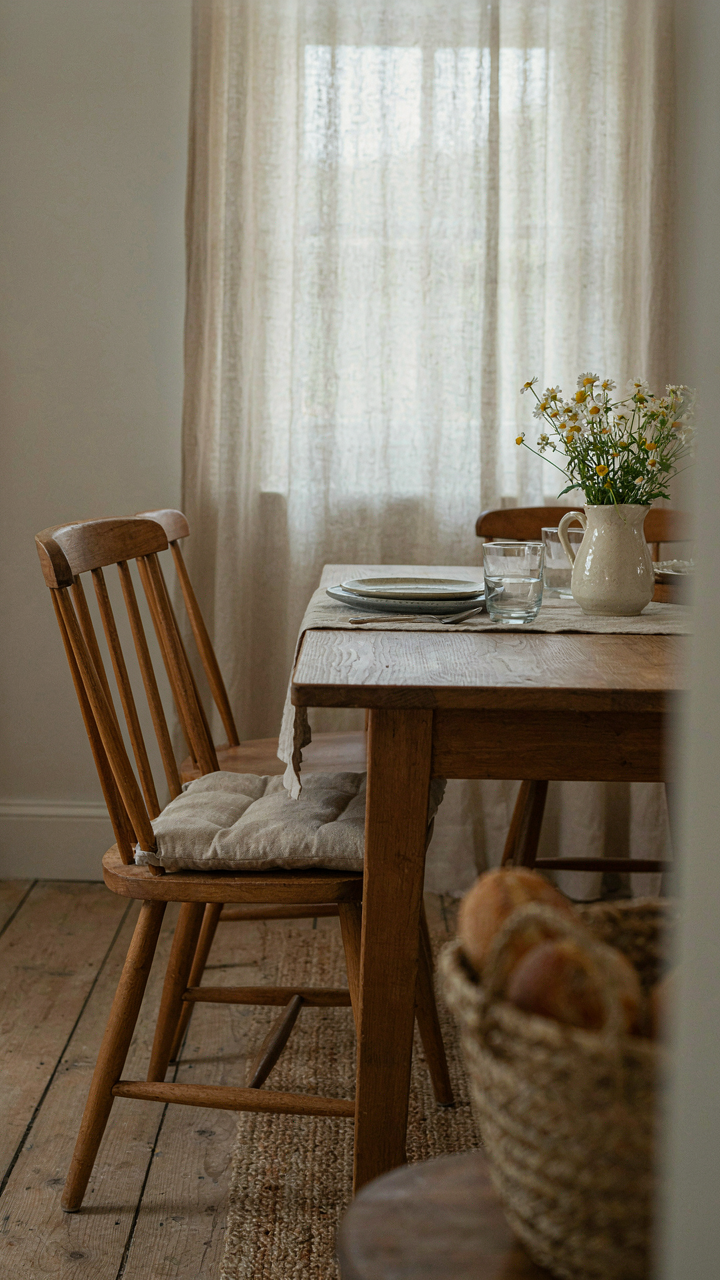
Comfort Over Staged Aesthetics
You want the room to look intentional without admitting you’re designing for approval. Here’s the mechanism: a country dining room works when it solves a real problem first, then looks good as a side effect. Staging for photos kills functionality because you’re optimizing for a two-dimensional moment instead of a space people actually sit in for two hours.

The difference shows up immediately. Real country dining rooms have chairs you can sit in without adjusting, tables sized for actual meals instead of magazine spreads, and lighting that lets you see food. A staged room sacrifices these for visual impact. Prioritize seating comfort, adequate table dimensions, and practical lighting. The aesthetic follows naturally when the room serves its purpose.
What Actually Needs To Stay
Most country dining room advice tells you to embrace maximalism and layer in character through accumulation. That’s incomplete. Accumulation only works if every piece pulls its weight. The rest becomes visual noise that makes the room feel smaller and cheaper, not cozier.
- Dining table and chairs: The core function. Everything else supports this. Choose pieces that survive daily use, not decoration duty.
- One statement lighting fixture: A chandelier, pendant, or fixture that anchors the room. It does the heavy lifting for atmosphere so smaller pieces don’t have to.
- Textiles with purpose: A runner, placemats, or a tablecloth you actually use. These ground the space and protect surfaces, not just sit there.
- Wall color or wallpaper: Creates the backdrop. One strong choice matters more than five weak ones competing for attention.
- One focal point storage: A sideboard, hutch, or cabinet that holds tableware and serves the room. It’s furniture, not decoration.
- Five to seven decorative items maximum: Framed prints, a plant, a bowl. Each one must have a reason to exist beyond filling space.
Start by removing everything that doesn’t get used or touched regularly. A country dining room that functions beats a country dining room that photographs. After the cuts, what remains has room to breathe and actually matters when people gather.
Optimizing For Conversation: The Acoustic And Lighting Design
How Sound Moves Through A Country Dining Room
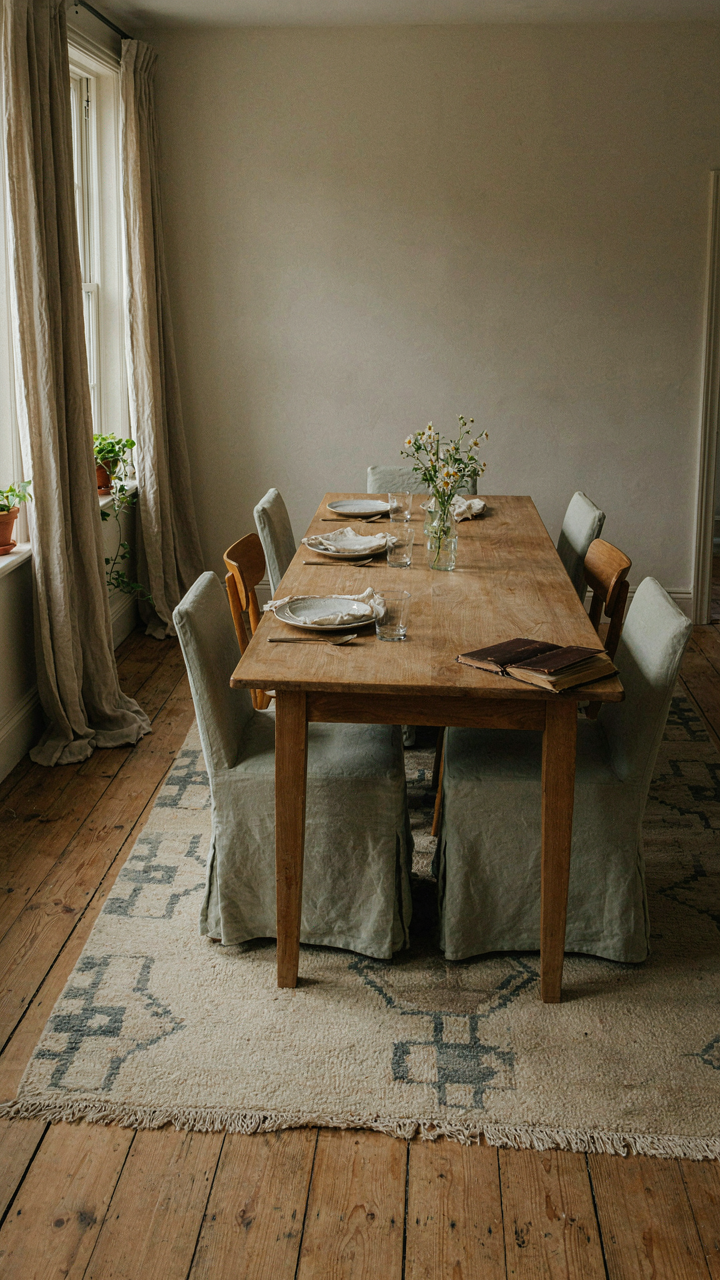
You want people to linger and talk. That’s the real reason you care about acoustics here. Most dining room advice ignores the physics problem: hard surfaces bounce sound around until conversation becomes exhausting noise. Borrow from acoustical engineering: treat your dining room like a reverberant chamber that needs damping. Wood beams, plaster walls, and tile floors are all reflective. Sound waves travel outward and bounce back, forcing people to speak louder, which triggers fatigue faster than the conversation itself.

The fix is material placement, not soundproofing. Fabric absorbs sound energy where it matters most. Heavy linen curtains at windows reduce bounce. A substantial wool area rug under the table kills reflection off the floor. Upholstered chairs with fabric seats work harder than wood alone. The goal isn’t silence. It’s creating conditions where normal conversation volume stays controlled and people can actually hear each other without strain. Place these elements first, then arrange seating.
Warm Light For Actual Connection
Generic advice tells you to use dimmer switches. That misses the mechanism. Lighting quality shapes how faces look and how people feel about the space around them. Warm light (2700K color temperature or lower) makes skin tones appear healthy and relaxed. Cool light makes everyone look tired and pale. Country dining rooms traditionally used incandescent bulbs, which naturally emit warm light and create a gentle gradient across faces rather than harsh shadows.
Modern LED bulbs now replicate this accurately, but you must choose the right color temperature deliberately. Avoid overhead fixtures that drop light straight down onto faces from above. Wall sconces or a low-hanging fixture positioned above the table’s center spreads light more evenly. The light should illuminate faces and food clearly without creating pools of brightness that make people squint. Test your setup at dinner time before finalizing placement. If someone sitting across the table has shadows under their eyes from the fixture, adjust it lower or sideways.
The Myth Of Effortless Charm: Your Dining Room Is A System, Not A Style Statement
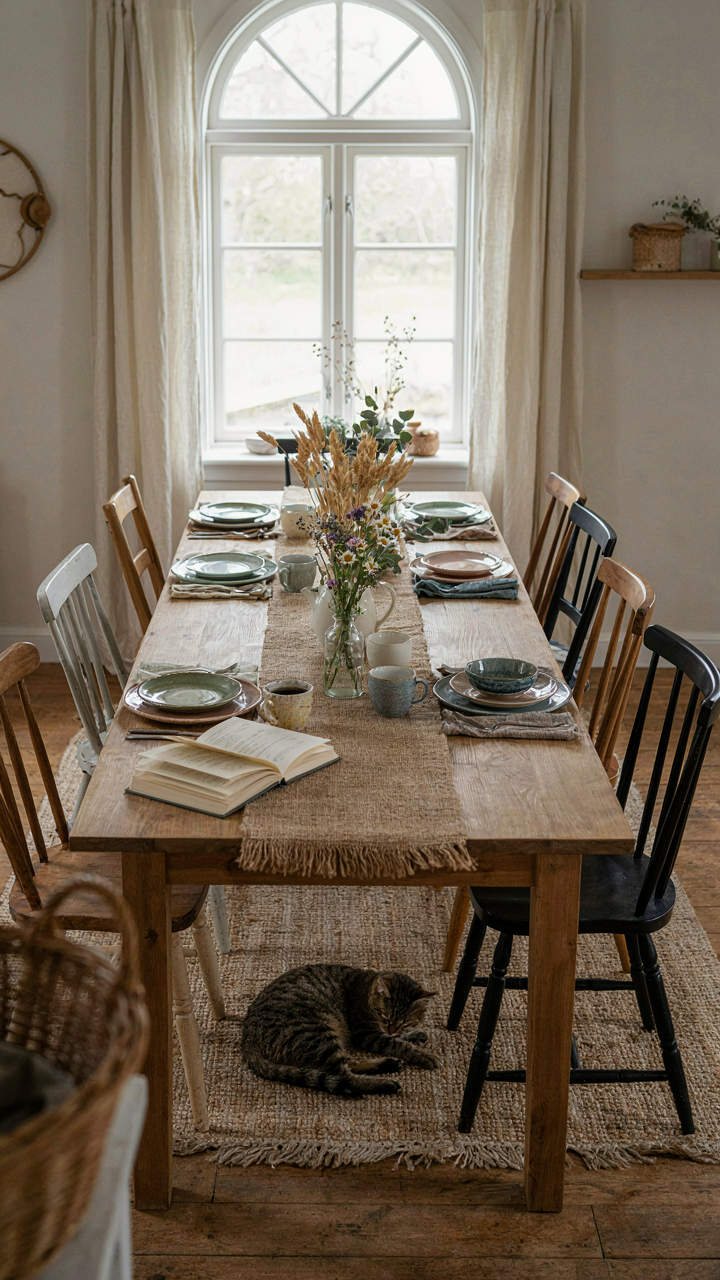
Stop waiting for inspiration to hit. Your country dining room works because you designed it to work, not because you stumbled onto the right aesthetic. Every piece serves a function: the table gathers people, the lighting sets mood, the storage keeps chaos out. Systems beat taste every single time. Pick one element today, make it do two jobs instead of one, and watch how fast your dining room stops being a showroom and becomes a place your family actually wants to sit in. A room that functions is a room that feels like home.